Rowing in the Dark: The Marbleheaders Who Saved America


Patrick K. O’Donnell’s “The Indispensables” rescues the Marblehead Regiment from historical amnesia — and in doing so, redraws the map of who helped make the United States of America.


March and April – The Gathering Storm, Part Seven

Sometime in the small hours of August 29, 1776, with fog settling over the East River and the British army massed on the Brooklyn heights behind them, George Washington’s army ceased to exist as a fighting force – and was reborn. Nine thousand men, their artillery, horses, and supplies, crossed from Long Island to Manhattan in rowboats without losing a single soldier or making a sound that the enemy could hear. The operation took seven hours. The men at the oars were fishermen and sailors from a single Massachusetts seaport, eighteen miles north of Boston. Had they failed, or had the wind shifted before they finished, the Revolution would almost certainly have ended on a muddy riverbank before it had truly begun.

That seaport was Marblehead. The men were the 14th Continental Regiment, commanded by Colonel John Glover. They are the same men who just four months later pulled off the more famous crossing of the Delaware. And until Patrick K. O’Donnell published The Indispensables in 2021, most Americans had never heard of them.

A Combat Historian at the Oar

O’Donnell is not a university historian. He is a combat historian – a distinction that matters enormously to how this book reads and what it values. He embedded with a Marine rifle platoon during the Battle of Fallujah, consulted on Steven Spielberg’s Band of Brothers, and has written thirteen books on American military history. His method is to get as close to the soldier’s experience as the archive will allow: muster rolls, pension files, diaries, letters, and period newspapers. He spent five years reconstructing the Marblehead Regiment from such sources, and it shows. When O’Donnell describes men rowing through ice floes on the Delaware on Christmas night, 1776, he is drawing on the physical logic of cold water and exhausted bodies, not just the diplomatic logic of generals.

That perspective gives The Indispensables both its great strength and its acknowledged limitation. The book is a thrilling narrative, not a structural analysis of colonial society. O’Donnell is interested in what these men did, and in recovering their names and faces from the archive. He is less interested – as he would readily admit – in asking why the social structure of Marblehead produced them.

The Central Argument: Geography Is Destiny, and Diversity Is Strength

O’Donnell’s core interpretation is deceptively simple: the American Revolution was won not by the philosophical abstractions of Philadelphia drawing rooms, but by the contingent competence of specific men in specific places at specific moments – and those moments kept happening to require the same town. Marblehead’s economy was built on deep-sea fishing in the North Atlantic, which produced men who could navigate in darkness, manage a vessel in a storm, and improvise under conditions that would terrify professional soldiers. When the Continental Army needed someone to execute an amphibious evacuation under fire, or to row 2,400 men across an ice-choked river in a blizzard, those men were already trained. The war did not create the Marbleheaders. The Atlantic Ocean did.

O’Donnell’s second argument is equally pointed: the regiment was, from its inception, one of the most racially and ethnically integrated units in the Continental Army. Free Black sailors, Native Americans, and men of Hispanic descent served alongside white New Englanders in Glover’s regiment – not as an ideological project, but as an economic fact. The fishing industry cared about skill, not race. This diverse workforce, bound by occupational brotherhood, became what O’Donnell calls “one of the country’s first diverse units.” The implication is deliberate: America’s founding military achievement was accomplished by an America that looked more like the present than the mythology of the Revolution usually admits.

“To save his army, the Revolution, and a hopeful future bound by liberty and equality for unborn millions, General Washington would turn to the soldier-mariners of Colonel John Glover’s regiment from Marblehead, Massachusetts.”

PATRICK K. O’DONNELL, THE INDISPENSABLES

Henry Knox, Washington’s artillery chief who witnessed the Delaware crossing firsthand, later told the Massachusetts legislature: “I wish the members of this body knew the people of Marblehead as well as I do – I wish that they had stood on the banks of the Delaware River in that bitter night when the commander in chief had drawn up his little army to cross it.” Knox’s testimony captures something O’Donnell understands viscerally: those who were there knew what the Marbleheaders meant. Those who weren’t have spent 250 years forgetting.

Key Moments: From Lexington to the Delaware

1775: Marbleheaders fight at Lexington and Bunker Hill; Glover forms the regiment

Aug 1776: The “American Dunkirk” – 9,000 men evacuated from Brooklyn overnight

Dec 1776: Christmas crossing of the Delaware; surprise attack on Trenton turns the war

1777: Enlistments expire; Marbleheaders walk 300 miles home, many sick and wounded

O’Donnell also recovers lesser-known engagements – the sharp fighting at Throgs Neck and Pell’s Point, where Glover’s regiment bought time for Washington’s retreat across Manhattan – that conventional histories have largely ignored. He traces the regiment’s role in the origins of the Continental Navy, as Marblehead privateers began seizing British merchant ships, functioning as a de facto naval force before any official navy existed. The claim in the subtitle – that they “formed the Navy” – is not hyperbole. It is a precise historical argument.

Dialogue with the Series: Three Towns, Three Revolutions

Read alongside previous installments of this series, The Indispensables completes a striking view of New England communities at the moment of rupture.

The Minutemen and Their World – Robert Gross, 1967

  • Concord as a community under social stress – yeoman farmers defending a way of life, not an abstract liberty. Revolution as local, conservative, and agrarian in character.

Lexington and Concord – George C. Daughn, 2018

  • The opening shots as a military and political event – British miscalculation meeting colonial preparation. Focus on command decisions and the escalation of force.

The Indispensables – Patrick O’Donnell, 2021

  • The war as sustained by maritime, working-class, and diverse communities – not just the farmers and founders. Revolution as a multi-year feat of physical endurance.

Robert Gross showed us Concord’s social world: the anxieties of landless younger sons, the declining church, the committee politics that precede muskets. His Minutemen are embedded in a specific agrarian ecology. George Daughan gave us the military operational picture: the decisions, the march, the firefight, the political consequence. O’Donnell gives us something neither book provides – the sustained, unglamorous, year-long physical effort of keeping an army alive and mobile. His Marbleheaders appear at Lexington and at Bunker Hill, but they are most themselves at the oar, at the tiller, in the dark water. Where Gross’s farmers fought to protect what they had, and Daughan’s colonists fought to make a political point, O’Donnell’s mariners fought because they were good at it and because the country needed them to be.

The books also diverge productively on the question of diversity. Gross’s Concord is notably homogeneous, a town whose internal tensions are about class and land, not race. Daughan’s account focuses on the mechanics of the military encounter. O’Donnell insists that the Revolution, at its most crucial physical moments, was carried out by a multiracial workforce. These are not incompatible views; they describe different communities and different phases of the war. Together, they suggest that the American Revolution was not one event but a coalition of overlapping local revolutions, each with its own sociology.

What We’ve Learned Since 2021

O’Donnell’s book arrived as American debates about whose history gets told were at a cultural peak, and it has been both celebrated and occasionally criticized for its emphasis on the regiment’s diversity. The more substantial historical conversation since publication has focused on the lives of the individual Black and Native American soldiers O’Donnell names. Researchers working in pension records and town archives have continued to flesh out those biographies, and several genealogical projects have extended O’Donnell’s muster-roll research. The picture that has emerged confirms his central point: integration in this regiment was not incidental but structural, rooted in the labor economy of the Atlantic fishing trade.

Some military historians have noted that O’Donnell, perhaps inevitably given his combat-historian lens, occasionally overstates the uniqueness of the Marbleheaders’ contributions at specific engagements where other units also performed with distinction. The Brooklyn evacuation, in particular, involved boats and watermen from other New England communities. The “indispensable” framing is a rhetorical choice as much as a historical verdict. But the regiment’s aggregate importance to the 1776 campaign – Throgs Neck, Pell’s Point, the evacuation, the Delaware crossing, Trenton, Princeton – is difficult to dispute on the evidence.

Why Read This in 2026?

America is in the middle of an extended argument about its founding – about who participated in it, who was excluded, who should be remembered, and whose sacrifices shaped the country. The Indispensables is a remarkably useful book for that argument because it is neither polemical nor evasive. O’Donnell is not making a political argument about diversity; he is recovering a historical fact about how an army actually functioned. The regiment was integrated because the fishing industry was integrated. The integration was decisive because the regiment was decisive. The chain of evidence is clear and the research is meticulous.

There is also a simpler reason to read this book: it is genuinely exciting. O’Donnell writes action sequences with the pacing of a thriller. The Brooklyn evacuation, rendered across several chapters, is among the most gripping set pieces in recent American military history writing. The Christmas crossing of the Delaware – a scene you think you already know from the painting – becomes, in O’Donnell’s hands, a feat of physical courage by men who had been fighting for months, who were sick and exhausted, who knew what failure would mean, and who kept rowing anyway.

Read alongside Gross and Daughan, The Indispensables closes a circuit. Gross gives you the world that produced the Revolution. Daughan gives you the spark. O’Donnell gives you the long, cold, unglamorous work of winning it.

Together, these three books constitute something close to a complete popular history of how the American Revolution actually happened – not as a philosophical event, but as a human one, accomplished by specific people from specific places who were, in O’Donnell’s apt phrase, in the right place at the right time. We have simply forgotten to remember them.


A Note on This Series

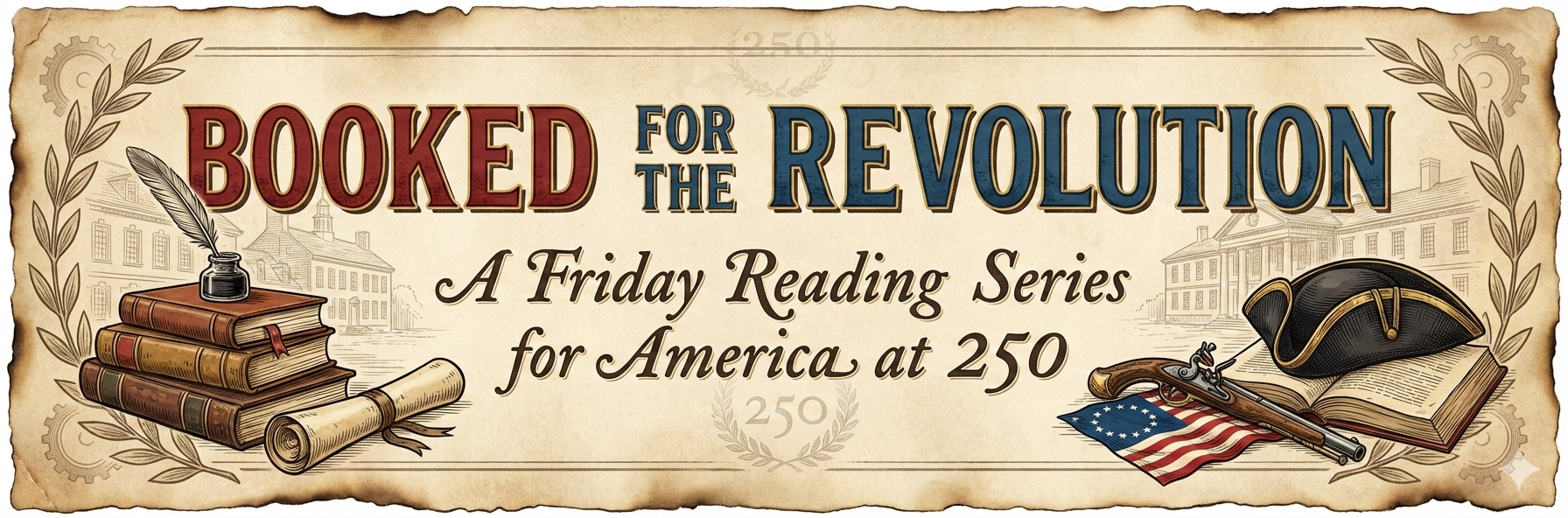
This journey through Revolutionary history is as much about the evolution of historical understanding as the Revolution itself. History isn’t static – each generation reinterprets the past through its own concerns, asking different questions and prioritizing different sources. By reading these books in dialogue across 250 years, we’ll witness how scholarship evolves, how narratives get challenged, and how forgotten stories resurface.

This isn’t about declaring one interpretation “right” and another “wrong,” but appreciating the richness that emerges when multiple perspectives illuminate the same transformative moment. These books won’t provide definitive answers – history rarely does – but they equip us to think more clearly about how real people facing genuine uncertainty chose independence, how ideas had consequences, and how the work of creating a more perfect union continues. As we mark this anniversary, we honor the Revolutionary generation by reading deeplythinking critically, and engaging seriously with both the brilliance and blind spots of what they created.

You can find the entire series listing here.

The Quiet Revolutionaries: Why We Honor Librarians Today

On April 16, 2026, as we observe National Librarian Day, it is time to look past the outdated stereotype of the “shushing” gatekeeper in a cardigan. In an era where information – and misinformation – moves at the speed of light, the modern librarian has become something far more vital: a navigator, a community builder, and a fierce protector of the democratic right to know.

Librarians are the frontline workers of the intellectual world. They manage more than just shelves; they manage the collective memory of our civilization. Whether they are working in a sprawling metropolitan branch, a quiet university archive, or a local rural outpost, these professionals provide the infrastructure for curiosity.

The Modern Library: More Than Just Books

Today’s library is a high-tech hub, a maker space, a job-search center, and a sanctuary. Librarians are now experts in digital literacy, helping patrons navigate complex databases and verify sources in a world of “alternative facts.” They are the ultimate curators, hand-selecting stories that reflect the diverse tapestry of the human experience.

But perhaps most importantly, librarians offer a “third space” – a place that isn’t home and isn’t work, where no one is required to spend money to exist. In this space, the librarian is the host, ensuring that every citizen, regardless of status, has access to the tools of self-improvement.

Behind the Stacks: A Look at “The Secret Lives of Booksellers and Librarians”

To truly understand the heartbeat of this profession, one need look no further than the 2024 release, “The Secret Lives of Booksellers and Librarians” by James Patterson and Matt Eversmann. Known for his high-octane thrillers, Patterson shifts gears here to offer a deeply moving, non-fiction tribute to the people who dedicate their lives to the printed word.

The book is structured as a collection of first-person accounts, a “human library” of sorts. It features dozens of short, punchy stories from across the United States. Rather than a dry history of the profession, Patterson and Eversmann present a mosaic of experiences.

Readers meet librarians who have faced down book bans, those who have helped homeless patrons find housing, and those who have turned their libraries into emergency shelters during natural disasters. It also highlights the “bookseller” side of the coin—the independent shop owners who act as literary matchmakers, keeping the culture of reading alive in an age of algorithms.

A Love Letter to Literary Stewards

What makes this book so effective is its sincerity. Patterson doesn’t treat librarians as curiosities; he treats them as heroes.

  • Humanity Over Heroics: The book shines when it focuses on the small, quiet moments. A librarian finding the “perfect book” for a struggling child is described with the same intensity as a detective solving a case. It captures the emotional weight of the job – the exhaustion, the passion, and the occasional heartbreak of seeing a beloved community space underfunded.
  • The Struggle for Freedom: Several segments address the modern challenges of censorship. The accounts from librarians standing firm against the removal of books are powerful reminders that this profession is often a political one, requiring immense moral courage.
  • Accessibility: Written in Patterson’s signature accessible style, the book is a fast read but lingers in the mind. It manages to be both a celebration and an urgent call to action to support our local institutions.

“The Secret Lives of Booksellers and Librarians” is a essential reading for anyone who has ever found solace between the shelves. It proves that while the medium may change – from scrolls to hardbacks to e-readers—the need for a guide remains constant.

The Librarian’s Legacy

As we celebrate National Librarian Day 2026, we recognize that librarianship is a calling. It is a profession built on the belief that knowledge should be free, accessible, and defended. They are the architects of our childhood wonder and the researchers behind our adult successes. They see us at our most curious and our most vulnerable. Today, we don’t just say “thank you” for the books; we say thank you for the community, the clarity, and the courage.

How to Honor Your Local Librarian Today:

  1. Visit Your Branch: The best way to support a library is to use it. Check out a book, attend a workshop, or use the digital resources.
  2. Write a Thank-You Note: A simple card or email to the library director can go a long way in boosting morale.
  3. Advocate for Funding: Attend local board meetings or support legislation that ensures libraries remain well-funded and independent.
  4. Share a Recommendation: In the spirit of the “bookseller” side of Patterson’s book, share a title that changed your life with someone else today.

Librarians have spent centuries looking out for us. Today, let’s make sure we are looking out for them. Happy National Librarian Day!


Part of a regular series on 27gen, entitled Wednesday Weekly Reader.

During my elementary school years one of the things I looked forward to the most was the delivery of “My Weekly Reader,” a weekly educational magazine designed for children and containing news-based current events.

It became a regular part of my love for reading, and helped develop my curiosity about the world around us.


How One Town Rewrote the Story of the Revolution


March and April – The Gathering Storm, Part Six

On the morning of April 19, 1775, Captain John Parker assembled about seventy-seven men on Lexington Green to face a column of perhaps seven hundred British regulars. The story most of us learned positions this confrontation as a dramatic clash between liberty-loving patriots and imperial tyrants – brave farmers standing on principle against the mightiest military power on earth. But who, exactly, were those farmers? What did they owe each other? What did they fear losing? What had they quarreled about the week before?

Robert A. Gross wanted to know. And in asking those questions, he produced one of the most quietly revolutionary books in American historical writing.

The Author and His Moment

The Minutemen and Their World was published in 1976, arriving precisely as America was staging its Bicentennial pageant – a moment drenched in patriotic nostalgia, triumphal displays, and the comforting myth of a unified founding generation. Gross, then a young historian at Amherst College, offered something far more interesting: a close, almost novelistic examination of a single community, Concord, Massachusetts, in the decades before and after the Revolution.

The timing was not incidental. The 1970s were also the years of Vietnam, Watergate, urban fracture, and deepening skepticism about official narratives. Gross belonged to a generation of social historians who had absorbed the influence of the French Annales school and were redirecting the American historical gaze downward – away from generals and statesmen and toward the lives of ordinary people. His model was not the triumphalist narrative but the community study: granular, demographic, attentive to land records and probate files and church membership lists.

The result won the Bancroft Prize and has remained continuously in print for nearly fifty years. It is, by any measure, a classic.

The Central Argument: Anxiety Before Ideology

The conventional story of Concord on April 19 is essentially ideological: colonists committed to Enlightenment principles of liberty and self-governance took up arms against tyrannical overreach. Gross does not dismiss this framing, but he deepens and complicates it considerably.

His central argument is that the men who fought at the North Bridge were not primarily motivated by abstract political theory. They were defending a particular way of life – a specific, fragile community – that was already under enormous internal stress before a single British soldier appeared on the horizon.

By the 1770s, Concord was a town in quiet crisis. Population growth had outpaced the land’s capacity to sustain the traditional agricultural inheritance system by which fathers subdivided farms among sons. Young men faced diminishing prospects. Soil exhaustion was widespread. The old reciprocal networks of neighborly exchange – borrowing tools, sharing labor at harvest, extending credit – were fraying as market relationships penetrated the town’s economy. Social distinctions were hardening. The church was fracturing along new denominational lines.

Into this anxious community arrived the imperial crisis. And Gross’s insight is that British policy threatened not just abstract liberties but the very social fabric that Concordians had been struggling to maintain. The Coercive Acts of 1774, which suspended Massachusetts self-government, struck directly at the local institutions – the town meeting, the militia, the county courts – through which Concord managed its internal tensions and regulated its collective life.

As Gross writes, the men of Concord fought “to preserve a Christian, corporate community” – not to inaugurate a new liberal order, but to defend the old one.

The Voice on the Page

What distinguishes Gross from many social historians is his prose. The book reads with the warmth and particularity of good narrative writing. Consider his description of the town’s social geography: Concord “was a community of neighbors who knew each other’s business, borrowed each other’s tools and labor, and watched each other’s children grow up. There was little privacy and less anonymity.” This is not dry demography; it is an evocation of a world.

Or his account of the town’s agricultural predicament, rendered with almost elegiac feeling: the farms that grandfathers had carved from wilderness were now too small to support their grandsons. The Revolution, in this light, was not merely a political event but a moment of communal self-preservation but a people fighting to hold together a world that was already slipping away.

The book’s most affecting passages involve the individual men who appear in the records: farmers negotiating debts, deacons managing congregational disputes, young men eyeing distant lands because there was no room left at home. Gross makes the aggregate data breathe.

In Dialogue: Agreements, Tensions, Departures

The Minutemen and Their World enters into productive conversation with several other essential works in the Bicentennial-and-after tradition of Revolutionary history.

T.H. Breen’s American Insurgents, American Patriots (2010) shares Gross’s commitment to recovering the experience of ordinary colonists rather than the Founding Fathers. Breen emphasizes the role of popular rage – the grassroots anger that preceded and ultimately drove elite political leadership – and his portrait of a self-mobilizing populace broadly corroborates Gross’s picture of communities defending local ways of life. But where Gross is resolutely local, Breen pans outward to trace a continental insurgency, showing how thousands of Concords were simultaneously activated across thirteen colonies. The books are complementary: Gross gives you the texture; Breen gives you the scale.

Kevin Phillips’ 1775: A Good Year for Revolution (2012) offers a useful counterweight to Gross’s social-historical intimacy. Phillips argues that 1775 – not 1776 – was the true hinge year of the Revolution, and he marshals economic, demographic, and geopolitical data across the full Atlantic world to make his case. His Concord is a data point in a continental argument; Gross’s Concord is an entire universe. Phillips usefully reminds us that the forces shaping Concord – land scarcity, market integration, imperial taxation – were macro-level phenomena operating across the colonies. Gross shows us how those forces felt from the inside of one particular life.

Lexington and Concord: The Battle Heard Round the World by George Smith (2018) provides the military and operational narrative that Gross largely brackets. Smith’s careful reconstruction of April 19 – the march from Boston, the confrontation on the Green, the running fight back to Charlestown – gives essential tactical context that Gross’s social history does not provide. Reading the two together is instructive: Smith explains what happened on the road; Gross explains why the men were standing in it.

The deepest tension is perhaps with more ideologically centered accounts that treat the Revolution primarily as a contest over political philosophy. Gross does not deny that Concordians read Locke and Trenchard and Gordon – but he insists that ideas alone do not explain why a farmer named Joseph Hosmer took up his musket at the North Bridge. The land records, the debt lists, the church rolls – these tell a different story about motivation, one that is at once less heroic and more human.

What We’ve Learned Since 1976

Gross published a significantly expanded edition of the book in 2020, adding chapters that carry Concord’s story through the early Republic. This revision itself tells us something: the original book ended at the Revolution’s beginning, leaving open what the townspeople made of the new order they had helped create.

The intervening decades of scholarship have enriched Gross’s framework in several ways. Historians have paid far greater attention to the people Gross’s Concord mostly omitted: enslaved Black residents, whose presence in Massachusetts households complicates any simple narrative of liberty; women, whose labor underpinned the household economy he describes; and Indigenous peoples, whose dispossession created the very farmland the minutemen were defending.

Recent work on the political economy of the Revolution – including studies of debt, credit, and the colonial financial system – has deepened Gross’s insights into the material pressures facing Concord’s farmers. And the environmental history movement has extended his attention to land and soil into a fuller reckoning with the ecological costs of colonial agriculture.

The book’s core argument that local community, not abstract ideology, was the primary social reality the Revolution defended has held up remarkably well. If anything, it looks more prescient now than in 1976.

Why Read This in 2026?

We live in an era of intense argument about what the American founding actually means – about whether its ideals were genuine or hypocritical, universal or exclusionary, worth celebrating or reckoning with. These are real and important debates. But they can tempt us into treating the founding generation as symbols rather than people.

The Minutemen and Their World is a corrective. It insists that the men at the North Bridge were not icons or abstractions. They were neighbors with land disputes and unpaid debts, fathers worried about their sons’ futures, churchgoers nursing old grudges, farmers watching their soil thin year by year. Their revolution was real because their world was real – specific, flawed, beloved, and threatened.

That combination of intimate particularity and large historical stakes is what good history offers, and Robert Gross delivers it on almost every page. Read this book not to be inspired, but to understand – and to recognize, perhaps uncomfortably, how much of what drove those men in April 1775 still drives communities facing the erosion of the worlds they know.


A Note on This Series

This journey through Revolutionary history is as much about the evolution of historical understanding as the Revolution itself. History isn’t static – each generation reinterprets the past through its own concerns, asking different questions and prioritizing different sources. By reading these books in dialogue across 250 years, we’ll witness how scholarship evolves, how narratives get challenged, and how forgotten stories resurface.

This isn’t about declaring one interpretation “right” and another “wrong,” but appreciating the richness that emerges when multiple perspectives illuminate the same transformative moment. These books won’t provide definitive answers – history rarely does – but they equip us to think more clearly about how real people facing genuine uncertainty chose independence, how ideas had consequences, and how the work of creating a more perfect union continues. As we mark this anniversary, we honor the Revolutionary generation by reading deeplythinking critically, and engaging seriously with both the brilliance and blind spots of what they created.

You can find the entire series listing here.

The Architecture of Belonging: Transforming “Othering” into Connection

In our physical world, a bridge is a marvel of engineering – a structure of steel, concrete, or stone designed to span a gap that would otherwise be impassable. But as we explored in a previous discussion on the literal and metaphorical power of bridges, these structures do more than just facilitate travel; they symbolize the human desire to connect. While physical bridges conquer geographic divides, there is a much more complex and invisible chasm currently widening in our social fabric: the divide of “Othering.”

We don’t want to live in a society in turmoil. In fact, 93 percent of people in the U.S. want to reduce divisiveness, and 86 percent believe it’s possible to disagree in a healthy way. Yet with increasing political and social fragmentation, many of us don’t know how to move past our differences. Civil rights scholar john a. powell presents an actionable path through “bridging” that helps us communicate, coexist, and imagine a new story for our shared future where we all belong.

To navigate this, we turn to the powell’s profound insights in his latest work, The Power of Bridging: How to Build a World Where We All Belong. If our earlier exploration of bridges focused on the beauty of the connection itself, powell’s work provides the blueprint for the internal and systemic engineering required to build those connections in a fractured society. He moves us from seeing bridges as static objects to understanding “bridging” as a dynamic, life-saving practice.

The Three States of Human Connection: Breaking, Othering, and Bridging

To understand why we need to bridge, we must first understand the forces that pull us apart. Powell identifies two primary states that define our current social crises: Othering and Breaking.

Othering is the starting point. It is a psychological and sociological process where we perceive certain individuals or groups as fundamentally different from us. It isn’t just noticing a difference; it is the act of attaching a value judgment to that difference – viewing the “other” as a threat, as “less than,” or as someone who does not belong in our circle of concern.

When Othering is left unchecked, it evolves into Breaking. Breaking occurs when we turn inward to our own “in-group” (a process known as bonding) but do so by explicitly pushing away or demonizing the “out-group.” In a state of breaking, we stop seeing the full story of the other person. We see a flat caricature – a stereotype that justifies our fear or exclusion. Breaking is the collapse of the bridge; it is the moment we decide that the gap is too wide to cross and that the person on the other side is an enemy.

Bridging, then, is the intentional antidote. It is the practice of reaching across these divides to connect with people who are unlike us. Crucially, powell emphasizes that bridging is not “same-ing.” It does not require us to erase our differences or abandon our deeply held values. Instead, it asks us to acknowledge those differences and find a shared humanity beneath them.

The Blueprint: Why We Bridge

Why should we take the risk of building a bridge when it feels safer to stay behind our walls? Powell argues that our very survival – socially, politically, and even ecologically – depends on it. We live in a world of “accelerated change.” Technological shifts, climate crises, and shifting demographics create a profound sense of anxiety. When we are anxious, our natural instinct is to “break” – to find a small group where we feel safe and exclude everyone else.

However, breaking is a “false safety.” It narrows our world and prevents us from solving the very problems that cause our anxiety. Bridging, on the other hand, expands the “circle of human concern.” It allows us to co-create a larger “we” – a society where belonging isn’t a zero-sum game. In powell’s vision, my belonging cannot be predicated on your exclusion. If the bridge only supports people who look and think like me, it isn’t a bridge; it’s just an extension of my own island.

The Practice: How to Become a Bridger

Bridging is not a passive state of mind; it is a skill that must be practiced. Drawing from The Power of Bridging, we can identify four pillars of the “bridger’s” craft:

1. Empathetic Listening (The “Sawubona” Approach)

Powell references the South African greeting Sawubona, which means “I see you.” Bridging begins with the radical act of truly seeing another person’s humanity. This requires empathetic listening – listening not to find a flaw in someone’s argument, but to understand their story. When we listen to a story, we move away from the “flat” representation of the other and begin to see their complexities, their fears, and their dreams.

2. Holding Stories Loosely

One of the greatest obstacles to bridging is the “single story.” When we hold our own identity or our group’s narrative too rigidly, any alternative story feels like an existential threat. Powell suggests we should “hold our stories loosely.” This doesn’t mean giving up our identity; it means leaving enough room in our hearts to realize that our story is one of many. By doing so, we create space to co-author a new story together.

3. Navigating the Tension of “Short” and “Long” Bridges

Not all gaps are the same size. A “short bridge” might be connecting with a neighbor who has a different political sign in their yard but shares your love for the local park. A “long bridge” involves reaching across deep historical traumas or systemic injustices. Powell is realistic: long bridges are difficult. They require more vulnerability, more time, and more emotional labor. We cannot bridge all the time, especially when we are too hurt or too angry. But we can maintain bridging as our orientationthe direction in which we are trying to move.

4. Bridging with the Self

Perhaps the most surprising insight in powell’s work is that bridging must also happen internally. We often “other” parts of ourselves – our past mistakes, our vulnerabilities, or aspects of our identity that we’ve been told are “wrong.” To be an effective bridger in the world, we must first bridge the fractures within our own souls, accepting our own complexities so we can better accept them in others.

The “Wildcard” of Co-Creation

The ultimate goal of bridging is not just “getting along.” It is co-creation. When we bridge, we aren’t just crossing over to the other side to visit; we are building a new space in the middle. This is the “Learning Zone.”

In our comfort zone, everything is familiar, but nothing grows. In the “breaking” zone, everything is fear and conflict. But in the bridging zone – the Learning Zone – we experiment. We stretch our abilities. We find that by connecting with someone different, we are actually transformed. We don’t come out the same person we were when we started across the bridge.

A Call to Engineering the Future

In this 27gen article, we saw how bridges are the physical manifestation of our desire to connect. john a. powell takes that metaphor and gives it a moral heartbeat. He reminds us that while the world may feel like it is “breaking,” that breaking is a choice – and bridging is a choice, too.

To be a “bridger” in today’s world is an act of courage. It means being willing to be the structure that others walk on. It means risking the discomfort of the unknown for the possibility of a world where everyone belongs.

As we look at the landscapes of our lives – our families, our workplaces, and our communities – we must ask ourselves: Where are the gaps? Where have I allowed “Othering” to take root? And what is the first small stone I can lay today to begin building a bridge?

The architecture of belonging is not built by geniuses in ivory towers; it is built by ordinary people who decide that the person on the other side of the divide is worth knowing. It is built one story, one heartbeat, and one bridge at a time.


Part of a regular series on 27gen, entitled Wednesday Weekly Reader.

During my elementary school years one of the things I looked forward to the most was the delivery of “My Weekly Reader,” a weekly educational magazine designed for children and containing news-based current events.

It became a regular part of my love for reading, and helped develop my curiosity about the world around us.

The Pen as Powder Keg: “Tom Paine’s War”


March and April – The Gathering Storm, Part Five

Two hundred and fifty years after 1776, one outsider’s pamphlet still challenges us to ask what self-governance actually requires – beyond bullets and borders.

The Times That Try Men’s Souls

In September 1776, a middle-aged English immigrant named Thomas Paine stood on the New Jersey shore and watched the British navy pound the American position at Kips Bay into splinters. Washington’s army – ragged, terrified, outnumbered – broke and ran. New York was lost. The Revolution seemed to be dying before it had fully lived.

Paine did not run. He picked up a musket, slogged south through the mud of New Jersey with the retreating troops, and then, camped on the banks of the Delaware with his drum as a writing desk, composed one of the most consequential sentences in American history. The pamphlet that followed, “The American Crisis”, was read aloud to Washington’s shivering men on Christmas Eve, 1776. Two days later they crossed the Delaware and took Trenton. The Revolution survived – and with it, the radical idea that a people could govern themselves without kings.

That moment is the beating heart of Jack Kelly’s Tom Paine’s War: The Words That Rallied a Nation and the Founder for Our Time, published in late 2025 as America marks the 250th anniversary of independence. It arrives, pointedly, at a moment when the word “democracy” again feels less like a settled inheritance and more like a contested claim.

About the Author

Kelly is a Hudson Valley-based historian and award-winning author whose previous books – including Band of Giants (which earned the DAR History Medal) and God Save Benedict Arnold – stake out a distinctive niche: military history told with novelistic intimacy, centering figures the mainstream narrative has pushed to the margins. He is a fellow of the New York Foundation for the Arts and a regular presence on NPR, C-Span, and PBS history programming.

The timing of Tom Paine’s War is deliberate. Kelly has stated plainly that he wrote the book in part because Paine – the Revolution’s most radical democrat, its most furious anti-monarchist – has been systematically sidelined from the Founders’ canon. Jefferson got a memorial on the National Mall. Madison shaped the Constitution. Paine, who arguably did more than anyone to convince ordinary Americans that independence was not just desirable but possible, died poor, mostly forgotten, and denied an American burial site for years. Kelly wants to correct that erasure. As Booklist noted in a starred review, he “explains why Paine and his writing mattered 250 years ago and why they matter now.”

The Core Argument: Words as Weapons

Kelly’s thesis is deceptively simple: the American Revolution was not merely won by armies. It was first won in print. Without Common Sense in January 1776, there is no Declaration of Independence in July. Without The American Crisis in December 1776, Washington’s army may well have dissolved entirely.

But Kelly pushes further than the standard “ideas matter” claim. He argues that Paine’s genius was populist translation – the ability to take Enlightenment philosophy that had circulated among educated elites and render it as plain speech for tradesmen, farmers, and sailors. In an era when much of the population could not read, Paine’s prose was designed to be heard aloud. Short sentences. Hammer-blow rhythms. The kind of clarity that sounds obvious only after someone has achieved it.

Kelly’s structural choice reinforces this argument in an unusual way. Rather than marching through Paine’s life chronologically, the book opens in the fire of battle – the chaos of Kips Bay, the retreat through New Jersey – and works backward to explain how Paine got there. The effect is to root his ideas in lived, embodied experience. Common Sense was not written in a comfortable study. It was written by a man who had felt the class brutality of English society firsthand, who had crossed the Atlantic with nothing, and who had then witnessed what empire looked like when it trained its cannons on its own colonists. Kelly insists that moral authority cannot be separated from biography.

The Voice of the Book

Kelly writes with precision and pace. His battle scenes have drawn wide praise – one reviewer for the Sons of the American Revolution called them “perhaps the most vivid, chilling, yet exhilarating I have ever read in a book about the American Revolution.” He also excels at making eighteenth-century ideological combat feel urgent. When he quotes British secretary Ambrose Serle on the naval bombardment – that few “even in the army and navy had ever heard” such a roar – it is to measure the scale of what Paine was writing against.

The book also carries a pointed contemporary edge. Kelly explicitly links Paine’s secular, reason-based republicanism to present debates about the founding’s religious character. This is Kelly at his most directly polemical – and, at 250 years’ distance from the events, arguably his most relevant.

Dialogue with Other Works in This Series

Tom Paine’s War agrees with Bernard Bailyn’s The Ideological Origins of the American Revolution. Bailyn’s landmark 1967 study showed that the Revolution was driven by a coherent ideology rooted in English radical Whig thought. Kelly affirms this: Paine absorbed and weaponized that tradition. Both books insist ideas, not just economics, drove independence.

Where Bailyn analyzed the intellectual scaffolding of revolutionary ideology from the perspective of elites who consumed pamphlet culture, Kelly focuses on production – on the act of writing under fire, literally – and on reception, on what it meant for Paine’s words to be shouted across a campfire to men who could not read. These are different and complementary lenses, and Kelly’s is, in some ways, the more democratic one.

Additionally, Tom Paine’s War adds nuance to Robert Middlekauff’s The Glorious Cause.

Middlekauff’s imposing survey treats Paine as one voice among many. Kelly corrects the balance, arguing that Common Sense and The American Crisis were not merely supporting documents but load-bearing pillars – without them the military campaign may have collapsed.

Historical Reassessment: What We Know Now

Scholarship since the 1990s – particularly work on Atlantic world networks, print culture, and marginalized voices in the Revolution – has actually strengthened Kelly’s core case rather than complicated it. Historians like Alfred Young (The Shoemaker and the Tea Party) and Gary Nash (The Unknown American Revolution) have documented how deeply ordinary working people – not just gentleman-farmers and merchants – drove independence. Paine was their theorist. He was a working-class English immigrant writing for and about people the constitutional convention would later leave out.

Kelly also refutes a persistent myth: that Paine’s radicalism made him a marginal figure even in his own time. In fact, Common Sense sold approximately 100,000 copies within three months of publication – in a colonial population of roughly 2.5 million. By modern ratios, that would be a book selling tens of millions of copies in weeks. The question of why this man was subsequently written out of the Founders’ story is itself a historical and political question Kelly leaves hovering, productively, over every page.

Why Read This in 2026?

As we approach the 250th anniversary of independence, with democratic norms contested and the language of self-governance often hollowed into slogan, Tom Paine’s War offers something rare: a reminder that the Revolution’s most essential argument was not constitutional, legal, or military. It was moral. Paine said monarchy was a fraud, aristocracy a crime, and self-governance not a privilege but a birthright. He said it simply enough that anyone could understand it, and urgently enough that people acted on it. Kelly’s achievement is to make that argument feel, once again, like news.

The book is not without its critics. Its non-linear structure can feel meandering, and Kelly’s thesis – words matter – is stated more than it is fully argued at the historiographical level. Readers seeking to know more will want to start with reading Paine’s Common Sense and The American Crisis if they have not already done so. But for the common reader who wants both the battlefield drama and the intellectual stakes of 1776 woven into a single, propulsive narrative, Tom Paine’s War is a genuine gift of the anniversary year.

Paine himself would have approved of a book written not for specialists but for citizens. That may be the highest compliment the man deserves.


A Note on This Series

This journey through Revolutionary history is as much about the evolution of historical understanding as the Revolution itself. History isn’t static – each generation reinterprets the past through its own concerns, asking different questions and prioritizing different sources. By reading these books in dialogue across 250 years, we’ll witness how scholarship evolves, how narratives get challenged, and how forgotten stories resurface.

This isn’t about declaring one interpretation “right” and another “wrong,” but appreciating the richness that emerges when multiple perspectives illuminate the same transformative moment. These books won’t provide definitive answers – history rarely does – but they equip us to think more clearly about how real people facing genuine uncertainty chose independence, how ideas had consequences, and how the work of creating a more perfect union continues. As we mark this anniversary, we honor the Revolutionary generation by reading deeplythinking critically, and engaging seriously with both the brilliance and blind spots of what they created.

You can find the entire series listing here.

The Living History in Your Kitchen: Celebrating the Magic of Sourdough

On April 1st, while many are busy plotting April Fools’ Day pranks, some people are celebrating a quieter, more ancient process: National Sourdough Bread Day. It is a day to honor a culinary tradition that predates the pyramids, a process that bridges the gap between biology and art.

To truly understand the depth of this craft, one must look to the work of Eric Pallant, author of Sourdough Culture: A History of Bread Making from Ancient to Modern Bakers. Pallant argues that sourdough is not just a trendy pandemic hobby or a tangy loaf found in artisan bakeries; it is a vital thread in the fabric of human civilization.

The Original “Wild” Yeast

Before the mid-19th century, all leavened bread was sourdough. There were no little yellow packets of commercial yeast available at the local grocer. If you wanted bread to rise, you had to rely on the invisible world around you.

As Pallant explains, sourdough is the result of a symbiotic relationship between wild yeast and lactic acid bacteria. When you mix flour and water and leave it on your counter, you aren’t just making a mess; you are creating an ecosystem. This “starter” – or levain – captures microorganisms from the flour itself, the air in your kitchen, and even the skin on your hands.

Unlike commercial yeast (Saccharomyces cerevisiae), which is bred for speed and uniformity, the wild colony in a sourdough starter is diverse. The yeast provides the carbon dioxide that makes the bread rise, while the bacteria produce the organic acids that give the bread its signature tang and improve its shelf life.

A Journey Through Time

Pallant’s exploration of sourdough is as much a history of humanity as it is of bread. He traces the origins of leavened bread back to Ancient Egypt. Legend has it that a bowl of gruel was left out too long, began to ferment, and was baked anyway – yielding a light, airy loaf instead of a flat cracker.

From the sun-drenched ovens of the Nile to the communal ovens of medieval Europe, sourdough was the “daily bread” that sustained empires. In many cultures, the starter was a precious heirloom. Pallant shares stories of families who kept their starters alive for generations, carrying them across oceans in jars tucked into waistbands to keep the cultures warm during the long voyage to the New World.

During the California Gold Rush, sourdough became so synonymous with the prospectors of San Francisco that the miners themselves were nicknamed “Sourdoughs.” They slept with their starter jars to prevent the yeast from freezing in the chilly mountain nights. This rugged history is why San Francisco remains the sourdough capital of the world today.

The Science of the Senses

Why does sourdough taste so much better than a standard white loaf? The answer lies in time. Commercial bread is designed to go from flour to bag in a matter of hours. Sourdough, however, demands patience.

During the long fermentation process, enzymes in the flour begin to break down gluten and phytic acid. This is why many people with mild gluten sensitivities find they can digest sourdough more easily than industrial bread. The bacteria also produce complex flavor compounds that simply cannot be replicated by a lab-grown yeast.

When you bite into a well-crafted sourdough, you experience a symphony of textures: the “shatter” of a deeply caramelized, mahogany crust followed by the “crumb” – the soft, chewy, and irregular interior that smells of toasted grain and a hint of vinegar.

The Zen of the Starter

In Sourdough Culture, Pallant emphasizes that baking sourdough is a rejection of modern “fast-food” culture. It requires the baker to be present. You cannot rush a starter; it bubbles when it is ready, not when your schedule dictates.

Feeding a starter is a ritual. It requires an understanding of the environment – how a rainy day might slow the rise, or how a warm kitchen might send the fermentation into overdrive. This connection to the natural world is what many modern bakers find so therapeutic. In a world of digital distractions, the tactile act of kneading dough and the rhythmic cycle of feeding a starter provides a grounding sense of purpose.

How to Celebrate National Sourdough Bread Day

You don’t need to be a master baker to participate in National Sourdough Bread Day. Here are a few ways to honor the tradition inspired by Eric Pallant’s research:

  1. Start Your Own Culture: All you need is flour, water, and time. Mix equal parts by weight, feed it daily, and watch as the invisible microbes transform a simple paste into a living, breathing entity.
  2. Support a Local Artisan: Visit a bakery that uses traditional long-fermentation methods. Ask them about their “mother” dough – many bakeries use starters that are decades old.
  3. Share the Wealth: Sourdough is meant to be shared. The beauty of a starter is that it grows. When you “discard” a portion to feed your culture, give that discard to a friend. You aren’t just giving them ingredients; you’re giving them a piece of history.
  4. Read the Story: Pick up a copy of Pallant’s Sourdough Culture. Understanding the thousands of years of trial and error that led to the loaf on your table makes every bite taste significantly better.

A Toast to the Future

As we celebrate on April 1st, we recognize that sourdough is more than a food trend; it is a survival strategy that has fed humanity for six millennia. In an age of ultra-processed foods, sourdough stands as a testament to the power of simplicity.

By keeping a jar of flour and water on our counters, we remain connected to the ancient Egyptians, the gold miners of the Yukon, and the countless grandmothers who kept their starters alive through wars and migrations.

So, here’s to the wild yeast, the friendly bacteria, and the patient bakers. Happy National Sourdough Bread Day – may your crust be crispy, your crumb be airy, and your starter always be bubbly.


Part of a regular series on 27gen, entitled Wednesday Weekly Reader.

During my elementary school years one of the things I looked forward to the most was the delivery of “My Weekly Reader,” a weekly educational magazine designed for children and containing news-based current events.

It became a regular part of my love for reading, and helped develop my curiosity about the world around us.

When Farmers Decided to Fight


March and April – The Gathering Storm Part Four

On the morning of April 19, 1775, a column of British regulars marched through the pre-dawn dark toward Concord, Massachusetts, confident this whole “rebel” business would be settled before breakfast. General Thomas Gage had been assured – by ministers in London who had never left England, by officers who confused bluster with intelligence – that the colonists would scatter the moment a proper army appeared in force. They had, in effect, never stopped to ask a simple question: what exactly were these farmers fighting for? The answer, George C. Daughan argues in his authoritative and engrossing Lexington and Concord: The Battle Heard Round the World, was far more concrete and existential than a slogan about liberty. They were fighting to keep their farms, their livelihoods, and their children out of the grinding poverty they saw destroying the king’s subjects on the other side of the Atlantic.

In 2026, with Americans arguing furiously about economic inequality, the reach of government power, and who exactly the founding documents were meant to protect, Daughan’s economic reinterpretation of the Revolution’s opening shots feels less like history and more like a live wire. This is a book about what people will do when they genuinely believe the material conditions of their lives are under assault from a distant, unaccountable power.

The Author and His Vantage Point

Daughan holds a doctorate in American history and government from Harvard, where he studied under Henry Kissinger – a detail that, whatever one makes of Kissinger’s legacy, signals a scholar trained to think about power, strategy, and the gap between political theory and geopolitical reality. He is primarily a naval historian: his earlier book – If By Sea – won the Samuel Eliot Morison Award, and his deep expertise in maritime strategy threads through this work in productive ways, reminding readers that the Atlantic Ocean – and Britain’s command of it -shaped every calculation on both sides of the conflict.

Published in 2018, Lexington and Concord arrived at an interesting moment: a period of renewed popular attention to economic grievance as a political force. Whatever Daughan’s own politics, his framing – that the militiamen of Massachusetts believed they were fighting against serfdom as much as tyranny – reads with a fresh urgency that the book’s 1990s or 2000s predecessors might not have anticipated.

The Core Argument: It Was the Economy, Too

Daughan’s central thesis challenges the prevailing narrative of the American War of Independence: it was, he argues, based as much on economic concerns as political ones. This is a significant corrective to the tradition of treating Lexington and Concord as primarily a story of ideological awakening – of enlightened men suddenly grasping that taxation without representation was philosophically untenable.

The pivot point in Daughan’s argument is Benjamin Franklin’s letters home from his travels through Britain and Ireland. Franklin witnessed the wretched living conditions of the king’s subjects: they wore rags for clothes, went barefoot, and had little to eat. They were not citizens, but serfs. In the eyes of many American colonists, Britain’s repressive measures were not seen simply as an effort to reestablish political control of the colonies, but also as a means to reduce the prosperous colonists to such serfdom.

This is what made the turnout at Lexington and Concord so staggering to British commanders. Even though the standard of living in Massachusetts was high, the militiamen were not merely comfortable gentlemen untrained in warfare. Most were veterans of the French and Indian War and well-versed in organizing an army. They were not idealists marching on principle – they were experienced men who had looked at Ireland, looked at the trajectory of British colonial policy, and decided that waiting was more dangerous than fighting.

The British Failure of Imagination

Where Daughan is perhaps most penetrating – and most original as a military historian – is in his dissection of British incompetence. The greatest failure of the king and his officials was their impatience in requiring rapid results without supplying sufficient resources. Nearly every one of General Thomas Gage’s requests was ignored. Gage, who had fought alongside colonial Americans in the brutal French and Indian War, understood something his superiors in London refused to accept: that these men knew how to fight, and that there were far more of them than anyone in Whitehall imagined.

The king was convinced that a military chastisement would cause the “loudmouth agitators to be deserted – embarrassed by the country people, who would be afraid to come out and fight.” It was a catastrophic miscalculation. The country people came out in overwhelming numbers, and they did not run.

The scorn of the British for experienced colonial fighters was another key factor. The British troops – many had never been in battle – were outnumbered and outclassed; their leaders were impervious to reason; and the fate of British rule in America was sealed. Daughan is at his most readable in these passages: the play-by-play of the running fight back to Boston, British regulars pinned down by men firing from stone walls and tree lines, dissolves the myth of the redcoat as an invincible professional and replaces it with something more human – and more damning.

Dialogue with the Series: Where Daughan Agrees, Diverges, and Deepens

Readers who have followed this series will find Lexington and Concord in productive conversation with two earlier entries. T. H. Breen’s American Insurgents, American Patriots (2010) and Kevin Phillips’s 1775: A Good Year for Revolution (2012) are both, in their different ways, attempts to wrestle the American Revolution away from the Founders and return it to the people who actually bled for it. All three authors are pushing against the same tendency in popular history: the habit of treating April 19, 1775 as a story about ideas rather than people, and about leaders rather than farmers.

The most illuminating pairing is Daughan with Breen. Where Daughan focuses on the economic fears that drove Massachusetts men into the field, Breen, in American Insurgents, emphasizes the emotional and organizational infrastructure that made their response possible. Before Lexington, Breen argues, ordinary colonists – most of them farm families in small communities – had already built what he calls “schools of revolution”: elected committees of safety that channeled popular rage, enforced boycotts, and effectively dismantled royal authority town by town, well before a single shot was fired. The militiamen at Lexington and Concord were not spontaneous; they were the product of two years of deliberate grassroots mobilization. For Breen, their tipping point was Lexington and Concord itself, whose news then spread through those same communication networks to ignite the other twelve colonies.

Daughan and Breen are looking at the same men from different angles – Daughan asking why they were willing to die, Breen asking how they had organized themselves to do it. The economic dread Daughan identifies gave the insurgency its fuel; the committee networks Breen traces gave it its form. Neither account is complete without the other.

Phillips’s 1775 stands closer to Daughan on the question of motivation. Phillips, like Daughan, is explicitly skeptical that secular ideology was the primary driver of the Revolution. His shorthand for the colonial mindset – “economic motivations, constitutional rhetoric” – could serve as a subtitle for Daughan’s book. Both authors are writing against the tradition shaped by Bernard Bailyn and Gordon Wood, which placed Enlightenment political philosophy at the center of the revolutionary dispute. For Phillips, as for Daughan, the rage militaire that swept the colonies in the spring of 1775 was grounded in something more visceral than a reading of Locke.

Where they diverge is in scope and argument. Phillips’s 1775 is an encyclopedic account – sprawling across politics, economics, religion, ethnicity, and military logistics – that insists on treating 1775, not 1776, as the Revolution’s true hinge. Daughan is far more concentrated: he wants to put you on the road to Concord, in the mind of a Massachusetts militiaman, on that specific morning. Phillips gives the forest; Daughan gives the trees. For readers who have spent time with Phillips’s sweeping reinterpretation, Daughan’s book offers the granular, human payoff that six hundred pages of structural analysis can sometimes leave wanting.

Historical Reassessment: What We’ve Learned Since 2018

Some critics noted that Daughan’s thesis about colonists fearing reduction to poverty is not especially well developed – that he thoroughly catalogs the ineptitude and hubris of the British government, but the economic argument is at times asserted more than fully demonstrated. The book is stronger as military and political narrative than as economic history, and readers looking for a rigorous analysis of colonial wealth distribution, debt, and the mechanics of British taxation policy will need to supplement Daughan with other sources.

Since the book’s publication, the broader field of Revolutionary historiography has continued to grapple with questions Daughan’s framing raises but doesn’t fully answer. How do we weigh the economic anxieties of prosperous Massachusetts farmers against the experience of the enslaved people who had no stake in the liberty being defended? Daughan does include a chapter on slavery – which some readers found jarring, as if the author drifted unexpectedly into different territory – but this is actually one of the more honest instincts in the book. The revolution that began on Lexington Green was a revolution for some people’s economic security, explicitly not for others.

More recent scholarship has also deepened our understanding of how Loyalist communities fractured under the pressure of patriot mobilization – a dynamic Daughan touches on but doesn’t fully develop. Officials in London thought the Bostonians would be on their own in confronting the king’s taxes. They couldn’t have been more wrong, as eleven of the twelve other colonies were quick to back up Massachusetts. The speed and breadth of that solidarity remains one of the most striking facts about April 1775, and it still isn’t fully explained.

Why Read This in 2026

There are two kinds of history books about the American Revolution: the kind that makes the founding feel inevitable, and the kind that restores its contingency. Daughan firmly belongs to the second category. He makes it plain that a significant outcome of the fighting that day was that the British commanders in Boston suddenly and dramatically realized that the colonials were not a rabble who would run at the sight of leveled British bayonets. It is a sad and compelling truth that King George III and his ministers and Parliament never really figured that out until the bitter end.

That gap between what powerful institutions believe about ordinary people and what those people are actually capable of – that is the book’s deepest and most enduring theme. Gage knew his assessment of the colonists was wrong; he said so, repeatedly, to London. He was ignored because he was telling superiors something they did not want to hear. The result was a catastrophe born not of villainy but of willful ignorance.

In 2026, as Americans revisit foundational questions about who the Republic is actually for, what it costs to sustain, and what ordinary people will do when they believe their material lives are under threat, Daughan’s reframing of Lexington and Concord as an economic uprising deserves wide readership. The book is accessible without being shallow, propulsive without being sensational, and honest about both the heroism and the limitations of the men who fired those first shots.

Authoritative and immersive, Lexington and Concord gives us a new understanding of a battle that became a template for colonial uprisings in later centuries. That template – prosperous but economically anxious people, convinced a distant power intends to reduce them to penury, organized against an opponent that has fundamentally misread their will to resist – has replicated itself across two and a half centuries of world history.

Understanding where it started, and why, remains as urgent as ever.


A Note on This Series

This journey through Revolutionary history is as much about the evolution of historical understanding as the Revolution itself. History isn’t static – each generation reinterprets the past through its own concerns, asking different questions and prioritizing different sources. By reading these books in dialogue across 250 years, we’ll witness how scholarship evolves, how narratives get challenged, and how forgotten stories resurface.

This isn’t about declaring one interpretation “right” and another “wrong,” but appreciating the richness that emerges when multiple perspectives illuminate the same transformative moment. These books won’t provide definitive answers – history rarely does – but they equip us to think more clearly about how real people facing genuine uncertainty chose independence, how ideas had consequences, and how the work of creating a more perfect union continues. As we mark this anniversary, we honor the Revolutionary generation by reading deeplythinking critically, and engaging seriously with both the brilliance and blind spots of what they created.

You can find the entire series listing here.

The Drama of Daily Bread: How Food Performances Reveal Who We Are


Every day, across countless dining rooms, coffee shops, and kitchen tables, we’re all performing.

Not in the sense of putting on a fake show, but in the sociological sense that Erving Goffman described in his landmark 1959 work The Presentation of Self in Everyday Life: we’re managing impressions, playing roles, and collaborating with others to create shared meanings. And nowhere is this performance more revealing – or more universal – than in our relationship with food and drink.

Over the past month, a four-part series has explored how food experiences illuminate fundamental truths about social interaction, identity, and community through Goffman’s dramaturgical lens. From the café regular earning their place among neighbors, to the historical meanings embedded in beverage choices, to the choreographed care of professional hospitality, to the autobiographical recipes we cook into our identities – these articles revealed that our daily food rituals are elaborate performances that construct who we are and how we belong.

Let’s wrap the series with a quick look back and a challenge going forward.

Third Places: Where We Rehearse Belonging

The series opens in the informal gathering spots that sociologist Ray Oldenburg calls “third places” – those cafés, diners, and neighborhood haunts that exist between the demands of home and work. These spaces serve as crucial stages where we perform a different kind of self, one that’s neither purely professional nor entirely domestic.

At Big Bite’z Grill in Cornelius, North Carolina, as a weekly regular I get to experience what countless others do in their own third places: the satisfaction of being known. The cooks start preparing my buffalo chicken pita when they see him crossing the parking lot. The owner brings it to his favorite table in the back. It’s a small drama of recognition that repeats thousands of times across America’s remaining community gathering spots.

But this recognition isn’t automatic – it’s earned through performance. The progression from stranger to regular represents a fascinating arc: initially hyper-aware of where to stand and how to order, gradually dropping certain masks as you return again and again. You achieve what Goffman calls “team membership” – you’re now part of the café’s ongoing social drama, granted backstage access that new customers don’t enjoy.

The core thesis: Third places create unique “regions” where social masks can be partially lowered, yet new performances emerge around being a “regular” or “local.” These spaces teach us to perform the casual, egalitarian sociability that democracy requires – practicing being the kind of people who belong somewhere, who participate in the daily drama of shared public life.

The tragedy, as both Oldenburg and personal experience reveal, is the systematic destruction of these rehearsal spaces. Suburbanization, chain standardization, and remote work have eliminated the informal gathering spots previous generations took for granted. Without them, we lose practice in the weak ties and casual interactions that create social cohesion.

Beverages: Centuries of Signaling Status

If third places are the stages, beverages are the props – but props that carry centuries of accumulated meaning. The second article traces how beer, wine, spirits, coffee, tea, and cola became tools for signaling status, allegiance, and belonging throughout human history.

Consider the remarkably rapid incorporation of each new beverage into systems of social performance. Ancient Sumerians had multiple words for different beer qualities within generations of fermentation’s discovery. Greek symposiums developed elaborate protocols around wine – the type, dilution, even the angle of reclining all signaled education and status. When distillation made spirits accessible to the lower classes, moral panic ensued: gin became “mother’s ruin” while brandy retained elite respectability, despite being chemically identical.

The coffeehouse revolution of 17th-century England created what Standage calls “penny universities” – radical spaces where titled nobility and common merchants could sit together, performing enlightened citizenship over stimulating rather than intoxicating beverages. But this democratic potential was always contested. Tea became the drink of British imperialism, with rituals that enforced class and gender boundaries so strictly that myths persist today about proper pinkie extension. Coca-Cola’s rise represents American capitalism’s ability to bottle and commodify social performance itself.

The core thesis: Throughout history, beverages have shaped and signaled social performances. What we drink performs power, identity, and belonging – marking us as insiders or outsiders, sophisticated or gauche, traditional or progressive. Every sip is a statement, every toast a small drama of affiliation and distinction.

Today’s landscape amplifies these performances exponentially. The craft cocktail revival, specialty coffee culture, wine connoisseurship, the latest cola flavor fad, even bottled water selection – all become stages for performing knowledge, taste, and class status. Social media transforms private consumption into public identity construction, as latte art and cocktail garnishes become evidence of the kind of people we want others to believe we are.

The question isn’t whether we perform through our drink choices – we inevitably do. The question is whether we’re conscious of the centuries-old scripts we’re following.

Restaurant Hospitality: Choreographing Authentic Care

The third article examines perhaps the most sophisticated performance of all: professional hospitality. At my favorite restaurant, 131 Main, I always play a game with my family, counting how many servers stop by their table throughout the meal. My personal record? Seven different staff members, each contributing to an experience that feels effortless but requires elaborate choreography.

Danny Meyer built his empire on “enlightened hospitality”-systematizing the supposedly spontaneous qualities of warmth, empathy, and care. Will Guidara pushed further at Eleven Madison Park with “unreasonable hospitality”- empowering staff to break scripts entirely. When his team overheard guests mention they’d never had a New York hot dog, they sent a runner to a street cart and served it on fine china. For a Spanish family, they built a beach in the dining room, complete with sand.

These restaurateurs navigate a fascinating paradox: How do you engineer authentic connection? How do you perform genuine care?

Meyer distinguishes sharply between service (technical delivery) and hospitality (emotional care). But both require what Goffman calls “dramaturgical discipline” – maintaining character under pressure, never letting the mask slip. Servers must read each table in real time, adjusting their performance: warm with one group, briskly efficient with another, invisible to a couple in deep conversation.

The core thesis: Professional hospitality reveals how performing care, when executed with enough skill and genuine investment, creates real connection. The restaurant operates as complex team performance, with front-of-house and kitchen staff collaborating to sustain the illusion of effortless grace. When one member breaks character, the entire performance suffers.

The digital age adds new complexity. Staff must now perform for two audiences simultaneously: the guests in the room and the potential thousands who might see photos or read reviews. But Meyer and Guidara navigate this by focusing on immediate human connection, letting digital performance emerge organically rather than engineering it for likes and shares.

The profound question both books raise is whether performing care can become real care. Meyer believes consistently acting with hospitality transforms who you are. Guidara argues unreasonable hospitality isn’t performance at all, but a mindset. Perhaps the truth lies between: we perform care until we internalize the script, and the line between authentic and performed dissolves entirely.

Food as Autobiography: Cooking Our Life Stories

The final article examines how we use food to write our autobiographies. Stanley Tucci’s memoir Taste: My Life Through Food weaves his life story through recipes and meals – from Italian-American childhood to grief to cancer to renewal. His signature dishes aren’t just food; they’re identity markers that perform heritage, sophistication, resilience, and joy.

Your grandmother’s biscuit recipe isn’t just instructions for combining flour and butter. It’s a ritual connecting you to her, to your childhood, to a particular vision of home. When you make those biscuits for your own family, you’re performing continuity across generations, claiming heritage, saying “this is where I come from.”

But food autobiography is never just preservation – it’s also curation and invention. We want our cooking to prove we’re connected to something larger (family, culture, tradition) while demonstrating our unique taste and creativity. We’re simultaneously claiming membership and asserting distinction.

The core thesis: We write our autobiographies not just in words but in meals. The food we prepare, share, and remember becomes the narrative structure of our lives. We organize time through food rituals – birthday cakes, holiday feasts, anniversary dinners. We mark transitions through food – the first meal in a new home, the last dinner before someone leaves, the foods we can’t eat anymore.

Tucci’s memoir reveals food’s role in performing continuity during disruption. After his first wife’s death, cooking became both refuge and challenge. The meals he made weren’t just sustenance – they were performances of normalcy, of continued life, of love persisting beyond loss. When everything else changes, familiar meals ground us.

The immigrant experience intensifies this dynamic. Do you cook heritage foods to maintain connection? Adopt local cuisines to perform assimilation? Some combination demonstrating bicultural fluency? Each choice performs a different relationship to identity and belonging.

Contemporary dietary choices – vegan, paleo, gluten-free, locavore – function as identity categories complete with values and communities. Declaring your diet performs beliefs about health, environment, animal welfare, or counter-cultural positioning.

Living Goffman’s Insights: A Challenge

These four articles reveal a consistent truth: food experiences are never just about sustenance. They are performances through which we construct identity, signal belonging, navigate power, and create meaning. Understanding this doesn’t diminish the authenticity of our food lives – it deepens our appreciation for the work involved in maintaining social connection.

Here’s your challenge: For the next week, observe your own food performances with new awareness.

Notice your third place behaviors. When you enter your regular café or restaurant, pay attention to the small rituals of recognition. How do you signal you’re a regular? How does being known there make you feel? If you don’t have a third place, consider what you’re missing and where you might find one.

Examine your beverage choices. What are you signaling when you order that craft cocktail, specialty coffee, or particular wine? Are you performing knowledge, sophistication, or belonging to a particular community? There’s no judgment here – just awareness of the centuries-old scripts we’re following.

Observe service interactions. Next time you dine out, watch the performance unfold. Count how many staff members contribute to your experience. Notice when servers read the room correctly and adjust their approach. Appreciate the emotional labor involved in making care seem effortless. And consider: what performance are you giving as a guest?

Reflect on your signature dishes. What do you cook that feels like “you”? Where did you learn it? What story does making it tell about your identity, heritage, or values? When you feed others, what version of yourself are you presenting?

The goal isn’t to become cynical about social performances or to stop performing. That would be impossible – as Goffman showed, all social interaction involves performance. The goal is conscious participation in the dramas we’re already enacting.

When you understand that the café regular isn’t born but made through repeated performances, you can be more intentional about creating community. When you recognize that beverage choices signal identity, you can make more deliberate decisions about what you’re communicating. When you appreciate that hospitality requires choreographed care, you can value the work involved – whether you’re giving or receiving it. When you see that food is autobiography, you can be more thoughtful about the stories you’re cooking into existence.

Goffman taught us that social life is theatrical, but theater reveals truth. The performances we give around food – the daily dramas of drinking coffee with neighbors, choosing what to order, serving guests graciously, cooking family recipes – these aren’t fake. They’re how we construct authentic connection in a world that often leaves us isolated.

The swinging kitchen door separates front stage from backstage, performance from preparation, the polished from the raw. But we’re all standing on one side or the other, constantly. Understanding the performance doesn’t diminish the magic. It deepens our appreciation for the work involved in making each other feel human, valued, and connected.

That’s the real lesson from this series: performing care, again and again, with discipline and creativity and unreasonable generosity, is one of the most authentic things we can do. The care is real. The performance makes it possible. And that’s not a contradiction – that’s just life, lived with intention and grace.

So go to your third place. Choose your drink consciously. Appreciate the performance of hospitality. Cook your story. And recognize that in these daily food dramas, you’re not just eating – you’re rehearsing what it means to be human together.


Part of a regular series on 27gen, entitled Wednesday Weekly Reader.

During my elementary school years one of the things I looked forward to the most was the delivery of “My Weekly Reader,” a weekly educational magazine designed for children and containing news-based current events.

It became a regular part of my love for reading, and helped develop my curiosity about the world around us.
1776: When the World Was on the Line


March and April – The Gathering Storm

The Weight of a Single Year

In the winter of 1776, George Washington’s army was evaporating. Men were deserting by the hundreds, some leaving their shoes behind because they had none and the frozen ground was marginally easier to cross barefoot than in rotting cloth wrappings. Enlistments were expiring. Morale had collapsed. The most powerful military force on earth was hunting them through New Jersey, and the commander-in-chief of the Continental Army – a Virginia planter with no formal military education – was watching his revolution die in real time.

Now imagine the year 2026, when democratic institutions worldwide face pressures from within that would have seemed fantastical a generation ago. When the idea of ordinary citizens rising to defend something as abstract as self-governance feels, to many, dangerously romantic. When cynicism about the capacity of imperfect people to do extraordinary things has become something close to a civic religion.

This is exactly the moment to read David McCullough’s 1776.

The Storyteller’s Credentials

David McCullough published 1776 in 2005, at the height of his authority as America’s most beloved popular historian. He had already won two Pulitzer Prizes – for Truman (1992) and John Adams (2001) – and had become the rare scholar who could pack airport bookstores and university syllabi simultaneously. His voice, warm and unhurried, had narrated Ken Burns documentaries and presidential inaugurations. America trusted him.

That trust matters here, because McCullough was doing something quietly audacious with 1776. He was not writing a triumphalist narrative about destiny or providence. He was writing about failure, incompetence, luck, and the terrifying contingency of historical outcomes. He was writing, in other words, about how close everything came to not happening at all.

McCullough spent years in British archives alongside American ones, a methodological choice that shapes every page. The enemy in 1776 is not a cartoon villain. The British commanders – Howe, Cornwallis, the Hessian officers – emerge as intelligent, often reluctant professionals caught in their own institutional webs. This bilateral perspective was, in 2005, still somewhat unusual in popular American history. It remains one of the book’s most under appreciated gifts.

The Core Argument: Improbability as Revelation

The central interpretation 1776 offers is deceptively simple: the American Revolution did not succeed because it was inevitable or divinely ordained. It succeeded because of a staggering accumulation of human will applied at the precise moments when will was all that remained.

McCullough is not making a mystical argument. He is making a human one. Washington, in his telling, was not a marble demigod. He was a man who made catastrophic tactical errors – most notably the nearly fatal decision to defend New York against a vastly superior force – and who possessed the rarer, more complicated virtue of refusing to accept the conclusions those errors implied. The argument running underneath the entire narrative is that character, not genius, saved the revolution.

This plays out most powerfully in McCullough’s portrait of the retreat from Brooklyn Heights in August 1776, when Washington evacuated nine thousand men across the East River in a single night without the British discovering the operation until it was complete. There was fog. There were fishermen from Marblehead, Massachusetts who knew how to handle boats in the dark. There was luck. But there was also a commander who had decided, simply, not to quit – and soldiers who had decided the same.

As McCullough writes of Washington in these desperate months: “He was not a brilliant strategist or tactician, not a gifted orator, not an intellectual. At several crucial moments he had shown very poor judgment. But he had courage… He had a gift for inspiring loyalty in others, for evoking that most human of needs, the desire to measure up.”

That is the book’s thesis distilled to a sentence. The revolution was built not on brilliance but on the desire to measure up.

Passages That Stay With You

McCullough has a cinematographer’s eye. He renders the physical reality of 1776 – the cold, the mud, the stench of dysentery in the camps, the sound of British artillery – with a precision that never tips into gratuitous suffering. The horror is present but purposeful.

His account of the crossing of the Delaware on Christmas night, 1776 – history’s most famous boat ride, already mythologized beyond recognition by the time he wrote – is stripped of its theatrical gloss and returned to raw human ordeal. Men were soaking wet. The ice floes were dangerous. The operation was hours behind schedule. Colonel Henry Knox, the former Boston bookseller turned artillery commander, was bellowing orders from the riverbank in the freezing dark.

When Washington’s force finally reaches Trenton and routs the sleeping Hessian garrison, the victory reads not as destiny fulfilled but as the last, desperate, utterly improbable roll of a die that had every reason to come up wrong.

McCullough is equally vivid on the British side. His portrait of General William Howe – talented, cautious, perhaps deliberately slow in finishing off the rebels, perhaps still hoping for reconciliation – introduces the reader to one of history’s great counterfactuals. If Howe had pressed harder at Brooklyn, at Manhattan, in New Jersey, there is no further story to tell. That he did not is one of the accidents upon which the modern world rests.

In Dialogue with the Series

1776 arrives in this reading series after we have spent months in the literature of colonial struggle: the grinding institutional violence of plantation economies, the bureaucratic cruelties of imperial administration, the way ordinary people made sense of, and made space within, systems designed to diminish them.

Place 1776 beside Bernard Bailyn’s The Ideological Origins of the American Revolution and the contrast is immediate and instructive. Bailyn, working from pamphlets and broadsides rather than battle dispatches, argued that the revolution was first and foremost an ideological event – that colonists had constructed, from English Whig thought and radical dissenting tradition, a coherent and genuinely fearful worldview in which British policy looked like a deliberate conspiracy against liberty. Where Bailyn’s revolutionaries are intellectuals and polemicists, driven by ideas about power and corruption, McCullough’s are soldiers and commanders, driven by cold and exhaustion and the immediate problem of staying alive. Together the two books form a kind of stereoscope: Bailyn shows us why the revolution had to happen; McCullough shows us how it almost didn’t. Neither is fully comprehensible without the other.

The dialogue with Robert Middlekauff’s The Glorious Cause – the Oxford History of the United States volume covering the entire revolutionary war – is more of a scholarly conversation between neighbors. Middlekauff covers much of the same military terrain as McCullough, but at greater length and with a scholar’s attention to contingency across the whole arc of the conflict rather than a single pivotal year. Where Middlekauff is comprehensive, McCullough is concentrated. The trade-off is intensity: 1776 achieves a novelistic immediacy that no survey volume can sustain, but readers who finish it hungry for the larger strategic picture will find Middlekauff an essential next step. Notably, Middlekauff is considerably more attentive than McCullough to the experiences of ordinary soldiers — the rank and file whose motivations, suffering, and occasional mutinies shaped the war as surely as any general’s decision.

What We’ve Learned Since 2005

McCullough published 1776 before the wave of new scholarship that has substantially revised our picture of the revolutionary moment. In the two decades since, historians have deepened and complicated the story in several crucial directions.

The contribution of free and enslaved Black soldiers to the Continental Army – approximately five thousand men – has received far more rigorous attention than McCullough provides. Historians like Gary Nash and Alan Gilbert have documented how the revolution’s ideological commitments created, for a brief moment, genuine opportunities for Black men in the Continental ranks, opportunities the new republic would spend decades systematically closing.

Similarly, the role of Native American nations in the conflict – most siding with the British, some with the Americans, all navigating a catastrophe that the revolution’s outcome would accelerate – is largely invisible in 1776. The military history McCullough tells is real and important. But the full theater of the war was substantially wider than the Atlantic Seaboard campaigns he chronicles.

None of this diminishes 1776. It contextualizes it. McCullough was writing popular military history at a moment when that genre had particular constraints and conventions. He worked within them with exceptional craft. The corrections the last twenty years of scholarship offer are, in many ways, a tribute to the questions his work helped a broad audience learn to ask.

Why Read This in 2026

Here is what 1776 gives a reader in 2026 that cannot be easily found elsewhere: permission to take seriously the difficulty of the thing.

We live in an era saturated by both uncritical celebration of the founders and by equally uncritical dismissal of them. 1776 offers something harder to sustain – genuine attention to people trying to do something that had almost no precedent, under conditions of extreme adversity, without certainty that it would work, without knowing they would be remembered.

Washington, Knox, Nathanael Greene – the men at the center of this book – were making it up as they went. They were scared. They were sometimes wrong. They persisted anyway, not because history had written their victory in advance, but because the alternative was to stop.

That is not a comfortable message for a revolutionary moment. It is an honest one.

The colonial struggle for independence, which this series has examined through economic, social, and cultural lenses, had a military dimension that required ordinary people to stake their lives on outcomes that were genuinely uncertain. 1776 makes that uncertainty visceral. It reminds us that the world we inherited was not a foregone conclusion. It was a choice, made badly and imperfectly and sometimes heroically, by people who did not know how it would end.

In a year when the meaning of democratic self-governance is again, and urgently, in question, that reminder is not nostalgia. It is instruction.


A Note on This Series

This journey through Revolutionary history is as much about the evolution of historical understanding as the Revolution itself. History isn’t static – each generation reinterprets the past through its own concerns, asking different questions and prioritizing different sources. By reading these books in dialogue across 250 years, we’ll witness how scholarship evolves, how narratives get challenged, and how forgotten stories resurface.

This isn’t about declaring one interpretation “right” and another “wrong,” but appreciating the richness that emerges when multiple perspectives illuminate the same transformative moment. These books won’t provide definitive answers – history rarely does – but they equip us to think more clearly about how real people facing genuine uncertainty chose independence, how ideas had consequences, and how the work of creating a more perfect union continues. As we mark this anniversary, we honor the Revolutionary generation by reading deeplythinking critically, and engaging seriously with both the brilliance and blind spots of what they created.

You can find the entire series listing here.

What Story Are You Serving?


The food we prepare, share, and remember becomes the material through which we construct and perform our life narratives and identities.


I love food.

Eating it, sure, but also knowing how it’s grown; where it came from (not just what I’m eating for supper, but how it came to be, over time, supper); what goes with what; how all the ethnic cuisines came to America and how they’re changing our culture. Oh, and how it’s made; what’s the history of some our favorite (and not so favorite) foods; what’s healthy for me; what’s not so healthy; why I like it anyway…

I could go on and on, but you get the picture.

My mother was a transplanted native of Missouri who adapted to Southern cooking in the mid 1950s and honed the craft with family and church over the next 60 years. I have great memories of childhood meals – simple, but oh-so-good. 

My oldest son’s second job in high school, and every one for the next 25 years revolved around food. From pizza baker to coffee-house barista to small restaurant cook to line cook to pastry chef to kitchen manager and training chef to food services manager, his young adult life was immersed in all things food. Even though he is now doing other work, his family and all our family recognize his talent: they all like his food and request it when he gets a chance to cook.

My youngest son, through a scheduling error, took a year-long culinary class as a junior in high school. He loved it so much he took another one as a senior, cooking for the faculty every day. He brought home recipes and tried them out on Anita and me (which we really liked). He went on to get a double degree at Johnson & Wales University, along the way cooking in one of Charlotte’s top-rated restaurants, managing the food service programs at three different conference centers, and now is events manager for a university in Virginia. His culinary skills are much in demand by family and friends.

And of course, I practice cooking all the time: old standby recipes that have become family favorites, new ones pulled from magazines or off the Web.  One look at me and you see I don’t miss too many meals!

There is the learning part: I read food magazines, culinary books, first person narratives about life in the industry, and so on. When I eat out, I focus on the food – and the people preparing and delivering it. It’s always instructive.

It would seem that every time I am around food, I’m performing a version of myself. The dishes I make or eat aren’t just food; they are evidence of where I’ve been, who raised me, what I’ve lost and found. When I cook for others, or choose a restaurant to visit with friends, or recommend a culinary book, I’m offering more than food in its various forms. I’m presenting a carefully curated chapter of my life story, plated and garnished.

This is the fourth and final article in a series exploring how food experiences reveal fundamental truths about social interaction, identity, and community through the lens of Erving Goffman’s dramaturgical sociology. Read the series here; continue with Part Four below.


In Taste: My Life Through Food, Stanley Tucci weaves his autobiography through recipes and meals, from his Italian-American childhood to the grief of losing his first wife to cancer to his own experience with cancer. The book reveals something profound about how we use food to construct and perform our identities. We’re not just what we eat – we’re what we cook, what we remember eating, what we choose to share, and the stories we tell about all of it.

If Erving Goffman taught us that social life is theatrical performance, then the kitchen is where we write our scripts. The meals we prepare, the ingredients we choose, the techniques we master or reject – these become the material through which we perform our life narratives. Food is autobiography made edible.

Tucci understands this intuitively. His signature dishes aren’t just recipes; they’re identity markers. The pasta his grandmother made becomes a touchstone for his Italian heritage. The risotto he perfected is evidence of his sophistication and patience. The simple roast chicken he turned to during grief demonstrates resilience. Each dish is a prop in the ongoing performance of being Stanley Tucci – actor, gourmand, Italian-American, widower, survivor, lover of life.

This is how food functions as autobiography: through accumulated memories that we perform and re-perform with every meal. Your grandmother’s biscuit recipe isn’t just instructions for combining flour and butter. It’s a ritual that connects you to her, to your childhood, to a particular vision of home and comfort. When you make those biscuits for your own family, you’re performing continuity across generations. You’re claiming a heritage, asserting an identity, saying “this is where I come from.”

But food autobiography is never just about preservation. It’s also about curation and invention. Tucci writes about adapting family recipes, discovering new cuisines, developing his own style. He performs authenticity to his roots while also performing cosmopolitanism, growth, evolution. His food story isn’t static nostalgia – it’s an ongoing narrative of becoming.

This dual performance – honoring tradition while asserting individuality – defines modern food identity. We want our cooking to prove we’re connected to something larger than ourselves (family, culture, tradition) while also demonstrating our unique taste, creativity, and discernment. We’re simultaneously claiming membership and asserting distinction.

Consider the rise of food memoir as a genre. From Ruth Reichl to Anthony Bourdain to Samin Nosrat, writers increasingly use food as the organizing principle for life stories. Why? Because food memories are vivid, sensory, universal yet specific. Everyone eats, but the particular foods that mark our lives – the birthday cakes, the holiday meals, the comfort foods during hard times – these are uniquely ours.

Tucci’s memoir becomes especially poignant when he writes about grief. After his first wife’s death from cancer, cooking became both refuge and challenge. Simple tasks felt impossible; elaborate projects provided distraction. Food remained a way to care for his children when other forms of care felt inadequate. The meals he made during this period weren’t just sustenance – they were performances of normalcy, of continued life, of love that persists beyond loss.

This reveals food’s role in performing continuity during disruption. When everything else changes, familiar meals ground us. They’re rituals that say: some things endure. Making breakfast for your kids the morning after trauma, preparing holiday dishes despite absence, cooking through grief – these are performances of resilience, small dramas of survival enacted daily in kitchens everywhere.

But Tucci also shows how food enables performance of joy and renewal. His courtship of his second wife involved elaborate meals, careful wine pairings, the sharing of favorite dishes. Through food, he performed being alive again, capable of pleasure, worthy of love. Each meal was an offering, a promise, a demonstration that he could still create beauty and warmth.

The digital age has amplified food’s role in autobiographical performance exponentially. Instagram and food blogs transform private cooking into public identity construction. We don’t just make dinner; we photograph it, hashtag it, broadcast it. The meal becomes evidence of the kind of person we are – or want others to believe we are.

This isn’t necessarily shallow. Social media simply makes explicit what was always true: food choices are identity performances. Posting your homemade sourdough performs patience, craft, trendiness. Sharing your grandmother’s tamale recipe performs cultural authenticity and family connection. Documenting your farm-to-table dinner performs environmental consciousness and class status.

We curate our food narratives as carefully as we curate our meals. We emphasize certain stories (the romantic dinner in Rome) while omitting others (the takeout eaten alone over the sink). We craft origin stories for our favorite dishes, perform discovery of new ingredients, document our culinary evolution. All autobiography is selective performance, and food autobiography is no exception.

Tucci is remarkably honest about this curation. He acknowledges performing Italian-ness perhaps more consciously because he’s an American of Italian descent, not Italian-born. His food identity required more active construction, more deliberate performance. This self-awareness doesn’t diminish the authenticity of his connection to Italian food – it reveals how all cultural identity involves conscious performance alongside lived experience.

The immigrant experience intensifies food’s role in identity performance. For those navigating between cultures, food becomes crucial terrain for negotiating belonging. Do you cook the foods of your heritage to maintain connection? Adopt local cuisines to perform assimilation? Some combination that demonstrates bicultural fluency? Each choice performs a different relationship to identity and belonging.

Tucci writes about his parents’ generation navigating this tension – Italian enough to feel authentic, American enough to belong. Food was the primary stage for this performance: Sunday sauce made from the old recipe, but Thanksgiving turkey fully embraced. The menu itself became a statement about who they were, who they were becoming.

This reveals Goffman’s concept of “personal front” – the expressive equipment we use to perform identity. For Tucci’s family, personal front included not just appearance and manner, but also ingredients in the pantry, dishes on the table, aromas in the kitchen. The performance extended to sensory experience, to the materiality of daily life.

In contemporary life, dietary choices have become even more loaded as identity performances. Vegan, paleo, gluten-free, locavore – these aren’t just eating patterns but identity categories, complete with values, communities, and social meanings. Declaring your diet performs beliefs about health, environment, animal welfare, self-discipline, or counter-cultural positioning.

What Tucci and Goffman together reveal is that we write our autobiographies not just in words but in meals. The food we prepare, share, and remember becomes the narrative structure of our lives. We organize time through food rituals – birthday cakes, holiday feasts, anniversary dinners. We mark transitions through food – the first meal in a new home, the last dinner before someone leaves, the foods we can’t eat anymore.

These aren’t just memories; they’re performances of continuity and meaning. When you recreate your mother’s recipe, you’re performing connection across time and death. When you cook something new, you’re performing growth and adventure. When you feed others, you’re performing care, competence, generosity.

The kitchen is a stage, but it’s also a writer’s desk. We’re simultaneously cooking and composing, feeding and narrating, making meals and making meaning. The self we cook is the self we perform is the self we become.

Taste includes recipes – dozens of them, detailed and personal. This isn’t just helpful; it’s essential to Tucci’s autobiographical project. The recipes are the evidence, the material proof of the life he’s narrated. They’re scripts future performers can follow, ways to taste his story, to perform a version of his identity in their own kitchens.

In a world increasingly mediated by screens and algorithms, where so much identity is virtual, food remains stubbornly material. You can’t fake a meal you’ve actually cooked. The skills are real, the failures evident, the successes tangible. This materiality makes food particularly powerful for autobiographical performance – it is identity you can taste, touch, smell, share.

We’re all writing our life stories in kitchens and dining rooms, constructing identities one meal at a time. The question isn’t whether we’re performing through our food choices – we inevitably are. The question is whether we’re conscious of the story we’re telling, intentional about the self we’re cooking into existence.

Tucci shows us that this consciousness doesn’t diminish authenticity. Instead, it deepens our appreciation for the work involved in maintaining identity, in honoring the past while remaining open to the future, in feeding ourselves and others with both skill and love. The performance is the point. The autobiography is always being written. And every meal is another chapter in the ongoing story of who we are.


Part of a regular series on 27gen, entitled Wednesday Weekly Reader.

During my elementary school years one of the things I looked forward to the most was the delivery of “My Weekly Reader,” a weekly educational magazine designed for children and containing news-based current events.

It became a regular part of my love for reading, and helped develop my curiosity about the world around us.