Off by Two Days: John Adams and the Declaration of Independence


John Adams was the foremost advocate in Congress for independence and the driving force behind Jefferson’s appointment as primary drafter. David McCullough’s Pulitzer Prize-winning biography captures his central role in bringing the Declaration into existence
The Man Who Made It Happen

On the morning of July 2, 1776, John Adams wrote to his wife Abigail with barely contained elation. The Continental Congress had just voted in favor of independence – a moment Adams believed would be remembered forever. He predicted that future generations would celebrate the date with bonfires and illuminations across the continent. He was off by two days. History would settle on July 4th, when the Declaration was formally adopted, and the man who received the glory would not be Adams but Thomas Jefferson, the elegant Virginian whose soaring prose had transformed Adams’s hard-won political victory into an enduring piece of literature.

That gap between what Adams actually accomplished and the recognition he received is the quiet heartbreak running through David McCullough’s magnificent 2001 biography, John Adams. In an era when Americans argue constantly about credit, legacy, and who gets to shape the national narrative, the story of John Adams feels startlingly, even painfully, contemporary. His life is a case study in the distance between doing the essential work and being remembered for it.

The Biographer and His Subject
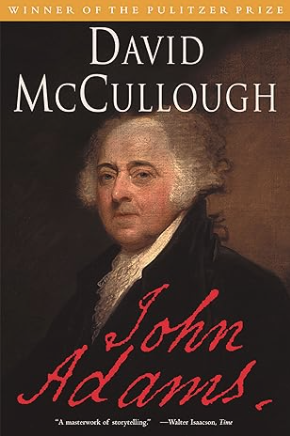
David McCullough came to John Adams as one of America’s most celebrated popular historians, already the author of landmark works on the Brooklyn Bridge, the Johnstown Flood, and Harry Truman. His Truman biography had won the Pulitzer Prize in 1993, and with John Adams he would claim a second Pulitzer in 2002. McCullough’s method is immersive and humanizing: he reads his subjects’ diaries, correspondence, and contemporaries’ accounts until, as he once described it, he can almost hear them talking. The result is history written with the momentum of a novel without sacrificing scholarly seriousness.

McCullough chose Adams at a pivotal cultural moment. By 2001, Jefferson’s reputation had been significantly complicated by the DNA evidence confirming a relationship with his enslaved servant Sally Hemings, and Washington had long since hardened into marble. Adams, who owned no enslaved people and whose prickly, honest, sometimes maddening character resisted mythologizing, suddenly seemed like the most human of the founders. McCullough’s timing was not cynical – he had been fascinated by Adams for years – but it was fortuitous. The book became a phenomenon, spending months on bestseller lists and inspiring an HBO miniseries.

The Central Argument: The Necessary Gadfly

McCullough’s core argument is that John Adams was the indispensable revolutionary – not the most gifted writer, not the most charismatic leader, but the man whose ferocious determination, moral clarity, and sheer force of will made independence possible when it might otherwise have stalled or collapsed.

The argument takes shape most powerfully in McCullough’s treatment of Adams’s work in the Continental Congress from 1775 through the summer of 1776. Where many delegates arrived in Philadelphia uncertain, cautious, or genuinely opposed to a final break with Britain, Adams arrived convinced that independence was not merely desirable but inevitable and necessary. He lobbied, argued, cajoled, and wore down resistance with a tenacity that exhausted even those who agreed with him. Jefferson, who watched him work, called him “the colossus of independence” and noted that Adams was “not graceful nor elegant, nor remarkably fluent,” but that “he came out occasionally with a power of thought and expression that moved us from our seats.”

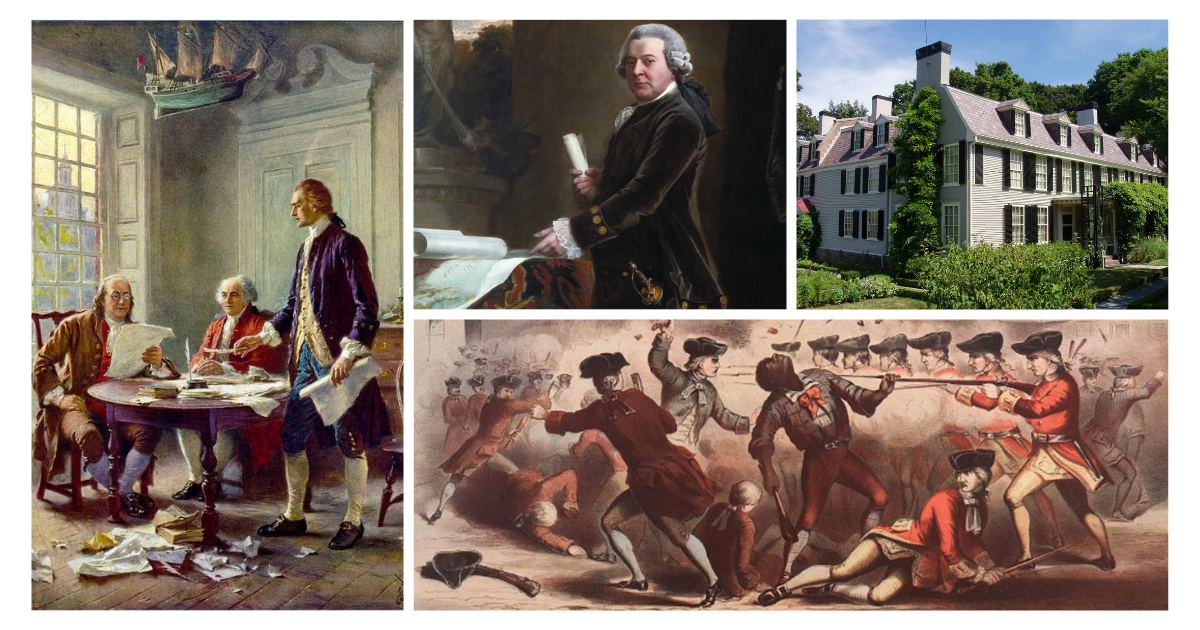
When the decision came to appoint a committee to draft a declaration, Adams made the choice that would ultimately cost him historical prominence: he selected Jefferson to write it. In McCullough’s telling, Adams’s reasoning was both practical and generous. Jefferson was from Virginia, the largest colony, and his support would be essential. He had a “peculiar felicity of expression,” as Adams acknowledged, that Adams knew he himself lacked. And Adams was already so overcommitted – serving on dozens of committees – that he had little time for the extended composition the task required. It was a decision made from strategic wisdom, not self-effacement, but history’s irony is merciless: Adams chose well for the country and suffered for it in memory.
The Months That Followed: Independence in the Balance

If Adams feared that the Declaration’s signing was the end of his essential role, the months that followed proved otherwise. The summer and fall of 1776 were among the most desperate of the entire war, and Adams was at the center of nearly every critical decision.

In September 1776, Adams participated in the failed peace conference at Staten Island, meeting with British Admiral Lord Howe in an encounter McCullough renders with almost cinematic tension. Howe offered reconciliation on terms that would have effectively nullified independence; Adams refused, understanding that any negotiated return to the British fold would destroy everything the Declaration had declared. The talks collapsed, and the war that everyone had known was coming became unavoidably, irreversibly real.

Adams then threw himself into the work of organizing the Continental Army, chairing the Board of War and Ordnance with his characteristic furious energy. He wrote reports, requisitioned supplies, argued for longer enlistments, and struggled against the chronic incompetence and corruption that plagued the American war effort. These were not glamorous tasks. There would be no statues erected to the man who fixed the army’s supply chain, but without that work, Washington’s troops would have had nothing to fight with.

By the end of 1777, Adams had been selected for one of the most consequential assignments of the Revolution: diplomatic mission to France. He would sail across the Atlantic in early 1778 – a dangerous voyage – to help secure the French alliance that Washington desperately needed. The Declaration’s survival, it turned out, would depend not only on the men who signed it but on the diplomats who persuaded Europe to take it seriously.

The Voice of the Text

McCullough’s prose has the quality of good conversation: clear, warm, and propulsive, with an eye for the detail that illuminates character. He is at his best in the intimate moments – Adams defending British soldiers during a trial following the 1770 Boston Massacre, Adams up before dawn to read Cicero, Adams writing letters to Abigail that crackle with affection and intellectual hunger, Adams sitting alone in the gallery of Congress watching Jefferson receive the credit for work that Adams had, in a real sense, made possible.

Some of the book’s most interesting passages capture the partnership and rivalry with Jefferson in miniature. McCullough describes the two men in Paris in 1784, and notes that despite their profound political differences, they were genuinely fond of each other – two brilliant men from utterly different worlds who recognized something essential in the other. The friendship’s later collapse and eventual reconciliation (both men died on July 4, 1826, the fiftieth anniversary of the Declaration) gives the book its wistful final movement.

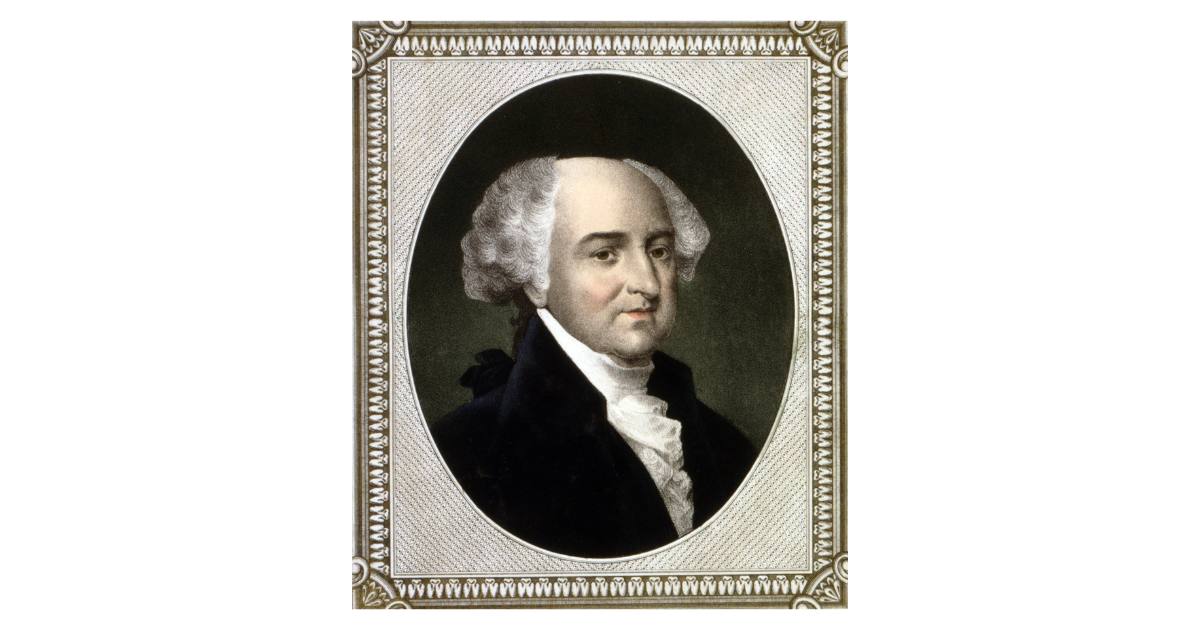
McCullough also excels at capturing Adams’s self-awareness about his own difficult personality. Adams knew he was vain, irritable, and sometimes his own worst enemy. “I have one talent,” he once wrote, “and that is an honest heart.” In McCullough’s rendering, that honesty – the refusal to flatter, to temporize, to tell people what they wanted to hear – was both his greatest virtue and his greatest political liability.
Dialogue with the Series

Read alongside the other works in “The Architects of Independence,” John Adams occupies a distinctive position: it is the book that most forcefully challenges the sensationalistic tendency in revolutionary biography.

Where Jon Meacham’s Thomas Jefferson: The Art of Power and Walter Isaacson’s Benjamin Franklin present their subjects with the advantage of posterity’s settled admiration, McCullough’s Adams is perpetually under-appreciated within the narrative itself. This makes for a productive tension. Meacham’s Jefferson is the visionary who gave the Declaration its moral vocabulary; McCullough’s Adams is the political engineer who made the vote for independence possible in the first place. Neither book is wrong. Both are necessary.

The contrast with Joseph Ellis’s Founding Brothers is equally illuminating. Ellis, whose work spans multiple founders, treats Adams with sympathy but also with the slightly clinical detachment of a scholar who can see all the founding relationships at once. McCullough is fully, unashamedly inside Adams’s point of view – a different kind of truth. And Pauline Maier’s American Scripture, the series’ most academically rigorous entry, provides the essential corrective to both: her argument that Congress itself, not Jefferson or Adams alone, shaped the final Declaration reminds us that individual biography, however excellent, always risks distorting a collective achievement.

Gordon Wood’s Revolutionary Characters, which opened the series, provides the intellectual framework that makes Adams comprehensible: the founding generation’s deep anxiety about reputation, honor, and posterity helps explain why Adams’s historical marginalization wounded him so deeply and why McCullough’s rehabilitation feels so satisfying.

What We Have Learned Since 2001

McCullough’s biography arrived before the most significant recent scholarship on Adams had fully developed. In the years since, historians have devoted increasing attention to Abigail Adams as an intellectual and political partner – a dimension McCullough acknowledges but does not fully develop. More recent work has examined Abigail’s own views on slavery and women’s rights, views that were in some respects more progressive than her husband’s and that complicate any simple portrait of the Adams household.

Scholars have also pushed back gently on McCullough’s occasionally romanticizes treatment of Adams’s foreign policy judgment. Adams’s decision to pursue peace with France in 1799 – presented by McCullough as an act of courageous statesmanship – has been reexamined in light of new archival work suggesting the diplomatic situation was more ambiguous than the biography implies.

The broader historiographical trend since 2001 has moved toward recovery of voices that founders-focused biography necessarily marginalizes: the enslaved people whose labor made the founders’ leisure possible, the Indigenous nations whose lands were already being eyed as the price of “independence,” the women whose political thinking shaped the era without appearing in the official record. McCullough’s Adams is a great man biography in the classic mode – absorbing and important, but written in a tradition that subsequent historians have productively challenged.

Why Read This Book in 2026

For readers joining the “Booked for the Revolution” series at this juncture, John Adams performs an essential corrective function: it insists that the Declaration of Independence was not the product of genius alone but of grueling political work – of committee meetings and floor votes and personal persuasion and strategic calculation. Adams, with his unlovely virtues of persistence and moral stubbornness, is the founder who most resembles the kind of citizen that democratic republics actually require: not the brilliant visionary, but the person who shows up, does the work, and refuses to give up.

In 2026, when the mechanisms of democratic governance feel simultaneously fragile and indispensable, that is not a trivial lesson. McCullough’s Adams is also a meditation on the relationship between character and legacy – on how history distributes credit unevenly and how the people who make essential things possible are often not the people remembered for them.

The book is, finally, a great read: richly researched, beautifully written, and emotionally generous to its subject without ever descending into mere celebration. For any reader who wants to understand not just what the Declaration said but how it came to exist – the bruising, brilliant, exhausting human process by which thirteen fractious colonies agreed to stake everything on a single document – John Adams is essential.


A Personal Note

An early “trigger” leading the the genesis of the “Booked for the Revolution” series was a journey recreating the Great Wagon Road early colonists used to move from Pennsylvania through Virginia into North Carolina and beyond; you can read it here. Part of that journey was looking into my ancestry, as family history told of earlier Adams families who came to America from Germany, and then slowly migrated south over nine generations, ending up in Tennessee. However, some tantalizing clues began to appear during my research then, and have resurfaced again in research into the life of President John Adams.

There has been some confusion over my second great-grandfather due to deaths of spouses, remarriages to women with existing children, and the very common use of the name “John” in the Adams family.

Let’s just say that this isn’t the last time I will be looking at President John Adams, his ancestors in England, his well-known immediate children and grandchildren, and his extended family over the past few centuries.

A new series is definitely in the works!


A Note on the “Booked for America” Series

This journey through Revolutionary history is as much about the evolution of historical understanding as the Revolution itself. History isn’t static – each generation reinterprets the past through its own concerns, asking different questions and prioritizing different sources. By reading these books in dialogue across 250 years, we’ll witness how scholarship evolves, how narratives get challenged, and how forgotten stories resurface.

This isn’t about declaring one interpretation “right” and another “wrong,” but appreciating the richness that emerges when multiple perspectives illuminate the same transformative moment. These books won’t provide definitive answers – history rarely does – but they equip us to think more clearly about how real people facing genuine uncertainty chose independence, how ideas had consequences, and how the work of creating a more perfect union continues. As we mark this anniversary, we honor the Revolutionary generation by reading deeplythinking critically, and engaging seriously with both the brilliance and blind spots of what they created.
You can find the entire series listing here.

May 20, 1775: First in Freedom, Last to Get Credit

Three books that make the case for America’s forgotten first independence.

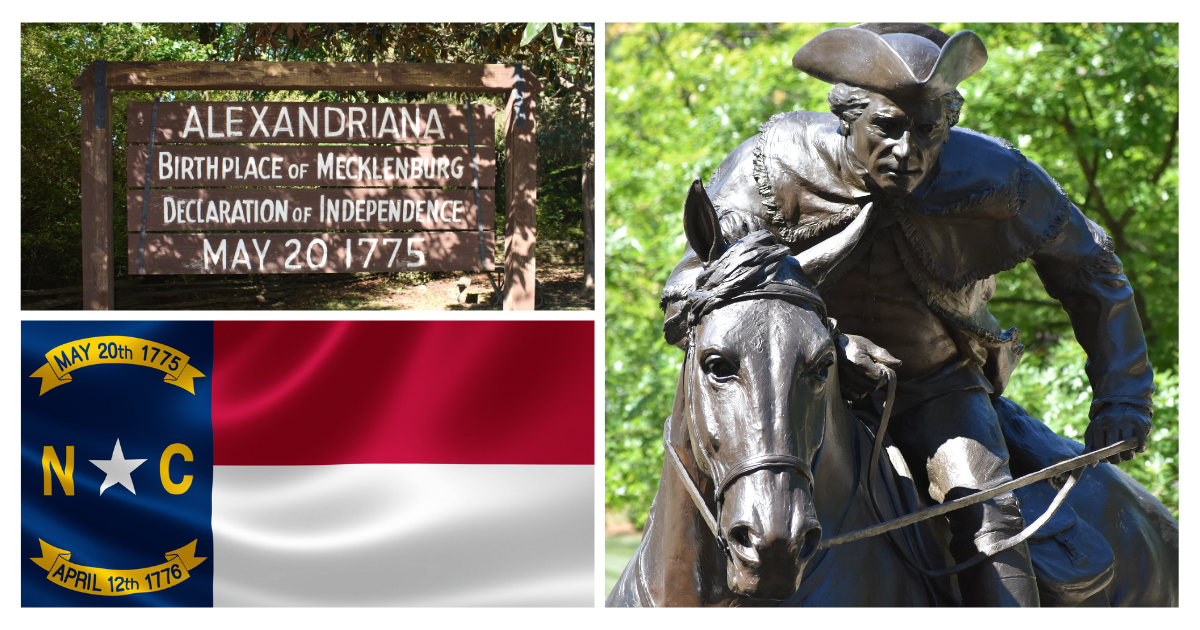
Every May 20th, the date printed on the North Carolina state flag gets its moment of annual celebration here in Mecklenburg County. There are speeches, maybe a reenactment. The Queen City tips its hat to a story that most of the country has never heard, then moves on. But in 2026 – as the nation prepares to celebrate its 250th anniversary with parades, fireworks, and the full weight of collective patriotic feeling – that quiet, local ritual has never carried more weight. Because if three books about the Mecklenburg Declaration of Independence are right, the story of American freedom doesn’t begin on July 4, 1776. It begins here. On May 20, 1775. Fourteen months earlier. In a log courthouse that used to stand where Uptown Charlotte now hums with commerce.

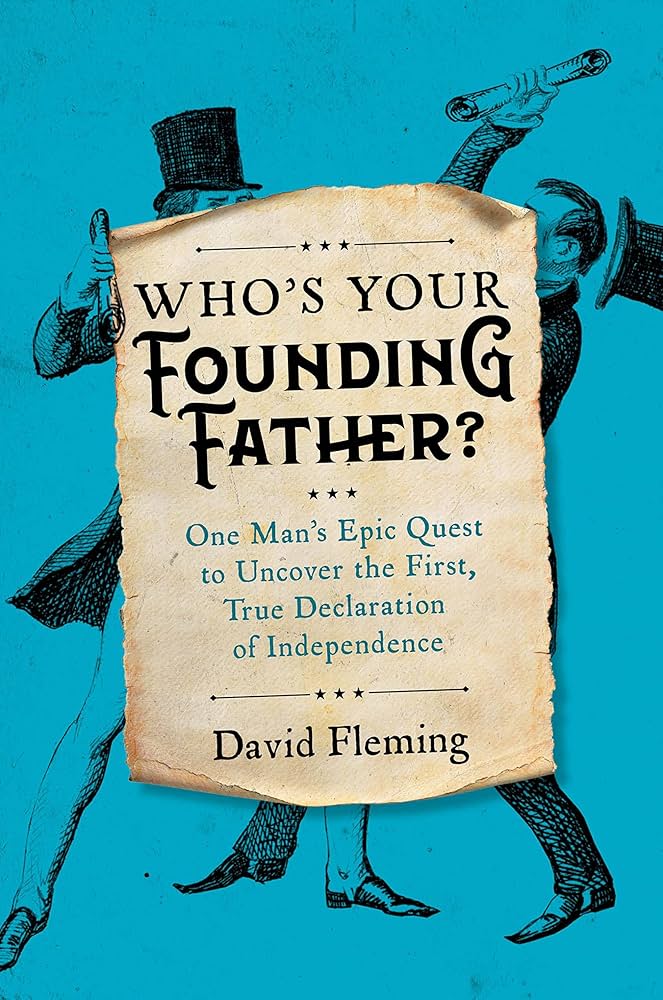
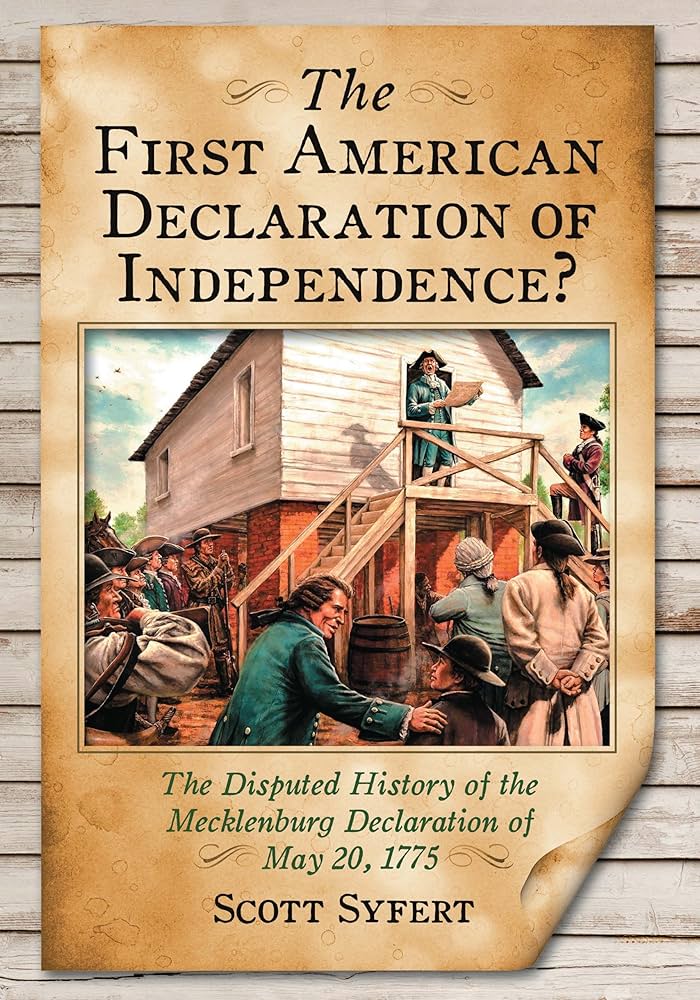
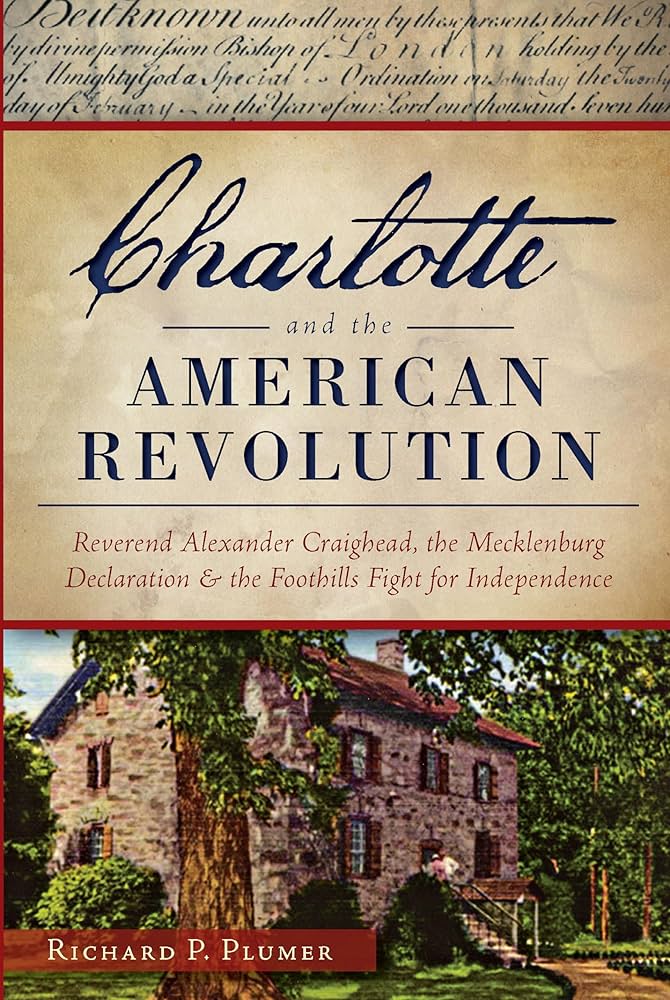
That’s either the most extraordinary fact in American history or one of its most elaborate myths. And the question of which it is has consumed lawyers, historians, journalists, and devoted amateurs for more than two centuries. Three books – David Fleming’s Who’s Your Founding Father?, Scott Syfert’s The First American Declaration of Independence?, and Richard Plumer’s Charlotte and the American Revolution – approach that question from different angles, with different tools, in different voices. Read together, they form something close to a complete portrait of an event that deserves to be far more than a footnote on a state flag.

What Actually Happened — or What People Say Happened

The story, as best we can reconstruct it: on May 19–20, 1775, roughly two dozen militia leaders from Mecklenburg County gathered in Charlotte’s log courthouse. Word had just arrived of the battles at Lexington and Concord. Enraged, they drafted a declaration severing Mecklenburg County’s ties to the British Crown, declaring themselves free and independent people. A tavern owner named James Jack rode nearly six hundred miles to Philadelphia to deliver it to the Continental Congress, who considered it premature and quietly set it aside. The original document was later lost – possibly destroyed in a fire – and the story largely faded until 1819, when John Adams stumbled upon a newspaper account of it and wrote to his old political rival Thomas Jefferson that it was “one of the greatest curiosities and one of the deepest mysteries that ever occurred to me.”

Jefferson, for his part, called it “spurious.” Which is exactly what you might expect a man to say if he’d lifted large portions of his most famous work from someone else’s document.

That charge – that Jefferson plagiarized the MecDec when writing the national Declaration of Independence – is at the molten core of all three books. Adams believed it. Eleven U.S. presidents, by various accounts, have found the story credible enough to warrant further investigation. And the language of the two documents bears uncomfortable similarities that are either cosmic coincidence or the most consequential act of intellectual theft in American history.

Three Authors, Three Lenses

David Fleming: The Gonzo Investigator

David Fleming arrived at the MecDec story the way a lot of people do – sideways, almost accidentally, pulled in by the sheer strangeness of it. A veteran sports journalist for ESPN and Sports Illustrated known for his irreverent, character-driven long-form work, Fleming is not a historian by training. He is, as he’s been described, a gonzo journalist – and that’s precisely what makes Who’s Your Founding Father? (2023) so readable, so genuinely fun, and so unexpectedly moving.

Fleming describes himself falling down a rabbit hole, then deciding to go deeper instead of climbing out. What follows is part detective story, part road trip, part love letter to Charlotte and the stubborn locals who’ve refused to let this story die. He visits archives. He wanders through cemeteries. He travels to England. He is constitutionally unable to resist a Dunkin’ Donuts reference. His affection for the “misfit band of zealous Scots-Irish patriots, whiskey-loving Princeton scholars and a fanatical frontier preacher” who gathered in that courthouse is genuine and infectious.

But the book is not merely entertaining. Fleming makes a substantive case. He traces the journey of James Jack’s six-hundred-mile horse ride with the reverence it deserves, reconstructs the intellectual and theological climate that made such a declaration possible, and builds a compelling argument that the MecDec’s obscurity is not an accident of history – it’s the result of active suppression, first by the Continental Congress who feared its radicalism, then by Jefferson’s defenders who had every reason to keep the plagiarism question buried.

Reviewers have compared the book to National Treasure, which sounds like a throwaway compliment but actually captures something real: Fleming makes you feel the stakes. When author Tommy Tomlinson calls Who’s Your Founding Father? a book that “will change how you see American history,” it’s the kind of blurb that usually oversells – but here, it lands. The book has a way of making Charlotteans feel a proprietary pride they maybe didn’t know they were missing.

Scott Syfert: The Lawyer Who Became a Believer

Where Fleming comes at the MecDec as an outsider who converts, Scott Syfert comes as a resident who decided to do the work. A corporate attorney and co-founder of the May 20th Society – the nonprofit dedicated to keeping the MecDec’s legacy alive – Syfert published The First American Declaration of Independence? in 2013, a full decade before Fleming’s book arrived. He is the foundational text. Fleming, to his credit, acknowledges as much.

Syfert’s book is structured like a legal brief written by someone who understands that jurors need stories, not just evidence. He divides the book into five sections, walking readers through the backcountry origins of Mecklenburg County, the formation of its fiercely independent Scots-Irish Presbyterian community, the events of May 1775, and then the two centuries of controversy that followed. He presents both sides. He genuinely does. But as one reviewer noted, he approaches the material like a defense attorney rather than a neutral judge: the goal is not a verdict of “definitely happened” but rather reasonable doubt about the doubters.

The book’s great contribution is its methodical excavation of the evidence. Syfert examines the surviving correspondence of North Carolina’s royal governor, who referred to treasonous activity in Mecklenburg in dispatches that predate any supposed forgery. He traces the similarities between the MecDec’s language and Jefferson’s 1776 text, and walks through Adams’s private letters accusing Jefferson directly. He handles the fire that destroyed the original document – the most convenient fact for skeptics – with the seriousness it deserves rather than dismissing it as simply unlucky.

Ken Burns called Syfert’s book a work that rescues “a little-known story of our Revolutionary past” and brings it “vividly to life.” Historian Andrew Roberts described it as “one of the finest pieces of historical detective work I’ve ever read,” calling Syfert “the Sherlock Holmes of the Mecklenburg Declaration.” That’s not overstatement. By the end, a reader who began skeptical will find, as one Journal of the American Revolution reviewer did, that they’ve “accepted the possibility that the document may indeed have existed.”

The question mark in the title is honest. Syfert doesn’t claim certainty. He claims probability, marshaled through careful, readable, thoroughly cited work. That intellectual honesty is part of what makes the book so effective.

Richard Plumer: The Ground-Level Chronicler

If Fleming is the entertainer and Syfert is the advocate, Richard Plumer is the archivist – the writer who zooms out to show you the full landscape in which the MecDec was born. Charlotte and the American Revolution (2014, The History Press) is the most locally rooted of the three books, and in some ways the most essential for Mecklenburg County residents who want to understand not just what the MecDec says but why it was possible here, in this place, among these specific people.

Plumer’s central subject is the Reverend Alexander Craighead, the fiery Presbyterian minister whose theological and political rhetoric became the intellectual kindling for the Declaration. Craighead was not a mild man. His ultraconservative Calvinist theology mapped neatly onto revolutionary politics: obedience to unjust authority was not just impractical, it was spiritually impermissible. He preached a congregation into a posture of resistance long before Lexington and Concord gave that resistance a specific target.

Plumer is a member of the Mecklenburg Historical Association, and his book reads like the work of someone who has spent years in county archives, church records, and family histories. The detail is rich. The context is essential. He makes clear that the MecDec did not emerge from nowhere – it emerged from a specific community, shaped by specific theology, living at the edge of civilization with minimal help from and maximum frustration with British authority.

The raw numbers he surfaces are remarkable: though Mecklenburg County held less than three percent of North Carolina’s colonial population, its patriots accounted for more than a quarter of the colony’s Revolutionary troops. This was not a passive place. This was a community already constitutionally disposed toward independence, waiting for the moment to say so formally.

Plumer’s book fills in the human geography that makes the other two books make sense. You can read Fleming and feel the excitement of the story. You can read Syfert and feel the weight of the evidence. But read Plumer, and you understand the whythe theology, the culture, the community that made it conceivable that two dozen men in a log courthouse in the Carolina backcountry could look at each other on May 20, 1775, and say: enough. We’re done.

Why 2026 Is the Year to Read All Three

There’s something clarifying about big anniversaries. America’s 250th birthday is a moment when the country tends to revisit its founding myths – to ask which ones are accurate, which ones are convenient, and which ones have been quietly buried. The MecDec story is all three at once.

As a resident of Mecklenburg County, I live on ground that may have been the actual cradle of American independence. Not Philadelphia. Not Boston. Here. And yet most of my neighbors – and nearly all of my fellow Americans – have never heard of May 20, 1775. That tension feels worth correcting in a year when the nation is, for once, paying attention to its own origins.

The three books, read together, form something like a complete case. Plumer gives you the soil – the culture and community that made the MecDec possible. Syfert gives you the evidence – the most thorough, balanced, legally rigorous examination of what we know and don’t know. And Fleming gives you the joy of discovery – the reminder that history isn’t just the province of academics, that a journalist with a plane ticket and an obsession can still crack open a two-hundred-and-fifty-year-old mystery and find something worth knowing inside.

None of the three books claims to have settled the debate definitively. The original document is gone. The evidence is circumstantial in places and contested in others. But there are things that are harder to explain away: the royal governor’s letters mentioning treasonous Mecklenburg activity before any supposed forgery could have occurred. The eyewitness accounts collected decades later. The extraordinary overlap between the MecDec’s language and Jefferson’s draft. The suspicious silence of a man – Jefferson – who was not typically silent about anything.

John Adams believed the story was real and begged his country to take it seriously. He called it “the genuine sense of America” – not a regional curiosity, but the truest expression of what the revolution was actually about: ordinary people, in an ordinary place, deciding that they were done waiting for permission to be free.

The people who signed that document in Charlotte’s log courthouse – the Scots-Irish farmers and frontier preachers and tavern owners – were not famous. They were not Founding Fathers with portraits and monuments. They were, in many ways, the people who usually get left out of the story. And that’s exactly why, in 2026, the story of the MecDec feels so present, and so important, and so worth finally telling.

If you’re looking for books that challenge what you thought you knew about America’s origins, look no further.

This unforgettable trio delivers history with a healthy dose of humor, reads like a true-crime caper, and provides a thought-provoking, entertaining, and utterly unforgettable dive into a piece of the past that might just rewrite a small, but significant, chapter in the story of American independence. 

You might even find yourself rooting for a different “founding father” by the end!


If you liked this article, or are curious about American history – especially during the growing excitement around the 250th anniversary of the other Declaration of Independence, you might be interested in “Booked for the Revolution.”

It’s a weekly article published on Fridays that takes a look at the beginning years of the U.S. through a book each week. Check out the series here.


Part of a regular series on 27gen, entitled Wednesday Weekly Reader.

During my elementary school years one of the things I looked forward to the most was the delivery of “My Weekly Reader,” a weekly educational magazine designed for children and containing news-based current events.

It became a regular part of my love for reading, and helped develop my curiosity about the world around us.

The Year Nobody Wanted War — And Got It Anyway


March and April – The Gathering Storm, Part One

Imagine you are a prosperous Virginia planter in the spring of 1774. You drink tea every morning, you swear allegiance to King George III, and you find the hotheads up in Boston as alarming as the Parliament they are defying. War is unthinkable. Independence is treasonous. And yet, within twelve months, you will be drilling with a militia, signing non-importation agreements, and telling yourself – with more conviction than you actually feel – that armed resistance was always the only honorable path.

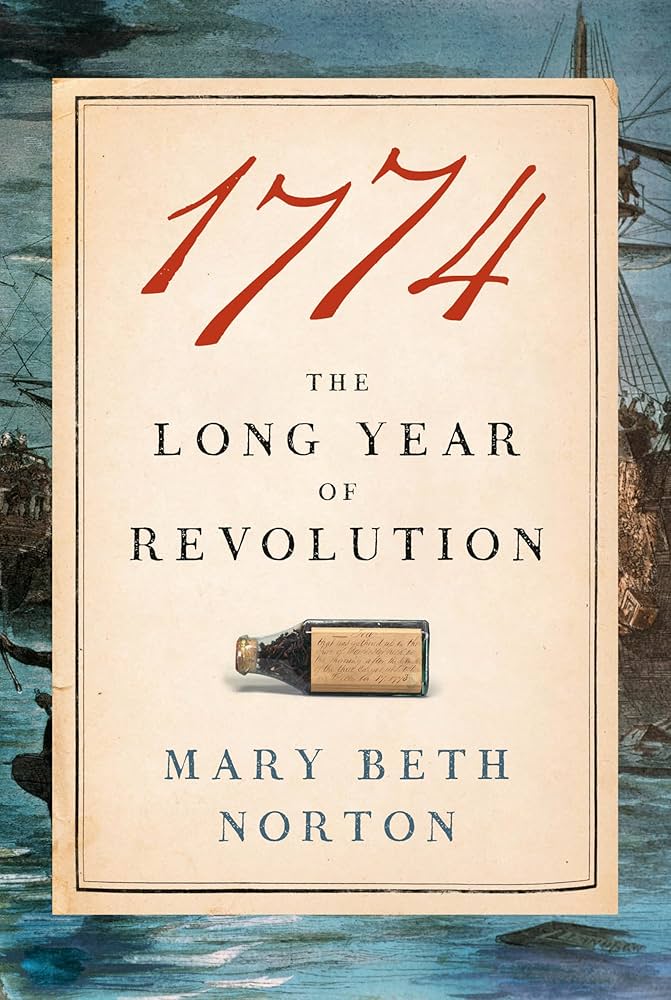
That psychological journey, taken by hundreds of thousands of colonists who never wanted a revolution, is the subject of Mary Beth Norton’s distinguished 1774: The Long Year of Revolution (Knopf, 2020). In an era when Americans are once again arguing furiously about the meaning of their founding, about who belongs in the national story, and about how a democracy fractures under pressure, Norton’s book arrives as something rarer than a good history: it arrives as a mirror.

Who Is Mary Beth Norton, and Why Does It Matter?

Norton is the Mary Donlon Alger Professor Emerita of American History at Cornell University, a past president of the American Historical Association (2018), and a Pulitzer Prize finalist. She spent more than four decades researching colonial America before writing this book – and it shows. Her earlier work illuminated women’s lives in the Revolutionary era (Liberty’s Daughters), gendered power in the founding (Founding Mothers & Fathers), and the Salem witch trials (In the Devil’s Snare). She has always been drawn to the people squeezed out of the triumphant narrative: women, loyalists, the doubters, the losers.

That scholarly instinct shapes 1774 from its first page. Norton is not here to celebrate the Founders. She is here to complicate them — to show that the path from colonial grievance to Continental Army was not a confident march but a stumbling, anguished, sometimes violent negotiation between people who disagreed profoundly about what loyalty, liberty, and law actually meant.

The Central Argument: 1774, Not 1776

Norton’s core claim is both elegant and disruptive: the American Revolution did not begin in 1776 with a Declaration. It began in 1774, in the sixteen messy, terrifying months between the Boston Tea Party (December 1773) and the battles at Lexington and Concord (April 1775). During those months, colonial political culture was irrevocably transformed. New institutions – committees of correspondence, provincial congresses, local enforcement committees – effectively replaced royal government across thirteen colonies. By the time the first shots were fired, the revolution in governance had already happened.

By early 1775, royal governors throughout the colonies informed colonial officials in London that they were unable to thwart the increasing power of the committees and their allied provincial congresses. The war did not create the revolution. The revolution made the war inevitable.

Norton also insists on a truth that American mythology has long suppressed: Americans today tend to look back on the politics of those days and see unity in support of revolution. That vision is false. The population was divided politically then, as now. Support for resistance was never unanimous. Loyalists were not simply British pawns or cowards – many were thoughtful, principled people who genuinely believed that reconciliation was possible and that mob rule was as dangerous as Parliamentary tyranny.

Counterintuitively, the proposal to elect a congress to coordinate opposition tactics came not from radical leaders but from conservatives who hoped for reconciliation with Britain. Loyalists to England, not the revolutionaries, were the most vocal advocates for freedom of the press and strong dissenting opinions. London’s shortsighted responses kept pushing these moderates into the revolutionary camp – not because radicals won the argument, but because the British kept losing it for them.

The Author’s Voice: Close, Careful, and Unsparing

Norton’s prose is dense with primary sources – pamphlets, newspapers, diaries, letters – and she trusts them to speak. She reconstructs colonial political discourse in something close to real time, which creates an unusual and valuable effect: the reader does not know how things will turn out, because the people living through events did not know either. As the New York Review of Books observed, she “reminds us that even when it seemed inevitable that continuing protest would lead to violent confrontation with British troops, there were intelligent, articulate people in America who wanted desperately to head off the crisis.”

The tea economy alone gets a riveting treatment. Boston alone brought in 265,000 pounds of taxed tea in 1771 – but another 575,000 pounds of smuggled tea. Norton tracks tea not just as a commodity but as a political litmus test: what you drank, and where you bought it, announced your loyalties as clearly as any pamphlet. When women – so often excluded from formal political discourse – chose whether to serve tea at social gatherings, they were making public political statements. Norton pays attention to these choices. She is the rare colonial historian who does not treat gender as an afterthought.

Dialogue with the Series: Agreements and Arguments

Readers who have followed this “Booked for the Revolution” series will find Norton in productive conversation – and sometimes sharp disagreement – with the books we have examined previously. The most illuminating contrast is with Bernard Bailyn’s The Ideological Origins of the American Revolution (1967), still the towering intellectual framework for understanding why colonists rebelled. Bailyn argued that a coherent “Country” ideology – rooted in English radical Whig thought and obsessed with the threat of tyrannical conspiracy – gave colonial resistance its internal logic and emotional urgency. Norton does not dispute Bailyn’s intellectual architecture. But where Bailyn reconstructs the revolution from pamphlets and the minds of articulate men, Norton reconstructs it from committee minutes, newspaper letters, and the choices of people who were neither philosophers nor firebrands. Bailyn explains what colonists thought; Norton shows what they did – and how terrifying, coercive, and improvisational doing it actually was.

Gordon Wood’s compact The American Revolution: A History (2002) offers a complementary foil. Wood is the master of the long view: he shows how the Revolution unleashed democratic energies that eventually overwhelmed the very gentry class that launched it. His story arcs beautifully toward transformation. Norton’s story, by design, refuses that arc. She stops at the threshold – 1774 into early 1775 – and refuses to let the reader skip ahead to know how it all turns out. That discipline is precisely her point. The colonists living through 1774 did not know they were building a republic. They thought they were negotiating a crisis.

Robert Middlekauff’s The Glorious Cause (1982), the Oxford History of the United States volume covering the Revolution, provides the grandest traditional narrative against which to measure Norton. Middlekauff is comprehensive, authoritative, and deeply attentive to military history. But his frame is essentially Whiggish: the Revolution builds, the armies form, the cause prevails. Norton’s contribution is to slow that narrative to a near-standstill and examine the fault lines Middlekauff’s panoramic view necessarily blurs – the loyalists who were not villains, the moderates who were shoved rather than persuaded, the women whose tea choices were political acts. Where Middlekauff gives us the glorious cause, Norton gives us the anguished one.

Thomas Ricks’s First Principles (2020) enters this dialogue from a different angle, tracing how the Founders’ classical education – their immersion in Greek and Roman thought – shaped their vision of republican citizenship and civic virtue. Ricks’s Founders are self-consciously building something on ancient models. Norton’s colonists of 1774 are doing something more primitive and more urgent: they are improvising institutions on the fly, under pressure, with no Roman blueprint in front of them. Read together, the two books bracket the Revolution’s intellectual ambition against its messy political reality. Ricks shows what the Founders aspired to; Norton shows what they actually had to do to get there.

What We Have Learned Since 2020

Published just before the pandemic and the national reckoning of 2020, 1774 has aged remarkably well – partly because Norton was already writing about political fracture, the fragility of institutions, and the violence that lurks beneath democratic argument. If anything, subsequent scholarship has deepened her themes. Historians of Native America have pressed further on how the crisis of 1774 reshaped Indigenous political calculations, particularly in the Ohio Valley, where both British officials and colonial committees were competing for alliances. And ongoing work in Atlantic history has strengthened Norton’s point that the loyalist perspective was not marginal but was, in many colonies, a majority position well into 1774.

The 250th anniversary commemorations of 1774’s key events – make Norton’s reframing newly urgent. Commemoration tends toward myth-making; Norton is the corrective.

Why Read This in 2026?

Because we live in a moment when political communities are fracturing, when the legitimacy of governing institutions is contested, and when ordinary people are being forced to choose sides they never anticipated choosing. Norton’s colonists are unnervingly familiar – not as heroes laying the groundwork for democracy, but as frightened, conflicted human beings trying to figure out what loyalty requires when the things they are loyal to are in contradiction with one another.

This important book demonstrates how opposition to the king developed and shows us that without the “long year” of 1774, there may not have been an American Revolution at all. More than that, it shows us how revolutions actually happen – not in a single dramatic moment of declaration, but in a thousand smaller moments of committee votes and canceled tea orders and midnight militia drills and neighbors who stop speaking to each other. It is not a comfortable book. It is an essential one.


A Note on This Series

This journey through Revolutionary history is as much about the evolution of historical understanding as the Revolution itself. History isn’t static – each generation reinterprets the past through its own concerns, asking different questions and prioritizing different sources. By reading these books in dialogue across 250 years, we’ll witness how scholarship evolves, how narratives get challenged, and how forgotten stories resurface.

This isn’t about declaring one interpretation “right” and another “wrong,” but appreciating the richness that emerges when multiple perspectives illuminate the same transformative moment. These books won’t provide definitive answers – history rarely does – but they equip us to think more clearly about how real people facing genuine uncertainty chose independence, how ideas had consequences, and how the work of creating a more perfect union continues. As we mark this anniversary, we honor the Revolutionary generation by reading deeplythinking critically, and engaging seriously with both the brilliance and blind spots of what they created


You can find the entire series listing here.

Three Empires, One Continent: The Race for North America


January and February – Seeds of Rebellion Part Two

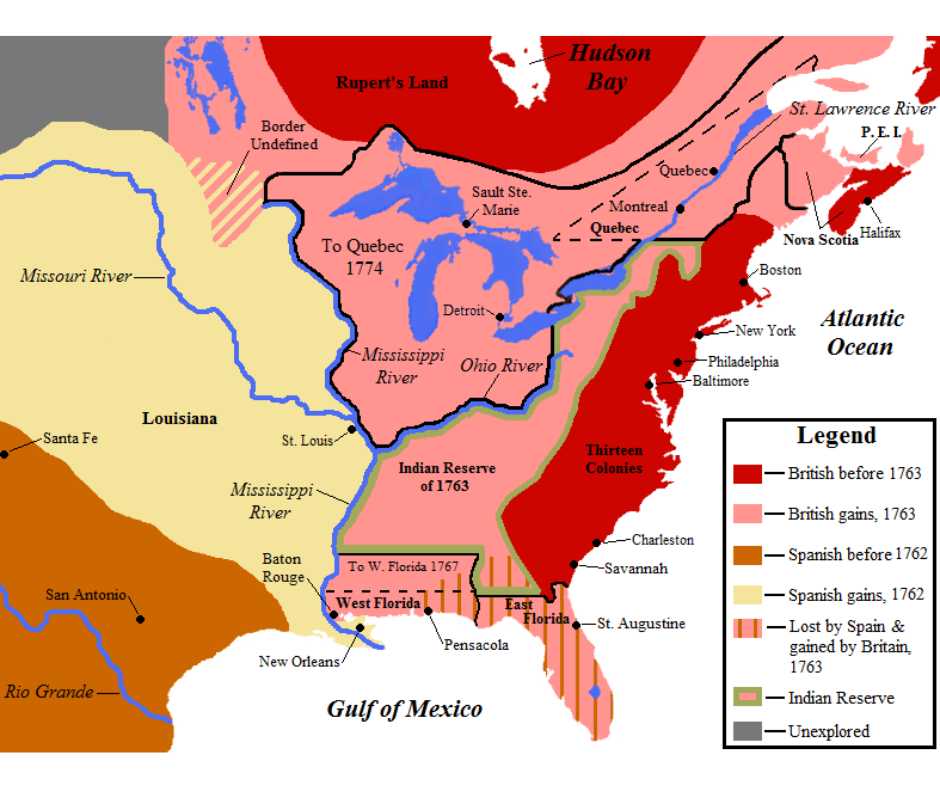
As previously discussed, Taylor’s continental approach reveals that North America was never destined to become an English-speaking nation. For nearly three centuries, the outcome remained genuinely uncertain as Spanish, French, and British empires pursued radically different colonial strategies across the continent. Understanding why Britain ultimately gained the upper hand requires examining not triumphalist inevitability, but the specific demographic, economic, and military factors that determined outcomes among competing visions of what “America” would become. Each empire brought distinct goals and methods to colonization, creating what Taylor describes as “new worlds compounded from the unintended mixing of plants, animals, microbes, and peoples on an unprecedented scale.” By the mid-eighteenth century, these competing imperial projects had produced dramatically different results – setting the stage for the dramatic events that would culminate in the American Revolution.

When European powers first cast their eyes westward across the Atlantic in the late fifteenth and early sixteenth centuries, North America represented an almost unimaginable prize: vast territories, untapped resources, and the promise of wealth and strategic advantage. Three nations – Spain, France, and Britain – would emerge as the dominant colonial powers on the continent, each pursuing distinctly different strategies shaped by their unique motivations, resources, and relationships with indigenous peoples.

Spain: The Pioneer of Empire

Spain arrived first and dreamed biggest. Emboldened by Christopher Columbus’s voyages and driven by the spectacular wealth extracted from Mexico and Peru, Spanish conquistadors and missionaries pushed northward into what is now the American Southwest and Southeast. Their colonial model was one of extraction and conversion: find precious metals, establish missions to convert Native Americans to Catholicism, and create a hierarchical society that mirrored the rigid class structures of Spain itself.

Spanish colonization followed the pathways of rumor and hope. Expeditions like those of Hernando de Soto through the Southeast and Francisco Vásquez de Coronado into the Southwest sought cities of gold that existed only in imagination. What they established instead was a chain of missions, presidios (military forts), and small settlements stretching from Florida through Texas, New Mexico, Arizona, and into California. St. Augustine, founded in 1565, became the first permanent European settlement in what would become the United States – predating Jamestown by more than four decades.

However, Spain’s North American colonies never matched the wealth of its holdings farther south. The indigenous populations were smaller and more dispersed than in Mesoamerica, and the fabled gold never materialized in significant quantities. Spanish settlements remained thinly populated, heavily dependent on a coercive labor system that exploited Native Americans, and primarily served as defensive buffers protecting the more valuable territories of New Spain. By the eighteenth century, Spanish colonization had created an impressive geographic footprint but lacked the demographic and economic dynamism that would prove crucial in the imperial competition ahead.

France: Masters of the Interior

France took a different approach entirely. Rather than establishing densely populated agricultural colonies, French explorers and traders penetrated deep into the continental interior, following the St. Lawrence River, the Great Lakes, and the Mississippi River system. From Quebec, founded in 1608, French influence spread westward and southward, creating a vast arc of territory that technically stretched from Canada to the Gulf of Mexico.

The French colonial model was built on adaptation and alliance. French traders, particularly the coureurs de bois (runners of the woods), integrated themselves into indigenous trading networks, often marrying Native American women and adopting local customs. The fur trade became the lifeblood of New France, exporting beaver pelts and other furs to insatiable European markets. Jesuit missionaries worked to convert indigenous peoples, though often with more respect for existing cultures than their Spanish counterparts demonstrated.

This approach had significant advantages. France maintained generally stronger alliances with Native American nations than either Spain or Britain, and French traders could operate across enormous distances with relatively small numbers. The downside was demographic: New France remained perpetually underpopulated. While British colonies attracted hundreds of thousands of settlers, French Canada struggled to grow beyond about 70,000 residents by the mid-eighteenth century. France’s colonial policies, which discouraged Protestant Huguenots from emigrating and focused settlement efforts on urban centers rather than agricultural expansion, meant that New France commanded vast territories but lacked the population to defend them effectively.

Britain: The Power of Numbers

British colonization began haltingly with the establishment of Jamestown in 1607 and Plymouth in 1620, but it accelerated rapidly throughout the seventeenth century. Unlike Spain’s extraction model or France’s trading networks, Britain’s colonies were fundamentally settlements – places where English, Scots-Irish, German, and other European migrants came to establish permanent communities, cultivate land, and recreate (or reimagine) the societies they had left behind.

The diversity of British colonization was remarkable. New England developed around Puritan religious communities, small-scale farming, fishing, and eventually maritime commerce and shipbuilding. The Middle Colonies became breadbaskets of grain production and models of relative religious tolerance. The Southern Colonies built plantation economies dependent on tobacco, rice, and indigo, increasingly reliant on enslaved African labor. This economic diversity created resilience and interconnected markets that strengthened the colonial system as a whole.

By the mid-eighteenth century, the British colonies boasted populations exceeding one million – dwarfing their French rivals and rendering Spanish Florida and the Southwest demographically insignificant by comparison. This population advantage translated into economic productivity, military manpower, and an ever-expanding hunger for land that pushed inexorably westward into territories claimed by France and inhabited by Native American nations.

Britain’s Ascendancy: Why the English Prevailed

Several factors explain Britain’s dominant position by the 1760s. First and most important was demography. The sheer number of British colonists created facts on the ground that neither French traders nor Spanish missionaries could match. More people meant more cleared land, more towns, more economic production, and more soldiers when conflicts arose.

Second, Britain’s constitutional system, for all its flaws, created a more dynamic economy than the absolutist monarchies of France and Spain. Property rights were better protected, entrepreneurship was encouraged, and colonial assemblies gave settlers a stake in their own governance that fostered loyalty and investment. The Navigation Acts tied colonial economies to Britain, but they also guaranteed markets and naval protection.

Third, British naval supremacy proved decisive. The Royal Navy could project power, protect maritime commerce, and prevent French and Spanish reinforcement of their colonies during wartime. The series of imperial wars culminating in the Seven Years’ War (1756-1763) demonstrated this advantage repeatedly.

Finally, Britain benefited from the weaknesses of its rivals. Spain’s empire was overextended and increasingly ossified. France faced the impossible task of defending an enormous territory with inadequate population and resources, particularly when facing Britain’s combination of naval power and demographic advantage.

The Irony of Success

The Treaty of Paris in 1763, ending the Seven Years’ War, marked the zenith of British power in North America. France ceded Canada and its claims east of the Mississippi. Spain surrendered Florida. Britain stood supreme, master of the Atlantic seaboard and beyond.

Yet this very success contained the seeds of imperial crisis. The war had been expensive, and Britain expected its prosperous colonies to help pay the costs. The colonists, having helped win the war and no longer facing French threats, increasingly questioned why they needed British rule at all. The very demographic and economic dynamism that had made the British colonies strong now made them confident and restive.

Britain had won the race for North America, but in doing so, it had created colonies powerful enough to imagine independence. The path to revolution would emerge not from weakness, but from strength – the ultimate irony of imperial triumph.


A Note on This Series

This journey through Revolutionary history is as much about the evolution of historical understanding as the Revolution itself. History isn’t static – each generation reinterprets the past through its own concerns, asking different questions and prioritizing different sources. By reading these books in dialogue across 250 years, we’ll witness how scholarship evolves, how narratives get challenged, and how forgotten stories resurface.

This isn’t about declaring one interpretation “right” and another “wrong,” but appreciating the richness that emerges when multiple perspectives illuminate the same transformative moment. These books won’t provide definitive answers – history rarely does – but they equip us to think more clearly about how real people facing genuine uncertainty chose independence, how ideas had consequences, and how the work of creating a more perfect union continues. As we mark this anniversary, we honor the Revolutionary generation by reading deeplythinking critically, and engaging seriously with both the brilliance and blind spots of what they created.

Color map by Jon Platek

You can find the entire series listing here.