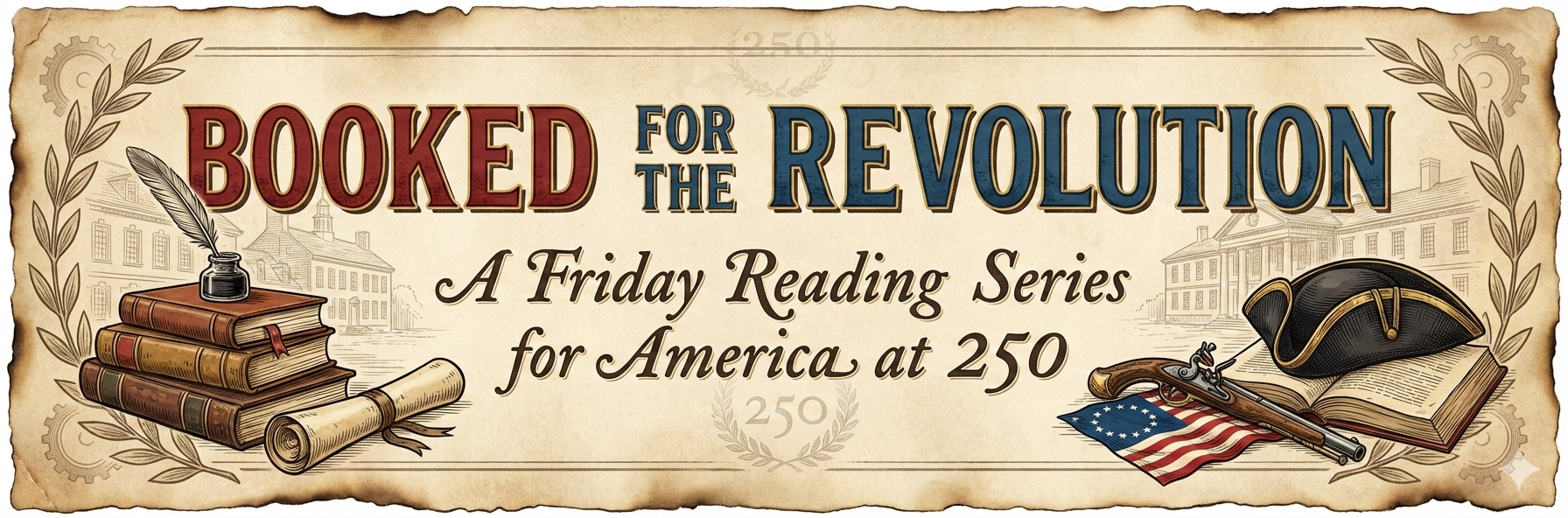
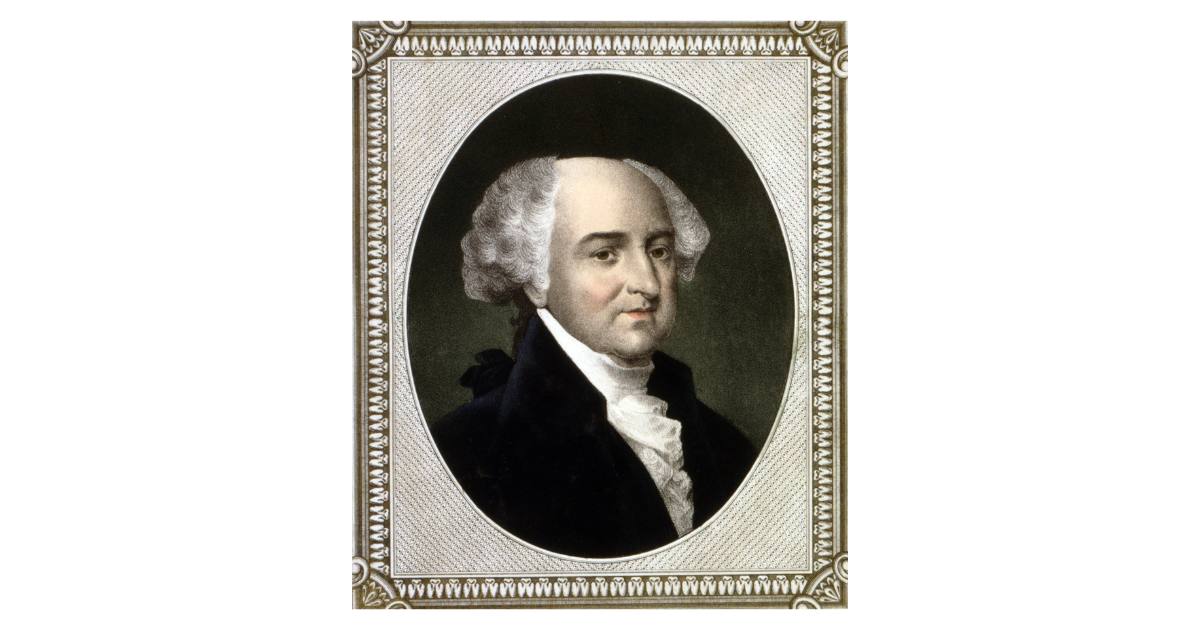
John Adams was the foremost advocate in Congress for independence and the driving force behind Jefferson’s appointment as primary drafter. David McCullough’s Pulitzer Prize-winning biography captures his central role in bringing the Declaration into existence
The Man Who Made It Happen
On the morning of July 2, 1776, John Adams wrote to his wife Abigail with barely contained elation. The Continental Congress had just voted in favor of independence – a moment Adams believed would be remembered forever. He predicted that future generations would celebrate the date with bonfires and illuminations across the continent. He was off by two days. History would settle on July 4th, when the Declaration was formally adopted, and the man who received the glory would not be Adams but Thomas Jefferson, the elegant Virginian whose soaring prose had transformed Adams’s hard-won political victory into an enduring piece of literature.
That gap between what Adams actually accomplished and the recognition he received is the quiet heartbreak running through David McCullough’s magnificent 2001 biography, John Adams. In an era when Americans argue constantly about credit, legacy, and who gets to shape the national narrative, the story of John Adams feels startlingly, even painfully, contemporary. His life is a case study in the distance between doing the essential work and being remembered for it.
The Biographer and His Subject
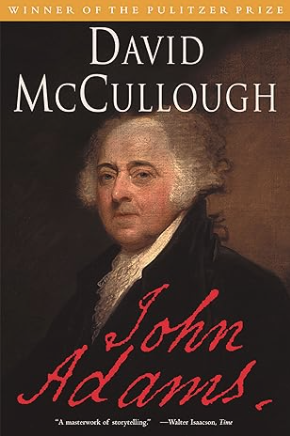
David McCullough came to John Adams as one of America’s most celebrated popular historians, already the author of landmark works on the Brooklyn Bridge, the Johnstown Flood, and Harry Truman. His Truman biography had won the Pulitzer Prize in 1993, and with John Adams he would claim a second Pulitzer in 2002. McCullough’s method is immersive and humanizing: he reads his subjects’ diaries, correspondence, and contemporaries’ accounts until, as he once described it, he can almost hear them talking. The result is history written with the momentum of a novel without sacrificing scholarly seriousness.
McCullough chose Adams at a pivotal cultural moment. By 2001, Jefferson’s reputation had been significantly complicated by the DNA evidence confirming a relationship with his enslaved servant Sally Hemings, and Washington had long since hardened into marble. Adams, who owned no enslaved people and whose prickly, honest, sometimes maddening character resisted mythologizing, suddenly seemed like the most human of the founders. McCullough’s timing was not cynical – he had been fascinated by Adams for years – but it was fortuitous. The book became a phenomenon, spending months on bestseller lists and inspiring an HBO miniseries.
The Central Argument: The Necessary Gadfly
McCullough’s core argument is that John Adams was the indispensable revolutionary – not the most gifted writer, not the most charismatic leader, but the man whose ferocious determination, moral clarity, and sheer force of will made independence possible when it might otherwise have stalled or collapsed.
The argument takes shape most powerfully in McCullough’s treatment of Adams’s work in the Continental Congress from 1775 through the summer of 1776. Where many delegates arrived in Philadelphia uncertain, cautious, or genuinely opposed to a final break with Britain, Adams arrived convinced that independence was not merely desirable but inevitable and necessary. He lobbied, argued, cajoled, and wore down resistance with a tenacity that exhausted even those who agreed with him. Jefferson, who watched him work, called him “the colossus of independence” and noted that Adams was “not graceful nor elegant, nor remarkably fluent,” but that “he came out occasionally with a power of thought and expression that moved us from our seats.”
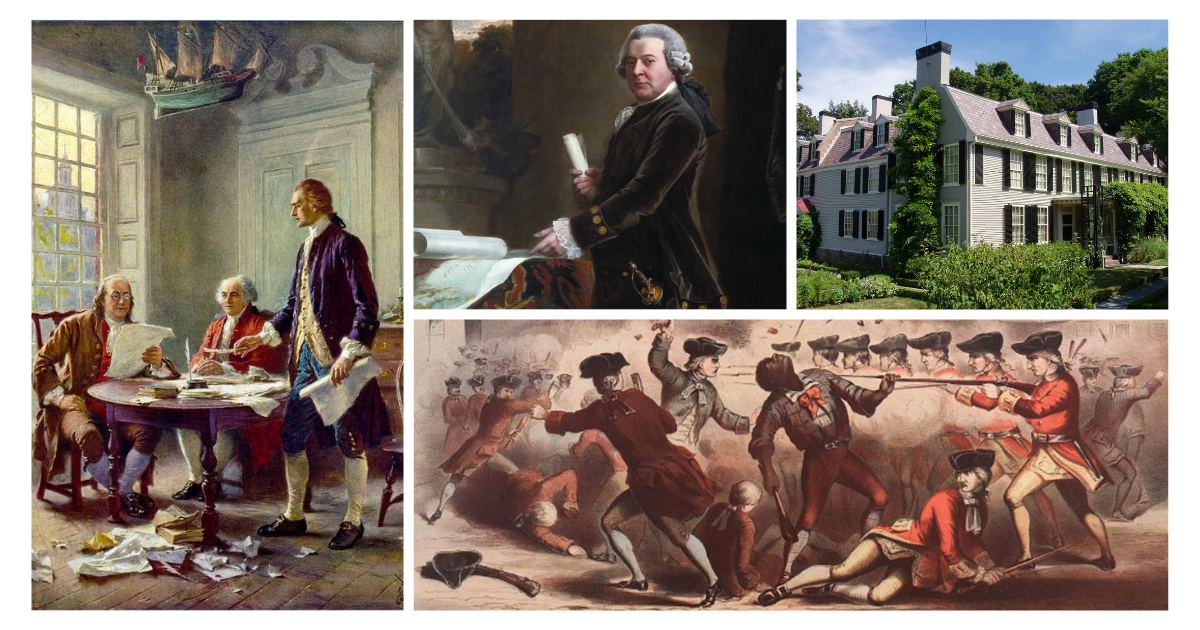
When the decision came to appoint a committee to draft a declaration, Adams made the choice that would ultimately cost him historical prominence: he selected Jefferson to write it. In McCullough’s telling, Adams’s reasoning was both practical and generous. Jefferson was from Virginia, the largest colony, and his support would be essential. He had a “peculiar felicity of expression,” as Adams acknowledged, that Adams knew he himself lacked. And Adams was already so overcommitted – serving on dozens of committees – that he had little time for the extended composition the task required. It was a decision made from strategic wisdom, not self-effacement, but history’s irony is merciless: Adams chose well for the country and suffered for it in memory.
The Months That Followed: Independence in the Balance
If Adams feared that the Declaration’s signing was the end of his essential role, the months that followed proved otherwise. The summer and fall of 1776 were among the most desperate of the entire war, and Adams was at the center of nearly every critical decision.
In September 1776, Adams participated in the failed peace conference at Staten Island, meeting with British Admiral Lord Howe in an encounter McCullough renders with almost cinematic tension. Howe offered reconciliation on terms that would have effectively nullified independence; Adams refused, understanding that any negotiated return to the British fold would destroy everything the Declaration had declared. The talks collapsed, and the war that everyone had known was coming became unavoidably, irreversibly real.
Adams then threw himself into the work of organizing the Continental Army, chairing the Board of War and Ordnance with his characteristic furious energy. He wrote reports, requisitioned supplies, argued for longer enlistments, and struggled against the chronic incompetence and corruption that plagued the American war effort. These were not glamorous tasks. There would be no statues erected to the man who fixed the army’s supply chain, but without that work, Washington’s troops would have had nothing to fight with.
By the end of 1777, Adams had been selected for one of the most consequential assignments of the Revolution: diplomatic mission to France. He would sail across the Atlantic in early 1778 – a dangerous voyage – to help secure the French alliance that Washington desperately needed. The Declaration’s survival, it turned out, would depend not only on the men who signed it but on the diplomats who persuaded Europe to take it seriously.
The Voice of the Text
McCullough’s prose has the quality of good conversation: clear, warm, and propulsive, with an eye for the detail that illuminates character. He is at his best in the intimate moments – Adams defending British soldiers during a trial following the 1770 Boston Massacre, Adams up before dawn to read Cicero, Adams writing letters to Abigail that crackle with affection and intellectual hunger, Adams sitting alone in the gallery of Congress watching Jefferson receive the credit for work that Adams had, in a real sense, made possible.
Some of the book’s most interesting passages capture the partnership and rivalry with Jefferson in miniature. McCullough describes the two men in Paris in 1784, and notes that despite their profound political differences, they were genuinely fond of each other – two brilliant men from utterly different worlds who recognized something essential in the other. The friendship’s later collapse and eventual reconciliation (both men died on July 4, 1826, the fiftieth anniversary of the Declaration) gives the book its wistful final movement.
McCullough also excels at capturing Adams’s self-awareness about his own difficult personality. Adams knew he was vain, irritable, and sometimes his own worst enemy. “I have one talent,” he once wrote, “and that is an honest heart.” In McCullough’s rendering, that honesty – the refusal to flatter, to temporize, to tell people what they wanted to hear – was both his greatest virtue and his greatest political liability.
Dialogue with the Series
Read alongside the other works in “The Architects of Independence,” John Adams occupies a distinctive position: it is the book that most forcefully challenges the sensationalistic tendency in revolutionary biography.
Where Jon Meacham’s Thomas Jefferson: The Art of Power and Walter Isaacson’s Benjamin Franklin present their subjects with the advantage of posterity’s settled admiration, McCullough’s Adams is perpetually under-appreciated within the narrative itself. This makes for a productive tension. Meacham’s Jefferson is the visionary who gave the Declaration its moral vocabulary; McCullough’s Adams is the political engineer who made the vote for independence possible in the first place. Neither book is wrong. Both are necessary.
The contrast with Joseph Ellis’s Founding Brothers is equally illuminating. Ellis, whose work spans multiple founders, treats Adams with sympathy but also with the slightly clinical detachment of a scholar who can see all the founding relationships at once. McCullough is fully, unashamedly inside Adams’s point of view – a different kind of truth. And Pauline Maier’s American Scripture, the series’ most academically rigorous entry, provides the essential corrective to both: her argument that Congress itself, not Jefferson or Adams alone, shaped the final Declaration reminds us that individual biography, however excellent, always risks distorting a collective achievement.
Gordon Wood’s Revolutionary Characters, which opened the series, provides the intellectual framework that makes Adams comprehensible: the founding generation’s deep anxiety about reputation, honor, and posterity helps explain why Adams’s historical marginalization wounded him so deeply and why McCullough’s rehabilitation feels so satisfying.
What We Have Learned Since 2001
McCullough’s biography arrived before the most significant recent scholarship on Adams had fully developed. In the years since, historians have devoted increasing attention to Abigail Adams as an intellectual and political partner – a dimension McCullough acknowledges but does not fully develop. More recent work has examined Abigail’s own views on slavery and women’s rights, views that were in some respects more progressive than her husband’s and that complicate any simple portrait of the Adams household.
Scholars have also pushed back gently on McCullough’s occasionally romanticizes treatment of Adams’s foreign policy judgment. Adams’s decision to pursue peace with France in 1799 – presented by McCullough as an act of courageous statesmanship – has been reexamined in light of new archival work suggesting the diplomatic situation was more ambiguous than the biography implies.
The broader historiographical trend since 2001 has moved toward recovery of voices that founders-focused biography necessarily marginalizes: the enslaved people whose labor made the founders’ leisure possible, the Indigenous nations whose lands were already being eyed as the price of “independence,” the women whose political thinking shaped the era without appearing in the official record. McCullough’s Adams is a great man biography in the classic mode – absorbing and important, but written in a tradition that subsequent historians have productively challenged.
Why Read This Book in 2026
For readers joining the “Booked for the Revolution” series at this juncture, John Adams performs an essential corrective function: it insists that the Declaration of Independence was not the product of genius alone but of grueling political work – of committee meetings and floor votes and personal persuasion and strategic calculation. Adams, with his unlovely virtues of persistence and moral stubbornness, is the founder who most resembles the kind of citizen that democratic republics actually require: not the brilliant visionary, but the person who shows up, does the work, and refuses to give up.
In 2026, when the mechanisms of democratic governance feel simultaneously fragile and indispensable, that is not a trivial lesson. McCullough’s Adams is also a meditation on the relationship between character and legacy – on how history distributes credit unevenly and how the people who make essential things possible are often not the people remembered for them.
The book is, finally, a great read: richly researched, beautifully written, and emotionally generous to its subject without ever descending into mere celebration. For any reader who wants to understand not just what the Declaration said but how it came to exist – the bruising, brilliant, exhausting human process by which thirteen fractious colonies agreed to stake everything on a single document – John Adams is essential.
A Personal Note
An early “trigger” leading the the genesis of the “Booked for the Revolution” series was a journey recreating the Great Wagon Road early colonists used to move from Pennsylvania through Virginia into North Carolina and beyond; you can read it here. Part of that journey was looking into my ancestry, as family history told of earlier Adams families who came to America from Germany, and then slowly migrated south over nine generations, ending up in Tennessee. However, some tantalizing clues began to appear during my research then, and have resurfaced again in research into the life of President John Adams.
There has been some confusion over my second great-grandfather due to deaths of spouses, remarriages to women with existing children, and the very common use of the name “John” in the Adams family.
Let’s just say that this isn’t the last time I will be looking at President John Adams, his ancestors in England, his well-known immediate children and grandchildren, and his extended family over the past few centuries.
A new series is definitely in the works!
A Note on the “Booked for America” Series
This journey through Revolutionary history is as much about the evolution of historical understanding as the Revolution itself. History isn’t static – each generation reinterprets the past through its own concerns, asking different questions and prioritizing different sources. By reading these books in dialogue across 250 years, we’ll witness how scholarship evolves, how narratives get challenged, and how forgotten stories resurface.
This isn’t about declaring one interpretation “right” and another “wrong,” but appreciating the richness that emerges when multiple perspectives illuminate the same transformative moment. These books won’t provide definitive answers – history rarely does – but they equip us to think more clearly about how real people facing genuine uncertainty chose independence, how ideas had consequences, and how the work of creating a more perfect union continues. As we mark this anniversary, we honor the Revolutionary generation by reading deeply, thinking critically, and engaging seriously with both the brilliance and blind spots of what they created.