Three books that make the case for America’s forgotten first independence.
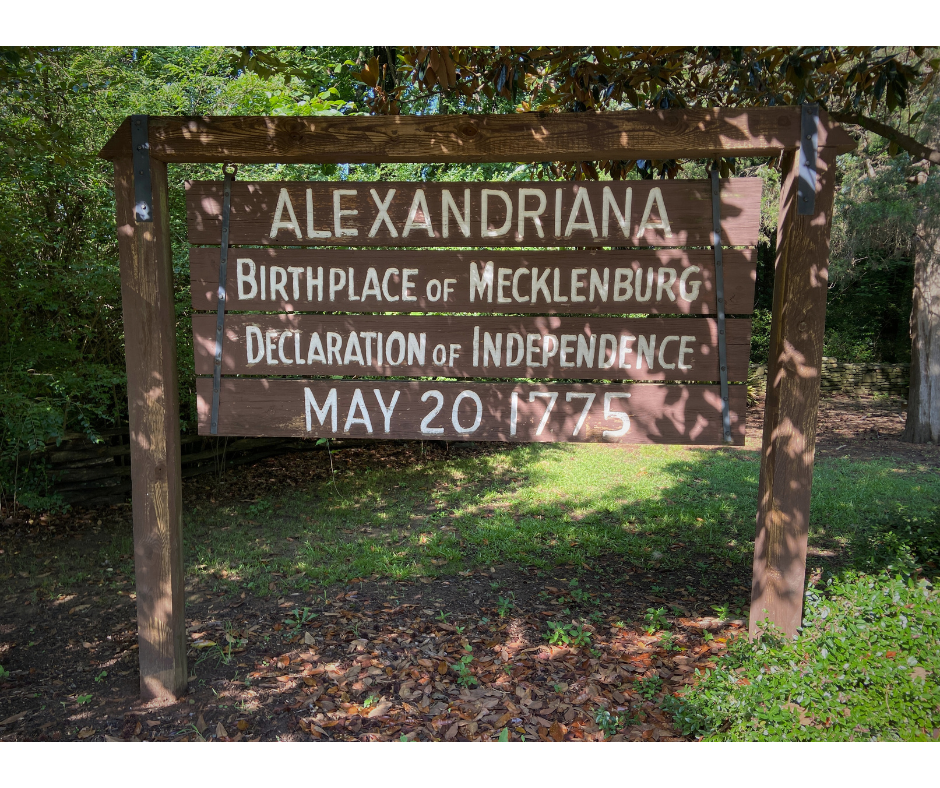
Every May 20th, the date printed on the North Carolina state flag gets its moment of annual celebration here in Mecklenburg County. There are speeches, maybe a reenactment. The Queen City tips its hat to a story that most of the country has never heard, then moves on. But in 2026 – as the nation prepares to celebrate its 250th anniversary with parades, fireworks, and the full weight of collective patriotic feeling – that quiet, local ritual has never carried more weight. Because if three books about the Mecklenburg Declaration of Independence are right, the story of American freedom doesn’t begin on July 4, 1776. It begins here. On May 20, 1775. Fourteen months earlier. In a log courthouse that used to stand where Uptown Charlotte now hums with commerce.
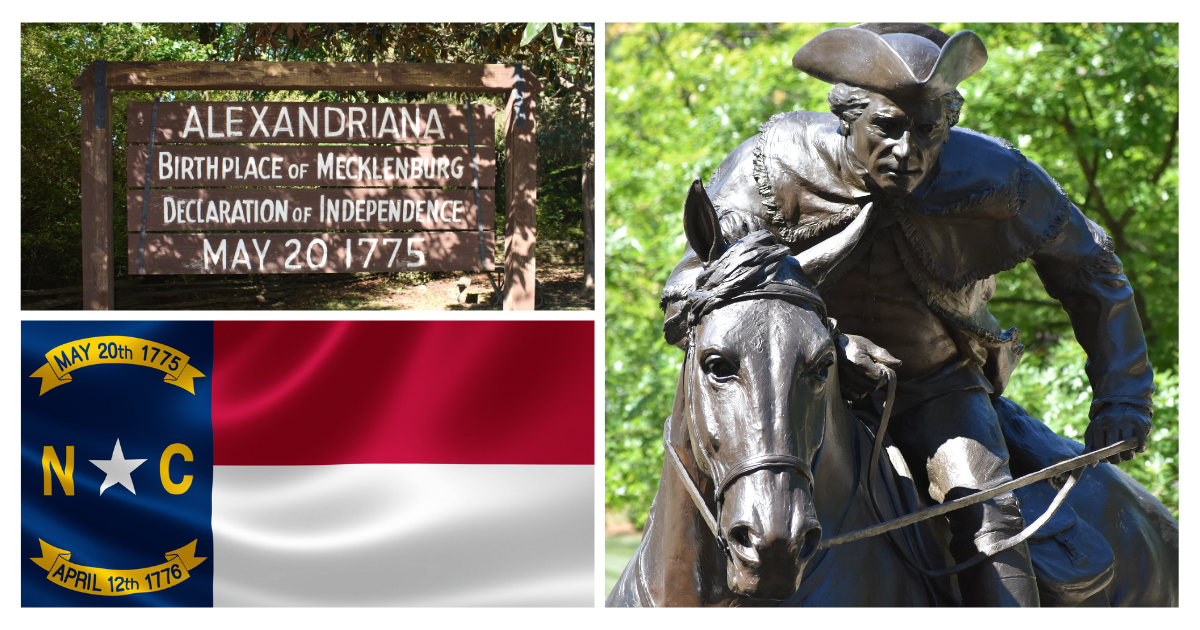
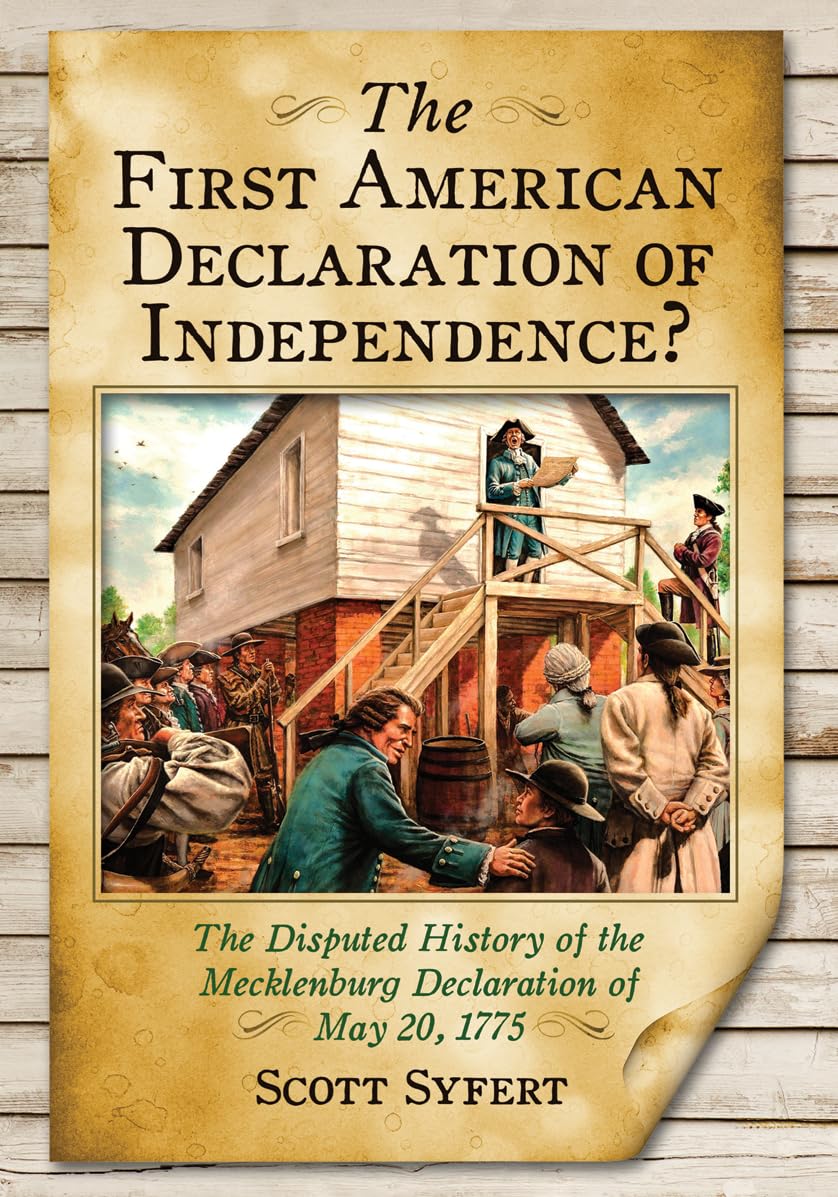
That’s either the most extraordinary fact in American history or one of its most elaborate myths. And the question of which it is has consumed lawyers, historians, journalists, and devoted amateurs for more than two centuries. Three books – David Fleming’s Who’s Your Founding Father?, Scott Syfert’s The First American Declaration of Independence?, and Richard Plumer’s Charlotte and the American Revolution – approach that question from different angles, with different tools, in different voices. Read together, they form something close to a complete portrait of an event that deserves to be far more than a footnote on a state flag.
What Actually Happened — or What People Say Happened

The story, as best we can reconstruct it: on May 19–20, 1775, roughly two dozen militia leaders from Mecklenburg County gathered in Charlotte’s log courthouse. Word had just arrived of the battles at Lexington and Concord. Enraged, they drafted a declaration severing Mecklenburg County’s ties to the British Crown, declaring themselves free and independent people. A tavern owner named James Jack rode nearly six hundred miles to Philadelphia to deliver it to the Continental Congress, who considered it premature and quietly set it aside. The original document was later lost – possibly destroyed in a fire – and the story largely faded until 1819, when John Adams stumbled upon a newspaper account of it and wrote to his old political rival Thomas Jefferson that it was “one of the greatest curiosities and one of the deepest mysteries that ever occurred to me.”
Jefferson, for his part, called it “spurious.” Which is exactly what you might expect a man to say if he’d lifted large portions of his most famous work from someone else’s document.
That charge – that Jefferson plagiarized the MecDec when writing the national Declaration of Independence – is at the molten core of all three books. Adams believed it. Eleven U.S. presidents, by various accounts, have found the story credible enough to warrant further investigation. And the language of the two documents bears uncomfortable similarities that are either cosmic coincidence or the most consequential act of intellectual theft in American history.
Three Authors, Three Lenses
David Fleming: The Gonzo Investigator
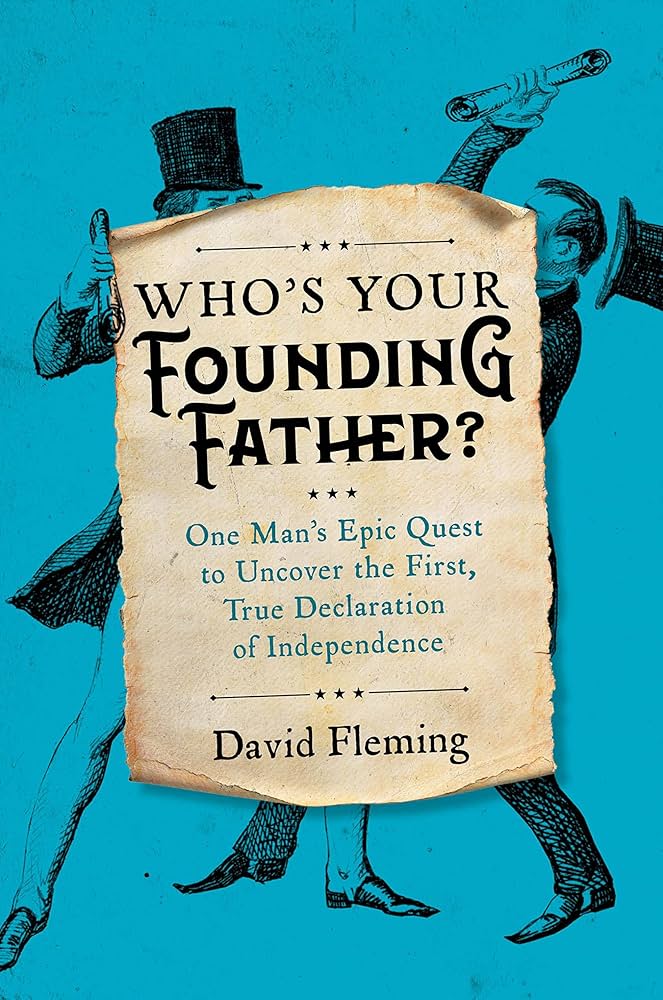
David Fleming arrived at the MecDec story the way a lot of people do – sideways, almost accidentally, pulled in by the sheer strangeness of it. A veteran sports journalist for ESPN and Sports Illustrated known for his irreverent, character-driven long-form work, Fleming is not a historian by training. He is, as he’s been described, a gonzo journalist – and that’s precisely what makes Who’s Your Founding Father? (2023) so readable, so genuinely fun, and so unexpectedly moving.
Fleming describes himself falling down a rabbit hole, then deciding to go deeper instead of climbing out. What follows is part detective story, part road trip, part love letter to Charlotte and the stubborn locals who’ve refused to let this story die. He visits archives. He wanders through cemeteries. He travels to England. He is constitutionally unable to resist a Dunkin’ Donuts reference. His affection for the “misfit band of zealous Scots-Irish patriots, whiskey-loving Princeton scholars and a fanatical frontier preacher” who gathered in that courthouse is genuine and infectious.
But the book is not merely entertaining. Fleming makes a substantive case. He traces the journey of James Jack’s six-hundred-mile horse ride with the reverence it deserves, reconstructs the intellectual and theological climate that made such a declaration possible, and builds a compelling argument that the MecDec’s obscurity is not an accident of history – it’s the result of active suppression, first by the Continental Congress who feared its radicalism, then by Jefferson’s defenders who had every reason to keep the plagiarism question buried.
Reviewers have compared the book to National Treasure, which sounds like a throwaway compliment but actually captures something real: Fleming makes you feel the stakes. When author Tommy Tomlinson calls Who’s Your Founding Father? a book that “will change how you see American history,” it’s the kind of blurb that usually oversells – but here, it lands. The book has a way of making Charlotteans feel a proprietary pride they maybe didn’t know they were missing.
Scott Syfert: The Lawyer Who Became a Believer
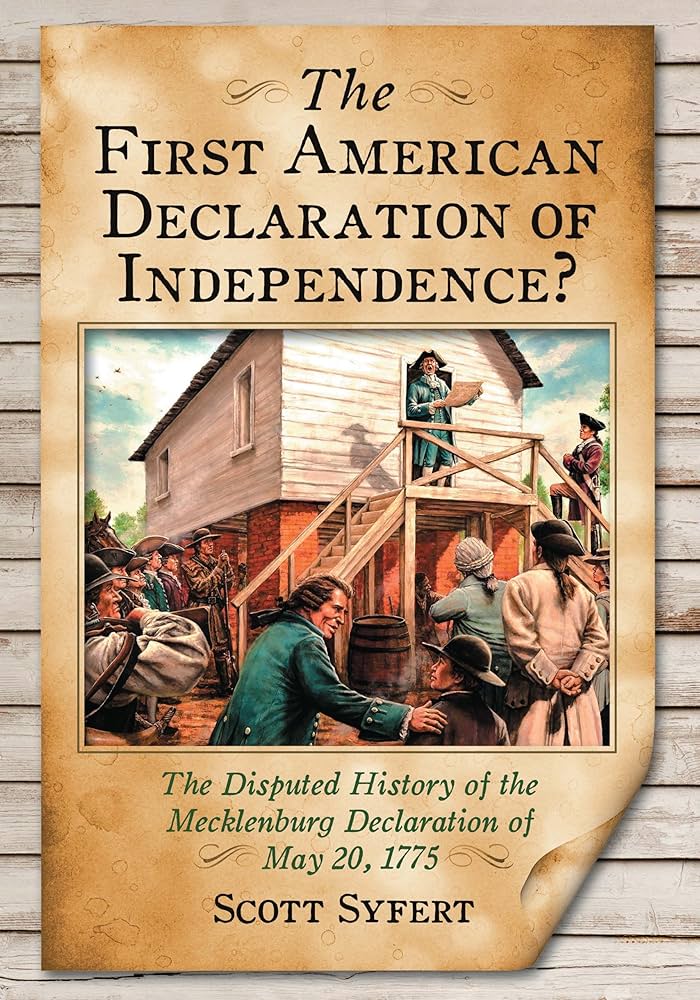
Where Fleming comes at the MecDec as an outsider who converts, Scott Syfert comes as a resident who decided to do the work. A corporate attorney and co-founder of the May 20th Society – the nonprofit dedicated to keeping the MecDec’s legacy alive – Syfert published The First American Declaration of Independence? in 2013, a full decade before Fleming’s book arrived. He is the foundational text. Fleming, to his credit, acknowledges as much.
Syfert’s book is structured like a legal brief written by someone who understands that jurors need stories, not just evidence. He divides the book into five sections, walking readers through the backcountry origins of Mecklenburg County, the formation of its fiercely independent Scots-Irish Presbyterian community, the events of May 1775, and then the two centuries of controversy that followed. He presents both sides. He genuinely does. But as one reviewer noted, he approaches the material like a defense attorney rather than a neutral judge: the goal is not a verdict of “definitely happened” but rather reasonable doubt about the doubters.
The book’s great contribution is its methodical excavation of the evidence. Syfert examines the surviving correspondence of North Carolina’s royal governor, who referred to treasonous activity in Mecklenburg in dispatches that predate any supposed forgery. He traces the similarities between the MecDec’s language and Jefferson’s 1776 text, and walks through Adams’s private letters accusing Jefferson directly. He handles the fire that destroyed the original document – the most convenient fact for skeptics – with the seriousness it deserves rather than dismissing it as simply unlucky.
Ken Burns called Syfert’s book a work that rescues “a little-known story of our Revolutionary past” and brings it “vividly to life.” Historian Andrew Roberts described it as “one of the finest pieces of historical detective work I’ve ever read,” calling Syfert “the Sherlock Holmes of the Mecklenburg Declaration.” That’s not overstatement. By the end, a reader who began skeptical will find, as one Journal of the American Revolution reviewer did, that they’ve “accepted the possibility that the document may indeed have existed.”
The question mark in the title is honest. Syfert doesn’t claim certainty. He claims probability, marshaled through careful, readable, thoroughly cited work. That intellectual honesty is part of what makes the book so effective.
Richard Plumer: The Ground-Level Chronicler
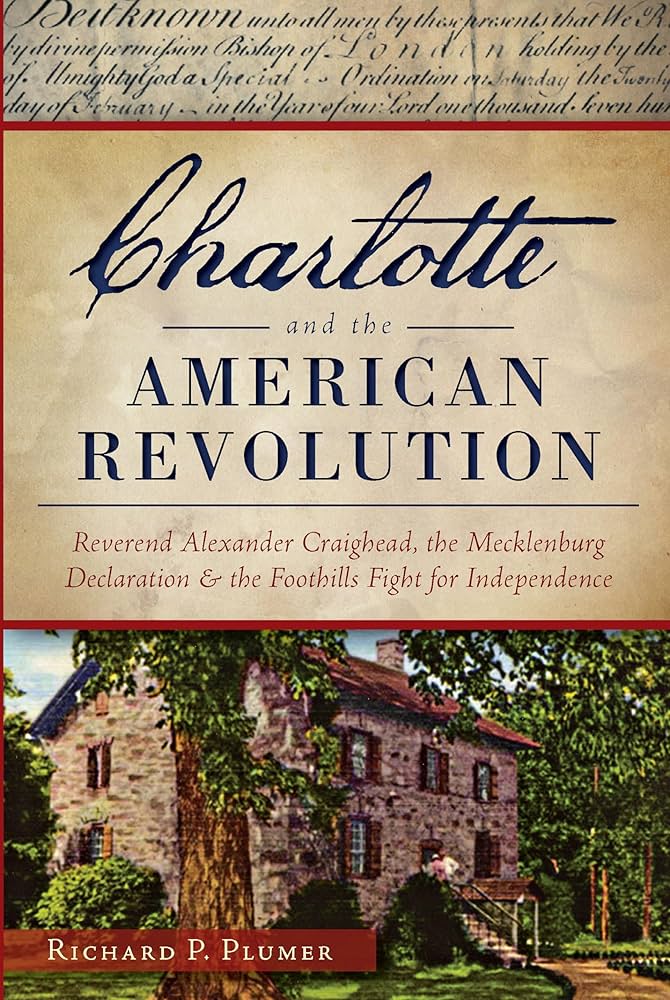
If Fleming is the entertainer and Syfert is the advocate, Richard Plumer is the archivist – the writer who zooms out to show you the full landscape in which the MecDec was born. Charlotte and the American Revolution (2014, The History Press) is the most locally rooted of the three books, and in some ways the most essential for Mecklenburg County residents who want to understand not just what the MecDec says but why it was possible here, in this place, among these specific people.
Plumer’s central subject is the Reverend Alexander Craighead, the fiery Presbyterian minister whose theological and political rhetoric became the intellectual kindling for the Declaration. Craighead was not a mild man. His ultraconservative Calvinist theology mapped neatly onto revolutionary politics: obedience to unjust authority was not just impractical, it was spiritually impermissible. He preached a congregation into a posture of resistance long before Lexington and Concord gave that resistance a specific target.
Plumer is a member of the Mecklenburg Historical Association, and his book reads like the work of someone who has spent years in county archives, church records, and family histories. The detail is rich. The context is essential. He makes clear that the MecDec did not emerge from nowhere – it emerged from a specific community, shaped by specific theology, living at the edge of civilization with minimal help from and maximum frustration with British authority.
The raw numbers he surfaces are remarkable: though Mecklenburg County held less than three percent of North Carolina’s colonial population, its patriots accounted for more than a quarter of the colony’s Revolutionary troops. This was not a passive place. This was a community already constitutionally disposed toward independence, waiting for the moment to say so formally.
Plumer’s book fills in the human geography that makes the other two books make sense. You can read Fleming and feel the excitement of the story. You can read Syfert and feel the weight of the evidence. But read Plumer, and you understand the why – the theology, the culture, the community that made it conceivable that two dozen men in a log courthouse in the Carolina backcountry could look at each other on May 20, 1775, and say: enough. We’re done.
Why 2026 Is the Year to Read All Three
There’s something clarifying about big anniversaries. America’s 250th birthday is a moment when the country tends to revisit its founding myths – to ask which ones are accurate, which ones are convenient, and which ones have been quietly buried. The MecDec story is all three at once.
As a resident of Mecklenburg County, I live on ground that may have been the actual cradle of American independence. Not Philadelphia. Not Boston. Here. And yet most of my neighbors – and nearly all of my fellow Americans – have never heard of May 20, 1775. That tension feels worth correcting in a year when the nation is, for once, paying attention to its own origins.
The three books, read together, form something like a complete case. Plumer gives you the soil – the culture and community that made the MecDec possible. Syfert gives you the evidence – the most thorough, balanced, legally rigorous examination of what we know and don’t know. And Fleming gives you the joy of discovery – the reminder that history isn’t just the province of academics, that a journalist with a plane ticket and an obsession can still crack open a two-hundred-and-fifty-year-old mystery and find something worth knowing inside.
None of the three books claims to have settled the debate definitively. The original document is gone. The evidence is circumstantial in places and contested in others. But there are things that are harder to explain away: the royal governor’s letters mentioning treasonous Mecklenburg activity before any supposed forgery could have occurred. The eyewitness accounts collected decades later. The extraordinary overlap between the MecDec’s language and Jefferson’s draft. The suspicious silence of a man – Jefferson – who was not typically silent about anything.
John Adams believed the story was real and begged his country to take it seriously. He called it “the genuine sense of America” – not a regional curiosity, but the truest expression of what the revolution was actually about: ordinary people, in an ordinary place, deciding that they were done waiting for permission to be free.
The people who signed that document in Charlotte’s log courthouse – the Scots-Irish farmers and frontier preachers and tavern owners – were not famous. They were not Founding Fathers with portraits and monuments. They were, in many ways, the people who usually get left out of the story. And that’s exactly why, in 2026, the story of the MecDec feels so present, and so important, and so worth finally telling.
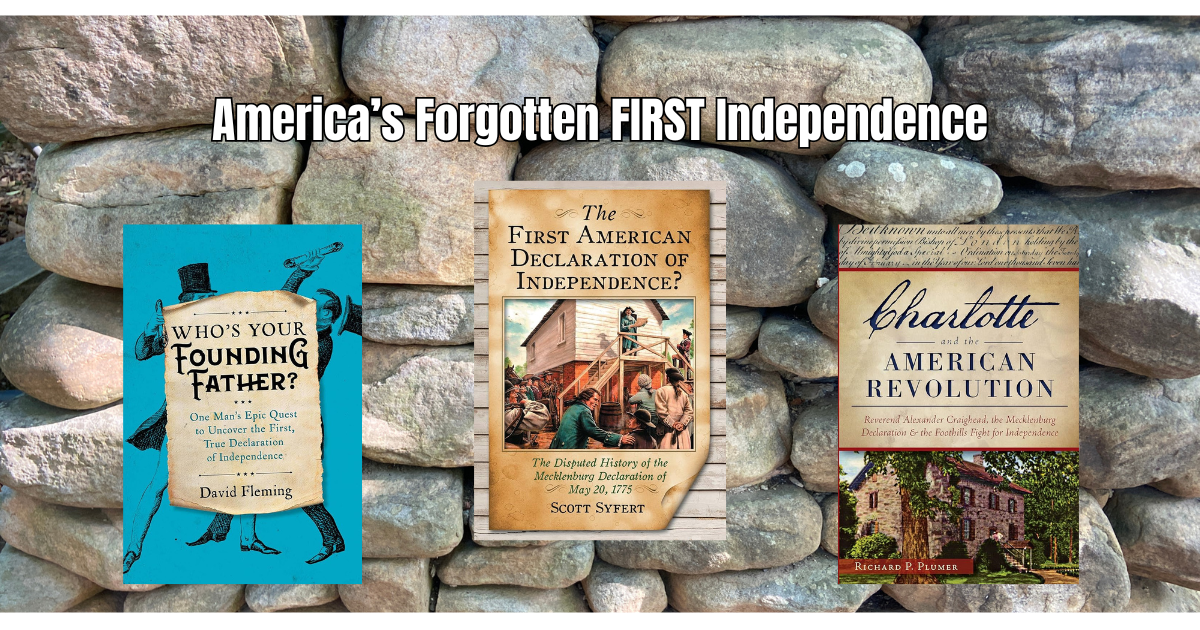
If you’re looking for books that challenge what you thought you knew about America’s origins, look no further.
This unforgettable trio delivers history with a healthy dose of humor, reads like a true-crime caper, and provides a thought-provoking, entertaining, and utterly unforgettable dive into a piece of the past that might just rewrite a small, but significant, chapter in the story of American independence.
You might even find yourself rooting for a different “founding father” by the end!
If you liked this article, or are curious about American history – especially during the growing excitement around the 250th anniversary of the other Declaration of Independence, you might be interested in “Booked for the Revolution.”
It’s a weekly article published on Fridays that takes a look at the beginning years of the U.S. through a book each week. Check out the series here.

Part of a regular series on 27gen, entitled Wednesday Weekly Reader.
During my elementary school years one of the things I looked forward to the most was the delivery of “My Weekly Reader,” a weekly educational magazine designed for children and containing news-based current events.
It became a regular part of my love for reading, and helped develop my curiosity about the world around us.