Writing about books is many times rarely about the books themselves.
Rather, it’s about the quiet transformation that occurs in the space between the page and the reader. For many years on 27gen, I have explored books not merely as objects on a shelf, but as engines of continuous learning, tools for leadership, and companions through the various seasons of life.
If you are new to 27gen – or if you are looking to revisit the foundational essays that define our collective journey through the printed word – this landing page serves as a curated guide to our key posts on reading. Here, you will find summaries and direct links to these essays, organized by theme to help you navigate through the reflections, strategies, and stories that have shaped my reading journey.
The Evolution of a Reader’s Library: Downsizing & Discovery
A library is a living organism; it grows, shifts, and inevitably contracts as our lives change. These posts examine what happens when we confront our physical shelves and re-evaluate our relationship with book collecting.
An exploration of how independent bookstores survive and flourish by continually adapting their spaces and curation to serve modern reading communities without losing their soul.
This piece looks at the bittersweet transition of passing books along to new hands, reflecting on the enduring life cycle of physical texts beyond a single owner’s shelf.
Reflecting on the emotional process of downsizing a personal collection, this post explores the deeper motivations behind why we hoard books and what remains after the shelves are cleared.
A lighter look at the visual culture of book collecting, celebrating the optimism inherent in our “To Be Read” piles and what our unread books say about our ambitions.
Masterclass Strategies: How to Read for Mastery
Reading deeply requires intention and method. Moving beyond simple consumption, these essays break down strategic frameworks for cross-referencing ideas, building expertise, and reading across multiple texts simultaneously.
A detailed breakdown of synoptical reading – the high-level skill of comparing and synthesizing multiple books on the same topic to gain true analytical domain mastery.
Connecting comparative reading strategies with organizational wisdom, this post uses the storytelling and leadership history of Disney to illustrate how cross-disciplinary reading yields creative breakthroughs.
A practical blueprint for turning personal reading habits into a self-directed curriculum for professional mastery and personal growth.
Leadership & Continuous Learning
Great leadership is fueled by continuous learning. These essays highlight how reading acts as an essential engine for perspective, empathy, and executive decision-making.
The foundational essay examining the undeniable correlation between regular, expansive reading habits and effective, compassionate leadership.
Reflections on the Joy & Transformative Power of Reading
At its heart, reading is an act of delight and human connection. These posts celebrate book culture, seasonal milestones, and the profound mental shifts that happen when a powerful writer meets an open mind.
Drawing insights from C.S. Lewis, this essay examines how literature expands our perspective and allows us to see beyond the limits of our individual experiences.
An annual reflection on lessons learned, favorites discovered, and the simple, enduring joy of maintaining a disciplined reading life through another year.
Thank you for being part of the 27gen reading community.
Pick a post, pull up a chair, and let’s keep learning together.
Part of a regular series on 27gen, entitled Wednesday Weekly Reader.
During my elementary school years one of the things I looked forward to the most was the delivery of “My Weekly Reader,” a weekly educational magazine designed for children and containing news-based current events.
It became a regular part of my love for reading, and helped develop my curiosity about the world around us.
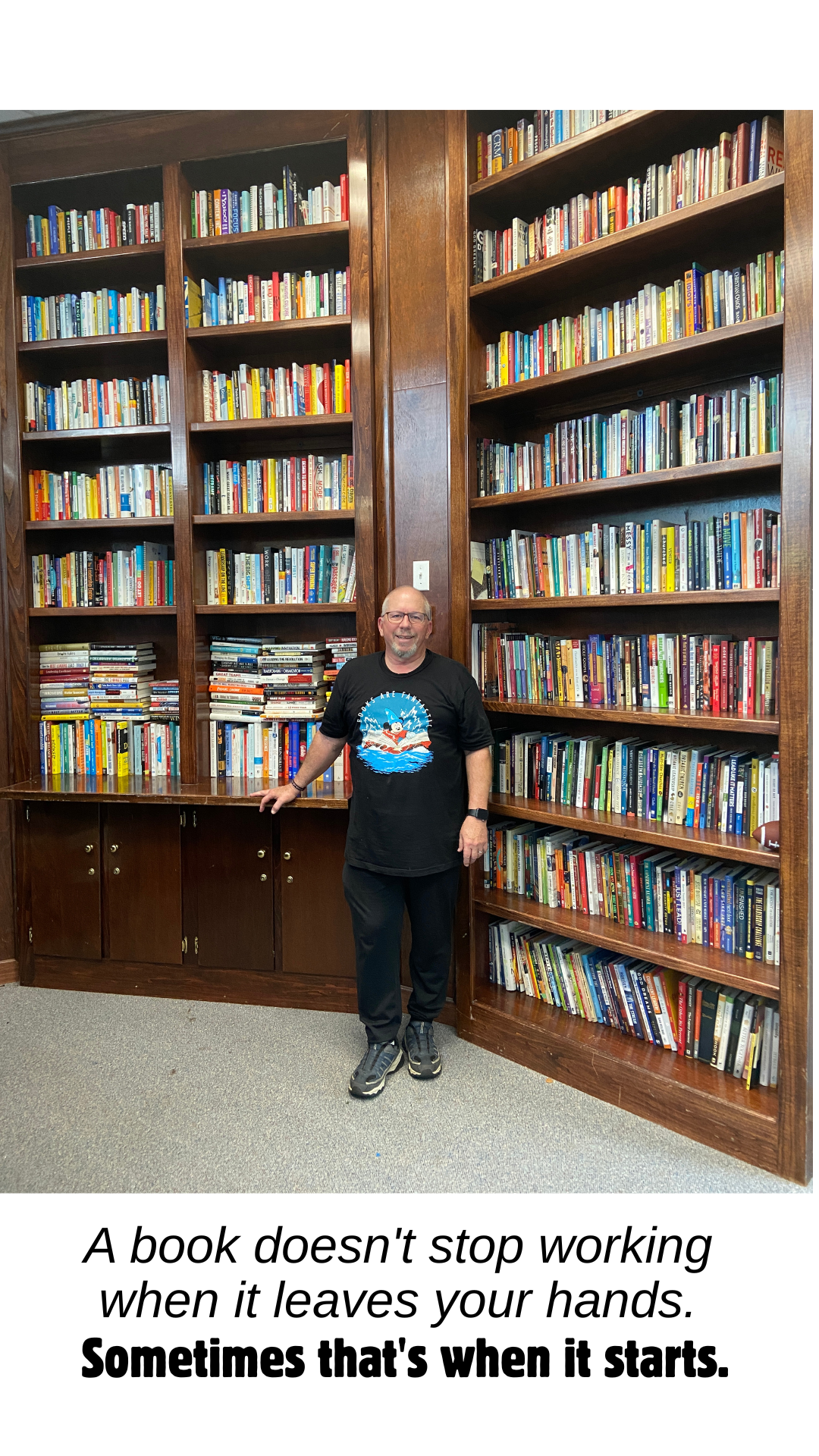
A few weeks after I wrote about the slow work of downsizing my personal library, I received a comment that stuck with me longer than I expected. A friend said he’d benefited over the years from the ideas in my shelves, the writing that came from them, and, eventually, some of the hard copies themselves – books that had passed from me to him at exactly the moment he needed them. I hadn’t set out to make that point in the original piece, but he found it anyway: a book doesn’t stop working when it leaves your hands. Sometimes that’s when it starts.
That comment has been on my mind while I’ve packed the next round of boxes, because this round is different from the last. The beginning of culling was mostly about subtraction – deciding what no longer served me and letting it go to a used bookstore or donated for charity. The next round involved about 300 volumes on a specific topic to a good friend who knew everything in them, but still took them on for use in his expanded role.
This one has a different destination. Somewhere north of a thousand volumes on leadership and vision, trimmed down from a collection that once ran closer to two thousand several years ago, are headed to the amazing staff members of my church. And the more I’ve thought about who’s going to be reading them, the less this has felt like my story to tell.
So I’ll keep this part short: over several decades, I built a leadership shelf the same way I built the others – one book leading to the next, one author’s argument prompting a search for someone who’d answer it differently. Vision, organizational culture, the specific discipline of leading people who didn’t have to follow you but chose to. It grew because the questions never really stopped being useful. What’s changed is that I’m no longer the only person those questions belong to.
Who Actually Needs These Books
Church staff members, especially the younger ones, tend to be leadership-rich and leadership-resource-poor. Someone in their twenties or early thirties gets handed real responsibility fast – a ministry area, a team of volunteers twice their age, a budget, a Sunday morning that will not run itself – and very little formal preparation for the part of the job that has nothing to do with theology. Seminary teaches you to read a text. It doesn’t always teach you how to run a staff meeting, manage conflict between two volunteers who’ve served together for twenty years, or figure out why a team that agrees on the mission still can’t agree on the plan. That’s a different kind of literacy, and it’s the kind this collection was built to develop.
What a shelf like this offers a young leader isn’t a single right answer – it’s range. One book on vision will tell you to cast it boldly and repeat it until people live it out in front of you. Another will tell you vision emerges from listening, not proclamation, and that leaders who arrive with the answer already formed miss what their people actually need. Both are right, in different seasons, with different teams. A twenty-six-year-old three months into their first real leadership role doesn’t yet have the experience to know which season they’re in. What they can have, if the books are sitting on a shelf down the hall instead of in a secluded and unused collection, is quick access to people who’ve already worked that question through.
That’s really the whole case for donating a library like this instead of simply letting it disperse. A used bookstore will always find a buyer eventually. What it won’t do is put the right book in front of the right twenty-eight-year-old the week she’s staring down her first genuinely hard personnel decision, unsure whether to be more patient or more direct. Proximity is the value here as much as content. A resource you have to seek out gets used rarely. A resource sitting in a newly-commissioned staff library gets picked up on a Tuesday afternoon by someone who didn’t know they needed it until they saw the spine.
What I Hope Happens Next
I don’t expect every book to get read cover to cover, and honestly, that was never the standard for me either. Some of these were read in full three times over the years; others got mined for a single chapter and then sat, still useful, waiting for the next question that would send someone back to them. I’d rather see this collection get treated that way by its next owners than sit unopened out of some misplaced obligation to finish what I started. A leadership library is a reference tool as much as a reading list. Its job is to be there when the specific problem shows up, not to be completed.
What I’m hoping for more than anything is that a few of these books become to somebody on that staff what certain books became to me at their age – not just information, but a kind of company. The comfort of knowing someone else has wrestled with the exact frustration you’re wrestling with this week, and wrote it down clearly enough that you can borrow their thinking until yours catches up. That’s what a good leadership book actually offers a young leader: not a script, but companionship in a job that can feel isolating even when you’re surrounded by people all day.
The shelves in my house will be lighter for it. I’m entirely at peace with that trade. A library that sits still and simply accumulates was never really the point – mine included. The point was always what the books could do once they reached the person who needed them most.
For the next chapter of this particular collection, that person just happens to be someone who is much younger than me, standing in front of a room full of volunteers and trying to figure out what to say next. I love and respect them deeply, and hope this collection of ideas can help them on their journey.
I know one of these books will say it for them like it said it for me.
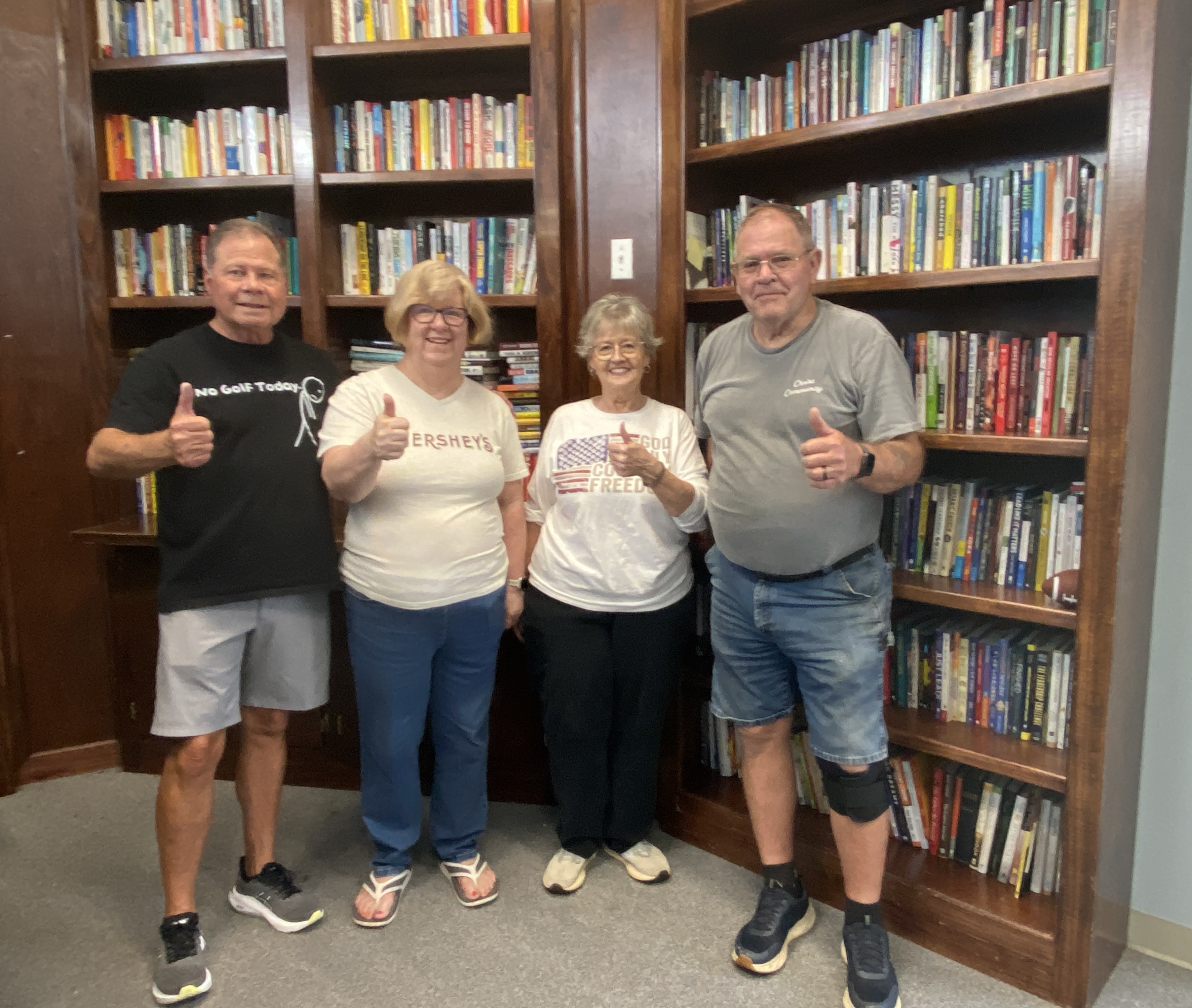
A special thanks to Rick, Anita, Debbie, and Carroll for loading up, moving, unloading, and shelving the library in a little over an hour!
Part of a regular series on 27gen, entitled Wednesday Weekly Reader.
During my elementary school years one of the things I looked forward to the most was the delivery of “My Weekly Reader,” a weekly educational magazine designed for children and containing news-based current events.
It became a regular part of my love for reading, and helped develop my curiosity about the world around us.
I have a confession that may surprise people who have seen my bookshelves: I did not build my library on purpose from young adulthood. Not many people set out at twenty-two to accumulate thousands of books. It happens one Tuesday at a time, one impulse purchase at a used bookstore, one “I’ll just order this too while I’m at it” click, until one day you look up and realize you have built something. A collection. A record, almost, of every question you’ve ever chased.
That’s the part people miss about book love. They think it’s about the reading – and it is, mostly – but it’s also about the keeping. The shelf is a kind of memory you can touch.
So when I tell you I’ve begun the slow, painful process of downsizing that library, I want to start further back than the boxes currently stacked in my garage. I want to start with where the habit came from, because you can’t understand why parting with a book feels like parting with a small piece of yourself unless you understand how it got there in the first place.
Where It Started
I grew up looking forward to My Weekly Reader landing on my desk every week in first grade – a thin, newsprint magazine of current events written for kids, and about as far from a leather-bound classic as you can get. But it did something classics rarely do, especially for a six-year-old: it made the outside world feel worth paying attention to. That’s an underrated function of reading. Long before it teaches you anything specific, reading teaches you that there’s more to know, and that knowing it is a pleasure rather than a chore.
The habit had a model at home, too. My father would pull a book down from the various shelves around our house most evenings after the workday was done – not performatively, not as a lesson for the children watching, just as a quiet, consistent fact of who he was. I didn’t articulate it this way at the time, but I absorbed something important: reading wasn’t an activity you scheduled around your life. It was part of the architecture of an ordinary evening, as normal as dinner. In my mid-thirties, I noticed I’d fallen into the same rhythm without deciding to. Some inheritances aren’t houses or watches. Some are just habits, passed down so quietly you don’t notice the transfer until you’re the one carrying them.
How a Shelf Becomes a Library
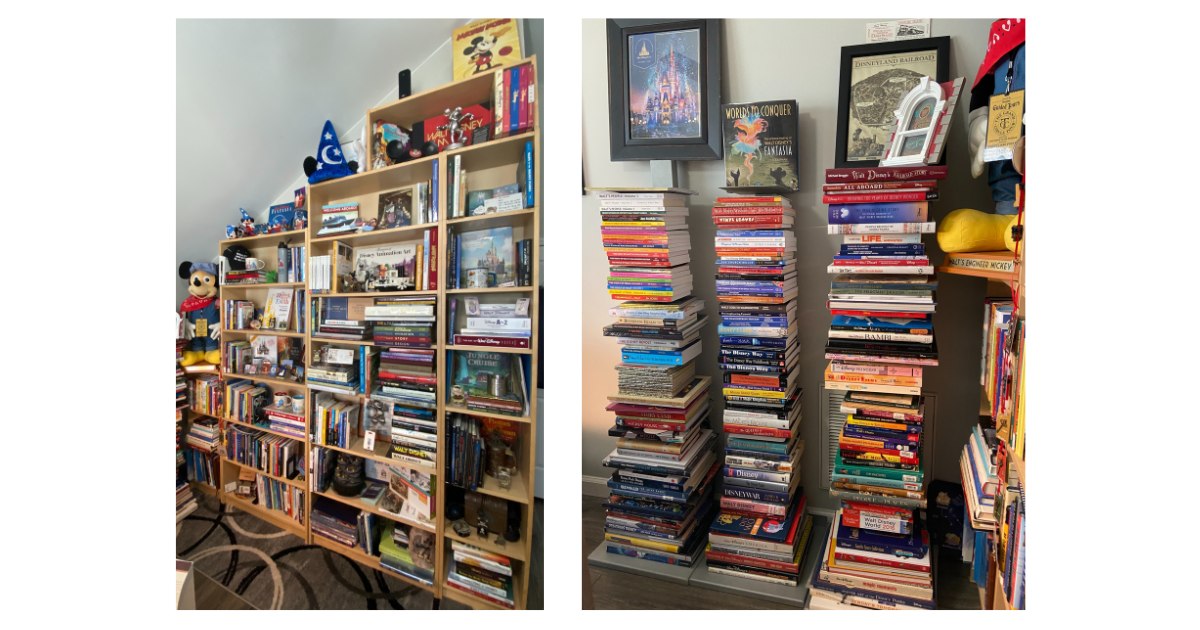
Here is where I’ll admit something that sounds like an exaggeration but isn’t: My “library” is in fact made up of multiple libraries on various topics. The single largest cohesive library is my collection of books about Walt Disney and the company he built, now over five hundred volumes, spanning releases from 1939 up through a much anticipated purchase coming in a few weeks. Five decades of buying, one book at a time, on a single subject.
Nobody plans that, at least not in the beginning.
What happens instead is something closer to what Mortimer Adler called synoptical reading – the practice of putting multiple books on the same subject in conversation with each other rather than reading any single one as the final word. You read one author’s account of how Walt Disney approached storytelling, and it raises a question the book doesn’t answer, so you go find another author who tackles it from a different angle. Then a third. You’re not collecting books so much as collecting arguments, perspectives, and blind spots that only become visible once you’ve got enough voices in the room together.
The trouble – if you can call it that – is that this kind of reading is inherently accumulativeby design. You can’t practice synoptical reading with three books. You need enough of them to reveal the patterns and the contradictions, and “enough” tends to keep redefining itself upward. My Disney library isn’t really about Walt Disney anymore, not entirely. It’s about vision and leadership and and hospitality and how an organization sustains a creative culture across generations – Disney just happens to be the case study deep enough to keep teaching me something new after fifty years.
And it’s not the only synoptical library in the house.
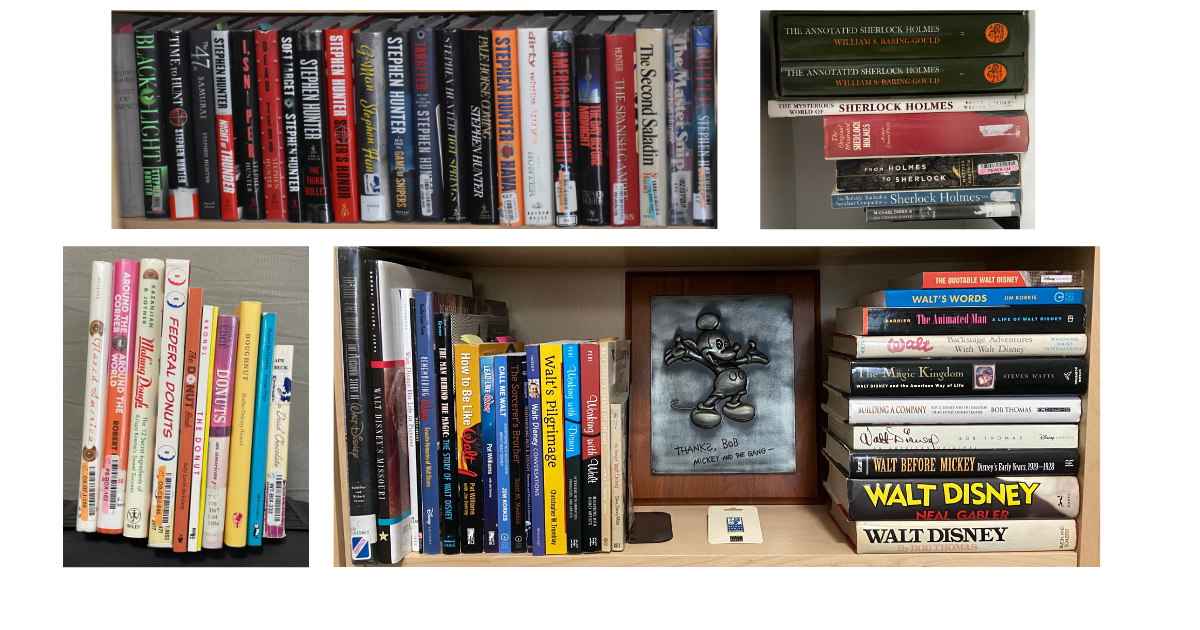
There are shelves built over the last year for founding-era American history that grew the same way, one book answering a question the last one raised. There are three large vertical shelves on hospitality rooted in the home, with another two shelves containing books on the subject that I have written about. There’s a large selection of books about the hospitality industry seen through a culinary lens. And many more smaller ones: Hamburgers. Donuts. Bridges. J.R.R. Tolkien. Sherlock Holmes. Reading. Shepherding. And not surprisingly, Books. There’s a couple of fiction shelves: All of Stephen Hunter’s books, and the original Tom Clancy works.
Though not technically synoptical, the biggest of all is the general topic of Leadership and Vision – slowly built over at least forty years, first in graduate school, then gaining momentum in three church staff positions, then accelerating 2012-2025 when my job at the time required reading – lots of reading! At one time, that library numbered over two thousand books, but I’ve trimmed it down over the last few years to just under one thousand books.
A personal library, it turns out, is rarely one collection. It’s several, growing at different speeds, for different reasons, until they’ve filled every room that will hold them (plus a garage, plus – until recently – a storage unit).
Part of what fuels the accumulation is simply the hunting. There’s a particular satisfaction in walking into a used bookstore with no list and no agenda, just an open question you’ve been carrying around, and finding the one volume that happens to answer it. I’ve spent whole afternoons doing exactly that, working through curated shelves at a favorite spot and walking out with a book or two I didn’t know existed that morning. When my former occupation carried me all over the country, you can be sure the first search I performed was “used bookstores near me”. A retailer can get you a specific title in two days. It cannot replicate that particular kind of luck, and I suspect the luck is half of why collectors keep collecting long after the shelves have stopped having room to spare.
The Day That Keeps Finding Me
The beginning of this downsizing project falls near a very auspicious day on the calendar.
August 9th does something odd to my calendar every year. It’s my father’s birthday. It’s also National Book Lovers Day. I’ve written about that coincidence before, and I’m not going to pretend it’s anything more than calendar arithmetic – but coincidences earn their keep when they keep making you think, and this one has never stopped.
Book Lovers Day, at its best, isn’t really about celebrating volume. Plenty of people can point to towering shelves without having been changed much by what’s on them. The day is worth marking because it asks a better question: not how many books have you read, but which ones actually shaped you. For me, that question and my father’s birthday have become impossible to separate. He didn’t hand me a reading list. He handed me an evening habit, and the habit did the rest of the work over the next fifty+ years.
He used to say something I’ve quoted before and will probably keep quoting: “I never made much money, but I made a lot of friends, and that’s what’s important.” He wasn’t talking about books when he said it. But it’s the same instinct, really – the belief that the things worth accumulating in a life are relational, not material. Friends, in his case. In mine, apparently, over five hundred books about a fascinating man who built an empire on curiosity.
Arguing With Your Own Shelves
Which brings me, finally, to the boxes in the garage.
Downsizing a personal library sounds like a logistics problem – what fits on the shelves, what doesn’t – and at the surface it is. But the harder work isn’t physical. It’s that every book on those shelves represents a decision you made once, for a reason that felt sound at the time, and downsizing means reopening every one of those decisions and asking whether you’d make the same call today.
Some of that is easy. The duplicate copies. The books bought for projects that finished years ago and will never be revisited. The reference material now more useful as a searchable PDF than as eleven pounds of hardcover. Letting those go doesn’t cost much.
I started, for what it’s worth, with the “easiest” shelf in the library – a collection of almost three hundred books from a long-practiced career phase that’s behind me now. Once I made the decision, it was relatively easy to call my friend Danny who is the most knowledgeable person in the field, and he graciously agreed to accept the library. Dropping off the books a few days later was gratifying as he perused the books and some of his staff began sorting them for immediate use. This decision was only “easy” in light of the fact that I knew the volumes were going to a fellow “book nerd” who respected them and would use them appropriately.
Starting there wasn’t strategy so much as self-preservation. If I’d opened with the shelf that holds my father’s books, I’d have quit the whole project in an afternoon. There’s something to be said for building momentum on the boxes that don’t hurt (much), so that by the time you reach the ones that do, you’ve at least got some practice at making the call.
What costs something is the rest of the pile – the books that aren’t really about their contents anymore. The ones your father gave you. The ones you bought the week you started a new chapter of your life and haven’t opened since, but can’t quite explain why you’re still keeping. The signed first edition that will probably never appreciate in value but represents an afternoon you remember more clearly than the book’s actual argument. Synoptical reading taught me to keep gathering perspectives until the picture got clearer. Downsizing is the opposite exercise: learning to let a single memory be enough justification to keep something, without needing to defend it against the logic that says you should let it go.
I’ve started with a simple, imperfect rule: I ask whether I’m keeping the book or keeping the version of myself that bought it. If it’s the second one, I try to find another way to hold onto that memory – a photograph of the shelf before it changes, a note in a journal about why the book mattered – so the object can go without the memory going with it. It doesn’t always work. Some books I’ve picked up to donate and quietly put back, unconvinced by my own argument. That’s fine. This isn’t a project with a deadline. It’s a negotiation, and negotiations take as long as they take.
What I haven’t done, and don’t intend to do, is treat this as pure subtraction. The Disney collection will stay intact, and even grow – that’s not sentiment, that’s an active research project with decades of momentum behind it. The founding-era shelf is slowly growing, not shrinking, alongside the current interest and writing it supports. For now, many of the syntopical shelves will remain the same. Downsizing, done honestly, isn’t about arriving at some minimalist ideal where the shelves are bare and the mind is supposedly clearer for it. It’s about being honest for the first time in years about which books are still doing work in your life and which ones are just doing time.
What Stays With You
My father’s books – the actual physical volumes that sat on his shelves – mostly didn’t make it into my collection intact. Estates get divided, and books, unlike heirloom furniture, rarely survive the process as a set. But a handful did make the trip, and they sit now in spots I chose for them deliberately, not filed with everything else. I don’t reread them often. I don’t need to. Their presence is the point, not their content – a small, physical reminder that the habit I’ve spent a lifetime indulging didn’t start with me.
That’s the thing about a personal library that a spreadsheet of titles will never capture. It’s not an inventory. It’s a kind of autobiography written in other people’s words – which books you reached for during which years, which arguments changed your mind, which ones you kept even after you stopped needing them, just because you remembered who you were when you bought them.
Downsizing doesn’t erase that autobiography. If you do it with any care at all, it just edits it – cutting the passages that no longer serve the story and keeping the ones that do. My shelves are smaller than they were a few months ago, and they’ll keep shrinking more before I’m satisfied. But the books that remain are, if anything, a more honest account of who I am than the fuller shelves ever were.
There’s a version of this essay that ends with a tidy lesson about minimalism, or about letting go, or about how less is somehow more. I don’t believe that version, and I don’t think you should either. Some libraries deserve to keep growing – mine will, on the shelves that are still doing active work. The point was never the size of the collection. It was always whether the books on it could still tell you something true about the person who kept them.
My father taught me to read before he taught me anything else worth remembering. Figuring out which of his books, and which of my own, are worth keeping turns out to be one more thing he taught me – just later than I expected, and the hard way. If you’re standing in front of your own shelves right now, wondering where to start, I’d tell you what I wish someone had told me: start with the easy shelf, be honest about the hard one, and don’t mistake a smaller library for a smaller life.
The books that matter will let you know.
They always do.
Part of a regular series on 27gen, entitled Wednesday Weekly Reader.
During my elementary school years one of the things I looked forward to the most was the delivery of “My Weekly Reader,” a weekly educational magazine designed for children and containing news-based current events.
It became a regular part of my love for reading, and helped develop my curiosity about the world around us.
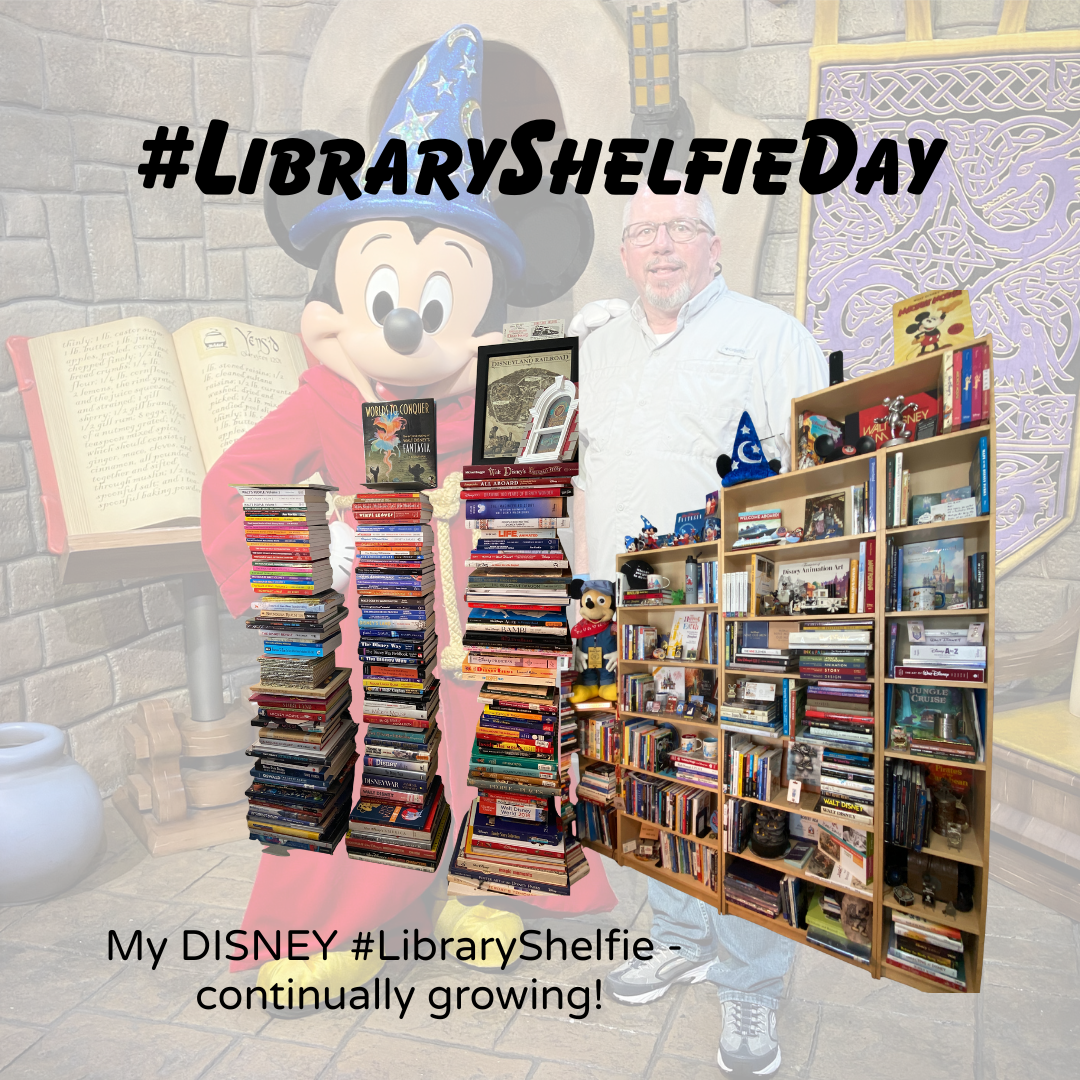
Today on #NationalShelfieDay – Wednesday, January 28th – readers worldwide will point their cameras at their bookshelves, capturing everything from meticulously organized libraries to precarious towers threatening imminent collapse. But hidden within these snapshots lies something far more revealing than mere book collections – they’re intimate portraits of our intellectual journeys, visual maps of the curiosities that shape our lives, and honest documentation of the beautiful tension between who we are and who we aspire to become.
The Honest Geography of Reading Life
While social media often demands perfection, the most compelling shelfies embrace chaos with pride. These are the photographs that reveal coffee-stained bookmarks jutting from half-finished volumes, library loans teetering atop personal purchases in gravity-defying arrangements, and that one book that’s been sitting unread for three years but might be perfect for next month. They show books piled on nightstands, stacked beside reading chairs, or occupying that awkward space between the bookshelf and the wall where they’ve somehow established permanent residence.
These unvarnished captures resonate because they reflect reality. Our book piles aren’t failures of reading discipline but rather evidence of active, engaged literary lives. Each book waiting represents curiosity sparked, a recommendation followed, or an impulse honored. Together, they form physical manifestations of intellectual ambition, visible proof that our reading appetite consistently outpaces our available time.
When Collections Become Conversations
Yet beyond the TBR pile lies an even more fascinating phenomenon: the specialized collection. These aren’t random accumulations but carefully curated conversations across time, perspective, and expertise. Look closely at any serious reader’s shelfie, and you’ll discover entire sections devoted to subjects that have captured their imagination and refused to let go.
Consider my ultimate – and always growing – Disney collection, numbering over 500 volumes, dating from 1939 to current releases. Under the watchful eye of Engineer Mickey, these books represent more than fandom – they document my ongoing fascination with Walt Disney the man, childhood memories of Disney, and participating in some of the best leadership and hospitality practices that exist. This isn’t hoarding; it’s scholarship pursued with passion.
Or examine my Bridges collection, where each spine represents the human drive to connect, to overcome obstacles, to span the impossible. These books ask us to envision a world without bridges – London without crossings over the Thames, Manhattan as a truly isolated island, San Francisco cut off from both north and south. Understanding the stories behind our bridges fosters deeper appreciation for their history and provides insight into the humanity of engineers and engineering itself. It’s a collection that celebrates both literal and metaphorical connections.
The Power of Synoptical Reading
Among the most intriguing shelfies are those built around synoptical reading – gathering books by various authors around similar subjects for comparison and expansion of knowledge. These collections transform the humble book pile from random accumulation into curated symposium. They demonstrate reading as an active pursuit of knowledge rather than passive entertainment.
My culinary collection spans everything from childhood meals and family cooking traditions to professional restaurant management and food history. This culinary shelfie documents a family deeply embedded in food culture: a mother who became a caterer, an oldest son whose twenty-year career has taken him from pizza baker to pastry chef to restaurant general manager, a youngest son who pursued Culinary Arts at Johnson & Wales and now manages events at a university. Each book in this collection doesn’t just represent recipes – it captures lessons about life, work, family, and the connections forged around tables.
The Sherlock Holmes collection tells a different story of reading evolution. It begins with one book – Michael Dirda’s “On Conan Doyle, Or, The Whole Art of Storytelling” – that piqued curiosity and left me hungry for more, rereading all the stories from my young adult years. Dirda’s passionate celebration of Conan Doyle as a master storyteller cast new light on classic detective stories, inspiring deeper exploration. For avid readers, finishing one book is often just the beginning of a journey into a new subject or author. A great book has a way of leaving you wanting to dive deeper into the world or ideas it exposed you to.
This approach becomes incredibly powerful because it reveals how ideas evolve over time, exposes the blind spots that individual authors might miss, and often leads to insights that none of the original writers could have reached alone. In our current world of endless information streams, synoptical reading is less about consuming more content and more about becoming a thoughtful curator who can weave together the best thinking on complex topics into something genuinely illuminating.
The Unexpected Collections
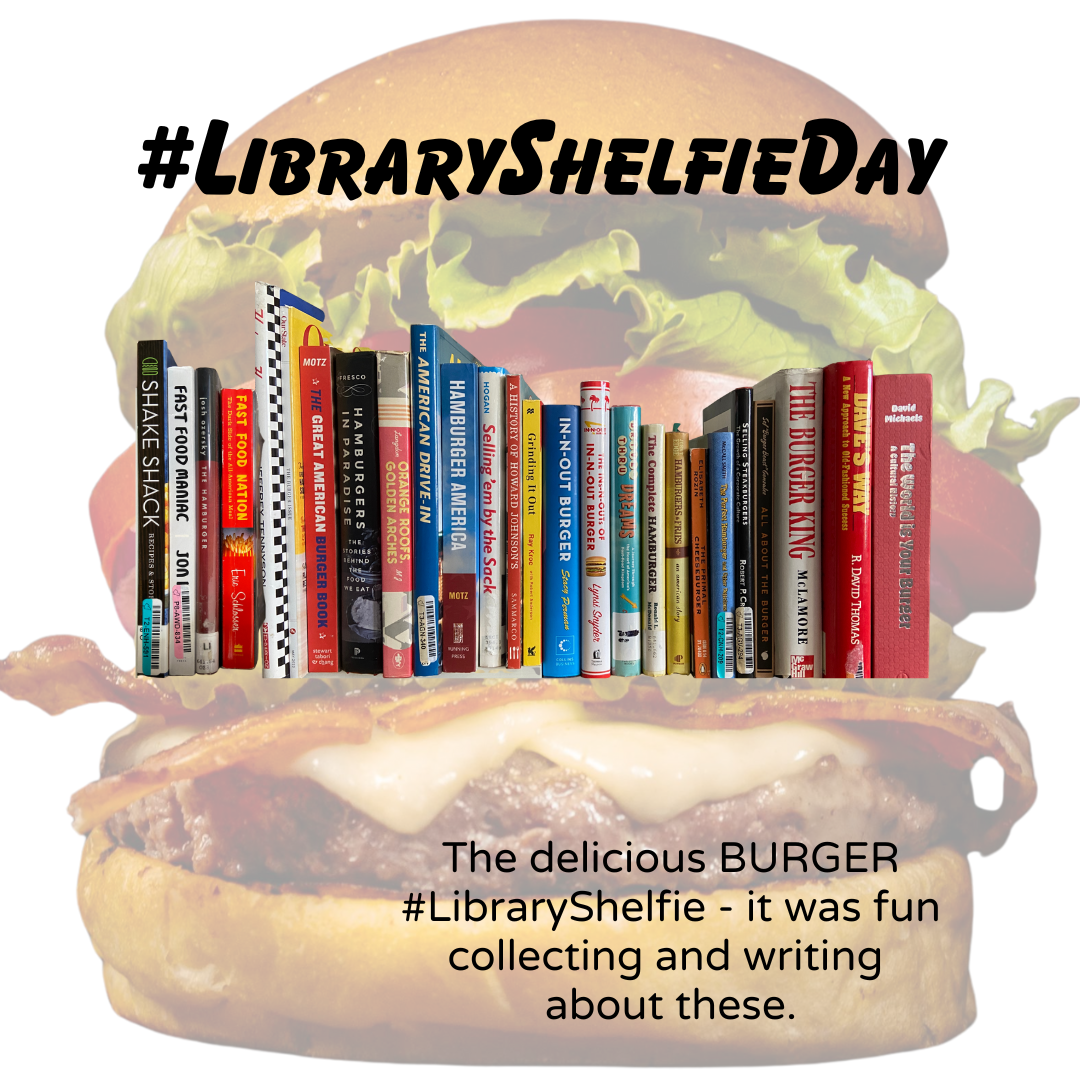
Sometimes our shelfies reveal passions that surprise even ourselves. Who accumulates an entire collection devoted to hamburgers? Guilty. Someone who understands that even simple things reveal complexity when examined from multiple angles – literary, culinary, and what I cheerfully admit is “arbitrary: based on random choice or my personal whims.” From humble beginnings to current status as a global icon, the burger has cemented its place in hearts and stomachs worldwide. Diving into books about burgers becomes not just about savoring deliciousness but appreciating rich history and cultural significance.
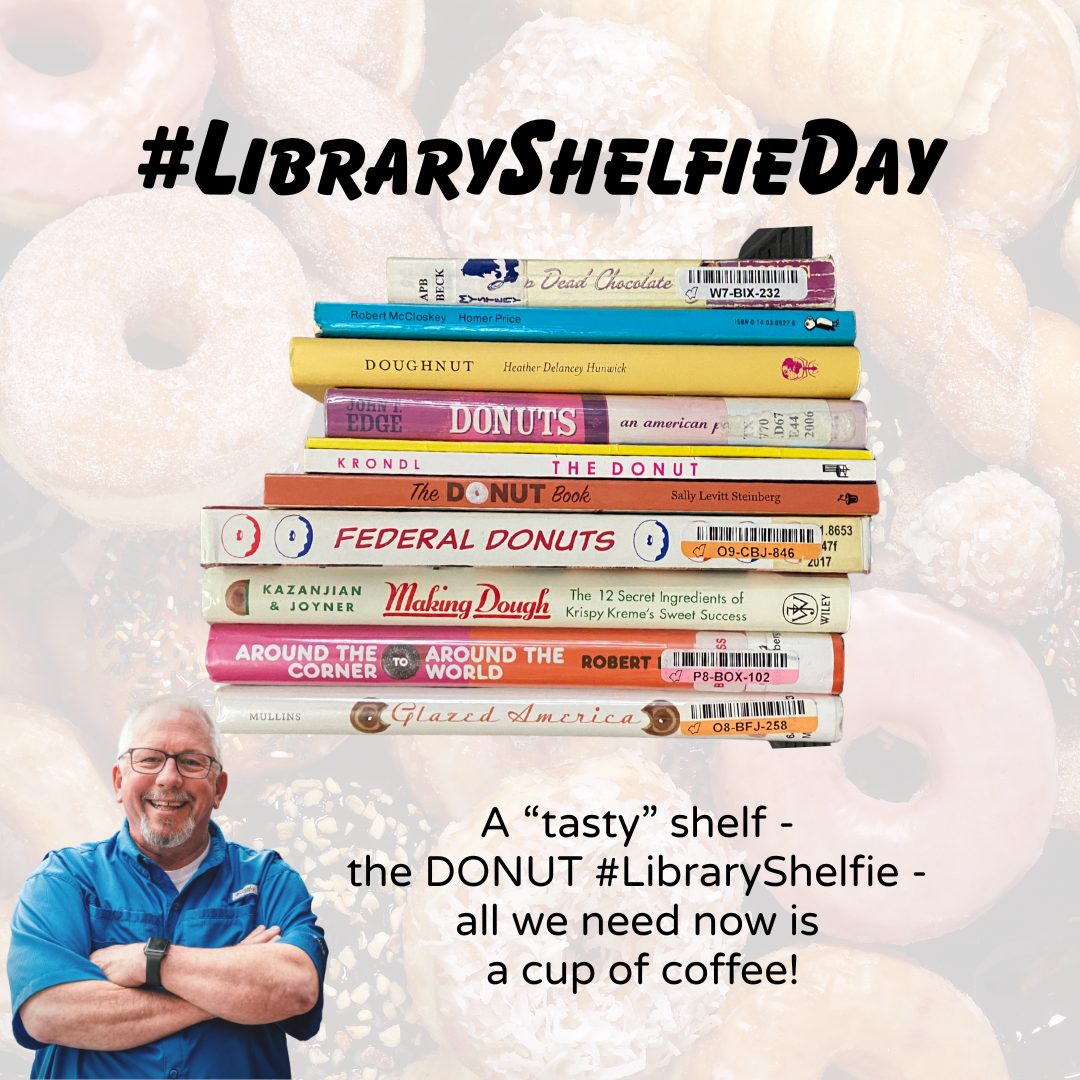
The donut collection explores similar territory. For many, the humble donut is far more than a sweet treat – it’s a symbol of comfort, a trigger for nostalgia, and a wonderful nod to American culinary ingenuity.
These delightful rings of fried dough have spun their way through centuries, leaving a delicious trail of history, personal memories, and significant business lessons in their wake. To find the “hole” truth requires jumping headlong into books that explore the multifaceted world of donuts, from fascinating origins to status as global icons.
The history of donuts in America is a testament to their enduring appeal. From Dutch settlers to modern-day gourmet bakers, each era has contributed to the rich tapestry of donut lore. So next time you savor a donut, remember that you’re partaking in a delicious slice of American history.
Literary Pilgrimages and Family Legacies
Some collections document decades-long relationships with particular authors or universes. My Tolkien collection began in junior high with “The Hobbit” and “The Lord of the Rings” and expanded over subsequent decades to include not only multiple re-readings but all of Tolkien’s published and unpublished works, plus books written about Tolkien’s work by other authors. These aren’t books merely owned – they’re territories explored and re-explored, landscapes that continue shaping how we think, feel, and dream.
The Stephen Hunter collection traces another kind of journey – following Bob Lee Swagger, “the Nailer,” through a sprawling multi-generational saga that meticulously builds a family legacy of marksmen, lawmen, and warriors stretching back over two hundred years. Since 1993’s “Point of Impact,” readers have followed not just one hero but an entire lineage, understanding that sometimes our greatest stories aren’t contained in single volumes but unfold across entire series that demand shelf space and loyalty.
The Library Connection
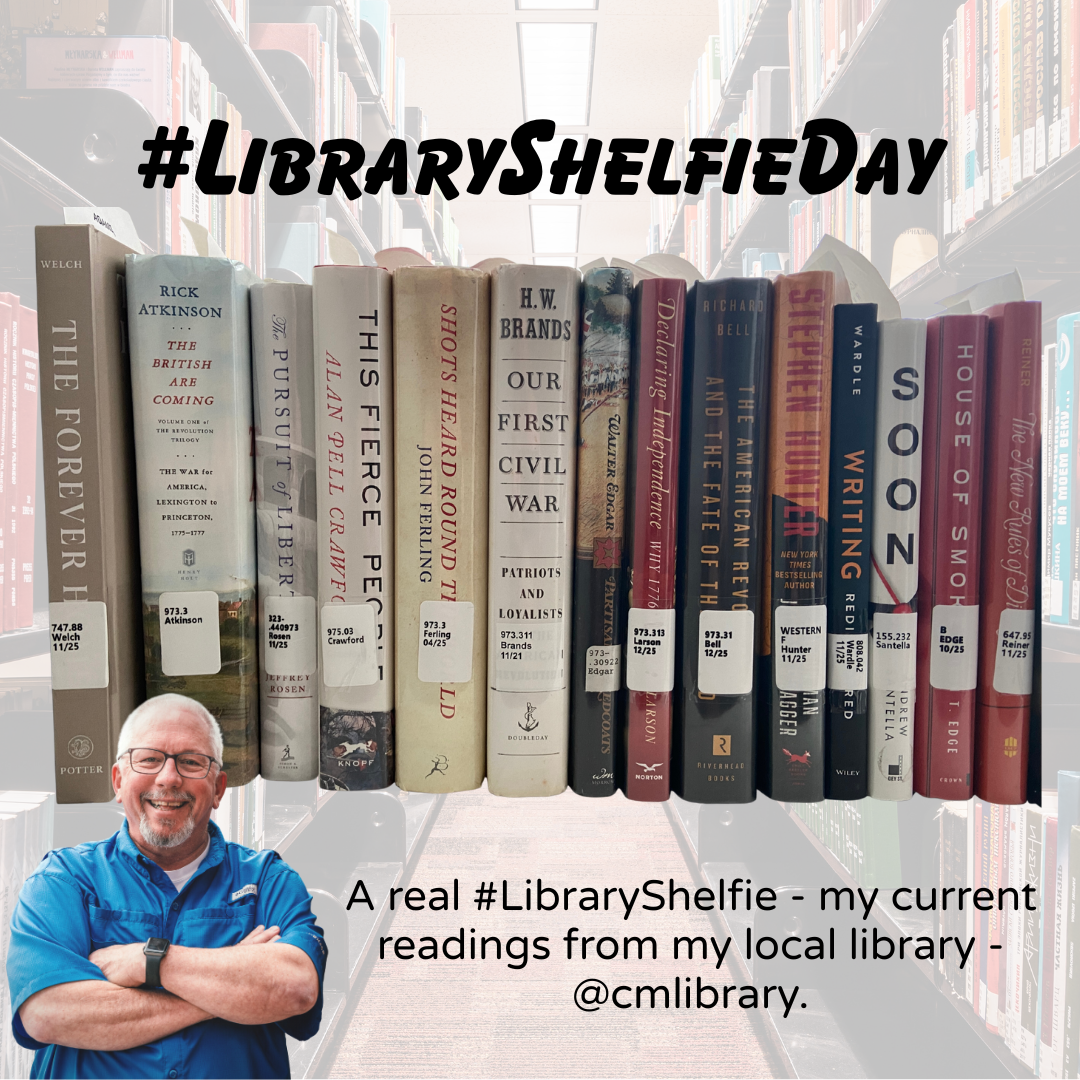
Many shelfies inadvertently capture another truth about modern reading life: the integration of library books into personal collections. Some readers intermingle borrowed volumes with purchased ones, creating temporary arrangements that shift weekly. Others maintain separate, highly visible locations for library loans – for me, just outside my office door – allowing them to stay top of mind, handy to grab coming or going, so as to always have one or more in process.
These arrangements tell stories of resourcefulness, of readers who understand that ownership and engagement aren’t synonymous, who build relationships with their local libraries and librarians. The weekly library pilgrimage has become ritual for many readers like me, a sacred appointment appearing in calendars alongside work meetings and social obligations. These visits yield not just books but the pleasure of discovery, the satisfaction of completing one reading mission while embarking on another.
The Perfect Imperfect Shelfie
On National Shelfie Day, resist the urge to tidy or curate excessively. The best shelfies capture reading life as it actually exists, complete with precarious stacks, mixed genres, and honest documentation of intellectual ambitions.
When thousands of readers share photographs of their own literary accumulations, shame dissolves. We see ourselves reflected in others’ stacks and towers, recognizing that our reading ambitions outpacing our reading time is universal rather than personal failure. There’s genuine pleasure in acquiring books that exists independently from reading them. Each new addition represents possibility and promise, another potential adventure or insight waiting just beyond the current read.
These honest captures celebrate not just the books we’ve read but those we aspire to read, not just our literary accomplishments but our ongoing ambitions. They document the beautiful tension between finite time and infinite curiosity, between the books we’ve finished and the worlds still waiting to be explored.
Your National Shelfie Day Challenge
Here’s your mission for today, should you choose to accept it:
First, locate all your book piles. Yes, all of them. The one on your nightstand, the stack hiding behind your bedroom door, those books camouflaged among decorative pillows on your couch, and the collection you’ve strategically positioned to block that wall stain you keep meaning to paint over.
Next, photograph your book piles exactly as they exist in their natural habitat. Post with pride, and tag it so fellow bibliophiles can find you. Bonus points if you can count how many books are in your pile without having to actually count them twice. Double bonus points if you admit in your caption which books have been sitting unread the longest.
Capture your collections – whatever they may be. Share your collections, the cookbooks, the mystery series, the professional development texts, the hobby guides, the literary fiction, the guilty pleasures. Show us the collections that tell your story, that map your curiosities, that reveal the subjects you can’t stop exploring from multiple angles.
This is your intervention and your celebration rolled into one. I’m not here to shame anyone’s book pile. I’m here to document it, share it, and collectively acknowledge that we’re all in this beautiful, ridiculous predicament together – surrounded by more books than we can read in several lifetimes, yet somehow always eyeing that next title, planning that next library visit, making room for just one more.
Because ultimately, our shelfies don’t just show what we read. They show who we are, who we’ve been, and who we hope to become. They’re visual autobiographies written in spines and dust jackets, honest portraits of lives lived in pursuit of knowledge, beauty, adventure, and understanding.
So point your camera. Capture your chaos. Share your stories.
Your move, reader.
Part of a regular series on 27gen, entitled Wednesday Weekly Reader.
During my elementary school years one of the things I looked forward to the most was the delivery of “My Weekly Reader,” a weekly educational magazine designed for children and containing news-based current events.
It became a regular part of my love for reading, and helped develop my curiosity about the world around us.
In some corner or horizontal space of nearly every book lover’s home sits a tower of possibilities – a stack of unread books that grows with each passing week, defying gravity and good intentions alike. This is the TBR pile: “To Be Read,” a physical manifestation of literary ambition that stands as both promise and gentle rebuke.
Since I’m an overachiever – if only in this area – in my house, particularly my office, there are multiple TBR piles.
The Anatomy of a TBR Pile
The typical TBR pile is a fascinating ecosystem of its own. At its foundation rests the ambitious purchases – perhaps a weighty classic one has been meaning to tackle for years, or the award-winner your friends are talking about. The middle section often contains gifts from well-meaning friends and relatives who correctly identified the recipient as a reader but perhaps missed the mark on genre preferences. The middle section for me also contains my spur-of-the-moment volumes from the new section at my library. Finishing out my TBR pile are the “Top of the Stack” – either impulse buys, those books acquired during moments of weakness at bookstore sales or the latest weekly “holds” from my library searches.
What makes a TBR pile unique to each reader is not just its content but its organization – or delightful lack thereof. Some bibliophiles maintain meticulously categorized stacks sorted by genre, publication date, or reading priority. Others embrace chaos theory, allowing their collection to exist as a jumbled monument to literary possibility where the next read might be determined by whichever volume happens to be most accessible when the current book is finished.
As a firm adherent to the “both/and” philosophy, I utilize both of the above: some TBR piles have definite themes and organization; others are a haphazard collection at best.
The Weekly TBR Pilgrimage
As a dedicated reader, my local Charlotte Mecklenburg library branch serves as both sanctuary and hunting ground. Weekly visits become ritual, a sacred appointment kept regardless of weather or competing engagements. Long written in stone in my calendar is a weekly “Lunch & Learn” – an early morning library visit followed by lunch at Big Bitez Grill. These excursions follow predictable patterns: the return of last week’s borrows, the browsing of new arrivals, and finally, the inevitable checkout of more volumes than one could reasonably expect to finish before their due date. Luckily, on almost all checkouts, up to three renewals take place automatically. Best of all, there are no overdue fines!
An example would be last week’s library visit, when I picked up seven books about J.R.R. Tolkien’s works about Middle-earth. As depicted in the image below, they are this week’s “Top of the Stack” which I am reading through at the moment. Most likely, all of these books will eventually be acquired and become part of my Tolkien library.
While I have a long history of library visits going back to my childhood, library visits have evolved beyond merely walking the physical stacks. I arrive with a carefully curated hold list of titles gleaned from topic-specific searches, online reading groups, literary podcasts, and social media recommendations. The library’s computer system becomes a treasure map, leading to searching online and then reserving volumes I want to check out.
TBR and the Quest for Synoptical Reading
Among the most ambitious readers exists a practice known as synoptical reading – the art of reading multiple books on the same subject to develop a more comprehensive understanding. This approach transforms the solitary act of reading into something resembling academic research, with books in conversation with one another through the mind of their reader. Of the four types of reading, this is by far my favorite.
A TBR pile built around synoptical reading takes on a different character. Instead of random accumulation, these collections grow with purpose. One might find three biographies of the same historical figure, offering different perspectives on a single life. Or perhaps a stack of novels from the same literary movement, each illuminating different facets of a shared aesthetic. Science books examining competing theories, philosophy texts in direct dialogue with one another – the synoptical TBR pile becomes a curated symposium waiting to happen.
Library visits for the synoptical reader involve strategic searches through subject headings and cross-references. What began as interest in a single volume often expands into the exploration of an entire subject area, with each new discovery adding another title to the ever-growing list.
Truth be told, several of my TBR piles contribute to my individual libraries. Largest, of course, is my Disney library – 500+ volumes and growing. Beyond that are several that have origins and applications in my former work: Guest Experiences (315 ); First Place Hospitality (203 ); and SUMS Remix (576 ). Other examples of my smaller synoptic libraries include Bridges (14), Shepherding (17 ), author Stephen Hunter (26), and the Burger Quest (24 ). There are more, but you get the point: for me, TBR is almost equivalent to synoptical reading.
The Psychology of the Unread
There’s a particular joy in acquiring books that exists independently from the pleasure of reading them. The Japanese term tsundoku describes the habit of buying books and letting them pile up unread, and many bibliophiles recognize themselves in this gentle accusation. This has been wrongly applied to me – if I buy it, or even check it out from the library, it’s going to be read.
A healthy TBR pile serves as a buffer against the unthinkable – the prospect of having nothing new to read. It stands as a promise of adventures yet to come, of knowledge not yet acquired but tantalizingly within reach. Each unread book represents potential rather than failure, a conversation waiting to happen between author and reader.
Yet there’s also the guilt. The reproachful spines of books purchased with enthusiasm but subsequently neglected. The nagging awareness that at current reading speeds, one might need several lifetimes to complete even the existing collection, let alone new additions.
Finding Peace with the Pile
I would like to think that I am becoming a wise bibliophile, having made peace with my TBR piles, understanding that some books may remain a long-delayed read, and that’s perfectly acceptable to me. The pile serves purposes beyond mere pre-reading storage: it’s a physical manifestation of intellectual curiosity, a declaration of reading intentions, and sometimes simply office decor that accurately reflects my personality and interests.
Weekly library visits continue regardless, new books are still acquired, and synoptical reading projects are still planned with enthusiasm. The TBR pile grows and occasionally contracts, but never disappears entirely. And in this constant state of literary potential energy waits the true joy of the book lover’s life – not just in the reading, but in the anticipation of all those worlds waiting to be explored, one opened cover at a time.
Part of a regular series on 27gen, entitled Wednesday Weekly Reader.
During my elementary school years one of the things I looked forward to the most was the delivery of “My Weekly Reader,” a weekly educational magazine designed for children and containing news-based current events.
It became a regular part of my love for reading, and helped develop my curiosity about the world around us.
In a follow-up to last week’s look at the history of the library, a companion post: the role of books in both shaping conflict and being shaped by conflict (the very appropriate subtitle of the book).
Print, in all its rich variety, will continue to play a part in human interactions through the globe, in war as in peacetime… When books go to war, others stay behind, a reminder of the better times when conflict can be banished to the edge of our consciousness, if never wholly eradicated.
Andrew Pettegree
We tend not to talk about books and war in the same breath – one ranks among humanity’s greatest inventions, the other among its most terrible. But as esteemed literary historian Andrew Pettegree demonstrates, the two are deeply intertwined.
The Book at Warexplores the various roles that books have played in conflicts throughout the globe. Winston Churchill used a travel guide to plan the invasion of Norway, lonely families turned to libraries while their loved ones were fighting in the trenches, and during the Cold War both sides used books to spread their visions of how the world should be run. As solace or instruction manual, as critique or propaganda, books have shaped modern military history – for both good and ill.
With precise historical analysis and sparkling prose, The Book at War accounts for the power – and the ambivalence – of words at war.
In May 1933, news of widespread book burnings orchestrated by the Nazis in Germany triggered a swift and impassioned response in the United States. Almost 200,000 people took to the streets in cities across the country to protest this censorship. Authors, some of whose works had been burned, strongly condemned the actions. President Franklin D. Roosevelt incorporated the imagery of the smoldering pyres into his speeches, emphasizing the importance of preserving freedom and civil liberties.
Nearly a century later, book burnings during the Nazi era remain a powerful symbol, partly due to their impact at the time. Many Americans saw them as emblematic of the German regime, serving as a forewarning of future atrocities. However, Andrew Pettegree’s extensive cultural history, The Book at War: How Reading Shaped Conflict and Conflict Shaped Reading, reveals a surprising twist. Less than two decades before the Nazi book burnings, during periods of wartime chauvinism, Americans themselves fervently burned German books, with librarians leading the way.
Pettegree, a professor of modern history at Scotland’s University of St Andrews, delves into the intricate relationship between printed media, books, and war. He argues that books have played a crucial role in conditioning readers to expect and support conflicts, serving as carriers of ideology and spoils for victors. Yet, they have also provided solace and solidarity during times of combat, offering comfort to civilians in hiding and soldiers on the front lines.
While Pettegree’s depth of knowledge and skillful storytelling are evident throughout, he reaches a high-water mark when detailing the literary toll of war, providing acute actuarial insights into the destruction of books during World War II. The loss of over 500 million books in Europe, including the ransacking of Jewish libraries and the devastation in Poland, underscores the profound impact on cultural heritage.
A fascinating thread weaves through what Pettegree calls “warrior authors” – the great leaders of the world powers who found themselves in opposition not only on the battlefield, but also on the written page. Here are a few examples:
Winston Churchill – Writing was in his blood; his first autobiography “My Early Life” was from his adventures in India and Africa during Britain’s various wars in the region. Prior to his ascendancy to become Prime Minister, writing and journalism kept him ahead of his mounting debts. After WWII, he would win the Nobel Prize for Literature, for his oratory and historical writing.
Adolf Hitler – The most notorious text of the twentieth century, “Mein Kampf” laid out in remarkable detail his program for Germany and the fate that awaited its enemies. He was also a discerning reader and collector, particularly of architectural and history books, appropriated by American soldiers in 1945 and now in the Library of Congress.
Joseph Stalin – Belying his reputation as crude and uneducated, he was a deeply literate and thoughtful reader and lover of books. His carefully curated library of over 15,000 volumes carried over into his involvement with some of the major writing projects of the Soviet state, influencing a war of ideas in Communist countries around the world.
Charles de Gaulle – A lonely symbol of French defiance during most of WWII, he first came to prominence as an author of aa widely admired text on armored warfare that crossed international boundaries and was quickly translated into both German and Russian.
The Book at War not only examines the destructive power of war on literature but also highlights how books have provided comfort to individuals enduring conflict. The accounts of Allied soldiers receiving cartons of paperbacks after storming Normandy’s beaches and Anne Frank finding solace in books while hiding from the Germans in Amsterdam are particularly poignant. These stories prompt reflection on how books continue to influence those facing conflict today.
On a personal note, my father was a WWII veteran who loved to read. Much later in life – his early 80s – he shared with me both stories and a few books that he had saved from his time in service. In addition, he had a highly curated selection of books by and about some of the great leaders of that generation, particularly Dwight Eisenhower. Upon is passing, I was fortunate to bring several of those into my personal library.
Part of a regular series on 27gen, entitled Wednesday Weekly Reader.
During my elementary school years one of the things I looked forward to the most was the delivery of “My Weekly Reader,” a weekly educational magazine designed for children and containing news-based, current events.
It became a regular part of my love for reading, and helped develop my curiosity about the world around us.
Tuesday is my “Lunch and Learn” day, typically involving a trip to my local library to drop off books I’ve completed and pick up new ones that are available on my hold list. As a long-time user of library facilities, it’s not a surprise that I would read a book about libraries!
Famed across the known world, jealously guarded by private collectors, built up over centuries, destroyed in a single day, ornamented with gold leaf and frescoes, or filled with bean bags and children’s drawings – the history of the library is rich, varied, and stuffed full of incident.
In The Library; A Fragile History, historians Andrew Pettegree and Arthur der Weduwen introduce us to the antiquarians and philanthropists who shaped the world’s great collections, trace the rise and fall of literary tastes, and reveal the high crimes and misdemeanors committed in pursuit of rare manuscripts. In doing so, they reveal that while collections themselves are fragile, often falling into ruin within a few decades, the idea of the library has been remarkably resilient as each generation makes- and remakes -the institution anew.
Beautifully written and deeply researched, The Library is essential reading for book lovers, collectors, and anyone who has ever gotten blissfully lost in the stacks.
The Library: A Fragile History by Andrew Pettegree delves into the rich and complex evolution of libraries throughout history. Pettegree skillfully navigates the cultural, social, and technological shifts that have shaped these institutions. The book explores the profound impact of libraries on societies, emphasizing their role as repositories of knowledge and catalysts for intellectual progress.
Pettegree traces the origins of libraries from ancient civilizations to the present day, highlighting key moments of transformation and adaptation. The narrative captures the challenges libraries faced, such as political upheavals, wars, and technological advancements, and how they managed to survive and thrive amidst these changes.
One notable aspect of the book is its attention to the people behind the libraries, from dedicated librarians to visionary leaders who shaped the destiny of these institutions. Pettegree effectively weaves together historical anecdotes, providing a comprehensive and engaging account of the library’s journey.
As a voracious reader with a keen interest in history, I really appreciated the detailed exploration of the evolution of libraries and their pivotal role in preserving and disseminating knowledge. Pettegree’s thorough research and insightful analysis provided detailed explanations and appreciation for good arguments.
Overall, The Library: A Fragile History offers a compelling narrative that aligns with my interests in history and books. It serves as a valuable addition to my reading list, providing a nuanced perspective on the enduring significance of libraries across different eras.
Part of a regular series on 27gen, entitled Wednesday Weekly Reader.
During my elementary school years one of the things I looked forward to the most was the delivery of “My Weekly Reader,” a weekly educational magazine designed for children and containing news-based, current events.
It became a regular part of my love for reading, and helped develop my curiosity about the world around us.
Among the many, many lessons from 2020, one certainly has to be that the pace of everything has accelerated.
At Auxano, we always strive to serve church leaders to the best of our ability
When the last two intersect, it’s time to make changes…
As we, like every church leader right now, assess everything we are presently doing in order to maximize future impact, it’s clear that even some of our best resources need to change.
The last issue of SUMS Remix was delivered Thursday, April 22*.
If all you’re doing is the jobs you used to do, you’re certainly missing out on the contributions you’re capable of.
Seth Godin
Those who know me know my personality style, emotional makeup, and characteristics. If you don’t, this should give you a clue:
Myers-Briggs – INTJ
DISC – C (almost exclusively)
Insights – Blue (deep, deep, blue)
Enneagram – 5, wing 6
Fascination Archetype – The Archer
Strengths Finder – Learner, Intellection, Input
APEST – Teaching
There’s more, but you get the drift.
SUMS Remix, and SUMS before it, have been an integral part of my work life since the fall of 2012. The idea of a creating a book summary product was one of my three primary tasks when I joined Auxano earlier that year.
Anything connected to reading, learning, and curiosity about the world around us was a natural fit for me – I have been a reader for as long as I can remember. It was instilled in me and modeled by my father, orchestrated by my mother, and a natural part of my brother’s and my childhood.
By the numbers, here’s where I’ve been:
8 years, 5 months of constant production cycles for SUMS and SUMS Remix
6 vertical book towers and two shelves in my office, holding the above referenced books
3 postal carriers, and dozens of Amazon drivers, making regular visits to my house
1 very gifted team: Bryan Rose, Andrea Kandler, and James Bethany – creative input, grammar and style development, and graphic designer, respectively. They made it happen, week after week.
And it’s over.
Better is possible… if we care enough to walk away from what was and brave enough to build something new.
Seth Godin
To best meet challenges facing leaders in a post-pandemic, accelerated-pace-of-ministry life, our team is redirecting our resources used to produce SUMS Remix to a laser-focus on these four areas:
Vision Clarity – because the post-pandemic church must be even more engaging and focus on accomplishing their unique disciple-making call
Visionary Planning – because every ministries and leaders must work in complete alignment toward a collaborative understanding of God’s better future
Generosity Culture – because giving has been steady over the last year, but we must grow everyone to be generous disciples
Generosity Campaign – because healthy growth requires resources, and how the church funds large-scale initiatives must change
If any of those areas resonate within you or your leadership and you would like to know more about how the Auxano team can help your leadership in this new era, just fill out this connection card and one of our Navigators will reach out and schedule a quick call.
I’ve already jumped headfirst into the world of research and writing for engagement, real-time development of content that leaders are asking questions about, and supporting our Navigators in their onsite and virtual journeys with churches across the country.
When it comes to books and reading, I’m still making weekly trips to the library, still curious about the world around us, and still adding to my “To Be Read” lists, because…
Want to talk books, ideas, and such? Leave a comment below!
* That day is significant in many ways, not the least of which it was the only issue (out of 221 SUMS and SUMS Remix) that was not delivered on our “every other Wednesday” target, which began in October 2012. Just sayin’…