
Every book I own was bought somewhere, from someone, on a particular day. I rarely think about that part. The book itself takes over, its subject and its spine and the weight of it in the hand, and the shop where I found it mostly fades into the background of the transaction.
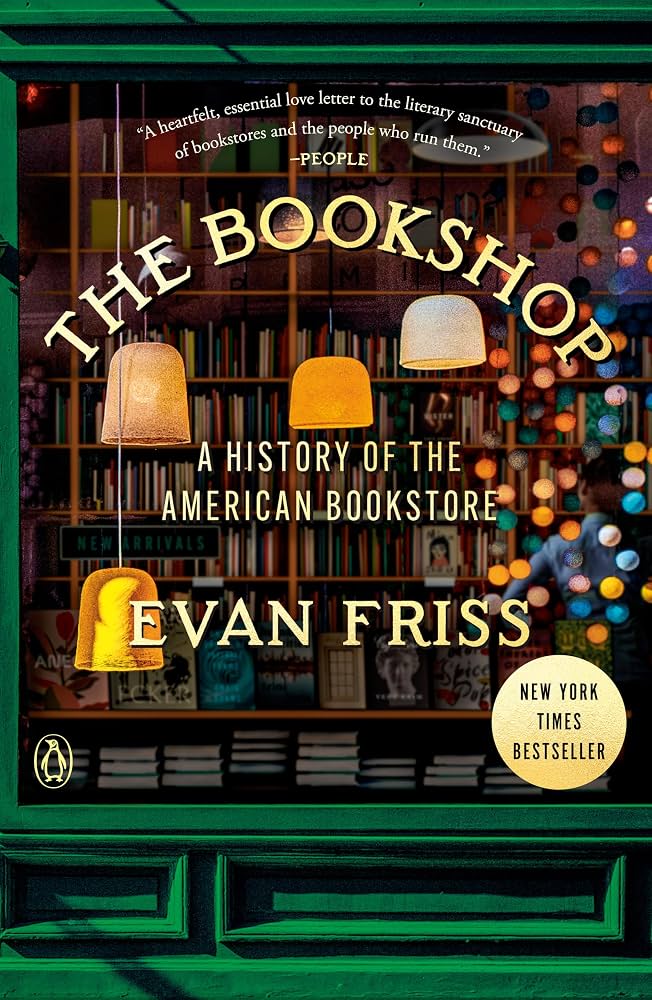
Evan Friss has written a history that puts the shop back in front.
The Bookshop, published by Viking in August 2024 at 416 pages, asks what the American bookstore has been, who stood behind its counters, and what the rest of us were doing when we walked through the door.
I came to it as a synoptical collector first and a reader second, which may be the wrong order for a reviewer but is the honest one. Over five decades I have built shelves on Walt Disney and the company that carries his name, on America’s founding era, on hospitality, on leadership, and many more topics. Much of that collection was assembled one store visit at a time. Right now I am doing the reverse, sending books back out into the world, and Friss’s history landed on my desk at a moment when I was thinking hard about where books come from and where they go.
The Author and the Approach
Friss is a professor of history at James Madison University, and his earlier books on bicycles and American cities suggest a writer who likes ordinary objects that turn out to carry large stories. The bookstore suits him. It is a commercial enterprise and a civic one at once, and it is easy to overlook because it is always right there on the corner.
He built the book on solid ground. He drew on oral histories, archival collections, municipal records, diaries, letters, and interviews with leading booksellers. You can feel that range in his words. Some passages read like social history, others like a trade-journal profile, and a few have the intimacy of a conversation across a counter.
The structure deserves attention because it is the book’s most deliberate choice. Friss does not march from the colonial period to the present in a single line. Instead, each chapter is set in a particular bookshop or book-delivery system that stands for a theme in American bookselling, and that single place anchors a larger argument. A reviewer noted that the author’s definition of “bookstore” is generous enough to take in mobile bookselling and the sidewalk vendors of New York City. I think that generosity is right. A history confined to the tidy storefront with a bell on the door would miss half the story.
Boston, Chicago, and the Making of an Institution
The book opens in Boston, at the Old Corner Bookstore, run by Ticknor and Fields. Friss treats it as the birth of the American bookstore, and the claim is persuasive. Before shops like this, bookselling in the colonies and the young republic was a loose affair of printers who sold their own output, importers, and itinerant peddlers. What Ticknor and Fields built, and James Fields in particular, was a place where publishing, retail, and literary society overlapped. Authors came by to talk. The shop was a destination as much as a business.
I have spent enough time researching the founding generation to find this part of the story familiar in its outline. The men who wrote the Declaration and argued over the Constitution lived in a world where a book was scarce, expensive, and passed hand to hand. Their libraries were statements of intent. The modern bookstore is a nineteenth-century invention in many respects, and it came into being because enough Americans wanted to read, and wanted somewhere respectable to do it.
From there Friss moves to Chicago and the book department at Marshall Field’s, where Marcella Burns Hahner served as buyer, manager, and public face of the store. This is among the book’s better choices. It brings in the department store as a bookselling venue, a woman running a major retail operation in an era when few did, and the idea that books could be sold to a mass audience in the same building as gloves and furniture. Friss describes Marshall Field’s as a critical moment in the trade, and the department store era does mark a turn toward bookselling as a business of volume and display.
True to my previous readings about the Gilded Age and the Progressive Era (spanning from the late 19th century through the early decades of the 20th century), I thought the book would have more about the economics of that period. The pages on the mechanics of buying, discounting, and the pressure that large retailers put on small shops are interesting but brief. This is a personal note, and actually it points to a quality of the whole book: Friss prefers people to spreadsheets, and the reader mostly benefits from that preference.
The Shop as Gathering Place
If the book has a single idea running through it, it is that the bookstore has never been only a place to buy books. One reviewer put it plainly, observing that the central theme is that the bookshop tends to serve several functions at once. That strikes me as accurate, and it is where the book earns its keep.
Friss gives considerable space to bookshops that served particular communities. He takes up feminist, Black, gay, and radical bookshops, and these chapters carry the most emotional force. The Oscar Wilde Memorial Bookshop in Greenwich Village is the clearest case. According to one reviewer, it shows how a bookstore can be far more than a place where books are sold. Such a shop gave people who had few safe public places a room where they could be among their own. Friss also writes about Julie Morse’s Amazon Bookstore, a feminist shop whose name has nothing to do with the online giant that later claimed the word.
He is also willing to look at shops that most readers will find uncomfortable. One chapter concerns a movement bookstore that operated as a de facto headquarters of American Nazism. Including it was a risk, but a historically correct one. If the bookstore can be a refuge, it can also be a recruiting office. A history that celebrated only the shops we admire would be a kind of advertisement. Friss lets the institution show its full range, and he does so without sensationalism.
I think this is the most important thing a history like this can teach, and it is relevant to the civic themes I often write about on 27gen. Printed material shapes communities for good and for ill, and the shop is where that shaping happens in public. The books on the shelf are only half of what a store is. The other half is the conversation, the notices on the cork-board, and the people who come in on a Saturday because they know others will be there.
The Human Cast
The brick and mortar bookstore may be the primary topic, but Friss writes best when he is writing about individuals. He profiles booksellers across the book, and several of them are memorable. Mitchell Kaplan, the founder of Books & Books in Coral Gables, Florida, gets the label “the Convener” for his work in building a place where readers could gather. Donna Paz Kaufman, who has run seminars for people hoping to open bookstores, appears alongside her husband, with whom she owns a shop on Amelia Island.
And then there is Vaughn, the UPS driver. Friss includes a tribute to the delivery man at Three Lives & Company, where the author’s wife once worked as a bookseller. This passage resonated with me more than any of the many other good set pieces. It is the kind of detail that only someone who has been inside a bookshop on an ordinary Tuesday would think to record. Every shop depends on people like Vaughn, and almost no history ever mentions them.
The personal touch has a cost; Friss tells us openly that he could not cover every important shop. Readers who want an encyclopedia of American bookstores will not find it here, and readers who care about a favorite shop in their own town may feel overlooked. Friss is not trying to be complete. He is trying to be representative, and by that standard the book mostly succeeds.
The Numbers and the Mood
The closing chapters turn toward the present, and the tone shifts. According to U.S. Census numbers, between 2012 and 2021 the number of bookstores fell by 34 percent and bookstore employment fell by 53 percent. The average American spent roughly thirty dollars a year on books, and nearly half of adults read no book outside of work or school.
Friss does not settle into despair, though. He captured his larger argument in a sentence I kept returning to: the bookstore survives by redefining itself. That is the pattern the earlier chapters set up. The shop became a department store counter, then a chain, then a community center, then a coffee-and-events destination. Each reinvention was a response to pressure. The institution has been declared dying many times, and it has adapted each time. The reader is left to judge whether the next adaptation will arrive in time.
Because they reflect my early book-buying, the chain era is where I would have liked more reflection. Borders, which started in Ann Arbor in 1971, went bankrupt in 2011, and Barnes & Noble shut down a large number of its stores in 2023, though their store numbers have rebounded above 750 as of this year. Along with Waldenbooks, these were the shops that most of my generation of readers knew best. They were large, bright, and well stocked, and they let you sit on the floor for an hour without anyone minding. When they went, something went with them that the independents could not entirely replace. Friss treats the chains fairly, but the book’s focus tilts toward the smaller shops, and rightly so.
What I Brought With Me
A brief pause to say something about my own shelves, because the book kept sending me back to them.
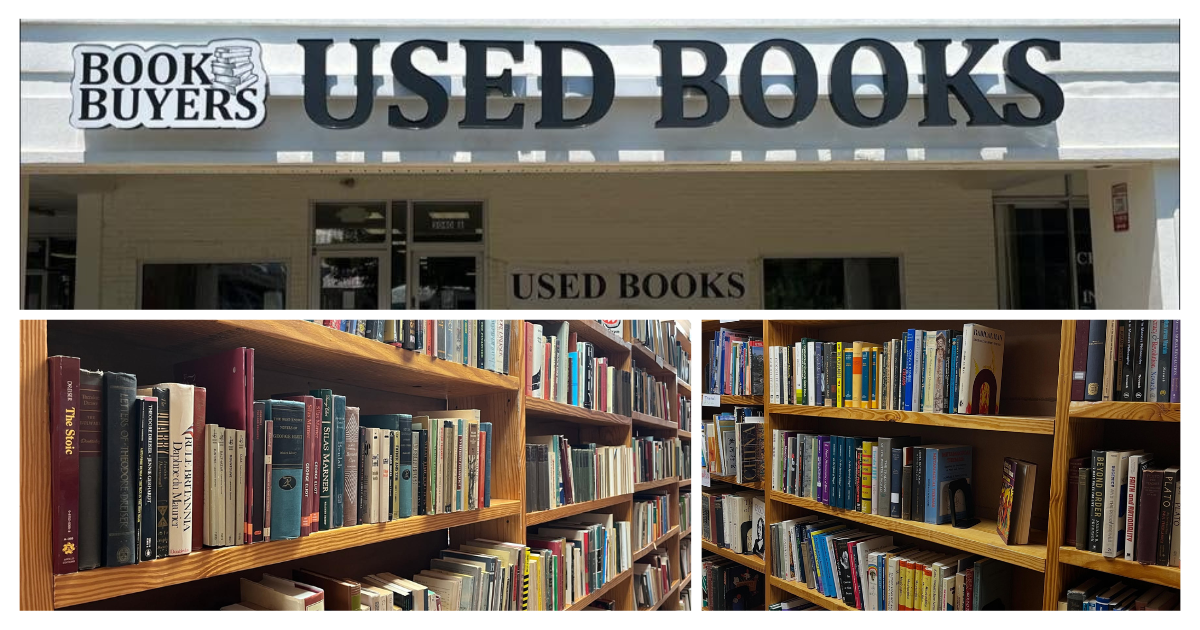
The Disney collection is the largest, well over five hundred books built across fifty years. I did not buy them in a single place. They came from used shops in towns I was passing through, from the tables at conventions, from catalogs that arrived in the mail, and from the occasional new-release display where I would pick up a title I had been waiting on. Looking at those shelves now, I can nearly sort them by where I found them. This one was a lucky discovery in a back room. That one I special-ordered and waited weeks for. Several of my unique finds came from a wonderful afternoon spent in John K. King Used and Rare Books in Detroit.
The leadership shelves tell another story. At one time that library held over two thousand books. It now holds fewer than two hundred. The downsizing has been deliberate, and it has taught me something that Friss’s book explains from the other side. A book that has finished its work for you has to go somewhere. In the old model, it went to a used shop, which resold it to the next reader, and the cycle continued. The shop was the circulatory system of the book trade. When I take a box of books out of the house, I am relying on that system, and I find it a comfort that somewhere a person behind a counter will look at what I brought and decide whether it deserves a second reader.
Reading Friss as an amateur historian of the founding era, which is how I have mostly been reading the past year, I noticed how many of his themes echo the civic questions that occupied my other writing earlier this year. The founders believed an informed public was the foundation of self-government. They did not say where the public would buy its books, but the bookshop became that place by default. When a shop closes, a town loses a piece of its civic infrastructure, quietly and without a vote. I think about the heritage work I have done on Mecklenburg County, and how much of local memory lives in the places where people gather and the printed material they pass around. A bookstore is one of the few commercial spaces that doubles as an archive of its neighborhood’s interests.
There is a family angle developing as well. Though I don’t come from a large extended family, it was a well-read one, and the books I have kept are in part a way of keeping the family’s habits of mind in one place. Genealogy has made me aware that most of my ancestors left almost nothing in print. They left land records, church registers, and the occasional Bible with names in the front. The Great Wagon Road journey, which I followed on a journey of my own, carried families who owned very few books and who carried the ones they had with great care. A shelf of books is a luxury of recent centuries, and the shop that filled it is a luxury of a more recent one still.
My Two Cents Worth
The Bookshop is a warm book, and warmth often has a way of making a reviewer suspicious. Not for me! Friss’s affection for his subject sometimes softens the critical edge. The coverage of the digital era is thinner than the coverage of the earlier periods, which is natural for a historian but leaves the most pressing questions to the final pages. And as earlier noted, the selection of shops is bound to disappoint anyone looking for their own favorite.
The book has real strengths which easily outweigh any weak spots The unusual thematic structure works. The research is deep and easy to read. Friss has a good eye for the telling detail, whether it is the UPS driver or the department store buyer, and he is honest enough to include the uncomfortable chapters alongside the celebratory ones.
Who should read it? Anyone who has ever lost an hour in a shop without noticing. Anyone who collects, as I do, and has wondered about the chain of hands that brought each volume to the shelf. And readers of American history who want to see how an ordinary institution reflected the larger changes around it, from the growth of literacy and the rise of mass retail to the push for civil rights and the long contest over what Americans should be free to read.
I closed the book with a short list in my head of shops I want to visit, and a longer one of shops I wish I had visited before they closed. That seems to me the right effect for a history like this. It sends you back out the door and down the street, toward a room where books are kept and where someone is likely to ask what you are looking for.

Part of a regular series on 27gen, entitled Wednesday Weekly Reader.
During my elementary school years one of the things I looked forward to the most was the delivery of “My Weekly Reader,” a weekly educational magazine designed for children and containing news-based current events.
It became a regular part of my love for reading, and helped develop my curiosity about the world around us.

