Seeing With Your Brain

We live in a culture rich with images. My generation (Boomers) grew up with television – maybe only 3 channels, but what a difference from our parents’ primary information – the radio and the spoken word only.

My kids (2 Gen X, 5 Gen Y) expanded on the basic television, first with cable, then videotapes, then the Internet, and then DVDs.

My 4 grandchildren? They are digital natives, taking visual communication to new – and participatory – levels with social media, smart phones, tablets, apps, streaming video of all types on many different devices, and who knows what’s around the corner.

We can’t escape the power of the visual image – and most of us don’t want to.

Most of us are visual learners. We like to see a picture, not just hear a word. Len Sweet has said that images are the language of the 21st Century, not words. Why?

Pictures stick. We remember pictures long after words have left us. Pictures communicate far more than mere words. There’s a simple reason:

We see with our brain.

Vision trumps all the senses. Half of the brain’s resources are dedicated to seeing and interpreting what we see. What our eyes physically perceive is only one part of the story. The images coming into our brain are changed and interpreted. So it’s really our brains that are “seeing.”

If we are on an increasing visual trend in our culture and we understand the importance of vision in our lives, then it follows that leaders should be leading the visual revolution, not just observing (pun intended) it.

With that in mind, I wanted to introduce you to a trio of resources that will help you know how to use visual tools, manage visual practitioners and their work, and understand how to help your entire organization be visually literate – especially if you don’t think of yourself as being skillful visually.

Visual Leaders

Visual Leaders will help you and your organization take advantage of the visualization revolution. Visualization is transforming the world of work and the role of leaders in an age of global communication and complexity. The book is a guide to increasing your own visual literacy and your ability to help others with theirs. (Download a free summary of this book here.)

Visual Meetings

Visual Meetings supports a group’s cycle of learning. Visual Meetings explains how you can use graphic recording, sticky notes, and idea mapping when imagining, engaging, thinking, or enacting in meetings. It is loaded with very practical and detailed descriptions of how to conduct different visualization activities. It also reviews the Group Graphics Keyboard and the seven archetypal choices for organizing displays.

Visual Teams

Visual Teams explains how to create and sustain team performance with visuals. Visual Teams builds on Visual Meetings and shows how to use these methods across the whole arc of a team process, including the parts in between meetings. It also provides a graphical user interface to thinking about team dynamics with the Team Performance Model. The seven challenges of high-performing teams are explained in detail and linked to tools that help meet them.

Got a pen?


You might also like:
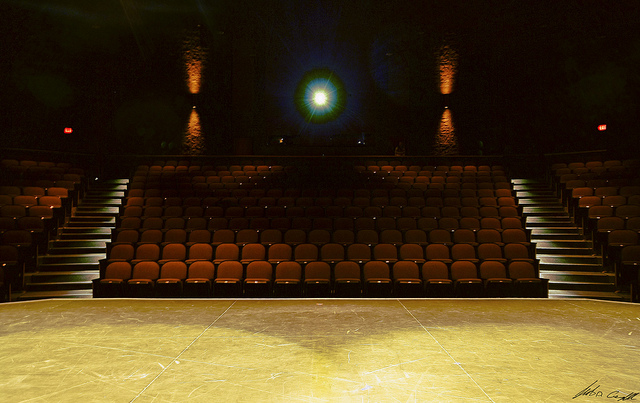
Every Element in Your Presentation Has a Single Purpose…

…to make a change happen.

A presentation is a precious opportunity. It’s a powerful arrangement…one speaker, an attentive audience, all in their seats, all paying attention (at least at first).   – Seth Godin

Don’t waste it.

courtesy of Justin S. Campbell

courtesy of Justin S. Campbell

The purpose of a presentation is to change minds.

  • If all you’re hoping to do is survive the ordeal because of lack of preparation, you’re wasting people’s time.
  • If all you’re hoping to do is amuse and delight the crowd, you’re simply an entertainer.
  • If all you’re hoping to do is pass along information, put it in a document and email it to your audience.

But if you really want to make a change, to move from informing someone to influencing them, ask yourself these two questions:

  • Who will be changed by this presentation?
  • What is the change I seek?

The answers can range from simple to subtle to dramatic.

Once you have the answers, though, dive into it with all you’ve got.

Every element of your presentation – the room, the attendees, the length, the tone, any visual elements, the technology – exists for just one reason: to make it more likely that you will achieve the change you seek. If an element doesn’t do that, replace it with something that does, or throw it out.

If you fail to make a change, you’ve failed. If you do make change, you’ve opened the possibility you’ll be responsible for a bad decision or part of a project that doesn’t work. No wonder it’s frightening and far easier to just do a lousy presentation.   – Seth Godin

A presentation isn’t an obligation – it’s a privilege.

inspired by Seth Godin, Bert Decker, Garr Reynolds, Nancy Duarte, and Andy Stanley

Where Does Your Guest Experience Start?

When a Guest pulls into your parking lot for your weekend worship experience, do you consider that the beginning of your Guest Experience process?

Elevation Parking 2

I hope not.

How you answer the question asked in the title of this post may very well be one of the most important determining factors of the success of your Guest Experiences.

Your Guest’s Experience with your organization begins well in advance of pulling into your parking lot and finishes long after leaving.

How so?

Consider that many first time Guests to your church “check you out” online in advance of coming. For many, your “digital doorway” is their first impression. How’s that working for you?

Another, less obvious connection is with your physical facility – owned, leased, whatever. Everyone driving buy 24/7 gets a subtle – but sometimes very overt – message about you from your facility. What do your Guests see Monday – Friday? What about the weekend?

Any kind of communication – print, digital, verbal – is also making an impression on your Guests. Are you intentional in your communication? When your Guest arrives, will their experience in reality match up with the expectations created by your communications?

There are other examples, but I think you get the point: your Guest Experience starts long before – and continues well after – you Guest is physically present.

So where does your Guest Experience actually begin?

  • Is it a thought process triggered by events in a Guest’s life (good or bad)? People undergoing life change will often instinctively reach out to the church for comfort or growth opportunities.
  • Is it when your regular attenders verbally ask their friends and neighbors to join them for the new series you’re starting next week?
  •  Is it a more direct contact, like a print piece or other form of marketing that landed in their mailbox, or their inbox?
  • Is it the story your facility tells – one that invites people into a place, expecting something positive and uplifting to occur?
  • Is it when your church is seen out and about in the community, serving others in a visible and noticeable way?

All of the above – and many more you can think of – occur before a Guest physically comes onto your property.

For whatever reason, a Guest is thinking about, or has decided, to come to your place.

For them, the Guest Experience has already begun.


How You Say Good Bye is as Important as How You Say Hello

Do what you do so well that they will want to see it again and bring their friends.Walt Disney

The Disney organization has no peer when it comes to creating amazing Guest Experiences. Their Cast Member interaction with Guests is legendary in providing a warm welcome to the Disney Parks. From your arrival by car, monorail, or boat, the Guest is almost overwhelmed by the tremendous “first impression” that Disney Cast Members deliver.

But I think it’s how Disney says “goodbye” that leaves a “lasting impression.

Just a few weeks ago on Independence Day, I’m sure many of you saw and heard first hand fireworks of all shapes and sizes. Independence Day fireworks are memorable, and they add a special feeling to the festivities of the day. But fireworks at Disney parks – they are unique.

At Disney World, the fireworks in 3 of the 4 parks (the animals in Disney’s Animal Kingdom can’t handle the noise) are simply spectacular. Here’s how Aaron Wallace, author of The Thinking Fan’s Guide to Walt Disney World: Magic Kingdom describes it:

Suddenly, almost without warning, the park goes dark, the castle lights up in a blinding white blaze, and the enormous trumpeting of horns heralds the long-awaited arrival of the fireworks show.

Words alone can’t convey the impact of that moment. There is no point during the Disney park experience when the magic hits harder than with the opening notes of the fireworks show. To quote Jiminy Cricket, “like a bolt out of the blue,” a feeling of “WOW! I’m actually in Disney World” washes over the crowd in that split second.

The show continues to build in intensity, the music gets louder, the fireworks more majestic until at the end, the sky is seemingly covered from horizon to horizon with a colorful canvas of memories and magic.

photo by Tom Brickman

photo by Tom Brickman

That’s what the Guests remember – and it makes them start thinking about the next time they can return.

But it isn’t quite time to say goodbye – for those hardy souls who have the stamina and endurance to remain till the park’s closing – and just a little longer – there is one more Disney magic surprise – the Kiss Goodnight.

As DisneyTouristBlog.com author Tom Bricker explains,

Too few Walt Disney World fans know about The Kiss Goodnight. If you just thought, “what’s that?” you’re not alone. The Kiss Goodnight is a little over 2-minutes long, and it is the Magic Kingdom’s way of saying “goodbye” to guests at the end of a long day. It usually plays every 30 minutes after the park closes and starts with Cinderella Castle “twinkling” as the music from When You Wish Upon a Star slowly builds.

photo by Tom Brickman

photo by Tom Brickman

A narrator then greets the last of the guests in the Magic Kingdom, saying: Ladies and gentlemen, boys and girls, on behalf of everyone here at the Magic Kingdom, we thank you for joining us today for a magic gathering of family, friends, fun, and fantasy. We hope your magical journey with us has created wonderful memories that will last a lifetime. Walt Disney said that the Magic Kingdom is a world of imagination, hopes, and dreams. In this timeless land of enchantment, magic and make-believe are reborn, and fairy tales come true. The Magic Kingdom is a place for the young and the young at heart. A special place where when you wish upon a star, your dreams can come true. Until we see you again, have a safe trip home. Thank you, and goodnight.”

The Kiss Goodnight is the proverbial icing on the Cake (Castle!). After a long day in the parks, we can’t help but just stop and watch the Kiss Goodnight, completely frozen and unable to move. For us, the combination of the beautiful light display and hearing about the meaning Walt Disney wanted the parks to have for guests does it every time.

I’m convinced that most people who “get” the Disney theme parks would get goose bumps if they were to stand in a mostly empty Magic Kingdom and watch and listen to this on a tranquil Main Street USA. It’s special not just because you’re in the park at such a peaceful time, essentially by yourself with Cinderella Castle, but also because of the significance of the words in Roy O. Disney’s Walt Disney World opening day dedication speech. The Kiss Goodnight basically embodies and reminds us exactly why it’s so great to be a Disney fan. If you haven’t stayed to experience The Kiss Goodnight before, you should definitely make an effort to do it at least once. It absolutely belongs on everyone’s Disney Bucket List.

Now that’s a goodbye!

Which leads me to a simple, closing question:

How do you tell your Guests goodbye?

Too Much Brainstorming Will Only Leave You All Wet

The conventional wisdom that innovation can be institutionalized or done in a formal group is simply wrong. – Debra Kaye, Red Thread Thinking

According to author Debra Kaye in Red Thread Thinking, recent studies of the brain make it clear why the best new ideas don’t emerge from formal brainstorming.

The brain doesn’t make connections in a rigid atmosphere – there’s too much pressure and too much influence from others in the group. The “free association” most often given as a benefit of brainstorming is often shackled by peer pressure, delivering obvious, predictable responses.

What’s the answer? Try getting away from it all.

Fresh ideas come when your brain is relaxed and engaged in something other than the particular problem you are embroiled in. To harness strategic intuition, you have to leave the subject and the facts and stop thinking so hard about them.

Maybe you should waste a little time…

Here are 7 ways to use the power of wasting time to jump-start your thinking:

  • Meditation – meditation increases your power of concentration and allows your mind to become free enough to let ideas flow
  • Sleep on it – sometimes, you just need to put your project aside overnight. When the pressure is off, it’s amazing what possibilities develop
  • Sleep tight – research has shown that when you learn something and then sleep on it, your knowledge of what you’ve learned becomes deeper
  • Exercise – getting on a bike, taking a walk, lifting weights – some form of exercise – is good not only for your gut, but for your gut instinct, too
  • Act metaphorically – researchers wondered if acting out the ideas in common metaphors like “thinking outside the box” and “putting two and two together” would make people more creative. They were right – so consider getting out of your box (office) to free up your mind?
  • Read about how smart you are – nerve cells in our brains make stronger connections after we learn something new. Think and learn about your capacity to be smarter – and you just may be
  • “Me” time – spending time engaged in activities you really like enhances innovative thinking

The literal presence of mind that comes when you clear your brain of all expectations is what usually precedes a flash of insight. That flash gives you the power to come up with and act on an idea.

Go ahead – take a walk…

courtesy manhattanportage.com

courtesy manhattanportage.com

…your boss can thank you later!


inspired by Red Thread Thinking, by Debra Kaye

Red Thread Thinking

I’ve Got the Power

The range of ways people exercise and respond to power can be complicated.

I'veGotthePower

Think of power in this case as the ability to exercise influence.

Power is not intrinsically good or bad. We ascribe meaning to power and make choices about how we will use it or react to its use by others. Ultimately, power is a responsibility, and it exists as a function of the individual, one’s followers, and the situation at hand.

Nicole Lipkin is a corporate psychologist who has spent her career diagnosing and resolving typical and troublesome leadership dilemmas. Her book, What Keeps Leaders Up at Night? examines the underlying psychology that plays a big role behind those dilemmas.

One of those dilemmas, for instance, is understanding why people don’t buy-in to your thoughts, ideas, or proposals.

It’s all about power.

7 Distinct Types of Power

  • Legitimate Power – arising from one’s title or position in the pecking order and how other perceive that title or position. Those with legitimate power can easily influence other because they already possess a position of power.
  • Coercive Power – using threat and force to influence others. This power comes from fear, and failure to comply will lead to punishment.
  • Expert Power – derived directly from a person’s skills or expertise or from perceived skills or expertise. Expert power is knowledge-based.
  • Informational Power – possessing needed or wanted information. People with high informational power wield influence because they control access.
  • Reward Power – motivating people to respond in order to win raises, promotions, and awards.
  • Referent Power – dependent on personal traits and values such as honesty, integrity, and trustworthiness. People with high referent power can highly influence anyone who admires and respects them.
  • Connection Power – creating influence by proxy. People employing this power build important coalitions with others.

These seven types of power generally fall into one of two categories: Formal Power (legitimate, coercive, and reward) and Informal Power (referent, expert, informational, and connection). As a leader, you may be use most, if not all, of these types of power during a typical day.

But when it comes to influencing people without creating potentially negative side effects, referent, expert, informational, and legitimate power seem to work best.

Coercive, connection, and reward power require more careful application because they rely on a higher degree of trust and risk and therefore can become easily manipulative.

You’ve got the power…

…don’t blow it.

inspired by What Keeps Leaders Up at Night, by Nicole Lipkin

What Keeps Leaders Up at Night

Don’t Let a Steep Learning Curve Become a Cliff

A learning curve is a graphical representation of the increase of learning (vertical axis) with experience (horizontal axis).

LearningCurve1

When we encounter a “steep learning curve” we face an uphill struggle to learn new ideas, practices, systems, etc. The goal is survival and ultimately, to be at a better place at some point in the future.

You know – the best in the world.

Anyone who is going to hire you, buy from you, recommend you, vote for you, or do what you want them to do is going to wonder if you’re the best choice. –Seth Godin

If you’re not going to put in the best effort, why bother?

Your learning curve should always be up and to the right – if it’s not, you’ve come to the edge of a cliff…

LearningCurve2

…now what?

The Importance of Clarity in Your Guest Experience

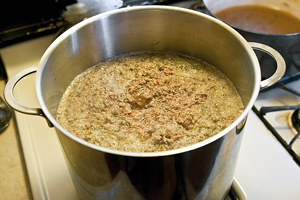
The process of making consommé is one of the most interesting things a chef will do in the beginning of his culinary education. Interesting, because you take a perfectly good stock and add a mixture of egg whites and lean ground beef, which has the effect of looking like a ground beef milk shake.

Consumme

courtesy The Atlantic

That gooey mess is the secret to the final product. As the consommé simmers, the ground beef mixture, known as a raft, floats atop the liquid. During the cooking process, the raft magically draws proteins and other impurities that are found in every stock, leaving the resulting liquid perfectly clear.

How clear? According to the chefs from the Culinary Institute of America, if you can read the date on a dime at the bottom of a gallon of consommé, it’s clear.

The secret to making a good consommé is leaving it alone. Once the raft is in place, all the work is done by the simmering action. Any attempt to stir the consommé will disrupt the clarification process and result in a cloudy consommé.

Properly done, the distinguishing characteristic of a great consommé is its strong flavor and clarity.

Your church’s Guest Experience should have clarity, too.

Completing a 3-part series begun here and continued here, today’s post delivers the final three “secret sauces” from Chip Bell’s book Sprinkles.


Alliance

Alliance can be defined as “an association formed for mutual benefit, or a relationship based on an affinity in interests, nature, or qualities.” Guests care when they share, particularly if sharing is invited, not expected. Simplicity and sincerity are important to remember when helping the Guest move toward a position of helping you.

The secret sauce of Alliance reminds us that the partnership between team members and Guests always carries a co-created experience. Guest inclusion begins by being comfortable enough to ask the Guest for assistance. It also means being willing at times to sacrifice a little on efficiency or effectiveness for the commitment gained through participation. How are you involving your Guests in a partnership that creates and delivers an exceptional experience?

Accessible

Accessible can be defined as “able to be reached or entered.” Recent research shows that being easy to do business with trumps every other feature of basic customer service. When a customer feels they can connect with you anytime, even big problems can be reduced to manageable proportions. Make access to stressless service a vital and obvious part of your Guest Experience recipe. After all, “stressed” spelled backwards is “desserts.”

The secret sauce of Accessible is best used by examining your Guest’s experience through their eyes. Often, that involves the conscious effort to see details that we are blind to. When was the last time you took an “empathy walk” in the shoes of your Guests, experiencing exactly what they do?

Adventure

Adventure can be defined as “an unusual or exciting experience or activity.” Is the Guest Experience you provide more like a light or a candle? Lights are important because they provide us with the capacity to see or see better. Candles do they same thing, but with style. If you want a romantic dinner, you don’t just turn on the light.

The secret sauce of Adventure reminds us that a great Guest Experience is light-like, but an innovative Guest Experience is candle-like. People who deliver great Guest Experiences focus on being good at what they do; people who deliver innovative Guest Experiences seek to add imagination to what they do. What could your organization do to make your Guest’s experience unexpectedly unique?

I hope you’ve enjoyed this brief culinary excursion into the 9 Secret Sauces from Chip Bell’s wonderful book Sprinkles. I’ve only briefly touched the surface of the great ideas you will find in it. Want to create a great Guest Experience recipe? Look no further than Sprinkles!

Sprinkles

Your Guest Experience – Like a Fine Sauce – Only Happens with a Lot of Work

Some of the most flavorful, satisfying, and versatile sauces in the culinary world are an emulsion – but you’ve got to work to make one.

Emulsion

This is an emulsion: an agreement between two unlike elements (butter and water), achieved by heat and motion. If you get it slightly wrong – as when the sauce starts to dry out, destroying the balance between the fat and the liquid – the unlike elements pull apart and break up. When that happens, it takes more work to get the emulsion back to where you want it than it did to get it in the first place.

 As a ChurchWorld leader, you are, in effect, an emulsion.

Both leadership and management are necessary skills to bring your organization forward. While many people separate “leadership” and “management,” they are both necessary.

Leadership involves inspiring, motivating, crafting a vision, setting direction, strategic thinking, and bringing out the best in your people.

Management involves planning, tracking, and measuring – in short, handling all the nuts-and-bolts of day-to-day business operations.

People in positions of responsibility and leadership – like you – need to do both well in order to be successful. This need dramatically intensifies during times of economic uncertainty, shifting internal and external forces, and the constant need to do more with less – like now.

You need to be an “emulsified leader:” building solid skills in both leadership and management AND the ability to switch gracefully between the two.

The skills of an emulsified leader are certainly called for when Guest Experiences are concerned.

Continuing a 3-part series begun here, here are three more “secret sauces” from Chip Bell’s book Sprinkles.

Ambiance

Ambiance can be defined as “the character and atmosphere of a place.” As humans, we are wired to favor symmetry. Our psyche reads dissonance in an experience long before our logical mind comprehends the reason. When you weave all five senses (sight, sound, smell, touch, and taste) together, you can create an experience that yields a story your Guests are eager to spread.

The secret sauce of Ambiance involves integrating all the sensory elements of a Guest Experience so they are congruent around a compelling story, theme, or vision. The secret is attention to minute details because the Guest’s brain can pick up any dissonant signal or symbol. What opportunities would you discover if you looked at your organization’s environment and experience with all five senses in mind?

Adoration

Adoration can be defined as “deep love and respect.” There is no greater gift one can give a Guest than serving them with love. Love is also expressed in how your team members love the organization they represent.

The secret sauce of Adoration comes from ensuring that your front line team members know your organization’s benefits, not just the feature. It comes from investing in your team’s training. What can you do to make your Guests fall in love with the team member and the experience they are receiving?

Allegiance

Allegiance can be defined as “loyalty of an individual to a commitment or cause.” It is created through the small acts of communication and caring that make Guests feel they can trust your team members to serve them well.

The secret sauce of Allegiance is demonstrated when your team members treat Guests like valued neighbors rather than strangers. It grows as a trusting relationship is developed, with a focus on the Guest, not the task at hand. How will your organization deliver an unexpected surprise to Guests, seeking to build trust with them in every encounter?


Next Up: Alliance, Accessible, Adventure

Sprinkles

Whipping up 9 Secret Sauces for Over-the-Top Guest Experiences

The best meal imaginable starts with the basics – and the most basic culinary technique is making a stock.

courtesy  caspermoller/2411842951 CC

courtesy caspermoller/2411842951 CC

Even before two of my sons became immersed in the heat of the culinary world (one a kitchen manager for a national chain, the other the chef of a retreat and conference center), I have long had a fascination with everything that goes into making an amazing meal.

When I began researching the culinary world several years ago, the importance of a “stock” to the rest of the meal was made early and often. Generally made of a few simple ingredients, a stock in the hands of a gifted chef can turn into dozens of variations, each becoming something greater than it began.

The creation of tantalizing sauces is often the next step beyond the creation of basic stocks by a chef. But sauces aren’t limited to the kitchen: over the last few years, many different uses of sauce outside the kitchen have appeared: secret sauce, awesome sauce, special sauce, etc.

Chip Bell, author, consultant, and keynote speaker known for his service innovation practices, released a book earlier this year entitled Sprinkles. As you might guess from the title, Bell uses language and examples from the culinary world to focus on providing “that surprise that takes service from great to awesome.”

Like a sauce takes basic ingredients and makes a mouth-watering, memorable meal.

When the book was released, I wrote a review that introduced the heart of the book: Bell’s Nine Secret Sauces. In this post and the following two, I would like to go a little deeper into these sauces and particularly how they can be applied in the setting of Guest Experiences in the church.

Amazement

Amazement can be defined as “a feeling of great surprise or wonder.” When Guests come to your church, they are probably expecting several things, one of which is to be made welcome. Because today’s church Guests live in a consumeristic world, they often expect more than just a normal greeting; anything less is a negative.

The secret sauce of Amazement takes the welcome concept to a whole new level. To differentiate yourself from your competition (which isn’t other churches, by the way), how can you amaze your Guest? What will you say, do, and/or provide that takes away your Guest’s breath, capturing their attention and ruining their appetite for your completion?

Animation

Animation can be defined as “ the state of being full of life or vigor; liveliness.” Guests coming to your church will be frustrated by indifference. They spend enough of their day at work or other places encountering boring, comatose service. Surely it will be different at a church?

The secret sauce of Animation is present when your team members are alive and spirited. They anticipate Guests, eagerly welcome them, and leave the Guest’s energy level higher than they found it. What does your organization do to instill and inspire in your teams so that they are full of life?

Abundance

Abundance can be defined as “a very large quantity of something.” Who isn’t surprised and delighted when receiving a little something “extra”?

The secret sauce of Abundance is demonstrated by the generous attitude your team presents to Guests. Almost magnetic, it attracts Guests because it conveys an unconditional positive regard. How are you developing your teams to go beyond the expected with a generous spirit and attitude?


Next Up: Ambiance, Adoration, and Allegiance

Sprinkles