Leaders Know How to Say “No” Gracefully

Does your organization try to do too much?

Every day ministry leaders spend too much time, managing too much church stuff, for too little life-change. It is safe to say that the church in North America is over-programmed and under-discipled.

Behind this reality is a super-irony: The result of our gospel work is limited, not by our lack of ministry activity, but by our excess.

  • We get too little not because of lacking motivation.
  • We get too little not because we need a better toolbox.
  • We get too little, and money is not the problem.

The gospel-centered, life-change impact of church is actually inhibited by the preponderance of offerings at church. We get too little precisely because we have too much.

It’s time to learn the power of “no.”
remix6-2fb1

THE QUICK SUMMARY – Essentialism, by Greg McKeown

The Way of the Essentialist isn’t about getting more done in less time. It’s about getting only the right things done.  It is not a time management strategy, or a productivity technique. It is a systematic discipline for discerning what is absolutely essential, then eliminating everything that is not, so we can make the highest possible contribution towards the things that really matter.

By forcing us to apply a more selective criteria for what is Essential, the disciplined pursuit of less empowers us to reclaim control of our own choices about where to spend our precious time and energy – instead of giving others the implicit permission to choose for us.

Essentialism is not one more thing – it’s a whole new way of doing everything. A must-read for any leader, manager, or individual who wants to learn who to do less, but better, in every area of their lives, Essentialism is a movement whose time has come.

A SIMPLE SOLUTION

Leaders today often feel like they should load up their calendars to the max, doing everything they possibly can to expand their horizons and improve their organizations. In this age of abundant information and easy access to knowledge, leaders are often driven to have and do it all. However, this mindset soon runs headlong into an unfortunate fact: we can’t do everything.

Instead, we should be focusing on what we should do, thinking instead about what is essential to our lives.

Remember that anytime you fail to say “no” to a nonessential, you are really saying “yes” by default.

Without courage, the disciplined pursuit of less is just lip service. Anyone can talk about the importance of focusing on the things that matter most – and many people do – but to see people who dare to live it is rare.

Once you have sufficiently explored your options, the question you should be asking yourself is not: “What, of my list of competing priorities, should I say yes to?” Instead, ask the essential question: “What will you say no to?”

This is the question that will uncover your true priorities. It is the question that will reveal the best path forward for your team. It is the question that will uncover your true purpose and help you make the highest level of contribution not only to your own goals but to the mission of your organization. It is that question that can deliver the rare and precious clarity necessary to achieve game-changing breakthroughs in your life.

Greg McKeown, Essentialism

A NEXT STEP

Daring to say no doesn’t mean saying no to all requests. It’s important to learn to say no to the nonessentials so we can say yes to the things that really matter. Leaders need to learn to say no – frequently and gracefully – to everything but what is truly vital.

How do you learn to say no gracefully? Here are some general guidelines for delivering a graceful “no.”

  • Separate the decision from the relationship
  • Saying “no” doesn’t have to mean using the word “no”
  • Focus on the trade-off
  • Remind yourself that everyone is selling something
  • Make peace with the fact that saying “no” often requires trading popularity for respect
  • Remember that a clear “no” can be more graceful than a vague or noncommittal “yes”

Saying no is its own leadership skill and follows any skill development path. You start out with little experience, and then learn basic techniques. As you make mistakes, you learn from them. You keep developing more skills and practicing them. In time, you will learn a whole new skill set.

In this case, it’s the skill of saying “no.”

Sometimes abandoning what’s been around for years is the right move, even if you’ve put a lot of time, effort, and other resources into it.

Doing less will actually make your ministry better in the long run.


Part of a new series on 27gen, entitled Wednesday Weekly Reader

Regular daily reading of books is an important part of my life. It even extends to my vocation, where as Vision Room Curator for Auxano I am responsible for publishing SUMS Remix, as biweekly book “summary” for church leaders. I’m going to peruse back issues of both SUMS and SUMS Remix and publish excerpts each Wednesday.

You can find out more information about SUMS Remix here. Subscribe to SUMS Remix here.

Do You Communicate a Lot, But Don’t Consider Yourself a Great Storyteller?

Have your eyes ever glazed over as a speaker drones on and one, spouting statistics and facts? Do you even remember anything an hour later? What about the next day?

Now it’s your turn to be in front of your team. How are you going to reach and connect with them?

Do you communicate a lot, but don’t consider yourself a great storyteller?

It’s time to reach back in human history, and turn to the power of the story.

Storytelling has existed as the primary means of communicating among people even long before writing was developed. Success was measured by how much the audience remembered and a high value was placed on techniques that helped people remember things.

In spite of all the technological marvels available to leaders today, the simple but powerful use of a story often translates your ideas into realities in the listener’s minds. Stories are effective when they lodge in the heart of the listener, and are then acted on.

Solution #3 Make the listener, not you, the hero of your story

THE QUICK SUMMARY – Resonate, by Nancy Duarte

sums-remix-3Resonate leverages techniques normally reserved for cinema and literature, revealing how to transform any story into an engaging journey. Using the techniques in Resonate, you’ll be able to:

  • Leverage the hidden story structures inherent in great communication
  • Connect with your audience empathetically
  • Create captivating content
  • Craft ideas that get repeated
  • Inspire enthusiasm and support for your vision

Stories are the most powerful delivery tool for information, more powerful and enduring than any other art form.

A Simple Solution

Wouldn’t you like to have your audience leaning forward in their seats, anticipating the next few words you will be saying? A great story has that effect on listeners, and it begins with making the listener the hero of your story.

When trying to connect with someone while telling a story, you have to remember that it’s not all about you.

You are not the hero who will save the audience; the audience is your hero.

You need to defer to your audience because if they don’t engage and believe in your message, you are the one who loses. Without their help, your idea will fail.

Leaders need to take this to heart, place the people in the audience at the center of the action, and make them feel that the presentation is addressing them personally.

So what’s your role, then? You are the mentor. The audience is the one who’ll do all the heavy lifting to help you reach your objectives. You’re simply one voice helping them get unstuck in their journey.

When you change your stance from thinking you’re the hero to acknowledging your role as a mentor, you will find your viewpoint altered. A mentor has a selfless nature and is willing to make a personal sacrifice so that the hero can reach the reward. Audience insights and resonance can only occur when a presenter takes a stance of humility.

Nancy Duarte, Resonate

A NEXT STEP

Changing your stance from that of the hero to one of the storyteller will connect the listeners to your idea and make them the hero. When listeners become the hero and connect to your idea, they will change.

Good church leaders are telling stories all the time. As you prepare for your next leadership speaking opportunity it’s easy to become the center of the story. Remember to make the listener the hero instead of you.

By offering a clear choice of what is (their present situation) with what could be (a better future), the people you lead become the hero. As you preach, are you making members of the congregation the hero? When you lead your church in a capital campaign, they are the heroes. As a team leader, your team should be the hero. In a small group, the group members are the hero.

Of course, every story related to the Gospel makes Jesus the hero.

Ultimately, you need to make your story about Jesus.

How will you know if you are becoming more effective with your stories? It’s simple: you will be accomplishing whatever you had hoped to accomplish by telling the story in the first place.

It’s time for you to step out and lead through your stories!


Part of a new series on 27gen, entitled Wednesday Weekly Reader

Regular daily reading of books is an important part of my life. It even extends to my vocation, where as Vision Room Curator for Auxano I am responsible for publishing SUMS Remix, as biweekly book “summary” for church leaders. I’m going to peruse back issues of both SUMS and SUMS Remix and publish excerpts each Wednesday.

You can find out more information about SUMS Remix here. Subscribe to SUMS Remix here.

Behind the Scenes at Pixar: How to Manage a Creative Organization

Over the years, Ed Catmull, president of both Pixar and Walt Disney Animation, has developed a deeply realistic philosophy of how to best manage a creative organization.

Managing a creative organization entails a constant balancing act between the potentially opposing goals of encouraging creative freedom and ensuring an orderly process and consistent financial results.

A hallmark of a healthy creative culture is that it people feel free to share ideas, opinions, and criticisms. Our decision-making is better when we draw on the collective knowledge and unvarnished opinions of the group.

Candor is the key to collaborating effectively. Lack of candor leads to dysfunctional environments.

Pixar’s mechanism to collaboration is the Braintrust, which they rely on to push them toward excellence and to root out mediocrity. According to Catmull, the premise of the Braintrust is simple:

Put smart, passionate people in a room together, charge them with identifying and solving problems, and encourage them to be candid.

The Braintrust is not foolproof, but when we get it right, the results are phenomenal.

Phenomenal, as in:

Pixar16

17 movies released since Pixar began in 1995

14 No. 1 Box Office hits in a row

Over $10.7 billion in ticket sales

Which makes it all the more strange to hear Catmull give his opinion about 1 common theme of all Pixar movies:

Early on, all our movies suck.

Catmull says that phrasing is blunt, but he chose it because saying it any softer fails to convey how bad the first versions really are.

Creativity has to start somewhere, and we are true believers in the power of bracing, candid feedback and the iterative process – reworking, reworking, and reworking again, until a flawed story finds its through line or a hollow character finds its soul.

No matter what, the process of coming to clarity takes patience and candor.

When questioned about the Braintrust being like any other feedback mechanism, Catmull elaborated:

There are two key differences. First, the Braintrust is made up of people with a deep understanding of storytelling, who usually have been through the process themselves. Second, the Braintrust has no authority. The director does not have to follow any of the specific questions. It is up to him or her how to address the feedback.

If the foundation of the Braintrust is candor, its supporting framework is that the directors must be ready to hear the truth. Candor is only valuable it the person on the receiving end is open to it and willing, if necessary, to let go of things that don’t work.

People need to be wrong as fast as they can. – Andrew Stanton, Pixar director, screenwriter, producer, and occasional voice actor

Leaders who resonate with ideas like the Braintrust but fear they would never work at their organizations should note Stanton’s encouragement:

You can and should make your own solution group. Here are the qualifications: The people you choose must (a) make you think smarter and (b) put lots of solutions on the table in a short amount of time. I don’t care who it is, the janitor or the intern or one of your most trusted lieutenants: If they can help you do that, they should be at the table.

 That’s advice any organization would do well to take.

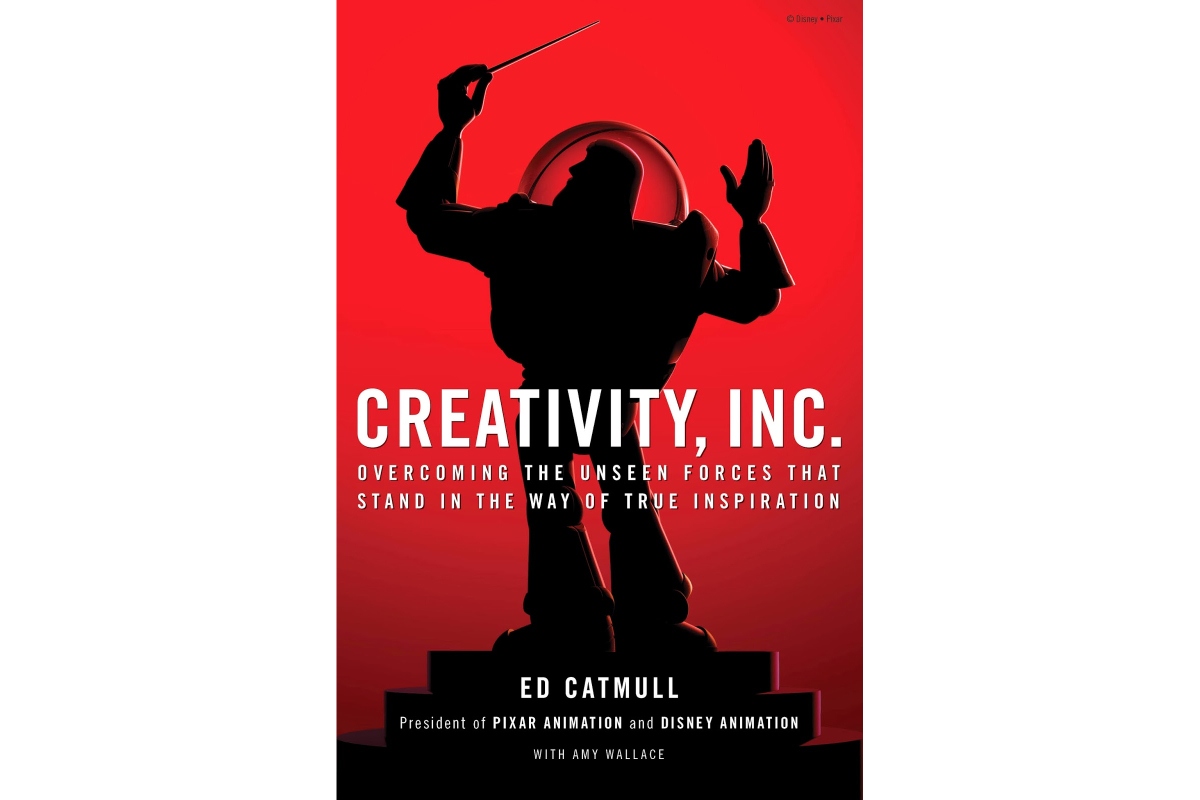
jacket illustration: © Disney • Pixar

Look for Catmull’s book Creativity, Inc


What’s On the Mind of the Class of 2020?

It’s mid-August, and school is back in session for most students.

That means it’s time for my annual encouragement for leaders to take a look at the mindset of this year’s entering college freshmen, the class of 2020 – courtesy of Beloit College.

Classof2020

Each August since 1998, Beloit College has released the Beloit College Mindset List, providing a look at the cultural touchstones that shape the lives of students entering college this fall.

Prepared by Beloit’s director of public affairs emeritus Ron Nief, professor of English emeritus Tom McBride, and Associate Dean of the College Charles Westerberg, the list was originally created as a reminder to faculty to be aware of dated references. It quickly became an internationally monitored catalog of the changing worldview of each new college generation.

Leaders – of all ages – need to understand what has shaped the lives of today’s entering college freshman class.

We have had the NOW generation…get ready for the RIGHT NOW generation, entering college this fall. This fall’s entering college students, the class of 2020, were born in 1998 and cannot remember a time when they had to wait for anything. They also can’t recall a time when the United States was not at war, or when someone named Bush or Clinton was not running for office.

And although they think of themselves as a powerful generation—Sanders voters, consumers—they are faced with the prospect of student loan debt and of robots and foreigners taking their jobs making them feel anxious and weak. “They know that they’re going to have to wait for that first breakthrough job and getting their school loans paid off.” said Tom McBride, one of the List’s authors. “They’re an impatient generation learning how to be patient.”

You need to read the whole list here, but these are my Top Ten:

  • There has always been a digital swap meet called eBay.
  • There have always been Cadillac Escalades, but they just don’t seem to be all that into cars.
  • The Sandy Hook tragedy is their Columbine.
  • The United States has always been at war.
  • Serena Williams has always been winning Grand Slam singles titles.
  • They have never had to watch or listen to programs at a scheduled time.
  • Each year they’ve been alive the U.S. population has grown by more than one million Latinos.
  • If you want to reach them, you’d better send a text—emails are oft ignored.
  • Robots have always been surgical partners in the O.R.
  • Michael J. Fox has always spoken publicly about having Parkinson’s disease.

Here’s a slideshow version introducing the class of 2020.

The List was compiled to identify both the common ground that teachers and students share, and the mine fields of misunderstanding that seem to grow wider with every forgotten reference to the Berlin Wall or Monica Lewinsky.

Enjoy!

Clarity is a Prerequisite for Compelling Leadership

Bob Johansen, author of “Leaders Make the Future”, states that clarity is one of ten leadership skills that leaders will need in the upcoming times of volatility, uncertainty, complexity, and ambiguity.

Here’s a brief recap on clarity:

  • Clarity requires inner strength and discipline: leaders, even when immersed in a world of ambiguity and confusion, emerge with forward momentum.
  • Clarity requires great self-knowledge: leaders must first understand who they are becoming, and how to get there, before leading others.
  • Clarity requires external engagement: leaders communicate with inspiration and a call to action that attracts others to follow.
  • Clarity requires flexibility: leaders are clear about their destination, but flexible about the journey.

Clarity1

Leaders understand why people crave simple and easy answers, but should provide clarity without introducing false hope. Navigating the maze between hope and hopelessness, leaders with clarity will find a way out.

How are you relentlessly pursuing clarity in your leadership role?

Generosity for Everyone

a guest post from Todd McMichen, Auxano’s Chief Campaign Officer

It has been an exciting summer around my house. I have had the privilege of watching my college daughter volunteer at the local children’s hospital as a patient pal. My wife has taken time out of her busy realty business to serve a family that has been through a pretty big crisis. My son, who is about to graduate college, is dreaming of how he can impact the future lives of others and benefit his local church. I’ve texted our family giving to our local church, helped another family meet a need, and touched a few buttons on an APP donating to a local charity. It is just pretty normal stuff, nothing exceptional, just moments of generosity from everyone.

No matter how old we are or how much we earn, everyone can live generously. Let’s look at a few examples in the Bible for inspiration. I am first drawn to the boy with the fishes and loaves. While I am not sure how old he is, he appears to be old enough to travel to town and take care of a chore for his family. He probably knows the value of money and certainly of food. Then Jesus and His disciples come along asking if they can use his resources to help others. I don’t think the boy was wrestled to the ground and had his groceries taken. I think he gave them willingly, but had no clue what was about to happen. I wonder if it turned out to be the best day of his life. He probably got home late, couldn’t wait to tell mom, and bragged to all his friends. I bet it left him pretty eager to go to town again looking forward to his next giving adventure.

Then I want to jump to the other end of the spectrum. It’s the poor widow who gave all she had. I would imagine in the modern church if a poor widow showed up at her pastor’s office wanting to give all she had, her gift may very well be declined. Her pastor wouldn’t want to hurt her feelings, but she needs her resources more than the church does. Actually, the church has a Benevolence Fund she could benefit from. I love that neither Jesus nor the poor widow were concerned about what the future holds regarding her financial needs. Jesus was more than willing to accept her gift and she was more than willing to give it.

Of course, there was the rich young ruler who had more than enough. Jesus asked him to do as the poor widow did and give everything, but he refused. Pretty interesting that a young boy gives all he had one day and a poor widow gives all she has on another day. Evidently generosity is for everyone and it has nothing to do with the amount of resources you possess or how old you are.

Now I am thinking of Zaccheus and Barnabas, two very successful men in the prime of their earning careers. While I am not sure how long Barnabas has been a believer, I do know that he is way ahead of Zaccheus. Zaccheus isn’t even a believer when his story begins, but by the end of it he is living extravagant generosity. Barnabas actually surrenders an entire piece of property he owns, and gives it to the church to distribute the resources no strings attached.

Here are some things we can learn from a few ordinary people from the Bible who on random days decided to be giving:

  1. Giving is for everyone regardless of your age.
  2. Giving is for everyone regardless of your net worth.
  3. Giving is for everyone regardless of how strong your faith is.
  4. Giving is for everyone regardless of what has been previously planned in your life.
  5. Giving is indeed for everyone.

Now, I do know giving can be hard at times. It is not always top of mind. I think everyone would agree that giving is good both personally and for the world at large. Just imagine what life would be like if everyone lived just a little bit more generously everyday?

The Bible also contains real stories of our struggles with being a giving person. You actually do not have to travel very far in the Bible to be captured by the story of Cain and Abel. Both gave. One got it right and the other had some learning to do. We have already mentioned the rich young ruler who just couldn’t do it. Then when I shared about Barnabas, you may have been inclined to think of Annanias and Sapphira. So while giving is for everyone we all struggle with how to be both willing and joyful givers at times. So maybe we should add a few more principles.

  1. Giving is for everyone even though we all fail at it at times.
  2. Everyone can learn to be better at living generously.
  3. The more generous we all are the better our world is.

As you may have already guessed, I am pretty passionate about generosity. If you are interested in learning more then you may want to check out our latest resource. I had the privilege of partnering with the highly skilled curriculum team at LifeWay and we put together Generous Life resources. We took 10 Bible heroes and unpacked five different types of givers helping all ages develop their own growth plan. It contains five sermon outlines, with accompanying small group leader guides for all ages. Yes, all ages are included. There is even a weekly family devotion to do in the home.

GenerousLifelogo

The Generous Life is not the stuff of super heroes or mega saints. It is a great way to live for normal people. Generosity is indeed for everyone, so let’s all join the journey of getting a little better at it each day.


How to Make Your Daily Routine Build Dynamic Relationships

In 1982 a book called In Search of Excellence, by Tom Peters and Bob Waterman was published. Even though it was a business book, it made quite a hit in my seminary classes as well. (Way back when, even before it became the standard practice it is today, Ralph Hardee had us reading business books!)

One of the most important lessons of that book then, and still important today, is the idea of MBWA, or Managing by Wandering Around.

With MBWA, “what you see is what you get.”

Peters, in his book The Little BIG Things, added these thoughts about MBWA:

  • Get out of your office!
  • Unplug your laptop!
  • Put your smartphone in the drawer!
  • Chat up anybody whose path you cross…especially if they are not among your normal chatees.
  • Go strolling in parts of the organization (or your neighborhood) where you normally don’t stroll.
  • Slow down.
  • Stop.
  • Chat.

There is a lot of value in putting “wandering” on your permanent formal agenda. It may sound counterintuitive, but “aimless wandering” requires strict discipline. We all fall into ruts, even in our wanderings. Same route. Same people. Same time of day. Etc. Etc. Etc. Somehow you’ve got to introduce spontaneity.

Make a pledge to “just wander” at least a half-hour each day. You’ll be amazed at what happens when you come back to the pile of work on your desk or the files open on your screen.

A podcast by Lee Cockerell, former Executive VP for Operations at Walt Disney World, put this into perspective. Before he came to Disney, he was a general manager for Marriott hotels. He made it his practice to walk every floor of his multi-story hotel 3 times per day. This allowed him to see and be seen by all three shifts. It also allowed his team to become comfortable enough to engage in conversations, and bring matters to his attention. This in turn instilled a sense of purpose and value to each employee.

This principle applies to ChurchWorld, too. I’m fortunate, as I get to see it in action every week at the Lake Norman Campus of Elevation Church in Charlotte. Our Campus Pastor, Matthew Drew, and the rest of the staff, Chad, Brennen, and Nicole, make it a part of their weekend routine. It’s not scheduled, but they can be seen circulating outside the entrance, talking with Guests and team members. You see them on the sidewalk between the building and the parking lot, smiling and welcoming everyone they see. On occasion, they even venture into the parking lots, just to check things out.

There’s plenty for them to “do” inside, but they realize the value of connecting with as many people as possible – even if only for a moment – each and every weekend.

They have refined MBWA to LBWA…

LBWA1

Are you the senior leader on your team? When was the last time you walked the front lines?

What are you waiting for?

Does Your Church Make Straight A’s When It Comes To Volunteers?

How does your church bring new volunteers onboard?

Onboarding is the process of acquiring, accommodating, assimilating, and accelerating new team members, whether they come from outside or inside the organization. (Onboarding, Bradt and Vonnegut)

Onboarding1

There’s actually another “a” word that is a perquisite: align. Here’s how the authors of Onboarding define the key processes listed above.

  • Align– make sure your organization agrees on the need for a new team member and the delineating of the role you seek to fill
  • Acquire– identify, recruit, select, and get people to join the team
  • Accommodate– give new team members the tools they need to do the work
  • Assimilate– help them join with others so they can do the work together
  • Accelerate – help them and their team deliver better results faster

Now that’s a list of “straight A’s” I will take anytime!

Though this list comes from a business book, there are great correlations for ChurchWorld as well.

For example, if your church values your volunteer team members, then they would make sure something like the process above is a part of your volunteer leadership development program. The role of bringing new volunteer leaders onboard shouldn’t be an afterthought.

My church considers the role of a team coordinator to be a volunteer staff position. In that role I may not receive a paycheck, but the importance of my role in the total scheme of what we do is not diminished one bit.

What’s it like at your church?


From Storytelling to Storyboarding


Storytelling is probably the oldest form of communication. John Hench, Disney Legend and former Senior VP of Creative Development, used to insist that storytelling was ‘in our genes.’ – Tom Fitzgerald, The Imagineering Workout

Storytelling has played a vital role in our survival – allowing us to share information, knowledge, and values from generation to generation. Story is the medium through which we receive our early learning as to right and wrong, good versus evil, reward and punishment, social values, etc.

We respond to storytelling. It engages our attention; no matter how old we get, who doesn’t love a good story?

Understanding this, Walt Disney created a technique in the early days of his cartoon films that helped illustrate the flow and continuity of stories – the storyboard.

Donald Duck storyboard, circa 1937 - courtesy of Tom Simpson

Donald Duck storyboard, circa 1937 – courtesy of Tom Simpson

Storyboards are tools that allowed Walt and his artists to envision a film prior to production. It allowed his team to have a shared vision of the story they were telling and how it would unfold. As a bonus to driving the creative development, it also offered a cost-effective way to experiment with a film early on, so that when production began, costs could be minimized.

Decades later, the tradition of storyboards continues on, though it has long expanded past just films. At Walt Disney Imagineering, rides, shows, and films for Disney’s theme parks around the world are the objects of regular storyboarding.

Starting with brainstorm sessions, the Imagineer’s first thoughts, ideas, images, and feelings about the story they are creating are captured on note cards and quick sketches.

The storyboards are worked, re-worked, rearranged, and edited until the story is strong and clear. Only then will production proceed.

At Walt Disney Imagineering, everything they do revolves around the story – and storyboards have remained an essential tool in helping them tell the story.

What story are you trying to tell?

Let it start with words and images to single note cards pinned on wall. Step back and look at the story you are trying to tell. Rearrange, edit, and add to the cards. Work at it – hard – until the story is just like you want to tell it.

Now, it’s time to tell the story…


part of a series of ideas to help shape and tone your creative muscles

Inspired and adapted from The Imagineering Workout

 written by The Disney Imagineers

Imagineering logo

Practice the Process of Inspiration to Generate Ideas

An exceptional concept depends on good process as well as pure inspiration.

One of my favorite shows at Walt Disney World’s Magic Kingdom is Mickey’s PhilharMagic. In the image below, notice the music notes in the background circling around the showcases in the gift shop at the exit from the theater. They’re not random. If you hum them, you will get the opening to Paul Dukas’ The Sorcerer’s Apprentice – one of the most memorable sights and sounds from Disney’s Fantasia, and the core idea in Mickey’s PhilharMagic.

WDW Apr16 MK MickeyPHM

That’s the magic that “Process Practice” can produce!

Being aware of the design process and knowing what phase the team and the idea are in is a big part of the show producer’s job. You probably aren’t a producer, but all leaders have a role in pulling various people and resources together in creating something – which is the role of a producer.

Inspiration generates ideas, and the process helps to shape efforts in a way to keep the team moving towards a fully developed idea.

It’s time for you to “get” it…

  • Get going. Toss a bunch of ideas out. Direction often comes from joyous chaos.
  • Get excited. Brainstorm. Dream. Take tangents. Notice where ideas go, what’s cool about them, and incorporate this into the design.
  • Get committed. Set up a regular project meeting time, discuss ideas, or just sit and stare at the wall. Ideas will come either way.
  • Get doughnuts or cookies and some toys. Brainstorming sessions go better when food or toys are around.
  • Get different opinions. Listen to someone else’s point of view and listen for things that improve the design.
  • Get confused. Ask yourself hard questions that you can’t answer.
  • Get unstuck. Try a different direction. Throw out an impossible action. Debating a wrong answer can help reveal the correct one.
  • Get your hands dirty. Build a rough model or stage a reading. You will learn more from this than from any debate, and you’ll learn it in time to fix things.
  • Get reactions. Show the idea to others. Listen to what they say, especially if it isn’t what you want to hear.
  • Get it on paper. Take everything you’ve learned and write a description of the goals and details of the design. If you write convincingly, you’ve probably got a good idea.

If everyone is comfortable with the process, the team members have the freedom to generate the best ideas for their project.


part of a series of ideas to shape and tone your creative muscles

Inspired and adapted from The Imagineering Workout

Imagineering logo

The Disney Imagineers

Sue Bryan, Senior Show Producer