Unlock the Imagination of Your Audience by Using a Map

To help others see change, the leader must understand how to unlock the imagination.

The very act of imagination is connected to faith. The author of Hebrews writes, “Now faith is the assurance of things hoped for and the conviction of things not seen” (Hebrews 11:1). When a leader articulates, or provokes, a follower’s imagination, he or she is serving both God and the individual by exercising the muscle of faith.

Unlock the imagination of your audience by using a map.

wwr122116fb1

THE QUICK SUMMARY – Communicate to Influence by Ben Decker

Business communication is annoying. At each meeting and presentation, we are inundated with information, leaving us thirsting for inspiration. Sure, we will check off an action item because we have to . . . but what if we were actually inspired to do something? What if we were so moved that we wanted to do it?

Leaders must earn the license to lead. Not by expertise, authority, or title alone, but by influence. In Communicate to Influence, you will learn the secrets of the Decker Method―a framework that has been perfected over the past 36 years. Ben and Kelly Decker add fresh insights to these proven principles so that you can ignite change and inspire action. Discover:

  • The Five White Lies of Communicating: learn which barriers prevent you from getting better
  • The Communicator’s Roadmap: use a tool to visually chart what type of communication experience you create
  • The Behaviors of Trust: align what you say with how you say it to better connect with your audience
  • The Decker Grid: shift your message from self-centered, all about me content to relevant, audience-centered content that drives action

You are called to communicate well. Not only on the main stage, under bright lights, but every time you speak with your colleagues, your clients, and other stakeholders. It’s time to learn how. Stop informing. Start inspiring. 

A SIMPLE SOLUTION

When you inspire people, it is much easier to persuade them to buy into your vision and goals. In fact, they will move from a position of “have to” to “want to.”

How do we create an ideal communication experience for our audience? We begin by understanding what experience we are creating as communicators and by becoming focused and intentional about that experience. We need a navigational tool to help us get where we want to be. We must treat every communication situation like a new location, and input the destination of where we want to go. We need the Communicator’s Roadmap.

communicatorroadmapdecker


The vertical axis graphs our emotional connection with our audience. The emotional connections are what determine whether or not people like us, trust us, and want to follow. If there is emotional distance our audience will be disinterested or disengaged. At the opposite end of the spectrum, if you were emotionally connected to the speakers, you like them, trusted them, related to them, wanted to be around them, or at lease wanted to keep listening to them.

The horizontal axis represents our content, the actual message that we deliver. Are you distributing information, or are you driving action? The left side of the axis is reserved for information sharing. If the content is totally focused on your agenda, your ideas, and your goals, you have self-centered content.

The more you are able to focus your content and make it audience-centered, serving the wants, needs, desires, goals, and priorities of the audience, the more you shift the experience to the right side of the horizontal axis. The right side of this axis is action-oriented, and it is the part of the Communicator’s Roadmap from which influence flows.

Audience-centered content transforms the whole experience. You’ll influence the people in your audience and motivate them to action – and action is what communication is all about.

Ben Decker and Kelly Decker, Communicate to Influence

A NEXT STEP

The quadrants depicted and described above represent the types of experiences you need to create, not the type of communicator you always are. The descriptions should serve as reference points as you prepare for your next presentation.

Each key communication situation in your role as a leader needs a definition, so map it. Be intentional about the kind of experience you want to create and be intentional about where you’re going.

To help you become more comfortable with the map depicted above, practice the following exercises:

  1. A communicator’s highest goal should be to inspire (upper right quadrant). Think about a recent presentation or sermon you delivered.
    1. What quadrant did it start in (if not Inspire)?
    2. What kinds of actions could you take to move it toward the Inspire quadrant?
  2. Over the next week, observe people in various communication settings. Notice where they fall on the map. As a listener, how are you impacted by where they are on the map?
  3. The next time you dine out, don’t just focus on the food but think about the whole experience. How did the whole experience add to (or take away) from your meal? When you are preparing your next presentation, use your dining experience feelings to help you focus your total presentation experience.
  4. The next time you are at an event with multiple speakers, create a map of each of them, noting which quadrant they started in and where they finished. What stood out about the journey? Which speakers inspired you the most? What lessons can you apply to your own speaking journey?

Closing Thoughts

As leaders, we communicate in all we say and do. We may be entertaining at times, we inform much of the time, and occasionally we must be directing in what we say. But in all situations, we can inspire and connect with our audience.

It’s not what the leader thinks can be or even should be, but what must be.

Taken from SUMS Remix 29-3, published December 2015.


Part of a weekly series on 27gen, entitled Wednesday Weekly Reader

Regular daily reading of books is an important part of my life. It even extends to my vocation, where as Vision Room Curator for Auxano I am responsible for publishing SUMS Remix, a biweekly book “summary” for church leaders. I’m going to peruse back issues of both SUMS and SUMS Remix and publish excerpts each Wednesday.

You can find out more information about SUMS Remix here.

Subscribe to SUMS Remix here.

Is “Reading” 286 Books in a Year a Sign of Addiction?

One of my greatest passions is reading. I developed this passion at an early age, and have continued to strengthen it over the years. In addition to being my passion, reading is also an important part of my role as Vision Room Curator at Auxano. In that role, I am responsible for publishing SUMS Remix every two weeks. SUMS Remix is a modified book summary in which I develop a solution to a common problem faced by church leaders from 3 different books. So, preparing SUMS Remix in 2016 alone means I have gone through dozens of leadership and organization development books to arrive at the 78 used in producing 26 issues this year.

Other parts of my role required reading current trends books, used for social media posting and content writing.

Then there’s my passion area of Guest Experience, in which I am constantly researching customer service books for application for churches.

And, as many readers know, I am a Disney Fanatic – which extends to building a Disney library, currently over 400 volumes and growing!

Finally, there’s just the pure pleasure of reading – an almost nightly hour or two in the late evening reading a wide range of books, both brand new and classics, fiction and nonfiction.

Add those 5 categories all together, and in 2016 I have “read” 286 books. 

reading2016-1

First, a disclaimer: I did not read all 286 cover to cover. With such an immense (and pleasurable) task in front of me, I have to resort to some method of finding out what an author is trying to say without reading the whole book.

Here’s how I did it – and, of course it starts with a book!

How to Read a Book

Literally – that’s the name of a classic book by Mortimer Adler.  The first lesson of reading is to learn that you don’t need to “read” each book the same way. Here are Adler’s 4 levels of reading:

  • Elementary Reading – What does the book say?
  • Inspectional Reading – What is the book about?
  • Analytical Reading – What does the book mean?
  • Syntopical Reading – What does a comparison of books on the subject reveal?

Some books are only meant to be read at the first level; others are meant to be digested at some of the other levels. Know which is which!

To get the most out of a book in the least amount of time, try this strategy:

  • Read the title.
  • Read the introduction
  • Read the Table of Contents
  • Flip through the material, scanning the chapter titles and subheadings. Note the words that stand out as bold, different colors, underlined, or italicized.
  • Examine the illustrations, captions, charts and diagrams. Read the pull-quotes and sidebars.
  • Scan through the index looking for buzz words that interest you.
  • Read the first chapter.
  • Flip through the book and read the first sentence of each paragraph in each chapter. In a well written and edited book, the most important sentence containing the topic is usually the first sentence of the paragraph — but not always.
  • Read the last chapter. If there is an executive summary, read it.
  • Read any other information on the cover or dust jacket.

If the book captures your attention after doing the above tasks, then by all means dive right in!

The converse is true: if a book doesn’t capture your attention after a few attempts, stop reading it. Pick out another one on the topic – there are always more waiting for you!

With that caveat in mind, my “cover-to-cover” reading for 2016 was 157 books.

reading2016-4

While the knowledge gained from reading is important, the real benefit is from the habit of reading. When you are continually reading, you condition your mind to keep taking in new knowledge. Your thinking remains fresh and sharp. Your brain is always churning on new ideas, looking for new connections it can make. Every day you pour in more ideas, which your brain must find a way to integrate into your existing knowledge base. Frequent reading fires up your neural activity, even during the periods when you aren’t reading.

Reading is a gift that you can unselfishly give yourself, one that truly keeps on giving. Why don’t you bless yourself and those around you by reading a new book in the first weeks of 2017, and sharing its wisdom with others?

Me? Well, I’ve got four books lined up for delivery by Amazon the first week of January, and another two on reserve at the library.

Leaders Know How to Say “No” Gracefully

Does your organization try to do too much?

Every day ministry leaders spend too much time, managing too much church stuff, for too little life-change. It is safe to say that the church in North America is over-programmed and under-discipled.

Behind this reality is a super-irony: The result of our gospel work is limited, not by our lack of ministry activity, but by our excess.

  • We get too little not because of lacking motivation.
  • We get too little not because we need a better toolbox.
  • We get too little, and money is not the problem.

The gospel-centered, life-change impact of church is actually inhibited by the preponderance of offerings at church. We get too little precisely because we have too much.

It’s time to learn the power of “no.”

remix6-2fb1

THE QUICK SUMMARY – Essentialism, by Greg McKeown

The Way of the Essentialist isn’t about getting more done in less time. It’s about getting only the right things done.  It is not a time management strategy, or a productivity technique. It is a systematic discipline for discerning what is absolutely essential, then eliminating everything that is not, so we can make the highest possible contribution towards the things that really matter.

By forcing us to apply a more selective criteria for what is Essential, the disciplined pursuit of less empowers us to reclaim control of our own choices about where to spend our precious time and energy – instead of giving others the implicit permission to choose for us.

Essentialism is not one more thing – it’s a whole new way of doing everything. A must-read for any leader, manager, or individual who wants to learn who to do less, but better, in every area of their lives, Essentialism is a movement whose time has come.

A SIMPLE SOLUTION

Leaders today often feel like they should load up their calendars to the max, doing everything they possibly can to expand their horizons and improve their organizations. In this age of abundant information and easy access to knowledge, leaders are often driven to have and do it all. However, this mindset soon runs headlong into an unfortunate fact: we can’t do everything.

Instead, we should be focusing on what we should do, thinking instead about what is essential to our lives.

Remember that anytime you fail to say “no” to a nonessential, you are really saying “yes” by default.

Without courage, the disciplined pursuit of less is just lip service. Anyone can talk about the importance of focusing on the things that matter most – and many people do – but to see people who dare to live it is rare.

Once you have sufficiently explored your options, the question you should be asking yourself is not: “What, of my list of competing priorities, should I say yes to?” Instead, ask the essential question: “What will you say no to?”

This is the question that will uncover your true priorities. It is the question that will reveal the best path forward for your team. It is the question that will uncover your true purpose and help you make the highest level of contribution not only to your own goals but to the mission of your organization. It is that question that can deliver the rare and precious clarity necessary to achieve game-changing breakthroughs in your life.

Greg McKeown, Essentialism

A NEXT STEP

Daring to say no doesn’t mean saying no to all requests. It’s important to learn to say no to the nonessentials so we can say yes to the things that really matter. Leaders need to learn to say no – frequently and gracefully – to everything but what is truly vital.

How do you learn to say no gracefully? Here are some general guidelines for delivering a graceful “no.”

  • Separate the decision from the relationship
  • Saying “no” doesn’t have to mean using the word “no”
  • Focus on the trade-off
  • Remind yourself that everyone is selling something
  • Make peace with the fact that saying “no” often requires trading popularity for respect
  • Remember that a clear “no” can be more graceful than a vague or noncommittal “yes”

Saying no is its own leadership skill and follows any skill development path. You start out with little experience, and then learn basic techniques. As you make mistakes, you learn from them. You keep developing more skills and practicing them. In time, you will learn a whole new skill set.

In this case, it’s the skill of saying “no.”

Sometimes abandoning what’s been around for years is the right move, even if you’ve put a lot of time, effort, and other resources into it.

Doing less will actually make your ministry better in the long run.


Part of a new series on 27gen, entitled Wednesday Weekly Reader

Regular daily reading of books is an important part of my life. It even extends to my vocation, where as Vision Room Curator for Auxano I am responsible for publishing SUMS Remix, as biweekly book “summary” for church leaders. I’m going to peruse back issues of both SUMS and SUMS Remix and publish excerpts each Wednesday.

You can find out more information about SUMS Remix here. Subscribe to SUMS Remix here.

Do You Communicate a Lot, But Don’t Consider Yourself a Great Storyteller?

Have your eyes ever glazed over as a speaker drones on and one, spouting statistics and facts? Do you even remember anything an hour later? What about the next day?

Now it’s your turn to be in front of your team. How are you going to reach and connect with them?

Do you communicate a lot, but don’t consider yourself a great storyteller?

It’s time to reach back in human history, and turn to the power of the story.

Storytelling has existed as the primary means of communicating among people even long before writing was developed. Success was measured by how much the audience remembered and a high value was placed on techniques that helped people remember things.

In spite of all the technological marvels available to leaders today, the simple but powerful use of a story often translates your ideas into realities in the listener’s minds. Stories are effective when they lodge in the heart of the listener, and are then acted on.

Solution #3 Make the listener, not you, the hero of your story

THE QUICK SUMMARY – Resonate, by Nancy Duarte

sums-remix-3Resonate leverages techniques normally reserved for cinema and literature, revealing how to transform any story into an engaging journey. Using the techniques in Resonate, you’ll be able to:
  • Leverage the hidden story structures inherent in great communication
  • Connect with your audience empathetically
  • Create captivating content
  • Craft ideas that get repeated
  • Inspire enthusiasm and support for your vision

Stories are the most powerful delivery tool for information, more powerful and enduring than any other art form.

A Simple Solution

Wouldn’t you like to have your audience leaning forward in their seats, anticipating the next few words you will be saying? A great story has that effect on listeners, and it begins with making the listener the hero of your story.

When trying to connect with someone while telling a story, you have to remember that it’s not all about you.

You are not the hero who will save the audience; the audience is your hero.

You need to defer to your audience because if they don’t engage and believe in your message, you are the one who loses. Without their help, your idea will fail.

Leaders need to take this to heart, place the people in the audience at the center of the action, and make them feel that the presentation is addressing them personally.

So what’s your role, then? You are the mentor. The audience is the one who’ll do all the heavy lifting to help you reach your objectives. You’re simply one voice helping them get unstuck in their journey.

When you change your stance from thinking you’re the hero to acknowledging your role as a mentor, you will find your viewpoint altered. A mentor has a selfless nature and is willing to make a personal sacrifice so that the hero can reach the reward. Audience insights and resonance can only occur when a presenter takes a stance of humility.

Nancy Duarte, Resonate

A NEXT STEP

Changing your stance from that of the hero to one of the storyteller will connect the listeners to your idea and make them the hero. When listeners become the hero and connect to your idea, they will change.

Good church leaders are telling stories all the time. As you prepare for your next leadership speaking opportunity it’s easy to become the center of the story. Remember to make the listener the hero instead of you.

By offering a clear choice of what is (their present situation) with what could be (a better future), the people you lead become the hero. As you preach, are you making members of the congregation the hero? When you lead your church in a capital campaign, they are the heroes. As a team leader, your team should be the hero. In a small group, the group members are the hero.

Of course, every story related to the Gospel makes Jesus the hero.

Ultimately, you need to make your story about Jesus.

How will you know if you are becoming more effective with your stories? It’s simple: you will be accomplishing whatever you had hoped to accomplish by telling the story in the first place.

It’s time for you to step out and lead through your stories!


Part of a new series on 27gen, entitled Wednesday Weekly Reader

Regular daily reading of books is an important part of my life. It even extends to my vocation, where as Vision Room Curator for Auxano I am responsible for publishing SUMS Remix, as biweekly book “summary” for church leaders. I’m going to peruse back issues of both SUMS and SUMS Remix and publish excerpts each Wednesday.

You can find out more information about SUMS Remix here. Subscribe to SUMS Remix here.

Book Summaries Strengthen Reading as a Discipline for Critical Thinking

Underneath the surface of every successful leader is a reader.

Reading provides the best regimen for establishing and nurturing the information necessary to lead others. Reading provides a constant stream of intelligence, ideas, and information that enables the leader to act from a foundation of knowledge.

A survey of the typical leader’s desk, workspace, or briefcase includes a stack of books, a pile of magazines, and at least one personal electronic device with access to a vast digital library of resources.

Having the right information is not as big a problem as much as having too much information!

Enter SUMS.

Screen Shot 2014-01-02 at 6.58.32 AM

For years Auxano Founder & Team Leader Will Mancini dreamed of providing a best of class and totally free book summary service to church leaders. In the fall of 2012, Mancini and his team launched just such a service, called SUMS – a biweekly book summary service.  

>Why Auxano created SUMS

Like many church leaders, Will loves reading, and appreciates book summaries. But he took it to the next level by creating a team who was serious about selection of books for church leaders, designed something great to look at, and created applications for the world church leaders live in every day. As Vision Room Curator, I get the privilege of leading that team – and I love it!

After a two-year run, SUMS underwent changes, including moving to a subscription-based platform which launched last January.

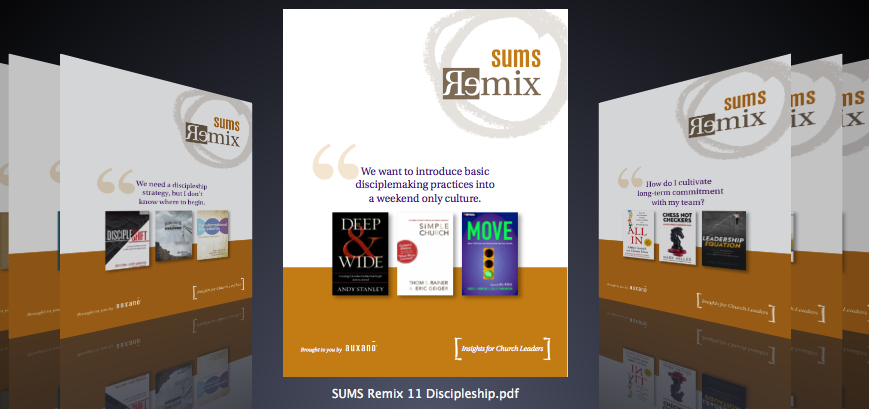
Beginning in 2015, we took the SUMS tool to a whole new level. Every other week subscribers receive not ONE, but THREE book “summaries” all focused around solving a practical church leadership problem. It’s called SUMS Remix.

SUMSRemixCovers

That’s 26 issues of SUMS Remix – addressing the ministry problems you encounter at your church – delivered to your inbox every two weeks.

In a nutshell why is SUMS Remix better?

  • You need content that solves the challenges you face every day
  • You want to scan more information in less time to find the best content
  • You will to achieve more with more credibility as well-read leader
  • You have ready-to-use staff action steps in each issue

For example, the first of four free introductory SUMS Remix focused on the problem, “We want leadership development to be happening all of the time, not just at special events.” To solve this problem we looked at Noel Tichey’s Leadership Engine, Aubrey Malphur’s book (co-authored with Auxano founder Will Mancini), Building Leaders, and Dave & Jon Ferguson’s book, Exponential.

Check it out for yourself and see if you would agree that this is an incredibly innovative content tool for the church. Here are the first four free introductory issues of SUMS Remix:

SUMS Remix 1 We want leadership development to be happening all the time, not just at special events.

SUMS Remix 2 It’s difficult inspiring my team to be more productive.

SUMS Remix 3 I communicate a lot, but don’t consider myself a great storyteller.

SUMS Remix 4 My stomach goes into knots when I think about preaching on the subject of giving.

Click here to subscribe to SUMS Remix. Imagine – an entire year of the gift of insight, delivered to the your inbox – for the low price of $48. 

Think of it as creating a personal leadership and innovation literacy program.

Favorite Books of 2014, Part 2

Yesterday I introduced my first 7 books on my favorite books published in 2014; you can read it here.

Here are the remaining 7 books:

Curious about these books? Read on!

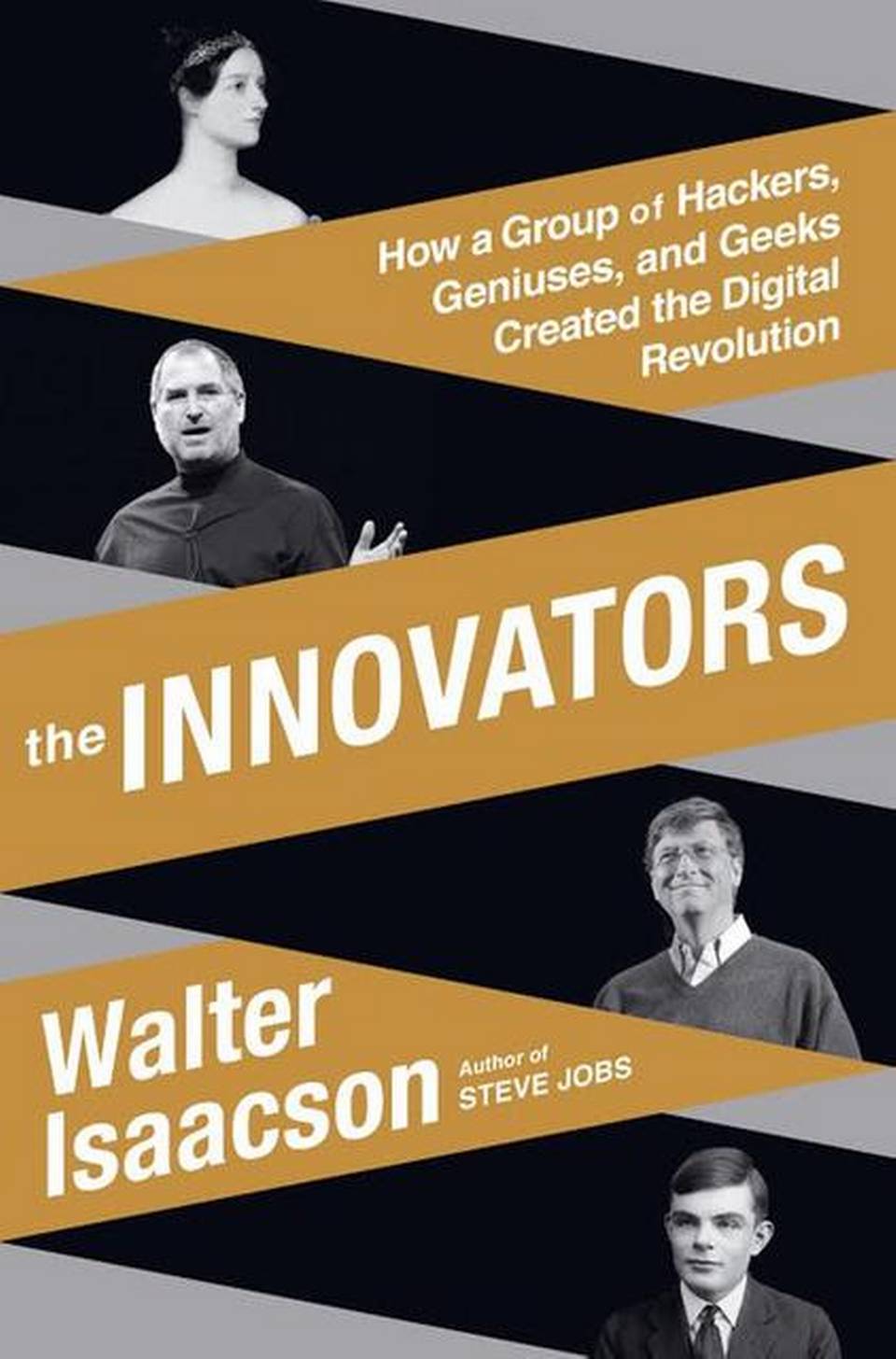
InnovatorsThe Innovators, Walter Isaacson

The Innovators is Walter Isaacson’s revealing story of the people who created the computer and the Internet. It is destined to be the standard history of the digital revolution and an indispensable guide to how innovation really happens.

What were the talents that allowed certain inventors and entrepreneurs to turn their visionary ideas into disruptive realities? What led to their creative leaps? Why did some succeed and others fail?

This is the story of how their minds worked and what made them so inventive. It’s also a narrative of how their ability to collaborate and master the art of teamwork made them even more creative.

AMoreBeautifulQuestionA More Beautiful Question, Warren Berger

In this groundbreaking book, journalist and innovation expert Warren Berger shows that one of the most powerful forces for igniting change in business and in our daily lives is a simple, under-appreciated tool—one that has been available to us since childhood. Questioning—deeply, imaginatively, “beautifully”—can help us identify and solve problems, come up with game-changing ideas, and pursue fresh opportunities. So why are we often reluctant to ask “Why?”

Berger shows, the most creative, successful people tend to be expert questioners. They’ve mastered the art of inquiry, raising questions no one else is asking—and finding powerful answers.

WhosTheLeaderofTheClubWho’s the Leader of the Club, Jim Korkis

Acclaimed Disney expert Jim Korkis tells the stories of what Walt did right, what he did wrong, and how you can follow in his footsteps. Drawing upon his unparalleled knowledge of the Disney Company and its legacy, Korkis distills the essence of Walt Disney’s leadership principles into an exciting narrative of popular history and self-help.

You’ll read not just about what Walt did but why he did it, and how you can apply the lessons to your own life or your own enterprise.

DoodleRevolutionThe Doodle Revolution, Sunni Brown

What did Einstein, JFK, Edison, Marie Curie, and Henry Ford have in common? They were all inveterate doodlers. These powerhouse minds knew instinctively that doodling is deep thinking in disguise—a simple, accessible, and dynamite tool for innovating and solving even the stickiest problems.

Sunni Brown’s mission is to bring the power of the Doodle to the rest of us. She leads the Revolution defying all those parents, teachers, and bosses who say Stop doodling! Get serious! Grow up! She overturns misinformation about doodling, demystifies visual thinking, and shows us the power of applying our innate visual literacy.

Doodling has led to countless breakthroughs in science, technology, medicine, architecture, literature, and art. And as Brown proves in this inspiring, empowering book, it can help all of us think and do better in whatever fields we pursue.

With passion and wit, Brown guides you from the basic Doodle all the way to the formidable “Infodoodle”—the tight integration of words, numbers, images, and shapes that craft and display higher-level thinking.

MythsofCreativityThe Myths of Creativity, David Burkas

We tend to think of creativity in terms reminiscent of the ancient muses: divinely-inspired, unpredictable, and bestowed upon a lucky few. But when our jobs challenge us to be creative on demand, we must develop novel, useful ideas that will keep our organizations competitive. The Myths of Creativitydemystifies the processes that drive innovation. Based on the latest research into how creative individuals and firms succeed, David Burkus highlights the mistaken ideas that hold us back and shows us how anyone can embrace a practical approach, grounded in reality, to finding the best new ideas, projects, processes, and programs.

LifeAnimatedLife, Animated, Ron Suskind

Imagine being trapped inside a Disney movie and having to learn about life mostly from animated characters dancing across a screen of color. A fantasy? A nightmare? This is the real-life story of Owen Suskind, the son of the Pulitzer Prize-winning journalist Ron Suskind and his wife, Cornelia. An autistic boy who couldn’t speak for years, Owen memorized dozens of Disney movies, turned them into a language to express love and loss, kinship, brotherhood.The family was forced to become animated characters, communicating with him in Disney dialogue and song; until they all emerge, together, revealing how, in darkness, we all literally need stories to survive.

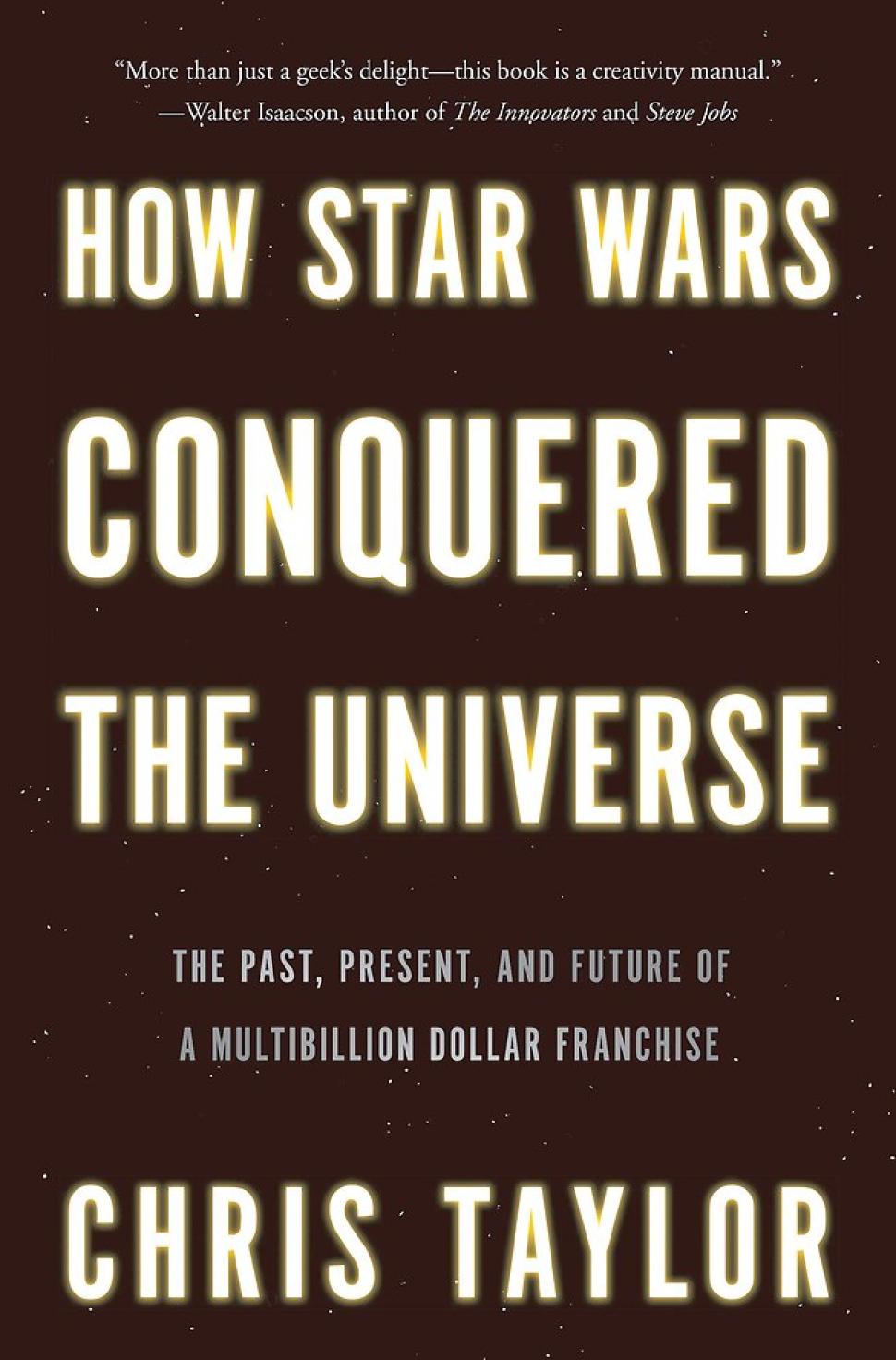
HowStarWarsConqueredUniverseHow Star Wars Conquered the Universe

In How Star Wars Conquered the Universe, veteran journalist Chris Taylor traces the series from the difficult birth of the original film through its sequels, the franchise’s death and rebirth, the prequels, and the preparations for a new trilogy. Providing portraits of the friends, writers, artists, producers, and marketers who labored behind the scenes to turn Lucas’s idea into a legend, Taylor also jousts with modern-day Jedi, tinkers with droid builders, and gets inside Boba Fett’s helmet, all to find out how Star Wars has attracted and inspired so many fans for so long.

Since the first film’s release in 1977, Taylor shows, Star Wars has conquered our culture with a sense of lightness and exuberance, while remaining serious enough to influence politics in far-flung countries and spread a spirituality that appeals to religious groups and atheists alike. Controversial digital upgrades and poorly received prequels have actually made the franchise stronger than ever. Now, with a savvy new set of bosses holding the reins and Episode VII on the horizon, it looks like Star Wars is just getting started.

An energetic, fast-moving account of this creative and commercial phenomenon, How Star Wars Conquered the Universe explains how a young filmmaker’s fragile dream beat out a surprising number of rivals to gain a diehard, multigenerational fan base—and why it will be galvanizing our imaginations and minting money for generations to come.


That’s it for 2014. My reading list for 2015 is already underway – Amazon is making a delivery tomorrow, and I’ve just received an email from the library – a book I’ve got on hold just came in.

What will you be reading?

Favorite Books of 2014, Part 1

It’s time to close out the reading year – just in time to start a new one!

A quick review of the numbers:

  • Purchased or review copies of books – 93
  • Library books checked out – 91
  • Kindle books downloaded – 55

That’s 239 books read in 2014, averaging over 4 a week. I’m not a speed-reader per se, but I do read fast – and I don’t read everything in every book.

Of course, reading is a big part of my role as Vision Room Curator at Auxano, so that gives me a definite advantage! Reading is also my main hobby, so even my “down” time often finds me with a book in hand.

In no particular order, here are the first 7 of my 14 favorite books published in 2014.

You can read the rest of the list tomorrow.

I realize this is a very arbitrary list, and has several books that may not seem like leadership books. No apologies there – I happen to believe that leaders in organizations of every size and type have a LOT to learn about their customers (all organizations have customers – we just call them different names). I also believe that all organizations need leaders who are creative and innovative in all areas. Finally, I believe that organizations need leaders who understand the power of simplicity.

Curious? If you’re interested in more than just the title, read on!

WhatGreatBrandsDoWhat Great Brands Do, Denise Lee Yohn

Some business leaders think of brands only in terms of messages and marketing tactics because that’s all they know. Others want a quick fix and would rather change what they say about themselves rather than actually change. Still others understand the full business value of a brand but lack the tools and methods to realize it. What Great Brands Do by Denise Lee Yohn will educate the first group, persuade the second, and equip the last.

MomentsofImpactMoments of Impact, Chris Ertel and Lisa Kay Solomon

Great strategic conversations generate breakthrough insights by combining the best ideas of people with different backgrounds and perspectives. In this book, Chris Ertel and Lisa Kay Solomon “crack the code” on what it takes to design creative, collaborative problem-solving sessions that soar rather than sink.

CreativityInc2Creativity, Inc., Ed Catmull

Creativity, Inc. is a book for managers who want to lead their employees to new heights, a manual for anyone who strives for originality, and the first-ever, all-access trip into the nerve center of Pixar Animation—into the meetings, postmortems, and “Braintrust” sessions where some of the most successful films in history are made. It is, at heart, a book about how to build a creative culture—but it is also, as Pixar co-founder and president Ed Catmull writes, “an expression of the ideas that I believe make the best in us possible.”

EssentialismEssentialism, Greg McKeown

The Way of the Essentialist by Greg McKeown isn’t about getting more done in less time. It’s about getting only the right things done.  It is not  a time management strategy, or a productivity technique. It is a systematic discipline for discerning what is absolutely essential, then eliminating everything that is not, so we can make the highest possible contribution towards the things that really matter.

46RulesofGeniusThe 46 Rules of Genius, Marty Neumeier

There’s no such thing as an accidental genius. Anyone who’s reached that exalted state has arrived there by design. But simply wanting to get there is not enough. A would-be genius also needs a theoretical framework, a basic compass, a set of principles to guide the way forward.

Marty Neumeier, acclaimed author of The Brand Gap and Metaskills, has compressed the wisdom of the ages into the first “quick start guide” for genius46 glittering gems that will light your path to creative brilliance. This is THE essential handbook for designers, entrepreneurs, marketers, educators, artists, scientists, innovators, and future leaders in every field.

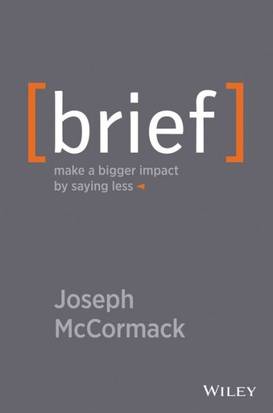
BriefBrief, Joseph McCormack

Author Joe McCormack tackles the challenges of inattention, interruptions, and impatience that every professional faces. His proven B.R.I.E.F. approach, which stands for Background, Relevance, Information, Ending, and Follow up, helps simplify and clarify complex communication. BRIEF will help you summarize lengthy information, tell a short story, harness the power of infographics and videos, and turn monologue presentations into controlled conversations.

HowTheWorldSeesYouHow the World Sees You, Sally Hogshead

You already know how you see the world.
But do you know how the world sees you?
How is your personality most likely to impress and influence the person sitting on the other side of the desk or boardroom?

Once you know what makes you valuable to others, you’re more authentic and confident, and more able to make a positive impression. It all begins with understanding how the world sees you—at your best. How the World Sees You by Sally Hogshead gives you the step-by-step method to describe yourself in just two or three words. This short phrase is your Anthem, the tagline for your personality. Your Anthem guides you like a mission statement, helping you to build your team, write a LinkedIn profile, or captivate an audience.

That’s the first 7 of my 14 favorite books published in 2014. Tomorrow I will list the final 7.

Reading the Year Out

Leaders are readers.

Today and tomorrow’s posts are an annual tradition at 27gen – all about reading and my favorite books of the year. Here are a few links to previous year’s posts – click and follow the link for a few thoughts on the importance of reading – and how to read!

Reading 101

Getting the Most Out of Reading

Put Down the Duckie

Read to Lead

When You Find a Leader, You Find a Reader

Thomas Edison on Reading

Reading Requires Deliberate Practice

I Read to Cheat Old Age – What About You?

I’ve been a reader of books since, well, before I can remember. My father was an avid reader, and he passed that passion along to me at an early age. Even though he worked 6 days a week, 12 hours a day, he often spent several hours reading at night. He and my mother insisted we go to the library in the next town and check out books – every two weeks. I would get the maximum number of books, take them home, and read them – usually in the first day or two. Then it would be an impatient wait till the next library trip.

Reading is a passion I treasure, and one that I am thankful to my dad for.

I enjoy books as a multisensory experience – you not only read the words on a page, you feel the binding and turn the pages, hear the crackle of a very old book being opened for the first time in a long time, and then there’s that “book” smell – a combination of age, dust, maybe a little dampness – but all telling you an adventure is waiting.

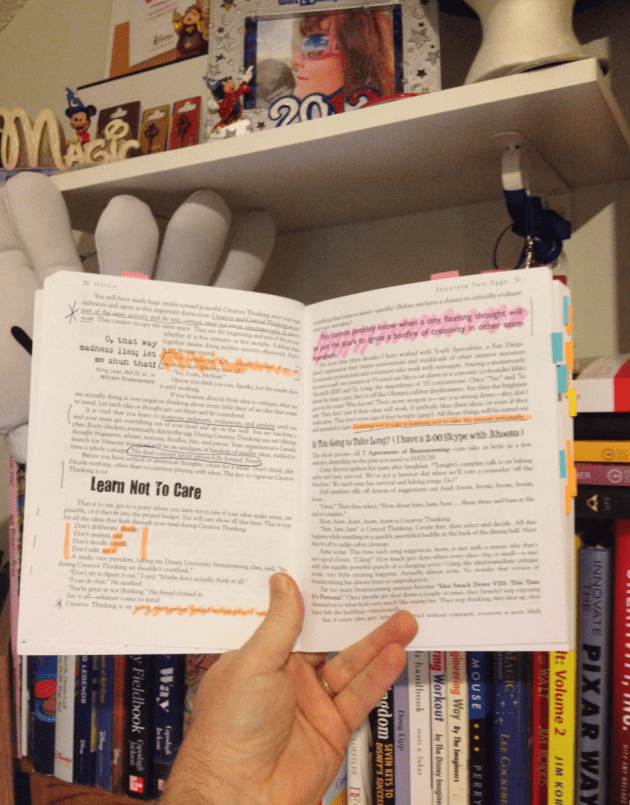
For books connected with my role as Vision Room Curator, I use the margins to have a conversation with the author – writing comments, questions, and references to other books. I also use Post-It notes to mark certain sections. Marking in books was definitely a “no-no” in school, but I have found the practice to be a great help to me in experiencing the book.

Although I’m an early adopter in almost everything else, it’s just that “experience” that has kept me from moving into the eBook world all the way. I’ve been dabbling in eBooks for several years, moving ahead with a Kindle, and I’m glad I did. Having a library at my disposal in one volume has been very rewarding – but I will always be a “book” guy at heart.

So in wrapping up 2014 and looking forward to 2015, you’ll find me with a Kindle in my backpack – and several volumes of traditional books as well!

Next: my favorite books of 2014.

Summer Time is Reading Time!

What’s on your bookshelf for reading this summer?

Here’s a couple of new books for your consideration:

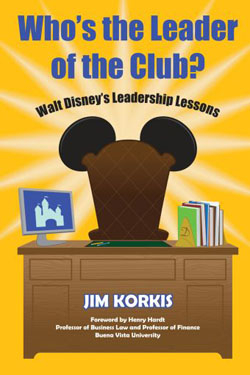
Who’s the Leader of the Club: Walt Disney’s Leadership Lessons, by Jim Korkis

Who's the Leader of the Club

Disney’s Hollywood Studios: From Show Biz to Your Biz, by J. Jeff Kober

DHS from Show Biz to Your Biz

Korkis and Kober are no strangers to the Disney organization – both are former Cast Members, and both have written extensively about various aspects of Disney.

Who’s the Leader of the Club is Korkis’ first venture into a business application of his vast knowledge of all things Disney, and he certainly doesn’t disappoint. He provides a section on Disney and Leadership and then follows that with seven leadership lessons as exemplified by Walt Disney. The final section is a collection of quotes, bad leadership examples, and stories by and about Walt Disney’s leadership.

Disney’s Hollywood Studios is Kober’s second Disney-specific book with a business theme, and takes the reader “behind-the-camera” to understand and apply the Disney magic to any organization. The book contains over forty chapters of park history, Disney trivia, and business best practices designed to help your organization get ready for its closeup.

Remember: Leaders are Readers!

Read Wide, Lead Deep

Just returned from my weekly trip to the library; also in the stack are a few new acquisitions to my library.

books032813

It’s a varied list that’s for sure, but I believe that wide reading develops deep leading.

Look for a few short ideas from these books in the next few days.

If you only read the books that everyone else is reading, you can only think what everyone else is thinking.

–Haruki Murakami