Mastering Anything: A Strategic Guide to Continuous Learning Through Reading

On the journey to becoming a Modern Elder by developing specific skill sets, the last few posts have focused on “Mastery.” It should be no surprise that my first steps are to turn to books; in this case, Read to Lead by Jeff Brown and Jesse Wisnewski. I’ve written about it previously, but I want to take a closer look at Chapter 12, “The Key to (Nearly) Mastering Anything.”


In a world that evolves at a breakneck pace, staying ahead requires a proactive and strategic approach to learning. The process of mastering anything, as outlined in Jeff Brown and Jesse Wisnewski’s insights, involves a deliberate journey of purpose, focused study, and practical application. Let’s explore the key steps to (nearly) mastering any subject, ensuring personal and professional growth in an ever-changing landscape.

Avoiding Complacency

In the pursuit of mastery, complacency is the enemy. The authors stress that standing still can lead to falling behind, emphasizing the dynamic nature of the world we live in. It’s a call to action, urging individuals to break free from the status quo and embrace continuous progress.

Clarifying Your Purpose (Know Your Why)

The journey begins with a clear understanding of one’s purpose. Why embark on the study of a particular topic? Distinguishing between goals and purpose is crucial, and the authors advocate for persistent questioning until the root of one’s goals is uncovered.

Focusing on One Topic

Mastery requires focus. Selecting a specific topic to master sets the foundation for the learning journey. Clarity in choice becomes a guiding light, directing subsequent actions toward a singular objective.

Creating Micro-Goals

Breaking down the chosen topic into smaller, SMART goals is the next step. This process involves identifying components, conducting thorough research, and setting achievable milestones. The journey becomes more manageable when tackled one step at a time.

Creating Your Own Curriculum

Learning becomes intentional by selecting books that align with the identified components of the chosen topic. The authors suggest that reading multiple books on a subject can significantly enhance knowledge, positioning learners ahead of the curve.

Book Selection Tips

The process of selecting books is demystified with practical tips. From searching for popular titles to exploring works by familiar authors, the authors provide a roadmap for making informed choices. This ensures that the learning journey is both enjoyable and enriching.

Summarizing What You Read

Summarizing isn’t just a review; it’s an injection of jet fuel into the learning process. Scientifically proven to enhance retention, summarizing key points accelerates the absorption of knowledge, making it an essential step in the mastery journey.

Taking Action

Knowledge alone is insufficient. Practical application is the key to mastery. The authors highlight that books can’t take action for us; it’s an individual responsibility to translate acquired knowledge into tangible results.

Rinse and Repeat

Mastery is a continuous cycle. Applying what you’ve learned and then seeking new challenges keeps the journey dynamic. The process of selecting new topics and repeating the outlined steps ensures ongoing personal and professional growth.

Jeff Brown and Jesse Wisnewski’s strategic guide to (nearly) mastering anything provides a roadmap for those eager to navigate the ever-changing landscape of knowledge. By combining purpose, focus, and action, individuals can embark on a journey of continuous learning, staying relevant and resilient in the face of evolving challenges. The mastery process becomes not just a destination but a lifelong adventure of growth and discovery.

Inspired by Read to Lead by Jeff Brown and Jesse Wisnewski


Remembering My Father, Celebrating Book Lover’s Day

August 9 is birthdate of my father, H.D. “Doc” Adams, who was born in 1927.

It’s also Book Lover’s Day.

Those two seemingly incongruent circumstances actually have a powerful connection for me.


After suffering a major stroke on February 10, 2012, my father passed away on February 25. By the time I was able to get back to Tennessee to see him, he had lost motor functions and speech capacity. Over the few days I was there, the slow but steady decline continued.

I had last seen him during the previous Christmas holidays. While there, I spent some time alone at home with him. After suffering a series of strokes over the past several years, he could no longer read – but the legacy of his reading lined the bookshelves all over my boyhood home. In the quiet hours when everyone was asleep, I scanned the shelves and remembered hearing him talk about this book or that one. I pulled a few off the shelf, and opening them, was instantly transported back in time to a conversation about the subject, or to memories of the event itself.

I’ve been a reader of books since, well, before I can remember. My father was an avid reader, and he passed that passion along to me at an early age. Even though he worked 6 days a week, 12 hours a day as a gas station owner, he often spent several hours reading each night. A recent revelation from a book brought his actions sharply into focus:

The manual labor of the past that allowed a human being to work in an embodied way, and to contemplate in heart and mind while working with one’s hands, encouraged the desire for reading after the physical exertions were completed. One can imagine why a farmer might kick off his boots after a day of sweat and dirt to read a good book.

Reading for the Love of God, Jessica Hooten Wilson

That was my father.

He insisted my mother take my brother and me to the library in the next town and check out books – every two weeks. I would get the maximum number of books, take them home, and read them – usually in the first day or two. Then it would be an impatient wait till the next library trip.

Reading is a passion I treasure, and one that I am thankful my father instilled in me.

The library habit of my boyhood stuck with me through elementary, junior, and high school; it remained in college and graduate school and post-graduate specialized studies. Each of my vocational roles since school “ended” have included reading as a part of what I brought to the task. It continues to this day, with a weekly visit to my local library to drop off books read and pick up books on hold – usually three or four in each category.

Wednesday August 9 is Book Lover’s Day – not an official holiday but one I eagerly celebrate. Book reading is a great hobby. It’s an important one, too. Employers look for it on resumes. Reading is educational, informative, and relaxing. It makes us both smarter and happier people.

Book Lover’s Day is a great day to celebrate. Just grab an interesting book, find a quiet, cozy place, and crack open the cover. Celebrating Book Lover’s Day in August is pleasurable on the deck, under a shady tree, poolside, or in a cozy hammock. If you fall asleep while reading, that’s okay. It’s all part of the relaxing benefits of being a book lover.

I love (and practice) the 4 different levels of reading as espoused by Mortimer Adler in his great book, How to Read a Book, but I really like to latch onto a topic and practice synoptical reading. Also known as comparative reading, it is where many books are read, and placed in relation to one another and to a subject about which they all revolve.

For many years, an ongoing topic of synoptical reading has been about Walt Disney and the “kingdom” he founded. My current Disney library is over 450 books, dating from 1939 to current releases – and I’m still actively researching the subject, and discovering new authors and books regularly. Here’s a few of my latest acquisitions:

In addition to the pure enjoyment of reading on the subject, these books provide a constant reference for illustrations when I’m writing about hospitality, planning, vision, and other topics that Walt Disney lived out – and to some extent – the Disney organization still practices. With 2023 being the 100th anniversary of the founding of the company, there’s a lot to choose from!

In addition to Disney synoptical reading, I’ve always got small threads of other, diverse, synoptical reading going on, often spurred by long-running interests and subsequent book searches. Here’s a current one, entitled #BurgerQuest: a literary, culinary, and arbitrary journey in pursuit of America’s iconic delight. True to my nature, over the years I’ve built up a research library on the burger; here’s just a sampling of the texts dealing with the history of the hamburger:

As I continue to develop #BurgerQuest, I will be diving into the history of the restaurants who have brought the burger from the lunch wagons of the 1890s to today’s wide range of options.

One of the greatest contributors to my synoptical reading was an Auxano project, 8+ years in the running, that ended in 2021. It involved researching 574 books to produce 227 issues of a book excerpt project. For those of you who are curious, that’s a book stack over five stories high. You can read about it here.

Even with that big change in my reading habit, there’s always a book at hand!

There’s current reading for Auxano social media (Tweets, Instagram, LinkedIn, and Facebook posts), other internal Auxano writing projects, and believe it or not, reading just for the pleasure of reading – a nightly occurrence.

Currently a few topics I’ve read for pleasure in the past few months include: ongoing research into the concepts of hospitality in the home (what I’ve termed,”First Place Hospitality”); tracking the development of hospitality in the U.S;  exploring the idea of the “modern elder”; select works about small town America, both past and present; the friendship of Thomas Edison, Henry Ford, and  Harvey Firestone and their contribution to America’s development in the early 20th century; and shepherd leadership (biblical concepts relevant for the 21st century).

Of course, there’s always some Disney history coming off the presses that I include in the mix!

So, on Book Lover’s Day, and in memory of my father, I’m trying to emulate Thomas Edison, who believed that voracious reading was the key to self-improvement. He read books on a remarkable range of subjects to address his endless queries.

As Edison noted, “I didn’t read a few books, I read the library.”


If you want to know more about my dad, here is the eulogy I gave at his funeral. After the funeral, while my sons and I were moving some things around his gas station, I discovered one reason I am so passionate about guest experiences. And read this post to find out why readers are leaders.

How are you celebrating Book Lover’s Day?


Part of a regular series on 27gen, entitled Wednesday Weekly Reader

During my elementary school years one of the things I looked forward to the most was the delivery of “My Weekly Reader,” a weekly educational magazine designed for children and containing news-based, current events.

It became a regular part of my love for reading, and helped develop my curiosity about the world around us.

I Read to Cheat Old Age – What About You?

It is my habit to make my lunch hour my own personal “Lunch and Learn” activity. As I work from an office in my home, I typically take a break from work to enjoy lunch seated at my kitchen island, reading a book.

So it’s appropriate that, while reading Curious, by Ian Leslie, I came across this information:

Being epistemically curious is a crucial condition of feeling fulfilled and alive.

Science supports this intuition. Neurologists use the term “cognitive reserve” to describe the brain’s capacity to resist the ravages of old age. For a study published in 2013, a team led by Robert Wilson at the Rush University Medical Center in Chicago enrolled three hundred elderly people and tested their thinking and memory skills each year. The participants were also asked about how often they read, wrote, and engaged in other cognitively demanding activity, not just currently, but in childhood and middle age.

Following each participant’s death, his or her brain was examined for evidence of dementia. It was discovered that, after taking into account the physical effects of dementia on their brains, the subjects who made a lifelong habit of a lot of reading and writing slowed their rate of mental decline by a third compared to those who only did an average amount of those things.

In other words, those individuals cheated old age.

 – Ian Leslie, Curious

My lifelong, and ongoing, investment in reading is really an investment in my future.

What will you be reading today?

How Have You Been Celebrating National Library Week?

Happy National Library Week! This week, April 3rd through 9th, has been National Library Week.

Here’s my library:

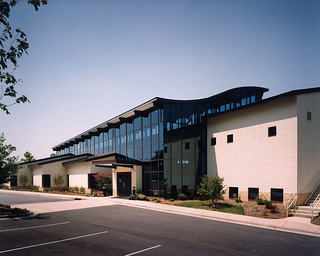
That’s the North County Regional branch of the Charlotte Mecklenburg library.

It’s also my weekly destination for dropping off and picking up books I’ve placed on hold throughout the week.

Visiting the local library is a long-standing tradition with me. As a small boy, I remember with fondness the bi-monthly visits to the branch library in the next county. We were limited to checking out 20 books at a time, and it was a rare week when I didn’t meet that quota.

As soon as the car pulled in the driveway, I would race into our house and begin reading through my treasure trove of books.

In my early years, I would often have them all read in a matter of days. As I got older and the books got longer, it might take the whole two-week period to read them.

Then there’s school libraries, from middle school to high school to college to graduate school. More treasures of a deeper and longer-lasting sort.

When our children came along, I introduced them to the joy of reading and the local library. In each city we’ve lived in, one of the very first visits we made after moving was to stop by the library and pick up a library card. Since our four children were born four years apart, that’s a long time of library visits!

I’m proud to say that as they have grown up, and with children of their own, reading and visiting the library is still important in their lives. And of course, any grandchild visiting Nina and GrandBob is going to have a selection of the latest age-appropriate books from our library waiting!

Whether you visit in person or virtually, the library can help you access the resources and services you need. Libraries have been adapting to our changing world by expanding their resources and services. Through access to technology, multimedia content, and educational programs, libraries offer opportunities for everyone to explore new worlds and become their best selves.

You may or may not be in the habit of reading, and of utilizing your local library for research, pleasure reading, or other uses.

If you are, I know you are grateful for everything you find there.

If you are not, you are missing out on a vast, free resource. Don’t let another day go by until you “check it out.”

Yes, Leaders are Readers!


Part of a regular series on 27gen, entitled Wednesday Weekly Reader

During my elementary school years one of the things I looked forward to the most was the delivery of “My Weekly Reader,” a weekly educational magazine designed for children and containing news-based, current events.

It became a regular part of my love for reading, and helped develop my curiosity about the world around us.

Along with early and ongoing encouragement from my parents – especially my father – reading was established as a passion in my life that I was happy to continually learn from, share with my children, and watch them share with their children.


At this stage of my life, I’ve gone way beyond book nerd.

What started as a boyhood practice grew into an adult passion, and is now a deliberate, daily practice.

The turning point came when I entered seminary – a friend who was in his last year of a doctoral program told me I needed to learn how to read.

I thought that I had that one pretty much covered; after all, I had been reading since before first grade.

I was wrong; he was right.

That book recommendation, and for decades now my go-to book on helping someone deepen their love of reading used to be “How to Read a Book” by Mortimer Adler. It’s still a great book – but now I have a new recommendation:

Read to Lead, by Jeff Brown and Jesse Wisnewski.

With this book, Jesse and I have attempted to make the case that reading – specifically book reading – is the simplest and one of the most important habits you can develop, especially if your goal is to expand your audience and boost your career.

Jeff Brown

It’s the common habit shared by many successful people throughout history. It’s responsible for unlocking limitless creativity and influence. It’s known to reduce stress, improve decision-making skills, and make you a better leader. What is it? Reading. And it’s the single best thing you can do to improve yourself professionally.

Reading more and better books creates opportunities for you to learn new skills, rise above your competition, and build a successful career. In Read to Lead you’ll learn:

– Why you need to read like your career depends on it

– The five science-backed reasons reading will help you build your career

– How to absorb a book into your bloodstream

– A technique that can double (or triple!) your reading speed

– Tips on creating a lifetime reading habit

– And more!

If you want to lead a more satisfied life, have more intelligent conversations, and broaden your mind, you need to read to lead!


Reading the Table of Contents (itself one of the simplest but most overlooked starting place in reading a book) reveals the breadth and depth of advice and encouragement found in Read to Lead:

Introduction: Why Read a Book about Reading Books

Part 1 Why You Need to Read Books

  1. Why You Need to Read a Book Like Your Career Depends On It
  2. Eight Research-Backed Reasons Why Readers Do Better in Their Careers
  3. The Slow Death of Readers: Three Big Reasons Why People Are Reading Less
  4. The Eight Biggest Reading Excuses Holding You Back

Part 2 The Books You Need to Read

  1. Six Ways to Know What You Should (and Shouldn’t) Read
  2. Too Busy Not to Read: Nine Ways to Free Up More Time to Read
  3. How to Build Your Reading Plan

Part 3 The Smarter Way to Read Books

  1. How to Absorb a Book Into Your Bloodstream
  2. Double (or Triple) Your Reading Speed in Minutes
  3. How to “Read” a 220-Page Book in One Hour
  4. How to Create an Unchangeable Reading Habit
  5. The Key to (Nearly) Mastering Anything
  6. Fifteen Tips on How to Read Smarter
  7. Why You Should Join (or Start) a Book Club

Conclusion: Growing as a Reader and Leader

Pick any single chapter and you will increase your reading skill by the end of that chapter.

Read the book through, take its admonitions to heart, and you will change the trajectory of your life.

While the knowledge gained from reading is important, the real benefit is from the habit of reading. When you are continually reading, you condition your mind to keep taking in new knowledge. Your thinking remains fresh and sharp. Your brain is always churning on new ideas, looking for new connections it can make. Every day you pour in more ideas, which your brain must find a way to integrate into your existing knowledge base. Frequent reading fires up your neural activity, even during the periods when you aren’t reading.

Reading is a gift that you can unselfishly give yourself, one that truly keeps on giving. I can think of no better start to deepening your love of reading than with “Read to Lead.“

All Endings Set Up New Beginnings

Among the many, many lessons from 2020, one certainly has to be that the pace of everything has accelerated.

At Auxano, we always strive to serve church leaders to the best of our ability

When the last two intersect, it’s time to make changes…

As we, like every church leader right now, assess everything we are presently doing in order to maximize future impact, it’s clear that even some of our best resources need to change.

The last issue of SUMS Remix was delivered Thursday, April 22*.

If all you’re doing is the jobs you used to do, you’re certainly missing out on the contributions you’re capable of.

Seth Godin

Those who know me know my personality style, emotional makeup, and characteristics. If you don’t, this should give you a clue:

  • Myers-Briggs – INTJ
  • DISC – C (almost exclusively)
  • Insights – Blue (deep, deep, blue)
  • Enneagram – 5, wing 6
  • Fascination Archetype – The Archer
  • Strengths Finder – Learner, Intellection, Input
  • APEST – Teaching

There’s more, but you get the drift.

SUMS Remix, and SUMS before it, have been an integral part of my work life since the fall of 2012. The idea of a creating a book summary product was one of my three primary tasks when I joined Auxano earlier that year.

Anything connected to reading, learning, and curiosity about the world around us was a natural fit for me – I have been a reader for as long as I can remember. It was instilled in me and modeled by my father, orchestrated by my mother, and a natural part of my brother’s and my childhood.

By the numbers, here’s where I’ve been:

  • 8 years, 5 months of constant production cycles for SUMS and SUMS Remix
  • 227 issues (includes 6 special, “commissioned” issues)
  • 574 books referenced
  • Several hundred more considered, but not used
  • 6 vertical book towers and two shelves in my office, holding the above referenced books
  • 3 postal carriers, and dozens of Amazon drivers, making regular visits to my house
  • 1 very gifted team: Bryan Rose, Andrea Kandler, and James Bethany – creative input, grammar and style development, and graphic designer, respectively. They made it happen, week after week.

And it’s over.

Better is possible… if we care enough to walk away from what was  and brave enough to build something new. 

Seth Godin

To best meet challenges facing leaders in a post-pandemic, accelerated-pace-of-ministry life, our team is redirecting our resources used to produce SUMS Remix to a laser-focus on these four areas:

  • Vision Clarity – because the post-pandemic church must be even more engaging and focus on accomplishing their unique disciple-making call
  • Visionary Planning – because every ministries and leaders must work in complete alignment toward a collaborative understanding of God’s better future
  • Generosity Culture – because giving has been steady over the last year, but we must grow everyone to be generous disciples
  • Generosity Campaign – because healthy growth requires resources, and how the church funds large-scale initiatives must change

If any of those areas resonate within you or your leadership and you would like to know more about how the Auxano team can help your leadership in this new era, just fill out this connection card and one of our Navigators will reach out and schedule a quick call.

I’ve already jumped headfirst into the world of research and writing for engagement, real-time development of content that leaders are asking questions about, and supporting our Navigators in their onsite and virtual journeys with churches across the country.

When it comes to books and reading, I’m still making weekly trips to the library, still curious about the world around us, and still adding to my “To Be Read” lists, because…

Want to talk books, ideas, and such? Leave a comment below!

* That day is significant in many ways, not the least of which it was the only issue (out of 221 SUMS and SUMS Remix) that was not delivered on our “every other Wednesday” target, which began in October 2012. Just sayin’…

It’s Time to Read the Year Out

2020 was the year of reading for me.

2020 wasn’t the year I learned to love reading; that occurred long ago.

2020 wasn’t the year I read widely because I had to; that occurred first in college, and then, to an extent, in seminary and post-graduate studies.

2020 wasn’t the year I read because there wasn’t anything else to do, because of COVID-19 travel restrictions, lockdowns, and quarantines – though there was plenty of “extra” time because of those things.

2020 wasn’t the year I read because my job requires it, though that IS part of my job, and one I look forward to every day.

So why is 2020 the year of reading for me?

It’s best expressed in these thoughts from Anne Bogel in her great little book, I’d Rather Be Reading (on sale for Kindle for $1.99 through the end of the year!).

We are readers. Books grace our shelves and fill our homes with beauty; they dwell in our minds and occupy our thoughts. Books prompt us to spend pleasant hours alone and connect us with fellow readers. They invite us to escape into their pages for an afternoon, and they inspire us to reimagine our lives. Show me a cover of any book I’ve read, and it will take me right back to where I was when I read it.

Anne Bogel

Books are portals to all kinds of memories.

And so, 2020 is a year full of book-inspired memories.

In 2020, those books came to me like this:

  • Books acquired this year: 287
  • Books borrowed from the library: 173
  • Digital books acquired this year: 12

As I have always been clear to point out, I have not read every page of the 472 books that have been in front of me this year. 

With such an immense (and pleasurable) task in front of me (see below), and knowing there is more to my life than reading, I have to resort to some method of finding out what an author is trying to say without reading the whole book. There’s dozens of the total in which I only read the “highlights,” following methods I’ve learned over the years. In about 15 minutes, I can tell whether I will be reading the book, deep-diving into the book, skimming the book, or maybe just returning it (mainly library books).

If a book captures your attention after using whatever method of “quick review” you choose, you should read it.

The converse is true: if a book doesn’t capture your attention after a few attempts, stop reading it. Pick out another one on the topic – there are always more waiting for you!

With those caveats in mind, my “cover-to-cover” reading for 2020 was 217 books.

For the curious, like picking your favorite child (I have four), or favorite daughters/son-in-law (I have four), or grandchildren (I have ten), I don’t typically make a “Best of” list for the year. I find some value in almost every book I read, and for me, that’s good enough.

I talked about that in a podcast with Bryan Rose. You can listen here.

A Little More About My “Book-Inspired” Memories from 2020

In my vocational role, I am responsible for publishing SUMS Remix every two weeks. SUMS Remix is a modified book excerpt in which I develop solutions to a common problem faced by church leaders from 3 different books. So, preparing SUMS Remix in 2020 alone means I have gone through over 100 leadership and organization development books to arrive at the 81 used in producing 27 issues this year. All together, we have published 161 issues, covering 482 books, since 2015. We have just released 6 collections, covering all 161 issues, available for purchase as a downloadable PDF. Find out more here.

Other parts of my role require reading current trends books, used for team research, Navigator support, social media content creation, and other content writing.

I have had a passion for Guest Experience for decades. It’s taken a more-refined shape over the last fifteen-plus years of client work, particularly through constant research in the area of customer experience books for application for churches. Through that, an ongoing project is building The Essential Guest Experience Library, currently over 300 volumes.

A project that has been in development for over three years just became public this year: First Place Hospitality. This is a movement to help church leaders “bring hospitality home” through members building bridges to their neighbors. In addition to research needed for weekly posts, white papers, tools, and social media content, I am also building The Essential Home Hospitality Library, currently at just under 200 volumes.

I am a Disney Fanatic, plain and simple (though my wife says there is nothing plain nor simple about it). From boyhood exposure to the magical world of Walt Disney in the early 1960s, to my first of dozens of theme park visits in 1975, and especially in conversations with current and former Cast Members, I am alway seeking to learn more about Walt Disney the man, and the empire which he started. Of course, that extends to building a Disney library, currently over 420 volumes and growing! A lot of that library contains excellent material that can be applied in Guest Experience, leadership development, and organizational improvement.

Finally, there’s just the pure pleasure of reading – an almost nightly hour or two in the late evening reading a wide range of books, both brand new and classics, fiction and nonfiction. A bulk of the library books listed above fit into this category. This type of reading also helps expand the subject libraries also mentioned above, and helps start new ones!

In these closing days of 2020, and the beginning of a new year just ahead, why don’t you give yourself a gift?

The gift of reading.


Be sure to check out my other websites for more information on how to “Read the Year Out!”

First Place Hospitality

Guest Experience Design

Look Back and Learn: Investing in Wisdom Equity

In researching and working on some leadership development material for an ongoing writing project, I came across the following:

Christianity is a religion of change. Jesus’ call in Mark 1:15 (the kingdom of God is at hand) was a call to change – change of mind and heart, of conduct and character, of self and society. By its very nature Christianity is a religion for a changing world and has always had its greatest opportunity during times of upheaval.

The Christian leader has no option; he must face a changing world. If the leader is to render maximum service, he must both adjust himself to the phenomena of change and address himself passionately to the business of producing and guiding change. Here are some elements that constitute the changed world in which the Christian leader today is called to fulfill his ministry.

Changed world outlook

Changed economic philosophy

Changed social consciousness

Changed family life

Changed community conditions

Changed moral standards

Changed religious viewpoints

Changed conceptions of the church

Changed media for molding public opinion

Changed demands made upon the leader

Pretty good list, right? Dead on. Taken from today’s headlines.

Nope.

courtesy the Southern Baptist Theological Seminary

courtesy the Southern Baptist Theological Seminary

The author was Gaines S. Dobbins, distinguished professor of Religious Education at my alma mater, The Southern Baptist Theological Seminary, in Louisville KY.

Written in 1947.

As the introduction to the book “Building Better Churches: A Guide to Pastoral Ministry.”

Dr. Dobbins retired before I was born, but while in seminary in the early eighties I had the privilege of sitting under a couple of professors who were students of Dr. Dobbins and spoke of his great influence on their development and career. There is a chair named for him at SBTS, and of course I recognized his name and influence. When I came across this book in a used bookstore, I bought it on impulse. After flipping through it, I realized it was a treasure of leadership wisdom.

At Auxano, we talk about a concept called “vision equity.” It’s realizing that the history of a church is a rich resource for helping rediscover what kinds of vision language past generations have used. That language is very useful for anticipating and illustrating God’s better intermediate future.

As I read Dr. Dobbin’s book, I think there is also a concept called “wisdom equity.” It’s realizing that there have been some great leaders and deep thinkers over the past decades and centuries whose collective wisdom would be a great place to start as we struggle with the new realities that face us every day.

It’s why I love history – I see it not as an anchor that holds us to the past, but as a foundation to build a bridge to the future.

History is not just books and information stored about the past. It can also be found in living beings – those around us, family and friends, who have lived through events and learned lessons my generation – and the ones following me – need so desperately to learn.

Go ahead – look back and learn.

If You Think Reading is Boring, You’re Doing It Wrong

They may be hand-drawn animation, or computer-generated imagery, or even real actors in a stage play or musical.

Whatever the media, there’s a powerful story – and life lessons – from the characters in Beauty and the Beast.

To Gaston, a book with no pictures might as well have blank pages.

To Belle, a good story doesn’t need pictures to be understood.


No matter how busy you may think you are, you must find time for reading, or surrender yourself to self-chosen ignorance.

– Confucius


Need book ideas? How about trying SUMS Remix?

Regular daily reading of books is an important part of my life. It even extends to my vocation, where as Vision Room Curator for Auxano I am responsible for publishing SUMS Remix, a biweekly book “excerpt” for church leaders. Published since 2012, we have looked at over 480 books for solutions to common problems leaders face every day.

Each Wednesday on 27gen I typically take a look back at previous issues of SUMS Remix and publish an excerpt.

>>Purchase an annual subscription to SUMS Remix here for only $48<<

>> Purchase prior issues of SUMS Remix here<<


The Power of Brand Perception

Your BRAND is the perception of your organization that lives in the minds of your audiences.

Every interaction your audience has with your church or organization forms thoughts, feelings, and perceptions in their minds. In this understanding of a BRAND, everything speaks—business cards, website, words and posture, interaction with volunteers and staff. All of these things contribute to your audience’s perception of you.

With a strong brand, you communicate effectively and consistently across all communication channels.

The branding process is one way to fully leverage the hard work of getting clear about your vision, seeing it come to life in all of your communication.

THE QUICK SUMMARY – Branding Faith by Phil Cooke

Have you hit a wall with your church, ministry or non-profit organization? In spite of a genuine calling, an exceptional team and solid investment in the vision, have you noticed that the spark never catches fire? Media and marketing expert Phil Cooke wants every ministry to ask, “Who are we?”

By identifying what makes your organization different from the thousands clamoring for attention, you can get your message heard. Cooke has consulted with many of the most recognized churches and non-profits in the world, and in Branding Faith: Why Some Ministries Impact Culture and Others Don’t, he shares his road-tested strategies for using media and marketing to make your mark on people’s minds and hearts. Whatever the size of your organization, his helpful hints and insider know-how will give you the tools to set your ministry’s strategies ablaze.

A SIMPLE SOLUTION – The Power of Brand Perception

The brand is what people think about your church. Your brand is what people think about your church, the expectation, the idea, they have. It’s not what you have. It’s what they have.

Branding, at its heart, is about making an emotional connection. If it’s what people think, we want to make that emotional connection there. People fall in love with brands. They trust them.

Brand is how people feel about us. There’s that emotional connection that’s built there.

Auxano Navigator Bryan Rose shares two two ways to think about your brand: “There are actually two brands, the big “B” brand, and the small “b” brand. Let’s define the two. The big “B” brand represents the impression that your church leaves in someone’s mind as a result of a total experience with the ministry. Brand is every interaction that occurs on behalf of the church. Person to person, environments, culture, the worship experience, social media presence, the posts, and their responses.”

All of those things come together as the big “B” brand. So, your church’s brand, the big “B” brand, lives in someone’s mind, lives in the people’s mind, and it’s a result of all these experiences. 

The key to effective branding is that a successful brand isn’t what you say it is; it’s what they say it is.

Telling an effective story about your church, ministry, project, or even yourself begins with understanding the power of perception. In a media-driven culture, perception can be even more important than reality because, with the advent of technology, word travels fast.

Whether it’s a simple email message that is continually forwarded exponentially to everyone in your address book, a viral video that’s distributed through the Web, or the convenience of cell phones, in the digital age, it’s tough to keep a lid on bad news.

The influence of the mass media in our culture is changing everything, and “perception” is the language spoken by modern media. In a world when sound bites heavily influence the political process, the unique characteristics of mass media now affect every aspect of our lives.

It’s not about facts; it’s about perception.

In today’s media-saturated culture, who you are becomes less important that how you’re perceived. When researchers study the process of communication, they realize that the message being sent is not always the message being received. For a variety of reasons, few communicated messages actually arrive with the same intentions, information, and impact.

The art of perception can be also be used to promote positive projects, people, values, or ideas. In spite of its abuse, the power of perception can be utilized for good if we know how to activate it in our lives. The way to do that is to consider your audience before crafting your message.

Phil Cooke, Branding Faith

A NEXT STEP

Because it’s not the message you send, it’s the message that’s received that counts.

As author Phil Cooke states, “It doesn’t matter how brilliant your sermons are; if your attention is misunderstood by the listener, then you’ve failed to communicate.”

He recommends that leaders start at the receiving end first to make sure your message has the best chance of being received properly.

In other words, don’t begin with your message; begin with your audience.

In advance of your next speaking opportunity, consider using questions like the following to help understand your audience:

  • Who is my audience? You have to think like an audience member – what would they want to receive from a speaker?
  • What are their stakes? Do you know why they are present? Chances are the outcome that they are looking for is not connected to your goals.
  • How can you repackage your presentation? Without changing your core message, what can you revise in order to align with your audience’s needs?
  • How can you redefine the expectations of your audience to meet yours?
  • What language and visual style is your audience expecting?
  • Why is your core message interesting for your audience?
  • What is the best medium for your core message to come through? Are you better off talking without visual aids, or are they appropriate?
  • What “gifts” can you give to impact your audience? Your presentation happens, and then? A strong core message may be remembered, but wouldn’t it be better if your audience changed their behavior by integrating some of the knowledge and ideas from your presentation in their daily lives?

Excerpt taken from SUMS Remix 109-1, released January 2019.


Part of a weekly series on 27gen, entitled Wednesday Weekly Reader

Regular daily reading of books is an important part of my life. It even extends to my vocation, where as Vision Room Curator for Auxano I am responsible for publishing SUMS Remix, a biweekly book “excerpt” for church leaders. Each Wednesday on 27gen I will be taking a look back at previous issues of SUMS Remix and publishing an excerpt.

>>Purchase SUMS Remix here<<

>> Purchase prior issues of SUMS Remix here<<