Reading Between the Lines: Cultivating Continuous Learning Through Reading

In the journey of becoming a Modern Elder, few practices are as powerful and transformative as continuous learning. And at the heart of this lifelong pursuit of knowledge lies a timeless, ever-accessible tool: reading

For Modern Elders, cultivating a rich and diverse reading habit is not just a pastime – it’s a fundamental strategy for staying relevant, expanding perspectives, and fostering the curiosity and openness essential in today’s rapidly evolving world.

In a timely twist of scheduling, this article on reading occurs on the day of National Book Lover’s Day! Check out my thoughts here, then read on for the power of lifelong reading.


The Power of Lifelong Reading

In the digital age, where information flows at an unprecedented pace, the timeless practice of reading remains an unparalleled tool for continuous learning. For Modern Elders, embracing lifelong reading is not just a leisure activity – it’s a strategic approach to staying intellectually agile and relevant. Reading offers a unique combination of depth, breadth, and accessibility that few other learning methods can match. It serves as a gateway to new ideas, a catalyst for critical thinking, and a bridge across generational and cultural divides. By cultivating a robust reading habit, Modern Elders can harness a powerful engine for personal growth, professional development, and lasting impact in their roles as mentors and leaders.

Reading serves as the bedrock of continuous learning for several reasons:

  • Accessibility: Books, articles, and digital content are available at our fingertips, making learning possible anytime, anywhere.
  • Depth: Reading allows for deep dives into subjects, offering nuanced understanding that surface-level information cannot provide.
  • Diversity of Thought: Through reading, we can expose ourselves to a wide array of ideas, cultures, and perspectives.
  • Cognitive Benefits: Regular reading has been shown to improve memory, increase empathy, and even potentially delay cognitive decline.
  • Self-Paced Learning: Reading allows us to learn at our own speed, revisiting complex ideas as needed.

Cultivating Curiosity Through Reading

In the journey of lifelong learning, Modern Elders understand that reading is a powerful tool for fostering curiosity and personal growth. Beyond mere information gathering, reading can open doors to new perspectives, challenge existing beliefs, and spark innovative thinking. By embracing a diverse and intentional approach to reading, Modern Elders can cultivate a sense of wonder that keeps their minds agile and receptive to fresh ideas.

For Modern Elders, reading is not just about accumulating facts—it’s about nurturing a sense of wonder and openness to new ideas. Here’s how reading can fuel curiosity:

  • Explore Diverse Genres: Don’t limit yourself to your professional field. Read fiction, philosophy, science, history, and more. Each genre offers unique insights and perspectives.
  • Follow Your Interests: Let your natural curiosity guide your reading choices. If a topic piques your interest, explore it further through additional books or articles.
  • Challenge Your Views: Deliberately seek out books that challenge your existing beliefs or offer alternative viewpoints. This practice keeps your mind flexible and open to new ideas.
  • Connect Ideas Across Disciplines: Look for connections between different fields. Some of the most innovative ideas come from applying concepts from one discipline to another.

Strategies for Effective Reading

Effective reading is a cornerstone of continuous learning, particularly for those committed to personal and professional growth. By adopting strategic approaches to reading, individuals can significantly enhance their knowledge acquisition, retention, and application of new ideas. The following strategies offer practical ways to transform reading from a passive activity into an active, purposeful pursuit of lifelong learning.

To maximize the benefits of reading for continuous learning, consider these strategies:

  • Set Reading Goals: Commit to a certain number of books or articles per month or year. This creates a habit of consistent learning.
  • Create a Reading List: Keep a running list of books you want to read. Include recommendations from colleagues, thought leaders in your field, and sources outside your usual interests.
  • Practice Active Reading: Take notes, highlight key points, and summarize main ideas. This engagement enhances retention and deepens understanding.
  • Join or Start a Book Club: Discussing books with others can provide new perspectives and reinforce learning.
  • Combine Reading Methods: Mix physical books, e-books, and audiobooks to suit different situations and learning preferences.
  • Read With Purpose: Before starting a book, consider what you hope to gain from it. This focus can enhance your learning and retention.

Leveraging Modern Elder Wisdom in Reading

Modern Elders bring a distinct advantage to their reading practice: a rich tapestry of life experiences. This accumulated wisdom serves as a powerful lens through which to view and interpret new information. By leveraging their extensive background, Modern Elders can enhance their reading experience, critically evaluate new ideas, and share valuable insights across generations. This unique perspective allows for a deeper, more nuanced engagement with literature and learning.

As Modern Elders, we bring a unique advantage to our reading practice—a wealth of life experience. This allows us to:

  • Connect New Information to Existing Knowledge: Use your experience as a framework to understand and contextualize new ideas.
  • Critically Evaluate Information: Your years of experience provide a valuable filter for assessing the practicality and validity of new concepts.
  • Identify Timeless Principles: Recognize fundamental truths that persist across time and trends, even as specifics change.
  • Share Insights: Use your reading as a basis for mentoring others, bridging generational gaps with shared knowledge.

The Digital Reading Landscape

In today’s rapidly evolving digital landscape, Modern Elders must adapt their reading habits to encompass a wide array of online resources. While traditional books remain valuable, the digital realm offers unprecedented access to diverse and current information. By embracing these digital tools and platforms, Modern Elders can enhance their learning experience, stay abreast of the latest developments in their fields, and access a wealth of knowledge at their fingertips.

In embracing continuous learning through reading, Modern Elders should also navigate the digital reading landscape:

  • E-books and E-readers: Familiarize yourself with digital reading devices, which offer convenience and accessibility.
  • Online Articles and Journals: Stay current with the latest thinking in your field through online publications.
  • Blogs and Newsletters: Follow thought leaders and experts through their blogs or curated newsletters.
  • Social Media: While not a replacement for deep reading, platforms like Twitter can provide quick insights and lead you to more substantial content.
  • Digital Libraries: Take advantage of online libraries and databases for access to a vast array of resources.

From Consumer to Contributor

The journey of continuous learning through reading doesn’t end with personal growth; it opens doors to becoming an active contributor in the knowledge ecosystem. As Modern Elders accumulate insights and perspectives through their reading practices, they are uniquely positioned to share this wisdom with others. By transitioning from consumers to creators of knowledge, Modern Elders can amplify their impact, inspire others, and contribute to a broader dialogue across generations and disciplines.

As you deepen your practice of continuous learning through reading, consider transitioning from a consumer of information to a contributor:

  • Write Reviews: Share your thoughts on books you’ve read, offering your unique perspective as a Modern Elder.
  • Start a Blog or a Podcast: Write or record about the connections you’re making between your reading and your experiences.
  • Mentor Others: Use your growing knowledge base to guide and inspire younger colleagues.
  • Speak or Teach: Share your insights at conferences, workshops, or in educational settings.

For Modern Elders, reading is more than a casual hobby – it’s a vital practice that fuels continuous learning, nurtures curiosity, and fosters openness to new ideas. By committing to a rich and diverse reading habit, you not only enhance your own growth and relevance but also position yourself to make meaningful contributions in our ever-changing world. Remember, in the words of the great William Faulkner, “Read, read, read. Read everything.” In doing so, you’ll ensure that your wisdom as a Modern Elder remains dynamic, relevant, and deeply impactful.


Part Four in a SeriesFind the Introduction here, along with previously published articles.


Turn the Page: Exploring National Book Lover’s Day

August 9 is birthdate of my father, H.D. “Doc” Adams, who was born in 1927.

It’s also Book Lover’s Day.

Those two seemingly incongruent circumstances actually have a powerful connection for me.


After suffering a major stroke on February 10, 2012, my father passed away on February 25. By the time I was able to get back to Tennessee to see him, he had lost motor functions and speech capacity. Over the few days I was there, the slow but steady decline continued.

I had last seen him during the previous Christmas holidays. While there, I spent some time alone at home with him. After suffering a series of strokes over the past several years, he could no longer read – but the legacy of his reading lined the bookshelves all over my boyhood home. In the quiet hours when everyone was asleep, I scanned the shelves and remembered hearing him talk about this book or that one. I pulled a few off the shelf, and opening them, was instantly transported back in time to a conversation about the subject, or to memories of the event itself.

I’ve been a reader of books since, well, before I can remember. My father was an avid reader, and he passed that passion along to me at an early age. Even though he worked 6 days a week, 12 hours a day as a gas station owner, he often spent several hours reading each night. A recent revelation from a book brought his actions sharply into focus:

The manual labor of the past that allowed a human being to work in an embodied way, and to contemplate in heart and mind while working with one’s hands, encouraged the desire for reading after the physical exertions were completed. One can imagine why a farmer might kick off his boots after a day of sweat and dirt to read a good book.

Reading for the Love of God, Jessica Hooten Wilson

That was my father.

He insisted my mother take my brother and me to the library in the next town and check out books – every two weeks. I would get the maximum number of books, take them home, and read them – usually in the first day or two. Then it would be an impatient wait till the next library trip.

Reading is a passion I treasure, and one that I am thankful my father instilled in me.

The library habit of my boyhood stuck with me through elementary, junior, and high school; it remained in college and graduate school and post-graduate specialized studies. Each of my vocational roles since school “ended” have included reading as a part of what I brought to the task. It continues to this day, with a weekly visit to my local library to drop off books read and pick up books on hold – usually three or four in each category.


Every year on August 9, bibliophiles around the world unite in celebration of National Book Lover’s Day. This special occasion honors the profound impact that books have on our lives, cultivating imagination, expanding knowledge, and fostering personal growth. As we mark this day, it’s an opportune moment to reflect on the enduring value of reading and explore ways to enrich our literary experiences.

Book Lover’s Day is a great day to celebrate. Just grab an interesting book, find a quiet, cozy place, and crack open the cover. Celebrating Book Lover’s Day in August is pleasurable on the deck, under a shady tree, poolside, or in a cozy hammock. If you fall asleep while reading, that’s okay. It’s all part of the relaxing benefits of being a book lover.

The “WHY” I read so much is covered above. Here’s a clue of the “HOW” and “WHAT” of my reading, and why Book Lover’s Day is important:

I love (and practice) the 4 different levels of reading as espoused by Mortimer Adler in his great book, How to Read a Book, but I really like to latch onto a topic and practice synoptical reading. Also known as comparative reading, it is where many books are read, and placed in relation to one another and to a subject about which they all revolve.

For decades, an ongoing topic of synoptical reading has been about Walt Disney and the “kingdom” he founded. My current Disney library is over 500 books, dating from 1939 to current releases – and I’m still actively researching the subject, and discovering new authors and books regularly. Here’s a few of my latest or soon to be acquired Disney books:

In addition to the pure enjoyment of reading on the subject, these books provide a constant reference for illustrations when I’m writing about hospitality, planning, vision, and other topics that Walt Disney lived out – and to some extent – the Disney organization still practices.

In addition to Disney synoptical reading, I’ve always got small threads of other, diverse, synoptical reading going on, often spurred by long-running interests and subsequent book searches.

Here are a few recent ones:

I am very fortunate in that reading is a part of my work role. As Digital Engagement Leader for Auxano, there’s current reading for our monthly themes and daily social media posts (X, Instagram, LinkedIn, and Facebook), other internal Auxano writing projects, research for Navigators, and believe it or not, reading just for the pleasure of readinga nightly occurrence.

In addition to the above images, here’s a few topics I’ve been reading in the past few months:

  • Ongoing research into the concepts of hospitality in the home (what I’ve termed,”First Place Hospitality”)
  • Tracking the development of hospitality in the U.S. – especially in the food services area
  • Exploring the journey of becoming a “modern elder”
  • Shepherd leadership (biblical concepts relevant for the 21st century)
  • Leadership lessons from the book of Nehemiah

Of course, there’s always some new Disney history coming off the presses that I include in the mix!

So, on Book Lover’s Day, and in memory of my father, I’m trying to emulate Thomas Edison, who believed that voracious reading was the key to self-improvement. He read books on a remarkable range of subjects to address his endless queries.

As Edison noted, “I didn’t read a few books, I read the library.”

How are you celebrating Book Lover’s Day?

On August 9, take time to honor your love of books in meaningful ways. Gift a book to a friend, donate to literacy programs, or simply indulge in an afternoon of uninterrupted reading. Share your favorite quotes or book recommendations on social media using #NationalBookLoversDay to inspire others.

Consider revisiting a beloved childhood story or finally tackling that classic you’ve always meant to read. Organize a book swap with friends or host a literary-themed gathering. Whatever form your celebration takes, use this day as a reminder of the transformative power of books and the joy they bring to our lives.

As we commemorate National Book Lover’s Day, let’s reaffirm our commitment to the written word. In a world of constant digital stimulation, books offer a unique form of engagement – one that nourishes our minds, touches our hearts, and expands our understanding of ourselves and the world around us. So pick up a book, turn the page, and embark on your next literary adventure. After all, every day is an opportunity to celebrate the enduring magic of reading.


If you want to know more about my dad, here is the eulogy I gave at his funeral. After the funeral, while my sons and I were moving some things around his gas station, I discovered one reason I am so passionate about guest experiences. And read this post to find out why readers are leaders.


#BobsBurgersandBooksBirthdayBash

If you’re looking to connect with me during the latter morning through early afternoon hours today, I’m on an extended lunch break…


Expressing the joys and delights of reading is a challenging endeavor. How can one adequately convey the multitude of pleasures that arise from the seemingly simple act of opening a book and immersing oneself in its pages? Many have tried to capture this experience over the centuries, with varying levels of success.

Here’s a couple of volumes that speak to that issue:

…and a few more:

Reading has been described in many ways – a selfish yet serene lifelong indulgence, a great gift, a moral enlightenment, more sweet, gracious, elevating and fortifying than any other activity. It has been called an intimate conversation with people across unseen generations, a home, a sustenance, an invincible companion, a pleasure beyond compare.

Ultimately, the pleasure each individual derives from reading is a highly personal experience. Despite the efforts of those who have attempted to define it for us, we must discover and understand the joys of reading for ourselves.

So, during my extended birthday lunch hour today, I’m stepping away from my recent successes in eating more healthy by enjoying the best burger in Charlotte with Anita (here we come, Brooks’ Sandwich House), followed by dropping in on two of my favorite independent bookstores, Julia’s Café & Books and Book Buyers.

When to Read
Mine is a simple system: I read from morning till bedtime, with breaks for my job, family, meetings with friends, exercise, household chores and periodic review of my life’s greatest blunders. On the days I don’t read, I write. As I say, it’s a simple system. Many people complain that they have no time for books, yet somehow they manage to spend three or more hours a day watching television or scrolling through social media on their phones. You pays your money and you takes your choice.


Michael Dirda, Washington Post, “10 Rules for Reading from Someone Who Does It for a Living”

Part of a regular series on 27gen, entitled Wednesday Weekly Reader.

During my elementary school years one of the things I looked forward to the most was the delivery of “My Weekly Reader,” a weekly educational magazine designed for children and containing news-based, current events.

It became a regular part of my love for reading, and helped develop my curiosity about the world around us.

Discovering the Joy of Reading: Insights from “Why We Read”

Most weeks on Wednesday you’ll find posts about books here, part of an ongoing series entitled Wednesday Weekly Reader.

I often post about books on Instagram, and from time to time I will write on the topic of books about reading and books. For example:

Here’s a view of my “books about books” bookshelf:

You are probably getting the picture that books and reading are not just pastimes for me – they are my passion.

Today’s post is about a book that beautifully captures the passion of reading.

We read to escape, to learn, to find love, to feel seen. We read to encounter new worlds, to discover new recipes, to find connection across difference, or simply to pass a rainy afternoon. No matter the reason, books have the power to keep us safe, to challenge us, and perhaps most importantly, to make us more fully human.

Shannon Reed, a longtime teacher, lifelong reader, and New Yorker contributor, gets it. With one simple goal in mind, she makes the case that we should read for pleasure above all else.

In this whip-smart, laugh-out-loud-funny collection entitled Why We Read, Reed shares surprising stories from her life as a reader and the poignant ways in which books have impacted her students. From the varied novels she cherishes (Gone GirlTheir Eyes Were Watching God) to the ones she didn’t (Tess of the d’Urbervilles), Reed takes us on a rollicking tour through the comforting world of literature, celebrating the books we love, the readers who love them, and the ways in which literature can transform us for the better.

Listen to Reed’s passion for reading:

I have never lost my affection for and dependency on books. This is where I pull away from the pack of fellow bookworms, I sense. Much as I like videos and reels and whatever new thing has been invented by the time this goes to print, I’m always reaching back to the OG form, the book, looking for what I can read to help me understand.

Reading a book is quiet, clear, and organized. It’s not hard.

It waits until I am ready, pauses when I need a break, and is still happy to repeat. Reading absolutely never says “Just forget it” when I need clarification. It doesn’t care how I pronounce the words in my head (or aloud, for that matter). It never makes me feel worse and rarely makes me feel lonely.

Reading gives me the world.

And that, friends, is why I read.

If you are fortunate to be inspired to buy and read Shannon’s book, you will enjoy the closing chapter as she pays homage to the amazing literary journey she is on. I won’t spoil your reading pleasure by quoting any of it – except the last two sentences:

Without ever really experiencing any of it, I know it all.

Because books taught me.


Part of a regular series on 27gen, entitled Wednesday Weekly Reader.

During my elementary school years one of the things I looked forward to the most was the delivery of “My Weekly Reader,” a weekly educational magazine designed for children and containing news-based, current events.

It became a regular part of my love for reading, and helped develop my curiosity about the world around us.

Words That Work: Unlocking the Science of Persuasion and Effective Communication

In the final post of a four-part mini-series revolving around books, there was a look at the history of the library, the role of books in both shaping conflict and being shaped by conflict, how book design impacts the reading experience, and now some closing thoughts on words themselves.

Almost everything we do involves words. Words are how we persuade, communicate, and connect. They’re how leaders lead, salespeople sell, and parents parent. They’re how teachers teach, policymakers govern, and doctors explain. Even our private thoughts rely on language.

But certain words are more impactful than others. They’re better at changing minds, engaging audiences, and driving action. What are these magic words, and how can we take advantage of their power?

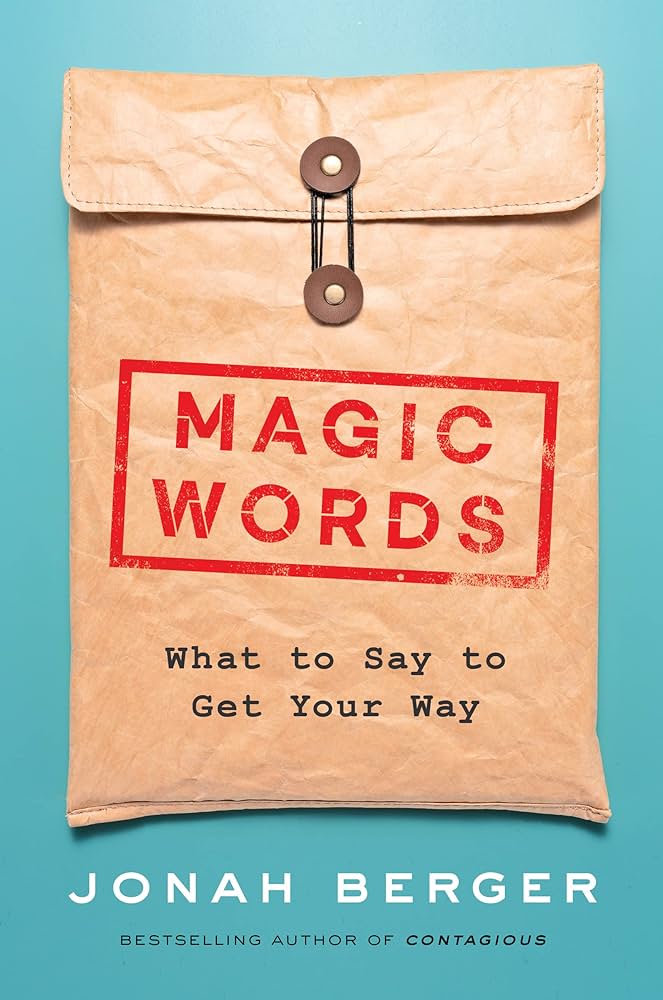
In Magic Words, internationally bestselling author Jonah Berger gives you an inside look at the new science of language and how you can use it. Technological advances in machine learning, computational linguistics, and natural language processing, combined with the digitization of everything from cover letters to conversations, have yielded unprecedented insights.

Learn how salespeople convince clients, lawyers persuade juries, and storytellers captivate audiences; how teachers get kids to help and service representatives increase customer satisfaction; how startup founders secure funding, musicians make hits, and psychologists identified a Shakespearean manuscript without ever reading a play.

This book is designed for anyone who wants to increase their impact. It provides a powerful toolkit and actionable techniques that can lead to extraordinary results. Whether you’re trying to persuade a client, motivate a team, or get a whole organization to see things differently, this book will show you how to leverage the power of magic words.

Magic Words, authored by Jonah Berger, delves into the concealed mechanisms governing language and, more significantly, delineates strategies for employing it more persuasively, nurturing relationships, and achieving success in both personal and professional realms.

The book explores six categories of influential words, devoting a chapter to each of these areas:

Activating Identity and Agency: Words that delineate authority, responsibility, and engagement in actions. This chapter delves into the profound impact subtle alterations in language can have, such as the efficacy of using nouns over verbs in persuasion, mastering the art of refusing to advance towards goals, and adopting specific interrogative phrases to enhance creativity and problem-solving. Furthermore, it discusses how speaking in the third person can mitigate anxiety and enhance communication, along with the nuanced effects of pronouns like “you” on social interactions and empathy.

Conveying Confidence: Language not only communicates information but also conveys the speaker’s confidence, thereby influencing perceptions and sway. This chapter explores how eliminating certain words transformed an underperforming salesperson into a top achiever, the significance of linguistic style in legal discourse, and linguistic cues that enhance credibility and authority. It also delves into the allure of certainty and the strategic use of uncertainty in communication to foster trust and receptivity.

Asking the Right Questions: This chapter delves into the science behind effective questioning, revealing why seeking advice enhances perceived intelligence and increases the likelihood of securing subsequent dates. It elucidates the types and timing of questions for optimal outcomes, strategies for deflecting challenging inquiries, and techniques for fostering deeper social connections through inquiry.

Leveraging Concreteness: Highlighting the potency of concrete language, this chapter reveals how specific words convey attentive listening and why emphasizing “fixing” rather than “solving” problems enhances customer satisfaction. It explores instances where abstract language may be advantageous, signaling authority and leadership, and discusses its role in fundraising for startups.

Employing Emotion: Exploring the emotive dimension of language, this chapter unveils how emotional language enhances engagement across various contexts. It narrates anecdotes, such as the success story of a young intern who built a podcasting empire by mastering storytelling principles. Additionally, it delves into the interplay between negative and positive emotions in enhancing enjoyment and boosting sales, offering insights into captivating audience attention and managing emotional responses.

Harnessing Similarity and Difference: This section explains the significance of linguistic similarity in interpersonal dynamics, explaining its impact on social connections, promotions, and friendships. It also explores scenarios where embracing difference proves advantageous, citing examples from music popularity trends and artificial intelligence research.

The book concludes by emphasizing the universal role of language in everyday communication, whether through written correspondence or oral discourse. It underscores the importance of mastering language for effective communication, persuasion, and relationship-building, positing that linguistic proficiency is a skill that can be learned and honed over time, empowering individuals to achieve their communication goals effectively.


Part of a regular series on 27gen, entitled Wednesday Weekly Reader.

During my elementary school years one of the things I looked forward to the most was the delivery of “My Weekly Reader,” a weekly educational magazine designed for children and containing news-based, current events.

It became a regular part of my love for reading, and helped develop my curiosity about the world around us.

Turning the Pages of War and Peace

In a follow-up to last week’s look at the history of the library, a companion post: the role of books in both shaping conflict and being shaped by conflict (the very appropriate subtitle of the book).


Print, in all its rich variety, will continue to play a part in human interactions through the globe, in war as in peacetime… When books go to war, others stay behind, a reminder of the better times when conflict can be banished to the edge of our consciousness, if never wholly eradicated.

Andrew Pettegree

We tend not to talk about books and war in the same breath – one ranks among humanity’s greatest inventions, the other among its most terrible. But as esteemed literary historian Andrew Pettegree demonstrates, the two are deeply intertwined

The Book at War explores the various roles that books have played in conflicts throughout the globe. Winston Churchill used a travel guide to plan the invasion of Norway, lonely families turned to libraries while their loved ones were fighting in the trenches, and during the Cold War both sides used books to spread their visions of how the world should be run. As solace or instruction manual, as critique or propaganda, books have shaped modern military history – for both good and ill. 

With precise historical analysis and sparkling prose, The Book at War accounts for the power – and the ambivalence – of words at war.

In May 1933, news of widespread book burnings orchestrated by the Nazis in Germany triggered a swift and impassioned response in the United States. Almost 200,000 people took to the streets in cities across the country to protest this censorship. Authors, some of whose works had been burned, strongly condemned the actions. President Franklin D. Roosevelt incorporated the imagery of the smoldering pyres into his speeches, emphasizing the importance of preserving freedom and civil liberties.

Nearly a century later, book burnings during the Nazi era remain a powerful symbol, partly due to their impact at the time. Many Americans saw them as emblematic of the German regime, serving as a forewarning of future atrocities. However, Andrew Pettegree’s extensive cultural history, The Book at War: How Reading Shaped Conflict and Conflict Shaped Reading, reveals a surprising twist. Less than two decades before the Nazi book burnings, during periods of wartime chauvinism, Americans themselves fervently burned German books, with librarians leading the way.

Pettegree, a professor of modern history at Scotland’s University of St Andrews, delves into the intricate relationship between printed media, books, and war. He argues that books have played a crucial role in conditioning readers to expect and support conflicts, serving as carriers of ideology and spoils for victors. Yet, they have also provided solace and solidarity during times of combat, offering comfort to civilians in hiding and soldiers on the front lines.

While Pettegree’s depth of knowledge and skillful storytelling are evident throughout, he reaches a high-water mark when detailing the literary toll of war, providing acute actuarial insights into the destruction of books during World War II. The loss of over 500 million books in Europe, including the ransacking of Jewish libraries and the devastation in Poland, underscores the profound impact on cultural heritage.

A fascinating thread weaves through what Pettegree calls “warrior authors” – the great leaders of the world powers who found themselves in opposition not only on the battlefield, but also on the written page. Here are a few examples:

  • Winston Churchill – Writing was in his blood; his first autobiography “My Early Life” was from his adventures in India and Africa during Britain’s various wars in the region. Prior to his ascendancy to become Prime Minister, writing and journalism kept him ahead of his mounting debts. After WWII, he would win the Nobel Prize for Literature, for his oratory and historical writing.
  • Adolf Hitler – The most notorious text of the twentieth century, “Mein Kampf” laid out in remarkable detail his program for Germany and the fate that awaited its enemies. He was also a discerning reader and collector, particularly of architectural and history books, appropriated by American soldiers in 1945 and now in the Library of Congress.
  • Joseph Stalin – Belying his reputation as crude and uneducated, he was a deeply literate and thoughtful reader and lover of books. His carefully curated library of over 15,000 volumes carried over into his involvement with some of the major writing projects of the Soviet state, influencing a war of ideas in Communist countries around the world.
  • Charles de Gaulle – A lonely symbol of French defiance during most of WWII, he first came to prominence as an author of aa widely admired text on armored warfare that crossed international boundaries and was quickly translated into both German and Russian.

The Book at War not only examines the destructive power of war on literature but also highlights how books have provided comfort to individuals enduring conflict. The accounts of Allied soldiers receiving cartons of paperbacks after storming Normandy’s beaches and Anne Frank finding solace in books while hiding from the Germans in Amsterdam are particularly poignant. These stories prompt reflection on how books continue to influence those facing conflict today.

On a personal note, my father was a WWII veteran who loved to read. Much later in life – his early 80s – he shared with me both stories and a few books that he had saved from his time in service. In addition, he had a highly curated selection of books by and about some of the great leaders of that generation, particularly Dwight Eisenhower. Upon is passing, I was fortunate to bring several of those into my personal library.


Part of a regular series on 27gen, entitled Wednesday Weekly Reader.

During my elementary school years one of the things I looked forward to the most was the delivery of “My Weekly Reader,” a weekly educational magazine designed for children and containing news-based, current events.

It became a regular part of my love for reading, and helped develop my curiosity about the world around us.

Beyond Comfort Zones: The Power Strangers Hold from Random Encounters to Life-Changing Moments

In our cities, we stand in silence at the pharmacy and in check-out lines at the grocery store, distracted by our phones, barely acknowledging one another, even as rates of loneliness skyrocket. Online, we retreat into ideological silos reinforced by algorithms designed to serve us only familiar ideas and like-minded users. In our politics, we are increasingly consumed by a fear of people we’ve never met. But what if strangers—so often blamed for our most pressing political, social, and personal problems—are actually the solution?

In The Power of Strangers, Joe Keohane sets out on a journey to discover what happens when we bridge the distance between us and people we don’t know. He learns that while we’re wired to sometimes fear, distrust, and even hate strangers, people and societies that have learned to connect with strangers benefit immensely. Digging into a growing body of cutting-edge research on the surprising social and psychological benefits that come from talking to strangers, Keohane finds that even passing interactions can enhance empathy, happiness, and cognitive development, ease loneliness and isolation, and root us in the world, deepening our sense of belonging. And all the while, Keohane gathers practical tips from experts on how to talk to strangers, and tries them out himself in the wild, to awkward, entertaining, and frequently poignant effect.

The Power of Strangers by Joe Keohane is a thought-provoking exploration of the impact that interactions with strangers can have on our lives. Keohane delves into the psychology of how we perceive and connect with people we don’t know, emphasizing the influence strangers have on our decision-making and behavior.

The book takes readers on a journey through various aspects of human connection, from the significance of chance encounters to the role of strangers in shaping our opinions and beliefs. Keohane skillfully weaves together anecdotes, scientific research, and real-world examples to illustrate the profound ways in which strangers shape our experiences.

One of the strengths of the book is its ability to challenge preconceived notions about strangers, highlighting both the positive and negative aspects of these interactions. Keohane argues that embracing the power of strangers can lead to personal growth, expanded perspectives, and unexpected opportunities.

The writing is engaging and accessible, making complex psychological concepts accessible to a broad audience. Keohane’s exploration of the subject matter is both thorough and detailed, aligning with your preference for detailed explanations.

In summary, The Power of Strangers offers a compelling perspective on the often-overlooked influence that strangers have on our lives. It encourages readers to reevaluate their perceptions and appreciate the richness that comes from engaging with those outside our immediate circles.


Part of a regular series on 27gen, entitled Wednesday Weekly Reader.

During my elementary school years one of the things I looked forward to the most was the delivery of “My Weekly Reader,” a weekly educational magazine designed for children and containing news-based, current events.

It became a regular part of my love for reading, and helped develop my curiosity about the world around us.

Mastering Anything: A Strategic Guide to Continuous Learning Through Reading

On the journey to becoming a Modern Elder by developing specific skill sets, the last few posts have focused on “Mastery.” It should be no surprise that my first steps are to turn to books; in this case, Read to Lead by Jeff Brown and Jesse Wisnewski. I’ve written about it previously, but I want to take a closer look at Chapter 12, “The Key to (Nearly) Mastering Anything.”


In a world that evolves at a breakneck pace, staying ahead requires a proactive and strategic approach to learning. The process of mastering anything, as outlined in Jeff Brown and Jesse Wisnewski’s insights, involves a deliberate journey of purpose, focused study, and practical application. Let’s explore the key steps to (nearly) mastering any subject, ensuring personal and professional growth in an ever-changing landscape.

Avoiding Complacency

In the pursuit of mastery, complacency is the enemy. The authors stress that standing still can lead to falling behind, emphasizing the dynamic nature of the world we live in. It’s a call to action, urging individuals to break free from the status quo and embrace continuous progress.

Clarifying Your Purpose (Know Your Why)

The journey begins with a clear understanding of one’s purpose. Why embark on the study of a particular topic? Distinguishing between goals and purpose is crucial, and the authors advocate for persistent questioning until the root of one’s goals is uncovered.

Focusing on One Topic

Mastery requires focus. Selecting a specific topic to master sets the foundation for the learning journey. Clarity in choice becomes a guiding light, directing subsequent actions toward a singular objective.

Creating Micro-Goals

Breaking down the chosen topic into smaller, SMART goals is the next step. This process involves identifying components, conducting thorough research, and setting achievable milestones. The journey becomes more manageable when tackled one step at a time.

Creating Your Own Curriculum

Learning becomes intentional by selecting books that align with the identified components of the chosen topic. The authors suggest that reading multiple books on a subject can significantly enhance knowledge, positioning learners ahead of the curve.

Book Selection Tips

The process of selecting books is demystified with practical tips. From searching for popular titles to exploring works by familiar authors, the authors provide a roadmap for making informed choices. This ensures that the learning journey is both enjoyable and enriching.

Summarizing What You Read

Summarizing isn’t just a review; it’s an injection of jet fuel into the learning process. Scientifically proven to enhance retention, summarizing key points accelerates the absorption of knowledge, making it an essential step in the mastery journey.

Taking Action

Knowledge alone is insufficient. Practical application is the key to mastery. The authors highlight that books can’t take action for us; it’s an individual responsibility to translate acquired knowledge into tangible results.

Rinse and Repeat

Mastery is a continuous cycle. Applying what you’ve learned and then seeking new challenges keeps the journey dynamic. The process of selecting new topics and repeating the outlined steps ensures ongoing personal and professional growth.

Jeff Brown and Jesse Wisnewski’s strategic guide to (nearly) mastering anything provides a roadmap for those eager to navigate the ever-changing landscape of knowledge. By combining purpose, focus, and action, individuals can embark on a journey of continuous learning, staying relevant and resilient in the face of evolving challenges. The mastery process becomes not just a destination but a lifelong adventure of growth and discovery.

Inspired by Read to Lead by Jeff Brown and Jesse Wisnewski


Remembering My Father, Celebrating Book Lover’s Day

August 9 is birthdate of my father, H.D. “Doc” Adams, who was born in 1927.

It’s also Book Lover’s Day.

Those two seemingly incongruent circumstances actually have a powerful connection for me.


After suffering a major stroke on February 10, 2012, my father passed away on February 25. By the time I was able to get back to Tennessee to see him, he had lost motor functions and speech capacity. Over the few days I was there, the slow but steady decline continued.

I had last seen him during the previous Christmas holidays. While there, I spent some time alone at home with him. After suffering a series of strokes over the past several years, he could no longer read – but the legacy of his reading lined the bookshelves all over my boyhood home. In the quiet hours when everyone was asleep, I scanned the shelves and remembered hearing him talk about this book or that one. I pulled a few off the shelf, and opening them, was instantly transported back in time to a conversation about the subject, or to memories of the event itself.

I’ve been a reader of books since, well, before I can remember. My father was an avid reader, and he passed that passion along to me at an early age. Even though he worked 6 days a week, 12 hours a day as a gas station owner, he often spent several hours reading each night. A recent revelation from a book brought his actions sharply into focus:

The manual labor of the past that allowed a human being to work in an embodied way, and to contemplate in heart and mind while working with one’s hands, encouraged the desire for reading after the physical exertions were completed. One can imagine why a farmer might kick off his boots after a day of sweat and dirt to read a good book.

Reading for the Love of God, Jessica Hooten Wilson

That was my father.

He insisted my mother take my brother and me to the library in the next town and check out books – every two weeks. I would get the maximum number of books, take them home, and read them – usually in the first day or two. Then it would be an impatient wait till the next library trip.

Reading is a passion I treasure, and one that I am thankful my father instilled in me.

The library habit of my boyhood stuck with me through elementary, junior, and high school; it remained in college and graduate school and post-graduate specialized studies. Each of my vocational roles since school “ended” have included reading as a part of what I brought to the task. It continues to this day, with a weekly visit to my local library to drop off books read and pick up books on hold – usually three or four in each category.

Wednesday August 9 is Book Lover’s Day – not an official holiday but one I eagerly celebrate. Book reading is a great hobby. It’s an important one, too. Employers look for it on resumes. Reading is educational, informative, and relaxing. It makes us both smarter and happier people.

Book Lover’s Day is a great day to celebrate. Just grab an interesting book, find a quiet, cozy place, and crack open the cover. Celebrating Book Lover’s Day in August is pleasurable on the deck, under a shady tree, poolside, or in a cozy hammock. If you fall asleep while reading, that’s okay. It’s all part of the relaxing benefits of being a book lover.

I love (and practice) the 4 different levels of reading as espoused by Mortimer Adler in his great book, How to Read a Book, but I really like to latch onto a topic and practice synoptical reading. Also known as comparative reading, it is where many books are read, and placed in relation to one another and to a subject about which they all revolve.

For many years, an ongoing topic of synoptical reading has been about Walt Disney and the “kingdom” he founded. My current Disney library is over 450 books, dating from 1939 to current releases – and I’m still actively researching the subject, and discovering new authors and books regularly. Here’s a few of my latest acquisitions:

In addition to the pure enjoyment of reading on the subject, these books provide a constant reference for illustrations when I’m writing about hospitality, planning, vision, and other topics that Walt Disney lived out – and to some extent – the Disney organization still practices. With 2023 being the 100th anniversary of the founding of the company, there’s a lot to choose from!

In addition to Disney synoptical reading, I’ve always got small threads of other, diverse, synoptical reading going on, often spurred by long-running interests and subsequent book searches. Here’s a current one, entitled #BurgerQuest: a literary, culinary, and arbitrary journey in pursuit of America’s iconic delight. True to my nature, over the years I’ve built up a research library on the burger; here’s just a sampling of the texts dealing with the history of the hamburger:

As I continue to develop #BurgerQuest, I will be diving into the history of the restaurants who have brought the burger from the lunch wagons of the 1890s to today’s wide range of options.

One of the greatest contributors to my synoptical reading was an Auxano project, 8+ years in the running, that ended in 2021. It involved researching 574 books to produce 227 issues of a book excerpt project. For those of you who are curious, that’s a book stack over five stories high. You can read about it here.

Even with that big change in my reading habit, there’s always a book at hand!

There’s current reading for Auxano social media (Tweets, Instagram, LinkedIn, and Facebook posts), other internal Auxano writing projects, and believe it or not, reading just for the pleasure of readinga nightly occurrence.

Currently a few topics I’ve read for pleasure in the past few months include: ongoing research into the concepts of hospitality in the home (what I’ve termed,”First Place Hospitality”); tracking the development of hospitality in the U.S;  exploring the idea of the “modern elder”; select works about small town America, both past and present; the friendship of Thomas Edison, Henry Ford, and  Harvey Firestone and their contribution to America’s development in the early 20th century; and shepherd leadership (biblical concepts relevant for the 21st century).

Of course, there’s always some Disney history coming off the presses that I include in the mix!

So, on Book Lover’s Day, and in memory of my father, I’m trying to emulate Thomas Edison, who believed that voracious reading was the key to self-improvement. He read books on a remarkable range of subjects to address his endless queries.

As Edison noted, “I didn’t read a few books, I read the library.”


If you want to know more about my dad, here is the eulogy I gave at his funeral. After the funeral, while my sons and I were moving some things around his gas station, I discovered one reason I am so passionate about guest experiences. And read this post to find out why readers are leaders.

How are you celebrating Book Lover’s Day?


Part of a regular series on 27gen, entitled Wednesday Weekly Reader

During my elementary school years one of the things I looked forward to the most was the delivery of “My Weekly Reader,” a weekly educational magazine designed for children and containing news-based, current events.

It became a regular part of my love for reading, and helped develop my curiosity about the world around us.

I Read to Cheat Old Age – What About You?

It is my habit to make my lunch hour my own personal “Lunch and Learn” activity. As I work from an office in my home, I typically take a break from work to enjoy lunch seated at my kitchen island, reading a book.

So it’s appropriate that, while reading Curious, by Ian Leslie, I came across this information:

Being epistemically curious is a crucial condition of feeling fulfilled and alive.

Science supports this intuition. Neurologists use the term “cognitive reserve” to describe the brain’s capacity to resist the ravages of old age. For a study published in 2013, a team led by Robert Wilson at the Rush University Medical Center in Chicago enrolled three hundred elderly people and tested their thinking and memory skills each year. The participants were also asked about how often they read, wrote, and engaged in other cognitively demanding activity, not just currently, but in childhood and middle age.

Following each participant’s death, his or her brain was examined for evidence of dementia. It was discovered that, after taking into account the physical effects of dementia on their brains, the subjects who made a lifelong habit of a lot of reading and writing slowed their rate of mental decline by a third compared to those who only did an average amount of those things.

In other words, those individuals cheated old age.

 – Ian Leslie, Curious

My lifelong, and ongoing, investment in reading is really an investment in my future.

What will you be reading today?