Leaders Know How to Say “No” Gracefully

Does your organization try to do too much?

Every day ministry leaders spend too much time, managing too much church stuff, for too little life-change. It is safe to say that the church in North America is over-programmed and under-discipled.

Behind this reality is a super-irony: The result of our gospel work is limited, not by our lack of ministry activity, but by our excess.

  • We get too little not because of lacking motivation.
  • We get too little not because we need a better toolbox.
  • We get too little, and money is not the problem.

The gospel-centered, life-change impact of church is actually inhibited by the preponderance of offerings at church. We get too little precisely because we have too much.

It’s time to learn the power of “no.”

remix6-2fb1

THE QUICK SUMMARY – Essentialism, by Greg McKeown

The Way of the Essentialist isn’t about getting more done in less time. It’s about getting only the right things done.  It is not a time management strategy, or a productivity technique. It is a systematic discipline for discerning what is absolutely essential, then eliminating everything that is not, so we can make the highest possible contribution towards the things that really matter.

By forcing us to apply a more selective criteria for what is Essential, the disciplined pursuit of less empowers us to reclaim control of our own choices about where to spend our precious time and energy – instead of giving others the implicit permission to choose for us.

Essentialism is not one more thing – it’s a whole new way of doing everything. A must-read for any leader, manager, or individual who wants to learn who to do less, but better, in every area of their lives, Essentialism is a movement whose time has come.

A SIMPLE SOLUTION

Leaders today often feel like they should load up their calendars to the max, doing everything they possibly can to expand their horizons and improve their organizations. In this age of abundant information and easy access to knowledge, leaders are often driven to have and do it all. However, this mindset soon runs headlong into an unfortunate fact: we can’t do everything.

Instead, we should be focusing on what we should do, thinking instead about what is essential to our lives.

Remember that anytime you fail to say “no” to a nonessential, you are really saying “yes” by default.

Without courage, the disciplined pursuit of less is just lip service. Anyone can talk about the importance of focusing on the things that matter most – and many people do – but to see people who dare to live it is rare.

Once you have sufficiently explored your options, the question you should be asking yourself is not: “What, of my list of competing priorities, should I say yes to?” Instead, ask the essential question: “What will you say no to?”

This is the question that will uncover your true priorities. It is the question that will reveal the best path forward for your team. It is the question that will uncover your true purpose and help you make the highest level of contribution not only to your own goals but to the mission of your organization. It is that question that can deliver the rare and precious clarity necessary to achieve game-changing breakthroughs in your life.

Greg McKeown, Essentialism

A NEXT STEP

Daring to say no doesn’t mean saying no to all requests. It’s important to learn to say no to the nonessentials so we can say yes to the things that really matter. Leaders need to learn to say no – frequently and gracefully – to everything but what is truly vital.

How do you learn to say no gracefully? Here are some general guidelines for delivering a graceful “no.”

  • Separate the decision from the relationship
  • Saying “no” doesn’t have to mean using the word “no”
  • Focus on the trade-off
  • Remind yourself that everyone is selling something
  • Make peace with the fact that saying “no” often requires trading popularity for respect
  • Remember that a clear “no” can be more graceful than a vague or noncommittal “yes”

Saying no is its own leadership skill and follows any skill development path. You start out with little experience, and then learn basic techniques. As you make mistakes, you learn from them. You keep developing more skills and practicing them. In time, you will learn a whole new skill set.

In this case, it’s the skill of saying “no.”

Sometimes abandoning what’s been around for years is the right move, even if you’ve put a lot of time, effort, and other resources into it.

Doing less will actually make your ministry better in the long run.


Part of a new series on 27gen, entitled Wednesday Weekly Reader

Regular daily reading of books is an important part of my life. It even extends to my vocation, where as Vision Room Curator for Auxano I am responsible for publishing SUMS Remix, as biweekly book “summary” for church leaders. I’m going to peruse back issues of both SUMS and SUMS Remix and publish excerpts each Wednesday.

You can find out more information about SUMS Remix here. Subscribe to SUMS Remix here.

Do You Communicate a Lot, But Don’t Consider Yourself a Great Storyteller?

Have your eyes ever glazed over as a speaker drones on and one, spouting statistics and facts? Do you even remember anything an hour later? What about the next day?

Now it’s your turn to be in front of your team. How are you going to reach and connect with them?

Do you communicate a lot, but don’t consider yourself a great storyteller?

It’s time to reach back in human history, and turn to the power of the story.

Storytelling has existed as the primary means of communicating among people even long before writing was developed. Success was measured by how much the audience remembered and a high value was placed on techniques that helped people remember things.

In spite of all the technological marvels available to leaders today, the simple but powerful use of a story often translates your ideas into realities in the listener’s minds. Stories are effective when they lodge in the heart of the listener, and are then acted on.

Solution #3 Make the listener, not you, the hero of your story

THE QUICK SUMMARY – Resonate, by Nancy Duarte

sums-remix-3Resonate leverages techniques normally reserved for cinema and literature, revealing how to transform any story into an engaging journey. Using the techniques in Resonate, you’ll be able to:

  • Leverage the hidden story structures inherent in great communication
  • Connect with your audience empathetically
  • Create captivating content
  • Craft ideas that get repeated
  • Inspire enthusiasm and support for your vision

Stories are the most powerful delivery tool for information, more powerful and enduring than any other art form.

A Simple Solution

Wouldn’t you like to have your audience leaning forward in their seats, anticipating the next few words you will be saying? A great story has that effect on listeners, and it begins with making the listener the hero of your story.

When trying to connect with someone while telling a story, you have to remember that it’s not all about you.

You are not the hero who will save the audience; the audience is your hero.

You need to defer to your audience because if they don’t engage and believe in your message, you are the one who loses. Without their help, your idea will fail.

Leaders need to take this to heart, place the people in the audience at the center of the action, and make them feel that the presentation is addressing them personally.

So what’s your role, then? You are the mentor. The audience is the one who’ll do all the heavy lifting to help you reach your objectives. You’re simply one voice helping them get unstuck in their journey.

When you change your stance from thinking you’re the hero to acknowledging your role as a mentor, you will find your viewpoint altered. A mentor has a selfless nature and is willing to make a personal sacrifice so that the hero can reach the reward. Audience insights and resonance can only occur when a presenter takes a stance of humility.

Nancy Duarte, Resonate

A NEXT STEP

Changing your stance from that of the hero to one of the storyteller will connect the listeners to your idea and make them the hero. When listeners become the hero and connect to your idea, they will change.

Good church leaders are telling stories all the time. As you prepare for your next leadership speaking opportunity it’s easy to become the center of the story. Remember to make the listener the hero instead of you.

By offering a clear choice of what is (their present situation) with what could be (a better future), the people you lead become the hero. As you preach, are you making members of the congregation the hero? When you lead your church in a capital campaign, they are the heroes. As a team leader, your team should be the hero. In a small group, the group members are the hero.

Of course, every story related to the Gospel makes Jesus the hero.

Ultimately, you need to make your story about Jesus.

How will you know if you are becoming more effective with your stories? It’s simple: you will be accomplishing whatever you had hoped to accomplish by telling the story in the first place.

It’s time for you to step out and lead through your stories!


Part of a new series on 27gen, entitled Wednesday Weekly Reader

Regular daily reading of books is an important part of my life. It even extends to my vocation, where as Vision Room Curator for Auxano I am responsible for publishing SUMS Remix, as biweekly book “summary” for church leaders. I’m going to peruse back issues of both SUMS and SUMS Remix and publish excerpts each Wednesday.

You can find out more information about SUMS Remix here. Subscribe to SUMS Remix here.

Behind the Scenes at Pixar: How to Manage a Creative Organization

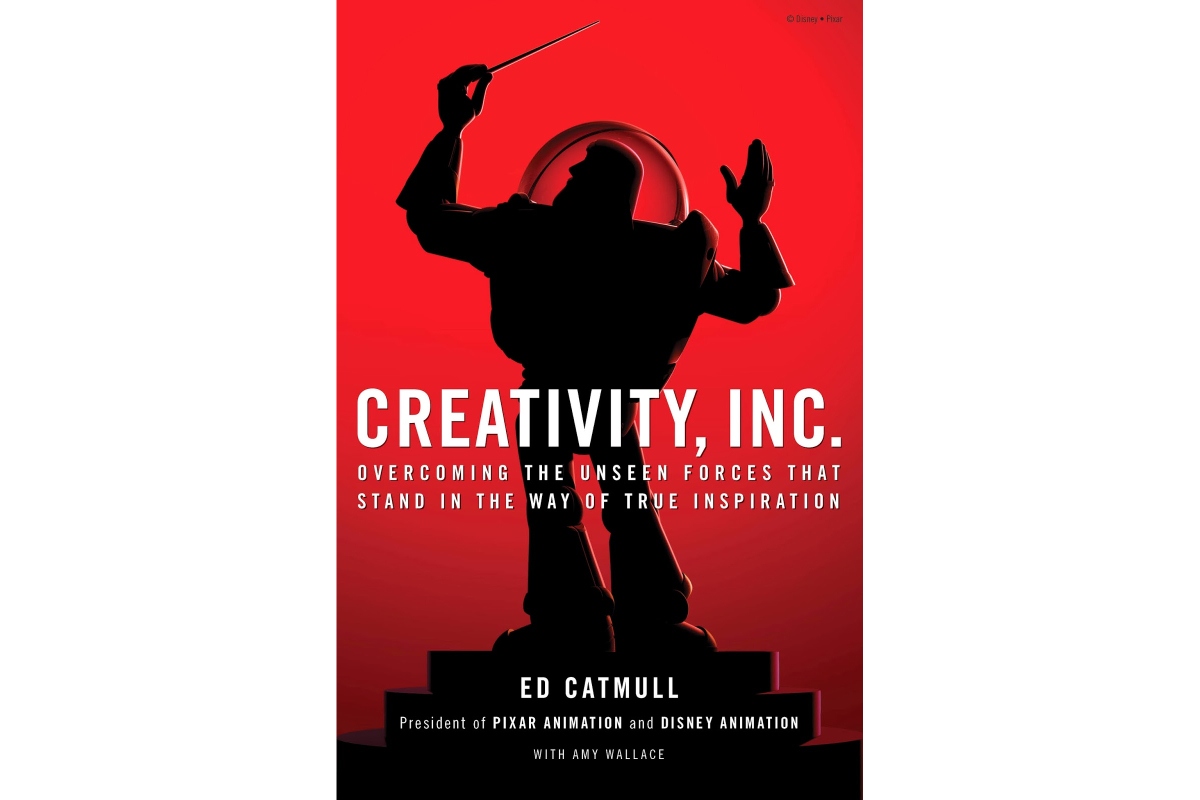
Over the years, Ed Catmull, president of both Pixar and Walt Disney Animation, has developed a deeply realistic philosophy of how to best manage a creative organization.

Managing a creative organization entails a constant balancing act between the potentially opposing goals of encouraging creative freedom and ensuring an orderly process and consistent financial results.

A hallmark of a healthy creative culture is that it people feel free to share ideas, opinions, and criticisms. Our decision-making is better when we draw on the collective knowledge and unvarnished opinions of the group.

Candor is the key to collaborating effectively. Lack of candor leads to dysfunctional environments.

Pixar’s mechanism to collaboration is the Braintrust, which they rely on to push them toward excellence and to root out mediocrity. According to Catmull, the premise of the Braintrust is simple:

Put smart, passionate people in a room together, charge them with identifying and solving problems, and encourage them to be candid.

The Braintrust is not foolproof, but when we get it right, the results are phenomenal.

Phenomenal, as in:

Pixar16

17 movies released since Pixar began in 1995

14 No. 1 Box Office hits in a row

Over $10.7 billion in ticket sales

Which makes it all the more strange to hear Catmull give his opinion about 1 common theme of all Pixar movies:

Early on, all our movies suck.

Catmull says that phrasing is blunt, but he chose it because saying it any softer fails to convey how bad the first versions really are.

Creativity has to start somewhere, and we are true believers in the power of bracing, candid feedback and the iterative process – reworking, reworking, and reworking again, until a flawed story finds its through line or a hollow character finds its soul.

No matter what, the process of coming to clarity takes patience and candor.

When questioned about the Braintrust being like any other feedback mechanism, Catmull elaborated:

There are two key differences. First, the Braintrust is made up of people with a deep understanding of storytelling, who usually have been through the process themselves. Second, the Braintrust has no authority. The director does not have to follow any of the specific questions. It is up to him or her how to address the feedback.

If the foundation of the Braintrust is candor, its supporting framework is that the directors must be ready to hear the truth. Candor is only valuable it the person on the receiving end is open to it and willing, if necessary, to let go of things that don’t work.

People need to be wrong as fast as they can. – Andrew Stanton, Pixar director, screenwriter, producer, and occasional voice actor

Leaders who resonate with ideas like the Braintrust but fear they would never work at their organizations should note Stanton’s encouragement:

You can and should make your own solution group. Here are the qualifications: The people you choose must (a) make you think smarter and (b) put lots of solutions on the table in a short amount of time. I don’t care who it is, the janitor or the intern or one of your most trusted lieutenants: If they can help you do that, they should be at the table.

 That’s advice any organization would do well to take.

jacket illustration: © Disney • Pixar

Look for Catmull’s book Creativity, Inc


Clarity is a Prerequisite for Compelling Leadership

Bob Johansen, author of “Leaders Make the Future”, states that clarity is one of ten leadership skills that leaders will need in the upcoming times of volatility, uncertainty, complexity, and ambiguity.

Here’s a brief recap on clarity:

  • Clarity requires inner strength and discipline: leaders, even when immersed in a world of ambiguity and confusion, emerge with forward momentum.
  • Clarity requires great self-knowledge: leaders must first understand who they are becoming, and how to get there, before leading others.
  • Clarity requires external engagement: leaders communicate with inspiration and a call to action that attracts others to follow.
  • Clarity requires flexibility: leaders are clear about their destination, but flexible about the journey.

Clarity1

Leaders understand why people crave simple and easy answers, but should provide clarity without introducing false hope. Navigating the maze between hope and hopelessness, leaders with clarity will find a way out.

How are you relentlessly pursuing clarity in your leadership role?

From Storytelling to Storyboarding


Storytelling is probably the oldest form of communication. John Hench, Disney Legend and former Senior VP of Creative Development, used to insist that storytelling was ‘in our genes.’ – Tom Fitzgerald, The Imagineering Workout

Storytelling has played a vital role in our survival – allowing us to share information, knowledge, and values from generation to generation. Story is the medium through which we receive our early learning as to right and wrong, good versus evil, reward and punishment, social values, etc.

We respond to storytelling. It engages our attention; no matter how old we get, who doesn’t love a good story?

Understanding this, Walt Disney created a technique in the early days of his cartoon films that helped illustrate the flow and continuity of stories – the storyboard.

Donald Duck storyboard, circa 1937 - courtesy of Tom Simpson

Donald Duck storyboard, circa 1937 – courtesy of Tom Simpson

Storyboards are tools that allowed Walt and his artists to envision a film prior to production. It allowed his team to have a shared vision of the story they were telling and how it would unfold. As a bonus to driving the creative development, it also offered a cost-effective way to experiment with a film early on, so that when production began, costs could be minimized.

Decades later, the tradition of storyboards continues on, though it has long expanded past just films. At Walt Disney Imagineering, rides, shows, and films for Disney’s theme parks around the world are the objects of regular storyboarding.

Starting with brainstorm sessions, the Imagineer’s first thoughts, ideas, images, and feelings about the story they are creating are captured on note cards and quick sketches.

The storyboards are worked, re-worked, rearranged, and edited until the story is strong and clear. Only then will production proceed.

At Walt Disney Imagineering, everything they do revolves around the story – and storyboards have remained an essential tool in helping them tell the story.

What story are you trying to tell?

Let it start with words and images to single note cards pinned on wall. Step back and look at the story you are trying to tell. Rearrange, edit, and add to the cards. Work at it – hard – until the story is just like you want to tell it.

Now, it’s time to tell the story…


part of a series of ideas to help shape and tone your creative muscles

Inspired and adapted from The Imagineering Workout

 written by The Disney Imagineers

Imagineering logo

Practice the Process of Inspiration to Generate Ideas

An exceptional concept depends on good process as well as pure inspiration.

One of my favorite shows at Walt Disney World’s Magic Kingdom is Mickey’s PhilharMagic. In the image below, notice the music notes in the background circling around the showcases in the gift shop at the exit from the theater. They’re not random. If you hum them, you will get the opening to Paul Dukas’ The Sorcerer’s Apprentice – one of the most memorable sights and sounds from Disney’s Fantasia, and the core idea in Mickey’s PhilharMagic.

WDW Apr16 MK MickeyPHM

That’s the magic that “Process Practice” can produce!

Being aware of the design process and knowing what phase the team and the idea are in is a big part of the show producer’s job. You probably aren’t a producer, but all leaders have a role in pulling various people and resources together in creating something – which is the role of a producer.

Inspiration generates ideas, and the process helps to shape efforts in a way to keep the team moving towards a fully developed idea.

It’s time for you to “get” it…

  • Get going. Toss a bunch of ideas out. Direction often comes from joyous chaos.
  • Get excited. Brainstorm. Dream. Take tangents. Notice where ideas go, what’s cool about them, and incorporate this into the design.
  • Get committed. Set up a regular project meeting time, discuss ideas, or just sit and stare at the wall. Ideas will come either way.
  • Get doughnuts or cookies and some toys. Brainstorming sessions go better when food or toys are around.
  • Get different opinions. Listen to someone else’s point of view and listen for things that improve the design.
  • Get confused. Ask yourself hard questions that you can’t answer.
  • Get unstuck. Try a different direction. Throw out an impossible action. Debating a wrong answer can help reveal the correct one.
  • Get your hands dirty. Build a rough model or stage a reading. You will learn more from this than from any debate, and you’ll learn it in time to fix things.
  • Get reactions. Show the idea to others. Listen to what they say, especially if it isn’t what you want to hear.
  • Get it on paper. Take everything you’ve learned and write a description of the goals and details of the design. If you write convincingly, you’ve probably got a good idea.

If everyone is comfortable with the process, the team members have the freedom to generate the best ideas for their project.


part of a series of ideas to shape and tone your creative muscles

Inspired and adapted from The Imagineering Workout

Imagineering logo

The Disney Imagineers

Sue Bryan, Senior Show Producer


They Made It – We Borrow It

There is no such thing as a truly original idea. – David Kord Murray

Great thinkers throughout history have understood this and used it to their advantage.

courtesy ledenergy.ca

courtesy ledenergy.ca

Connecting to and building on other people’s ideas and insights can compensate you better than the exclusivity of building something from scratch. Why try to come up with an original idea when someone else has already done the hard work for you? All great innovators cast a wide net to incite creative thought by looking beyond their category and into analogous organizations around the world.

Good ideas are everywhere, but only you can make them relevant to your world.

Debra Kaye, author of Red Thread Thinking, calls this process World Mining. She encourages us to mine deeply to:

  • Seek external inspiration internationally from other companies’ successes, from outside experts, and from creative consumers
  • Identify valued benefits delivered by analogous categories that speak to potential brand promises, brand characteristics, or product experience
  • Review innovative products that are changing competitive landscapes in other categories
  • Assess new technology as a basis for interest

David Kord Murray espouses a similar train of thought in his book Borrowing Brilliance. It will challenge you as it examines the evolution of a creative idea. It also offers practical advice, taking the reader step-by-step through Murray’s unique thought process. Here are the six steps:

  • Defining – define the problem you’re trying to solve
  • Borrowing – Borrow ideas from places with a similar problem
  • Combining – Connect and combine these borrowed ideas
  • Incubating – Allow the combinations to incubate into a solution
  • Judging – Identify the strength and weakness of the solution
  • Enhancing – Eliminate the weak points while enhancing the strong ones

Read a quick summary of the six steps here. You can also get more information here.

Any pool of ideas or existing assets, no matter how divergent from your own organization, can unlock new and even revolutionary areas of discovery and innovation.

The key to finding and borrowing rich resources is becoming attuned to the environment and seeing beyond what’s in front of you, whether you’re just an engaged consumer or looking at other cultures.

Set yourself on the lookout for threads and connections when you observe your surroundings, ask yourself questions, and free your mind.

Somebody probably made it first – it’s up to you to make it better.

inspired by 

Red Thread Thinking, by Debra Kay with Karen Kelly

Borrowing Brilliance, by David Kord Murray

Red Thread ThinkingBorrowing Brilliance

Less is Almost Always More, Even When We Ask for More

The bread aisle at the grocery store confounds me.

courtesy Mike Mozart, CC jeepersmedia/15026803517

courtesy Mike Mozart, CC jeepersmedia/15026803517

I just wanted to buy a loaf of bread to make a sandwich – I didn’t really want to wade through 7 long shelves of every imaginable type of bread possible.

My grocery store is just like your grocery store: when you stand in any aisle in any retail store in the U.S., you will be inundated with choices. Whether you are buying cereal, candy, TVs, or jeans, you’ll likely have huge number of items to choose from. Whether it’s a retail store or a Web site, if you ask people if they’d prefer to choose from a few alternatives or have lots of choices, most people will say they want lots of choices.

This is true in ChurchWorld, too.

Too Many Choices Paralyze the Thought Process

The book Art of Choosing by Sheena Iyengar details research on choice. In graduate school, Iyengar conducted what is now known as the “jam” study. She decided to test the theory that people who have too many choices will not choose at all. In a booth set up in a busy grocery store, Iyengar and her associates posed as store employees. They alternated the selection on the table: half the time there were 6 choices of fruit jam and half the time there were 24 jars of jam.

When there were 24 jars of jam, 60 percent of the people coming by would stop and taste. When there were only 6 jars of jam only 40 percent of the people would stop and taste. More choices were better – right?

courtesy Chris Martino, CC chrismar/4596518235

courtesy Chris Martino, CC chrismar/4596518235

Not exactly.

You might think that people would taste more jam when the table had 24 varieties – but they didn’t. People stopped at the table, but they only tasted a few varieties whether there were 6 or 24 choice available.

People can only remember 3 or 4 things at a time; likewise, they can decide from among only 3 or 4 things at a time.

The most interesting part of Iyengar’s study is that 31 percent of the people who stopped at the table with 6 jars actually made a purchase. But only 3 percent of the people who stopped at the table with 24 jars actually mad a purchase.

More people may have stopped by, but less people purchased.

The study may have proved that less is more, but why do people always want more choices?

Information is addictive.

Dopamine, a chemical created and released in our brains, is critical in all sorts of brain functions: thinking, moving, sleeping, mood, attention, motivation, seeking, and reward. Dopamine also causes you to want, desire, seek out, and search. Dopamine makes you curious about ideas and fuels your search for more information. A fascinating topic, but it will have to wait for later!

It’s only when people are confident in their decisions that they stop seeking more information.

Application for ChurchWorld Leaders

  • Resist the impulse to provide large number of choices
  • If you ask people how many options they want, the will almost always say “a lot” or “give me all the options.” If you ask, be prepared to deviate from what they ask for
  • If possible, limit the number of choices to 3 or 4. If you have to offer more options, try to do so in a progressive way. Have people choose first from 3 or 4 options, and then choose again from that subset.

inspired by and adapted from 100 Things Every Designer Needs to Know About People, by Susan Weinschenk

100 Things Every Designer Needs to Know About People

A short note about this occasional design series:

ChurchWorld leaders are designers. They create actions, processes, and services that people use to engage in life-changing decisions. Designing without understanding what makes people act the way they do is like exploring a new city without a map: results will be haphazard, confusing, and inefficient. If leaders know a little more about the psychology of design, their audience will benefit from that design.

LEGO Bricks: Toys for Kids, Lessons for Adults

LEGO Bricks and I go a long way back.

As a boy growing up in the mid-60’s, LEGO play sets were a treat at our church. After we completed our Sunday School lesson, and if we had any free time, and if the weather wouldn’t allow outside play, our teachers would bring out a big box of LEGO Bricks and let us have at it.

Lego Bricks - pile

When I became a parent in the early 80’s, it wasn’t long before the first of dozens of LEGO sets appeared. Over the years, our four children (now 35, 31, 27, and 23) were the recipients of LEGO play sets with themes like Castles, Undersea Adventures, Cities, and of course, Star Wars. For some reason, our second son was captivated by the Star Wars universe, especially LEGO sets with a Star Wars theme. Even at age 31 and in the Air Force, he still manages to acquire a new LEGO set every Christmas (my wife and I – guilty as charged!).

With 4 grandchildren now part of our extended family, the LEGO fascination has been passed on to a new generation of Adams kids. It started with Duplos for Jack, but at age 8 he has rapidly progressed to creating masterpieces with traditional LEGO sets. Lucy, age 5, is enjoys regular LEGOs but always eyes her dad’s Star Wars collection. Lola, 3 years old, left Duplos quickly after eying her brother’s LEGOs. Leia, almost 3, doesn’t have a chance! Between her Star Wars dad and sister, she will probably pass us all in LEGO abilities!

LEGO Bricks are not just for kids. The LEGO Group – reluctantly at first, but now all in – regularly connects with AFOL (Adult Fans of LEGO) groups. There are user groups like LUGNET (LEGO User Group Network) and dozens of conventions, competitions, and the like all over the world.

The full-scale replica of a Star Wars X-Wing Fighter astounds me: It’s 43 feet long with a 44-foot wingspan, weighs over 22 tons, and was built with over 5 million LEGO bricks. A crew of 32 builders took over 4 months to construct it.

Amazing.

All from a plastic toy brick which only has value when it’s connected to another brick.

Authors Ron Hunter and Michael Waddell recognized this, and included the LEGO Brick in their book Toy Box Leadership. Here’s how they saw the value of LEGO Bricks when talking about leadership:

LEGO Bricks provide the essence of the leadership lesson on Relationships: Building begins with connecting.

LEGO Leaders recognize connectional value

  • Connecting builds a strong foundation
  •  Connecting unleashes the power of synergy
  • Connecting utilizes the strength of unity

LEGO Leaders recognize connectional ability

  • LEGO bricks are reliable
  • LEGO bricks are reusable
  • LEGO Leaders recognize connectional failure

LEGO Leaders recognize connectional failure

  • Misplaced bricks
  • Forced bricks
  • Isolated bricks
  • Unorganized bricks


Leaders often get so caught up in the programs that they forget about the people – the building blocks of any organization. There may be tremendous value in plans, but the strength of any organization is in its relationships.

In LEGOS – and in organizations – building always begins with the clicking sound of connections.


Toy Box LeadershipToy Box Leadership

Isn’t About Time You You Made the Ordinary Extraordinary?

Anyone can dream…

But Disney’s Imagineers dream and do.

Since 1952, the Walt Disney Imagineers have been turning impossible dreams and schemes into magical rides, shows, and attractions for Disney theme parks around the world.

What is their magic?

It’s all about making the ordinary extraordinary.

Take this building in Hollywood Studios, for instance…

HS012914Bldg2

It’s a beautiful building, right?

Not really…

HS012914Bldg1

It’s really just a facade – an excellent example of how the Imagineers use a combination of imagination and engineering to make magic come to life at Disney.

Disney’s Imagineers are a highly creative group – one that isn’t slowed down by the impossible.

There are hundreds of stories about Imagineers who didn’t realize what they were capable of until they started doing it. They don’t want your fear of taking the first step get the best of you – they want to let your project get the best of you.

Imagineers try and fail and keep trying until they make magic.

Isn’t it time you got started?

Go ahead. Tackle that creative challenge head-on. Allow the spark of an idea to ignite your creativity and passion. Make the ordinary, extraordinary.

Don’t just sit there – dream and do!


Inspired and adapted from The Imagineering Workout

TheImagineeringWorkout

The Disney Imagineers

Imagineering logo