Hocus Pocus Bewitches a New Generation

A Lesson in Culture Transfer from One Generation to the Next

When it first hit theaters in 1993, Hocus Pocus performed poorly at the box office and with critics. However, thanks to annual replays on cable and strong video/DVD sales, a core fan group kept it alive over the years.

When the Disney Halloween classic was released to theaters earlier this month, it quickly rose through the ranks to become 2020’s biggest box office. Granted, the numbers are tiny compared to pre-COVID box office totals, but people are still going to theaters and strange things are happening.

Which is totally appropriate for Hocus Pocus, a bonafide 90s classic that children of that decade – now parents – are introducing to their children.
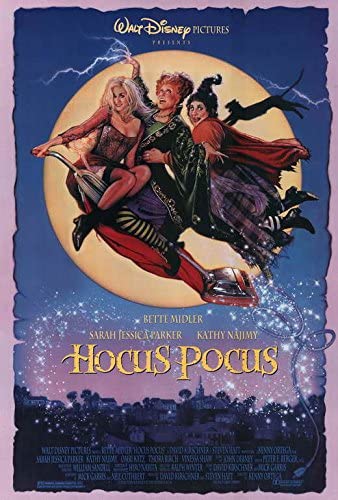
And by the way, that last sentence describes my two older kids – born in 1981 and 1984.

They first saw Hocus Pocus in theaters when released, later on VHS, and for a few years now, rewatch it every year on DVD or streaming.

Now, they are introducing it to a new generation – my grandchildren.

The movie’s unexpected success at the box office is impressive since it is widely available for fans to rent or buy and stream on various platforms; it’s free on Disney+; and it has aired on Disney’s “Freeform” as well.

There’s even a book about it – Hocus Pocus in Focus, by Aaron Wallace. My daughter and her husband – born in the late 80’s – devoured it when it came out, talked about it with their friends, and now viewing the film on Disney+ is evidently a big deal among their friends.

Of course, with Disney involved, you know what comes next – a sequel.

Bette Midler, who played Winnie Sanderson in the original, recently confirmed that she, along with co-stars Sarah Jessica Parker (Sarah Sanderson) and Kathy Najimy (Mary Sanderson) will all be returning as the Sanderson sisters for the second Hocus Pocus movie.

The sequel will be coming to Disney+ at an undesignated date in the future.

As I was researching different sources for this post, it occurred to me that I have stumbled upon a whole new thread of generational research – the transfer of culture from one generation to the next.

Immediately, I thought of the Disney Company. Certainly, my Disney fanaticism was fully developed in the last couple of decades – but I was introduced to it by my parents. First, through movies: my first movie seen in a theater (1964), and my favorite Disney movie even today, is Mary Poppins. Then, my father, as a Gulf gas station owner, was part of a Gulf-Disney marketing campaign throughout the mid to late 60s. We received regular promotional items, like magazines and record albums (which I still have!), which his customers eagerly snatched up.

When my wife and I became parents (four times, from 1981 – 1992), the introduction of Disney movies through first theaters then VHS tapes was a regular part of family entertainment. It continued with the shift from a cable channel to DVDs then streaming services.

As our children became parents, they did (and are doing) the same: Disney entertainment is a regular part of their lives, especially with the advent of the Disney+ streaming service.

In 2016, my wife and I brought this to a new level: a week-long family vacation for all 15 members of our family to Walt Disney World.

From viewing movies to visiting theme parks to sharing our Disney-related gifts across birthdays and other times, the Adams family culture had been deeply imbedded with a Disney imprint.

In my childhood, that meant one thing: Disney. To my children and grandchildren, though, it’s much more:

  • Walt Disney (movies, cable channel, TV shows, theme parks, cruise line)
  • ABC
  • ESPN
  • The Muppets
  • Pixar
  • Marvel
  • Lucasfilm
  • 21st Century Fox
  • Disney+ (I list this separately because of the HUGE impact it will have in the future).
  • and many more!

Here’s a graphical representation of the above:

You want to talk about the transfer of culture from one generation to the next and the next?

Class is now open!

Dreamers Live Beyond Themselves in Order to Make Dreams Come True

Even for those of you that don’t follow the Walt Disney Company regularly, the news coming out of Anaheim, CA from the biannual gathering of Disney fans called D23 has been nonstop since last Friday. Even though the event ended Sunday night, recaps, opinions, and second-guessing continues today – and probably will throughout this week and beyond.

With intellectual properties like Disney Studios, theme parks and resorts, and the studios of Pixar, Star Wars, Marvel, and now most of Fox, the entertainment giant is continuing to grow beyond expectations.

D23 was three days of seemingly nonstop announcements about the upcoming movies from all the studios mentioned above, new attractions at theme parks world-wide, new partnerships, and the unveiling of Disney+, the streaming service that will launch November 12. Artists, actors, and people normally behind-the-scenes were onstage everywhere at the Anaheim Convention Center, each presentation seeming to outshine the previous one.

I’m not even going to attempt to unpack everything that happened at D23 – there are much better sources for that.

Instead, I want to leave you with a couple of images – courtesy of Disney – and a quote by Walt Disney:

If you don’t know what these represent:

  • The top image is a representation of four “neighborhoods” coming to Epcot – a transformation of the park in every sense of the word.
  • The image on the lower right is a new statue of Walt Disney what will occupy “Dreamer’s Point,” a transition from Spaceship earth to the rest of the reimagined Epcot.
  • The quote in the lower left is from Walt Disney, part of a longer statement about Epcot he made in October 1966 – only two months before his death.

Think about that.

While Walt Disney was totally immersed in the building of Disneyland in California, and led in the acquisition of the thousands of acres that would become Walt Disney World in Florida, he never saw the first shovel of dirt turned, much less the completion of any part of Walt Disney World.

The EPCOT he dreamed of was not the Epcot Center that opened in 1982; all of the work done in major upgrades since then – and including this projected “transformation” – are not going to make that happen.

But the dream did not die with the dreamer.

His vision of ‘a new Disney world’ outside of Orlando, Florida, especially his concept of Epcot, was so strongly a personal, life-summing statement that many believed the dream might die with Walt. Not so. For in addition to the fantasy empire Walt had created, he had also built a unique organization.

– Richard Beard, Walt Disney’s EPCOT

Led by Walt’s older brother Roy, who postponed his retirement, the talents of the entire Disney organization went ahead with the Florida project.

Because that’s what dreamers do…

…they dream, and make sure there is a team who understands and lives the dream, and will keep it going.

So that’s what Epcot is: an experimental prototype community that will always be in a state of becoming. It will never cease to be a living blueprint of the future…

– Walt Disney


Will your dream live beyond you?


Why It’s Always Time to Go Back to the Drawing Board

…a memo from Walt Disney, December 23, 1935, to Don Graham, Disney artist and teacher of animation classes to studio artists

Right after the holidays I want to get together with you and work out a very systematic training course for young animators, and also outline a plan of approach for our older animators.

The following occurs to me as a method of procedure:

Take the most recent pictures – minutely analyze all the business, action, and results, using the better pieces of animation as examples, going thru the picture with these questions in mind:

What was the idea to be presented?

How was the idea presented?

What result was achieved?

After seeing this result – what could have been done to the picture from this point on, to improve it?


To put that quote in context, by the early 1930s Walt Disney had built a successful cartoon studio and an empire on the shoulders of Mickey Mouse – but to make the leap from shorts to a feature film, he knew his artists had to develop further.


In the beginning, Walt himself drove his artists to the nearby Chouinard Art Institute, then expanded that educational effort by building his own in-house art school like none other.

The following quotes from Walt Disney put his actions into perspective:

The first thing I did when I got a little money to experiment, I put all my artists back in school. The art school that existed then didn’t quite have enough for what we needed, so we set up our own art school.

It was costly to set up training classes, but I had to have the men ready for things we would eventually do.

Walt Disney had a vision to do what no one had done before, and he knew that vision required resources that didn’t exist.

He didn’t give up – he created everything to complete his vision: actions that required invention, patents, training, and unbounded passion.

As a leader, what vision do you have? What resources do you need to bring that vision to reality – even the ones that don’t exist?

Do you need to create a culture of learning?


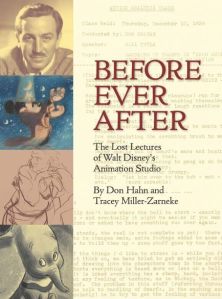
Before Ever After is a treasury of rare and unpublished lecture notes, photographs and drawings which reflect the culture of learning that Walt Disney curated to raise the level of his artists in preparation for their first feature: Snow White and the Seven Dwarfs. Walt hand-picked instructors from the renowned Chouinard Art Institute to hold classes on action and drawing.  He screened films for study.  He brought in talent from Architect Frank Lloyd Wright to choreographer George Balanchine to humorist Alexander Woollcott to teach and inspire his team.  The result is a stunning collection of transcripts and history which not only lay the artistic foundation for the animated art form, but also give us an intimate look inside the walls of Walt Disney’s studio during a seminal and profoundly creative moment in time.

From the authors:

To help rekindle the spirit of that time, we chose to share these transcripts in exactly their original form, printed on animation paper to be distributed to the crew. It is a treasure of artistic information and a series of historic document that should inspire artists, historians, and Disney fans alike, evoking the culture of learning that existed in a time when art, technology, and passion collided inside the gates of the Disney Studio.


inspired by Before Ever After: The Lost Lectures of Walt Disney’s Animation Studio, by Don Hahn and Tracey Miller-Zarneke


Good Leaders Unlock the Imagination by Starting with WHY

To help see others see change, the leader must understand how to unlock the imagination.

The very act of imagination is connected to faith. The author of Hebrews writes, “Now faith is the assurance of things hoped for and the conviction of things not seen” (Hebrews 11:1). When a leader articulates, or provokes, a follower’s imagination, he or she is serving both God and the individual by exercising the muscle of faith.

THE QUICK SUMMARY – Start with Why, by Simon Sinek

Why are some people and organizations more innovative, more influential, and more profitable than others? Why do some command greater loyalty?

In studying the leaders who’ve had the greatest influence in the world, Simon Sinek discovered that they all think, act, and communicate in the exact same way-and it’s the complete opposite of what everyone else does. People like Martin Luther King Jr., Steve Jobs, and the Wright Brothers might have little in common, but they all started with why.

Drawing on a wide range of real-life stories, Sinek weaves together a clear vision of what it truly takes to lead and inspire.

A SIMPLE SOLUTION

Walt Disney’s dream that we now know as Disneyland faced an immense problem: how do you get financial investors to back something that’s never been done before, and exists only in a few sketches?

Faced with this dilemma, Disney did what he was best at: he painted pictures with words:

The idea of Disneyland is a simple one. It will be a place for people to find happiness and knowledge. It will be a place for parents and children to spend pleasant times in one another’s company.

Disneyland will be based upon and dedicated to the ideals, the dreams, and hard facts that have created America. And it will be uniquely equipped to dramatize these dreams and facts and send them forth as a source of courage and inspiration to all the world. 

Disneyland will be filled with the accomplishments, the joys and hopes of the world we live in. And it will remind us and show us how to make those wonders part of our lives.

Walt Disney, An American Original, 246-247

Disney’s simple but evocative language convinced the investors of a future they could not see – and the rest is history.

Great leaders and great organizations are good at seeing what most of us can’t see. They are good at giving us things we would never think of asking for.

Great leaders are those who trust their gut. They are those who understand the art before the science. They win hearts before minds. They are the ones who start with WHY.

Products and services with a clear sense of WHY give people a way to tell the outside world who they are and what they believe. Remember, people don’t buy WHAT you do, they buy WHY you do it. If an organization does not have a clear sense of WHY then it is impossible for the outside world to perceive anything more than WHAT the organization does. And when that happens, manipulations that rely on pushing price, features, service or quality become the primary currency of differentiation.

WHAT: Every single organization on the planet knows WHAT they do. Everyone is easily able to describe the products or services a company sells or the job function they have within that system. WHATS are easy to identify.

HOW: Some companies and people know HOW they do WHAT they do. HOWs are often given to explain how something is different or better. Not as obvious as WHATs, many think these are the differentiating or motivating factors in a decision. It would be false to assume that’s all that is required. There is one missing detail:

WHY: Very few people or companies can clearly articulate WHY they do WHAT they do. By WHY I mean what is your purpose, cause or belief? WHY does your organization exist? WHY do you get out of bed every morning? And WHY should anyone care?

It all starts from the inside out. It all starts with WHY.

Simon Sinek, Start with Why

A NEXT STEP

There is a fine line between inspiration and manipulation. A leader can use powerful language, vivid images, and emotional pleas to his audience – and be a manipulative, power-hungry despot.

A leader can also use powerful language, vivid images, and emotional pleas to his audience – and be a visionary leader.

The difference is in the WHY. If people don’t believe in the WHY behind your vision, they won’t be motivated to help you deliver it.

To understand the WHY behind all sides of a situation, idea, or problem you are facing, take the WHY Train by answering the following questions:

  1. Who is the main actor in the situation or problem?
  2. What is the main concept, object, or action the main actor uses or performs?
  3. Where is the main actor located when performing or using the main concept, object, or action?
  4. When does the situation or problem occur?
  5. Describe each answer in more depth.
  6. Conclude by asking WHY to the answers you have given.

The result of this exercise will be a thorough and sequential description about a situation and the insightful reasoning behind each element.


As leaders, we communicate in all we say and do. We may be entertaining at times, we inform much of the time, and occasionally we must be directing in what we say. But in all situations, we can inspire and connect with our audience.

Excerpt taken from SUMS Remix 29-1, published December 2015


Part of a weekly series on 27gen, entitled Wednesday Weekly Reader

Regular daily reading of books is an important part of my life. It even extends to my vocation, where as Vision Room Curator for Auxano I am responsible for publishing SUMS Remix, a biweekly book “summary” for church leaders. I’m going to peruse back issues of both SUMS and SUMS Remix and publish excerpts each Wednesday.

From Storytelling to Storyboarding


Storytelling is probably the oldest form of communication. John Hench, Disney Legend and former Senior VP of Creative Development, used to insist that storytelling was ‘in our genes.’ – Tom Fitzgerald, The Imagineering Workout

Storytelling has played a vital role in our survival – allowing us to share information, knowledge, and values from generation to generation. Story is the medium through which we receive our early learning as to right and wrong, good versus evil, reward and punishment, social values, etc.

We respond to storytelling. It engages our attention; no matter how old we get, who doesn’t love a good story?

Understanding this, Walt Disney created a technique in the early days of his cartoon films that helped illustrate the flow and continuity of stories – the storyboard.

Donald Duck storyboard, circa 1937 - courtesy of Tom Simpson

Donald Duck storyboard, circa 1937 – courtesy of Tom Simpson

Storyboards are tools that allowed Walt and his artists to envision a film prior to production. It allowed his team to have a shared vision of the story they were telling and how it would unfold. As a bonus to driving the creative development, it also offered a cost-effective way to experiment with a film early on, so that when production began, costs could be minimized.

Decades later, the tradition of storyboards continues on, though it has long expanded past just films. At Walt Disney Imagineering, rides, shows, and films for Disney’s theme parks around the world are the objects of regular storyboarding.

Starting with brainstorm sessions, the Imagineer’s first thoughts, ideas, images, and feelings about the story they are creating are captured on note cards and quick sketches.

The storyboards are worked, re-worked, rearranged, and edited until the story is strong and clear. Only then will production proceed.

At Walt Disney Imagineering, everything they do revolves around the story – and storyboards have remained an essential tool in helping them tell the story.

What story are you trying to tell?

Let it start with words and images to single note cards pinned on wall. Step back and look at the story you are trying to tell. Rearrange, edit, and add to the cards. Work at it – hard – until the story is just like you want to tell it.

Now, it’s time to tell the story…


part of a series of ideas to help shape and tone your creative muscles

Inspired and adapted from The Imagineering Workout

 written by The Disney Imagineers

Imagineering logo

Immerse Yourself in the Creativity of the Disney Imagineers

My admiration for the creative brilliance of Walt Disney and the amazing group of geniuses he gathered around him runs deep and long.

WDWQuote1

As a boy growing up in the 60s, Walt Disney’s Wonderful World of Color television show was something I looked forward to every week. My father, an owner-operator of a Gulf gasoline station, was the recipient of various advertising tie-ins involving such Disney classics as 101 Dalmatians, The Jungle Book, and the amazing nature films. I was fortunate to be part of a high school band marching in Disney on Parade in 1975, just a few years after Walt Disney World opened.

Then marriage and four children came, just in time for the rejuvenation of Disney animation of the late 80s-early 90s. That meant endless viewings of The Little Mermaid, Beauty and the Beast, and the rest of the Disney library.

By the time the 2000s had rolled around, I was beginning to accumulate different types of books on the Disney organization – biographies, behind-the-scene details, first-person accounts, and various types of business-related books. I was beginning to use them in leadership and teaching positions I held.

In 2011, the fortunate circumstances of my daughter graduating from college in three years before beginning her master’s degree and her request for a much-talked-about-but-never-fulfilled Disney trip led to a week-long adventure in Walt Disney World with a 23-year old graduate student and her two early 50’s parents.

Before that, I knew about Disney. That week, I experienced Disney.

That may seem like a small thing, but in reality it is a HUGE difference.

In the last five years, I have been to Walt Disney World at least several days each year, with the last year being the highlight: by the time this fall rolls around, I will have been on Disney property 19 days.

The experience of Disney – primarily in the theme parks, but now expanded to other resorts, retail shops, and cruise ships – can be traced back to Walt Disney. His untimely death in 1966 could have left a void in the creativity of the Disney empire.

But I believe his greatest act of genius had its origins in 1952, as he began to pull together veterans of film and animation work for a special project that came to be known as Disneyland.

That group of versatile animators and art directors was the foundation of a group that came to be called the Imagineers.

Out of this group, Disney historian Tim Hauser reflects, “came the theories, aesthetics, design, and engineering of Disneyland; the advancement of three-dimensional storytelling; the development of robotic techniques in Audio-Animatronics; and the perpetuation of an ‘architecture of reassurance’ as inspired by Walt Disney’s personal sense of optimistic futurism.”

Today Walt Disney Imagineering remains the design, development, and master-planning branch of company, with over 140 disciplines working toward the common goal of great stories and creating great places.

Walt Disney wanted Disneyland to be essentially a movie that allows you to walk in and join in the fun. Imagineers – many whom had worked with Walt Disney since the 1930s – literally brought those movies to life with their multiple disciplines. He knew from his filmmaking experience that story was everything to the audience. Disney knew he must immerse the theme park guest in living storytelling scenarios.

And for over 60 years, the Imagineers have delivered – time and time again. To date, the Imagineers have built eleven theme parks (with Shanghai Disney opening in just a few weeks); dozens of resort hotels; 4 cruise ships with two more under construction; 2 water parks; and ongoing development in existing parks.

The Imagineers deliver the experience of Disney.

Now I want to bring you full circle by highlighting the recent work of author Louis Prosperi in The Imagineering Pyramid.

Using existing material published by Disney plus conversations with Imagineers, Prosperi weaves together an interesting thought captured in the book’s subtitle: Using Disney Theme Park Principles to Develop and Promote Your Creative Ideas.

It’s a very compelling challenge: look at the existing body of work done by the Imagineers for Disney’s theme parks and translate those principles into a “pyramid” of 15 principles grouped into 5 tiers.

Here’s an outline for an appetizer:

Tier 1: Foundations of Imagineering

  • It All Begins with a Story – Using your subject matter to inform decisions about your project.
  • Creative Intent – Staying focused on your objective.
  • Attention to Detail – Paying attention to every detail.
  • Theming – Using appropriate details to strengthen your story and support your creative intent.
  • Long, Medium, and Close Shots – Organizing your message to lead your audience from the general to the specific.

Tier 2: Wayfinding

  • Wienies – Attracting your audience’s attention and capturing their interest.
  • Transitions – Making changes as smooth and seamless as possible.
  • Storyboards – Focusing on the big picture.
  • Pre-Shows and Post-Shows – Introducing and reinforcing you r story to help your audience get and stay engaged.

Tier 3: Visual Communication

  • Forced Perspective – Using the illusion of size to help communicate your message.
  • “Read”-ability – Simplifying complex subjects.
  • Kinetics – Keeping the experience dynamic and active.

Tier 4: Making It Memorable

  • The “it’s a small world” Effect – Using repetition and reinforcement to make your audience’s experience and your message memorable.
  • Hidden Mickey’s – Involving and engaging your audience.

Tier 5: Walt’s Cardinal Rule

  • Plussing – Consistently asking, “How do I make this better?”

But instead of building an object like an attraction, Prosperi challenges the reader to do something with the principles that may be even more daunting: be creative.

Even though I was familiar with most of the principles and their origins, I enjoyed reading how Prosperi linked the ideas together into a unified whole. Especially helpful were the questions at the end of each chapter, with a general focus as well as specialized applications for game design, instructional design, and management and leadership. The questions will help anyone have a better grasp of the concept and how to apply it an almost any field.

The Imagineering Pyramid was especially beneficial to me on a recently completed 3-day “field trip” to all four theme parks at Walt Disney World. As I walked through each park, the genius of the Imagineers inspired me to fill several pages of my Disney journal with new ideas for development as well as take over 1,000 photographs of design details – exactly what I believe Louis Prosperi had in mind when writing the book.

Leaders in any capacity will benefit from The Imagineering Pyramid as a helpful tool, providing a creative framework for solving problems.

ImagineeringPyramid

Starting at the End

TheImagineeringWorkout

inspired by and adapted from The Imagineering Workout, by the Disney Imagineers

– Peter Steinman, General Counsel, Disney Imagineering

Working from the back-end is finding the lessons that you don’t want to learn in the midst of your project. 

This practice of back-end visualization is essential to almost everything we do and can be adapted to any project. 

Next, consider how you could minimize these challenges so they do not negatively impact the project, and take necessary preventive action. This might be done through a contract, through people you might hire, materials you might use, or by adjusting a schedule.

Imagine all the reasonably possible outcomes of the project, select one that best meets your needs, think through all things that could delay, detour, or diminish your outcome and write them down.

Anticipating the possible outcomes of everyday decisions before you make them helps you avoid calamities, not to mention inconveniences.

WDVision

It takes a special kind of vision to see the end before the beginning.

“Of course he did,” recounted his wife Lillian. “If he had not seen it then, we would not be seeing it now.”

After being around Disney cast members for several days this week, the story of people lamenting the fact that Walt died before Walt Disney World was built was recounted several times.

Being onsite at a Disney theme park always heightens my awareness of Walt Disney and the vision he had to bring so much to our world – groundbreaking animation, the concept of the storyboard creative process, live action/animation  movies, and especially the concept of theme parks.

January 31, 2016

A celebration of National Backwards Day

Honoring Walt Disney and His Legacy of Organizational Culture

Great leaders lead, teach, and develop organizational culture by being onsite and visible to their team.

When it came to learning about Disney culture and how things should be done at the park, we learned it all through Walt being there and watching what he did and said. He was there almost every weekend and he was there every Wednesday for the Park Operating Committee. We built what is known today as the Disney Culture through association with Walt.
– William “Sully” Sullivan, in his book “From Jungle Cruise Skipper to Disney Legend”

WaltDisney4

Walter Elias Disney was born on this date – December 5 –  in 1901.

How You Say Good Bye is as Important as How You Say Hello

Do what you do so well that they will want to see it again and bring their friends.Walt Disney

The Disney organization has no peer when it comes to creating amazing Guest Experiences. Their Cast Member interaction with Guests is legendary in providing a warm welcome to the Disney Parks. From your arrival by car, monorail, or boat, the Guest is almost overwhelmed by the tremendous “first impression” that Disney Cast Members deliver.

But I think it’s how Disney says “goodbye” that leaves a “lasting impression.

Just a few weeks ago on Independence Day, I’m sure many of you saw and heard first hand fireworks of all shapes and sizes. Independence Day fireworks are memorable, and they add a special feeling to the festivities of the day. But fireworks at Disney parks – they are unique.

At Disney World, the fireworks in 3 of the 4 parks (the animals in Disney’s Animal Kingdom can’t handle the noise) are simply spectacular. Here’s how Aaron Wallace, author of The Thinking Fan’s Guide to Walt Disney World: Magic Kingdom describes it:

Suddenly, almost without warning, the park goes dark, the castle lights up in a blinding white blaze, and the enormous trumpeting of horns heralds the long-awaited arrival of the fireworks show.

Words alone can’t convey the impact of that moment. There is no point during the Disney park experience when the magic hits harder than with the opening notes of the fireworks show. To quote Jiminy Cricket, “like a bolt out of the blue,” a feeling of “WOW! I’m actually in Disney World” washes over the crowd in that split second.

The show continues to build in intensity, the music gets louder, the fireworks more majestic until at the end, the sky is seemingly covered from horizon to horizon with a colorful canvas of memories and magic.

photo by Tom Brickman

photo by Tom Brickman

That’s what the Guests remember – and it makes them start thinking about the next time they can return.

But it isn’t quite time to say goodbye – for those hardy souls who have the stamina and endurance to remain till the park’s closing – and just a little longer – there is one more Disney magic surprise – the Kiss Goodnight.

As DisneyTouristBlog.com author Tom Bricker explains,

Too few Walt Disney World fans know about The Kiss Goodnight. If you just thought, “what’s that?” you’re not alone. The Kiss Goodnight is a little over 2-minutes long, and it is the Magic Kingdom’s way of saying “goodbye” to guests at the end of a long day. It usually plays every 30 minutes after the park closes and starts with Cinderella Castle “twinkling” as the music from When You Wish Upon a Star slowly builds.

photo by Tom Brickman

photo by Tom Brickman

A narrator then greets the last of the guests in the Magic Kingdom, saying: Ladies and gentlemen, boys and girls, on behalf of everyone here at the Magic Kingdom, we thank you for joining us today for a magic gathering of family, friends, fun, and fantasy. We hope your magical journey with us has created wonderful memories that will last a lifetime. Walt Disney said that the Magic Kingdom is a world of imagination, hopes, and dreams. In this timeless land of enchantment, magic and make-believe are reborn, and fairy tales come true. The Magic Kingdom is a place for the young and the young at heart. A special place where when you wish upon a star, your dreams can come true. Until we see you again, have a safe trip home. Thank you, and goodnight.”

The Kiss Goodnight is the proverbial icing on the Cake (Castle!). After a long day in the parks, we can’t help but just stop and watch the Kiss Goodnight, completely frozen and unable to move. For us, the combination of the beautiful light display and hearing about the meaning Walt Disney wanted the parks to have for guests does it every time.

I’m convinced that most people who “get” the Disney theme parks would get goose bumps if they were to stand in a mostly empty Magic Kingdom and watch and listen to this on a tranquil Main Street USA. It’s special not just because you’re in the park at such a peaceful time, essentially by yourself with Cinderella Castle, but also because of the significance of the words in Roy O. Disney’s Walt Disney World opening day dedication speech. The Kiss Goodnight basically embodies and reminds us exactly why it’s so great to be a Disney fan. If you haven’t stayed to experience The Kiss Goodnight before, you should definitely make an effort to do it at least once. It absolutely belongs on everyone’s Disney Bucket List.

Now that’s a goodbye!

Which leads me to a simple, closing question:

How do you tell your Guests goodbye?

The Language of Success: Creating a Culture of Happiness

Throughout my career, I had found that most people want to be involved in something greater than just being paid for a job. My basic story is about the two men laying bricks. When asked what he is doing, one man says, ‘I’m laying bricks.’ The other man performing the same task says, ‘I’m building a cathedral.’ – Van France, Disney University founder

Beginning with the original orientation at Disneyland in 1955, Van’s goal always remained the same: instill a sense of pride among cast members about where they work and the jobs they perform. Van was determined to make Disneyland a place where customers and cast members experienced second-to-none service.

photo by glassslipperconcierge.com

photo by glassslipperconcierge.com

One of his strategies involved creating a whole new language that would reinforce the dignity of every job in the park.

What’s the difference between treating someone like a customer, and treating someone like a Guest?

The obvious analogy is that we do things differently when we bring Guests into our home. We spruce up the house. We dress up. We prepare something special to eat. We host them. We take care of their real needs.

Disneyland is a huge stage, so Van leveraged this by introducing show-business term. He reasoned that a new vocabulary, coupled with strong organizational values, could bring pride and energy to the job.

  • Employees became cast members, hosts, and hostesses
  • Customers became Guests
  • Good show was a job well-done
  • Uniforms were costumes
  • On-stage are actions visible to Guests
  • Backstage are the actions taken out of sight of the Guests.

However, merely changing nouns or verbs won’t ensure world-class customer service or create a motivated and engaged workforce – in any organization. Catchy words for Guests and team members have no value without leadership support.

The values instilled by Walt Disney and perpetuated by Van France at the Disney University are reflected in the daily actions of cast members at every organizational level.

What you do here and how you act is very important to our entire organization. We have a worldwide reputation for family entertainment. Here at Disneyland, we meet our world public on a person-to-person basis for the first time. Your every action (and mine also) is a direct reflection of our entire organization. – Walt Disney

Applying Van France’s Four Circumstances to ChurchWorld Guest Experience Teams

Innovate – Support – Educate – Entertain

 Putting People First

  • What is the culture of your organization?
  • How is respect conveyed to team members?
  • Do they know they are valued?
  • How are Van’s Four Circumstances (Innovate, Support, Educate, Entertain) used to communicate your culture?

Words Reflect Culture

  • Does your organization use unique words to identify team members and Guests?
  • Does the culture of your organization support those words?
  • How are organizational values reflected in words and actions?

Inspired by and adapted from Disney U by Doug Lipp

Disney U

Get the book TODAY to learn invaluable lessons for your Guest Experience Teams

Book     Kindle

Disney U is one of the most significant resources related to the Disney organization, leadership, team development, and Guest Experiences available. In honor of the one year anniversary of the release of Disney U, this is a look back at a series from the book that originally ran last year.