How to Avoid Innovation’s Seven Deadly Sins

There are many traps that litter the ground in front of the would be innovator.  Author and business thinker Scott D. Anthony has developed the concept of innovation’s seven deadly sins, introduced in yesterday’s post. He found the idea of the seven deadly sins had very clear parallels in the world of innovation.

7DeadlySins

Here are Anthony’s summaries on how to avoid those deadly sins today.

  • Pride – take an external viewpoint to make sure you understand how the customer measures quality
  • Sloth – release your inner Edison (who said genius is 1 percent inspiration and 99 percent perspiration”)
  • Gluttony – embrace selective scarcity – constrain resources in the early stages of creativity to enable creativity
  • Lust – focus your innovation efforts; remember that destruction often precedes creation
  • Envy – actively celebrate both the core business and new growth efforts
  • Wrath – reward behavior, not outcomes
  • Greed – be patient for growth and impatient for results

How will you avoid falling into one of these traps when faced with it this week?

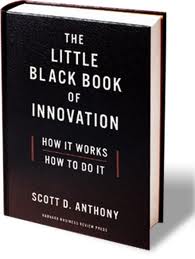
Explore more on this topic in Anthony’s excellent book The Little Black Book of Innovation.
Innovation’s Seven Deadly Sins

Innovation – something different that has impact – is both more important and more accessible than ever before

          Scott D. Anthony, The Little Black Book of Innovation

Something different that has impact.

This simple definition of innovation by author Scott Anthony belies the deep and resonating ideas in The Little Black Book of Innovation. From this simple definition, Anthony breaks down the essential differences between various types of innovation and illuminates its vital role in organizational success and personal growth.

What better way to introduce the topic to ChurchWorld leaders than start off with a list of Innovation’s Seven Deadly Sins:

  • Pride – forcing your view of quality onto your audience; often results in overshooting
  • Sloth – having innovation efforts slow to a crawl
  • Gluttony – suffering from the curse of abundance; leads to overly lows, overly linear innovation efforts
  • Lust – getting distracted by pursuing too many “Bright, shiny objects”
  • Envy – creating an us-versus-them relationship between the core and new growth efforts
  • Wrath – punishing risk takers severely
  • Greed – impatience for growth; leads to prioritizing low-potential markets

Tomorrow: How to Avoid the Seven Deadly Sins

The Lessons of Innovation

The January issue of Fast Company magazine featured articles on Generation Flux. I thoroughly enjoyed it, posting several applications to ChurchWorld:

The March issue has arrived, focusing on the world’s 50 Most Innovative Companies. Again, there are some great lessons for ChurchWorld – starting with Editor Robert Safian’s lead editorial. He linked his feature story from the Generation Flux issue to themes that emerged in the Top 50 list. Here are the top eight themes:

  1.  Growth should be a tactic, not a strategy
  2. Big companies need to be nimble as startups
  3. Tech is disruptive in unexpected places
  4. Design is a competitive advantage
  5. Social media makes products and services better
  6. Data is power
  7. Money is flowing
  8. Copycats are history

These themes emerged from business names you will recognize, but the truths behind them also have application in your organization – or they should.

Tomorrow: a closer look at these themes and how they are impacting ChurchWorld.


An Idea Everyone Will Like

There’s no such thing as a truly original idea.
I don’t know who said it first, but it’s something I really believe! I’ve found a fascinating book by creativity expert David Kord Murray that takes that saying to the outer limits.
Over the last month I’ve been working on a project related to innovation and design in ChurchWorld, and this line of thought resonated a lot with me.
Borrowing Brilliance will challenge you as it examines the evolution of a creative idea. It also offers practical advice, taking the reader step-by-step through Murry’s unique thought process. Here are the six steps:
  1. Defining – define the problem you’re trying to solve
  2. Borrowing – Borrow ideas from places with a similar problem
  3. Combining – Connect and combine these borrowed ideas
  4. Incubating – Allow the combinations to incubate into a solution
  5. Judging – Identify the strength and weakness of the solution
  6. Enhancing – Eliminate the weak points while enhancing the strong ones

Read a quick summary of the six steps here. You can also get more information at this website. But don’t stop there – by all means pick up a copy of the book and explore it deeper – and you will find yourself looking at creativity in a whole new light.

Got a challenge staring you in the face, and looking for a solution. Why not follow the steps above by “borrowing some brilliance” and formulate your own unique solution?

Reading Right Now…

I’ve always believed that active and diverse reading is a necessity for creative leaders. Really putting in practice this week…

On Optimist’s Tour of the Future: One Curious Man Sets Out to Answer “What’s Next, by Mark Stevenson

Six Frigates: The Epic History of the Foundation of the U.S. Navy, by Ian Toll

Culture: Leading Scientists Explore Societies, Art, Poetry, and Technology, edited by John Brockman

Now You See It: How the Brain Science of Attention Will Transform the Way We Live, Work, and Learn, by Cathy Davidson

Missional Communities: The Rise of the Post-Congregational Church, by Reggie McNeal

To Transform a City: Whole Church, Whole Gospel, Whole City, by Eric Swanson and Sam Williams

AND: The Gathered and Scattered Church, by Hugh Halter and Matt Smay

The Case for Antioch: A Biblical Model for a Transformational Church, but Jeff Iorg

Democratizing Innovation, by Eric von Hippel

Zarrella’s Hierarchy of Contagiousness: The Science, Design, and Engineering of Contagious Ideas, by Dan Zarrella

The Elements of Cooking, by Michael Rhulman

I’m trying to emulate Thomas Edison, who believed that voracious reading was the key to self-improvement. He read books on a remarkable range of subjects to address his endless queries. As Edison noted, “I didn’t read a few books, I read the library.”

I prefer to think of it as creating innovation literacy.


Innovation? Or Same Ol’ Same Ol’?

One of the latest Internet movements is based on offering deals with local merchants. The leader of this trend is three-year-old Groupon.

However, Groupon and all its competitors may be popular, but they are hardly a true Internet revolutionary. According to Wired magazine’s Steven Levy, Groupon and company are less a revolution and more like a web version of everyone’s coupon-clipping grandparents.

It begs the question: Is this innovation in reverse – finding new ways to continue doing things the way they’ve always been done?

I’m deep into a project now that tackles this question head on. You’ll be hearing more about it in a few weeks, but for now, here are a few questions for leaders in ChurchWorld:

  • Are you content to keep doing the same things the same way?
  • Would you consider doing the same things a different way?
  • How about doing different things the same way?
  • Or are you leading on the innovative edge, doing different things different ways?

How you answer those questions will determine your direction for the future.


Prototyping is a State of Mind

It’s a given that the award-winning design firm IDEO utilizes prototyping in their quest to fulfill a client’s request for a better shopping cart or when creating the mouse for Apple.

But how does this help when innovation isn’t a daily ritual? And what if your organization doesn’t make things, but provides a service? And what if your organization is a church?

Quick prototyping is about acting before you’ve got all the answers, about taking chances, stumbling a little, but then making it right.

Prototyping is a state of mind.

In the book “The Art of Innovation, IDEO general manager Tim Kelley outlines some of the key principles of prototyping the firm has developed over the years:

  • Build to learn – when a project is complex, prototyping is a way of making progress when problems seem insurmountable
  • Make your luck – once you start prototyping, you begin to open up new possibilities of discovery
  • Prototypes beat pictures – living, moving prototypes can help shape your ideas
  • Bit by bit – don’t go for the touchdown all in one play; work on your project in stages, getting approval and/or revisions done in steps. Keep the momentum going
  • Shoot the bad ideas first – don’t stop when you’re stuck; prototyping even an unworkable solution often generates new ideas

A playful, iterative approach to problems is one of the foundations of the creative culture at IDEO. It can be at your organization, too.

So, what are you going to prototype today?


Brainstorming, IDEO Style

The problem with brainstorming is that everyone thinks they already do it.

IDEO, the award-winning design and development firm known around the world for their creative solutions to everyday problems, begs to differ.

In the book “The Art of Innovation,” IDEO general manager Tom Kelley shows how you can deliver more value, create more energy, and foster more innovation through better brainstorming.

Seven Secrets for Better Brainstorming

  • Sharpen the focus – good brainstormers start with a well-honed statement of the problem
  • Playful rules – don’t start to critique or debate ideas
  • Number your ideas – it’s a tool to motivate the participants and it’s a great way to jump back and forth between ideas without losing your place
  • Build and jump – try building on an idea by encouraging another push or introducing a small variation; or take a jump, either back to an earlier path or forward to a completely new idea
  • The space remembers – great brainstorm leaders understand the power of spatial memory. Use tools that allow you to write all ideas down, and as you move around the room, spatial memory will help people recapture the mind-set they had when the idea first emerged
  • Stretch your mental muscles – mental warm ups (word games, content-related homework, etc.) will help you get in shape for better brainstorming
  • Get physical – the best brainstormers often get physical; they bring in “props,” prototype designs with materials, and act out possible solutions

Got a problem that’s bugging you?

Find a suitable space, order some supplies, get a good group together, and brainstorm up several dozen possible solutions.


Innovation Begins with an Eye

What do stand-up toothpaste tubes, all-in-one fishing kits, high-tech blood analyzers, flexible office shelves, self-sealing sports bottles, and the Apple mouse have in common?

courtesy IDEO

courtesy IDEO

Only that they’re all products designed by the legendary firm IDEO; products inspired by watching real people.

As IDEO human factors expert Leon Segal says in “The Art of Innovation” -“Innovation begins with an eye.”

It’s not just about product design, either.Whether it’s art, science, technology, or business, inspiration often comes from being close to the action. Once you start observing carefully, all kinds of insights and opportunities can open up.

Here are a few IDEO practices you should think about:

  • No dumb questions – don’t think you know the answers without first asking the questions
  • Look through the child’s eye – literally, if you want to understand what they are seeing, touching, and feeling; figuratively, if you understand that the best designs embrace people’s differences
  • Inspiration by observation – open your eyes and you’ll be awakened to opportunities to improve things without leaving your office
  • Embrace your crazy user – good, insightful observation combines careful watching with well-chosen questions asked to get at the psychology of a person’s interactions
  • Finding rule breakers – you learn best when observing people who break the rules
  • People are human – sometimes we reduce personal interactions to numbers and statistics. Empathy is about rediscovering why you’re actually in business, whom you’re trying to serve, and what needs you are trying to fulfill.

Seeing and hearing things with your own eyes and ears is a critical first step in improving or creating a breakthrough in your organization.

Try it today!

Starting Something New?

The most enduring source of competitive advantage is for emotionally charged employees to capture the imagination of emotionally-drained customers. The opportunity to shake things up is as much about how you behave as what you offer.

5 New Rules for Starting Something New

  1. It’s not good enough to be “pretty good” at everything. Blank-sheet-of-paper innovators figure out how to become the “most” of something
  2. Just because you’re “most of something” doesn’t mean you can’t do lots of things. Being unique is not about being narrow
  3. Long-term success is about more than thinking harder than the competition; it’s also about caring more than the competition
  4. In a world of endless choice, companies must engage customers emotionally, not just satisfy them rationally. Remember, if your customers can live without you, eventually they will
  5. Starting something new doesn’t alway mean starting a new company. You don’t need to be a blank-sheet-of-paper entrepreneur to embrace a blank-sheet-of-paper mindset


– from “Practically Radical,” William Taylor