It All Began With a Mouse…

The title of this post is actually a quote from Walt Disney himself, when asked to reflect upon the vast Disney empire shortly before his death in 1966. While Disneyland was successful, Disney World was 5 years from opening and EPCOT was just a few sketches on paper.

But Disney didn’t coin the term “Imagineer” for nothing.

The magic that Disney brought to the world was summed up in this phrase: “My business is making people, especially children, happy.” More than a statement, it was the basis for Disney’s mission as a business; it represented what the company stands for and why it exists. Changing just a little over the past 60 years, it is The Walt Disney Company’s service theme:

We create happiness by providing the finest in entertainment for people of all ages, everywhere

If you want to understand the “Process” of Guest Services, there is no better place to go than the Disney Company and look at their practical magic for creating the best known Guest experiences in the world.

Practical Magic

Disney has a simple definition for quality service – exceeding your guests’ expectations and paying attention to detail.

The Disney WOW! Factor is exceeding guests’ expectations

  • Paying close attention to every aspect of the guest experience
  • Analyzing that experience from the guest’s perspective
  • Understanding the needs and wants of the guest
  • Committing every element of the process to the creation of an exceptional experience

At Disney, the word Guest is always capitalized and treated as a formal noun.

Quality Service Cycle – the Practical Magic of Disney

  • Service theme – a simple statement, shared among all team members, that becomes the driving force of the service
  • Service standards – the criteria for actions that are necessary to accomplish the service theme
  • Service delivery systems – vehicles used to deliver service
  • Service integration – each element in the QSC combined to create a complete operating system

Sounds complicated, doesn’t it? It is, and should be – at least from your perspective. Spend a lot of time getting it right. Set up all the process you need to make it work. Implement your process. Evaluate it rigorously, and change it when necessary. Guestology, as Disney calls it, is both an art and a science.

But to the guest, it should all appear effortless.

The weekend’s coming – are you ready to welcome guests in your church?

From Be Our Guest, Revised Edition, by The Disney Institute
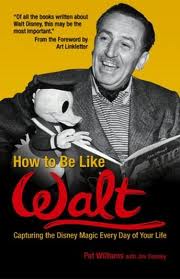
 

How to Be Like Walt, Part 2

Walt Disney had a burning desire for excellence in everything he did. He was always thinking, ‘We can do it better.’ That’s a common trait of all successful people.

Royal Clark, former treasurer of WED Enterprises

Walt Disney’s life provides powerful lessons that can be applied in any leadership position. Author Pat Williams recognized this, and went behind the legend to discover a man every bit as fascinating as the world he created.

How to Be Like Walt is the result of thousands of hours of interviews of the people who knew Walt best. In addition to being a fascinating life story of one of our nation’s most creative minds, the author has distilled Walt’s life into 17 lessons – lessons that we all could learn from. I introduced the topic yesterday; here are a few more:

Plus Every Experience: Sometime during the 1940s, Walt coined the term “plussing.” Normally, the word “plus” is a conjunction, as in “two plus two equals four.” But Walt used the word as a verb – an action word. To “plus” something is to improve it. “Plussing” means giving your guests more than they paid for, more than they expect, more than you have to give them. No matter what “business” you are in, your success depends on your commitment to excellence and attention to detail. If you deliver more than people expect, you will turn people into fans. Pursue excellence in everything you do.

Be a Person of Stick-to-it-ivity: Today we look at Disneyland and say, “Of course! Just what the world needed. How could it miss?” But in 1955, Disneyland was the biggest gamble in the history of American business. The risk paid off – not because Walt was lucky or favored or a genius. It paid off because Walt wouldn’t quit. The success of Disneyland is, first and foremost, the result of sheer dogged determination and persistence in the face of obstacles and opposition. In his own words, “Get a good idea and stay with it. Dog it, and work at it until it’s done, and done right.”

Become Like a Sponge for Ideas: Walt continually fed his mind with information and ideas. He absorbed inspiration wherever he went. If you want to be like Walt – more creative, more imaginative, and more successful – then keep your eyes and ears open. Read. Watch. Travel. Talk to people wherever you go. Ask questions. Invite opinions. Become a sponge for ideas.

Ask Yourself “How About Tomorrow?”: Walt embraced the future and put the stamp of his own personality on tomorrow. If we want to help shape a better tomorrow, then we need to continually ask ourselves the same question Walt asked Ray Bradbury: “How about tomorrow?” The difference between today and tomorrow is something called change. It takes courage to embrace the future, because the future is about change, and change brings uncertainty and anxiety. We fear change; we prefer the comfort of the familiar. But change is inevitable. If we do not become future-focused, we are doomed to obsolescence when tomorrow arrives. There are so many possible futures – which one will you choose?

Here are the rest of the author’s “How to Be Like Walt” lessons:

  • Become an Animated Leader
  • Take a Risk
  • Dealing with Loss
  • Live for the Next Generation
  • Build Complementary Partnerships
  • Stay Focused
  • Accept Your Mortality
  • Make Your Family Your Top Priority
  • Be the Person God Made You to Be

Each of the 17 lessons in the book are richly illustrated with stories by and about Walt Disney. I encourage you to get a copy and prepare to be delighted – and challenged.

Walt’s life challenges us to dream bigger, reach higher, work harder, risk more, and persevere as long as it takes. That is the rich legacy Walt Disney left us. That is the supreme lesson of his endlessly instructive life. The riches of an incredible, adventure-filled life are within our grasp – if we will dare to be like Walt.

Pat Williams

If you liked these two posts, here a few more select Disney-related posts:

The Secret of Disney World

Top Ten Takeaways from Our Disney World Adventure

Understanding Guests Like Disney

A New Way to Play Follow the Leader

Walt Disney’s unique definition of leadership:

The ability to establish and manage a creative climate in which individuals and teams are self-motivated to the successful achievement of long-term goals in an environment of mutual respect and trust.

Today’s post continues excerpts from Innovate the Pixar Way by Bill Capodagli and Lynn Jackson. The authors contend that Pixar has reawakened the innovative spirit of Walt Disney and set new standards for commercial and critical achievement. The book explores how Pixar has built an organization on the simple philosophy that quality is the best business plan. With a track record of 13 for 13 smash feature animation films, it’s hard to argue!

Walt Disney didn’t ascribe to the childhood playbook for “follow the leader” – instead, he created an environment of self-motivated creative thinkers who worked together to deliver a magical, magnetic, enchanting experience for his audience.

Pixar understands leadership the same way.


  • Establishment of a Clear Vision – Pixar has a clear vision and communicates that vision to its team. The best leaders are excellent communicators, engaging their teams by providing them with the tools and information needed for success – and then trusting them to do their jobs.
  • Creative Climate – Creative climates need leadership and a management style that helps them to develop and grow and allows them to have fun in the process. Pixar is in the people development business, going to great lengths to nourish and support its team members. They invest in people, creating a culture of learning, filled with lifelong learners.
  • Individuals and Teams – Pixar thrives on teamwork, but each person on the team is given creative ownership of even the smallest task. This level of autonomy and accountability is practically unheard of in the movie business, where a top-down fear-driven culture is the norm.
  • Self-Motivated Personnel – great leaders know that self-motivated people are essential to developing a creative culture. Pixar is continually on the lookout for new talent that can blossom with their unique culture. The team at Pixar is 100 percent self-motivated to being as creative as they can be and to making movies the best they can. Period.
  • Long-Term Goals – It’s always been about creating for the long-term at Pixar. Their definition of “long-term” speaks volumes about its culture. They go to great lengths to ensure that its culture can support new ventures and still remains true to their values.
  • Mutual Respect and Trust – Pixar team members have embarked on a journey together, nurturing one another in an environment of mutual respect and trust. When leaders exhibit a high level of respect and trust, earned over time, that’s exactly what they will get in return.

There’s no “follow the leader” game at Pixar. Their playbook simply calls for an open playground where leadership serves as a catalyst in the pursuit of big dreams.

If you were to hold up the “magic mirror on the wall” to your leadership style, what would you see?

Think Like a Director

Pixar is obsessed with only one quality measurement for every film:

It begins and ends around the story.

Bill Capodagli and Lynn Jackson, writing in Innovate the Pixar Way, want leaders to think of their team or organization as if they were the director of a Broadway play. It’s time to sit in the director’s chair and visualize the major pieces of the production and direction of the play – the story, setting, roles, and backstage processes.

Begin with the Story

What’s your dream? What story are you trying to tell? It doesn’t matter if you are creating the next Pixar animated feature film, designing a new appliance, opening a new store, or planning a new ministry to reach people – you have to bring your vision, your story, your dream to life in an exciting and exhilarating way. Craft your story in a way that will ignite the creative energies of your team and mage magical, dream-come-true moments for your “customers.”

Instead of “meeting customer expectations,” start fulfilling their dreams. Craft the experience in terms of:

  • 3-dimensional Technicolor images
  • Dreams fulfilled
  • Magical moments
  • Doing the impossible
  • Story, plot, theme
  • Unique, memorable, and engaging
  • Passionate belief in values

Build the Set

If you were a director, you would have a set designer whose job it is to make sure the visual journey of the audience complements the overall story. Like Walt Disney, Pixar chief creative officer John Lasseter is fanatical about details:

Every detail has to be thought out, designed, modeled, shaded, placed, and lit…It takes four years to make one of these films and there are no excuses after the movie’s done – it’s going to be that way forever.

The “virtual set” in your organization is immense and includes everything from the parking lot, buildings, and program to the website, graphic displays, and language used. The setting is part of the creative experience – don’t overlook or shortchange it.

Recruit the Cast

As the director of a play or movie you would search the acting community to identify and cast the perfect actor for each role, selecting someone who will make the role come to life, someone who is dynamic, exciting, exuberant, interesting, and believable. Why is it that in the organizational world we tend to look for the candidates who have the best pedigrees, not for the ones who are interesting or diverse or have ideas that might be considered eccentric?

Colorful, unique, memorable, magical moments will seldom be created by boring, myopic, unimaginable people.

Design the Backstage Processes

Imagine it is opening night of your Broadway play. You have an engaging, heartfelt, emotional story. You have an award-winning set designer and have assembled an ensemble of some of the best actors in the industry. You have rehearsed and rehearsed. Fantastic reviews will be forthcoming – or will they?

What if duplicate tickets were sold, the curtain gets stuck halfway up, and the main stage lighting goes out during Act 3? What could have been a colossal hit might struggle to stay open.

Getting your “backstage” support and “onstage” show to all work and play well together can be just as important to the success of your organization as unleashing the creative energies within each department.

Remove the barriers between “backstage” processes and the “onstage” show, and watch the magic happen.

Is it time to stop cutting and pasting your old and frankly boring service and think like a director?

Tomorrow: A New Way to Play “Follow the Leader”

Where Did the Creativity Go?

Consider the talents of the following two groups who were asked these three questions:

  • How many of you are good singers?
  • How many of you are good dancers?
  • How many of you are good artists?

About 2 percent of the first group responded positively to each of these three questions. That’s a typical response of most business teams. But it’s possible to find a second group in almost any community who would give nearly 100 percent positive responses. Surprised?

Ask any group of first graders these three questions, and the children will respond with an enthusiastic “Yes!” to each one.

All children are creative – they’re born that way!

What happened to the creative gene that was so alive in our childhoods?

Authors and consultants Bill Capodagli and Lynn Jackson have answered that question in their book Innovate the Pixar Way. Subtitled “Business lessons from the world’s most creative corporate playground,” the book details how Pixar provides a working environment that encourages imagination, inventiveness, and joyful collaboration.

The book asks, and then answers, these questions:

  • How do you build an organization that embraces change and delivers an innovative, high-quality service or product?
  • How do you establish a culture of creativity in which the talents and abilities of all are nurtured and honed with great care?
  • How do you unleash the creative genius within your team and still meet budgets and deadlines?
  • How do you establish an environment that awakens dreams?

Going behind the screen at Pixar, Capodagli and Jackson answer these questions and more. Here’s a sample:

Pixar goes to great lengths to hire people who are interested in working together as a network in solving problems, building and supporting each other. Four common proficiencies are vital to making art a team sport.

  • Depth – demonstrating mastery in a subject or a principal skill such as drawing or programming; having the discipline to chase dreams all the way to the finish line
  • Breadth – possessing a vast array of experiences and interests; having the ability to explore insights from many different perspectives; being able to effectively generate new ideas by collaborating with an entire team
  • Communication – focusing on the receiver; receiving feedback to ascertain whether the message sent was truly understood; only the listener can say, “I understand”
  • Collaboration – bringing together the skills, ideas, and personality styles of an entire team to achieve a shared vision; fostering collective creativity and keeping the vibe and energy in the room upbeat and alive

Wouldn’t you want to work on a team in an environment like that?

Maybe the better question is,  Wouldn’t you want to lead your team in an environment like that?

Tomorrow: How to Think Like a Director

Other Posts You Might Be Interested In:

The Creative Process at Pixar

The Secret of Disney World

My Top Ten Takeaways From Disney World

The Disney Job Description

Overboard on the Mouse? Or …?

For the last 10 days, I have gone into a little detail about what I considered the Top Ten Takeaways from a recent family trip to Disney World. Of course, there was also the Top Ten List itself. And the five posts while actually at Disney World. That’s sixteen posts in less than a month! You probably think I’ve gone overboard on Disney! After all, it’s only a Mouse…

No, I don’t think so – it’s much more than that.

My passion is to energize leaders so that they help their organizations thrive by turning challenges into opportunities.

And no one provides a better model for that than Disney.

So I’m going to keep coming back to the “magic” of Disney – because I know I’m learning a lot, and I’ve got a hunch you can too!

Still More Disney Secret Words…

Anticipation

Steve Jobs didn’t believe in market research or focus groups. He instilled the idea that Apple would create products that people hadn’t dreamed of yet. Jobs’ genius was to create experiences that people didn’t even know they needed.

Walt Disney had that idea before Jobs was even born.

Disney took the images, speech, and music from his film and created them in 3D at Disneyland in 1955. Ten years later he first imagined, then began to create, Disney World.

Though Walt Disney died before Disney World opened in 1971, his vision lives on 40 years later.

Even more remarkable, his team of Imagineers continue to anticipate – and deliver – remarkable experiences.

Walking around the Magic Kingdom at 2 AM this morning, there were continued signs of expansion. A cast member said that Disney World is “always being built”.

That’s anticipation.

The Disney Job Description

It began with the opening of Disneyland in 1955, and has only been modified slightly in all the years since then.

All Disney cast members adhere to it, whether they are in a very visible role in a production – or in a just-as-important support role like maintenance.

What is that all-encompassing job description at Disney?

“Create happiness”

Does your organization have job descriptions with a common – even unwritten – role that everyone lives out?

More Disney Secret Words…

Quality.

From the online experience setting up the trip, to the friendly check-in greeting by Tricia, to the cast members all wearing smiles, to …

I could go on all day but Indiana Jones is getting to make his appearance – and my daughter was picked out of the audience to be an “extra” for the filming!

There’s too much to go into now, but EVERYTHING Disney does is done with quality.

What about your organization-do you provide QUALITY in all you do?

Understanding Guests

Disney doesn’t have visitors, or customers – they have Guests.

One word, powerful difference.

It’s always capitalized and treated as a formal noun.

What’s the difference between treating someone like a visitor, and treating someone like a Guest?

The obvious reason is in our mindset: we do things differently when we bring Guests into our homes. We clean up, fix up, and straighten up our house. We clean up and dress up. We prepare something special to eat – something we know our Guests will like. We host them. We take care of their real needs.

According to J. Jeff Kober, former Disney Institute instructor, Guests have five underlying needs:

  1. Be Heard and Understood
  2. Belong and Contribute
  3. Feel Stable and In Control
  4. Feel Significant and Special
  5. Grow and Reach Potential

I’ll break these down in future posts – now it’s time to head out to Disney’s Hollywood Studios and be treated like a Guest!

By the way – how are you going to treat those coming your way for worship this weekend? Like Guests?

Or …?