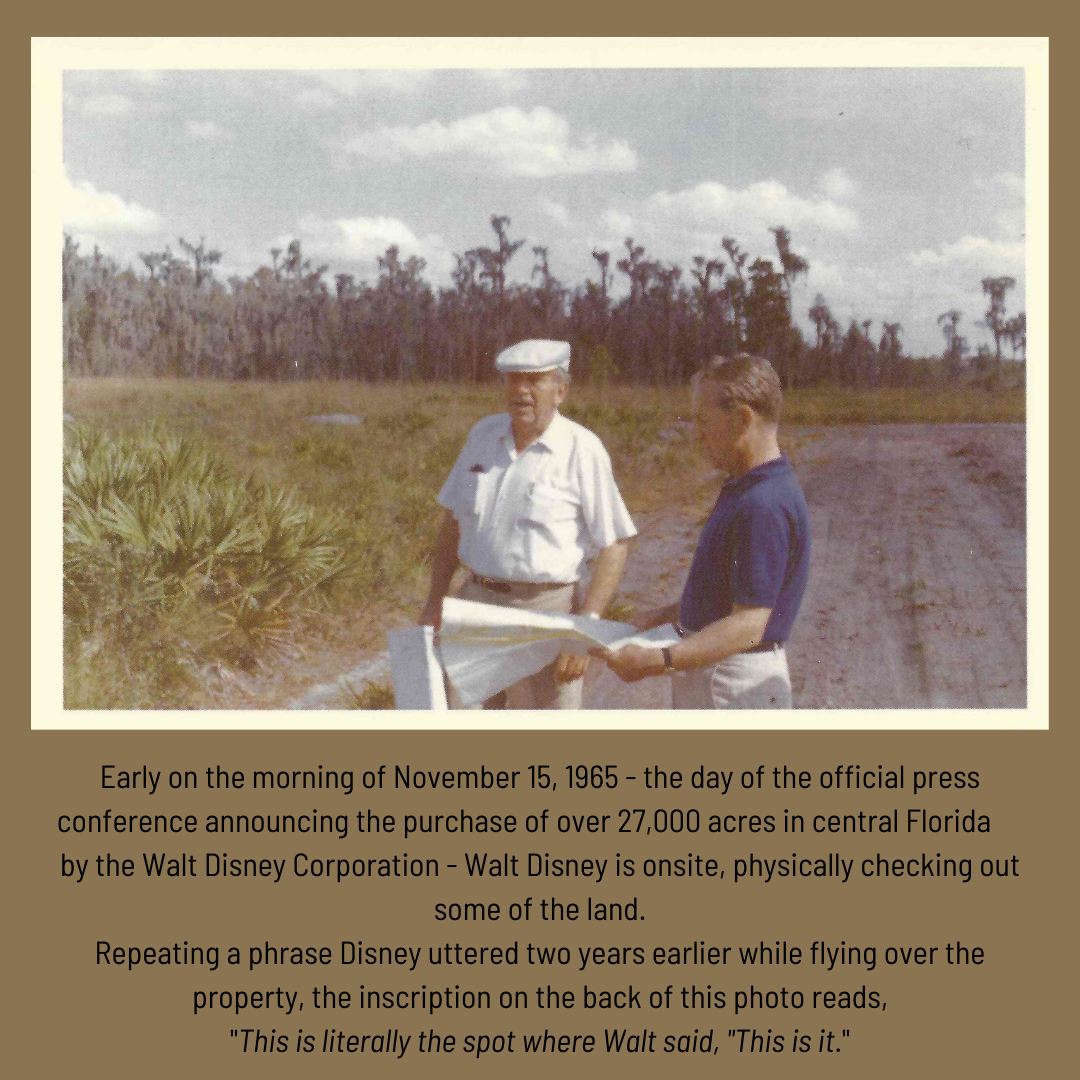
A periodic visit to the 100 Acre Wood. Here’s the backstory.
How to Lead with Gratitude
It’s easy to talk about enhancing performance, improving efficiency and being a more influential leader. So why don’t we do it more?
Maybe it is because leadership books often feel stale. It’s often a same-idea, different-author experience. Leadership is a set of abilities, and it can be learned and improved on a regular basis. But we have to seek that improvement.
Does boredom keep you from scheduling time on a regular basis to grow your leadership skills?
THE QUICK SUMMARY – Leading with Gratitude: Eight Leadership Practices for Extraordinary Business Results by Adrian Gostick and Chester Elton
Workers want and need to know their work is appreciated. New research shows that gratitude boosts employee engagement, reduces turnover, and leads team members to express more gratitude to one another—strengthening team bonds. Studies have also shown that gratitude is beneficial for those expressing it and is one of the most powerful variables in predicting a person’s overall well-being—above money, health, and optimism.
Despite these benefits, few executives effectively utilize this simple tool. In fact, new research reveals “people are less likely to express gratitude at work than anyplace else.” What accounts for the staggering chasm between awareness of gratitude’s benefits and the failure of so many leaders to do it—or do it well? Adrian Gostick and Chester Elton call this the gratitude gap. In Leading with Gratitude, they identify the widespread and pernicious myths about managing others that cause leaders to withhold thanks.
Gostick and Elton also introduce eight simple ways managers can show employees they are valued. They supplement their insights and advice with stories of how many of today’s most successful leaders successfully incorporated gratitude into their leadership styles.
Showing gratitude isn’t just about being nice, it’s about being smart – really smart – and it’s a skill that everyone can easily learn.
A SIMPLE SOLUTION
For leaders wanting to retain great talent and better engage their people, the solution might be right under their noses. Showing gratitude to employees is the easiest, fastest, most inexpensive way to boost performance.
The best leaders positively engage with their teams consistently. But while practicing gratitude is easy, it is one of the most misunderstood and misapplied tools of management. That’s a shame, because it is also one of the single most critical skills for managers to master if they want to enhance their team’s performance and develop their leadership credibility.
The impact of gratitude needs to start within you, radiate outward, and lift up everyone on your team.
Leading with gratitude is not only about giving credit where credit is due, it’s actually knowing where it is due.
Adrian Gostick and Chester Elton
Seeing: Ways leaders can ensure they’ll spot great work being done.
Solicit and Act on Input – This is not new, but few leaders do it. Even more rare is to see leaders follow through on suggestions. Every day workers will face challenges in their work, and each of these problems can spark ideas for improvements.
Assume Positive Intent – Positive intent coaching steps include: 1) Pick up the phone or go see the person if at all possible; 2) gather all the facts before making decisions; 3) take a forward-looking approach; 4) pay close attention to all communication to avoid passive-aggressive language and set a positive tone.
Walk in Their Shoes – One of the great enablers of authentic gratitude is developing empathy for others. The best way to be truly empathetic is to actually walk in their shoes.
Look for Small Wins – Every small step toward an organization’s goals and values is worthy of acknowledgement. This ongoing, cumulative effect of small outcomes can be significant.
Expressing: Ways leaders voice and show their thanks.
Give It Now, Give It Often, Don’t Be Afraid – By checking in with people and helping them see they’ve made appreciable progress each day, leaders can boost energy levels considerably.
Tailor to the Individual – Smart leaders use the knowledge of individual motivators to tailor expressions of gratitude to each team member.
Reinforce Core Values – Expressions of gratitude, when connected to actions that are in line with the company or team core values, offer powerful opportunities to communicate why these grand ideals are so important.
Make It Peer-to-Peer – When employees are grateful to each other, they affirm positive concepts typically valued in their colleagues, such as trustworthiness, dependability, and talent.
Adrian Gostick and Chester Elton, Leading with Gratitude: Eight Leadership Practices for Extraordinary Business Results
A NEXT STEP
Use the following ideas from authors Adrian Gostick and Chester Elton in each of the eight areas as a springboard for increasing how you lead your team with gratitude. Review the list below and select three of the axioms to push toward implementation. For each of the three, answer these questions:
- What difference could implementing this idea make this week? Conceive it!
- What is one action or activity currently missing but required for success? Create it!
- What will be an indication of success in this effort, as measured by the impact on those around me? Celebrate it!
- When will I review the results and select another axiom? Calendar it!
Solicit and Act on Input
- Avoid the over-ask – Asking for ideas out of your team’s purview or asking too many questions at once.
- Ensure specificity fits – Asking the right question of the right people in the right way.
- If ideas aren’t viable, openly discuss why.
Assume Positive Intent
- Creativity requires trust.
- Use any mistakes as a chance to teach rather than an opportunity to punish.
- Be aware of factors beyond your team’s control.
Walk in Their Shoes
- Take time to ask your team about difficulties they may be encountering.
- Coach yourself to regularly ask your team about how they’re approaching their work and if they could share recent accomplishments.
- Radical candor has to come with deep empathy and a desire to help others.
Look for Small Wins
- Notice and express appreciation for small-scale efforts as much as major achievements.
- Identify top performers and let them know the difference they are making.
- Encourage team members to give shout-outs to each other.
Give It Now, Give It Often, Don’t Be Afraid
- Mark important contributions through day-to-day recognition.
- Positive reinforcement triggers reward signals in the brain, reinforcing the action and making it more likely to be repeated.
- Frequent gratitude gives team members perspective that any setbacks aren’t the end of the world.
Tailor to the Individual
- Is the achievement a step toward living your values?
- Is the achievement a one-time, larger step that reinforces your values?
- Is the achievement an ongoing, above-and-beyond demonstration of your values in action?
Reinforce Core Values
- Team members want to know 1) who you profess to be (your brand) and 2) do you live up to what you profess (your culture).
- Help your team understand common values-driven conflicts and provide ways to deal with them.
- Help your team understand and respect the values, even if they may not completely agree with them.
Make It Peer-to-Peer
- In the best teams, employees feel free to speak up, share ideas, and know they can ask others for help.
- Peer recognition can help build bonds outside of immediate teams, break down silos, and help workers in different locations feel connected to one another.
- Online systems to facilitate peer-to-peer gratitude.
Part of a regular series on 27gen, entitled Wednesday Weekly Reader
During my elementary school years one of the things I looked forward to the most was the delivery of “My Weekly Reader,” a weekly educational magazine designed for children and containing news-based, current events.
It became a regular part of my love for reading, and helped develop my curiosity about the world around us.
Along with early and ongoing encouragement from my parents – especially my father – reading was established as a passion in my life that I was happy to continually learn from, share with my children, and watch them share with their children.
How Clarity Helps You Move from Present Realities to Future Focus
In the months leading up to the year 2020, there was no shortage of social media posts, articles, sermons, and more talking about a “2020 Vision.” For many pastors, it was a dream topic to build a sermon series around – and many did.
A sampling of sermon topics in January 2020 would have shown an intentional look forward into a future of a year or two, or maybe even five years or more.
But when March 2020 rolled around, and the realities of the COVID-19 pandemic began to sink in, the lofty visions of 2020 evaporated. Church leaders around the country and the world began to shrink their vision from the lofty goals of just a few months earlier to, “What are we going to do this weekend?”
Fifteen months later, though that immediacy has lessened somewhat, only to be replaced with even more troubling questions like these:
- How long is this pandemic going to last?
- Will we be able to return to normal?
- What if normal never returns?
In just a few weeks, future thoughts became present realties, and many leaders find themselves stuck there today.
Even when treading water in reality, leaders can get mired in a flood of information and answers about what to do next.
The world around us is evolving at dizzying speed. Tomorrow refuses to cooperate with our best-laid plans—the future routinely pulls the rug from underneath us.
Although people yearn for a return to “normal,” or try to predict the “new normal,” there is no such thing as normal. There is only change. Never-ending, constant change. Sometimes slow, sometimes fast, but constant nonetheless.
Answers to vexing problems are no longer a scarce commodity, and knowledge has never been cheaper. By the time we’ve figured out the facts – by the time Google, Alexa, or Siri can spit out the answer – the world has moved on.
Obviously, answers aren’t irrelevant. You must know some answers before you can begin asking the right questions. But the answers simply serve as a launch pad to discovery. They’re the beginning, not the end.
Our ability to make the most out of uncertainty is what creates the most potential value. We should be fueled not by a desire for a quick catharsis but by intrigue. Where certainty ends, progress begins.
Ozan Varol
THE QUICK SUMMARY – Full-Spectrum Thinking by Bob Johansen
The future will get even more perplexing over the next decade, and we are not ready. The dilemma is that we’re restricted by rigid categorical thinking that freezes people and organizations in neatly defined boxes that often are inaccurate or obsolete. Categories lead us toward certainty but away from clarity, and categorical thinking moves us away from understanding the bigger picture. Sticking with this old way of thinking and seeing isn’t just foolish, it’s dangerous.
Full-spectrum thinking is the ability to seek patterns and clarity outside, across, beyond, or maybe even without any boxes or categories while resisting false certainty and simplistic binary choices. It reveals our commonalities that are hidden in plain view.
Bob Johansen lays out the core concepts of full-spectrum thinking and reveals the role that digital media – including gameful engagement, big-data analytics, visualization, blockchain, and machine learning – will play in facilitating and enhancing it. He offers examples of broader spectrums and new applications in a wide range of areas that will become possible first, then mandatory. This visionary book provides powerful ways to make sense of new opportunities and see the world as it really is.
A SIMPLE SOLUTION
According to author Bob Johansen, in a future loaded with dilemmas, disruption will be rampant, and clarity will be scarce. In his book, The New Leadership Literacies, Johansen wrote that the disruptions of the next decade will be beyond what many people can cope with.
Written in 2017, his words are a clarion call for leaders today. Leaders in 2021, in the midst of the ongoing pandemic, will need to provide enough clarity to make disruption tolerable – even motivational. They will also need to communicate realistic hope through their own stories of clarity.
The best way to lead in a disruptive world is to be very clear where you’re going, tell a great story about it, and then be very flexible about how you bring that future to life.
Clarity emerges in the space between insight and action. Clarity is the ability to see through messes and contradictions to a future that others cannot yet see.
When facing a highly uncertain future, you need to use strategic foresight to think like this:
Now – FUTURE – Next
It is completely appropriate to spend most of your time on the Now, the Action. That is where your organization is, and where you should focus. Incremental innovation is great, as long as it keeps getting results. If you invest in Future – not just Next – you will be able to achieve much greater clarity. Clarity emerges in the space between insight and action.
The future is not always incremental, and it is often disruptive. Trends are patterns of change you can anticipate with confidence, but disruptions are breaks in the pattern of change. Looking long can help you get a better view of where things are going.
Bob Johansen, Full-Spectrum Thinking
A NEXT STEP
When your team is stuck and can’t decide on moving forward, try the following exercise to evaluate ideas according to their level of innovation, their desirability, and feasibility.
- Write the idea or decision to be made on a chart tablet, and divide your team into three groups. Here’s the kicker: As leader of the team, try your best to place members of your team into groups that would not be their first choice. Give them 30 minutes to do their group work.
- The first group evaluates innovation – is the idea new? The group should evaluate the idea as:
- Disruptively new (might cause major consequences)
- Totally new (people might become familiar without major consequences)
- Improvement (improves something in a way people haven’t noticed before)
- The second group evaluates the desirability. Do people want this idea? What kind of needs are fulfilled? Evaluate the ideas as:
- Proof of need and desire – there is evidence of need and desire
- Assumed need and desire – there are high chances of need and desire
- Unknown need and desire
- The third group will evaluate the feasibility. How will the idea be developed? Evaluate the idea as:
- Highly feasible
- Moderately feasible
- Not feasible
- At the conclusion of the group discussion period, bring everyone together and have each group report the highlights of their discussion, listing them on the chart tablet in the three areas of innovation, desirability, and feasibility.
- Utilize the newly discovered information to move forward with your idea or action.
The above exercise was adapted from 75 Tools for Creative Thinking, Booreiland
Part of a regular series on 27gen, entitled Wednesday Weekly Reader
During my elementary school years one of the things I looked forward to the most was the delivery of “My Weekly Reader,” a weekly educational magazine designed for children and containing news-based, current events.
It became a regular part of my love for reading, and helped develop my curiosity about the world around us.

Along with early and ongoing encouragement from my parents – especially my father – reading was established as a passion in my life that I was happy to continually learn from, share with my children, and watch them share with their children.
Live Your Life Like a Story
How to be a DAREing Leader
In our fast-paced, get-it-done-now culture, the fact is that almost everyone on your team could use some help in increasing their personal productivity. This pace has only been accelerating because of the COVID-19 pandemic and the resulting changes in our lives.
The very nature of ministry often makes the “I’ve gotten something done today” feeling elusive. For many church leaders, there are no edges to their work – it’s not easy to tell when the work is finished, because it really never is. Most of your team have at least half a dozen things they are trying to achieve right now – today! And a pastoral need could arise at any moment to make that to-do list completely irrelevant.
Is it possible that our productivity could actually be increased by first slowing down?
THE QUICK SUMMARY – What’s Best Next: How the Gospel Transforms the Way You Get Things Done by Matt Perman
Do work that matters.
Productivity isn’t just about getting more things done. It’s about getting the right things done–the things that count, make a difference, and move the world forward. In our current era of massive overload, this is harder than ever before. So how do you get more of the right things done without confusing mere activity for actual productivity?
When we take God’s purposes into account, a revolutionary insight emerges. Surprisingly, we see that the way to be productive is to put others first–to make the welfare of other people our motive and criteria in determining what to do (what’s best next). As both the Scriptures and the best business thinkers show, generosity is the key to unlocking our productivity. It is also the key to finding meaning and fulfillment in our work.
By anchoring your understanding of productivity in God’s purposes and plan, What’s Best Next will give you a practical approach for increasing your effectiveness in everything you do. This expanded edition includes a new chapter on productivity in a fallen world and a new appendix on being more productive with work that requires creative thinking.
A SIMPLE SOLUTION
Jocelyn Glei describes the concept of “reactionary workflow” as follows: “Through our constant connectivity to each other, we have become increasingly reactive to what comes to us rather than being proactive about what matters most to us.”
According to this line of thought, being informed and constantly updated becomes a disadvantage when the deluge of information coming in supplants your space to think and act.
Cal Newport takes this concept further, writing about a “deep reset.” Already in existence, but exacerbated by the COVID-19 pandemic, many people are experiencing a severe dislocation to much of what they’ve come to trust and to expect.
What is the best response to this “severe dislocation”?
The essence of a Gospel Driven Life is this: We are to use all that we have, in all areas of life, for the good of others, to the glory of God – and that this is the most exciting life.
Matt Perman
To be a gospel-driven Christian means to be on the lookout to do good for others to the glory of God, in all areas of life, and to do this with creativity and competence. Further, being gospel-driven also means knowing how to get things done so that we can serve others in a way that really helps, in all areas of life, without making ourselves miserable in the process through overload, overwhelm, and hard-to-keep-up systems.
There are four steps for leading and managing yourself for effectiveness: define, architect, reduce, and execute.
Define
This means not only knowing where you are going, but also knowing your criteria for deciding that altogether. This is not just a matter of clarifying your values, It is a matter of identifying the right values to have, and basing outlives – our entire lives, especially right here at the center – on those values that God and His Word lift up as central.
Architect
Once you identified the most important principles, goals, and ongoing priorities in your life, you can’t just leave it at that. You have to weave these things into the structure of your life through a basic schedule, or time map, because intentions aren’t enough. The essence of the architecture step can be summarized this way: Structure your life by living your life mainly from a flexible routine, to a set of lists.
Reduce
After creating this structure, often you’ll find that making everyone fit is the biggest obstacle. This doesn’t necessarily mean you’ve archived wrong; it just means you need to reduce. But you don’t get rid of the rest by simply letting balls drop. Rather, you do it by creating systems and using tactics that ultimately expand your capacity. The essence of reducing can be summarized this way: Reduce not the basis of what’s most important, not on the basis of living a minimalistic life, and do this by implementing systems that enable you to ultimately expand your capacity overall.
Execute
This is the stage of making things happen in the moment. It is easy to think of execution as synonymous with productivity, but in reality it is actually only the last step. Execution is about living out our priorities every day, on a moment-by-moment basis. Plan your week, manage your workflow, and make your projects and actions happen – along with navigating your day in the moment.
Conveniently, these steps form the acronym DARE. We should be radical and risky and creative and abundant in using our effectiveness to make life better for others.
Matt Perman, What’s Best Next: How the Gospel Transforms the Way You Get Things Done

A NEXT STEP
In the author’s words, will you DARE to let the gospel transform the way you get things done? Here are some of his ideas:
Define
- Develop a mission statement for your life that actually works
- Define your roles and keep track of them
Architect
- Create a good weekly schedule
- Set up the right routines
Reduce
- Learn how to handle interruptions
- Overcome procrastination
Execute
- Plan your week in a few simple steps
- Create simple project plans
Even by just reading the above list, you will be able to improve your productivity. For deeper dives into each of the areas listed, as well as additional helps, be sure to check out these additional author’s resources.
Part of a regular series on 27gen, entitled Wednesday Weekly Reader
During my elementary school years, one of the things I looked forward to the most was the delivery of My Weekly Reader, a weekly educational magazine designed for children and containing news-based, current events.
It became a regular part of my love for reading, and helped develop my curiosity about the world around us.
Along with early and ongoing encouragement from my parents – especially my father – reading was established as a passion in my life that I was happy to continually learn from, share with my children, and watch them share with their children.
Reading keeps our minds alive and growing.
How to Build Your Leadership Dream
It’s easy to talk about enhancing performance, improving efficiency and being a more influential leader. So why don’t we do it more?
Maybe it is because leadership books often feel stale. It’s often a same-idea, different-author experience. Leadership is a set of abilities, and it can be learned and improved on a regular basis. But we have to seek that improvement.
Does boredom keep you from scheduling time on a regular basis to grow your leadership skills?
THE QUICK SUMMARY – The Blueprint: 6 Practical Steps to Lift Your Leadership to New Heights by Douglas Conant with Amy Federman
In 1984, Doug Conant was fired without warning and with barely an explanation. He felt hopeless and stuck but, surprisingly, this defeating turn of events turned out to be the best thing that ever happened to him. Doug began to consider what might be holding him back from realizing his potential, fulfilling his dreams, and making a bigger impact on the world around him
Embarking on a journey of self-reflection and discovery, he forged a path to revolutionize his leadership and transform his career trajectory. Ultimately, Doug was able to condense his remarkable leadership story into six practical steps. It wasn’t until Doug worked through these six steps that he was able to lift his leadership to heights that ultimately brought him career success, joy, and fulfillment.
In The Blueprint, part leadership manifesto, part practical manual, Doug teaches leaders how to work through the same six steps that he used to transform his journey. The six steps are manageable and incremental, designed to fit practically within the pace of busy modern life. Knowing how daunting the prospect of change can be, Doug arms readers with exercises and practices to realistically bring their foundation to life in every situation. Now, today’s leaders who feel stuck and overwhelmed finally have a blueprint for lifting their leadership to make meaningful change in their organizations and in the world.
A SIMPLE SOLUTION
The work of personal leadership is hard, inner work. And it isn’t just for those who want to lead people and teams; it’s for all who want to lead a life of meaning and purpose – a life that earns the trust of others.
Becoming an effective leader who lifts your organization to new heights may seem challenging, but it doesn’t need to be complicated. Strong leadership is rooted in basic principles. No matter the specifics of the organizations you may work for throughout your career, the essential foundations you must build will remain constant.
The tough problems organizations face today can best be solved by wise, principled leaders built on solid foundations.
The blueprint is a tool for bringing to life the dreams of leaders. You’re not manufacturing a building; you will be manifesting your leadership dreams.
Douglas Conant
To build your foundation, and get where you want to go, there are six steps.
Step 1 – Envision: Reach High
First, you have to set the intention to do better and Envision what success looks like to you – to reach high. It is in this sep that you will take your fist crack at articulating your Leadership Purpose.
Step 2 – Reflect: Dig Deep
Next, you will Reflect on our experiences to uncover your leadership beliefs, to dig deep into what makes you, you; in this step, you will uncover the life lessons that anchor your leadership, and develop a deeper understanding of your unique personality, motivations, temperament, and skill set.
Step 3 – Study: Lay the Groundwork
In the third step, you will Study, to fill in all the cracks from your dig, laying the groundwork with all the learnings and insights from the world that exists beyond your own personal experiences.
Step 4 – Plan: Design
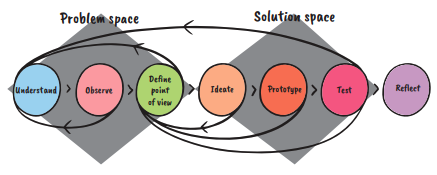
Using design thinking techniques, you get to conceive your Plan – an exquisite design for the exact Leadership Model you envision, derived from your Leadership Purpose and your Leadership Beliefs.
Step 5 – Practice: Build
In this step you will build Practice into your change process. You’ll brainstorm small steps you can take – little, actionable practices – that you can begin to fold into your habits.
Step 6 – Improve: Reinforce
Finally, you Improve, continually learning from what you did right, and what you could have done better, reinforcing the strength of your Foundation in perpetuity.
Douglas Conant with Amy Federman, The Blueprint: 6 Practical Steps to Lift Your Leadership to New Heights

A NEXT STEP
Use the following ideas, suggestions, and exercises by author Douglas Conant to help begin the process of building a solid foundation for your leadership dream.
Envision
- Given your unique purpose and motivations, what do you want your future to look like? If there were not limitations, what would you want to do? What is possible?
Reflect
- Develop a leadership vocabulary which will ultimately help you communicate your vision to others and bring your dreams to life in your leadership model. It will also help you articulate the traits you admire in others.
Study
- Develop a list of five to ten of the top practices you’ve observed in the best leaders you’ve known or studied. These “best practices” will help connect the reflection you have done so far to upcoming actions.
Plan
- Create a visual model to anchor your thinking and express the unique approach of your leadership model. This will provide a way to grasp something seemingly complex in a simple and easy-to-understand way.
Practice
- Extracting specific actions from your recollections, write down one distinct and actionable practice for each area of your evolving leadership model.
Improve
- Taking a look at the work you have done so far, think about three things you care deeply about and that you will be able to pursue with a joy that comes from doing the things you are good at. Thinking back to the first step, Envision, what did your boldest dreams of success look like. What do you have to improve to get there?
Part of a regular series on 27gen, entitled Wednesday Weekly Reader
During my elementary school years one of the things I looked forward to the most was the delivery of “My Weekly Reader,” a weekly educational magazine designed for children and containing news-based, current events.
It became a regular part of my love for reading, and helped develop my curiosity about the world around us.
Along with early and ongoing encouragement from my parents – especially my father – reading was established as a passion in my life that I was happy to continually learn from, share with my children, and watch them share with their children.
What Would It Be Like to Have a Personal Chef?
In recognition of National Personal Chef’s Day today, here’s a trip down memory lane from the end of summer 2014. Neither of my two sons who are chefs are personal chefs, but the recollections made me smile.
My 19 year-old son finished his first year at Johnson and Wales University on May 24 this year. On May 25, he reported to Cornerstone Christian Conference Center as their summer Sous Chef. He proceeded to work 14 hours a day for five or six days at a time. He returned home a week or so ago, begins his sophomore year on September 10. After a year of dorm life, he decided that he would live at home for the current year. There are few downsides, and a great many benefits!

It’s been interesting to note the changes in our house just during this brief interim period and first few weeks of his sophomore year:
- We are eating more, and better, meals at home
- The number of dirty pots and pans has increased exponentially for said meals
- Consequently, we find ourselves running the dishwasher every day at least once, in addition to hand-washing several items
- Therefore, our water bill is undergoing steep inflation
- We don’t have a good kitchen to work in (according to the chef-in-training)
- A remedy to that starts with a little reorganization, including mounting a rack to the wall
- Fresh is always best
- It’s amazing what wine does to enrich ordinary sauces and dishes
- The proper knife and technique make preparing fresh foods fun
- If he had a proper mixer, we could be having fresh breads, pizza, and other pastry items on a regular basis
- His explanation of culinary terms is straining my two years of French (that, and the last French I regularly spoke/heard/wrote was over 36 years ago)
- When we eat out, we now have an instant food and service critic with us
- He’s pretty good at what he does, and he’s eager to learn more
His oldest brother (twelve years his senior) has been involved in food service since he was a sophomore in high school in 1997. From dishwasher to general manager at a national chain and everything in between, food and the preparation of it remain a part of his life.
Taking a look at the above, and thinking of about a dozen more stories, and combining it with my long-time love of culinary reading and research, the idea for a new periodic series on 27gen is swirling in my mind: Chef Stories. I hope you will enjoy these little interludes in my normal postings, but be careful – you might just learn something here as well!
Are You a “Rested” Leader?
In our fast-paced, get-it-done-now culture, the fact is that almost everyone on your team could use some help in increasing their personal productivity. This pace has only been accelerating because of the COVID-19 pandemic and the resulting changes in our lives.
The very nature of ministry often makes the “I’ve gotten something done today” feeling elusive. For many church leaders, there are no edges to their work – it’s not easy to tell when the work is finished, because it really never is. Most of your team have at least half a dozen things they are trying to achieve right now – today! And a pastoral need could arise at any moment to make that to-do list completely irrelevant.
Is it possible that our productivity could actually be increased by first slowing down?
THE QUICK SUMMARY – Every Day Matters: A Biblical Approach to Productivity by Brandon D. Crow
True productivity is less about getting things done; it is more concerned with stewarding priorities, time, and resources wisely and faithfully in a way that honors God. In Every Day Matters Brandon Crowe provides an accessible and biblical understanding of productivity filled with practical guidance and examples.
Crowe draws insights from wisdom literature and the life and teaching of the Apostle Paul to reclaim a biblical perspective on productivity. He shows the implications for matters such as setting priorities and goals, achieving rhythms of work and rest, caring for family, maintaining spiritual disciplines, sustaining energy, and engaging wisely with social media and entertainment.
A SIMPLE SOLUTION
In the book of Genesis, we find the description of a seven-day week. On the first six of these days, God works. He begins by creating the universe, and as the week progresses, culminates His work of creation with man and woman.
As God’s week progressed, things got more complicated. After each of the first five days, God said, “Good.” After the pinnacle of his creation – Adam and Eve – God said, “Very good.”
But on the seventh day, God created the Sabbath, and whispered, “Holy.”
Up until this point, everything had been created out of nothing, but on the morning of the seventh day, God makes nothing out of something. Rest is brought into being.
The word Sabbath means “cease from working.” Resting one day a week by any name is holy – the point is to stop on that day and look for God.
Could it be that if we want to be our best, to be productive, we must do so from a day of rest?
To maintain an effective, productive lifestyle, you need rhythms of rest built into your schedule. Instead of working longer hours each day, you should aim to maximize your time devoted to working so that you have time to recover before the next day.
Brandon D. Crowe
Rest
One of the great productivity myths is that you can accomplish more by working longer hours and cutting back on sleep. But sleep cannot be cheated. You need various kinds of rest:
- You need to get enough sleep each night.
- You need breaks while you are working.
- You need a weekly day of rest.
- It’s wise to take time for an extended period of rest on a yearly basis – a vacation.
Refresh
In addition to sleep, you need recreation of down time in order to be refreshed. Not all rest, in other words, has to be sleeping. Sometimes resting from work means being alive in other ways. You need things to do when you’re not working that bring enjoyment, which ends up funneling into increased productivity when you are working. These are ways to decompress and unwind.
Despite your best intentions, you will not succeed in staying focused each day. You will fail. You will get distracted. Every day matters, but you will not be at your best every day. Do not be discouraged; each day is a new day, and each day is a new opportunity to move forward.
Repent
You should repent daily from your sins. This is not simply a matter of productivity, but a matter of pleasing God. You should constantly be examining your life to consider where you have sinned, and where you have sinned, you should repent and ask God to forgive you. A consistent review process will give you an opportunity to recognize and address negative habits.
Resolve
You also need to consistently renew your commitment to the most important things. Resolve to grow each day. As you identify areas that need improvement, recommit yourself anew each day to your vision and priorities. Each day is a new day for you to live by your priorities and do those things you know need to be done.
Brandon D. Crow, Every Day Matters: A Biblical Approach to Productivity
A NEXT STEP
Author Brand Crowe developed the following action steps in the areas of Rest, Refresh, Repent, and Resolve. Set aside some time before the end of this week to review these, and resolve to begin implementing them next week.
- Track your sleep to determine how much sleep you need to function well.
- Determine what time you need to get up in the mornings for your personal routine, and resolve to go to bed sufficiently early to allow for your needed levels of sleep.
- Put away work related issues after your eventing shut-down rituals.
- Write down two to three activities you would like to do to provide refreshment. Begin to pursue these as you have opportunity.
- Resolve to take Sunday off from work to focus on worship and others.
Part of a regular series on 27gen, entitled Wednesday Weekly Reader
During my elementary school years one of the things I looked forward to the most was the delivery of “My Weekly Reader,” a weekly educational magazine designed for children and containing news-based, current events.
It became a regular part of my love for reading, and helped develop my curiosity about the world around us.
Along with early and ongoing encouragement from my parents – especially my father – reading was established as a passion in my life that I was happy to continually learn from, share with my children, and watch them share with their children.
Reading keeps our minds alive and growing.
Life is a Journey
Do You Understand the Nature of YOUR Crisis?
There are few certainties in ministry today. Unfortunately, one of them is the inevitability of a potential crisis occurring in our country, your community or even your church that could have a major effect on your congregation and even your reputation.
A crisis is an event, precipitated by a specific incident, natural or man-made, that attracts critical media attention and lasts for a definite period of time. Certainly, the COVID-19 pandemic qualifies.
But life is full of other types of disruptions, some seemingly minor in nature and others truly of a global scale. In between those two bookends are countless events that require leaders to be at the forefront in communicating to their organizations, the community, and the greater public.
When your church finds itself in the midst of a crisis, the ripple effects can disrupt lives and operations for the foreseeable future if public opinion is not properly addressed and stewarded.
Skillfully managing the perception of the crisis can determine the difference between an organization’s life or death. In the pitched battle between perception and reality, perception always wins.
There is a solution – you can prepare for the inevitable crisis by proactive actions that will help in preempting potential crises or help make them shorter in duration. Finding yourself in a crisis situation is bad; not being prepared when a crisis occurs is devastatingly worse.
THE QUICK SUMMARY – Crisis Communications: The Definitive Guide to Managing the Message by Steven Fink
Skillfully managing the perception of the crisis determines the difference between a company’s life or death. Because in the pitched battle between perception and reality, perception always wins.
The inevitability of a crisis having a potentially major effect on your business and your reputation – at some point – is almost a guarantee. When your company finds itself in the midst of a crisis, the ripple effects can disrupt lives and business for the foreseeable future if public opinion is not properly shaped and managed.
Fortunately, there is a solution. Crisis communications and crisis management legend Steven Fink gives you everything you need to prepare for the inevitable—whether it’s in the form of human error, industrial accidents, criminal behavior, or natural disasters.
In this groundbreaking guide, Fink provides a complete toolkit for ensuring smooth communications and lasting business success through any crisis. Crisis Communications offers proactive and preventive methods for preempting potential crises. The book reveals proven strategies for recognizing and averting damaging crisis communications issues before it’s too late. The book also offers ways to deal with mainstream and social media, use them to your advantage, and neutralize and turn around a hostile media environment.
A SIMPLE SOLUTION
According to author Steven Fink, a good working definition of a crisis is any situation, that if left unattended, has the potential to:
- Escalate the intensity
- Damage the reputation or positive public opinion of the organization or its leadership
- Interfere with the normal operations
- Fall under close government or media scrutiny
- Impact the organization’s financial well-being
Using the five-step list above as a pragmatic guide, the responsible leader will realize that what may not qualify as a minor crisis in one situation may actually threaten the existence of the organization in another.
So the question becomes, do you know what YOUR crisis is?
Before you can even begin to think about communicating during a crisis, there are three absolute imperatives that must be undertaken in any crisis situation.
Steven Fink
Identify your crisis
Isolate your crisis
Manage your crisis
IDENTIFY
How hard can it be to identify a crisis when it’s happening to your organization? Actually, it’s harder than you might think. Focus on identifying your crisis – the one with which you have to deal, the one over which you have some measure of control. Try to avoid distracting scenarios, of which there will be many.
In a crisis, especially a crisis with competing interests, the only person who is looking out for your organization’s reputation is you.
ISOLATE
Isolation might very well mean designating a crisis management team to deal exclusively with the crisis, with its members temporarily delegating their normal duties and responsibilities to others for the duration of the crisis. Ideally, this team would be isolated from the rest of the company, and hopefully, keep quiet about its progress until the appropriate time.
MANAGE
If you have properly identified and then successfully isolated the crisis, the actual management of the crisis is the easiest part (assuming you are a good manager to begin with). That’s because you will now be laser-focused on the specific task at hand, and once you’ve cleared away the distracting brush, your mission becomes crystal clear. When that occurs, making vigilant decisions – the epitome of good crisis management – is well within your grasp.
Steven Fink, Crisis Communications: The Definitive Guide to Managing the Message
A NEXT STEP
While the COVID-19 crisis is certainly on everyone’s mind, it is truly a once-in-a-lifetime event, and “understanding” it in terms of the discussion above is beyond the scope of this exercise.
However, your organization likely has faced a crisis within the last year – a physical event, a natural disaster, or a personnel issue. No matter what the crisis, it was a disruption to your normal activities.
Using a past crisis, have your team walk through the three steps listed above. You are actually doing a post-mortem or after-action report: using a past event, evaluated through a new lens (the three steps above) to help prepare you for the next time you have a crisis.
Taking note of any actions you should have done, but didn’t, develop an action plan to make sure you do it the next time.
Part of a regular series on 27gen, entitled Wednesday Weekly Reader
During my elementary school years one of the things I looked forward to the most was the delivery of “My Weekly Reader,” a weekly educational magazine designed for children and containing news-based, current events.
It became a regular part of my love for reading, and helped develop my curiosity about the world around us.
Along with early and ongoing encouragement from my parents – especially my father – reading was established as a passion in my life that I was happy to continually learn from, share with my children, and watch them share with their children.
Reading keeps our minds alive and growing.