The LEGO Principle

Pastor Joey Bonifacio, author of The LEGO Principle, has written a brilliantly simple book about discipleship – built on the metaphor of the LEGO brick.

LEGO brick orange copy

The LEGO Principle: Connect first to God and then to one another.

You’ve gotta love it!

Regardless of the shape, size, or color of a LEGO brick, each one is designed to do just one thing: connect. LEGO pieces are designed to connect at the top with studs and the bottom with tubes.

Like LEGO, if you can connect to the top with God and to the bottom with others, you can pretty much shape the world you live in.

Here are a few examples pulled from the LEGO world, with Bonifacio’s application to the life of the believer:

Not all LEGO pieces have the same ability to connect. Some have the capacity to connect with as many as twelve or more bricks while others are limited. There are pieces that can connect to only one other brick. The secret of LEGO is not that every brick connects with the same number of other pieces but that each piece has the capacity to connect.

This secret applies to believers as well: every believer has the ability to connect directly to God.

Each LEGO brick comes with studs that give it the ability to connect. Every stud has the LEGO trademark engraved on it, a symbol of trust. In the past others have tried to copy LEGO bricks but have been unsuccessful. Their studs did not connect as well.

Like trusted LEGO bricks, we connect best when we are the real thing.

Two eight-stud LEGO bricks can be combined in twenty-four ways. Three eight-stud bricks can be combined in 1,060 ways. Six eight-stud bricks can be combined in 102,981,500 ways. With eight bricks the possibilities are virtually endless.

Just like LEGO bricks, using love to connect with people has endless possibilities.

By 1968, nineteen years after the first LEGO brick was made, the LEGO company built its first LEGOLAND – an entire city of LEGO structures in its hometown of Billund, Denmark. Something was missing: people.

In 1974 LEGO began making people, starting with the LEGO family. These mini figures soon became the biggest-selling product, enjoyed by both boys and girls. Several billion of these figures have been built to date. LEGO realized that people love people. What good is a world without people?

To the degree that we value and love people will we  engage our community and culture.

LEGO bricks are built to connect multigenerationally. That means bricks made in the 1950s connect just as well with those made in 2013. Connecting bricks made decades apart is not a problem.

In the same way, when people make disciples through relationships, generational, traditional, and denominational differenced fall by the wayside.

And like LEGO bricks, when the connections happen, the possibilities are endless.
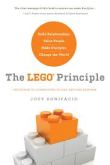
The Lego Principle

The LEGO Principle

Start with a Question, Then Challenge Your Assumptions

Start with a question to discover if there is an opportunity for creativity.

Questions start the creative process by asking how, why, and in what other way can something be done. The answers you get will explore options that kick off creativity.

The most unrealistic options inspire tangent ideas that take you to new places you would never have considered.

Once you have the basic questions to ask, it’s time to add questions that are specific to your challenge. Review your list of questions with others and ask them to help develop additional questions.

Now for a critical step in the creative process:

Challenge your assumptions.

As you continue to develop your ideas, you need to constantly question and challenge your assumptions.

As you answer the questions and narrow down your assumptions, it’s most likely that you are ready to solve the problem.


part of a series of ideas to shape and tone your creative muscles

Inspired and adapted from The Imagineering Workout

The Disney Imagineers

Imagineering logo

What’s In Your Leadership Garden?

The planting season is in full bloom across the Carolinas.

What do you think about carrots for your garden?

In this case, it’s not the orange root vegetable long-rumored to help your eyesight. And it’s not a plot of freshly turned dirt in your backyard.

The “carrot” in this case is from the carrot and stick idiom, the origins of which involve dangling a carrot from a stick in front of a work animal to keep him moving forward.

Actually, a much nicer picture is that advanced by recognition consultants Adrian Gostick and Chester Elton in their best-selling series of Carrot books.

Carrot Principle Accelerator

How about this:

  • Seed – Set clear goals

  • Plant – Communicate openly

  • Nurture – Build trust

  • Weed – Hold everyone accountable

  • Harvest – Recognition that leads to acceleration of team performance and engagement

I don’t have a green thumb, but I do believe Gostick and Elton have hit “pay dirt” with this concept…

An ongoing series exploring the power of teamwork

Inspired by:

Midnight Lunch, written by Sarah Miller Caldicott

The Orange Revolution, written by Adrian Gostick & Chester Elton

Creating We, written by Judith Glaser

Thomas Edison Didn’t Invent the Light Bulb

If you asked who invented incandescent electric light, and you answered Thomas Edison, you’d be right – and you’d be wrong.

The revolution that Edison wrought was the product of a team.

When we call Thomas Edison to mind, our first thought is of a brilliant inventor and innovator whose creations transformed modern life. We often think of him toiling away in a laboratory all by himself, long into the wee hours of the morning.

Tempting as it is to sustain this image of Edison, it is inaccurate.

We love the idea of a lone genius, the mastermind, the hero. From an early age, we’re indoctrinated with the single-achiever idea in school. Our textbooks boil things down to their simplest form, and for a fifth-grader, it’s easy to say that Edison created the light bulb.

The reality is very different. Here’s what geniuses do:

They build great teams.

Thomas Edison, one of the most brilliant minds in the world, accepted that he alone did not possess all the answers, but together, his team usually did.

Never intimidated by other great minds, Edison actively sought out men with a broad base of knowledge, a passion for learning, impeccable character, and a commitment to excellence.

Thomas Edison viewed collaboration as the beating heart of his laboratories, a sustaining resource that fueled the knowledge assets of his sprawling innovation empire.

Maybe it’s time our organizations rediscovered the truths of teamwork and collaboration that Edison used so powerfully.

An ongoing series exploring the power of teamwork

Inspired by:

Midnight Lunch, written by Sarah Miller Caldicott

The Orange Revolution, written by Adrian Gostick & Chester Elton

Creating We, written by Judith Glaser

What Retailers Don’t Know – But Churches Can Learn

For the final post on my return review of Paco Underhill’s classic book Why We Buy, it’s time to dive into the brains of retailers and take a look at what they don’t know – and what churches can learn from them.

  • How many of the people who walk into stores buy something? The quick, and wrong, answer is almost 100%. The conversion, or closure rate – the percentage of shoppers who become buyers – is almost always thought to be much higher than it actually is. Conversion rates measure what you make of what you have – it shows how well (or how poorly) the entire enterprise is functioning where it counts the most: in the store. It’s all about what happens within the four walls of the store.

ChurchWorld Lesson: How effective are you with what you’ve got in terms of ministry? Marketing, advertising, promotion and a great location can help bring guests to your church – but it’s the job of your leadership team, the ministries you’re attempting, and the entire church body to make sure the Guests not only leave fulfilled, but return. Maybe as second timers, maybe eventually as participants and then members. The lesson: How are your assimilation systems working? Sure, you’ve got a great front door, and maybe even a few effective side doors – but how big is your back door?

  • How long does a shopper spend in the store? Assuming that he or she is shopping and not standing in line, this may be perhaps the single most important factor in determining how much she or he will buy. Studies have shown a direct relationship between the amount of time in a store and the resulting sales volume; usually a buyer spends almost 50% more time than a non-buyer.

ChurchWorld Lesson: There are certainly differences of opinion in the church world as to how long you want Guests and members to linger before or after worship services. Churches with multiple services often need to have a smooth transition from one service to another. This is an area where design or renovation can play a critical role: make adequate space for a foyer, café, other gathering place so that those who choose to do so can fellowship with others. Another opportunity for evaluation in this area might be the pace of services – does the timing/scheduling need to be altered?

  • What is the store’s interception rate? Interception rate is the percentage of customers who have some contact with an employee. This is an especially important measurement in a time when stores use fewer full-time employees and more minimum-wage employees. Research has established a direct relationship: the more shopper-employee contacts that take place, the greater the average sale. Talking with an employee has a way of drawing a customer in closer.’

ChurchWorld Lesson: This is a critical factor in making Guests feel welcome to your church. Well-trained and observant Guest Experience teams should make all people feel welcome to your church by extending a verbal welcome and offering a handshake or other appropriate physical touch. Guests especially need to have a verbal interaction with someone beyond a cursory “Good Morning”. The key is to engage the Guest as you are attending to their needs.

  • How long does the store make customer’s wait? Studies have shown this is the single most important factor in customer satisfaction. Few retailers realize that when shoppers are made to wait in line (or anywhere else) their impression of overall service plunges.

ChurchWorld Lesson: While church participants aren’t likely to leave like a shopper might in a long checkout line, it can happen. Most often you will find this expressed in the parking lot – in church consultations observing traffic patterns I have seen cars pull in, find no parking spots, and pull right back out onto the street. Examine all your areas where waiting might occur – can you reduce, or eliminate, wait time?

  • Who are the shoppers in the store? Take the retail store who stocks pet treats on upper shelves, unaware that the main buyers of this product were senior adults and young children. Or the family style restaurant who had too many tables for two and not enough for four or more, which caused headaches during busy times. Or the Florida-based drugstore chain’s Minneapolis branch, where a full assortment of suntan lotions was on prominent display – in October.

ChurchWorld Lesson: This is probably one of the most important areas church leaders can discover – and one that many church leaders get wrong over half of the time. Who is in your target area of ministry? Who is coming to your church? Who is not coming to your church? Grouped under the broad area of demographics, this type of information is invaluable to help you understand who your neighbors are and how they may be changing. Once you understand the who, it is much easier to begin to answer the how, where, and why questions of ministry.

As I close this brief foray into the science of shopping, I need to remind you of a couple of things: First, there is a whole lot more about this area that I think could be very beneficial to churches who want to make sure they are doing all they can to attract and retain Guests who come to their churches. My focus has been on the front end of that – hospitality – and there is a lot more. Interested? Contact me for a conversation.

Also, there are probably many who would say all this focus on the church guest and member in a consumer mindset is wrong. Certainly, everyone is entitled to their opinion. Mine is that we live in a very consumer-driven, consumer-oriented society. The competition for churches seeking to reach new people is not other churches – it’s any place and any experience that these people will compare your church to.

Shouldn’t we be doing the very best we can to reach them?

Read Part 1 of this series here.

Read Part 2 of this series here.

Parallels in the Retail and Church Worlds

Today is the second look at what the church can learn from the retail world. Below you will find a synopsis of the classic work done by Paco Underhill, noted leader in the field of retail observation and analysis. After each section is a bullet-point application to your church.

 If we went into stores only when we needed to buy something, and if once there we bought only what we needed, the economy would collapse, boom.

This quote, by Why We Buy author Paco Underhill, was eerily prescient when written in 1999. In his revision of the book in 2009 as the world was in the midst of an economic crisis, it was still spot on. Today, we continue to experience the turmoil of a shifting economy when people are rightly making wise decisions when purchasing. Even so, you almost have to make an effort to avoid shopping today. Stay at home to avoid all the stores? Internet shopping is available 24/7, delivered right to your door. No computer, no problem – home shopping networks will gladly sell you the latest gizmo for 3 monthly payments of only $39.99. But wait – there’s more! Don’t check your mailbox if you’re going to avoid all those catalogs, sales flyers, and direct mail offers. The result – we are now dangerously over-retailed – too much is for sale, through too many outlets. Retailers are not opening stores in the US to serve new markets anymore. They are opening stores to try to steal someone else’s customers.

  • Your church’s competitors isn’t other churches – today churches are competing with any other company, service, or event in which the customer has a positive experience. Remember that people are first consumers, and the environments they live, work and play in are the ones that will first attract, and then keep them to your campus. Guests to your services are making dozens of decisions about your church before they hear the first music of your worship team, or the great sermon you’ve prepared. Those decisions will play a major role in whether or not they will return.

Just a few decades ago, the commercial messages intended for consumers came in highly concentrated, reliable form: there were three TV networks, AM radio only, a few national magazines, and each town’s daily newspapers. Retailers advertised in those media, and the message got through loud, clear, and dependably. Today there are hundreds of TV channels; FM, satellite, and Internet radio; hundreds of magazines devoted to each special interest; and exponentially expanding Internet sites for information and entertainment. Mobile devices and the hundreds of thousands of apps available for them are the next wave of technology. Simultaneously, we are witnessing the erosion of the influence of brand names. A generation or two ago, you chose your brands early in life and stuck by them loyally until your last shopping trip. Today, in some ways, every buying decision is a new one, and nothing can be taken for granted.

  • Churches, too, are heavily impacted by the fact that traditional branding and marketing are no longer effective tools for connecting with potential members. While they may build brand awareness and help provide information, those factors seem to have a lessening impact in the final decision. Just as shoppers are becoming more susceptible to impressions and information they acquire in stores, Guests to your church are being impacted by your physical campus. An important medium for transmitting messages and helping people make decisions is now your building appearance and “people flow” within in. Consider your facilities a great big three-dimensional marketing tool for the ministries of your church.

Underhill’s studies also proved that the longer a shopper remains in the store, the more he or she will buy. And the amount of time a shopper spends in a store depends on how comfortable and enjoyable the experience is.

  • Imagine a guest coming to your facility for the first time: what if they couldn’t find a convenient place to park near the main entrance; had trouble locating where to drop their kids off; got turned around and lost on the way back to the worship center because of the lack of signage; were dismayed by the dinginess of your children’s space; … you get the picture. Now imagine the same Guest driving in a well-marked parking lot with greeters directing them to a guest parking spot right by the main entrance; another greeter welcoming at the door, and helping the Guest find bright, cheerful, warm spaces that their child eagerly rushes into, staffed by caring leaders; color-coordinated signs direct your guests to and from the worship center with no confusion; and so on. Which Guest is going to return?

So, the “science” of shopping can teach the church a lot about how our building appearances and our welcoming processes can improve our ability to attract, and retain, guests (and members).

How does this “science” lesson translate to your church?

Read Part 1 of this series here.

Go to Part 3 here.

Shopping and the Church

This post by my boss Will Mancini on how churches can leverage trends in retail brought to mind some research I had done a couple of years ago about the connection between retail stores and the church.

What? You don’t think there are some similarities between the two? Read on, and then let me know what you think…

Paco Underhill, the founder and CEO of Envirosell, Inc. wrote the book on the science of shopping – literally. Why We Buy, originally written in 1999 and updated in 2009, is a witty and pragmatic report from the retail trenches on consumers’ tastes and habits — what makes them tick, what happens to people in stores, how to influence or change customers, and how and why customers change stores. Envirosell is a research and consulting firm that advises a blue-chip collection of Fortune 100 companies seeking to understand the behavior and motivation of the contemporary consumer. Envirosell films, records, and follows 50,000 to 70,000 shoppers through their retail experiences in stores, banks, and public spaces. Underhill uses video, trained “trackers” (researchers who discreetly cruise the aisles tracking shoppers and making notes on their activities), and photo analysis to help retailers understand why consumers buy – or don’t. Here’s a quick story that shows how Underhill and the Envirosell team’s research documented, then changed, the way many stores market a common item today.

A large company owned a chain of drugstores throughout the country. In efforts to understand buying patterns, they had Underhill study a typical store near their headquarters. It was located in an enclosed regional mall in the Northeast. The store’s sales were good overall, but in one category – analgesics – it was underperforming. Video study showed that the closure rate – the percentage of shoppers who bought – was below expectations. Plenty of customers picked up the packages, read the labels, but didn’t complete the purchase. The company’s previous studies had shown that the conversion rate was high, so there was another factor at work.

store aisle

Over the course of three days, a pattern emerged. The aspirin was displayed on a main aisle, on the path to some refrigerated cases of soft drinks, which tended to draw many customers to that section of the store. The main customers for the cold drinks were teenagers, many of them mall employees on a quick break. They would rush down the aisle, grab a drink, and hurry back to the front to checkout. Along the way, they would have to brush by customers – often median and senior adults in the aspirin aisle. The video studies showed that many times the aspirin shoppers would simply stop their browsing and walk away empty-handed.

The primary learning was that a store has more than one constituency, and it must therefore perform several functions, all from the same premises. Sometimes those functions coexist in perfect harmony, but other times they clash.

Hello? Does this sound like your church? Do you not have various constituencies “competing” for the same space and resources? Does it often seem like a tug-of-war with no winners?

The solution for the drugstore chain? They moved the aspirin to a quieter section of the store, where sales rose 15% immediately. They also located a selection of cold drinks and snacks close to the front of the store – a move that has now become industry standard.

That’s what the science of shopping can teach the church. People have habits on how they move in spaces, interact with others, and make decisions.

Why not study the retail world and apply those principles to the design and operations of our churches?

What are some retail lessons you have observed and have implemented at your church?

Read Part 2 in this series here.

Talent is All About the Possible

Everyone is talented – it’s natural to us.

Watching my 2 ½ year old granddaughter over the course of the last week has reminded me of that. I’ll see another expression of it this weekend at my grandson’s 5th birthday party – all about dragons! And even in the curious eyes of his 4 month old sister – her expressions are just waiting to blossom.

As the parent of 4 children, I think I knew that at one time – but the youngest is now 20, and those kinds of memories tend to fade…

It took the exuberance of my granddaughter and a special focus on children at my church last Sunday to remind me of the truth in the title above.

The reality is that everyone is talented. It’s very evident in watching and listening as a young child learns to talk.  Language is a creative tool from the first words we speak to mastering the art of storytelling.

Then there’s the fridge art, the bathtub crayons, and the sidewalk chalk masterpieces – all reminding us of the evidence of emerging ability.

Talent isn’t just the ability to paint a portrait, compose a symphony, or sculpt a statue – it’ about the possible.

A creative mind is always working.

Where and how it gets expressed is your choice.

A new world is waiting for your creative mind and talent, so make a choice: Focus on the abilities that come naturally to you and make things possible.

No excuses!

part of a series of ideas to shape and tone your creative muscles

Inspired and adapted from The Imagineering Workout

The Disney Imagineers

Imagineering logo

The Other Side of the Coin: What Drives Front Line Team Member Engagement

Yesterday’s post approached the topic of front line engagement from the perspective of the leaders in your organization. Today, it’s time to look at the other side of the coin – your front line team members.

Involving team members in decision-making processes, enabling them to innovate, and providing the autonomy and resources to solve customer problems collectively offer frontline team members the essential elements that have been shown to drive team member satisfactions and engagement.

Research has provided many labels for the drivers of team member commitment, but authors Chris DeRose and Noel Tichy, writing in Judgment on the Front Line, summarize them as the “four C’s.”

Context

Frontline employees want to connect their daily interactions with the customer to the achievement of larger long-term goals. This requires an understanding of strategy and customer and business objectives.

Control

Frontline workers, like most people, want to feel empowered to make autonomous decisions and take action when necessary. There must be established boundary conditions in which employees feel free to make decision, and they must be given the training and tools to make effective judgments.

Care

Ultimately, if employees do not feel connected to their organizations and have a sense that coworkers and managers are unconcerned with their well-being, they will not care about he organization or their job.

Creativity

Work is a personal endeavor that occupies the majority of waking time for most people, so frontline employees need the opportunity to exercise their individual thought and creativity and invest their own personality in their work.

The concern and trust that senior leaders exhibit for all team members in a front-line focused organization translates into strong culture and improved work environments.

That’s something both sides can agree on!

Trust helps you move quickly. It increases your speed. When it’s absent, you can see it – more checks, controls, and processes. That’s bureaucracy.

Randall Stephenson, Chairman and CEO, AT&T

ChurchWorld Frontline Facts

Front Line Teams are uniquely positioned to create value in your organization

  • Generating value – your team can offer new ideas based on first-hand dialogue with Guests about their needs
  • Solve problems – when your frontline team is free to exercise its judgment to make good decisions for the Guest, they can solve problems on the spot
  • Avert crises – frontline teams know where the trouble spots are, and can help your organization avoid disasters by providing early warnings


Part of an occasional series translating the best of Customer Experience in the Corporate World into Guest Experiences for ChurchWorld

Adapted from Judgment on the Front Line, Chris DeRose and Noel Tichy

Undercover Boss May Make Good TV, But It’s a Lousy Way to Keep in Touch With Your Front Line Team

On Undercover Boss, the brilliant CEO goes undercover on the front lines of his company to learn just what’s going on, and how he is going to make it better.

Fail.

In the shows that I’ve seen, it’s more like a Three Stooges comedy from my childhood, only this time there’s only one stooge – the Boss.

Without fail, the Boss learns that he lacks the skills, intelligence, and experience required to keep up with his tasks. His coworkers and supervisors, though clearly frustrated with him, try and try again to train him.

The end result? Big Boss CEO, now humbled by his front line, vows to make changes to the policies and procedures which will improve his team’s working conditions, performance, personal lives, and, by the way, maybe even his bottom line.

I’m not too cynical of Undercover Boss – just thinking there has to be a better way for the CEO or senior leadership team of any organization to find out just what’s happening on the front lines.

If CEOS and senior leaders don’t create routines for understanding customer needs through the eyes of frontline workers, they run the risk of creating strategies that can’t be put into operational practice. Building a business model that is aligned with customer needs is only the beginning – once these needs are identified, the leadership team must work backward from the moment of truth when their team is face to face with the customer.

Chris DeRose and Noel Tichy, writing in Judgment on the Front Line, show just how to make that happen. They don’t advocate that CEOs try to do the jobs of their front line workers (like Undercover Boss). Instead, DeRose and Tichy think that leadership teams must design and build a front-line focused organization. They begin at the top:

Five Responsibilities of Leaders in a Front Line Focused Organization

  • Define a Customer-Based Vision – set the vision and define the strategy based in part on observations, feedback, and learnings from the field
  • Develop a Front Line Focused Culture – create a culture of front line focus with a deep respect for the needs and experience of the front line
  • Obsess over Talent – while deeply respecting their entire organization, leaders know they will win only by having the best talent and right kind of leadership at the front line
  • Define the Judgment Playing Field – leaders ensure that front line teams are equipped with the right resources to make good judgments on behalf of the organization and in the interest of the customer
  • Live on the Line – leaders need to go where the action is, a reality check at a deeper level than just an annual fly by appearance

Now isn’t that better than any episode of Undercover Boss?

My name is Herve Humler and I am the president of Ritz-Carlton… and I am a very important person. But you are more important than I am. You are the heart and soul of this building.

Herve Humler, addressing hotel staff shortly before the grand opening of Ritz-Carlton’s Hong Kong property

ChurchWorld Frontline Facts

Strong leadership is required to unleash the front line

  • Senior leaders use their authority to create the architecture and support systems
  • The organization’s top team must stay directly connected to those in the field
  • Information from the front line should be used to define and refines strategy

Building a front line-focused organization is a process

  • An integrative framework is needed to replace a collage of initiatives
  • The process helps whether starting from scratch or rebuilding a decades-old institution

Part of an occasional series translating the best of Customer Experience in the Corporate World into Guest Experiences for ChurchWorld

Adapted from Judgment on the Front Line, Chris DeRose and Noel Tichy