The Regular’s Performance: How Informal Gathering Places Teach Us to Belong

Part One of a Four-Part Series


We often perform our lives over food and drink. Every meal shared, every café visited, every toast raised involves a carefully choreographed social dance that most of us execute without conscious thought. We know instinctively how to behave at a business lunch versus a family dinner, when to linger over coffee and when to order and leave, how to signal sophistication or casualness through our beverage choices. These aren’t merely habits or etiquette – they’re performances, in the truest sociological sense.
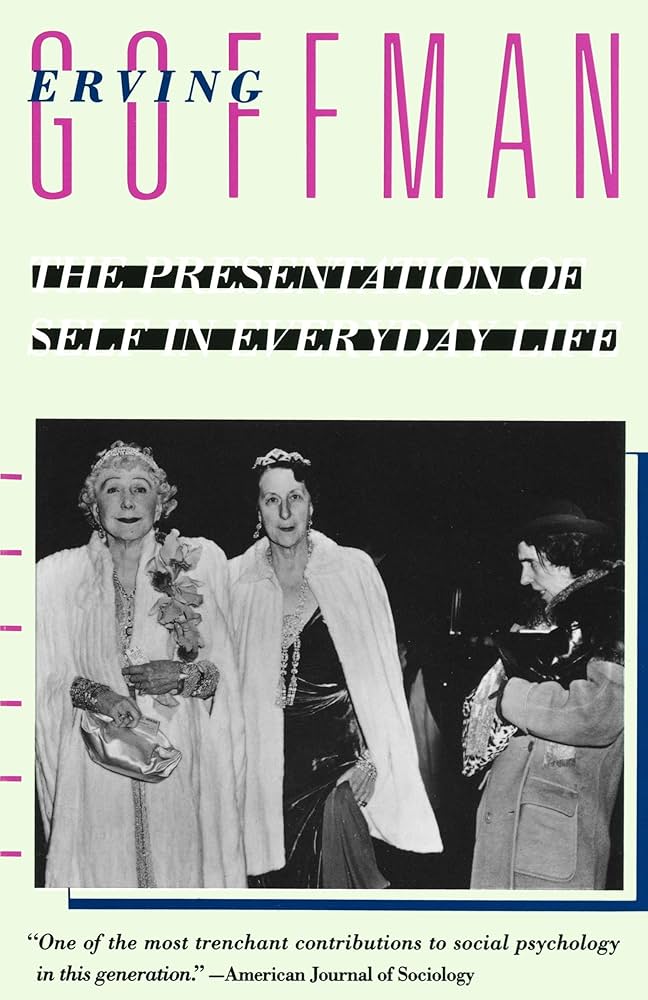
In 1959, sociologist Erving Goffman published The Presentation of Self in Everyday Life, arguing that all social interaction operates like theatrical performance. We manage impressions, maintain character, distinguish between front stage and backstage behavior, and collaborate with others to sustain shared definitions of reality. His framework transformed how we understand the seemingly mundane encounters that fill our days.

Television history serves as a sprawling archive of our collective social choreography, mirroring the very “performances” described by Erving Goffman. Since the 1980s, the sitcom has functioned as a primary stage for these observations, transitioning from the blue-collar sanctuary of the diner to the aspirational urbanity of the coffee house. From the gold standard of the “workplace as family” from Cheers, or the curated wit shared over a booth in Seinfeld at Monk’s Café or the practiced intimacy of the orange velvet couch from Friends at Central Perk, these televised spaces have documented how we manage impressions and signal belonging

As we trace the evolution of the “third place” on screen – from the neighborhood haunts of the past to the high-stress kitchens of the modern era – we see a reflection of our own instinctive social dances.

This four-part series applies Goffman’s dramaturgical lens to food experiences, exploring how what we eat, drink, and share reveals the fundamental performances that structure social life. From the neighborhood café to the professional dining room, from historical taverns to personal kitchens, food spaces serve as stages where we rehearse belonging, signal identity, navigate power dynamics, and write our autobiographies.

Our first article examines the “third place” – those informal gathering spots between home and work where we perform a uniquely accessible version of community. Ray Oldenburg’s classic study The Great Good Place provides our roadmap for understanding why these spaces matter, while Goffman helps us see the intricate performances that transform casual coffee drinkers into recognized regulars, and strangers into neighbors. The result is a deeper appreciation for the small social dramas that unfold daily over espresso and conversation – performances that teach us how to belong.

Note: I will use the term “café” most of the time, but you can substitute diner, restaurant, coffee shop, library, etc.


For years I have been a regular, weekly customer of Big Bite’z Grill in Cornelius, NC. I call it my “Lunch and Learn” and it usually occurs on Tuesdays. The first stop is at the library to drop off and pick up books, then a short drive to the restaurant. I try to arrive early, both to avoid the lunch rush and to claim my table – it’s the two-top all the way in the back, next to the kitchen door. While there, I not only have a great lunch, but make connections with the staff and a chance to skim a new book just picked up.

My food order on these visits is always the same: buffalo chicken pita, onion rings, and sweet tea. Everyone, from the owner John, to his son Demetri, to the cooks in the kitchen know my order. Most days, the cooks have already started the order when they see me walking across the parking lot. When I walk in the front door, it’s already being rung up. If John is busy, he will bring me the food when it’s ready and I’ll pay before leaving.

I’m one of the hundreds of “regulars” that frequent Big Bite’z throughout the week. One or two of the regular vendors are finishing up John’s orders for the week. There’s the construction crews that rotate in and out to the patio seating. Over there are Cornelius policemen, regular customers like me. Increasingly, there is a constant stream of delivery drivers who come in to pick up a carryout.

If he’s not too busy, I will always have an ongoing conversation with John about the current state of the world. Demetri keeps me up to date on his family. Even when it is busy, one or both of them makes it a point to stop by my table, just to chat even if just for a short while.

My story above delivers a particular kind of satisfaction that comes from being known at your local restaurant. Not famous, not important -just known. The cooks start making your usual before you order. Another regular nods as you walk in. You may or may not have learned their name, but you’ve shared this space . This seemingly trivial social dance reveals something profound about how we perform belonging in our everyday lives.
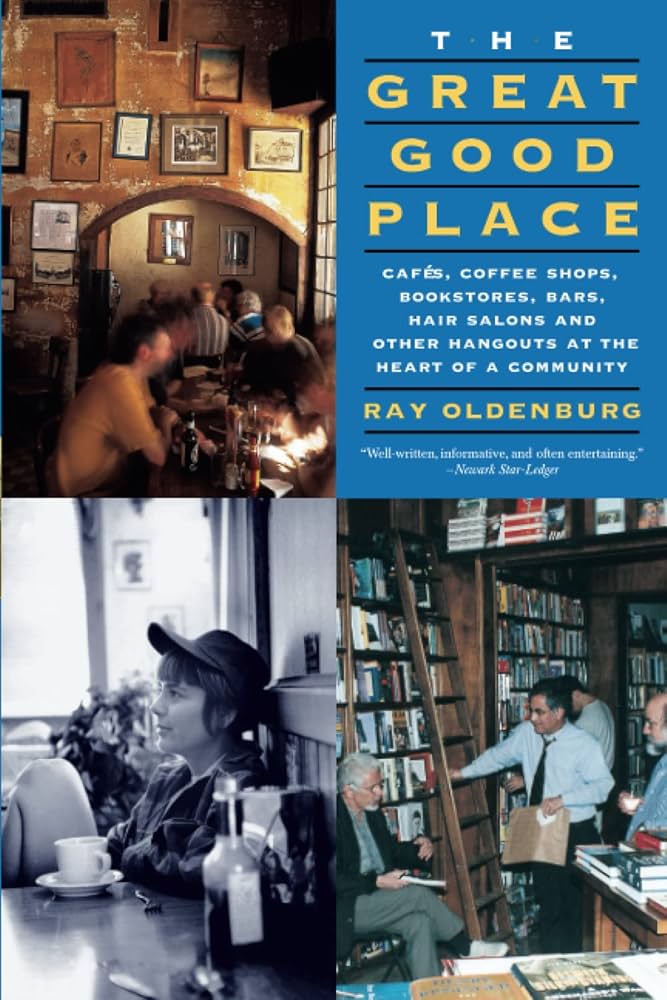
Ray Oldenburg’s 1989 book The Great Good Place champions what he calls “third places” – those informal public gathering spots that exist outside the demands of home (our first place) and work (our second place). Cafés, diners, barbershops, pubs, and corner stores have historically served this function, providing what Oldenburg describes as “the heart of a community’s social vitality.” But these spaces do more than simply exist between our other obligations. They serve as crucial stages where we rehearse a different kind of social performance, one that reveals the intricate ways we signal belonging and construct community.

Oldenburg identifies several characteristics that define genuine third places: they’re on neutral ground, they level social distinctions, conversation is the main activity, they’re accessible and accommodating, they host regulars, they maintain a low profile, the mood is playful, and they feel like a home away from home. What makes this framework so compelling is how it maps onto sociologist Erving Goffman’s dramaturgical theory of social life. If all the world’s a stage, as Goffman famously argued, then third places represent a unique theatrical space – one where we can experiment with performances that neither our domestic nor professional roles typically allow.

At work, we perform professional competence, managing impressions to maintain credibility and advance our careers. At home, we navigate familial roles and intimate relationships, often dropping some of our more public masks. But in our favorite coffee shop? We’re performing a subtly different self – one that Oldenburg suggests is somehow more authentic, or at least more freely chosen. We’re the person who knows good coffee, who has time to linger, who’s part of this micro-community of regulars. We’re sophisticated enough to appreciate the space but unpretentious enough to be approachable.

Goffman would recognize this immediately as “front stage” behavior – we’re still managing impressions – but it’s a front stage with different stakes and different rules. The regular at a café performs casualness, performs being the kind of person who belongs to a community of peers rather than subordinates or superiors. Oldenburg calls this “leveling,” the way third places neutralize social hierarchies. The lawyer and the freelance writer sit at adjacent tables, both just neighbors in this shared space. But achieving this egalitarian atmosphere requires its own subtle performances: dressing down just enough, not dominating conversations, respecting unspoken territorial claims over favorite seats.

At Big Bite’z, even the owner moves from my favorite table when I come in and beckons me to sit there. If that’s not “leveling”, I don’t know what is!

Yet even in these supposedly egalitarian spaces, new hierarchies emerge. There’s social capital in being recognized, in having earned your place among the regulars. Watch a true regular enter their space and you’ll see Goffman’s theory in action. They’re greeted by name, they know where things are, they understand the unwritten rules. They’ve been granted backstage access – they might walk behind the counter to grab a napkin, or stay past closing time finishing a conversation. New customers, meanwhile, perform a different role: the uncertain stranger, carefully observing protocols, hoping to graduate someday to regular status.

This progression from stranger to regular represents a fascinating performance arc. Initially, we’re hyper-aware of our presentation: where to stand, how to order, whether we’re taking up too much space. We’re all front stage, all impression management. But as we return again and again, something shifts. We begin to drop certain masks. The barista learns we’re going through illness, or that we’re writing a novel, or that last Tuesday was hard. We’ve achieved what Goffman might call “team membership” – we’re now part of the café’s ongoing social drama, not just audience members.

The tragedy of contemporary American life, as Oldenburg documents, is the systematic destruction of these third places. Suburbanization, car culture, chain standardization, and now remote work have all conspired to eliminate the informal gathering spots that previous generations took for granted. When every café looks identical, when there’s nowhere to walk to, when we’re encouraged to order ahead and leave quickly, we lose these rehearsal spaces for community performance.

The implications extend beyond nostalgia for neighborhood hangouts. Without third places, we lose practice in performing the casual, egalitarian sociability that democracy requires. We lose spaces where we can be seen as something other than our job title or our family role. We lose the “weak ties” – those acquaintances who aren’t quite friends but aren’t quite strangers – that sociologists increasingly recognize as crucial for social cohesion and personal well-being.

Though most of this story revolves around a food place, “third places” exist outside of that realm. For instance, my first stop before the weekly trip to Big Bite’z is to my local library. On my regular visit, I can count on the library being filled with moms and their kids for the weekly reading event. There are always adults and kids around the tables, with tutoring or homework help happening. There are weekly book clubs, maker spaces, game nights – I could go on, but you get the picture: community is taking place across and among all ages.

What Oldenburg and Goffman together reveal is that belonging isn’t passive – it’s something we perform into existence through repeated social rituals. The café regular isn’t born; they’re made through countless small performances of presence, recognition, and reciprocity. Every nod to a fellow regular, every moment of comfortable silence over a newspaper, every time we choose this place over the identical chain store down the street – these are performances of community, small dramas that accumulate into something larger than ourselves.

In an age of increasing isolation and digital connection, perhaps we need these performance spaces more than ever. Not just for the coffee, but for the chance to rehearse being the kind of people who belong somewhere, who are known and know others, who participate in the daily drama of shared public life. The third place, it turns out, isn’t just good for community. It’s where we practice being human together.


Part of a regular series on 27gen, entitled Wednesday Weekly Reader.

During my elementary school years one of the things I looked forward to the most was the delivery of “My Weekly Reader,” a weekly educational magazine designed for children and containing news-based current events.

It became a regular part of my love for reading, and helped develop my curiosity about the world around us.
When Farmers Became Insurgents: The Forgotten Army That Made Independence Possible


January and February – Seeds of Rebellion Part Six

In September 1774, four thousand Massachusetts farmers marched on the Middlesex County courthouse in Concord. They weren’t there to petition. They weren’t there to protest peacefully. They came armed, organized, and determined to shut down the king’s justice system by force. Crown-appointed officials resigned on the spot, reading their humiliating recantations aloud to the assembled crowd. No shots were fired, but make no mistake – this was insurrection. Seven months before Lexington and Concord made the history books, ordinary colonists had already begun their revolution.

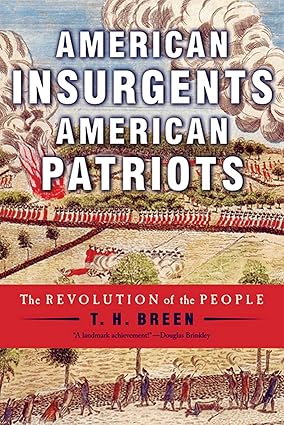
This is the scene T. H. Breen places at the center of his 2010 book American Insurgents, American Patriots: The Revolution of the People. At a time when “insurgent” had become synonymous with irregular fighters in Iraq and Afghanistan, Breen reclaimed the term for America’s founding generation. His message was clear: the American Revolution wasn’t won by philosophical debate or the wise deliberations of the Continental Congress. It was forged by tens of thousands of ordinary people who formed armed militias, enforced extralegal boycotts with threats and violence, and systematically dismantled British authority in the countryside – all before independence was even declared.

In 2026, as Americans grapple with questions about political violence, the legitimacy of institutions, and the boundaries of patriotic dissent, Breen’s book offers an unsettling reminder: the nation’s founding moment was an insurgency first and a revolution second.

The Historian Who Listened to Common People

T. H. Breen, professor emeritus at Northwestern University, had built his career studying colonial commerce and consumer culture. His earlier work, The Marketplace of Revolution (2004), examined how boycotts of British goods created a shared political identity among colonists. But Breen sensed something was missing from the standard narrative. The Revolution, as typically told, moved from the Stamp Act to the Boston Tea Party to the Declaration of Independence – a story of ideas, protests, and elite decision-making.

What about the thousands of farmers who never attended a Continental Congress? What about the militia companies drilling on village greens? What about the committees of inspection that dragged loyalists from their homes? Breen spent years in local archives, reading the petitions, resolutions, and testimonies of people whose names rarely appear in history books. What he found was a popular insurgency that preceded and enabled the more familiar political revolution.

Writing in the shadow of the Iraq War, Breen was acutely aware of how the language of insurgency had changed. “American politicians who have condemned insurgencies in other countries might do well to remember that the United States owes its independence to just such people,” he writes. His timing was deliberate. American Insurgents, American Patriots appeared as the Tea Party movement was rising and as Americans debated whether revolutionary rhetoric had any place in contemporary politics. Breen didn’t offer easy answers, but he demanded historical honesty about what revolution actually looked like.

The Core Argument: Revolution From Below

Breen’s central thesis upends the traditional narrative that the Revolution was primarily an ideological movement led by educated elites. Instead, he argues that the American Revolution succeeded because of a massive popular insurgency that created revolutionary conditions on the ground before independence was declared. As he puts it: “The Revolution was not the result of a powerful, centralized movement. It was the product of separate local responses to a constitutional crisis that suddenly sparked a powerful sense of rage.”

The book traces three critical phases. First, between 1774 and early 1775, colonists in hundreds of communities organized themselves into extralegal committees and militia companies. These bodies didn’t wait for the Continental Congress to tell them what to do. They seized control of local governance, purged loyalists from positions of authority, and enforced compliance with the Continental Association’s boycott of British goods. This was, Breen argues, “America’s first insurgency” – a coordinated but locally driven uprising that destroyed British authority outside major coastal cities.

Second, these local insurgents had to justify their actions to themselves. Breen emphasizes that most colonists saw themselves as loyal British subjects in 1774. Taking up arms against constituted authority required powerful psychological and ideological work. Here’s where the language of patriotism became crucial. By calling themselves “patriots” and their opponents “enemies of America,” insurgents transformed acts that might otherwise seem like treason into virtuous defense of rights. Breen writes: “The insurgents invented patriotism, not as a celebration of what they already possessed, but as a justification for taking extraordinary risks.”

Third, the insurgency had to transform into a sustainable revolutionary movement. This required creating new institutions, maintaining discipline, and preventing the movement from fracturing into competing factions or collapsing into chaos. The real achievement, Breen argues, wasn’t declaring independence in July 1776 – it was the fact that tens of thousands of armed, angry colonists managed to organize themselves into an effective fighting force without descending into anarchy.

The Voice of Popular Revolution

Breen’s prose balances scholarly rigor with narrative drive, and he has a gift for finding voices that bring eighteenth-century insurgency to life. Consider this passage about the moment ordinary colonists realized they had crossed the point of no return:

By the spring of 1775 the people had created a revolutionary society. In scores of rural villages they had organized resistance to Great Britain; they had nullified imperial law; they had taken up arms. And after months of insurgency, they discovered that they were no longer subjects of the British Empire. The insurgents had become patriots.”

This transformation – from insurgent to patriot – captures Breen’s central insight. The terms weren’t opposites; they were sequential. You became a patriot by first becoming an insurgent.

Elsewhere, Breen quotes a letter from a British officer who witnessed the courthouse takeovers: “The people are in a perfect frenzy… Government is completely dissolved.” This wasn’t hyperbole. In county after county, the king’s government simply ceased to function because ordinary people refused to recognize its authority. Breen observes: “What the British witnessed in 1774 was not a protest movement that got out of hand. It was a systematic, purposeful transfer of power from imperial officials to popular committees – enforced, when necessary, by the threat of violence.”

Perhaps most strikingly, Breen gives voice to the loyalists who found themselves targets of patriot enforcement. One Massachusetts man described being forced to recant his opposition to the Revolution before a crowd: “I was obliged to subscribe and swear to everything they demanded… I must do it or be drove from my farm.” These testimonies complicate any romanticized view of the Revolution. The insurgency created patriots partly through persuasion and shared grievances – but also through intimidation and coercion.

Dialogue with Bernard Bailyn and the Ideological School

Earlier in this series, we examined Bernard Bailyn’s The Ideological Origins of the American Revolution, which argued that the Revolution was fundamentally an intellectual movement driven by colonists’ fears of political conspiracy and ministerial tyranny. Bailyn’s revolutionaries were steeped in opposition Whig ideology and classical republicanism. They mobilized because they believed British policy represented a deliberate plot to enslave free Americans.

Breen doesn’t reject Bailyn’s thesis – he complicates it. Yes, ideology mattered. Yes, colonists read pamphlets and worried about corruption. But Breen asks: how did those ideas actually spread to farmers in western Massachusetts or backcountry Virginia? How did abstract political theory translate into thousands of men willing to risk their lives?

His answer is that popular mobilization preceded and shaped ideological development as much as the reverse. “The insurgents did not wait for refined constitutional arguments,” Breen writes. “They acted first and developed their justifications as they went.” Local committees and militia companies became schools for revolutionary thinking, places where ordinary people learned to articulate their grievances and connect them to broader principles.

Where Bailyn emphasized pamphlets and political thought, Breen emphasizes newspapers, tavern conversations, and community meetings. Where Bailyn focused on the vertical transmission of ideas from elite thinkers to the broader population, Breen reveals horizontal networks of communication among ordinary colonists who shared rumors, fears, and strategies for resistance.

The two interpretations aren’t contradictory – they’re complementary. Bailyn explains why educated colonists came to believe revolution was necessary. Breen explains how those beliefs became a mass movement. Together, they reveal a Revolution that worked on multiple levels simultaneously: philosophical debates among elites, popular mobilization in the countryside, and the constant interaction between the two.

What We’ve Learned Since 2010

Breen’s book arrived at a particular moment in American historiography. The “history from below” approach had been gaining ground for decades, but accounts of the Revolution still tended to privilege founding fathers over ordinary people. American Insurgents, American Patriots helped shift the field’s center of gravity.

Since 2010, historians have built on Breen’s insights in several ways. Holger Hoock’s Scars of Independence (2017) examined the Revolution’s violence in unflinching detail, revealing just how brutal the insurgency could be. Where Breen acknowledged violence but emphasized political organization, Hoock showed tar-and-feathering, property destruction, and vigilante justice as central to the revolutionary experience.

Similarly, recent scholarship on loyalism has enriched our understanding of those on the receiving end of patriot insurgency. Maya Jasanoff’s Liberty’s Exiles (2011) followed the tens of thousands of loyalists who fled revolutionary violence, many of them ordinary people who simply refused to join the insurgency. These works remind us that Breen’s insurgents weren’t universally welcomed – they created patriots partly by driving out or silencing dissent.

Scholarship on slavery and the Revolution has also complicated Breen’s narrative. His book focuses heavily on New England and the Mid-Atlantic, regions where the insurgency could draw on relatively egalitarian political culture. But as historians have shown, Southern insurgents faced a different calculus: how could slaveholders lead a revolution for liberty while maintaining a system of human bondage? The answer often involved excluding enslaved people from the category of “the people” who deserved rights – a contradiction Breen acknowledges but doesn’t fully explore.

Finally, digital humanities tools have allowed historians to map revolutionary mobilization with unprecedented precision. We now have detailed data on committee formation, militia musters, and communication networks that confirm Breen’s intuition: the Revolution spread through local, grassroots organization rather than top-down direction.

Why Read This Book in 2026?

On January 6, 2021, Americans watched as insurgents stormed the Capitol, claiming they were patriots defending the Constitution. In the years since, debates about political violence, institutional legitimacy, and the meaning of patriotism have consumed American politics. Militia groups invoke revolutionary heritage. Protesters on both left and right claim the mantle of 1776. Politicians compare their opponents to tyrants and themselves to founding-era resistance fighters.

In this context, Breen’s book is essential – and uncomfortable. It forces readers to confront the fact that America was born from an insurgency that used intimidation, destroyed livelihoods, and forced people to choose sides under threat of violence. The Revolution succeeded not because it was genteel or legalistic, but because enough ordinary people were willing to take up arms against constituted authority and create new political institutions through force.

This doesn’t mean every modern insurgent is a patriot, or that revolutionary violence is automatically legitimate. Breen himself carefully distinguishes between different kinds of political violence and their justifications. But he does insist that Americans can’t celebrate their revolutionary heritage while pretending it was anything other than insurgency.

The book also offers a model for understanding how ordinary people become political actors. Breen shows that most colonists didn’t join the Revolution because they read John Locke or Thomas Paine. They mobilized because their neighbors mobilized, because they feared being labeled enemies of the community, because local institutions gave them frameworks for collective action. Understanding this process – how ideas become movements, how movements enforce conformity, how insurgents justify their actions – is crucial for anyone trying to make sense of contemporary political mobilization.

Perhaps most importantly, American Insurgents, American Patriots reminds us that the American Revolution was genuinely uncertain. It could have failed. It could have fractured into competing movements. It could have produced tyranny rather than republican government. The fact that insurgents became patriots and patriots built a lasting republic wasn’t inevitable – it was an achievement that required leadership, luck, and constant negotiation.

As we navigate our own period of institutional crisis and political polarization, that historical contingency matters. The founders weren’t demigods whose every action deserves reverence. They were insurgents who took enormous risks, made difficult compromises, and built something unprecedented. Their example can inspire – but only if we’re honest about what they actually did and how uncertain their success really was.

Breen’s book adds more understanding to where America came from. It will complicate easy narratives about founding principles and remind us that revolutions are made by ordinary people making extraordinary choices – for better and for worse.


A Note on This Series

This journey through Revolutionary history is as much about the evolution of historical understanding as the Revolution itself. History isn’t static – each generation reinterprets the past through its own concerns, asking different questions and prioritizing different sources. By reading these books in dialogue across 250 years, we’ll witness how scholarship evolves, how narratives get challenged, and how forgotten stories resurface.

This isn’t about declaring one interpretation “right” and another “wrong,” but appreciating the richness that emerges when multiple perspectives illuminate the same transformative moment. These books won’t provide definitive answers – history rarely does – but they equip us to think more clearly about how real people facing genuine uncertainty chose independence, how ideas had consequences, and how the work of creating a more perfect union continues. As we mark this anniversary, we honor the Revolutionary generation by reading deeplythinking critically, and engaging seriously with both the brilliance and blind spots of what they created.

You can find the entire series listing here.

Table Stakes: A New Social Contract?

In the evolving landscape of culinary literature, it’s easy to become stuck at a crossroads between historical reflection and urgent, modern mandates. Last week’s exploration of Christoph Ribbat’s In the Restaurant as highlighted in “Reading the Restaurant” – offered one viewpoint. Ribbat’s work serves as a panoramic history, transforming the dining room into a laboratory of modern life where class, technology, and human drama intersect.

However, as that post suggested, finishing one book is merely an invitation to walk through a new threshold. To truly understand the “hidden” themes of contemporary dining, we must place Ribbat’s historical mosaic in direct conversation with the sharp, practical demands of the present. This brings us to a confrontation between the “theatre” of the past and the “survival guide” of the now.

Part II: The Clash of Theory and Practice

While Christoph Ribbat’s In the Restaurant provides the wide-angle lens of a historian – looking back at the invention of the “guest” and the military precision of Escoffier’s kitchen – Adam Reiner’s The New Rules of Dining Out acts as the high-definition field guide for the post-pandemic era. If Ribbat explores how the restaurant became a stage, Reiner is obsessed with how to keep that stage from collapsing under the weight of modern entitlement and economic fragility.

From Performance to Social Contract

Ribbat observes the “theatricality” of the dining room as a fixed sociological state. To him, the waiter is a performer wearing a mask of professional servitude. This is a classic “Front Stage” performance, where the guest is the audience and the staff are the players.

Adam Reiner, however, argues that this performance is currently in a state of crisis. His New Rules represent a radical shift from the traditional “customer is always right” philosophy toward a mutual social contract. Reiner’s commentary is urgent: he insists that the guest is no longer just a passive audience member but an active participant in the restaurant’s survival. In Reiner’s view, being a “good guest” is no longer about mere politeness; it is about earning your place at the table through empathy, punctuality, and an understanding of the industry’s razor-thin margins.

The Death of the “Restorative” Myth

Ribbat tracks the evolution of the restaurant from the 1760s “restoratives” – medicinal broths meant to heal the body. He notes how this evolved into “healing” the ego through luxury. Reiner’s work flips this script for the 2020s. In the New Rules, it is the diner who must act as the restorative force for the restaurant.

Reiner dives deep into the “uncomfortable” side of modern dining that Ribbat only brushes against:

  • The Cancellation Crisis: Reiner argues that a “no-show” is not just a minor inconvenience but an act of economic sabotage. His rules demand that diners treat reservations like theater tickets – pre-paid and non-negotiable.
  • The Service Charge Debate: While Ribbat notes the historical “paradox” of the waiter, Reiner focuses on the math. He advocates for the dismantling of the traditional tipping system in favor of transparent service charges that bridge the pay gap between the “Front of House” and the “Back of House”.

The Evolution of Labor: From Orwell to Accountability

Ribbat leans heavily on George Orwell’s Down and Out in Paris and London to illustrate the soul-crushing filth of the historical kitchen. It is a romantic, if gritty, look at the “plongeur.”

Reiner moves past the literary pathos of the suffering dishwasher and focuses on human sustainability. His commentary highlights the mental health crisis in the modern kitchen – the burnout, the substance abuse, and the toxic “brigade” culture that Ribbat treats as a historical artifact. Reiner’s “New Rules” demand that the diner acknowledge the humanity of the staff. He suggests that if you aren’t willing to pay a price that allows for a living wage and health insurance for that “backstage” crew, you shouldn’t be dining out at all.

Atmosphere vs. Algorithm

A fascinating point of contrast lies in the concept of “Atmosphere.” Ribbat discusses how 1920s Berlin cafes were designed to foster intellectualism. Reiner observes that modern atmosphere is often hijacked by the “TikTok-ification” of the dining room.

In the New Rules, Reiner addresses the friction caused by diners who prioritize “content” over “connection.” He calls for a return to presence, suggesting that the camera-first culture violates the social sanctuary that Ribbat describes as a “place of longing.” For Reiner, the “Rule” is simple: the restaurant is a place to eat and interact, not a studio for your personal brand.

The Verdict: Why Reiner is the Necessary “Fifth Course”

If we treat Ribbat’s book as a four-course meal of history, Reiner’s New Rules is the bitter espresso shot at the end – a sharp, necessary jolt of reality.

Ribbat tells us why we love restaurants (the longing for connection and status), but Reiner tells us how to ensure they still exist tomorrow. Ribbat looks at the “guest” as a historical construct; Reiner looks at the “guest” as a stakeholder.

When we read them synoptically, the conclusion is clear: the restaurant remains a most important stage in our social lives, but the script has changed. The “Society” Ribbat describes is no longer a hierarchy of service, but an ecosystem of mutual respect. To dine out today is to participate in a fragile miracle of logistics, and as Reiner suggests, the most important “New Rule” is acknowledging that you are part of the team, not just the person at the table.


When two books with a similar primary topic take very different directions, but both quote a foundational work from the 1960s, I sit up and take notice. Both of the books above did just that, and the resulting inquiry has yielded a companion, 4-piece series to the topic, exploring how food experiences reveal fundamental truths about social interaction, identity, and community through the lens of Erving Goffman’s dramaturgical sociology. Each article features one book while drawing on Goffman’s framework of social performance to unite the series.

Next week: The Regular’s Performance: How Informal Gathering Places Teach Us to Belong


Part of a regular series on 27gen, entitled Wednesday Weekly Reader.

During my elementary school years one of the things I looked forward to the most was the delivery of “My Weekly Reader,” a weekly educational magazine designed for children and containing news-based current events.

It became a regular part of my love for reading, and helped develop my curiosity about the world around us.

The Founders’ Classical Education: Why Washington, Adams, and Jefferson Studied Ancient Rome and Greece


January and February – Seeds of Rebellion Part Five

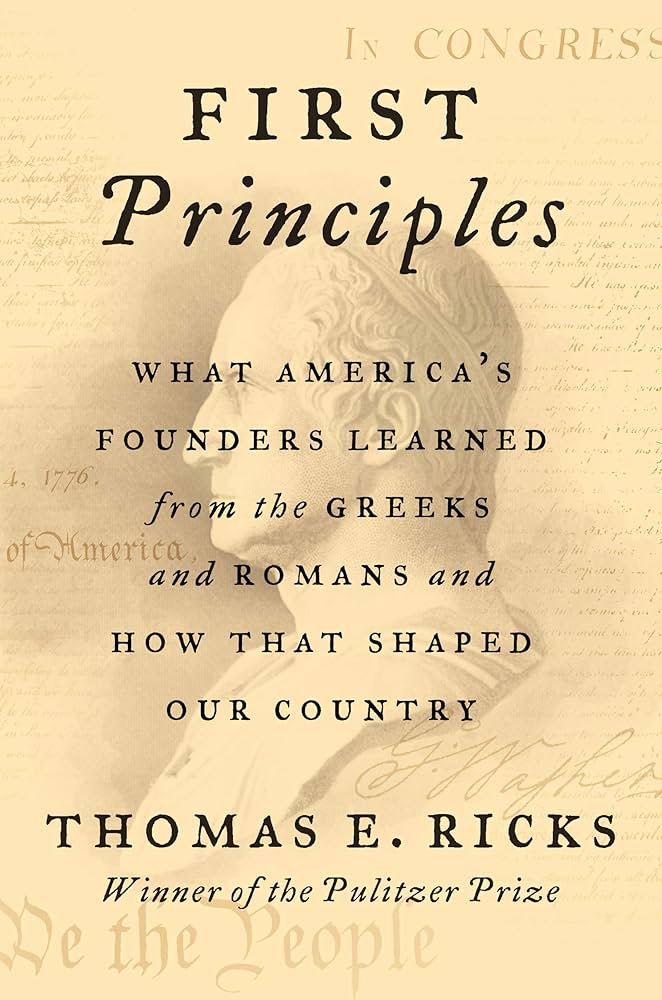
When George Washington resigned his military commission in 1783, Congress was stunned. Victorious generals didn’t surrender power – they seized it. But Washington had spent the war years rereading Plutarch’s account of Cincinnatus, the Roman general who saved the republic then returned to his plow. As Thomas E. Ricks reveals in First Principles: What America’s Founders Learned from the Greeks and Romans (2020), this wasn’t theatrical posturing. Washington, Adams, and Jefferson waged the Revolution with ancient texts as their strategic guides, making decisions based on 2,000-year-old lessons about power, tyranny, and republican survival.

The Journalist as Classical Scholar

Thomas E. Ricks brings an unusual pedigree to this subject. A Pulitzer Prize-winning military correspondent and author of definitive works on the Iraq War, Ricks might seem an unlikely guide to Plutarch and Cato. But his Pentagon reporting revealed how often generals invoke ancient precedents, leading him to ask: What did the Founders – who led an actual revolution – learn from classical texts about war and governance?

Ricks spent years retracing the classical education of Washington, Adams, and Jefferson during the revolutionary period. The result treats them not as marble statues but as serious students working through difficult questions: How do republics survive military crisis? When does resistance become justified? How do you prevent revolution from devouring itself? For answers, they turned to Greek and Roman history.

The Central Argument: Revolution as Classical Seminar

Ricks’s thesis challenges popular understanding of 1775-1784. The Revolution wasn’t primarily about Enlightenment abstraction or tax grievances – it was about applying ancient lessons to avoid the fate of failed republics. As Ricks writes, “Washington, Adams, and Jefferson saw themselves reenacting an ancient drama. They knew how it usually ended: in chaos, then tyranny. Their challenge was to write a different final act.”

Each leader engaged classical texts differently, shaping their revolutionary roles. Washington modeled himself on Roman military virtue – disciplined, self-denying, subordinate to civilian authority. Adams, immersed in Thucydides and Polybius, saw the Revolution through the lens of Greek political philosophy, obsessing over how to channel popular energy without descending into Athenian mob rule. Jefferson read Tacitus and Sallust as case studies in how republics decay, becoming convinced that British corruption mirrored Rome’s decline.

The book’s power lies in showing how revolutionary decisions emerged from classical precedents. Washington’s refusal to become military dictator despite his army’s desperate condition? A conscious rejection of Caesar’s path. Adams’s insistence on legal trials for British soldiers after the Boston Massacre? An application of Roman republican law over mob justice. Jefferson’s Declaration of Independence? Structured like a Roman Senate oration justifying war.

Memorable Passages: The Founders in Their Own Words

Ricks excels at letting primary sources speak. Here’s John Adams in 1776, explaining why he opposed immediate independence: “I have read Thucydides on the Peloponnesian War twenty times. Athens rushed to war against Sparta in democratic fervor, then collapsed into civil strife and tyranny. We must not declare independence until we have established governments capable of restraining popular passion.”

Washington’s letters reveal a man consciously performing a Roman role. Writing to Congress in 1783 after refusing calls to make himself king: “I cannot accept what Cincinnatus would have refused. The history of Rome teaches that the moment a general becomes perpetual is the moment the republic dies. I will resign this commission because Roman virtue demands it, and because I know what follows if I do not.” This wasn’t false modesty – it was strategic application of classical precedent.

Jefferson’s Summary View of the Rights of British America (1774) frames colonial grievances in explicitly Roman terms: “Our ancestors left Britain as free men, just as Roman citizens colonized distant provinces. They carried with them the rights of Romans. George III has violated these ancient liberties as Tarquin violated the Roman constitution. When kings become tyrants, citizens have the right – the duty – to expel them.” For Jefferson, 1776 was 509 BC redux.

Dialogue with Revolutionary Historiography

First Principles challenges works like Gordon Wood’s The Radicalism of the American Revolution (1991), which emphasizes democratic ideology, and Pauline Maier’s American Scripture (1997), which stresses Enlightenment influence. Ricks doesn’t deny these factors but argues they’ve overshadowed the classical framework that structured revolutionary thinking.

The book converges with Caroline Winterer’s The Culture of Classicism (2002) in documenting how Greek and Latin saturated elite education. But Ricks shows this wasn’t ornamental – when Washington, Adams, and Jefferson debated strategy in 1775-1784, they argued through classical examples. Should Congress control the army? Polybius says civilian authority preserves republics. Should states or Congress hold power? Greek confederacies failed through weakness; Rome succeeded through central military command but fell to imperial ambition.

Most provocatively, Ricks reveals how slavery shaped revolutionary classicism. Jefferson knew that both Athens and Rome were slave societies where liberty for citizens coexisted with bondage for others. His classical education didn’t challenge slavery – it rationalized it as compatible with republican virtue, a parallel that works like Annette Gordon-Reed’s The Hemingses of Monticello (2008) make deeply disturbing.

Historical Reassessment: What We’ve Learned Since 2020

Published just before January 6th, First Principles reads differently after watching crowds storm the Capitol. Ricks emphasized that Washington, Adams, and Jefferson feared demagoguery and mob violence above all – the forces that destroyed Athens and Rome. They designed American government to channel popular will through institutions specifically to prevent revolutionary fervor from becoming permanent chaos.

Recent scholarship confirms Ricks’s portrait of anxious revolutionaries. Holger Hoock’s Scars of Independence (2017) reveals how violence during 1775-1784 terrified leaders who’d read Thucydides on civil war’s brutality. They succeeded in maintaining civilian control and legal procedure partly because classical texts provided a script for avoiding revolutionary excess.

However, critics note what Ricks underplays: these three men were slaveholding Virginia planters and Massachusetts elites whose classical education reinforced their class position. Mary Beth Norton’s 1774 (2020) shows how ordinary Americans experienced revolution differently than classically-educated leaders. The Greek and Roman texts that guided Washington, Adams, and Jefferson assumed that only property-owning men could exercise citizenship – a premise they never questioned.

Why Read This in 2026?

As debates rage over executive power, states’ rights, and constitutional legitimacy, First Principles reveals that these arguments began during 1775-1784, framed by classical precedent. When Washington refused dictatorial power, when Adams insisted on institutional restraint, when Jefferson justified revolution through Roman examples, they established patterns still shaping American politics.

Ricks makes the revolutionary generation legible as intellectuals wrestling with hard problems, not demigods or hypocrites. They’d studied every republic that ever existed and knew all had failed through military coup, mob rule, or imperial ambition. Between 1775 and 1784, they tried to avoid those fates by consciously applying – and sometimes misapplying – ancient lessons.

For readers in 2026, the book’s value is both historical and urgent: it explains how three classically-educated leaders navigated the most dangerous years of the American experiment. They saw themselves as actors in an ancient drama, trying to reach the ending where the republic survives. Whether their classical education helped or hindered remains our question to answer.


A Note on This Series

This journey through Revolutionary history is as much about the evolution of historical understanding as the Revolution itself. History isn’t static – each generation reinterprets the past through its own concerns, asking different questions and prioritizing different sources. By reading these books in dialogue across 250 years, we’ll witness how scholarship evolves, how narratives get challenged, and how forgotten stories resurface.

This isn’t about declaring one interpretation “right” and another “wrong,” but appreciating the richness that emerges when multiple perspectives illuminate the same transformative moment. These books won’t provide definitive answers – history rarely does – but they equip us to think more clearly about how real people facing genuine uncertainty chose independence, how ideas had consequences, and how the work of creating a more perfect union continues. As we mark this anniversary, we honor the Revolutionary generation by reading deeplythinking critically, and engaging seriously with both the brilliance and blind spots of what they created.


You can find the entire series listing here.

Reading the Restaurant

For avid readers, finishing a book rarely means closing the door on a subject – it’s an invitation to walk through an entirely new threshold. A compelling read ignites curiosity, leaving you hungry to explore the ideas, worlds, or authors it introduced. Like a tasty appetizer designed to whet your appetite for more, one volume becomes a portal to countless others, each building on what came before.

This phenomenon mirrors what author Mortimer Adler called “synoptical reading” – the practice of reading multiple books on the same subject to develop a richer, more nuanced understanding. Rather than treating books as isolated experiences, synoptical reading encourages us to place them in conversation with one another, discovering patterns, contradictions, and deeper truths that no single author could provide alone.

This is the power of being a lifelong reader: books connect in unexpected ways, forming constellations of knowledge across your shelves. A novel about artificial intelligence leads to philosophy texts on consciousness. A memoir sparks interest in a historical period, which branches into biographies, primary sources, and cultural criticism.

Today’s #WednesdayWeeklyReader article will launch just such a reading journey, illustrating how one book unlocks fascinating connections and paths of discovery you never anticipated. 

The best readers don’t just finish books; they follow them wherever curiosity leads.

Today’s book is a great example – not only is it fascinating on its own merits, it also launched a comparison with a brand new book which in turn will become a mini-series on the “hidden” theme behind both books – entailing a re-read of four wonderful books through a new lens.

Come along for the delicious journey!


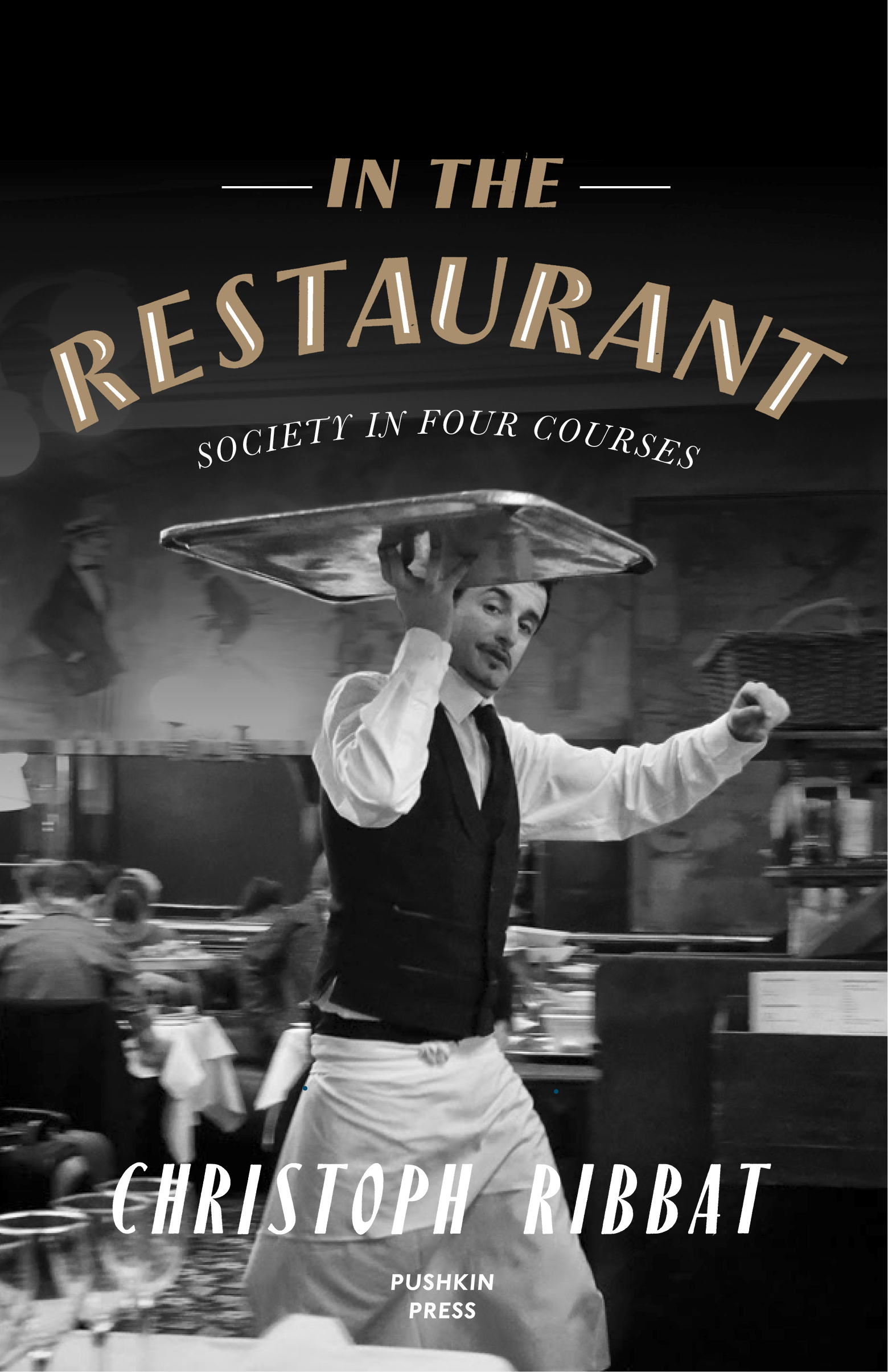
If you’ve ever sat in a dimly lit restaurant, nursing a beverage and wondering why the waiter looks frantic, or why the kitchen sounds like a war zone, Christoph Ribbat has written the book for you. In the Restaurant: Society in Four Courses isn’t just a history of dining; it’s a backstage pass to the most enduring theater in human history.

Ribbat, a professor of American Studies, doesn’t serve a dry, chronological textbook. Instead, he delivers a tasting menu of anecdotes, spanning from the birth of the “bouillon” shops in 18th-century Paris to the high-pressure, tattooed intensity of the modern celebrity kitchen.

The Concept: More Than Just Food

The core thesis of Ribbat’s work is simple yet profound: The restaurant is the laboratory of modern life. It is a place where class struggles, gender roles, immigration, and technology collide over a plate of delicious food.

He structures the book like a meal, but the “courses” are less about the food and more about the human experience. He explores:

  • The Labor: The invisible hands – the dishwashers, the prep cooks, and the weary servers.
  • The Atmosphere: How lighting, seating, and architecture dictate our behavior.
  • The Drama: The inherent tension between the “front of house” (the performance) and the “back of house” (the chaos).

A Whirlwind Tour of Culinary History

Ribbat excels at finding the “human” in the history. He takes us through the evolution of dining with a novelist’s eye for detail.

He begins with the foundational myth of the restaurant. In the 1760s, A. Boulanger sold “restoratives” (soups) meant to heal the sickly. From these humble, medicinal beginnings, the restaurant transformed into a venue for the elite to show off and, eventually, for the masses to find a temporary escape.

One of the most engaging sections involves the psychology of service. Ribbat explores the “subservient but superior” paradox of the waiter. He touches on the works of George Orwell, who famously worked as a plongeur (dishwasher) in Paris, describing the soul-crushing filth hidden behind the swinging doors of luxury hotels.

Ribbat doesn’t ignore the seismic shift brought by industrialization. He tracks the rise of the “Automats” – those eerie, chrome-and-glass vending machine restaurants where human interaction was replaced by the clink of a coin. This leads naturally into the rise of McDonald’s and the “McDonalization” of society, where efficiency and predictability became the ultimate ingredients.

Why It’s Such an Entertaining Read

What makes this book “engaging” rather than “academic” is Ribbat’s mosaic style. He jumps from a 1920s Berlin café frequented by intellectuals to a modern-day diner in the American Rust Belt.

  • Anecdotal Depth: He shares stories of famous chefs going mad and waiters writing manifestos
  • Cultural Breadth: He connects fine dining to jazz, literature, and even the history of the elevator
  • The “Vibe”: The writing is snappy, slightly cynical, and deeply observant.

“The restaurant is a place of longing,” Ribbat suggests. It is where we go to be someone else for an hour or two – to be served, to be seen, or to disappear.

The “Four Courses” Breakdown

While the book flows like a long conversation, it can be distilled into four thematic movements:

  1. The Invention of the Guest: How we transitioned from eating at communal tables in inns to the private, individualized experience of the modern table.
  2. The Kitchen as a Factory: The brutal reality of the “brigade system” (standardized by Escoffier), which turned cooking into a military operation.
  3. The Dining Room as a Stage: The sociology of where we sit, who we look at, and the “performance” of the meal.
  4. The Future of the Table: Reflections on how digital culture and globalism continue to reshape the way we consume.

The Verdict: A Must-Read for Foodies and People-Watchers Alike

If you are looking for a book that tells you exactly how to cook a soufflé, keep moving. But if you want to understand why we pay a premium to sit in a room with strangers and be brought things on trays, this is gold.

The Strengths: Ribbat’s greatest strength is his ability to make the mundane seem miraculous. He takes a simple object – a menu, a white tablecloth, a tip – and unravels its complex social history. His prose (here translated from the original German) is witty and sharp. He avoids the “food porn” trap, focusing instead on the grit and the glory of the industry.

The Weaknesses: At times, the “mosaic” style can feel a bit fragmented. If you prefer a linear, A-to-Z history, the jumping between centuries might give you a mild case of intellectual indigestion. However, the short, punchy chapters make it an excellent “commuter read.”

In the Restaurant is a reminder that every meal out is a tiny miracle of logistics and human endurance. It strips away the garnish to show us the bones of the industry. It’s a book about hunger – not just for food, but for status, connection, and a moment of peace in a loud world.

Next time you’re at a restaurant and the service is a little slow, you might find yourself less annoyed and more curious about the invisible drama unfolding behind the kitchen doors, thanks to Ribbat.


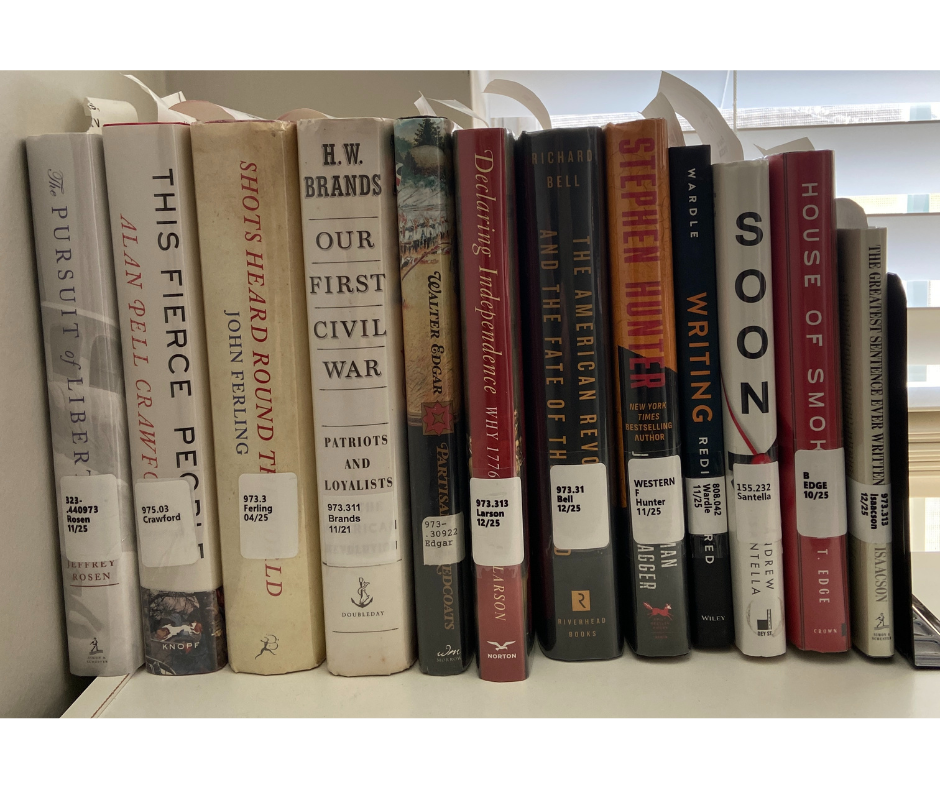
While this book was a great read and stands on its own, about the same time I began reading it I happened to pick up a brand new book from my weekly “Lunch and Learn” library trip. I’m always on the lookout for culinary books, and it seemed interesting. What I didn’t expect was how closely it could be compared to In the Restaurant, and how both of them together introduced a totally new direction for exploration!

Next Week: The New Rules of Dining Out


Part of a regular series on 27gen, entitled Wednesday Weekly Reader.

During my elementary school years one of the things I looked forward to the most was the delivery of “My Weekly Reader,” a weekly educational magazine designed for children and containing news-based current events.

It became a regular part of my love for reading, and helped develop my curiosity about the world around us.
The Revolutionary Ideas That Built America – And Still Haunt It


January and February – Seeds of Rebellion Part Four

What do we mean by the Revolution? The war? That was no part of the Revolution; it was only an effect and consequence of it. The Revolution was in the minds of the people, and this was effected, from 1760 to 1775, in the course of fifteen years before a drop of blood was shed at Lexington. The records of the thirteen legislatures, the pamphlets, newspapers in all the colonies, ought to be consulted during that period to ascertain the steps by which the public opinion was enlightened and informed concerning the authority of Parliament over the colonies. – John Adams to Thomas Jefferson, 1815

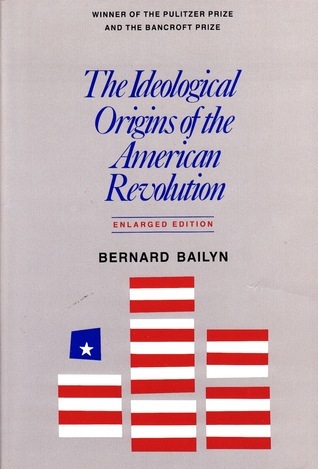
When Americans argue today about government overreach, executive power, or the nature of liberty itself, they’re replaying a script written in the 1760s and 1770s. Bernard Bailyn’s The Ideological Origins of the American Revolution, first published in 1967, reveals something most of us never learned in school: the American Revolution wasn’t primarily about taxes or tea. It was about ideas – specifically, a coherent worldview about power, corruption, and the fragility of freedom that made independence seem not just desirable but absolutely necessary.

Reading Bailyn’s masterwork today feels unsettlingly contemporary. His revolutionaries obsessed over concentrated power, feared conspiracies against liberty, and believed a corrupt establishment was systematically undermining constitutional rights. Sound familiar? Understanding the intellectual framework that drove America’s founding becomes essential when those same concepts – often stripped of context – fuel our current political fires.

The Historian Who Changed How We Read Revolution

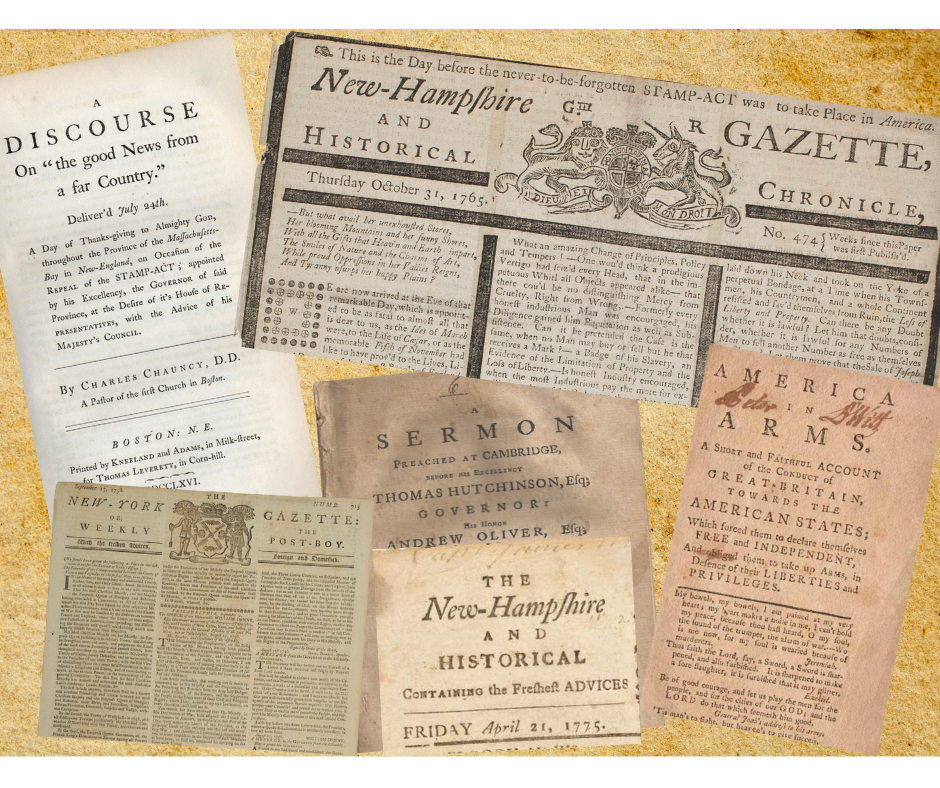
Bernard Bailyn, a Harvard historian who would win the Pulitzer Prize for this book, didn’t set out to write a conventional narrative of battles and heroes. Instead, he did something more radical: he actually read what ordinary colonists were reading. Diving into hundreds of pamphlets, sermons, and newspapers from the revolutionary era – sources historians had largely dismissed as propaganda – Bailyn discovered a sophisticated political ideology that had been hiding in plain sight.

Writing in the 1960s, during America’s own era of upheaval, Bailyn brought the precision of intellectual history to a moment often treated as inevitable march toward democracy. His timing mattered. As Americans questioned authority during Vietnam and the civil rights movement, Bailyn showed that the founders themselves were deeply skeptical of power, animated by ideas rather than merely economic grievances. This reframing transformed revolutionary scholarship and sparked decades of debate about what truly motivated America’s break with Britain.

Power Corrupts, Vigilance Protects: The Revolutionary Mindset

Bailyn’s central argument revolutionized our understanding of 1776. The colonists, he demonstrates, weren’t simply reacting to British policies they disliked. They had absorbed a specific tradition of political thought – what he calls “opposition ideology” – that taught them to interpret those policies as part of a deliberate plot to destroy their liberties.

This ideology emerged from several sources: classical writers like Cicero and Tacitus on republics and tyranny, Enlightenment thinkers like John Locke on natural rights and government by consent, English common law traditions, New England Puritanism’s emphasis on covenant and resistance to arbitrary authority, and especially the “radical Whig” writers of early eighteenth-century England who warned constantly about corruption and the abuse of power.

The last source proved most important. Writers like John Trenchard and Thomas Gordon (authors of Cato’s Letters) and the historian Catharine Macaulay weren’t mainstream voices in Britain, but they became gospel in America. They taught colonists a particular way of seeing politics: power constantly seeks to expand itself, those in authority inevitably become corrupted, liberty requires eternal vigilance, and seemingly small encroachments are actually part of larger conspiracies.

When Britain began tightening control after the Seven Years’ War – taxing the colonies, quartering troops, expanding vice-admiralty courts – Americans didn’t see practical adjustments to imperial administration. They saw confirmation of everything their reading had warned them about: a “systematic” plot to reduce them to slavery. Bailyn writes that the colonists believed they were witnessing “a comprehensive conspiracy against liberty throughout the English-speaking world – a conspiracy believed to have been nourished in corruption, and of which, it was felt, oppression in America was only the most immediately visible part.”

This wasn’t paranoia or exaggeration to Bailyn’s revolutionaries. Given their ideological framework, the pattern seemed clear and terrifying. The Stamp Act, the Townshend Acts, the closure of Boston Harbor – each new measure fit perfectly into a template that predicted exactly this kind of creeping tyranny.

Voices From the Revolution

Bailyn lets the revolutionaries speak for themselves, and their words crackle with urgency. He quotes a 1768 letter describing how Americans understood their predicament: “The ministry have formed a systematick [sic] plan of reducing the northern colonies to absolute obedience to acts of Parliament… and if submitted to must end in the ruin of the colonies.” Notice the word “systematick” – not random policies but a coherent plan.

From the influential pamphleteer John Dickinson, Bailyn draws this passage about how tyranny arrives: “Nothing is wanted at home but a PRECEDENT, the force of which shall be established by the tacit submission of the colonies.” Rights, once surrendered, would never be recovered.

Perhaps most tellingly, Bailyn quotes the revolutionaries’ conviction that they weren’t radicals but conservatives, defending traditional British liberties against innovation and corruption. One writer proclaimed: “What do we want? Is it to be wantonly tearing up the foundation of our happy constitution? No. It is the preservation of it.” In their own minds, the British were the revolutionaries, destroying an ancient constitutional balance, while Americans defended eternal principles.

Bailyn also captures the religious dimension of revolutionary thought, quoting a Massachusetts election sermon that presented resistance as a sacred duty: “All the great Assertors of Liberty in all Ages have uniformly declared it to be unalienable.” Liberty came from God, not kings, and defending it became a moral imperative.

A New Interpretation Among Competing Narratives

Bailyn’s book entered a crowded field of revolutionary scholarship, and its ideological approach offered a distinct alternative to existing interpretations. The Progressive historians of the early twentieth century, particularly Carl Becker and Charles Beard, had emphasized economic motivations – class conflict, merchants protecting their interests, a revolution driven by “who shall rule at home” as much as home rule itself.

Bailyn didn’t deny economic factors but insisted they weren’t primary. Ideas mattered independently, shaping how colonists understood their material interests. Where Beard saw merchants manipulating ideology to serve their pocketbooks, Bailyn saw genuine believers whose worldview made certain policies intolerable regardless of their economic impact.

His work also complicated the consensus school of the 1950s, which portrayed Americans as fundamentally pragmatic and unideological. Bailyn showed revolutionaries possessed a sophisticated, coherent political theory that went far beyond pragmatic adjustment of interests.

More recently, Gordon Wood’s The Radicalism of the American Revolution extended Bailyn’s insights, arguing that the ideas Bailyn identified ultimately transformed American society more thoroughly than anyone intended, destroying aristocratic assumptions and creating genuinely democratic culture. Where Bailyn focused on the ideas that justified revolution, Wood traced how those ideas reshaped American life afterward.

Meanwhile, historians emphasizing social history and lived experience – like Gary Nash’s work on urban radicalism or Woody Holton’s research on how debt and economic pressures motivated backcountry farmers – provide necessary texture to Bailyn’s intellectual history. They remind us that while elite pamphleteers articulated opposition ideology, ordinary Americans had their own immediate grievances. The most complete picture likely combines Bailyn’s ideological framework with attention to how different groups experienced and deployed those ideas based on their particular circumstances.

What We’ve Learned Since 1967

Nearly sixty years after publication, scholarship has both confirmed and complicated Bailyn’s thesis. Research into the Atlantic world has shown how ideas circulated more complexly than Bailyn suggested, with influences running in multiple directions. Work on enslaved people and Native Americans has revealed how selectively revolutionary principles were applied – the ideology of liberty coexisted with slavery and dispossession, a tension Bailyn acknowledged but didn’t fully explore.

Historians have also questioned whether the conspiracy mindset was quite as coherent or universal as Bailyn suggested. Recent scholarship shows more variation in revolutionary thought across regions, classes, and religious communities. Not everyone read the same pamphlets or interpreted events through identical ideological lenses.

Yet Bailyn’s core insight endures: ideas genuinely mattered to the revolutionaries, and understanding their worldview is essential to understanding their actions. The challenge has been integrating his intellectual history with social, economic, and cultural approaches that illuminate how diverse Americans experienced revolution differently.

Perhaps most importantly, historians now better understand how revolutionary ideology’s emphasis on vigilance against power, fear of corruption, and suspicion of conspiracy became permanent features of American political culture – for better and worse. Bailyn identified the intellectual origins not just of revolution but of persistent American patterns: questioning authority, fearing centralized power, seeing politics in conspiratorial terms.

Why Read Bailyn in 2026?

In our current moment of polarization and institutional mistrust, The Ideological Origins of the American Revolution offers essential perspective. When Americans across the political spectrum invoke founding principles, Bailyn helps us understand what those principles actually meant in their original context and how they functioned politically.

The book reveals that American political culture’s conspiratorial thinking, its suspicion of power, its emphasis on individual liberty against collective authority – these aren’t aberrations but features present from the beginning. Understanding this doesn’t resolve our debates, but it illuminates why we debate the way we do.

For anyone trying to understand why Americans talk about politics differently than citizens of other democracies, why we’re so suspicious of government power, why constitutional arguments dominate our political discourse, Bailyn provides the intellectual archaeology. The revolutionaries weren’t just our political ancestors; their ideology remains the grammar of American political argument.

The Ideological Origins of the American Revolution is dense but rewarding, written with clarity and packed with insight. It asks us to take ideas seriously – to consider that people really do act on political principles, not just material interests dressed up as principles. In our cynical age, that might be Bailyn’s most revolutionary suggestion of all.


A Note on This Series

This journey through Revolutionary history is as much about the evolution of historical understanding as the Revolution itself. History isn’t static – each generation reinterprets the past through its own concerns, asking different questions and prioritizing different sources. By reading these books in dialogue across 250 years, we’ll witness how scholarship evolves, how narratives get challenged, and how forgotten stories resurface.

This isn’t about declaring one interpretation “right” and another “wrong,” but appreciating the richness that emerges when multiple perspectives illuminate the same transformative moment. These books won’t provide definitive answers – history rarely does – but they equip us to think more clearly about how real people facing genuine uncertainty chose independence, how ideas had consequences, and how the work of creating a more perfect union continues. As we mark this anniversary, we honor the Revolutionary generation by reading deeplythinking critically, and engaging seriously with both the brilliance and blind spots of what they created.

You can find the entire series listing here.

The Birth of Rebellion: North Carolina’s Revolutionary Spirit in the 1700s


January and February – Seeds of Rebellion Part Three

From colony-wide to county-wide, the seeds of rebellion had been planted and were beginning to sprout…

The Birth of Rebellion: North Carolina’s Revolutionary Spirit in the 1700s

In the Carolina backcountry of the 1770s, far from the established colonial centers of Boston and Philadelphia, a revolutionary fire was kindling that would challenge the traditional narrative of American independence. Mecklenburg County, North Carolina, became an unlikely crucible for patriot sentiment, where Scots-Irish settlers, Presbyterian ministers, and frontier farmers forged a distinctly Southern brand of resistance to British authority. Understanding how this remote region developed such fierce independence requires examining the unique cultural, religious, and political factors that transformed loyal colonial subjects into America’s earliest self-proclaimed revolutionaries.

The Scots-Irish Legacy: Seeds of Defiance

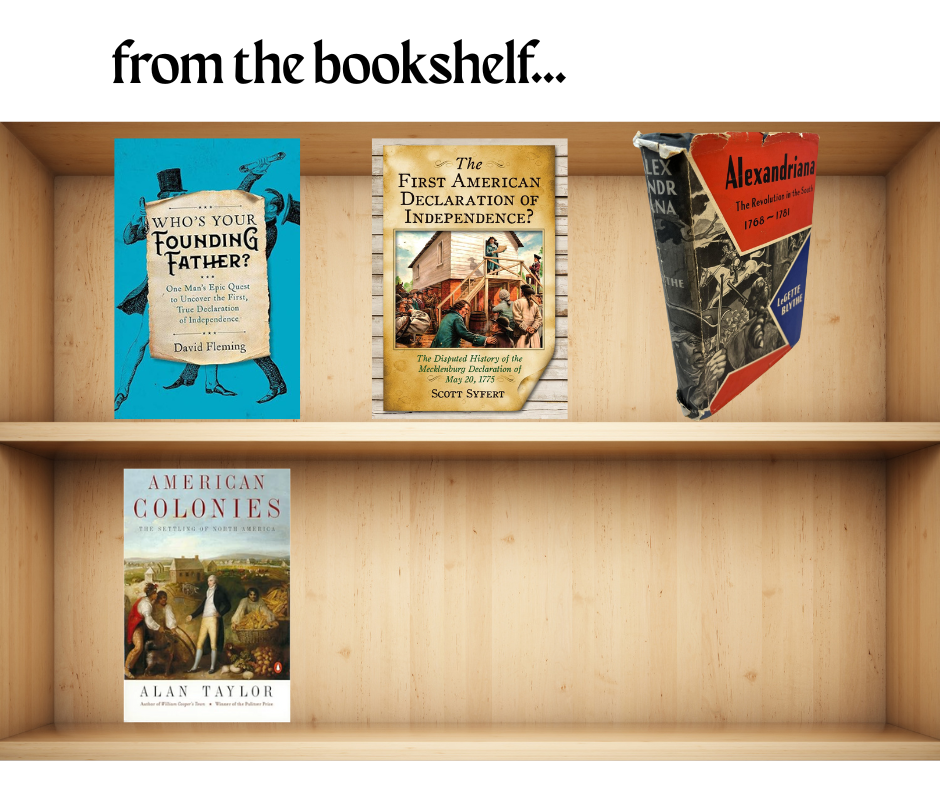
The foundation of Mecklenburg County’s patriot mindset was laid long before the first shots were fired at Lexington and Concord. The region’s predominant settlers were Scots-Irish Presbyterians who brought with them a bitter legacy of religious persecution and political marginalization. These immigrants had already endured discrimination in both Scotland and Ireland, where their Presbyterian faith marked them as outsiders in Anglican-dominated societies. As historian Alan Taylor notes in American Colonies, the Scots-Irish carried “a fierce independence and distrust of distant authority” that would prove combustible when transplanted to the Carolina frontier.

This cultural inheritance was not merely abstract resentment. The Scots-Irish settlers had concrete experience with oppressive governance, making them particularly sensitive to perceived injustices from the British Crown. When they established communities in the North Carolina backcountry during the mid-1700s, they brought these memories with them, creating a population predisposed to question and resist overreach by distant powers. Their Presbyterian church structure, which emphasized congregational governance rather than hierarchical authority, reinforced democratic ideals and collective decision-making that would later characterize their revolutionary activities.

Religious Grievances and Colonial Betrayal

The transformation from grievance to open resistance accelerated when the British Privy Council in London dealt Mecklenburg’s settlers a stinging betrayal. After supporting Royal Governor William Tryon against the Regulator movement in 1771 – a costly decision that pitted backcountry settlers against each other – the Scots-Irish Presbyterians of Mecklenburg expected recognition and reward for their loyalty. Instead, the British government voided colonial legislation that had granted them crucial rights: the establishment of Queen’s College (which would have provided local higher education) and the legal authority for their ministers to perform marriages.

This duplicity struck at the heart of the community’s identity. Education and religious legitimacy were not peripheral concerns but foundational elements of Scots-Irish Presbyterian culture. The revocation represented more than administrative inconvenience; it was a profound insult that confirmed their suspicions about British indifference to colonial needs and rights. As Scott Syfert documents in The First American Declaration of Independence, this betrayal “further alienated the community from British rule” and provided tangible evidence that loyalty to the Crown would never be reciprocated with genuine respect or representation.

The Princeton Connection: Intellectual Foundations

While cultural predisposition and political grievances created the emotional fuel for rebellion, intellectual justification came from an unexpected source: the College of New Jersey at Princeton. Several key figures in Mecklenburg County’s revolutionary leadership had studied at Princeton, including members of the prominent Alexander family. The college, under Presbyterian leadership, was a hotbed of Enlightenment thinking blended with Reformed theology, producing graduates who could articulate sophisticated arguments for natural rights and limited government.

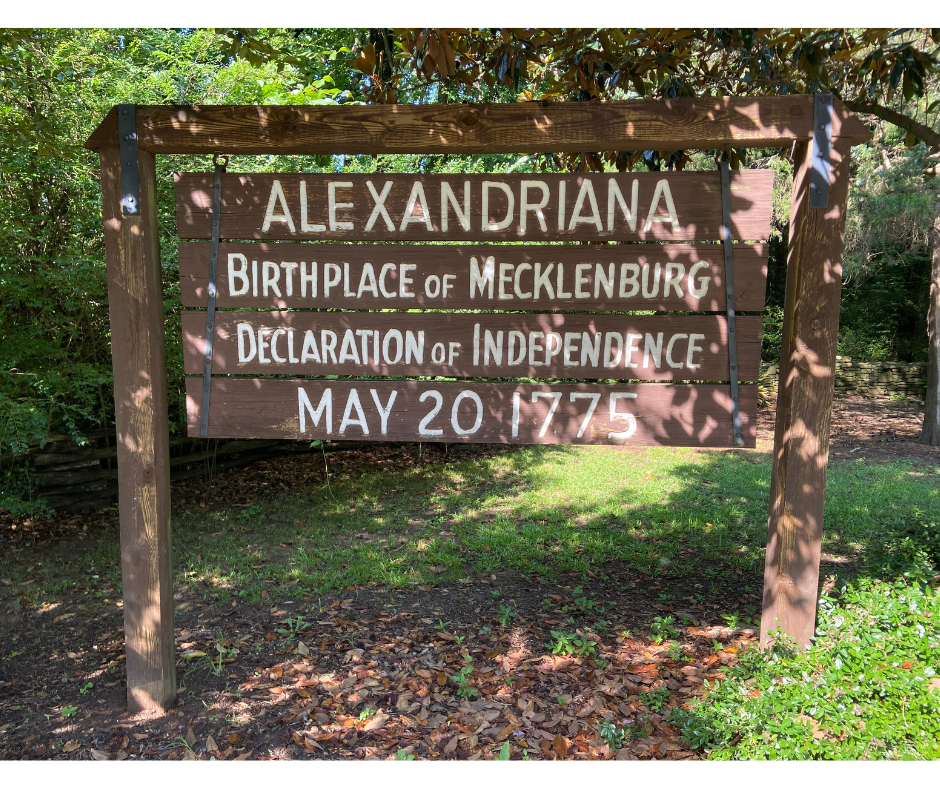
John McKnitt Alexander, whose plantation “Alexandriana” became a focal point for revolutionary organizing, exemplified this synthesis of frontier practicality and learned discourse. As depicted in LeGette Blythe’s historical novel Alexandriana, the Alexander home served as more than a prosperous plantation; it functioned as an intellectual hub where ideas about liberty, self-governance, and resistance to tyranny were debated alongside practical strategies for colonial defense. The Princeton-educated ministers and landowners of Mecklenburg could justify their rebellion not merely as frontier defiance but as a principled stand grounded in political philosophy and moral conviction.

From Tension to Declaration: The May 1775 Moment

By the spring of 1775, Mecklenburg County had become a powder keg of revolutionary sentiment. When news of the battles at Lexington and Concord reached Charlotte in May, it provided the spark needed to ignite open rebellion. According to historical accounts – though disputed by some scholars – Colonel Thomas Polk summoned militia representatives to the Charlotte courthouse on May 19, 1775. The gathering elected Abraham Alexander as chairman and John McKnitt Alexander as secretary, then drafted what would become known as the Mecklenburg Declaration of Independence.

The language of this declaration was uncompromising. The assembled representatives allegedly resolved that they would “dissolve the political bands which have connected us to the Mother Country” and proclaimed themselves “free and independent” from British rule – fourteen months before the Continental Congress would adopt similar language in Philadelphia. Whether this specific document existed in the form tradition claims remains debated among historians. However, the indisputable historical record shows that Mecklenburg County did produce the Mecklenburg Resolves on May 31, 1775, which called for local self-governance and rejected Crown authority in practical terms.

David Fleming’s investigation in Who’s Your Founding Father? argues compellingly that the distinction between these two documents may be less significant than commonly assumed. Both reflected the same revolutionary spirit, and the later destruction of county records in an 1800 fire created ambiguity that historians have exploited. What matters historically is not whether a specific piece of parchment survived, but that Mecklenburg County’s residents genuinely believed they had declared independence first – and that this belief shaped their identity and actions throughout the Revolutionary War.

The Broader Carolina Context

Mecklenburg County’s revolutionary fervor did not emerge in isolation but reflected broader patterns across North Carolina’s backcountry. The colony had long been divided between the coastal elite, who maintained closer ties to British authority and benefited from established trade networks, and the interior settlers, who felt neglected and exploited by both colonial and imperial governance. The Regulator movement of 1768-1771, though ultimately suppressed, demonstrated the depth of backcountry resentment against corrupt officials and unequal taxation.

Taylor’s American Colonies emphasizes how North Carolina’s geography created distinctive political tensions. The lack of good harbors and the challenge of navigating the Outer Banks limited direct trade with Britain, forcing backcountry farmers to market their goods through Virginia or South Carolina. This geographic isolation contributed to a sense of independence but also economic frustration. When revolutionary resistance began focusing on non-importation and self-sufficiency, North Carolina’s backcountry settlers found themselves ideally positioned – both practically and psychologically – to embrace economic separation from Britain.

The Role of Local Leadership

The patriot mindset in Mecklenburg County was not merely spontaneous popular uprising but reflected deliberate cultivation by local leaders. Figures like Thomas Polk, the Alexander family members, and Presbyterian ministers created networks of communication and mutual support that could rapidly mobilize community response to British actions. These leaders hosted meetings, circulated pamphlets and newspapers, and ensured that news from other colonies reached even remote settlements.

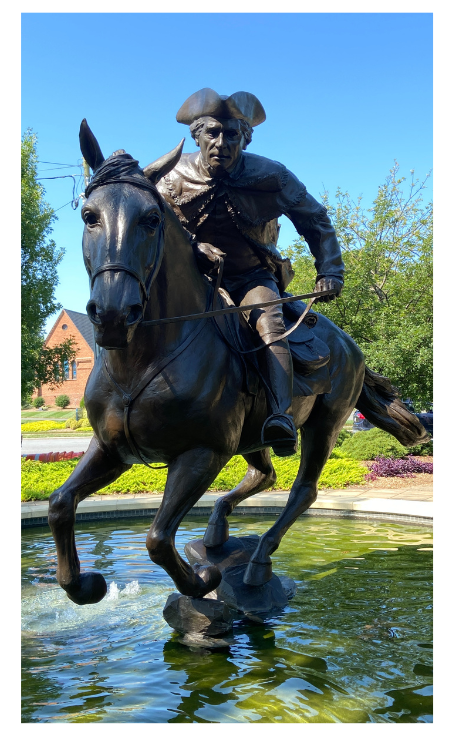
Captain James Jack’s legendary ride to Philadelphia, carrying news of Mecklenburg’s declarations to the Continental Congress, exemplifies this organized activism. While often compared to Paul Revere’s more famous midnight ride, Jack’s journey covered more than 500 miles through difficult terrain. The fact that the community could quickly select a messenger and coordinate such a mission demonstrates the level of political sophistication and preparation that existed in this supposedly frontier region. These were not impulsive rebels but organized revolutionaries who understood the importance of coordination and communication.

Legacy and Memory

The question of whether Mecklenburg County truly declared independence first, or whether the story represents wishful thinking and reconstructed memory, has occupied historians for two centuries. Five U.S. presidents – Taft, Wilson, Eisenhower, Ford, and George H.W. Bush – traveled to Charlotte to honor the claim, and North Carolina’s state flag and license plates proudly display “May 20, 1775” as the date of its first declaration of independence. This persistent commemoration reveals something important regardless of strict historical accuracy: the people of Mecklenburg County believed they acted first, and this belief shaped their understanding of their role in American independence.

In The First America Declaration of Independence?, Scott Syfert argues persuasively that the controversy over authenticity has obscured the more significant historical reality: Mecklenburg County residents did take radical steps toward independence remarkably early in the revolutionary process. Whether the exact language of the May 20 declaration is precisely as remembered matters less than the documented fact that this region rejected British authority in concrete, organized ways before most other American communities. The Mecklenburg Resolves of May 31, 1775, which survive in multiple contemporary accounts, established local governance independent of Crown authority and explicitly rejected parliamentary control.

A Distinctly Southern Revolution

The development of the patriot mindset in Mecklenburg County represents a distinctly Southern contribution to American revolutionary thought. Unlike New England, where merchant interests and urban intellectuals often led resistance, or the Chesapeake, where plantation aristocrats debated rights and representation, North Carolina’s backcountry revolution emerged from Scots-Irish settlers, Presbyterian theology, frontier pragmatism, and accumulated grievances against both colonial and imperial authority.

This revolutionary spirit drew from deep wells of cultural memory, religious conviction, intellectual sophistication, and practical necessity. The Scots-Irish brought resistance in their bones, forged through generations of discrimination. Presbyterian theology provided moral justification for questioning unjust authority. Princeton-educated leaders offered philosophical frameworks for understanding natural rights and legitimate government. And the practical experience of frontier life created communities accustomed to self-reliance and collective decision-making.

When these elements converged in May 1775, Mecklenburg County was prepared to do what seemed radical elsewhere: declare independence not tentatively or hypothetically, but as a concrete political reality. Whether historians ultimately validate every detail of the traditional account matters less than recognizing the genuine revolutionary fervor that existed in this remote corner of North Carolina. The patriot mindset did not begin in Philadelphia or Boston alone; it was simultaneously igniting in places like Charlotte, where different histories and distinct grievances produced the same conclusion: that free people must govern themselves or cease to be free.

The story of Mecklenburg County’s revolutionary development challenges us to recognize the multiple origins and diverse sources of American independence. The Revolution was not one movement but many, not one declaration but several, not one founding moment but an extended process of communities across thirteen colonies reaching similar conclusions through different paths. 

In understanding how the patriot mindset developed in North Carolina’s backcountry, we gain a richer, more complete picture of how America became independent – not through singular genius in a single place, but through the converging determination of many communities, each with its own story of resistance, its own declaration of freedom, and its own claim to have helped light freedom’s first flame.


A Note On This Series

This journey through Revolutionary history is as much about the evolution of historical understanding as the Revolution itself. History isn’t static – each generation reinterprets the past through its own concerns, asking different questions and prioritizing different sources. By reading these books in dialogue across 250 years, we’ll witness how scholarship evolves, how narratives get challenged, and how forgotten stories resurface.

This isn’t about declaring one interpretation “right” and another “wrong,” but appreciating the richness that emerges when multiple perspectives illuminate the same transformative moment. These books won’t provide definitive answers – history rarely does – but they equip us to think more clearly about how real people facing genuine uncertainty chose independence, how ideas had consequences, and how the work of creating a more perfect union continues. As we mark this anniversary, we honor the Revolutionary generation by reading deeplythinking critically, and engaging seriously with both the brilliance and blind spots of what they created.


You can find the entire series listing here.

Beyond the Pile: How Our Shelfies Tell the Stories We Live

Today on #NationalShelfieDay – Wednesday, January 28th – readers worldwide will point their cameras at their bookshelves, capturing everything from meticulously organized libraries to precarious towers threatening imminent collapse. But hidden within these snapshots lies something far more revealing than mere book collections – they’re intimate portraits of our intellectual journeys, visual maps of the curiosities that shape our lives, and honest documentation of the beautiful tension between who we are and who we aspire to become.

The Honest Geography of Reading Life

While social media often demands perfection, the most compelling shelfies embrace chaos with pride. These are the photographs that reveal coffee-stained bookmarks jutting from half-finished volumes, library loans teetering atop personal purchases in gravity-defying arrangements, and that one book that’s been sitting unread for three years but might be perfect for next month. They show books piled on nightstands, stacked beside reading chairs, or occupying that awkward space between the bookshelf and the wall where they’ve somehow established permanent residence.

These unvarnished captures resonate because they reflect reality. Our book piles aren’t failures of reading discipline but rather evidence of active, engaged literary lives. Each book waiting represents curiosity sparked, a recommendation followed, or an impulse honored. Together, they form physical manifestations of intellectual ambition, visible proof that our reading appetite consistently outpaces our available time.

When Collections Become Conversations

Yet beyond the TBR pile lies an even more fascinating phenomenon: the specialized collection. These aren’t random accumulations but carefully curated conversations across time, perspective, and expertise. Look closely at any serious reader’s shelfie, and you’ll discover entire sections devoted to subjects that have captured their imagination and refused to let go.

Consider my ultimateand always growing – Disney collection, numbering over 500 volumes, dating from 1939 to current releases. Under the watchful eye of Engineer Mickey, these books represent more than fandom – they document my ongoing fascination with Walt Disney the man, childhood memories of Disney, and participating in some of the best leadership and hospitality practices that exist. This isn’t hoarding; it’s scholarship pursued with passion.

Or examine my Bridges collection, where each spine represents the human drive to connect, to overcome obstacles, to span the impossible. These books ask us to envision a world without bridges – London without crossings over the Thames, Manhattan as a truly isolated island, San Francisco cut off from both north and south. Understanding the stories behind our bridges fosters deeper appreciation for their history and provides insight into the humanity of engineers and engineering itself. It’s a collection that celebrates both literal and metaphorical connections.

The Power of Synoptical Reading

Among the most intriguing shelfies are those built around synoptical reading – gathering books by various authors around similar subjects for comparison and expansion of knowledge. These collections transform the humble book pile from random accumulation into curated symposium. They demonstrate reading as an active pursuit of knowledge rather than passive entertainment.

My culinary collection spans everything from childhood meals and family cooking traditions to professional restaurant management and food history. This culinary shelfie documents a family deeply embedded in food culture: a mother who became a caterer, an oldest son whose twenty-year career has taken him from pizza baker to pastry chef to restaurant general manager, a youngest son who pursued Culinary Arts at Johnson & Wales and now manages events at a university. Each book in this collection doesn’t just represent recipes – it captures lessons about life, work, family, and the connections forged around tables.

The Sherlock Holmes collection tells a different story of reading evolution. It begins with one book – Michael Dirda’s “On Conan Doyle, Or, The Whole Art of Storytelling” – that piqued curiosity and left me hungry for more, rereading all the stories from my young adult years. Dirda’s passionate celebration of Conan Doyle as a master storyteller cast new light on classic detective stories, inspiring deeper exploration. For avid readers, finishing one book is often just the beginning of a journey into a new subject or author. A great book has a way of leaving you wanting to dive deeper into the world or ideas it exposed you to.

This approach becomes incredibly powerful because it reveals how ideas evolve over time, exposes the blind spots that individual authors might miss, and often leads to insights that none of the original writers could have reached alone. In our current world of endless information streams, synoptical reading is less about consuming more content and more about becoming a thoughtful curator who can weave together the best thinking on complex topics into something genuinely illuminating.

The Unexpected Collections

Sometimes our shelfies reveal passions that surprise even ourselves. Who accumulates an entire collection devoted to hamburgers? Guilty. Someone who understands that even simple things reveal complexity when examined from multiple angles – literary, culinary, and what I cheerfully admit is “arbitrary: based on random choice or my personal whims.” From humble beginnings to current status as a global icon, the burger has cemented its place in hearts and stomachs worldwide. Diving into books about burgers becomes not just about savoring deliciousness but appreciating rich history and cultural significance.

The donut collection explores similar territory. For many, the humble donut is far more than a sweet treat – it’s a symbol of comfort, a trigger for nostalgia, and a wonderful nod to American culinary ingenuity.

These delightful rings of fried dough have spun their way through centuries, leaving a delicious trail of history, personal memories, and significant business lessons in their wake. To find the “hole” truth requires jumping headlong into books that explore the multifaceted world of donuts, from fascinating origins to status as global icons.

The history of donuts in America is a testament to their enduring appeal. From Dutch settlers to modern-day gourmet bakers, each era has contributed to the rich tapestry of donut lore. So next time you savor a donut, remember that you’re partaking in a delicious slice of American history.

Literary Pilgrimages and Family Legacies

Some collections document decades-long relationships with particular authors or universes. My Tolkien collection began in junior high with “The Hobbit” and “The Lord of the Rings” and expanded over subsequent decades to include not only multiple re-readings but all of Tolkien’s published and unpublished works, plus books written about Tolkien’s work by other authors. These aren’t books merely owned – they’re territories explored and re-explored, landscapes that continue shaping how we think, feel, and dream.

The Stephen Hunter collection traces another kind of journey – following Bob Lee Swagger, “the Nailer,” through a sprawling multi-generational saga that meticulously builds a family legacy of marksmen, lawmen, and warriors stretching back over two hundred years. Since 1993’s “Point of Impact,” readers have followed not just one hero but an entire lineage, understanding that sometimes our greatest stories aren’t contained in single volumes but unfold across entire series that demand shelf space and loyalty.

The Library Connection

Many shelfies inadvertently capture another truth about modern reading life: the integration of library books into personal collections. Some readers intermingle borrowed volumes with purchased ones, creating temporary arrangements that shift weekly. Others maintain separate, highly visible locations for library loans – for me, just outside my office door – allowing them to stay top of mind, handy to grab coming or going, so as to always have one or more in process.

These arrangements tell stories of resourcefulness, of readers who understand that ownership and engagement aren’t synonymous, who build relationships with their local libraries and librarians. The weekly library pilgrimage has become ritual for many readers like me, a sacred appointment appearing in calendars alongside work meetings and social obligations. These visits yield not just books but the pleasure of discovery, the satisfaction of completing one reading mission while embarking on another.

The Perfect Imperfect Shelfie

On National Shelfie Day, resist the urge to tidy or curate excessively. The best shelfies capture reading life as it actually exists, complete with precarious stacks, mixed genres, and honest documentation of intellectual ambitions. 

When thousands of readers share photographs of their own literary accumulations, shame dissolves. We see ourselves reflected in others’ stacks and towers, recognizing that our reading ambitions outpacing our reading time is universal rather than personal failure. There’s genuine pleasure in acquiring books that exists independently from reading them. Each new addition represents possibility and promise, another potential adventure or insight waiting just beyond the current read.

These honest captures celebrate not just the books we’ve read but those we aspire to read, not just our literary accomplishments but our ongoing ambitions. They document the beautiful tension between finite time and infinite curiosity, between the books we’ve finished and the worlds still waiting to be explored.

Your National Shelfie Day Challenge

Here’s your mission for today, should you choose to accept it:

First, locate all your book piles. Yes, all of them. The one on your nightstand, the stack hiding behind your bedroom door, those books camouflaged among decorative pillows on your couch, and the collection you’ve strategically positioned to block that wall stain you keep meaning to paint over. 

Next, photograph your book piles exactly as they exist in their natural habitat. Post with pride, and tag it so fellow bibliophiles can find you. Bonus points if you can count how many books are in your pile without having to actually count them twice. Double bonus points if you admit in your caption which books have been sitting unread the longest.

Capture your collections – whatever they may be. Share your collections, the cookbooks, the mystery series, the professional development texts, the hobby guides, the literary fiction, the guilty pleasures. Show us the collections that tell your story, that map your curiosities, that reveal the subjects you can’t stop exploring from multiple angles.

This is your intervention and your celebration rolled into one. I’m not here to shame anyone’s book pile. I’m here to document it, share it, and collectively acknowledge that we’re all in this beautiful, ridiculous predicament together – surrounded by more books than we can read in several lifetimes, yet somehow always eyeing that next title, planning that next library visit, making room for just one more.

Because ultimately, our shelfies don’t just show what we read. They show who we are, who we’ve been, and who we hope to become. They’re visual autobiographies written in spines and dust jackets, honest portraits of lives lived in pursuit of knowledge, beauty, adventure, and understanding.

So point your camera. Capture your chaos. Share your stories.

Your move, reader.


Part of a regular series on 27gen, entitled Wednesday Weekly Reader.

During my elementary school years one of the things I looked forward to the most was the delivery of “My Weekly Reader,” a weekly educational magazine designed for children and containing news-based current events.

It became a regular part of my love for reading, and helped develop my curiosity about the world around us.
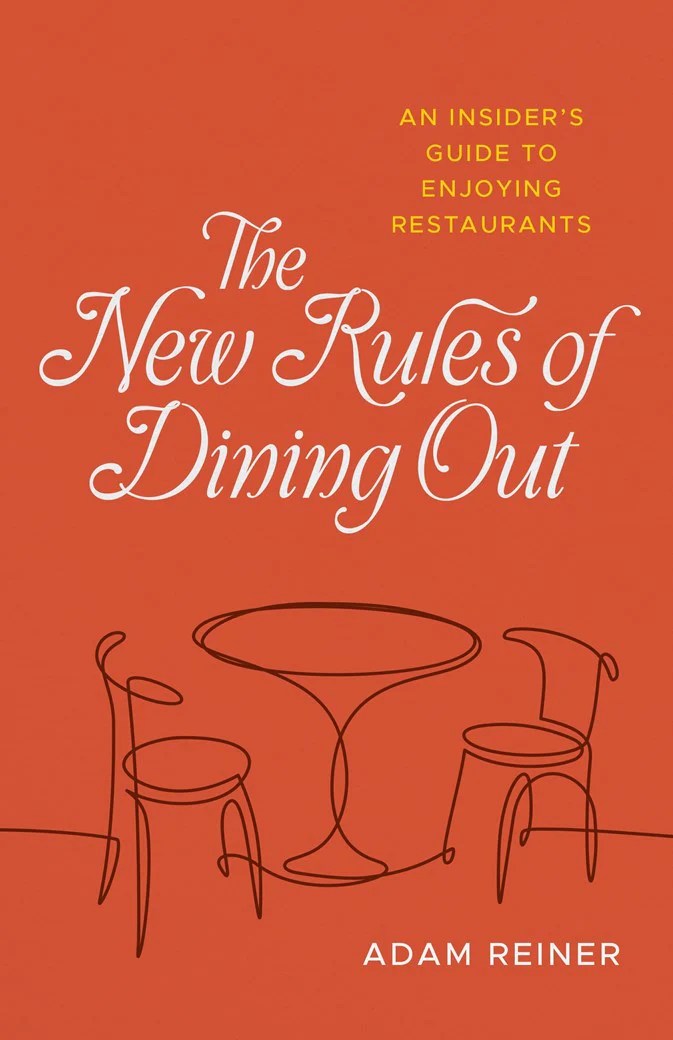
Three Empires, One Continent: The Race for North America


January and February – Seeds of Rebellion Part Two

As previously discussed, Taylor’s continental approach reveals that North America was never destined to become an English-speaking nation. For nearly three centuries, the outcome remained genuinely uncertain as Spanish, French, and British empires pursued radically different colonial strategies across the continent. Understanding why Britain ultimately gained the upper hand requires examining not triumphalist inevitability, but the specific demographic, economic, and military factors that determined outcomes among competing visions of what “America” would become. Each empire brought distinct goals and methods to colonization, creating what Taylor describes as “new worlds compounded from the unintended mixing of plants, animals, microbes, and peoples on an unprecedented scale.” By the mid-eighteenth century, these competing imperial projects had produced dramatically different results – setting the stage for the dramatic events that would culminate in the American Revolution.

When European powers first cast their eyes westward across the Atlantic in the late fifteenth and early sixteenth centuries, North America represented an almost unimaginable prize: vast territories, untapped resources, and the promise of wealth and strategic advantage. Three nations – Spain, France, and Britain – would emerge as the dominant colonial powers on the continent, each pursuing distinctly different strategies shaped by their unique motivations, resources, and relationships with indigenous peoples.

Spain: The Pioneer of Empire

Spain arrived first and dreamed biggest. Emboldened by Christopher Columbus’s voyages and driven by the spectacular wealth extracted from Mexico and Peru, Spanish conquistadors and missionaries pushed northward into what is now the American Southwest and Southeast. Their colonial model was one of extraction and conversion: find precious metals, establish missions to convert Native Americans to Catholicism, and create a hierarchical society that mirrored the rigid class structures of Spain itself.

Spanish colonization followed the pathways of rumor and hope. Expeditions like those of Hernando de Soto through the Southeast and Francisco Vásquez de Coronado into the Southwest sought cities of gold that existed only in imagination. What they established instead was a chain of missions, presidios (military forts), and small settlements stretching from Florida through Texas, New Mexico, Arizona, and into California. St. Augustine, founded in 1565, became the first permanent European settlement in what would become the United States – predating Jamestown by more than four decades.

However, Spain’s North American colonies never matched the wealth of its holdings farther south. The indigenous populations were smaller and more dispersed than in Mesoamerica, and the fabled gold never materialized in significant quantities. Spanish settlements remained thinly populated, heavily dependent on a coercive labor system that exploited Native Americans, and primarily served as defensive buffers protecting the more valuable territories of New Spain. By the eighteenth century, Spanish colonization had created an impressive geographic footprint but lacked the demographic and economic dynamism that would prove crucial in the imperial competition ahead.

France: Masters of the Interior

France took a different approach entirely. Rather than establishing densely populated agricultural colonies, French explorers and traders penetrated deep into the continental interior, following the St. Lawrence River, the Great Lakes, and the Mississippi River system. From Quebec, founded in 1608, French influence spread westward and southward, creating a vast arc of territory that technically stretched from Canada to the Gulf of Mexico.

The French colonial model was built on adaptation and alliance. French traders, particularly the coureurs de bois (runners of the woods), integrated themselves into indigenous trading networks, often marrying Native American women and adopting local customs. The fur trade became the lifeblood of New France, exporting beaver pelts and other furs to insatiable European markets. Jesuit missionaries worked to convert indigenous peoples, though often with more respect for existing cultures than their Spanish counterparts demonstrated.

This approach had significant advantages. France maintained generally stronger alliances with Native American nations than either Spain or Britain, and French traders could operate across enormous distances with relatively small numbers. The downside was demographic: New France remained perpetually underpopulated. While British colonies attracted hundreds of thousands of settlers, French Canada struggled to grow beyond about 70,000 residents by the mid-eighteenth century. France’s colonial policies, which discouraged Protestant Huguenots from emigrating and focused settlement efforts on urban centers rather than agricultural expansion, meant that New France commanded vast territories but lacked the population to defend them effectively.

Britain: The Power of Numbers

British colonization began haltingly with the establishment of Jamestown in 1607 and Plymouth in 1620, but it accelerated rapidly throughout the seventeenth century. Unlike Spain’s extraction model or France’s trading networks, Britain’s colonies were fundamentally settlements – places where English, Scots-Irish, German, and other European migrants came to establish permanent communities, cultivate land, and recreate (or reimagine) the societies they had left behind.

The diversity of British colonization was remarkable. New England developed around Puritan religious communities, small-scale farming, fishing, and eventually maritime commerce and shipbuilding. The Middle Colonies became breadbaskets of grain production and models of relative religious tolerance. The Southern Colonies built plantation economies dependent on tobacco, rice, and indigo, increasingly reliant on enslaved African labor. This economic diversity created resilience and interconnected markets that strengthened the colonial system as a whole.

By the mid-eighteenth century, the British colonies boasted populations exceeding one million – dwarfing their French rivals and rendering Spanish Florida and the Southwest demographically insignificant by comparison. This population advantage translated into economic productivity, military manpower, and an ever-expanding hunger for land that pushed inexorably westward into territories claimed by France and inhabited by Native American nations.

Britain’s Ascendancy: Why the English Prevailed

Several factors explain Britain’s dominant position by the 1760s. First and most important was demography. The sheer number of British colonists created facts on the ground that neither French traders nor Spanish missionaries could match. More people meant more cleared land, more towns, more economic production, and more soldiers when conflicts arose.

Second, Britain’s constitutional system, for all its flaws, created a more dynamic economy than the absolutist monarchies of France and Spain. Property rights were better protected, entrepreneurship was encouraged, and colonial assemblies gave settlers a stake in their own governance that fostered loyalty and investment. The Navigation Acts tied colonial economies to Britain, but they also guaranteed markets and naval protection.

Third, British naval supremacy proved decisive. The Royal Navy could project power, protect maritime commerce, and prevent French and Spanish reinforcement of their colonies during wartime. The series of imperial wars culminating in the Seven Years’ War (1756-1763) demonstrated this advantage repeatedly.

Finally, Britain benefited from the weaknesses of its rivals. Spain’s empire was overextended and increasingly ossified. France faced the impossible task of defending an enormous territory with inadequate population and resources, particularly when facing Britain’s combination of naval power and demographic advantage.

The Irony of Success

The Treaty of Paris in 1763, ending the Seven Years’ War, marked the zenith of British power in North America. France ceded Canada and its claims east of the Mississippi. Spain surrendered Florida. Britain stood supreme, master of the Atlantic seaboard and beyond.

Yet this very success contained the seeds of imperial crisis. The war had been expensive, and Britain expected its prosperous colonies to help pay the costs. The colonists, having helped win the war and no longer facing French threats, increasingly questioned why they needed British rule at all. The very demographic and economic dynamism that had made the British colonies strong now made them confident and restive.

Britain had won the race for North America, but in doing so, it had created colonies powerful enough to imagine independence. The path to revolution would emerge not from weakness, but from strength – the ultimate irony of imperial triumph.


A Note on This Series

This journey through Revolutionary history is as much about the evolution of historical understanding as the Revolution itself. History isn’t static – each generation reinterprets the past through its own concerns, asking different questions and prioritizing different sources. By reading these books in dialogue across 250 years, we’ll witness how scholarship evolves, how narratives get challenged, and how forgotten stories resurface.

This isn’t about declaring one interpretation “right” and another “wrong,” but appreciating the richness that emerges when multiple perspectives illuminate the same transformative moment. These books won’t provide definitive answers – history rarely does – but they equip us to think more clearly about how real people facing genuine uncertainty chose independence, how ideas had consequences, and how the work of creating a more perfect union continues. As we mark this anniversary, we honor the Revolutionary generation by reading deeplythinking critically, and engaging seriously with both the brilliance and blind spots of what they created.


Color map by Jon Platek

You can find the entire series listing here.

Capturing the TBR: #LibraryShelfieDay and Our Towers of Literary Promise

In the digital age where everything from breakfast to sunsets demands photographic documentation, there exists one social media trend that book lovers have embraced with particular enthusiasm: the shelfie. This portmanteau of “shelf” and “selfie” has spawned its own unofficial holiday, #LibraryShelfieDay, celebrated each year as readers worldwide turn their cameras toward their bookshelves to share their literary landscapes with fellow bibliophiles.

Yet among the carefully curated collections and color-coordinated spines, one element appears in nearly every true reader’s shelfie with endearing inevitability: the TBR pile. For normal readers, TBR stands for To Be Read. However, when it comes to books, I am anything but normal! Books don’t come into my house unless they will be read – consequently, TBR means To Be Read and Re-Read for me!

Those precarious towers of books, stacked horizontally atop neatly shelved volumes or claiming entire sections of furniture, tell stories as compelling as any novel they contain.

The Honest Bookshelf

While some readers meticulously arrange their shelfies to present only finished reads or aesthetically pleasing arrangements, the most authentic captures embrace the chaos. These are the photographs that show books piled on nightstands, stacked beside reading chairs, or occupying that awkward space between the bookshelf and the wall. They reveal coffee-stained bookmarks protruding from half-finished volumes and library books teetering atop personal purchases in a delicate balance that defies both physics and organization.

These unvarnished shelfies resonate because they reflect reality. Your book pile – TBR or recently completed – isn’t a failure of reading discipline but rather evidence of an active, engaged literary life. Each book waiting to be read or re-read represents curiosity sparked, a recommendation followed, or an impulse honored. Together, they form a physical manifestation of intellectual ambition, visible proof that our reading appetite consistently outpaces our available time.

Geography of Literary Intention

My TBR arrangement tells its own story. Some maintain a single, ever-growing stack, adding new acquisitions to the top while theoretically working from the bottom up. Others scatter smaller collections throughout my office and home, creating thematic clusters or separating library loans from personal purchases. I typically organize by subject/theme, and then priority, placing must-reads within arm’s reach of my favorite reading spots. Occasionally, I embrace complete spontaneity, letting mood and moment determine my next selection.

The Japanese concept of tsundoku describes the act of acquiring books and letting them accumulate unread – what? While sometimes wielded as gentle accusation, most dedicated readers recognize themselves in this practice without shame. My TBR pile serves practical purposes beyond mere hoarding. It functions as insurance against the unthinkable scenario of having nothing new to read or something that demands a re-read, offers variety when reading moods shift unpredictably, and stands as tangible evidence of my commitment to future learning and growth.

Synoptical Stacks and Thematic Towers

Among the most intriguing book piles captured in #LibraryShelfieDay posts are those built around specific subjects or themes. These collections reveal readers pursuing deeper understanding through multiple perspectives. One might spot a tower of thought on home hospitality, three biographies of the same historical figure lined up together, or a cluster of novels from a particular literary movement awaiting comparative analysis. Science enthusiasts might display competing theories side by side, while philosophy readers gather texts in dialogue with one another.

Glancing at the images accompanying this article should provide the reader a clue into my reading habits and collections. I’m a HUGE synoptical reader – gathering books by various authors around similar subjects, for comparison and expansion of the knowledge of the subject.

This approach becomes incredibly powerful because it reveals how ideas evolve over time, exposes the blind spots that individual authors might miss, and often leads to insights that none of the original writers could have reached alone. In our current world of endless information streams, synoptical reading is less about consuming more content and more about becoming a thoughtful curator who can weave together the best thinking on complex topics into something genuinely illuminating.

These synoptical reading projects transform the humble book pile from random accumulation into curated symposium. They demonstrate reading as an active pursuit of knowledge rather than passive entertainment. Each book becomes part of a larger conversation, with the reader serving as moderator between different voices and viewpoints. The resulting shelfies document not just books owned but intellectual journeys planned.

The Library Connection

Many shelfies inadvertently capture another truth about modern reading life: the integration of library books into personal collections. Borrowed volumes intermingle with purchased ones, creating temporary arrangements that shift weekly. These mixed stacks tell stories of resourcefulness, of readers who understand that ownership and engagement aren’t synonymous, who build relationships with their local libraries and librarians. I don’t intermingle my weekly library “borrows” – they maintain a very visible location just outside my office door. This allows me to keep them top of mind and handy to grab coming or going, so as to always have one or more handy. Here’s the current crop, with a few more coming later today on my weekly visit to the library.

The weekly library pilgrimage has become ritual for many readers, a sacred appointment appearing in calendars alongside work meetings and social obligations. These visits yield not just books but the pleasure of discovery, the satisfaction of completing one reading mission while embarking on another. The resulting TBR piles blend personal investment with communal resources, private reading goals with public literary treasures.

Finding Joy in the Accumulation

Perhaps the most valuable insight shared through #NationalShelfieDay celebrations is the collective permission to embrace our book piles without guilt. When thousands of readers share photographs of their own literary accumulations, the shame dissolves. We see ourselves reflected in others’ stacks and towers, recognizing that our reading ambitions outpacing our reading time is universal rather than personal failure.

There’s genuine pleasure in acquiring books that exists independently from reading them. Each new addition to the book pile represents possibility and promise, another potential adventure or insight waiting just beyond the current read. These books don’t reproach us with their unread status; instead, they offer comfort through their mere presence, assurance that intellectual nourishment stands ready whenever we need it.

The Perfect Imperfect Shelfie

As #LibraryShelfieDay approaches next week, resist the urge to tidy or curate excessively. The best shelfies capture reading life as it actually exists, complete with precarious stacks, mixed genres, and that one book that’s been sitting unread for three years but might be perfect for next month. Include the library books with their due date slips visible, the impulse purchases still sporting bookstore bags, the gifts from well-meaning relatives who perhaps missed the mark on genre preferences.

These honest captures celebrate not just the books we’ve read but those we aspire to read, not just our literary accomplishments but our ongoing ambitions. They document the beautiful tension between finite time and infinite curiosity, between the books we’ve finished and the worlds still waiting to be explored.

So when #LibraryShelfieDay arrives next week, point your camera toward those towers of possibility. Capture your book pile in all its chaotic glory. Share it proudly, knowing that somewhere, countless other readers are doing the same, each of us celebrating not just our love of reading, but our optimistic, enduring belief that somehow, someday, we’ll get to them all.

The Library Shelfie Day Challenge

Here’s your mission for the coming week, should you choose to accept it

First, locate all your book piles. Yes, all of them. The one on your nightstand, the stack hiding behind your bedroom door, those books camouflaged among the decorative pillows on your couch, and the collection you’ve strategically positioned to block that wall stain you keep meaning to paint over. Resist the urge to organize them into something Instagram-worthy. Do not alphabetize. Do not arrange by color. Do not hide the romance novel with the embarrassing cover or the self-help book you bought during that 3 a.m. existential crisis. 

On #LibraryShelfieDay coming next Wednesday 1/28, photograph your book pile(s) exactly as they exist in their natural habitat, post it with pride, and tag it so fellow bibliophiles can find you. Bonus points if you can count how many books are in your pile without having to actually count them twice. Double bonus points if you admit in your caption which books have been sitting unread the longest. This is your intervention and your celebration rolled into one. We’re not here to shame anyone’s book pile. We’re here to document it, share it, and collectively acknowledge that we’re all in this beautiful, ridiculous predicament together. 

I’ll be expanding my #Shelfies from those you see here – will you join me?

Your move, reader.


Part of a regular series on 27gen, entitled Wednesday Weekly Reader.

During my elementary school years one of the things I looked forward to the most was the delivery of “My Weekly Reader,” a weekly educational magazine designed for children and containing news-based current events.

It became a regular part of my love for reading, and helped develop my curiosity about the world around us.