Conduct Visual Meetings to Boost Productivity

Do your meetings tend to suck the wind out of your team, instead of filling its sails?

There’s nothing more annoying than a meeting that goes on and on and on – except maybe a meeting that goes on and on and on AND doesn’t accomplish anything.

Many ministry teams fritter away precious time during meetings on unfocused, inconclusive discussion rather than rapid, well-informed decision making. The consequences are delayed decisions that lead to wasted resources, missed opportunities, and poor long-range planning.

Want more successful meetings? Try the following solution and your team will look forward to meetings instead of avoiding them.

Conduct visual meetings to boost productivity.

remix8-2fb1

THE QUICK SUMMARY – Visual Meetings, David Sibbett

Visual Meetings explains how anyone can implement powerful visual tools to facilitate both face-to-face and virtual group work. This dynamic and richly illustrated resource gives meeting leaders, presenters, and consultants a slew of exciting tricks and tools to unlock creativity, collaboration, and breakthrough thinking.

Using techniques like graphic recording, visual planning, story boarding, graphic templates, idea mapping and more, Visual Meetings will help you and your team communicate ideas more effectively and engagingly.

A SIMPLE SOLUTION

Used properly, a simple drawing is more powerful than any data spreadsheet or software presentation platform. It can help us crystalize ideas, think outside the box, and communicate in a way that other people simply “get.”

Over the last decade, the concept of utilizing visualization techniques has moved beyond a few talented practitioners to become available to – and useful for – any leader.

Anyone can clarify a problem or sell an idea by visually breaking it down using a simple set of visual-thinking tools. Thinking with pictures can help you discover and develop new ideas, solve problems in unexpected ways, and dramatically improve your ability to share your insights.

In my experience, visualizing meeting purposes and objectives is one of the most helpful things you can do to make a meeting work. And getting people involved early in talking about expectations and hoped-for outcomes is even more effective. Because people are free to imagine whatever they want and often do, this investment is the first step in focusing group intelligence.

The Power of Visual Meetings

Participation – Engagement explodes in meetings when people are listened to and acknowledged by having what they say recorded in an interactive, graphic way.

Big Picture Thinking – Groups get much smarter when they can think in big picture formats that allow for comparisons, pattern finding, and idea mapping.

Group Memory – Creating memorable media greatly increases group memory and follow-through – a key to productivity.

Benefits of Visualization

  • Visual recording in a meeting immediately acknowledges that someone was heard and how they were heard in ways that verbal communication alone does not.
  • Working visually is deeply integrative – it combines both visual (right brain) and verbal (left brain) ways of operating with interaction and physical movement.
  • Graphic displays can contain contradictory information on the same sheet of paper, softening the either/or thinking that our spoken language reinforces.
  • Working with graphic metaphors allows people to talk directly about how they are making sense of things.
  • Working with visual imagery taps people’s imagined realms, making the stuff of hopes and dreams, intentions, and visions more accessible.
  • Arranging information on pages or wall displays addresses not only the individual words and symbols, but also their overall interconnections and organization.
  • Translating from spoken word to visual representation forces everyone to become conscious of the patterns in both.

David Sibbet, Visual Meetings

A NEXT STEP

In order to start your team thinking about a visual meeting, you have to begin before the meeting. Consider taking these actions in advance of your next team meeting:

  • Create a poster with a catchy title and simple graphic image and place it at eye level outside your meeting room door.
  • Using a chart tablet or white board, have meeting participants sign in with their first name and a pressing issue or question related to your meeting.
  • Prior to the meeting, visually list your agenda on a chart tablet or white board.
  • Using a chart tablet, create a scorecard listing decisions made, action items agreed on, and individual responsible. During successive meetings update and add to this scorecard as needed.
  • During the meeting, ask participants to visually illustrate the conversation and decisions of the meeting. Build in time at the end of the meeting for each participant to briefly share his or her “visual notes” with the rest of the team.

After one month of following the above actions, schedule one hour to review, evaluate, and revise your team’s use of visual meeting practices.

Many church leaders view meetings as a necessary evil to accomplish ministry assignments and tasks. The solution presented above demonstrates that not all meetings are necessary, and the right kind of meeting doesn’t have to be evil.


Part of a weekly series on 27gen, entitled Wednesday Weekly Reader

Regular daily reading of books is an important part of my life. It even extends to my vocation, where as Vision Room Curator for Auxano I am responsible for publishing SUMS Remix, a biweekly book “summary” for church leaders. I’m going to peruse back issues of both SUMS and SUMS Remix and publish excerpts each Wednesday.

You can find out more information about SUMS Remix here. Subscribe to SUMS Remix here.

Do You Communicate a Lot, But Don’t Consider Yourself a Great Storyteller?

Have your eyes ever glazed over as a speaker drones on and one, spouting statistics and facts? Do you even remember anything an hour later? What about the next day?

Now it’s your turn to be in front of your team. How are you going to reach and connect with them?

Do you communicate a lot, but don’t consider yourself a great storyteller?

It’s time to reach back in human history, and turn to the power of the story.

Storytelling has existed as the primary means of communicating among people even long before writing was developed. Success was measured by how much the audience remembered and a high value was placed on techniques that helped people remember things.

In spite of all the technological marvels available to leaders today, the simple but powerful use of a story often translates your ideas into realities in the listener’s minds. Stories are effective when they lodge in the heart of the listener, and are then acted on.

Solution #3 Make the listener, not you, the hero of your story

THE QUICK SUMMARY – Resonate, by Nancy Duarte

sums-remix-3Resonate leverages techniques normally reserved for cinema and literature, revealing how to transform any story into an engaging journey. Using the techniques in Resonate, you’ll be able to:
  • Leverage the hidden story structures inherent in great communication
  • Connect with your audience empathetically
  • Create captivating content
  • Craft ideas that get repeated
  • Inspire enthusiasm and support for your vision

Stories are the most powerful delivery tool for information, more powerful and enduring than any other art form.

A Simple Solution

Wouldn’t you like to have your audience leaning forward in their seats, anticipating the next few words you will be saying? A great story has that effect on listeners, and it begins with making the listener the hero of your story.

When trying to connect with someone while telling a story, you have to remember that it’s not all about you.

You are not the hero who will save the audience; the audience is your hero.

You need to defer to your audience because if they don’t engage and believe in your message, you are the one who loses. Without their help, your idea will fail.

Leaders need to take this to heart, place the people in the audience at the center of the action, and make them feel that the presentation is addressing them personally.

So what’s your role, then? You are the mentor. The audience is the one who’ll do all the heavy lifting to help you reach your objectives. You’re simply one voice helping them get unstuck in their journey.

When you change your stance from thinking you’re the hero to acknowledging your role as a mentor, you will find your viewpoint altered. A mentor has a selfless nature and is willing to make a personal sacrifice so that the hero can reach the reward. Audience insights and resonance can only occur when a presenter takes a stance of humility.

Nancy Duarte, Resonate

A NEXT STEP

Changing your stance from that of the hero to one of the storyteller will connect the listeners to your idea and make them the hero. When listeners become the hero and connect to your idea, they will change.

Good church leaders are telling stories all the time. As you prepare for your next leadership speaking opportunity it’s easy to become the center of the story. Remember to make the listener the hero instead of you.

By offering a clear choice of what is (their present situation) with what could be (a better future), the people you lead become the hero. As you preach, are you making members of the congregation the hero? When you lead your church in a capital campaign, they are the heroes. As a team leader, your team should be the hero. In a small group, the group members are the hero.

Of course, every story related to the Gospel makes Jesus the hero.

Ultimately, you need to make your story about Jesus.

How will you know if you are becoming more effective with your stories? It’s simple: you will be accomplishing whatever you had hoped to accomplish by telling the story in the first place.

It’s time for you to step out and lead through your stories!


Part of a new series on 27gen, entitled Wednesday Weekly Reader

Regular daily reading of books is an important part of my life. It even extends to my vocation, where as Vision Room Curator for Auxano I am responsible for publishing SUMS Remix, as biweekly book “summary” for church leaders. I’m going to peruse back issues of both SUMS and SUMS Remix and publish excerpts each Wednesday.

You can find out more information about SUMS Remix here. Subscribe to SUMS Remix here.

The Top 15 Books of 2015 – from My Perspective

Each year during the last week of the year, the posts here at 27gen usually focus on the topic of books. My last post of the year features my top books of the year. Here’s the deal:

It’s a very subjective list – okay? The only thing all the titles have in common is that they were published in 2015. That, and each book spoke to me in a meaningful way.

As mentioned in a previous post, I read a lot – but usually focus in four areas. Naturally, my Top 15 choices are going to come from these areas.

There are some really good books out there that I am aware of that did not make it into my reading cycle, so they aren’t included. It doesn’t mean they weren’t great books, just that I didn’t read them.

Here, then, are my Top 15 Books of 2015, in no particular order.

The Experience: The 5 Principles of Disney Service and Relationship Excellence, Bruce Loeffler and Brian Church

Dare to Serve: How to Drive Superior Results by Serving Others, Cheryl Bachelder

Yes, And: How Improvisation Reverses, “No, But” Thinking and Improves Creativity and Collaboration – Lessons from The Second City, Kelly Leonard

Communicate to Influence: How to Inspire Your Audience to Action, Ben Decker

Team of Teams: New Rules of Engagement for a Complex World, General Stanley McChrystal

Reframe: Shift the Way Your Work, Innovate, and Think, Mona Patel

X: The Experience When Business Meets Design, Brian Solis

Before Ever After: The Lost Lectures of Walt Disney’s Animation Studio, Don Hahn

The Wright Brothers, David McCullough

Rising Strong, Brené Brown

How to Fly a Horse: The Secret History of Creation, Invention, and Discovery, Kevin Ashton

The Achievement Habit: Stop Wishing, Start Doing, and Take Command of Your Life, Bernard Roth

No Sweat: How the Simple Science of Motivation Can Bring You a Lifetime of Fitness, Michelle Segar

Brand Flip: Why Customers Now Run Companies and How to Profit From It, Marty Neumeier

Gaining by Losing: Why the Future Belongs to Churches That Send, J.D. Greear

Today we close out 2015, tomorrow ushers in 2016, and whole new worlds are waiting to be discovered – in books.

EinsteinonBooks1

Favorite Books of 2014, Part 2

Yesterday I introduced my first 7 books on my favorite books published in 2014; you can read it here.

Here are the remaining 7 books:

Curious about these books? Read on!

InnovatorsThe Innovators, Walter Isaacson

The Innovators is Walter Isaacson’s revealing story of the people who created the computer and the Internet. It is destined to be the standard history of the digital revolution and an indispensable guide to how innovation really happens.

What were the talents that allowed certain inventors and entrepreneurs to turn their visionary ideas into disruptive realities? What led to their creative leaps? Why did some succeed and others fail?

This is the story of how their minds worked and what made them so inventive. It’s also a narrative of how their ability to collaborate and master the art of teamwork made them even more creative.

AMoreBeautifulQuestionA More Beautiful Question, Warren Berger

In this groundbreaking book, journalist and innovation expert Warren Berger shows that one of the most powerful forces for igniting change in business and in our daily lives is a simple, under-appreciated tool—one that has been available to us since childhood. Questioning—deeply, imaginatively, “beautifully”—can help us identify and solve problems, come up with game-changing ideas, and pursue fresh opportunities. So why are we often reluctant to ask “Why?”

Berger shows, the most creative, successful people tend to be expert questioners. They’ve mastered the art of inquiry, raising questions no one else is asking—and finding powerful answers.

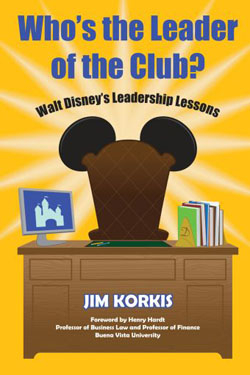
WhosTheLeaderofTheClubWho’s the Leader of the Club, Jim Korkis

Acclaimed Disney expert Jim Korkis tells the stories of what Walt did right, what he did wrong, and how you can follow in his footsteps. Drawing upon his unparalleled knowledge of the Disney Company and its legacy, Korkis distills the essence of Walt Disney’s leadership principles into an exciting narrative of popular history and self-help.

You’ll read not just about what Walt did but why he did it, and how you can apply the lessons to your own life or your own enterprise.

DoodleRevolutionThe Doodle Revolution, Sunni Brown

What did Einstein, JFK, Edison, Marie Curie, and Henry Ford have in common? They were all inveterate doodlers. These powerhouse minds knew instinctively that doodling is deep thinking in disguise—a simple, accessible, and dynamite tool for innovating and solving even the stickiest problems.

Sunni Brown’s mission is to bring the power of the Doodle to the rest of us. She leads the Revolution defying all those parents, teachers, and bosses who say Stop doodling! Get serious! Grow up! She overturns misinformation about doodling, demystifies visual thinking, and shows us the power of applying our innate visual literacy.

Doodling has led to countless breakthroughs in science, technology, medicine, architecture, literature, and art. And as Brown proves in this inspiring, empowering book, it can help all of us think and do better in whatever fields we pursue.

With passion and wit, Brown guides you from the basic Doodle all the way to the formidable “Infodoodle”—the tight integration of words, numbers, images, and shapes that craft and display higher-level thinking.

MythsofCreativityThe Myths of Creativity, David Burkas

We tend to think of creativity in terms reminiscent of the ancient muses: divinely-inspired, unpredictable, and bestowed upon a lucky few. But when our jobs challenge us to be creative on demand, we must develop novel, useful ideas that will keep our organizations competitive. The Myths of Creativitydemystifies the processes that drive innovation. Based on the latest research into how creative individuals and firms succeed, David Burkus highlights the mistaken ideas that hold us back and shows us how anyone can embrace a practical approach, grounded in reality, to finding the best new ideas, projects, processes, and programs.

LifeAnimatedLife, Animated, Ron Suskind

Imagine being trapped inside a Disney movie and having to learn about life mostly from animated characters dancing across a screen of color. A fantasy? A nightmare? This is the real-life story of Owen Suskind, the son of the Pulitzer Prize-winning journalist Ron Suskind and his wife, Cornelia. An autistic boy who couldn’t speak for years, Owen memorized dozens of Disney movies, turned them into a language to express love and loss, kinship, brotherhood.The family was forced to become animated characters, communicating with him in Disney dialogue and song; until they all emerge, together, revealing how, in darkness, we all literally need stories to survive.

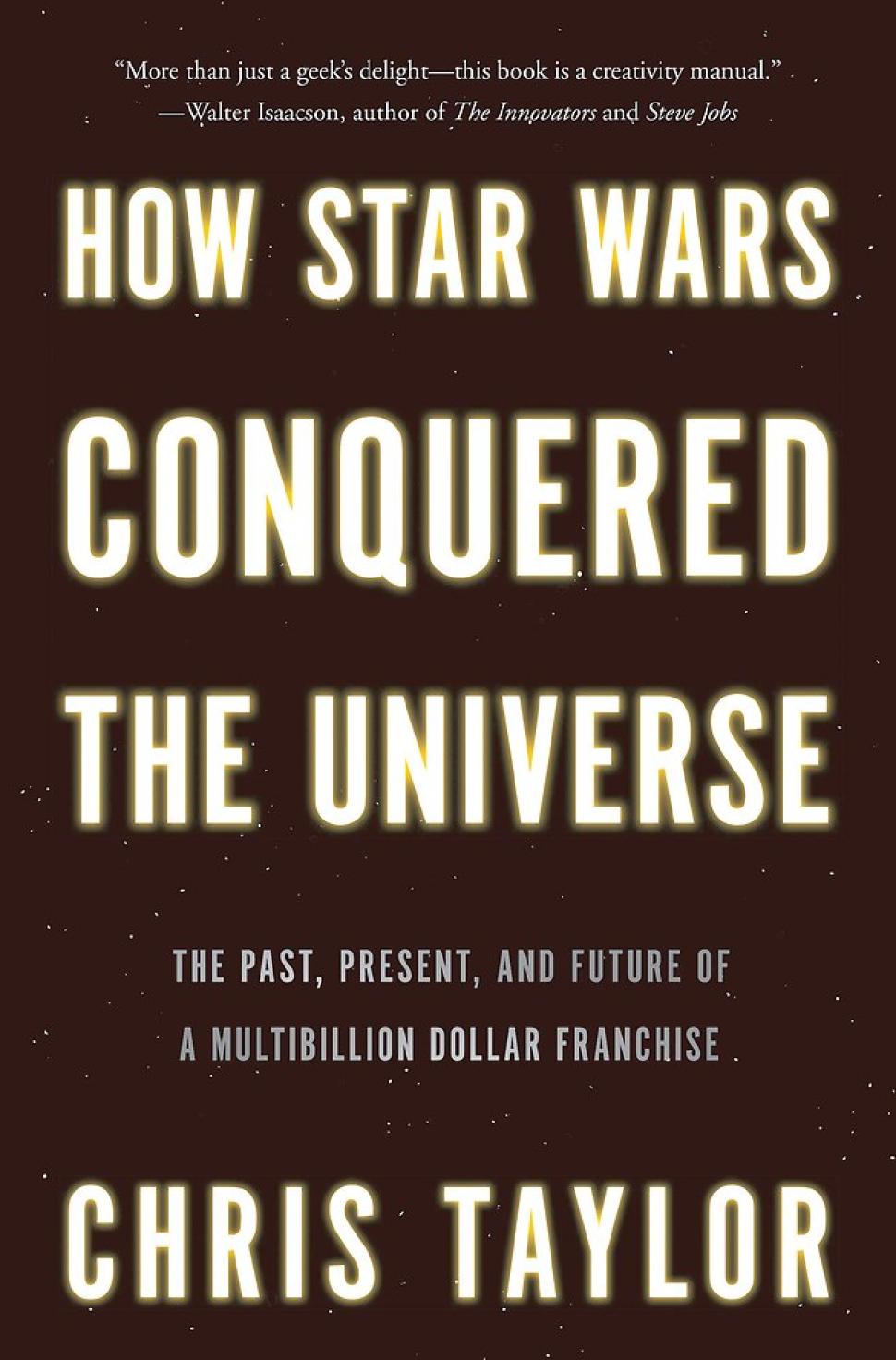
HowStarWarsConqueredUniverseHow Star Wars Conquered the Universe

In How Star Wars Conquered the Universe, veteran journalist Chris Taylor traces the series from the difficult birth of the original film through its sequels, the franchise’s death and rebirth, the prequels, and the preparations for a new trilogy. Providing portraits of the friends, writers, artists, producers, and marketers who labored behind the scenes to turn Lucas’s idea into a legend, Taylor also jousts with modern-day Jedi, tinkers with droid builders, and gets inside Boba Fett’s helmet, all to find out how Star Wars has attracted and inspired so many fans for so long.

Since the first film’s release in 1977, Taylor shows, Star Wars has conquered our culture with a sense of lightness and exuberance, while remaining serious enough to influence politics in far-flung countries and spread a spirituality that appeals to religious groups and atheists alike. Controversial digital upgrades and poorly received prequels have actually made the franchise stronger than ever. Now, with a savvy new set of bosses holding the reins and Episode VII on the horizon, it looks like Star Wars is just getting started.

An energetic, fast-moving account of this creative and commercial phenomenon, How Star Wars Conquered the Universe explains how a young filmmaker’s fragile dream beat out a surprising number of rivals to gain a diehard, multigenerational fan base—and why it will be galvanizing our imaginations and minting money for generations to come.


That’s it for 2014. My reading list for 2015 is already underway – Amazon is making a delivery tomorrow, and I’ve just received an email from the library – a book I’ve got on hold just came in.

What will you be reading?

Favorite Books of 2014, Part 1

It’s time to close out the reading year – just in time to start a new one!

A quick review of the numbers:

  • Purchased or review copies of books – 93
  • Library books checked out – 91
  • Kindle books downloaded – 55

That’s 239 books read in 2014, averaging over 4 a week. I’m not a speed-reader per se, but I do read fast – and I don’t read everything in every book.

Of course, reading is a big part of my role as Vision Room Curator at Auxano, so that gives me a definite advantage! Reading is also my main hobby, so even my “down” time often finds me with a book in hand.

In no particular order, here are the first 7 of my 14 favorite books published in 2014.

You can read the rest of the list tomorrow.

I realize this is a very arbitrary list, and has several books that may not seem like leadership books. No apologies there – I happen to believe that leaders in organizations of every size and type have a LOT to learn about their customers (all organizations have customers – we just call them different names). I also believe that all organizations need leaders who are creative and innovative in all areas. Finally, I believe that organizations need leaders who understand the power of simplicity.

Curious? If you’re interested in more than just the title, read on!

WhatGreatBrandsDoWhat Great Brands Do, Denise Lee Yohn

Some business leaders think of brands only in terms of messages and marketing tactics because that’s all they know. Others want a quick fix and would rather change what they say about themselves rather than actually change. Still others understand the full business value of a brand but lack the tools and methods to realize it. What Great Brands Do by Denise Lee Yohn will educate the first group, persuade the second, and equip the last.

MomentsofImpactMoments of Impact, Chris Ertel and Lisa Kay Solomon

Great strategic conversations generate breakthrough insights by combining the best ideas of people with different backgrounds and perspectives. In this book, Chris Ertel and Lisa Kay Solomon “crack the code” on what it takes to design creative, collaborative problem-solving sessions that soar rather than sink.

CreativityInc2Creativity, Inc., Ed Catmull

Creativity, Inc. is a book for managers who want to lead their employees to new heights, a manual for anyone who strives for originality, and the first-ever, all-access trip into the nerve center of Pixar Animation—into the meetings, postmortems, and “Braintrust” sessions where some of the most successful films in history are made. It is, at heart, a book about how to build a creative culture—but it is also, as Pixar co-founder and president Ed Catmull writes, “an expression of the ideas that I believe make the best in us possible.”

EssentialismEssentialism, Greg McKeown

The Way of the Essentialist by Greg McKeown isn’t about getting more done in less time. It’s about getting only the right things done.  It is not  a time management strategy, or a productivity technique. It is a systematic discipline for discerning what is absolutely essential, then eliminating everything that is not, so we can make the highest possible contribution towards the things that really matter.

46RulesofGeniusThe 46 Rules of Genius, Marty Neumeier

There’s no such thing as an accidental genius. Anyone who’s reached that exalted state has arrived there by design. But simply wanting to get there is not enough. A would-be genius also needs a theoretical framework, a basic compass, a set of principles to guide the way forward.

Marty Neumeier, acclaimed author of The Brand Gap and Metaskills, has compressed the wisdom of the ages into the first “quick start guide” for genius46 glittering gems that will light your path to creative brilliance. This is THE essential handbook for designers, entrepreneurs, marketers, educators, artists, scientists, innovators, and future leaders in every field.

BriefBrief, Joseph McCormack

Author Joe McCormack tackles the challenges of inattention, interruptions, and impatience that every professional faces. His proven B.R.I.E.F. approach, which stands for Background, Relevance, Information, Ending, and Follow up, helps simplify and clarify complex communication. BRIEF will help you summarize lengthy information, tell a short story, harness the power of infographics and videos, and turn monologue presentations into controlled conversations.

HowTheWorldSeesYouHow the World Sees You, Sally Hogshead

You already know how you see the world.
But do you know how the world sees you?
How is your personality most likely to impress and influence the person sitting on the other side of the desk or boardroom?

Once you know what makes you valuable to others, you’re more authentic and confident, and more able to make a positive impression. It all begins with understanding how the world sees you—at your best. How the World Sees You by Sally Hogshead gives you the step-by-step method to describe yourself in just two or three words. This short phrase is your Anthem, the tagline for your personality. Your Anthem guides you like a mission statement, helping you to build your team, write a LinkedIn profile, or captivate an audience.

That’s the first 7 of my 14 favorite books published in 2014. Tomorrow I will list the final 7.

Reading the Year Out

Leaders are readers.

Today and tomorrow’s posts are an annual tradition at 27gen – all about reading and my favorite books of the year. Here are a few links to previous year’s posts – click and follow the link for a few thoughts on the importance of reading – and how to read!

Reading 101

Getting the Most Out of Reading

Put Down the Duckie

Read to Lead

When You Find a Leader, You Find a Reader

Thomas Edison on Reading

Reading Requires Deliberate Practice

I Read to Cheat Old Age – What About You?

I’ve been a reader of books since, well, before I can remember. My father was an avid reader, and he passed that passion along to me at an early age. Even though he worked 6 days a week, 12 hours a day, he often spent several hours reading at night. He and my mother insisted we go to the library in the next town and check out books – every two weeks. I would get the maximum number of books, take them home, and read them – usually in the first day or two. Then it would be an impatient wait till the next library trip.

Reading is a passion I treasure, and one that I am thankful to my dad for.

I enjoy books as a multisensory experience – you not only read the words on a page, you feel the binding and turn the pages, hear the crackle of a very old book being opened for the first time in a long time, and then there’s that “book” smell – a combination of age, dust, maybe a little dampness – but all telling you an adventure is waiting.

For books connected with my role as Vision Room Curator, I use the margins to have a conversation with the author – writing comments, questions, and references to other books. I also use Post-It notes to mark certain sections. Marking in books was definitely a “no-no” in school, but I have found the practice to be a great help to me in experiencing the book.

Although I’m an early adopter in almost everything else, it’s just that “experience” that has kept me from moving into the eBook world all the way. I’ve been dabbling in eBooks for several years, moving ahead with a Kindle, and I’m glad I did. Having a library at my disposal in one volume has been very rewarding – but I will always be a “book” guy at heart.

So in wrapping up 2014 and looking forward to 2015, you’ll find me with a Kindle in my backpack – and several volumes of traditional books as well!

Next: my favorite books of 2014.

Reading Requires Deliberate Practice

Researchers are clear about this point: It doesn’t matter whether it’s in sports, music, medicine, computer programming, mathematics, or other fields. Talent is not the key that unlocks excellence.

You need a particular kind of practice – deliberate practice – to develop expertise.

In honor of SUMS Remix, the best-of-class book summaries for leaders, I want to paraphrase authors James Kouzes and Barry Posner’s discussions in their book The Truth About Leadership on deliberate practice and apply them to reading.

Five Elements in the Deliberate Practice of Reading

  • Design a reading discipline to specifically improve your performance – if you want to become an expert, you must have a methodology, a clear goal, a way to measure success, and a specific process for accomplishing the goal.
  • Reading has to be repeated a lot – sloppy execution is not acceptable to top performers. Read far and wide in your chosen field with sustained effort.
  • Feedback on your results must be continuously available – every learner needs feedback. As you are reading, make it a practice to share your insights, comments, and questions with a group of peers, a mentor, or some other third-party to help you analyze how you are doing.
  • Reading is highly demanding mentally – developing expertise requires intense concentration and focus. Reading sessions need to be free of those daily interruptions that are commonplace in everyone’s day-to-day routines.
  • Sometimes reading isn’t all that fun – while you should love what you do, deliberate reading practice is not designed to be fun. The knowledge that you are improving and getting closer to your dream of superior performance should outweigh the sacrifices you make.

The best leaders are the best learners.

The best learners are the best readers.

Want to join me on the “practice” field of reading?


 inspired by and adapted from The Truth About Leadership by James M. Kouzes and Barry Posner

The Truth About Leadership


>> Discover SUMS Remix, best-of-class book summary service for leaders here

Read Wide, Lead Deep

Just returned from my weekly trip to the library; also in the stack are a few new acquisitions to my library.

books032813

It’s a varied list that’s for sure, but I believe that wide reading develops deep leading.

Look for a few short ideas from these books in the next few days.

If you only read the books that everyone else is reading, you can only think what everyone else is thinking.

–Haruki Murakami

When You Find a Leader, You Find a Reader

Dr. Al Mohler is one of the most brilliant men I have ever met. He was a PhD student at the Southern Baptist Theological Seminary while I was pursing my Master’s degree there in the early 1980’s. Within a decade, he had returned to Southern as President, celebrating his 20th anniversary next year.

Dr. Mohler released a book this year entitled The Conviction to Lead. It contains 25 principles for leadership that matters. One of those principles is that “Leaders are Readers.”

The following is a compilation of the powerful truths of that statement, as taken from his book. I thought they were an appropriate inclusion in Reading Week 2012.

When you find a leader, you have found a reader. The reason for this is simple—there is no substitute for effective reading when it comes to developing and maintaining the intelligence necessary to lead. In all likelihood, your desk has a stack of books, magazines, and journals waiting to be read, and your briefcase is filled with reading materials. Leadership requires a constant flow of intelligence, ideas, and information. There is no way to gain the basics of leadership without reading.

Leading by conviction demands an even deeper commitment to reading and the mental disciplines that effective reading establishes. Why? Because convictions require continual mental activity. The leader is constantly analyzing, considering, defining, and confirming the convictions that will rule his leadership.

Leaders know that reading is essential, as it is the most important means of developing and deepening understanding. That is why leaders learn to set aside a significant amount of time for reading. We simply cannot lead without a constant flow of intellectual activity in our minds, and there is no substitute for reading when it comes to producing this flow.

The careful reader is not reading merely to receive data. The leader learns to invest deeply in reading as a discipline for critical thinking.

How to Read 

You are already a reader, but how can you hone that skill to your greatest benefit? Reading is like any other skill—most people are satisfied to operate at a low-level. For some, the skill of reading seems to come naturally, while others have to work hard to develop it. The key is to keep improving over a lifetime.

Your first concern is to read for understanding. If you don’t, reading will add little to your life and leadership abilities. Before you start to read a book, ask certain questions about it:

  • What kind of book is it?
  • How dense is the content?
  • What do you need to know about the author?
  • What is the purpose and subject matter of the book?
  • How did it end up on your reading list?

Develop your own rules and habits for reading. I like to start with the book’s cover and table of contents. The cover of a book used to be mostly for its protection, but now it contains a significant amount of information, ranging from a short biography of the author to the identification of the publisher. The table of contents, if well constructed, is like a map of the book. Reading is much more effective if the reader knows where the book is headed.

You should read a book or article only for what it is worth. If you find that the book is not contributing to your life and leadership, set it aside. The world is filled with books and other reading material. Is the book making you think? Do you find that it is sparking new thoughts and reflections as you read? If so, read on. If not, set it down and move on.

Learn to read critically. Reading is not merely an exchange of information and ideas. It is a conversation between the author and the reader. Argue with the book and its author when necessary, and agree and elaborate when appropriate.

Treat the book as a notepad with printed words. In other words, write in your books. Make the book your own by marking points of agreement and disagreement, highlighting particularly important sections of text, and underlining and diagraming where helpful. The activity of marking your books adds tremendously to the value of your reading and to your retention of its contents and your thinking.

Reading critically also means evaluating the author’s credibility and clarity of thought. Does the author have the credentials and authority to make these arguments or to present this information? Do the arguments meet the tests of truthfulness, honesty, and relevance? Are claims backed up with credible evidence and argumentation? These are all crucial questions any reader should ask of a book. A couple more include: What is the author’s purpose in writing this book? What do I hope to get out of the experience of reading this book?

Keep reading and developing the skill of reading over your lifetime.

What to Read

Think of reading like you think of eating. In other words, pay attention to your diet.

For the Christian, the highest reading priority is the Word of God. Our spiritual maturity will never exceed our knowledge of the Bible, which is an especially urgent principle for Christian leaders.

In terms of other reading, Christian leaders should read serious Christian books—books that contain spiritual health and deep thought. The leader’s reading diet should include books covering a range of subjects, though most of us will invest first in those books that are most relevant to our work and mission.

Expanding from there, the leader should learn to consult book reviews and notices in major newspapers, magazines, and online sources. Of course, friends recommend many of the books that will mean most to us. When leaders gather, books are usually part of the conversation.

Should leaders read fiction? This is where many leaders admit uncertainty, but the answer is surely yes. Leaders need to read fiction for enjoyment, for learning, and for context. Fiction is important because it allows the reader to enter into the times, life, and mind of someone else.

Novels and short stories are powerful units of narrative, telling a story with compelling force. While enjoying the story, leaders are also learning how to improve their own narrative presentation and communicative ability.

Leaders are ravenous consumers of historical biographies. Their natural instinct is to learn about leaders of the past in order to embrace their strengths and avoid their weaknesses. But the wise leader will range across the waterfront of disciplines, from history and economics to current events and politics. Add to this the expanding number of business and management titles published each year. No leader can read all of these, of course, but the best of the lot should be on the leader’s reading list.

What about newspapers, magazines, and newsletters? The capable leader knows that these are important as well. Even as printed newspapers suffer from circulation losses, they remain extremely influential and informative.

If newspapers represent the first level of report and analysis, then magazines, journals, and newsletters represent the second. The newsweeklies and major intellectual magazines are extremely influential in terms of popular culture.

In addition to keeping up with the news, leaders will also learn communication and writing skills from the best magazines and journals. The writing in these periodicals tends to be fresh and lively, intended to draw and keep the reader’s attention. That is the wise leader’s concern as well.

When to Read

There will never be enough time to read all that you want to read, or even all that you think you ought to read. Just keep reading. Set aside segments of time devoted to reading and grab every spare minute you can find. Keep reading materials with you at all times, or at least close at hand. Keep a stack of books ready for reading, and take a couple with you as you travel.

When possible, read when you can retain and think most productively. I have found it helpful to plan reading projects. Each year, I plan two or three of these, intending to pursue understanding on a specific issue or area of knowledge. Develop a short list of books in an area, and work your way through them. You will be amazed at how much you can cover in a year.

I also advise dividing your reading plan into three categories. First, books you must read. Second, books you should read. Third, books you want to read. Given a bit of honest thinking, you will have a good idea of how this breaks down for you. Once you have this structure in mind, you can plan the stewardship of your reading time accordingly.

Read With Discernment

Christian leaders learn to read with discernment drawn from our deepest convictions. Constant worldview analysis comes like a reflex as the leader develops the capacity and skill of spiritual discernment. Test everything you read by viewing it through the lens of biblical truth and your convictions. Know that your most faithful and productive thinking will often come as you are reading from an author with whom you disagree, even as you apply critical thinking and discernment. Those who would lead with conviction must read with conviction.


Next: My Favorite Books of 2012

Welcome to Readers Week, 2012!

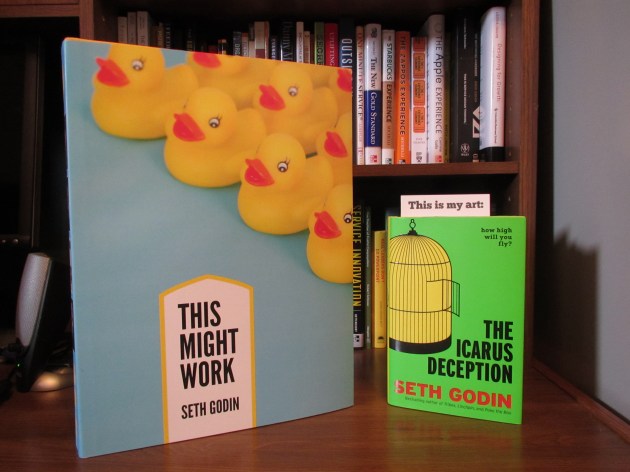
This Might Work cover

Today kicks off an annual tradition: taking a look at why reading is important for leaders, hearing from leaders on reading, and announcing my version of the best books of 2012.

And there’s no better way to start it off with a little make that a lot of Seth Godin…

Yesterday I met our mailman at the door with a not too happy look on his face. In addition to the increased volume of holiday mail, he was straining to carry a large, heavy box – one I have been anticipating since mid-summer:

Seth Godin’s latest work, This Might Work, is a huge behemoth of a book weighing in at 15.4 pounds and measuring 15x11x3 inches. It contains Seth’s incomparable blog posts from 2006-2012, curated by his most avid follower, Bernadette Jiwa. Jiwa is an Australian writer and Seth’s only choice to undertake this Herculean task.

She succeeded.

Here is her choice for the opening page, from Seth’s blog on May 20, 2004:

Five years from now…

Assume that:

Hard drive space is free

Wifi like connections are everywhere

Connections speeds are 10 to 100 times faster

Everyone has a digital camera

Everyone carries a device that is sort of like a laptop, but cheap and tiny

The number of new products introduced every day is five times greater than now

Wal-Mart’s sales are three times as big

Any manufactured product that’s more than five years old in design sells at commodity pricing

The retirement age will be five years higher than it is now

Your current profession will either be gone or totally different
What then?

Classic Seth Godin…

Also in the package was Seth’s latest normal book, The Icarus Deception, due out on 12/31. Continuing with the theme he first introduced in Linchpin, Godin shows how we can thrive in an economy that rewards art, not compliance. He explains why true innovators focus on trust, remarkability, leadership, and stories that spread. And he makes a passionate argument for why you should be treating your work as art. A review will be coming soon!

In a few sentences above, this is why leaders read..

And why you should, too.

Next: Thomas Edison on Reading