Looking Back to Look Ahead

Henry Petroski, a professor of civil engineering and history at Duke University, has a brilliant, innate talent to help people see the miraculous in the mundane. Author of twelve books including “The Evolution of Useful Things” and “Success Through Failure”, he has made it his calling to help the rest of us see the world through the eyes of the engineer.

I’m reading his book, The Essential Engineer, and this sentence stopped me cold:

Design is effectively proactive failure analysis

He was writing about the continual change in automobile design; how we can predict the changes coming in auto design by looking at what annoys us today or what features we wish it had or think it should have.

What a brilliant, simple statement!

Now apply it to ChurchWorld.

  • Are there things that aren’t working in your church?
  • By identifying what is still lacking in your church today, is it possible to predict what will be standard in your church tomorrow?

What are you designing for tomorrow that is a correction to today?

Stop Crying Over Spilt Milk – the Glass is Still Half Full

In addition to being a knowledge addict, I am a horizontal organizer.

This often manifests itself in a cluttered (to some) office, but in actuality it is creative genius in process…

…the problem is, the process almost never finishes.

Or, as someone once said, I would be a procrastinator if I could ever get around to it.

Which leads to “my” garage (in all honesty, my wife will not let me say “our” garage –it’s all on me).

I served for over 23 years on 3 different church staffs. During that time, I accumulated, created, and mostly saved a lot of resources including books, notebooks, workbooks, lesson plans, sermon notes, leadership training materials, etc.

Upon leaving the church staff vocation and becoming a church consultant over 9 years ago, all those resources came home to reside in our garage. They were stored in cataloged (for the most part) boxes – over 40 of them, in case you were wondering.

From time to time, I would venture out into the garage to search for a resource that would help with a consulting project. Over time, those trips became less frequent, and the resources just sat there.

For some reason, at this time and season in my life, I have begun a summer project to reduce a vast amount of the stuff in my garage, with an eventual goal of putting the family car in at night (I’ve read somewhere that’s what garages are for, but I have no actual working knowledge of that in 33+ years of marriage).

A portable storage unit sits in the driveway, and it has become my sorting/storing/waypoint for stuff on the way out of the garage to a final destination – the recycling center, Goodwill, anyone interested in church-type books, or as a last resort, the dump.

Pause that train of thought for a minute; I want to hook up another car and redirect you.

One of the new books I’m reading this week is Red Thread Thinking. As a part of my typical reading regimen, I look at the front and back covers, table of contents, and introduction before I dive into the book. Reading this book’s TOC, I came across a chapter title that stopped me in my tracks:

Don’t Cry Over Spilt Milk Because the Glass is Still Half Full.

photo courtesy ecoblog.co.za

photo courtesy ecoblog.co.za

Going straight to the chapter, the first three sentences had me hooked:

Your last failure may be part of your next success. The fastest, most profitable innovation opportunities could be right in front of you, yet unnoticed. Uncovering your hidden assets unlocks new opportunities because virtually all innovations are linked to other inventions, successful or not. 

On the next page, this:

Seeing new value in old resources just requires a little skill and motivation to gather knowledge from diverse sources, then figure out how it might be put to new uses.

And finally:

It’s time to unearth old notes from previous development projects. Are there innovations or ventures that you started to work on and then abandoned for some reason? Do an “idea audit” and see what’s in the back of your filing cabinet or closet [or garage]. It’s time to reassess – and see what you can uncover that’s worth revisiting.

Brilliant.

My summer cleaning project just took on new meaning.

inspired by Red Thread Thinking by Debra Kaye, with Karen Kelly

Red Thread Thinking

Doing Daily Battle with the Curse of Knowledge

My name is Bob Adams, and I’m a knowledge addict.

As such, I also suffer from the Curse of Knowledge. Best documented by Chip and Dan Heath in their excellent book Made to Stick, it is defined as:

Once we know something, we find it hard to imagine what it was like not to know it.

Our knowledge has  “cursed” us.

Curse of Knowledge

courtesy schneiderb.com

The Heaths recount a famous study done in 1990 by Elizabeth Newton as she earned a PhD in psychology at Stanford. She created a simple game in which she assigned people to one of two roles: “tappers” or “listeners”.

Tappers received a list of twenty-five well-known songs, such as “Happy Birthday to You” and “The Star-Spangled Banner.” Each tapper was asked to pick a song and tap put the rhythm to a listener by knocking on a table. The listener’s job was to guess the song based on the rhythm being tapped.

The listener’s job in this game is quite difficult. Over the course of Newton’s experiment, 120 songs were tapped out. Listeners guessed only 2.5% of the songs: 3 out of 120.

The real revelation came by what happened before the tapping game: When Newton asked the tappers to predict the odds that the listeners would guess correctly, they predicted the odds at 50%.

Fail.

The problem is that the tappers have been given knowledge (the song title) that makes it impossible for them to imagine what it’s like to lack that knowledge.

When they’re tapping, they can’t imagine what it’s like for the listeners to hear isolated taps rather than song.

That, my friends, is the Curse of Knowledge.

Once knowing something, it becomes difficult for us to share our knowledge with others, because we can’t readily re-create our listeners’ state of mind.

Becoming an expert in something means that we become more and more fascinated by nuance and complexity. That’s when the Curse of Knowledge kicks in, and we start to forget what it’s like not to know what we know.

Novices at anything perceive concrete details as concrete details. Experts perceive concrete details as symbols of patterns and insights that they have learned through years of experience. Because they are capable of seeing a higher level of insight, they naturally want to talk on a higher level.

That, most likely, leads to communication problems.

When you have worked for years in your particular area of specialty, it’s easy to forget that a lot of the world has never heard of your particular area of specialty, or at least at the depth you want to discuss it.

It’s easy to forget that you’re the tapper and the world is the listener.

How can you overcome the Curse of Knowledge?

The Heaths offer a couple of suggestions:

  • Giving our audience permission to ask “Why” as many times as necessary helps to remind us of the core values and principles that underlie our ideas and forces us to backtrack to the foundation of our passion.
  • Stories can almost single-handedly defeat the Curse of Knowledge. Stories have an amazing dual power to simulate and to inspire. Look for the good ones that life generates every day to get to the heart of the issue.

As for me, I will always have the Curse of Knowledge – I’m driven to learn more and more about many different topics. I don’t think there’s anything wrong with that. My passion and my vocation intersect in my job: as the Vision Room Curator for Auxano, I’m expected to dive daily into the vast and expanding knowledge pool out there…

…I’ve just got to remember that I’m a tapper, and you’re a listener. 

inspired by Made to Stick, Chip and Dan Heath

Made to Stick

Is It Time for an “Orange Revolution” in Your Organization?

If you asked who invented incandescent electric light, and you answered Thomas Edison, you’d be right – and you’d be wrong.Edison lightbulb

On October 22, 1879, the remarkable bulb dreamed up by Edison, drawn by lead experimenter Charles Batchelor, mathematically proved by Francs Upton, built by craftsmen John Kruesi and Ludwig Boehm, and tested by experimenters John Lawson, Martin Force, and Francis Jehl, burned for thirteen and a half hours.

Darkness had been illuminated forever.

The revolution that Thomas Edison wrought was the product of a team, in spite of how history books tell the story. We love the idea of a lone genius, the mastermind, the hero. We’re indoctrinated from an early age with the single-achiever ideal in school. For a fifth-grader, it’s easy to say Edison = light bulbs.

The reality is very different; geniuses build great teams.

Edison – one of the most brilliant minds in the world – accepted that he alone did not possess all the answers; but together, his team usually did.

What would you do to have a high-performing team that generates its own momentum – an engaged group of colleagues in the trenches, working passionately together to pursue a shared vision?

How about starting a revolution?

orange revolution 1For centuries the color Orange has been connected with revolutionary events. Most recent are the election events in the Ukraine, but there have also been Orange uprising in Ireland, China, England, and the Netherlands.

These revolutions signaled a transition – a spirited quest driven by people to improve the world around them.

Why shouldn’t your organization possess that same passion when it comes to creating, strengthening, and enlarging the teams that serve?

You can begin an Orange Revolution in the hearts of your team members and leaders focusing on conquering barriers, expectations, and stagnation.

Welcome to the revolution.

I will be leading The Orange Revolution at WFX in Dallas October 2-4. For an overview of WFX, go here. To learn more about the education and training available, go here.

Stay tuned for more on The Orange Revolution coming soon!

Boundaries for Leaders: Results, Relationships, and being Ridiculously in Charge

In the end, as a leader, you are always going to get a combination of two things: what you create and what you allow.  – Henry Cloud

According to clinical psychologist and leadership consultant Henry Cloud, boundaries are made up of two essential things: what you create and what you allow.

A boundary is a property line. Boundaries for LeadersIt defines where your property line begins and ends. If you think about your home, on your property, you can define what is going to happen there and what is not.

As the leader of an organization – a small group, a team, a department, maybe even the whole organization – you are responsible for the boundaries of that organization:

  • The people you invite in
  • What the goals and purposes are going to be
  • What behavior is going to be allowed – and what isn’t
  • The culture
  • The agenda
  • The rules

The leaders’ boundaries define and shape what is going to be and what isn’t.

In Boundaries for Leaders, Dr. Cloud leverages his expertise of human behavior, neuroscience, and business leadership to explain how the best leaders set boundaries within their organizations–with their teams and with themselves–to improve performance and increase employee and customer satisfaction.

In a voice that is motivating and inspiring, Dr. Cloud offers practical advice on how to manage teams, coach direct reports, and instill an organization with strong values and culture.

Boundaries for Leaders contains seven leadership boundaries that set the stage, tone, and culture for a results-driven organization, including how to:

  • Help people focus their attention on the things that matter most
  • Build the emotional climate that drives brain functioning
  • Facilitate connections that boost energy and momentum
  • Create organizational thought patterns that limit negativity and helplessness
  • Identify paths for people to take control of the activities that drive results
  • Create high-performance teams organize around the behaviors that drive results
  • Lead yourself in a manner that protects the vision

Boundaries for Leaders is essential reading for executives and aspiring leaders who want to create successful companies with satisfied employees and customers, while becoming more resilient leaders themselves.


part of the BookNotes Series – brief excerpts from books I am currently reading

Happy Birthday, America

Grateful for the boldness, convictions, and wisdom of those men and women with a dream of liberty.


Oh, by the way – those fireworks we are enjoying today…

Some thanks ought to go to one of my forefathers…

I am apt to believe that it will be celebrated by succeeding generations as the great anniversary festival. It ought to be commemorated, as the Day of Deliverance by solemn acts of devotion to God Almighty. It ought to be solemnized with pomp and parade, with shows, games, sports, guns, bells, bonfires and illuminations from one end of this continent to the other from this time forward forever more. You will think me transported with enthusiasm but I am not. I am well aware of the toil and blood and treasure that it will cost us to maintain this Declaration, and support and defend these States. Yet through all the gloom I can see the rays of ravishing Light and Glory. I can see that the End is more than worth all the Means. And that posterity will triumph in that day’s transaction, even although we should rue it, which I trust in God we shall not.

John Adams, letter to Abigail Adams, July 3, 1776

Sign Language

A wayfinding system links different people together, even if they do not share a common language or destination, by guiding all of them through the same spaces with a single system of communication. The unifying language of a wayfinding system creates a public narrative of how people witness, read, and experience a space. Each sign in a system, each separate voice, serves a particular function and displays a specific kind of content called a message, which might include nonverbal graphic symbols, images, or words.

– David Gibson, The Wayfinding Handbook

Most wayfinding systems can be broken down into several categories of signs: identification, directional, orientation, and regulatory.

EXTERIOR

Identification – the building blocks of wayfinding

  • Site monument identification
  • Site entry identification
  • Building mounted identification
  • Entrance identification
  • Parking area identification
  • Accessible parking identification

Directional – the circulatory system of wayfinding

  • Off-site trailblazers
  • On-site vehicular directional signs
  • Pedestrian directional signs

Regulatory – describes the do’s and don’ts of a place

  • Parking regulations
  • Entrance information

INTERIOR

Identification

  • Store identification
  • Area/level identification
  • Public amenity identification
  • Service and maintenance identification
  • Office identification
  • Elevator and stair identification

Directional

  • Directional signs

Orientation – provides an overview of surroundings

  • Building directory
  • Elevator/floor directory

Regulatory

  • Fire egress maps
  • Life safety signs

The sign narrative is the voice of the building and its owner, revealing the pathways and destinations of the building or space, the rules that govern how to use it, and essential information about activities happening within. It is the job of the wayfinding designer to weave these voices together into a single eloquent statement as people navigate the space.

Wayfinding systems serve living environments where functions for areas change, spaces are renovated, and new facilities are constructed. Wayfinding systems must be flexible and adapt to the evolution of a place.

Information from this series of post this week has come from The Wayfinding Handbook by David Gibson. A concise and engaging work, it is an excellent resource for leaders wanting to apply the art and science of wayfinding to their organization. The extensive illustrations, using real-life examples, provide a visual analysis of the fundamentals that lead to great wayfinding design.

You may not think of yourself as a designer; you would be wrong.

Wayfinding design is an intuitive process we use all the time, one that helps us navigate the places and spaces we encounter every day. Leaders may not design a wayfinding system, but it is a process that they need to have a firm grasp on.


part of the 2013 GsD (Doctor of Guestology) journey

Where is your Red X?

In this case, literally.

The one that says “You Are Here.”

red x

Exciting the subway in the middle of a city or stepping off the elevator onto a strange floor is momentarily disorienting: you scan the space to figure out where you are and find clues that will lead you where you want to go. This scanning is similar to searching for an article in a magazine or perusing the home page of a website to figure out how it is organized and how to read a specific section.

All these reflex actions are about wayfinding.

 – Christopher Pullman, design consultant and senior critic at Yale University School of Art

Wayfinding pays a very important part in ChurchWorld – from the design of your website to the design of your graphic pieces to the design of your building (notice the common word – design.) If you are a ChurchWorld leader and don’t think you are or need to be a designer, I invite you to join me in a conversation that started here.

People will always need to know where they are, how to reach their destination, what is happening there, and how to exit.

Yesterday, I enjoyed spending some time with Zach and Benjamin from The Avenue Church in Waxahachie, TX – they were visiting Elevation Church’s Uptown campus. Zach is the Associate Connections Minister there, and he and I had some great conversations about Guest Experiences, specifically wayfinding.

Increasingly, my discussions with church leaders about Guest Experiences include the issue of wayfinding – most of the time in a physical sense of the spaces they are using, renovating, or preparing to build. Sometimes, it’s just a dreaming conversation, but even that is a great place to start!

For the next few days, I want to dive into the topic of wayfinding in ChurchWorld – I hope you will enjoy the journey!


part of the 2013 GsD (Doctor of Guestology) journey

The LEGO Principle

Pastor Joey Bonifacio, author of The LEGO Principle, has written a brilliantly simple book about discipleship – built on the metaphor of the LEGO brick.

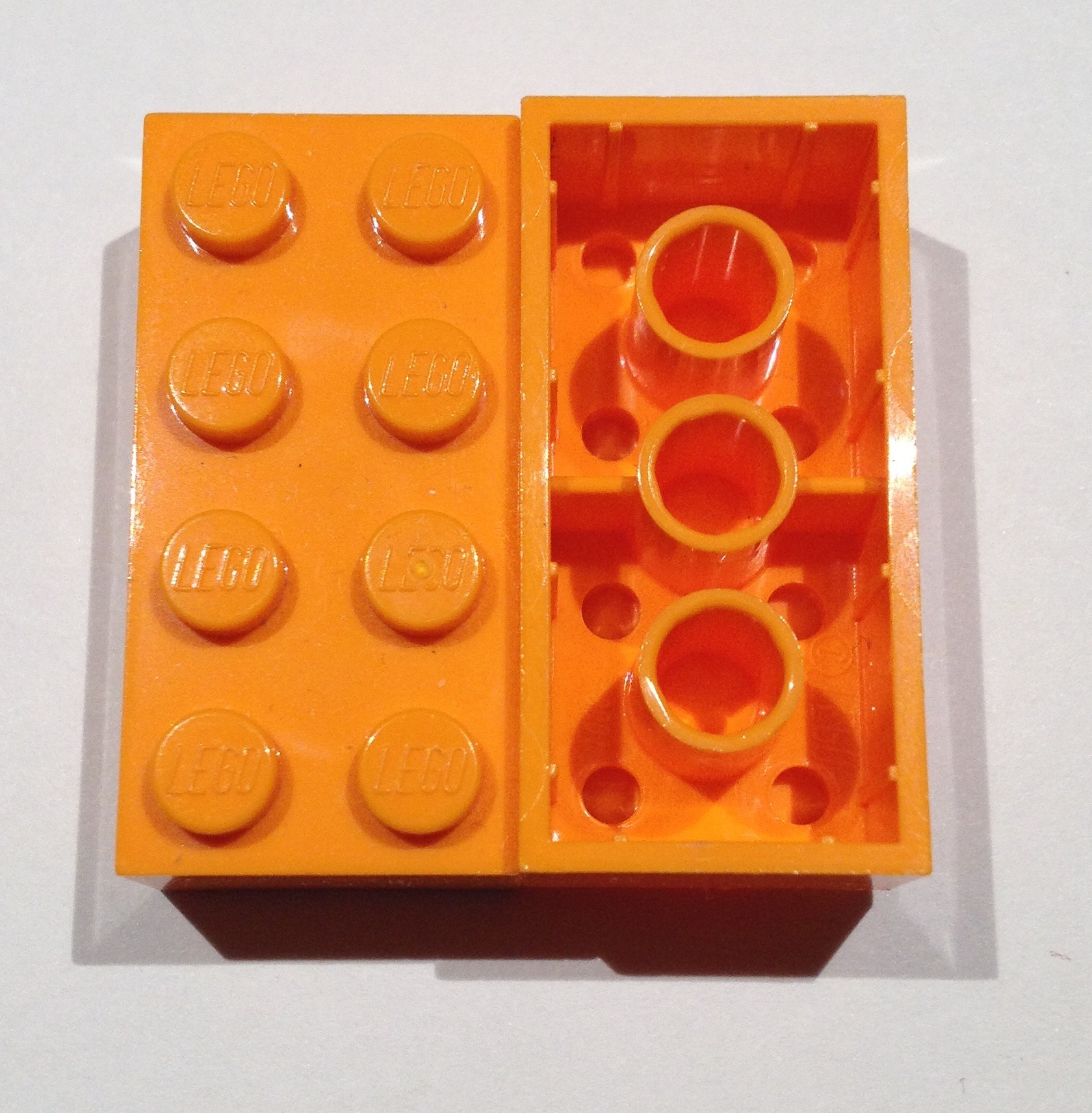
LEGO brick orange copy

The LEGO Principle: Connect first to God and then to one another.

You’ve gotta love it!

Regardless of the shape, size, or color of a LEGO brick, each one is designed to do just one thing: connect. LEGO pieces are designed to connect at the top with studs and the bottom with tubes.

Like LEGO, if you can connect to the top with God and to the bottom with others, you can pretty much shape the world you live in.

Here are a few examples pulled from the LEGO world, with Bonifacio’s application to the life of the believer:

Not all LEGO pieces have the same ability to connect. Some have the capacity to connect with as many as twelve or more bricks while others are limited. There are pieces that can connect to only one other brick. The secret of LEGO is not that every brick connects with the same number of other pieces but that each piece has the capacity to connect.

This secret applies to believers as well: every believer has the ability to connect directly to God.

Each LEGO brick comes with studs that give it the ability to connect. Every stud has the LEGO trademark engraved on it, a symbol of trust. In the past others have tried to copy LEGO bricks but have been unsuccessful. Their studs did not connect as well.

Like trusted LEGO bricks, we connect best when we are the real thing.

Two eight-stud LEGO bricks can be combined in twenty-four ways. Three eight-stud bricks can be combined in 1,060 ways. Six eight-stud bricks can be combined in 102,981,500 ways. With eight bricks the possibilities are virtually endless.

Just like LEGO bricks, using love to connect with people has endless possibilities.

By 1968, nineteen years after the first LEGO brick was made, the LEGO company built its first LEGOLAND – an entire city of LEGO structures in its hometown of Billund, Denmark. Something was missing: people.

In 1974 LEGO began making people, starting with the LEGO family. These mini figures soon became the biggest-selling product, enjoyed by both boys and girls. Several billion of these figures have been built to date. LEGO realized that people love people. What good is a world without people?

To the degree that we value and love people will we  engage our community and culture.

LEGO bricks are built to connect multigenerationally. That means bricks made in the 1950s connect just as well with those made in 2013. Connecting bricks made decades apart is not a problem.

In the same way, when people make disciples through relationships, generational, traditional, and denominational differenced fall by the wayside.

And like LEGO bricks, when the connections happen, the possibilities are endless.

The Lego Principle

The LEGO Principle

Start with a Question, Then Challenge Your Assumptions

Start with a question to discover if there is an opportunity for creativity.

Questions start the creative process by asking how, why, and in what other way can something be done. The answers you get will explore options that kick off creativity.

The most unrealistic options inspire tangent ideas that take you to new places you would never have considered.

Once you have the basic questions to ask, it’s time to add questions that are specific to your challenge. Review your list of questions with others and ask them to help develop additional questions.

Now for a critical step in the creative process:

Challenge your assumptions.

As you continue to develop your ideas, you need to constantly question and challenge your assumptions.

As you answer the questions and narrow down your assumptions, it’s most likely that you are ready to solve the problem.


part of a series of ideas to shape and tone your creative muscles

Inspired and adapted from The Imagineering Workout

The Disney Imagineers

Imagineering logo