1775: The Year That Made Independence Inevitable


March and April – The Gathering Storm, Part Two

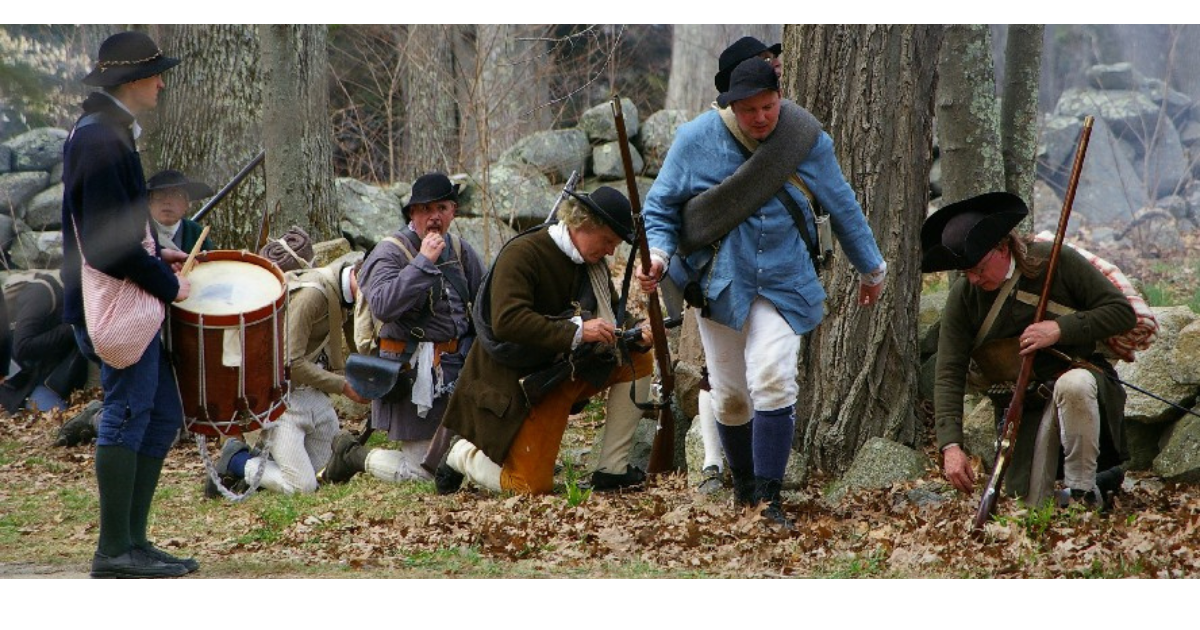
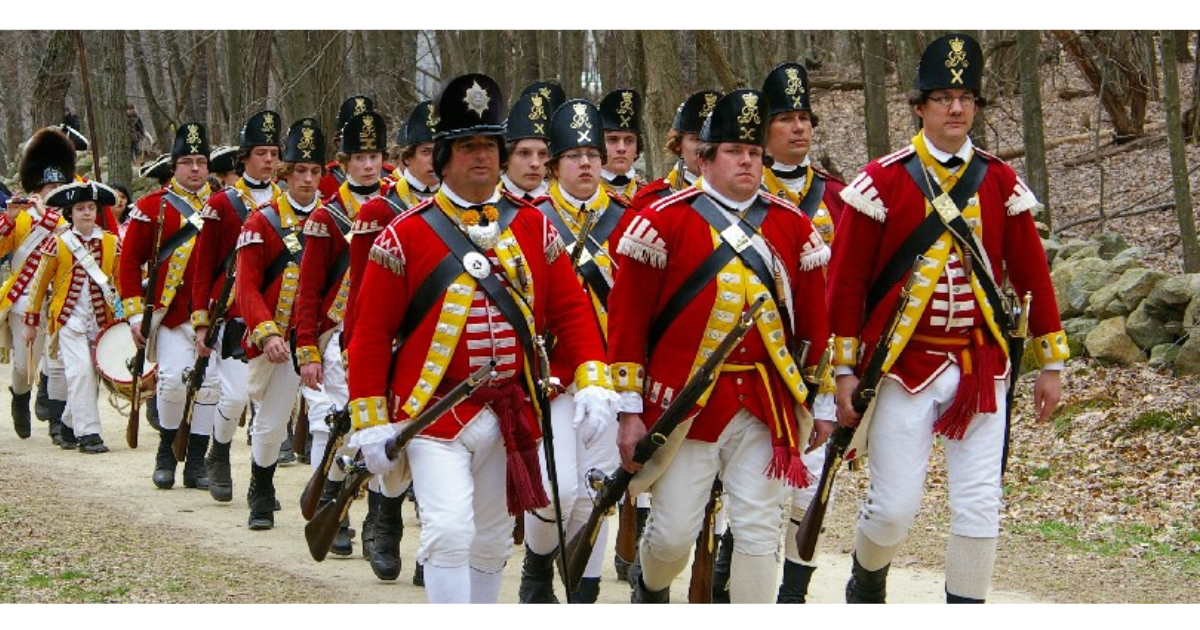
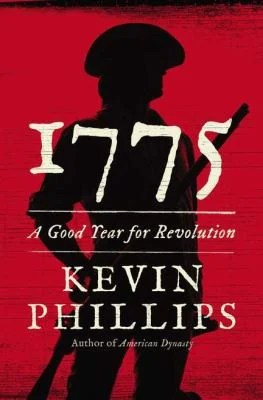
In the spring of 1775, a farmer-militia in Lexington watched redcoats march at dawn, raised a musket, and fired a shot that – as Emerson would later mythologize – echoed around the world. But that single moment, so burnished in national memory, obscures something far messier and more instructive: the colonial rebellion was not a tidy procession from grievance to glory. It was a sprawling, anguished, continent-wide convulsion in which ordinary people made impossible choices, communities fractured, and the outcome remained genuinely uncertain for far longer than our textbooks admit. Kevin Phillips, in 1775: A Good Year for Revolution (Viking, 2012), insists we stop treating American independence as destiny and start treating it as drama.

That insistence feels urgently contemporary. In an era when democratic movements worldwide struggle to cohere, when popular uprisings succeed only to collapse into faction, the story of how thirteen disparate colonies actually managed to sustain a revolution matters more than ever. The mechanisms of solidarity and rupture that Phillips excavates from 1775 are not quaint antecedents. They are templates.

Who Is Kevin Phillips – and Why Does It Matter?

Kevin Phillips is, by any measure, an unlikely tribune of revolutionary radicalism. He first made his reputation as the architect of Richard Nixon’s “Southern Strategy,” publishing The Emerging Republican Majority in 1969 – a book that reshaped American conservatism for a generation. But by the 2000s, Phillips had become one of the Republican Party’s sharpest internal critics, producing a series of books – American Dynasty, American Theocracy, Bad Money – that indicted the GOP’s fusion of plutocracy and religious nationalism with prosecutorial fervor.

This political biography is essential context for reading 1775. Phillips brings to the Revolution a political strategist’s eye for coalition-building, regional loyalty, and the ground-level mechanics of persuasion. He is less interested in the founders as philosophical geniuses than in the founders as – to use the contemporary idiom – organizers. And his argument is built not on the familiar eastern seaboard narrative but on a deliberately broad geographic canvas: New England fishing communities, the Carolina backcountry, the Virginia tidewater, the mid-Atlantic merchant cities, and the rough, gun-carrying settlements of the trans-Appalachian frontier.

The Core Argument: Breadth Before Boston

The central interpretive wager of 1775 is both simple and radical: the American Revolution was won in 1775, not 1776. The Declaration of Independence, Phillips argues, was less a catalyst than a ratification – a formal announcement of a political and military reality already achieved by the colonies’ remarkable capacity to coordinate resistance across thirteen highly distinct societies.

Phillips contends that historians have been too dazzled by Philadelphia and too dismissive of everywhere else. The Continental Congress was the revolution’s legal architecture, but the revolution’s living body was something messier: committees of safety, provincial congresses, militia musters, and the decision by hundreds of thousands of colonists scattered from Maine to Georgia to treat British authority as simply no longer operative. The de facto independence that preceded the de jure declaration is, in Phillips’s telling, the more impressive and more instructive achievement.

He is particularly insistent on the importance of what he calls the “coercive geography” of the colonies – the physical reality that Britain’s military could occupy port cities but could not pacify the interior. The tens of thousands of veterans of frontier warfare who filled the colonial militias were, Phillips argues, a decisive strategic fact that neither Parliament nor the king ever adequately reckoned with.

The Author’s Voice: Dense, Demanding, Revelatory

Phillips writes like a man who has read every county history in the Library of Congress, because he more or less has. The book is dense – sometimes dauntingly so – but rewards patience with passages of genuine power. On the collective momentum of 1775, he writes that the colonies had created “a psychology of irreversibility” months before independence was formally declared, a condition in which returning to British governance had become, for most colonists, not a political option but a psychological impossibility. The king was no longer their king not because a document said so, but because they had stopped believing he was.

On the diversity of revolutionary motivation, he is similarly sharp: the same year that saw Boston patriots dumping tea saw Carolina Loyalists being tarred and feathered, Quaker merchants agonizing over pacifist conscience, and Iroquois nations calculating which alliance offered survival. The Revolution was not one people’s decision. It was thousands of communities making incompatible choices that somehow, barely, cohered into a nation.

Dialogue With the Series: Where Phillips Pushes Back

Placed alongside other volumes in the “Booked for the Revolution” series, 1775 reads as a deliberate corrective to the founders-focused narrative that dominates popular historiography. Where Gordon Wood’s The Radicalism of the American Revolution emphasizes the ideological transformation unleashed by independence, Phillips is skeptical of ideas as drivers – he wants to know who owned what, who could shoot whom, and who controlled the roads between here and there.

This is refreshing and occasionally frustrating in equal measure. Phillips sometimes seems to distrust the intellectual history of the Revolution almost on principle, as if the pamphlet wars and constitutional debates were mere window dressing on the real story of geographic, economic, and military power. That is too strong. Ideas mattered in 1775. But his corrective to the “great men” narrative is valuable and necessary.

What We’ve Learned Since 2012

The decade plus since 1775 appeared has seen a significant deepening of the Revolution’s “dark side” – the aspects Phillips gestures at but does not fully develop. Historians like Alan Taylor (American Revolutions, 2016) have pressed harder on the revolution’s meaning for enslaved people, Native nations, and poor whites who had little reason to celebrate a transfer of power among colonial elites. The brutal civil war between Patriots and Loyalists – Phillips covers this – has received further attention, complicating the story of popular consensus that even Phillips, despite his skepticism, sometimes implies. The picture that has emerged is more violent, more contingent, and more morally conflicted than 1775 fully captures.

Phillips is also, in retrospect, too confident that 1775’s radical momentum was sustainable. The revolutionary coalition that held together through the war would fracture badly in the 1780s, producing the crisis that necessitated the Constitutional Convention. The “psychology of irreversibility” he identifies was real, but it did not settle the question of what kind of republic – or whose republic – would be built on the revolution’s foundation.

Why Read This in 2026?

Because we live, again, in a moment when the gap between formal political structures and actual popular legitimacy has become impossible to ignore. Phillips’s fundamental insight – that revolutions are won or lost not in capitals but in the thousand small acts by which ordinary people decide whose authority they will accept – resonates with peculiar force when democratic institutions worldwide are under stress from within and without.

1775 is also, simply, a remarkable act of historical recovery. It restores to the story of American independence the sheer geographic vastness and human complexity that nationalist mythology has flattened. It reminds us that the country did not begin with a declaration. It began with a dispute, a fracture, a desperate improvisation – and somehow, improbably, a revolution. Reading Phillips in this anniversary-haunted decade, one is struck not by the inevitability of American independence but by its astonishing fragility, and by the courage – and coercion, and luck – required to see it through.

That is a history worth sitting with.


A Note on This Series

This journey through Revolutionary history is as much about the evolution of historical understanding as the Revolution itself. History isn’t static – each generation reinterprets the past through its own concerns, asking different questions and prioritizing different sources. By reading these books in dialogue across 250 years, we’ll witness how scholarship evolves, how narratives get challenged, and how forgotten stories resurface.

This isn’t about declaring one interpretation “right” and another “wrong,” but appreciating the richness that emerges when multiple perspectives illuminate the same transformative moment. These books won’t provide definitive answers – history rarely does – but they equip us to think more clearly about how real people facing genuine uncertainty chose independence, how ideas had consequences, and how the work of creating a more perfect union continues. As we mark this anniversary, we honor the Revolutionary generation by reading deeplythinking critically, and engaging seriously with both the brilliance and blind spots of what they created.


You can find the entire series listing here.

The Hospitality Performance: Somewhere Between Genuine and Rehearsed

My family knows the game I play when we go to our favorite local restaurant, 131 Main. They shake their heads, but they usually play along. Unsuspecting guests are unwittingly invited into the game as well, usually to my wife’s chagrin. It’s simple but profound, and always sparks a lively conversation.

The game starts with a simple question: Usually about half way through our meal, I will ask, “How many servers, hosts, etc. have stopped by our table and engaged us?

Their answer is almost always wrong (on the low side); my personal record is 7.

Which brings us to today’s topic, the third in a series of four exploring how food experiences reveal fundamental truths about social interaction, identity, and community through the lens of Erving Goffman’s dramaturgical sociology. Read the series here; continue with Part Three below.


The server refilled your beverage glass before you noticed it was empty. She remembered your shellfish allergy from the reservation notes. When your date’s entrée arrived overcooked, another server whisked it away with genuine apology, returning minutes later with a perfect replacement – and a complimentary dessert. The meal felt effortless, warm, authentic. And it was completely choreographed.

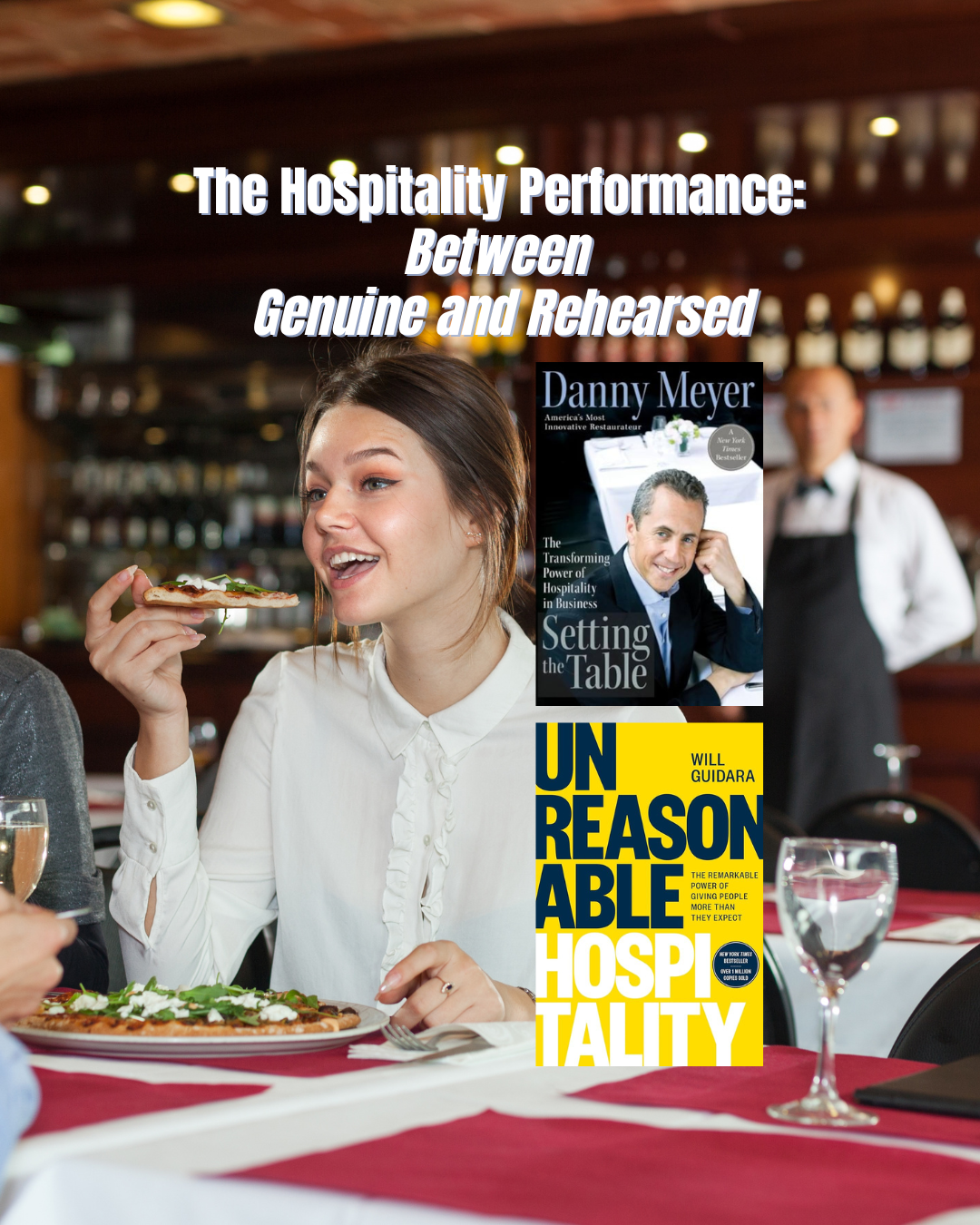
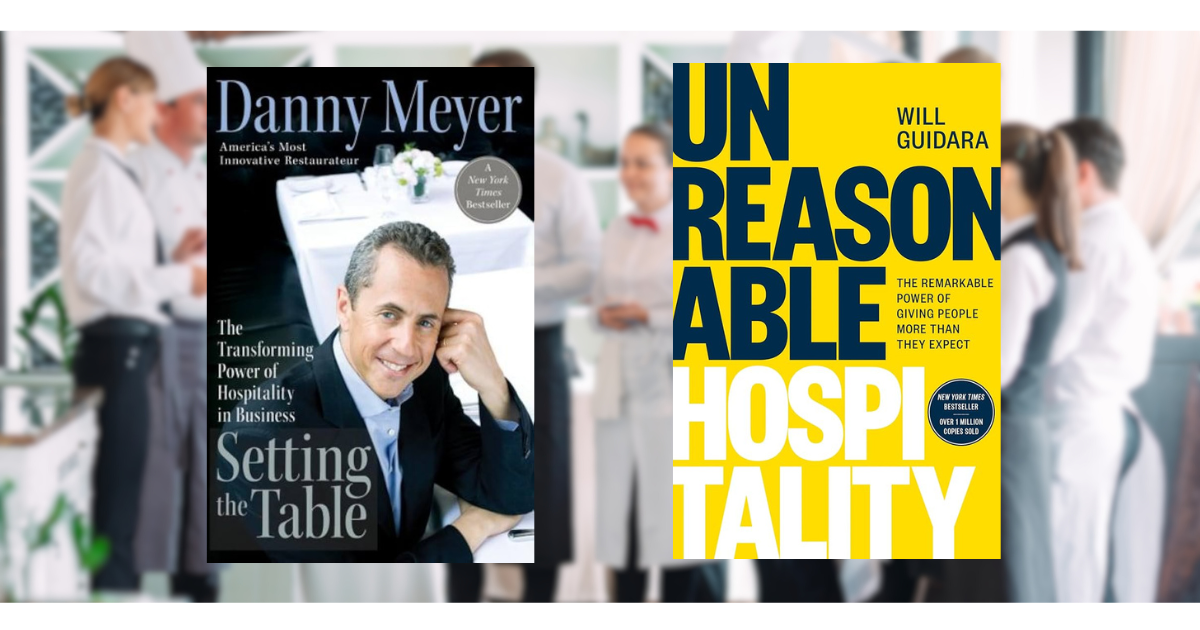
Danny Meyer built a restaurant empire on a paradox: the best hospitality feels spontaneous but requires meticulous planning. In Setting the Table, Meyer describes what he calls “enlightened hospitality” – a philosophy that transformed the service industry. At its core lies a tension sociologist Erving Goffman would recognize immediately: How do you engineer authentic human connection? How do you perform genuine care?

Will Guidara, Meyer’s protégé who led Eleven Madison Park to the top of the World’s 50 Best Restaurants list, pushed this paradox further. In Unreasonable Hospitality, Guidara describes deliberately breaking the script to create unrehearsed magic. His team once overheard guests mention they’d never had a New York hot dog, so they sent a runner to the street cart and served it on fine china as an additional course. For a family from Spain, they transformed a private dining room into a miniature beach, complete with sand. These gestures weren’t in any manual. They were improvised performances of care that cost money while generating nothing but goodwill – and legend.

Together, Meyer and Guidara represent two poles of the same challenge: How do you systematize spontaneity? How do you make the rehearsed feel unrehearsed?

Service vs. Hospitality: Technique vs. Performance

Meyer distinguishes sharply between service and hospitality. Service is technical – delivering food and drink correctly. Anyone can learn it. Hospitality is emotional – making guests feel cared for. It requires what Meyer calls “emotional intelligence, empathy, and thoughtfulness.” But here’s the contradiction: Meyer systematizes these supposedly spontaneous qualities. He hires for them, trains for them, rewards them. He’s created theater where servers must improvise within carefully constructed parameters, where authentic emotion is both the goal and the product.

Guidara inherited a restaurant that delivered flawless service – technically perfect, precisely timed, utterly professional. But it felt cold. Guests were impressed but not moved. The performance was too polished, too obviously rehearsed. What was missing was the human moment – the break in the script that reminds diners they’re being served by people, not automatons.

This is Goffman’s dramaturgical theory as commercial practice. These restaurants are elaborate stages with clearly defined regions. The dining room is “front stage,” where servers perform gracious hospitality. The kitchen is “backstage,” where the performance is prepared – not just the food, but the emotional labor required to seem effortlessly caring for hours.

PERSONAL OBSERVATION: In all our years of going to 131 Main, we’ve never had a “bad” experience – and only one has been less than stellar. The floor manager walked by, noticed that only one entree had been delivered to our table of four, and beyond earshot but in range of my inquisitive eye, talked to our primary server. She came by apologize for the miscue, took my entree to be boxed up, and in just a few minutes all four entrees were delivered by a pair of servers. The manager apologized and removed the entree from our bill.

Was this technique or performance?

Reading the Room: The Art of Improvisation

Great hospitality requires constant calibration. Servers must read each table: Are these guests celebrating or conducting business? Do they want conversation or privacy? Are they in a hurry or lingering? This is impression management in real time, adjusting the performance to match unstated needs. A skilled server shifts registers instantly: warm with one table, briskly efficient with another, invisible to a couple deep in conversation.

Meyer hires for what he calls “hospitality quotient” – an intuitive understanding of how to make others comfortable. But even innate empathy needs refinement through training. His restaurants teach servers “dramaturgical discipline” (Goffman’s term): maintaining character under pressure, never letting the mask slip, preserving the illusion that this care is spontaneous.

Guidara pushes beyond discipline into creativity. He instituted “dreamweaver” roles – staff whose sole job was finding opportunities for unreasonable gestures. They’d listen tactfully to conversations, looking for moments to surprise and delight. Overheard a birthday? Not just a candle on dessert, but perhaps the sommelier opens something special from the birth year. Mentioned you’re from Chicago? Maybe a house-made deep-dish pizza appears, completely off-menu.

These gestures required different training. Staff needed permission to break the script, but also judgment to know when breaking it enhanced rather than disrupted the experience. They had to perform confidence, creativity, and care – while maintaining the structure that allowed a complex restaurant to function.

The pre-shift meeting became crucial in both operations. Here, teams review reservations, discuss VIPs, share information about guests’ preferences or occasions. They’re literally preparing for performance: who’s in the audience tonight, what they might need, how to deliver it. It’s backstage rehearsal for the front stage show.

Blurring the Boundaries: When Backstage Becomes Front Stage

The kitchen is traditionally the ultimate backstage – hot, chaotic, often profane. Here, cooks can drop the serenity performance and reveal the stress and intense coordination required for seamless dining. The swinging door is a literal threshold between raw reality and polished performance.

But Meyer and Guidara complicate this binary. Meyer prefers open kitchens, deliberately blurring front and backstage. If diners can see the kitchen, it becomes part of the performance – chefs must maintain some front stage behavior even in their traditional backstage space. The performance expands to encompass more truth.

Guidara went further, involving the entire team in hospitality, not just servers. Dishwashers, prep cooks, even accountants contributed ideas for guest experiences. The backstage crew became part of the front stage performance, invested in emotional experience, not just technical execution. This distributed emotional labor across the organization but raised the stakes – everyone needed some dramaturgical discipline.

The Paradox of Performing Authenticity

Meyer insists that true hospitality requires servers to bring their authentic selves to work. He wants people, not automatons following scripts. This creates fascinating tension: servers must be genuine, but their genuineness must serve commercial interests. They must care, but not too much. They must be friendly, but maintain professional boundaries. They’re asked to perform authenticity itself.

Guidara frames this as “prestige without pretense” – delivering world-class experiences without stuffiness. His staff performed simultaneously as highly trained professionals and warm, genuine people who happened to serve food. They needed to know which fork goes where while also laughing at themselves, acknowledging mistakes with grace, treating a street hot dog with the same respect as a truffle course.

This is emotional labor at its most sophisticated. Sociologist Arlie Russell Hochschild coined the term to describe work requiring managing one’s feelings to create observable displays. Flight attendants perform serenity during turbulence. Bill collectors perform stern authority. Restaurant servers perform genuine warmth toward strangers – again and again, table after table, shift after shift.

The risk, Hochschild warned, is alienation – when performing emotion becomes so divorced from feeling it that workers lose touch with authentic selves. Meyer and Guidara both recognize this danger. Meyer emphasizes employee well-being, competitive pay, and advancement, understanding you cannot extract authentic-seeming hospitality from miserable workers. Guidara instituted family meals, team outings, and celebration culture, ensuring the care his staff performed outward was mirrored by care they received internally.

The investment serves strategic purposes. Happy employees provide better hospitality, creating better experiences, generating more revenue and prestige. The care flows both directions, but it’s still choreography.

The Economics of Breaking the Script

Guidara’s “unreasonable” gestures raise questions about the economics of performance. Sending runners for street hot dogs, building beaches in dining rooms, opening rare wines at a loss – these seem to contradict profit maximization. But they generate something more valuable than immediate revenue: stories. Guests don’t just remember the meal; they remember the magic. They become evangelists, telling everyone about the restaurant that somehow knew exactly what would delight them.

This is impression management on a grand scale. The unreasonable gesture performs several things simultaneously: the restaurant values experience over efficiency, sees guests as individuals rather than covers, has resources to spare for pure generosity. These performances build brand value far exceeding immediate cost.

But there’s risk. Once unreasonable becomes expected, it loses power. If every guest anticipates a surprise, the surprise ceases to surprise. Guidara’s team had to constantly escalate, finding new ways to break the script, new performances of spontaneous care. The unreasonable had to remain genuinely unreasonable, which meant it couldn’t be completely systematized. They needed structure loose enough to allow real improvisation.

This is the central paradox of both philosophies: you must build systems that enable breaking the system. You must rehearse spontaneity. You must perform authenticity so skillfully that it becomes indistinguishable from the real thing.

Team Performance and Collective Care

Goffman wrote about “teams” – groups of performers cooperating to maintain a particular definition of the situation. Restaurants operate as complex team performances. Servers, runners, bartenders, hosts, and kitchen staff all collaborate to sustain the illusion of effortless hospitality. When one team member breaks character – a visibly stressed server, a curt host, a runner slamming down platesthe entire performance suffers.

Meyer’s training emphasizes “dramaturgical loyalty”: team members must support each other’s performances, cover mistakes, and maintain unified front stage behavior regardless of backstage chaos. If a server forgets to fire a course, the team rallies to correct it invisibly. If a guest complaint threatens the performance, everyone adjusts to restore equilibrium.

Guidara extended the team concept to include guests. He recognized diners also perform – they’re performing sophistication to appreciate haute cuisine, performing celebration or romance, performing social identities. The restaurant’s job was supporting these guest performances, being the stage where their special occasions could unfold successfully.

This meant sometimes letting guests lead, even when it meant bending the restaurant’s script. If a table wanted to linger over dessert for two hours, closing the kitchen around them, that became part of the performance. If guests wanted photos when most fine dining establishments discouraged it, Guidara’s team offered to take the photos, turning a potential protocol breach into enhanced experience.

The restaurant table is a stage where multiple performances intersect. Servers perform hospitality. Guests perform being worthy of such hospitality – appreciative, knowledgeable, appropriately demanding. The restaurant itself performs identity: casual or formal, traditional or innovative, exclusive or accessible. All these performances must align for the experience to succeed.

Digital Stages and Expanded Audiences

The digital age complicates these performances. Online reviews mean every guest is a potential critic, every meal a potential public performance. Servers must manage not just immediate impressions but photographable moments. Food must be Instagram-worthy; the experience must generate positive Yelp reviews. The performance extends beyond physical space into digital realm, evaluated by strangers and compared against countless competing performances.

Guidara understood this intuitively. The unreasonable gestures weren’t just about recipients – they were about the stories recipients would tell. Each surprise was designed to be shareable, to become legend. When Eleven Madison Park climbed the World’s 50 Best list, it wasn’t just technical excellence. It was accumulated stories of magic, circulating through social networks, building a reputation for hospitality transcending mere service.

But this created new pressures. Staff had to perform for two audiences simultaneously: guests in the room and potential thousands who might see photos or read reviews. A beautifully plated dish had to photograph well. An unreasonable gesture had to be story-worthy. The performance became more complex, more layered, more exhausting.

Meyer and Guidara navigated this by focusing on the immediate audience – the actual humans in their dining rooms. Yes, digital performance mattered, but it had to emerge organically from genuine hospitality rather than being engineered for likes and shares. The performance of care had to convince in person before it could convince online.

When Performance Dissolves Into Identity

The profound question at the heart of both Setting the Table and Unreasonable Hospitality is whether performing care can become real care. Meyer believes it can – that consistently acting with genuine hospitality makes it who you are rather than what you’re performing. Guidara pushes further, arguing unreasonable hospitality isn’t performance at all, but a mindset, a way of moving through the world that sees every interaction as an opportunity for generosity.

Goffman might have been more skeptical, seeing the self as nothing more than the sum of its performances. Perhaps the truth lies between: we perform hospitality until we internalize the script, and then the line between authentic and performed dissolves entirely. The server who’s practiced warmth for a decade may no longer distinguish between genuine feeling and professional performance – and perhaps that distinction no longer matters.

Consider the implications. If we perform care long enough, with enough consistency and skill, does it matter whether we “really” feel it? If the guest experiences genuine warmth, if they leave feeling valued and seen, does the server’s inner emotional state change the moral or practical reality of what happened?

This challenges our usual assumptions about authenticity. We tend to think authentic means unperformed, spontaneous, arising naturally from inner feeling. But Meyer and Guidara suggest another possibility: that authentic means fully committed to the performance, bringing your whole self to the work of caring for others, even – or especially – when it’s difficult.

The Theater of Everyday Generosity

In an economy increasingly built on service and experience rather than goods, we’re all in the hospitality business now. We all manage impressions, perform emotional labor, and navigate the tension between authenticity and strategic self-presentation. Customer service representatives, teachers, healthcare workers, flight attendants – all perform care as part of their professional roles.

Meyer’s restaurants and Guidara’s unreasonable gestures are simply more honest about the choreography, more intentional about the performance. They’ve turned the art of seeming real into a refined craft. But they’ve also revealed something hopeful: that performed care, executed with enough skill and genuine investment, can create real connection.

The script, when well-written and expertly delivered, can facilitate authentic human moments. There’s dignity in the performance, in choosing to show up night after night and make strangers feel valued, seen, cared for. The emotional labor is real labor, worthy of respect and compensation. And the moments of connection it creates, however fleeting, are genuinely valuable.

The restaurant is a microcosm of social life itself – a stage where we practice being generous, attentive, and present. Where we learn that authenticity and performance aren’t opposites but dance partners, each making the other possible. Where we discover that the most genuine moments often emerge from carefully constructed circumstances.

Think about the last time you felt truly welcomed somewhere – a hotel, a store, a friend’s home. Chances are, some of that welcome was performed. Your friend cleaned the house, planned the meal, performed the role of gracious host. The hotel desk clerk followed training on how to greet guests warmly. The store employee was taught to make eye contact and smile. Does knowing this diminish the experience? Or does it reveal how much effort people invest in making others feel good?

Meyer and Guidara have built careers on a beautiful paradox: you can engineer magic, choreograph spontaneity, and perform your way into authentic human connection. Their restaurants prove Goffman was right about social life being theatrical – but also that theater, at its best, reveals deeper truths.

The performance of hospitality, sustained with enough care and creativity, becomes indistinguishable from hospitality itself. And in that dissolution of boundaries between real and performed, we find something worth celebrating: the possibility that all our social performances, executed with genuine care, might actually make us better, kinder, more attentive to each other’s humanity.

The Lesson From the Kitchen Door

The real lesson from the front and backstage of great restaurants isn’t that hospitality is fake. It’s that performing care, again and again, with discipline and creativity and unreasonable generosity, is one of the most authentic things we can do.

When the server remembers your shellfish allergy, when the team builds a beach in a dining room for homesick guests, when the kitchen stays open late because you’re clearly celebrating something important – these are performances, yes. But they’re performances in service of something real: the fundamental human need to be seen, valued, and cared for.

Goffman taught us that all social interaction involves performance. We’re always managing impressions, always aware of our audience, always making choices about how to present ourselves. The question isn’t whether to perform – we can’t not perform. The question is what kind of performance to give, what values to embody, what kind of world to create through our repeated small dramas of daily life.

Meyer and Guidara chose to perform generosity, warmth, and attention. They built systems to support these performances and trained teams to execute them. They invested enormous resources in making strangers feel special for a few hours. And in doing so, they demonstrated that the performance of care, when taken seriously as craft and commitment, creates something genuine.

The swinging kitchen door separates front stage from backstage, performance from preparation, the polished from the raw. But in the best restaurants – and perhaps in the best lives – that door swings freely. The backstage work of preparation makes the front stage magic possible. The front stage performance gives meaning to the backstage effort. They’re not opposites but partners in creating experiences worth remembering.

We’re all standing on one side of that door or the other, all the time. Sometimes we’re performing for others; sometimes we’re preparing our performances; sometimes we’re the audience for someone else’s carefully crafted care. Understanding this doesn’t diminish the magic. It deepens our appreciation for the work involved in making each other feel human, valued, and connected in a world that too often treats us as interchangeable.

That’s the gift Meyer and Guidara offer: not just better restaurants, but a clearer understanding of what we’re all doing when we choose to care for each other, even when – especially when – it requires effort, training, and conscious performance. The care is real. The performance makes it possible. And that’s not a contradiction. That’s just life, lived with intention and grace.


Part of a regular series on 27gen, entitled Wednesday Weekly Reader.

During my elementary school years one of the things I looked forward to the most was the delivery of “My Weekly Reader,” a weekly educational magazine designed for children and containing news-based current events.

It became a regular part of my love for reading, and helped develop my curiosity about the world around us.

The Year Nobody Wanted War — And Got It Anyway


March and April – The Gathering Storm, Part One

Imagine you are a prosperous Virginia planter in the spring of 1774. You drink tea every morning, you swear allegiance to King George III, and you find the hotheads up in Boston as alarming as the Parliament they are defying. War is unthinkable. Independence is treasonous. And yet, within twelve months, you will be drilling with a militia, signing non-importation agreements, and telling yourself – with more conviction than you actually feel – that armed resistance was always the only honorable path.

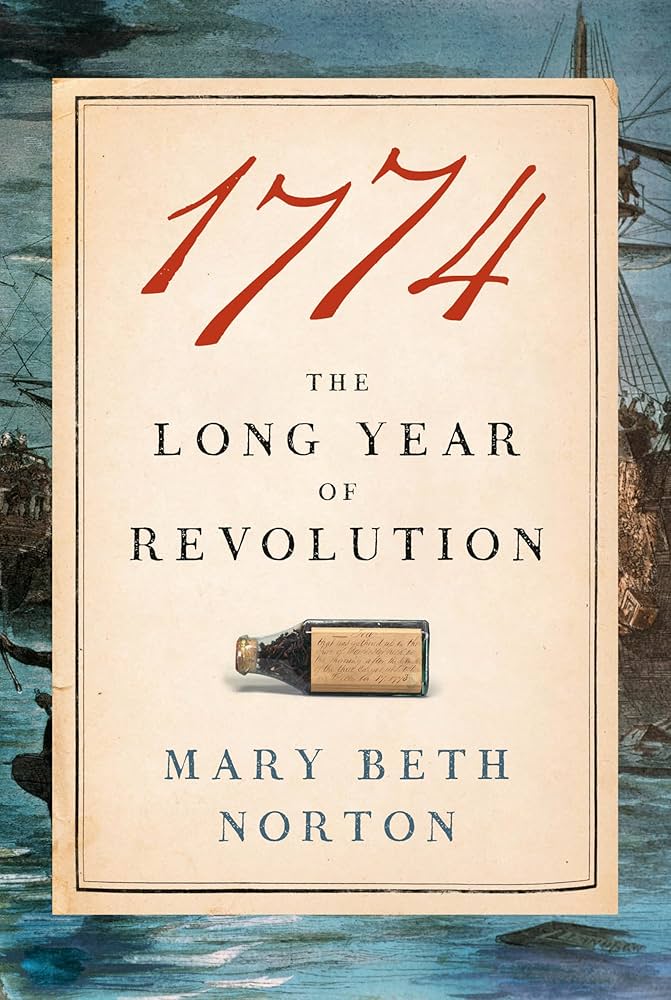
That psychological journey, taken by hundreds of thousands of colonists who never wanted a revolution, is the subject of Mary Beth Norton’s distinguished 1774: The Long Year of Revolution (Knopf, 2020). In an era when Americans are once again arguing furiously about the meaning of their founding, about who belongs in the national story, and about how a democracy fractures under pressure, Norton’s book arrives as something rarer than a good history: it arrives as a mirror.

Who Is Mary Beth Norton, and Why Does It Matter?

Norton is the Mary Donlon Alger Professor Emerita of American History at Cornell University, a past president of the American Historical Association (2018), and a Pulitzer Prize finalist. She spent more than four decades researching colonial America before writing this book – and it shows. Her earlier work illuminated women’s lives in the Revolutionary era (Liberty’s Daughters), gendered power in the founding (Founding Mothers & Fathers), and the Salem witch trials (In the Devil’s Snare). She has always been drawn to the people squeezed out of the triumphant narrative: women, loyalists, the doubters, the losers.

That scholarly instinct shapes 1774 from its first page. Norton is not here to celebrate the Founders. She is here to complicate them — to show that the path from colonial grievance to Continental Army was not a confident march but a stumbling, anguished, sometimes violent negotiation between people who disagreed profoundly about what loyalty, liberty, and law actually meant.

The Central Argument: 1774, Not 1776

Norton’s core claim is both elegant and disruptive: the American Revolution did not begin in 1776 with a Declaration. It began in 1774, in the sixteen messy, terrifying months between the Boston Tea Party (December 1773) and the battles at Lexington and Concord (April 1775). During those months, colonial political culture was irrevocably transformed. New institutions – committees of correspondence, provincial congresses, local enforcement committees – effectively replaced royal government across thirteen colonies. By the time the first shots were fired, the revolution in governance had already happened.

By early 1775, royal governors throughout the colonies informed colonial officials in London that they were unable to thwart the increasing power of the committees and their allied provincial congresses. The war did not create the revolution. The revolution made the war inevitable.

Norton also insists on a truth that American mythology has long suppressed: Americans today tend to look back on the politics of those days and see unity in support of revolution. That vision is false. The population was divided politically then, as now. Support for resistance was never unanimous. Loyalists were not simply British pawns or cowards – many were thoughtful, principled people who genuinely believed that reconciliation was possible and that mob rule was as dangerous as Parliamentary tyranny.

Counterintuitively, the proposal to elect a congress to coordinate opposition tactics came not from radical leaders but from conservatives who hoped for reconciliation with Britain. Loyalists to England, not the revolutionaries, were the most vocal advocates for freedom of the press and strong dissenting opinions. London’s shortsighted responses kept pushing these moderates into the revolutionary camp – not because radicals won the argument, but because the British kept losing it for them.

The Author’s Voice: Close, Careful, and Unsparing

Norton’s prose is dense with primary sources – pamphlets, newspapers, diaries, letters – and she trusts them to speak. She reconstructs colonial political discourse in something close to real time, which creates an unusual and valuable effect: the reader does not know how things will turn out, because the people living through events did not know either. As the New York Review of Books observed, she “reminds us that even when it seemed inevitable that continuing protest would lead to violent confrontation with British troops, there were intelligent, articulate people in America who wanted desperately to head off the crisis.”

The tea economy alone gets a riveting treatment. Boston alone brought in 265,000 pounds of taxed tea in 1771 – but another 575,000 pounds of smuggled tea. Norton tracks tea not just as a commodity but as a political litmus test: what you drank, and where you bought it, announced your loyalties as clearly as any pamphlet. When women – so often excluded from formal political discourse – chose whether to serve tea at social gatherings, they were making public political statements. Norton pays attention to these choices. She is the rare colonial historian who does not treat gender as an afterthought.

Dialogue with the Series: Agreements and Arguments

Readers who have followed this “Booked for the Revolution” series will find Norton in productive conversation – and sometimes sharp disagreement – with the books we have examined previously. The most illuminating contrast is with Bernard Bailyn’s The Ideological Origins of the American Revolution (1967), still the towering intellectual framework for understanding why colonists rebelled. Bailyn argued that a coherent “Country” ideology – rooted in English radical Whig thought and obsessed with the threat of tyrannical conspiracy – gave colonial resistance its internal logic and emotional urgency. Norton does not dispute Bailyn’s intellectual architecture. But where Bailyn reconstructs the revolution from pamphlets and the minds of articulate men, Norton reconstructs it from committee minutes, newspaper letters, and the choices of people who were neither philosophers nor firebrands. Bailyn explains what colonists thought; Norton shows what they did – and how terrifying, coercive, and improvisational doing it actually was.

Gordon Wood’s compact The American Revolution: A History (2002) offers a complementary foil. Wood is the master of the long view: he shows how the Revolution unleashed democratic energies that eventually overwhelmed the very gentry class that launched it. His story arcs beautifully toward transformation. Norton’s story, by design, refuses that arc. She stops at the threshold – 1774 into early 1775 – and refuses to let the reader skip ahead to know how it all turns out. That discipline is precisely her point. The colonists living through 1774 did not know they were building a republic. They thought they were negotiating a crisis.

Robert Middlekauff’s The Glorious Cause (1982), the Oxford History of the United States volume covering the Revolution, provides the grandest traditional narrative against which to measure Norton. Middlekauff is comprehensive, authoritative, and deeply attentive to military history. But his frame is essentially Whiggish: the Revolution builds, the armies form, the cause prevails. Norton’s contribution is to slow that narrative to a near-standstill and examine the fault lines Middlekauff’s panoramic view necessarily blurs – the loyalists who were not villains, the moderates who were shoved rather than persuaded, the women whose tea choices were political acts. Where Middlekauff gives us the glorious cause, Norton gives us the anguished one.

Thomas Ricks’s First Principles (2020) enters this dialogue from a different angle, tracing how the Founders’ classical education – their immersion in Greek and Roman thought – shaped their vision of republican citizenship and civic virtue. Ricks’s Founders are self-consciously building something on ancient models. Norton’s colonists of 1774 are doing something more primitive and more urgent: they are improvising institutions on the fly, under pressure, with no Roman blueprint in front of them. Read together, the two books bracket the Revolution’s intellectual ambition against its messy political reality. Ricks shows what the Founders aspired to; Norton shows what they actually had to do to get there.

What We Have Learned Since 2020

Published just before the pandemic and the national reckoning of 2020, 1774 has aged remarkably well – partly because Norton was already writing about political fracture, the fragility of institutions, and the violence that lurks beneath democratic argument. If anything, subsequent scholarship has deepened her themes. Historians of Native America have pressed further on how the crisis of 1774 reshaped Indigenous political calculations, particularly in the Ohio Valley, where both British officials and colonial committees were competing for alliances. And ongoing work in Atlantic history has strengthened Norton’s point that the loyalist perspective was not marginal but was, in many colonies, a majority position well into 1774.

The 250th anniversary commemorations of 1774’s key events – make Norton’s reframing newly urgent. Commemoration tends toward myth-making; Norton is the corrective.

Why Read This in 2026?

Because we live in a moment when political communities are fracturing, when the legitimacy of governing institutions is contested, and when ordinary people are being forced to choose sides they never anticipated choosing. Norton’s colonists are unnervingly familiar – not as heroes laying the groundwork for democracy, but as frightened, conflicted human beings trying to figure out what loyalty requires when the things they are loyal to are in contradiction with one another.

This important book demonstrates how opposition to the king developed and shows us that without the “long year” of 1774, there may not have been an American Revolution at all. More than that, it shows us how revolutions actually happen – not in a single dramatic moment of declaration, but in a thousand smaller moments of committee votes and canceled tea orders and midnight militia drills and neighbors who stop speaking to each other. It is not a comfortable book. It is an essential one.


A Note on This Series

This journey through Revolutionary history is as much about the evolution of historical understanding as the Revolution itself. History isn’t static – each generation reinterprets the past through its own concerns, asking different questions and prioritizing different sources. By reading these books in dialogue across 250 years, we’ll witness how scholarship evolves, how narratives get challenged, and how forgotten stories resurface.

This isn’t about declaring one interpretation “right” and another “wrong,” but appreciating the richness that emerges when multiple perspectives illuminate the same transformative moment. These books won’t provide definitive answers – history rarely does – but they equip us to think more clearly about how real people facing genuine uncertainty chose independence, how ideas had consequences, and how the work of creating a more perfect union continues. As we mark this anniversary, we honor the Revolutionary generation by reading deeplythinking critically, and engaging seriously with both the brilliance and blind spots of what they created


You can find the entire series listing here.

What Your Drink Says About You: A History of Beverage and Social Performance

Part Two of a Four-Part Series


Throughout history, beverages have shaped and signaled social performances – from who could drink what, to how drinking rituals reinforced class, power, and identity. Read the series introduction here; continue with Part Two below.


The humid Miami air was already thick at 7:00 AM, matching the heavy fog in my brain after the prior day’s long, twice-delayed flight and a marathon of late-night catch-up work. My host, glowing with an energy I couldn’t comprehend, walked me to a bustling ventanita (a walk-up coffee shop). “You’re in for a treat,” she promised, sliding a tiny cup toward me.

I’ll admit, I was skeptical. It looked like a doll-sized serving of ink. But I had a full day ahead of me, and I welcomed my host’s efforts at waking me up – as well as learning some Cuban coffee expressions.

The first sip of that Cafecito (traditional Cuban espresso shot) was a revelation. The espumita – a whipped, sugary foam – hit my tongue first, followed by a dark, viscous bolt of lightning that seemed to bypass my stomach and go straight to my soul.

The world suddenly snapped into high-definition. The rhythmic music nearby and the rapid-fire Spanish all around me grew vibrant and clear. I wasn’t just awake; I was Miami-awake. It wasn’t just caffeine – it was a warm, liquid welcome to the city.


When the sommelier asks if you’d prefer red or white, when you deliberate between the single-origin pour-over and the regular drip, when you order your whiskey neat instead of on the rocks – you’re not just selecting a beverage. You’re making a statement about who you are, or at least who you’re performing in that moment. These choices carry centuries of social meaning, compressed into a single sip.

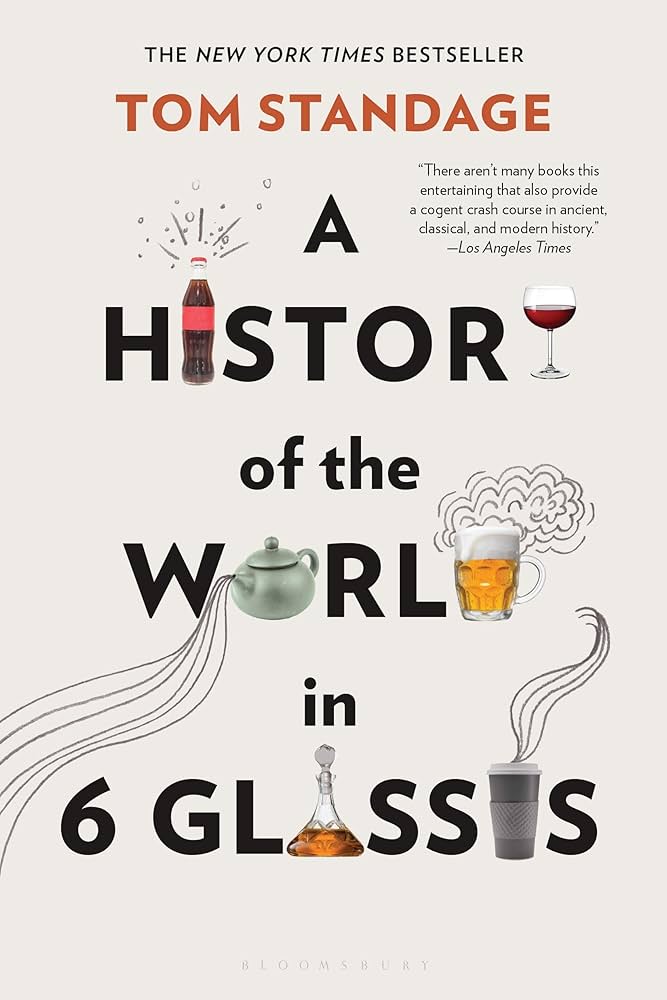
Tom Standage’s A History of the World in 6 Glasses traces how beer, wine, spirits, coffee, tea, and cola shaped civilizations from ancient Mesopotamia to modern America. But beyond their role in commerce, agriculture, and empire-building, these beverages served another crucial function: they became props in humanity’s ongoing social performances, tools for signaling status, allegiance, refinement, and belonging. Each drink carried its own social script, its own rules for proper performance, its own meaning in the intricate theater of class and culture.

Consider beer, humanity’s first beverage beyond water and milk. In ancient Mesopotamia and Egypt, beer wasn’t just sustenance – it was currency, payment for labor, and a marker of civilization itself. To drink beer was to perform being human rather than animal, settled rather than nomadic. But even this earliest of drinks quickly developed social hierarchies. The Sumerians had multiple words for different beer qualities; workers received rations of lower-grade beer while elites enjoyed premium brews. The performance of status began with the first fermented grain.

Wine elevated these social scripts to high art. In ancient Greece and Rome, wine drinking became an elaborate performance space governed by strict protocols. The symposium wasn’t merely drinking – it was theater, with prescribed roles, speeches, toasts, and rituals. The type of wine, its dilution with water, even the angle at which you reclined while drinking it all signaled your education, status, and sophistication. To drink wine improperly was to reveal yourself as barbarous, uncultured, unworthy of elite company.

Spirits introduced a democratizing force – and immediate moral panic. Distillation technology made alcohol cheaper and more potent, threatening the class boundaries that wine and beer had helped maintain. Suddenly, the lower classes could access intoxication previously reserved for the wealthy. The social performances around spirits reflected this anxiety: gin was demonized as “mother’s ruin” in 18th-century England, associated with poverty and moral degradation, while brandy and cognac retained respectability through their association with the upper classes. The same chemical compound, ethanol, carried completely different social meanings depending on its source and price point.

Then coffee and tea arrived, and the performance changed entirely. Coffeehouses in 17th-century England became radical spaces – what Standage calls “penny universities” – where, for the price of a cup, any man could sit and debate politics, science, and philosophy with his equals. Here was Erving Goffman’s theory of social performance in action: the coffeehouse deliberately leveled hierarchies. Titled nobility and common merchants sat together, both performing the role of rational, enlightened citizens. The beverage itself – stimulating rather than intoxicating – supported this new performance of sober, clear-headed discourse.

But this egalitarian potential was always contested. Tea became the beverage of British imperialism and domestic refinement, with elaborate rituals that enforced class and gender boundaries. The proper performance of teatime required specific knowledge: which leaves for which occasions, proper brewing temperatures, the correct angle for extending one’s pinkie (actually a myth, but one that reveals our anxiety about performing refinement correctly). Tea drinking became feminized in Britain while coffee remained masculine, creating gendered scripts for beverage consumption that persist today.

The temperance movement and Prohibition represent perhaps the most dramatic attempt to control social performance through beverage regulation. If drinking alcohol signaled certain social identities – worldliness, masculinity, immigrant culture – then banning it was an attempt to mandate new performances of citizenship. Prohibitionists weren’t just concerned about drunkenness; they feared the social spaces alcohol created (saloons, beer gardens) and the performances these spaces allowed. The speakeasy, in response, became a stage for performing rebellion, sophistication, and modernity, with cocktail culture emerging as an elaborate performance of insider knowledge and cultural sophistication.

Coca-Cola’s rise tells the final chapter in Standage’s history, representing American capitalism’s ability to bottle and commodify social performance itself. Coke wasn’t just refreshing – it was democratic, modern, optimistic, distinctly American. To drink Coke was to perform a certain kind of citizenship, one compatible with consumer capitalism and global empire. The company’s marketing explicitly encouraged this: drinking Coke made you part of a worldwide community, a performer in a global drama of shared taste and values.

Today’s beverage landscape has exploded into a dizzying array of performance possibilities. The craft cocktail revival demands knowledge of pre-Prohibition recipes and obscure bitters. Specialty coffee requires fluency in single-origin terminology and brewing methods. Wine culture has spawned sommeliers, certifications, and an entire vocabulary for performing connoisseurship. Even water – bottled, sparkling, alkaline, artisanal – has become a stage for class performance.

Social media has amplified these performances exponentially. The drink isn’t just consumed; it’s photographed, hashtagged, and broadcast. The latte art, the cocktail’s garnish, the wine label – all become props in our ongoing impression management. We’re not just drinking; we’re curating evidence of the kind of people we want others to believe we are.

What Goffman understood, and what Standage’s history reveals, is that these performances are never trivial. The beverages we choose and how we consume them are bound up with power, identity, and belonging. They mark us as insiders or outsiders, sophisticated or gauche, traditional or progressive. Every sip is a statement, every toast a small drama of affiliation and distinction.

The remarkable continuity across Standage’s Six Glasses is how quickly each beverage became incorporated into systems of social meaning and performance. From Sumerian beer halls to contemporary coffee shops, we’ve always used what we drink to signal who we are and where we belong. The specific drinks may change, but the underlying drama remains the same: we’re all performing our place in the social order, one carefully chosen beverage at a time.

The question isn’t whether we perform through our drink choices – we inevitably do. The question is whether we’re conscious of the scripts we’re following and the impressions we’re managing. After all, understanding the performance doesn’t free us from the stage. It just makes us more deliberate actors in the ongoing drama of social life.


Part of a regular series on 27gen, entitled Wednesday Weekly Reader.

During my elementary school years one of the things I looked forward to the most was the delivery of “My Weekly Reader,” a weekly educational magazine designed for children and containing news-based current events.

It became a regular part of my love for reading, and helped develop my curiosity about the world around us.