Compromise and Consensus: What a 1969 Musical Teaches 2026 About Political Gridlock

As the United States continues to navigate its semi-quincentennial year, the national landscape – especially in the last week – has been predictably crowded with monumental tributes, grand historical narratives, and a collective, sometimes strained effort to find common ground in our fractured origin story. America 250 invites us to look back a quarter of a millennium to understand who we are.

Yet the most profound window into the sweltering Philadelphia summer of our founding might not be found in a dry modern monograph or an idealized political speech, but rather in a fifty-seven-year-old Broadway musical. Peter Stone and Sherman Edwards’s 1776 remains an astonishing piece of historical interpretation, an artifact that treats the birth of a nation not as an inevitability chiseled in white marble, but as an agonizing, close-run, and deeply human gamble.
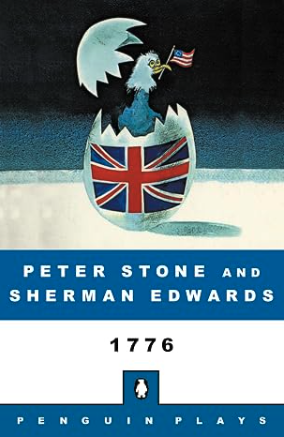
Winner of five 1969 Tony Awards, including Best Book and Best Musical, this oft-produced musical play is an imaginative re-creation of the events from May 8 to July 4, 1776 in Philadelphia, when the second Continental Congress argued about, voted on, and signed the Declaration of Independence.

To understand why this text endures, one must look at the specific cultural moment of its creation. When the musical premiered on Broadway in March 1969, the United States was deeply entangled in the Vietnam War, reeling from the assassinations of Martin Luther King Jr. and Robert F. Kennedy, and split open by a generational counterculture movement.

The book was written by Peter Stone, a brilliant Hollywood and Broadway librettist known for his sharp wit and structural precision, while the music and lyrics were crafted by Sherman Edwards, a former high school history teacher who spent a decade researching the Continental Congress. Their collaboration was born not from a desire to preach blind patriotism during a time of national crisis, but from an obsession with humanizing political icons who had been frozen into mythology by textbook layout artists.

The Central Argument: Consensus as an Agonizing Fiction

The core argument of 1776 challenges the prevailing American myth of absolute ideological unity among the founders. Stone and Edwards assert that the Declaration of Independence was not a harmonious gathering of like-minded philosophers, but a messy, high-stakes compromise achieved through raw political horse-trading, bruised egos, and moral capitulation. They structure the entire narrative around an agonizing countdown toward a vote that requires complete unanimity – a structural choice that strips away historical hindsight and forces the audience to experience the terrifying possibility of absolute failure. By focusing heavily on the gridlock, the factionalism, and the sheer inertia of the Second Continental Congress, the authors argue that the true miracle of America was not that the founders were perfect, but that they managed to agree on anything at all.

In this framework, John Adams becomes the driving engine of history precisely because he is willing to be disliked. Stone portrays him not as a flawless statesman, but as a frustrated, abrasive, and deeply passionate operator who must constantly sublimate his own ego to advance a larger cause. The musical insists that political progress is an active, exhausting labor, requiring an uncomfortable blend of uncompromising idealism and pragmatic, sometimes painful survival instincts.

The Weight of the Written Word
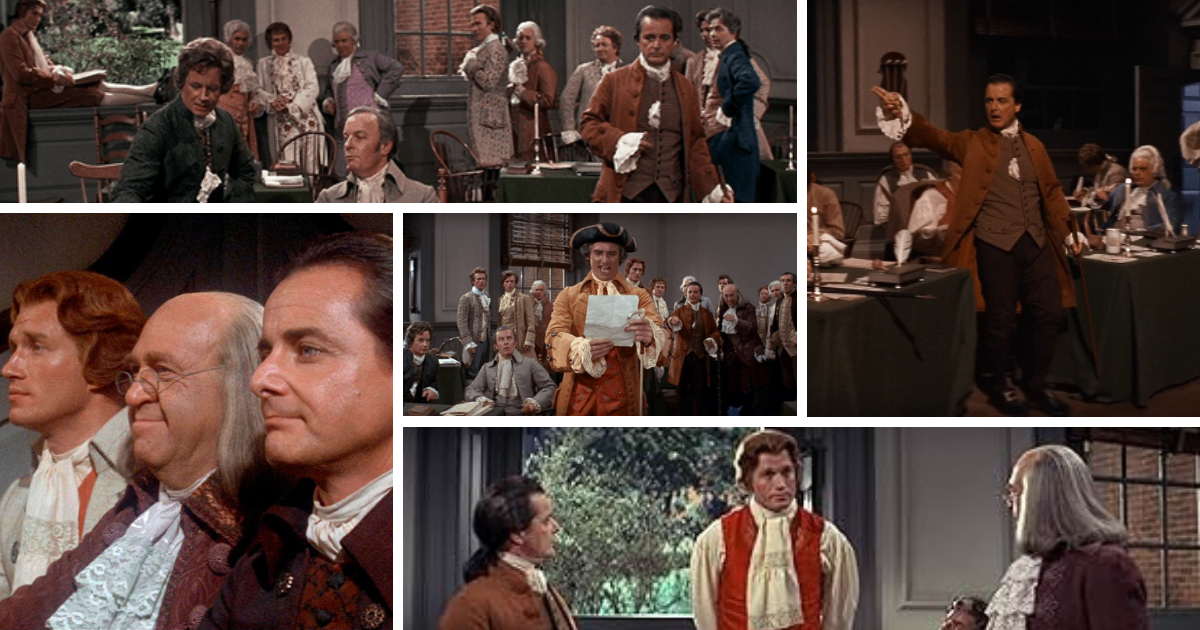
The brilliance of Stone’s libretto is balanced perfectly by Edwards’s lyrics, which frequently lift language directly from the letters and diaries of the historical actors. The tension between the physical reality of the delegates and the abstract nature of their task is perfectly encapsulated early in the play during an exchange between a desperate John Adams and a detached Congress:

I have come to the conclusion that one useless man is called a disgrace, two are called a law firm, and three or more become a Congress! And by God, I have had my fill of Congress!

John Adams (Book by Peter Stone)

This sharp, cynical humor balances the heavy emotional weight of the play’s darkest sequences. The central, agonizing turning point of the musical occurs during the debate over the slavery clause in the draft of the Declaration. Edward Rutledge of South Carolina delivers a searing indictment of Northern hypocrisy in the song “Molasses to Rum,” exposing how New England merchants profited directly from the triangle trade while self-righteously condemning the Southern plantation system:

Hail Columbia! Happy land! Mock with praise the Negro’s chains, and give thanks to God that Delaware waves the higher hand! Who sails the ships out of Boston and New Bedford? Who finances the voyages? Who buys the cargo? You, Northern puritans! You call us sinners, but you are the ones holding the purse strings!

Edward Rutledge (Lyrics by Sherman Edwards)

This sequence serves as the moral axis of the work. The language is unsparing, and it leads directly to the tragic decision to strike Jefferson’s condemnation of slavery from the final document. Stone and Edwards do not shield the audience from this reality; instead, they demonstrate that the birth of the nation was directly bought with the currency of human bondage, leaving a permanent moral fracture in the foundation of the republic.

Historical Reassessment in the Decades Since

While Sherman Edwards’s historical research was remarkably thorough for the late 1960s, our understanding of the Revolutionary era has evolved significantly since the musical’s premiere. Modern historiography has expanded far beyond the walls of the Pennsylvania State House to include the perspectives of women, enslaved people, Indigenous populations, and ordinary citizens who bore the immediate brunt of the conflict. In 1776, Abigail Adams and Martha Jefferson appear only as figures within John and Thomas’s imaginations or personal correspondences, serving primarily to humanize and soften the male leads. Today’s historians look at Abigail not merely as a supportive wife sending saltpeter, but as an acute political theorist and economic actor in her own right.

Furthermore, our contemporary lens demands a much more rigorous examination of the founders’ complicity in slavery. While the musical masterfully highlights the hypocrisy of the Northern states and the unyielding stance of the South, it slightly softens Thomas Jefferson’s personal contradictions by framing him as a reluctant slaveholder trapped by his regional identity. Modern scholarship offers a much less forgiving look at Jefferson’s lifetime of enslaving human beings, revealing a starker gap between his universal declarations of liberty and his personal domestic economy.

Stone and Edwards also took deliberate creative liberties for dramatic clarity. The historical Congressional debate over independence actually concluded on July 2, with the formal text approved on July 4, while the physical signing occurred primarily on August 2. Furthermore, James Wilson of Pennsylvania is depicted in the play as a timid follower of John Dickinson who casts the deciding vote simply to avoid being remembered poorly; in reality, Wilson was a highly influential legal scholar and a deeply committed proponent of independence from the outset.

Why We Must Listen in 2026

Why, then, should an intelligent reader step away from the cascade of modern retrospectives to spend time with this theatrical text in 2026? The answer lies in the profound relevance of its central question: How does a deeply divided, diverse, and argumentative body politic commit to a shared future? At a moment when political discourse feels irrevocably broken, and institutional trust is at an all-time low, 1776 offers an invaluable antidote to both blind cynicism and naive exceptionalism.

The musical reminds us that America was born in a state of profound uncertainty. It underscores the value of informal, sweat-soaked taverns, side hallways, and letters written late at night where the actual, messy business of human connection took place. It challenges us to look past the pristine icons on our currency and see instead a group of flawed, anxious, and deeply human individuals who, despite their profound differences and glaring moral failures, chose to risk everything on a collective experiment. By studying 1776 today, we are reminded that our current national struggles are not an unprecedented departure from a perfect past, but a continuation of the flawed, loud, and unfinished argument that began in Philadelphia two hundred and fifty years ago.
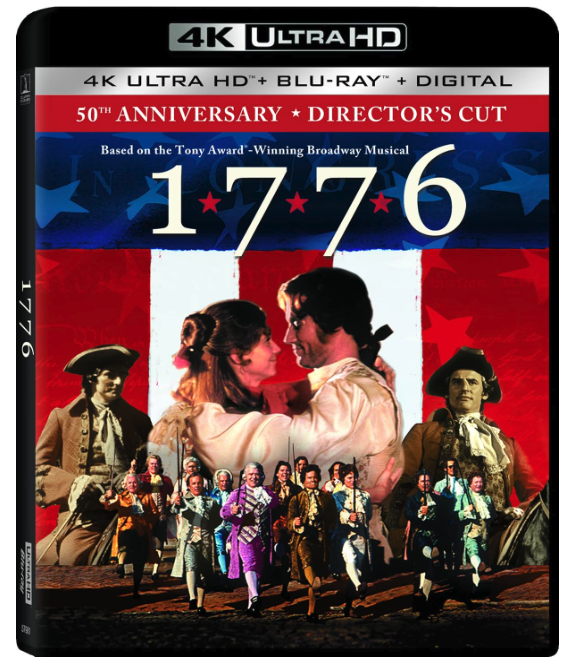

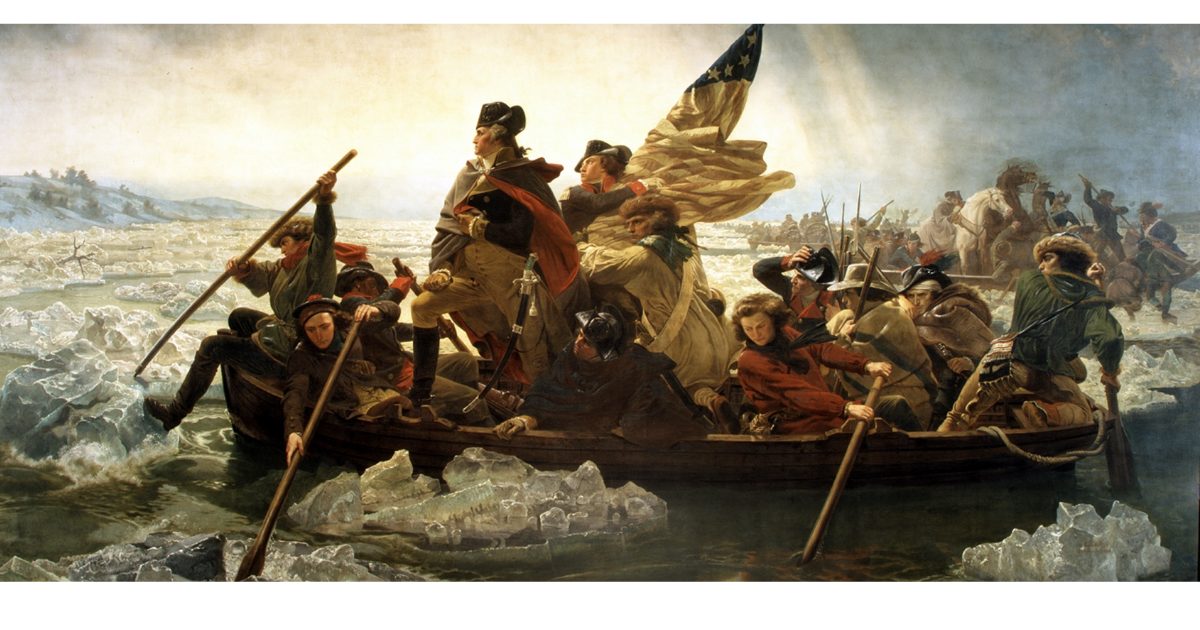
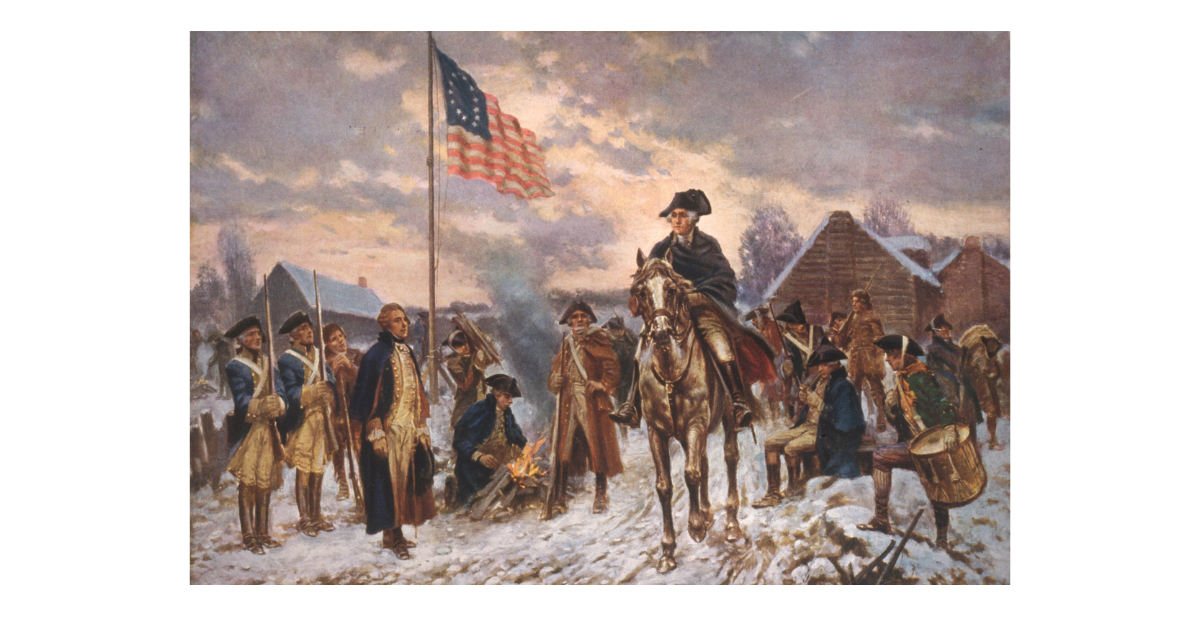
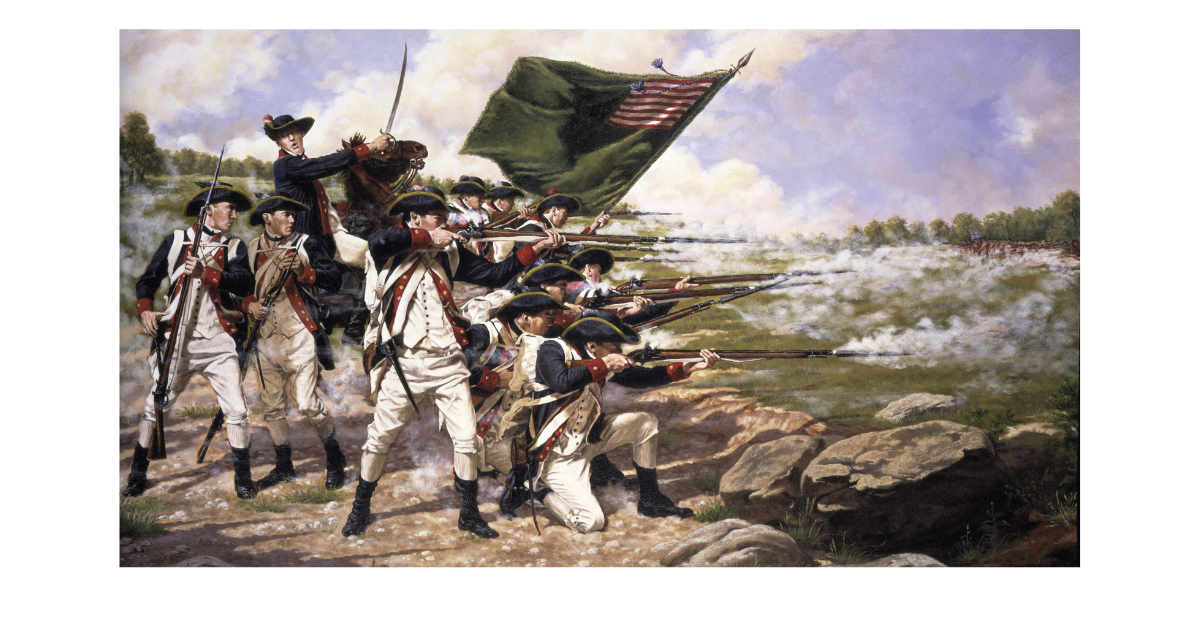
Note: While I almost always prefer the written story or book to a filmed version, I highly recommend watching the movie adaptation of 1776 as well as reading the original screenplay. It can be found on various streaming services as well as purchased in a superb 50th anniversary Director’s Cut Blu-ray edition. The images above are still shots from the movie.


Part of a regular series on 27gen, entitled Wednesday Weekly Reader.

During my elementary school years one of the things I looked forward to the most was the delivery of “My Weekly Reader,” a weekly educational magazine designed for children and containing news-based current events.

It became a regular part of my love for reading, and helped develop my curiosity about the world around us.
1776: When the World Was on the Line


March and April – The Gathering Storm

The Weight of a Single Year

In the winter of 1776, George Washington’s army was evaporating. Men were deserting by the hundreds, some leaving their shoes behind because they had none and the frozen ground was marginally easier to cross barefoot than in rotting cloth wrappings. Enlistments were expiring. Morale had collapsed. The most powerful military force on earth was hunting them through New Jersey, and the commander-in-chief of the Continental Army – a Virginia planter with no formal military education – was watching his revolution die in real time.

Now imagine the year 2026, when democratic institutions worldwide face pressures from within that would have seemed fantastical a generation ago. When the idea of ordinary citizens rising to defend something as abstract as self-governance feels, to many, dangerously romantic. When cynicism about the capacity of imperfect people to do extraordinary things has become something close to a civic religion.

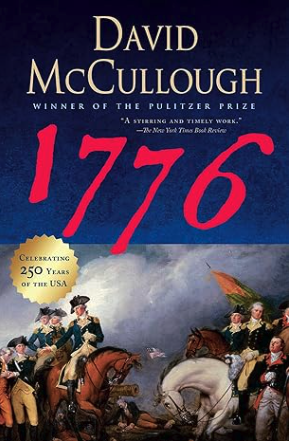
This is exactly the moment to read David McCullough’s 1776.

The Storyteller’s Credentials

David McCullough published 1776 in 2005, at the height of his authority as America’s most beloved popular historian. He had already won two Pulitzer Prizes – for Truman (1992) and John Adams (2001) – and had become the rare scholar who could pack airport bookstores and university syllabi simultaneously. His voice, warm and unhurried, had narrated Ken Burns documentaries and presidential inaugurations. America trusted him.

That trust matters here, because McCullough was doing something quietly audacious with 1776. He was not writing a triumphalist narrative about destiny or providence. He was writing about failure, incompetence, luck, and the terrifying contingency of historical outcomes. He was writing, in other words, about how close everything came to not happening at all.

McCullough spent years in British archives alongside American ones, a methodological choice that shapes every page. The enemy in 1776 is not a cartoon villain. The British commanders – Howe, Cornwallis, the Hessian officers – emerge as intelligent, often reluctant professionals caught in their own institutional webs. This bilateral perspective was, in 2005, still somewhat unusual in popular American history. It remains one of the book’s most under appreciated gifts.

The Core Argument: Improbability as Revelation

The central interpretation 1776 offers is deceptively simple: the American Revolution did not succeed because it was inevitable or divinely ordained. It succeeded because of a staggering accumulation of human will applied at the precise moments when will was all that remained.

McCullough is not making a mystical argument. He is making a human one. Washington, in his telling, was not a marble demigod. He was a man who made catastrophic tactical errors – most notably the nearly fatal decision to defend New York against a vastly superior force – and who possessed the rarer, more complicated virtue of refusing to accept the conclusions those errors implied. The argument running underneath the entire narrative is that character, not genius, saved the revolution.

This plays out most powerfully in McCullough’s portrait of the retreat from Brooklyn Heights in August 1776, when Washington evacuated nine thousand men across the East River in a single night without the British discovering the operation until it was complete. There was fog. There were fishermen from Marblehead, Massachusetts who knew how to handle boats in the dark. There was luck. But there was also a commander who had decided, simply, not to quit – and soldiers who had decided the same.

As McCullough writes of Washington in these desperate months: “He was not a brilliant strategist or tactician, not a gifted orator, not an intellectual. At several crucial moments he had shown very poor judgment. But he had courage… He had a gift for inspiring loyalty in others, for evoking that most human of needs, the desire to measure up.”

That is the book’s thesis distilled to a sentence. The revolution was built not on brilliance but on the desire to measure up.

Passages That Stay With You

McCullough has a cinematographer’s eye. He renders the physical reality of 1776 – the cold, the mud, the stench of dysentery in the camps, the sound of British artillery – with a precision that never tips into gratuitous suffering. The horror is present but purposeful.

His account of the crossing of the Delaware on Christmas night, 1776 – history’s most famous boat ride, already mythologized beyond recognition by the time he wrote – is stripped of its theatrical gloss and returned to raw human ordeal. Men were soaking wet. The ice floes were dangerous. The operation was hours behind schedule. Colonel Henry Knox, the former Boston bookseller turned artillery commander, was bellowing orders from the riverbank in the freezing dark.

When Washington’s force finally reaches Trenton and routs the sleeping Hessian garrison, the victory reads not as destiny fulfilled but as the last, desperate, utterly improbable roll of a die that had every reason to come up wrong.

McCullough is equally vivid on the British side. His portrait of General William Howe – talented, cautious, perhaps deliberately slow in finishing off the rebels, perhaps still hoping for reconciliation – introduces the reader to one of history’s great counterfactuals. If Howe had pressed harder at Brooklyn, at Manhattan, in New Jersey, there is no further story to tell. That he did not is one of the accidents upon which the modern world rests.

In Dialogue with the Series

1776 arrives in this reading series after we have spent months in the literature of colonial struggle: the grinding institutional violence of plantation economies, the bureaucratic cruelties of imperial administration, the way ordinary people made sense of, and made space within, systems designed to diminish them.

Place 1776 beside Bernard Bailyn’s The Ideological Origins of the American Revolution and the contrast is immediate and instructive. Bailyn, working from pamphlets and broadsides rather than battle dispatches, argued that the revolution was first and foremost an ideological event – that colonists had constructed, from English Whig thought and radical dissenting tradition, a coherent and genuinely fearful worldview in which British policy looked like a deliberate conspiracy against liberty. Where Bailyn’s revolutionaries are intellectuals and polemicists, driven by ideas about power and corruption, McCullough’s are soldiers and commanders, driven by cold and exhaustion and the immediate problem of staying alive. Together the two books form a kind of stereoscope: Bailyn shows us why the revolution had to happen; McCullough shows us how it almost didn’t. Neither is fully comprehensible without the other.

The dialogue with Robert Middlekauff’s The Glorious Cause – the Oxford History of the United States volume covering the entire revolutionary war – is more of a scholarly conversation between neighbors. Middlekauff covers much of the same military terrain as McCullough, but at greater length and with a scholar’s attention to contingency across the whole arc of the conflict rather than a single pivotal year. Where Middlekauff is comprehensive, McCullough is concentrated. The trade-off is intensity: 1776 achieves a novelistic immediacy that no survey volume can sustain, but readers who finish it hungry for the larger strategic picture will find Middlekauff an essential next step. Notably, Middlekauff is considerably more attentive than McCullough to the experiences of ordinary soldiers — the rank and file whose motivations, suffering, and occasional mutinies shaped the war as surely as any general’s decision.

What We’ve Learned Since 2005

McCullough published 1776 before the wave of new scholarship that has substantially revised our picture of the revolutionary moment. In the two decades since, historians have deepened and complicated the story in several crucial directions.

The contribution of free and enslaved Black soldiers to the Continental Army – approximately five thousand men – has received far more rigorous attention than McCullough provides. Historians like Gary Nash and Alan Gilbert have documented how the revolution’s ideological commitments created, for a brief moment, genuine opportunities for Black men in the Continental ranks, opportunities the new republic would spend decades systematically closing.

Similarly, the role of Native American nations in the conflict – most siding with the British, some with the Americans, all navigating a catastrophe that the revolution’s outcome would accelerate – is largely invisible in 1776. The military history McCullough tells is real and important. But the full theater of the war was substantially wider than the Atlantic Seaboard campaigns he chronicles.

None of this diminishes 1776. It contextualizes it. McCullough was writing popular military history at a moment when that genre had particular constraints and conventions. He worked within them with exceptional craft. The corrections the last twenty years of scholarship offer are, in many ways, a tribute to the questions his work helped a broad audience learn to ask.

Why Read This in 2026

Here is what 1776 gives a reader in 2026 that cannot be easily found elsewhere: permission to take seriously the difficulty of the thing.

We live in an era saturated by both uncritical celebration of the founders and by equally uncritical dismissal of them. 1776 offers something harder to sustain – genuine attention to people trying to do something that had almost no precedent, under conditions of extreme adversity, without certainty that it would work, without knowing they would be remembered.

Washington, Knox, Nathanael Greene – the men at the center of this book – were making it up as they went. They were scared. They were sometimes wrong. They persisted anyway, not because history had written their victory in advance, but because the alternative was to stop.

That is not a comfortable message for a revolutionary moment. It is an honest one.

The colonial struggle for independence, which this series has examined through economic, social, and cultural lenses, had a military dimension that required ordinary people to stake their lives on outcomes that were genuinely uncertain. 1776 makes that uncertainty visceral. It reminds us that the world we inherited was not a foregone conclusion. It was a choice, made badly and imperfectly and sometimes heroically, by people who did not know how it would end.

In a year when the meaning of democratic self-governance is again, and urgently, in question, that reminder is not nostalgia. It is instruction.


A Note on This Series

This journey through Revolutionary history is as much about the evolution of historical understanding as the Revolution itself. History isn’t static – each generation reinterprets the past through its own concerns, asking different questions and prioritizing different sources. By reading these books in dialogue across 250 years, we’ll witness how scholarship evolves, how narratives get challenged, and how forgotten stories resurface.

This isn’t about declaring one interpretation “right” and another “wrong,” but appreciating the richness that emerges when multiple perspectives illuminate the same transformative moment. These books won’t provide definitive answers – history rarely does – but they equip us to think more clearly about how real people facing genuine uncertainty chose independence, how ideas had consequences, and how the work of creating a more perfect union continues. As we mark this anniversary, we honor the Revolutionary generation by reading deeplythinking critically, and engaging seriously with both the brilliance and blind spots of what they created.

You can find the entire series listing here.

The Clarity of Our Founding Fathers

How was it that within a short span of time on the east coast of the North American continent there should have sprung up such a rare array of genius – men who seemed in virtual command of historical experience and who combined moral imagination with a flair for leadership?

We know those men as the Founding Fathers.

Part of the answer is that these men knew how to invest their combined strength in a great idea:

  • A young man like James Madison had urgent thoughts about what people had to do to become free and remain free. Not content to just set these thoughts down in print, he joined those concerns to those of other men in a position to exert leadership.
  • The intellectual exchange – in person and in letters – between Thomas Jefferson and John Adams spanned over 50 years, beginning when independence was just a dream and continuing long after the United States of America had become an established government. This exchange knows few equals for depth, range of subject matter, literary style and general intellectual achievement in recorded correspondence.
  • George Washington and Benjamin Franklin registered their main impact on their contemporaries through the force of their personalities rather than through any detailed exposition of their political ideas and philosophy.

It was from men like these that the idea of a new nation was born. Their thoughts were expressed in The Declaration of Independence.

Drafted by Thomas Jefferson between June 11 and June 28, 1776, the Declaration of Independence is at once the nation’s most cherished symbol of liberty and Jefferson’s most enduring monument. Here, in exalted and unforgettable phrases, Jefferson expressed the convictions in the minds and hearts of the American people.

The political philosophy of the Declaration was not new. John Locke and the Continental philosophers had already expressed its ideals of individual liberty. What Jefferson did was to summarize this philosophy in “self-evident truths” and set forth a list of grievances against the King in order to justify before the world the breaking of ties between the colonies and the mother country.

On July 1, 1776, Congress reconvened. The following day, the Lee Resolution for independence was adopted by 12 of the 13 colonies, New York not voting. Immediately afterward, the Congress began to consider the Declaration. Adams and Franklin had made only a few changes before the committee submitted the document. The discussion in Congress resulted in some alterations and deletions, but the basic document remained Jefferson’s. The process of revision continued through all of July 3 and into the late morning of July 4. Then, at last, church bells rang out over Philadelphia; the Declaration had been officially adopted.

A letter from John Hancock to General Washington in New York, as well as the complete text of the Declaration, followed two days later:

That our affairs might take a more favorable turn, the Congress have judged it necessary to dissolve the connection between great Britain and the American colonies, and to declare them free and independent states; as you will perceive by the enclosed Declaration, which I am directed to transmit to you, and to request you  will have it proclaimed at the head of the army in the way you shall think most proper.

Many saw at once that with the enemy massing for battle so close at hand and independence at last declared by Congress, the war had entered an entirely new stage. The lines were drawn now as never before, the stakes higher. “The eyes of all America are upon us,” John Knox wrote. “As we play our part posterity will bless or curse us.”

“We are in the midst of a revolution,” wrote John Adams, “the most complete, unexpected, and remarkable of any in the history of the nations.”

In a ringing preamble, drafted by Thomas Jefferson, the document declared it “self-evident” that “all men are created equal,” and were endowed with the “unalienable” rights of “life, liberty, and the pursuit of happiness.” And to this noble end the delegates had pledged their lives, their fortunes, and their sacred honor.

From this point on, the citizen-soldiers of George Washington’s army were no longer fighting only for the defense of their country, or for their rightful liberties as free born Englishmen, as they had at Lexington and Concord, Bunker Hill, and through the long siege at Boston. It was now a proudly proclaimed, all-out war for an independent America, a new America, and thus a new day of freedom and equality.

At a stroke the Continental Congress had made the Glorious Cause of America more glorious still, for all the world to know, and also to give every citizen soldier at this critical juncture something still larger and more compelling for which to fight.

Clarity isn’t everything, but it changes everything.


Part of a regular series on 27gen, entitled Wednesday Weekly Reader.

During my elementary school years one of the things I looked forward to the most was the delivery of “My Weekly Reader,” a weekly educational magazine designed for children and containing news-based current events.

It became a regular part of my love for reading, and helped develop my curiosity about the world around us.