William Hogeland’s urgent, street-level history strips the mythology from the founding and reveals a revolution nearly lost to faction, fear, and financial interest.
March-April: The Gathering Storm, Part Eight
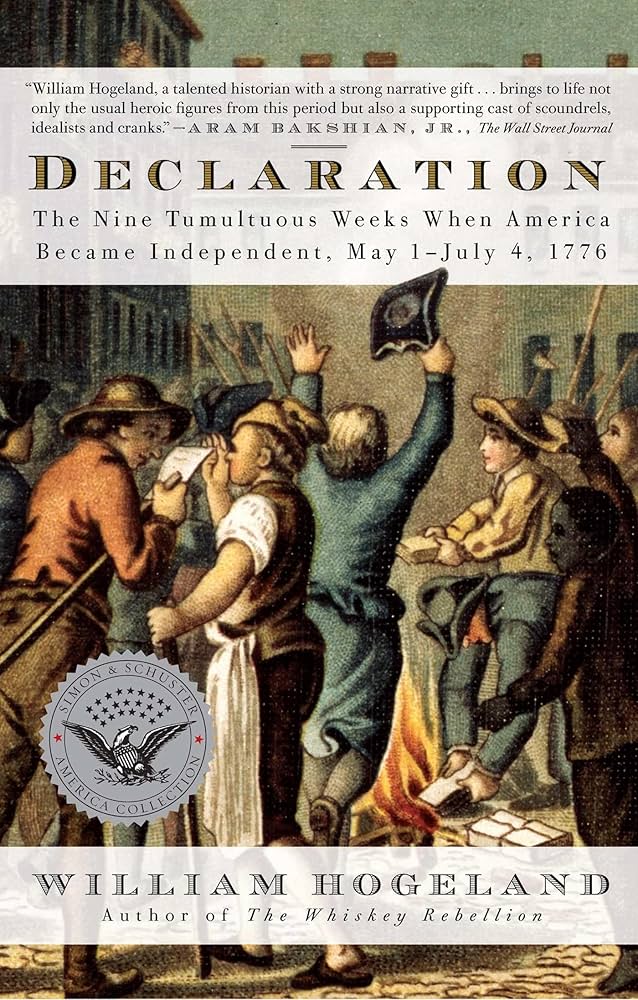
On the morning of May 1, 1776, no one knew whether America would declare independence. The Continental Congress was a fractious assembly of delegates with competing loyalties, creditors at home, and instructions from colonial legislatures that, in many cases, still explicitly forbade a break with Britain. Two months later — on a day now rendered in bronze and marble — they signed their names to treason. Between those two dates lay nine weeks that William Hogeland insists we have never properly understood. His 2010 book Declaration: The Nine Tumultuous Weeks When America Became Independent, May 1–July 4, 1776 is, in the best sense, a history of contingency: a reminder that what happened almost didn’t, and that the people who made it happen were flawed, frightened, and fiercely divided about what independence would mean for ordinary Americans.
Hogeland is not a comforting writer. He is a former literary editor turned radical-democratic historian whose earlier book The Whiskey Rebellion exposed the founding generation’s willingness to suppress the working-class movement that financed the Revolution from below. In Declaration, he turns that same unsentimental lens on the weeks leading up to July 4 – and what he finds is not a scene of noble unanimity, but a pressure-cooker of class conflict, political manipulation, and ideological improvisation.
The Core Argument: Independence as a Coalition Problem
Hogeland’s central interpretation is deceptively simple but quietly explosive: independence in 1776 was not the inevitable culmination of colonial enlightenment. It was the product of a specific, fragile, and contested political coalition – one that required radical populists from Pennsylvania and conservative merchants from New York and South Carolina to temporarily make common cause, and one that could have collapsed at any moment. The founding was not a consensus; it was a managed contradiction.
The book’s beating heart is Pennsylvania, where the push for independence was simultaneously a push for democratic revolution at home. Ordinary artisans, militia privates, and tradesmen wanted not only to break from Britain but to break the grip of the colony’s Quaker mercantile elite. Hogeland shows how figures like Tom Paine and the radical committeemen of Philadelphia’s wards used the momentum toward independence to rewrite Pennsylvania’s constitution into the most democratic document in the Western world – one with a unicameral legislature, no property requirement for voting, and mandatory legislative transparency. The merchants and lawyers who would later claim sole credit for founding a nation spent much of those nine weeks trying to contain precisely this kind of democratic energy.
The founding generation’s genius was not in agreeing on independence. It was in finding, briefly, a formula by which people who disagreed about nearly everything else could sign the same document – and in ensuring that document said as little as possible about what would come next. – Willam Hogeland
This reading reframes what the Declaration itself actually accomplished. Jefferson’s soaring language about equality was not, Hogeland argues, an accidental ornament on a political document. It was a deliberate act of controlled ambiguity – radical enough to inspire the populists, vague enough to terrify no one with property. The Declaration announced principles that almost none of its signers intended to enforce immediately, and many intended never to enforce at all.
In Dialogue: McCullough’s Heroism, Bailyn’s Ideas
Reading Declaration alongside several other books in this series clarifies exactly what kind of history Hogeland is writing and what he is writing against.
David McCullough’s 1776 is a masterwork of narrative empathy. Its Washington is courageous; its soldiers are stoic; its outcome feels earned. But McCullough operates almost exclusively at the level of military command, and his Revolution is largely a story about leaders. Hogeland’s revolution is not. He insists on the militia privates who debated political philosophy in Philadelphia taverns, the artisans who showed up armed to committee meetings, and the landless men who had no representation in the Congress that was deciding their future. Where McCullough gives us a founding to be proud of, Hogeland gives us one to reckon with.
The relationship with Bernard Bailyn’s The Ideological Origins of the American Revolution is more nuanced. Bailyn’s landmark 1967 work argued that the Revolution was driven by a coherent republican ideology – a fear of tyranny and corruption rooted in English Whig tradition that ran through colonial thought from pamphlets to sermons to newspaper columns. Hogeland is not unsympathetic to this view, but he pushes decisively below it. Ideas matter in Declaration, but they are wielded as weapons in a class conflict that ideological history can obscure.
When Philadelphia’s radical democrats invoked “the rights of man,” they meant something materially different than when Robert Morris or John Dickinson did. The same words, as Hogeland shows, could be pressed into service for genuinely incompatible visions of the republic that would follow independence. Bailyn maps the intellectual architecture; Hogeland shows who was living in which rooms – and who was locked outside.
The Weeks Themselves: A Timeline of Crisis
EARLY MAY: Pennsylvania radicals force the removal of the colonial assembly; Congress recommends colonies form new governments.
JUNE 7: Richard Henry Lee introduces independence resolution; moderates push for three-week delay.
LATE JUNE: Jefferson drafts; committee revises; slavery clause removed under pressure from Southern delegates.
JULY 2–4: Congress votes independence; Declaration adopted; New York abstains, later ratifies
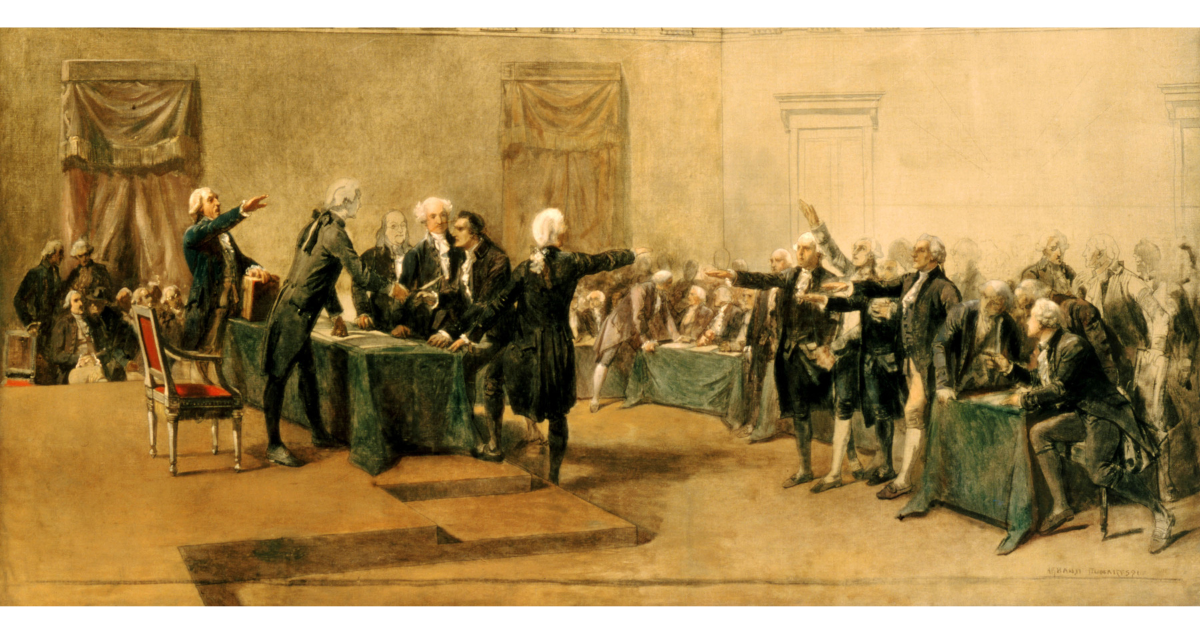
What Hogeland does brilliantly with this timeline is show how each step was improvised under duress. The delay from early June to July 2 was not procedural politeness – it was a furious negotiation over whether the moderate Middle Colonies could be brought along, or whether New England and Virginia would move without them. Every concession in the Declaration’s final text – including the painful removal of Jefferson’s anti-slavery passage – represents a live argument in a room full of people who disagreed about almost everything except the immediate necessity of French military aid.
What We’ve Learned Since 2010
Hogeland wrote Declaration in the early years of the Tea Party movement, and the book carries the urgency of that moment – a time when competing factions were battling over what the founders “really meant.” Since then, scholarship has continued to deepen his core insights.
The publication of Alan Taylor’s American Revolutions: A Continental History (2016) and the popular explosion of interest generated by the 1619 Project have further stressed the Revolution’s internal contradictions, particularly around slavery and the deliberate exclusion of Black, Indigenous, and poor white Americans from the republic’s founding promises. Hogeland anticipated this direction. His Pennsylvania radicals now look like the earliest evidence of a long-suppressed democratic tradition that the elite founders not only failed to honor but actively worked to suppress – a tradition that would not resurface with any force until the Jacksonian era and, arguably, not fully until the Progressive movement a century after independence.
In a political moment when the founding is once again being argued over – invoked simultaneously to justify populist rebellion and elite institutional preservation – Hogeland’s book performs an essential service. It refuses to let either side rest easy. His founders were not a band of philosopher-kings whose wisdom we should restore. Nor were they simply hypocrites whose ideals we should discard. They were politicians in a genuine crisis, making deals, suppressing dissent, and writing documents whose meaning they deliberately left unresolved – because resolution would have meant choosing sides in a class war they were not prepared to fight.
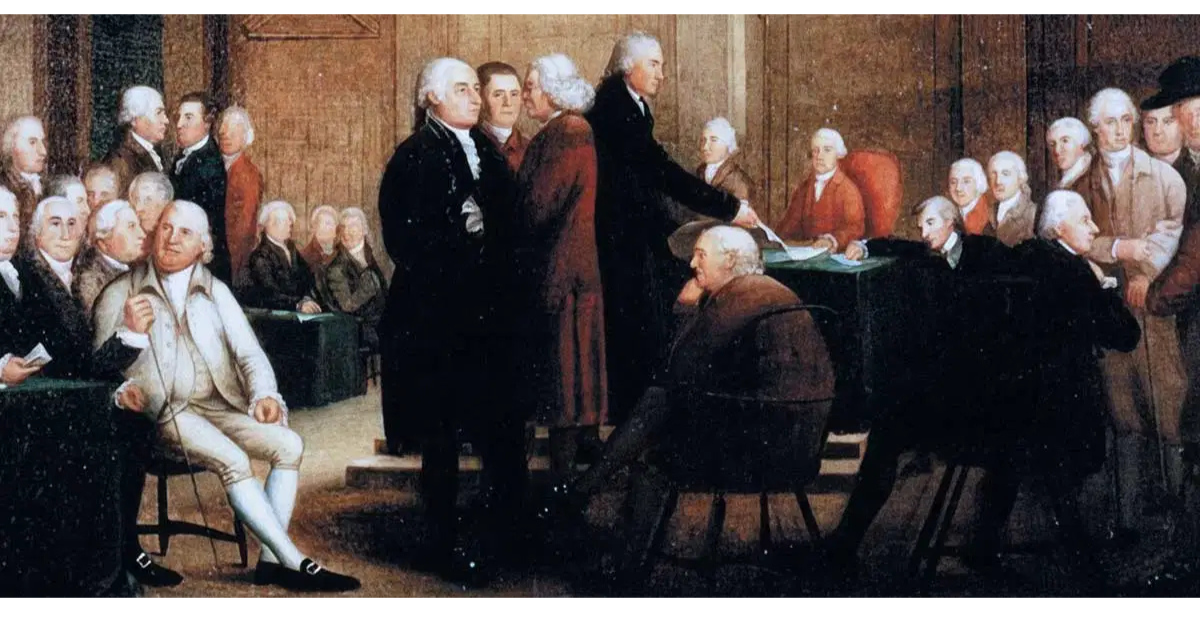
Declaration is the most honest account of those nine weeks precisely because it does not flinch from that conclusion. For readers of this series who came to the founding through McCullough’s warmth or Bailyn’s intellectual elegance, Hogeland is the necessary cold water. Not because the founding was shameful, but because it was human – and because understanding it honestly is the only way to argue seriously about what it means now.
A Note on This Series
This journey through Revolutionary history is as much about the evolution of historical understanding as the Revolution itself. History isn’t static – each generation reinterprets the past through its own concerns, asking different questions and prioritizing different sources. By reading these books in dialogue across 250 years, we’ll witness how scholarship evolves, how narratives get challenged, and how forgotten stories resurface.
This isn’t about declaring one interpretation “right” and another “wrong,” but appreciating the richness that emerges when multiple perspectives illuminate the same transformative moment. These books won’t provide definitive answers – history rarely does – but they equip us to think more clearly about how real people facing genuine uncertainty chose independence, how ideas had consequences, and how the work of creating a more perfect union continues. As we mark this anniversary, we honor the Revolutionary generation by reading deeply, thinking critically, and engaging seriously with both the brilliance and blind spots of what they created.