
As the United States continues to navigate its semi-quincentennial year, the national landscape – especially in the last week – has been predictably crowded with monumental tributes, grand historical narratives, and a collective, sometimes strained effort to find common ground in our fractured origin story. America 250 invites us to look back a quarter of a millennium to understand who we are.
Yet the most profound window into the sweltering Philadelphia summer of our founding might not be found in a dry modern monograph or an idealized political speech, but rather in a fifty-seven-year-old Broadway musical. Peter Stone and Sherman Edwards’s 1776 remains an astonishing piece of historical interpretation, an artifact that treats the birth of a nation not as an inevitability chiseled in white marble, but as an agonizing, close-run, and deeply human gamble.
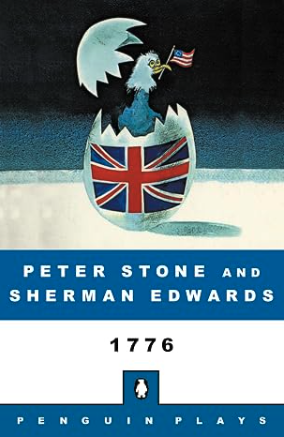
Winner of five 1969 Tony Awards, including Best Book and Best Musical, this oft-produced musical play is an imaginative re-creation of the events from May 8 to July 4, 1776 in Philadelphia, when the second Continental Congress argued about, voted on, and signed the Declaration of Independence.
To understand why this text endures, one must look at the specific cultural moment of its creation. When the musical premiered on Broadway in March 1969, the United States was deeply entangled in the Vietnam War, reeling from the assassinations of Martin Luther King Jr. and Robert F. Kennedy, and split open by a generational counterculture movement.
The book was written by Peter Stone, a brilliant Hollywood and Broadway librettist known for his sharp wit and structural precision, while the music and lyrics were crafted by Sherman Edwards, a former high school history teacher who spent a decade researching the Continental Congress. Their collaboration was born not from a desire to preach blind patriotism during a time of national crisis, but from an obsession with humanizing political icons who had been frozen into mythology by textbook layout artists.
The Central Argument: Consensus as an Agonizing Fiction
The core argument of 1776 challenges the prevailing American myth of absolute ideological unity among the founders. Stone and Edwards assert that the Declaration of Independence was not a harmonious gathering of like-minded philosophers, but a messy, high-stakes compromise achieved through raw political horse-trading, bruised egos, and moral capitulation. They structure the entire narrative around an agonizing countdown toward a vote that requires complete unanimity – a structural choice that strips away historical hindsight and forces the audience to experience the terrifying possibility of absolute failure. By focusing heavily on the gridlock, the factionalism, and the sheer inertia of the Second Continental Congress, the authors argue that the true miracle of America was not that the founders were perfect, but that they managed to agree on anything at all.
In this framework, John Adams becomes the driving engine of history precisely because he is willing to be disliked. Stone portrays him not as a flawless statesman, but as a frustrated, abrasive, and deeply passionate operator who must constantly sublimate his own ego to advance a larger cause. The musical insists that political progress is an active, exhausting labor, requiring an uncomfortable blend of uncompromising idealism and pragmatic, sometimes painful survival instincts.
The Weight of the Written Word
The brilliance of Stone’s libretto is balanced perfectly by Edwards’s lyrics, which frequently lift language directly from the letters and diaries of the historical actors. The tension between the physical reality of the delegates and the abstract nature of their task is perfectly encapsulated early in the play during an exchange between a desperate John Adams and a detached Congress:
I have come to the conclusion that one useless man is called a disgrace, two are called a law firm, and three or more become a Congress! And by God, I have had my fill of Congress!
— John Adams (Book by Peter Stone)
This sharp, cynical humor balances the heavy emotional weight of the play’s darkest sequences. The central, agonizing turning point of the musical occurs during the debate over the slavery clause in the draft of the Declaration. Edward Rutledge of South Carolina delivers a searing indictment of Northern hypocrisy in the song “Molasses to Rum,” exposing how New England merchants profited directly from the triangle trade while self-righteously condemning the Southern plantation system:
Hail Columbia! Happy land! Mock with praise the Negro’s chains, and give thanks to God that Delaware waves the higher hand! Who sails the ships out of Boston and New Bedford? Who finances the voyages? Who buys the cargo? You, Northern puritans! You call us sinners, but you are the ones holding the purse strings!
— Edward Rutledge (Lyrics by Sherman Edwards)
This sequence serves as the moral axis of the work. The language is unsparing, and it leads directly to the tragic decision to strike Jefferson’s condemnation of slavery from the final document. Stone and Edwards do not shield the audience from this reality; instead, they demonstrate that the birth of the nation was directly bought with the currency of human bondage, leaving a permanent moral fracture in the foundation of the republic.
Historical Reassessment in the Decades Since
While Sherman Edwards’s historical research was remarkably thorough for the late 1960s, our understanding of the Revolutionary era has evolved significantly since the musical’s premiere. Modern historiography has expanded far beyond the walls of the Pennsylvania State House to include the perspectives of women, enslaved people, Indigenous populations, and ordinary citizens who bore the immediate brunt of the conflict. In 1776, Abigail Adams and Martha Jefferson appear only as figures within John and Thomas’s imaginations or personal correspondences, serving primarily to humanize and soften the male leads. Today’s historians look at Abigail not merely as a supportive wife sending saltpeter, but as an acute political theorist and economic actor in her own right.
Furthermore, our contemporary lens demands a much more rigorous examination of the founders’ complicity in slavery. While the musical masterfully highlights the hypocrisy of the Northern states and the unyielding stance of the South, it slightly softens Thomas Jefferson’s personal contradictions by framing him as a reluctant slaveholder trapped by his regional identity. Modern scholarship offers a much less forgiving look at Jefferson’s lifetime of enslaving human beings, revealing a starker gap between his universal declarations of liberty and his personal domestic economy.
Stone and Edwards also took deliberate creative liberties for dramatic clarity. The historical Congressional debate over independence actually concluded on July 2, with the formal text approved on July 4, while the physical signing occurred primarily on August 2. Furthermore, James Wilson of Pennsylvania is depicted in the play as a timid follower of John Dickinson who casts the deciding vote simply to avoid being remembered poorly; in reality, Wilson was a highly influential legal scholar and a deeply committed proponent of independence from the outset.
Why We Must Listen in 2026
Why, then, should an intelligent reader step away from the cascade of modern retrospectives to spend time with this theatrical text in 2026? The answer lies in the profound relevance of its central question: How does a deeply divided, diverse, and argumentative body politic commit to a shared future? At a moment when political discourse feels irrevocably broken, and institutional trust is at an all-time low, 1776 offers an invaluable antidote to both blind cynicism and naive exceptionalism.
The musical reminds us that America was born in a state of profound uncertainty. It underscores the value of informal, sweat-soaked taverns, side hallways, and letters written late at night where the actual, messy business of human connection took place. It challenges us to look past the pristine icons on our currency and see instead a group of flawed, anxious, and deeply human individuals who, despite their profound differences and glaring moral failures, chose to risk everything on a collective experiment. By studying 1776 today, we are reminded that our current national struggles are not an unprecedented departure from a perfect past, but a continuation of the flawed, loud, and unfinished argument that began in Philadelphia two hundred and fifty years ago.
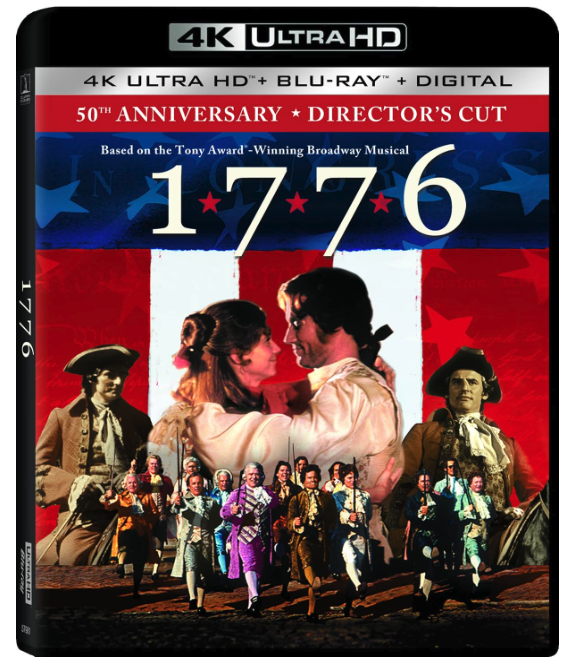
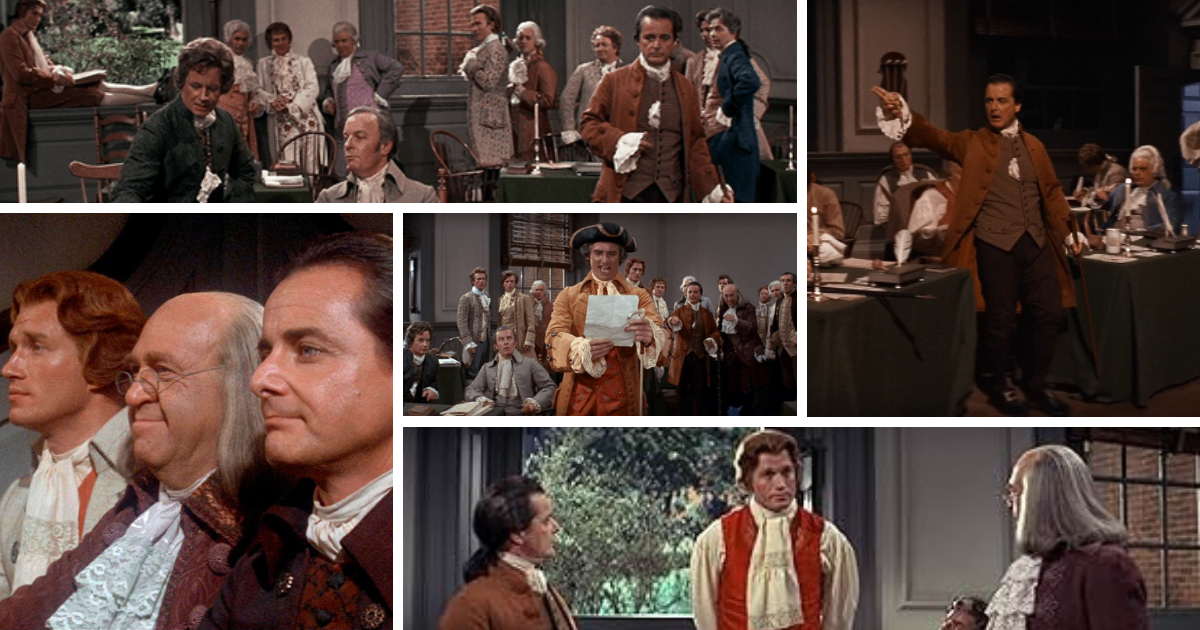
Note: While I almost always prefer the written story or book to a filmed version, I highly recommend watching the movie adaptation of 1776 as well as reading the original screenplay. It can be found on various streaming services as well as purchased in a superb 50th anniversary Director’s Cut Blu-ray edition. The images above are still shots from the movie.

Part of a regular series on 27gen, entitled Wednesday Weekly Reader.
During my elementary school years one of the things I looked forward to the most was the delivery of “My Weekly Reader,” a weekly educational magazine designed for children and containing news-based current events.
It became a regular part of my love for reading, and helped develop my curiosity about the world around us.

