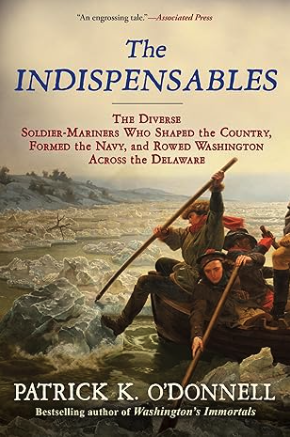
Patrick K. O’Donnell’s “The Indispensables” rescues the Marblehead Regiment from historical amnesia — and in doing so, redraws the map of who helped make the United States of America.
March and April – The Gathering Storm, Part Seven
Sometime in the small hours of August 29, 1776, with fog settling over the East River and the British army massed on the Brooklyn heights behind them, George Washington’s army ceased to exist as a fighting force – and was reborn. Nine thousand men, their artillery, horses, and supplies, crossed from Long Island to Manhattan in rowboats without losing a single soldier or making a sound that the enemy could hear. The operation took seven hours. The men at the oars were fishermen and sailors from a single Massachusetts seaport, eighteen miles north of Boston. Had they failed, or had the wind shifted before they finished, the Revolution would almost certainly have ended on a muddy riverbank before it had truly begun.
That seaport was Marblehead. The men were the 14th Continental Regiment, commanded by Colonel John Glover. They are the same men who just four months later pulled off the more famous crossing of the Delaware. And until Patrick K. O’Donnell published The Indispensables in 2021, most Americans had never heard of them.
A Combat Historian at the Oar
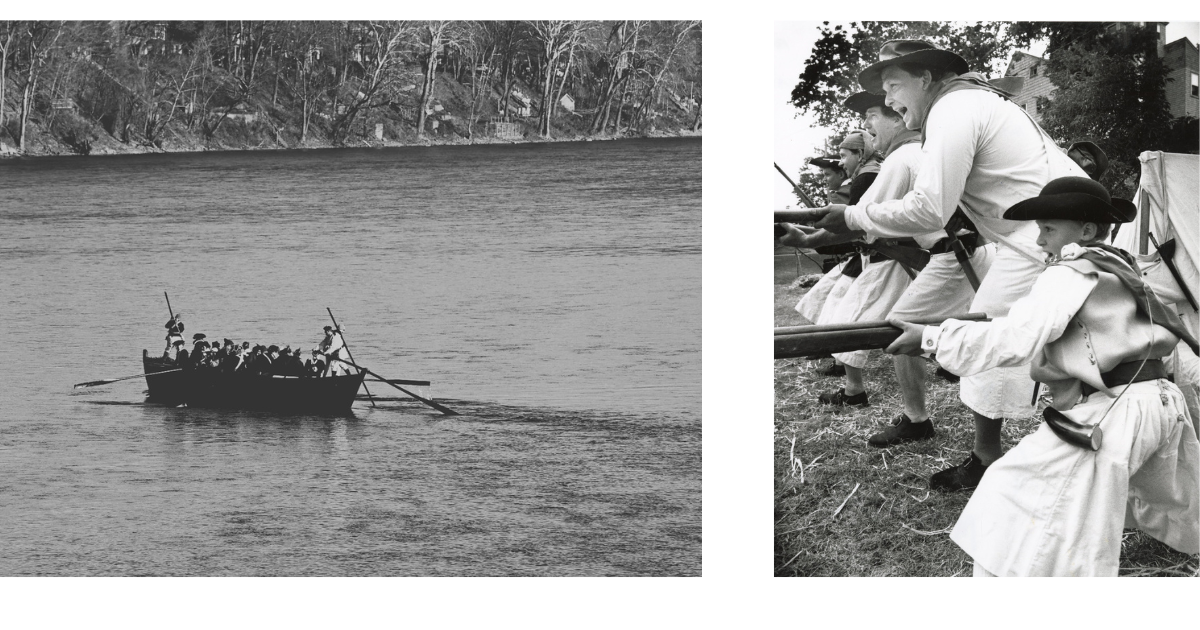
O’Donnell is not a university historian. He is a combat historian – a distinction that matters enormously to how this book reads and what it values. He embedded with a Marine rifle platoon during the Battle of Fallujah, consulted on Steven Spielberg’s Band of Brothers, and has written thirteen books on American military history. His method is to get as close to the soldier’s experience as the archive will allow: muster rolls, pension files, diaries, letters, and period newspapers. He spent five years reconstructing the Marblehead Regiment from such sources, and it shows. When O’Donnell describes men rowing through ice floes on the Delaware on Christmas night, 1776, he is drawing on the physical logic of cold water and exhausted bodies, not just the diplomatic logic of generals.
That perspective gives The Indispensables both its great strength and its acknowledged limitation. The book is a thrilling narrative, not a structural analysis of colonial society. O’Donnell is interested in what these men did, and in recovering their names and faces from the archive. He is less interested – as he would readily admit – in asking why the social structure of Marblehead produced them.
The Central Argument: Geography Is Destiny, and Diversity Is Strength
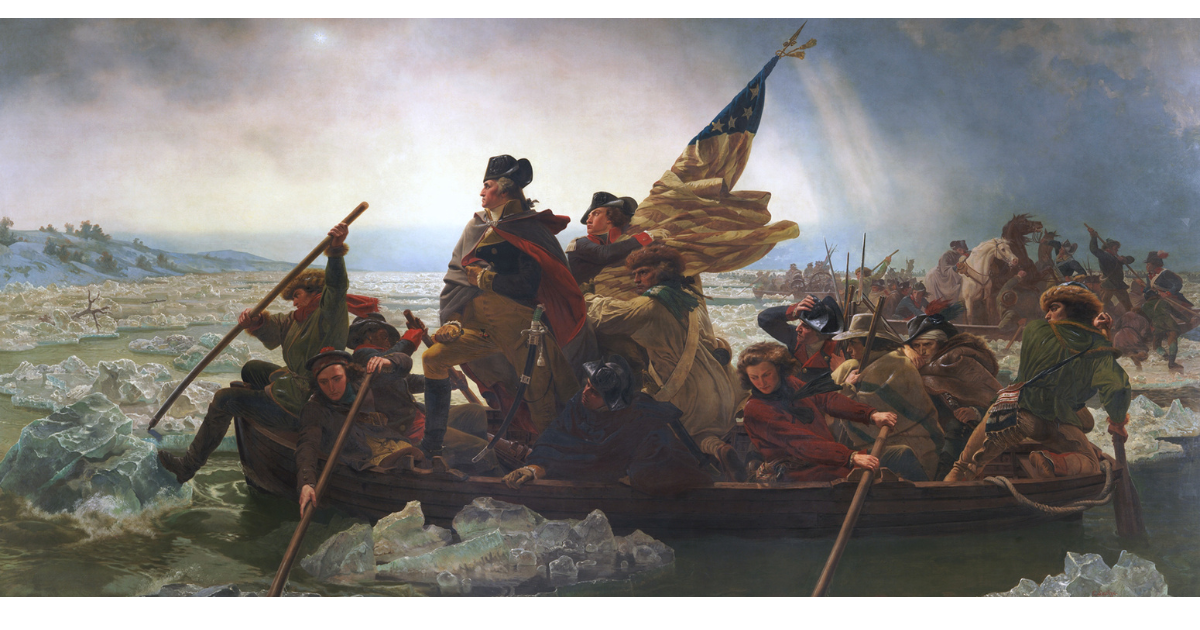
O’Donnell’s core interpretation is deceptively simple: the American Revolution was won not by the philosophical abstractions of Philadelphia drawing rooms, but by the contingent competence of specific men in specific places at specific moments – and those moments kept happening to require the same town. Marblehead’s economy was built on deep-sea fishing in the North Atlantic, which produced men who could navigate in darkness, manage a vessel in a storm, and improvise under conditions that would terrify professional soldiers. When the Continental Army needed someone to execute an amphibious evacuation under fire, or to row 2,400 men across an ice-choked river in a blizzard, those men were already trained. The war did not create the Marbleheaders. The Atlantic Ocean did.
O’Donnell’s second argument is equally pointed: the regiment was, from its inception, one of the most racially and ethnically integrated units in the Continental Army. Free Black sailors, Native Americans, and men of Hispanic descent served alongside white New Englanders in Glover’s regiment – not as an ideological project, but as an economic fact. The fishing industry cared about skill, not race. This diverse workforce, bound by occupational brotherhood, became what O’Donnell calls “one of the country’s first diverse units.” The implication is deliberate: America’s founding military achievement was accomplished by an America that looked more like the present than the mythology of the Revolution usually admits.
“To save his army, the Revolution, and a hopeful future bound by liberty and equality for unborn millions, General Washington would turn to the soldier-mariners of Colonel John Glover’s regiment from Marblehead, Massachusetts.”
PATRICK K. O’DONNELL, THE INDISPENSABLES
Henry Knox, Washington’s artillery chief who witnessed the Delaware crossing firsthand, later told the Massachusetts legislature: “I wish the members of this body knew the people of Marblehead as well as I do – I wish that they had stood on the banks of the Delaware River in that bitter night when the commander in chief had drawn up his little army to cross it.” Knox’s testimony captures something O’Donnell understands viscerally: those who were there knew what the Marbleheaders meant. Those who weren’t have spent 250 years forgetting.
Key Moments: From Lexington to the Delaware
1775: Marbleheaders fight at Lexington and Bunker Hill; Glover forms the regiment
Aug 1776: The “American Dunkirk” – 9,000 men evacuated from Brooklyn overnight
Dec 1776: Christmas crossing of the Delaware; surprise attack on Trenton turns the war
1777: Enlistments expire; Marbleheaders walk 300 miles home, many sick and wounded
O’Donnell also recovers lesser-known engagements – the sharp fighting at Throgs Neck and Pell’s Point, where Glover’s regiment bought time for Washington’s retreat across Manhattan – that conventional histories have largely ignored. He traces the regiment’s role in the origins of the Continental Navy, as Marblehead privateers began seizing British merchant ships, functioning as a de facto naval force before any official navy existed. The claim in the subtitle – that they “formed the Navy” – is not hyperbole. It is a precise historical argument.
Dialogue with the Series: Three Towns, Three Revolutions
Read alongside previous installments of this series, The Indispensables completes a striking view of New England communities at the moment of rupture.
The Minutemen and Their World – Robert Gross, 1967
- Concord as a community under social stress – yeoman farmers defending a way of life, not an abstract liberty. Revolution as local, conservative, and agrarian in character.
Lexington and Concord – George C. Daughn, 2018
- The opening shots as a military and political event – British miscalculation meeting colonial preparation. Focus on command decisions and the escalation of force.
The Indispensables – Patrick O’Donnell, 2021
- The war as sustained by maritime, working-class, and diverse communities – not just the farmers and founders. Revolution as a multi-year feat of physical endurance.
Robert Gross showed us Concord’s social world: the anxieties of landless younger sons, the declining church, the committee politics that precede muskets. His Minutemen are embedded in a specific agrarian ecology. George Daughan gave us the military operational picture: the decisions, the march, the firefight, the political consequence. O’Donnell gives us something neither book provides – the sustained, unglamorous, year-long physical effort of keeping an army alive and mobile. His Marbleheaders appear at Lexington and at Bunker Hill, but they are most themselves at the oar, at the tiller, in the dark water. Where Gross’s farmers fought to protect what they had, and Daughan’s colonists fought to make a political point, O’Donnell’s mariners fought because they were good at it and because the country needed them to be.
The books also diverge productively on the question of diversity. Gross’s Concord is notably homogeneous, a town whose internal tensions are about class and land, not race. Daughan’s account focuses on the mechanics of the military encounter. O’Donnell insists that the Revolution, at its most crucial physical moments, was carried out by a multiracial workforce. These are not incompatible views; they describe different communities and different phases of the war. Together, they suggest that the American Revolution was not one event but a coalition of overlapping local revolutions, each with its own sociology.
What We’ve Learned Since 2021
O’Donnell’s book arrived as American debates about whose history gets told were at a cultural peak, and it has been both celebrated and occasionally criticized for its emphasis on the regiment’s diversity. The more substantial historical conversation since publication has focused on the lives of the individual Black and Native American soldiers O’Donnell names. Researchers working in pension records and town archives have continued to flesh out those biographies, and several genealogical projects have extended O’Donnell’s muster-roll research. The picture that has emerged confirms his central point: integration in this regiment was not incidental but structural, rooted in the labor economy of the Atlantic fishing trade.
Some military historians have noted that O’Donnell, perhaps inevitably given his combat-historian lens, occasionally overstates the uniqueness of the Marbleheaders’ contributions at specific engagements where other units also performed with distinction. The Brooklyn evacuation, in particular, involved boats and watermen from other New England communities. The “indispensable” framing is a rhetorical choice as much as a historical verdict. But the regiment’s aggregate importance to the 1776 campaign – Throgs Neck, Pell’s Point, the evacuation, the Delaware crossing, Trenton, Princeton – is difficult to dispute on the evidence.
Why Read This in 2026?
America is in the middle of an extended argument about its founding – about who participated in it, who was excluded, who should be remembered, and whose sacrifices shaped the country. The Indispensables is a remarkably useful book for that argument because it is neither polemical nor evasive. O’Donnell is not making a political argument about diversity; he is recovering a historical fact about how an army actually functioned. The regiment was integrated because the fishing industry was integrated. The integration was decisive because the regiment was decisive. The chain of evidence is clear and the research is meticulous.
There is also a simpler reason to read this book: it is genuinely exciting. O’Donnell writes action sequences with the pacing of a thriller. The Brooklyn evacuation, rendered across several chapters, is among the most gripping set pieces in recent American military history writing. The Christmas crossing of the Delaware – a scene you think you already know from the painting – becomes, in O’Donnell’s hands, a feat of physical courage by men who had been fighting for months, who were sick and exhausted, who knew what failure would mean, and who kept rowing anyway.
Read alongside Gross and Daughan, The Indispensables closes a circuit. Gross gives you the world that produced the Revolution. Daughan gives you the spark. O’Donnell gives you the long, cold, unglamorous work of winning it.
Together, these three books constitute something close to a complete popular history of how the American Revolution actually happened – not as a philosophical event, but as a human one, accomplished by specific people from specific places who were, in O’Donnell’s apt phrase, in the right place at the right time. We have simply forgotten to remember them.
A Note on This Series
This journey through Revolutionary history is as much about the evolution of historical understanding as the Revolution itself. History isn’t static – each generation reinterprets the past through its own concerns, asking different questions and prioritizing different sources. By reading these books in dialogue across 250 years, we’ll witness how scholarship evolves, how narratives get challenged, and how forgotten stories resurface.
This isn’t about declaring one interpretation “right” and another “wrong,” but appreciating the richness that emerges when multiple perspectives illuminate the same transformative moment. These books won’t provide definitive answers – history rarely does – but they equip us to think more clearly about how real people facing genuine uncertainty chose independence, how ideas had consequences, and how the work of creating a more perfect union continues. As we mark this anniversary, we honor the Revolutionary generation by reading deeply, thinking critically, and engaging seriously with both the brilliance and blind spots of what they created.