Though Washington was commanding the Continental Army rather than sitting in Congress, his leadership gave the Continental Congress the confidence to declare independence. Ron Chernow’s landmark biography Washington: A Life closes this section by connecting the Declaration to the military reality that made it more than words on parchment.
May and June – Architects of Independence, Part Nine
The Man Who Was Not in the Room
On July 9, 1776 – three days after the Declaration of Independence was formally approved – a young captain read aloud from one of John Holt’s freshly printed broadsides to the assembled Continental Army on the New York City Common. When the reading was done, the crowd surged toward Bowling Green and toppled the gilded equestrian statue of King George III, later melting it into musket balls. Watching from nearby was the man most responsible for the fact that those words now meant something beyond philosophy: George Washington, Commander-in-Chief of the Continental Army.
Washington had not been in Philadelphia helping Thomas Jefferson craft elegant phrases. He had no seat on the Committee of Five. He had not argued for independence in Congress alongside John Adams, nor lent the moral weight of his reputation to the enterprise the way Benjamin Franklin had. And yet, as Ron Chernow’s distinguished biography makes undeniably clear, the Declaration of Independence would have been a rhetorical exercise without him – a document declaring rights that no one had the power to defend. Washington was not an architect of the Declaration’s language. He was the architect of its possibility.
In an era when democratic institutions face tests of durability, and when the gap between stated ideals and the willingness to defend them is perpetually on trial, Chernow’s portrait of Washington as the indispensable military guardian of political liberty carries a relevance that extends well beyond the eighteenth century.
A Biographer at the Height of His Powers
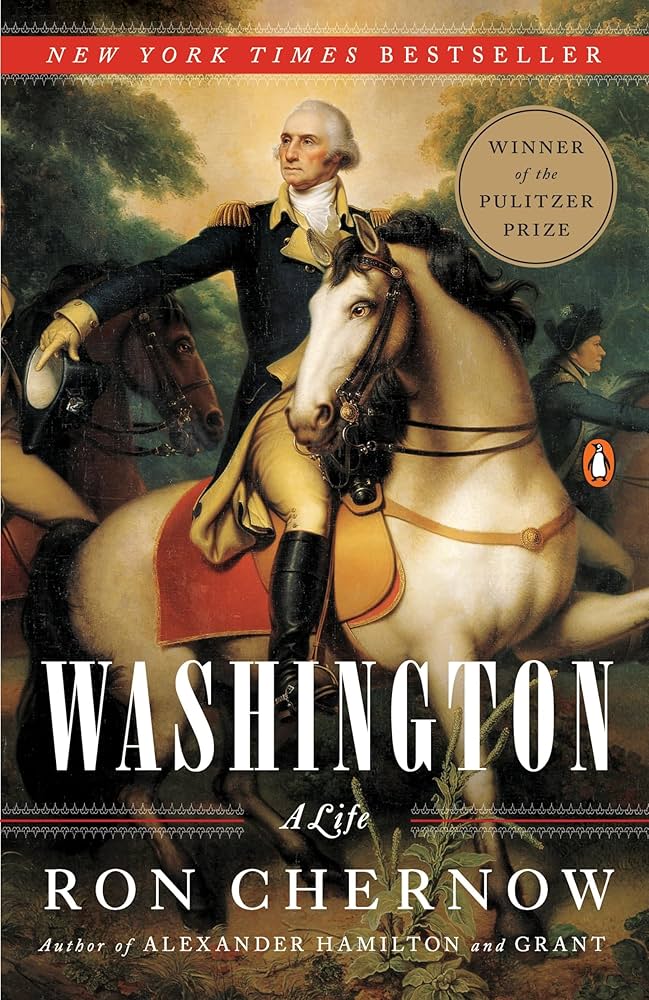
When Washington: A Life was published in October 2010, Ron Chernow had already established himself as the foremost practitioner of the grand-scale American biography. His 1990 debut, The House of Morgan, won the National Book Award for Nonfiction. His 2004 Alexander Hamilton – which would later inspire Lin-Manuel Miranda’s Broadway phenomenon – demonstrated his gift for making complicated, morally contested Founders feel urgently alive. Washington was the capstone of this project: a 904-page, cradle-to-grave reckoning with the most famous and most misunderstood figure of the founding generation.
Chernow came to Washington not as an academic historian but as what he calls a “self-made historian” – a Yale and Cambridge-educated journalist who had spent decades learning to inhabit the inner lives of powerful men through painstaking archival research. For Washington, he drew extensively on the University of Virginia’s ongoing Papers of George Washington project, a scholarly edition of Washington’s letters and documents that by 2010 had already produced sixty substantial volumes. This documentary foundation gave Chernow access to a Washington rarely glimpsed in popular history: a man who wrote candidly about his fears, his frustrations, his ambitions, and his increasingly radical break from the British identity he had once sought so earnestly to claim.
How this seemingly dull, phlegmatic man, in a stupendous act of nation building, presided over the victorious Continental Army and forged the office of the presidency is a mystery to most Americans. Something essential about Washington has been lost to posterity, making him seem a worthy but plodding man who somehow stumbled into greatness.
That mystery – how a man so often described as cold and distant became the indispensable center of a revolution – is precisely what Chernow set out to solve.
Self-Mastery as a Political Act
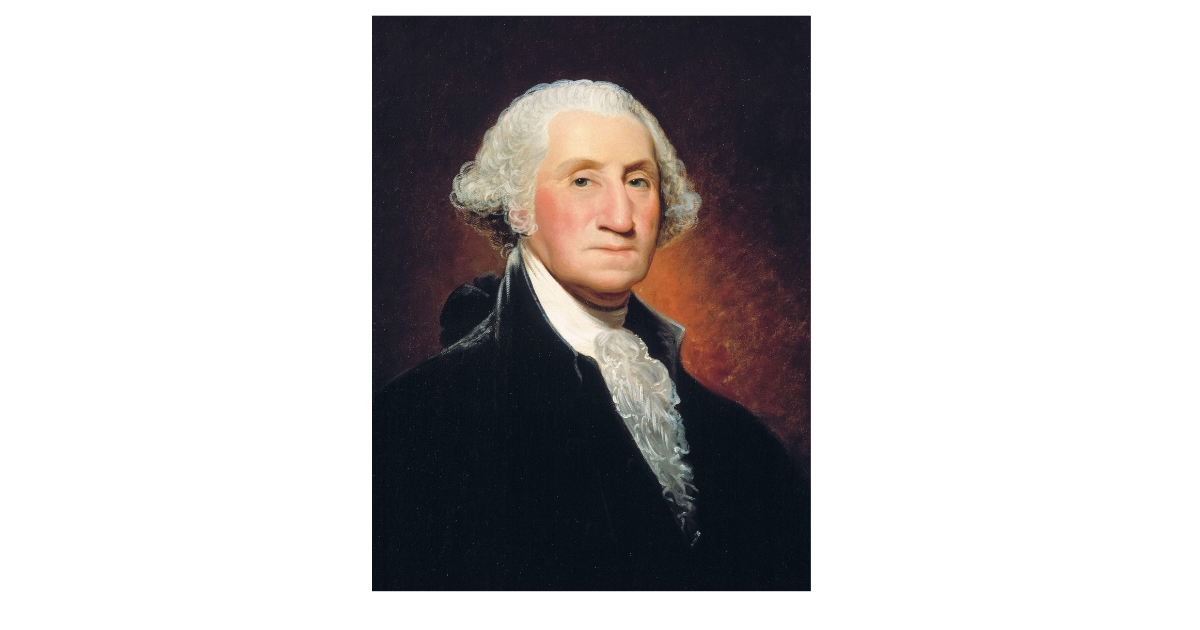
Chernow’s central interpretive claim is that Washington’s public greatness was the product of relentless, consciously sustained self-discipline. Beneath the marble composure that history has bequeathed us was, Chernow argues, a man of “fiery emotional temperament” – vain, sensitive to criticism, consumed by appearances, prone to sudden anger – who understood, with startling self-awareness, that he had to subjugate those qualities entirely to the larger cause. Washington’s granite exterior was not natural constitution; it was performance, and an astonishing one.
Chernow traces this project of self-invention to Washington’s humiliating early experiences with the British military establishment. England repeatedly denied him a permanent commission in the Royal Army, treating colonial officers as inherently second-rate. Chernow argues persuasively that this rejection left a wound that never fully healed – and that it gradually transformed Washington from an ambitious young man who desperately wanted British recognition into a man who came to see the entire colonial relationship as an affront to his dignity and that of his countrymen.
This personal grievance aligning with political principle is, in Chernow’s telling, what made Washington so effective as a revolutionary leader. He wasn’t fighting for abstract Enlightenment ideals. He was fighting because he had been humiliated by a system that treated Americans as lesser subjects – and he understood, with a commander’s instincts, that others felt the same wound.
His unerring judgment, sterling character, rectitude, steadfast patriotism, unflagging sense of duty, and civic-mindedness – these exemplary virtues were achieved only by his ability to subdue the underlying volatility of his nature and direct his entire psychological makeup to the single-minded achievement of a noble cause.
The hallmark of Washington’s approach to power, Chernow writes, was that he consistently appeared not to seek it. He didn’t lobby for the command of the Continental Army. He didn’t campaign for the presidency. “The hallmark of Washington’s career,” Chernow notes, “was that he didn’t seek power but let it come to him.” This was not passivity – it was calculated, and it worked. It made him trustworthy to a generation of men deeply suspicious of concentrated authority.
The Summer the Words Had to be Defended
In the weeks immediately following the Declaration’s adoption, Washington faced what Chernow characterizes as the most dangerous and consequential military crisis of the entire Revolutionary War. While Philadelphia celebrated, Washington was bracing for a British assault on New York of overwhelming scale. By August 1776, General William Howe had assembled roughly 32,000 professional soldiers and Hessian mercenaries on Staten Island – the largest single expeditionary force Britain had ever dispatched. Against them, Washington commanded a ragtag force of poorly supplied, inadequately trained Continental troops and unreliable state militias.
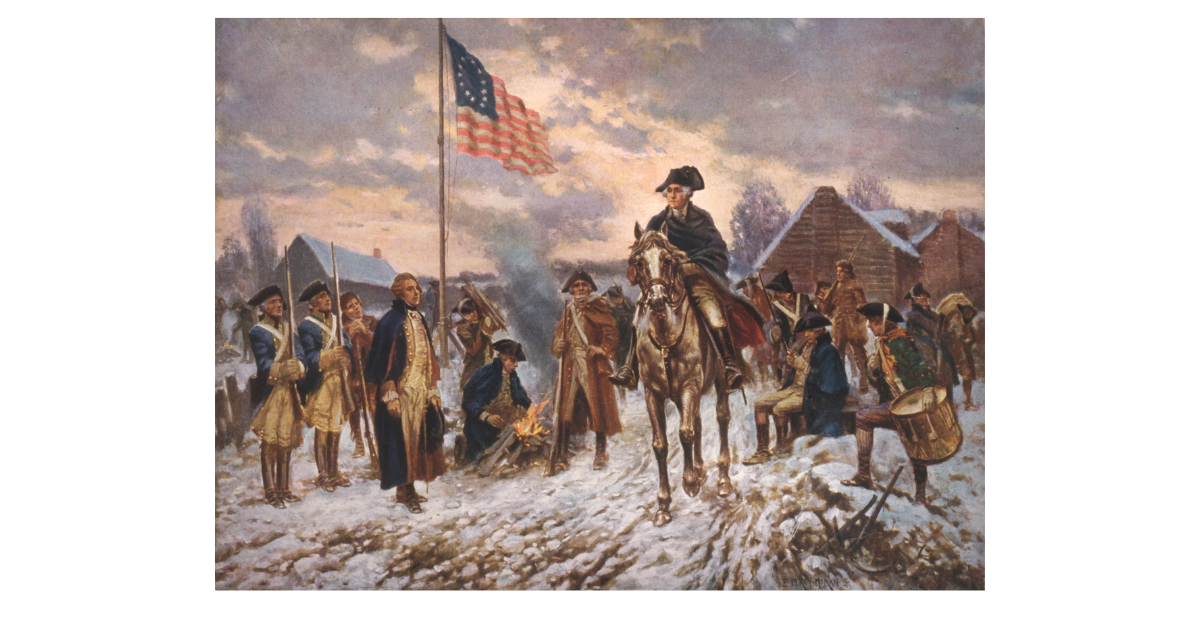
The result was catastrophic. At the Battle of Long Island on August 27, Howe brilliantly flanked the American position through the unguarded Jamaica Pass, inflicting some 2,000 casualties in a matter of hours. Washington, nearly captured himself, executed a masterful nighttime evacuation across the East River that saved the bulk of his army – but the disaster continued. Manhattan fell in September. Fort Washington fell in November. By late 1776 the Continental Army was retreating through New Jersey with the British in pursuit, morale shattered, enlistments expiring, and desertions rampant.
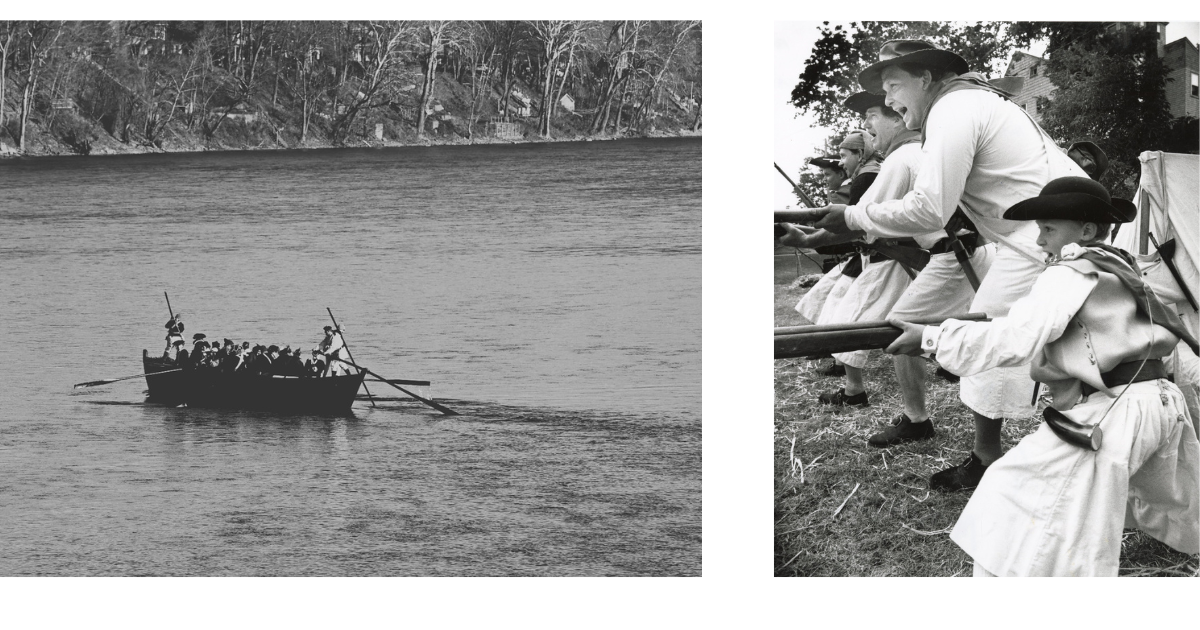
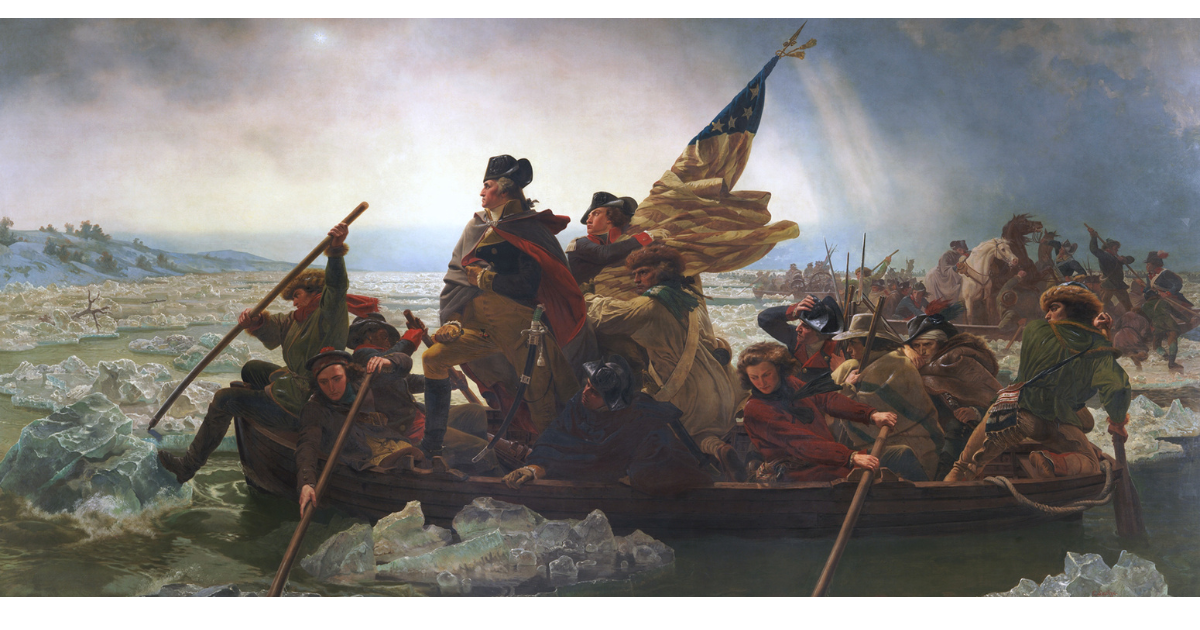
Chernow captures the grinding psychological pressure of this period with particular force. There was, he writes, “scarcely a time during the war when Washington didn’t grapple with a crisis that threatened to disband the army and abort the Revolution.” It was in this context that Washington conceived his celebrated Christmas crossing of the Delaware River and the surprise attack on Trenton – a moment of inspired operational audacity that reversed the revolution’s fortunes, captured nearly a thousand Hessian soldiers, and gave the struggling cause something it desperately needed: a story of victory to sustain belief in the words of the Declaration.
Chernow’s deep insight in these chapters is that Washington understood his job was not simply military. He had to keep an army together long enough for a political idea to take root. Every time he kept the Continental Army in the field – through shortage, defeat, desertion, and despair – he was making the Declaration of Independence real.
Chernow’s Voice at Its Best
Chernow’s prose combines scholarly thoroughness with the storyteller’s instinct for the revealing moment. One of the book’s most memorable formulations concerns Washington’s relationship to power and appearance: “Things didn’t happen accidentally to George Washington, but he managed things with such consummate skill that they seemed to happen accidentally.” The sentence encapsulates Chernow’s core argument in a single elegant observation – this was a man who understood theater, who stage-managed his own legend with the discipline of an actor who never breaks character.
Chernow is equally acute on the subject that gives this series its deepest resonance – Washington’s understanding of what the Continental Army represented. “His fortitude in keeping the impoverished Continental Army intact,” Chernow writes, “was a major historic accomplishment.” This is not triumphalism. Chernow is precise about how often Washington lost, how narrowly the revolution survived, how contingent the outcome always was. He lost more battles than he won. But he never lost the army – and without the army, there was no nation.
On Washington’s complexity as a moral figure, Chernow does not flinch. His treatment of Washington’s relationship to slavery is candid and unflattering: Washington owned enslaved people throughout his life, profited from their labor, and expended considerable legal and personal effort to prevent enslaved individuals from claiming the freedom that his own revolution had declared a self-evident truth. Chernow acknowledges that Washington grew privately uncomfortable with slavery in his later years, and that he made provisions in his will for the freedom of the enslaved people he personally owned – but he places these gestures in honest context, noting their limits and their long delay.
How Chernow Fits the Mosaic
Reading Washington: A Life alongside the other books in this section illuminates both its strengths and the gaps it leaves behind. Chernow’s portrait of Washington is the essential military counterweight to the congressional and philosophical focus of most other entries on this list.
Gordon Wood’s Revolutionary Characters establishes the intellectual world that gave the founding generation its vocabulary of virtue and public purpose. Chernow shows how Washington embodied that vocabulary physically – how he performed the role of disinterested republican leader so effectively that he became the living proof of the ideology Wood describes. The two books are natural companions.
With Joseph Ellis’s Founding Brothers, the relationship is more complex. Ellis, whose Revolutionary Summer offers a parallel account of the military crises of 1776, emphasizes personal relationships and political maneuvering in ways that sometimes paint Washington as more passive than Chernow allows. Chernow’s Washington is an active strategist – of his career as much as his campaigns. Ellis’s Washington is more reactive, shaped as much by circumstances as by will. Both portraits contain truth; read together, they produce something more dimensional than either alone.
The most interesting conversation is with Pauline Maier’s American Scripture: Making the Declaration of Independence, which has been identified as the essential text for understanding the Declaration as a collective achievement. Maier’s argument – that Congress, not Jefferson, deserves primary authorship credit for the final document – actually reinforces Chernow’s thesis in an unexpected way. If the Declaration was a political document shaped by many hands, then Washington’s role as the military guarantor of its implementation becomes even more central than Jefferson’s role as its prose stylist. The words required collective wisdom to write. They required one man’s unwavering resolve to defend.
David McCullough’s John Adams and Walter Isaacson’s Benjamin Franklin both offer portraits of men who were in the room where it happened. Chernow’s contribution is to insist that what happened in that room in Philadelphia only mattered because of what was happening simultaneously on the battlefields of New York and New Jersey.
What We’ve Learned Since 2010
Chernow’s Washington was published at what now appears, in retrospect, to be a transitional moment in American historiography. In the decade and a half since, scholarship on the founding era has shifted significantly in several directions that complicate or extend Chernow’s account.
The most consequential development has been the explosion of serious scholarship on the enslaved people of the founding era – not merely as backdrop to founders’ moral complexity, but as historical actors in their own right. Chernow acknowledges Washington’s slaveholding honestly, but his focus remains on Washington’s interiority: how Washington felt about slavery, what private reservations he may have harbored. Subsequent scholarship has increasingly demanded that we shift the frame, asking what the enslaved people of Mount Vernon thought about a man who declared universal liberty while owning more than three hundred of them. Works like Erica Armstrong Dunbar’s Never Caught (2017), which recovers the story of Ona Judge – an enslaved woman who escaped Washington’s household and evaded his attempts to reclaim her – have added dimensions to the Washington story that Chernow’s biography could not have anticipated.
Military historians have also continued to refine our understanding of Washington’s battlefield record, with some recent scholarship offering more credit to subordinate commanders and the French alliance than the great-man biographical tradition allows. And new attention to the Indigenous peoples whose lands became the theater of the Revolutionary War has added a third perspective largely absent from Chernow’s Washington – one that asks what independence meant for those who had no vote in Philadelphia and no cause for celebration.
None of this diminishes Chernow’s achievement. Washington: A Life remains what Gordon Wood called it at the time of publication: “the best, most comprehensive, and most balanced single-volume biography of Washington ever written.” But it should be read in 2026 with an awareness that the conversation it helped advance has continued, and in some ways has moved in directions Chernow was not yet positioned to follow.
Why This Book Matters in 2026
At a moment when the gap between stated democratic ideals and the political will to defend them is a live and urgent question, Washington: A Life offers something invaluable: a detailed account of what it actually cost to make a declaration of principles into something real.
The Declaration of Independence was not a self-executing document. It required an army. It required a leader willing to absorb catastrophic defeats without losing sight of the larger purpose. It required, in Chernow’s telling, a man who had so thoroughly mastered his own worst impulses that he could project an unwavering calm even when privately consumed by doubt and fear. That Washington managed this across eight years of grinding, uncertain warfare – without pay, with chronic supply shortages, against a professional military force his army was rarely equipped to match in open battle – is one of the great acts of sustained political will in the history of democratic governance.
This book closes the Architects of Independence series with a necessary corrective to any tendency to sentimentalize the founding. The other books in this series have examined the men who wrote the arguments, forged the alliances, drafted the resolutions, and crafted the prose. Chernow’s book asks the harder question: who made sure none of it was just words?
The answer, Chernow argues with force and elegance across 900 pages, was a Virginia planter who had been refused a British commission, who kept his temper in check and his army in the field, who read the Declaration aloud to his troops and then led them into the worst military disaster of his career – and kept going. The Declaration of Independence gave the Revolution its ideals. George Washington gave it its fighting chance.
A Note on This Series
This journey through Revolutionary history is as much about the evolution of historical understanding as the Revolution itself. History isn’t static – each generation reinterprets the past through its own concerns, asking different questions and prioritizing different sources. By reading these books in dialogue across 250 years, we’ll witness how scholarship evolves, how narratives get challenged, and how forgotten stories resurface.
This isn’t about declaring one interpretation “right” and another “wrong,” but appreciating the richness that emerges when multiple perspectives illuminate the same transformative moment. These books won’t provide definitive answers – history rarely does – but they equip us to think more clearly about how real people facing genuine uncertainty chose independence, how ideas had consequences, and how the work of creating a more perfect union continues. As we mark this anniversary, we honor the Revolutionary generation by reading deeply, thinking critically, and engaging seriously with both the brilliance and blind spots of what they created.