11 Best Books of 2011

Continuing an annual tradition, the final posts of the year are devoted to the importance of reading (covered in yesterday’s post) and my best book list for the year.

Making a “Best of” list is always hard – it’s a very subjective process, driven by my personal tastes, professional needs, and plain curiosity. It’s also hard to narrow it down: in 2011, I checked out 107 books from my local library, purchased 91 print books, and downloaded 37 on my Kindle. I also perused dozens of bookstores on my travels, writing down 77 titles for future acquisition. There were also a lot of late releases that I just didn’t have time to take a look at. Be that as it may, here is my list of favorite books published in 2011.

The Zappos Experience, Joseph Michelli

Onward: How Starbucks Fought for Its Life Without Losing Its Soul, Howard Schultz

Great by Choice: Uncertainty, Chaos, and Luck – Why Some Thrive Despite Them All, Jim Collins and Morten Hansen

Be Our Guest: Perfecting the Art of Customer Service, 2nd Edition, Disney Institute

Brilliance by Design: Creating Learning Experiences that Connect, Inspire, and Engage,

Vicki Halsey

The Orange Revolution, Adrian Gostick and Chester Elton


The Experience Economy, 2nd Ed, Joseph Pine and James Gilmore

Blah, Blah, Blah, Dan Roam


Missional Communities: The Rise of the Post-Congregational Church, Reggie McNeal

For the City: Proclaiming and Living Out the Gospel, Matt Carter and Darrin Patrick

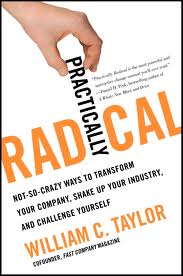
Practically Radical, William C. Taylor

That’s my list for 2011 – if you are unfamiliar with any of the books listed above, I encourage you to check them out.

The new year is just around the corner, and the book releases are lining up already – I wonder what the Best of 2012 list will look like a year from now?

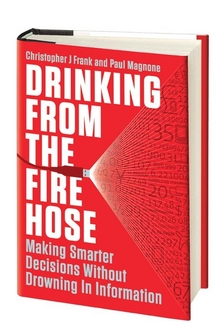
Drinking from the Fire Hose

Everyone suffers from information overload in our society today. It’s a 24/7 world with smart phones, computers, instant news, colleagues, friends, and even family bombarding us. Information is essential to making intelligent decisions, but more often than not, it simply overwhelms us.

It’s like trying to drink from a fire hose.

Drinking from the FirehoseAuthors Christopher Frank and Paul Magnone, in their recent book Drinking from the Fire Hose, propose a simple solution: Learn how to ask the right question at the right time.

Whatever field you are in, asking smarter questions will expose you to new information, point you to connections between seemingly unrelated facts, and open new avenues of discussion with your colleagues.

Here are the seven questions that the authors think will help you bring a big-picture perspective to problems that often leave others buried in irrelevant details.

  • What is the Essential Business Question?
    • Asking the right question is the key to finding the indispensable answer in the mountain of information.
  • Where is your customer’s North Star?
    • Shift your view from company-centric to customer-centric.
  • Should you believe the Squiggly Line?
    • Question the validity of short-term data.
  • What surprised you?
    • Uncover hidden information and use it to change the dialogue.
  • What does the lighthouse reveal?
    • Identify the risks, barriers, and bridges that surround your business.
  • Who are your swing voters?
    • Drive growth, increase revenue, and boost satisfaction by looking at your existing customers in a new way.
  • What? So What? Now What?
    • Follow this easy-to-remember sequence of questions to effectively communicate results and inspire action.

Frank and Magnone illustrate these seven questions with real-life stories and applications that you will find helpful in surviving the deluge of data that is your life.

Whiteboard For Skeptics

According to author Dan Roam (The Back of the Napkin, Unfolding the Napkin, and Blah, Blah, Blah), there are three kinds of visual thinkers: people who can’t wait to start drawing (the Black Pen people); those who are happy to add to someone else’s work (the Yellow Pen people); and those who question it all – right up to the moment they pick up the Red Pen and redraw it all.

Hand me the pen! Black pen people show no hesitation in putting the first marks on an empty page. They come across as immediate believers in the power of pictures as a problem-solving tool, and have little concern about their drawing skills – regardless of how primitive their illustrations may turn out to be. They jump at the chance to approach the whiteboard and draw images to describe what they’re thinking. They enjoy visual metaphors and analogies for their ideas, and show great confidence in drawing simple images, both to summarize their ideas and then help work through those ideas.

I can’t draw, but… Yellow Pen people (or highlighters) are often very good at identifying the most important or interesting aspects of what someone else has drawn. These are the people who are happy to watch someone else working at the whiteboard – and after a few minutes will begin to make insightful comments – but who need to be gently prodded to stand and approach the board in order to add to it. Once at the board and with pen tentatively in hand, they always begin by saying “I can’t draw, but…” and then proceed to create conceptual masterworks. These people tend to be more verbal, usually incorporate more words and labels into their sketches, and are more likely to make comparisons to ideas that require supporting verbal descriptions.

I’m not visual Red Pen people are those least comfortable with the use of pictures in a problem-solving context – at least at first. They tend to be quiet while others are sketching away, and when they can be coaxed to comment, most often initially suggest a minor corrections of something already there. Quite often, the Red Pens have the most detailed grasp of the problem at hand – they just need to be coaxed into sharing it. When many images and ideas have been captured on the whiteboard, the Red Pen people will finally take a deep breath, reluctantly pick up the pen, and move to the board – where they redraw everything, often coming up with the clearest picture of them all.
Roam’s conclusion of these different types of people?

Regardless of visual thinking confidence or pen-color preference, everybody already has good visual thinking skills, and everybody can easily improve those skills. Visual thinking is an extraordinarily powerful way to solve problems, and though it may appear to be something new, the fact is that we already know how to do it.

What color is your pen?

The Irony of Change

It’s actually pretty ironic.

All week long I have been writing and speaking about “change.” I’m in Dallas for the NACDB annual meeting and the 2011 Worship Facilities Conference & Expo.

Late Thursday afternoon, just as the Expo was closing, my bag with laptop, Kindle, some books, and project files was stolen from our display booth. 5 minutes before it was there; I turned around from talking to someone and it was gone.

It was just a “thing,” not a person. In the grand scheme of things I’ve heard this week and the life stories I’m a part of, it should be no big deal.

But in a whole lot of ways, it was my “life” – certainly my professional life for the last 7 1/2 years, and a majority of my other life – writings, projects, research, church stuff, and a whole lot of things I’m even now trying to remember.

Gone.

I’ve always been a pragmatic, bridge-under-the-water guy. Long a student of history, I’ve thought & told others that what’s happened can’t be changed, that you must live in the present and create your own future.

Sounds good till the only past you have resides in a spotty memory, your present is filled with sleepless anxiety, and the future is dark.

So it’s 4:30 AM, sleep has eluded me, reading just isn’t working, and TV is dreary infomercials and bad news. I’m writing a lot and posting a little via my cell phone to see if I can begin to process what’s going on.

I don’t know – and am having difficulty expressing – what’s going through my head.

But change is here.

Still More Disney Secret Words…

Anticipation

Steve Jobs didn’t believe in market research or focus groups. He instilled the idea that Apple would create products that people hadn’t dreamed of yet. Jobs’ genius was to create experiences that people didn’t even know they needed.

Walt Disney had that idea before Jobs was even born.

Disney took the images, speech, and music from his film and created them in 3D at Disneyland in 1955. Ten years later he first imagined, then began to create, Disney World.

Though Walt Disney died before Disney World opened in 1971, his vision lives on 40 years later.

Even more remarkable, his team of Imagineers continue to anticipate – and deliver – remarkable experiences.

Walking around the Magic Kingdom at 2 AM this morning, there were continued signs of expansion. A cast member said that Disney World is “always being built”.

That’s anticipation.

Deep and Wide

93 years ago today humorist Will Rogers appeared in his first movie. As a salute to one of the greatest observers of his culture, here are two favorite Rogers’ quotes:

 A man only learns in two ways, one by reading, and the other by association with smarter people.

Things ain’t what they used to be – and probably never were.

27gen is an invitation to a regular conversation about all things connected with what I call ChurchWorld and its attempts to interact with the culture around us. We all can certainly learn by reading; I’m a huge propoent of that! But we can all learn more by our “associations” with other people. I’ll start the conversation by tossing out a thought or two – why don’t you join in?

My background is from a church associate pastor role of over 23 years. For the past seven years, I have served as a church development consultant with JH Batten, a church design-build company. My current role allows me the wonderful opportunity to explore what churches are doing today to grow and be healthy, and to help them achieve their vision.

I’m a student of history, but I view it as a bridge to our future rather than a rock to cling to. Let’s celebrate the past and learn from it, but let’s not get stuck there. As Rogers observed, our view of history grows dimmer the longer we move away from an event in time.

My formal theological training came at a time when churches were expected to provide programs for everything and to involve members in hours of meetings and activities. I bought into that model full steam ahead – but to what result? Churches with all heat and no light? I’ve come full circle now, and am growing restless with the complexity and ineffectiveness of church today.

A former editor used the following Scripture passage from Proverbs 25.to describe my mindset. I think it’s an appropriate challenge for all leaders in ChurchWorld.

2 God delights in concealing things;
   scientists delight in discovering things.
 3 Like the horizons for breadth and the ocean for depth,
   the understanding of a good leader is broad and deep.

                                                                                                                The Message

I’m certainly no scientist, but I have a burning passion to discover things that will help the church, the Body of Christ, grow spiritually and numerically.

You know – deep and wide.


The Bell Curve is Flattening…

Seth Godin is at it again.

Godin’s latest book “We Are All Weird” was just released last week. As one of the most influential thinkers of today, I always eagerly anticipate a new work by him – and I was definitely not disappointed. Here’s a sample:

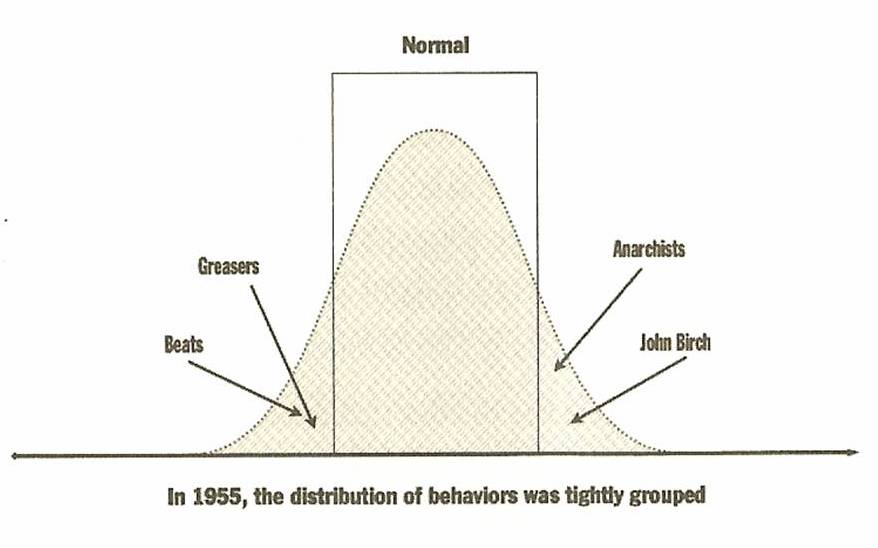
The distribution of a population is often shaped like a bell curve. For example, if you asked all the kids in a school to line up in order of height, the graph of how many kids were of each height would be shaped like the classic bell – you’d have as many 4 foot kids as 6 foot kids, and a whole bunch more in the middle at 5 feet.

Not surprisingly, this curve is called a normal distribution. It’s incredibly common in almost any phenomenon you look at (Internet usage, miles commuted to work, length of hair).

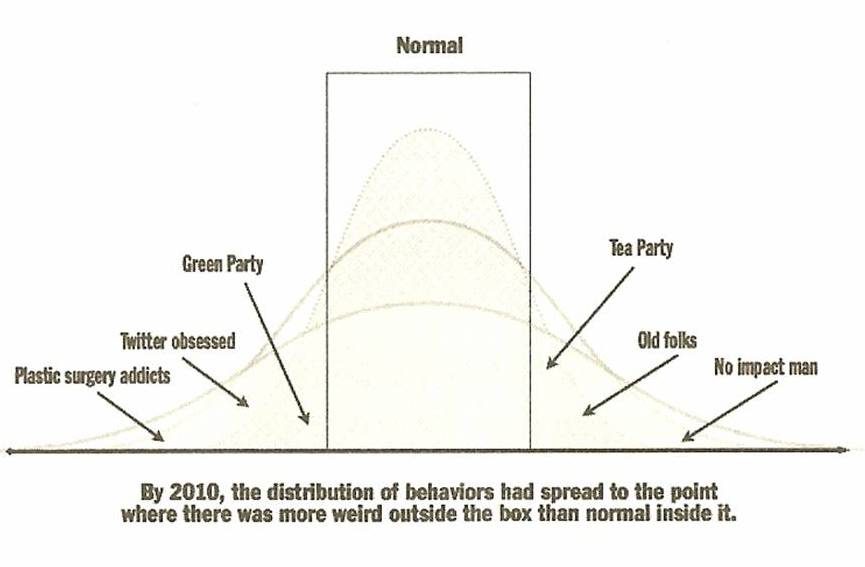
Something surprising is happening, though: the defenders of mass and normalcy and compliance are discovering that many of the bell curves that describe our behavior are flattening out.


Distributions of behavior remain, but as the anchors holding that behavior in place have loosened, the bells have spread, like a thawing ice sculpture.

There are now many bell curves, not just one. We don’t care so much about everyone; we care about us – where us is our people,  our tribe, our interest group, our weirdness – not the anonymous masses.

If you persist in trying to be all things to all people, you will fail. The only alternative then, is to be something important to a few people.


If you cater to the normal, you will disappoint the weird. And as the world gets weirder, that’s a dumb strategy.


The Airplane Effect

Yesterday during a flight to Arlington, TX, I finally put my finger on something that had been bugging me: flights  really turn my brain loose. I read parts of three different books (love that Kindle!); took an innovation quiz that measures my innovation aptitude; and completed some editing on a writing project I’m working on.

On a 2 1/2 hour flight.

What’s up? I will be posting more on this topic, but here’s a visual to get you started:

Where does this take your thought process?

Dilbert 2.0

If there were no such thing as the ubiquitous office cubicle, there would be no Dilbert comic strip.

A whole generation of managers, office dweebs, nerdy engineers, and cubicle dwellers have relied on the wry humor and dead-on happenings that Scott Adams wrote about in the iconic office space design of the ’60s.

Now, it seems the office cubical is undergoing a much-needed redesign. Led by big-name design firms Knoll and Herman Miller, the cubicle is moving away from rows upon rows of stark utilitarian spaces and towards features that emphasize comfort and collaboration.

Read more about it in the July/August issue of “Fast Company” or take a quick look at the online version here.

What’s your favorite Dilbert cartoon or personal cubicle story?