Boundaries for Leaders: Results, Relationships, and being Ridiculously in Charge

In the end, as a leader, you are always going to get a combination of two things: what you create and what you allow.  – Henry Cloud

According to clinical psychologist and leadership consultant Henry Cloud, boundaries are made up of two essential things: what you create and what you allow.

A boundary is a property line. Boundaries for LeadersIt defines where your property line begins and ends. If you think about your home, on your property, you can define what is going to happen there and what is not.

As the leader of an organization – a small group, a team, a department, maybe even the whole organization – you are responsible for the boundaries of that organization:

  • The people you invite in
  • What the goals and purposes are going to be
  • What behavior is going to be allowed – and what isn’t
  • The culture
  • The agenda
  • The rules

The leaders’ boundaries define and shape what is going to be and what isn’t.

In Boundaries for Leaders, Dr. Cloud leverages his expertise of human behavior, neuroscience, and business leadership to explain how the best leaders set boundaries within their organizations–with their teams and with themselves–to improve performance and increase employee and customer satisfaction.

In a voice that is motivating and inspiring, Dr. Cloud offers practical advice on how to manage teams, coach direct reports, and instill an organization with strong values and culture.

Boundaries for Leaders contains seven leadership boundaries that set the stage, tone, and culture for a results-driven organization, including how to:

  • Help people focus their attention on the things that matter most
  • Build the emotional climate that drives brain functioning
  • Facilitate connections that boost energy and momentum
  • Create organizational thought patterns that limit negativity and helplessness
  • Identify paths for people to take control of the activities that drive results
  • Create high-performance teams organize around the behaviors that drive results
  • Lead yourself in a manner that protects the vision

Boundaries for Leaders is essential reading for executives and aspiring leaders who want to create successful companies with satisfied employees and customers, while becoming more resilient leaders themselves.


part of the BookNotes Series – brief excerpts from books I am currently reading

Living on the Digital Divide

My parent’s generation viewed office paperwork in terms of duplicate copies made by using carbon paper. Correcting mistakes was a laborious process of erasing the original, erasing the copy (messy), and then correcting the mistake.

carbon copy typewriter

I’ve been around to experience the same thing, but not for long. In graduate school I can remember writing and dictating research papers while my wife typed on an IBM Selectric with self-correcting type. We thought we were in heaven!

My first position out of graduate school came with my very own workstation, part of a network of 20 staff positions, with the wonderful world of word processing. We all used a central printer for the output. Like Henry Ford said, we could have any color we wanted as long as it was black.

Through several church staff positions, then as a consultant, and now as the Vision Room Curator at Auxano, I have come to accept the digital universe as normal. I’m typing this in one of my dozens of field offices around the region (Starbucks, for appointments of 1 or 2; Panera Bread, for 3 or more). My laptop is my assistant; I carry a printer around in my 4-wheel office, along with just about anything I would need to talk with a client. I can produce anything from my files in full color, customized for the client, in minutes.

And yet, there’s something gratifying about sketching an idea on a napkin (literally; I do it all the time). And I have several “theme” notebooks that I jot ideas, quotes, and the like in. Sometimes they make it into my digital files; sometimes not.

My world is a digital divide – I can’t do my work without all the innovative developments of the last couple of decades, but I’m drawn to the “old-fashioned” way of writing, in ink, on paper pages.

I’m looking around at kids (anyone under 35) flipping through a tablet, typing on laptops, talking on cell phones, texting on their mobile phone and wondering: Do they have this same feeling? Or are they over the digital divide, living on the next level, moving forward?

Then I think about my granddaughter, who wants to Skype with my wife and me via her parent’s phone almost every week, and my grandson, who makes a beeline for my wife’s iPad whenever he visits. At the same time, our fridge proudly sports the latest fingerprinting, crayon, and marker artworks from these two. For at least awhile, they seem to be comfortable in both worlds.

How long will that last?

Just wondering today…


Talent is All About the Possible

Everyone is talented – it’s natural to us.

Watching my 2 ½ year old granddaughter over the course of the last week has reminded me of that. I’ll see another expression of it this weekend at my grandson’s 5th birthday party – all about dragons! And even in the curious eyes of his 4 month old sister – her expressions are just waiting to blossom.

As the parent of 4 children, I think I knew that at one time – but the youngest is now 20, and those kinds of memories tend to fade…

It took the exuberance of my granddaughter and a special focus on children at my church last Sunday to remind me of the truth in the title above.

The reality is that everyone is talented. It’s very evident in watching and listening as a young child learns to talk.  Language is a creative tool from the first words we speak to mastering the art of storytelling.

Then there’s the fridge art, the bathtub crayons, and the sidewalk chalk masterpieces – all reminding us of the evidence of emerging ability.

Talent isn’t just the ability to paint a portrait, compose a symphony, or sculpt a statue – it’ about the possible.

A creative mind is always working.

Where and how it gets expressed is your choice.

A new world is waiting for your creative mind and talent, so make a choice: Focus on the abilities that come naturally to you and make things possible.

No excuses!

part of a series of ideas to shape and tone your creative muscles

Inspired and adapted from The Imagineering Workout

The Disney Imagineers

Imagineering logo

12 Best Books of 2012

Making a “Best of” list is always hard – it’s a very subjective process, driven by my personal tastes, professional needs, and plain curiosity.

I’ve always been a voracious reader – a cherished habit passed down to me by my late father. In the past year, though, I’ve been able to ramp it up considerably because of my role as Vision Room Curator.

It’s not only a pleasure to read, it’s part of my job description – how cool is that?

Even so, it’s also hard to narrow it a “Best of” list down: in 2012, my reading included:

  • 127 books checked out from my local library
  • 68 print books purchased
  • 31 books received for review
  • 75 digital books on my Kindle

I also perused dozens of bookstores on my travels, writing down 63 titles for future review and/or acquisition. There are also a lot of late releases just coming out that I don’t have time to take a look at – yet. Be that as it may, here is my list of my 12 favorite books published in 2012.

Outside In

  Outside In

Guest Experiences for ChurchWorld is my passion, and this book by Harley Manning and Kerry Bodine will provide churches a “go-to” manual for years to come


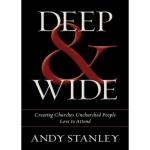
Deep and Wide

Deep and Wide

Andy Stanley and Northpoint Ministries have a solid model that all churches would do well to study – not to duplicate, but to understand how to impact your community for Christ.


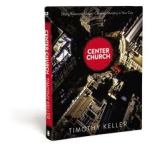
Center Church

Center Church

Tim Keller delivers a textbook for doing church; possibly the most important church theology/leadership/practical book in a decade


The Advantage

   The Advantage

Patrick Lencioni captures the concept of clarity (he uses the phrase “organizational health”) like no business thinker today


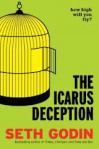
The Icarus Deception

   The Icarus Deception

Seth Godin’s most recent book is probably the most challenging personal one I’ve read – and that’s saying a lot!


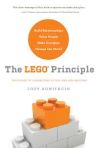
The Lego Principle

   The LEGO Principle

Joey Bonifacio writes in a simple, profound way about the importance of “connecting” in relationships that lead to discipleship


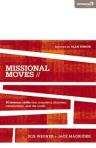
Missional Moves

   Missional Moves

Rob Wegner and Jack Magruder in a quiet, unassuming way, illustrate how Granger Community Church is transforming into a community of believers reaching their community – and the world.


Lead with a Story

Lead with a Story

Paul Smith delivers a powerful tool to enhance the leader’s skill in storytelling.


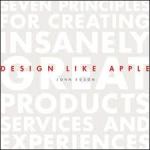
Design Like Apple

Design Like Apple

John Edson delivers a stunningly designed book that challenges the reader to understand and utilize Apple’s principles of design


Better Together

   Better Together

Church mergers (and closings) are going to be a huge event in the next decade; Jim Tomberlin and Warren Bird give an excellent resource on how to survive and thrive throughout the process.


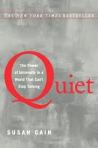
Quiet

   Quiet

Susan Cain writes the book I’ve been waiting for over 30 years – because I am an introvert leader.


Midnight Lunch

   Midnight Lunch

Sarah Miller Caldicott delivers a powerful primer for collaborative teamwork.


HBR Guide to Persuasive Presentations

   HBR Guide to Persuasive Presentations

Nancy Duarte is not just a great writer – she knows how to deliver a great presentation from the first idea to the final applause.


Okay, it’s not 12 – but it is a baker’s dozen!

Let’s see – there’s still over 2 weeks left in 2012 – plenty of time to find a good book – what do you recommend?

When You Find a Leader, You Find a Reader

Dr. Al Mohler is one of the most brilliant men I have ever met. He was a PhD student at the Southern Baptist Theological Seminary while I was pursing my Master’s degree there in the early 1980’s. Within a decade, he had returned to Southern as President, celebrating his 20th anniversary next year.

Dr. Mohler released a book this year entitled The Conviction to Lead. It contains 25 principles for leadership that matters. One of those principles is that “Leaders are Readers.”

The following is a compilation of the powerful truths of that statement, as taken from his book. I thought they were an appropriate inclusion in Reading Week 2012.

When you find a leader, you have found a reader. The reason for this is simple—there is no substitute for effective reading when it comes to developing and maintaining the intelligence necessary to lead. In all likelihood, your desk has a stack of books, magazines, and journals waiting to be read, and your briefcase is filled with reading materials. Leadership requires a constant flow of intelligence, ideas, and information. There is no way to gain the basics of leadership without reading.

Leading by conviction demands an even deeper commitment to reading and the mental disciplines that effective reading establishes. Why? Because convictions require continual mental activity. The leader is constantly analyzing, considering, defining, and confirming the convictions that will rule his leadership.

Leaders know that reading is essential, as it is the most important means of developing and deepening understanding. That is why leaders learn to set aside a significant amount of time for reading. We simply cannot lead without a constant flow of intellectual activity in our minds, and there is no substitute for reading when it comes to producing this flow.

The careful reader is not reading merely to receive data. The leader learns to invest deeply in reading as a discipline for critical thinking.

How to Read 

You are already a reader, but how can you hone that skill to your greatest benefit? Reading is like any other skill—most people are satisfied to operate at a low-level. For some, the skill of reading seems to come naturally, while others have to work hard to develop it. The key is to keep improving over a lifetime.

Your first concern is to read for understanding. If you don’t, reading will add little to your life and leadership abilities. Before you start to read a book, ask certain questions about it:

  • What kind of book is it?
  • How dense is the content?
  • What do you need to know about the author?
  • What is the purpose and subject matter of the book?
  • How did it end up on your reading list?

Develop your own rules and habits for reading. I like to start with the book’s cover and table of contents. The cover of a book used to be mostly for its protection, but now it contains a significant amount of information, ranging from a short biography of the author to the identification of the publisher. The table of contents, if well constructed, is like a map of the book. Reading is much more effective if the reader knows where the book is headed.

You should read a book or article only for what it is worth. If you find that the book is not contributing to your life and leadership, set it aside. The world is filled with books and other reading material. Is the book making you think? Do you find that it is sparking new thoughts and reflections as you read? If so, read on. If not, set it down and move on.

Learn to read critically. Reading is not merely an exchange of information and ideas. It is a conversation between the author and the reader. Argue with the book and its author when necessary, and agree and elaborate when appropriate.

Treat the book as a notepad with printed words. In other words, write in your books. Make the book your own by marking points of agreement and disagreement, highlighting particularly important sections of text, and underlining and diagraming where helpful. The activity of marking your books adds tremendously to the value of your reading and to your retention of its contents and your thinking.

Reading critically also means evaluating the author’s credibility and clarity of thought. Does the author have the credentials and authority to make these arguments or to present this information? Do the arguments meet the tests of truthfulness, honesty, and relevance? Are claims backed up with credible evidence and argumentation? These are all crucial questions any reader should ask of a book. A couple more include: What is the author’s purpose in writing this book? What do I hope to get out of the experience of reading this book?

Keep reading and developing the skill of reading over your lifetime.

What to Read

Think of reading like you think of eating. In other words, pay attention to your diet.

For the Christian, the highest reading priority is the Word of God. Our spiritual maturity will never exceed our knowledge of the Bible, which is an especially urgent principle for Christian leaders.

In terms of other reading, Christian leaders should read serious Christian books—books that contain spiritual health and deep thought. The leader’s reading diet should include books covering a range of subjects, though most of us will invest first in those books that are most relevant to our work and mission.

Expanding from there, the leader should learn to consult book reviews and notices in major newspapers, magazines, and online sources. Of course, friends recommend many of the books that will mean most to us. When leaders gather, books are usually part of the conversation.

Should leaders read fiction? This is where many leaders admit uncertainty, but the answer is surely yes. Leaders need to read fiction for enjoyment, for learning, and for context. Fiction is important because it allows the reader to enter into the times, life, and mind of someone else.

Novels and short stories are powerful units of narrative, telling a story with compelling force. While enjoying the story, leaders are also learning how to improve their own narrative presentation and communicative ability.

Leaders are ravenous consumers of historical biographies. Their natural instinct is to learn about leaders of the past in order to embrace their strengths and avoid their weaknesses. But the wise leader will range across the waterfront of disciplines, from history and economics to current events and politics. Add to this the expanding number of business and management titles published each year. No leader can read all of these, of course, but the best of the lot should be on the leader’s reading list.

What about newspapers, magazines, and newsletters? The capable leader knows that these are important as well. Even as printed newspapers suffer from circulation losses, they remain extremely influential and informative.

If newspapers represent the first level of report and analysis, then magazines, journals, and newsletters represent the second. The newsweeklies and major intellectual magazines are extremely influential in terms of popular culture.

In addition to keeping up with the news, leaders will also learn communication and writing skills from the best magazines and journals. The writing in these periodicals tends to be fresh and lively, intended to draw and keep the reader’s attention. That is the wise leader’s concern as well.

When to Read

There will never be enough time to read all that you want to read, or even all that you think you ought to read. Just keep reading. Set aside segments of time devoted to reading and grab every spare minute you can find. Keep reading materials with you at all times, or at least close at hand. Keep a stack of books ready for reading, and take a couple with you as you travel.

When possible, read when you can retain and think most productively. I have found it helpful to plan reading projects. Each year, I plan two or three of these, intending to pursue understanding on a specific issue or area of knowledge. Develop a short list of books in an area, and work your way through them. You will be amazed at how much you can cover in a year.

I also advise dividing your reading plan into three categories. First, books you must read. Second, books you should read. Third, books you want to read. Given a bit of honest thinking, you will have a good idea of how this breaks down for you. Once you have this structure in mind, you can plan the stewardship of your reading time accordingly.

Read With Discernment

Christian leaders learn to read with discernment drawn from our deepest convictions. Constant worldview analysis comes like a reflex as the leader develops the capacity and skill of spiritual discernment. Test everything you read by viewing it through the lens of biblical truth and your convictions. Know that your most faithful and productive thinking will often come as you are reading from an author with whom you disagree, even as you apply critical thinking and discernment. Those who would lead with conviction must read with conviction.


Next: My Favorite Books of 2012

Welcome to Readers Week, 2012!

This Might Work cover

Today kicks off an annual tradition: taking a look at why reading is important for leaders, hearing from leaders on reading, and announcing my version of the best books of 2012.

And there’s no better way to start it off with a little make that a lot of Seth Godin…

Yesterday I met our mailman at the door with a not too happy look on his face. In addition to the increased volume of holiday mail, he was straining to carry a large, heavy box – one I have been anticipating since mid-summer:

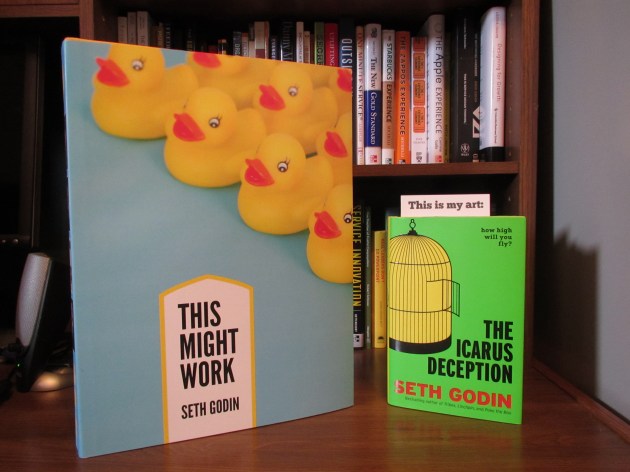
Seth Godin’s latest work, This Might Work, is a huge behemoth of a book weighing in at 15.4 pounds and measuring 15x11x3 inches. It contains Seth’s incomparable blog posts from 2006-2012, curated by his most avid follower, Bernadette Jiwa. Jiwa is an Australian writer and Seth’s only choice to undertake this Herculean task.

She succeeded.

Here is her choice for the opening page, from Seth’s blog on May 20, 2004:

Five years from now…

Assume that:

Hard drive space is free

Wifi like connections are everywhere

Connections speeds are 10 to 100 times faster

Everyone has a digital camera

Everyone carries a device that is sort of like a laptop, but cheap and tiny

The number of new products introduced every day is five times greater than now

Wal-Mart’s sales are three times as big

Any manufactured product that’s more than five years old in design sells at commodity pricing

The retirement age will be five years higher than it is now

Your current profession will either be gone or totally different
What then?

Classic Seth Godin…

Also in the package was Seth’s latest normal book, The Icarus Deception, due out on 12/31. Continuing with the theme he first introduced in Linchpin, Godin shows how we can thrive in an economy that rewards art, not compliance. He explains why true innovators focus on trust, remarkability, leadership, and stories that spread. And he makes a passionate argument for why you should be treating your work as art. A review will be coming soon!

In a few sentences above, this is why leaders read..

And why you should, too.

Next: Thomas Edison on Reading

Did God Think We Would Forget This?

It’s the only commandment that begins with the word remember – almost as if God knew we would forget.

Well, guess what?

We did.

Remember the Sabbath day, to keep it holy. For in six days the Lord made the heavens and the earth, the sea, and all that is in them, and rested the seventh day. Therefore the Lord blessed the Sabbath day and made it holy. Exodus 20:8,11

I first met Matthew Sleeth at a Creation Care Conference at Northland Church in Orlando in 2008. We were both speakers at the conference, and it was there that I learned Sleeth’s amazing story as he moved from an emergency room doctor to one of the leading voices for Creation Care.  Our paths have crossed several times in the last few years, most recently at the White House Greening America’s Congregations Conference.

Sleeth is the author of Serve God, Save the Planet, and founder of Blessed Earth, a nonprofit organization that focuses on Creation Care. It’s very much a family affair as wife Nancy (Go Green, Save Green and Almost Amish) and daughter Emma (It’s Easy Being Green) have contributed much to the healthy conversation about Creation Care by not just writing by living out their values.

Mathew Sleeth’s newest book 24/6 provides a life-giving prescription for a healthier more God-centered life amidst a digitally crazed, always-on world. It will help you better understand how your life can be radically transformed – physically, emotionally, relationally, and spiritually – by adopting a 24/6 lifestyle.

His years of experience as an ER physician in hospitals qualifies him as a veteran in a culture of demanding overwork. His entry into the Christian faith ten years ago provides a total reorientation of his imagination in the Hebrew/Christian culture of Sabbath keeping. And most impressive of all, he explores the many details of what is involved in practicing Sabbath in a world that is unrelenting in its distractions and pressures to work longer and harder.

All this is done not from a theoretical position but firmly in the context of marriage and family life, with all the domestic and relational details involved in doing nothing where doing nothing always requires constant coordination and relationship.

24/6 is a book that restores Sabbath to its extensive biblical narrative context. Jesus, not rules, sets the tone. Sabbath keeping is conveyed in stories – doctor stories, stories of friends, stories of family, stories of Jesus. These stories keep Sabbath “nested” – integral to the tie and place in which relationships form and develop.

To illustrate how well Sleeth accomplishes this, here are a few excerpts from a section entitled “What God Created on the Seventh Day.”

In Genesis, we find a seven-day week. God begins to create the universe, and finds everything “good.” Each succeeding day, things get more complicated. On day six, God forms Adam, and then – because she is even more complicated – God makes Eve. “Yes! Excellent! Very good! Tov m’od!”

How can God top creating a universe and my wife and daughter?

The piece de resistance comes out of left field. Up to this point, everything has been created out of nothing, but on the morning of the seventh day, God makes nothing out of something. Rest is brought into being.

The point is that something very important about the character of God is revealed on the seventh day: God stops.

God doesn’t need to rest after creating the universe because he’s tired. He rests because he’s holy, and everything that God does is holy.

God rests. God is holy. Therefore, rest is holy. It’s simple math.

24/6 is a powerfully personal story of one man’s exploration of our 24/7 world, why we need the Sabbath, how we do the Sabbath, and how to create a 24/6 life.

Consider the Sabbath close to home: what would it look like if you and your family remembered?

Do You Have a Magnetic Personality?

Careful about that… 

Some people just naturally draw others to them. What’s it take to be magnetic? John Maxwell suggests these characteristics as displayed in the life of Peter:

  • Confidence – Peter displayed poise and optimism as a communicator
  • Conviction – Peter knew where he was going and what he had to say
  • Connection – Peter focused not on himself but on others
  • Compassion – Peter exuded warmth and love

When Peter ended his message in Acts 2, everyone asked “What shall we do?” They felt motivated and ready to act. God used Peter’s charisma like a magnet.

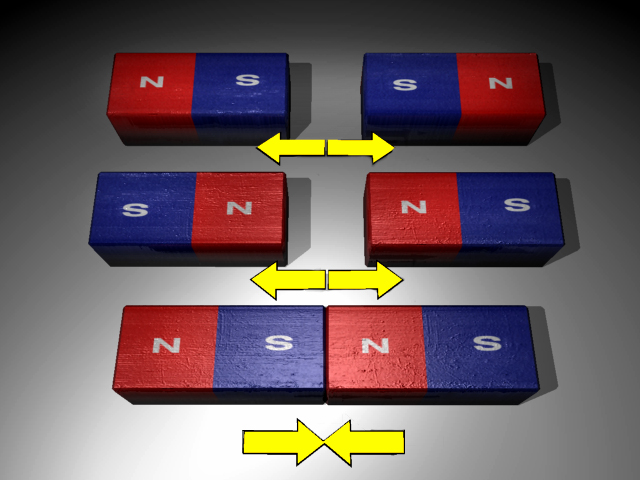
Just remember that magnets have the unique properties to both attract and repel!

Over in 1 Kings 19, Ahab and Jezebel demonstrated some roadblocks to attracting people. Characteristics like:

  • Pride
  • Insecurity
  • Moodiness
  • Selfishness
  • Perfectionism
  • Cynicism

If you exhibit characteristics like these very long, you will find yourself repelling people from you.

I’m pretty sure that’s not exactly the type of magnetic personality you were thinking of.

What Shapes the Mind of Today’s Freshman…the Beloit Mindset List of the Class of 2016 is Out

Each August since 1998, Beloit College has released the Beloit College Mindset List, providing a look at the cultural touchstones that shape the lives of students entering college this fall.

Today, the Mindset List of the Class of 2016 was released.

The creation of Beloit’s former Public Affairs Director Ron Nief and Keefer Professor of the Humanities Tom McBride, authors of The Mindset Lists of American History: From Typewriters to Text Messages, What Ten Generations of Americans Think Is Normal, it was originally created as a reminder to faculty to be aware of dated references. It quickly became an internationally monitored catalog of the changing worldview of each new college generation.

Leaders – of all ages – need to understand what has shaped the lives of today’s entering college freshman class, those 18 year olds who:

  • Were born into cyberspace and therefore measure their output in the fundamental particles of life: bits, bytes, and bauds
  • Came to political consciousness during a time of increasing doubts about America’s future
  • Have never needed an actual airline “ticket”
  • Are the most tribal generation in history, and they despise being separated from contact with their friends

For those who cannot comprehend that it has been 18 years since this year’s entering college students were born, they should recognize that the next four years will go even faster, confirming the authors’ belief that “generation gaps have always needed glue.”

Here are a few nuggets from this year’s Mindset Class for the Class of 2016. You must read the entire list here!

For this generation of entering college students, born in 1994, Kurt Cobain, Jacqueline Kennedy Onassis, Richard Nixon, and John Wayne Gacy have always been dead.

  • They should keep their eyes open for Justin Bieber or Dakota Fanning at freshman orientation.
  • They have always lived in cyberspace, addicted to a new generation of “electronic narcotics.”
  • Bill Clinton is a senior statesman of whose presidency they have little knowledge.
  • There has always been football in Jacksonville but never in Los Angeles.
  • A significant percentage of them will enter college already displaying some hearing loss.
  • Star Wars has always been just a film, not a defense strategy.
  • They were too young to enjoy the 1994 World Series, but then no one else got to enjoy it either.
  • They know many established film stars by their voices on computer-animated blockbusters.
  • History has always had its own channel.
  • Point and shoot cameras are sooooo last millennium.

You can find the rest of the list here.

Read it now.