The Discovery of DNA and the Meaning of Life

…or how individual intelligence led to second place

Sixty eight years ago this Sunday, on February 28, 1953, two scientists walked into their neighborhood pub in Cambridge England, ordered their drinks, and one of them announced to the patrons “We have found the secret to life.”

This was no lie – that morning, Cambridge University scientists James D. Watson and Frances H.C. Crick had discovered the double-helix structure of DNA, the biological material that carries life’s genetic information.

On the fiftieth anniversary of that discovery, Watson took part in an interview inquiring about the aspects of their work that had led them to solve the problem ahead of an array of other highly accomplished and recognized rival scientists.

Along with the expected answers – they identified the most important part of the problem, they were passionate about their work, they devoted themselves single-mindedly to the task, they were willing to attempt approaches outside their area of familiarity – came this surprise:

Watson said that he and Crick had cracked the elusive code for DNA primarily because they were not the most intelligent scientists pursuing the answer.

Watson went on to explain that the most intelligent person working on the project in those days was Rosalind Franklin, a British scientist working in Paris at the time. According to Watson:

Rosalind was so intelligent that she rarely sought advice. And if you’re the brightest person in the room, then you’re in trouble.

Watson’s comment describes exactly the error that many leaders in today’s organizations make: they believe that they are the best-informed, most-experienced, or most-skilled person in the group. They may be, but studies have repeatedly shown that the approaches and outcomes of groups who cooperate in seeking a solution are not just better than the average member working along, they are even better than the group’s best problem solver working alone.

Far too often, leaders – who by virtue of greater experience, skill, and wisdom, deem themselves the ablest problem solver in the group – fail to ask for input from team members.

  • Lone decision makers can’t match the diversity of knowledge and perspectives of a team
  • Input from others can stimulate thinking processes that wouldn’t develop on their own
  • Individual thinkers can’t parallel process – dividing parts of the problem among many members

Trying to discover the meaning of life? How about something much simpler, like a new funding initiative to increase service to one of your target groups? Or any problem facing your team?

Don’t forget the danger of being the brightest person in the room.
Do You Ever Feel Like You’re Living Out the Movie “Groundhog Day” at Your Church?

Groundhog Day is a celebration of an old tradition – Candlemas Day – where clergy blessed and distributed candles for winter, representing how long and cold winter would be.

Groundhog Day is also a 1993 movie starring Bill Murray that popularized the usage of “groundhog day” to mean something that is repeated over and over.

Many churches find themselves in their own version of groundhog day, living out a dream and vision that was once relevant, but now is long in the past. Unwilling or unable to face reality, they are simply repeating the past over and over.

27g020217fb-1


Church leaders who find themselves in this situation have an excellent resource in Cracking Your Church’s Culture Code by Sam Chand.

“Cracking Your Church’s Culture Code” offers a practical resource for discovering the deficits in an existing church’s culture and includes steps needed to assess, correct, and change culture from lackluster to vibrant and inspirational so that it truly meets the needs of the congregation.Cracking Your Church's Culture Code

The book includes descriptions of five categories of church culture (Inspiring, Accepting, Stagnant, Discouraging, and Toxic) as well as diagnostic methods (including a free online assessment) that church leaders can use to identify the particular strengths and needs of their church.

One particularly useful section of the book deals with the seven keys of CULTURE:

  • Control – it isn’t a dirty word; delegating responsibility and maintaining accountability are essential for any organization to be effective
  • Understanding – every person on a team needs to have a clear grasp of the vision, his or her role, the gifts of the team members, and the way the team functions
  • Leadership – healthy teams are pipelines of leadership development, consistently discovering, developing, and deploying leaders
  • Trust – mutual trust up, down, and across the organizational structure is the glue that makes everything good possible
  • Unafraid – healthy teams foster the perspective that failure isn’t a tragedy and conflict isn’t the end of the world
  • Responsive – teams with healthy cultures are alert to open doors and ones that are closing; they have a sensitive spirit and a workable system to make sure things don’t fall through the cracks
  • Execution – executing decisions is a function of clarity, roles and responsibilities, and a system of accountability

Understanding your church’s culture is not an easy task. Cracking Your Church’s Culture Code is a very helpful resource for the leader who wants to delve below the surface of church as usual and lead it to greater impact.

Look Back and Learn: Investing in Wisdom Equity

In researching and working on some leadership development material for an ongoing writing project, I came across the following:

Christianity is a religion of change. Jesus’ call in Mark 1:15 (the kingdom of God is at hand) was a call to change – change of mind and heart, of conduct and character, of self and society. By its very nature Christianity is a religion for a changing world and has always had its greatest opportunity during times of upheaval.

The Christian leader has no option; he must face a changing world. If the leader is to render maximum service, he must both adjust himself to the phenomena of change and address himself passionately to the business of producing and guiding change. Here are some elements that constitute the changed world in which the Christian leader today is called to fulfill his ministry.

Changed world outlook

Changed economic philosophy

Changed social consciousness

Changed family life

Changed community conditions

Changed moral standards

Changed religious viewpoints

Changed conceptions of the church

Changed media for molding public opinion

Changed demands made upon the leader

Pretty good list, right? Dead on. Taken from today’s headlines.

Nope.

courtesy the Southern Baptist Theological Seminary

courtesy the Southern Baptist Theological Seminary

The author was Gaines S. Dobbins, distinguished professor of Religious Education at my alma mater, The Southern Baptist Theological Seminary, in Louisville KY.

Written in 1947.

As the introduction to the book “Building Better Churches: A Guide to Pastoral Ministry.”

Dr. Dobbins retired before I was born, but while in seminary in the early eighties I had the privilege of sitting under a couple of professors who were students of Dr. Dobbins and spoke of his great influence on their development and career. There is a chair named for him at SBTS, and of course I recognized his name and influence. When I came across this book in a used bookstore, I bought it on impulse. After flipping through it, I realized it was a treasure of leadership wisdom.

At Auxano, we talk about a concept called “vision equity.” It’s realizing that the history of a church is a rich resource for helping rediscover what kinds of vision language past generations have used. That language is very useful for anticipating and illustrating God’s better intermediate future.

As I read Dr. Dobbin’s book, I think there is also a concept called “wisdom equity.” It’s realizing that there have been some great leaders and deep thinkers over the past decades and centuries whose collective wisdom would be a great place to start as we struggle with the new realities that face us every day.

It’s why I love history – I see it not as an anchor that holds us to the past, but as a foundation to build a bridge to the future.

History is not just books and information stored about the past. It can also be found in living beings – those around us, family and friends, who have lived through events and learned lessons my generation – and the ones following me – need so desperately to learn.

Go ahead – look back and learn.

Making Hay While the Sun Shines

On the way to pick up a take-out lunch from my neighborhood diner yesterday, the warm sunny day found me with the sunroof open and the windows down. I came across a field that had freshly cut and baled hay in it – the old style small bales. The aroma of the hay took me back to my teenage years, when my buddies and I helped nearby farmers as they would bring in hay for their cattle. My usual job was to stack hay bales on a wagon pulled by a tractor – sometimes tossing them from the field, sometimes stacking them on the wagon. Hard work, but good exercise and fun for a bunch of teenagers.

My instantaneous trip down memory lane was shattered when I rounded the corner and saw one man, driving a tractor pulling a machine that picked up the bales, stacked them in neat rows, and when a row was complete lifting the whole thing onto a trailer. The work was quicker, neater, and in the long run more economically advantageous for the farmer.

On the way back from the diner, going down the same road, but on the other side, I saw an elderly gentleman driving a tractor cutting a small field around his house – but with an identical International Harvester tractor and mower to that I used in the early 70s. Now, the tractor I used then was old – that made this one really ancient. But it seemed to be doing the job just fine, and the farmer was moving right along in his work.

The more things change, the more they stay the same.

The season and needs of both farmers dictated their actions. Each was using tools at his disposal to accomplish a task. Each was satisfied that they were doing the right thing, and they achieved their desired result.

Change, even as regular as the seasonal changes (at least in NC) is a constant. I’ve been a student and practitioner of change for a long time. One of the best resources for understanding change is William Bridges’ Managing Transitions.

Don’t let the title fool you: the first sentence explains the premise of the rest of the book: It isn’t the changes that do you in; it’s the transitions. Bridges sees change as situational – the new job, new boss, new policy. Transition is the psychological process people go through to come to terms with the new situation.

I think Bridges would translate the old French saying above to: There can be any number of changes, but unless there are transitions, nothing will be different when the dust clears.

Situational change hinges on the new thing, but psychological transition depends on letting go of the old reality and the old identity you had before the change took place. Nothing so undermines organizational change as the failure to think through who will have to let go of what when change occurs.

Got Change, anyone?


How to Harness the Power of TNT

Positive Learning from Negative Feedback

Leaders in all sizes and types of organizations often face negative feedback and criticism – and many have problems dealing with it.

Maybe it’s time to blow criticism away with “TNT”.

Recently I was reading HBR.org and came across a great article by John Butman entitled “The Benefits of Negative Feedback.”

I recently gave a lunchtime “author’s talk” at Children’s Hospital in Boston and, although I thought the talk went well, somebody in the audience didn’t like it at all. On the evaluation form, the person in question wrote a single word in the comment box: CONFUSING.

Thank you, whoever you are. While everybody else gave me good marks and said nice things, which I appreciated, my critic forced me into self-examination. Was he the only one forthright enough to speak up, or was he the only one not paying enough attention to get it? What was confusing? The ideas? The presentation?

His thoughtful suggestions contained in the article on dealing with negative feedback reminded me of a simple but powerful tool that I use whenever I receive criticism.

It’s called TNT, and I learned it over twenty years ago from Sue Mallory, a training instructor for the Leadership Network. I’ve been using it in every shape and form since then.

Are you ready?

The Next Time.

That’s right – once something has been said or done, you can’t do anything about it – for good or bad! Why should you beat yourself up and let it drag you down?

But you can learn from it and apply that learning to The Next Time the situation presents itself.

Here’s a great example: A presentation I gave at a national conference in Dallas TX. I was no stranger to the conference – I’ve been speaking at it for over ten years. The topic was not new to me even though it was the first time I had presented it in its current form. I had prepared adequately – or at least I thought.

As it turns out, I had mistakenly assumed that the attendees of this year’s conference attending my session would be the same as in prior years, and I neglected to gauge the makeup of the audience before I launched into the presentation.

Over half of the session’s attendees were from a technical background, when I had expected most of them to be from a church ministry staff background. The presentation was only 5 minutes old before the quizzical looks and a few responses to my questions made me realize a mid-course correction was required!

Fortunately, I have a background (albeit several decades ago) in the technical production aspect of church ministry, and I was able to shift on the fly to orient the presentation more in that direction. The formal evaluations I received backed up the comments from several attendees following the session, indicating the midstream switch was a success.

Looking back, I could have avoided the situation by noting what other sessions were being offered at the same time (and thus gauging potential attendance) as well as taking a quick audience poll to see who was present (to adjust the presentation at the beginning).

But it happened, and I couldn’t change a thing.

There’s always The Next Time.

What about in your leadership position? How will you use the power of TNT in evaluating an event or lesson or sermon that got some negative feedback in order to provide a positive launching point for improvement in the future?

Don’t let the negatives get you down – instead, blow them away with TNT.

Join Me on a Trip in the Yellow Time Machine

Note: During the current “stay-at-home” mandates and other restrictions in place across the country, I am diving back into 12 years of posts, articles, and reviews across my different websites to bring back timely information for today.


There are times when pictures are worth more than a thousand words…

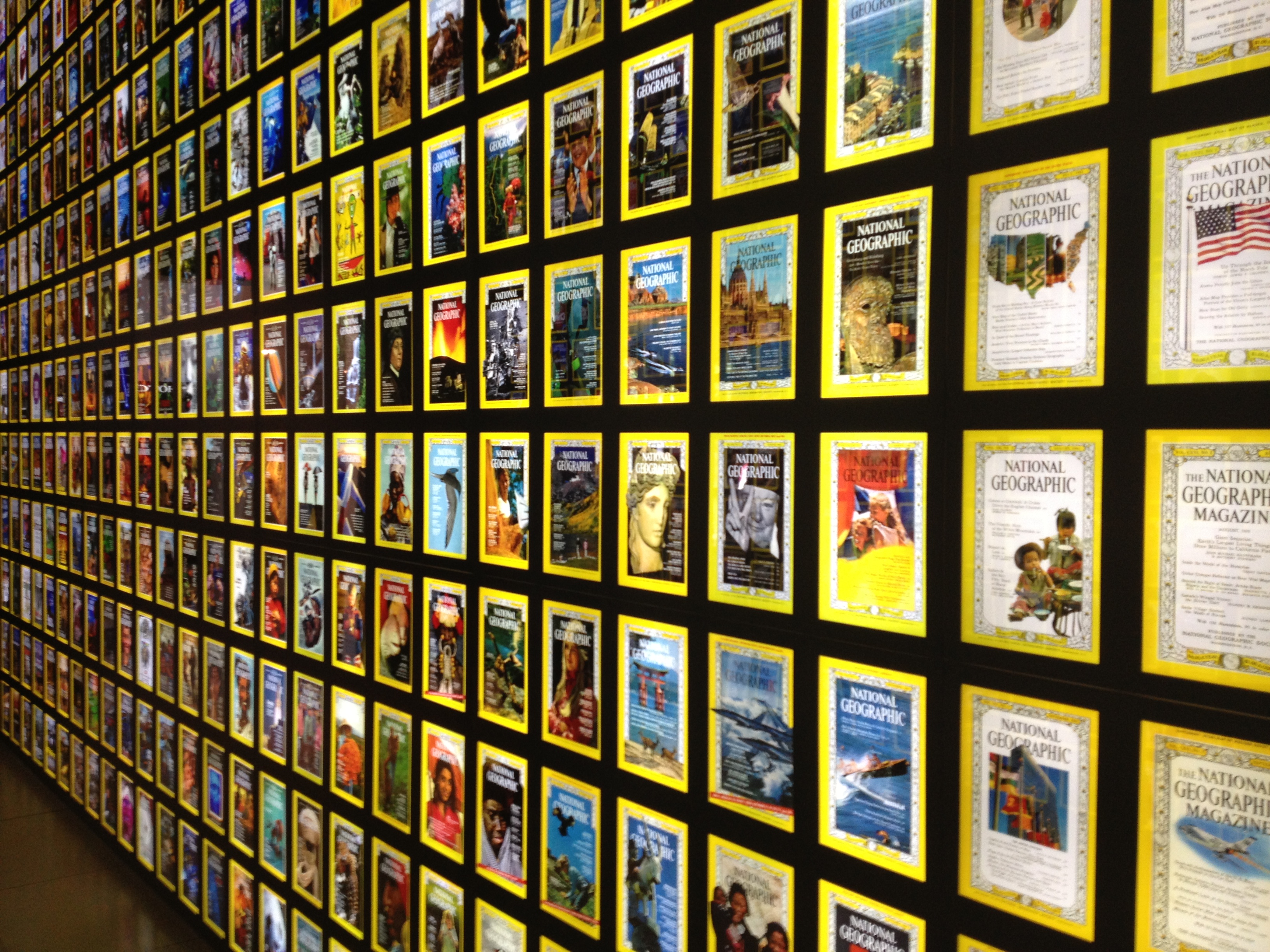
My wife travels to Baltimore, MD at least once a month on business. Because I work for a virtual company (Auxano) with no “office,” my primary role of Vision Room Curator requires only an Internet connection to “set up shop.” Occasionally, I accompany her and we spend the evening or weekends visiting in the area. Recently we found ourselves with a couple of hours to spare before leaving Washington DC to return home. We have a standing list of places to visit, and we agreed on the National Geographic Museum. Located in the heart of the city just a few blocks from the White House, the Museum had a surprise in store for me:

A literal wall of all the National Geographic magazine covers since the magazine’s launch in 1888.

NGwall1

A story I wrote a few years ago, and updated later, immediately came to mind:

The image below,  from the December 2012 issue of National Geographic magazine, once again stirred memories.

Giant sequoia

The following is an updated repost from 2009:

NGM Oct 2009

Images are often powerful reminders of our past. One of my boyhood memories is that of eagerly anticipating the monthly delivery of “National Geographic” magazine.

The familiar yellow border outlining an amazing photo was my ticket for travel around the country and the world. It’s a pleasure I enjoy to this day, as my mother continues give the magazine as a gift each year. Until recently, I kept them all – now going on 36 years, plus dozens of other pre-1979 issues I have picked up at occasional yard sales (but that’s another story!).

The October 2009 issue has a striking image of a redwood tree on it. As soon as I saw the magazine in its shrink-wrapped shipping bag, I was transported back to first grade show and tell: my crude drawing of a redwood tree, taken from a July 1964 NG story.

I filed that thought away, and not long afterwards, had the occasion to visit my boyhood home in Tennessee. I asked my dadNGM July 1964 (who was still living at the time) about that magazine, and sure enough, he had kept the magazines too! I pulled the issue off the shelf and thumbed through it, gazing again at living giants thousands of years old, comparing them to the same family of trees 45 years later. While I enjoyed that trip down memory lane, there was still something tugging at my thoughts.

When I returned home, I searched my library and found the answer: Growing Spiritual Redwoods by William Easum and Thomas Bandy. Published in 1997, it was a striking call for church leaders to understand the new paradigm the church was entering. They likened the healthy church to a redwood tree. I remember reading the text when it first came out, and my copy bore highlighted sections, Post-It© Notes, and scribbles throughout.

Using the metaphor of the redwood tree, the authors described the growing and healthy church as follows:

  • They stand taller than any other tree, but their visibility is less a function of the numbers of their adherents, and more the magnitude of their ministries
  • They hold aloft an enormous umbrella of intertwined branches, which shelter a huge diversity of life in an atmosphere of peace and mutual respect
  • They are resistant to crisis from beyond and disease from within. Political winds do not break them, and ideological fires cannot burn them down
  • They put down strong, extensive root systems that intertwine with those of other Redwoods. They draw nutrition from unexpected sources, and reach out into unlikely places
  • They regenerate in abundance. Not only do seeds initiate new life across the forest floor, but they sprout vigorously even from the stumps of felled trees

What can your church learn from the redwood tree?

The Lesson of the Redwood Tree aside, I was again reminded of the power of the visual image in communicating. That visit gave me a sobering perspective on what it takes to deliver that image. Walking through the rest of the museum, I was struck by the lonely quest the NG photographers had embarked on: months of often-solitary work, shooting 50,000 to 90,000 images to get the few dozen that ultimately become a story.

That’s the price they willingly paid to bring their vision to fruition.

What price are you paying to bring your vision to reality?


It’s Time to Change the Way We Change

Note: During the current “stay-at-home” mandates and other restrictions in place across the country, I am diving back into 11 years of posts, articles, and reviews across my different websites to bring back timely information for today.


In our generation, the rate of change has gone hypercritical.

Change has changed.

Other centuries were convulsed by famine, disease, and war, but never before have so many things been changing so rapidly. We live in a world that seems to be all punctuation and no equilibrium, where the future is less and less and extrapolation of the past. Change is multifaceted, relentless, seditious, and occasionally shocking. In this maelstrom, long-lived political dynasties, venerable institutions, and hundred year old business models are all at risk.

Today the most important question for any organization is this: Are we changing as fast as the world around us? In industry after industry, it’s the insurgents, not the incumbents, who’ve been surfing the waves of change. But they, too, are just as vulnerable to change as their victims. Success has never been more fleeting.

Given all this, the only thing that can be safely predicted is that sometime soon your organization will be challenged to change in ways for which it has no precedent. Your organization will either adapt or falter, rethink its core assumptions or fumble the future – and to be honest, a fumble is the most likely outcome.

Of course, change brings both promise and peril, but the proportion facing any particular organization depends on its capacity to adapt. And therein lies the problem: our organizations were never built to be adaptable.

Especially the church.

Honest leaders will look at the Church, and more importantly their church, and see the words above lived out all too often. Churches are built as organizations of discipline, not resiliency. Efficient ministry comes from routinizing the nonroutine, adapting a management philosophy to the real life of people. As the old saying goes, the 7 words of a dying church are “We’ve always done it that way before.”

Adaptability, on the other hand, requires a willingness to occasionally abandon those routines – but in the church, there are precious few incentives to do so. So especially in ChurchWorld, change tends to come in only two varieties: the trivial and the traumatic. A review of the average church’s history will produce long periods of incremental fiddling punctuated by occasional bouts of frantic, crisis-driven change.

It’s time to change the way we change.

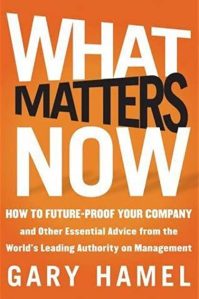
Inspired by Gary Hamel’s What Matters Now as part of my research for a presentation at WFX Atlanta 9/19/12

It’s Highly Possible that You’ve Already Had Your Next Best Idea

Most of us attach the word “audit” to “IRS” and the word association isn’t pleasant.

The general definition of an audit is an evaluation of a person, organization, system, process, enterprise, project or product.

The term most commonly refers to audits in accounting, internal auditing, and government auditing, but similar concepts also exist in project management, quality management, water management, and energy conservation. (from Wikipedia)

Debra Kaye, writing in Red Thread Thinking, wants to give new meaning to the word audit by attaching it to your ideas instead of your tax returns.

There’s plenty of information, products, materials, and technology that can be looked at in a fresh way, modified somehow, and used again.

We’ve all experienced deja vu – looking at an unfamiliar situation and feeling – almost knowing – that you’ve seen it before.

It’s time to flip that phrase.

William Taylor, cofounder of Fast Company magazine and author of Practically Radical, writes that it’s time for the best leaders to demonstrate a capacity for vuja de’. It’s looking at a familiar situation (say, being a leader in ChurchWorld for decades, or designing and delivering a weekly worship experience for years) as if you’ve never seen it before, and with that fresh line of sight, developing a distinctive point of view on the future.

You can’t do big things anymore if you are content with doing things a little better than everyone else, or a little differently from how you’ve done them in the past.

It’s time to look at your organization and your calling as if you are seeing them for the first time.

We all have ideas that never went anywhere. It’s time to unearth old notes from previous development projects. Are there innovations or ventures that you started to work on and then abandoned for some reason?

It’s time for an “idea audit” to see what’s in the back of your hard drive, filing cabinet or closet. When you reassess what’s already there you can uncover what’s worth revisiting.

What should you be looking for in an idea audit? Most organizations and innovators have or can find hidden assets in their past ideas and efforts, including:

  • Existing old technologies that have accessible benefits that can be enhanced and revealed to new constituents
  • Underleveraged technologies or products that could be valued in categories that were not previously considered or by new or niche groups of consumers
  • Unreleased products or too quickly discarded product concepts that could be potential winners, but that went astray because the going-in insight or platform wasn’t properly tweaked
  • Undervalued distribution networks that can be reawakened with partners who want to be where you are
  • Consumer perceptions and sluggish brand equity that can be refreshed to awaken new revenue

In short, open your eyes fresh and look anew.

Look at your resources – every false start, tool, prototype, note, gadget, materials, formula, recipe, or report available – from a different perspective.

Maybe it’s even time for a little Vuja De’.

Most artists look for something fresh to paint; frankly I find that quite boring. For me it is much more exciting to find fresh meaning in something familiar. – Andrew Wyeth

inspired by:

 Red Thread Thinking, by Debra Kaye with Karen Kelly

Practically Radical, by William C. Taylor

Books and the Genius of Thomas Edison

Part Two of my “Reading Week” at the end of 2019 and beginning of 2020


As one of America’s foremost inventors, Thomas Edison was certainly adept at questioning the world around him.  In order to better understand the natural world, Edison was constantly developing new context by asking different questions. And the framework for formulating these challenging questions?

Edison readbroadly.

I didn’t read books – I read the library.

 Thomas Edison

Among Edison’s first steps when undertaking a new collaborative effort was zeroing in on reading material with themes aligned to the subject matter he was evaluating. This often meant plowing through textbooks and papers spanning diverse scientific topics. But he also read fiction and fantastical works that were completely unrelated to the subject of his endeavors.

Edison believed feeding his mind diverse perspectives through the written word was critical to prevent specifically shaping or tainting his perceptions in any one direction as he began his questioning process.

Thomas Edison LibraryAn ardent lover of books and newspapers, by 1887, when Edison was 40, his personal collection at his laboratory exceeded 10,000 volumes. Though seemingly small by today’s standards, it was one of the top five libraries in the world during the late nineteenth century.

Drawn from the reaches of acoustics, botany, electricity, mathematics, photography, chemistry, materials sciences, and physics, Edison shared the resources of his library with his employees, encouraging them to continually stimulate their own thinking and questioning skills.

Reflecting on his love for storytelling and the deft use of language, Edison’s library also embraced extensive works of classical Greek literature plus a vast collection of Shakespeare. He particularly valued science fiction novels by pioneering French writer Jules Verne for the flights of fantasy and freedom from logic they spurred.

We can link Edison’s reading to many of the provocative questions he asked. Diligently recording his queries and insights in the notebooks that were ever-present at his side, Edison returned to these deep, probing questions again and again. His intentional gathering of questions became a pivotal spur for experiments and hypotheses that he later introduced when working jointly with his team.

Edison’s voracious reading created a constant stream of ideas, insights, and inspiration that led him to breakthrough solutions. His never-ending quest for greater depth and breadth of knowledge helped him develop an unprecedented approach to experimentation in service of innovation.

Through reading, Edison “cross-trained” himself in multiple disciplines, using books as a pathway into new fields of endeavor. (Innovate Like Edison, Gelb and Caldicott)

Just as Edison’s hours of reading in his library sparked questions to be pursued via new hypotheses and experiments, your own reading endeavors can yield serendipitous yet brilliant questions from angles you least expect.

For Your Consideration

  • When was the last time you reached for a new hardcover book or bought an e-book?
  • How frequently do you change the types of materials you read?
  • Do you follow the same reading routine over and over again?
  • Why not experiment and select three new bloggers to track over the next month?
  • Why not take a reading retreat?
  • If you were to shift your reading list so that it looks something Edison might devise, what would be on it?

Material from this post adapted from Innovate Like Edison by Michael Gelb and Sarah Miller Caldicott and Midnight Lunch, by Sarah Miller Caldicott


You Can’t Read All Day If You Don’t Start in the Morning

Part One of my “Reading Week” at the end of 2019 and beginning of 2020


One of my greatest passions is reading.

I developed this passion at an early age, and have continued to strengthen it over the years. In addition to being my passion, reading is also an important part of my role as Vision Room Curator at Auxano. In that role, I am responsible for publishing SUMS Remix every two weeks. SUMS Remix is a modified book excerpt in which I develop a solution to a common problem faced by church leaders from 3 different books. So, preparing SUMS Remix in 2019 alone means I have gone through over 100 leadership and organization development books to arrive at the 76 used in producing 26 issues this year.

Other parts of my role requires reading current trends books, used for social media posting and content writing.

Then there’s my passion area of Guest Experience, in which I am constantly researching customer service books for application for churches. I’m building The Essential Guest Experience Library.

And, as many readers know, I am a Disney Fanatic – which extends to building a Disney library, currently over 405 volumes and growing!

Finally, there’s just the pure pleasure of reading – an almost nightly hour or two in the late evening reading a wide range of books, both brand new and classics, fiction and nonfiction.

Add those 5 categories all together, and by the end of 2019 I will have added 268 books to my library, and brought home another 110 books from the library. 

First, a disclaimer: I did not read all 378 cover to cover. With such an immense (and pleasurable) task in front of me, and knowing there is more to my job than reading, I have to resort to some method of finding out what an author is trying to say without reading the whole book. There’s dozens of that total in which I only read the “highlights,” following the methods below.

To get the most out of a book in the least amount of time, try this strategy:

  • Read the title.
  • Read the introduction
  • Read the Table of Contents
  • Flip through the material, scanning the chapter titles and subheadings. Note the words that stand out as bold, different colors, underlined, or italicized.
  • Examine the illustrations, captions, charts and diagrams. Read the pull-quotes and sidebars.
  • Scan through the index looking for buzz words that interest you.
  • Read the first chapter.
  • Flip through the book and read the first sentence of each paragraph in each chapter. In a well written and edited book, the most important sentence containing the topic is usually the first sentence of the paragraph — but not always.
  • Read the last chapter. If there is an executive summary, read it.
  • Read any other information on the cover or dust jacket.

If the book captures your attention after doing the above tasks, then by all means dive right in!

The converse is true: if a book doesn’t capture your attention after a few attempts, stop reading it. Pick out another one on the topic – there are always more waiting for you!

With that caveat in mind, my “cover-to-cover” reading for 2019 was 213 books.

For the curious, like picking your favorite child (I have four), I don’t typically make a “Best of” list for the year. I find some value in almost every book I read, and for me, that’s good enough.

I talked about that in a recent podcast with Bryan Rose. You can listen here.

While the knowledge gained from reading is important, the real benefit is from the habit of reading. When you are continually reading, you condition your mind to keep taking in new knowledge. Your thinking remains fresh and sharp. Your brain is always churning on new ideas, looking for new connections it can make. Every day you pour in more ideas, which your brain must find a way to integrate into your existing knowledge base. Frequent reading fires up your neural activity, even during the periods when you aren’t reading.

Reading is a gift that you can unselfishly give yourself, one that truly keeps on giving. Why don’t you bless yourself and those around you by reading a new book in the first weeks of 2020, and sharing its wisdom with others?

Me? Well, I’m visiting one of my favorite bookstores later this week, I’ve got three books lined up for delivery by the end of this week, and I’m headed to the library today to pick up another couple on reserve.

After all, you can’t read all day…

…if you don’t start in the morning!


Part Two of my “Reading Week” at the end of 2019 and beginning of 2020