Turn the Page: Exploring National Book Lover’s Day

August 9 is birthdate of my father, H.D. “Doc” Adams, who was born in 1927.

It’s also Book Lover’s Day.

Those two seemingly incongruent circumstances actually have a powerful connection for me.


After suffering a major stroke on February 10, 2012, my father passed away on February 25. By the time I was able to get back to Tennessee to see him, he had lost motor functions and speech capacity. Over the few days I was there, the slow but steady decline continued.

I had last seen him during the previous Christmas holidays. While there, I spent some time alone at home with him. After suffering a series of strokes over the past several years, he could no longer read – but the legacy of his reading lined the bookshelves all over my boyhood home. In the quiet hours when everyone was asleep, I scanned the shelves and remembered hearing him talk about this book or that one. I pulled a few off the shelf, and opening them, was instantly transported back in time to a conversation about the subject, or to memories of the event itself.

I’ve been a reader of books since, well, before I can remember. My father was an avid reader, and he passed that passion along to me at an early age. Even though he worked 6 days a week, 12 hours a day as a gas station owner, he often spent several hours reading each night. A recent revelation from a book brought his actions sharply into focus:

The manual labor of the past that allowed a human being to work in an embodied way, and to contemplate in heart and mind while working with one’s hands, encouraged the desire for reading after the physical exertions were completed. One can imagine why a farmer might kick off his boots after a day of sweat and dirt to read a good book.

Reading for the Love of God, Jessica Hooten Wilson

That was my father.

He insisted my mother take my brother and me to the library in the next town and check out books – every two weeks. I would get the maximum number of books, take them home, and read them – usually in the first day or two. Then it would be an impatient wait till the next library trip.

Reading is a passion I treasure, and one that I am thankful my father instilled in me.

The library habit of my boyhood stuck with me through elementary, junior, and high school; it remained in college and graduate school and post-graduate specialized studies. Each of my vocational roles since school “ended” have included reading as a part of what I brought to the task. It continues to this day, with a weekly visit to my local library to drop off books read and pick up books on hold – usually three or four in each category.


Every year on August 9, bibliophiles around the world unite in celebration of National Book Lover’s Day. This special occasion honors the profound impact that books have on our lives, cultivating imagination, expanding knowledge, and fostering personal growth. As we mark this day, it’s an opportune moment to reflect on the enduring value of reading and explore ways to enrich our literary experiences.

Book Lover’s Day is a great day to celebrate. Just grab an interesting book, find a quiet, cozy place, and crack open the cover. Celebrating Book Lover’s Day in August is pleasurable on the deck, under a shady tree, poolside, or in a cozy hammock. If you fall asleep while reading, that’s okay. It’s all part of the relaxing benefits of being a book lover.

The “WHY” I read so much is covered above. Here’s a clue of the “HOW” and “WHAT” of my reading, and why Book Lover’s Day is important:

I love (and practice) the 4 different levels of reading as espoused by Mortimer Adler in his great book, How to Read a Book, but I really like to latch onto a topic and practice synoptical reading. Also known as comparative reading, it is where many books are read, and placed in relation to one another and to a subject about which they all revolve.

For decades, an ongoing topic of synoptical reading has been about Walt Disney and the “kingdom” he founded. My current Disney library is over 500 books, dating from 1939 to current releases – and I’m still actively researching the subject, and discovering new authors and books regularly. Here’s a few of my latest or soon to be acquired Disney books:

In addition to the pure enjoyment of reading on the subject, these books provide a constant reference for illustrations when I’m writing about hospitality, planning, vision, and other topics that Walt Disney lived out – and to some extent – the Disney organization still practices.

In addition to Disney synoptical reading, I’ve always got small threads of other, diverse, synoptical reading going on, often spurred by long-running interests and subsequent book searches.

Here are a few recent ones:

I am very fortunate in that reading is a part of my work role. As Digital Engagement Leader for Auxano, there’s current reading for our monthly themes and daily social media posts (X, Instagram, LinkedIn, and Facebook), other internal Auxano writing projects, research for Navigators, and believe it or not, reading just for the pleasure of readinga nightly occurrence.

In addition to the above images, here’s a few topics I’ve been reading in the past few months:

  • Ongoing research into the concepts of hospitality in the home (what I’ve termed,”First Place Hospitality”)
  • Tracking the development of hospitality in the U.S. – especially in the food services area
  • Exploring the journey of becoming a “modern elder”
  • Shepherd leadership (biblical concepts relevant for the 21st century)
  • Leadership lessons from the book of Nehemiah

Of course, there’s always some new Disney history coming off the presses that I include in the mix!

So, on Book Lover’s Day, and in memory of my father, I’m trying to emulate Thomas Edison, who believed that voracious reading was the key to self-improvement. He read books on a remarkable range of subjects to address his endless queries.

As Edison noted, “I didn’t read a few books, I read the library.”

How are you celebrating Book Lover’s Day?

On August 9, take time to honor your love of books in meaningful ways. Gift a book to a friend, donate to literacy programs, or simply indulge in an afternoon of uninterrupted reading. Share your favorite quotes or book recommendations on social media using #NationalBookLoversDay to inspire others.

Consider revisiting a beloved childhood story or finally tackling that classic you’ve always meant to read. Organize a book swap with friends or host a literary-themed gathering. Whatever form your celebration takes, use this day as a reminder of the transformative power of books and the joy they bring to our lives.

As we commemorate National Book Lover’s Day, let’s reaffirm our commitment to the written word. In a world of constant digital stimulation, books offer a unique form of engagement – one that nourishes our minds, touches our hearts, and expands our understanding of ourselves and the world around us. So pick up a book, turn the page, and embark on your next literary adventure. After all, every day is an opportunity to celebrate the enduring magic of reading.


If you want to know more about my dad, here is the eulogy I gave at his funeral. After the funeral, while my sons and I were moving some things around his gas station, I discovered one reason I am so passionate about guest experiences. And read this post to find out why readers are leaders.


Remembering My Father, Celebrating Book Lover’s Day

August 9 is birthdate of my father, H.D. “Doc” Adams, who was born in 1927.

It’s also Book Lover’s Day.

Those two seemingly incongruent circumstances actually have a powerful connection for me.


After suffering a major stroke on February 10, 2012, my father passed away on February 25. By the time I was able to get back to Tennessee to see him, he had lost motor functions and speech capacity. Over the few days I was there, the slow but steady decline continued.

I had last seen him during the previous Christmas holidays. While there, I spent some time alone at home with him. After suffering a series of strokes over the past several years, he could no longer read – but the legacy of his reading lined the bookshelves all over my boyhood home. In the quiet hours when everyone was asleep, I scanned the shelves and remembered hearing him talk about this book or that one. I pulled a few off the shelf, and opening them, was instantly transported back in time to a conversation about the subject, or to memories of the event itself.

I’ve been a reader of books since, well, before I can remember. My father was an avid reader, and he passed that passion along to me at an early age. Even though he worked 6 days a week, 12 hours a day as a gas station owner, he often spent several hours reading each night. A recent revelation from a book brought his actions sharply into focus:

The manual labor of the past that allowed a human being to work in an embodied way, and to contemplate in heart and mind while working with one’s hands, encouraged the desire for reading after the physical exertions were completed. One can imagine why a farmer might kick off his boots after a day of sweat and dirt to read a good book.

Reading for the Love of God, Jessica Hooten Wilson

That was my father.

He insisted my mother take my brother and me to the library in the next town and check out books – every two weeks. I would get the maximum number of books, take them home, and read them – usually in the first day or two. Then it would be an impatient wait till the next library trip.

Reading is a passion I treasure, and one that I am thankful my father instilled in me.

The library habit of my boyhood stuck with me through elementary, junior, and high school; it remained in college and graduate school and post-graduate specialized studies. Each of my vocational roles since school “ended” have included reading as a part of what I brought to the task. It continues to this day, with a weekly visit to my local library to drop off books read and pick up books on hold – usually three or four in each category.

Wednesday August 9 is Book Lover’s Day – not an official holiday but one I eagerly celebrate. Book reading is a great hobby. It’s an important one, too. Employers look for it on resumes. Reading is educational, informative, and relaxing. It makes us both smarter and happier people.

Book Lover’s Day is a great day to celebrate. Just grab an interesting book, find a quiet, cozy place, and crack open the cover. Celebrating Book Lover’s Day in August is pleasurable on the deck, under a shady tree, poolside, or in a cozy hammock. If you fall asleep while reading, that’s okay. It’s all part of the relaxing benefits of being a book lover.

I love (and practice) the 4 different levels of reading as espoused by Mortimer Adler in his great book, How to Read a Book, but I really like to latch onto a topic and practice synoptical reading. Also known as comparative reading, it is where many books are read, and placed in relation to one another and to a subject about which they all revolve.

For many years, an ongoing topic of synoptical reading has been about Walt Disney and the “kingdom” he founded. My current Disney library is over 450 books, dating from 1939 to current releases – and I’m still actively researching the subject, and discovering new authors and books regularly. Here’s a few of my latest acquisitions:

In addition to the pure enjoyment of reading on the subject, these books provide a constant reference for illustrations when I’m writing about hospitality, planning, vision, and other topics that Walt Disney lived out – and to some extent – the Disney organization still practices. With 2023 being the 100th anniversary of the founding of the company, there’s a lot to choose from!

In addition to Disney synoptical reading, I’ve always got small threads of other, diverse, synoptical reading going on, often spurred by long-running interests and subsequent book searches. Here’s a current one, entitled #BurgerQuest: a literary, culinary, and arbitrary journey in pursuit of America’s iconic delight. True to my nature, over the years I’ve built up a research library on the burger; here’s just a sampling of the texts dealing with the history of the hamburger:

As I continue to develop #BurgerQuest, I will be diving into the history of the restaurants who have brought the burger from the lunch wagons of the 1890s to today’s wide range of options.

One of the greatest contributors to my synoptical reading was an Auxano project, 8+ years in the running, that ended in 2021. It involved researching 574 books to produce 227 issues of a book excerpt project. For those of you who are curious, that’s a book stack over five stories high. You can read about it here.

Even with that big change in my reading habit, there’s always a book at hand!

There’s current reading for Auxano social media (Tweets, Instagram, LinkedIn, and Facebook posts), other internal Auxano writing projects, and believe it or not, reading just for the pleasure of readinga nightly occurrence.

Currently a few topics I’ve read for pleasure in the past few months include: ongoing research into the concepts of hospitality in the home (what I’ve termed,”First Place Hospitality”); tracking the development of hospitality in the U.S;  exploring the idea of the “modern elder”; select works about small town America, both past and present; the friendship of Thomas Edison, Henry Ford, and  Harvey Firestone and their contribution to America’s development in the early 20th century; and shepherd leadership (biblical concepts relevant for the 21st century).

Of course, there’s always some Disney history coming off the presses that I include in the mix!

So, on Book Lover’s Day, and in memory of my father, I’m trying to emulate Thomas Edison, who believed that voracious reading was the key to self-improvement. He read books on a remarkable range of subjects to address his endless queries.

As Edison noted, “I didn’t read a few books, I read the library.”


If you want to know more about my dad, here is the eulogy I gave at his funeral. After the funeral, while my sons and I were moving some things around his gas station, I discovered one reason I am so passionate about guest experiences. And read this post to find out why readers are leaders.

How are you celebrating Book Lover’s Day?


Part of a regular series on 27gen, entitled Wednesday Weekly Reader

During my elementary school years one of the things I looked forward to the most was the delivery of “My Weekly Reader,” a weekly educational magazine designed for children and containing news-based, current events.

It became a regular part of my love for reading, and helped develop my curiosity about the world around us.

It’s Good to Be Home: Creating First Place Hospitality

In what may seem to be direct opposition to my thoughts about front porches here and here, my wife and I have just completed a series of home renovations over the last three years that did not change our somewhat smallish front porch, but nevertheless, have increased our neighborhood connections.

It’s all about loving where you live!

Here’s the story…

My wife Anita and I have been married for 44+ years. We have three sons, (with three amazing daughters-in-law) and a daughter (married to a great son-in-law). These amazing kids and their spouses have been blessed with eleven children!

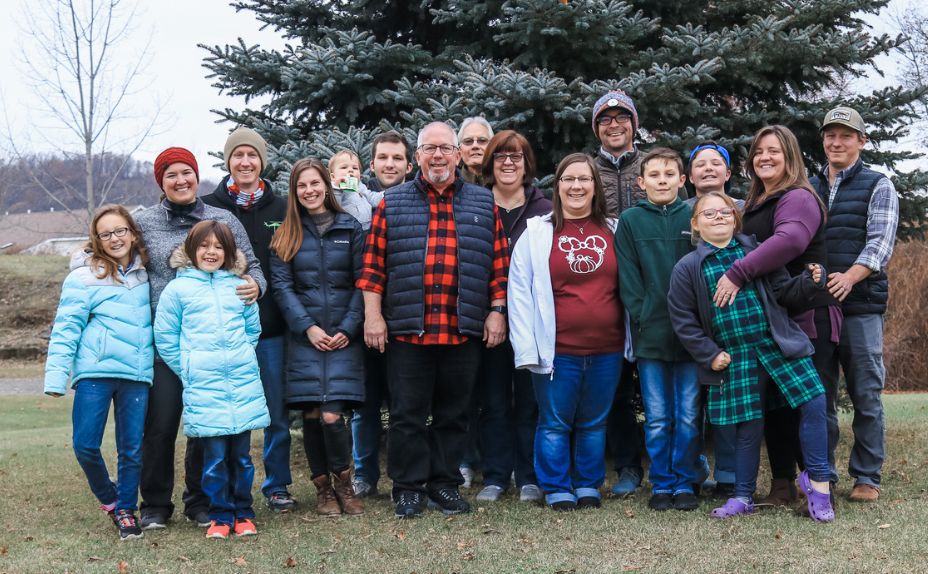
The image below represents the last time we were all together: Thanksgiving 2021 in Greenwich, NY. Since then we’ve added three little ones – all this year! Collectively, we are the #AdamsFamilyExperience!

About three years ago my wife and I, as empty nesters, made the decision to stay in our long-time home (29+ years) where our kids grew up – even as they moved away to establish homes of their own from one end of the country (New Mexico) to the other (New York, then Virginia), along with two who have settled in opposite ends of North Carolina. With one family in the military and moving about every three years, we decided to stay put.

With eleven grandchildren grouped into 2 ages (five age 3 and under, and six ages 10-16), we knew we needed space for lots of different activities.

What that means IRL:

  • With 11 grandchildren, our family numbers 21 when we all gather together (plus up to four dogs). We don’t get to do that as often as we would like, but we want to be prepared when we do! Thus…
  • Our renovations, although with different purposes, were all guided by the primary intention of creating more gathering space. Functionally, that meant keeping all four bedrooms useable, but with a different purpose: each of three bedrooms formerly used by our kids became (respectively) an office for my wife, an office for myself, and a Disney room for the grandchildren. Each of those rooms can sleep two or more.
  • With three bathrooms, we had no reservations about removing the garden tub in the master bath, and creating a walk-in shower. Need to bathe infants? No problem; we’ve still got two tubs.
  • In our family room, we were satisfied with the layout, but decided to mount a large screen TV on the wall to free up space below for additional seating. The fireplace, though adequate, seemed a little lonely on the tallest wall in the house, so Anita and I designed a feature wall that our contractor built to perfection.
  • Our biggest renovation, aka “The Project” was just completed and involved adding square footage to our house footprint, totally renovating the kitchen, removing a wall between the kitchen and dining room, and adding a full-width deck across the back of our house.
  • With the interior complete, up next is the final exterior project: some work on our backyard, freshening up outdoor play space for the younger four of our grandkids who are 3 and younger; correcting drainage flow due to the new roof and deck; and adding cafe lights to a portion of our deck.

Even when our family can’t visit as often as we would love to have them, our home is dedicated to hospitality for friends, neighbors, and those we haven’t met yet. In just the first month, we:

  • Kicked off the newest space with a Mexican fiesta luncheon for our church community group
  • Invited our neighbors on one side to a impromptu family dinner as a treat for all the hard work they’ve been doing on a pool install this summer
  • Hosted two of our kids’ families for the long Independence Day weekend: four extra adults, three grandchildren, and one large dog
  • Planned a neighborhood event that had to be postponed (but will be rescheduled)
  • Made our deck and kitchen available for our neighbor’s 12-year old daughter’s birthday party – even when we weren’t at home for the weekend.

In August, our NM kids and grandkids (two adults, three children) will be staying for five days as part of a two-week vacation.

…and we’ve got lots more planned for the late summer and fall!

My wife and I share a passion: creating hospitality culture lifestyles where ordinary people demonstrate extraordinary love.

In order to help make that possible in a physical space, here’s the dedication pledge my wife and I made over our renovations:

When we understand God’s welcome to us, we can better pass it on to someone else.

When we use our lives exactly as they are, desiring only to create a sacred space for our guests, we turn entertaining upside down and it becomes radical hospitality.

We don’t need to be who we used to be; God sees who we’re becoming – and we’re becoming love.

We can’t love people we don’t know. Saying we love our neighbors is simple. But guess what? Doing it is too. We think Jesus’ command to “love your neighbor” means we’re actually supposed to love our neighbors. Engage them. Delight in them. Throw a party for them.

Jesus wants us to show people who He is by what we do, not just tell them what we think.

It’s time to bring back the table to our homes.

If we really want to learn someone’s story, sitting down at the table and breaking bread together is the best way to start. The table is the place where our identity is born – the place were the story of our lives is retold, reminded, and relived.

(Special thanks to the writings of Bob Goff and Len Sweet)

The solution is to get back to the basics of what Jesus commanded:

Love God and love your neighbors.

Think of it as First Place Hospitality – building bridges to your neighbors in your “First Place,” your home.


Next Time: Images and Acknowledgments for The Project

My 5-Generational Cohort Family is a Microcosm of Society

The legions of ancient Rome were composed of ten cohorts each: cohesive units of 300-600 men who trained, ate, slept, fought, won, lost, lived, and died together. The strength was their ability to think, act, and react as a unit. Though composed of individuals, training and socialization equipped them to behave as if of a single mind when called to battle. Social demographers, students of the effects of population on society, use the term cohort to refer to people born in the same general time span who share key life experiences – from setting out for school for the first time together through reaching puberty at the same time, to entering the workforce or university or marriage or middle age or their dotage at the same time.

The six primary generations of today’s American lifestyle span a remarkable slice of American and world history. Three major wars, countless minor (?) ones, economic booms and busts, social upheavals, rocketing technological achievement, and even stepping beyond our planet are among the milestones that have directly and indirectly shaped the times.

I count myself fortunate to have a direct connection to all six generations. To me, understanding more about how each of them think, feel, and act is not just a mental exercise – it’s a necessary part of life.

  • Builder Generation (1922-1945) My father and mother were born into the early part of this cohort. He entered military service just as WWII was ending; she was in college and then taught school; they were part of what some call “The Greatest Generation”. Think “American values” and you’ve got their number: civic pride, loyalty, respect for authority, and apple pie. My father passed away in 2012, and my mother in 2018. They may not be physically present with me, but who I am was shaped by their influence, and they impact me every day. Additionally, this cohort, as their generation moves into their twilight years, still controls a significant part of the economy and will continue to be influential in the years ahead outside of their numbers.
  • Baby Boomers (1946-1964) My wife and I are late Baby Boomers. Born in the latter 50s, we are a part of what was until recently the largest cohort in US history. For over thirty years, the sheer size of the Boomer generation defined the organization’s social landscape in a majority-rules cultural takeover. We were the civil rights, empowerment, and diversity generation. Never content with the status quo, we are always redefining what it means to be old and cool and important and successful.
  • Generation X (1965-1982) My oldest son and one of my daughters-in-law are Xers, even though they sometimes exhibit characteristics of the next cohort as well. Technologically adept, clever, and resourceful, the Xers are a deeply segmented, fragmented cohort. Their need for feed back and flexibility, coupled with the dislike of close supervision is but one of the many complex nuances of this generation. They are all about change- they’ve changed cities, homes, and even parents all their lives. Often seen as pessimistic with an edgy skepticism, many Xers are more positive about their personal future than the group as a whole.
  • Millennials (1983-2000) My other three children, two daughters-in-law, and a son-in-law all fall into this cohort. They are the children of the soccer moms and little League dads, and endless rounds of swim meets, karate classes, dancing lessons, computer camp and … you get the picture. They consider themselves the smartest, cleverest, healthiest and most-wanted group to have ever lived. Born into the technology boom times, barriers of time and space have little absolute meaning to them. They are willing to work and learn. By sheer numbers (their total births eclipsed the Boomers by several million) they are going to dominate history in new ways. They are the hyper-connected: constantly connected to multiple devices in order to know what and whom they need to know.
  • Generation Z (2001-2015) As the generation of the first six of my grandchildren, it is important to me to try to fully understand them. Technology is the hallmark of this group, which is the first generation to be raised in the era of smartphones and social media as a daily part of life. They’re growing up amid the promise of technological innovation – but also in the environment of economic uncertainty, a sharp decrease in well-defined and reliable career paths, increasing political divides, and the effect of decades of repressed racial tensions. The preeminent event of this cohort is the 9/11 attacks and the rise of terrorism around the world (and the U.S. response to it). Consequently, when compared to their predecessors, this group is both more cautious and more anxious.
  • Alpha Generation (2016-TBD) I have two grandchildren in this cohort, and there is one more on the way! While it is too early to define the characteristics of this cohort in any meaningful way, consider the early memories of children born since 2016: They will assuredly recall adult populations that were divided, diseased, and depressed. Their early years were launched alongside the large differences of the Trump and Biden administrations; their memories will be forever marked by the pandemic, ongoing political polarization, and increasing international unrest on a scale not seen since WWII.

There are some indications that generational cohorts repeat every four generations, so we’ll just have to see. Led by the thoughts of William Strauss and Neil Howe published in the late 1990s, this idea of “cycles” is getting more attention now that their predictions of today’s Millennial cohort are proving to be on target more often than not. That will definitely be my radar in the future!

An interesting fact, and the origin of the title of this website: there are 27 years between each of the first born in the above first three generations of my family, thus 27gen.

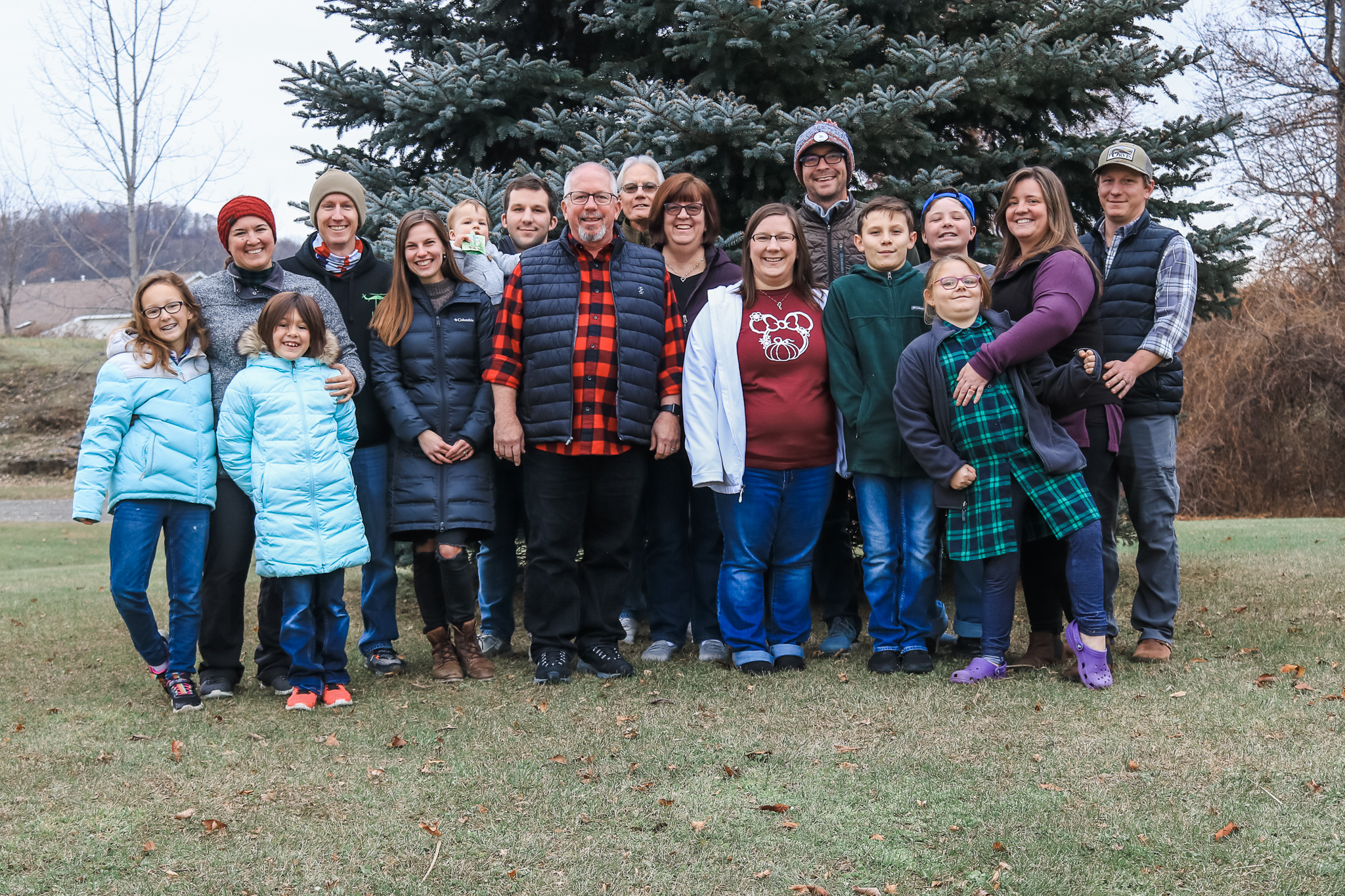
Here’s the last time all of #TheAdamsFamilyExperience was together in one place: Thanksgiving 2021, in Greenwich, NY.

The next five years are going to be very interesting as each of these five generations exert influence on each other. I will be actively watching my own microcosm of society.


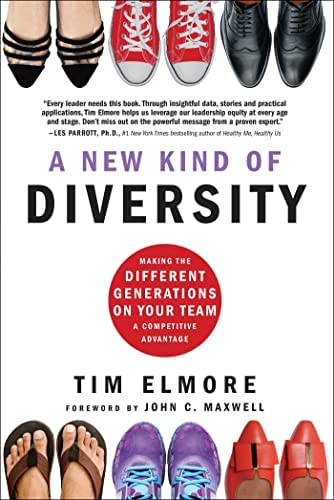
My latest reading on generations: The release of A New Kind of Diversity by Tim Elmore was much-anticipated. Elmore brings his decades of research and leadership experience to bear on what might be the biggest, most dramatic, and most disruptive shift the American workforce has ever seen: the vast diversity of several generations living—and working—together. 

For the first time in history, up to five generations find themselves working alongside each other in a typical company. The result? There can be division. Interactions between people from different generations can resemble a cross-cultural relationship. Both usually possess different values and customs. At times, each generation is literally speaking a different language!

Just in case you were wondering…

From time to time I get asked about the name of this blog. 

The quick answer? When I started this website in 2008, there were four generations of Adams boys alive, with an average of 27 years between them. 

Thus, 27gen – energized by the steady, deliberate journey in generational learning.

Our “history” spans the first transatlantic telephone call (from NYC to London) the year my father was born to smartphones now that connect the world in an instant.

In other words, there is a lot of history in play: things that have happened, things that are happening, and things that will happen.

And it is all connected.

Here’s a better explanation:

This is my son Jonathan, at two years of age, obviously having a good time at my parent’s house.

He’s now 41.

This is my grandson Jack (Jonathan’s son) at two years of age, obviously having a good time playing at his house.

He’s now 14.

Some things never change…

Some things are always changing…

I want to make sure I understand the difference.

Saying Goodbye to the Greatest Generation

In the all-too brief period from December 11, 2020, to January 2, 2021, my mother-in-law Mary Grey Randolph went from living at home with a full-time caregiver to the hospital for surgery back to home for recovery, and then back to the hospital briefly, before moving to hospice care for two days, before passing on 1/2/21.

We shared a birthdate, and she often joked and wondered if I would ever catch up with her – and oh, by the way, she was planning on living to be 100.

Though she didn’t quite make it to her 100th birthday, she was living in her 100th year, so she gets full credit for that!

Mimmie, as she was affectionally known to our family, was the last of her generation in our extended family. Her husband passed away in 2015.

They were the Greatest Generation.

Much more than the titles of the great books by Tom Brokaw, Doc and Mary Grey nevertheless were the Greatest Generation, the likes of one which we have not seen since, and are likely not to see again – at least for awhile.

Mary Grey’s long life was marked by devotion to her God and church; love and nourishing her family; and compassion for others.

Mary Grey and W.L. “Doc” Randolph were married in 1943, lived apart for most of the war years, and began their family life in Goodlettsville, TN following the end of WW II.

Her vocational career included office management and bookkeeping responsibilities in several companies for over five decades. After retirement, her full-time occupation was keeping Doc in line, and as beloved “Mimmie” to her grandchildren.

Mary Grey was a long-time member at her church, and was involved in many activities and responsibilities over the years.

She and Doc, along with four other couples, personified friendship, care, and affection through the Sunday Night Bunch, which gathered weekly for over six decades.

She was devoted to her large family, and always took joy in hosting family gatherings from a single grandchild to dozens of family members for all occasions.

To me, that’s a pretty good definition of “greatest.”

The G.I. Generation, born 1901-1924, developed a special and good-kid reputation as the beneficiaries of new playgrounds, scouting clubs, vitamins, and child-labor restrictions. They came of age with the sharpest rise in schooling ever recorded. As young adults, their uniformed corps patiently endured the depression and heroically conquered foreign enemies. In a mid-life subsidized by the G.I. Bill, the build gleaming suburbs, invented miracle vaccines, plugged missile gaps, and launched moon rockets. Their unprecedented grip on the presidency began with a New Frontier, a Great Society, and Model Cities, but wore down through Vietnam, Watergate, deficits, and problems with “the vision thing.” As senior citizens, they safeguarded their own “entitlements” but had little influence over culture and values. Representatives of this generation include John Kennedy, Ronald Reagan, Walt Disney, Judy Garland, John Wayne, and Walter Cronkite.

William Strauss and Neil Howe, Generations

The event that not only named my in-laws’ generation, but shaped their character as young adults, was World War II. As recounted by Tom Brokaw, “There may never be again be a time when all the layers of our complex society are so completely absorbed in a monumental challenge as they were during WW II.”

Everyone had a role; everyone understood that the successful outcome of the war was critical to the continuing evolution of political and personal freedom.

The nation was infused with a sense of purpose and patriotism. Political leaders, the popular culture, advertising, newspapers, and radio cheered on the war effort once the fighting began. For many young men and women, that call to duty and the constant reminders of its importance in their lives and to the whole country marked their lives during the war and long after.

As I have written about a great deal on this site, I believe that our generations revolve in cycles. Interestingly, the premier researchers in this field, William Strauss and Neil Howe, believed that the generation that will most closely mimic the Greatest Generation in life events and achievements, is the Millennial generation.

The Millennials, those born 1982-2004, are the new “Greatest Generation” – not in name but in deed?

We face a much different type of “battle” today; one not against a named nation or group of nations, but against ourselves.

This cartoon, taken from decades of display on Mimmie’s fridge door, reflects both her life and attitude.

When two different groups view our objectives with a short-sighted and selfish nature, no one will be happy and we will both become quickly frustrated. We will tug and strain, and ultimately fail.

But if we come together and reason, give of ourselves and give up our selfish motives, we will succeed beyond our wildest dreams.

May it be so with the Millennials (Mimmie’s grandchildren), as it was with her Greatest Generation.

Mary Grey Randolph, 1921-2021

Our 5 Generation Star Wars Family

Just typing the title gives me pause…

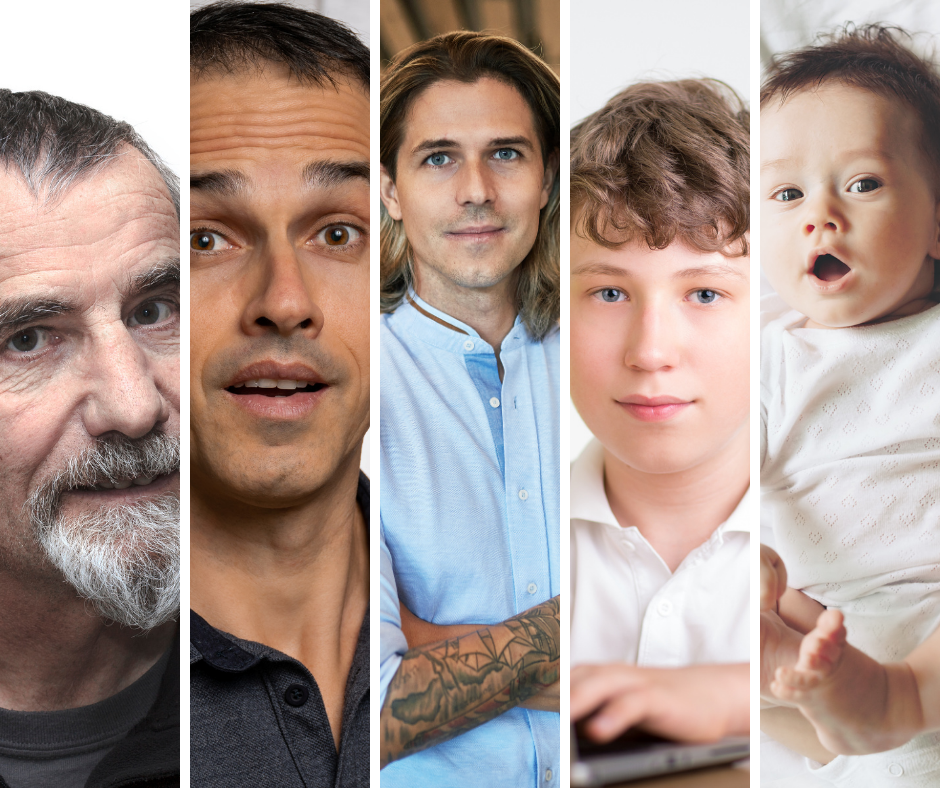
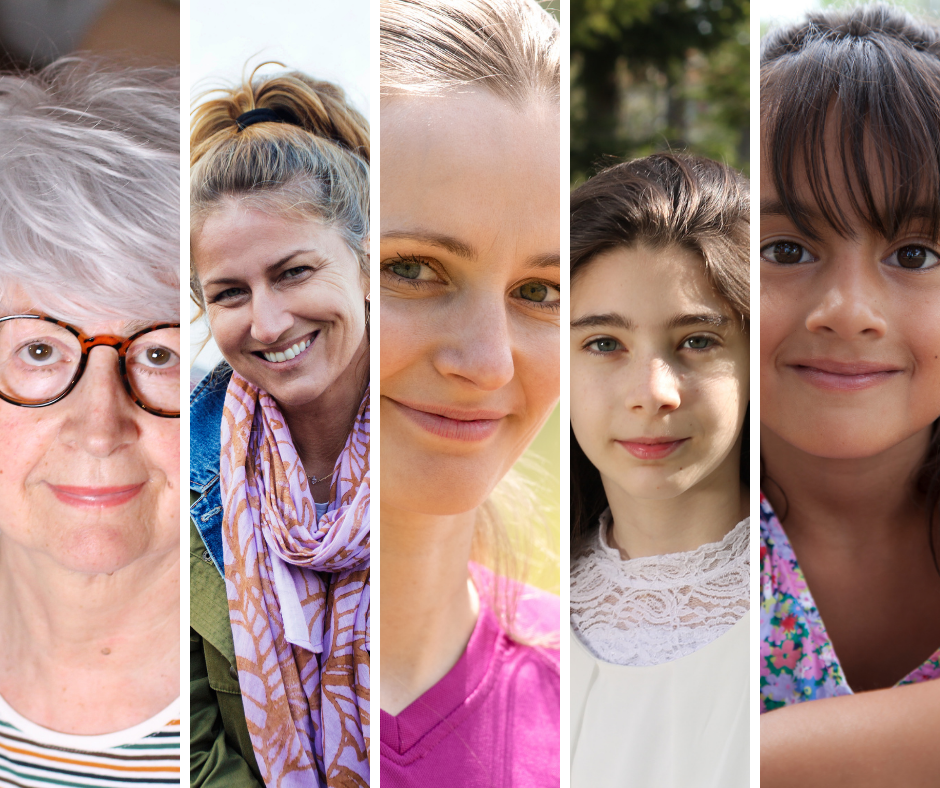
But it’s true – my immediate family: my wife and me, our four children and their spouses, and all their children fall into five generational cohorts in use today.

Here’s the breakdown:

  • Boomer – born 1943-1964 – 2
  • Gen X – born 1965-1981 – 2
  • Millennial – born 1982-1996 – 6
  • Gen Z – born 1997-2010 – 2
  • Alpha – born 2011-2025 – 8

That’s 20 humans, ranging from 4 months old to 65 years old.

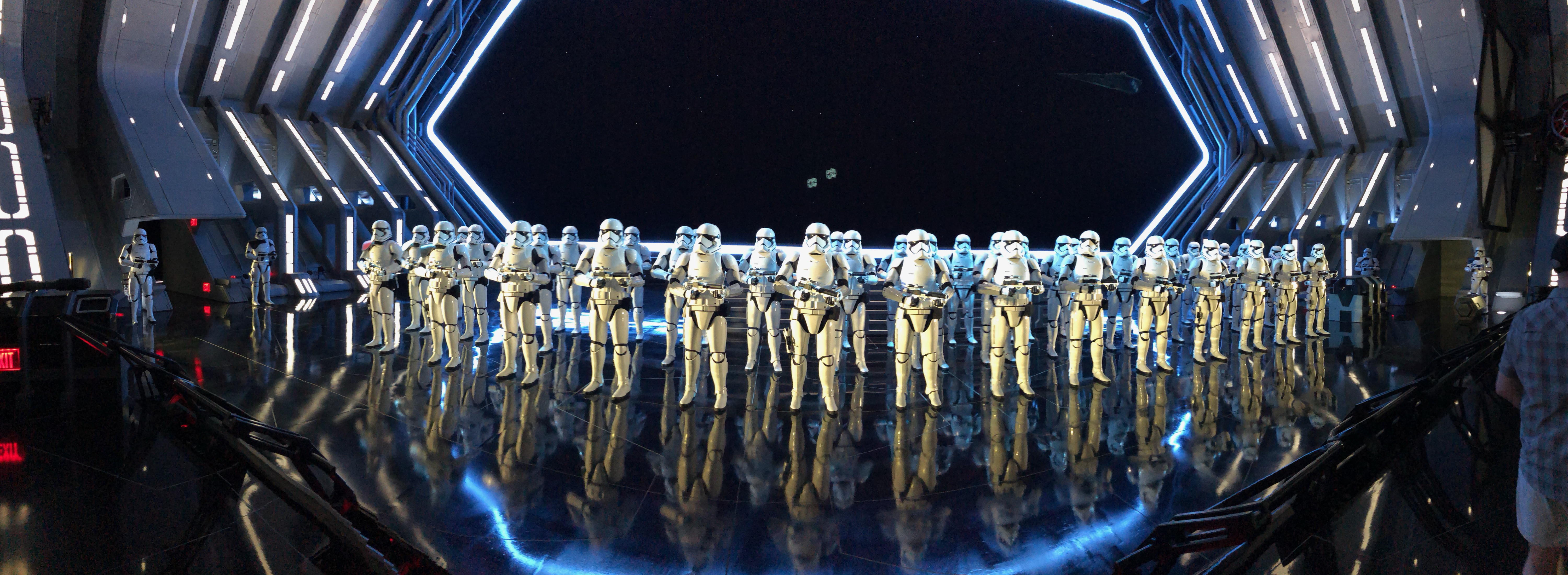
And since we are a Star Wars family, with the announcement of the official new Star Wars Universe timeline, we have a new way to track our generational cohorts.

Here is the official new Star Wars timeline, updated to include The High Republic era:

  • The High Republic – The new official starting point of the Star Wars canon, set 200 years before the Prequel Trilogy. It will be explored in the new “High Republic” line of Star Wars books and comics coming in 2021. A tie-in series on Disney+ (The Acolyte) has also been announced.
  • Fall of The Jedi – Covering the Jedi Order’s fall and Sith return, in The Phantom Menace, Attack of the Clones, The Clone Wars, and Revenge of the Sith.
  • Reign of The Empire – Exploring the initial rise of The Empire and the chaos of its shadow covering galaxy. Covering events depicted in the upcoming Bad Batch animated series, and Solo: A Star Wars Story.
  • Age of Rebellion – The slow but sure rise of The Rebellion in the decades after the Empire’s rise. Covering events in Star Wars Rebels, Rogue One: A Star Wars Story, A New Hope, The Empire Strikes Back, and Return of the Jedi.
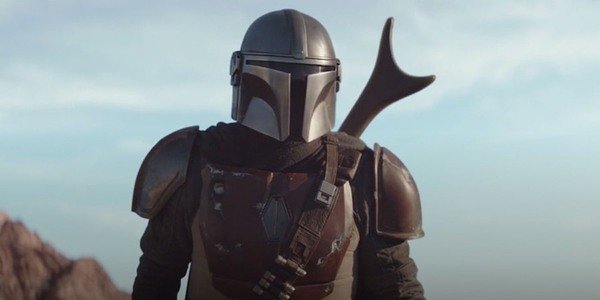
  • The New Republic – The chaos after Palpatine’s seeming demise, as the Empire struggled to survive, and a New Republic started to take form. The Mandalorian is set in this time period.
  • Rise of the First Order – The Imperial remnants re-organize into The First Order, and attempt to reclaim the galaxy, as part of Palpatine’s resurrection. Covers events in Star Wars: Resistance, The Force Awakens, The Last Jedi, and The Rise of Skywalker.

In the summer of 1977, just finishing my freshman year in college, I went to the opening night of A New Hope as soon as it came to Nashville, TN. And I returned – three more times in the next week, and a few more during the summer.

Our children, especially the older two boys born in 1981 and 1984, grew up with Star Wars movies (via videotape), LEGO sets, and other toys.

All of this finds us following the Age of Rebellion.

As they reached high school and then college age and then young adulthood, the boys, their mother and me, (and eventually their spouses), entered the Fall of the Jedi timeline.

My second son, by this time entering into his early twenties, took an even deeper dive in the Star Wars: beginning the building of a large Star Wars library from the vast amounts of books and comic books available; adding to the Star Wars LEGO sets in a big way; creating costume elements for display and wearing, and in a few short years, welcoming his daughter to the world of Star Wars.

Born in 2010, she (along with her older cousin) were the perfect age for the development of the Rise of the First Order. With a huge amount of material available in her father’s library and carefully curated access to the Internet, she became the most knowledgeable of the younger generation in our family.

Last year’s debut of Disney+, with The Mandalorian leading the way, was eagerly anticipated by multiple generations in our family. Some of us watched it during lunch breaks the day it came out; most of us had completed each week’s release by the evening it came out, often jumping on a intra-family text thread. We’re squarely in The New Republic now.

With the avalanche of announcements by Lucasfilm this week, we’re ready to branch out in both directions: The Reign of the Empire will be right in time for more of our grandchildren as they come of (the right) age to understand, and The High Republic will anchor the founding history (at least for now) for our entire family.

With no Christmas holiday movie release this year (a much-anticipated family event over the past five years), we will no doubt be talking (virtually) about the eagerly-awaited development of all the new shows, books, comics, and yes, LEGO sets, that are coming in the next year.

And then there’s always an anticipated trip to a galaxy far, far away.

But in the meantime, the finale of the second season of The Mandalorian is now out, and it’s time for an early morning viewing!

These Are Not the Worst of Times; America Has Been Here Before

Over the first six decades of the twentieth century American had become demonstrably – indeed measurably – a more “we” society.

Over the past five decades America has become demonstrably – indeed measurably – a more “I” society.

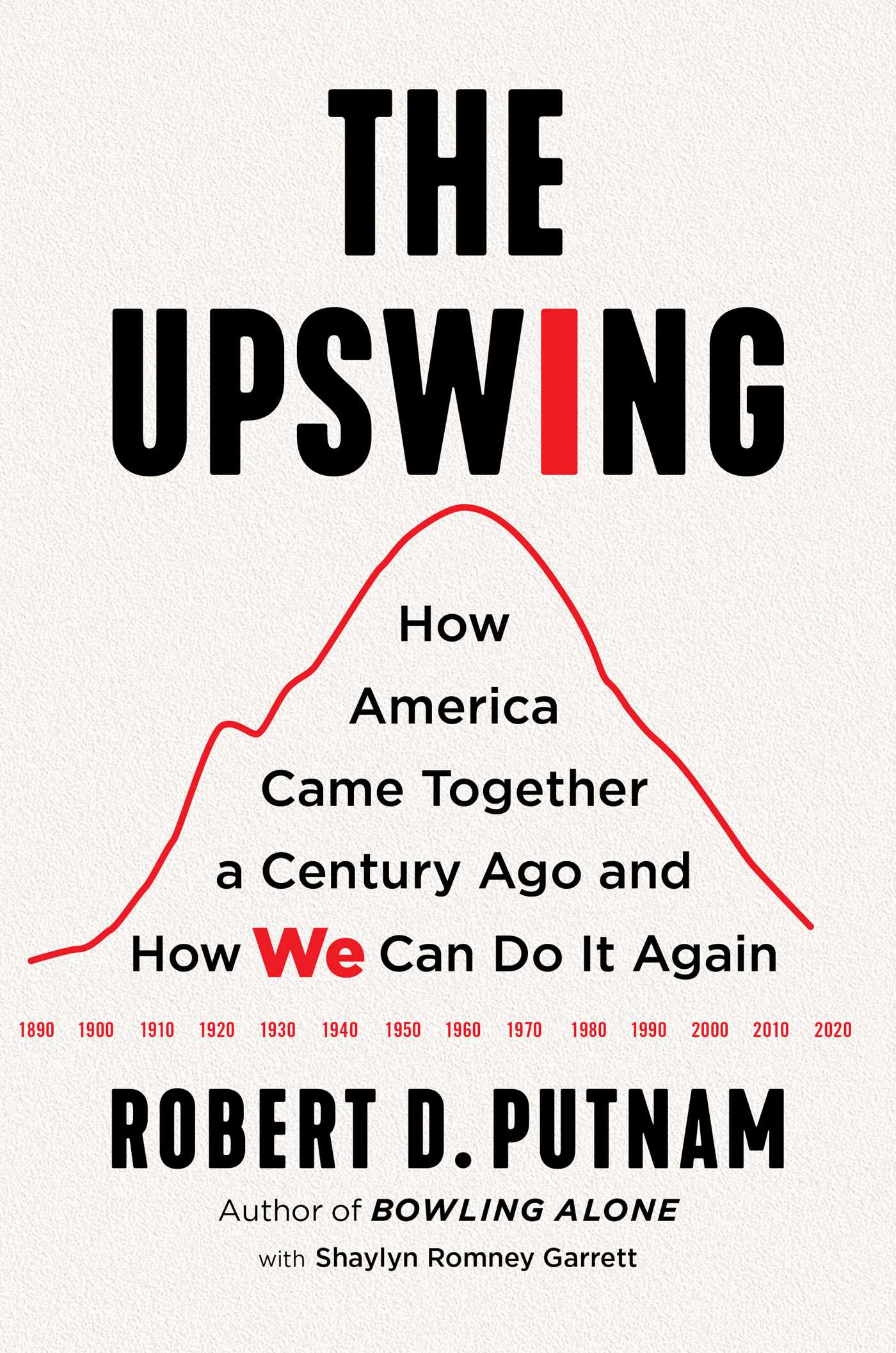
By using advanced methods of data analysis to combine four key metrics of economics, politics, society, and culture into a unified statistical survey, authors Robert Putnam and Shaylyn Romney Garrett have been able to discern a single core phenomenon – a single inverted U-curve that provides a scientifically validate summary of the past 125 years of American’s story.

The Upswing traces the roots of today’s problems to the last time the same problems threatened to engulf our democracy. It contains an evidenced-based story about how we have arrived at our current predicament. The authors examined how economic inequality, political polarization, social fragmentation, cultural narcissism, racism, and gender discrimination each evolved over the course of the last 125 years.

Putnam and Romney Garrett argue that the state of America today must be understood by fist acknowledge that within living memory, each of the adverse trends they now see were going in the opposite direction. To a surprising degree century-long trends in economics, politics, society, and culture are remarkably similar, such that is tis possible to summarize all of them in a singe phenomenon:

The story of the American experiment in the twentieth century is one of a long upswing toward increasing solidarity, followed by a steep downturn into increasing individualism. From “I” to “we,” and back again.

Perhaps, according to the authors, the single most important lesson we can hope to gain from this analysis is that in the past America has experienced a storm of unbridled individualism in our culture, our communities, our politics, and our economics, and it produced then, as it has today, a national situation that few Americans founded appealing.

But, America successfully weathered that storm once, and the authors believe we can do it again.

If there were ever a historical moment whose lessons we as a nation need to learn, it is the moment when the first American Gilded Age (1870-1900) turned into the Progressive Era (1900-1915), a moment which set in motion a sea change that helped us reclaim our nation’s promise, and whose effects rippled into almost every corner of American life for over half a century.

Putnam and Romney Garrett hope that an awareness of the this moment may find the tools and inspirations needed today to create another American upswing – this time with an unwavering commitment to complete inclusion that will take us toward yet a higher summit, and a fuller and more sustainable realization of the promise of “we.”


Inspired and adapted from The Upswing: How American Came Together a Century Ago and How We Can Do It Again, by Robert D. Putnam and Shaylyn Romney Garrett

What I Can Expect from My Gen Z Grandchildren’s World

As I tend to do with a lot of Friday’s 27gen posts, I try to look at the world around us through the lens of the five generations currently in my immediate family of 20: 2 Boomers, 2 Gen X, 6 Millennials, 2 Gen Z, and 8 Alpha Generation (the “unofficial,” but popular name for those born since 2010).

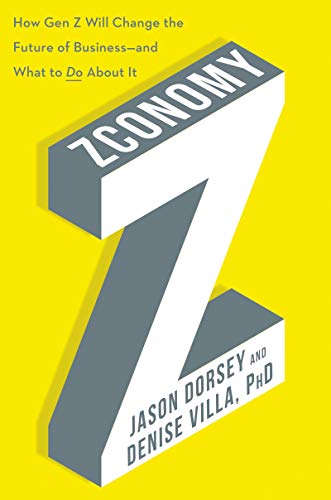
Today, a quick dive into a fascinating book: Zconomy, by Jason Dorsey and Denise Villa. Dorsey and Villa are the president and CEO, respectively, of the Center for Generational Kinetics (CGK). The insights in Zconomy are based on the authors’ extensive global research, presentations, and consulting work.

Gen Z’s expectations are so different because they are so different from other generations. They are the first to lead fully digital lives. They are being raised by parents affected by past events such as 9/11 and the Great Recession, as well as contemporary realities from the COVID-19 pandemic to online gaming, Brexit, and presidential politics.

They are connected to the world, and one another, across continents and across town using technology that for them has always been available. They have strong and vocal opinions about social issues from student load debt and gun control to equality and climate change. And for the first time in history, digital media has given a generation this young the power to instantly bolster (or derail) global brands, become activist, and influence how companies do business – sometimes with a single tweet, post, or cell phone video.

We’ve heard loud and clear from Gen Z that they are not Millennials 2.0.

Gen Z is older than most people think, with the oldest members already up to age twenty-four in 2020. This large, diverse, connected-from-birth generation is soon to be the fastest growing generation in the workforce.

To understand just how different Gen Z worldview are from even Millennials, take these two quick examples:

  • Gen Z does not remember 9/11. They learned about it in history class, from a parent recalling the experience, or on a YouTube video. As a result, Gen Z can’t recall the feeling of fear and uncertainty that came as this event was unfolding – which made it the defining moment of the Millennial generation.
  • Gen Z has come of age with the COVID-19 pandemic creating fear, uncertainty, vulnerability, and confusion. The pandemic has caused massive disruption in schools, work, travel, politics, family, and much more. While the long-term implications of the COVID-19 pandemic remain to be seen, it is already clear that this is the defining moment of the generation thus far.

With the pace of change and breakthroughs accelerating, the future in which Gen Z will navigate adulthood for the next fifty-plus years will be unlike any that previous generations experienced. 

Looking ahead twenty- and thirty-plus years, here are 10 Disruptive Trends the Center for Generational Kinetics thinks will likely influence Gen Z for decades to come:

  1. Car and Transportation Evolution
  2. Virtual Reality and Augmented Reality
  3. Aging Population and Generational Transition
  4. AI, IoT, Connected Devices, and Consumer Tech
  5. Workforce Automation
  6. Medical Breakthroughs
  7. Consumer Space Travel
  8. Global Challenges
  9. Blockchain
  10. College Transformation

All of the trends, breakthroughs, challenges, and innovations will dramatically shape and alter the beliefs and expectations of Gen Z. This will happen in a much deeper, faster, and more integrated way than when personal computers altered Gen X or smartphones connected Millennials or the web and social media bridged continents instantly.

For more information:


Inspired and adapted from Zconomy by Jason Dorsey and Denise Villa