The Story of Disney’s Magical Connection to the Christmas Season

Disney magic is alway special, but at Christmas time, it seems to soar to even greater heights.

A new book by Jim Korkis, Disney Historian and an internationally acknowledged authority on Walt Disney, delivers over 30 stories about Disney’s connection to Christmas over the years. Each meticulously gives the background details and sources that bring the story to life.

The Vault of Walt: Christmas Edition is divided into four sections:

  • Walt Disney Stories
  • Animation and Television Stories
  • Disney Park Stories
  • Mouse-ce-llaneous Stories

Here is one paragraph of one story that perfectly captures the delightful depth and breadth of the book:

“It was that Christmas gift of a pair of boots that gave the world the Walt Disney we know today. It was that gift that helped a thirteen-year-old focus on what his future would be as a cartoonist and to work to make that dream come true. The right Christmas gift can transform a young person’s future as it did Walt Disney’s life.”

This absolutely fascinating teaser is just one example from an excellent book. If you are looking for the perfect gift for the Disney fan in your life, look no further than The Vault of Walt Christmas Edition by Jim Korkis.

Exploring the Continuing Leadership Influence of Walt Disney

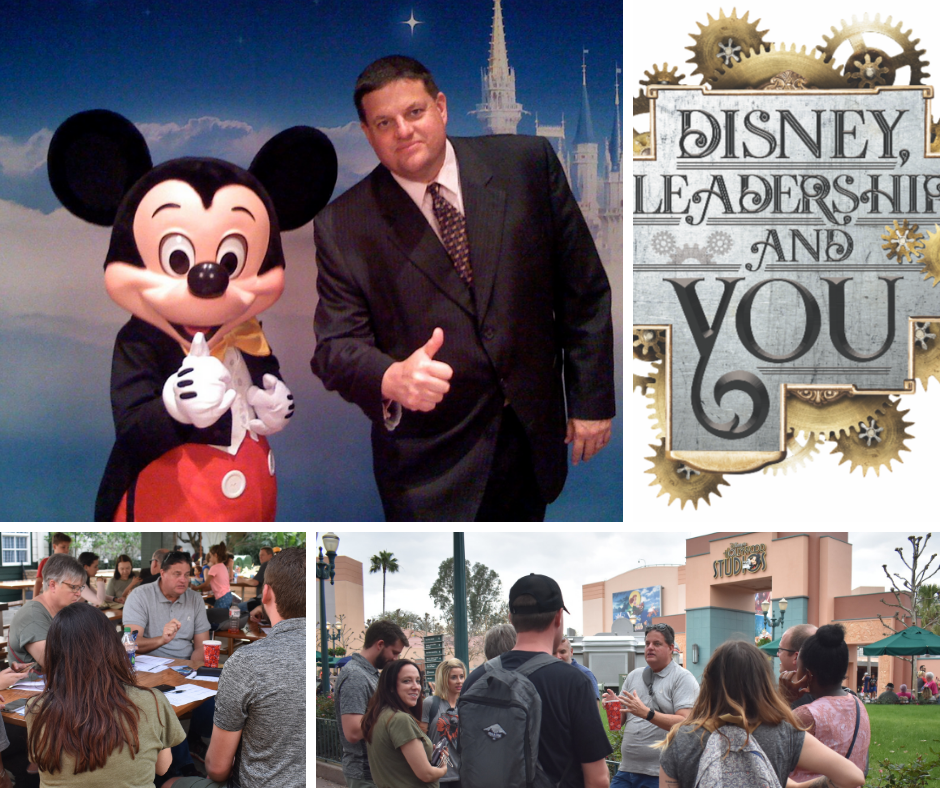
J. Jeff Kober’s latest book, “Disney, Leadership, and You” is an excellent work that more than delivers on its title.

Drawing from an inquisitive mind and keen insight, Kober has nearly five decades experience with Walt Disney – from both within and without the company – which provide a very readable, practical, and thoroughly enjoyable leadership book that you will find yourself returning to time and again for just the right nugget to use.

I have “known” Jeff for years through his writing, and earlier this year was grateful to meet him and engage his services for an immersive park experience with a group I was leading. The warmth, wit, and sheer knowledge of Disney, coupled with his ability to instantly link it to practical applications of my group, was one of the highlights of our experience. That same experience has been translated into this book.

If you are a leader in any size or type of organization, the stories Jeff Kober has captured in “Disney, Leadership, and You” should be a valuable addition to your library, a source of personal encouragement, and a wealth of practical training for both you and your team.

The book is divided into four sections:

  1. Defining Leadership
  2. Leaders Attain Results
  3. Leaders Build Relationships
  4. Putting It All Together

In those four sections you will find 18 themed chapters, each chock full of leadership principles illustrated with stories of Disney leaders from all ranks. The principles are solid in themselves, but what makes them memorable is the stories of the Cast Members.

The stories and principles perfectly describe how Disney Cast Members create magic each day through their hard work and respect for Walt Disney’s original vision.

You organization is not Disney, but you can learn from their excellence. “Disney, Leadership, and You” is an extraordinary source of lessons and learning to help you make a dramatic impact on why you do, what you do, and how you do it.

From Storytelling to Storyboarding


Storytelling is probably the oldest form of communication. John Hench, Disney Legend and former Senior VP of Creative Development, used to insist that storytelling was ‘in our genes.’ – Tom Fitzgerald, The Imagineering Workout

Storytelling has played a vital role in our survival – allowing us to share information, knowledge, and values from generation to generation. Story is the medium through which we receive our early learning as to right and wrong, good versus evil, reward and punishment, social values, etc.

We respond to storytelling. It engages our attention; no matter how old we get, who doesn’t love a good story?

Understanding this, Walt Disney created a technique in the early days of his cartoon films that helped illustrate the flow and continuity of stories – the storyboard.

Donald Duck storyboard, circa 1937 - courtesy of Tom Simpson

Donald Duck storyboard, circa 1937 – courtesy of Tom Simpson

Storyboards are tools that allowed Walt and his artists to envision a film prior to production. It allowed his team to have a shared vision of the story they were telling and how it would unfold. As a bonus to driving the creative development, it also offered a cost-effective way to experiment with a film early on, so that when production began, costs could be minimized.

Decades later, the tradition of storyboards continues on, though it has long expanded past just films. At Walt Disney Imagineering, rides, shows, and films for Disney’s theme parks around the world are the objects of regular storyboarding.

Starting with brainstorm sessions, the Imagineer’s first thoughts, ideas, images, and feelings about the story they are creating are captured on note cards and quick sketches.

The storyboards are worked, re-worked, rearranged, and edited until the story is strong and clear. Only then will production proceed.

At Walt Disney Imagineering, everything they do revolves around the story – and storyboards have remained an essential tool in helping them tell the story.

What story are you trying to tell?

Let it start with words and images to single note cards pinned on wall. Step back and look at the story you are trying to tell. Rearrange, edit, and add to the cards. Work at it – hard – until the story is just like you want to tell it.

Now, it’s time to tell the story…


part of a series of ideas to help shape and tone your creative muscles

Inspired and adapted from The Imagineering Workout

 written by The Disney Imagineers

Imagineering logo

Practice the Process of Inspiration to Generate Ideas

An exceptional concept depends on good process as well as pure inspiration.

One of my favorite shows at Walt Disney World’s Magic Kingdom is Mickey’s PhilharMagic. In the image below, notice the music notes in the background circling around the showcases in the gift shop at the exit from the theater. They’re not random. If you hum them, you will get the opening to Paul Dukas’ The Sorcerer’s Apprentice – one of the most memorable sights and sounds from Disney’s Fantasia, and the core idea in Mickey’s PhilharMagic.

WDW Apr16 MK MickeyPHM

That’s the magic that “Process Practice” can produce!

Being aware of the design process and knowing what phase the team and the idea are in is a big part of the show producer’s job. You probably aren’t a producer, but all leaders have a role in pulling various people and resources together in creating something – which is the role of a producer.

Inspiration generates ideas, and the process helps to shape efforts in a way to keep the team moving towards a fully developed idea.

It’s time for you to “get” it…

  • Get going. Toss a bunch of ideas out. Direction often comes from joyous chaos.
  • Get excited. Brainstorm. Dream. Take tangents. Notice where ideas go, what’s cool about them, and incorporate this into the design.
  • Get committed. Set up a regular project meeting time, discuss ideas, or just sit and stare at the wall. Ideas will come either way.
  • Get doughnuts or cookies and some toys. Brainstorming sessions go better when food or toys are around.
  • Get different opinions. Listen to someone else’s point of view and listen for things that improve the design.
  • Get confused. Ask yourself hard questions that you can’t answer.
  • Get unstuck. Try a different direction. Throw out an impossible action. Debating a wrong answer can help reveal the correct one.
  • Get your hands dirty. Build a rough model or stage a reading. You will learn more from this than from any debate, and you’ll learn it in time to fix things.
  • Get reactions. Show the idea to others. Listen to what they say, especially if it isn’t what you want to hear.
  • Get it on paper. Take everything you’ve learned and write a description of the goals and details of the design. If you write convincingly, you’ve probably got a good idea.

If everyone is comfortable with the process, the team members have the freedom to generate the best ideas for their project.


part of a series of ideas to shape and tone your creative muscles

Inspired and adapted from The Imagineering Workout

Imagineering logo

The Disney Imagineers

Sue Bryan, Senior Show Producer


Inspiration Comes from Things That Are Infused with Life

The word inspire means “to breathe into or upon; to infuse with life by breathing.” When we say, “I am inspired,” it has a deeper significance than we think. We are “breathing in” the living environment of ideas, enthusiasm, and energy that comes with the creative process.

If we look in the Bible, we see the same idea. In Hebrew and Greek the words for “spirit” are the same as the words for “breath” and “wind.”

WheatWind

In fact even in English our word “spirit” comes from Latin word meaning breath. “Inspiration” and “respiration” have the same root. This is no mistake. From the earliest times people could see the connection between breath and active life. When a person’s body stops breathing, it also becomes inactive and dies. Breath is the outward manifestation of activity and life. This intimate connection between breath and active life is the reason why the same word is used for both “spirit” and “breath” in Hebrew (ruach) and in Greek (pneuma).

Inspiration comes from things that are infused with life.

In creating, Disney’s Imagineers always work from a basis of their training, exposure to others’ work, their research, and their life experience.  Working together, they are inspired by their collective histories, training, experience, predecessors, and mentors.

When we are inspired, ideas that are living inside us will find a way to be expressed.

Thistle

Here’s an exercise from the Imagineers: Select a creative challenge – painting, writing, inventing – anything that requires creativity. Now, make a list of creative souls that could inspire a solution: artists, scientists, inventors, musicians, writers. Select one or more people from the list, reflect on their talent, research their work, and let them breathe life into your thinking and imagination.

Now, find your own answers by letting your imagination soar with multiple solutions.


part of a series of ideas to shape and tone your creative muscles

Inspired and adapted from The Imagineering Workout

The Disney Imagineers

 Imagineering logo

Immerse Yourself in the Creativity of the Disney Imagineers

My admiration for the creative brilliance of Walt Disney and the amazing group of geniuses he gathered around him runs deep and long.

WDWQuote1

As a boy growing up in the 60s, Walt Disney’s Wonderful World of Color television show was something I looked forward to every week. My father, an owner-operator of a Gulf gasoline station, was the recipient of various advertising tie-ins involving such Disney classics as 101 Dalmatians, The Jungle Book, and the amazing nature films. I was fortunate to be part of a high school band marching in Disney on Parade in 1975, just a few years after Walt Disney World opened.

Then marriage and four children came, just in time for the rejuvenation of Disney animation of the late 80s-early 90s. That meant endless viewings of The Little Mermaid, Beauty and the Beast, and the rest of the Disney library.

By the time the 2000s had rolled around, I was beginning to accumulate different types of books on the Disney organization – biographies, behind-the-scene details, first-person accounts, and various types of business-related books. I was beginning to use them in leadership and teaching positions I held.

In 2011, the fortunate circumstances of my daughter graduating from college in three years before beginning her master’s degree and her request for a much-talked-about-but-never-fulfilled Disney trip led to a week-long adventure in Walt Disney World with a 23-year old graduate student and her two early 50’s parents.

Before that, I knew about Disney. That week, I experienced Disney.

That may seem like a small thing, but in reality it is a HUGE difference.

In the last five years, I have been to Walt Disney World at least several days each year, with the last year being the highlight: by the time this fall rolls around, I will have been on Disney property 19 days.

The experience of Disney – primarily in the theme parks, but now expanded to other resorts, retail shops, and cruise ships – can be traced back to Walt Disney. His untimely death in 1966 could have left a void in the creativity of the Disney empire.

But I believe his greatest act of genius had its origins in 1952, as he began to pull together veterans of film and animation work for a special project that came to be known as Disneyland.

That group of versatile animators and art directors was the foundation of a group that came to be called the Imagineers.

Out of this group, Disney historian Tim Hauser reflects, “came the theories, aesthetics, design, and engineering of Disneyland; the advancement of three-dimensional storytelling; the development of robotic techniques in Audio-Animatronics; and the perpetuation of an ‘architecture of reassurance’ as inspired by Walt Disney’s personal sense of optimistic futurism.”

Today Walt Disney Imagineering remains the design, development, and master-planning branch of company, with over 140 disciplines working toward the common goal of great stories and creating great places.

Walt Disney wanted Disneyland to be essentially a movie that allows you to walk in and join in the fun. Imagineers – many whom had worked with Walt Disney since the 1930s – literally brought those movies to life with their multiple disciplines. He knew from his filmmaking experience that story was everything to the audience. Disney knew he must immerse the theme park guest in living storytelling scenarios.

And for over 60 years, the Imagineers have delivered – time and time again. To date, the Imagineers have built eleven theme parks (with Shanghai Disney opening in just a few weeks); dozens of resort hotels; 4 cruise ships with two more under construction; 2 water parks; and ongoing development in existing parks.

The Imagineers deliver the experience of Disney.

Now I want to bring you full circle by highlighting the recent work of author Louis Prosperi in The Imagineering Pyramid.

Using existing material published by Disney plus conversations with Imagineers, Prosperi weaves together an interesting thought captured in the book’s subtitle: Using Disney Theme Park Principles to Develop and Promote Your Creative Ideas.

It’s a very compelling challenge: look at the existing body of work done by the Imagineers for Disney’s theme parks and translate those principles into a “pyramid” of 15 principles grouped into 5 tiers.

Here’s an outline for an appetizer:

Tier 1: Foundations of Imagineering

  • It All Begins with a Story – Using your subject matter to inform decisions about your project.
  • Creative Intent – Staying focused on your objective.
  • Attention to Detail – Paying attention to every detail.
  • Theming – Using appropriate details to strengthen your story and support your creative intent.
  • Long, Medium, and Close Shots – Organizing your message to lead your audience from the general to the specific.

Tier 2: Wayfinding

  • Wienies – Attracting your audience’s attention and capturing their interest.
  • Transitions – Making changes as smooth and seamless as possible.
  • Storyboards – Focusing on the big picture.
  • Pre-Shows and Post-Shows – Introducing and reinforcing you r story to help your audience get and stay engaged.

Tier 3: Visual Communication

  • Forced Perspective – Using the illusion of size to help communicate your message.
  • “Read”-ability – Simplifying complex subjects.
  • Kinetics – Keeping the experience dynamic and active.

Tier 4: Making It Memorable

  • The “it’s a small world” Effect – Using repetition and reinforcement to make your audience’s experience and your message memorable.
  • Hidden Mickey’s – Involving and engaging your audience.

Tier 5: Walt’s Cardinal Rule

  • Plussing – Consistently asking, “How do I make this better?”

But instead of building an object like an attraction, Prosperi challenges the reader to do something with the principles that may be even more daunting: be creative.

Even though I was familiar with most of the principles and their origins, I enjoyed reading how Prosperi linked the ideas together into a unified whole. Especially helpful were the questions at the end of each chapter, with a general focus as well as specialized applications for game design, instructional design, and management and leadership. The questions will help anyone have a better grasp of the concept and how to apply it an almost any field.

The Imagineering Pyramid was especially beneficial to me on a recently completed 3-day “field trip” to all four theme parks at Walt Disney World. As I walked through each park, the genius of the Imagineers inspired me to fill several pages of my Disney journal with new ideas for development as well as take over 1,000 photographs of design details – exactly what I believe Louis Prosperi had in mind when writing the book.

Leaders in any capacity will benefit from The Imagineering Pyramid as a helpful tool, providing a creative framework for solving problems.

ImagineeringPyramid

It’s Always Easier When You Work With Someone Who’s Been There Before

It’s very easy to become overwhelmed by the size and complexity of some tasks you undertake.

…like planning a week-long visit to Walt Disney World.

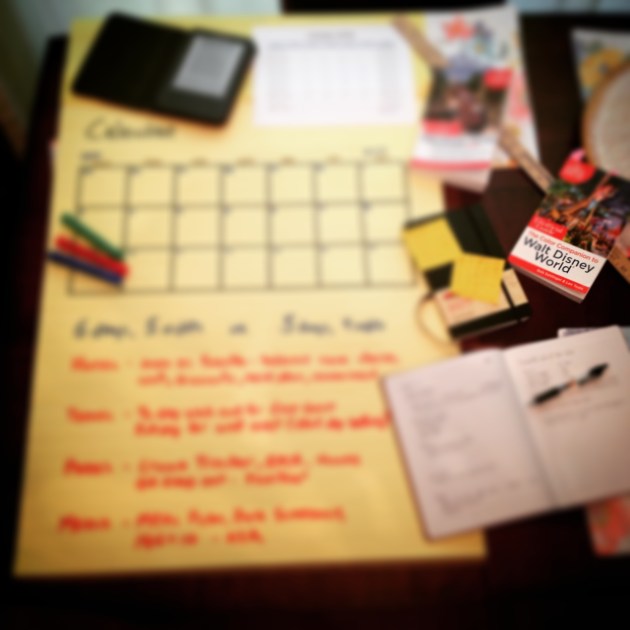
That’s the place I found myself in five years ago, when my wife and I began planning a Walt Disney World trip for our 22-year old daughter, as a delayed college graduation gift.

I had been to the Magic Kingdom once. As a senior in high school. For a day. In 1976. A long time ago…

Some things had changed a lot, and my memory wasn’t that good about the trip anyway. Being the research kind of guy, I began looking online at various websites about 9 months prior to the trip. I also checked out some guide books from the library. But the hands down, absolutely best way to plan a trip to Disney World is to use a travel planner. Better yet, a travel planner whose specialty is the Disney Empire, and is an Authorized Disney Vacation Planner.

Enter Annette at Small World Vacations. When some good friends found out what we were going to do, they heartily recommended I get in touch with Annette. I’m so very glad I did! She walked me through the basics, helped me choose the best options for a fun week, made great recommendations for things to do and places to eat, and generally helped created a great week for us.

Amy WDW2011

This picture pretty much speaks for itself.

Through her services, we were able to get a fabulous room in a great resort, get all the dinner reservations we wanted, and plan plenty of surprises for our daughter. Annette’s service didn’t stop in the preplanning, either. When I had a couple of questions just before I left, she was quick to answer them. And waiting for us when we got back was an email welcoming us home and wanting to know how our week went.  And so, over the last five years, in preparing for many return trips to Walt Disney World, my first call has always been to Annette. Whether it’s a year in advance (planning a week-long trip for my immediate family of 13) or a week before (a last-minute change in schedule allowing me a day in the parks), the help and guidance of an expert is invaluable.

Planning is easier when you work with someone who’s been there before.

This takeaway doesn’t just apply to planning to go to Disney – I also found out it applied to what Disney itself does in their development for future attractions. While they are reluctant to just “copy” what has worked in one Park and transfer it to another, they do learn valuable lessons and apply a continuous learning cycle to all their operations.

The takeaway also applied to how they staffed Disney World prior to its opening in 1971: a year before the Park opened, they hired several hundred college sophomores for seasonal work; the next year, they went after juniors, and the following year, when the Park was really hitting its stride, they hired seniors. The best of this experienced group were offered entry-level management positions after graduation, and many went on to achieve high-level positions all across the Disney companies.

How do you take advantage of experience in planning and staffing at your organization?


Oh, there’s one other thing: Even with the best of outside help, you still have to do the work yourself.

AFAWDWPlanning

Using a Systems Thinking Approach to Innovation

How a conversation with Flik reminded me that innovation and systems thinking aren’t mutually exclusive.

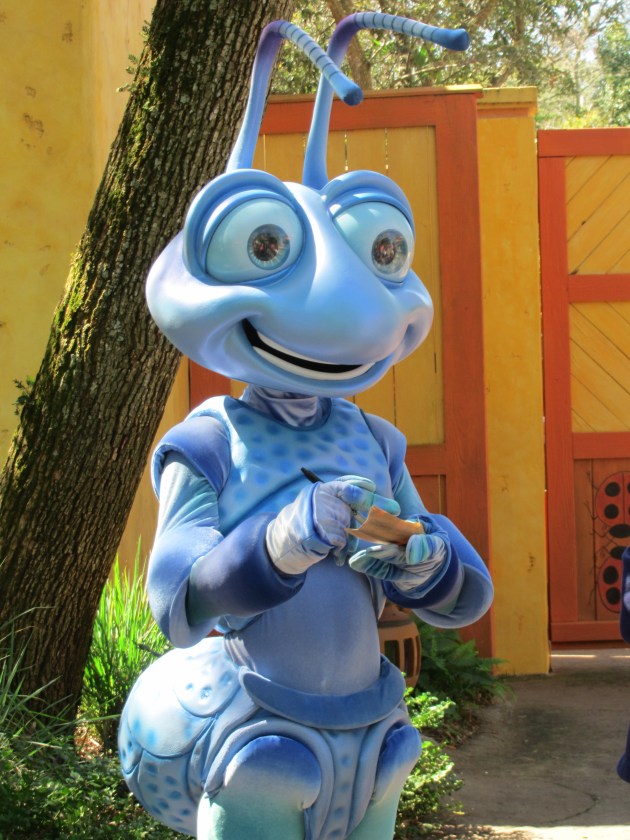
AK-Flick1

If you’ve never seen A Bug’s Life, it was the 2nd Pixar film released following the amazing debut of Toy Story. If you haven’t seen it at all, or recently, I recommend you watch it for pure enjoyment and the lessons it contains.

Flik is a entrepreneurial ant (that paradox is a leadership book in itself!) whose latest invention is a machine that allows ants to do more faster, thus satisfying the demands of their grasshopper overlords. It works for a while, but then disaster strikes and Flik has to scramble to come up with new solutions to save the colony.

That’s all the storyline I’m going to give you; I hope it whets your appetite to view the movie.

A recent encounter with a life-sized Flik at Disney’s Animal Kingdom brought to mind this fact:

When you’re working on a project, things always go smoother when you have the right tools at hand.

If your mind is working on something innovative, the same is true. The mind is full of ideas from past experiences and from observations gained through conversations, movies, television, etc. While you may chose to rely on your subconscious mind to access these ideas, why not take a more structured approach, using specific tools and techniques?

In her book “The Seeds of Innovation”, Elaine Dundon has created a systems thinking approach to innovation. At first those two thoughts seem contradictory, but in reality it can become a very powerful synergy. For example, here’s a “toolkit” you can dive into when you are faced with a challenge in your ministry.

Rummaging in the Attic – elements of previous solutions or ideas can prove to be very valuable fuel for jump-starting your idea engine. Find old ideas, dust them off, and reconnect them in new ways to your current problem or opportunity.

Cultivating Obsession – a great way to find new ideas it to become obsessed with the challenge that confronts you. It means you have to immerse yourself in the challenge, to seek out all the information you possibly can. Obsession will lead to better insights.

Analyzing Frustrations – one of the most fertile areas for identifying new ideas is discovering what frustrates others about the current problem. Focusing on what is not working will sometimes be the origin of a new breakthrough idea.

Identifying the Gold Standard – no matter what the challenge you are facing, someone else has already been down that road. Seek out these people or organizations that have solved a similar challenge in an outstanding way. Make a list of the elements of the process or program that made it work for them, and relate this list to your situation.

Adopting and Adapting – great ideas already exist all around you. Find them out and adopt them as your own. Look within the category of your opportunity, but also look outside the box. Innovators look beyond the borders of their own situation to find new ideas to adopt and adapt.

Combining Ideas – innovative thinking is a little like a cake you bake: take a little of this, a little of that, put them together and you have a delicious dessert. Creative thinkers are aware of the objects and ideas around them and look for new connections by combining diverse ideas and objects.

Finding Similarities – think of other challenges that might be similar. Draw analogies to similar situations, let your mind wander, and you will most likely discover a new connection from an unlikely source.

Breaking Down the DNA – what if your problem is overwhelming? Break it down into its component parts and focus on it bit by bit. Analyzing every step in the process will allow you to discover new answers.

Listing and Twisting – this is actually a follow-on step from the previous one. Once you have listed the steps in the process, you can “twist” them around to find new ideas.

Become a Visual Thinker – something happens when we move away from a linear process of thinking and start to doodle or draw. I’m a big fan of this method; I have a 4’ x 8’ whiteboard on my office wall that I’m constantly stepping up to and sketching out an idea. It seems that your subconscious mind takes over and new connections begin to appear.

Whether you use a process like the ones above, or just pull up a chair with a cup of coffee in hand to think, the point is that innovation is a process. You know where you are; hopefully you know where you want to be. Let your imagination run wild in the space between, and before long you and your team will have a plan to move forward.

Isn’t About Time You You Made the Ordinary Extraordinary?

Anyone can dream…

But Disney’s Imagineers dream and do.

Since 1952, the Walt Disney Imagineers have been turning impossible dreams and schemes into magical rides, shows, and attractions for Disney theme parks around the world.

What is their magic?

It’s all about making the ordinary extraordinary.

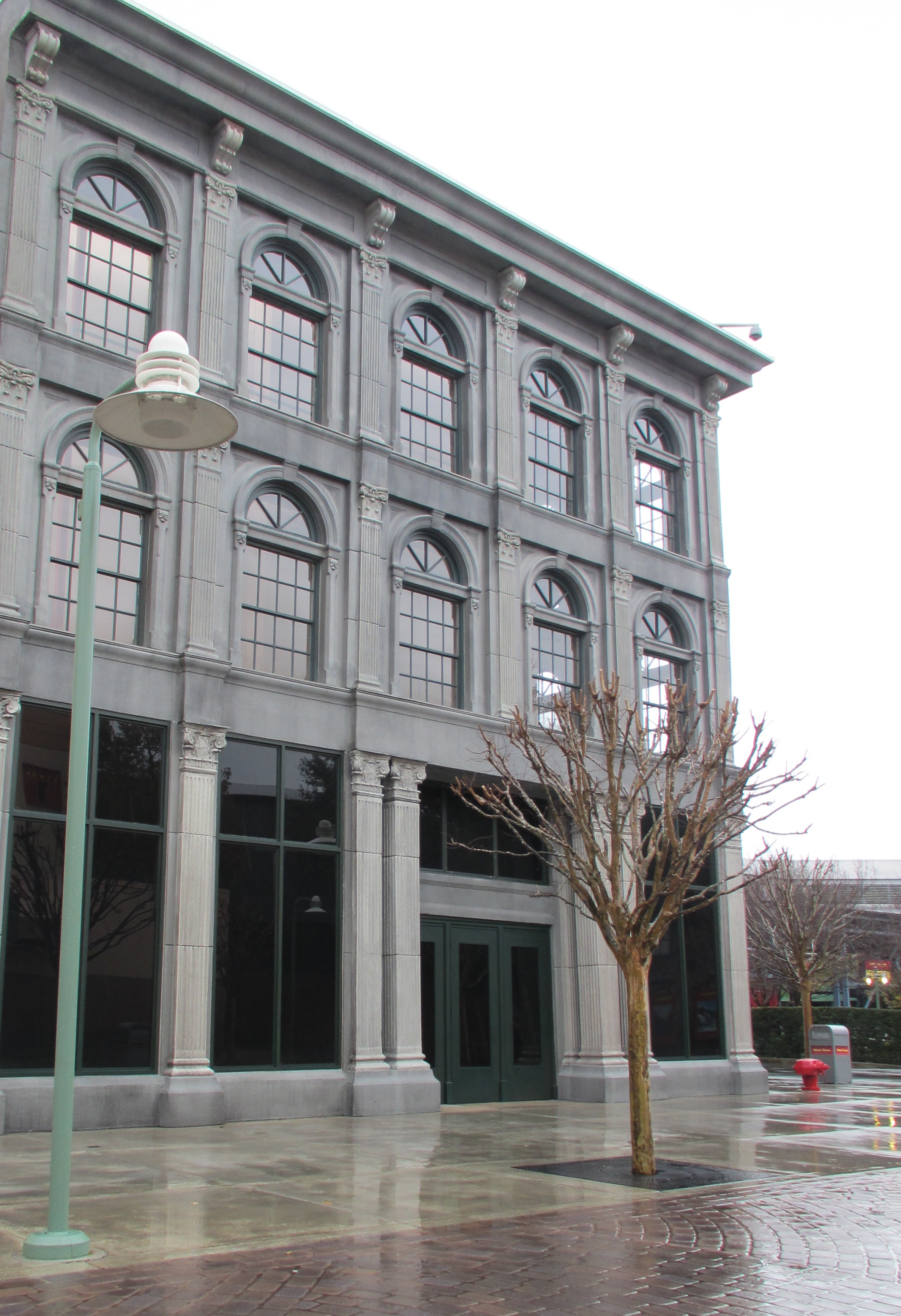
Take this building in Hollywood Studios, for instance…

HS012914Bldg2

It’s a beautiful building, right?

Not really…

HS012914Bldg1

It’s really just a facade – an excellent example of how the Imagineers use a combination of imagination and engineering to make magic come to life at Disney.

Disney’s Imagineers are a highly creative group – one that isn’t slowed down by the impossible.

There are hundreds of stories about Imagineers who didn’t realize what they were capable of until they started doing it. They don’t want your fear of taking the first step get the best of you – they want to let your project get the best of you.

Imagineers try and fail and keep trying until they make magic.

Isn’t it time you got started?

Go ahead. Tackle that creative challenge head-on. Allow the spark of an idea to ignite your creativity and passion. Make the ordinary, extraordinary.

Don’t just sit there – dream and do!


Inspired and adapted from The Imagineering Workout

TheImagineeringWorkout

The Disney Imagineers

Imagineering logo

Starting at the End

TheImagineeringWorkout

inspired by and adapted from The Imagineering Workout, by the Disney Imagineers

– Peter Steinman, General Counsel, Disney Imagineering

Working from the back-end is finding the lessons that you don’t want to learn in the midst of your project. 

This practice of back-end visualization is essential to almost everything we do and can be adapted to any project. 

Next, consider how you could minimize these challenges so they do not negatively impact the project, and take necessary preventive action. This might be done through a contract, through people you might hire, materials you might use, or by adjusting a schedule.

Imagine all the reasonably possible outcomes of the project, select one that best meets your needs, think through all things that could delay, detour, or diminish your outcome and write them down.

Anticipating the possible outcomes of everyday decisions before you make them helps you avoid calamities, not to mention inconveniences.

WDVision

It takes a special kind of vision to see the end before the beginning.

“Of course he did,” recounted his wife Lillian. “If he had not seen it then, we would not be seeing it now.”

After being around Disney cast members for several days this week, the story of people lamenting the fact that Walt died before Walt Disney World was built was recounted several times.

Being onsite at a Disney theme park always heightens my awareness of Walt Disney and the vision he had to bring so much to our world – groundbreaking animation, the concept of the storyboard creative process, live action/animation  movies, and especially the concept of theme parks.

January 31, 2016

A celebration of National Backwards Day