Make Your Culture Conversation Clear About Results

Either you will manage your culture, or it will manage you.

Simply defined, culture is the way people think and act.

Every organization has a culture, which either works for you or against you – and it can make the difference between success and failure. Managing the organizational culture so that leaders, managers, and team members think and act in the manner necessary to achieve desired results has never mattered more.

When most organizations try to improve their culture, they focus on the negative aspects, and try to fix them. This sounds reasonable, but the opposite approach is much more successful. You may find greater success in identifying a few positive attributes within your culture that are connected directly to your identity and mission. Focus on them and find ways to accelerate and extend them throughout the organization.
THE QUICK SUMMARY – Change the Culture, Change the Game, by Roger Connors and Tom Smith

Two-time New York Times bestselling authors Roger Connors and Tom Smith show how leaders can achieve record-breaking results by quickly and effectively shaping their organizational culture to capitalize on their greatest asset – their people.

Change the Culture, Change the Game joins their classic book, The Oz Principle, and their recent bestseller, How Did That Happen?, to complete the most comprehensive series ever written on workplace accountability. Based on an earlier book, Journey to the Emerald City, this fully revised installment captures what the authors have learned while working with the hundreds of thousands of people on using organizational culture as a strategic advantage.

A SIMPLE SOLUTION

In all too many organizations, there is a lack of clarity about results. To the extent we are unclear about the results we want, most actions taken to achieve them will lack cohesion at best or be at cross purposes at worst.

The culture conversation at your organization has to be clear about the results you intend to achieve.

A culture of accountability exists when people in every corner of the organization make the personal choice to take the steps to accountability. Each step builds on the previous one and involves best practices that typify what taking that step truly requires.

See It – means moving above the line of accountability or staying there whenever a new challenge arises. When you See It, you relentlessly obtain the perspectives of others, communicate openly and candidly, ask for and offer feedback, and hear the hard things that allow you to see reality.

Own It – means being personally invested, learning from both successes and failures, aligning your work with desired organizational results, and acting on the feedback you receive. When you Own It, you align yourself with the mission and priorities of the organization and accept them as your own.

Solve It – requires persistent effort as you encounter obstacles that stand in the way of achieving results. When you take this step, you constantly ask the question “What else can I do?” to achieve results, overcome obstacles, and make progress.

Do It – the final step of the process represents the natural culmination of the first three steps. Once you See It, Own It, and Solve It, you must get out there and Do It. That means doing what you say you will do, focusing on top priorities, staying above the line of accountability by not blaming others, and sustaining an environment of trust.

Roger Connors and Tom Smith, Change the Culture, Change the Game

A NEXT STEP

In your next leadership team meeting, go around the room and ask each team member to define their job. More than likely, most people will simple state their job title or a short summary of that position.

The problem with answers like that is they are just identifying where people are located in an organization – which, in turn, has a tremendous impact on how people think about their jobs.

Now, go around the room and ask each team member to define their job based on what is needed to do to achieve results in achieving your mission. List these on a chart tablet, and ask each member to write them down as well.

Ask each team member to take some time over the next week, noting where the results needed to achieve their mission could be improved. Have them prepare an action plan, based on the four steps listed above, to achieve those results in the coming month.

Excerpt taken from SUMS Remix 58-2, January 2017


Part of a weekly series on 27gen, entitled Wednesday Weekly Reader

Regular daily reading of books is an important part of my life. It even extends to my vocation, where as Vision Room Curator for Auxano I am responsible for publishing SUMS Remix, a biweekly book “summary” for church leaders. Each Wednesday I will be taking a look back at previous issues of SUMS Remix and publishing an excerpt here.

See Social Media Through the Lens of “One Another”

How can you avoid the potential distraction of social media and use it to really advance your mission?

As a leader, you can only influence those whom you can reach (Rick Warren). The social media platforms in use today – and the ones that will be developed tomorrow – allow you to extend your reach and listen to the people God is calling you to serve and disciple.

The danger is that a beginning trickle of social media communication can become a flood of unfiltered information that will wash you away unless you channel it into a useful tool for the irrigation and growth of your message. What are some of the solutions to do keep all of your social media focused? That’s what this SUMS Remix is all about.

THE QUICK SUMMARY – Rewired, by Brandon Cox

There’s no going back. Our world is changing at an unprecedented rate. We are connected with people all over the planet with technology that didn’t even exist ten years ago. The world around us is having a conversation about life, meaning, culture, and eternity, and we have an amazing opportunity not just to join the conversation but also to lead it.

Brandon Cox demonstrates the real, connecting power in online social networks, showing you how to connect and tell God’s story relationally and creatively in our social, digital age. He encourages leaders to dedicate their lives to telling the Good News using every means possible, and to be the relational bridge that brings someone into a right relationship with Jesus – even if it does mean jumping on the social media train.

A SIMPLE SOLUTION

God approaches us, seeks us, and searches for us. He offered His Son so that we might be reconciled to Him. In turn, God expects us to reconcile others. From one relationship to another, God wants us to reach others.

Social media isn’t an escape from the real world. It is the real world, whether we are ready for it or not.

God is the great designer who has masterminded a plan to put people in relationships with each other. “Viral” isn’t a concept the inventors of YouTube conjured up—God has always determined to utilize the viral nature of human relationships.

God knew we would struggle with this relational thing, even inside the church, so He gave some rather helpful suggestions and guidelines that we often call the “one anothers” of the New Testament.

These may or may not be familiar to you, but try to hear them with the ear of one who is engaging the culture via social media:

  • “Be at peace with each other” (Mark 9:50, NIV).
  • “Love one another” (John 13:34, NIV).
  • “Be devoted to one another. . . . Honor one another” (Rom. 12:10, NIV).
  • “Live in harmony with one another” (v. 16, NIV).
  • “Accept one another” (Rom. 15:7, NIV).
  • “Agree with one another” (1 Cor. 1:10, NIV).
  • “Serve one another” (Gal. 5:13, NIV).
  • “[Forgive] each other” (Eph. 4:32, NIV).
  • “Submit to one another” (Eph. 5:21, NIV).
  • “Encourage each other” (1 Thess. 5:11, NIV).
  • “Spur one another on toward love and good deeds” (Heb. 10:24, NIV).
  • “Pray for each other” (James 5:16, NIV).

This list is only partial, but it’s a good starting checklist as we answer the question, Am I being relational? Part of the redemption story is the beautiful benefit of our being able to relate to one another within the body in a new way.

Brandon Cox, Rewired

A NEXT STEP

It’s never been more important to produce quality social media content that people actually want to interact with. How can you use social media to practice the one-another commands at your church?

  • Are your social media platforms an integral part of your ministry strategy?
  • Do you use social media platforms to tell the stories of God’s work in your people’s lives?
  • Do you connect with staff and volunteer teams through the use of social media?
  • Do you lead your teams to connect with others through social media?
  • What social media content are you producing that people most want to share with others?

Using social media is just the latest extension of the New Testament’s one-another ministry. When you as a leader understand and practice social media as a one another ministry, you are well on the way to living out the presence of Christ within your congregation– and it becomes very obvious to those who are connecting to others.

Excerpt taken from SUMS Remix 5-1, issued January 2015


Part of a weekly series on 27gen, entitled Wednesday Weekly Reader

Regular daily reading of books is an important part of my life. It even extends to my vocation, where as Vision Room Curator for Auxano I am responsible for publishing SUMS Remix, a biweekly book “summary” for church leaders. Each Wednesday I will be taking a look back at previous issues of SUMS Remix and publishing an excerpt here.

Leaders Model Culture by Consistent Personal Example

How can you protect and grow your church culture without having to be negative all the time?

Either you will manage your culture, or it will manage you.

Simply defined, culture is the way people think and act.

Every organization has a culture, which either works for you or against you – and it can make the difference between success and failure. Managing the organizational culture so that leaders, managers, and team members think and act in the manner necessary to achieve desired results has never mattered more.

When most organizations try to improve their culture, they focus on the negative aspects, and try to fix them. This sounds reasonable, but the opposite approach is much more successful. You may find greater success in identifying a few positive attributes within your culture that are connected directly to your identity and mission. Focus on them and find ways to accelerate and extend them throughout the organization.

Leaders model culture by consistent personal example.

THE QUICK SUMMARY – The Culture Engine

The Culture Engine shows leaders how to create a high performing, values aligned culture through the creation of an organizational constitution. With practical step-by-step guidance, readers learn how to define their organization’s culture, delineate the behaviors that contribute to greater performance and greater engagement, and draft a document that codifies those behaviors into a constitution that guides behavior towards an ideal: a safe, inspiring workplace. The discussion focuses on people, including who should be involved at the outset and how to engage employees from start to finish, while examples of effective constitutions provide guidance toward drafting a document that can actualize an organization’s potential.

Culture drives everything that happens in an organization day-to-day, including focus, priorities, and the treatment of employees and customers. A great culture drives great performance, and can help attract and retain great talent. But a great culture isn’t something that evolves naturally. The Culture Engine is a guide to strategically planning a culture by compiling the company’s guiding principles and behaviors into an organizational constitution.

A SIMPLE SOLUTION – The Culture Engine, by S. Chris Edmonds

As is the case in almost every organizational component, culture begins at the top – with the leader’s personal culture.

Leaders shape the way people think and behave—leaders are viewed by others as role models, and employees look around to see if their behavior is consistent with the organization’s espoused values and philosophy.

Leaders set the agenda. Leaders influence the organization’s culture and in turn the long-term effectiveness of the organization. Leaders and managers set the context within which organizational members strive for excellence and work together to achieve organizational goals.

The credibility and success of any culture improvements at your organization will depend on the degree to which you, as the culture champion, are consistently modeling the desired values and behaviors.

Leaders are in charge of an organization’s culture. Refining or tweaking your team’s or organization’s current culture means that you will be the banner carrier for your organizational constitution.

Here’s what leaders must do:

  1. You are ready to embrace the leader’s responsibility to be a proactive champion of your desired culture.
  2. You’ll need to invest significant time and energy communicating, modeling, and reinforcing your desired culture.
  3. You’ll need to embrace servant leadership in daily interactions.
  4. You’ll need to promptly and genuinely praise and encourage aligned efforts by team members and teams.
  5. You’ll not be able to simply add these activities to your daily workload; you’ll need to redirect time and energy to culture-champion activities from less important activities.

Chris Edmonds, The Culture Engine

A NEXT STEP

Take the following Culture Effectiveness Assessment (CEA) (from The Culture Engine, p42-43) in order to help you understand the degree to which you, as a team or organizational leader, have clarified your own purpose, values, behaviors, and leadership philosophy.

Your Culture Effectiveness Assessment, like weighing yourself everyday, only tells part of the story. Your scales may tell you you’re gaining weight, but not if you’re gaining muscle. You will need other testing to determine that.

Likewise, your CEA score is just a measurement. Once you have taken it, set it aside, and begin the personal work required to set the standard for improving cultural organization. Ask yourself these three questions:

  1. What is one immediate action I can take this week to champion healthy culture? (Example: spend 15 minutes one morning prayer walking your buildings)
  2. What is one collaborative moment I can create in the next month to demonstrate and celebrate aligned efforts among our team? (Example: creating a quarterly staff fellowship with awards)
  3. What is one measurable target we can set for the next year that supports the culture we desire to sustain? (Example: every small group member serving in the community at least once)

Excerpt taken from SUMS Remix 58-3, January 2017.


Part of a weekly series on 27gen, entitled Wednesday Weekly Reader

Regular daily reading of books is an important part of my life. It even extends to my vocation, where as Vision Room Curator for Auxano I am responsible for publishing SUMS Remix, a biweekly book “summary” for church leaders. Each Wednesday I will be taking a look back at previous issues of SUMS Remix and publishing an excerpt here.
The Danger of Being the Brightest Person in the Room

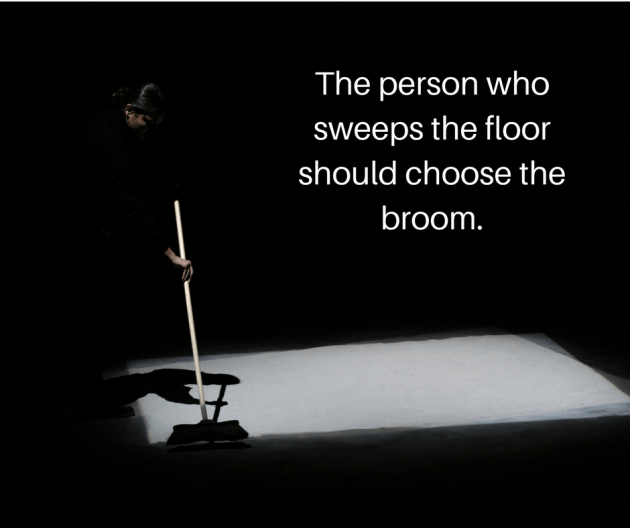
Recently I recalled a consulting job several years ago where I was speaking to a church about the formation of a team to work on the planning for a new building. During one of the sessions I was speaking on the importance of including the facility manager on the building team in a church project, and I tossed out the following statement: The person who sweeps the floor should choose the broom.

That brought out a lot of chuckles from the attendees, but the point hit home: Operational staff members almost never get the chance for input into the decision-making process, yet they are held responsible for the ongoing outcomes of the decisions. That statement and the following story came to mind recently while working on a teamwork project for a future presentation.

James Watson and Francis Crick can arguably say they answered the question, “What is the secret of life”? The pair discovered the double-helix structure of DNA, the biological material that carries life’s genetic information. During an interview on the 50th anniversary of their discovery, Watson was asked how he and Crick had solved the problem ahead of many other highly accomplished, recognized scientists. Watson’s answer included identifying the problem first, being passionate and single-minded about their work, and their willingness to attempt approaches outside their area of familiarity. Then he added something that was astounding: they had cracked the DNA code primarily because they were not the most intelligent scientists pursuing the answer.

Watson went on to say that the most intelligent person working on the project was Rosalind Franklin, a brilliant British scientist who worked alone. “Rosalind was so intelligent that she rarely sought advice. And if you’re the brightest person in the room, then you’re in trouble.”

That comment highlights a common occurrence in church leadership: When dealing with a specific problem or issue, leaders should ensure that they collaborate with team members toward its resolution, even if they are the best-informed, most-experienced, or most skilled person in the group. Far too often, leaders – who, by virtue of greater experience, skill, and wisdom, deem themselves the ablest problem solver in the group – fail to ask for input from team members.

Scientific studies have shown that groups who cooperate in seeking a solution are not just better than the average member working alone, but are even better than the group’s best problem-solver working alone. Lone decision-makers can’t match the diversity of knowledge and perspectives of a multi-person unit that includes them. The ability to distribute many subtasks of a problem to its members – parallel processing – enables the group to outperform the individual who must address them sequentially.

Are you a church leader working in a group? Don’t relinquish your leadership role, but make sure your process allows group members to offer insights, cooperate, and collaborate with each other. The Bible has a lot to say about that, but that’s for another time!

How to Communicate Your Unique Vision

How can you more clearly communicate your unique church vision? 

Every day, your church stewards thousands of moments of truth. Every time a member talks to a neighbor, someone drives by the church facility, a ministry e-mail goes out, or a pastor’s business card is left on a desk, some interaction on behalf of the church has transpired. Every time these events happen, the church’s vision glows brighter or dims in the tiniest little increments.

The leader’s role is to crank up the communication wattage. The visionary cares too much about the message to let it just blow in the wind, unattended. Rather, they grab the message and affix it to a kite for all to see. This can happen only with a tremendous amount of intentionality in the complex discipline of church communications.

In other words, grab immediate attention.

THE QUICK SUMMARYThe Attention Economy, by Thomas H. Davenport and John C. Beck

This title identifies attention management as the new critical competency for 21st century business. This is a landmark book for every manager who wants to learn how to earn and spend the new currency of business argues that unless companies learn to effectively capture, manage, and keep attention – both internally and out in the marketplace – they’ll fall hopelessly behind in our information-flooded world. It is based on an exclusive global research study, with examples from a range of companies. It provides a revolutionary four-part model for managing attention in all areas of business. It presents a multidisciplinary approach to the topic of ‘attention,’ incorporating economics, psychology, and technology. It appeals to readers not only as representatives of an organization, but as individuals.

A SIMPLE SOLUTION

When Thomas Davenport and John Beck wrote the book The Attention Economy, they brought a very important message to church leaders. The book argues that information and talent are no longer your most important resource, but rather attention itself. People cannot hear the vision unless we cut through the clutter.

The principle of attention requires church leaders to be bold and relevant as they integrate vision into the internal communication of the church. According to Davenport and Beck, these are the most important characteristics to get attention:

  • The communication is personalized.
  • The communication comes from a trustworthy source.
  • The communication is brief.
  • 
The communication is emotional.

Imagine the implications of these attributes for your church’s communications. Are you sending targeted, HTML e-mails to supplement snail mail and print communication? Are you delivering your most important sound bites via sharable social media posts?

It is important to keep good communications people close to the core leadership. They shouldn’t have to guess about your church’s DNA. Rather, allow them to be privy to all the conversations and dialogue that surround development and articulation of your vision.

Every organization is an engine fueled by attention.

In the farms and fields of primitive societies, and in the factories of the Industrial Revolution, physical manpower drove the economy. In the information era, knowledge was power – the more an organization had, the more successful it could be.

But now, as flows of unnecessary information clog brains and corporate communication links, attention is the rare resource that truly powers an organization. Recognizing that attention is valuable, that where it is directed is important, and that it can be managed like other precious resources is essential in today’s economy.

Let’s look at the word attention: Notice that its root word is attend. To attend to something is to tend it – to take care of it. A typical employee is today’s world is expected to take care of more things than a worker would have at any other time in history. So much information and so many activities, people, and places are vying for our attention today that the mere management of attention has become one of our most important activities. Attention involves understanding how to work within an overabundance of “information competition,” whether you are interfacing with customers, coworkers, or your own priority list.

Our simple definition is this: Attention is focused mental engagement on a particular item of information. Items come into our awareness, we attend to a particular item, and then we decide whether to act. Attention occurs between a relatively unconscious narrowing phase in which we screen out most of the sensory inputs around us (we are aware of many things, but not paying attention to them), and a decision phase, in which we decide to act on the attention-getting information. Without both phases, there is no attention.

Awareness become attention when information reaches a threshold of meaning and spurs the potential for action.

You can throw oodles of information into a person’s awareness. The problem is that everybody is doing it. Awareness is vague, general information, and doesn’t by itself catalyze any action. Attention is targeted and specific. It gets people moving. In a simple analogy, awareness is the target, and attention is the bull’s -eye.

Thomas H. Davenport and John C. Beck, The Attention Economy

A NEXT STEP

In your next leadership meeting, gather the last 4 weeks of Sunday morning bulletins. On a whiteboard, list every announcement made in the last month. Note recurring announcements.

Next rate the attentiveness to each of these announcements (from 1 to 5) in the following seven categories:

  1. Verbal Support (1 – no verbal support given to this announcement, 5 – this announcement got a sermon mention)
  2. Visual Support (1 – there are no bulletin or screen graphics for this announcement, 5 – this has it’s own logo and visual identity)
  3. Ministry Support (1 – this is a general announcement with no ONE ministry or leader giving oversight, 5 – this is directly connected to a ministry and/or leader)
  4. Next-Step Support (1 – there was nothing for the reader to actually do, just something to know, 5 – there was a clear next-step communicated)
  5. Vision Support (1 – we loosely connect this to the future, but in reality this is more connected to the past, 5 – this clearly points to God’s vision for the church)
  6. Emotional Support (1 – this announcement was likely to get only a small number of our congregation excited and engaged, 5 – everyone was excited about this)
  7. Scoreboard Support (1 – this will not likely lead someone to Jesus or grow them as a follower, 5 – this event will prayerfully change lives for eternity)

Now add up the scores for each announcement and discuss the following next steps:

Score of 7 – 14 – How can we cut or cage this event or announcement in order to prioritize more important and impacting activity?

Score of 15 – 28 – How can we combine or coordinate this even within our vision to bring greater impact?

Score of 29-35 – How can we catapult this to prominence across each service and communication channels?

Set your focus on a Sunday 2-4 weeks in the future and make the necessary adjustments as a team to grab attention with every announcement.

Excerpt taken from SUMS Remix #57, issued January 2017.


Part of a weekly series on 27gen, entitled Wednesday Weekly Reader

Regular daily reading of books is an important part of my life. It even extends to my vocation, where as Vision Room Curator for Auxano I am responsible for publishing SUMS Remix, a biweekly book “summary” for church leaders. Each Wednesday I will be taking a look back at previous issues of SUMS Remix and publishing an excerpt here.

How to Invest in Your Future

One of my greatest passions is reading.

I developed this passion at an early age, and have continued to strengthen it over the years. In addition to being my passion, reading is also an important part of my role as Vision Room Curator at Auxano. In that role, I am responsible for publishing SUMS Remix every two weeks. SUMS Remix is a modified book summary in which I develop a solution to a common problem faced by church leaders from 3 different books. So, preparing SUMS Remix in 2017 alone means I have gone through dozens of leadership and organization development books to arrive at the 78 used in producing 26 issues this year.

Other parts of my role required reading current trends books, used for social media posting and content writing.

Then there’s my passion area of Guest Experience, in which I am constantly researching customer service books for application for churches. I’m building The Essential Guest Experience Library.

And, as many readers know, I am a Disney Fanatic – which extends to building a Disney library, currently 161 volumes and growing!

Finally, there’s just the pure pleasure of reading – an almost nightly hour or two in the late evening reading a wide range of books, both brand new and classics, fiction and nonfiction.

Add those 5 categories all together, and in 2017 I have “read” 186 books. 

First, a disclaimer: I did not read all 186 cover to cover. With such an immense (and pleasurable) task in front of me, and knowing there is more to my job than reading, I have to resort to some method of finding out what an author is trying to say without reading the whole book.

Here’s how I did it – and, of course it starts with a book!

How to Read a Book

Literally – that’s the name of a classic book by Mortimer Adler.  The first lesson of reading is to learn that you don’t need to “read” each book the same way. Here are Adler’s 4 levels of reading:

  • Elementary Reading – What does the book say?
  • Inspectional Reading – What is the book about?
  • Analytical Reading – What does the book mean?
  • Syntopical Reading – What does a comparison of books on the subject reveal?

Some books are only meant to be read at the first level; others are meant to be digested at some of the other levels. Know which is which!

To get the most out of a book in the least amount of time, try this strategy:

  • Read the title.
  • Read the introduction
  • Read the Table of Contents
  • Flip through the material, scanning the chapter titles and subheadings. Note the words that stand out as bold, different colors, underlined, or italicized.
  • Examine the illustrations, captions, charts and diagrams. Read the pull-quotes and sidebars.
  • Scan through the index looking for buzz words that interest you.
  • Read the first chapter.
  • Flip through the book and read the first sentence of each paragraph in each chapter. In a well written and edited book, the most important sentence containing the topic is usually the first sentence of the paragraph — but not always.
  • Read the last chapter. If there is an executive summary, read it.
  • Read any other information on the cover or dust jacket.

If the book captures your attention after doing the above tasks, then by all means dive right in!

The converse is true: if a book doesn’t capture your attention after a few attempts, stop reading it. Pick out another one on the topic – there are always more waiting for you!

With that caveat in mind, my “cover-to-cover” reading for 2017 was 117 books.


While the knowledge gained from reading is important, the real benefit is from the habit of reading. When you are continually reading, you condition your mind to keep taking in new knowledge. Your thinking remains fresh and sharp. Your brain is always churning on new ideas, looking for new connections it can make. Every day you pour in more ideas, which your brain must find a way to integrate into your existing knowledge base. Frequent reading fires up your neural activity, even during the periods when you aren’t reading.

Reading is a gift that you can unselfishly give yourself, one that truly keeps on giving. Why don’t you bless yourself and those around you by reading a new book in the first weeks of 2018, and sharing its wisdom with others?

Me? Well, I’m visiting a new bookstore tomorrow, I’ve got three books lined up for delivery by Amazon the first week of January, and I’m headed to the library to pick up another couple on reserve.

Plan Your Presentation with an Intentional Structure

There is really no situation much worse than finding yourself caught in a presentation or conference where the person speaking has something important to share, but remains clearly unable to share it. Those moments are a great reminder that, in order to reach someone with the message of the gospel, we first must be able to capture his or her attention.

As a church leader, you may be confident and used to speaking in front of audiences of all sizes. However, truly connecting with people requires more than confidence and experience. Great communicators have a plan for developing their message to present it in a compelling and engaging way.

THE QUICK SUMMARY – Show and Tell, by Dan Roam

For the vast majority of us, giving a presentation is an extremely difficult and nerve-racking process, whether we’re in a one-on-one meeting, a conference room with a dozen strangers, or a lecture hall in front of thousands.

But according to Dan Roam, the visual communications expert and acclaimed author of The Back of the Napkin, it doesn’t have to be so hard. We struggle when we forget the basic steps we learned in kindergarten: show and tell.

In this short but powerful book, Roam intro­duces a new set of tools for making extraordinary presentations in any setting. He also draws on ideas he’s been honing for more than two decades, as an award-winning presenter who has brought his whiteboard everywhere from Fortune 500 companies to tiny start-ups to the White House.

Even if you’re already a good speaker, you’ll learn more about understanding your audience, organizing your content, building a clear story line, creating effective visuals, and channeling your fear into fun. And you’ll master three fundamental rules:

  • When we tell the truth, we connect with our audience, we become passionate, and we find self-confidence.
  • When we tell a story, we make complex concepts clear, we make ideas unforgettable, and we include everyone.
  • When we use pictures, people see exactly what we mean, we captivate our audience’s mind, and we banish boredom.

From nailing the opening to leaving a lasting impression, you’ll soon be able to give the perfor­mance of a lifetime—time after time.

A SIMPLE SOLUTION

The foundation of every presentation is its content. Your accompanying visual imagery may be stunning, but if you say nothing, you will achieve nothing. You are standing before you audience for a reason – you are trying to communicate with them. The content of your message is what you want your audience to remember and act on.

You audience comes into the room with their own preconceived notions about your topic. They are also bringing with them any and everything that’s on their minds. Many of them are probably looking ahead to the next thing on their schedules.

How can anyone hope to grab the listener’s attention given those parameters?

It begins with the end result: “After I’ve finished presenting, how do I want my audience to be different from when I started?”

How you answer that question tells you which storyline to use.

Clear storylines are our best defense against confusion. They force complexity into submission long enough to be tamed.

Here are the four essential types of storylines.

The Report brings data to life. With a report, we change our audience’s information. A good report delivers the facts. A great report makes the facts insightful and memorable.

The Explanation shows us how. With an explanation, we change our audience’s knowledge or ability. A good explanation takes our audience to a new level. A great explanation makes it effortless.

The Pitch gets us over the hurdle. With a pitch, we change our audience’s actions. A good pitch gives our audience a solution to a problem. A great pitch makes that solution undeniable.

The Drama breaks our heart, then mends it. With a drama, we change our audience’s beliefs. A good drama makes us feel someone’s struggle. A great drama makes us feel the struggle is our own.

Every storyline is different, but they have two things in common:

  1. They have a beginning and an end. One reason many presentations fail is because they don’t go anywhere. Good presentations always move along.
  2. The end point is always higher than the beginning point. Another reason presentations fail is because they don’t trigger any change. Good presentations always move up.

In other words, an extraordinary presentation begins with knowing how far and how high we want to take our audience.

Dan Roam, Show and Tell

A NEXT STEP

Select three top ideas that your team is considering for future action – ideas that have not been done before. Together with your team, identify the most important actors or stakeholders for each idea. Think about their role and influence on the success of the idea and list your thoughts on a chart tablet.

Define the moments when each stakeholder will get to know an idea, accept it, use it, or decline it. Create a “stakeholder’s diary” for each person chosen, and write down these moments in the diary.

Example of a stakeholder – members who want to know more about discipling in everyday lives. Moment – several members have reacted positively to a recent sermon series on disciplemaking, and want to know how they can begin to practice disciplemaking in their workplace. What will you tell them? Prepare the diary according to the specific moments and give it to the stakeholder.

Build a story to support your stakeholder diary, using one of the four types of storylines outlined above. Make sure your story is descriptive and helps bring the idea to life.

Do the same with the other two ideas and reflect on the answers the stakeholders have filled in their diaries to help you choose the idea and move forward with it.

Reviewing and understanding the answers and insights into their acceptance of ideas at different moments will help you craft the stories needed to move forward with the idea.

– Adapted from “75 Tools for Creative Thinking” by Booreiland Design

Excerpt taken from SUMS Remix #52, October 2016


Part of a weekly series on 27gen, entitled Wednesday Weekly Reader

Regular daily reading of books is an important part of my life. It even extends to my vocation, where as Vision Room Curator for Auxano I am responsible for publishing SUMS Remix, a biweekly book “summary” for church leaders. Each Wednesday I will be taking a look back at previous issues of SUMS Remix and publishing an excerpt here.

How to Create a Blueprint for Ministry Model Change

Looking back, 2016 was truly a landmark year. From Olympics to Elections to Chewbacca Mom, the year contained moments worth sharing and remembering. The year contained new beginnings, new opportunities and the potential for new ministry impact.

Maybe 2016 was also supposed to be the year that you finally implemented a discipleship strategy, but there never seemed to be enough time, the right team or an applicable model. In this, the last issue of SUMS Remix for 2016, the Auxano team wants to help you jumpstart the implementation of an intentional discipleship strategy for 2017. We are proud to feature disciple-making strategy solutions from three foundational books of the Auxano Vision Framing process.

There is no time like right now to develop a discipleship strategy that engages hearts and inspires growing faith every day. Do not let 2017 slip away. Start building the disciples of tomorrow, today.

THE QUICK SUMMARY – Innovating Discipleship, by Will Mancini

Everyone is talking about discipleship, but too many churches stick to business as usual. Sunday comes and Sunday goes. The preacher preaches, the band worships, money gets put in the plate and people get back to their busy, unaffected lives. Hasn’t God called us to more?

Will Mancini thinks so, and that’s what Innovating Discipleship is all about. Innovating Discipleship is for church leaders who have growing discontent for “best practicing” and “fast following.” Is God calling you to re-dream and re-invent beyond the ministry models that were handed to you?

In this potent book, Mancini uncovers the primary obstacle in the minds of pastors that keeps discipleship stuck – revealed through thousands of hours of coaching with church leaders. He calls it the “default vision switch.”

More importantly, Innovating Discipleship gives you a simple and powerful tool to guide you, step by step, into the freedom and confidence of real discipleship, for your time and your place. In the end, there are only four paths to getting the results you have always wanted. Which path will be right for you?

A SIMPLE SOLUTION

One of the greatest challenges in helping church leaders through a vision process is quickly getting them to agree on “what is,” “what could be,” and then “what should be.” How do you start? How do you bring all of these very different perspectives together?

There are three approaches to church strategy:

  • More is more
  • Less is more
  • To be is more

Let’s ask three simple questions to identify what kind of approach represents your church.

1) Rhythm question: How many weekly engagements do we expect of people?

2) Purpose question: What are the purposes of the weekly engagements and how do they relate?

3) Environments question: Do these engagements take place in “church space” or “life space” or both?

Please don’t underestimate the simplicity and power of these questions. How a church answers these questions reveals an “operational logic” and an underlying belief system about the nature of the church.

Here is a brief description and simple diagram for these approaches.

MORE IS MORE

A “more is more” approach is seen in a church in which the basic operating assumption is that the more programs a church can offer in the “church space” the better. The hope is that more programs will attract more people and provide opportunities for spiritual growth.

LESS IS MORE

The “less is more” approach operates with the assumption that the church should provide a few high quality offerings. Whether or not these offerings take place in church space or life space is a variable. In addition, the church attempts to design these offerings so that they have a meaningful relationship to one another. Ideally, the program offerings are designed around a unified set of output (discipleship) results.

TO BE IS MORE

The “to be is more” approach operates with the assumption that the church should provide as little as needed in terms of weekly offerings in order to maximize output (discipleship) results in “life space.” With a greater focus on “life space,” each engagement is forced to have great clarity of purpose, and output (discipleship) results necessarily play a greater role in the church’s identity. This strategy requires a stronger presence of leadership and tool development.

Spiritual formation doesn’t happen in a program at the church. It happens by living your life. We really need to stay away from creating programs as our goal. Programs have their place, but they must be subordinated to the spiritual life.

– Dallas Willard

Think of your church’s ministry model as a pattern of “engagements” that are designed to produce certain outcomes. Engagements include any array of activities you offer from worship to mission trips. They are what you promote each week in your worship guide and everyday on your website. They include all of groups, classes, events, and initiatives that a church can offer. They include programs at church or anywhere away from the church, like a home-based life group or a community-based service initiative. If it’s a place I can go or something I can do in the name of your church, it’s an engagement.

Will Mancini, Innovating Discipleship

A NEXT STEP

Diagnosis – As you scan these three pictures above, which approach describes your church’s current strategy? Draw the diagram for your leadership team. Be sure to include all the various ministries you church currently offers.

Results – Looking at these three approaches to church strategy can help make connections between our ministry models and the results they are designed to produce. If you are unsatisfied with your current discipleship results, it is time to change your model.

Decision – Now you can better answer the question “Is it better to use our existing ministry model or to introduce a change?” What change would you introduce?

Every model of ministry today can be summarized by three different approaches; these approaches create a useful portal for discussing ministry model design for better results.

As you consider changing your current strategy or creating a new one, keep the following essential practices in mind.

Clarity: Innovation must be anchored in clarity first. Clarity isn’t everything but it changes everything. Clarity is the least understood innovation essential among church leaders.

Margin: If you don’t stop doing something, you’ll never start doing something better. Margin is essential. It’s the most neglected innovation essential to church staffs.

Heart: All innovation is a solution to a prior problem and people won’t care about your innovation until they emotionally connected to the problem. Heart is the most underappreciated essential for ministry leaders.

Team: Time and time again, the best ideas come from the collaborative engine of a team. For church leaders, leaning into team is the most inconvenient innovation essential.

Excerpted from SUMS Remix #56, December 2016


Part of a weekly series on 27gen, entitled Wednesday Weekly Reader

Regular daily reading of books is an important part of my life. It even extends to my vocation, where as Vision Room Curator for Auxano I am responsible for publishing SUMS Remix, a biweekly book “summary” for church leaders. Each Wednesday I will be taking a look back at previous issues of SUMS Remix and publishing an excerpt here.

Make Your 2nd Half of Marriage a Time of Incredible Fulfillment

The second half of your marriage (when the kids leave home, and/or when you are helping with your own parent’s lifestyle decisions) can be a time of incredible fulfillment, no matter what challenges you previously faced.

It can be a time of learning about each other and about God’s long-term plans for your marriage. And a time of building together – sharing dreams, making commitments, and working towards a more satisfying union.

Having just celebrated my 38th anniversary on December 8, I sought out resources to help answer this question:

How can we make the second half of our marriage even better than the first?

David and Claudia Arp’s book “The Second Half of Marriage” has provided a lot of helpful guidance in starting out on the journey of the second half of marriage. Yesterday, I posted four strategies they outline in their book. Here, in their own words, are the final four:

  1. Build a deeper friendship and enjoy your spouse. Now is a great time to deepen your friendship with each other and stretch your boundaries to prevent boredom. Think of ways to put more fun in your marriage.
  2. Renew romance and restore a pleasurable sexual relationship. Many people assume that as people grow older they lose interest in sex, but our survey results suggest otherwise. The quality of your love life is not so much a matter of performance as it is an integral part of the relationship. Take care of your health and renew romance even while acknowledging the inevitable changes that come with aging.
  3. Adjust to changing roles with aging parents and adult children. Release your children, then reconnect with them on an adult level. At the same time, your relationship with your parents may need a little altering, too. The effort you expend in forging better relationships with loved ones on both ends of the generational seesaw is well worth it.
  4. Evaluate where you are on your spiritual pilgrimage. Research indicates that most people, as they age and consider death, become more religious because they think more about what it all means. Why not consider this time of transition as an opportunity to talk more openly and regularly about your relationship with Christ: what it means, why it matters, and what it means for your marriage? Take time to serve others, too, and pass along some of the wisdom you have gained.

In addition to the wealth of material in the book, the Arps provide additional resources through their Marriage Alive website.


And now for the whole picture of our wedding party – December 8, 1979, at First Baptist Church, Goodlettsville, TN.

It’s day 13,882 for Anita and me – and our journey together continues!

How to Make a Great Second Half of Marriage

Happy Anniversary, Anita!

How can you make the second half of your marriage better than the first?

That question is always in the back of our mind as Anita and I celebrate our 38th anniversary today, December 8, 2017. Loosely defined, the second half of marriage comes when your kids have left home; it may also be marked by decisions a couple is making about their parent’s health and lifestyle.

We’ve got both.

I found a great resource to help begin charting this journey: David and Claudia Arp’s wonderful book The Second Half of Marriage. In their own words, here are the first four (of eight) strategies that will help every long-term couple make the most of their marriage:

  1. Let go of past marital disappointments, forgive each other and commit to making the rest of your marriage the best. Are you willing to let go of unmet expectations and unrealistic dreams? Or your mate’s little irritating habits that don’t seem to be disappearing? Giving up lost dreams and overlooking each other’s imperfections are positive steps toward forgiving past hurts and moving on in your marriage.
  2. Create a marriage that is partner-focused rather than child-focused. The tendency, once the kids leave, is to focus on new activities rather than on each other, but these activities can keep you from crafting a more intimate relationship. Try to focus more time and attention on your spouse.
  3. Maintain effective communication that allows you to express your deepest feelings, joys and concerns. Sometimes what worked when the kids were home doesn’t work as well now that the kids are gone. After all, you always had the children to talk about. Now that it’s just the two of you, you might need to upgrade your communication skills.
  4. Use anger and conflict creatively to build your relationship. With the kids gone, many couples find that issues they assumed were resolved resurface. Certain negative patterns of interaction that developed over the years can be deadly for an empty-nest marriage. Learn how to deal with issues and process anger in ways that build your relationship.

Tomorrow, the other four strategies from “The Second Half of Marriage”, as well as some other resources and ideas.

But in the meantime, I have the most beautiful bride ever:

She still is!

13,881 days and counting!!