Summer Time is Reading Time!

What’s on your bookshelf for reading this summer?

Here’s a couple of new books for your consideration:

Who’s the Leader of the Club: Walt Disney’s Leadership Lessons, by Jim Korkis

Who's the Leader of the Club

Disney’s Hollywood Studios: From Show Biz to Your Biz, by J. Jeff Kober

DHS from Show Biz to Your Biz

Korkis and Kober are no strangers to the Disney organization – both are former Cast Members, and both have written extensively about various aspects of Disney.

Who’s the Leader of the Club is Korkis’ first venture into a business application of his vast knowledge of all things Disney, and he certainly doesn’t disappoint. He provides a section on Disney and Leadership and then follows that with seven leadership lessons as exemplified by Walt Disney. The final section is a collection of quotes, bad leadership examples, and stories by and about Walt Disney’s leadership.

Disney’s Hollywood Studios is Kober’s second Disney-specific book with a business theme, and takes the reader “behind-the-camera” to understand and apply the Disney magic to any organization. The book contains over forty chapters of park history, Disney trivia, and business best practices designed to help your organization get ready for its closeup.

Remember: Leaders are Readers!

Improvise Your Way to Clarity

The major reason why improvisation works is that the musicians say an implicit yes to each other  – Frank J. Barrett

As with jazz soloists, so it is with organizational leaders. The competent ones hit the right notes, but the great ones are distinguished by how far ahead they are imagining and how they strategize possibilities, shape the contour of ideas, adapt and adjust in the midst of action, and resolve organizational tension.

What we need to add to our list of leadership skills is improvisation — the art of adjusting, flexibly adapting, learning through trial-and-error initiatives, inventing ad hoc responses, and discovering as you go.

Curious about the origin of “improvising,” I found the following in the dictionary:

French improviser, from Italian improvvisare, from improvviso sudden, from Latin improvisus, literally, unforeseen, from in- + provisus, past participle of providēre to see ahead

Sometimes you just have to improvise your way to clarity.

The major reason why improvisation works is that the musicians say an implicit yes to each other.

Because jazz improvisation borders on chaos and incoherence, it begs the question of how order emerges. Unlike other art forms and other forms of organized activity that attempt to rely on a pre-developed plan, improvisation is widely open to transformation, redirection, and unprecedented turns.

So it is with many jobs in organizations. They require fumbling around, experimenting, and patching together an understanding of problems from bits and pieces of experience, improvising with the materials at hand. Few problems provide their own definitive solutions.

Jazz improvisers focus on discovery in times of stress.

This is what improvisational leaders do. They come at challenges from different angles, ask more searching questions, and are born communitarians. They’re not going for easy answers or living off of old routines and stale phrases. Instead of focusing on obstacles (a form of negative self-monitoring), they create openings by asking questions that entertain possibilities.

Critically, too, improvisational leaders assume that the improv will work: that the mess is only a way station on the path to a worthwhile destination.

The message here is powerful: start by asking positive questions; foster dialogues, not monologues; and you can change the whole situation, maybe even your life.


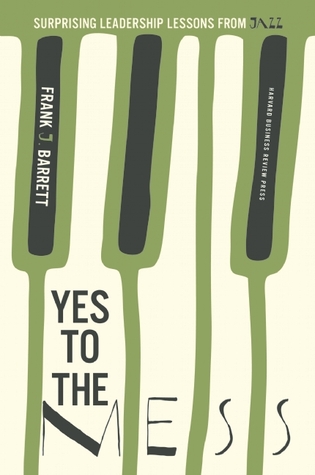
Adapted from Say Yes to the Mess, by Frank J. Barrett

Say Yes to the Mess

Until a Problem Occurs, the Guest Doesn’t Get to See You Fully Strut Your Service

Does your approach to Guest Experiences include an effective problem resolution process?

Service breakdowns and other problems experienced by Guests are crucial moments in an organization’s attempt to establish a relationship with someone. It only stands to reason, then, that solving these problems will have a potentially outsized impact on your organization’s success. That’s why you need an effective problem resolution process.

There’s no better way to illustrate this than a personal experience that just happened with my wife:

guest service bell

A Positive Disappointment

My wife travels often in her business, mostly to the same cities, staying in the same hotels, and eating in a lot of the same restaurants. This week she was out of town most of the week – including her birthday.

While I had made special birthday plans for her later (it will be very evident what those are!), I also wanted to make her birthday a little special. I had hidden cards, snacks, and magazines she likes but never gets to read in her suitcase and briefcase; she enjoyed finding them.

She stays at the same hotel for several days each month, and has for several years, always talking about how good they are when it comes to guest services. I thought I would talk to the staff there to see what kind of special birthday treat they could arrange. I was not asking for a freebie, just their help in arranging it.

Tuesday, the morning of her birthday, while she was flying to her destination, I called the hotel staff and talked to the Guest Services director. She recognized my wife as a regular guest and seemed to know who she was. We agreed on an appropriate surprise, and I was assured it would be delivered to my wife upon her arrival after a full day of meetings and site inspections. And, by the way, it was compliments of the hotel.

In the mid-afternoon, someone from the food/beverage staff called, confirming the arrangements. Everything was ready to go.

Except the birthday treat wasn’t delivered on her birthday.

Or the next day.

Or the next day.

At the end of the second day, unable to contain my curiosity, I asked her if she had received anything unusual in her room. “No,” she replied, adding, “As a matter of fact, my room had not been serviced so I called down to ask for more towels and bath supplies, and they didn’t deliver them as promised. I had to go down and ask for them in person. And they never cleaned my room while I was here.”

Strike One, Two, and Three all in one swing.

While my wife doesn’t share my Guest Experience passion with quite the same enthusiasm as I do, she is very attuned to it and decided to wait until checkout to bring the matter up.

At checkout, she brought up all the misses with the front desk: the failed birthday treat, the missing supplies, and the lack of cleaning of the room. With an apology, the front desk clerk said she would let the manager know.

On the way to the airport, my wife received a very polite and apologetic email from the General Manager of the property, with the following actions:

  • Thanks for being a regular guest
  • Acknowledging my wife’s status in their rewards program
  • Acknowledging the plans their staff had worked out with me in advance
  • Detailing, by position, where they dropped the ball on the treat
  • Acknowledging that the failure to clean was inexcusable
  • Acknowledging that having to come down in person was inexcusable
  • Apologizing for the three misses
  • Stating that she had addressed, personally, the misses with the staff and supervisors involved
  • Acknowledging how valuable my wife’s business and loyalty to their hotel was
  • Applying a generous rewards bonus to my wife’s account
  • Stating the hotel chain’s and her pride in delivering great service to guests
  • Apologizing again for the three misses
  • Requesting that my wife notify her personally the next time she is a guest so the GM can make sure the experience is 100%
  • Thanking my wife again for her business and wishing her a good weekend

I would call those actions an effective problem resolution process.

Effective, in this case, is measured by whether Guest satisfaction has been restored. In my wife’s case, it was. She’s looking forward to returning to the hotel next month.

Effective Problem Resolution can be challenging, but is well worth the effort. Hospitality studies have shown that when you resolve a service problem effectively, the Guest is more likely to become loyal than if she had never run into a problem in the first place.

Because until a problem occurs, the Guest doesn’t really get to see you fully strut your service.

(effective problem resolution process inspired by Leonardo Inghilleri and Micah Solomon’s book Exceptional Service, Execptional Profit: The Secrets of Building a Five Star Customer Organization)

The Many Roles of the Father of the Bride

The big event – our daughter’s wedding – is just a few days away. Looking back on the 10 months or so that I have been officially the Father of the Bride, I began to take stock of a few of the various roles I have filled:

Investigator

Inquisitor

Counselor

Planner

Budget Maker

Budget Keeper

Budget Adjuster

Budget Breaker

Event Coordinator

Transportation Coordinator

Venue Coordinator

Lodging Consultant

AVL Coordinator

Video Editor

Photo Researcher

Errand Boy

Yes, Dear Respondent

Graphic Designer

Personal Shopper’s Assistant

Fashion Advisor

Pyrotechnician

Food Taster

Landscape Advisor

Apartment Mover

Music Editor

Copy Boy

Housekeeper in Training

Window Washer

Pressure Washer

Interior Decorator

Fleet Maintenance

Chauffeur

Food Deliveryman

Menu Planner

Hospitality Planner


With all of the above, my two favorite roles are:

Daddy – if I didn’t have a beautiful daughter, I wouldn’t be a FOB.

Husband – to be a father takes a wife, the mother of the bride. All the roles above may have been described by me, but Anita was an active participant in all of them.


Beside every successful FOB at the end of the wedding day stands a beautiful MOB…


..both of whom are a mixture of happy, sad, and tired.


3 days to go…


The Language of Success: Creating a Culture of Happiness

Throughout my career, I had found that most people want to be involved in something greater than just being paid for a job. My basic story is about the two men laying bricks. When asked what he is doing, one man says, ‘I’m laying bricks.’ The other man performing the same task says, ‘I’m building a cathedral.’ – Van France, Disney University founder

Beginning with the original orientation at Disneyland in 1955, Van’s goal always remained the same: instill a sense of pride among cast members about where they work and the jobs they perform. Van was determined to make Disneyland a place where customers and cast members experienced second-to-none service.

photo by glassslipperconcierge.com

photo by glassslipperconcierge.com

One of his strategies involved creating a whole new language that would reinforce the dignity of every job in the park.

What’s the difference between treating someone like a customer, and treating someone like a Guest?

The obvious analogy is that we do things differently when we bring Guests into our home. We spruce up the house. We dress up. We prepare something special to eat. We host them. We take care of their real needs.

Disneyland is a huge stage, so Van leveraged this by introducing show-business term. He reasoned that a new vocabulary, coupled with strong organizational values, could bring pride and energy to the job.

  • Employees became cast members, hosts, and hostesses
  • Customers became Guests
  • Good show was a job well-done
  • Uniforms were costumes
  • On-stage are actions visible to Guests
  • Backstage are the actions taken out of sight of the Guests.

However, merely changing nouns or verbs won’t ensure world-class customer service or create a motivated and engaged workforce – in any organization. Catchy words for Guests and team members have no value without leadership support.

The values instilled by Walt Disney and perpetuated by Van France at the Disney University are reflected in the daily actions of cast members at every organizational level.

What you do here and how you act is very important to our entire organization. We have a worldwide reputation for family entertainment. Here at Disneyland, we meet our world public on a person-to-person basis for the first time. Your every action (and mine also) is a direct reflection of our entire organization. – Walt Disney

Applying Van France’s Four Circumstances to ChurchWorld Guest Experience Teams

Innovate – Support – Educate – Entertain

 Putting People First

  • What is the culture of your organization?
  • How is respect conveyed to team members?
  • Do they know they are valued?
  • How are Van’s Four Circumstances (Innovate, Support, Educate, Entertain) used to communicate your culture?

Words Reflect Culture

  • Does your organization use unique words to identify team members and Guests?
  • Does the culture of your organization support those words?
  • How are organizational values reflected in words and actions?

Inspired by and adapted from Disney U by Doug Lipp

Disney U

Get the book TODAY to learn invaluable lessons for your Guest Experience Teams

Book     Kindle

Disney U is one of the most significant resources related to the Disney organization, leadership, team development, and Guest Experiences available. In honor of the one year anniversary of the release of Disney U, this is a look back at a series from the book that originally ran last year.

Beyond Orientation: Executive Team Development – Moving from Silos to Synergy

Walt was very firm in stating that Disneyland – the dream – was the star. It was his way of controlling the people with their outsized egos who thought that they or their divisions, departments, or functions were responsible for our success – Van France

The entrepreneurial and highly innovative culture created by the Disney organization had an unintended consequence: divisional and communication silos.

People were so focused on their areas of responsibility that they didn’t consider their impact on other divisions and departments.  Executives lost sight of the big picture, and as a result, lost some opportunities for synergy.

To counter that, the Disney University team created an experience for the executives that borrowed from Van France’s timeless model for any training program:

  • Make it simple, not simplistic
  • Make it enjoyable
  • Design experiential activities that make it memorable

The result: Disney Dimensions, a training program for 25 senior leaders throughout Disney. It was designed to give them a full-immersion, 7-day experience of the California and Florida theme parks, as well as Disney Studios and Imagineering (the design geniuses behind the parks).

Essentially, the executives were exposed to every business unit in the company and had them solving each other’s problems.

Disney Dimensions captured the essence of a Van-France inspired educational event. It informed. It engaged. It was fun. It accomplished its business goals. The leadership program also enjoyed each of the Four Circumstances Van identified as crucial to the success of the Disney University:

  • Innovate – the multiday, multivenue design exposed the participants to every area of the company. Until then, most executives hadn’t ventured beyond their own area of expertise.
  • Support – Disney Dimensions received the overt, enthusiastic support of top management, who had a hand in choosing the participants and didn’t hesitate to sing its praises.
  • Educate – combining executive-level attendees from each operating division in the unique and interactive environment created a forum in which participants educated one another.
  • Entertain – every training event is an opportunity to be creative and interesting rather than the opposite: dull and academic.

The living laboratory experiential activities that led to advanced levels of cross-functional collaboration and creative problem solving are worthwhile goals for any organization.

Applying Van France’s Four Circumstances to ChurchWorld Guest Experience Teams

Innovate – Support – Educate – Entertain

 How is executive development handled in your organization?

  • What is being done to fully engage executives in organizational collaboration? Who does it and how frequently?
  • How could this strategy improve?
  • How are real-time ministry issues used in training and development programs?
  • Are there examples of ministry hits and misses that can be transformed into case studies for senior leadership team development?
  • Does the senior leadership team in our organization openly assess ministry successes and failures?
  • How can leaders in your organization lend their support to training initiatives?
  • In your organization, what needs to be done to promote and perpetuate senior leadership team development?

Inspired by and adapted from Disney U by Doug Lipp

Disney U

Get the book TODAY to learn invaluable lessons for your Guest Experience Teams

Book     Kindle

Conclude the Disney U experience on 4/24/14 with The Language of Success

Disney U is one of the most significant resources related to the Disney organization, leadership, team development, and Guest Experiences available. In honor of the one year anniversary of the release of Disney U, this is a look back at a series from the book that originally ran last year.


Easter Was Not Enough… Expectation Shapes Experience 51 Other Sundays

Some great thoughts by my friend Bryan Rose.

thebryanrose's avatarLaunch Clarity

Easter is over and most churches or campuses experienced anywhere from 20-50% more attenders, many of whom were guests.

The atmosphere of welcoming guests, helping them find their way around the campus and making them feel comfortable during services is heightened every year for this particular Sunday. Because we expect guests to show up.

This anticipation of guests every Easter causes us to see our systems and facilities with outside eyes, and respond appropriately. Just like we would at home, we straighten up “for company” and plan to make a great impression. Every Easter, we are more diligent because we know that “they” are coming. And one of two messages is communicated by our guest’s experience…

Welcome! We have been expecting you. 

or

Welcome? We are surprised that you showed up.

But what about the other 51 Sundays? Will we approach next week with the same expectation, that we did on…

View original post 208 more words

Keep Plussing the Show: No Room for Excuses

We have to keep plussing our show. If we ever lose our Guests, it will take us ten years to get them back.

Walt Disney

Sometime during the 1940s, Walt Disney coined the term “plussing.” Walt used the word as a verb – an action word. To “plus” something is to improve it. “Plussing” means giving your customers more than they paid for, more than they expect, more than you have to give them. Disney historian Les Perkins recalls an incident at Disneyland during the early years of the park. Walt had decided to hold a Christmas parade at the park – a $350,000 extravagance.

Upon hearing of the parade plans, the accountants approached Walt and said, ‘Why spend money on a Christmas parade? It won’t draw people to the park; they will already be here. It’s an expense we can do without. No one will complain if we dispense with the parade, because nobody’s expecting it.

courtesy matterhorn1959

courtesy matterhorn1959

Walt said, ‘That’s just the point. We should do the parade precisely because no one is expecting it. Our goal at Disneyland is to always give people more than they expect.’

Walt spent the last decade of his life plussing the Disneyland experience. He would continually tell cast members, “Every cast member is responsible for the impression we make,” and “take five minutes a day to make a magical memory for one of our Guests.” Disney would walk around the park with a roll of five dollar bills in his pocket to tip any cast member who worked extra-hard to plus the experience for the Guest.

During the decade after Walt Disney’s death in 1966, and as the excitement of Disneyland and Disney World began to wane with new entertainment options, Van France, founder of Disney University, was determined to reignite the can-do culture of Disney. With Walt Disney’s admonition to “keep plussing the show” in mind, France prepared a refresher course for park management entitled “Gentlemen, This is a Guest!”

Through these sessions, he identified a need to reignite the passion and can-do attitude among managers. Using nothing more than a 15-page memo and a series of short, open forum-style meetings with park management, Van helped a discouraged team reconnect with its roots by emphasizing Disney’s bottom line: a happy Guest. He reminded the managers of their roles by encouraging them to do the following:

  • Think teamwork – thinking “we” is much more powerful than thinking “they,” “them,” etc. Blaming is a bottomless pit.
  • Think audience and Guest – Guests are the audience, paying money to be entertained and find happiness. Guests aren’t “units” or “per capita”; they are human beings.
  • Think happiness for others – Guests come to Disney parks seeking happiness; it is their brief escape from daily frustrations. Walt Disney’s dream of separating the frustrating outside world from the Disney world ensures Guest Happiness. Maintaining an environment of fantasy is the cast member’s job.
  • Practice being friendly – smile and be friendly with each other. Say good morning to other cast members backstage will transfer to friendliness on-stage.
  • Think quality and pride – both are essential in Guest courtesy and showmanship, throughout our backstage activities as well as those on-stage.

Plussing the show is as much about attitude as it is about budget.

France was ardent in challenging excuses for not conducting training for all cast members. He believed that training didn’t have to be a big-budget extravaganza or be limited to activities in a training room. Some of the best training in the world occurs during on-the-job-training sessions conducted by mentors, not trainers. Mentoring, OJT, and role modeling were much more useful and significantly less expensive than classroom training. Jim Cora, retired chairman of Disney International, sums up the training rationale he successfully used during his 43-year career at Disney:

Marketing is the time and money you spend to get people in the door. Training is the investment you make to get Guests to come back and cast members to stay; it creates loyalty.

Plussing the show calls for a keen eye, the ability to focus on the root issues, and a refusal to accept mediocrity. No matter what business you are in, your success depends on your commitment to excellence and attention to detail. If you deliver more than people expect, you will turn Guests into fans. If you go out of your way to make people feel special, they will go out of their way to buy your product or service.

Applying Van France’s Four Circumstances to ChurchWorld Guest Experience Teams

Innovate – Support – Educate – Entertain

Plussing the Show How is plussing the show handled in your organization? How are Van’s Four Circumstances used to differentiate your organization from the “competition” through improved Guest experiences and leadership effectiveness? How are you addressing each of the following five challenges?

  • Doing more with less
  • Keeping team members engaged and motivated
  • Reducing team member turnover
  • Improving Guest experiences
  • Differentiating from the competition

How creative is your organization in taking training out of the classroom? How can you reignite the flagging spirits of your team? Can you create a similarly effective low-budget program that helps plus your Guest Experience?   Disney U

Inspired by and adapted from Disney U by Doug Lipp

Get the book TODAY to learn invaluable lessons for your Guest Experience Teams

 Book     Kindle

Continue the Disney U experience on 4/22/14 with Beyond Orientation


Disney U is one of the most significant resources related to the Disney organization, leadership, team development, and Guest Experiences available. In honor of the one year anniversary of the release of Disney U, this is a look back at a series from the book that originally ran last year.