How to Leverage “Pre-suasion” to Gain Attention

Do you think people care about what you have to say? The truth is that the average person doesn’t know you. It’s not that you’re not likable or smart; it’s just a matter of survival for people in today’s world. There is simply too much out there and not enough time to take it all in.

These words by communications expert Kem Meyer succinctly point out the dilemma for communicators today: for many people, the last thing they are looking for is unsolicited information, or someone to tell them to change their ways.

And yet many, if not most, of the sermons preached by pastors attempt to do just that.

However, many people will take the time to read or listen to something that reinforces an opinion they already have or speaks to a real need in their lives. If they are not looking for it, they won’t hear it. But, if you take the time to learn what they’re looking for, you can get in on a conversation already in progress in their minds.

How then, can a leader understand their audience in such a way to make their message more receptive? How can you connect, communicate, and influence your audience toward life-long transformation?

THE QUICK SUMMARY – Pre-Suasion: A Revolutionary Way to Influence and Persuade by Robert Cialdini

The acclaimed New York Times and Wall Street Journal bestseller from Robert Cialdini – “the foremost expert on effective persuasion” (Harvard Business Review) – explains how it’s not necessarily the message itself that changes minds, but the key moment before you deliver that message.

What separates effective communicators from truly successful persuaders? With the same rigorous scientific research and accessibility that made his Influence an iconic bestseller, Robert Cialdini explains how to prepare people to be receptive to a message before they experience it. Optimal persuasion is achieved only through optimal pre-suasion. In other words, to change “minds” a pre-suader must also change “states of mind.”

Named a “Best Business Books of 2016” by the Financial Times, and “compelling” by The Wall Street Journal, Cialdini’s Pre-Suasion draws on his extensive experience as the most cited social psychologist of our time and explains the techniques a person should implement to become a master persuader. Altering a listener’s attitudes, beliefs, or experiences isn’t necessary, says Cialdini—all that’s required is for a communicator to redirect the audience’s focus of attention before a relevant action.

From studies on advertising imagery to treating opiate addiction, from the annual letters of Berkshire Hathaway to the annals of history, Cialdini outlines the specific techniques you can use on online marketing campaigns and even effective wartime propaganda. He illustrates how the artful diversion of attention leads to successful pre-suasion and gets your targeted audience primed and ready to say, “Yes.” His book is “an essential tool for anyone serious about science based business strategies…and is destined to be an instant classic.

A SIMPLE SOLUTION

Even the most well-planned communication opportunity often achieves lackluster results without the audience listening (and hopefully acting on your suggestions).

But what if the audience can be warmed up to your message before they even see it?

The best persuaders become the best through pre-suasion – the process of arranging for recipients to be receptive to a message before they encounter it.

Pre-suasion, a word coined by Robert Cialdini, is the process of gaining agreement with a message before it’s been sent. Although that may seem like some form of magic, it’s not. It’s established science.

That key moment is the one that allows a communicator to create a state of mind in recipients that is consistent with the forthcoming message. It’s the moment in which we can arrange for others to be attuned to our message before they encounter it. That step is crucial for maximizing desired change.

The answer involves an essential but poorly appreciated tenant of all communication: what we present first changes the way people experience what we present to them next.

The truly influential things we say and do first act to pre-suade our audiences, which then alters audience members’ associations with what we say or do next.

All told, there are any of a number of first steps besides establishing trust persuaders can take that will make audiences more redemptive to the case they intend to present.

The steps can take multiple forms, and, accordingly, they’ve been given multiple labels by behavioral scientists. They can be called frames or anchors or primes or mindsets or first impressions. I’m going to refer to them as openers – because they open up things for influence in two ways.

First, they simply initiate the process: they provide the starting points, the beginnings of persuasive appeals. But it is in their second function that they clear the way to persuasion, by removing existing barriers.

It’s because of the only-temporary receptiveness that pre-suasive actions often produce in others that I’ve introduced the concept of privileged moments.

The meaning of the word privileged is straightforward referring to special, elevated status. The word moment, though, is more complex, as it evokes a pair of meanings. One connotes a time-limited period: in this case, the window of opportunity following a pre-suasive opener, when a proposal’s power is greatest. The other connotation comes from physics and refers to a unique leveraging force that can bring about unprecedented movement. These yoke dimensions, temporal on the one hand and physical on the other, have the capacity to instigate extraordinary change in a yet third, psychological, dimension.

Robert Cialdini, Pre-Suasion: A Revolutionary Way to Influence and Persuade

A NEXT STEP

Author Robert Cialdini believes that altering a listener’s attitudes, beliefs, or experiences isn’t necessary. All that’s required is to alter the audience’s focus of attention just before requesting a relevant action.

The factor most likely to determine a person’s choice in a situation is often not the one that offers the most accurate or useful counsel; instead, it is the one that has been elevated in attention (and thereby in privilege) at the moment of decision.

“Privileged moments” are identifiable points in time when an individual is particularly receptive to a communicator’s message.

The artful channeling of attention leads to potent pre-suasion and positive outcomes.

In his earlier work, Influence, Cialdini argued that there are six concepts that empower the major principles of human social influence. Understanding and practicing these concepts will help you “pre-suade” your audience.

Reciprocation – People say yes to those they owe. Those “freebies” given away in stores? Studies show they can increase the likelihood of purchase by over 40%. Requesters who hope to commission the pre-suasive force of the rule for reciprocation have to do something that appears daring: they have to take a chance and give first. The “gift” should be meaningful, unexpected, and customized.

Liking – It may seem so common sense, but it is true: people say yes to those who they like. Two specific ways to create positive attention get the most attention: highlight similarities and provide compliments.

Social Proof – People think it is appropriate for them to believe, feel, or do something to the extent that others, especially comparable others, are believing, feeling, or doing it. Two components of that perceived appropriateness – validity and feasibility – can drive change.

Authority – When a legitimate expert on a topic speaks, people are usually persuaded. Sometimes, information becomes persuasive only because an authority is its source. This is especially true when the recipient is uncertain of what to do.

Scarcity – We want more of what we can have less of. Our aversion to losing something of value is a key factor. Scarcity also raises the judged value of that item.

Consistency – Communicators who can get listeners to take a pre-suasive step, even a small one, in the direction of a particular idea or entity will increase our willingness to take a much larger, congruent step when asked.

Review each of the above concepts, along with their brief description, and commit to applying one or more of these concepts over the next two months. Examples could include: social media posts, sermons, vision casting moments, or staff meetings. At the end of two months, review the use of each to determine how effective it was in helping your audiences take a next step in their walk with Christ.


Part of a weekly series on 27gen, entitled Wednesday Weekly Reader

Regular daily reading of books is an important part of my life. It even extends to my vocation, where as Vision Room Curator for Auxano I am responsible for publishing SUMS Remix, a biweekly book “excerpt” for church leaders. Each Wednesday on 27gen I will be taking a look back at previous issues of SUMS Remix and publishing an excerpt.

>>Purchase SUMS Remix here<<

Launch Change by Replacing Complacency with Urgency

It has become almost a cliché that the only constant today is change.

What moves it from a cliché to a truism is that the Greek philosopher Heraclitus said the same thing – 2,500 years ago.

In spite of that historical background, we all feel that change is different today: it is without end, and increasingly complex. We talk not of a single change, but of change as an ongoing phenomenon. It’s a collage, not a single simple image; one change overlaps with another, and it’s all change as far as the eye can see.

To some degree, the downside of change is inevitable. Whenever human communities are forced to adjust to shifting conditions, pain is ever present. But a significant amount of the waste and anguish we’ve witnessed in change management is avoidable.

The typical church has not operated well in a rapidly changing environment. Structure, systems, and culture have often been a drag on change rather than a facilitator.

The failure to sustain significant change recurs again and again despite substantial resources committed to the change effort, talented and committed people “driving the change,” and high stakes. In fact, leaders feeling an urgent need for change end up right: organizations that fail to sustain significant change end up facing crises.

This isn’t the sort of challenge you take on because it sounds good.

Adapting to and mastering change is not a choice. A significant part of a leader’s responsibility deals with being a change agent in the organization’s culture. In a time when changes come so fast and from so many unexpected angles, change is no longer a luxury but an imperative.

Even though change is a must for your organization, the “how-to’s” can often prove a problem. Many people lunge into change with no idea of its rules, its guiding principles, its nuances – and its dangers. Quite often disaster is the result. The only thing worse than ignoring change is leaping into it willy-nilly.

THE QUICK SUMMARY – A Sense of Urgency, by John Kotter

Most organizational change initiatives fail spectacularly (at worst) or deliver lukewarm results (at best). In his international bestseller Leading Change, John Kotter revealed why change is so hard, and provided an actionable, eight-step process for implementing successful transformations. The book became the change bible for managers worldwide.

Now, in A Sense of Urgency, Kotter shines the spotlight on the crucial first step in his framework: creating a sense of urgency by getting people to actually see and feel the need for change.

Why focus on urgency? Without it, any change effort is doomed. Kotter reveals the insidious nature of complacency in all its forms and guises.

In this exciting book, Kotter explains:

· How to go beyond “the business case” for change to overcome the fear and anger that can suppress urgency

· Ways to ensure that your actions and behaviors — not just your words — communicate the need for change

· How to keep fanning the flames of urgency even after your transformation effort has scored some early successes

Written in Kotter’s signature no-nonsense style, this concise and authoritative guide helps you set the stage for leading a successful transformation in your company.

A SIMPLE SOLUTION

You know your organization needs to change.

You may even know what the change needs to be: a new strategy, new personnel, new technology, or a significant change in direction.

But somehow, change comes too slowly, or it feels like you are pushing a boulder uphill, or that the implementation of that great new idea has stalled – again.

What’s missing, and is needed in almost all organizations today, is a real sense of urgency – a distinctive attitude and gut-level feeling that leads people to grab opportunities and avoid hazards, to make something important happen today, and constantly shed low-priority activities to move faster and smarter, now.

The real solution to the complacency problem is a true sense of urgency. Real urgency is an essential asset that must be created and re-created.

This set of thoughts, feelings, and actions is never associated with an endless list of exhausting activities. It has nothing to do with anxious running from meeting to meeting. It’s not supported by an adrenalin rush that cannot be sustained over time.

True urgency focuses on critical issues, not agendas overstuffed with the important and the trivial. True urgency is driven by a deep determination to win, not anxiety about losing. With an attitude of true urgency, you try to accomplish something important each day, never leaving yourself with a heart-attack-producing task of running one thousand miles in the last week of the race.

Increasing a True Sense of Urgency

Strategy

Create action that is exceptionally alert, externally oriented, relentlessly aimed at winning, making some progress each and every day, and constantly purging low value-added activities – all by always focusing on the heart and not just the mind.

Tactics

  • Bring the Outside In
    • Reconnect internal reality with external opportunities and hazards
    • Bring in emotionally compelling data, people, video, sites, and sounds
  • Behave with Urgency Every Day
    • Never act content, anxious, or angry
    • Demonstrate your own sense of urgency always in meetings, one-on-one interactions, memos, and email and do so as visibly as possible to as many people as possible.
  • Find Opportunity in Crises
    • Always be alert to see if crises can be a friend, not just a dreadful enemy, in order to destroy complacency.
    • Proceed with caution, and never be naïve, since crises can be deadly.
  • Deal with the NoNos
    • Remove or neutralize all the relentless urgency-killers, people who are not skeptics but are determined to keep a group complacent or, if needed, to create destructive urgency.

John Kotter, A Sense of Urgency

A NEXT STEP

Author Jon Kotter has developed a set of useful questions to consider when facing complacency and false urgency.

Discuss the following questions with your team, and identify – and eliminate – sources of complacency and false urgency.

  • Are critical issues delegated to consultants or task forces with little involvement of key people?
  • Do people have trouble scheduling meetings on important initiatives?
  • Is candor lacking in confronting the bureaucracy and politics that are slowing down important initiatives?
  • Do meetings on key issues end with no decisions about what must happen immediately (except the scheduling of another meeting)?
  • Do people run from meeting to meeting, exhausting themselves and rarely if ever focusing on the most critical hazards or opportunities?
  • Do people regularly blame others for any significant problems instead of taking responsibility and changing?
  • Are failures in the past discussed not to learn but to stop or stall new initiatives?

Excerpt taken from SUMS Remix 102-1, issued September 2018.


Part of a weekly series on 27gen, entitled Wednesday Weekly Reader

Regular daily reading of books is an important part of my life. It even extends to my vocation, where as Vision Room Curator for Auxano I am responsible for publishing SUMS Remix, a biweekly book “excerpt” for church leaders. Each Wednesday on 27gen I will be taking a look back at previous issues of SUMS Remix and publishing an excerpt.

>>Purchase SUMS Remix here<<

Uncover the Only You

We live in a world where every artificial thing is designed. Whether it is the car we ride in, the streets we drive on, the lights that illuminate the road, or the building that is our destination, some person or group of people had to decide on the layout, operation, and mechanisms of the journey described above.

Your life has a design, too.

Design doesn’t just work for cars and roads and streetlights and buildings, and all the hundreds of thousands of components that make those things up. You can use design thinking to discover the life God has uniquely created for you. It is a life that is meaningful, joyful, and fulfilling.

Several years ago, Auxano founder Will Mancini launched Life Younique, a training company that certifies church leaders to offer gospel-centered life design through their church. Will, along with co-founder Dave Rhodes, is passionate about helping people get life mission right – what exactly is the best way to know and name what God has created you to do?

THE QUICK SUMMARY – The Rhythm of Life by Matthew Kelly

In The Rhythm of Life Matthew Kelly exposes the lifestyle challenges and problems that face us in this age obsessed with noise, speed, and perpetual activity. Kelly’s message rings out with a truth that is challenging and unmistakably attractive Who you become is infinitely more important than what you do, or what you have. Are you ready to meet the best version of yourself?

The Rhythm of Life is a brilliant and clear-eyed rejection of the chaotic lifestyle that has captured the world, written with common sense, humor, and extraordinary insight. This book is destined to change lives.

A SIMPLE SOLUTION

What is the brief and bold big idea that best captures today what God made you to do?

Think of it as a golden compass pointing the way or a silver golden thread that weaves through every activity of your life. It’s the enduring rally cry of team-you; it’s the victory banner waving over everything you do.

Ideally, every priority, project, and penny is filtered through, guided by and championed through this concept. Imagine every person in your sphere of influence being blessed better, served stronger, and loved longer because you form a unique life mission every day.

Translate a wide variety of life-awareness and self-awareness into a meaningful, practical, and simple understanding of what God has made only you to do.

Who you become is infinitely more important than what you do or what you have. The meaning and purpose of life is for you to become the best version of yourself.

In the diagram below, Point A represents you right now – here and today – with all your strengths and weaknesses, faults, failings, flaws, defects, talents, abilities, and potential.

Point B represents you as the person you were created to be – perfectly. If you close your eyes for a few moments and imagine the better person you know you can be in any areas of your life, and then multiply that vision to include the better person you know you can be in every area of your life, that is the person you have become when you reach point B – the best version of yourself.

At every point along the path closer to point B, we more fully recognize, appreciate, and use our talents and abilities and are more dedicated to our development – physically, emotionally, intellectually, and spiritually.

At each point along the path toward point B, there is a more harmonious relationship among our needs, desires, and talents. Through this process of transformation, we begin to reach our once hidden potential. At point B, through the dual process of self-discovery and discovery of God, we have overcome our fears and transformed our faults and failings into virtues.

Matthew Kelly, The Rhythm of Life

A NEXT STEP

Duplicate the drawing above on a chart tablet. Add the four words “Physically, Emotionally, Intellectually, and Spiritually” above the line between Point A and Point B.

Below the line, and under each of the words, write in actions that will help you move towards Point B. These are the best things you can do for your spouse, your children, your friends, your colleagues, your employees, your employer, your church, your nation, the human family, and yourself.

The best thing you can do is to become the-best-version-of-yourself, because it is doing with a purpose.

Excerpt taken from SUMS Remix 101-1, released September 2018.


Part of a weekly series on 27gen, entitled Wednesday Weekly Reader

Regular daily reading of books is an important part of my life. It even extends to my vocation, where as Vision Room Curator for Auxano I am responsible for publishing SUMS Remix, a biweekly book “excerpt” for church leaders. Each Wednesday on 27gen I will be taking a look back at previous issues of SUMS Remix and publishing an excerpt.
>>Purchase SUMS Remix here<<

Creative Leaders Explore Three Areas of Prototyping

Despite all our planning and analyzing and controlling, the typical church’s track record at translating its rhetoric into results is not impressive.

In the business world, researchers estimate that only somewhere between 10% and 60% of the promised returns for new strategies are actually delivered. The reality for many churches would be between 10% and 30% – tops. Practices that consume enormous amounts of time and attention mostly produce discouraging results.

All the empty talk is making it harder and harder to get anything to actually happen. Churches expect the staff to be member-focused while the majority watches. When a staff or volunteer actually takes a risk, they are punished if it doesn’t succeed. Ambitious growth goals aren’t worth the spreadsheets they are computed on.

Getting new results requires new tools – and design thinking has real tools to help move from talk to action.

Design thinking is actually a systematic approach to problem solving.

Design thinking is fundamentally an exploratory process; done right, it will invariably make unexpected discoveries along the way.

THE QUICK SUMMARY – Change by Design by Tim Brown

The myth of innovation is that brilliant ideas leap fully formed from the minds of geniuses. The reality is that most innovations come from a process of rigorous examination through which great ideas are identified and developed before being realized as new offerings and capabilities.

This book introduces the idea of design thinking‚ the collaborative process by which the designer′s sensibilities and methods are employed to match people′s needs not only with what is technically feasible and a viable business strategy. In short‚ design thinking converts need into demand. It′s a human−centered approach to problem solving that helps people and organizations become more innovative and more creative.

Design thinking is not just applicable to so−called creative industries or people who work in the design field. It′s a methodology that has been used by organizations such as Kaiser Permanente to increase the quality of patient care by re−examining the ways that their nurses manage shift change‚ or Kraft to rethink supply chain management. This is not a book by designers for designers; this is a book for creative leaders seeking to infuse design thinking into every level of an organization‚ product‚ or service to drive new alternatives for business and society.

A SIMPLE SOLUTION

Iterate – Leaders who thought like designers would see themselves as learners.

Leaders often default to a straightforward linear problem-solving methodology: define a problem, identify various solutions, analyze each, and choose one – the right one. Designers aren’t nearly so impatient, or optimistic. They understand that the successful invention takes experimentation and that empathy is hard won. So is the task of learning.

For example, the IKEA way of business we know (and love!) today didn’t originally start out that way. Almost every element of IKEA’s legendary business model – showrooms and catalogs in tandem, knockdown furniture in flat parcels, and customer pick-up and assembly – emerged over time from experimental response to urgent problems.

“Regard every problem as a possibility,” was IKEA founder Ingvar Kamprad’s mantra. He focused less on control and “getting it right” the first time and more on learning and on seeing and responding to opportunities as they emerged.

Prototyping at work is giving form to an idea, allowing us to learn from it, evaluate it against others, and improve upon it.

Anything tangible that lets us explore an idea, evaluate it, and push it forward is a prototype.

Techniques borrowed from film and other creative industries suggest how we might prototype nonphysical experiences. These include scenarios, a form of storytelling in which some potential future situation or state is described using words and pictures.

Prototypes should command only as much time, effort, and investment as is necessary to generate useful feedback and drive an idea forward.

Prototyping is always inspirational – not in the sense of a perfected project but just the opposite: because it inspires new ideas. Once tangible expressions begin to emerge, it becomes easy to try them out and elicit feedback internally from management and externally from potential customers.

In the ideation space we build prototypes to develop our ideas to ensure that they incorporate the functional and emotional elements necessary to meet the demands of the market.

In the third space of innovation we are concerned with implementation: communicating an idea with sufficient clarity to gain acceptance across the organization, proving it, and showing that it will work in its intended market.

There are many approaches to prototyping, but they share a single, paradoxical feature: They slow us down to speed us up. By taking the time to prototype our ideas, we avoid costly mistakes such as becoming too complex too early and sticking with a weak idea too long.

Tim Brown, Change by Design

A NEXT STEP

Quick prototyping is about acting before you’ve got all the answers, about taking chances, stumbling a little, but then making it right.

Prototyping is a state of mind.

A prototype is a simple experimental model of a proposed solution used to test or validate ideas, design assumptions, and other aspects of its conceptualization quickly and cheaply, so that the leaders involved can make appropriate refinements or possible changes in direction.

Long used in the design of “things,” prototyping is increasingly used to work on designing experiences or other non-material objects.

To explore a current situation at your church that can be improved, work through the following prototyping exercise:

Select a situation consisting of multiple elements and nuances that a guest encounters at your church. For example, a guest family with a preschool child visiting for the first time.

Prepare any accessories (props) needed to recreate the scene where the action takes place. Use cardboard, tape, or any cheap material at hand to create the “sense” of the action a guest is going through.

Make a list of the roles people are involved in and define the sequence and time required to enact them.

Replay the situation three – four times. Each time, try to understand the emotional layers of the situation. Then add elements you forgot at the beginning.

Video record the re-enactment, playing different roles each time. Assign one team member to observe and take notes.

After the exercise, watch the video and listen to the observer’s notes. What parts of the process can be changed to make the experience more enjoyable to the guest? What types of training are needed for your volunteers to make that happen? Are there any physical or space layouts that can be improved?

Leaders who practice design thinking are energized by the ambiguity and uncertainty that comes with constant change. These leaders don’t accept the hand-me-down notion that cost cutting and innovation are mutually exclusive, or that short-term and long-term goals are irreconcilable. They reject the tyranny of “or” in favor of the genius of “and.”

Excerpt taken from SUMS Remix 98-3, released August 2018


Part of a weekly series on 27gen, entitled Wednesday Weekly Reader

Regular daily reading of books is an important part of my life. It even extends to my vocation, where as Vision Room Curator for Auxano I am responsible for publishing SUMS Remix, a biweekly book “excerpt” for church leaders. Each Wednesday on 27gen I will be taking a look back at previous issues of SUMS Remix and publishing an excerpt.

>>Purchase SUMS Remix here<<

Dreamers Live Beyond Themselves in Order to Make Dreams Come True

Even for those of you that don’t follow the Walt Disney Company regularly, the news coming out of Anaheim, CA from the biannual gathering of Disney fans called D23 has been nonstop since last Friday. Even though the event ended Sunday night, recaps, opinions, and second-guessing continues today – and probably will throughout this week and beyond.

With intellectual properties like Disney Studios, theme parks and resorts, and the studios of Pixar, Star Wars, Marvel, and now most of Fox, the entertainment giant is continuing to grow beyond expectations.

D23 was three days of seemingly nonstop announcements about the upcoming movies from all the studios mentioned above, new attractions at theme parks world-wide, new partnerships, and the unveiling of Disney+, the streaming service that will launch November 12. Artists, actors, and people normally behind-the-scenes were onstage everywhere at the Anaheim Convention Center, each presentation seeming to outshine the previous one.

I’m not even going to attempt to unpack everything that happened at D23 – there are much better sources for that.

Instead, I want to leave you with a couple of images – courtesy of Disney – and a quote by Walt Disney:

If you don’t know what these represent:

  • The top image is a representation of four “neighborhoods” coming to Epcot – a transformation of the park in every sense of the word.
  • The image on the lower right is a new statue of Walt Disney what will occupy “Dreamer’s Point,” a transition from Spaceship earth to the rest of the reimagined Epcot.
  • The quote in the lower left is from Walt Disney, part of a longer statement about Epcot he made in October 1966 – only two months before his death.

Think about that.

While Walt Disney was totally immersed in the building of Disneyland in California, and led in the acquisition of the thousands of acres that would become Walt Disney World in Florida, he never saw the first shovel of dirt turned, much less the completion of any part of Walt Disney World.

The EPCOT he dreamed of was not the Epcot Center that opened in 1982; all of the work done in major upgrades since then – and including this projected “transformation” – are not going to make that happen.

But the dream did not die with the dreamer.

His vision of ‘a new Disney world’ outside of Orlando, Florida, especially his concept of Epcot, was so strongly a personal, life-summing statement that many believed the dream might die with Walt. Not so. For in addition to the fantasy empire Walt had created, he had also built a unique organization.

– Richard Beard, Walt Disney’s EPCOT

Led by Walt’s older brother Roy, who postponed his retirement, the talents of the entire Disney organization went ahead with the Florida project.

Because that’s what dreamers do…

…they dream, and make sure there is a team who understands and lives the dream, and will keep it going.

So that’s what Epcot is: an experimental prototype community that will always be in a state of becoming. It will never cease to be a living blueprint of the future…

– Walt Disney


Will your dream live beyond you?


The Class of 2023 is Headed to a College Campus Near You

The Mindset List® has delighted millions for over a decade about what has “always” or “never” been true for entering college students. It was created at Beloit College in 1998 to reflect the world view of entering first year students, and started with the members of the class of 2002, born in 1980.

What started as a witty way of saying to faculty colleagues “watch your references,” has turned into a globally reported and utilized guide to the intelligent if unprepared adolescent consciousness. It is requested by thousands of readers, reprinted in hundreds of print and electronic publications, and used for a wide variety of purposes. It immediately caught the imagination of the public, and in the ensuing years, has drawn responses from around the world. This site now gets more than a million hits a year.

The Mindset List®, an annual compilation of what has always and never been true for new college freshmen, has changed hands from founder Beloit College to Marist College.

Recently, the Mindset List of the Class of 2023 was released.

This fall’s college class of 2023, now arriving on campuses, learned of the attack on New York’s Twin Towers from parents and grandparents once they were old enough to handle it. Born in 2001, they have lived in a world in which shedding shoes at airport security; capturing news from crawling headlines on the TV screen; flying Jet Blue; and recognizing that blackboards, pens, and watches are sometimes smarter than we are have all been routine occurrences.

The creation of Beloit’s former Public Affairs Director Ron Nief and Emeritus Professor of English Tom McBride, authors of The Mindset Lists of American History: From Typewriters to Text Messages, What Ten Generations of Americans Think Is Normal, it was originally created as a reminder to faculty to be aware of dated references. It quickly became an internationally monitored catalog of the changing worldview of each new college generation.

Nief and co-editor Tom McBride, and list co-author Beloit Professor of Sociology Charles Westerberg have been working with Marist during the transition. “This annual list is a cultural touchstone,” noted Marist’s Executive Vice President Geoffrey Brackett. “Every year Ron, Tom, and Charles have done the remarkable work of encapsulating a changing world into a cohesive list. The list has served as a reminder to the wider community of colleges and universities of the importance of understanding the constantly altering landscape outside of higher education. Marist hopes to continue that service by taking on The Mindset List and strategically expanding its capabilities and reach.”

Leaders – of all ages – need to understand what has shaped the lives of today’s entering college freshman class, those 18 year olds characterized by the following:

  • Like Pearl Harbor for their grandparents, and the Kennedy assassination for their parents, 9/11 is an historical event.
  • The primary use of a phone has always been to take pictures.
  • YouTube has become the video version of Wikipedia.

According to Westerberg,

With half of this generation composed of people of color, they are among the most demographically significant cohorts in American history. American politics today is hard to comprehend without taking account of this major trend since, within a year, their generation will represent 25% of the U.S. population.

Here’s a few more characteristics to whet your appetite:

  • They have grown up with Big Data and ubiquitous algorithms that know what they want before they do.
  • Apple iPods have always been nostalgic.
  • Most of them will rent, not buy, their textbooks.
  • The Tech Big Four – Apple, Facebook, Amazon, and Google – are to them what the Big Three automakers were to their grandparents.

You can read the whole list here.

“The Mindset List helps put into context the growing interest high school and college students have in social issues,” noted Martin Shaffer, Dean of Marist’s School of Liberal Arts. “We’re seeing a more engaged, more deeply involved student body on campus.”

Even if you’re not a college professor, you need to read the whole list here.

With contributions from parents and academics around the world, the List has tracked cultural change, stimulated intergenerational conversation, and just made older people feel even older.

– Tom McBride and Charles Westerberg

Indeed.

How to Develop Processes that Help Create Clarity

We all have days during which we feel as though we are running at full speed from the moment the alarm goes off in the morning till the time we stumble into bed late that night. These are the days of deadlines to meet, tasks to accomplish, meetings to lead, and … the list goes on and on.

Do we ever stop to think that our busyness might actually be dangerous?

Busyness can be dangerous, because it causes us to focus on pressing problems rather than on priorities. When that happens, we can miss strategic, once-in-a-lifetime opportunities – like developing the leaders on our teams toward their highest potential.

THE QUICK SUMMARY – Clarity First by Karen Martin

Award-winning business performance improvement and Lean management expert Karen Martin diagnoses a ubiquitous business management and leadership problem―the lack of clarity―and outlines specific actions to dramatically improve organizational performance.

Through her global consulting projects, keynote speeches, and work with thousands of leaders, Karen has seen first-hand how a pervasive lack of clarity strangles business performance and erodes employee engagement. Ambiguity is the corporate default state, a condition so prevalent that “tolerance for ambiguity” has become a clichéd job requirement.

It doesn’t have to be this way.

In Clarity First, Karen provides methods and insights for achieving clarity to unleash potential, innovate at higher levels, and solve the problems that matter to deliver outstanding business results. Both a visionary road map and practical guide, this book will help leaders:

  • Identify and communicate the organization’s true purpose
  • Set achievable priorities
  • Deliver greater customer value through more efficient processes
  • Build organization-wide problem solving capabilities
  • Develop personal clarity to become a more direct, purposeful, and successful leader

Eliminating ambiguity is the first step for leaders and organizations to achieve strategic goals. Learn how to gain the clarity needed to make better decisions, lead more effectively, and boost organizational performance.

When it comes to leading an outstanding organization, every great leader needs Clarity First.

A SIMPLE SOLUTION

Processes, in their broadest meaning, are a series of actions, changes, or functions that are strung together to produce a result.

They combine human and physical resources in various ways to produce different outcomes. A car is produced using a process that combines parts and labor in specific sequences on an assembly line. An appendectomy is performed using a process that combines medical staff and an operating room in a sequence of actions. All organizations can be thought of as a collection of processes. A process delivers a result. That is, it delivers an output, such as a product or service.

Think of process as a railroad engine. If the engine does not run properly, it does not matter how friendly the conductor acts or how attractive the passenger cars look, the train will still not move and the passengers will not pay their fares.

Process is the engine of clarity.

Everything a business does – in fact, everything in life – occurs as a result of processes. Yet few leaders overtly advocate for process to the extent needed for clarity.

I would argue that one of the most high-impact activities for a leader is to understand and improve the processes under his control.

The degree of detail that an individual needs about the processes that make work happen throughout the organization differs depending on the level at which he or she operates.

Clarity by itself does not make outstanding processes, but no process can reach outstanding levels without absolute clarity in its design, execution, and management.

Well-managed processes are:

Documented. Not only are the process steps captured, but so are the descriptions of how the work should be performed within each step.

Current. The documentation reflects the way the work should be performed today, not how it was performed last month.

Followed. Team members have been trained in the process, and adhere to it until the process is improved.

Consistently monitored. Process performance is measured against relevant key performance indicators.

Regularly improved. Processes that consistently meet KPI targets are analyzed to identify performance gaps with the goal of setting new, more aggressive targets, and identify process changes necessary to meet them.

Karen Martin, Clarity First

A NEXT STEP

Begin your journey toward greater process clarity in one area of your organization. Work on the processes in that area to learn about and improve your training methods for designing, documenting, training, measuring, and improving them.

Use the following six steps to guide your development of processes:

  • Identify and select the problem to be worked on
  • Analyze the problem
  • Generate potential solutions
  • Select and plan the best solution
  • Implement the solution
  • Evaluate the solution

Once you have identified a solution and find that it works, continue to use it, evaluating it periodically as needed, replacing it completely when it no longer works.

Pay close attention to the results you reap from greater clarity.

Excerpt taken from SUMS Remix 96-2, released July 2018.


Part of a weekly series on 27gen, entitled Wednesday Weekly Reader

Regular daily reading of books is an important part of my life. It even extends to my vocation, where as Vision Room Curator for Auxano I am responsible for publishing SUMS Remix, a biweekly book “excerpt” for church leaders. Each Wednesday on 27gen I will be taking a look back at previous issues of SUMS Remix and publishing an excerpt.

>>Purchase SUMS Remix here<<

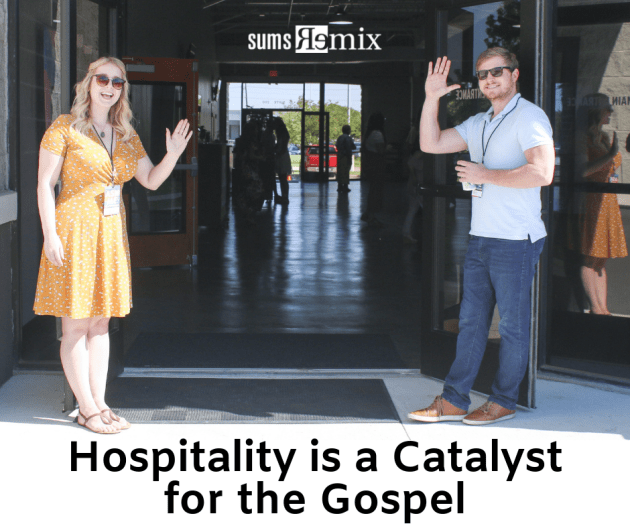
Hospitality is a Catalyst for the Gospel

It’s fairly easy for volunteers on your team to state what they do. It’s also pretty easy for most volunteers to talk about how they do what they do. However, few volunteers can actually articulate WHY they do what they do.

The reason? Stating WHY goes to values, and values are often talked about but more often misunderstood.

A church without values is like a river without banks – just a large puddle.

Values are the shared convictions that guide the actions and reveal the strength of the church. They are the values that represent the conscious and collective soul of your church because they express your most deeply held ideals. They define your ministry’s ethos.

Values are filters for decision-making and springboards for daily action. They are the constant reminder of what is most important to your church.

As with any organization, your church has a set of shared values underneath the surface of everyday activity. The problem is that they stay weak because they are unidentified and unharnessed in guiding the future.

The role of the leader is to identify the most important values and pull them above the waterline of people’s perception. Once they are in clear view, the leader can nurture their development, enabling the church to do more of what it does best.

What is true of your church as a whole is also true of individual ministries in your church.

THE QUICK SUMMARYPeople Are The Mission by Danny Franks

Danny Franks, Guest Services Pastor at Summit Church, shows church leaders how to take a more balanced approach to the design and implementation of a guest services ministry. He introduces a new model for welcoming people to your church that is both guest-friendly and gospel-centric.

Your church’s preaching and worship styles may draw a crowd, but to keep a crowd, people must sense that you love them, that you expected them, and that you can’t wait for them to return. Finally, here is a book that tells you how to make that happen.

A SIMPLE SOLUTION

It’s easy to give a volunteer a job description and then point them in the right direction. Anyone can assign a task. And for the most part, just about anyone can execute most tasks.

However, a good leader does not just assign a task. A good leader starts with creating a compelling vision for the task. A great leader continually casts this compelling vision so there is no doubt why a ministry exists.

The main thing of the church – our why for existing – should be defined by God’s Word. And the primary message of Scripture is Jesus and that Jesus changes everything.

The good news that Jesus brought – real forgiveness of our sins and reconciliation with our Creator – does indeed change everything. It changes the way we live, work, and play. And it changes the way we structure our worship services and our annual budgets. When the gospel is the main thing, it will change everything. It will renovate our curriculum and reengineer our business meetings.

So rather than adapt to a formula, cut and paste a few principles, or tackle a list of action steps, take just one action step: imitate Jesus. Let’s remember that the one who sought us is still seeking others. Let’s keep in mind that the one who sought us is still seeking others. Let’s keep in mind that the Great Commission doesn’t just challenge us to make disciples at the ends of the earth but in our backyards. Let’s be salt and light, love people well, and set our weekend services up for great hospitality.

We need to keep reminding people that though we pour coffee, we are not there primarily to pour coffee. We direct traffic, but we are not traffic cops. We want a smooth, error-free service, but we don’t show up so that the weekend service will run more smoothly.

We do all that we do as a living, breathing, example of the grace of God, our small acts of service serving as a witness to God’s goodness in the life of an unbeliever.

Danny Franks, People Are The Mission

A NEXT STEP

People Are The Mission author Danny Franks writes, “We need to remind our teams that hospitality is a catalyst.” He continues, “That’s why it’s important to push the vision for serving guests at every opportunity.”

One of the best ways to communicate vision is through stories. As a leader, you should build up and maintain a “story repository” of at least ten great stories that relate volunteer heroics, ministry wins, and life change in action.

If you don’t currently do this, here’s a way to start. At your next team meeting, conduct this exercise:

You are in charge of a space expedition. Your purpose is to establish a colony on a distant planet. This colony must replicate the very best characteristics of your church’s hospitality ministry – but your spaceship only has ten seats. Uncover the heart of your hospitality ministry by selecting volunteers who will fill these seats.

Discuss among your team individuals to go on the journey. Who represents the “best of” your hospitality ministry? Use these questions to help you with your decision:

  1. What values do they live by, regardless of recognition?
  2. How do they demonstrate the values?
  3. Will their values be valid 100 years from now?
  4. What’s their “story” of serving on the hospitality ministry?

The resulting ten people and their “stories” should be the start of helping people connect the dots between the way the people served and how Jesus saved. They can demonstrate how the work they did helped pave the road toward a gospel awakening that a guest experienced.

Excerpt taken from SUMS Remix #99-1, released August 2018.


Part of a weekly series on 27gen, entitled Wednesday Weekly Reader

Regular daily reading of books is an important part of my life. It even extends to my vocation, where as Vision Room Curator for Auxano I am responsible for publishing SUMS Remix, a biweekly book “excerpt” for church leaders. Each Wednesday on 27gen I will be taking a look back at previous issues of SUMS Remix and publishing an excerpt.

>>Purchase SUMS Remix here<<

How to Work Smarter: Do Less, Then Obsess

We all have days during which we feel as though we are running at full speed from the moment the alarm goes off in the morning till the time we stumble into bed late that night. These are the days of deadlines to meet, tasks to accomplish, meetings to lead, and … the list goes on and on.

Do we ever stop to think that our busyness might actually be dangerous?

Busyness can be dangerous, because it causes us to focus on pressing problems rather than on priorities. When that happens, we can miss strategic, once-in-a-lifetime opportunities – like developing the leaders on our teams toward their highest potential.

THE QUICK SUMMARY

From the New York Times bestselling coauthor of Great by Choice comes an authoritative, practical guide to individual performance—based on analysis from an exhaustive, groundbreaking study.

Why do some people perform better at work than others? This deceptively simple question continues to confound professionals in all sectors of the workforce. Now, after a unique, five-year study of more than 5,000 managers and employees, Morten Hansen reveals the answers in his “Seven Work Smarter Practices” that can be applied by anyone looking to maximize their time and performance.

Each of Hansen’s seven practices is highlighted by inspiring stories from individuals in his comprehensive study. You’ll meet a high school principal who engineered a dramatic turnaround of his failing high school; a rural Indian farmer determined to establish a better way of life for women in his village; and a sushi chef, whose simple preparation has led to his restaurant (tucked away under a Tokyo subway station underpass) being awarded the maximum of three Michelin stars. Hansen also explains how the way Alfred Hitchcock filmed Psycho and the 1911 race to become the first explorer to reach the South Pole both illustrate the use of his seven practices (even before they were identified).

Each chapter contains questions and key insights to allow you to assess your own performance and figure out your work strengths, as well as your weaknesses. Once you understand your individual style, there are mini-quizzes, questionnaires, and clear tips to assist you focus on a strategy to become a more productive worker. Extensive, accessible, and friendly, Great at Work will help you achieve more by working less, backed by unprecedented statistical analysis.

A SIMPLE SOLUTION

We all know the feeling of not enough hours in the day to accomplish all the tasks in front of us. The platitude, “work smarter, not harder” often rings hollow in our ears. Yes, we must work smarter, but work oftentimes is hard, and there’s no way around that fact.

Conventional wisdom states that people who work harder and take on more responsibilities accomplish more and perform better. Countering this view, management experts recommend that people focus by choosing just a few areas of work.

“Doing more” is usually a flawed strategy. The same goes for being asked to “focus harder.” Focus isn’t simply about choosing to concentrate on a few areas, as most people think.

The smart way to work is to first do less, then obsess.

People in our study who chose a few key priorities and then made huge efforts to do terrific work in those areas scored on average 25 percentage points higher in their performance than those who pursued many priorities. “Do less, then obsess” was the most powerful practice among the seven discussed in this book.

“Doing more” creates two traps. In the spread-too-thin trap, people take on many tasks, but can’t allocate enough attention to each. In the complexity trap, the energy required to manage the interrelationship between tasks leads people to waste time and execute poorly.

Here are the three ways you can implement the “do less, then obsess” principle:

  1. Wield the razor: Shave away unnecessary tasks, priorities, committees, steps metrics, and procedures. Channel all your effort into excelling in the remaining activities. Ask: How many tasks can I remove, given what I must do to excel? Remember: As few as you can, as many as you must.
  2. Tie yourself to the mast: Set clear rules ahead of time to fend off temptation and distraction. Create a rule as trivial as not allowing yourself to check email for an hour.
  3. Say “no” to your boss: Explain to your boss that adding more to your to-do list will hurt your performance. The path to greatness isn’t pleasing your boss all the time. It’s saying “no” so that you can apply intense effort to excel in a few chosen areas.

Morten Hansen, Great at Work

A NEXT STEP

Set aside a two-four hour time block when you can work on the principle outlined above by Morten Hansen: First do less, then obsess.

Create three chart tablets, listing each of the three phrases above on a page.

Review the activities listed under each phrase, and brainstorm how you can accomplish each.

After you have completed the task, schedule a time to review the results with your supervisor, and work toward a mutually-agreed upon plan of action.

Excerpt taken from SUMS Remix 96-1, issued July 2018.


Part of a weekly series on 27gen, entitled Wednesday Weekly Reader

Regular daily reading of books is an important part of my life. It even extends to my vocation, where as Vision Room Curator for Auxano I am responsible for publishing SUMS Remix, a biweekly book “excerpt” for church leaders. Each Wednesday on 27gen I will be taking a look back at previous issues of SUMS Remix and publishing an excerpt.
>>Purchase SUMS Remix here<<

How to Lead Your Organization with the Power of Storytelling

Storytelling embodies an approach that is well adapted to meet the deep challenges of leadership. Situations in which story impacts people across an organization include:

  • Persuading them to adopt an unfamiliar new idea
  • Charting a future course
  • Attracting the best talent
  • Instilling passion and discipline
  • Aligning individuals to work together
  • Calling everyone to continue believing in leadership through the unpredictable ups and downs

The underlying reason for the affinity between leadership and storytelling is simple: narrative, unlike abstraction and analysis, is inherently collaborative.

Storytelling helps leaders work with other individuals as co-participants, not merely as objects or underlings. Storytelling helps strengthen leaders’ connections with the world.

After all, isn’t this what all leaders need – a connection with people they are seeking to lead?

“The mistake people make is thinking the story is just about marketing. No, the story is the strategy. If you make your story better you make the strategy better.”

– Ben Horowitz


THE QUICK SUMMARY – The Storytelling Edge by Joe Lazauskas and Shane Snow

Content strategists Joe Lazauskas and Shane Snow offer an insider’s guide to transforming your business—and all the relationships that matter to it—through the art and science of telling great stories.

Smart businesses today understand the need to use stories to better connect with the people they care about. But few know how to do it well. In The Storytelling Edge, the strategy minds behind Contently, the world renowned content marketing technology company, reveal their secrets that have helped award-winning brands to build relationships with millions of advocates and customers.

Join as they dive into the neuroscience of storytelling, the elements of powerful stories, and methodologies to grow businesses through engaging and accountable content.

With The Storytelling Edge you will discover how leaders and workers can craft the powerful stories that not only build brands and engage customers, but also build relationships and make people care—in work and in life.

A SIMPLE SOLUTION – Transform your organization through the power of storytelling.

When Thomas Davenport and John Beck wrote the book The Attention Economy, they brought a very important message to church leaders. The book argues that information and talent are no longer your most important resource, but rather attention itself. People cannot hear the vision unless we cut through the clutter.

The principle of attention requires church leaders to be bold and relevant as they integrate vision into the internal communication of the church. According to Davenport and Beck, these are the most important characteristics to get attention:

  • The communication is personalized.
  • The communication comes from a trustworthy source.
  • The communication is brief.
  • The communication is emotional.

Imagine the implications of these attributes for your church’s communications. Are you sending targeted, HTML e-mails to supplement snail mail and print communication? Are you delivering your most important sound bites via podcast? Finally, it is important to keep good communications people close to the core leadership. They shouldn’t have to guess about your church’s DNA. Rather, allow them to be privy to all the conversations and dialogue that surround development and articulation of your vision.

Harness the power of storytelling, and organizations and their leaders will win advocates and customers at a larger scale than ever before.

Stories Make Products and Services Better

Stories have a huge impact on the way people decide what products to buy. We’ll do a lot because of a good story. We’ll change our minds about a product if it incorporates a good story. We’ll change our minds about a product if it incorporates a good story. We’ll pay a little extra for a product that has an inspirational backstory. And we’ll give something a second chance because of a redemption story.

Stories Make Advertising Better

Corporations are realizing that the most effective way to find a hit is to strategically create content (story), test how it will connect with audiences, and then optimize the approach based on what they learned.

Stories Make Your Hiring Process Better

There are no real boundaries between internal and external marketing anymore. When you tell a great story that inspires the outside world, it also inspires the people inside your four walls.

Stories Build Your Brand

Brands that embrace great storytelling can achieve an incredible advantage over their competition.

Joe Lazauskas and Shane Snow, The Storytelling Edge

A NEXT STEP

How do you effectively invite people to take an active part in your vision? This is a constant challenge for leaders of every organization I work with. The answer? Vision-soaked communication. Get clear about your vision, develop a palette of tools to communicate it, and then let it soak into and through every way you communicate.

This is what the best organizations in the world do so well. Apple. Tesla. Amazon. Every piece of communication or interaction you have with these organizations is absolutely soaked in their vision, mission, and values. Just when you read the names of those organizations, colors and feelings were evoked inside of you, weren’t they? That’s the power of vision-soaked communication.

All ministry is communication intensive. It follows that story telling and understanding the nuances of story will help any leader in the daily ebb and flow of communication. Use these story types as described by Auxano Founder Will Mancini to do an inventory on your own “range” of utilizing of stories as a leader.

CREATION STORY

This does not refer to the first book of Scripture but to the genesis of the organization itself. If you are a pastor, you should know more about the creation story of your church than anyone on the planet. What are the circumstances—passions, problems, and people—surrounding how the church got started to begin with? Mastering the richness of the creation story will help in two major ways. First, it will hold insight into the unique culture of the church and therefore future decision-making and vision. Second, your mastery of the story itself will bring tremendous credibility with people when initiating change.

> ACTION STEP: Write a one-page, two-minute creation story talk. If you have any gaps in your knowledge interview people in your church until you know more than anyone else.

SIGNATURE STORY

A signature story relates to any milestones or hand-of-God moments after the creation story. Obviously a church with more history will have more signature stories. These accounts show off strengths of the church and God’s hand in its history. Look for signature stories when discerning a church’s Kingdom Concept (What can your church do better than 10,000 others?). These stories reveal the values and mark the high-water line of God’s activity and unique journey for each church. Use the signature stories the same way as the creation story: celebrating God’s goodness, explaining decision-making and guiding change.

> ACTION STEP: Make a list of 3-5 possible signatures stories in your church. Ask key leaders to do the same and make a master list of the top five.

FOLKLORE

Folklore stories are simply ones that are worth being told and retold. While there may be overlap between the first two on the list, folklore often focuses on the life change journey of individuals. Even though everyone has special stories of God’s transforming work in their lives, folklore shows off, in brilliant detail, the mission or strategy, a value or life mark, from the church’s articulated. Folklore often embeds a moment of modeling—like repeated prayer, gospel conversation or invitation toward an unchurched friend—that reflects “the win” we are striving for as a congregation. Imagine a church planter who sees a convert grow with unusual intentionality to become a key leader in the church. This story could model the pattern that we hope to see repeated over and over.

> ACTION STEP: Identify three stories from individuals in your church that you know could never be shared too muchAsk another leader in your church to capture all of the details of the story in a two-page, five-minute summary.

HORIZON STORY

Now turn your attention of story-telling to the future. Think of the horizon story as a time-machine window where you tell people what God is going to do. It may have a lead in like, “What if…” or “Imagine…” Tell a story of what the church will be like in one year. How about three years? When crafting this vision-casting story, it’s important not to be presumptuous. To guard against that make sure you show what we call the “God smile,” that is, remind people that this is God’s idea not yours.

> ACTION STEP: Prepare a two-minute story to tell someone what your church will look like in one year. To give yourself freedom, don’t worry about sharing it with anyone— you may or may not. But practice thinking about the future feel of a story.

THE GOSPEL

The centerpiece of all story telling is the gospel. It is important to define every other story in relationship to the grand news of God’s intervention in our world and our lives through the death, burial, and resurrection of Jesus. You may wonder, “This is a given, so why would you mention this as an organizational story?” First, many congregations are stuck in a shallow appreciation for the gospel’s ongoing presence and power in daily life. Second, as you master story as a leader, you won’t want to develop and practice the other story types to the neglect of the gospel. Rather, let the gospel develop you as you integrate it into all story telling. 

> ACTION STEP: Grab a copy of Center Church by Tim Keller and study the section on “Atonement Grammars.” This is one of the most helpful summaries available.

TEACHABLE POINT OF VIEW

The last two kinds of stories have to do more with the personal life of the leader. A teachable point of view, a term coined by Noel Tichy in The Leadership Engine, is the story that surrounds personal leadership learning. Informal leadership development happens best when an experienced leader, in relationship with other leaders can unpacks stories of why they do what they do. Where did this conviction come from? What led me to develop this skill? Why did I make what seemed to be a counter-intuitive decision? The more that you have thought about your leadership’s teachable point of views, the more often and intentional will be the transference of wisdom in your leadership culture.

> ACTION STEP: Take 20 minutes and write down your top 10 learnings as a leader. Write down a few bullet points and begin to flesh out the story behind the learning.

CONVERSION STORY

The last story is the perhaps the most obvious, but should not go unstated. In many leader’s lives, there is a failure to acknowledge the story of the personal journey with God at its very beginning. Maybe that’s because it happened when the leader was young, which seems pretty distant from the “important” leadership work of today. How many people on your leadership team know the details of how you trusted Jesus and how you grew in affection for the gospel? Using your own conversation story as a leader is important for at least three reasons. First, it will keep you humble. Second, it’s a personal help to keep the gospel at the center of all stories. Third, it will model for people the importance of sharing a personal testimony.

> ACTION STEP: Create a one-page, two-minute conversion story testimony. Practice sharing it with one other person a week, asking the other person to share their conversion story.


Excerpt taken from SUMS Remix 94-2, released June 2018.


Part of a weekly series on 27gen, entitled Wednesday Weekly Reader

Regular daily reading of books is an important part of my life. It even extends to my vocation, where as Vision Room Curator for Auxano I am responsible for publishing SUMS Remix, a biweekly book “excerpt” for church leaders. Each Wednesday on 27gen I will be taking a look back at previous issues of SUMS Remix and publishing an excerpt.
>>Purchase SUMS Remix here<<