I Read to Cheat Old Age – What About You?

It is my habit to make my lunch hour my own personal “Lunch and Learn” activity. As I work from an office in my home, I typically take a break from work to enjoy lunch seated at my kitchen island, reading a book.

So it’s appropriate that, while reading Curious, by Ian Leslie, I came across this information:

Being epistemically curious is a crucial condition of feeling fulfilled and alive.

Science supports this intuition. Neurologists use the term “cognitive reserve” to describe the brain’s capacity to resist the ravages of old age. For a study published in 2013, a team led by Robert Wilson at the Rush University Medical Center in Chicago enrolled three hundred elderly people and tested their thinking and memory skills each year. The participants were also asked about how often they read, wrote, and engaged in other cognitively demanding activity, not just currently, but in childhood and middle age.

Following each participant’s death, his or her brain was examined for evidence of dementia. It was discovered that, after taking into account the physical effects of dementia on their brains, the subjects who made a lifelong habit of a lot of reading and writing slowed their rate of mental decline by a third compared to those who only did an average amount of those things.

In other words, those individuals cheated old age.

 – Ian Leslie, Curious

My lifelong, and ongoing, investment in reading is really an investment in my future.

What will you be reading today?

Beyond 65: How a 3D View Makes a Powerful Difference

  • According to actuarial statistics, a male born in 1958 has a life expectancy of 74.5 years.
  • According to updated longevity tables prior to 2020, male life expectancy is 83 years.
  • According to the CDC, COVID reduced the average life span of an adult to 76.1 years.
  • According to family genetics, my father and mother lived to be 85 and 91, respectively.
  • According to Job 14:5, my next breath could be my last.

So, on the occasion of my 65th birthday, where does that leave me?


“3D vision” refers to the effect of our brains merging the two dimensional images from both our eyes to interpret depth, thus “seeing” in 3 dimensions: length, width, and depth. 

I’d like to borrow that definition and create a new metaphor: Vision that utilizes 3 representations of time: past, present, and future

As a newly-minted 65-year old, I want to recognize the importance of all three.

  • Past is history
  • Present is reality
  • Future is opportunity

History – Every past success and failure in your life can be a source of information and wisdom – if you allow it to be. The wise 65 year-old has learned both from success and failure, and realizes there will be more of both. Don’t be satisfied with your successes, and don’t be dismayed by your failures. History is important: it is not a rock to weigh you down, but a bridge to build the future.

Reality – No matter what we learn from the past, it will never tell you all you need to know for the present. The wise 65 year-old is constantly gathering information from many sources about what’s going on in the here and now – because that’s where we are at. They ask others on their team, they talk with their family and friends; they look to other wise people of all ages for insight. Though formal schooling may be long in the past, it’s always important to continually be students of the people surrounding you.

Opportunity – Wise 65 year-olds should strive to see tomorrow before it arrives. They have a vision for a preferable future, they understand what it will take to get there, they know who they will need to become in order to be successful, and they recognize obstacles long before they become apparent to others.

Wise 65-year olds will understand the three dimensions of past, present, and future, and realize they are not an illusion, but a powerful force that will help them reach their real depth and dimension, and in doing so, help others do the same.

Therefore, as much as it is in my health, resources, and capacity, I resolve to:

#AdamsFamilyExperience

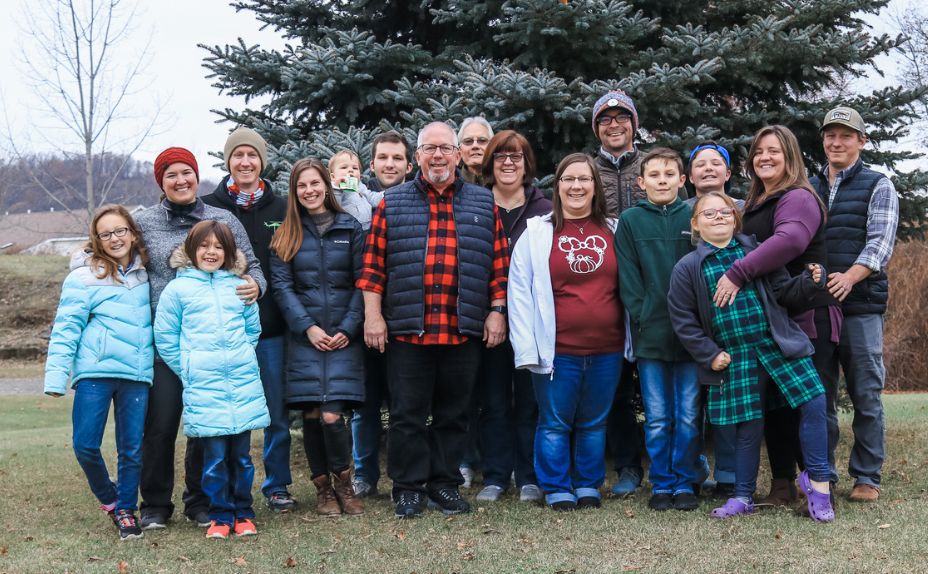
This is the last time we were all together – Thanksgiving 2021, in Greenwich, NY

The Secret to Building a Visionary Organization

Many leaders view retirement – whether a few years or a few decades away – as a finish line.

But increasingly these leaders, especially for those who are closer to retirement, are finding that being too young to retire but too old to find a job has become a critical issue.

Retirement doesn’t have to be the last great thing a leader does. It can be the gateway to a leader’s greatest season of influence.

We may live ten years longer than our parents and may even work twenty years longer, yet power is moving to those ten years younger.

Are leaders in this age group facing a decades long “irrelevancy gap”?

Many of us feel like we’re growing whole rather than growing old. What if there was a new, modern archetype of elderhood, one that was worn as a badge of honor, not cloaked in shame?

Chip Conley

THE QUICK SUMMARY – Wisdom @ Work: The Making of a Modern Elder by Chip Conley

Experience is making a comeback. Learn how to repurpose your wisdom.

At age 52, after selling the company he founded and ran as CEO for 24 years, rebel boutique hotelier Chip Conley was looking at an open horizon in midlife. Then he received a call from the young founders of Airbnb, asking him to help grow their disruptive start-up into a global hospitality giant. He had the industry experience, but Conley was lacking in the digital fluency of his 20-something colleagues. He didn’t write code, or have an Uber or Lyft app on his phone, was twice the age of the average Airbnb employee, and would be reporting to a CEO young enough to be his son. Conley quickly discovered that while he’d been hired as a teacher and mentor, he was also in many ways a student and intern. What emerged is the secret to thriving as a mid-life worker: learning to marry wisdom and experience with curiosity, a beginner’s mind, and a willingness to evolve, all hallmarks of the “Modern Elder.”

In a world that venerates the new, bright, and shiny, many of us are left feeling invisible, undervalued, and threatened by the “digital natives” nipping at our heels. But Conley argues that experience is on the brink of a comeback. Because at a time when power is shifting younger, companies are finally waking up to the value of the humility, emotional intelligence, and wisdom that come with age. And while digital skills might have only the shelf life of the latest fad or gadget, the human skills that mid-career workers possess–like good judgment, specialized knowledge, and the ability to collaborate and coach – never expire.

A SIMPLE SOLUTION

You don’t have to be on the other side of fifty to find the concept of becoming a “Modern Elder” relevant. The age at which we’re feeling self-consciously “old” is now creeping into some people’s thirties.

Digital platforms are disrupting virtually all industries, and the result is that more and more companies are relentlessly pursuing young hires, seemingly placing high DQ (digital intelligence) above all other skills.

The problem is that many of these young digital leaders are being thrust into positions of power with little experience or guidance.

At the same time, there exists a generation of older workers with invaluable skills – high EQ (emotional intelligence), good judgment born out of decades of experience, specialized knowledge, and a vast network of contacts.

With more generations in the workplace than ever before, elders have so much to offer those younger than them.

What if Modern Elders were the secret ingredient for the visionary organizations of tomorrow? What lessons must a Modern Elder learn?

Evolve

If we’re too wedded to the past and to the costume of a traditional elder – making wise pronouncements from the pulpit – we aren’t likely to grow much of a congregation.

As we enter midlife, we embark upon a creative evolution that amplifies our specialness while editing out the extraneous. After a lifetime of accumulation, we can concentrate on what we do best, what gives us meaning, and what we want to leave behind.

Sometimes, reframing your identity is not an internal shift in your values, but an external rearranging of your life to once again give priority to that which is most life-affirming for you.

Learn

There is great value in adopting a beginner’s mind and how to use this fresh perspective to increase your ability to learn.

Our world is awash in knowledge, but often wanting in wisdom. To stay relevant, it’s not just about learning something new, it’s also about learning new ways to access the information at our fingertips.

Teaching and learning are symbiotic. You can’t be a teaching legend without living on the learning edge.

Collaborate

By leveraging your ability to collaborate, you can make something bigger.

With five generations in today’s workplace, we can either operate as separate isolationist countries with generation-specific dialects and talents coexisting on one continent, or we can find ways to bridge these generational borders and delight in learning from people both older and younger than us.

Counsel

A byproduct of being seen as the elder at work is becoming the confidant of younger employees who want to bathe in your fountain of wisdom and are likely to be more candid with you as they don’t see you as a competitive threat.

While collaboration is a team sport, counseling is one-on-one, becoming a confident to your younger colleagues.

Smart companies know that while their competitors may outsource “counsel” to outside coaches who may offer some general wisdom, being a wise advisor can be so much more effective when an advisor is a wise elder who is in the trenches day to day with the advisee

Chip Conley, Wisdom @ Work: The Making of a Modern Elder

A NEXT STEP

Author Chip Conley devotes extensive help to leaders who want to go through the four lessons listed above. In order to get a taste of these resources, set aside some time to consider each of the following:

Evolve

Ask a minimum of a half-dozen coworkers, friends, or family to answer the following question: “When you think of me in good times or bad, what are the core qualities that I exhibit? What are the positive ones? And what are the more challenging ones?”

Before you read anyone else’s answers, answer these yourself, being as candid as you can, knowing you don’t need to share this with anyone else.

  • Can you identify your identity?
  • What are the durable traits or qualities you want your reputation built on?
  • What qualities are you ready to part ways with?

The capacity for change with a ballast of continuity defines the Modern Elder.

Learn

While it contradicts the stereotype that older people become more narrow-minded and set in their ways, there’s glorious evidence that post-fifty, many elders return to a childlike sense of wonder.

  • How can you become more curious?
  • What’s a subject – unrelated to your work – in which you could become one of the world’s leading experts?
  • How will your create necessary time in your schedule for wondering about the world?

Essential for a Modern Elder is the desire to experience something new and unexpected rather than regress into what is comfortable and familiar.

Collaborate

Your capacity to collaborate will improve if you create team norms that help everyone feel that the group is there to support you and the mission, as opposed to undermining you. Here are a few group norms that have proven to be effective:

  • Try to encourage everyone to participate in group discussions, especially those representing diverse demographics and viewpoints.
  • Lead by example by not interrupting teammates during conversations and giving credit to people for their earlier idea as you built upon it.
  • Call out intergroup conflicts so you can resolve matters in person.

As a Modern Elder, we have the capacity to be a “first-class noticer,” paying close attention to what is happening around us, and helping make sure everyone on the team is contributing.

Counsel

You may learn that your true value comes in those times when you get the counselor role right. Here are some best practices in counseling:

  • Listen both to the story and for the story and beware of pre-judging.
  • Assuming it feels appropriate, self-reveal something about your history that will help others understand they’re not alone.
  • Prove your loyal – first and foremost by explicitly committing to confidentiality.

Spiritually radiant, physically vital, and socially responsible Modern Elders feel generative when they create the space for those younger than them to accelerate their learning by means of providing wise counsel.


Part of a regular series on 27gen, entitled Wednesday Weekly Reader

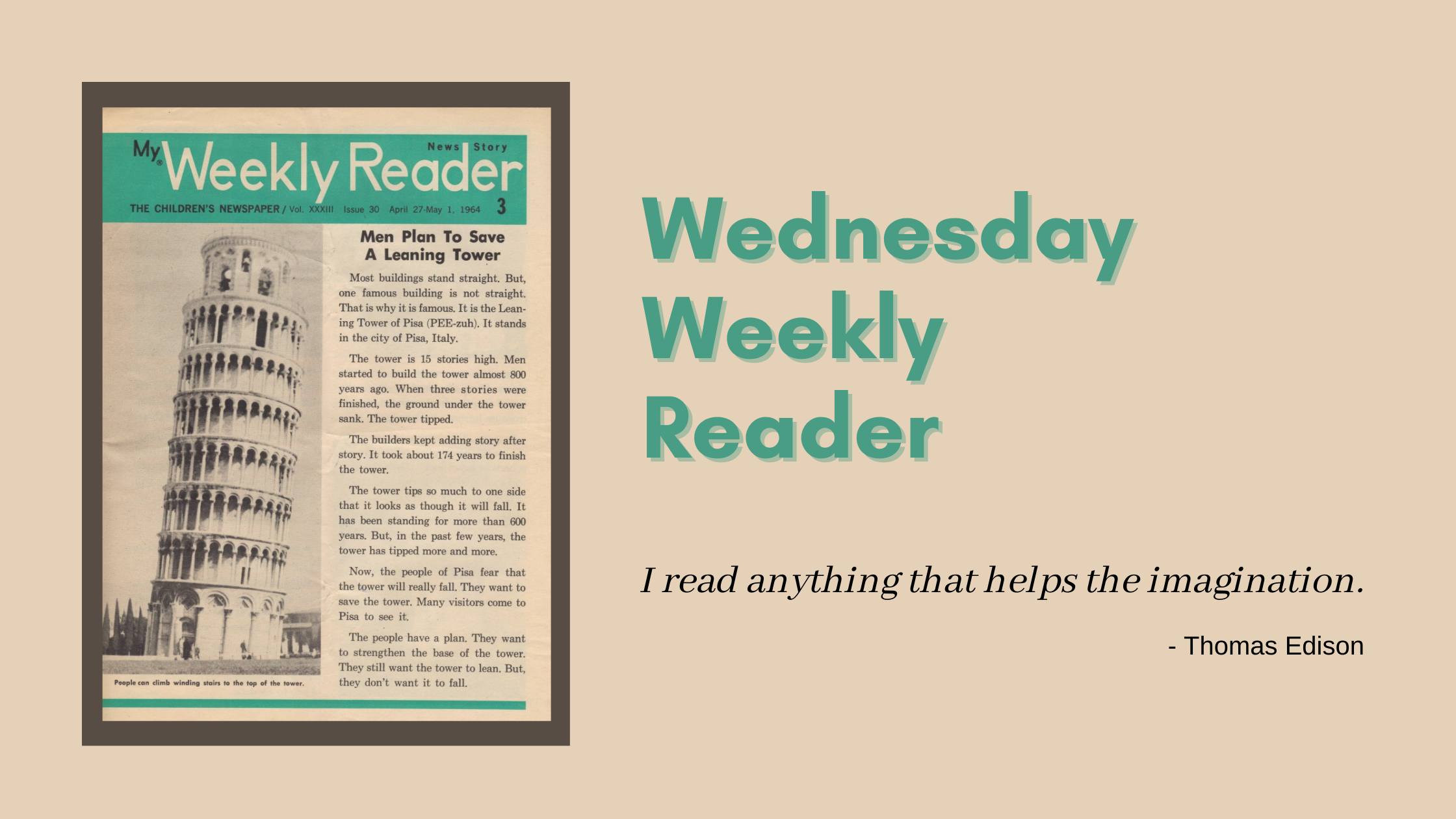
During my elementary school years one of the things I looked forward to the most was the delivery of “My Weekly Reader,” a weekly educational magazine designed for children and containing news-based, current events.

It became a regular part of my love for reading, and helped develop my curiosity about the world around us.

It’s Better to Panic at Inappropriate Times

The time to panic is the time when you can still do something about it.

Taking action today on a long-term problem is easier, cheaper, more effective, and far less time-consuming than waiting for it to come an emergency.

Why not start panicking in advance? Why not start taking emergency measures while there’s still a chance that those emergency measures will actually accomplish something?

Every organization that gets into trouble falters because it waited too long to do the stuff that should have been done a long time ago. Panic early, not late, and your fire drills will actually pay off.

(From The Big Moo, edited by Seth Godin)

How Environmental Immersion Leads to Creative Inspiration

One can be inspired by research as well as immersed in it for inspiration.  Rhonda Counts, Show Producer, Walt Disney Imagineering Florida

How you do research is dependent upon where you are in the process. Disney’s Imagineers value the story’s intent and the importance of being surrounded with or immersed in the story’s environment.

Here’s an example of creative immersion from one of my past projects:

As you can see, there was a definite pirate’s theme going on in part of my office. It’s both from previous work and new work in process at the time. I’ve used the theme of the “Pirates of the Caribbean” storyline – both the attraction and the movies – to develop training resources and presentations in the area of Guest Experiences.

Specifically, I created a tool – the Guest Experience Compass. And how better to demonstrate it, than using Jack Sparrow’s compass? I also created the Guest Experience Code – and based it on the storyline of the Pirates Code. Of course, both of these tools had to be introduced and used by a pirate – the Navigator – in a fully immersive learning environment. The result?

As a result of my pirate “adventure,” I created a series of Guest Experience learning activities lasting from a half day to two days.

And it doesn’t stop with pirates.

There’s the fact that my office is, in fact, a Disney museum (a title given by my granddaughter).

rva-office-db-3

It’s continually changing as I acquire new books and other “resources” that help my inspiration.

DisneyVerticalTowers091922

It’s no secret that I am a Disney fanatic of the first degree! I had an early start in the 60s, both from watching “The Wonderful World of Disney” and benefiting from my father, who as a Gulf gasoline dealer received many promotional tie-ins from Disney movies.

My first actual in-person experience took place as a rising senior in high school during the summer of 1975, when my high school band was privileged to march in America on Parade, one of Disney’s salutes to America’s Bicentennial. I didn’t know it at the time, but looking back with minors in history at both the undergraduate and graduate level, that was an important event.

You must also add to that mix over 100 days of staying in Disney properties (both land and sea) in the last 12 years. Friends know that I can’t go long in almost any conversation without weaving in a personal Disney experience to illustrate a point.

Finally, it’s anchored by the Disney library of over 450 books (and growing!) noted above: I am literally immersed in all things Disney. As I research and work on various projects – especially Hospitality – I find great inspiration through the many resources at hand. My immersion is not limited to the visual and tactile – at any given time, the soundtrack of a Disney movie, or the background music from one of Disney’s theme parks is playing in the background.

Here’s how Disney Imagineers recommend immersion into an environment:

Select a project that you want to immerse yourself in. Make a list of all the elements of the project and find samples (the larger the better) that represent these elements. Find a place in your surroundings to display the samples so you can immerse yourself in them.

For example, if you wanted to fix up a vintage car, surround yourself with large detailed pictures of its original interior and exterior, very large color samples for its seat cushions, dashboard, etc., and exterior paint job, pictures of various locations you would drive to, and of course, spray the space with new car scent.

Research leads to inspiration.

And now, to visually introduce (and tease a new project in the works):

CreativeHospitalityWorkshop

More to come!


part of a series of ideas to help shape and tone your creative muscles

Inspired and adapted from The Imagineering Workout

written by The Disney Imagineers

When the Music Makes the Movie

As a first generation, original Star Wars fan, I watched the movie in early June 1977 – and proceeded to watch it 3 more times over the next 10 days, each time watching or listening for a different aspect of the movie.

The reason?

I had already read the book.

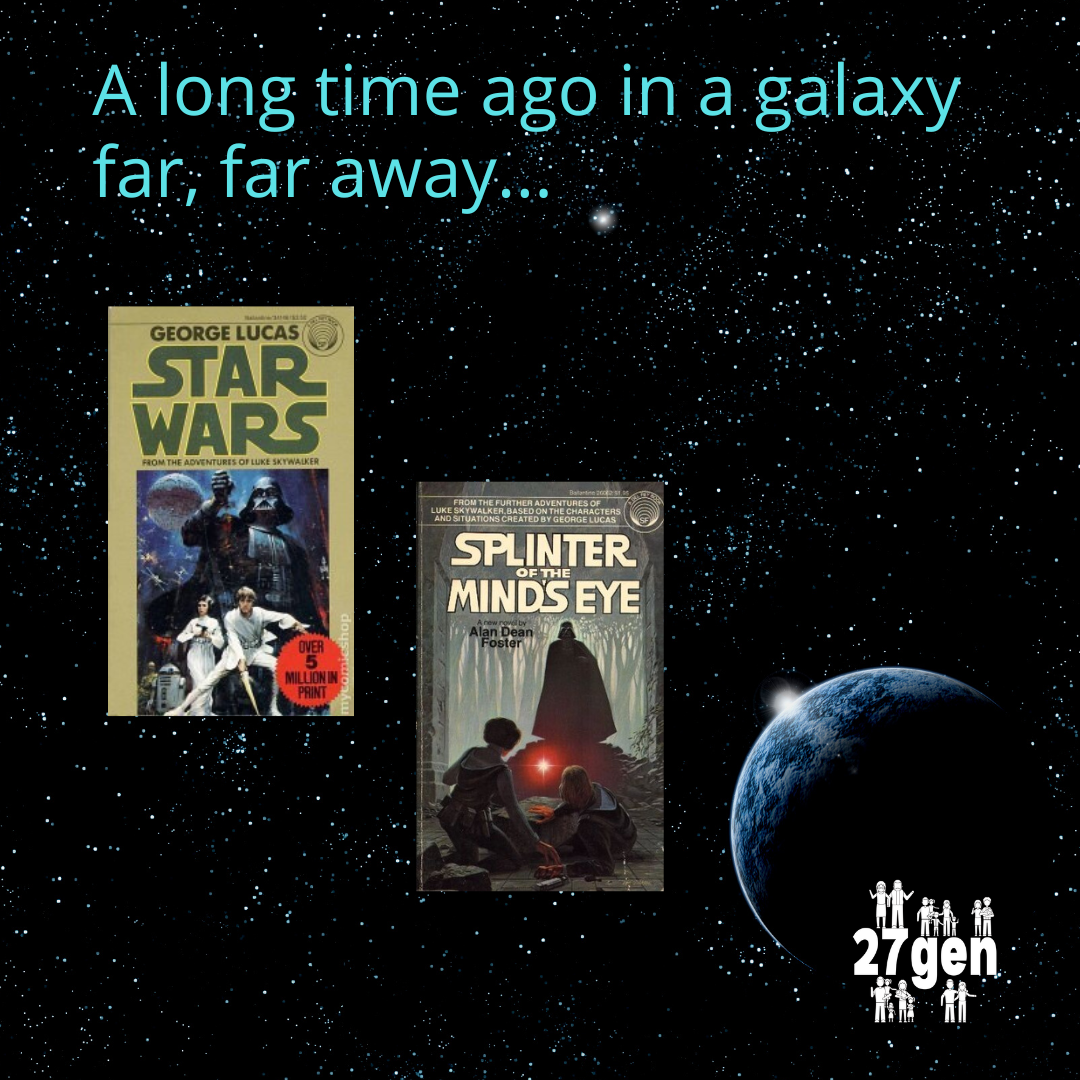
A paperback book ghostwritten by Alan Dean Foster and based on the screenplay by George Lucas was first published in the U.S. as Star Wars: From the Adventures of Luke Skywalker in November 1976 by Ballantine Books, six months before the theatrical release of the film. A second (Splinter of the Mind’s Eye) followed a few months later.

That was my introduction to Star Wars.

Needless to say, in the 47 years since, I’ve not only followed the development of the Star Wars universe personally, I’ve raised a Star Wars family.

Movies in the theater, LEGO sets by the dozen, VHS tapes, DVDs, Blu-ray Discs, CDs of the soundtracks, books, theme park visits, and more – you name it, Star Wars has been a part of our greater household for decades.

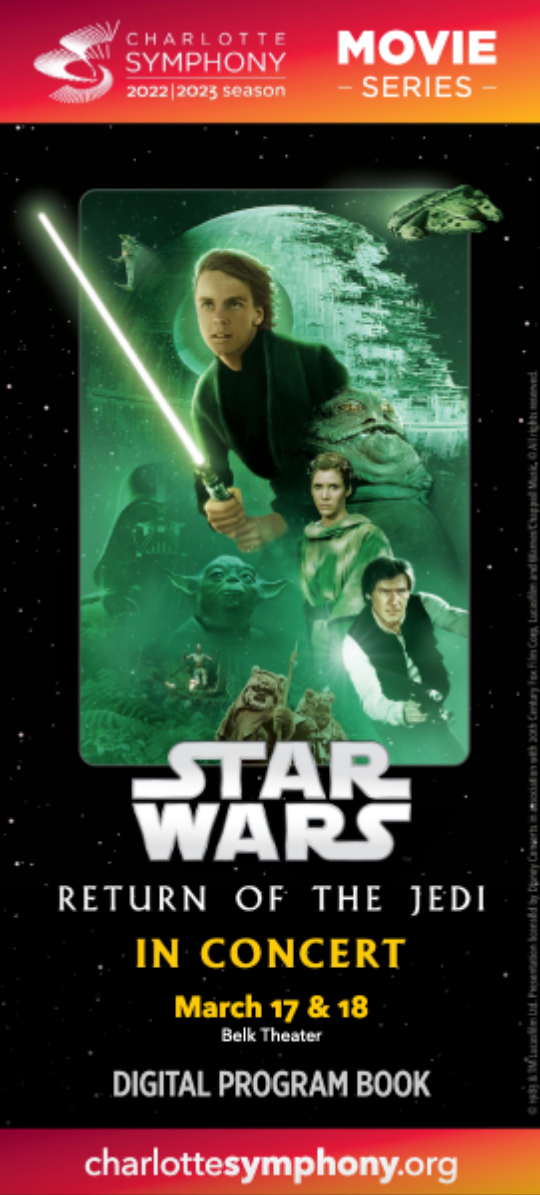
Last year, though, my wife Anita and I experienced Star Wars in a new way – in a concert by the Charlotte Symphony.

With the full-length movie playing on a huge screen suspended above the full orchestra, the effect was mind-blowing.

Music has always been an integral part of the Star Wars movies. With the brilliant composing of John Williams, all nine Star Wars movies have been made greater by the music.

As a matter of fact, the second time I watched the original Star Wars movie in 1977, it was with my eyes closed, just so I could soak in the music.

And do, here we are exactly a year later, and Anita and I will be joined by my daughter and son-in-law on March 18 to see The Return of the Jedi.

I may keep my eyes open, but it will be to sneak a peek at the conductor and orchestra, as they utilize their talents to bring the movie to life once again.

Celebrating 100 Years of Magic: New Disney Books Arrive

For 100 years, the Walt Disney Company’s passion has been storytelling. From one generation to the next, the greatest stories live forever.

The Walt Disney Company will mark its 100th anniversary in 2023, timed to its founding by Walt Disney and Roy O. Disney on October 16, 1923. The year 2023 will celebrate the journey and storytelling of Disney’s creative visionaries across the decades, as well as the fans and families who have brought Disney into their hearts to create cherished memories during the past 100 years.

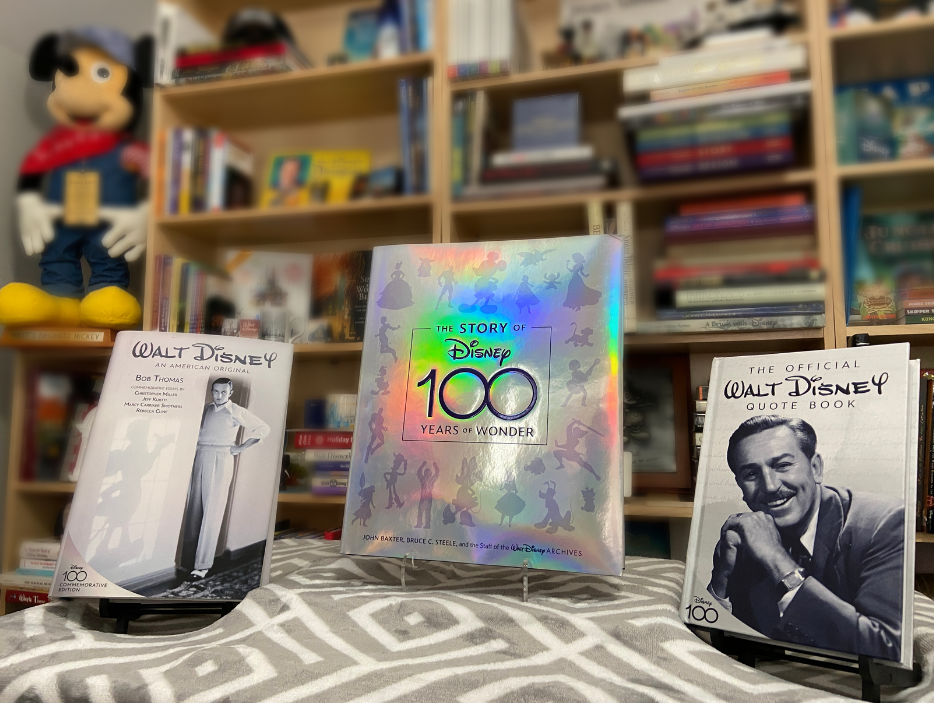
And of course, I will kick off my personal version of that celebration with three new Disney history books, just released for the occasion.

The Story of Disney 100 Years of Wonder

As part of the festivities, this must-have coffee table book showcases the company’s history and rich legacy – past, present, and future – through vibrant voices and rare Disney concept art and photographs.

On October 16, 1923, Walt Disney and his brother Roy founded what we now know to be The Walt Disney Company. Walt’s passion and vision continues to inspire creative development across the company. As a result, Disney characters – and their stories – have touched the lives of generations of fans. They encourage a belief that dreams really can come true.

As the official companion to the touring exhibition by Walt Disney Archives and SC Exhibitions, The Story of Disney: 100 Years of Wonder serves as a treasure trove for pop culture enthusiasts, artists, art collectors, and Disney fans.

Walt Disney: An American Original

This must-have biography tells the story of Walt Disney’s life – told as no other book can!

Walt Disney is an American hero. From Mickey Mouse to Disneyland, he changed the face of American culture. His is a success story like no other: a man who developed animated film into an art form and made a massive contribution to the folklore of the world.

After years of research, respected Hollywood biographer Bob Thomas produced a definitive biography of the man behind the legend of Disney: the unschooled cartoonist from Kansas City who when bankrupt on his first movie venture and developed into the genius who produced unmatched works of animation, and ultimately was the creative spirit of an international entertainment empire that has enchanted generations.

Complete with a collection of rare photographs, Walt Disney: An American Original is a fascinating and inspirational work that captures the spirit of Walt Disney.

This Commemorative Edition includes new:

  • introductions from Jeff Kurtti and Marcy Carriker Smothers
  • a 32-page photo insert with rare behind-the-scenes photos
  • endnotes to add further context and connect Walt’s story to today

The Official Walt Disney Quote Book

This special edition quote book showcases insights from Walt Disney, along with rare Disney photographs.

Walt Disney once said, “There is more treasure in books than in all the pirates’ loot on Treasure Island and at the bottom of the Spanish Main. . . .” Never has this been truer than within these pages.

This collection of quotations from the co-founder of The Walt Disney Company ranges from the well-known to the obscure, but all are assured to entertain, enlighten, and inspire. His words have been gleaned from publications, productions, and interviews over the breadth of his amazing career. Some are simple nuggets of homespun wisdom, while others are statements of knowledge gained while he crafted the enchanting films, televisions shows, and unparalleled experiences that are so beloved by audiences the world over.

The Official Walt Disney Quote Book has been compiled for anyone eager to learn more about a man who had such an incredible, positive impact on his own time and on the future yet to be – Walt Disney, the Showman of the World.


Part of a regular series on 27gen, entitled Wednesday Weekly Reader

During my elementary school years one of the things I looked forward to the most was the delivery of “My Weekly Reader,” a weekly educational magazine designed for children and containing news-based, current events.

It became a regular part of my love for reading, and helped develop my curiosity about the world around us.

American History: Understanding the American People by Understanding Disney History

I’ve alway loved learning about history – in particular, American history. In addition to the hundreds of books I’ve read over the years, both my undergraduate and graduate degrees are accompanied by a minor in history.

My love of American history was set in motion by virtue of the fact that I was born in the spring of 1958, thus placing me in the high school graduating class of 1976 – the 200th celebration of America’s declaration of independence from England.

There were many activities from that senior year that hold a special place in my mind, but the one near the top involves Disney – and serves as a great connection to this week’s Wednesday Weekly Reader.

Disney Theme Parks and America’s National Narratives takes a public history approach to situating the physical spaces of the Disney brand within memory and identity studies.

For over 65 years, Disney’s theme parks have been important locations for the formation and negotiation of the collective memory of the American narrative. Disney’s success as one of America’s most prolific storytellers, its rise as a symbol of America itself, and its creation of theme parks that immerse visitors in three-dimensional versions of certain “American” values and historic myths have both echoed and shaped the way the American people see themselves. 

Like all versions of the American narrative, Disney’s vision serves to reassure us, affirm our shared values, and unite a diverse group of people under a distinctly American identity – or at least, it did. 

The book shows how the status Disney obtained led the public to use them both as touchstones of identity and as spaces to influence the American identity writ large. This volume also examines the following:

  • How Disney’s original cartoons and live-action entertainment offerings drew from American folk history and ideals
  • How their work during World War II cemented them as an American symbol at home and abroad
  • How the materialization of the American themes already espoused by the brand at their theme parks created a place where collective memory lives
  • How legitimization by presidents and other national figures gave the theme parks standing no other entertainment space has
  • How Disney has changed alongside the American people and continues to do so today.

The book explores how five specific factors have worked in concert over time to transform Disney’s theme parks from simple amusement parks to places where the collective memory of the American narrative is shaped.


My Disney experience during the 60s – early 70s was limited to television and movies. But when 1975 rolled around, something magical happened.

Disney’s “America on Parade” was a unique parade at Disneyland and Walt Disney World from 1975-1976, honoring the United States of America on the occasion of its bicentennial anniversary in 1976.

I was a senior in high school that year – the class of ’76. Many activities planned for that class year revolved around celebrating the Bicentennial.

And this happened…

During the parade, recorded marching music playing from speakers in the floats was mixed with the same melodies played by live bands Disney had invited from high schools across the country.

The Mount Juliet High School “Band of Gold” was invited to participate in America on Parade.

Marching down Main Street, playing some of the music I love best – now that was something special.


As the Walt Disney Company celebrates its 100th anniversary this year, a look back at both the life of Walt Disney and the company he founded are intertwined with the concepts, images, and spirit of America.

Walt Disney had a deep love and respect for America:

Actually, if you could see close in my eyes, the American flag is waving in both of them and up my spine is growing this red, white, and blue stripe.

As author Bethanee Bemis states in her book, “Disney theme parks are some of the foremost places where the nation consumes its collective memory of the American Experience, where they see many of the stories and cultural myths that make up the American national narrative.”

Disney is in the business of selling memories. Not just memories of family vacations, but memories of stories from American history.

Bethanee Bemis

According to Bemis, “Walt Disney was not the first to use history to inspire his storytelling nor the first to turn history into a physical experience. He was, however, the first to use a brand that had itself already become symbolic of a nation’s history to create that physical experience.”

Disney Theme Parks and America’s National Narratives is a scholarly work (the author is a museum specialist at the National Museum of American History at the Smithsonian) that is an important addition to the collective body of Disney history.

This book will be of interest to students and scholars of history, media, cultural studies, American studies and tourism – and of course, Disney nerds like me.


Part of a regular series on 27gen, entitled Wednesday Weekly Reader

During my elementary school years one of the things I looked forward to the most was the delivery of “My Weekly Reader,” a weekly educational magazine designed for children and containing news-based, current events.

It became a regular part of my love for reading, and helped develop my curiosity about the world around us.
What’s Your “Groundhog Day”?

On this day in 1887, Groundhog Day, featuring a rodent meteorologist, is celebrated for the first time at Gobbler’s Knob in Punxsutawney, Pennsylvania. According to tradition, if a groundhog comes out of its hole on this day and sees its shadow, there will be six more weeks of winter weather; no shadow means an early spring.

Historical background of Groundhog Day includes:

  • Rooted in the ancient Christian tradition of Candlemas Day, where clergy blessed and distributed candles for winter; the candles represented how long and could winter would be
  • Germans expanded on the idea by selecting the hedgehog as a means of predicting weather
  • German settlers to America in Pennsylvania continued the tradition, switching to the groundhogs as hedgehogs weren’t available
  • Groundhogs do emerge from hibernation in February, but only to look for a mate before going underground again
  • They come out of hibernation for good in March

In 1887 an enterprising newspaper editor declared that Phil, the Punxsutawney groundhog, was America’s only true weather-forecasting groundhog.

Phil and his descendants might be the most famous, but many towns across North America now have their own meteorology Marmota monax.

The 1993 movie “Groundhog Day” popularized the usage of “groundhog day” to mean something that is repeated over and over.

Unfortunately, there are a lot of scary parallels in the church world:

  • Do you have ongoing traditions from the past that had original meaning but have now lost that meaning?
  • Have you adapted your traditions to fit the culture of your community?
  • Are your traditions based on something that no longer is relevant?
  • Do you market your traditions on their own merits, or are you exploiting them?
  • Are your traditions the same as a half-dozen other churches in your town?
  • Do your traditions have a life of their own, long-ago outliving their original useful purpose?

While you may view this post as “anti-tradition”, neither it nor I am! I love history and tradition – I have minors in history at the graduate and post-graduate levels, study history all the time, and know that it can be a powerful teacher.

Our history should be a bridge to the future, not an anchor to the past.

Churches should be students of their past – but also their present, in order to help write their future.

Can you as a church leader understand and appreciate the history of your church and its traditions? At the same time, are you a cultural anthropologist of your community, understanding what’s going on today? Combining the two will give you and your leadership team a solid foundation for future opportunities!

Delivering Disney Magic: Dick Nunis, Walt’s Apprentice

If you read about the origins and development of Disneyland in the early 1950s leading up to its opening in July 1955, the well-known names start with Walt and Roy Disney, followed by a small-but-influential group of Disney studio team members who used their imaginative talents to transfer ideas from the screen to reality.

Of course, that is an important part of the history of Disney – we wouldn’t have the parks without their creative brilliance.

But it’s one thing to create a place like Disneyland, and a whole other thing to run a place like Disneyland.

During the final, frenzied weeks of construction leading to opening day on July 17, 1955, the name Dick Nunis appears in the history of Disneyland – a new college graduate, hired to be a “gofer” for Van Arsdale France, who created the first orientation and training program for employees.

Nunis had met Walt Disney several years before (Walt’s daughter Diane was a classmate of Nunis, and was dating her husband-to-be Ron Miller, a teammate of Nunis’ at USC). That memorable first encounter included a ride on “The Carolwood Pacific Railroad” – a miniature train with over 1/2 mile of track circling Walt Disney’s home (one of the four foundational origin stories of Disneyland, but that’s for another day).

That train ride with Walt Disney foreshadowed the future of Dick Nunis, as he progressed from a gofer to chairman of Walt Disney Attractions, a forty-four year career at Disney on the operations side of the parks. 

Walt’s Apprentice: Keeping the Disney Dream Alive is the memoir of Disney Legend Dick Nunis. It is a warm personal reminiscence of learning directly from Walt Disney for 12 years, followed by more than 30 years devoted to championing his vision and standards as the Disney empire grew.

The story covers Disney’s highlights, including the 1960 Winter Olympics, 1964-1965 New York World’s Fair, and the development and opening of Disneyland, Walt Disney World, Epcot, Tokyo Disneyland and Disneyland Paris. 

Unlike other Disney books, this story is told from the perspective of operations rather than Imagineering. It touches on decisions that defined the guest experience and Disney’s reputation for quality in areas ranging from capacity and people-moving, training, delivering a consistent “good show,” food service, and more.

This first-person narrative is presented as a series of wide-ranging vignettes. Some vignettes focus on personal, character-shaping events, such as the injury that ended his collegiate football career. Other stories touch on national events, such as Nikita Khrushchev’s derailed visit to Disneyland, the decision to close the park following the assassination of John F. Kennedy, and Ronald Reagan’s assistance in expediting the visa process for cast members staffing the Epcot World Showcase. Few people have enjoyed a life so immersed in Disney magic.

These stories share that magic through the memories of one of the original doers and dreamers.

In my personal research and study of the history of the Disney company, I had long noticed the name of Dick Nunis and the many contributions he made at each stage of his Disney career.

When I learned that the long-rumored book from Nunis was being published, it went to the top of my list.

It did not disappoint!

As one of a very few individuals still alive who worked closely with Walt Disney, Walt’s Apprentice chronicles how Nunis learned directly from Walt Disney for a dozen years, then spent the next thirty years devoted to championing Walt’s vision and standards as Disney grow into a worldwide enterprise, “creating happiness” for young and old alike.

If you want to read a first-person narrative on Disney with a focus on the operational side, Walt’s Apprentice is a must.


Part of a regular series on 27gen, entitled Wednesday Weekly Reader

During my elementary school years one of the things I looked forward to the most was the delivery of “My Weekly Reader,” a weekly educational magazine designed for children and containing news-based, current events.

It became a regular part of my love for reading, and helped develop my curiosity about the world around us.