My last post was the first part of a personal application to the concept of place attachment.
It’s all about loving where you live…
…starting with your home.
That post provided the context and brief story of why Anita and I made the decision 3+ years ago to stay put in our home of 28+ years, embarking on a renovation process which was recently completed.
In the spirit of the How It Started and How It’s Going craze of the past few years, I present to you a pictorial rendition of “The Project” with minimal comments. Be sure to look at the acknowledgments at the end for the great people who envisioned and pulled it off!
MASTER BATH
Almost ashamedly, the master bath had stayed the same since a few years after we moved in – in 1995!
Is there a better definition of How It Started and How It’s Going or what?
In addition to providing a walk-in shower with bench, there is much more storage space, brighter lighting, a heated floor, and a tankless water heater for the whole house.
DISNEY ROOM
Our three original kids’ bedrooms became multifunctional, while still keeping the ability to provide beds. Here’s our daughter Amy’s bedroom – pretty much the same through high school, college, and graduate school.
Now, it’s the “Disney Room” for our grandchildren’s enjoyment, completed with a LEGO Disney castle, two bookshelves, a reading nook, an enchanted rose, and even a “magic mirror.”
MY OFFICE
The upstairs bedroom suite, originally home to two of our boys, began to transition into my office in 2007. Needless to say, over the next few years, things got a little out of hand. Anita says the only way to truly appreciate the chaos of my office back then is via a panoramic image.
Yeah… As the picture indicates, I’m a horizontal organizer. Anyway, after over ten years of growing more chaotic, I saw the light, and agreed with Anita’s idea of the perfect office for me.
Not pictured is a futon that can sleep two. Also not pictured – the several thousand books relocated to my “library annex” for eventual disposition.
FAMILY ROOM
Not a lot to say here; while the kids were home, most evenings everyone who was home ended up here watching TV, reading, or something similar. We’ve hosted birthday parties, small groups, family gatherings of all types, and many other events here.
All of that still happens, but as you get a hint of above, and will see more clearly below, the location of many of those events has shifted. The biggest change here was the design and installation of the feature wall around and above the fireplace.
KITCHEN
Our kitchen has always played an important role beyond the preparation of food. From various tables at the rear window to hanging around the island, our family has spent many hours prepping meals, talking, laughing, occasionally crying, but always enjoying our connections.
Again, this is a great demonstration of How It Started and How It’s Going…
As you can tell, this is the heart of our renovation project. For over a year, Anita and I couldn’t figure out how to lay out what we were thinking of. We were comfortable designing the fireplace feature, and Anita did an amazing job on the design of the Master Bath and my office, but when it came to the kitchen, we were stumped. Through the connection of a neighbor, we met Tiffany Bray, an interior designer, and after initially spending a few hours with her, the result was the design you see above. With input from our two chef sons, she truly captured – and our contractor Todd Haudek delivered – what we were trying to come up with: a family gathering space, centered around food preparation, but with lots of space to involve as many people as possible. The island is massive – at least in our experience – but also seems quite comfy when family or friends are gathered around it to help with final food prep or circling around the buffet line. Built around a 36″ dual fuel range that Anita and I are still getting used to, the island is truly the center of the gathering space. Storage is located mostly along one wall, extending all the way to the top of 9′ ceilings and anchored on one end by an enlarged walk-in pantry and the other by a unique feature Anita came up with: a floor to ceiling storage cabinet that opens up to the hall, but is easily accessible to the kitchen. The rear wall has a long counter with seating, with a sliding window opening to the deck with a counter on the exterior. The coffee station – a must for all of our kids – has proven to be a natural go-to spot in the mornings. And finally – and most notably – removing the wall between the kitchen and dining room really opened up the space. It’s not so much a kitchen and open dining room as it is a true gathering space.
DINING ROOM
The space you see below has had multiple functions over the years – built and used as a dining room, it has also been a music room, an office for me, and work space for numerous school projects over the years.
That changed! In addition to removing the wall as noted above, we pushed the rear wall back 5 feet, aligning it with the rest of the house. It was only a few dozen square feet of new space, but combined with the wall removal, created a whole different feel. Additionally, we replaced the window with an 8′ door with sidelights – not only providing plenty of natural light but drawing the eye upward.
DECK
As you see below, the original rear of the house had a small concrete patio extending under the overhang. There was an exterior paver patio at the other end of the house, but it wasn’t used much.
We wanted to create an outdoor space with lots of gathering options, and once again, Tiffany came up with a great design.
The result? A deck extending 12 feet out, the length of our house. On the dining room end, it extends 15 feet, with a covered porch above it. For safety, railings extend all around, with an opening onto steps leading to the backyard. In the middle of this very hot summer, the shade of the trees, the porch, and a fan make it bearable. In the evenings, it’s downright delightful! Even with the great gathering space inside, in just a few weeks, we’ve found that our guests naturally migrate to the deck, enjoying the outside views of our own 100 Acre Wood.
PROJECT ACKNOWLDEGEMENTS
Fireplace Wall Feature and Master Bath
Contractor – Joel Presson, J-KAP Construction
Electric – Jeff DeMeo, JD Electric
Plumbing – Jeff Tadlock, Harold Ellis Plumbing
Kitchen, Dining Room, Deck
Design – Tiffany Bray, TBD Tiffany Bray Designs
Contractor – Todd Haudek, Haudek Homes
Electric – Jeff DeMeo, JD Electric
Plumbing – Jeff Tadlock , Harold Ellis Plumbing
The individuals noted above provided excellent craftsmanship for our projects over the last few years. I wholeheartedly recommend each of them in their respective area of expertise, and would be happy to talk with anyone who wants to know more about what they do and how to contact them.
In closing, Anita and I want to again provide all the thanks to God for providing for our work, and reiterate that these spaces are not for just our enjoyment, but to extend the extraordinary hospitality God has shown us to family, neighbors, friends, and “friends we haven’t met yet”!
In what may seem to be direct opposition to my thoughts about front porches here and here, my wife and I have just completed a series of home renovations over the last three years that did not change our somewhat smallish front porch, but nevertheless, have increased our neighborhood connections.
My wife Anita and I have been married for 44+ years. We have three sons, (with three amazing daughters-in-law) and a daughter (married to a great son-in-law). These amazing kids and their spouses have been blessed with eleven children!
The image below represents the last time we were all together: Thanksgiving 2021 in Greenwich, NY. Since then we’ve added three little ones – all this year! Collectively, we are the #AdamsFamilyExperience!
About three years ago my wife and I, as empty nesters, made the decision to stay in our long-time home (29+ years) where our kids grew up – even as they moved away to establish homes of their own from one end of the country (New Mexico) to the other (New York, then Virginia), along with two who have settled in opposite ends of North Carolina. With one family in the military and moving about every three years, we decided to stay put.
With eleven grandchildren grouped into 2 ages (five age 3 and under, and six ages 10-16), we knew we needed space for lots of different activities.
What that means IRL:
With 11 grandchildren, our family numbers 21 when we all gather together (plus up to four dogs). We don’t get to do that as often as we would like, but we want to be prepared when we do! Thus…
Our renovations, although with different purposes, were all guided by the primary intention of creating more gathering space. Functionally, that meant keeping all four bedrooms useable, but with a different purpose: each of three bedrooms formerly used by our kids became (respectively) an office for my wife, an office for myself, and a Disney room for the grandchildren. Each of those rooms can sleep two or more.
With three bathrooms, we had no reservations about removing the garden tub in the master bath, and creating a walk-in shower. Need to bathe infants? No problem; we’ve still got two tubs.
In our family room, we were satisfied with the layout, but decided to mount a large screen TV on the wall to free up space below for additional seating. The fireplace, though adequate, seemed a little lonely on the tallest wall in the house, so Anita and I designed a feature wall that our contractor built to perfection.
Our biggest renovation, aka “The Project” was just completed and involved adding square footage to our house footprint, totally renovating the kitchen, removing a wall between the kitchen and dining room, and adding a full-width deck across the back of our house.
With the interior complete, up next is the final exterior project: some work on our backyard, freshening up outdoor play space for the younger four of our grandkids who are 3 and younger; correcting drainage flow due to the new roof and deck; and adding cafe lights to a portion of our deck.
Even when our family can’t visit as often as we would love to have them, our home is dedicated to hospitality for friends, neighbors, and those we haven’t met yet. In just the first month, we:
Kicked off the newest space with a Mexican fiesta luncheon for our church community group
Invited our neighbors on one side to a impromptu family dinner as a treat for all the hard work they’ve been doing on a pool install this summer
Hosted two of our kids’ families for the long Independence Day weekend: four extra adults, three grandchildren, and one large dog
Planned a neighborhood event that had to be postponed (but will be rescheduled)
Made our deck and kitchen available for our neighbor’s 12-year old daughter’s birthday party – even when we weren’t at home for the weekend.
In August, our NM kids and grandkids (two adults, three children) will be staying for five days as part of a two-week vacation.
…and we’ve got lots more planned for the late summer and fall!
My wife and I share a passion: creating hospitality culture lifestyles where ordinary people demonstrate extraordinary love.
In order to help make that possible in a physical space, here’s the dedication pledge my wife and I made over our renovations:
When we understand God’s welcome to us, we can better pass it on to someone else.
When we use our lives exactly as they are, desiring only to create a sacred space for our guests, we turn entertaining upside down and it becomes radical hospitality.
We don’t need to be who we used to be; God sees who we’re becoming – and we’re becoming love.
We can’t love people we don’t know. Saying we love our neighbors is simple. But guess what? Doing it is too. We think Jesus’ command to “love your neighbor” means we’re actually supposed to love our neighbors. Engage them. Delight in them. Throw a party for them.
Jesus wants us to show people who He is by what we do, not just tell them what we think.
It’s time to bring back the table to our homes.
If we really want to learn someone’s story, sitting down at the table and breaking bread together is the best way to start. The table is the place where our identity is born – the place were the story of our lives is retold, reminded, and relived.
(Special thanks to the writings of Bob Goff and Len Sweet)
The solution is to get back to the basics of what Jesus commanded:
Love God and love your neighbors.
Think of it as First Place Hospitality – building bridges to your neighbors in your “First Place,” your home.
Next Time: Images and Acknowledgments for The Project
To be rooted is perhaps the most important and least recognized need of the human soul
Simone Weil
What if a place becomes the right place only by our choosing to love it?
Melody Warnick, author of the fabulous book This Is Where You Belong, sets the whole tone of her book in the first chapter talking about “Place Attachment.”
Humans are instinctively driven to form connection with places.
The most common term for this is “place attachment,” because it suggests the affectionate, almost familial connection that can form between us and where we live. You mostly know it when you feel it, which you probably have. When you roll into your town after being away for awhile and say, “It’s good to be home,” that’s a product of place attachment. So is feeling drawn as if by magic to a particular city, never wanting to leave the place where you grew up, or never wanting to leave the place you live right now.
If all this sounds a bit touch-feely, it is. Like happiness, place attachment exists partly as emotion and partly as a pattern of thought, which makes it difficult to quantify.
Over the years researchers have developed a “place attachment scale” of statements they use to gauge the sensation. Study participants are usually asked to rank their agreement on a scale of 1 to 5, but for the sake of simplicity, you can assess your own place attachment by answering each of the questions below “true” or “false” about the town or city where you live. Click here or on the image below for a PDF.
The more times you answer “true,” the more likely you are to be attached to your town. Making nineteen or more “true” answers, which puts you in the top quartile, indicates that you probably feel strongly connected to where you live. Six or fewer, on the other hand, suggests that you live somewhere unfamiliar or in a town you’re not particularly over the moon about. And if you’re not very place attached you may be saying to yourself, “Clearly place attachment feels nice. But why should I care? Will it actually make my life feel better?”
According to place attachment research, the answer is a resounding yes. Studies show that when you pit “Stayers” – long-term residents of a place – against “Movers,” the Stayers are generally far more social.
Where we live matters, and staying where we live matters. When it comes to place attachment, our towns are what we think they are.
No matter what anyone else thinks, your town just has to make you happy.
And being a good neighbor starts with you.
I can’t emphasize this enough: If you like the idea of loving where you live, of being a better neighbor, or anything remotely connected, you MUST check out the work of Melody Warnick. Follow her on social media. Buy the book (below). Sign up for her newsletter on her website. Peruse the website for other articles she has written. It’s all PURE GOLD.
The hamburger stands as an iconic symbol of American cuisine, a mouthwatering delight that has captured the hearts and palates of millions. But where did this beloved dish originate, and how has it evolved over time?
For this step of the #BurgerQuest, we embark on a flavorful journey, tracing the origins and evolution of hamburgers in America, uncovering the stories and transformations that shaped this culinary masterpiece.
The Early Beginnings: A Taste of Europe
To understand the true essence and origins of the hamburger, we must go back in time to explore its European roots. It was during the 19th century that German immigrants brought with them the traditions of Hamburg steak, a precursor to the modern hamburger. These immigrants, primarily from the city of Hamburg, Germany, brought their love for ground beef and the concept of minced meat patties with them to the shores of America.
In Germany, the Hamburg steak was a popular dish made from minced or chopped beef that was often served raw or lightly cooked. It gained prominence for its robust flavors and the satisfaction it provided to those who indulged in it. As German immigrants began to settle in America, they brought their culinary traditions with them – including their beloved Hamburg steak.
Upon arriving in the United States, these German immigrants found themselves adapting to the new land and its culinary landscape. While the concept of the Hamburg steak remained, its preparation and presentation underwent some transformations. It was during this time that the ground beef was shaped into a patty and cooked to perfection, resulting in a more familiar and approachable form of the dish.
The flavors of Hamburg steak resonated with Americans, and it didn’t take long for this delectable creation to catch on. As the dish gained popularity, it became known simply as the hamburger, named after the city of Hamburg, where its roots originated. The hamburger quickly became a symbol of American cuisine, a delicious amalgamation of flavors and cultural exchange.
While the exact moment when the Hamburg steak transformed into the modern hamburger remains a mystery, it is clear that it was the result of a gradual evolution shaped by the diverse influences of immigrants and the changing culinary landscape of America. The fusion of German traditions with American innovation birthed a culinary masterpiece that would forever change the way we experience and savor the joy of food. Their culinary heritage, blended with American ingenuity and a dash of creativity, laid the foundation for what would become an enduring symbol of American cuisine.
Louis Lassen: A Revolutionary Bite
In the realm of hamburger history, one name stands out as a visionary and pioneer: Louis Lassen. Hailing from New Haven, Connecticut, Lassen is often credited with serving the first-ever hamburger in America*, forever etching his name into the annals of culinary greatness.
It was in the late 1800s when Louis Lassen, a Danish immigrant, established his small lunch wagon in the bustling city of New Haven. Little did he know that this modest endeavor would mark a pivotal moment in the history of American cuisine. Lassen’s lunch wagon quickly became a gathering place, attracting hungry patrons seeking a quick and satisfying meal.
Lassen’s innovative approach to food soon led to the creation of something extraordinary—a ground beef patty sandwiched between two slices of bread. This simple yet ingenious concept would become the precursor to the modern hamburger. It is said that Lassen’s inspiration for this innovative creation came from a desire to provide his customers with a portable and convenient meal that would tantalize their taste buds.
*Note – there are at least five other individuals who have credible stories as the “first” to bring the hamburger as we know it today into being. Each is an interesting part of hamburger lore, and may be covered in future stories. For now, and with acknowledgement of the Library of Congress, I’m sticking with Louis Lassen – while at the same time acknowledging that the actual “first” hamburger creator will never be known with any degree of accuracy.
Word of Lassen’s delectable creation spread like wildfire, capturing the attention of locals and travelers alike. The aroma of sizzling beef and the sound of sizzling patties drew people in, and soon enough, lines began to form outside Lassen’s lunch wagon, all eager to experience the tantalizing flavors he had unleashed upon the world. In 1895, he opened a small restaurant – which is still in existence today, with burgers cooked to order in the original cast iron grills dating back to 1898.
The impact of Louis Lassen’s revolutionary bite went beyond mere taste. It represented a shift in the culinary landscape, a departure from traditional meal formats, and a bold embrace of a new concept that would forever change the way people enjoyed food on the go. The hamburger, born in the humble confines of Lassen’s lunch wagon, would go on to spark a nationwide craze, captivating the hearts and palates of Americans from coast to coast.
Lassen’s contribution to the hamburger’s legacy cannot be overstated. His innovative spirit, dedication to quality ingredients, and commitment to culinary excellence set the stage for what would become an enduring symbol of American cuisine. Through his unwavering passion for creating something extraordinary, He paved the way for countless burger enthusiasts, restaurateurs, and chefs to explore the limitless possibilities of this beloved dish.
Today, as we savor the juicy, flavorful hamburgers that have become a staple of our culinary landscape, we pay homage to Louis Lassen and his pioneering vision. His revolutionary bite has left an indelible mark on the history of hamburgers, reminding us that the simplest of creations can have the most profound impact. So, with each bite we take, let us celebrate the legacy of Louis Lassen and the delicious journey he set in motion—one that continues to delight and inspire burger lovers around the world.
From Street Food to Mainstream: The Rise of the Hamburger
As the tantalizing flavors and irresistible aroma of hamburgers began to capture the hearts and taste buds of Americans, the dish quickly made its transition from humble street food to mainstream popularity. The allure of the hamburger’s simplicity, convenience, and mouthwatering taste proved irresistible to a nation on the move, seeking a quick and satisfying meal.
Across the country, vibrant street food scenes emerged, bustling with vendors and food carts offering up their own take on the burgeoning hamburger. From city streets to county fairs, the sizzling sound of beef patties hitting the grill became an anthem, drawing in passersby with its tempting melody.
The appeal of the hamburger extended far beyond its delicious flavor. It represented a shift in the way Americans dined—a departure from the formalities of a sit-down meal and a step towards a more casual, fast-paced lifestyle. The hamburger embraced the spirit of an evolving nation, one that was eager to embrace new culinary experiences and embrace the freedom to enjoy their meals on the go.
As the demand for hamburgers skyrocketed, entrepreneurial minds recognized the untapped potential for this delectable creation. Diners, drive-ins, and burger joints began to spring up across the nation, offering a dedicated space where hungry patrons could indulge in their favorite hand-held delight. These establishments became cherished gathering places, where friends and families could gather to enjoy a simple, yet satisfying meal together.
The rise of the hamburger’s popularity was also intertwined with the growth of the automobile culture. Drive-ins and roadside stands became iconic destinations for those on road trips or simply seeking a tasty meal. The convenience of ordering from the comfort of one’s car and the allure of carhop service added an extra layer of excitement to the dining experience, making hamburgers an inseparable part of the American road trip narrative.
With each passing year, the hamburger solidified its place in the American culinary lexicon. It became a go-to option for families seeking an affordable, crowd-pleasing meal, and a beloved treat for people of all ages. From small towns to big cities, the sizzle of burgers on griddles and the aroma of onions and melting cheese became synonymous with comfort, nostalgia, and the joy of indulging in a classic American dish.
The rise of the hamburger from street food to mainstream popularity marked a cultural shift in the way Americans approached dining. It symbolized a departure from formalities, a celebration of simplicity, and a testament to the diverse flavors that make up the American culinary landscape. As the burger continued to weave its way into the fabric of American culture, it cemented its place as an enduring symbol of culinary delight and a beloved staple of the American diet.
Today, as we enjoy hamburgers from the vast array of establishments offering their own unique twists on the classic, we pay homage to the journey that took this humble street food and transformed it into a culinary icon. From its modest beginnings to its position as a symbol of American comfort food, the rise of the hamburger represents the collective love, passion, and creativity of a nation that has forever embraced this flavorful delight.
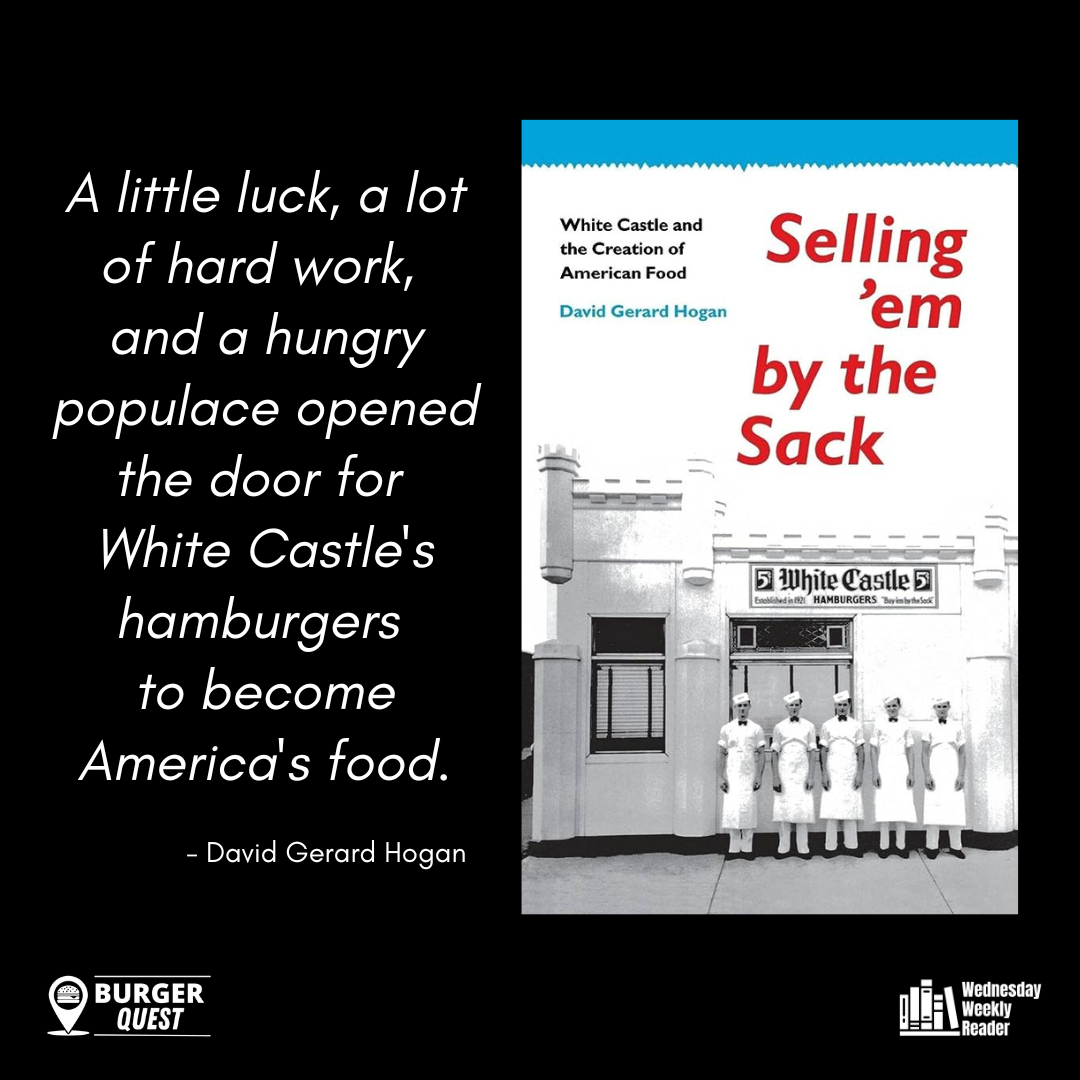
In the early 20th century, a revolutionary force emerged in the realm of hamburgers—the iconic White Castle. Founded by Walter Anderson and Billy Ingram in 1921 in Wichita, KS, White Castle would forever change the landscape of fast food and leave an indelible mark on the history of hamburgers.
White Castle’s success can be attributed to its pioneering approach to the fast-food industry. Anderson and Ingram recognized the need for consistency, efficiency, and a streamlined system that would allow them to serve their signature sliders—the small, square-shaped burgers that would become their hallmark—in a fast and affordable manner. This innovative mindset laid the foundation for what would become the modern fast-food model.
One of the key aspects that set White Castle apart was its commitment to quality. The founders took great care in sourcing the finest ingredients, ensuring that each patty was made from 100% ground beef. They also introduced meticulous food preparation techniques, such as cooking the patties on a bed of onions to infuse them with extra flavor.
Another element that contributed to White Castle’s success was its iconic architecture. The small, castle-like structures with gleaming white exteriors and vibrant neon lights became instantly recognizable symbols of the brand. These buildings were strategically designed to capture attention and evoke a sense of curiosity, luring in customers who were eager to experience the unique and delicious burgers within.
White Castle’s marketing and advertising campaigns further propelled its rise to success. The company’s creative approaches, such as distributing colorful flyers and introducing the concept of “slider parties,” helped to establish a strong brand presence and build a dedicated customer base. The clever use of slogans and jingles also solidified White Castle’s position in the public consciousness, making the brand synonymous with the burger experience.
As the White Castle empire grew, so did its impact on the fast-food industry as a whole. The concept of standardized operations, quality control, and a focus on efficiency set the stage for the proliferation of fast-food chains that would follow. The success of White Castle served as a blueprint for others to replicate, paving the way for the growth of a fast-food culture that continues to thrive to this day.
Beyond its influence on the industry, White Castle’s unique burgers themselves became an enduring symbol of American comfort food. The small, bite-sized sliders with their signature steam-grilled buns and distinct flavor profile gained a devoted following. Generations of Americans have fond memories of late-night cravings satisfied by a bag of White Castle sliders, further solidifying the brand’s place in the hearts and stomachs of the nation.
So the next time you savor a delicious hamburger, catch a glimpse of a White Castle building with its distinctive charm, or see a box of frozen White Castles at your grocery store, take a moment to appreciate the enduring legacy of this fast-food empire. The rise of White Castle is a testament to the power of vision, ingenuity, and a passion for providing an unforgettable burger experience.
Fast Food Frenzy: The McDonald’s Impact
While White Castle played a significant role in revolutionizing the fast-food industry, it was another name that would come to dominate the global burger landscape—McDonald’s. The story of McDonald’s is not only one of success but also of unparalleled influence and innovation that forever shaped the fast-food industry and the way the world consumed hamburgers.
The transformative impact of McDonald’s can be attributed to the vision and business acumen of Ray Kroc. In 1955, Kroc, a struggling milkshake machine salesman, encountered Richard and Maurice McDonald, the founders of a small burger joint in San Bernardino, California. Recognizing the potential for their innovative fast-food system, Kroc partnered with the brothers and embarked on a journey that would change the culinary landscape forever.
Under Kroc’s leadership, McDonald’s introduced a revolutionary concept: the Speedee Service System. This innovative system revolutionized the way fast food was prepared, making it even faster, more efficient, and consistent. By streamlining operations, McDonald’s was able to serve customers with unprecedented speed while maintaining high standards of quality.
In addition to operational efficiency, McDonald’s recognized the importance of branding and consistency. The introduction of the iconic golden arches, designed to resemble the letter “M,” became an instantly recognizable symbol of the brand. The company’s commitment to delivering a consistent dining experience—no matter which McDonald’s location you visited—further solidified its position as an industry leader.
As McDonald’s expanded its reach across America, it introduced the concept of the modern fast-food restaurant. With its bright and inviting interiors, distinctive uniforms, and carefully curated menus, McDonald’s became more than just a place to grab a quick bite—it became a destination. Families flocked to McDonald’s for affordable meals that catered to both children and adults, fostering a sense of community and creating memories that would last a lifetime.
McDonald’s also played a pivotal role in introducing innovative menu items that captured the imagination of customers. From the iconic Big Mac, with its signature three-layered bun and special sauce, to the Quarter Pounder, which redefined the concept of a substantial burger, McDonald’s continually pushed the boundaries of what a fast-food burger could be. These menu innovations became cultural touchstones, forever embedded in the collective consciousness of burger enthusiasts worldwide.
Beyond its impact on the culinary landscape, McDonald’s revolutionized the way companies approached marketing and advertising. With catchy jingles, memorable characters like Ronald McDonald, and iconic campaigns like “I’m Lovin’ It,” McDonald’s managed to connect with consumers on an emotional level. Its marketing prowess, combined with its consistent and affordable offerings, propelled the company to unparalleled heights of success.
Today, McDonald’s stands as a global powerhouse, with thousands of locations spanning continents. Its influence on the fast-food industry is undeniable, and its impact on the popularity and accessibility of hamburgers is immeasurable. The fast-food frenzy ignited by McDonald’s not only transformed the way we consume burgers but also left an indelible mark on popular culture.
So, as you enjoy a McDonald’s hamburger or drive by one of its iconic golden arches, take a moment to appreciate the legacy of this fast-food giant. McDonald’s played a pivotal role in shaping the modern burger landscape, forever altering the way we experience fast food. It is a testament to the power of innovation, branding, and delivering an exceptional customer experience—a legacy that continues to inspire and influence the burger industry to this day.
From Hamburg to New Haven to Wichita to San Bernardino, the hamburger’s journey in the United States marked the beginning of a culinary revolution that would forever change the American food landscape. From its humble origins as Hamburg steak to its commercial success through chains like White Castle and McDonald’s, the hamburger has become an integral part of American cuisine and cultural identity. As the years passed, the hamburger’s popularity soared, evolving into a versatile dish with endless variations to suit every taste. Today, whether enjoyed at a fast-food joint or savored at a gourmet restaurant, the hamburger remains an enduring symbol of American culinary ingenuity and an all-time favorite comfort food for millions.
America has run on hamburgers for over a century. This is the story of their sizzle and their symbolism, where they came from and how they conquered the world.
What do Americans think of when they think of the hamburger? A robust, succulent spheroid of fresh ground beef, the birthright of red-blooded citizens? Or a cardboard-boxed Big Mac, mass-produced to industrial specifications and served by wage slaves to an obese, brainwashed population? Is it cooking or commodity? An icon of freedom or the quintessence of conformity?
The Hamburger is a fast-paced and entertaining book unfolding the immense significance of the hamburger as an American icon. Josh Ozersky shows how the history of the burger is entwined with American business and culture and, unexpectedly, how the burger’s story is in many ways the story of the country that invented (and reinvented) it.
Spanning the years from the nineteenth century with its waves of European immigrants to our own era of globalization, the book recounts how German “hamburg steak” evolved into hamburgers for the rising class of urban factory workers and how the innovations of the White Castle System and the McDonald’s Corporation turned the burger into the Model T of fast food. The hamburger played an important role in America’s transformation into a mobile, suburban culture, and today, America’s favorite sandwich is nothing short of an irrepressible economic and cultural force. How this all happened, and why, is a remarkable story, told here with insight, humor, and gusto.
Josh Ozersky’s The Hamburger takes readers on an irresistible exploration of one of America’s most iconic and beloved foods—the hamburger. With meticulous research and a genuine passion for the subject, Ozersky delves into the history, cultural significance, and evolution of this culinary masterpiece, leaving readers hungry for more.
In this delightful book, Ozersky artfully blends storytelling, gastronomic insights, and historical anecdotes to paint a vivid picture of the hamburger’s journey from its humble beginnings to its status as a global sensation. Whether you’re a devoted foodie or simply a lover of good eats, The Hamburger has something to offer everyone.
One of the book’s greatest strengths lies in Ozersky’s ability to convey his deep knowledge of the subject matter in an accessible and engaging manner. He navigates the intricate world of beef cuts, patty preparation, and bun selection with expertise, making it both educational and entertaining. From the juicy debates surrounding the perfect burger patty thickness to the ideal ratio of condiments and toppings, Ozersky leaves no stone unturned.
Moreover, The Hamburger goes beyond mere culinary exploration. Ozersky dives into the cultural and societal aspects that have shaped the hamburger’s popularity throughout history. He skillfully analyzes how the burger has adapted to different regions, cultures, and even dietary trends, all while maintaining its universal appeal. By examining the hamburger’s place in fast food culture, gourmet dining, and the rise of the modern food truck revolution, Ozersky showcases the burger’s versatility and its ability to adapt to ever-changing culinary landscapes.
There are a few minor areas where the book falls short. While Ozersky provides a wealth of historical context and insightful analysis, some readers might crave a more personal touch or an exploration of the author’s own experiences with hamburgers. Additionally, the inclusion of more visually appealing photographs or illustrations would have enhanced the overall reading experience.
The Hamburger is an informative and engaging read that will satisfy both burger enthusiasts and those curious about the cultural significance of this ubiquitous food. Ozersky’s passion for hamburgers shines through every page, making it impossible to resist the temptation to indulge in a juicy, perfectly grilled patty by the time you reach the final chapter.
The Hamburger is a must-read for anyone with an appreciation for the mouthwatering joy that only a well-crafted burger can bring. With its blend of history, culinary expertise, and cultural insights, Ozersky’s book leaves readers with a deeper understanding and newfound admiration for this timeless classic.
Author Reggie McNeal invites us to get off our ass (biblically speaking) with a focus on the Parable of the Good Samaritan:
25 On one occasion an expert in the law stood up to test Jesus. “Teacher,” he asked, “what must I do to inherit eternal life?”
26 “What is written in the Law?” he replied. “How do you read it?”
27 He answered, “‘Love the Lord your God with all your heart and with all your soul and with all your strength and with all your mind’; and, ‘Love your neighbor as yourself.’”
28 “You have answered correctly,” Jesus replied. “Do this and you will live.”
29 But he wanted to justify himself, so he asked Jesus, “And who is my neighbor?”
30 In reply Jesus said: “A man was going down from Jerusalem to Jericho, when he was attacked by robbers. They stripped him of his clothes, beat him and went away, leaving him half dead. 31 A priest happened to be going down the same road, and when he saw the man, he passed by on the other side. 32 So too, a Levite, when he came to the place and saw him, passed by on the other side.33 But a Samaritan, as he traveled, came where the man was; and when he saw him, he took pity on him. 34 He went to him and bandaged his wounds, pouring on oil and wine. Then he put the man on his own donkey, brought him to an inn and took care of him. 35 The next day he took out two denariiand gave them to the innkeeper. ‘Look after him,’ he said, ‘and when I return, I will reimburse you for any extra expense you may have.’
36 “Which of these three do you think was a neighbor to the man who fell into the hands of robbers?”
37 The expert in the law replied, “The one who had mercy on him.”
Jesus told him, “Go and do likewise.”
Luke 10:25-37 (NIV)
We’re living in a bizarre polarity of unprecedented connectedness and unparalleled isolation.
When we finally get home, joining countless others in our cul-de-sacs or subdivision streets, we want to be home.
The Great Commission may carry you to the ends of the world, but it starts on your street. God has given us a perfect environment for demonstrating the gospel and advancing His mission, if only we would open our eyes to it. It’s that place you probably consider your personal and private fortress – your home. Hospitality is one of the simplest – and most exciting – ways to engage in God’s mission.
If we are ever going to join all our lives to God’s mission to change the world, we need to reclaim all of our ordinary pieces as a part of that gospel mission. We have to reject the notion that something has to be big or unusual to be significant. We will have to view the ordinariness of our lives as significant, and allow God to use our homes as a seed to be planted and grown, not something to be discarded or devalued.
We need to practice neighboring.
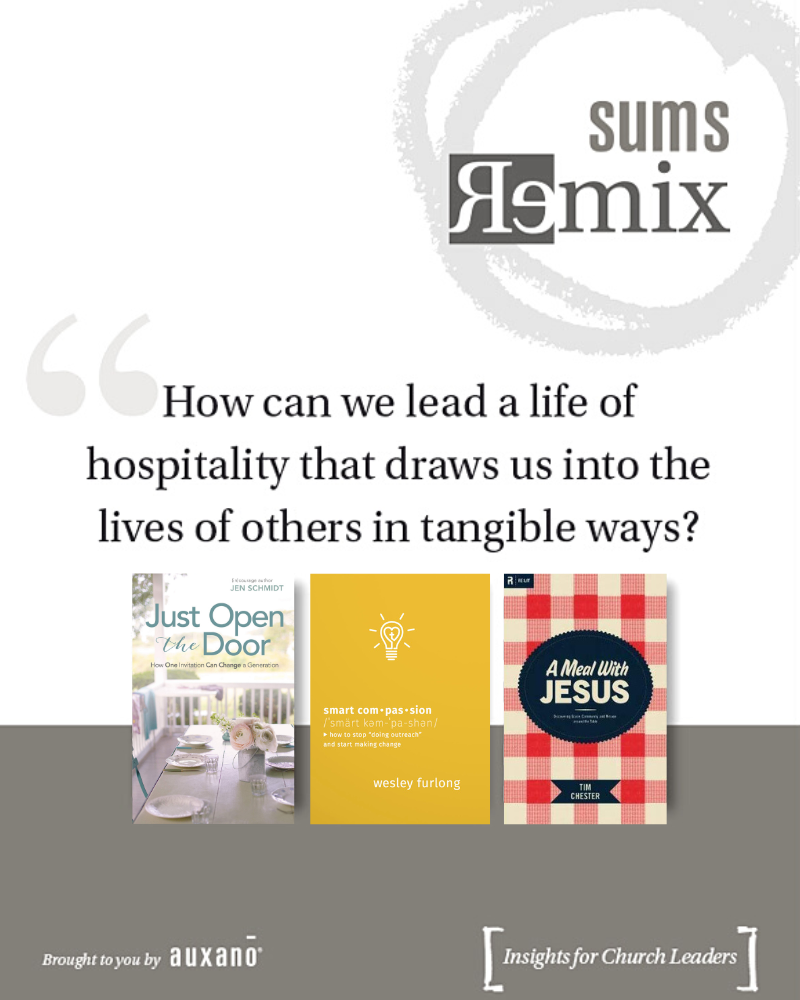
This issue of SUMS Remix looks at solutions that will help make your home a hub for ministry instead of a refuge from ministry. The solutions include:
In a world driven by instant gratification and quick fixes, the pursuit of wisdom often takes a backseat. We are drawn to dramatic turnarounds and immediate results, neglecting the transformative power of patience, discipline, and inner growth. As the quote below by Tim Keller wisely reminds us, true wisdom is not found in shortcuts but in the enduring journey of long training and discipline. However, he emphasizes that the heart, not just the mind and will, must be trained to embark on this enlightening path.
The Power of Patience and Discipline
Wisdom is not a destination; it is a lifelong pursuit. It requires the cultivation of patience and discipline, qualities that enable us to navigate the complexities of life with grace and insight. Like a skilled craftsman honing their craft over years of dedicated practice, the path to wisdom necessitates consistent effort, perseverance, and a willingness to learn from both successes and failures.
Training the Mind and Will
Intellectual knowledge and strong determination are fundamental pillars of wisdom. Training the mind involves acquiring knowledge, critical thinking, and the ability to discern between truth and falsehood. It is through the continuous expansion of our intellectual capacities that we develop a deeper understanding of the world and gain the tools to make informed decisions.
Equally important is the training of the will—the ability to harness our inner strength, exercise self-control, and align our actions with our values. Willpower empowers us to resist temptations, overcome obstacles, and persevere in the face of challenges on our journey toward wisdom.
The Heart: The Seat of Wisdom
While training the mind and will is crucial, the quote reminds us that the heart must not be overlooked. The heart represents our emotional intelligence, compassion, empathy, and the capacity to connect with others and ourselves on a deeper level. It is through cultivating the heart that wisdom truly blossoms.
Training the heart involves developing qualities such as kindness, gratitude, forgiveness, and love. These virtues foster harmonious relationships, promote understanding, and allow us to navigate conflicts with empathy and compassion. By nurturing the heart, we become more attuned to our inner voice and the needs of others, enabling us to make choices that align with our values and benefit the greater good.
Integrating Mind, Will, and Heart
Wisdom flourishes when the mind, will, and heart are integrated and work in harmony. It is the synergy of these elements that allows us to approach challenges and decisions with clarity, balance, and a profound understanding of ourselves and the world around us.
To embark on the path of wisdom, we must engage in practices that train all aspects of our being. This may include reading and seeking knowledge, engaging in reflective practices such as meditation and journaling, embracing self-discipline, and nurturing our emotional intelligence through acts of kindness and self-care.
Modern Elders realize that the pursuit of wisdom is not a quick-fix solution but rather a lifelong journey that requires patience, discipline, and a holistic approach. By training the mind, will, and heart, we unlock the true potential for growth, understanding, and compassion within ourselves.
Embrace the wisdom in the quote and commit to cultivating all aspects of our being, for it is through this integration that we can truly embody the transformative power of wisdom in our lives and positively impact the world around us.
Being a part of God’s kingdom is not just having a private relationship with God but also having a communal relationship with His other children.
Linda Wilcox, No More Front Porches
Front Porches. Once they were a vital part of American society. Whether you had a large verandah that circled the house, or little more than a front stoop, you adorned it with comfortable chairs and spent hours there, talking with friends and relatives, watching what was going on in the neighborhood, looking out for others, and keeping in touch with your world. Front porches symbolized relationships and being involved with life beyond your front door.
Today, life has changed.
Few new homes offer a place to nestle as twilight sets in and few people have the leisure time for this lifestyle, or even for the relationships that it represents. We’ve moved ahead and left front porch attitudes behind as quaint relics.
But in recent decades, as the nation has reeled from tragedies such as the September 11 terrorist attacks, countless shootings, and the pandemic, Americans are again scurrying to regain that closeness, care, and compassion we found in communities that sat on front porches. Perhaps, we’re finding, we need the stability of those front porch attitudes in our lives.
In No More Front Porches, sociologist Linda Wilcox looks at how and why communities, churches, and lifestyles have changed. She evaluates the nostalgia for the ’good old days,’ and explores the offerings of today. Though we can never regain the idealized past, she gives us help and hope for building emotional and community ’front porches’ in the frantic society we now zoom through. She helps us learn how to avoid isolation and refocus our methods for building those close, front porch relationships.
Let No More Front Porches help you discover a little bit more about this society in which we live. And in the process, you’re bound to learn how to better enjoy people in your home, neighborhood, church and world.
According to author Linda Wilcox, it’s not uncommon for us, thanks to 24-hour news availability, to know more about what’s happening on the other side of the planet than what’s happening on the other side of the fence.
Written in 2002, that truism is all the more prevalent today. It’s too easy to become trapped in the digital world of 24/7, feeling always on, FOMO, and living life in the hyperspeed lane.
Only in the last decade, the author writes, have we come to “need” this much immediate contact with each other. Now, it seems, we can’t live without our devices right beside us, if not in our hands most of our waking hours.
At the same time, we desire a personal space that allows us to escape the demands of our public (and digital) lives and a place we can call our own.
And so we retreat into our closed garage doors and empty front porches, emerging in our vehicles off on an errand, returning to the same garage door, closing it before we exit the vehicle.
A pointed, and poignant, quote from the author sums it up: Let’s be realistic. Perhaps we can’t save the world [by being on the front porch], but surely we can do a better job than we have in the past.
Americans are hungry to regain the closeness, care, and compassion we used to find right outside our front doors.
Delicious, versatile, and universally adored, certain dishes possess an undeniable charm that transcends cultural boundaries. Among these culinary wonders stands a true icon – the hamburger.
The hamburger, with its simple yet irresistible combination of a juicy patty, fresh toppings, and a soft bun, has achieved unparalleled popularity and a universal appeal that has captured the hearts and palates of people worldwide.
Let’s embark on a brief, mouthwatering exploration, uncovering the reasons behind the universal appeal of this beloved dish.
Versatility: A Burger for Every Palate
Hamburgers offer a delightful canvas for customization, making them appealing to a wide range of taste preferences. With classic beef patties as a foundation, the burger caters to diverse diets and culinary choices. With an array of toppings, sauces, and condiments, individuals can create personalized flavor profiles, ensuring a burger for every palate.
Comfort Food Connection
The universal appeal of the hamburger lies in its ability to evoke feelings of comfort and nostalgia. As a quintessential comfort food, the burger offers a familiar and satisfying experience. Whether it brings back childhood memories of backyard barbecues or conjures visions of casual outings with loved ones, the burger taps into a collective sentiment of warmth and familiarity.
Convenience and Accessibility
In our fast-paced world, convenience plays a significant role in the universal appeal of the hamburger. As a handheld delight, it provides a quick and easy meal option, ideal for busy individuals on the go. Furthermore, hamburgers are widely accessible, available at a range of establishments, from fast-food joints to gourmet burger restaurants, ensuring everyone can savor their deliciousness.
Cultural Cross-Pollination
The hamburger’s universal appeal can be attributed to its adaptability to different cultures and cuisines beyond its American roots. From fusion flavors to regional variations, the burger has seamlessly integrated itself into various culinary traditions worldwide. This cultural cross-pollination has expanded its appeal, making it a beloved dish in diverse communities and enhancing its global popularity.
Social Bonding and Shared Experiences
Hamburgers have a remarkable ability to bring people together, fostering social connections and shared experiences. Whether enjoyed at backyard barbecues, family gatherings, or friendly outings, burgers create moments of togetherness and joy. The act of sharing a delicious burger encourages conversations, laughter, and the forging of lasting memories.
The Perfect Combination of Flavors and Textures
One of the key factors behind the universal appeal of hamburgers is the harmonious blend of flavors and textures they offer. The juicy patty, complemented by crisp toppings, melty cheese, and a soft bun, creates a symphony of taste and mouthfeel. The balance between savory, tangy, and sweet notes satisfies the palate and leaves a lasting impression.
Pop Culture and Media Influence
Hamburgers have become cultural icons, portrayed in movies, television shows, and advertisements, further enhancing their universal appeal. The representation of mouthwatering burgers in popular media creates a sense of desire and anticipation, sparking the craving to indulge in this beloved dish. Additionally, the influence of social media and food blogging has propelled burger culture, fueling the excitement and engagement surrounding hamburgers.
The Last Bite
The universal appeal of the hamburger can be attributed to a multitude of factors that converge to create an irresistible dining experience. From its versatile nature and comforting familiarity to its ability to foster social connections and adapt to various cultures, the hamburger has captured the hearts and taste buds of individuals worldwide. As an emblem of culinary delight, it continues to unite people, transcend borders, and evoke a shared passion for exceptional flavors. The universal love for the hamburger stands as a testament to its enduring appeal and its position as a timeless favorite in culinary culture. So, the next time you sink your teeth into a juicy, flavorful burger, savor the taste and appreciate the reasons behind its universal appeal – a culinary masterpiece that brings people together and celebrates the joy of good food.
I have always loved history. Not many accounting majors have a minor in US History; the same goes for a Masters in Administration and Communication with a minor in Baptist History. But of all the history periods, I think the American Revolution is my favorite.
For me, Independence Day now carries a different meaning.
My son is in the Air Force. He’s been deployed twice in his career to date.
While my father and father-in-law both served in WWII and the years afterwards, and several cousins were in Viet Nam, somehow it’s all very personal now.
America celebrates 247 years as a nation this July 4th, even though the independence we celebrate was not settled for another seven years after the signing of the Declaration of Independence. In the many years since we have gone through a devastating civil war, numerous regional wars, two World Wars, a Cold War, and a global war on terror that has no country but untold numbers of faces.
It seems that to have peace you must have war.
I pray for my son every day, for safety as he performs his duty. I know that he has been trained and prepared to do his best, and give his all, for his family and his country. While it is a sacrifice he is prepared to make daily, I hope he never has to.
Hundreds of thousands of men and women have made that sacrifice since 1776, and continue to do so to this day.
So when you celebrate freedom this July 4th, never forget the price others have paid.