Think about the homes and people in your immediate vicinity. This is your opportunity to represent Jesus to those around you. Acts 17:26 suggests that your living situation is not random, but purposeful.
Your current location is a chance to practice loving others as Jesus taught.
Viewing your neighborhood as a mission field can transform your perspective and actions. You might spend more time there, interacting with and serving your neighbors differently. God has placed you there to show love to those nearby.
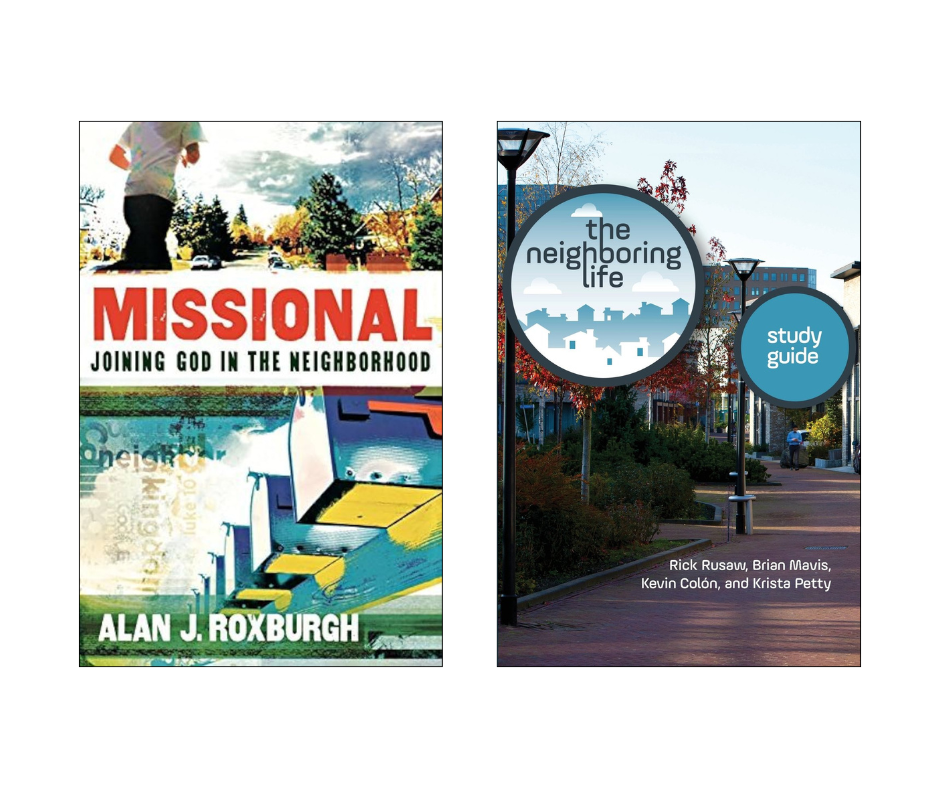
Jesus exemplified this approach. As Alan Roxburgh points out in Missional: Joining God in the Neighborhood, Jesus often appeared in everyday settings and used ordinary examples in his teachings. His stories frequently focused on common activities and needs.
The practice of “staying” in your neighborhood doesn’t have to be complicated. It’s about recognizing the divine in daily life and engaging with your community in simple, relatable ways.
JESUS…
…asked for a drink of water.
…attended a wedding.
…was a guest at someone’s house.
…grieved with friends.
…told stories, even jokes.
…went fishing.
…made breakfast on the beach for his friends.
…threw raging parties.
…gave his friends nicknames like Rock and Sons of Thunder.
…prayed for his friends.
…called them by name.
…shared his life.
…made wine.
…visited the sick.
…saw people and their potential.
…even during his worst moments, he blessed his neighbor.
He was touchable, authentic, and available. He was a best friend and the best neighbor.
How can you follow the examples of Jesus presented above?
How was it that within a short span of time on the east coast of the North American continent there should have sprung up such a rare array of genius – men who seemed in virtual command of historical experience and who combined moral imagination with a flair for leadership?
We know those men as the Founding Fathers.
Part of the answer is that these men knew how to invest their combined strength in a great idea:
A young man like James Madison had urgent thoughts about what people had to do to become free and remain free. Not content to just set these thoughts down in print, he joined those concerns to those of other men in a position to exert leadership.
The intellectual exchange – in person and in letters – between Thomas Jefferson and John Adams spanned over 50 years, beginning when independence was just a dream and continuing long after the United States of America had become an established government. This exchange knows few equals for depth, range of subject matter, literary style and general intellectual achievement in recorded correspondence.
George Washington and Benjamin Franklin registered their main impact on their contemporaries through the force of their personalities rather than through any detailed exposition of their political ideas and philosophy.
It was from men like these that the idea of a new nation was born. Their thoughts were expressed in The Declaration of Independence.
Drafted by Thomas Jefferson between June 11 and June 28, 1776, the Declaration of Independence is at once the nation’s most cherished symbol of liberty and Jefferson’s most enduring monument. Here, in exalted and unforgettable phrases, Jefferson expressed the convictions in the minds and hearts of the American people.
The political philosophy of the Declaration was not new. John Locke and the Continental philosophers had already expressed its ideals of individual liberty. What Jefferson did was to summarize this philosophy in “self-evident truths” and set forth a list of grievances against the King in order to justify before the world the breaking of ties between the colonies and the mother country.
On July 1, 1776, Congress reconvened. The following day, the Lee Resolution for independence was adopted by 12 of the 13 colonies, New York not voting. Immediately afterward, the Congress began to consider the Declaration. Adams and Franklin had made only a few changes before the committee submitted the document. The discussion in Congress resulted in some alterations and deletions, but the basic document remained Jefferson’s. The process of revision continued through all of July 3 and into the late morning of July 4. Then, at last, church bells rang out over Philadelphia; the Declaration had been officially adopted.
A letter from John Hancock to General Washington in New York, as well as the complete text of the Declaration, followed two days later:
That our affairs might take a more favorable turn, the Congress have judged it necessary to dissolve the connection between great Britain and the American colonies, and to declare them free and independent states; as you will perceive by the enclosed Declaration, which I am directed to transmit to you, and to request you will have it proclaimed at the head of the army in the way you shall think most proper.
Many saw at once that with the enemy massing for battle so close at hand and independence at last declared by Congress, the war had entered an entirely new stage. The lines were drawn now as never before, the stakes higher. “The eyes of all America are upon us,” John Knox wrote. “As we play our part posterity will bless or curse us.”
“We are in the midst of a revolution,” wrote John Adams, “the most complete, unexpected, and remarkable of any in the history of the nations.”
In a ringing preamble, drafted by Thomas Jefferson, the document declared it “self-evident” that “all men are created equal,” and were endowed with the “unalienable” rights of “life, liberty, and the pursuit of happiness.” And to this noble end the delegates had pledged their lives, their fortunes, and their sacred honor.
From this point on, the citizen-soldiers of George Washington’s army were no longer fighting only for the defense of their country, or for their rightful liberties as free born Englishmen, as they had at Lexington and Concord, Bunker Hill, and through the long siege at Boston. It was now a proudly proclaimed, all-out war for an independent America, a new America, and thus a new day of freedom and equality.
At a stroke the Continental Congress had made the Glorious Cause of America more glorious still, for all the world to know, and also to give every citizen soldier at this critical juncture something still larger and more compelling for which to fight.
Clarity isn’t everything, but it changes everything.
Part of a regular series on 27gen, entitled Wednesday Weekly Reader.
During my elementary school years one of the things I looked forward to the most was the delivery of “My Weekly Reader,” a weekly educational magazine designed for children and containing news-based current events.
It became a regular part of my love for reading, and helped develop my curiosity about the world around us.
Within the South itself, no other form of cultural expression, not even music, is as distinctively characteristic of the region as the spreading of a feast of native food and during before a gathering of kin and friends. For as long as there has been a South, and people who think of themselves as Southerners, food has been central to the region’s image, its personality, and its character.
John Egerton, Southern Food
Southern Hospitality
Southern culture places a high value on hospitality, instilling it from an early age. Young girls are taught charm and etiquette, while boys learn the art of being gentlemen. This upbringing emphasizes the importance of making others feel comfortable and appreciated, often at the expense of personal comfort.
Southerners are known for going above and beyond in their hospitality. Thoughtful gestures like handwritten notes, hostess gifts, homemade meals, or simply offering refreshments are common expressions of warmth and kindness. These acts reflect deeply ingrained values passed down through generations.
In the South, food is intimately tied to hospitality and love. Culinary skills often become part of one’s identity. For example, a person might be known for their athletic prowess, but their reputation for making an exceptional pie crust could be equally important in social circles.
This focus on hospitality means many Southerners are always prepared to offer comfort or assistance. Whether it’s a new baby, a loss in the family, or an unexpected visitor, there’s often a homemade dish ready to be shared or the willingness to quickly prepare something.
The essence of Southern hospitality lies in prioritizing others’ needs. More often than not, this thoughtfulness is accompanied by offerings of food or drink, be it sweet tea, homemade desserts, or a full meal meant to be savored together. This readiness to welcome and care for others is a defining characteristic of Southern culture.
The Family Table
The family table in the South is more than just a place to eat—it’s a sanctuary. As you gather, you’re invited to shed your worries and bask in a nurturing environment that feeds both body and spirit.
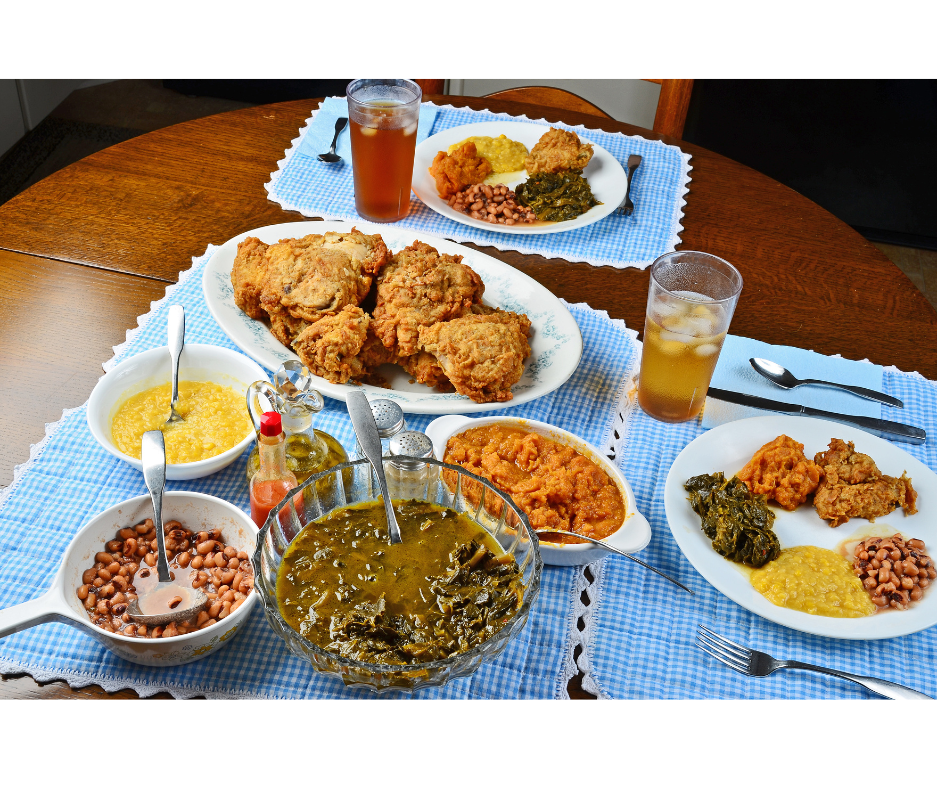
Southern cuisine embodies love, comfort, and security, especially when shared among family. Every Southern get-together revolves around food, from leisurely Sunday meals to lively weeknight dinners. Picture glasses of sweet tea accompanying classic “meat and three” plates: crispy fried chicken, squash casserole, tangy fried green tomatoes, and golden onion rings, all capped off with a rich caramel cake. Even post-meal cleanup fosters a sense of unity and gratitude.
These culinary traditions become ingrained in the Southern soul. The weekly dinner invitation isn’t just a question—it’s a gentle reminder of life’s true priorities. Attendance is as much an expression of love as the cooking itself. For those less inclined to verbal affection, serving up homemade burgers and fries speaks volumes.
The family table offers a unique opportunity to truly connect with loved ones. Regular dinners allow for daily check-ins, making it easier to sense when someone needs extra support. It’s also a place for fun and learning. One family encourages their children to bring interesting facts to share, broadening everyone’s knowledge and sparking engaging conversations.
Some Southerners take their commitment to the family table even further. One family outfitted theirs with comfortable office chairs, perfect for lingering over long Sunday meals as aromas of slow-cooked dishes fill the air.
These moments—waiting for food to finish cooking or cleaning up together—create lasting memories and strengthen familial bonds. By intentionally maintaining this tradition, Southerners foster connection, offer comfort, and express love. Bringing multiple generations together over delicious food in a welcoming environment rejuvenates the spirit, instills hope, and builds resilience. It’s this dedication to togetherness that makes the family table such an integral part of Southern life.
Creating Authentic, Enduring Relationships
There’s no expiration date or deadline for forging authentic, enduring relationships. We are free to take it slowly. We live our lives trusting that the tiny moments will not be wasted. There is no such thing as a trivial connection. You might never bake that peach coffee cake with the perfect crumb and serve it to her in your living room at 8:00 a.m. on a Thursday. But it might happen that one day you’ll meet your son’s classmate’s mom. A few weeks later you might notice her driving by as you walk home. You’ll wave. She’ll wave back. One day she’ll pull up to the curb and ask a question. Eventually she’ll come inside and sit at your table, and you’ll swap stories of struggle and success. After another year has passed she’ll invite you into her home. You’ll sit at her table and wrap your hands around her mug. She’ll spread your toast with butter and sprinkle it with cinnamon. You’ll talk about sorrow and motherhood until the tea grows cold. You will have made an actual friend, slowly, over time. (And you will tear up, retelling the story.) None of this would have happened if you hadn’t decided to be the sort of person who looks people in the eye and says hello.
Stacy Lyn Harris, Love Language of the South
Stacy grew up watching her grandmother cook the same way other kids watched cartoons. The Love Language of the Southis a memoir of southern culinary culture, regional traditions, and easy-to-follow recipes.
More than eighty recipes and dozens of hospitality tips give entertaining tools for novice and experienced hosts alike. Featuring an index designed to help cooks with meal planning, and find content by course, this cookbook will make cooking fun and productive. Or you might go straight for the southern classics, like Hoppin John, Bacon Cheddar Biscuits, Pimiento Cheese, and Cornmeal Fried Okra.
With southern food, it’s much more than keeping hunger pangs at bay. Learn the importance of gathering around the table to share food and bring comfort to those you love with The Love Language of the South!







 27gen.com