Tears, Triumphs, and Taste: Unpeeling “The Core of An Onion”

As Julia Child once said, “It is hard to imagine a civilization without onions.”

Historically, she’s been right – and not just in the kitchen. Flourishing in just about every climate and culture around the world, onions have provided the essential basis not only for sautés, stews, and sauces, but for medicines, metaphors, and folklore. Now they’re Mark Kurlansky’s most flavorful infatuation yet as he sets out to explore how and why the crop reigns from Italy to India and everywhere in between.
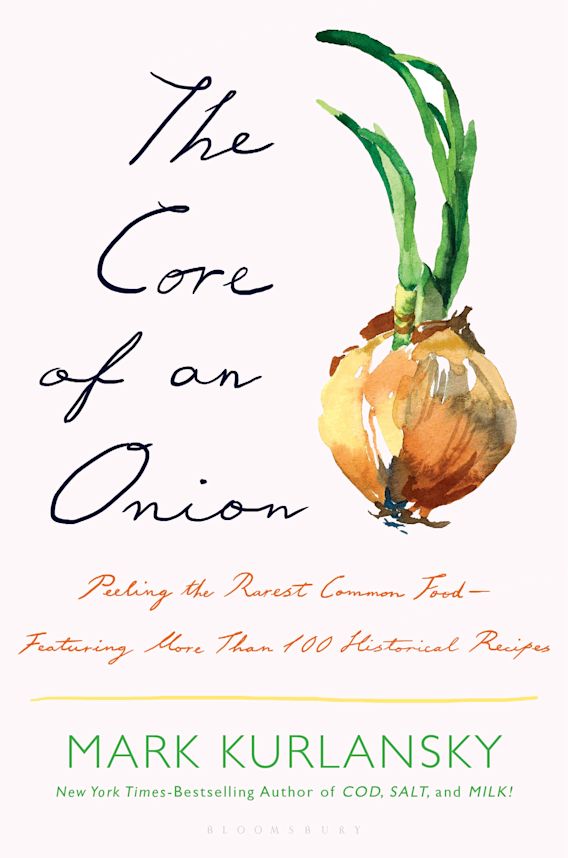
Featuring historical images and his own pen-and-ink drawings, Kurlansky begins with the science and history of the only sulfuric acid–spewing plant, then digs through its twenty varieties and the cultures built around them. Entering the kitchen, Kurlansky celebrates the raw, roasted, creamed, marinated, and pickled. 

Including a recipe section featuring more than one hundred dishes from around the world, The Core of an Onion shares the secrets to celebrated Parisian chef Alain Senderens’s onion soup eaten to cure late-night drunkenness; Hemingway’s raw onion and peanut butter sandwich; and the Gibson, a debonair gin martini garnished with a pickled onion.

Just as the scent of sautéed onions will lure anyone to the kitchen, The Core of an Onion is sure to draw readers into their savory stories at first taste.


In his latest culinary exploration, renowned food historian Mark Kurlansky takes readers on a journey through the pungent world of onions in The Core of An Onion. Known for his deep dives into singular food subjects like frozen food, salt, and milk, Kurlansky now turns his attention to this ubiquitous allium that has shaped cuisines and cultures around the globe for millennia.

Kurlansky peels back the layers of the onion’s history, tracing its origins and spread across continents. He reveals that onions were likely first cultivated in Central Asia over 5,000 years ago, quickly becoming a staple in diets from China to Egypt. The book explores how onions played a crucial role in sustaining ancient civilizations, providing essential nutrients and flavors to often bland diets.

One of the most intriguing aspects of The Core of An Onion is Kurlansky’s examination of the vegetable’s cultural significance. He uncovers how onions have been revered, feared, and even worshipped throughout history. In ancient Egypt, for instance, onions were considered symbols of eternity due to their concentric ring structure, and were often buried with pharaohs to ensure their passage to the afterlife.

The author doesn’t shy away from the onion’s notorious tear-inducing properties. He delves into the chemistry behind this phenomenon, explaining how cutting an onion releases sulfur compounds that react with the moisture in our eyes to form sulfuric acid. Kurlansky also highlights some lesser-known facts about this chemical reaction. For example, chilling onions before cutting can reduce tear production, as the volatile compounds are less active at lower temperatures.

Kurlansky’s research unearths fascinating tidbits about onions that even culinary enthusiasts might not know. For instance, the book reveals that onions were once used as currency in the Middle Ages. In 12th-century Europe, onions were sometimes accepted as rent payments and even as wedding gifts. Another surprising fact is that onions have been used in traditional medicine for centuries. Ancient Greek athletes consumed large quantities of onions, believing they would lighten the balance of their blood.

The book also explores the onion’s role in modern agriculture and cuisine. Kurlansky examines how the development of sweeter onion varieties, like the Vidalia onion from the southwest region of Georgia, has changed consumer preferences and agricultural practices. He discusses the ongoing debate among chefs and food scientists about whether cooking destroys the health benefits of onions, presenting evidence from both sides.

Equally intriguing is the focus on the genetic diversity of onions. Kurlansky reveals that there are over 700 species in the Allium genus, which includes onions, garlic, and chives. He explores how this diversity has led to a wide array of flavors and uses across different cultures, from the mild shallots favored in French cuisine to the pungent red onions commonly used in Indian dishes.

Throughout The Core of An Onion, Kurlansky weaves in recipes and cooking techniques from various cultures, demonstrating the onion’s versatility in the kitchen. He challenges readers to reconsider their relationship with this often-under appreciated ingredient, encouraging them to explore its full potential beyond mere aromatic base.

In typical Kurlansky style, the book is meticulously researched and engagingly written, making it accessible to both food history buffs and casual readers. By the end of The Core of An Onion, readers will have gained a newfound appreciation for this humble yet influential vegetable that has shaped human history and continues to play a crucial role in global cuisine and culture.


Part of a regular series on 27gen, entitled Wednesday Weekly Reader.

During my elementary school years one of the things I looked forward to the most was the delivery of “My Weekly Reader,” a weekly educational magazine designed for children and containing news-based current events.

It became a regular part of my love for reading, and helped develop my curiosity about the world around us.

How to Have a Beautiful Day in Your Neighborhood

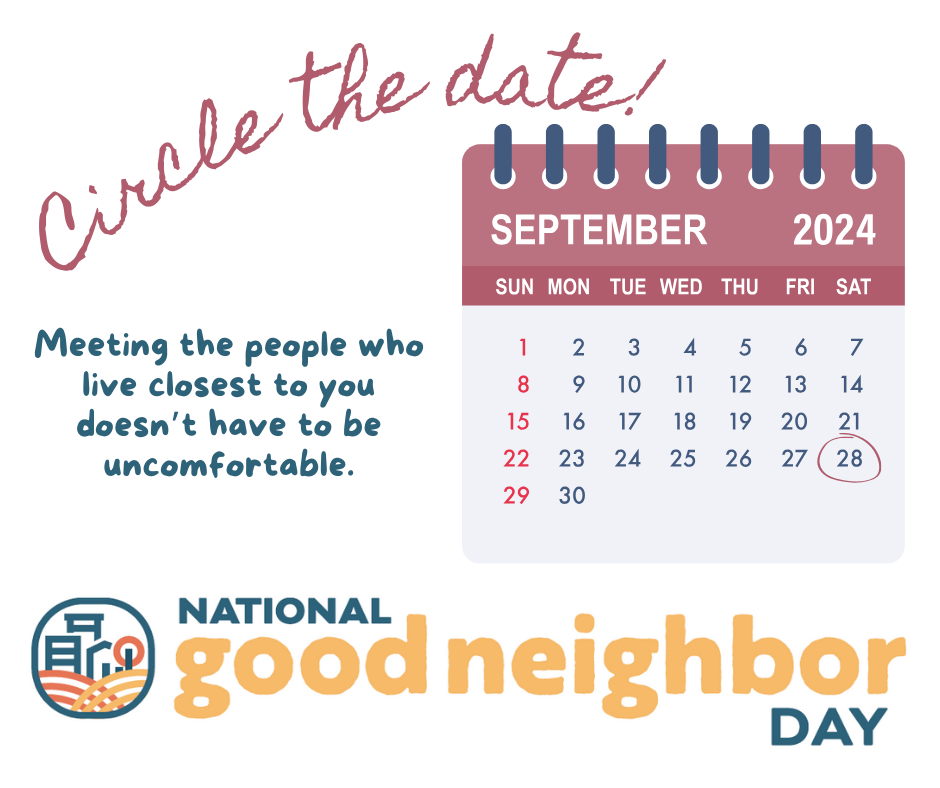
Celebrating National Good Neighbor Day September 28

National Good Neighbor Day is an annual observance in the United States that encourages people to build stronger relationships with their neighbors and foster a sense of community. 

Here’s a brief overview of its history and background:

The day was created by Becky Mattson, a resident of Lakeside, Montana, who came up with the idea in the early 1970s. She believed that good neighbors were vital to the strength and well-being of communities and wanted to create a day that would recognize and encourage neighborly relationships.

Mattson began promoting the idea locally and then expanded her efforts to gain wider recognition. She successfully lobbied for the day to be recognized in her home state of Montana.

Encouraged by the state-level success, Mattson launched a campaign to have the day recognized nationally and her efforts caught the attention of members of Congress, who supported the idea.

In 1978, Mattson’s work culminated in success when President Jimmy Carter issued Proclamation 4601, officially designating the fourth Sunday in September as “National Good Neighbor Day.” In his proclamation, Carter stated, “Understanding, love, and respect build cohesive families and communities.”

In 2003, the observance was moved to a fixed date of September 28th each year. National Good Neighbor Day is sponsored and managed by The Hopeful Neighborhood Project.

Mattson’s grassroots effort to promote neighborliness and community spirit is a testament to how individual citizens can influence national observances. Her initiative has since inspired many communities across the United States to organize events and activities that foster better relationships between neighbors.

National Good Neighbor Day aims to promote kindness, consideration, and understanding between neighbors, recognizing the importance of strong community bonds.

As National Good Neighbor Day approaches, communities across the nation are gearing up to celebrate the spirit of neighborliness. This annual observance offers a perfect opportunity to strengthen bonds and create a more vibrant, connected neighborhood.

Here are some inspiring ways you can participate and make a difference in your community:

Bring the Neighborhood Together – Nothing fosters community spirit quite like sharing a meal. Consider organizing a block party, community potluck, or barbecue in your local park. These gatherings provide an excellent chance for neighbors to mingle, share stories, and create lasting connections.

Lend a Helping Hand – Good Neighbor Day is all about kindness. Why not offer to help an elderly neighbor with yard work or home maintenance? Baking treats to share or offering to pet-sit for a neighbor going on vacation are simple yet meaningful gestures that can brighten someone’s day.

Improve Your Surroundings – Take pride in your neighborhood by initiating community improvement projects. Organize a neighborhood clean-up, plant trees, or start a community garden. These activities not only beautify your area but also give neighbors a chance to work together towards a common goal.

Foster Social Connections – Launch a neighborhood watch program to enhance safety, or start a book club to bring together literature lovers. Setting up a community bulletin board can keep everyone informed about local news and events, fostering a sense of community.

Welcome New Faces – Make newcomers feel at home by creating a welcome committee. Greet new residents with welcome baskets filled with local goodies and information about the neighborhood. Offering a guided tour of the area can help them feel more connected to their new home.

Share Your Skills – Everyone has something to offer. Host workshops where neighbors can share their expertise, whether it’s cooking, home repair, or gardening. Consider setting up a tool-lending library to promote resource sharing within the community.

Celebrate Diversity – Organize multicultural potlucks or cultural performances to celebrate the diversity in your neighborhood. These events can foster understanding and appreciation for different cultures and traditions.

Give Back Together – Coordinate charitable activities like food or clothing drives for local charities. Volunteering as a group at local non-profits not only helps those in need but also strengthens neighborhood bonds.

Promote Health and Wellness – Organize group fitness activities like neighborhood walks or yoga in the park. Hosting health awareness seminars can also contribute to the overall well-being of your community.

Go Green – Initiate environmental projects such as coordinating neighborhood recycling efforts or organizing energy conservation challenges. These activities can bring neighbors together while making a positive impact on the environment.

Engage Youth – Set up mentoring programs or organize youth sports leagues to involve younger residents in community activities. This can help foster a sense of belonging and responsibility among the next generation.

Embrace Technology – Create neighborhood social media groups or websites to improve communication. Organizing digital literacy classes for older residents can help bridge generational gaps and keep everyone connected.

National Good Neighbor Day reminds us that strong communities are built on simple acts of kindness and connection. By participating in these activities, you’re not just celebrating a day – you’re contributing to a more cohesive, supportive, and vibrant neighborhood all year round. So why wait? Reach out to a neighbor today and start planning how you’ll make this Good Neighbor Day on September 28 special for your community.


How Curiosity Fuels Adaptability as the Modern Elder’s Superpower

In the fast-paced and ever-changing landscape of the 21st century, adaptability has become more than just a valuable skill – it’s a necessity. For Modern Elders, the ability to embrace change, learn new concepts quickly, and remain flexible in thought and action is nothing short of a superpower. It’s the quality that allows seasoned professionals to stay relevant, contribute meaningfully, and thrive in a world of constant flux.

For me, the heart of adaptability lies an insatiable curiosity – a burning desire to understand, explore, and engage with the world around us. The most prominent personal expression of that curiosity is my reading regimen: daily reading in multiple books across different topics. I have found that this habit acts as a powerful catalyst for change and growth. It propels me to ask questions, challenge assumptions, and delve into unfamiliar territories without fear. Curiosity fuels the willingness to embrace new technologies, ideas, and ways of thinking, making the process of adaptation not just necessary, but exciting. It transforms potentially daunting changes into intriguing puzzles to be solved, and converts the unknown from a threat into an opportunity for discovery.

This relentless inquisitiveness keeps the mind agile and receptive, allowing the journey to becoming a Modern Elder to connect disparate ideas, spot emerging trends, and find innovative solutions to complex problems. In essence, curiosity is the engine that drives adaptability, ensuring that Modern Elders remain not just relevant, but vital in our rapidly evolving world. It’s the quality that turns lifelong learning from a chore into a joy, and makes the journey of constant adaptation a thrilling adventure rather than a burdensome task.

Embracing Change: The Modern Elder’s Mindset

The first component of adaptability is the willingness to embrace change. This can be challenging, especially when we’ve spent years or decades honing our expertise in particular areas. However, as the Greek philosopher Heraclitus wisely noted, “The only constant in life is change.”

For Modern Elders, embracing change means:

  • Cultivating a growth mindset: Psychologist Carol Dweck’s research shows that believing in our ability to learn and grow – regardless of age – is crucial for adaptability.
  • Staying curious: Approaching new situations with genuine interest rather than skepticism or fear.
  • Seeing change as an opportunity: Instead of viewing changes as threats to your established knowledge or position, see them as chances to learn and evolve.
  • Being open to new experiences: Regularly stepping out of your comfort zone to try new things, both professionally and personally.

Learning New Concepts Quickly

The ability to grasp new ideas efficiently is a hallmark of adaptability. While it’s a myth that older adults can’t learn new things, it’s true that we may need to approach learning differently as we age. Here are some strategies for quick learning:

  • Connect new information to existing knowledge: Use your vast experience as a framework to understand new concepts.
  • Practice active learning: Engage with material through discussion, application, or teaching others.
  • Break complex concepts into smaller, manageable parts: This can make intimidating new ideas more approachable.
  • Utilize multiple learning methods: Combine reading, listening, watching, and hands-on practice to reinforce new knowledge.
  • Focus on understanding core principles: Once you grasp the fundamentals, details often fall into place more easily.

Flexibility in Thought and Action

Adaptability isn’t just about absorbing new information – it’s also about being flexible in how we think and act. This means:

  • Challenging your own assumptions: Regularly question your long-held beliefs and be willing to update them based on new evidence.
  • Considering multiple perspectives: Practice looking at situations from different angles, including those of younger colleagues or those from different backgrounds.
  • Being willing to change course: If a particular approach isn’t working, be ready to pivot and try something new.
  • Balancing tried-and-true methods with innovation: Use your experience to inform new approaches, rather than letting it limit you.

The Paradox of Modern Elder Adaptability

Interestingly, adaptability for Modern Elders presents a unique paradox. On one hand, years of experience can sometimes make it harder to adapt, as we may be more set in our ways. On the other hand, that same wealth of experience can be a powerful tool for adaptability when leveraged correctly.

Modern Elders have seen trends come and go, weathered various challenges, and likely adapted to significant changes many times throughout their careers. This experience can provide a valuable perspective on change, making it less daunting. Moreover, years of diverse experiences offer a rich tapestry of knowledge to draw from when facing new situations.

Cultivating Adaptability

Like any skill, adaptability can be developed and strengthened. Here are some ways to enhance your adaptability:

  • Seek out new experiences regularly: Take a class in an unfamiliar subject, attend diverse industry events, or try new technologies.
  • Practice mindfulness: Being present and aware can help you notice changes more quickly and respond more flexibly.
  • Develop a learning routine: Set aside time each week for learning something new, whether it’s related to your field or entirely different.
  • Surround yourself with diverse perspectives: Engage with people of different ages, backgrounds, and viewpoints to challenge your thinking.
  • Reflect on past adaptations: Remind yourself of times you’ve successfully adapted in the past to boost your confidence in your ability to do so again.

The Power of Adaptive Modern Elders

In a world where change is the only constant, adaptable Modern Elders have a unique and powerful role to play. They bring a combination of rich experience and fresh perspective that is invaluable in navigating complex challenges. By embracing change, learning quickly, and remaining flexible, Modern Elders can continue to make significant contributions, mentor younger colleagues, and help bridge the gap between accumulated wisdom and cutting-edge innovation.

Remember, adaptability isn’t about erasing or devaluing your years of experience – it’s about leveraging that experience in new and dynamic ways. As a Modern Elder, your adaptability allows you to remain relevant, continue growing, and offer unique value in our rapidly changing world. It truly is your superpower in the journey of lifelong learning and contribution.


Part Two in a SeriesFind the Introduction here, along with previously published articles.


Got History? The Whole Truth About a Childhood Favorite

According to the Greek creation myth, we are so much spilt milk; a splatter of the goddess Hera’s breast milk became our galaxy, the Milky Way. But while mother’s milk may be the essence of nourishment, it is the milk of other mammals that humans have cultivated ever since the domestication of animals more than 10,000 years ago, originally as a source of cheese, yogurt, kefir, and all manner of edible innovations that rendered lactose digestible, and then, when genetic mutation made some of us lactose-tolerant, milk itself.

Before the industrial revolution, it was common for families to keep dairy cows and produce their own milk. But during the nineteenth century mass production and urbanization made milk safety a leading issue of the day, with milk-borne illnesses a common cause of death. Pasteurization slowly became a legislative matter. And today milk is a test case in the most pressing issues in food politics, from industrial farming and animal rights to GMOs, the locavore movement, and advocates for raw milk, who controversially reject pasteurization.

Profoundly intertwined with human civilization, milk has a compelling and a surprisingly global story to tell, and historian Mark Kurlansky is the perfect person to tell it. Tracing the liquid’s diverse history from antiquity to the present, he details its curious and crucial role in cultural evolution, religion, nutrition, politics, and economics.


Mark Kurlansky – renowned for his deep dives into singular subjects like cod, salt, and frozen foods – turns his keen eye to another ubiquitous food item in “Milk!: A 10,000 Year Food Fracas. This comprehensive exploration takes readers on a fascinating journey through the cultural, economic, and nutritional impacts of milk throughout human history.

Kurlansky begins by challenging our assumptions about milk, reminding us that for most of human existence, the consumption of animal milk was far from universal. He traces the origins of dairying back to around 10,000 years ago, coinciding with the advent of agriculture and animal domestication. This revolutionary change in human lifestyle set the stage for milk to become a significant part of our diet and culture.

The book delves into the biological aspects of milk production and consumption, explaining how humans developed the ability to digest lactose into adulthood – a trait not shared by all populations. This genetic adaptation played a crucial role in shaping migration patterns and cultural practices around the world.

Kurlansky doesn’t shy away from controversy, addressing the ongoing debates surrounding milk consumption. He presents various perspectives on milk’s nutritional value, its role in modern diets, and the ethical concerns surrounding industrial dairy farming. By doing so, he invites readers to think critically about their own relationship with this common food.

The global scope of Milk! is impressive. Kurlansky takes readers on a world tour spanning thousands of years, exploring how different cultures have incorporated milk into their culinary traditions. From the nomadic Mongolians and their fermented mare’s milk to the cheese-loving Europeans, the book showcases the diversity of dairy products and their cultural significance.

One of the book’s strengths is its examination of milk’s economic impact throughout history. Kurlansky details how milk and its derivatives became valuable commodities, influencing trade routes, economic policies, and even warfare. The rise of industrial dairy farming and its effects on traditional agricultural practices are also scrutinized.

The author doesn’t limit his focus to cow’s milk. He explores the use of milk from various animals, including goats, sheep, camels, yaks, and even reindeer, highlighting how different environments and cultures have shaped dairy consumption patterns.

Kurlansky’s narrative is enriched with anecdotes, historical recipes, and cultural tidbits that bring the story of milk to life. He discusses milk’s role in religion, literature, and art, demonstrating its pervasive influence on human culture.

The book also addresses contemporary issues surrounding milk production and consumption. Kurlansky examines the environmental impact of large-scale dairy farming, the rise of plant-based milk alternatives, and the ongoing debate about raw milk consumption.

Milk! is not just a history book; it’s a thought-provoking exploration of a food that has been both revered and controversial. Kurlansky’s engaging writing style makes complex scientific and historical concepts accessible to a general audience.

Milk!: A 10,000 Year Food Fracas offers readers a comprehensive and entertaining look at a food that many of us consume daily without much thought. By tracing milk’s journey from a revolutionary nutritional discovery to a global industry, Kurlansky invites us to reconsider our relationship with this seemingly simple food. Whether you’re a dairy enthusiast or a skeptic, this book provides valuable insights into the complex role milk has played in shaping human society.

I read it over breakfast with half and half in my tea and late at night with a cold glass of whole milk and a chocolate chip cookie – but that’s me!


Part of a regular series on 27gen, entitled Wednesday Weekly Reader.

During my elementary school years one of the things I looked forward to the most was the delivery of “My Weekly Reader,” a weekly educational magazine designed for children and containing news-based current events.

It became a regular part of my love for reading, and helped develop my curiosity about the world around us.

From Block Parties to Placemaking: Insights from “The Great Neighborhood Book”

Abandoned lots, litter-strewn pathways, or rows of green beans and pockets of wildflowers? Graffiti-marked walls and desolate bus stops, or shady refuges and comfortable seating? What transforms a dingy, inhospitable area into a dynamic gathering place?

How do individuals take back their neighborhood?

Neighborhoods decline when the people who live there lose their connection and no longer feel part of their community. Recapturing that sense of belonging and pride of place can be as simple as planting a civic garden or placing some benches in a park.

The Great Neighborhood Book explains how most struggling communities can be revived, not by vast infusions of cash, not by government, but by the people who live there. The author addresses such challenges as traffic control, crime, comfort and safety, and developing economic vitality. Using a technique called “placemaking”—the process of transforming public space—this exciting guide offers inspiring real-life examples that show the magic that happens when individuals take small steps and motivate others to make change.


The Great Neighborhood Book by Jay Walljasper is a comprehensive guide that offers practical strategies for revitalizing and strengthening local communities. This insightful work provides readers with a wealth of actionable ideas to transform their neighborhoods into vibrant, connected, and thriving spaces.

One of the key themes Walljasper emphasizes is the importance of fostering social connections. He suggests organizing regular community events such as block parties, potlucks, or outdoor movie nights. These gatherings create opportunities for neighbors to meet, interact, and build relationships, laying the foundation for a more cohesive community.

The book also highlights the value of creating shared spaces. Walljasper encourages readers to establish community gardens, which not only beautify the area but also provide a collaborative project for residents. He proposes converting vacant lots into pocket parks or playgrounds, giving neighbors a place to congregate and children a safe area to play.

Improving walkability is another crucial aspect Walljasper addresses. He advises advocating for wider sidewalks, better street lighting, and traffic-calming measures to make neighborhoods more pedestrian-friendly. This not only enhances safety but also encourages people to spend more time outdoors, increasing the likelihood of spontaneous interactions with neighbors.

Walljasper emphasizes the power of local businesses in creating a strong neighborhood identity. He suggests supporting existing local shops and working to attract new ones that cater to community needs. Farmers’ markets, for instance, can become weekly social hubs while promoting local agriculture and healthy eating habits.

The book also explores the concept of “placemaking” – the art of creating public spaces that promote people’s health, happiness, and well-being. Walljasper provides ideas for small-scale interventions like installing benches, creating public art, or setting up Little Free Libraries to make streets more inviting and foster a sense of place.

To address safety concerns, Walljasper advocates for community-based approaches. He suggests forming neighborhood watch groups, but also emphasizes the importance of simply being present and engaged in the community. The more people are out and about, the safer and more vibrant a neighborhood becomes.

Walljasper doesn’t overlook the power of nature in creating livable neighborhoods. He encourages tree-planting initiatives, the creation of wildlife habitats, and the incorporation of green spaces into urban design. These efforts not only improve the aesthetic appeal of a neighborhood but also contribute to environmental sustainability and residents’ well-being.

The book also delves into the realm of civic engagement, urging readers to participate in local government and community organizations. Walljasper provides guidance on how to effectively advocate for neighborhood improvements and navigate local bureaucracies to effect change.

Throughout The Great Neighborhood Book, Walljasper emphasizes that creating a great neighborhood is not solely the responsibility of city planners or elected officials. Instead, he empowers readers to take initiative and make positive changes themselves, often starting with small, achievable projects that can snowball into larger transformations.

By offering a mix of big-picture thinking and small-scale, doable actions, Walljasper’s book serves as both an inspiration and a practical toolkit for anyone looking to improve their local community. It reminds us that vibrant neighborhoods are built through the collective efforts of engaged residents who care about their shared spaces and each other.


Wisdom Meets WiFi: Digital Literacy in the Modern Elder Journey

In the journey to becoming a Modern Elder, few skills are as crucial as digital literacy. As our world becomes increasingly digitized, the ability to navigate and leverage technology is no longer optional – it’s essential. For Modern Elders, digital literacy is the bridge that connects decades of wisdom with the fast-paced digital present.

My experience with the digital world began in college with a room-sized computer that ran our business class programs with a punchcard deck – which officially makes me a dinosaur! It quickly accelerated over the years of graduate school and my first full-time position to a network of PCs, then to standalone computers, to now having the world at your fingertips through your mobile phone. For a timely and relevant fact, the computing power in a modern smartphone surpasses the combined computing power of all the computers used in the historic Apollo 11 moon landing July 20, 1969 – 55 years ago tomorrow.

My children grew up in school with computer labs; my grandchildren are digital natives, not knowing anything less than living a fully-connected life all the time.

But what exactly does digital literacy entail for a Modern Elder? It’s more than just knowing how to send an email or post on social media. True digital literacy encompasses two key aspects: proficiency in using digital tools and platforms, and a deeper understanding of emerging technologies and their implications.

Proficiency in Digital Tools and Platforms

The first step in digital literacy is developing competence with the tools and platforms that dominate today’s work and social environments. This includes:

  • Productivity suites: Mastering tools like Microsoft Office or Google Workspace is crucial. These suites are the backbone of modern business communication and collaboration.
  • Communication platforms: Familiarity with video conferencing tools like Zoom or Microsoft Teams, as well as instant messaging platforms like Slack, is essential in today’s remote and hybrid work environments.
  • Social media: Understanding how to navigate and use platforms like LinkedIn, Twitter, or Instagram can be valuable for networking, personal branding, and staying connected with industry trends.
  • Cloud storage and collaboration tools: Knowing how to use services like Dropbox, Google Drive, or OneDrive enables seamless collaboration and file sharing.
  • Industry-specific software: Depending on your field, there may be specialized software that’s important to master.

Developing proficiency in these areas doesn’t mean you need to become a tech guru overnight. Start with the tools most relevant to your work or interests, and gradually expand your knowledge. Remember, the goal is not to know everything, but to be comfortable enough to use these tools effectively and to continue learning as needed.

Understanding Emerging Technologies and Their Implications

Beyond practical skills, a digitally literate Modern Elder should have a broader understanding of emerging technologies and their potential impact. This includes:

  • Artificial Intelligence and Machine Learning: Understanding the basics of AI and its applications in various industries.
  • Blockchain and Cryptocurrencies: Grasping the fundamentals of these technologies and their potential to disrupt finance and other sectors.
  • Internet of Things (IoT): Recognizing how connected devices are changing homes, cities, and industries.
  • Augmented and Virtual Reality: Understanding these technologies’ potential applications in fields from education to healthcare.
  • Cybersecurity: Being aware of digital security threats and best practices for protection.

This understanding doesn’t need to be deeply technical. The goal is to grasp these technologies’ potential impacts on society, business, and daily life. This knowledge allows Modern Elders to provide valuable perspective and foresight in discussions and decision-making processes.

The Path to Digital Literacy

Becoming digitally literate as a Modern Elder is a journey, not a destination. Technology is continually evolving, and staying current requires ongoing effort. Here are some strategies to enhance your digital literacy:

  • Online courses: Platforms like Coursera, edX, or LinkedIn Learning offer courses on various digital skills and technologies.
  • Workshops and webinars: Many organizations offer training sessions on specific tools or technologies.
  • Reverse mentoring: Partner with younger colleagues who can share their digital native expertise.
  • Practice: Regular use of digital tools is the best way to become proficient.
  • Stay informed: Follow tech news and trends through reputable sources.

Remember, the value of a Modern Elder lies in the combination of accumulated wisdom and contemporary knowledge. By developing digital literacy, you’re not just keeping up – you’re uniquely positioning yourself to bridge the gap between traditional insights and cutting-edge innovations.

Digital literacy is not just about staying relevant; it’s about enhancing your ability to contribute meaningfully in our digital world. As a Modern Elder, your experience and perspective, when combined with digital fluency, can provide unparalleled value in navigating the challenges and opportunities of our technology-driven era. Embrace the digital journey—your wisdom, amplified by technology, has the power to shape our collective future.


Part One in a SeriesFind the Introduction here, along with previously published articles.


The Man Who Chilled America: Clarence Birdseye’s Frozen Revolution

Birdseye: The Adventures of a Curious Man by Mark Kurlansky is a captivating biography that explores the life and innovations of Clarence Birdseye, the man who revolutionized the frozen food industry. This engaging work delves into the story of an unlikely inventor whose curiosity and determination led to groundbreaking advancements in food preservation and distribution.

Kurlansky’s book traces Birdseye’s journey from his early years as a naturalist and fur trapper in the American West and Labrador to his later career as an inventor and businessman. The author paints a vivid picture of Birdseye’s insatiable curiosity and his knack for observing and learning from the natural world around him.

One of the central focuses of the biography is Birdseye’s development of the quick-freezing process for food. Inspired by his experiences in Labrador, where he observed how fish frozen quickly in the extreme cold remained fresh when thawed, Birdseye set out to replicate this process artificially. His invention, which involved freezing food at extremely low temperatures while under pressure, would go on to transform the food industry and the way people eat.

The book not only details Birdseye’s most famous invention but also explores his numerous other patents and innovations. From paper-making machines to light bulbs, Birdseye’s creative mind seemed to know no bounds. Kurlansky presents these inventions within the context of early 20th-century America, a time of rapid technological advancement and changing consumer habits.

Throughout the biography, Kurlansky weaves in historical context, exploring how Birdseye’s innovations intersected with broader societal changes. The rise of suburban living, the increasing prevalence of home refrigerators, and changing attitudes towards convenience all played a role in the success of Birdseye’s frozen food empire.

The author also delves into Birdseye’s personal life, including his marriage, family relationships, and business partnerships. These elements help to humanize the inventor, presenting him as a complex individual rather than simply a historical figure.

Birdseye: The Adventures of a Curious Man offers readers more than just a biography of an inventor. It presents a snapshot of American innovation, entrepreneurship, and the profound impact that one individual’s curiosity can have on society. Through Birdseye’s story, Kurlansky explores themes of perseverance, the importance of observation in scientific discovery, and the sometimes-serendipitous nature of invention.

The book also raises interesting questions about the nature of progress and its unintended consequences. While Birdseye’s frozen food revolution brought convenience and variety to millions of dinner tables, it also contributed to changes in agricultural practices and food distribution systems that continue to be debated today.

Birdseye: The Adventures of a Curious Man is a fascinating exploration of an often-overlooked figure in American history. Mark Kurlansky’s engaging narrative brings Clarence Birdseye and his era to life, offering readers insight into the mind of an inventor and the societal forces that shaped and were shaped by his innovations. This biography serves as both an entertaining read and a thought-provoking examination of the relationship between individual ingenuity and broader cultural and technological change.

Mark Kurlansky’s writing style in Birdseye is characterized by its accessibility and engaging narrative approach. Known for his ability to bring historical subjects to life, Kurlansky combines meticulous research with a storyteller’s flair. His prose is clear and informative, yet he maintains a sense of wonder and excitement about his subject matter. This style, evident in Birdseye, is also a hallmark of Kurlansky’s other notable works, including Salt: A World History, Cod: A Biography of the Fish That Changed the World, and The Big Oyster: History on the Half Shell.


Part of a regular series on 27gen, entitled Wednesday Weekly Reader.

During my elementary school years one of the things I looked forward to the most was the delivery of “My Weekly Reader,” a weekly educational magazine designed for children and containing news-based current events.

It became a regular part of my love for reading, and helped develop my curiosity about the world around us.

Hosting with Heart: Bringing Five-Star Hospitality to Your Living Room

Will Guidara was twenty-six when he took the helm of Eleven Madison Park, a struggling two-star brasserie that had never quite lived up to its majestic room. Eleven years later, EMP was named the best restaurant in the world.

How did Guidara pull off this unprecedented transformation?

Radical reinvention, a true partnership between the kitchen and the dining room – and memorable, over-the-top, bespoke hospitality. Guidara’s team surprised a family who had never seen snow with a magical sledding trip to Central Park after their dinner; they filled a private dining room with sand, complete with mai-tais and beach chairs, to console a couple with a cancelled vacation. And his hospitality extended beyond those dining at the restaurant to his own team, who learned to deliver praise and criticism with intention; why the answer to some of the most pernicious business dilemmas is to give more – not less; and the magic that can happen when a busser starts thinking like an owner.

Today, every business can choose to be a hospitality business – and we can all transform ordinary transactions into extraordinary experiences. Featuring sparkling stories of his journey through restaurants, with the industry’s most famous players like Daniel Boulud and Danny Meyer, Guidara urges us all to find the magic in what we do—for ourselves, the people we work with, and the people we serve.


In the world of high-end restaurants and luxury hotels, the concept of “unreasonable hospitality” has gained traction, championed by industry leaders like Will Guidara. But what if we could bring this ethos into our own homes, transforming everyday gatherings into extraordinary experiences? Let’s explore how to apply these principles to create unforgettable moments for our guests, right in our own living rooms and dining tables.

At its core, unreasonable hospitality is about going above and beyond expectations, creating moments of delight and connection that surprise and touch our guests. In a home setting, this doesn’t mean spending lavishly or stressing ourselves out. Rather, it’s about thoughtfulness, attention to detail, and a genuine desire to make others feel special.

Start by truly knowing your guests. Pay attention to their preferences, interests, and needs. Did your friend mention loving a particular type of tea? Have it ready when they visit. Is your nephew obsessed with dinosaurs? Create a dinosaur-themed place setting just for him. These small gestures show that you listen and care, making your guests feel truly seen and appreciated.

Create a welcoming atmosphere from the moment your guests arrive. This goes beyond a clean house – think about the sensory experience. Perhaps it’s the aroma of freshly baked cookies wafting through the air, or a carefully curated playlist that sets the right mood. Consider personalizing the entrance, maybe with a chalkboard sign welcoming your guests by name.

During the visit, be present and attentive. Put away your phone and give your full attention to your guests. Anticipate their needs before they arise – have extra blankets ready for movie night, or offer a cool drink before they even realize they’re thirsty. It’s these proactive touches that elevate hospitality from good to exceptional.

Don’t be afraid to surprise and delight. If you’re having a dinner party, consider an unexpected intermission with a palate cleanser or a quick, fun activity. Or end the night with personalized goodie bags filled with each guest’s favorite treats. These unexpected moments of joy are what people will remember long after the event.

Flexibility is key in unreasonable hospitality. Be prepared to pivot if things don’t go as planned. If the weather ruins your backyard barbecue plans, quickly transform it into an indoor picnic adventure. Your ability to handle hiccups with grace and creativity will impress your guests more than a perfectly executed but rigid plan.

Remember, the goal is to create meaningful connections and memories. Sometimes, this means breaking from tradition or expectations. If your book club usually sticks to discussing the book, surprise them with a themed experience based on the novel’s setting. Transform your living room into a Parisian café or an English garden, depending on the book’s locale.

Lastly, extend your hospitality beyond the visit itself. Follow up with a thoughtful message or small gift that references a moment from their time with you. This shows that their visit made an impact on you too, deepening the connection.

Bringing unreasonable hospitality into our homes isn’t about perfection or grandeur. It’s about infusing love, thoughtfulness, and creativity into every interaction with our guests. By focusing on creating moments of surprise, comfort, and genuine connection, we can transform ordinary gatherings into extraordinary experiences that nurture our relationships and create lasting memories.


Embracing the Journey: Becoming a Modern Elder in Today’s World

In an era of rapid technological advancement and shifting demographics, a new paradigm of wisdom and experience is emerging: the Modern Elder. This concept, pioneered by entrepreneur and author Chip Conley, challenges traditional notions of aging and redefines the role of seasoned professionals in our fast-paced, digital-first world.

But what exactly is a Modern Elder, and why is this concept so crucial in our current landscape? How can one embark on this journey of personal and professional evolution? These are the questions I will explore in an upcoming series of ten articles, each delving into a crucial aspect of becoming a Modern Elder.

The traditional view of elders as repositories of wisdom, passing down knowledge to younger generations, has been upended by the breakneck pace of technological change. Yet, the need for wisdom, context, and perspective has never been greater. Modern Elders bridge this gap, combining years of experience with a willingness to learn, adapt, and engage with new ideas and technologies.

This series will guide you through the essential elements of Modern Eldership, from embracing lifelong learning and navigating the digital landscape to cultivating emotional intelligence and reimagining mentorship. Along the way I will explore strategies for building resilience, developing your personal brand, and creating a lasting legacy in the digital age.

Each article will offer practical insights to help you navigate this transformative journey. Whether you’re in your 40s and looking ahead, or in your 60s and seeking to redefine your role, this series will provide valuable guidance for anyone aspiring to become a Modern Elder.

This exploration is the continuation of an ongoing journey I began in May 2023. As you go along on this journey, remember that becoming a Modern Elder is not about clinging to outdated notions of authority or resisting change. Instead, it’s about leveraging your unique experiences and wisdom while remaining open, adaptable, and engaged with the world around you.

Join me as I delve into topics such as:

  1. Redefining wisdom in the digital age
  2. Embracing lifelong learning
  3. Bridging generational gaps
  4. Navigating the digital landscape
  5. Harnessing emotional intelligence
  6. Reimagining mentorship
  7. Cultivating resilience
  8. Building your personal brand
  9. Achieving work-life integration
  10. Creating a lasting legacy

Each weekly article will provide insights, strategies, and actionable steps to help you evolve into a Modern Elder – someone who combines the wisdom of age with the curiosity and adaptability often associated with youth.

In a world grappling with complex challenges, the unique combination of experience, adaptability, and perspective that Modern Elders bring is more valuable than ever. It is my goal that this series will empower you to embrace this role, contributing meaningfully to your workplace, community, and beyond.

Stay tuned for the first article, where we’ll dive deep into the concept of Modern Eldership and explore how it’s redefining wisdom in our digital age. Whether you’re looking to stay relevant in your career, mentor the next generation, or simply grow and evolve in our rapidly changing world, this series will provide the insights and tools you need.

The journey to becoming a Modern Elder is one of continuous growth, learning, and adaptation. It’s about remaining curious, open, and engaged, regardless of your age. I invite you to join me on this transformative journey, as I continue to explore what it means to be a Modern Elder in today’s world.


This article introduces a series; here is the rest of the series, as it is published:

  1. Wisdom Meets WiFi: Digital Literacy in the Modern Elder Journey
  2. How Curiosity Fuels Adaptability as the Modern Elder’s Superpower
  3. Soft Skills, Strong Impact: Emotional Intelligence for Today’s Modern Elder
  4. Reading Between the Lines: Cultivating Continuous Learning Through Reading
  5. From Boomers to Zoomers: Fostering Connection in Multigenerational Environments
  6. Wisdom Exchange: The Dual Path of Mentorship for Modern Elders
  7. Connecting the Dots: The Modern Elder’s Approach to Strategic Thinking
  8. Bending, Not Breaking: The Modern Elder’s Path to Resilience
  9. Bridging Worlds: Cultivating Cultural Competence in Modern Elders
  10. Relationships & Relevance: A Modern Elder’s Approach to Personal Branding & Networking


221B Baker Street: Where the Legend Began

Nearly 135 years after he first appeared in print, Sir Arthur Conan Doyle’s legendary detective Sherlock Holmes continues to captivate audiences around the world. The eccentric but brilliant Holmes, along with his faithful friend Dr. Watson, has transcended the original stories to become a true pop culture icon.

At the core of Holmes’ lasting popularity is Conan Doyle’s skill in crafting intricate mysteries filled with memorable characters, vivid atmospheres, and unpredictable twists. Holmes himself is a complex figure – arrogant yet forensically gifted, cold yet harboring flashes of warmth and humor. Watson serves as an everyman narrator, allowing readers to experience the marvels of Holmes’ deductive reasoning through relatable eyes.

Many literary critics and historians believe Holmes’ Victorian-era adventures also provide a comforting nostalgia and escape, with Holmes as a restorer of order and justice in an increasingly chaotic, industrialized world. The stories romanticize late 19th century London while indulging the thrill of new forensic sciences like fingerprinting, ballistics, and toxicology analysis.

While the original canon of 60 stories ends with Holmes alive but retired, later authors have imagined his life continuing, allowing for endless retellings and updates. The 20th century saw Holmes revived in novels, plays, radio dramas, and eventually film and television adaptations. Recent major interpretations include the films starring Robert Downey Jr., the BBC series Sherlock with Benedict Cumberbatch, and CBS’ Elementary procedural.

In these new versions, each writer leaves their own stamp on the character. Some, like the Robert Downey Jr. films, adopt a more comic, action-oriented tone, while others like Sherlock aim for a modern, sleeker vibe. Regardless of the approach, all celebrate Holmes’ deductive brilliance and the game of intellectual cat-and-mouse between the detective and his adversaries.

Today, Holmes has become bigger than any single take, a true multi-media phenomenon inspiring works in formats as diverse as Japanese anime, strategy board games, and the immersive experience of live mystery theaters. With each generation, Holmes lives on, reinvented again to reflect our endless fascination with puzzle-solving, forensic science, and that most fundamental question:

What really happened?

In 1887, Sir Arthur Conan Doyle introduced the world to one of literature’s most enduring characters: Sherlock Holmes. The detective made his debut in the novel A Study in Scarlet. Released in a magazine entitled Beeton’s Christmas Annual, it was an inauspicious start, setting the stage for a legacy that would span four novels and 56 short stories, captivating readers for generations to come.

A Study in Scarlet not only presents the enigmatic detective but also introduces his faithful companion and chronicler, Dr. John Watson. The story begins with Watson, a military doctor recently returned from service in Afghanistan, seeking affordable lodgings in London. Through a mutual acquaintance, he meets Sherlock Holmes, and the two agree to share rooms at 221B Baker Street – an address that would become one of the most famous in fiction.

From the outset, Holmes is portrayed as a unique and brilliant individual. His vast knowledge of specific subjects, combined with his apparent ignorance of other common topics, immediately piques Watson’s curiosity. Holmes’s keen observational skills and deductive reasoning are quickly demonstrated, astounding both Watson and the reader.

The novel showcases Holmes’s unconventional methods as he tackles a perplexing murder case. Two corpses are discovered in separate locations, each with the word “RACHE” – German for “revenge” – written in blood nearby. As Holmes investigates, readers are treated to his innovative techniques, including the use of magnifying glasses, chemical analysis, and the study of footprints and other minute details often overlooked by conventional police methods.

Conan Doyle’s Holmes is a complex character. Described as tall and lean, with piercing gray eyes and a hawklike nose, his physical appearance is as striking as his intellect. He is portrayed as aloof and occasionally arrogant, yet possessing a dry wit and an unwavering commitment to justice. His famous deerstalker cap and pipe, while not explicitly mentioned in A Study in Scarlet, would later become iconic symbols associated with the character.

One of the most intriguing aspects of Holmes’s character, as revealed in this first novel, is his disdain for emotion and his focus on cold, hard logic. He views detective work as a science, emphasizing the importance of observation and deduction over intuition or guesswork. This analytical approach sets him apart from other fictional detectives of the time and contributes significantly to his enduring appeal.

A Study in Scarlet also introduces readers to Holmes’s nemesis: Scotland Yard. While the police are not portrayed as incompetent, they are shown to be out of their depth when faced with particularly challenging cases. This dynamic sets up the recurring theme of Holmes being called in to solve mysteries that baffle the authorities.

The novel’s structure is noteworthy, divided into two parts. The first follows Holmes and Watson as they investigate the London murders, while the second takes readers to America for an extended backstory explaining the motive behind the crimes. This format allows Conan Doyle to explore themes of revenge, justice, and the far-reaching consequences of past actions.

A Study in Scarlet laid the foundation for what would become a cultural phenomenon. Sherlock Holmes’s methods of deduction, his quirky personality, and his partnership with Watson became the template for countless detective stories that followed. The novel’s success prompted Conan Doyle to write more Holmes adventures, eventually creating a character so beloved that fans mourned when the author attempted to kill him off, only to later demand his resurrection.

In essence, A Study in Scarlet not only introduced a captivating mystery but also birthed a literary icon whose influence on detective fiction and popular culture continues to this day, more than a century after his first appearance.


Inspired by


Part of a regular series on 27gen, entitled Wednesday Weekly Reader.

During my elementary school years one of the things I looked forward to the most was the delivery of “My Weekly Reader,” a weekly educational magazine designed for children and containing news-based current events.

It became a regular part of my love for reading, and helped develop my curiosity about the world around us.