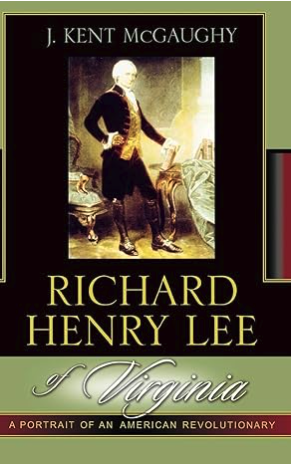
Richard Henry Lee’s resolution of June 7, 1776 was the direct legislative trigger for the appointment of the drafting committee, making him the political architect behind the Declaration’s creation. This biography restores his pivotal but often overlooked role.
May and June – The Architects of Independence, Part Six
The Forgotten Architect
On June 7, 1776, a Virginia delegate rose before the Second Continental Congress in Philadelphia and spoke words that would split the world in two. “Resolved,” Richard Henry Lee declared, “That these United Colonies are, and of right ought to be, free and independent States.” The motion was not debate-provoking – it was destiny-announcing. Within weeks, a committee had been appointed, a document drafted, and the most consequential declaration in the history of democratic governance was taking shape. And yet, when Americans picture the founding moment, Lee’s face rarely appears in the frame.
J. Kent McGaughy’s biography, Richard Henry Lee of Virginia: A Portrait of an American Revolutionary, published in 2004, is a deliberate corrective to that omission — and a reminder, particularly urgent in 2026, that history’s most transformative moments are rarely the product of a single heroic individual. They depend on those who do the essential, unglamorous work of legislative architecture: the politicians who know how to move a body, how to frame a resolution, and when to strike.
The Author and His Purpose
McGaughy, a historian whose scholarly focus centers on the political culture of eighteenth-century Virginia, brings to this biography both the rigor of archival research and an evident frustration with how the founding narrative has been written. His purpose, stated plainly in his introduction, is restorative rather than revisionist. He does not argue that Lee was secretly more important than Jefferson or Adams. He argues, more usefully, that we have been asking the wrong question – focusing so heavily on who wrote the Declaration that we have forgotten who made it possible for a declaration to be written at all.
The biography draws on Lee’s extensive correspondence, his speeches in Congress, and the political networks of colonial Virginia to reconstruct a figure who was, in many ways, the connective tissue of the revolutionary movement. McGaughy’s approach is methodical and scholarly rather than cinematic, but his subject rewards the attention. Lee was not a man of dramatic gestures; he was a man of patient, relentless political work, and McGaughy is at his best when showing how that work accumulated into historical consequence.
The Central Argument
McGaughy’s core interpretation is straightforward but important: Richard Henry Lee was the political architect of independence in a way that no other founder was. Jefferson provided the language. Adams provided the passion. Franklin provided the credibility. But Lee provided the mechanism – the formal legislative trigger without which none of those contributions would have had a vehicle.
The resolution Lee introduced on June 7, 1776, was not spontaneous. McGaughy traces the months of careful coalition-building that preceded it, the correspondence Lee maintained with Patrick Henry, Samuel Adams, and other firebrands across the colonies, and the precise political calculation involved in timing the resolution’s introduction. Lee understood that independence required not just sentiment but procedure – that the Continental Congress needed a formal motion to act upon, and that the motion needed to come at a moment when enough delegates were ready to support it, or at least not block it.
McGaughy also rehabilitates Lee’s role in the broader revolutionary period, showing that his advocacy for a bill of rights and his deep suspicion of centralized power were not peripheral concerns but central to the political philosophy that shaped the founding. Lee was a committed republican in the classical sense – wary of executive overreach, committed to the sovereignty of deliberative bodies, and insistent that liberty required structural protections, not merely declarations of principle.
The Months That Followed
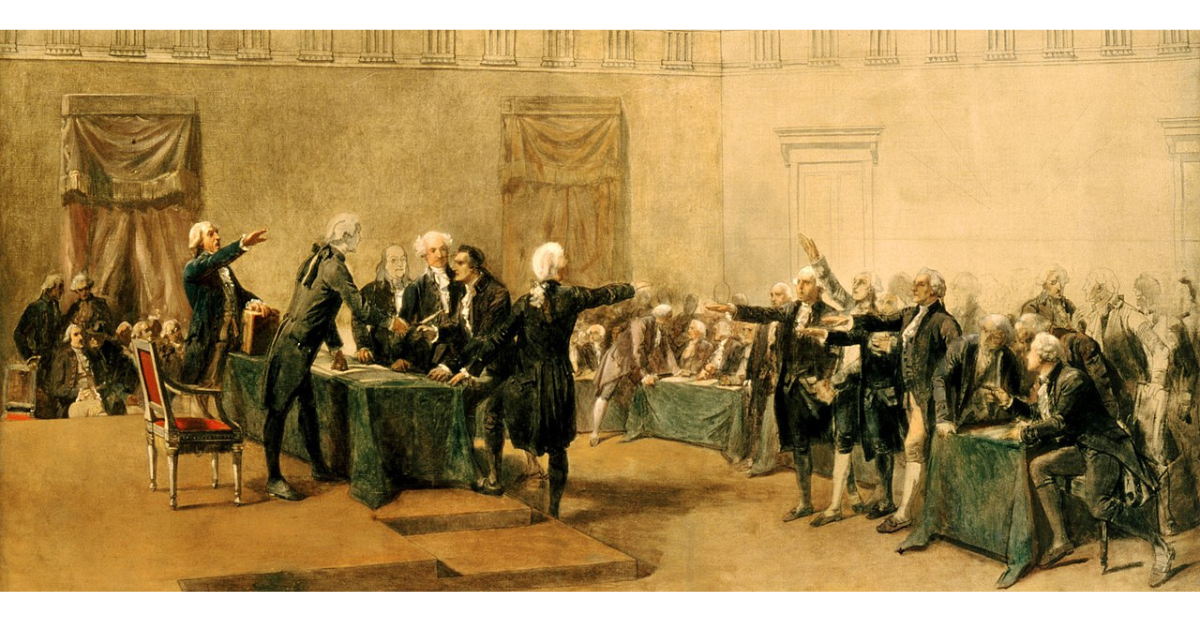
The signing of the Declaration on August 2, 1776, did not mark a pause in Lee’s revolutionary activity – it accelerated it. In the months immediately following, Lee remained one of the most active and influential figures in the Continental Congress, even as illness – a recurring affliction that dogged him throughout his life – periodically forced him from Philadelphia.
Lee was deeply involved in the effort to establish foreign alliances, particularly with France, which he understood to be essential to the military survival of the new nation. He corresponded extensively with Arthur Lee, his brother stationed in Europe, coordinating intelligence and diplomatic strategy. He also turned his considerable legislative energy toward the Articles of Confederation, the framework for national governance that would occupy Congress through 1777. True to form, Lee pushed for provisions that protected state sovereignty and checked the accumulation of central power – positions that placed him in tension with some of his fellow founders but were deeply consistent with the Virginia political tradition he embodied.
His physical absences from Congress during this period were not retreats; they were filled with organizing, writing, and lobbying from Virginia, ensuring that his state’s considerable weight remained aligned with the revolutionary cause. Lee returned to active Congressional service repeatedly, understanding that independence declared was not independence secured, and that the legislative work of building a functioning republic was as urgent as the military work of defending one.
The Voice on the Page
McGaughy’s scholarly prose occasionally gives way to passages that capture the particular electricity of Lee’s political world. Describing Lee’s position in the weeks before his June resolution, McGaughy writes with real compression and force: Lee had spent the better part of a decade preparing his colleagues for a vote they had not yet admitted they were willing to take. The resolution was not a leap – it was the last step of a very long walk.
On Lee’s deep commitment to a formal declaration of rights, McGaughy is equally pointed, noting that for Lee, the Declaration of Independence without a subsequent bill of rights was an incomplete document – a statement of freedom that left the mechanisms of freedom dangerously undefined. This premonition, of course, proved prescient: the absence of enumerated rights from the original Constitution would become the central political controversy of the ratification debates a decade later.
McGaughy also captures the particular frustration that animated Lee’s later career – the sense that the Revolution’s promise was being slowly, institutionally diluted by the very men who had helped make it. Lee’s anti-federalism was not reactionary nostalgia. It was, McGaughy argues, the logical extension of the same political principles that had made him a revolutionary in the first place.
In Dialogue with the Series
Read alongside the other books in The Architects of Independence, McGaughy’s biography of Lee performs an essential function: it insists that the Declaration was a legislative achievement before it was a literary one.
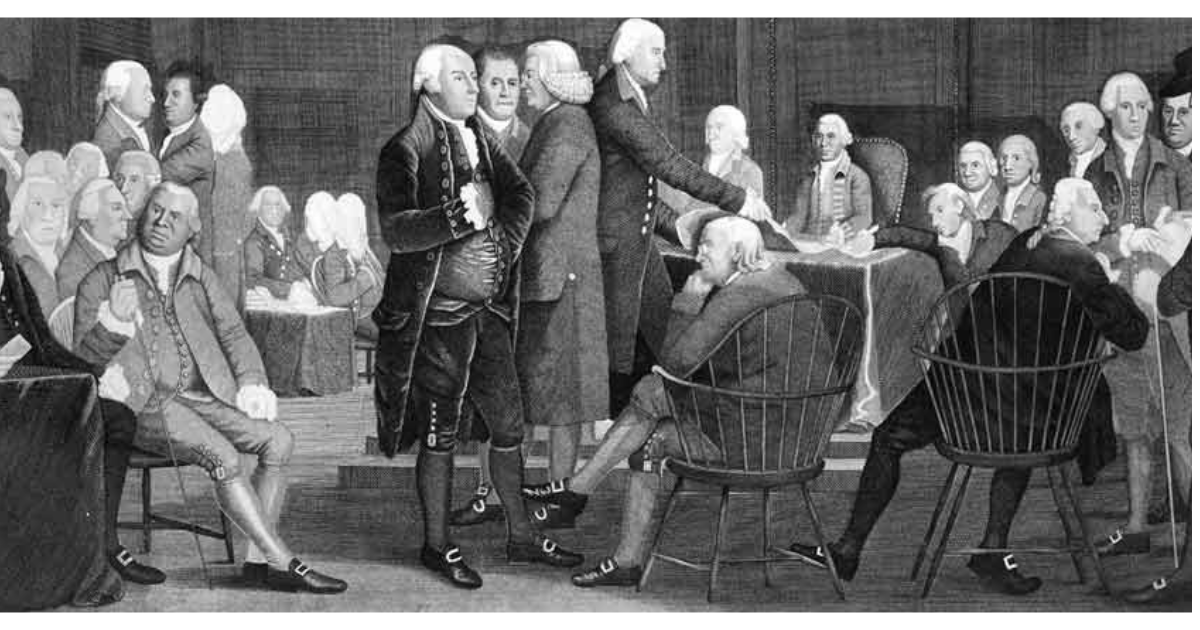
Pauline Maier’s American Scripture, the cornerstone of this reading series, makes a complementary argument – that Congress, not Jefferson, was the true author of the final Declaration, having revised and sharpened Jefferson’s draft through collective deliberation. McGaughy arrives at a similar conclusion by a different path, showing that even before the committee sat down to write, a politician had to construct the conditions under which writing could occur. Maier and McGaughy together produce a fully democratic account of the Declaration’s origins: one man built the legislative pathway; one body walked it.
McGaughy is also in productive tension with David McCullough’s John Adams. McCullough’s biography gives Adams enormous credit – perhaps the most of any individual – for driving the independence movement forward in Congress. McGaughy does not dispute Adams’s passion or his indispensability. But he subtly rebalances the ledger, suggesting that Adams’s role was primarily that of advocate and debater, while Lee’s was that of legislative strategist. A motion needs a champion, but it first needs a motion, and that motion needed its author.
Joseph Ellis’s Founding Brothers provides yet another useful counterpoint. Ellis is drawn to the dramatic relationships – the rivalries, the reconciliations, the letters between giants. Lee appears at the margins of Ellis’s account, which is precisely McGaughy’s point: the founders who worked through formal legislative structures rather than through personal drama have been systematically undervalued by a historiography that prizes charisma over procedure.
What We Have Learned Since 2004
McGaughy’s biography appeared before the most recent wave of scholarship on the founding era’s contradictions – particularly regarding slavery. Lee himself owned enslaved people throughout his life, and his revolutionary rhetoric about liberty existed in the same dissonant space as Jefferson’s and Washington’s. McGaughy addresses this tension, but the two decades of scholarship since publication – including work by historians like Woody Holton and Edward Baptist on the political economy of the slaveholding founders – have sharpened the analytical tools available for understanding how men like Lee could hold simultaneously a philosophy of universal liberty and a practice of human bondage.
More recent digital history projects have also expanded access to Lee’s correspondence, allowing scholars to trace his political networks with greater precision than McGaughy could in 2004. The picture that emerges from this subsequent work is largely consistent with McGaughy’s portrait, but richer in texture – Lee’s coalition-building appears even more sophisticated, and his role in coordinating the inter-colonial correspondence networks even more central, than the biography fully conveys.
Why Read This in 2026
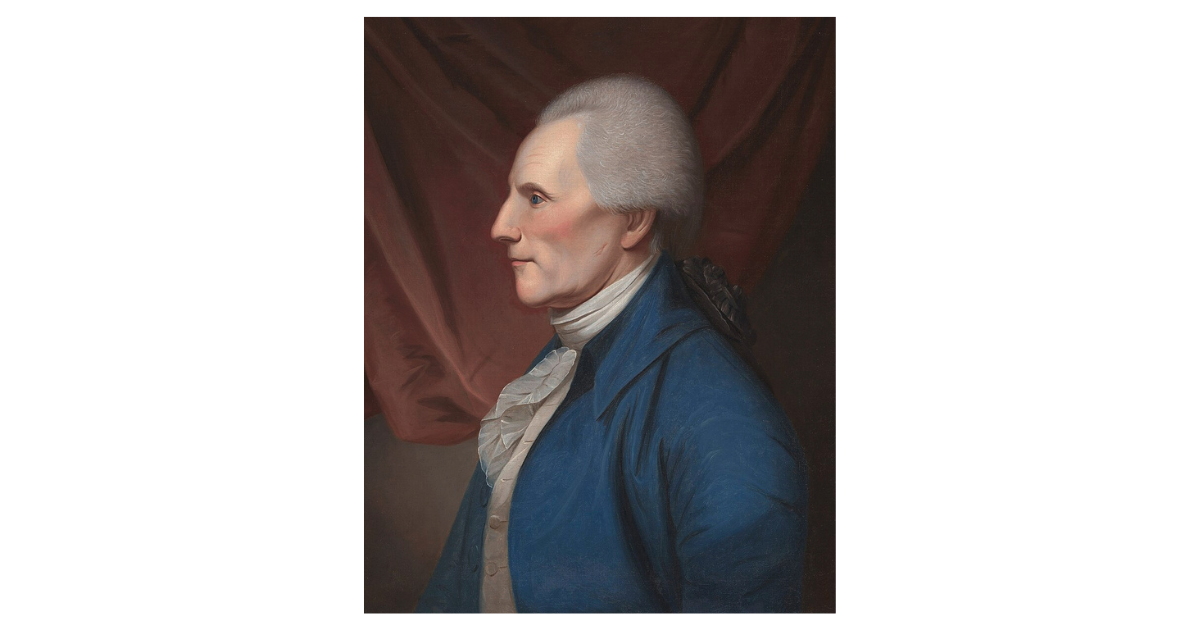
There is a particular kind of political figure – essential to every democratic movement but rarely celebrated by it – who understands that ideas require mechanisms. That liberty requires not just a declaration but a procedure, a motion, a vote, a structure. Richard Henry Lee was that figure in 1776, and McGaughy’s biography is a sustained meditation on why such figures matter.
In a political moment when democratic institutions are once again under pressure, when the gap between principled rhetoric and structural reality feels especially wide, Lee’s story carries genuine contemporary force. The Declaration of Independence was not conjured by a lone genius into a vacuum. It required someone who understood how power actually moves through a deliberative body – who knew how to frame a resolution, when to introduce it, and how to build the fragile legislative coalition that would carry it forward.
Richard Henry Lee of Virginia is not the most thrilling book in this reading series. It does not have the biographical sweep of Chernow’s Washington or the narrative propulsion of McCullough’s Adams. But it is, in its own way, the most politically instructive – a reminder that revolutions are not made by declarations alone. They are made by the patient, strategic work of people who understand the machinery of democracy and how to make it move.
A Note on This Series
This journey through Revolutionary history is as much about the evolution of historical understanding as the Revolution itself. History isn’t static – each generation reinterprets the past through its own concerns, asking different questions and prioritizing different sources. By reading these books in dialogue across 250 years, we’ll witness how scholarship evolves, how narratives get challenged, and how forgotten stories resurface.
This isn’t about declaring one interpretation “right” and another “wrong,” but appreciating the richness that emerges when multiple perspectives illuminate the same transformative moment. These books won’t provide definitive answers – history rarely does – but they equip us to think more clearly about how real people facing genuine uncertainty chose independence, how ideas had consequences, and how the work of creating a more perfect union continues. As we mark this anniversary, we honor the Revolutionary generation by reading deeply, thinking critically, and engaging seriously with both the brilliance and blind spots of what they created.