The Biblical Foundation of Work: Rediscovering God’s Purpose in Our Daily Labor

For people of faith in 2024, it’s all too easy to fall into the trap of compartmentalizing our lives. We often separate our “spiritual” activities on Sunday from our “secular” work throughout the week. However, this division is foreign to the biblical worldview. The truth is, our work – whether in an office, a factory, a home, or anywhere else – is deeply connected to our faith and central to God’s design for humanity.

To understand the true significance of our daily labor, we need to explore the biblical narrative of work. This journey through Scripture reveals a profound truth: work is not just a necessary evil or a means to an end, but a fundamental aspect of our purpose as human beings.

Today I’m launching a four-part series, Faith at Work: Exploring the Disconnect Between Sunday Worship and Monday Work.

This synoptical research and reading first came up in a conversation with two friends who (individually) I meet with weekly in a discipling relationship. Both are highly intelligent and successful businessmen in their respective fields (finance and manufacturing) in large, worldwide corporations. Both have a strong family environment and are active in our church.

Yet, over a period of weeks, and in separate conversations, this topic came up:

How can I connect my work to God’s work?

God as the First Worker

Our story begins in the very first chapter of the Bible. Genesis 1 portrays God as a worker, carefully and skillfully creating the universe. Each day, God labors to bring order out of chaos, to separate and define, to fill and to bless. At the end of each day, God steps back and evaluates His work, declaring it “good.”

This image of God as a worker is crucial. It tells us that work is not beneath God, nor is it simply a task for humans. Work is part of God’s nature, and as beings created in His image, it’s part of our nature too.

Humans as Co-Creators

In Genesis 1:26-28 and 2:15, we see God giving humans a mandate: to “fill the earth and subdue it,” to “rule over” creation, and to “work and take care of” the Garden of Eden. This is often called the “cultural mandate,” and it establishes humans as co-creators with God.

This role as co-creators applies to all types of legitimate work. Whether we’re developing new technologies, teaching children, growing food, or keeping our communities clean, we’re participating in God’s ongoing work of creation and cultivation.

The Impact of the Fall

The harmonious relationship between humans, their work, and creation was disrupted by the Fall. In Genesis 3:17-19, we see that work becomes toilsome and frustrating. The ground is cursed, requiring sweat and struggle to yield its fruit.

It’s crucial to note, however, that work itself is not a punishment. The difficulty and frustration in work are consequences of sin, but work remains a fundamental part of human purpose. Even after the Fall, work retains its inherent dignity and potential for meaning.

Christ’s Redemptive Work

The story doesn’t end with the Fall. Through Christ, God initiates a plan of redemption that encompasses all of creation – including our work. Jesus, described as a carpenter, dignifies manual labor through His own life. Many of His parables draw on workplace scenarios, showing the spiritual significance of ordinary work.

In His teachings and through the writings of the apostles, we see a vision of work redeemed. Paul encourages believers to “work heartily, as for the Lord” (Colossians 3:23), suggesting that all work can be an act of worship when done with the right heart.

Why This Matters

Understanding the biblical narrative of work transforms our perspective on our daily labor. It helps us see that our work, whatever it may be, has intrinsic value and spiritual significance. We’re not just earning a paycheck; we’re participating in God’s ongoing work in the world.

This biblical foundation challenges us to reject both the idol of workaholism and the temptation to view work as a necessary evil. Instead, it invites us to see our work as an integral part of our faith journey, an opportunity to serve God and others, and a means of personal and cultural flourishing.

As we move forward in our exploration of faith and work, this biblical foundation will serve as our compass. It reminds us that our daily labor, in all its forms, matters to God and plays a crucial role in His grand narrative of creation, fall, and redemption.

In the words of author Tom Nelson, “Our work, whatever it is, matters to God and has eternal significance.” As we embrace this truth, we open ourselves to a more integrated, purposeful, and joyful approach to our daily work.


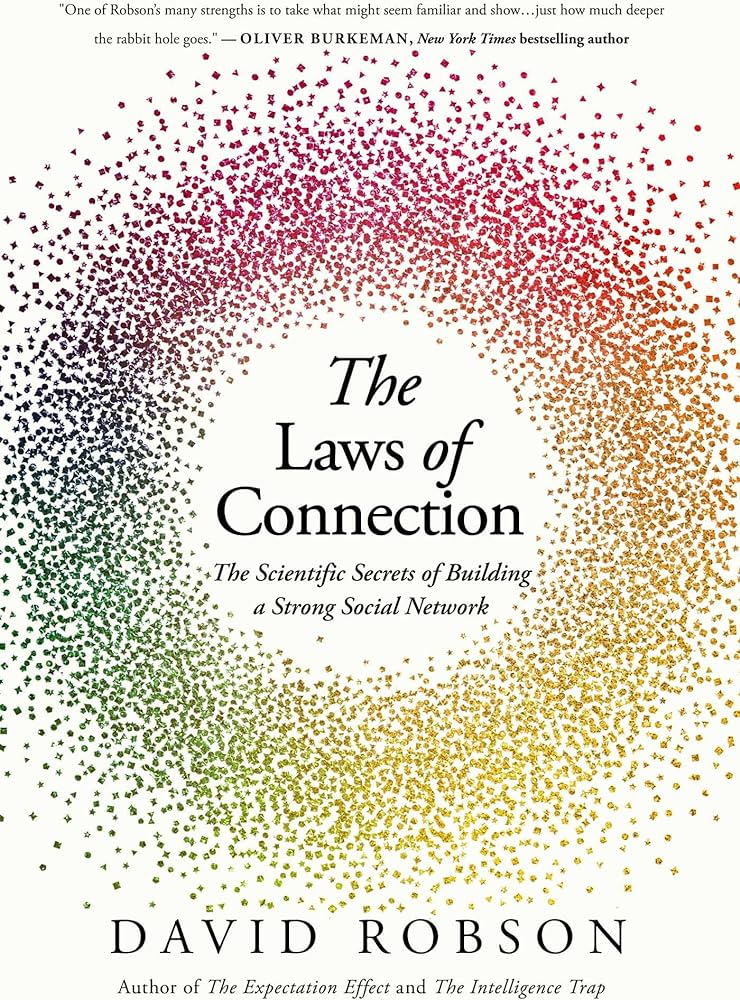
Resources for this first-of-four articles in a series entitled Faith at Work come from the books listed below.


Part of a regular series on 27gen, entitled Wednesday Weekly Reader.

During my elementary school years one of the things I looked forward to the most was the delivery of “My Weekly Reader,” a weekly educational magazine designed for children and containing news-based current events.

It became a regular part of my love for reading, and helped develop my curiosity about the world around us.


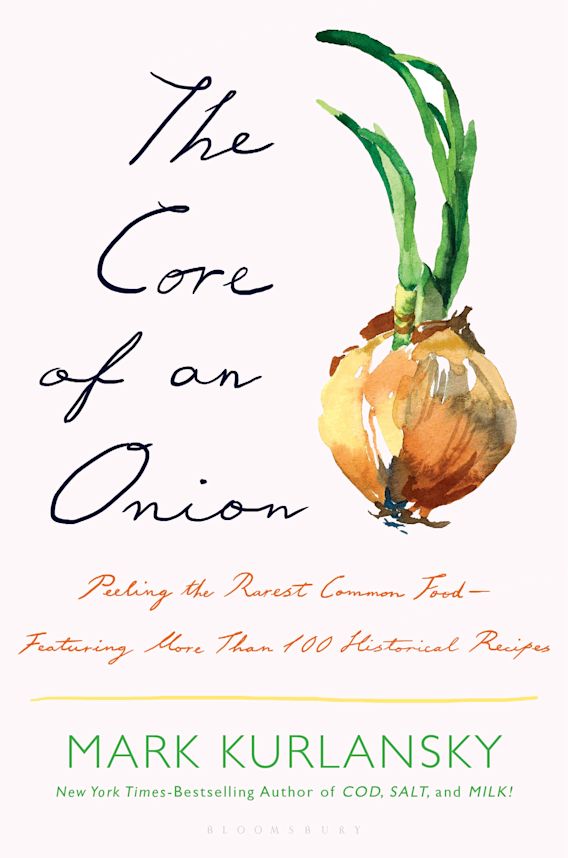
Tears, Triumphs, and Taste: Unpeeling “The Core of An Onion”

As Julia Child once said, “It is hard to imagine a civilization without onions.”

Historically, she’s been right – and not just in the kitchen. Flourishing in just about every climate and culture around the world, onions have provided the essential basis not only for sautés, stews, and sauces, but for medicines, metaphors, and folklore. Now they’re Mark Kurlansky’s most flavorful infatuation yet as he sets out to explore how and why the crop reigns from Italy to India and everywhere in between.

Featuring historical images and his own pen-and-ink drawings, Kurlansky begins with the science and history of the only sulfuric acid–spewing plant, then digs through its twenty varieties and the cultures built around them. Entering the kitchen, Kurlansky celebrates the raw, roasted, creamed, marinated, and pickled. 

Including a recipe section featuring more than one hundred dishes from around the world, The Core of an Onion shares the secrets to celebrated Parisian chef Alain Senderens’s onion soup eaten to cure late-night drunkenness; Hemingway’s raw onion and peanut butter sandwich; and the Gibson, a debonair gin martini garnished with a pickled onion.

Just as the scent of sautéed onions will lure anyone to the kitchen, The Core of an Onion is sure to draw readers into their savory stories at first taste.


In his latest culinary exploration, renowned food historian Mark Kurlansky takes readers on a journey through the pungent world of onions in The Core of An Onion. Known for his deep dives into singular food subjects like frozen food, salt, and milk, Kurlansky now turns his attention to this ubiquitous allium that has shaped cuisines and cultures around the globe for millennia.

Kurlansky peels back the layers of the onion’s history, tracing its origins and spread across continents. He reveals that onions were likely first cultivated in Central Asia over 5,000 years ago, quickly becoming a staple in diets from China to Egypt. The book explores how onions played a crucial role in sustaining ancient civilizations, providing essential nutrients and flavors to often bland diets.

One of the most intriguing aspects of The Core of An Onion is Kurlansky’s examination of the vegetable’s cultural significance. He uncovers how onions have been revered, feared, and even worshipped throughout history. In ancient Egypt, for instance, onions were considered symbols of eternity due to their concentric ring structure, and were often buried with pharaohs to ensure their passage to the afterlife.

The author doesn’t shy away from the onion’s notorious tear-inducing properties. He delves into the chemistry behind this phenomenon, explaining how cutting an onion releases sulfur compounds that react with the moisture in our eyes to form sulfuric acid. Kurlansky also highlights some lesser-known facts about this chemical reaction. For example, chilling onions before cutting can reduce tear production, as the volatile compounds are less active at lower temperatures.

Kurlansky’s research unearths fascinating tidbits about onions that even culinary enthusiasts might not know. For instance, the book reveals that onions were once used as currency in the Middle Ages. In 12th-century Europe, onions were sometimes accepted as rent payments and even as wedding gifts. Another surprising fact is that onions have been used in traditional medicine for centuries. Ancient Greek athletes consumed large quantities of onions, believing they would lighten the balance of their blood.

The book also explores the onion’s role in modern agriculture and cuisine. Kurlansky examines how the development of sweeter onion varieties, like the Vidalia onion from the southwest region of Georgia, has changed consumer preferences and agricultural practices. He discusses the ongoing debate among chefs and food scientists about whether cooking destroys the health benefits of onions, presenting evidence from both sides.

Equally intriguing is the focus on the genetic diversity of onions. Kurlansky reveals that there are over 700 species in the Allium genus, which includes onions, garlic, and chives. He explores how this diversity has led to a wide array of flavors and uses across different cultures, from the mild shallots favored in French cuisine to the pungent red onions commonly used in Indian dishes.

Throughout The Core of An Onion, Kurlansky weaves in recipes and cooking techniques from various cultures, demonstrating the onion’s versatility in the kitchen. He challenges readers to reconsider their relationship with this often-under appreciated ingredient, encouraging them to explore its full potential beyond mere aromatic base.

In typical Kurlansky style, the book is meticulously researched and engagingly written, making it accessible to both food history buffs and casual readers. By the end of The Core of An Onion, readers will have gained a newfound appreciation for this humble yet influential vegetable that has shaped human history and continues to play a crucial role in global cuisine and culture.


Part of a regular series on 27gen, entitled Wednesday Weekly Reader.

During my elementary school years one of the things I looked forward to the most was the delivery of “My Weekly Reader,” a weekly educational magazine designed for children and containing news-based current events.

It became a regular part of my love for reading, and helped develop my curiosity about the world around us.

Got History? The Whole Truth About a Childhood Favorite

According to the Greek creation myth, we are so much spilt milk; a splatter of the goddess Hera’s breast milk became our galaxy, the Milky Way. But while mother’s milk may be the essence of nourishment, it is the milk of other mammals that humans have cultivated ever since the domestication of animals more than 10,000 years ago, originally as a source of cheese, yogurt, kefir, and all manner of edible innovations that rendered lactose digestible, and then, when genetic mutation made some of us lactose-tolerant, milk itself.

Before the industrial revolution, it was common for families to keep dairy cows and produce their own milk. But during the nineteenth century mass production and urbanization made milk safety a leading issue of the day, with milk-borne illnesses a common cause of death. Pasteurization slowly became a legislative matter. And today milk is a test case in the most pressing issues in food politics, from industrial farming and animal rights to GMOs, the locavore movement, and advocates for raw milk, who controversially reject pasteurization.

Profoundly intertwined with human civilization, milk has a compelling and a surprisingly global story to tell, and historian Mark Kurlansky is the perfect person to tell it. Tracing the liquid’s diverse history from antiquity to the present, he details its curious and crucial role in cultural evolution, religion, nutrition, politics, and economics.


Mark Kurlansky – renowned for his deep dives into singular subjects like cod, salt, and frozen foods – turns his keen eye to another ubiquitous food item in “Milk!: A 10,000 Year Food Fracas. This comprehensive exploration takes readers on a fascinating journey through the cultural, economic, and nutritional impacts of milk throughout human history.

Kurlansky begins by challenging our assumptions about milk, reminding us that for most of human existence, the consumption of animal milk was far from universal. He traces the origins of dairying back to around 10,000 years ago, coinciding with the advent of agriculture and animal domestication. This revolutionary change in human lifestyle set the stage for milk to become a significant part of our diet and culture.

The book delves into the biological aspects of milk production and consumption, explaining how humans developed the ability to digest lactose into adulthood – a trait not shared by all populations. This genetic adaptation played a crucial role in shaping migration patterns and cultural practices around the world.

Kurlansky doesn’t shy away from controversy, addressing the ongoing debates surrounding milk consumption. He presents various perspectives on milk’s nutritional value, its role in modern diets, and the ethical concerns surrounding industrial dairy farming. By doing so, he invites readers to think critically about their own relationship with this common food.

The global scope of Milk! is impressive. Kurlansky takes readers on a world tour spanning thousands of years, exploring how different cultures have incorporated milk into their culinary traditions. From the nomadic Mongolians and their fermented mare’s milk to the cheese-loving Europeans, the book showcases the diversity of dairy products and their cultural significance.

One of the book’s strengths is its examination of milk’s economic impact throughout history. Kurlansky details how milk and its derivatives became valuable commodities, influencing trade routes, economic policies, and even warfare. The rise of industrial dairy farming and its effects on traditional agricultural practices are also scrutinized.

The author doesn’t limit his focus to cow’s milk. He explores the use of milk from various animals, including goats, sheep, camels, yaks, and even reindeer, highlighting how different environments and cultures have shaped dairy consumption patterns.

Kurlansky’s narrative is enriched with anecdotes, historical recipes, and cultural tidbits that bring the story of milk to life. He discusses milk’s role in religion, literature, and art, demonstrating its pervasive influence on human culture.

The book also addresses contemporary issues surrounding milk production and consumption. Kurlansky examines the environmental impact of large-scale dairy farming, the rise of plant-based milk alternatives, and the ongoing debate about raw milk consumption.

Milk! is not just a history book; it’s a thought-provoking exploration of a food that has been both revered and controversial. Kurlansky’s engaging writing style makes complex scientific and historical concepts accessible to a general audience.

Milk!: A 10,000 Year Food Fracas offers readers a comprehensive and entertaining look at a food that many of us consume daily without much thought. By tracing milk’s journey from a revolutionary nutritional discovery to a global industry, Kurlansky invites us to reconsider our relationship with this seemingly simple food. Whether you’re a dairy enthusiast or a skeptic, this book provides valuable insights into the complex role milk has played in shaping human society.

I read it over breakfast with half and half in my tea and late at night with a cold glass of whole milk and a chocolate chip cookie – but that’s me!


Part of a regular series on 27gen, entitled Wednesday Weekly Reader.

During my elementary school years one of the things I looked forward to the most was the delivery of “My Weekly Reader,” a weekly educational magazine designed for children and containing news-based current events.

It became a regular part of my love for reading, and helped develop my curiosity about the world around us.

The Man Who Chilled America: Clarence Birdseye’s Frozen Revolution

Birdseye: The Adventures of a Curious Man by Mark Kurlansky is a captivating biography that explores the life and innovations of Clarence Birdseye, the man who revolutionized the frozen food industry. This engaging work delves into the story of an unlikely inventor whose curiosity and determination led to groundbreaking advancements in food preservation and distribution.

Kurlansky’s book traces Birdseye’s journey from his early years as a naturalist and fur trapper in the American West and Labrador to his later career as an inventor and businessman. The author paints a vivid picture of Birdseye’s insatiable curiosity and his knack for observing and learning from the natural world around him.

One of the central focuses of the biography is Birdseye’s development of the quick-freezing process for food. Inspired by his experiences in Labrador, where he observed how fish frozen quickly in the extreme cold remained fresh when thawed, Birdseye set out to replicate this process artificially. His invention, which involved freezing food at extremely low temperatures while under pressure, would go on to transform the food industry and the way people eat.

The book not only details Birdseye’s most famous invention but also explores his numerous other patents and innovations. From paper-making machines to light bulbs, Birdseye’s creative mind seemed to know no bounds. Kurlansky presents these inventions within the context of early 20th-century America, a time of rapid technological advancement and changing consumer habits.

Throughout the biography, Kurlansky weaves in historical context, exploring how Birdseye’s innovations intersected with broader societal changes. The rise of suburban living, the increasing prevalence of home refrigerators, and changing attitudes towards convenience all played a role in the success of Birdseye’s frozen food empire.

The author also delves into Birdseye’s personal life, including his marriage, family relationships, and business partnerships. These elements help to humanize the inventor, presenting him as a complex individual rather than simply a historical figure.

Birdseye: The Adventures of a Curious Man offers readers more than just a biography of an inventor. It presents a snapshot of American innovation, entrepreneurship, and the profound impact that one individual’s curiosity can have on society. Through Birdseye’s story, Kurlansky explores themes of perseverance, the importance of observation in scientific discovery, and the sometimes-serendipitous nature of invention.

The book also raises interesting questions about the nature of progress and its unintended consequences. While Birdseye’s frozen food revolution brought convenience and variety to millions of dinner tables, it also contributed to changes in agricultural practices and food distribution systems that continue to be debated today.

Birdseye: The Adventures of a Curious Man is a fascinating exploration of an often-overlooked figure in American history. Mark Kurlansky’s engaging narrative brings Clarence Birdseye and his era to life, offering readers insight into the mind of an inventor and the societal forces that shaped and were shaped by his innovations. This biography serves as both an entertaining read and a thought-provoking examination of the relationship between individual ingenuity and broader cultural and technological change.

Mark Kurlansky’s writing style in Birdseye is characterized by its accessibility and engaging narrative approach. Known for his ability to bring historical subjects to life, Kurlansky combines meticulous research with a storyteller’s flair. His prose is clear and informative, yet he maintains a sense of wonder and excitement about his subject matter. This style, evident in Birdseye, is also a hallmark of Kurlansky’s other notable works, including Salt: A World History, Cod: A Biography of the Fish That Changed the World, and The Big Oyster: History on the Half Shell.


Part of a regular series on 27gen, entitled Wednesday Weekly Reader.

During my elementary school years one of the things I looked forward to the most was the delivery of “My Weekly Reader,” a weekly educational magazine designed for children and containing news-based current events.

It became a regular part of my love for reading, and helped develop my curiosity about the world around us.

221B Baker Street: Where the Legend Began

Nearly 135 years after he first appeared in print, Sir Arthur Conan Doyle’s legendary detective Sherlock Holmes continues to captivate audiences around the world. The eccentric but brilliant Holmes, along with his faithful friend Dr. Watson, has transcended the original stories to become a true pop culture icon.

At the core of Holmes’ lasting popularity is Conan Doyle’s skill in crafting intricate mysteries filled with memorable characters, vivid atmospheres, and unpredictable twists. Holmes himself is a complex figure – arrogant yet forensically gifted, cold yet harboring flashes of warmth and humor. Watson serves as an everyman narrator, allowing readers to experience the marvels of Holmes’ deductive reasoning through relatable eyes.

Many literary critics and historians believe Holmes’ Victorian-era adventures also provide a comforting nostalgia and escape, with Holmes as a restorer of order and justice in an increasingly chaotic, industrialized world. The stories romanticize late 19th century London while indulging the thrill of new forensic sciences like fingerprinting, ballistics, and toxicology analysis.

While the original canon of 60 stories ends with Holmes alive but retired, later authors have imagined his life continuing, allowing for endless retellings and updates. The 20th century saw Holmes revived in novels, plays, radio dramas, and eventually film and television adaptations. Recent major interpretations include the films starring Robert Downey Jr., the BBC series Sherlock with Benedict Cumberbatch, and CBS’ Elementary procedural.

In these new versions, each writer leaves their own stamp on the character. Some, like the Robert Downey Jr. films, adopt a more comic, action-oriented tone, while others like Sherlock aim for a modern, sleeker vibe. Regardless of the approach, all celebrate Holmes’ deductive brilliance and the game of intellectual cat-and-mouse between the detective and his adversaries.

Today, Holmes has become bigger than any single take, a true multi-media phenomenon inspiring works in formats as diverse as Japanese anime, strategy board games, and the immersive experience of live mystery theaters. With each generation, Holmes lives on, reinvented again to reflect our endless fascination with puzzle-solving, forensic science, and that most fundamental question:

What really happened?

In 1887, Sir Arthur Conan Doyle introduced the world to one of literature’s most enduring characters: Sherlock Holmes. The detective made his debut in the novel A Study in Scarlet. Released in a magazine entitled Beeton’s Christmas Annual, it was an inauspicious start, setting the stage for a legacy that would span four novels and 56 short stories, captivating readers for generations to come.

A Study in Scarlet not only presents the enigmatic detective but also introduces his faithful companion and chronicler, Dr. John Watson. The story begins with Watson, a military doctor recently returned from service in Afghanistan, seeking affordable lodgings in London. Through a mutual acquaintance, he meets Sherlock Holmes, and the two agree to share rooms at 221B Baker Street – an address that would become one of the most famous in fiction.

From the outset, Holmes is portrayed as a unique and brilliant individual. His vast knowledge of specific subjects, combined with his apparent ignorance of other common topics, immediately piques Watson’s curiosity. Holmes’s keen observational skills and deductive reasoning are quickly demonstrated, astounding both Watson and the reader.

The novel showcases Holmes’s unconventional methods as he tackles a perplexing murder case. Two corpses are discovered in separate locations, each with the word “RACHE” – German for “revenge” – written in blood nearby. As Holmes investigates, readers are treated to his innovative techniques, including the use of magnifying glasses, chemical analysis, and the study of footprints and other minute details often overlooked by conventional police methods.

Conan Doyle’s Holmes is a complex character. Described as tall and lean, with piercing gray eyes and a hawklike nose, his physical appearance is as striking as his intellect. He is portrayed as aloof and occasionally arrogant, yet possessing a dry wit and an unwavering commitment to justice. His famous deerstalker cap and pipe, while not explicitly mentioned in A Study in Scarlet, would later become iconic symbols associated with the character.

One of the most intriguing aspects of Holmes’s character, as revealed in this first novel, is his disdain for emotion and his focus on cold, hard logic. He views detective work as a science, emphasizing the importance of observation and deduction over intuition or guesswork. This analytical approach sets him apart from other fictional detectives of the time and contributes significantly to his enduring appeal.

A Study in Scarlet also introduces readers to Holmes’s nemesis: Scotland Yard. While the police are not portrayed as incompetent, they are shown to be out of their depth when faced with particularly challenging cases. This dynamic sets up the recurring theme of Holmes being called in to solve mysteries that baffle the authorities.

The novel’s structure is noteworthy, divided into two parts. The first follows Holmes and Watson as they investigate the London murders, while the second takes readers to America for an extended backstory explaining the motive behind the crimes. This format allows Conan Doyle to explore themes of revenge, justice, and the far-reaching consequences of past actions.

A Study in Scarlet laid the foundation for what would become a cultural phenomenon. Sherlock Holmes’s methods of deduction, his quirky personality, and his partnership with Watson became the template for countless detective stories that followed. The novel’s success prompted Conan Doyle to write more Holmes adventures, eventually creating a character so beloved that fans mourned when the author attempted to kill him off, only to later demand his resurrection.

In essence, A Study in Scarlet not only introduced a captivating mystery but also birthed a literary icon whose influence on detective fiction and popular culture continues to this day, more than a century after his first appearance.


Inspired by


Part of a regular series on 27gen, entitled Wednesday Weekly Reader.

During my elementary school years one of the things I looked forward to the most was the delivery of “My Weekly Reader,” a weekly educational magazine designed for children and containing news-based current events.

It became a regular part of my love for reading, and helped develop my curiosity about the world around us.

The Clarity of Our Founding Fathers

How was it that within a short span of time on the east coast of the North American continent there should have sprung up such a rare array of genius – men who seemed in virtual command of historical experience and who combined moral imagination with a flair for leadership?

We know those men as the Founding Fathers.

Part of the answer is that these men knew how to invest their combined strength in a great idea:

  • A young man like James Madison had urgent thoughts about what people had to do to become free and remain free. Not content to just set these thoughts down in print, he joined those concerns to those of other men in a position to exert leadership.
  • The intellectual exchange – in person and in letters – between Thomas Jefferson and John Adams spanned over 50 years, beginning when independence was just a dream and continuing long after the United States of America had become an established government. This exchange knows few equals for depth, range of subject matter, literary style and general intellectual achievement in recorded correspondence.
  • George Washington and Benjamin Franklin registered their main impact on their contemporaries through the force of their personalities rather than through any detailed exposition of their political ideas and philosophy.

It was from men like these that the idea of a new nation was born. Their thoughts were expressed in The Declaration of Independence.

Drafted by Thomas Jefferson between June 11 and June 28, 1776, the Declaration of Independence is at once the nation’s most cherished symbol of liberty and Jefferson’s most enduring monument. Here, in exalted and unforgettable phrases, Jefferson expressed the convictions in the minds and hearts of the American people.

The political philosophy of the Declaration was not new. John Locke and the Continental philosophers had already expressed its ideals of individual liberty. What Jefferson did was to summarize this philosophy in “self-evident truths” and set forth a list of grievances against the King in order to justify before the world the breaking of ties between the colonies and the mother country.

On July 1, 1776, Congress reconvened. The following day, the Lee Resolution for independence was adopted by 12 of the 13 colonies, New York not voting. Immediately afterward, the Congress began to consider the Declaration. Adams and Franklin had made only a few changes before the committee submitted the document. The discussion in Congress resulted in some alterations and deletions, but the basic document remained Jefferson’s. The process of revision continued through all of July 3 and into the late morning of July 4. Then, at last, church bells rang out over Philadelphia; the Declaration had been officially adopted.

A letter from John Hancock to General Washington in New York, as well as the complete text of the Declaration, followed two days later:

That our affairs might take a more favorable turn, the Congress have judged it necessary to dissolve the connection between great Britain and the American colonies, and to declare them free and independent states; as you will perceive by the enclosed Declaration, which I am directed to transmit to you, and to request you  will have it proclaimed at the head of the army in the way you shall think most proper.

Many saw at once that with the enemy massing for battle so close at hand and independence at last declared by Congress, the war had entered an entirely new stage. The lines were drawn now as never before, the stakes higher. “The eyes of all America are upon us,” John Knox wrote. “As we play our part posterity will bless or curse us.”

“We are in the midst of a revolution,” wrote John Adams, “the most complete, unexpected, and remarkable of any in the history of the nations.”

In a ringing preamble, drafted by Thomas Jefferson, the document declared it “self-evident” that “all men are created equal,” and were endowed with the “unalienable” rights of “life, liberty, and the pursuit of happiness.” And to this noble end the delegates had pledged their lives, their fortunes, and their sacred honor.

From this point on, the citizen-soldiers of George Washington’s army were no longer fighting only for the defense of their country, or for their rightful liberties as free born Englishmen, as they had at Lexington and Concord, Bunker Hill, and through the long siege at Boston. It was now a proudly proclaimed, all-out war for an independent America, a new America, and thus a new day of freedom and equality.

At a stroke the Continental Congress had made the Glorious Cause of America more glorious still, for all the world to know, and also to give every citizen soldier at this critical juncture something still larger and more compelling for which to fight.

Clarity isn’t everything, but it changes everything.


Part of a regular series on 27gen, entitled Wednesday Weekly Reader.

During my elementary school years one of the things I looked forward to the most was the delivery of “My Weekly Reader,” a weekly educational magazine designed for children and containing news-based current events.

It became a regular part of my love for reading, and helped develop my curiosity about the world around us.

Exploring Arthur Conan Doyle’s Literary Worlds Beyond Sherlock Holmes

While Sherlock Holmes remains Arthur Conan Doyle’s most famous and enduring literary creation, the prolific author populated his stories with several other memorable recurring characters. Among them were the eccentric Professor George Edward Challenger and the boastful but courageous Brigadier Gerard, each starring in their own book series showcasing Doyle’s talent for adventure tales and historical fiction respectively.

Professor Challenger first appeared in the 1912 novel The Lost World, in which the ill-tempered but brilliant scientist acted as the combustible narrator who recounts an expedition to a remote plateau in South America where dinosaurs and other prehistoric creatures still roamed. This imaginative work not only offered thrilling accounts of discovery and survival, but engaged with early 20th century theories about the extinction of ancient species and natural selection. 

If sounds familiar, author Michael Crichton’s novel The Lost World (1995) was heavily influenced by Conan Doyle. Bringing a dead character back (Ian Malcolm)  was an idea Crichton got from Conan Doyle, who did the same with his character Sherlock Holmes.

Crichton later stated that the novel’s title is an homage to Doyle’s 1912 novel of the same name, as well as the 1925 film adaptation of Doyle’s novel, also titled The Lost World. Crichton’s novel also shares some story similarities with Doyle’s novel, as they both involve an expedition to an isolated Central American location where dinosaurs roam.

Challenger proved so popular that Doyle brought him back as the cantankerous hero of four more novels – The Poison Belt (1913), The Land of Mist (1926), The Disintegration Machine (1927), and When the World Screamed (1928) – as well as several short stories. These tales saw the gruff academic encounter catastrophes like a cloud of toxic gas enveloping the earth, psychic phenomena, and futuristic destructive technology, allowing Doyle to indulge his fascination with the supernatural and speculative science.

During the 10-year period between effectively “killing off” Sherlock Holmes and bringing him back in 1903, Arthur Conan Doyle dedicated much of his writing to historical fiction. His most acclaimed works from this era were the short stories recounting the exploits of Brigadier Gerard, a fictional French officer who served in Napoleon’s army up to the Battle of Waterloo. 

In most of these tales, Etienne Gerard himself narrates his highly implausible yet entertaining adventures. Readers are transported to feeling like they are sitting in a Parisian cafe in the mid-19th century, listening to this aging soldier’s boastful boasting and witty stories. Gerard hails from the Gascony region of southwest France, embodying the stereotypical Gascon personality of being vain, brave and crafty.

The stories showcase Doyle’s zeal for historical accuracy. While Gerard himself was an invented character, his adventures drew inspiration from the memoirs and biographies of over 20 real soldiers from that era, especially Baron de Marbot who became one of Napoleon’s aides and generals and even earned a mention in Napoleon’s will. Doyle meticulously researched to ground the fantastical tales in realism.

With his oversized ego, lust for glory, and utterly undeserved self-confidence, the Brigadier personified the stereotype of the arrogant French soldier. And yet, despite or perhaps because of his oblivious buffoonery, Gerard still managed heroic feats of courage and daring on the battlefield, creating a lovable characters that Doyle clearly relished writing about over the course of nearly two decades.  

While very different in personality and the eras they occupied, both Professor Challenger and Brigadier Gerard provided Arthur Conan Doyle with wonderful vehicles to showcase his talent for adventure writing outside the Holmes mysteries. The curmudgeonly scientist and the blusteringly vain soldier allowed Doyle to transport readers to lost worlds of the prehistoric past, psychic dimensions, and the age of Napoleonic conquest through his endlessly creative literary imagination.


Part of a regular series on 27gen, entitled Wednesday Weekly Reader.

During my elementary school years one of the things I looked forward to the most was the delivery of “My Weekly Reader,” a weekly educational magazine designed for children and containing news-based current events.

It became a regular part of my love for reading, and helped develop my curiosity about the world around us.

Shelf Discovery: The Journey from One Book to Many

For avid readers, finishing one book is often just the beginning of a journey into a new subject or author. A great book has a way of piquing your curiosity and leaving you hungry to learn more. You find yourself wanting to dive deeper into the world or ideas the book exposed you to. 

This was the case for me recently after reading Michael Dirda’s On Conan Doyle, Or, The Whole Art of Storytelling. Dirda’s passionate celebration of Sir Arthur Conan Doyle as a master storyteller cast new light on the Sherlock Holmes tales I had read years ago. His analysis made me want to revisit the classic detective stories with a fresh perspective.

In his book, Dirda explores how Conan Doyle’s own fascinating life experiences allowed him to inject realism and detail into his fiction writing. He quotes extensively from Conan Doyle’s works, breaking down the author’s techniques for building suspense, vividly depicting London at that time, and bringing the charismatic characters of Holmes and Watson to life. 

After being reminded by Dirda of the sheer genius of Conan Doyle’s storytelling powers, I couldn’t resist pulling my old collection of the complete Sherlock Holmes canon off the shelf to re-read the stories and novels. This time, armed with Dirda’s insights, I found myself newly appreciating Conan Doyle’s intricate plotting, clever foreshadowing, and rich descriptions that allowed the late 1800s-era London to jump off the page.

I also discovered background information I hadn’t known before, like how Conan Doyle had modeled the brilliant but eccentric Holmes on one of his former university professors. And his time studying at a medical school gave him knowledge about forensics and analytical skills that informed how he wrote Holmes’ deductive reasoning process.

From there, my curiosity propelled me to explore literary biographies about Conan Doyle’s life, writings by Sherlock Holmes experts dissecting the stories, books analyzing Conan Doyle’s lasting influence on the mystery genre, and more.

One book had opened up an entire new area of interest to dive into.

This is the power and delight of being a lifelong reader – books become portals to universes of knowledge, allowing you to find new areas to explore in depth simply by following your curiosity from one page to the next. A single book can act as a key that unlocks fascinating connections, insights, and paths of discovery you may never have anticipated.


Though Sherlock Holmes is widely recognizable, few could craft as lively and personal an account of the detective’s creator’s life and lesser-known works as Michael Dirda does in On Conan Doyle, Or, The Whole Art of Storytelling

A passionate lifelong fan of the Sherlock Holmes adventures, Pulitzer Prize–winning critic Michael Dirda is a member of The Baker Street Irregulars – the most famous and romantic of all Sherlockian groups. Combining memoir and appreciation, On Conan Doyle is a highly engaging personal introduction to Holmes’s creator, as well as a rare insider’s account of the curiously delightful activities and playful scholarship of The Baker Street Irregulars.

Dirda interweaves his own childhood discovery of Holmes and Watson with details about Sir Arthur Conan Doyle’s life and writing career. While casual readers associate Conan Doyle solely with the Holmes stories, Dirda makes a strong case for exploring the author’s extensive bibliography across multiple genres like adventure, historical fiction, supernatural tales, and writings on spiritualism. However, Holmes remains the main draw, and the fascinating culture of the Irregulars society is as rich as any of Conan Doyle’s fictions.

Dirda provides a personal journey exploring the creator of Sherlock Holmes and his prodigious output across various genres beyond the famous detective stories. Most know Conan Doyle tried to kill off his iconic character, which he cared little for compared to works like The Lost World. However, Dirda still centers much of his discussion on Holmes while striving to highlight Doyle’s other writings too – his horror, fantasy, non-fiction essays, letters, and his favorite creation Professor Challenger. Recounting his own boyhood introduction to Doyle’s books, Dirda reminisces about joining the Baker Street Irregulars society devoted to Holmes and includes an abridged pastiche of his own Sherlock-inspired fiction.

Dirda particularly excels at appreciating Conan Doyle’s direct yet versatile literary style spanning genres, and examining the values of civic duty the author aimed to impart through his writing (values he felt the Holmes tales lacked).

On Conan Doyle is a much-needed celebration of Arthur Conan Doyle’s genius for every kind of storytelling.

It is also an excellent launching pad for further investigations into Conan Doyle’s other works!


Part of a regular series on 27gen, entitled Wednesday Weekly Reader.

During my elementary school years one of the things I looked forward to the most was the delivery of “My Weekly Reader,” a weekly educational magazine designed for children and containing news-based current events.

It became a regular part of my love for reading, and helped develop my curiosity about the world around us.

A Stroll Down Memory Lane in Mt. Airy, NC – The Hometown of Andy Griffith

For fans of the beloved 1960s sitcom The Andy Griffith Show, a visit to the quaint town of Mt. Airy, North Carolina is akin to stepping into the fictional world of Mayberry. This charming locale, nestled in the foothills of the Blue Ridge Mountains, holds a special allure as the birthplace and childhood home of the show’s star, Andy Griffith.

On a recent Saturday day trip, a birthday gift from my wife Anita, we made the pleasant drive to Mt. Airy. Arriving in mid-morning, we explored the tree-lined streets and historic downtown area. As we walked past Floyd’s Barber Shop to the Snappy Lunch for an early meal, it’s easy to see why Griffith drew inspiration from his hometown for the idyllic Mayberry setting. The town exudes a warm, welcoming atmosphere that harkens back to a simpler time when life moved at a more leisurely pace.

One of the must-visit attractions for Andy Griffith enthusiasts is the Andy Griffith Museum, which pays homage to the life and career of the iconic actor and comedian. Housed in a lovingly restored building that once served as a theater, the museum features an impressive collection of memorabilia, including costumes, scripts, and personal items from Griffith’s early years. While having a cursory knowledge of Griffith’s television career, neither Anita nor I were aware of his long pre-television drama career, spanning from high school to college to the theater. The museum house a good representation of all his journey’s in the entertainment field.

Visitors can also embark on the self-guided Mayberry Tour, which takes them on a nostalgic journey through the town’s landmarks and filming inspirations from the show (even though they were all recreated on a Hollywood soundstage). From the iconic squad car parked outside the courthouse to the famous Snappy Lunch diner, each stop along the way offers a glimpse into the world that captivated millions of viewers.

Beyond its ties to The Andy Griffith Show, Mt. Airy boasts a rich cultural heritage that is celebrated through various festivals and events throughout the year. The annual Mayberry Days festival, held each September, attracts thousands of fans from around the world who come to experience the town’s charm and participate in a variety of Mayberry-themed activities.

For those seeking outdoor adventures, the surrounding area offers plenty of opportunities for hiking, fishing, and enjoying the natural beauty of the Blue Ridge Mountains. The nearby Pilot Mountain State Park, with its iconic knob-shaped peak, is a popular destination for hikers and rock climbers.

Whether you’re a die-hard Andy Griffith fan or simply someone who appreciates small-town charm, Mt. Airy is a delightful destination that invites you to slow down and savor the simple pleasures of life. With its friendly locals, rich history, and enduring connection to one of television’s most beloved shows, this little town in North Carolina is sure to leave a lasting impression on all who visit.


Of course, it wouldn’t be a Wednesday Weekly Reader post without at least a nod to some literary background, and here’s a couple of books that will certainly give the Andy Griffith fan some pleasurable reading.

Andy Griffith and Don Knotts first met on Broadway in the 1950s. When Andy moved to Hollywood to film a TV pilot for a comedy about a small-town sheriff, Don called to ask if Andy’s sheriff could use a deputy. The friendship and comedy partnership between Sheriff Andy Taylor and Deputy Barney Fife ignited The Andy Griffith Show, elevating the folksy television sitcom into a timeless study of human friendship.

Together, they created a program with a uniquely small-town dynamic that captured the hearts of Americans across the country who watched these two men rocking on the front porch, meditating about the pleasure of a bottle of pop.

Written by Don Knotts’s brother-in-law, Andy and Don is a lively look inside the entertainment industry in the latter half of the twentieth century that is entertaining and provocative.

But behind this sleepy charm, Daniel de Visé’s exclusive reporting “captures the complexity of both men and the intimacy of their friendship with extreme detail and sensitivity” (Publishers Weekly), from unspoken rivalries, passionate affairs, unrequited loves, struggles with the temptations of fame, and friendships lost and regained. Although Andy and Don ended their Mayberry partnership in 1965, they remained best friends for the next half-century.


Andy Griffith is one of North Carolina’s most beloved exports, capturing America’s heart as Sheriff Andy Taylor. Evan Dalton Smith was born in the North Carolina Piedmont over four decades after Andy, just an hour south of Griffith’s hometown of Mount Airy. Both were small-town boys who grew up in similar places, where the counties were dry and the churches plentiful. But for both, there was darkness, crushed hopes, and tragedy, hidden just below the surface.

For Smith and many generations in North Carolina and across the U.S., Andy Griffith was like the air – everywhere, all the time, a part of daily life. Even after he left the state, Smith always felt the pull of home and the lingering ghost of Andy alongside it.

Looking for Andy Griffith is an exploration on celebrity and the self, on home and what that means when you leave it, and why we love and admire the people we do – even if we’ve never met them – all told through the entwined lives of iconic actor Andy Griffith and writer Evan Dalton Smith. It is through Smith’s telling of Griffith’s life that he finds his own story, one that is both informed by and freed from the legacy of one of North Carolina’s most famous sons.


While Mt. Airy will forever be inextricably linked to The Andy Griffith Show and the idyllic world of Mayberry it brought to life, the town’s appeal transcends mere nostalgia. It stands as a living testament to the enduring power of simplicity, community, and finding joy in life’s simple pleasures – the very values Griffith himself embodied through his iconic roles.

As visitors depart this charming town nestled in the Blue Ridge Mountains, they carry with them more than just memories; they take away a renewed appreciation for the unhurried pace, natural beauty, and genuine human connections that have sadly become rarities in our fast-paced modern age.

Mt. Airy is a reminder that the most extraordinary experiences are often found in life’s mundane moments when we allow ourselves to embrace the Mayberry mindset of savoring the simple gifts that surround us each day. By preserving Andy Griffith’s heartwarming legacy, this special place ensures that the wisdom and warmth of Mayberry will continue to inspire generation after generation.


Part of a regular series on 27gen, entitled Wednesday Weekly Reader.

During my elementary school years one of the things I looked forward to the most was the delivery of “My Weekly Reader,” a weekly educational magazine designed for children and containing news-based current events.

It became a regular part of my love for reading, and helped develop my curiosity about the world around us.
Glazed, Frosted, and Sprinkled: Getting Ready for National Donut Day

Though I certainly enjoyed donuts throughout my childhood, a single book is responsible for the fondness I have for them as an adult.

Books will do that to you.

Like many things in my life, this fondness all came about because of a book: Homer Price.  I have great memories of reading one of the stories in the book about Homer and Uncle Ulysses and the automatic doughnut machine.

 I remembered the image of doughnuts stacked on the counter, shelves, and stools with more coming out of the machine every minute.

I didn’t realize at the time how a book about donuts could be linked to so much more in life.

THE DOUGHNUTS takes place in the 1940’s when an uncle of a boy named Homer opens a luncheonette. Uncle Ulysses, much to the chagrin of his wife Agnes, is a man fond of new-fangled gadgets and has installed a doughnut making machine in his restaurant.

One evening, while Homer is visiting his uncle’s restaurant, Uncle Ulysses leaves Homer in charge of putting the finishing touches on the doughnut machine while he stops by the barber shop. Homer works on the machine and is soon visited by an “advertising man” who stops by for coffee and a doughnut.

While the man waits for the doughnut machine to begin working, a wealthy woman enters the restaurant. She asks Homer if she can mix up the doughnut batter for him, takes off her diamond bracelet, and sets to work. 

Soon the doughnut machine is working – too well! Homer cannot stop the doughnuts from popping out of the machine! Her job finished, the woman leaves and Homer and the advertising man look for places to store the doughnuts.

Homer and the man put their heads together and come up with a scheme to sell the doughnuts “2 for 5 cents” in order to be rid of them. Eventually, the wealthy woman returns, claiming to have left her bracelet in the restaurant.

Shortly, it becomes evident that the bracelet must be in one of the thousands of doughnuts. Homer has an idea! He makes a sign offering one hundred dollars for anyone who can find the bracelet. It doesn’t take long for the doughnuts to be gobbled up and the bracelet to be found.

The end of the story finds Uncle Ulysses trying to explain to skeptical Aunt Agnes why there are tons of crumbs from dozens of doughnuts left on the restaurant counter!

Trivia Note: Have you ever seen the short film The Doughnuts, based on the story above?


As I recall, the copy of Homer Price I had as a boy came from that wonderful invention designed to sell books to eager young readers like me: the Scholastic Book Fair. Not only could I order books, but our classroom benefited too by receiving books for our in-room library. Sadly, many years later when my kids were in elementary school, the Book Fair was less focused on books and more on junk. That’s another story for another time.

What’s the big deal with a child’s book published in 1943, read by a first grade teacher to her class in 1964, bought by a second grader as soon as he could in 1965, and fondly remembered almost sixty years later?

Regular readers of this website know that reading and books are a big deal to me. Introduced by my schoolteacher mother, encouraged by my daily reader father, and nurtured over the years by teachers and professors, it’s not too far off the mark to say these images explain the big deal about reading:

Books have the power to ignite the imagination and foster creativity in children. This imaginative capacity can carry over into adulthood, allowing individuals to approach challenges with creative problem-solving skills and innovative thinking. Seeing this image, and reading about Homer’s dilemma and ultimate solution planted a seed in me: sometimes the best way out of a jam is to sit and think first, and then act on the solution that comes to you.

Reading from an early age has been linked to improved cognitive abilities, such as better language skills, broader vocabulary, enhanced critical thinking, and stronger analytical capabilities. These cognitive benefits persist into adulthood, enabling individuals to process information more effectively and think more critically. Putting together a disassembled donut machine, then making it work so well that Homer had to come up with an idea to get rid of all those donuts – that’s critical thinking!

Children who cultivate a love for reading at an early age are more likely to maintain a curiosity and thirst for knowledge throughout their lives. Books become a gateway to continuously learning new things, exploring different perspectives, and expanding their horizons. Homer’s curiosity got him into the problem, and willingness to continue thinking got him out of it.

I could go on, but I hope you get the point: While not everyone who loved reading as a child maintains that passion into adulthood, those who do often find that their early love of books has profoundly shaped their intellectual, emotional, and personal development in enduring ways.

All from a child’s book about a runaway donut machine…

…which is where I now hope to make the connection for you!


It’s that time of year again when the sweet, doughy aroma of fresh donuts fills the air and Americans come together to honor one of the nation’s most beloved breakfast treats. Friday, June 7th marks National Donut Day 2024, a delicious holiday that pays homage to the humble yet iconic donut. This is an annual recognition, falling on the first Friday of June each year.

With roots tracing back to World War I, when Salvation Army “Lassies” fried donuts in soldiers’ helmets as a morale-boosting treat, National Donut Day has become an annual tradition that transcends generations. This year’s celebration promises to be even sweeter, with donut shops and bakeries across the country rolling out their finest creations to mark the occasion.

From the classic glazed to the creative cronut, the donut landscape has evolved dramatically over the decades, reflecting the changing tastes and culinary adventurousness of American consumers. Gourmet donut boutiques have taken the humble pastry to new heights, adorning them with artisanal ingredients like small-batch jams, craft chocolates, and hand-torched meringues.

At the same time, the nostalgia for simpler pleasures remains strong, with long lines still forming at old-fashioned donut counters for pillowy yeast-raised rings and sugar-dusted cake donuts. After all, there’s something undeniably comforting about biting into a fresh, warm donut that instantly transports you back to childhood.

There are several reasons why donuts have become such a beloved and popular food in American culture:

  • Convenience and portability: Donuts are easy to eat on-the-go, making them a convenient breakfast or snack option for people with busy lifestyles.
  • Nostalgia and comfort food: Donuts evoke a sense of nostalgia and comfort for many Americans, reminding them of childhood memories, family gatherings, or neighborhood donut shops.
  • Variety and customization: Donuts come in an endless array of flavors, glazes, toppings, and fillings, allowing for personalization and catering to diverse tastes.
  • Indulgence and treat: Donuts are often seen as an indulgent treat or reward, satisfying cravings for something sweet and decadent.
  • Cultural significance: Donuts have become deeply ingrained in American culture, with events like National Donut Day and the association with coffee breaks and diners.
  • Accessibility and affordability: Donuts are widely available and relatively inexpensive, making them an accessible indulgence for people from various socioeconomic backgrounds.
  • Marketing and branding: Major donut chains like Dunkin’ Donuts and Krispy Kreme have successfully marketed and branded their products, contributing to the popularity of donuts.
  • Versatility: Donuts can be enjoyed at any time of day, from breakfast to dessert, and can be served on various occasions, from casual gatherings to special events.

The combination of convenience, indulgence, nostalgia, variety, and cultural significance has made donuts a quintessential American food that appeals to a broad range of consumers and has become deeply embedded in the country’s culinary landscape.

This year, celebrate National Donut Day by indulging in your favorite fried confection, whether it’s an old reliable or an Instagram-worthy gourmet creation. Share one with a loved one over a steaming cup of coffee, or treat your office mates to a box of assorted delights.

However you choose to commemorate the occasion, take a moment to appreciate the humble donut and its rich place in American culture and history. From the battlefields of World War I to the modern artisanal bakeries, the donut has proven its enduring appeal and cemented its status as an iconic American comfort food.

So grab a napkin and prepare to get deliciously sticky – it’s almost National Donut Day, and the only acceptable response is to treat yourself to a sugary, doughy delight – and a good book!


The rings of batter kept right on dropping into the hot fat, and the automatic gadget kept right on turning them over, and the other automatic gadget kept right on giving them a little push, and the doughnuts kept right on rolling down the little chute just as regular as a clock can tick – they just kept right on a comin’, an’ a comin’, an’ a comin’, an’ a comin’.

Uncle Ulysses