Plan Your Discipleship Process Sequentially

Do you want to develop basic disciple-making practices, but serve in a weekend-only culture?

Every church should have a clear, simple process for making disciples. Does yours?

Almost every church engages in some form of discipleship. When a pastor uses the Bible in a sermon, or a leader opens the Scriptures to a small group, the church is providing the initial phases, but lasting discipleship must go far beyond that.

If a new Christian who attends weekend worship services only asked for help in becoming more like Christ, what would your answer be? Would everyone in leadership give the same answer? Do you share a clear, simple first step? Followed by a second step?

But this is important for more than just a “new” Christian. How are you intentionally and methodically helping other believers to deepen their walk with Christ? How can you impact a “weekend only” culture and begin to instill basic disciple-making practices into your church’s life?

Solution: Plan Your Discipleship Process Sequentially

THE QUICK SUMMARY – Simple Church, by Thom Rainer and Eric Geiger

The simple revolution is here. From the design of Apple products to Google’s uncluttered homepage, simple ideas are changing the world.

Simple Church guides Christians back to the simple gospel-sharing methods of Jesus. No bells or whistles required. With insights based on case studies of 400 American churches, Thom Rainer and Eric Geiger prove the disciple-making process is often too complex. Simple churches thrive by taking four ideas to heart:

Clarity. Movement. Alignment. Focus.

Simple Church examines each idea, clearly showing why it is time to simplify. This updated edition includes a new chapter with further insights the authors have gained through hundreds of conversations with church leaders since this landmark book’s original release.

A SIMPLE SOLUTION

Congestion on a busy highway is no picnic for commuters wanting to get to their destination. Many times it’s simply a matter of inadequate design of the highway for the number of cars currently occupying it.

Congestion in your head or chest prevents proper airflow to the lungs. Reduced airflow to the lungs means your body is not functioning as it was designed.

Congestion causes pain when traffic makes you late or shallow breaths make even simple tasks complex. Congestion in your church is painful, too. Church congestion occurs when competing programs or ministries result in lots of activity, but little or no movement in a person’s spiritual growth.

According to the Scriptures, believers should become more and more like Christ. Movement and transformation is implied, but church congestion slows or prevents growth.

One step away from a “weekend only” culture may require the decongestant of simplicity.

Simple church leaders have learned the wisdom of sequential programing. By placing the programs in sequence along the process, the programs truly become tools to facilitate the process of transformation.

As you sequentially place programs along your ministry process, here are three essentials to guide your thinking.

Order the sequence of your programs to reflect your process. In other words, the order of the programming must flow from the order of the process. If you place the programs sequentially, people will move through your process simply by moving from one program to the next. As people are progressing through the programming, they will simultaneously move through the process that God has given your church.

Designate a clear entry point to your process. The entry point is the first level of programming in your simple process. Without a clear entry point, there is no beginning to the process. When a process lacks a clear beginning, it is definitely not simple.

The entry point is the program through which people are most likely to enter your church. It is the weekly program that guests are most likely to attend. It is the program you encourage your people to invite friends to attend.

Identify the next levels of programming. Just as you have designated an entry point, identify the next levels of programming in your process. What program do you desire people to attend after they have been to your entry-point program? What is the program you want them to attend after that?

– Thom S. Rainer and Eric Geiger, Simple Church

A NEXT STEP

Does your church have a simple process designed to move people along a path to maturity in Christ?

At your next team meeting, create a fictional person named Joe Grow whose life your team will use to illustrate your process. Using a whiteboard or chart tablet, create a narrative of how Joe Grow came to Christ at your church, listing programs, activities, or processes. Continue to develop the story of Joe Grow’s faith journey toward full Christian maturity.

After completing Joe Grow’s journey, step back and look at your current church programming. Ask these refining questions:

  • What potential areas of congestion or confusion appear in the gap between what should be and what is?
  • Does Joe Grow’s faith journey follow a clearly defined process?
  • Are there currently multiple processes attempting to achieve the same result?
  • Are next steps clear in each program or process?
  • Are there multiple programs for each process, resulting in divided attention and energy?

After these careful considerations, guide your leadership team to exit the congested highway of church busyness toward a simple, yet effective, pattern of disciple-making.


The real beauty in clarifying, focusing, and strengthening the disciple-making process of your church is this: the people who are growing will, by nature, take other people along with them.

Growing people grow people. Consuming people consume programs.

Without stating and integrating a simpler, intentional disciple-making process, your church will remain stuck in a bottleneck of the status quo and “weekend only” follow-ship.

With a simple but sequential process, your church can develop an effectiveness of growing disciples.

Excerpt taken from SUMS Remix 11-2, published March 2015


Part of a weekly series on 27gen, entitled Wednesday Weekly Reader

Regular daily reading of books is an important part of my life. It even extends to my vocation, where as Vision Room Curator for Auxano I am responsible for publishing SUMS Remix, a biweekly book “summary” for church leaders. I’m going to peruse back issues of both SUMS and SUMS Remix and publish excerpts each Wednesday.

Your Discipleship Strategy Starts with Your Definition of a Disciple

Are you looking for a discipleship strategy, but don’t know where to begin?

How do churches make disciples?

It is perhaps the central question churches face, and only some of them actually have a well-defined answer. As Mike Breen says, “The problem is that most of us have been educated and trained to build, serve, and lead the organization of the church. Most of us have actually never been trained to make disciples.”

Do we now define disciple as someone who attends worship somewhat regularly, gives to us financially, and engages in acts of evangelism and kindness every once in a while?

Solution: Define clearly and biblically what a disciple is.

THE QUICK SUMMARY – DiscipleShift by Jim Putman and Bobby Harrington

Making disciples is the church’s God-given mandate, but too often our churches fall short of their mission. We fill our pews, but fail to create committed disciples.

Discipleshift walks you through five key “shifts” that your church must make to refocus on the biblical mission of discipleship. These changes will attract the world and empower your church members to be salt and light in their communities.

A SIMPLE SOLUTION

 One of the marks of any successful team – from the sports world, business, and yes, even churches – is that all players need to be operating from the same playbook. The team must understand and operate with a basic understanding of the task set before them.

For the church, that task is making disciples. But even when churches come to some acceptance of this task, defining just exactly what “disciple” means is all together different.

Any church wanting to implement a successful discipleship strategy must first begin by defining what a disciple is.

A church must agree on the definition of its most important function, discipleship. Therefore, there must be agreement on behalf of all the church’s leaders regarding this simple, yet incredibly vital foundational question: what is a disciple?

There are two practical criteria that must guide any proposed definition of a disciple. First, the definition needs to be biblical (as Jesus defined it), and second, it needs to be clear. What we’re aiming for is a definition that every leader in your church understands and operates by.

If we dig into Matthew 4:19 as a framework and model for understanding discipleship, we find three important attributes of a disciple.

Follow Me

The first two words of Jesus are a simple invitation. This invitation indicates our acceptance of Jesus – his authority and his truth – at the head level.

 And I Will Make You

The next five words in this verse speak of a process of transformation. This tells us that discipleship involves Jesus molding our hearts to become more like his.

Fishers of Men

The final three words in this verse indicate a response of action, something that affects what we live for and do.

Putting all three attributes together, we see that a disciple is a person who:

– Is following Christ (head);

 – Is being changed by Christ (heart);

 – Is committed to the mission Christ (hands).

– Jim Putman and Bobby Harrington, Discipleshift

A NEXT STEP

At your next team meeting, ask each member to write a definition of “disciple” on a blank piece of paper and turn it in. Compile the definitions onto a single sheet of paper and distribute them to the team.

Before the next meeting, ask all of your team members to provide Scripture verses to support all of the definitions. The scriptures do not need to fully support the definition, but must speak to it in some way.

At your next team meeting, write the definitions and scripture verses that everyone brings on a white board or chart tablet. Work through the entire list, arriving at a single definition of “disciple” that is fully supported by Scripture.


The journey to a successful discipleship strategy, like all journeys, will be most successful when you know where you are starting from. Like any journey, you have to start from somewhere, and formulate a baseline definition of a disciple is the best place from which you can launch a successful discipleship strategy.

Excerpt taken from SUMS Remix Issue 10-1, published March 2015


Part of a weekly series on 27gen, entitled Wednesday Weekly Reader

Regular daily reading of books is an important part of my life. It even extends to my vocation, where as Vision Room Curator for Auxano I am responsible for publishing SUMS Remix, a biweekly book “summary” for church leaders. I’m going to peruse back issues of both SUMS and SUMS Remix and publish excerpts each Wednesday.

Impact Your Community by Adopting an Incarnational Posture

Has the community around your church has changed, but you are not sure how to respond?

Some say that we live in the age of the “selfie” and are raising a generation aware of how they look, and at the same time they are growing more and more unaware of the world around them. What about your church? If you took a “congregational selfie” and then compared it to a “neighborhood selfie” of the community around your church, what would you find?

For many churches, especially established congregations with years of ministry impact, there will be a significant difference.

In the beginning, the church was a reflection of the community where it was located. There was probably significant and steady growth – as the community grew, the church naturally grew. Many churches might even have been seen as their “community center.”

However, over time, every community begins to change. It may be as simple as the community aging – or as complex as an ethnic, racial, or other socioeconomic change. Whatever the case, the community around the church probably changed…

…but the church didn’t change.

Over time, most churches resist, and even fear change.

The growing disparity between a church and its community was probably subtle – maybe even occurring over several generations. It starts with a few people beginning to move into other parts of the town and no longer making the drive back to their old community. Other events beyond the church’s control take place, like key industry moving out of town and the workforce following. Whatever the cause, the end result is that the church begins to no longer look like the community around it and many leaders are not sure how to respond.

Solution: Adopt an incarnational posture.

wwr030817fb-1

THE QUICK SUMMARY – Incarnate: The Body of Christ in an Age of Disengagement, by Michael Frost

The story of Christianity is a story of incarnation:

  • God taking on flesh and dwelling among the people He created.
  • God appointing and sending people as His body, His hands and feet.
  • Disciples of Jesus bearing the good news even as they bear the marks of His passion.

Whatever Christianity is, it is at least a matter of flesh and blood and the ends of the earth.

And yet so much of contemporary Christian culture is rooted not in incarnation but in escape―escape from the earth to heaven, escape from the suffering of this world, escape even from one another. Christianity is increasingly understood as something personal, conceptual, interior, private, and neighborless. If Jesus was God incarnate, the church is in danger of being excarnate.

In Incarnate, Michael Frost expertly and prophetically exposes the gap between the faith we profess and the faith we practice. And he offers new hope for how the church can fulfill its vocation: to be the hands and feet of Christ to one another and to our neighbors, to the ends of the earth and to the end of the age.

A SIMPLE SOLUTION

In a previous Remix, the possibility of a physical exodus of your church’s community was introduced. It may have taken place over several generations, or it could have happened almost overnight.

Even if there has been little physical “leaving” in your community, today’s technology allows anyone to disconnect from reality and be transported almost anywhere in the world, in any time frame, to escape their reality.

How can you lead your church to fight this impulse (both in reality and virtually) and be present in your community?

What are the implications of Christians wishing to countermand the excarnational impulses that pull us up and out of our neighborhoods?

Here are four suggestions for us to adopt the posture, thinking, behavior, and practices of an incarnational body and engage our communities meaningfully and for God’s glory.

Anthropologically (move in). What can we do to become more embedded in our communities, to appreciate their needs, hopes, and yearnings? Moving into the neighborhood is essential. Being able to walk to church isn’t some magical missional practice, but it does ensure that congregations will be an enfleshed presence in their immediate community.

Empathically (listen to them). The church must adopt a posture of active listening, of attentiveness to the disenchantment of our neighbors, in order to know how to offer something more than the deathly, heartless, hedonistic world of secularism.

Collaboratively (partner with them). Who else is invested in meeting the needs of the community and committed to working together in a multidisciplinary manner to meet those needs? If we truly take a kingdom approach to restoring our cities, we should be willing to partner with other churches, businesses, city officials, and social organizations to meet the needs of the city.

Sustainability (stay with them – for a long time). Many church planters or leaders are around long enough to close out their vision before moving on to the next venture. Perception is reality, until we change it. Like a marriage, church leadership should be for the longest time, wedded to a community through thick and thin, come what may.

– Michael Frost, Incarnate

A NEXT STEP

At your next staff meeting, copy and display a map of your church and its community, or draw a simple one on a chart tablet. With the church in the center, draw rings around your church at a 1, 3, and 5-mile diameter. Indicate the location of each member of your team’s house on the map.

After all house locations have been added, reflect on their location in relation to the church. What does where your leadership lives say to you regarding the concept of “move in” or being embedded in the community in which your church is located?

Do you as in individual, or on behalf of the church, participate in any practices that would be categorized as “listen to them”? If so, describe these to the rest of the team. If not, how could you begin to practice active listening in your neighborhood and in your church’s community?

Do you have personal connections with neighborhood or community leaders – do you “partner with them”? Are these connections because they are more related to you as a person or you as a leader in your church? How often do you participate in neighborhood or community gatherings in which local concerns are a topic of discussion? If you regularly participate in such meetings, what do you do with the information you heard? Does any of it filter back to team meetings, ultimately becoming a part of the discussion of fulfilling your church’s mission?

On the same map you drew earlier with staff houses, write a number next to each house indicating the number of years you have lived there. If this number is different than the number of years you have served at the church, write this number in parentheses. After looking at all the information on the map, discuss how this impacts the mission of your church. Are you prepared to “stay with them – for a long time?”

After having these incarnational discussions, create an action plan for strengthening what is working and list the possible next steps toward remedying what isn’t. Plan to revisit this discussion every three months and mark progress on incarnational impact in your community.


Vibrant churches look after the interests of others – starting with their neighbors across the street and around the block. They are involved in community concerns by supporting, if not actually leading, initiatives.

Thriving churches have open doors – open to each and every segment of their community.

If your church is going to remain a vital ministry center in your community, you need to adopt an incarnational posture.

Excerpt taken from SUMS Remix Issue 22-2, published September 2015


Part of a weekly series on 27gen, entitled Wednesday Weekly Reader

Regular daily reading of books is an important part of my life. It even extends to my vocation, where as Vision Room Curator for Auxano I am responsible for publishing SUMS Remix, a biweekly book “summary” for church leaders. I’m going to peruse back issues of both SUMS and SUMS Remix and publish excerpts each Wednesday.
You can find out more information about SUMS Remix here.

Subscribe to SUMS Remix here.

How to Read Effectively to Deliver Powerful Leadership

Leadership requires a constant flow of intelligence, ideas, and information. There is no way to gain the basics of leadership without reading.

As a boy in elementary school, I remember with fondness the Weekly Reader Club, a newspaper of sorts as well as an opportunity to buy books. My parents, especially my dad, were always happy to accommodate my asking for books to buy and bring home.

I recently gave new meaning to that idea, creating a Wednesday Weekly Reader series, in which I post a portion of the SUMS Remix book summaries I create as Vision Room Curator for Auxano.


Reading is my passion – but I don’t just read for reading’s sake.

The leader learns to invest deeply in reading as a discipline for critical thinking.

Al Mohler

leaderslibrary

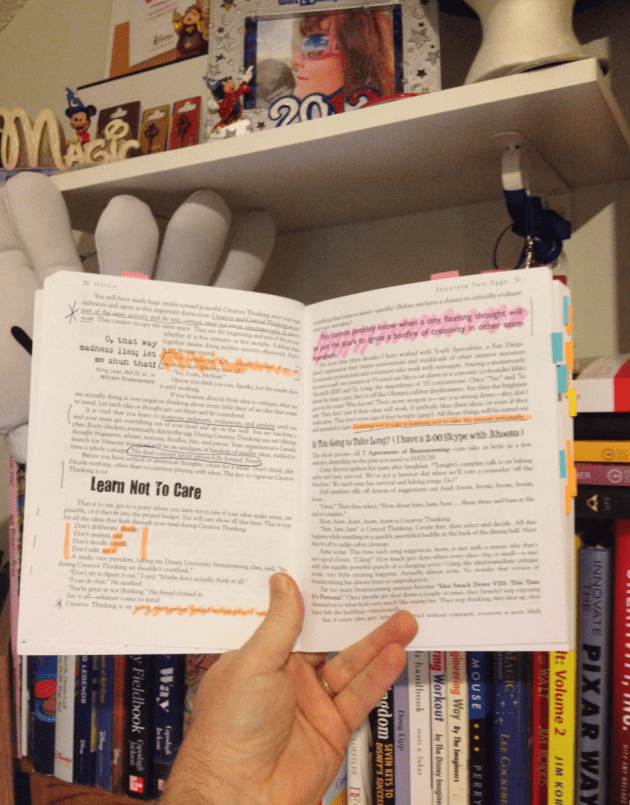
Reading, for me, is a chance to have an ongoing conversation with the author. The image above, taken from a new addition to my reading list, reflects the inside cover of almost every book in my library.

  • The large green Post-it® notes are for writing down important ideas from my reading of the book.
  • The smaller yellow Post-it® notes are for bookmarking important ideas in the pages of the book itself.
  • The four symbols are my “shorthand” for use while reading, indicating additional action needed.
  • I also usually highlight sections in various colors.
  • And on occasion, I will write longer notes in the margins.

When I’m finished with a book – particularly one that has really engaged me and caused me to think – the result looks something like this:

hatchbooknotes

I’m an active reader, working on becoming a more critical thinker, which will help me become a better leader.

What – and how – are you reading?

Protect the Past While Envisioning the Future

Does your church dream more about where you have been than where God is leading you?

Have you ever looked around to realize that your church might be living today by focusing on yesterday?

Many churches long for the past, dreaming about the “good old days.” When faced with questions that are not easily answered, or walking through times of trial and doubt, churches, like people, often want things to be the way they used to be.

The problem is, the past has gone. While we may look back and respect it, and maybe even at times revere it, we cannot live in the past, especially when circumstances demand answers for the future.

If you are interested in learning how to lead your church away from the past in order to focus on what God has ahead, protect the past while envisioning the future.

wwr030117fb-1


THE QUICK SUMMARY – Church Unique by Will Mancini

Church Unique, by Will Mancini, describes a new kind of visioning process designed to help churches develop a stunningly unique model of ministry that leads to redemptive movement. He guides churches away from an internal focus to emphasize participation in their community and surrounding culture.

Mancini offers an approach for rethinking what it means to lead with clarity as a visionary. He does this by explaining that each church has a culture that reflects its particular values, thoughts, attitudes, and actions and then shows how leaders can unlock their church’s individual DNA and unleash their congregation’s one-of-a-kind potential.

A SIMPLE SOLUTION

Bold aspirations must be rooted in the values and visions that have come before. For you to be alive and in touch with God’s work in the world, you were necessarily touched by the vision of others who came before.

Leaders should look for the artifacts of vision every day within their specific ministry contexts. An ongoing discover of uncovering and appreciating the visionary contributions of past and present help prepare your own unique vision to take shape.

Visionary leadership is the art of protecting the past as we champion the future.

We must listen carefully to the ones who have gone before us and learn about their vision. How does their vision intersect with what God is calling us to do? What artifacts of vision exist in the past that can be used to support our vision of the future?

Uncover the creation story – all vision has a creation story, the events and the passion that birth the idea of a better future. Visionary leaders uncover every creation story in the lineage of the people they are influencing.

Collect the hidden gems of vision vocabulary – in the articulation of past vision, there are key terms that live large with meaning. They are “words within the walls” that often stay undiscovered or unpolished. Consequently, they are under-noticed and under-celebrated.

Find the “Hall of Fame” memorabilia – Behind the pictures on the wall, the stained glass windows, and the sound system of your church home are the stories from the people who have forged the character of your church. These “hall of fame” memorabilia speak stories to your church’s uniqueness.

– Will Mancini, Church Unique

A NEXT STEP

Dedicate 20 minutes at the beginning of your next three team meetings to discuss the three vision artifacts listed above.

Meeting Number 1: Uncover the creation stories – the problem with most stories of the past is that they remain in rough form, half-buried in the conscious of the organization with few people who can recall a God-moment that got it started to begin with. If your church is more than five decades old, there may be few, if any, living members who were present at the birth of your church.

Create a plan to recover lost or half-buried memories of your church’s creation stories from long-term members, attic crawl spaces, newsletter archives, or historical documents in your community. The end result should be documented, sharable stories of your church’s birth and ensuing growth that serve as momentum to move forward into what God has for tomorrow. Example: Use significant historical changes like a relocation or renovation to fuel vision for significant changes that lay ahead.

Meeting Number 2: Collect the hidden gems of vision vocabulary – as your teams complete the work of uncovering the creation stories, alert them to be intentionally looking for words and phrases that are often repeated or seem to have significance attached to them. Make sure the teams collect these words and phrases for others to see and enjoy.

As you review these words and phrases, consider how they may be polished and integrated into the living language of your church today, as a way of honoring the past while honing language for the future.

Meeting Number 3: Find the “Hall of Fame” memorabilia – as your teams complete the work of uncovering the creation stories, also alert them to listen for mentions of items and objects to which others have attached importance. Most importantly, record the stories behind those objects that give them significance. Make sure the teams note these items and importance. An old window, chair, or other random object could serve as inspiration from where we have been to get where God is leading.


Not all history is bad, and not all future opportunities will be good. It takes discerning leaders to impartially and prayerfully evaluate “the way things used to be” in order to lead toward the future that God is calling you to create.

If your church is going to remain a vital outpost of Great Commission Transformation in your community, remember to protect the past while envisioning the future.

Excerpt taken from SUMS Remix Issue 22-1, published September 2015


Part of a weekly series on 27gen, entitled Wednesday Weekly Reader

Regular daily reading of books is an important part of my life. It even extends to my vocation, where as Vision Room Curator for Auxano I am responsible for publishing SUMS Remix, a biweekly book “summary” for church leaders. I’m going to peruse back issues of both SUMS and SUMS Remix and publish excerpts each Wednesday.

You can find out more information about SUMS Remix here.

Subscribe to SUMS Remix here.

Leaders Value Sleep and Improve Their Sleep Habits

Who takes care of the caregiver?

In your role of a leader and servant to your church, you probably push yourself to a point of exhaustion and beyond, rationalizing that you don’t have time for diets or exercise or that you will catch up on sleep later.

The reality is that the more you neglect your personal health, the less effective you actually are at caring for the spiritual health of others. Nodding off during meetings, eating greasy fast food while you drive, and collapsing on the couch during family time after work can be as destructive and sinful to your ministry as a moral failure.

Many leaders struggle with caring for their own health and well-being, and have become defeated and frustrated through the years as quick-fixes and January resolutions have come and gone. It is easier, and way more fun, to give in and neglect your own health.

Does being focused on serving the needs of others make it easy for you to neglect your own health?


wwr022217fb-1

THE QUICK SUMMARY – Sleep Smarter, by Shawn Stevenson

Sleep Smarter is a fun and entertaining look at how sleep impacts your mind, body, and performance, without skimping on the “how to’s” to get the sleep you really deserve.

Whether you’ve struggled with sleep problems, or you’re simply interested in living a longer, healthier life, you’re going to be blown away with what you learn.

Here’s just a sampling of what you’re going to discover:

  • Why you need to sleep more and exercise less to get the best fitness results.
  • How to feel more energized and refreshed on less hours of sleep.
  • Why poor sleep quality depresses brain function and leads to poor performance.
  • What exercises you can do to instantly improve your sleep quality.
  • Why going to bed at the right time is more important than how many hours you sleep.
  • What mineral deficiency can cause severe sleep problems (and how to fix it).
  • How to calm your mind so that you can fall asleep faster.

 A SIMPLE SOLUTION

A good night’s sleep is as important to your overall health as breathing and eating. You may think you are resting, but while you’re sleeping your body is busy tending to your physical and mental health and getting you ready for another day.

Here’s another way to look at it: nothing kills your ability to get things done faster than a bad night’s sleep. Repeated studies have shown that sleep deprivation causes significant loss in productivity. A yawn signifies more than just being tired; it means you are having trouble staying awake and making good decisions.

Studies from Harvard Medical School have shown that sleeping less than five hours a night increases the risk of death from all causes by about 15 percent. Researchers understand that sleeping too little causes disruptions in underlying health conditions and biological processes like glucose metabolism, blood pressure, and inflammation.

So not only is sleep important for maintaining alertness, energy for daily duties and health – lack of sleep can lead to serious medical conditions.

Isn’t it time you got a good night’s sleep?

Sleep is not an obstacle we need to go around, it’s a natural state your body requires to boost your hormone function, heal your muscles, tissues, and organs, and make your mind work at its optimal level.

Sleep is the secret sauce.

There isn’t one facet of your mental, emotional, or physical performance that’s not affected by the quality of sleep.

The big challenge is that in our fast-paced world today, millions of people are chronically sleep deprived and suffering the deleterious effects of getting low quality sleep.

The consequences of sleep deprivation aren’t pretty either. Try immune system failure, diabetes, cancer, obesity, depression, and memory loss, just to name a few.

Studies show that sleep deprivation is a missing component to nutrition and smart exercise that could help you shed fat for good. Other studies show sleep deprivation encouraging cancer, Alzheimer’s, depression, and even heart disease. In a society that is overworked and under-rested, it’s more important than ever to pay attention to issues associated with not getting the sleep that we require.

High quality sleep fortifies your immune system, balances your hormones, boosts your metabolism, increases physical energy, and improves the function of your brain. Without all of the essential benefits that sleep is providing, you will never have the body and life you want without giving your body the right amount of sleep.

Always remember the value of your sleep. You will perform better, make better decisions, and have a better body when you get the sleep you require. The shortcut to success is not made by bypassing dreamland. You will factually work better, be more efficient, and get more stuff done when you’re properly rested.

Shawn Stevenson, Sleep Smarter

A NEXT STEP

Contrary to the mantra of the busy leader, you can’t sleep when you’re dead. As noted above, lack of sleep will actually hasten illness, and ultimately, death.

Fortunately, there are a number of proven tips to help you have a better night’s sleep, be healthier, and live a better overall life.

If you are not currently practicing the following sleep tips, why not try them over the next month and see if you are not sleeping – and feeling – much better.

Journal your general feelings of well being, areas of your health you would like to improve, as well as statistical data on blood pressure, weight etc.

Next, identify one to two of the tips below that you will put into practice for the next 14 days. Give your body time to adjust to the first two tweaks then take on the next adjustment. After 60 consistent days of improved sleep habits, again journal your general feelings of well-being and statistical data.

Compare the two journal entries and use the improvements you see and feel to inspire commitment to continue to get great sleep.

  • Follow a regular sleep schedule – Study after study has shown that our bodies obey regular rhythms of sleep and wakefulness. When you shortcut those rhythms, you are shortcutting your health.
  • Manage nighttime stress – Research has shown that stress is a leading cause of sleeplessness; furthermore, worrying about not getting enough sleep can actually keep people awake.
  • Eat right – Avoiding caffeine and spicy foods in the 4-6 hours before bedtime will probably keep you from a good night’s sleep.
  • Exercise – Even moderate amounts of exercise will enable a good night’s sleep.
  • Make sleep a priority in your overall health and wellbeing – Commit to say “no” or to not watch “just one more episode” on Netflix each evening, because establishing a healthy sleep routine is a foundational step in increasing your overall health.
  • Turn off the screens – The “friendly glow” of mobile devices, laptops, and television screens, and even e-readers not only gives off unnecessary light in your (hopefully) darkened room, the content of those devices causes unnecessary stress right when you need to be reducing stress.
  • Talk to your doctor – It may be the last on the list, but lack of sleep may be an early indicator of serious health issues. If you’re not resting well, make an appointment to talk it over with your doctor.

Excerpt taken from SUMS Remix Issue 27-2, published November 2015


Part of a weekly series on 27gen, entitled Wednesday Weekly Reader

Regular daily reading of books is an important part of my life. It even extends to my vocation, where as Vision Room Curator for Auxano I am responsible for publishing SUMS Remix, a biweekly book “summary” for church leaders. I’m going to peruse back issues of both SUMS and SUMS Remix and publish excerpts each Wednesday.
You can find out more information about SUMS Remix here.

Subscribe to SUMS Remix here.

Leaders Make the Conscious Decision To Serve

Humility does not come naturally to anyone.

Who hasn’t seen an example of our self-centered nature in a two-year old child in the checkout line at the grocery story, lying flat out on the floor, screaming at the top of her lungs, fists clenched because Mom wouldn’t buy her a candy bar? When the child did not get what she wanted, a temper tantrum followed.

The reality is that adults have an inner two-year-old. We know what we want, when we want it, and we are dejected, annoyed, and maybe even angry when we don’t get our way. While it’s not appropriate to lie on the floor and scream anymore, often – in our minds – we are tempted.

Our model for humble leadership lives in the servant-mindedness of Jesus Christ during His ministry on earth. We’re not likely to achieve that kind of perfect and consistent humility in this lifetime. But great leaders aspire to grow in Christ-like humility with each passing day.

If you are interested in developing as a leader, model the humble servanthood of Jesus and make a conscious decision to serve others.

wwr021517fb-1


THE QUICK SUMMARY – Dare to Serve, by Cheryl Bachelder

Cheryl Bachelder joined an ailing restaurant chain and turned it into the darling of the industry—by daring to serve the people in her organization well.

When Bachelder was named CEO of Popeyes in the fall of 2007, guest visits had been declining for years, restaurant sales and profit trends were negative, the company stock price had dropped by half, the brand was stagnant, and relations between the company and its franchise owners were strained.

By 2014, average restaurant sales were up 25 percent, and profits were up 40 percent. Popeyes’ market share had grown from 14 percent to 21 percent, and the stock price was over $40. The franchisees were so pleased with the turnaround that they began reinvesting in the brand, rapidly remodeling restaurants and building new units around the world.

The difference maker, Bachelder says, was a conscious decision to lead in a new way – with servant leadership. Servant leadership is sometimes derided as soft or ineffective, but Dare to Serve shows that it’s actually challenging and tough minded – a daring path. Bachelder takes you firsthand through the transformation of Popeyes and shows how a leader at any level can become a Dare-to-Serve leader.

A SIMPLE SOLUTION

A typical view of leadership puts the leader in the spotlight. Conventional leaders assume the power position and declare a new vision. They have all the answers. They’re high achievers. Perhaps they’re even a bit self-absorbed. We tolerate that because they’re going places we want to go. If they succeed, so will we.

At least, we hope so.

Servant leaders avoid the spotlight – instead, they prefer to direct the spotlight on others. Servant leaders:

  • Listen carefully
  • Make decisions that serve the people they lead well.
  • Give credit

We like the concept of servant leaders, but in reality we fear they won’t succeed. We doubt they’ll deliver superior performance results.

A leader wanting to demonstrate servant leadership is a leader who is courageous enough to take people to a daring destination, yet humble enough to selflessly serve others on the journey. This dynamic tension between daring and serving creates the conditions for the people to deliver superior performance.

Humility is not being a doormat, it is simply thinking less about our own needs, and more about the needs of others. When we do this, we exit the spotlight, allowing us to serve others well.

Dare-to-Serve Leadership is much more difficult, and in that challenge, the leader creates the conditions for superior performance:

  • It begins with a conscious and humble decision to serve others well.
  • It inspires people to pursue a daring destination, an aspiration greater than self.
  • It boosts the capability of the people and increases their willingness to take risks.
  • It holds people accountable.
  • It is appropriately confident.
  • It works.

Dare-to-Serve Leadership requires deep-rooted personal conviction; it’s a demanding path.

The Dare-to-Serve Leader has that unique combination of traits – enough courage to take the team to a daring destination, and enough humility to serve the people well on the journey. Together these traits foster the environment for superior performance.

– Cheryl Bachelder, Dare to Serve

A NEXT STEP

On a sheet of paper, draw a line down the middle making two columns. In the left column, list the first five descriptors of Dare-to-Serve Leadership from the list above.

In the left column, list your recent activities that have demonstrated the Dare-to-Serve descriptors listed.

On another sheet of paper, identify three obstacles you face in becoming a servant leader. Review the list and write at least one action to help overcome each obstacle.


Excellent leaders set the example by aligning their actions with their values as a servant leader, just as Christ did.

James Kouzes and Barry Posner, writing in Great Leadership Creates Great Workplaces, suggest leaders ask themselves these three questions at the end of each day:

“What have I done today that demonstrates the values that I hold near and dear?”

“What have I done today that might have, even inadvertently, been inconsistent with what I value and believe in?”

This reflection will prepare you to ask a final question: “So tomorrow, what do I need to do differently so that my actions match my words?”

Servant leaders who make this a regular habit will not only be practicing their craft, they will be developing themselves and others as servant leaders – ultimately reflecting the heart of Christ who did not come to be served, but to serve and give His life as a ransom for many.

Taken from SUMS Remix 19-3, published July 2015.


Part of a weekly series on 27gen, entitled Wednesday Weekly Reader

Regular daily reading of books is an important part of my life. It even extends to my vocation, where as Vision Room Curator for Auxano I am responsible for publishing SUMS Remix, a biweekly book “summary” for church leaders. I’m going to peruse back issues of both SUMS and SUMS Remix and publish excerpts each Wednesday.

You can find out more information about SUMS Remix here.

Subscribe to SUMS Remix here.

Shift the Focus of Your Communication from Transaction to Transformation

How do I lead the process of heart transformation necessary to grow generous givers who are rich toward God?

Talking about giving in church is undoubtedly one of the senior leader’s least favorite activities.

When you want to talk about developing generous givers, all your congregation sees is dollar signs.

You are frustrated because the giving pattern of your congregation seems more like tipping than tithing.

You want to help your congregation grow into a lifestyle of generous giving rather than making occasional commitments.

It’s time for a shift in focus…

wwr020817fb-1

THE QUICK SUMMARY – A Revolution in Generosity, Wes Willmer, Editor

“Give over $100 today and get this personalized state-of-the-art fountain pen free!” “Become a gold sponsor and your name will be featured on our exclusive Wall of Fame!” “Send in your donation by December 31st and enjoy the benefits of giving on your next tax return!” Who hasn’t heard fundraising gimmicks like these? Or, who hasn’t used these gimmicks on others?

As Wes Willmer writes, generosity is the natural outcome of God’s transforming work in individuals when they are conformed to the image of Christ. Fundraising and giving are not simply drops in the bucket. Capital campaigns and raising funds go deeper than the money. They are spiritual activities in becoming more like Christ.

A Revolution in Generosity is a work by some of the best scholars and practitioners on the subject of funding Christian organizations. As Willmer writes, “The foundation for realizing a revolution in generosity is understanding the biblical view of possessions, generosity, and asking for resources.” With over twenty expert contributors, this book is a must-read for organizations striving to rid themselves of secular, asking practices and gain an eternal approach.

A SIMPLE SOLUTION

Successful revolutions require a plan. Successful revolutions in generosity require a plan that is both strategic and spiritual, delivering a passionate message to both heart and mind.

It is all too easy to get lost in the nuts and bolts of generosity – the “transactions” between giver and the church. Foundational to the idea of a revolution in generosity is the “transformation” needed in the giver’s life and actions.

 Rather than merely advancing the cause of your organization, your ultimate goal must be to challenge people to conform to the image of Christ, who is generous.

To change the way your constituents live as well as give, you must develop a spiritual and strategic communications plan for your ministry. As a framework for your plan, there are six basic components:

Who – The communicator of the message. Change within an organization starts with the leader. When you grasp head knowledge about stewardship and apply biblical principles in your life, your personal character grows and your actions and words send a message about stewardship.


What – The content of the message. The topic of possessions and the Christian’s role as steward of them is a central theme in Scripture. God has much to say regarding our stuff. Because of this, we have plenty of material from which to craft our biblical stewardship message.


Where – The target audiences of the message. You must understand your audiences in order to deliver appropriate messages. Each ministry should prioritize its communication to deliver to three main sets of constituents: internal publics, religiously oriented publics, and external publics.


Why – Four objectives. To facilitate the growth of generous givers is to exhort constituents to be conformed to the image of Christ and thereby participate with God in His work. For this reason, your spiritual and strategic communication should seek to accommodate the objectives of intercession, involvement, instruction, and investment.


When – Consistently communicating the message. In order for our constituents to be transformed by the biblical stewardship message, your organization should consistently and regularly share spiritual principles that instruct them to be conformed to the image of Christ.


How – The channels of communication. There are four general channels of communication:

  • Electronic media such as e-communications, social media, and websites sharing specific opportunities for participation

  • Printed materials such as articles and magazines

  • Direct main containing communication without manipulation

  • Verbal communication such as meetings, events, and programs which give clear and direct presentation of giving opportunities.

– Gary G. Hoag, contributor, Revolution in Generosity

A NEXT STEP

The six components listed above can serve as a practical manual for establishing a program that communicates stewardship principles and ignites a revolution in generosity in your church.

Prior to your next leadership team meeting, duplicate and distribute the six components listed above. Ask your team to study the components and be prepared to discuss them.

At the team meeting, ask team members to rank each of the six components with one being most important and six being least important. Add up all the scores to come up with a group ranking of most to least important.

For the most important component, discuss actions, timelines, and goals for that component. Using the 100-80 Rule (where 100 percent of the group feels 80 percent good), determine next steps by ranking the actions. One month after launching the first component, take 30 minutes in a team meeting to evaluate effectiveness, and make adjustments as necessary.

Two months after launching the first component, launch the second one following the process outlined above. Repeat every two months with succeeding components.

After one year, evaluate all the components in place. Continue to refine and adjust them, making them a regular part of your systems and processes.


Self-seeking ownership and hoarding are the natural inclinations of mankind, but God calls his children to a higher, simpler standard: Be rich toward God. You can lead your church through concrete and practical ways to a God-honoring approach of providing resources for your ministry.

Taken from SUMS Remix 17-3, published June 2015.


Part of a weekly series on 27gen, entitled Wednesday Weekly Reader

Regular daily reading of books is an important part of my life. It even extends to my vocation, where as Vision Room Curator for Auxano I am responsible for publishing SUMS Remix, a biweekly book “summary” for church leaders. I’m going to peruse back issues of both SUMS and SUMS Remix and publish excerpts each Wednesday.
You can find out more information about SUMS Remix here.

Subscribe to SUMS Remix here.

Learn What Fills Your Tank – and Keep It Filled

Are you trying to lead on an empty tank?

More days than we would like to admit, pastors face the necessity of leading on an empty tank. The ever present needs of the body, the ongoing call to lead our families through challenging or exciting seasons, and the every day mechanics of ministry leadership compound to drain even the healthiest leader. In fact, the question is not will you ever lead from an empty tank, but HOW will you lead from an empty tank. More importantly, what should a Pastor do when that season emerges?

A pastor’s greatest leadership tool is a healthy soul. Our concentration on skill and technique and strategy has resulted in deemphasizing the interior life. The outcome is an increasing number of men and women leading our churches who are emotionally empty and spiritually dry. – Lance Witt

It is time to face the reality that no numeric or other measurable short-term success in ministry can ever offset the long-term consequences of leading from an unhealthy spirit. What do you do when your tank runs dry?

wwr020117fb-1

THE QUICK SUMMARY – Leading on Empty by Wayne Cordeiro

In Leading on Empty, Wayne Cordeiro shares his experience of burnout with the hope that it will encourage others headed down the same path. He was able to get back in touch with his life, get back in proper balance, and allow God to reenergize his spirit in a way that propelled him forward to greater levels of service.

Learn from his experience how you can continue a fruitful ministry. Better yet, take advantage of Wayne’s helpful advice early on and avoid burnout altogether. Leading on Empty gives leaders the tools to recognize and overcome burnout, providing them a new vision for greater levels of both rest and productivity.

A SIMPLE SOLUTION

When your car’s fuel gauge approaches the “Empty” mark, you know it’s time to fill up your tank. The consequences of not paying attention to this gauge usually involve coming to a complete standstill in an inconvenient and unsafe moment. Your car has been specifically designed to run best on a particular type and quality of fuel. From unleaded to diesel to newer petroleum alternatives, there is no substitute for the fuel the engine is built for. Your leadership engine requires the same attention to the fuel gauge and selection of the right fuel type.

What kind of fuel do you need when approaching empty?

One of the best “fuels” for your tank is knowing what your strengths and calling are, and learning how to consistently get back to the core of that calling.

Your soul is like a battery that discharges each time you give live away, and it needs to be recharged regularly.

Eighty-five percent of what we do, anyone can do. These tasks don’t require an elite expertise or specialized skill. Many of these tasks can be delegated to others so we can concentrate on what’s most important to the job we have been given to do.

Ten percent of what we do, someone with a modicum of training should be able to accomplish. With appropriate schooling and experience, someone else can perform a surgery, manage an engineering project, or sell real estate. Certain aspects of these activities can be assigned to trained individuals.

But five percent of what I do, only I can do! This is the most important five percent for me. I can’t delegate these initiatives to anyone else, or hire someone else to take my place. This five percent will determine the validity of the other ninety-five percent. This is what I must discover and make the epicenter of my life.

We often fill our days with the eighty-five percent because it requires so little of us. We then dip into the next ten percent, leaving nothing for the crucial five percent.

If the five percent is compromised, the consequences will be felt in other areas, and you life will grind to a halt until those priorities are restored.

– Wayne, Cordeiro, Leading On Empty

A NEXT STEP

In order to learn what fills your tank, consider leading your team through the Strengths Finder assessment as described in Strengths Finder 2.0 and its supporting online materials (see the links in the Resources section below).

Once you have completed the online assessment, you can receive an assessment guide customized for your top five themes. In addition, the guide will help you build a strengths-based development plan by exploring how your greatest natural talents interact with your skills, knowledge, and experience.

Another important fuel-type discovery could be found within a collaborative and team-centered personality discovery. The Insights process not only speaks into your leadership fuel requirements, but charts your fuel alongside the rest of your team, bringing depth of understanding to how each of member is uniquely gifted to accomplish God’s call for your church. Find out more about the Insights process here.

From living in your strength to understanding your personality, move beyond discovery to development. List 3 immediate steps to take in the next 30 days, in light of your particular leadership strengths or ministry personality, that serve to refuel your leadership engine.


Godly leadership is always inside out. God has and always will choose to smile on men and women who are healthy, holy, & humble. – Lance Witt

By learning what fills your tank, leaders will help themselves and their teams keep a “full” tank and be healthy emotionally, physically, and spiritually.

Taken from SUMS Remix 14-2, published May 2015.


Part of a weekly series on 27gen, entitled Wednesday Weekly Reader

Regular daily reading of books is an important part of my life. It even extends to my vocation, where as Vision Room Curator for Auxano I am responsible for publishing SUMS Remix, a biweekly book “summary” for church leaders. I’m going to peruse back issues of both SUMS and SUMS Remix and publish excerpts each Wednesday.

You can find out more information about SUMS Remix here.

Subscribe to SUMS Remix here.

Conduct a Community Analysis

Has the community around your church changed, and you are not sure how to respond?

Some say that we live in the age of the “selfie” – a generation focusing more and more on how they look, and at the same time  growing more and more unaware of the world around them. What about your church? If you took a “congregational selfie” and then compared it to a “neighborhood selfie” of the community around your church, what would you find?

For many churches, especially established congregations with years of ministry impact, there will be a significant difference.

In the beginning, the church was a reflection of the community where it was located. There was probably significant and steady growth – as the community grew, the church naturally grew. Many churches might even have been seen as their “community center.”

However, over time, every community begins to change. It may be as simple as the community aging – or as complex as an ethnic, racial, or other socioeconomic change. Whatever the case, the community around the church probably changed…

…but the church didn’t change.

Over time, most churches resist, and even fear change.

The growing disparity between a church and its community was probably subtle – maybe even occurring over several generations. It starts with a few people beginning to move into other parts of the town and no longer making the drive back to their old community. Other events beyond the church’s control take place, like key industry moving out of town and the workforce following. Whatever the cause, the end result is that the church begins to no longer look like the community around it and many leaders are not sure how to respond.

It’s time to do a community analysis.

 wwr012517fb-1

THE QUICK SUMMARY – Neighborhood Mapping, by John Fuder.

In addition to understanding the Word of God, it is necessary to understand the people we serve. Once we make sense of our neighborhoods and communities, we can begin to “diagnose” needs and apply the proper “dose” of the gospel to meet those opportunities.

Neighborhood Mapping awakens the neighborhood explorer to consider effective methodology of understanding their neighborhood. Dr. Fuder calls believers to shift the focus from inside the church building to those who live in the community.

Best practices and sample surveys will be available in this resource as explorers will look through the lens of Scripture to give practical steps to exegete the community and consider best practices of:

  • What is a neighborhood map/Community Analysis?
  • When should this map/analysis be created?
  • Why should we map our neighborhood?
  • Who is on the map and who is a part of this analysis?
  • Where are the borders of this map/analysis?
  • How does one conduct a community analysis?

A SIMPLE SOLUTION

It’s no secret that our world is changing rapidly around us. We often are more accepting of societal change around the world than across the street. Yet God has placed your church in a specific location so that you might impact your community with cosmic significant and locally specific actions.

If your church is going to be an active presence in your community, you can’t sit behind closed doors, waiting for the neighborhood to come to you. You must step out, engaging those around you and seeking to understand their hopes, dreams, and needs.

In order to minister to your community, you need to not only know how to interpret the Bible, but also how to engage with and adapt to those for whom the gospel message is addressed.

When we exegete a community, we draw meaning from it. We discover the underlying history, context, and culture of that place and its people. 

Analyzing our communities enables us to explore and rediscover our surroundings. Once we make sense of our context, we can begin to “diagnose” needs and apply the proper “dose” of the gospel to meet those opportunities. Community analysis is the methodology and vehicle to rediscover our missional mandate in the church: to proclaim and demonstrate the gospel. The focus shifts from those inside the building to those outside – it is about the people we seek to reach. We must help our people see that “neighbor love” is an important part of following Jesus, and that moves us to find ways to know our neighbors in order to minister to and serve them well.

Community analysis is a four-step process; it’s what I call the 4Ss: supplication, stakeholders, surveys, and stories.

Supplication – before we do anything else in our communities, we seek, individually and corporately, God’s direction and leading.

Stakeholders – focus on people within the community with whom we can partner or network, such as neighborhood leaders, social services, schools, or businesses.

Surveys – through questionnaires and gathering focus groups, we get a stronger idea of our neighbor’s felt needs, worldviews, and attitudes toward church and faith in general.

Stories – gather the stories we hear through those questionnaires and interviews and put them into case studies to get a fuller picture of our neighbors so that we can better minister and reach out to them.

– John Fuder, Neighborhood Mapping

A NEXT STEP

Prior to your next leadership team meeting, distribute this SUMS Remix to members of your team and ask them to read through it and be prepared to work on this solution using the 4S guide as outlined above. Spend 15 minutes in each of the following sections, using the listed questions as a springboard for great discussion. Before moving on to the next section, identify one team action or next step, and one individual next step. Also be sure someone is documenting the conversation and key ideas that emerge.

Supplication – seeking God’s direction and leading

  • In your personal prayer life, are you specifically naming individuals and needs of your community?
  • In your leadership team’s prayer life, are you specifically naming individuals and needs of your community?
  • In your corporate prayer life, are you specifically naming individuals and needs of your community?
  • Commit to one specific action both individually and corporately that you will undertake in the area of Supplication in the next week.

Stakeholders – seeking community and neighborhood partners

  • Do you have individual or a network of community leaders with whom you maintain a regular connection?
  • If not, do you know where or how to obtain names of such individuals?
  • Do you have a local governmental connection that you maintain regular contact with?
  • Assuming you have connections described above, how often do you connect with them? Do you seek information from them or primarily use the connection as an information flow from you to them?
  • In connections with the individuals listed above, do you have a mechanism in place to regularly listen to and develop a deeper understanding of their concerns?
  • Assuming you have such a mechanism, how do you take action on their concerns?
  • Commit to one specific action both individually and corporately that you will undertake in the area of Stakeholders in the next week.

Surveys – seeking information that helps reveal our communities understanding of our church specifically and faith generally

  • Has your church ever conducted a community survey of any type? If so, when was it done? How was the information used?
  • Do you have knowledge of the resources needed to conduct a community survey? If not, do you know where to get the resources?
  • If you were to look at the community around you, can you identify specific segments that might need different types of surveys? If so, what are they?
  • Commit to one specific action both individually and corporately that you will undertake in the area of Surveys in the next week.

Stories – collecting the stories arising out of the actions listed above

  • Do you know where to go and who to listen to in order to hear the stories of your community?
  • Have you really listened to the stories of the community around you from people actually involved in them? How did that make you feel?
  • Compare those stories to any stories that make up part of your church’s history and heritage. Do they coincide, or are they vastly different?
  • Consider specific ways you will gather stories from your community through active listening, surveys, or guided conversations.
  • Commit to one specific action both individually and corporately that you will undertake in the area of Stories in the next week.

Your community is not frozen in time; it is constantly changing. Your work of community analysis must also be done over and over again. It is never a “one and done” thing. To learn more about congregational and community survey resources, start a conversation with the Auxano team today.


Vibrant churches look after the interests of others – starting with their neighbors across the street and around the block. They are involved in community concerns by supporting, if not actually leading, initiatives.

Thriving churches have open doors – open to each and every segment of their community.

Taken from SUMS Remix 21-1, published August 2015.


Part of a weekly series on 27gen, entitled Wednesday Weekly Reader

Regular daily reading of books is an important part of my life. It even extends to my vocation, where as Vision Room Curator for Auxano I am responsible for publishing SUMS Remix, a biweekly book “summary” for church leaders. I’m going to peruse back issues of both SUMS and SUMS Remix and publish excerpts each Wednesday.

You can find out more information about SUMS Remix here.