Disney at 100: The Lifelong Partnership of Walt and Roy Disney

My brother Walt and I first went into business together almost a half-century ago. And he was really, in my opinion, truly a genius – creative, with great determination, singleness of purpose and drive; and through his entire life he was never pushed off his course or diverted to other things.

Roy Disney, at the Dedication of Walt Disney World, October, 1971

The year 2023 marks a momentous occasion for Disney enthusiasts and fans of the magical world of animation and entertainment. It’s the 100th anniversary of the Disney Company, a celebration that invites us to take a journey through time and rediscover the remarkable story of two brothers who forever changed the landscape of the entertainment industry: Walt Disney and Roy Disney.

As we explore the extraordinary partnership of Walt and Roy Disney, we’ll look at highlights of their shared vision, unwavering dedication, and the remarkable accomplishments that define their legacy.

From the earliest days of their lives in the bustling city of Chicago, Illinois, to the groundbreaking achievements that revolutionized animation and theme parks, the story of Walt and Roy Disney is a tale of creativity, innovation, and the power of collaboration. Together, they laid the foundation for a global entertainment empire that continues to enchant and inspire generations of dreamers and believers.

Join me on this journey as we unravel the tale of the Disney brothers whose partnership laid the foundation for a magical world where dreams come true. Through the highs and lows, triumphs and challenges, their story is a testament to the enduring spirit of innovation and the belief that anything is possible when you have a dream and someone to share it with.

Childhood and Early Years

In the heart of the bustling city of Chicago, Illinois, in the early years of the 20th century, two brothers were born who would go on to change the face of entertainment forever. Walter Elias Disney, known to the world as Walt, and his younger sibling Roy Oliver Disney, came into the world with an innate curiosity and a shared passion for art and animation.

Shared Upbringing

The Disney brothers grew up in a modest household, where their father, Elias Disney, worked as a carpenter, and their mother, Flora Disney, nurtured their creative spirits. It was within the confines of this supportive and nurturing family that the seeds of their future dreams were sown. 

From an early age, it was clear that Walt and Roy possessed a unique bond. Being eight years older, he would often push the infant Walt in a carriage along the streets of their home. Even after a move from Chicago to a farm in Marceline, MO in 1906, the brothers remained close. Having three older brothers, Walt was mature for a seven-year old, and Roy treated him as an equal, rather than a pesky little brother. 

When the two older brothers left the family farm to strike out on their own, and with their father Elias weakened by illness, the responsibility of keeping up the farm fell to Roy. It was too much for a boy who was also attending high school, so the Disney family sold the farm and moved into a small house in Marceline, primarily so the three children (Roy, Walt, and sister Ruth) could finish school.

In 1910, the family moved to Kansas City, with Elias becoming a newspaper distributor – and drafting his sons Roy and Walt to make deliveries in the early hours before school began and late afternoon, after school had been dismissed. These long hours of shared work were an foreshadowing of the partnership that continued throughout the remainder of their lives.

Separate Paths

After graduation from high school and working a few odd jobs, Roy settled into the world of banking as a teller. Walt’s love of drawing since boyhood deepened throughout his school years. Walt often came to see Roy because he wanted a quarter or half-dollar for paper to draw on. That pattern became the story of their lives: Roy providing the money for Walt’s artistic endeavors.

As the U.S. began its involvement in WWI, Roy enlisted in the Navy, serving for two years. Back in Kansas City, Elias Disney grew dissatisfied with the newspaper business, and moved his family back to Chicago. Walt finished high school in Kansas City, then moved to Chicago for a brief time, before convincing his reluctant parents to allow him to volunteer for the Red Cross and go the the battlegrounds of Europe. 

When the war ended in 1919, Roy returned to Kansas City and his job as a bank teller. Walt, drawn innately by the bond he had with Roy, also settled in Kansas City. He announced he had decided to make a career out of his passion: he would become an artist.

The Birth of the Disney Brothers’ Animation Ventures

In the years that followed, the Walt began to experiment with animation techniques, driven by his insatiable curiosity and an eagerness to bring drawings to life. He embarked on a series of jobs that helped him hone his craft. After a few setbacks, he borrowed money from friends and family and launched “Laugh-O-Gram Films.” After some initial success, Walt had overextended Laugh-O-Gram, and it went bankrupt. Desperate, he reached out to his older brother for advice through a series of letters and telegrams.

Roy had not been well since his return from the Navy; he was diagnosed with tuberculosis, and sent to a series of veterans’ hospitals in New Mexico and Arizona to recuperate. After some recovery, he moved to California and began a hunt for a job. After a few small jobs, he suffered a relapse from TB and entered the VA hospital in Los Angeles. Receiving disability payments, he would often reply to Walt’s letters with a $20 bill enclosed – because he knew Walt needed the money.

Upon the failure of Laugh-O-Gram, Walt received a letter from Roy encouraging Walt to leave Kansas City. The next day, Walt boarded a train to join his older brother Roy in California.

Founding of Disney Brothers Studio

In the early 1920s, as the world was on the brink of a new era, Walt and Roy Disney were about to embark on an adventure that would forever change the course of entertainment history. It was a time of boundless creativity and innovation, and the Disney brothers were poised to be at the forefront of it all.

From Humble Beginnings to Ambitious Dreams

The Disney brothers had come a long way from their modest upbringing in Chicago. In 1923, with a few sketches from the Kansas City days, an old camera, and an unyielding determination to succeed, they founded Disney Brothers Studio in Hollywood, California. Staring in their uncle’s garage, they soon moved to rented rooms behind an realtor.

The inception of Disney Brothers Studio marked the birth of what would eventually become The Walt Disney Company. At this early stage, the company was a small animation studio with big dreams. Walt Disney, the visionary and creative force behind the operation, had a clear vision for what he wanted to achieve: to create innovative and captivating animated content that would transport audiences to magical worlds.

The Complementary Roles of Walt and Roy

One of the hallmarks of the Disney brothers’ partnership was the way in which they complemented each other’s strengths. Walt was the dreamer, the artist, and the storyteller. He had a knack for creating beloved characters like Mickey Mouse and crafting unforgettable narratives. Meanwhile, Roy was the pragmatist, the financial wizard, and the one who kept the studio afloat during challenging times.

Roy’s role in the early days of Disney Brothers Studio cannot be overstated. While Walt poured his heart and soul into the creative process, Roy handled the business side of things. He secured contracts, managed budgets, and ensured that the studio had the financial stability to continue its groundbreaking work. Roy forsook banking work and a hospital bed, where he was recuperating from tuberculosis contracted during wartime, to start as the cameraman, bookkeeper, and even cel washer for a time at the little animation studio. Without Roy’s steady hand guiding the company, Walt’s creative visions might never have seen the light of day.

Alice Comedies

Walt’s experimentation of putting a live person into an animated cartoon was a success, and soon the brothers had a contract to move forward. Eventually, they produces a series of 56 Alice shorts over the next three and a half years, each one becoming more popular than the previous one. With the success of the Alice comedies, the brothers moved into an all new and larger studio in 1926.

Oswald

In 1927, the debut of Walt and Roy’s first true cartoon star, Oswald the Lucky Rabbit, furthered their creative accolades and reputation. Oswald appeared in a series of 26 silent cartoons, but the Disney Brothers Studio lost the rights to Oswald through a contract dispute with the distributor.

The Debut of Mickey Mouse and a Turning Point

In 1928, Disney Brothers Studio faced a critical turning point. The studio had experienced some success with its Oswald series, but in the same dispute in which they lost Oswald, they lost almost all their animators. Returning to California from New York City with the bitter news, Walt telegraphed Roy:

LEAVING TONIGHT STOPPING OVER KC ARRIVE HOME SUNDAY MORNING SEVEN THIRTY DON’T WORRY EVERYTHING OK WILL GIVE DETAILS WHEN ARRIVE—WALT

Walt later told the story of coming up with the character of Mickey Mouse on that long and painful ride from NYC. It was the creation of Mickey Mouse in the groundbreaking short film Steamboat Willie that catapulted them to fame. There were actually two earlier Mickey Mouse cartoons – Plane Crazy and The Gallopin’ Gaucho – but Steamboat Willie was the first cartoon with sound. Mickey Mouse quickly became a cultural phenomenon, capturing the hearts of audiences around the world.

Steamboat Willie was not only the first synchronized sound cartoon but also the birth of a global icon. It showcased Walt’s innovative spirit and Roy’s ability to navigate the evolving landscape of the film industry. Together, they had struck gold.

A World of Imagination Unveiled

By the late 1920s into the 1930s, Disney Brothers Studio had firmly established itself as a leader in animation. With beloved characters like Mickey Mouse capturing the hearts of audiences, the studio was poised for growth. Walt Disney’s unceasing creativity gave birth to a world of imagination, as he introduced a cavalcade of new characters and storytelling techniques.

The Silly Symphonies series allowed for experimentation in animation, paving the way for innovations like the multiplane camera, which added depth and dimension to their films. Each new release was a testament to Walt’s artistic vision, while Roy, always the financial steward, ensured the studio’s continued financial success.

Snow White

Buoyed by the success of his animation projects, Walt brought to life a dream he had held onto since 1917 – a full-length animated feature film, Snow White. Taking three years to produce, requiring great financial sacrifice, and despite the derision of Hollywood, it opened to tremendous acclaim on December 21, 1937. 

Because of the long development process, there was time to contract licensees during production (Roy’s idea) and Snow White marked the first time a complete licensed merchandise campaign was in place upon a film’s release. Additionally, a 3-record set of recordings from the film became the first feature-film soundtrack release – before the word “soundtrack” was used.

The success of Snow White provided resources for the construction of a new, state-of-the art studio in Burbank, and by October 1940 the Disneys’s new studio was ready to usher in a new generation of filmmaking advancements.

The Disney Magic Expands to Television

In 1950 the Disney brothers expanded their reach into television. While other Hollywood studios ignored the rise of television, Walt and Roy embraced it. They saw the medium as a new platform for storytelling – one which allowed him to communicate directly to audiences. 

Over the years, shows like The Mickey Mouse Club and Walt Disney’s Wonderful World of Color brought Disney’s magic into living rooms across America. Once again, Walt’s storytelling prowess and Roy’s financial management were the perfect recipe for success.

These television programs not only showcased beloved Disney characters but also provided a platform for Walt to share his insatiable curiosity and passion for education and innovation. This commitment to learning and growth would become a cornerstone of the Disney legacy.

In addition, it was the partnership with the fledgling ABC network that allowed the seed money and loan backing for a project that had been on Walt Disney’s heart since boyhood – an amusement park.

Challenges and the Birth of Disneyland

As the Disney brothers reached the 1950s, they faced a monumental challenge that would test their partnership like never before: the construction of Disneyland. The idea of a theme park where families could step into the enchanting world of Disney was a bold one, but it also came with enormous financial risk.

Walt’s boundless creativity and Roy’s financial acumen were never more critical. Roy’s relentless pursuit of funding secured the necessary resources for Disneyland to become a reality. On July 17, 1955, Disneyland opened its gates, and the world was forever changed. The Disney brothers had created a place where dreams came true, and it was an immediate success.

Walt Disney World

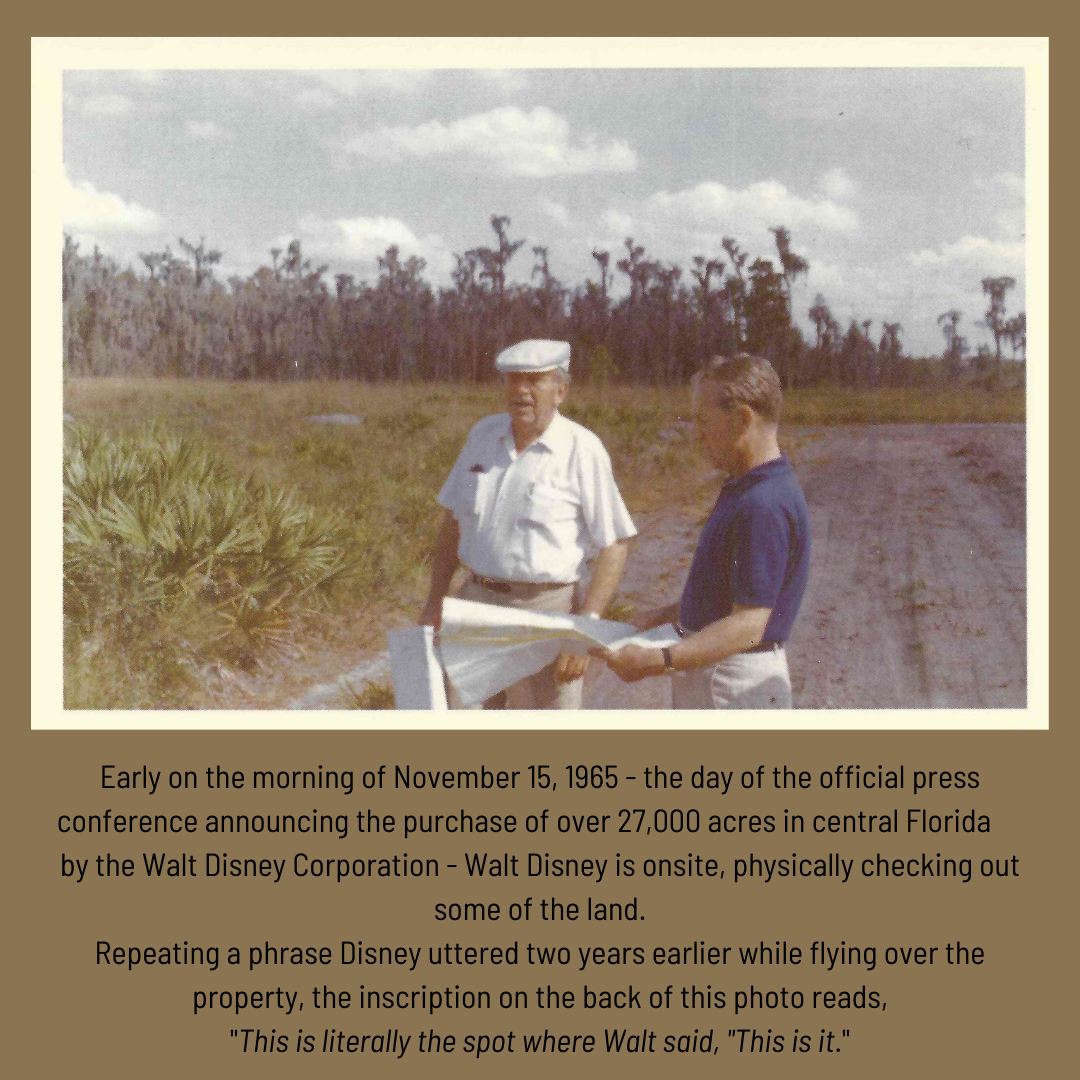
By the mid-1960s, with the critical and commercial success of Disneyland, and bolstered by Disney’s expanding innovation in attractions, Walt and Roy know that the Disney entertainment empire was ready to leave the comfort of sunny California and head east. Beginning with secret research and land acquisition, their eventual target was central Florida near Orlando, and the “Florida Project” was formally announced in 1965.

The Disney brothers’ decision to begin on an entertainment destination the likes of which the world had never seen would change the faces of themed entertainment and international tourism forever.

With a blank canvas of over 27,000 acres, by 1971 Walt Disney World had become the largest private construction project in U.S. history, with more than 8,000 workers onsite at the peak of activity.

But first it had to cross a tragic hurdle: the death of Walt Disney in December 1966. This would be the ultimate – and final – test of the siblings’ bond, and Rory charged on in deference to his late brother’s wishes. Adhering to Walt’s guiding principles, Roy postponed his own retirement and devoted all his energy to what he insisted should be call Walt Disney World.

The Lasting Legacy of Walt and Roy Disney

The story of Walt and Roy Disney is a tale of two brothers whose dreams transcended generations. As we venture into the final chapter of our exploration, we pay homage to their enduring legacy—a legacy that continues to enchant, inspire, and unite people from all corners of the globe.
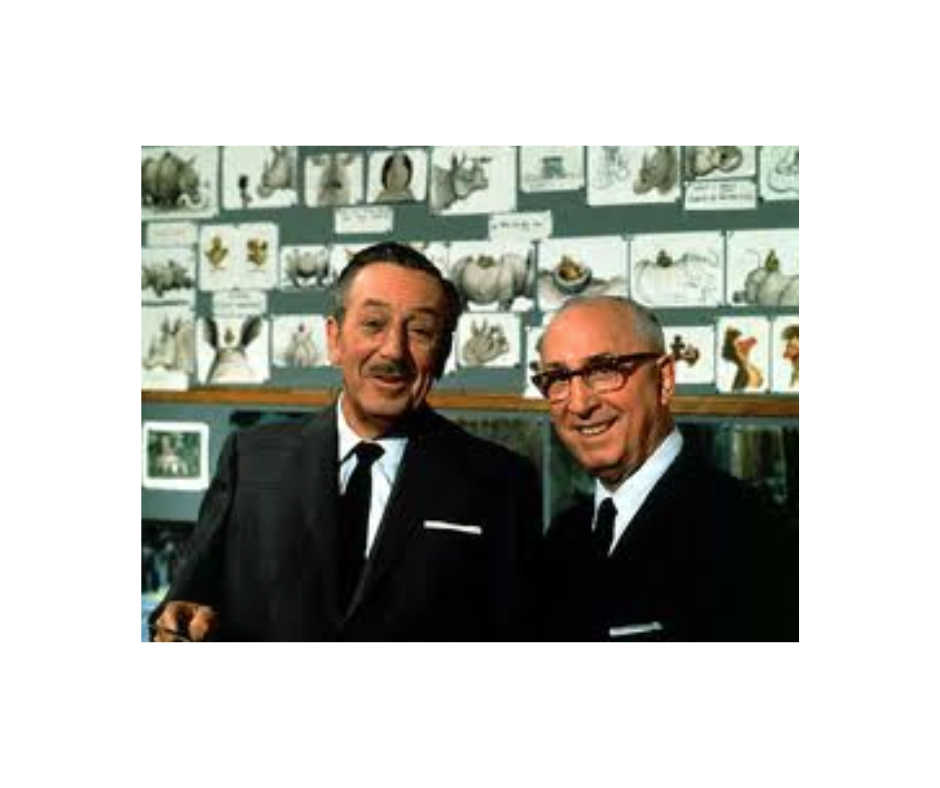
The End of an Era and the Beginning of a New Chapter

The passing of Walt Disney in 1966 marked the end of an era. Walt’s creative genius had been the driving force behind Disney Brothers Studio, and his absence left a void that seemed impossible to fill. However, Roy Disney, ever the steadfast partner, stepped into the spotlight once more to ensure that Walt’s vision would live on.

Roy took on the role of CEO of The Walt Disney Company, guiding it through the completion of projects Walt had initiated, including the opening of Walt Disney World in Florida in October 1971. His dedication to his brother’s dreams never wavered, and his leadership was instrumental in preserving Walt’s legacy.

Roy’s Final Act

In December 1971, just months after Walt Disney World opened its gates in Florida, Roy Disney passed away. His departure marked the end of an era for Disney, but it also signaled the beginning of a new chapter. The magic that Walt and Roy had conjured together continued to shine brightly, enchanting visitors and fans alike.

Walt Disney World, with its vast array of attractions and immersive experiences, became a testament to the enduring spirit of the Disney brothers. It was a place where dreams could come true, where imagination had no limits, and where the legacy of Walt and Roy Disney thrived.

A World of Imagination Lives On

In the grand tapestry of entertainment history, the names Walt and Roy Disney occupy a place of honor and reverence. Their extraordinary partnership leaves a legacy that  spans a century of creativity and innovation and has shaped the way we experience and imagine the world. As we conclude the journey through their remarkable story, we celebrate the enduring influence of the Disney brothers.

The Boundless Creativity of Walt Disney

Walt Disney, the visionary, was a relentless dreamer. His imagination knew no limits, and he had the remarkable ability to turn the ordinary into the extraordinary. From the creation of Mickey Mouse to the development of groundbreaking animation techniques, Walt was a true pioneer.

His passion for storytelling, artistry, and innovation not only defined Disney’s early years but also set a standard that continues to drive the company’s creative endeavors. Walt’s words, “It’s kind of fun to do the impossible,” still resonate as a call to dream big and never give up on the pursuit of one’s vision.

The Stewardship of Roy Disney

Roy Disney, the steady hand, was the unsung hero behind the scenes. His financial acumen and unwavering support allowed Walt’s dreams to become a reality. Time and again, Roy ensured that the company had the resources it needed to grow and flourish.

Roy’s commitment to preserving his brother’s vision, even after Walt’s passing, exemplifies the strength of their partnership. His leadership and dedication during challenging times underscore the importance of resilience and the power of believing in a shared dream.

A Century of Dreams Realized

In commemorating the 100th anniversary of the Disney Company, we pay tribute to the Disney brothers’ everlasting influence. Their legacy continues to inspire generations, ignite the flames of creativity, and remind us that, with courage and imagination, all our dreams can come true.

The Disney brothers’ story is a testament to the power of dreams, the magic of storytelling, and the enduring spirit of partnership. It is a legacy that will continue to enchant, inspire, and unite people around the world for generations to come.

From the early days of animation to the creation of theme parks and a global brand that bears their name, their story is a example of the enduring magic of imagination and the belief that, in the words of Walt Disney himself, “All our dreams can come true if we have the courage to pursue them.”


Walt used to say that Disneyland would never be finished, and it never will. I like to think, too, that Walt Disney’s influence will never be finished; that through his creations, future generations will continue to celebrate what he once described as “that precious, ageless something to every human being which makes us play with children’s toys and laugh at silly things and sing in the bathtub and dream.”

Roy Disney

I always go and check with my brother. Always. But I don’t always agree with him. Roy had faith in me. I think that Roy has done a lot of things against his better judgment because he felt that I wanted to do it. Most of our arguments and disagreements I think have been because Roy has felt that he had to protect me.

Walt Disney

References

Disney at 100: How Passion Launched a Dream

On October 16, 2023, the Walt Disney Company will celebrate its 100th Anniversary. Today kicks off a series in recognition of this event – a series looking into the characteristics that have made the Walt Disney Company a beacon of innovation and imagination, enchanting audiences of all ages with its timeless stories, beloved characters, and groundbreaking achievements.

Some of the articles have existed before and been refreshed for this series; others are brand new. In either case, I hope you will enjoy reading about the dreamers, the believers, and the magic-makers who have brought us a century of enchantment.


To say that Walt Disney was merely a train enthusiast understates the extent to which his life was intertwined with railroading. In Walt’s case, his small-scale fascination led to a full-scale kingdom.

Michael Broggie, Walt Disney’s Railroad Story

With love of Disney history, I’m always grateful to visit Disney properties and immerse myself in the stories and culture of Walt Disney and the “kingdoms” he began. During one multi-day visit to California, I had the opportunity to visit Disneyland several days, experiencing both the familiar and new perspectives.

Take this image, for example:

In talking with current Cast Members, Tour Guides, and former Imagineers, various stories were given as to the origin of Disneyland:

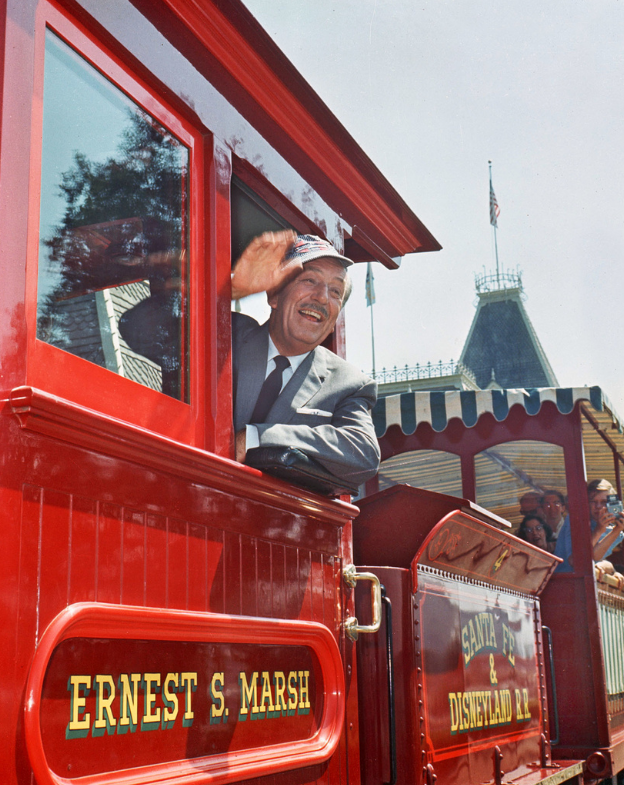
  1. It was Walt Disney’s fascination with trains, beginning as a boy, that led him to first create a scale model railroad in his backyard. Not satisfied, he begin to develop an ever-growing park that would include a railroad. When Disneyland opened in 1955, the first object you saw approaching the park was a train station, and a 5/8 scale railroad encircled the park.
  2. Saturday’s were “Daddy’s Day,” and Walt often took his daughters to play in nearby parks. While sitting on a bench in Griffith Park, Walt imagined what a park would look like that would allow both parents and children to be immersed in a story-rich, safe, clean park.
  3. Fascinated by miniatures, Walt began a hobby of crafting extremely detailed miniature items, building entire rooms filled with objects that were not only beautiful to look at, but fully functional. He envisioned a place to display these miniatures so that people from all over the country could enjoy them.
  4. By the late 1940’s-early 1950’s, Walt had grown tired of making animated pictures, and even his recent venture into live-action motion pictures left him dissatisfied. He imagined a place were people could actually be a part of a story, immersed in all the rich details that a “theme park” could provide.

What is the true origin of Disneyland?

I believe that all of the above contributed to the creation of Disneyland. And the common denominator of all of them?

Passion.

I want it to look like nothing else in the world. And it should be surrounded by a train.

Walt Disney

The creation story of Disneyland, the first “theme” park in the world and the model for all Disney parks to follow, is somewhat clouded.

Depending on who is telling it, or even when it is told, the origins of Disneyland can start with a park bench, model making, boredom, or a boyhood fascination with trains.

There is a measure of truth to all of them. It is certain is that all of these influences in the life of Walt Disney contributed to the resulting creation.

Personally, I lean toward Walt’s love of trains as the primary inspiration for Disneyland.

As a bona fide Disney fan, focusing on the history of the man and the company that bears his name (especially from the late 1920s to the mid-1960s), I can trace “railroad” stories from Walt (and about Walt) that reinforce this.

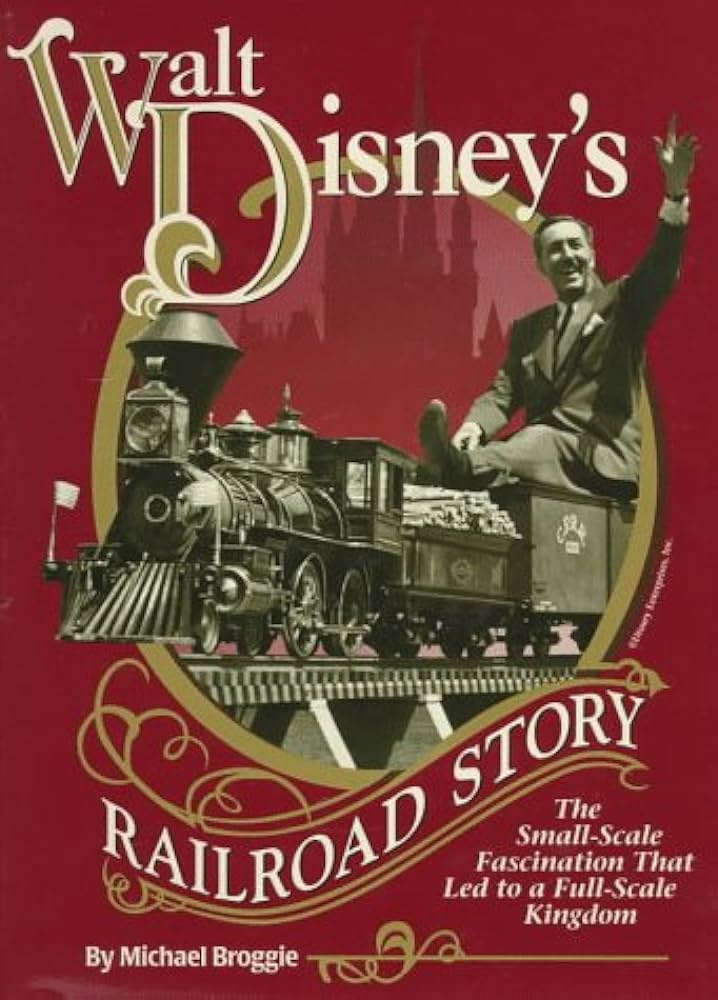
Those railroad stories could (and do) fill several books – the best of which is Walt Disney’s Railroad Story, by Michael Broggie.

It’s a fascinating book, and when the author knew of Walt Disney as “Uncle Walt,” and had the enviable role as a teenager to assist Walt in the operation of the Carolwood Pacific Railroad (Disney’s personal, rideable miniature railroad in the backyard of his home), you know the stories are going to be memorable, filled with detail, and a fascinating read.

You see, Michael Broggie’s father Roger E. Broggie was a precision machinist who joined the Disney Studios in 1939. Broggie’s accomplishments at the studio were wide-ranging, but in the early 1950s he was promoted to the head of the Disney Studios’ Machine Shop, where he became a transportation specialist. 

And where did he fine-tune the skills needed to create all the unique transportation vehicles found at Disneyland and later at Walt Disney World?

In building Walt Disney’s backyard railroad…

On the Carolwood Pacific Railroad.

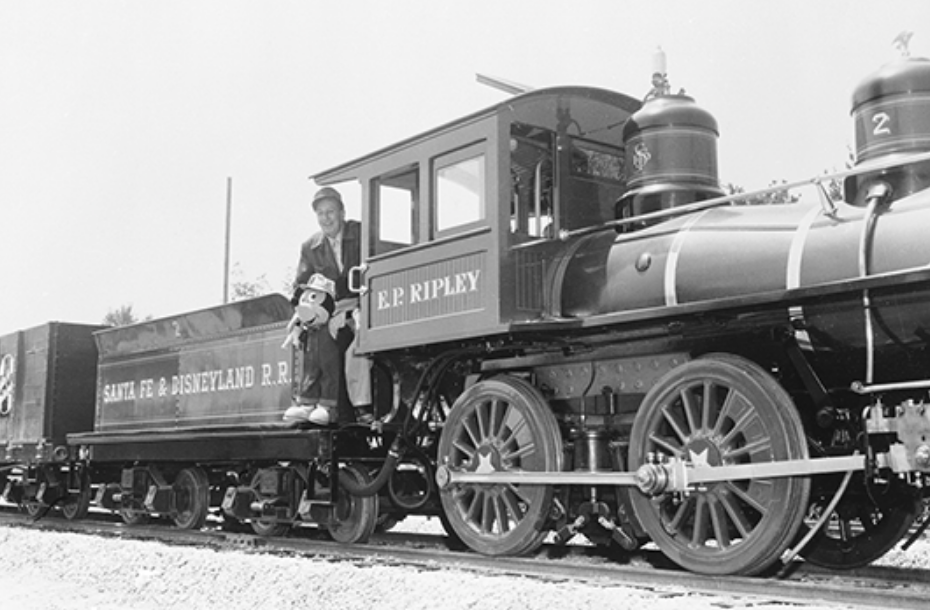
The Carolwood Pacific Railroad (CPRR) was a 7 1/4-inch gauge ridable miniature railroad run by Walt Disney in the backyard of his home in the Holmby Hills neighborhood of Los Angeles, California. 

It featured the Lilly Belle, a 1:8-scale live steam locomotive named after Disney’s wife, Lillian Disney, and built by the Walt Disney Studios’ machine shop. The locomotive made its first test run on December 24, 1949. It pulled a set of freight cars, as well as a caboose that was almost entirely built by Disney himself. 

It was Disney’s lifelong fascination with trains, as well as his interest in miniature models, that led to the creation of the CPRR. The railroad, which became operational in 1950, was a half-mile long and encircled his house. The backyard railroad attracted visitors to Disney’s home; he invited them to ride and occasionally drive his miniature train.

With the creation of a personal railroad, Disney’s next step could only be designing and building the real thing.

Research into the earliest development of Disney’s “park” reveals a constant: the presence of a railroad with a steam engine pulling cars that people could ride in.

So, any visit to a Disney theme park for me must include a ride on the Disney Railroad.

Unfortunately, on my last visit to Walt Disney World on the occasion of its 50th anniversary on October 1, 2021, the railroad had been out of commission since 2018 for the pandemic-delayed construction of the TRON Lightcycle Run, a new attraction coming to the Magic Kingdom. The train tracks have been rerouted through the Lightcycle attraction inside a tunnel as shown in this concept art.

I knew any surprise announcement that the train would be running on October 1 was unlikely, but it wasn’t until I rode the People Mover early that morning and saw the view of the dismantled train tracks, plainly visible where they would run through the future Lightcycle Run attraction, that the disappointment set in.

In the meantime, the train was available as the perfect backdrop for a memorable photo at different places in the park. Just before Christmas 2022, it began to run again.

For me, “the perfect backdrop” of a static display is a far cry from the swaying motion of the train as it leaves the station and begins to circle the park…

..the way Walt Disney dreamed about it from the time he was a young boy…

…until he made it happen.


It all begins with dreams.

Walt Disney

References

How Environmental Immersion Leads to Creative Inspiration

One can be inspired by research as well as immersed in it for inspiration.  Rhonda Counts, Show Producer, Walt Disney Imagineering Florida

How you do research is dependent upon where you are in the process. Disney’s Imagineers value the story’s intent and the importance of being surrounded with or immersed in the story’s environment.

Here’s an example of creative immersion from one of my past projects:

As you can see, there was a definite pirate’s theme going on in part of my office. It’s both from previous work and new work in process at the time. I’ve used the theme of the “Pirates of the Caribbean” storyline – both the attraction and the movies – to develop training resources and presentations in the area of Guest Experiences.

Specifically, I created a tool – the Guest Experience Compass. And how better to demonstrate it, than using Jack Sparrow’s compass? I also created the Guest Experience Code – and based it on the storyline of the Pirates Code. Of course, both of these tools had to be introduced and used by a pirate – the Navigator – in a fully immersive learning environment. The result?

As a result of my pirate “adventure,” I created a series of Guest Experience learning activities lasting from a half day to two days.

And it doesn’t stop with pirates.

There’s the fact that my office is, in fact, a Disney museum (a title given by my granddaughter).

rva-office-db-3

It’s continually changing as I acquire new books and other “resources” that help my inspiration.

DisneyVerticalTowers091922

It’s no secret that I am a Disney fanatic of the first degree! I had an early start in the 60s, both from watching “The Wonderful World of Disney” and benefiting from my father, who as a Gulf gasoline dealer received many promotional tie-ins from Disney movies.

My first actual in-person experience took place as a rising senior in high school during the summer of 1975, when my high school band was privileged to march in America on Parade, one of Disney’s salutes to America’s Bicentennial. I didn’t know it at the time, but looking back with minors in history at both the undergraduate and graduate level, that was an important event.

You must also add to that mix over 100 days of staying in Disney properties (both land and sea) in the last 12 years. Friends know that I can’t go long in almost any conversation without weaving in a personal Disney experience to illustrate a point.

Finally, it’s anchored by the Disney library of over 450 books (and growing!) noted above: I am literally immersed in all things Disney. As I research and work on various projects – especially Hospitality – I find great inspiration through the many resources at hand. My immersion is not limited to the visual and tactile – at any given time, the soundtrack of a Disney movie, or the background music from one of Disney’s theme parks is playing in the background.

Here’s how Disney Imagineers recommend immersion into an environment:

Select a project that you want to immerse yourself in. Make a list of all the elements of the project and find samples (the larger the better) that represent these elements. Find a place in your surroundings to display the samples so you can immerse yourself in them.

For example, if you wanted to fix up a vintage car, surround yourself with large detailed pictures of its original interior and exterior, very large color samples for its seat cushions, dashboard, etc., and exterior paint job, pictures of various locations you would drive to, and of course, spray the space with new car scent.

Research leads to inspiration.

And now, to visually introduce (and tease a new project in the works):

CreativeHospitalityWorkshop

More to come!


part of a series of ideas to help shape and tone your creative muscles

Inspired and adapted from The Imagineering Workout

written by The Disney Imagineers

American History: Understanding the American People by Understanding Disney History

I’ve alway loved learning about history – in particular, American history. In addition to the hundreds of books I’ve read over the years, both my undergraduate and graduate degrees are accompanied by a minor in history.

My love of American history was set in motion by virtue of the fact that I was born in the spring of 1958, thus placing me in the high school graduating class of 1976 – the 200th celebration of America’s declaration of independence from England.

There were many activities from that senior year that hold a special place in my mind, but the one near the top involves Disney – and serves as a great connection to this week’s Wednesday Weekly Reader.

Disney Theme Parks and America’s National Narratives takes a public history approach to situating the physical spaces of the Disney brand within memory and identity studies.

For over 65 years, Disney’s theme parks have been important locations for the formation and negotiation of the collective memory of the American narrative. Disney’s success as one of America’s most prolific storytellers, its rise as a symbol of America itself, and its creation of theme parks that immerse visitors in three-dimensional versions of certain “American” values and historic myths have both echoed and shaped the way the American people see themselves. 

Like all versions of the American narrative, Disney’s vision serves to reassure us, affirm our shared values, and unite a diverse group of people under a distinctly American identity – or at least, it did. 

The book shows how the status Disney obtained led the public to use them both as touchstones of identity and as spaces to influence the American identity writ large. This volume also examines the following:

  • How Disney’s original cartoons and live-action entertainment offerings drew from American folk history and ideals
  • How their work during World War II cemented them as an American symbol at home and abroad
  • How the materialization of the American themes already espoused by the brand at their theme parks created a place where collective memory lives
  • How legitimization by presidents and other national figures gave the theme parks standing no other entertainment space has
  • How Disney has changed alongside the American people and continues to do so today.

The book explores how five specific factors have worked in concert over time to transform Disney’s theme parks from simple amusement parks to places where the collective memory of the American narrative is shaped.


My Disney experience during the 60s – early 70s was limited to television and movies. But when 1975 rolled around, something magical happened.

Disney’s “America on Parade” was a unique parade at Disneyland and Walt Disney World from 1975-1976, honoring the United States of America on the occasion of its bicentennial anniversary in 1976.

I was a senior in high school that year – the class of ’76. Many activities planned for that class year revolved around celebrating the Bicentennial.

And this happened…

During the parade, recorded marching music playing from speakers in the floats was mixed with the same melodies played by live bands Disney had invited from high schools across the country.

The Mount Juliet High School “Band of Gold” was invited to participate in America on Parade.

Marching down Main Street, playing some of the music I love best – now that was something special.


As the Walt Disney Company celebrates its 100th anniversary this year, a look back at both the life of Walt Disney and the company he founded are intertwined with the concepts, images, and spirit of America.

Walt Disney had a deep love and respect for America:

Actually, if you could see close in my eyes, the American flag is waving in both of them and up my spine is growing this red, white, and blue stripe.

As author Bethanee Bemis states in her book, “Disney theme parks are some of the foremost places where the nation consumes its collective memory of the American Experience, where they see many of the stories and cultural myths that make up the American national narrative.”

Disney is in the business of selling memories. Not just memories of family vacations, but memories of stories from American history.

Bethanee Bemis

According to Bemis, “Walt Disney was not the first to use history to inspire his storytelling nor the first to turn history into a physical experience. He was, however, the first to use a brand that had itself already become symbolic of a nation’s history to create that physical experience.”

Disney Theme Parks and America’s National Narratives is a scholarly work (the author is a museum specialist at the National Museum of American History at the Smithsonian) that is an important addition to the collective body of Disney history.

This book will be of interest to students and scholars of history, media, cultural studies, American studies and tourism – and of course, Disney nerds like me.


Part of a regular series on 27gen, entitled Wednesday Weekly Reader

During my elementary school years one of the things I looked forward to the most was the delivery of “My Weekly Reader,” a weekly educational magazine designed for children and containing news-based, current events.

It became a regular part of my love for reading, and helped develop my curiosity about the world around us.

When the Honeymoon Ends: What Happens When the Grand Opening is Over and the Daily Grind Begins?

Note: On the 56th anniversary of Walt Disney’s death, a continuing series of posts on the difficulties – and opportunities – former, now new again, Disney CEO Bob Iger is facing.

Upon Walt Disney’s untimely death in 1966 at age 65, his behind-the-scenes brother, Roy Disney, reluctantly came out of retirement to oversee the building and financing of Walt Disney World. Roy Disney died in late 1971, just a few months after the opening of Walt Disney World, and for the next decade the Disney Company was led by a team including Card Walker, Donn Tatum, and Ron Miller—all originally trained by the Disney brothers.

The genius of Roy Disney is often overlooked – a sad and unfortunate fact because Walt, the creative genius, only succeeded because of Roy, the organizational and business genius.

Their partnership, which began in 1923, was certainly filled with ups and downs. The lowest, of course, was when Walt died. In an act of pure brotherly love, Roy stepped out of retirement and stepped up to complete a version of Walt’s dream – renaming the project WALT Disney World, in tribute to his brother.

Roy, who had in reality been CEO of Disney since 1929, was now faced with dealing with the creative side of Disney. As only brothers can, the two Disneys were the best of friends and could be the worst of enemies. Even so, the Disney Company prospered with a long track record of successes.

Then Walt died.

What would the Disney Company do?

This is what they did then. Are there lessons for what they might do now?


As anyone who has been married knows, there is a difference between the moonlight and roses of courtship and the bills and responsibilities of marriage.

Van France, Founder of Disney University

Anyone who has ever been involved in a grand opening knows the feeling. The energy accompanying the pre-opening, followed by the eventual letdown afterward, can be an emotional roller coaster.

At Walt Disney World, a number of issues were adding to the post-opening blues:

  • Roy Disney, who took over as the company’s inspirational leader after Walt Disney’s death in 1966, passed away in December 1971, barely two months after the opening of Walt Disney World. His enthusiasm and focus motivated all the cast members to push through the challenges to complete Walt’s Florida dream. The company lost its vital inspirational leaders in a relatively short span of time.
  • Cast members were exhausted. There wasn’t an operational road map for opening Walt Disney World. Everything was new; cast members learned as they created. Systems and procedures were developed as the resort took shape.
  • Opportunities for career advancement slowed down. Turnover skyrocketed.
  • Much more than a single theme park, Disney World was a complex environment that involved many professions. Walt Disney World, with the hotels, golf courses, campgrounds, and resorts, was a 24/7/365 operation. The word downtime wasn’t in the vocabulary.
  • The singular goal of opening Walt Disney World, a tremendous source of motivation in and of itself, was gone. What else was there to look forward to? The inspiration and motivation provided by the clarity of a major goal would be hard to duplicate.

Sustaining the intense levels of pre-opening enthusiasm, effort, and momentum is not a reasonable goal for any organization. However, preventing a post accomplishment toxic environment or a mass exodus of team members driven out by crashing morale is a goal that is both attainable and worth pursuing.

The size and scope of Walt Disney World were unprecedented. It faced an equally immense employee relations crisis.

What would Disney do (again)?

Disney executive Dick Nunis began a series of meetings of the divisional vice presidents – but it wasn’t any ordinary meeting, and it was definitely not an ordinary location. In a small, sparse room – more like an unfinished attic than a meeting room – the meetings began.

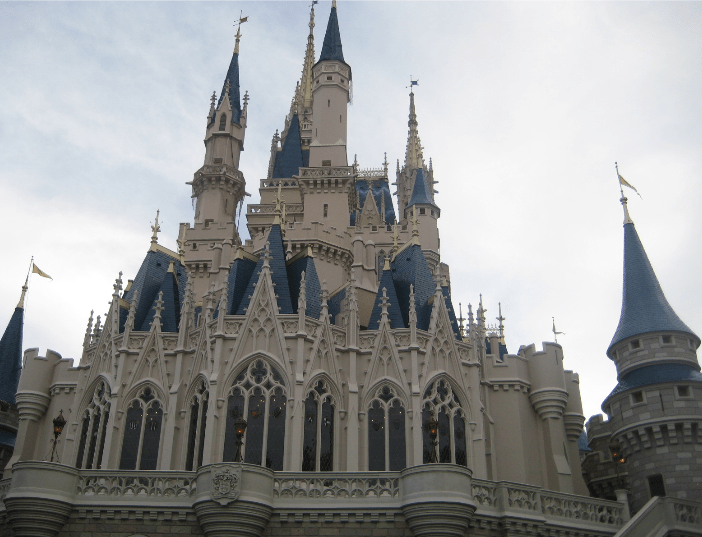
That room, in the tower of Cinderella Castle, the symbol of the Happiest Place on Earth, would be the location for a miraculous turnaround.

The meetings led to a revised employee development strategy of centralized activities controlled by the Disney University and decentralized activities under the control of the divisions.

At the center of the plan was Disney University. It is the keeper of the key, the company’s conscience regarding the Disney brand; it is responsible for setting the ‘big picture’ to ensure a consistent delivery of the product. The new-hire orientation ensures everyone coming on board knows the culture of the company. The decentralized portion of the training strategy is the responsibility of each operating division.

Thor Degelmann, Human Resource Development Manager, Walt Disney Company

And the result – by 1975, two years after the meetings began, the turnover rate at Walt Disney World had dropped from 83 percent to 28 percent, a 66 percent reduction in turnover.

The honeymoon was over, but the marriage would thrive.

Applying Van France’s Four Circumstances

Innovate – Support – Educate – Entertain

Crisis Management and Culture Change

  • In your organization, what is the equivalent of a honeymoon coming to an end?
  • Are senior team leaders fully engaged in the resolution process?
  • How could this turnaround strategy be improved?
  • What symbols represent the culture of your organization?
  • How could these symbols be used to help reinforce organizational culture and resolve crises?
  • How do you communicate important messages?
  • Are openness, honesty, and collaboration encouraged?

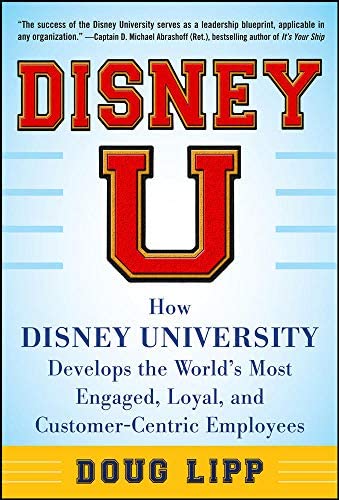
Inspired by and adapted from Disney U by Doug Lipp

Get the book TODAY to learn invaluable lessons for your Guest Experience Teams

Disney U is one of the most significant resources related to the Disney organization, leadership, team development, and Guest Experiences available. Over the last ten years, I’ve spent over 100 days on Disney properties. During observations, and in numerous conversations with Cast Members, I was reminded again and again of the importance of the training principles found in Disney U.

What will Disney do?

Disney’s Missed Opportunity at the 50th Anniversary Celebration of Walt Disney World

My recent trip to Walt Disney World for the kickoff of its 50th Anniversary celebration was a special time all the way round. My wife and I were joined by my daughter and son-in-law for 5 days and four nights of non-stop fun, food, and memories.

With a solid passion for Disney history, I was certainly an outlier of the tens of thousands who began lining up at the gates as early as 4 a.m. on October 1. (Note: I didn’t line up that early – my wife and I walked over from the Contemporary Resort at a much more respectable 7:30 a.m.).

Unlike the majority of Guests there, I wasn’t driven to acquire the large assortment of special anniversary merchandise (more to come on this in a future post).

I was there to celebrate an extraordinary achievement of the vision of Walt Disney, culminating in the efforts of thousands of team members for over six years: the creation of Walt Disney World.


The realtime thoughts and images of the 50th Anniversary kickoff were documented on my Instagram account.

I will continue to unpack that day here as well as on Guest Experience Design.

Even with all the good memories, I did have one major disappointment. I even knew it was coming, but was hoping for a last-minute big surprise.

Alas, it didn’t materialize.

Most of the crowd present at Magic Kingdom didn’t even miss it, which is sad.

Because without this one attraction, Disney parks as we know them wouldn’t exist.

And in my opinion, this “miss” for me was indicative of a bigger miss throughout the day.

I want it to look like nothing else in the world. And it should be surrounded by a train.

Walt Disney

The creation story of Disneyland, the first “theme” park in the world and the model for all Disney parks to follow, is somewhat clouded.

Depending on who is telling it, or even when it is told, the origins of Disneyland can start with a park bench, model making, boredom, or a boyhood fascination with trains.

There is a measure of truth to all of them. It is certain is that all of these influences in the life of Walt Disney contributed to the resulting creation.

Personally, I lean toward Walt’s love of trains as the primary inspiration for Disneyland.

His small-scale fascination led to a full-scale kingdom.

Michael Broggie, Walt Disney’s Railroad Story

As a bona fide Disney fan, focusing on the history of the man and the company that bears his name (especially from the late 1920s to the mid-1960s), I can trace “railroad” stories from Walt (and about Walt) that reinforce this.

Those railroad stories could (and do) fill several books – the best of which is Walt Disney’s Railroad Story, by Michael Broggie.

It’s a fascinating book, and when the author knew of Walt Disney as “Uncle Walt,” and had the enviable role as a teenager to assist Walt in the operation of the Carolwood Pacific Railroad (Disney’s personal, rideable miniature railroad in the backyard of his home), you know the stories are going to be memorable, filled with detail, and a fascinating read.

You see, Michael Broggie’s father Roger E. Broggie, was a precision machinist who joined the Disney Studios in 1939. Broggie’s accomplishments at the studio were wide-ranging, but in the early 1950s he was promoted to the head of the Disney Studios’ Machine Shop, where he became a transportation specialist. 

And where did he fine-tune the skills needed to create all the unique transportation vehicles found at Disneyland and later at Walt Disney World?

In building Walt Disney’s backyard railroad.

On the Carolwood Pacific Railroad.

The Carolwood Pacific Railroad (CPRR) was a 7 1/4-inch gauge ridable miniature railroad run by Walt Disney in the backyard of his home in the Holmby Hills neighborhood of Los Angeles, California. 

It featured the Lilly Belle, a 1:8-scale live steam locomotive named after Disney’s wife, Lillian Disney, and built by the Walt Disney Studios’ machine shop. The locomotive made its first test run on December 24, 1949. It pulled a set of freight cars, as well as a caboose that was almost entirely built by Disney himself. 

It was Disney’s lifelong fascination with trains, as well as his interest in miniature models, that led to the creation of the CPRR. The railroad, which became operational in 1950, was a half-mile long and encircled his house. The backyard railroad attracted visitors to Disney’s home; he invited them to ride and occasionally drive his miniature train.

With the creation of a personal railroad, Disney’s next step could only be designing and building the real thing.

Research into the earliest development of Disney’s “park” reveals a constant: the presence of a railroad with a steam engine pulling cars that people could ride in.

So, any visit to a Disney theme park for me must include a ride on the Disney Railroad.

Unfortunately, at Walt Disney World, the railroad has been out of commission since 2018 for the pandemic-delayed construction of the TRON Lightcycle Run, a new attraction coming to the Magic Kingdom in 2022. The train tracks have been rerouted, through the Lightcycle attraction inside a tunnel, according to information released by Disney in concept art.

I knew that any surprise announcement that the train would be running on October 1 was unlikely, but it wasn’t until I rode the People Mover early that morning and saw the view of the dismantled train tracks, plainly visible where they would run through the future Lightcycle attraction, that the disappointment set in.

In the meantime, the train is available as the perfect backdrop for a memorable photo at different places in the park.

For me, “the perfect backdrop” of a static display is a far cry from the swaying motion of the train as it circles the park.

The way Walt Disney dreamed about it from the time he was a young boy…

…until he made it happen.


This (somewhat) detailed explanation of a personal miss for me highlights a bigger missed opportunity for Disney during the opening days of their 18-month long celebration of the 50th Anniversary of Walt Disney World –

Disney seems to be forgetting where it came from, and therefore, is struggling to determine where it is going.

Dreamers Live Beyond Themselves in Order to Make Dreams Come True

Even for those of you that don’t follow the Walt Disney Company regularly, the news coming out of Anaheim, CA from the biannual gathering of Disney fans called D23 has been nonstop since last Friday. Even though the event ended Sunday night, recaps, opinions, and second-guessing continues today – and probably will throughout this week and beyond.

With intellectual properties like Disney Studios, theme parks and resorts, and the studios of Pixar, Star Wars, Marvel, and now most of Fox, the entertainment giant is continuing to grow beyond expectations.

D23 was three days of seemingly nonstop announcements about the upcoming movies from all the studios mentioned above, new attractions at theme parks world-wide, new partnerships, and the unveiling of Disney+, the streaming service that will launch November 12. Artists, actors, and people normally behind-the-scenes were onstage everywhere at the Anaheim Convention Center, each presentation seeming to outshine the previous one.

I’m not even going to attempt to unpack everything that happened at D23 – there are much better sources for that.

Instead, I want to leave you with a couple of images – courtesy of Disney – and a quote by Walt Disney:

If you don’t know what these represent:

  • The top image is a representation of four “neighborhoods” coming to Epcot – a transformation of the park in every sense of the word.
  • The image on the lower right is a new statue of Walt Disney what will occupy “Dreamer’s Point,” a transition from Spaceship earth to the rest of the reimagined Epcot.
  • The quote in the lower left is from Walt Disney, part of a longer statement about Epcot he made in October 1966 – only two months before his death.

Think about that.

While Walt Disney was totally immersed in the building of Disneyland in California, and led in the acquisition of the thousands of acres that would become Walt Disney World in Florida, he never saw the first shovel of dirt turned, much less the completion of any part of Walt Disney World.

The EPCOT he dreamed of was not the Epcot Center that opened in 1982; all of the work done in major upgrades since then – and including this projected “transformation” – are not going to make that happen.

But the dream did not die with the dreamer.

His vision of ‘a new Disney world’ outside of Orlando, Florida, especially his concept of Epcot, was so strongly a personal, life-summing statement that many believed the dream might die with Walt. Not so. For in addition to the fantasy empire Walt had created, he had also built a unique organization.

– Richard Beard, Walt Disney’s EPCOT

Led by Walt’s older brother Roy, who postponed his retirement, the talents of the entire Disney organization went ahead with the Florida project.

Because that’s what dreamers do…

…they dream, and make sure there is a team who understands and lives the dream, and will keep it going.

So that’s what Epcot is: an experimental prototype community that will always be in a state of becoming. It will never cease to be a living blueprint of the future…

– Walt Disney


Will your dream live beyond you?


Immerse Yourself in the Creativity of the Disney Imagineers

My admiration for the creative brilliance of Walt Disney and the amazing group of geniuses he gathered around him runs deep and long.

WDWQuote1

As a boy growing up in the 60s, Walt Disney’s Wonderful World of Color television show was something I looked forward to every week. My father, an owner-operator of a Gulf gasoline station, was the recipient of various advertising tie-ins involving such Disney classics as 101 Dalmatians, The Jungle Book, and the amazing nature films. I was fortunate to be part of a high school band marching in Disney on Parade in 1975, just a few years after Walt Disney World opened.

Then marriage and four children came, just in time for the rejuvenation of Disney animation of the late 80s-early 90s. That meant endless viewings of The Little Mermaid, Beauty and the Beast, and the rest of the Disney library.

By the time the 2000s had rolled around, I was beginning to accumulate different types of books on the Disney organization – biographies, behind-the-scene details, first-person accounts, and various types of business-related books. I was beginning to use them in leadership and teaching positions I held.

In 2011, the fortunate circumstances of my daughter graduating from college in three years before beginning her master’s degree and her request for a much-talked-about-but-never-fulfilled Disney trip led to a week-long adventure in Walt Disney World with a 23-year old graduate student and her two early 50’s parents.

Before that, I knew about Disney. That week, I experienced Disney.

That may seem like a small thing, but in reality it is a HUGE difference.

In the last five years, I have been to Walt Disney World at least several days each year, with the last year being the highlight: by the time this fall rolls around, I will have been on Disney property 19 days.

The experience of Disney – primarily in the theme parks, but now expanded to other resorts, retail shops, and cruise ships – can be traced back to Walt Disney. His untimely death in 1966 could have left a void in the creativity of the Disney empire.

But I believe his greatest act of genius had its origins in 1952, as he began to pull together veterans of film and animation work for a special project that came to be known as Disneyland.

That group of versatile animators and art directors was the foundation of a group that came to be called the Imagineers.

Out of this group, Disney historian Tim Hauser reflects, “came the theories, aesthetics, design, and engineering of Disneyland; the advancement of three-dimensional storytelling; the development of robotic techniques in Audio-Animatronics; and the perpetuation of an ‘architecture of reassurance’ as inspired by Walt Disney’s personal sense of optimistic futurism.”

Today Walt Disney Imagineering remains the design, development, and master-planning branch of company, with over 140 disciplines working toward the common goal of great stories and creating great places.

Walt Disney wanted Disneyland to be essentially a movie that allows you to walk in and join in the fun. Imagineers – many whom had worked with Walt Disney since the 1930s – literally brought those movies to life with their multiple disciplines. He knew from his filmmaking experience that story was everything to the audience. Disney knew he must immerse the theme park guest in living storytelling scenarios.

And for over 60 years, the Imagineers have delivered – time and time again. To date, the Imagineers have built eleven theme parks (with Shanghai Disney opening in just a few weeks); dozens of resort hotels; 4 cruise ships with two more under construction; 2 water parks; and ongoing development in existing parks.

The Imagineers deliver the experience of Disney.

Now I want to bring you full circle by highlighting the recent work of author Louis Prosperi in The Imagineering Pyramid.

Using existing material published by Disney plus conversations with Imagineers, Prosperi weaves together an interesting thought captured in the book’s subtitle: Using Disney Theme Park Principles to Develop and Promote Your Creative Ideas.

It’s a very compelling challenge: look at the existing body of work done by the Imagineers for Disney’s theme parks and translate those principles into a “pyramid” of 15 principles grouped into 5 tiers.

Here’s an outline for an appetizer:

Tier 1: Foundations of Imagineering

  • It All Begins with a Story – Using your subject matter to inform decisions about your project.
  • Creative Intent – Staying focused on your objective.
  • Attention to Detail – Paying attention to every detail.
  • Theming – Using appropriate details to strengthen your story and support your creative intent.
  • Long, Medium, and Close Shots – Organizing your message to lead your audience from the general to the specific.

Tier 2: Wayfinding

  • Wienies – Attracting your audience’s attention and capturing their interest.
  • Transitions – Making changes as smooth and seamless as possible.
  • Storyboards – Focusing on the big picture.
  • Pre-Shows and Post-Shows – Introducing and reinforcing you r story to help your audience get and stay engaged.

Tier 3: Visual Communication

  • Forced Perspective – Using the illusion of size to help communicate your message.
  • “Read”-ability – Simplifying complex subjects.
  • Kinetics – Keeping the experience dynamic and active.

Tier 4: Making It Memorable

  • The “it’s a small world” Effect – Using repetition and reinforcement to make your audience’s experience and your message memorable.
  • Hidden Mickey’s – Involving and engaging your audience.

Tier 5: Walt’s Cardinal Rule

  • Plussing – Consistently asking, “How do I make this better?”

But instead of building an object like an attraction, Prosperi challenges the reader to do something with the principles that may be even more daunting: be creative.

Even though I was familiar with most of the principles and their origins, I enjoyed reading how Prosperi linked the ideas together into a unified whole. Especially helpful were the questions at the end of each chapter, with a general focus as well as specialized applications for game design, instructional design, and management and leadership. The questions will help anyone have a better grasp of the concept and how to apply it an almost any field.

The Imagineering Pyramid was especially beneficial to me on a recently completed 3-day “field trip” to all four theme parks at Walt Disney World. As I walked through each park, the genius of the Imagineers inspired me to fill several pages of my Disney journal with new ideas for development as well as take over 1,000 photographs of design details – exactly what I believe Louis Prosperi had in mind when writing the book.

Leaders in any capacity will benefit from The Imagineering Pyramid as a helpful tool, providing a creative framework for solving problems.

ImagineeringPyramid

How You Say Good Bye is as Important as How You Say Hello

Do what you do so well that they will want to see it again and bring their friends.Walt Disney

The Disney organization has no peer when it comes to creating amazing Guest Experiences. Their Cast Member interaction with Guests is legendary in providing a warm welcome to the Disney Parks. From your arrival by car, monorail, or boat, the Guest is almost overwhelmed by the tremendous “first impression” that Disney Cast Members deliver.

But I think it’s how Disney says “goodbye” that leaves a “lasting impression.

Just a few weeks ago on Independence Day, I’m sure many of you saw and heard first hand fireworks of all shapes and sizes. Independence Day fireworks are memorable, and they add a special feeling to the festivities of the day. But fireworks at Disney parks – they are unique.

At Disney World, the fireworks in 3 of the 4 parks (the animals in Disney’s Animal Kingdom can’t handle the noise) are simply spectacular. Here’s how Aaron Wallace, author of The Thinking Fan’s Guide to Walt Disney World: Magic Kingdom describes it:

Suddenly, almost without warning, the park goes dark, the castle lights up in a blinding white blaze, and the enormous trumpeting of horns heralds the long-awaited arrival of the fireworks show.

Words alone can’t convey the impact of that moment. There is no point during the Disney park experience when the magic hits harder than with the opening notes of the fireworks show. To quote Jiminy Cricket, “like a bolt out of the blue,” a feeling of “WOW! I’m actually in Disney World” washes over the crowd in that split second.

The show continues to build in intensity, the music gets louder, the fireworks more majestic until at the end, the sky is seemingly covered from horizon to horizon with a colorful canvas of memories and magic.

photo by Tom Brickman

photo by Tom Brickman

That’s what the Guests remember – and it makes them start thinking about the next time they can return.

But it isn’t quite time to say goodbye – for those hardy souls who have the stamina and endurance to remain till the park’s closing – and just a little longer – there is one more Disney magic surprise – the Kiss Goodnight.

As DisneyTouristBlog.com author Tom Bricker explains,

Too few Walt Disney World fans know about The Kiss Goodnight. If you just thought, “what’s that?” you’re not alone. The Kiss Goodnight is a little over 2-minutes long, and it is the Magic Kingdom’s way of saying “goodbye” to guests at the end of a long day. It usually plays every 30 minutes after the park closes and starts with Cinderella Castle “twinkling” as the music from When You Wish Upon a Star slowly builds.

photo by Tom Brickman

photo by Tom Brickman

A narrator then greets the last of the guests in the Magic Kingdom, saying: Ladies and gentlemen, boys and girls, on behalf of everyone here at the Magic Kingdom, we thank you for joining us today for a magic gathering of family, friends, fun, and fantasy. We hope your magical journey with us has created wonderful memories that will last a lifetime. Walt Disney said that the Magic Kingdom is a world of imagination, hopes, and dreams. In this timeless land of enchantment, magic and make-believe are reborn, and fairy tales come true. The Magic Kingdom is a place for the young and the young at heart. A special place where when you wish upon a star, your dreams can come true. Until we see you again, have a safe trip home. Thank you, and goodnight.”

The Kiss Goodnight is the proverbial icing on the Cake (Castle!). After a long day in the parks, we can’t help but just stop and watch the Kiss Goodnight, completely frozen and unable to move. For us, the combination of the beautiful light display and hearing about the meaning Walt Disney wanted the parks to have for guests does it every time.

I’m convinced that most people who “get” the Disney theme parks would get goose bumps if they were to stand in a mostly empty Magic Kingdom and watch and listen to this on a tranquil Main Street USA. It’s special not just because you’re in the park at such a peaceful time, essentially by yourself with Cinderella Castle, but also because of the significance of the words in Roy O. Disney’s Walt Disney World opening day dedication speech. The Kiss Goodnight basically embodies and reminds us exactly why it’s so great to be a Disney fan. If you haven’t stayed to experience The Kiss Goodnight before, you should definitely make an effort to do it at least once. It absolutely belongs on everyone’s Disney Bucket List.

Now that’s a goodbye!

Which leads me to a simple, closing question:

How do you tell your Guests goodbye?

Details Are Important Because Guests Feel Perfection

Walt Disney had the idea that Guests could feel perfection.

As I’ve written before, the secret to Disney “magic” is simple: it’s attention to detail.

Easier said than done in any organization, but the Disney organization certainly leads the way for others to follow.

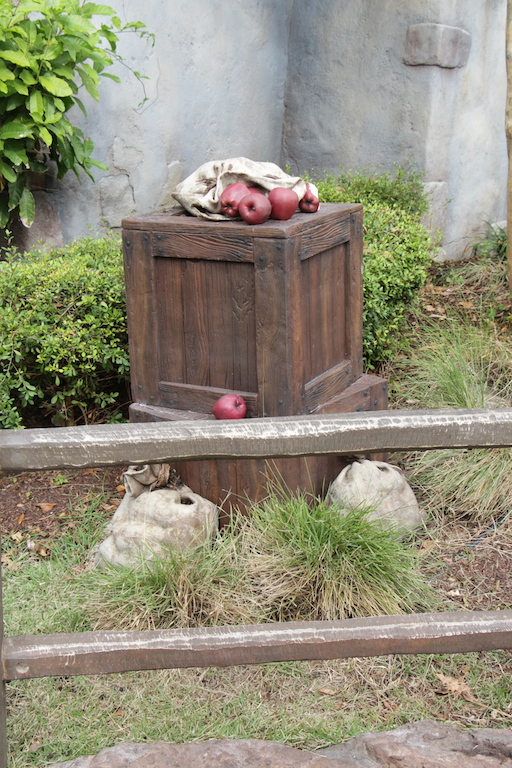
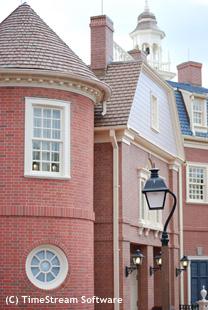
In this post, I displayed 3 close-up image and asked if anyone could identify them. If you haven’t guessed yet, here are the images, with identifying details below.


DSC_0276

DSC_0263

IMG_9216

The more important question is, “What do these details have to do with anything?”

Disney Imagineers excel at transforming a space into a story place. Every element they design works together to create an identity that supports the story of that place – structures, entrances and exits, walkways, landscaping, water elements, and modes of transportation. Every element in its form and color must engage the Guests’ imagination and appeal to their emotions.

The minute details that produce the visual experience are really the true art of the Disney themed show, its greatest source of strength. The details corroborate every story point, immersing Guests in the story idea. Walt Disney knew that if details are missing or incorrect, Guests won’t believe in the story, and that if one detail contradicts another, Guests will feel let down or even deceived.

TangledApplesWDWinfo

courtesy wdwinfo

The apple is part of a larger display holding a bag of apples. It is found in what was originally known as Kingdom Crossing, but almost everyone now calls it the “Tangled bathrooms.” There are an amazing number of details all around this area, all having to do with the movie Tangled. The apples? They were a favorite snack of Maximus, the horse of the palace guard (a lovable sidekick throughout the movie, and one of the co-stars of the “sequel” Tangled Ever After.)

courtesy chipandco

courtesy chipandco

The window contains two lanterns, and can be found on the second story just around the entrance to The Hall of Presidents in Liberty Square. Liberty Square is a small place but packed with dozens of details that highlight our country’s early history. The lanterns? Well, let’s just say Paul Revere would have known what to make of them!

RoseGardenHM

The withered and dying roses can be found in the rose garden outside the Haunted Mansion, near the queue line. Nowhere else on Walt Disney Property will you find plants allowed to exist in such a condition – but that’s part of the mystique of the Haunted Mansion. It’s filled with 999 ghosts, and no one wants to work anywhere near such a “haunted” place! The general run-down look of the whole area is also augmented by the dour, unsmiling faces of all the Cast Members – one of only two places in Walt Disney World where smiles are forbidden!

These three examples are representative of the genius of Walt Disney, now carried out by Imagineers and Cast Members. This is why Walt insisted that even details others thought no Guest would notice – like dying roses – were important.

Inappropriate details confuse a story’s meaning.

Appropriate details immerse the Guest in the story.

How do you pay attention to the details in your organization?