Emotional Intelligence Evolved: Leadership Beyond Empathy

The modern workplace demands more than technical expertise – it requires the nuanced understanding of human dynamics that only comes with experience. For the seasoned professional, emotional intelligence represents far more than a soft skill; it’s a sophisticated competency that transforms workplace challenges into opportunities for deeper connection and organizational growth.

Today’s article is the fourth of a 12-part exploration of the Modern Elder’s core competencies distilled from my 40+ year career journey. As I have learned over that entire journey, Emotional Intelligence evolves dramatically throughout our professional careers. For the modern elder, it represents a sophisticated skill set that transcends basic empathy – becoming a nuanced ability to navigate complex workplace dynamics with grace, wisdom, and strategic insight.

The Mature Emotional Landscape

Unlike early-career emotional responses, the modern elder’s emotional intelligence is tempered by decades of diverse experiences. This maturity allows for a more measured, strategic approach to interpersonal challenges. Where younger professionals might react impulsively (as I certainly did in my early career!), the modern elder sees emotional situations as intricate landscapes to be carefully navigated.

Having witnessed countless workplace scenarios – from hostile takeovers to celebratory product launches, from team conflicts to collaborative breakthroughs – the modern elder develops what researchers call “emotional pattern recognition.” This ability to quickly identify emotional dynamics and predict their likely trajectory becomes invaluable in preventing workplace conflicts and maximizing collaborative potential.

Emotional Intelligence in Action

One of my most significant learning curves of emotional intelligence occurred during my tenure at First Baptist Huntersville with the unexpected resignation of a beloved lead pastor. When assigned as the staff lead to the congregational-directed transitional interim pastor process in 1998, I jumped headfirst into the steep  learning curve of advanced emotional intelligence. This critical role required developing exceptional empathy to understand the congregation’s concerns during a vulnerable period, self-awareness to manage my own emotions while supporting others, and sophisticated relationship navigation skills to balance strong congregational feelings, staff confidentiality, and the desire to move forward. Successfully guiding a church through pastoral transition demands the ability to read emotional undercurrents, address unspoken anxieties, and maintain organizational stability while honoring both past relationships and future possibilities – exemplifying emotional intelligence in action.

Over my forty+ year career, examples of other opportunities to grow in emotional intelligence occurred while:

  • Navigating the “remote/virtual workforce” in two different companies from 2004-2025. While the pandemic of 2020-2021 introduced the concept to many companies, I lived it for over two decades. As an introvert, I thrived in the environment, but still learned to appreciate and work together with the various teams to adjust to working daily with multiple individuals but hardly ever being in their presence.
  • Embracing an intellectual and real-life journey developing volunteer development programs in two difference churches from 1990-2003. What began as completing requirements for post-graduate work at Emory’s Candler School of Theology led to being fully-immersed in creating and developing two congregational programs designed to empower “just church members” into the realization that they were the Body of Christ.

Beyond Simple Empathy

Advanced emotional intelligence involves:

  • Deep self-awareness of personal emotional triggers and response patterns
  • Ability to read unspoken organizational dynamics and hidden tensions
  • Capacity to regulate emotional responses under extreme pressure
  • Transforming emotional insights into constructive, strategic action
  • Understanding the emotional ripple effects of decisions across the organization

This sophisticated emotional toolkit develops through years of observing how emotions drive behavior, influence decision-making, and shape organizational culture. The modern elder learns not just to recognize emotions, but to understand their strategic implications.

Creating Psychological Safety

The modern elder becomes a critical architect of workplace emotional environments. By demonstrating vulnerability, showing genuine care, and maintaining composure during challenging moments, they create spaces where team members feel safe to express themselves authentically.

Psychological safety – the belief that one can speak up, make mistakes, and show uncertainty without fear of negative consequences – requires emotional maturity to establish and maintain. Modern elders, having navigated their own professional vulnerabilities, understand how to create this environment without appearing weak or uncertain themselves.

Emotional Regulation as Leadership

Emotional regulation isn’t about suppressing feelings, but about understanding them deeply. It means recognizing when personal emotions might cloud judgment and developing strategies to maintain clarity. The modern elder brings a calm, stabilizing presence that can de-escalate tensions and guide teams through complex interpersonal challenges.

This regulation extends beyond personal management to organizational influence. When a modern elder maintains emotional equilibrium during a crisis, it provides an anchor point for the entire team. Their regulated response becomes contagious, helping others find their own emotional balance.
The Neuroscience of Emotional Maturity

Recent research in neuroscience supports what modern elders intuitively understand: emotional processing improves with age and experience. The brain’s emotional regulation centers become more efficient, while the integration between emotional and rational processing areas increases. This biological advantage, combined with experiential wisdom, creates unprecedented emotional intelligence capabilities.

Turning Emotional Insights into Organizational Strength

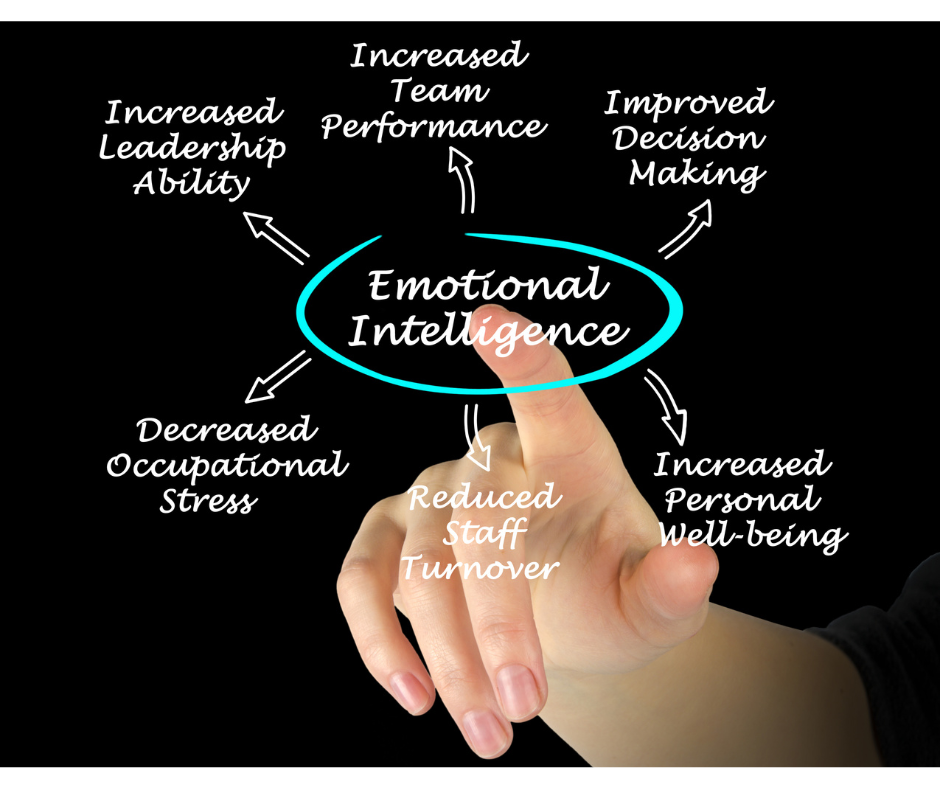
Emotional intelligence becomes a strategic asset when it transforms individual understanding into collective growth. Modern elders can help teams:

  • Recognize underlying emotional patterns that drive recurring conflicts
  • Address unspoken workplace tensions before they become destructive
  • Build more resilient, compassionate work cultures
  • Develop more nuanced communication strategies
  • Create feedback systems that account for emotional as well as performance metrics

In a world increasingly driven by technical skills, emotional intelligence emerges as a distinctly human capability. For the modern elder, it’s not just a skill – it’s a profound competitive advantage that bridges experience, understanding, and meaningful human connection. This emotional sophistication doesn’t just make them better colleagues; it makes them indispensable organizational assets in an increasingly complex workplace landscape.

Soft Skills, Strong Impact: Emotional Intelligence for Today’s Modern Elder

In the landscape of modern leadership and professional success, emotional intelligence (EI) has emerged as a critical skill set. For Modern Elders who bring a wealth of experience to the table, honing emotional intelligence can be the key to unlocking their full potential and maximizing their impact in today’s dynamic work environments.

Emotional intelligence, as defined by psychologist Daniel Goleman, encompasses self-awareness, self-regulation, motivation, empathy, and social skills. For Modern Elders, two aspects of EI (sometimes abbreviated EQ) are particularly crucial: self-awareness and empathy, along with the overarching skill of managing interpersonal relationships.

Self-Awareness: The Foundation of Emotional Intelligence

Self-awareness is the cornerstone of emotional intelligence. It involves a deep understanding of one’s own emotions, strengths, weaknesses, values, and motivations. 

For Modern Elders, self-awareness takes on added significance:

  • Recognizing Emotional Patterns: Years of experience allow Modern Elders to identify their emotional triggers and reactions. This awareness enables them to respond thoughtfully rather than react impulsively.
  • Understanding Biases: Self-aware Modern Elders can recognize and challenge their own biases, particularly those that may stem from generational differences.
  • Assessing Strengths and Limitations: A clear understanding of one’s capabilities allows Modern Elders to contribute most effectively and seek growth opportunities in areas of weakness.
  • Aligning Actions with Values: Self-awareness helps ensure that decisions and actions are in line with core values, fostering authenticity and integrity.

Cultivating self-awareness involves regular self-reflection, seeking feedback, and being open to constructive criticism. Mindfulness practices can also enhance self-awareness by promoting present-moment consciousness.

Empathy: The Bridge to Understanding

Empathy, the ability to understand and share the feelings of others, is a powerful tool for Modern Elders. It allows them to connect with colleagues across generational divides and foster inclusive, collaborative environments.

Key aspects of empathy for Modern Elders include:

  • Active Listening: Truly hearing what others are saying, without immediately jumping to advice-giving or problem-solving
  • Perspective-Taking: Making an effort to see situations from others’ viewpoints, particularly those of younger colleagues who may have different life experiences and priorities.
  • Cultural Sensitivity: Recognizing and respecting cultural differences in an increasingly diverse workplace.
  • Emotional Attunement: Picking up on unspoken emotional cues and responding appropriately.

Developing empathy often involves practicing active listening, asking open-ended questions, and making a conscious effort to understand diverse perspectives. For Modern Elders, sharing their own vulnerabilities can also create space for empathetic connections.

Managing Interpersonal Relationships: Where It All Comes Together

The ability to manage interpersonal relationships effectively is where self-awareness and empathy converge. This skill is crucial for Modern Elders, who often find themselves in mentoring roles or navigating complex team dynamics.

Key aspects of relationship management include:

  • Clear Communication: Articulating thoughts and expectations clearly, while also being open to feedback.
  • Conflict Resolution: Using emotional intelligence to navigate disagreements and find mutually beneficial solutions.
  • Mentoring and Coaching: Leveraging experience and empathy to guide and support others’ growth.
  • Building Trust: Consistently demonstrating reliability, integrity, and genuine care for others.
  • Adaptability in Communication Styles: Adjusting communication approaches to suit different individuals and situations.

Enhancing relationship management skills involves practicing assertive communication, developing conflict resolution techniques, and consistently working on building and maintaining trust.

The Modern Elder’s EI Advantage

Modern Elders have a unique advantage when it comes to emotional intelligence. Their years of experience provide a rich tapestry of emotional data to draw from, enhancing their ability to navigate complex interpersonal situations. Moreover, their life experience often brings a level of emotional maturity that can be invaluable in high-pressure or conflict-laden situations.

However, it’s important to note that emotional intelligence is not static – it can be developed and refined at any age. For Modern Elders, this means there’s always room for growth, whether it’s in becoming more attuned to the emotional needs of younger colleagues or adapting to new norms of emotional expression in the workplace.

Cultivating Emotional Intelligence

To enhance emotional intelligence, Modern Elders can:

  • Practice Self-Reflection: Regularly assess your emotional responses and their impacts.
  • Seek Feedback: Ask trusted colleagues for honest input on your interpersonal skills.
  • Read Widely: Explore literature on emotional intelligence and human behavior.
  • Practice Mindfulness: Engage in meditation or other mindfulness practices to increase self-awareness and emotional regulation.
  • Embrace Continuous Learning: Attend workshops or courses on emotional intelligence and leadership.

Emotional intelligence is a powerful tool in the Modern Elder’s arsenal. By cultivating self-awareness, empathy, and strong relationship management skills, Modern Elders can leverage their wealth of experience to become truly transformative leaders and mentors. In a world where technical skills can quickly become obsolete, the timeless value of emotional intelligence ensures that Modern Elders remain indispensable contributors to their organizations and communities.


Part Three in a SeriesFind the Introduction here, along with previously published articles.


Do You Know How to Use Empathetic Listening Skills?

How many people do you know that approach a conversation as if it were a competition, going something like this: When I pause, you jump in with your thoughts; when you pause, I jump back in so I can top your story or hijack the conversation back to my side.

It’s a fight for control.

Your conversations will be smoother and more successful if you remember that every sentence in a conversation has a history, and you have to practice deliberate listening skills to understand that history better so you can understand the person behind it better.

There’s another way to look at it. The human brain can process somewhere between 350 and 550 words a minute, while most people usually only speak around 120 words a minute. In virtually every exchange of communication, each participating brain has room for 230-375 extra words’ worth of thought to float around. That gives our minds plenty of chance to drift and wander, whether we’re the one speaking or listening.

It’s so easy to slide into the basic communication pitfall of drifting away from the person speaking, often thinking about what we’re going to say next rather than being focused on what we’re communicating or what’s being said to us.

It’s time to challenge your brain to stay in the moment, to be fully present in listening to a conversation, not just preparing how you’re going to respond.

It’s called active listening.

THE QUICK SUMMARY – 4 Essential Keys to Effective Communication by Bento C. Leal III

4 Essential Keys to Effective Communication in Love, Life, Work–Anywhere! is an excellent ‘How-To Guide’ for practicing the key skills that will help you identify and overcome communication barriers and achieve relationship success with the important people in your life–your spouse or partner, child or children, parents, siblings, friends, co-workers, customers–everyone!

These skills will help you to:

  • Listen with greater empathy and understanding to what the other person is saying and feeling
  • Avoid listening blocks to effective communication
  • Engage in empathic dialogue to achieve mutual understanding
  • Manage conflicts and disagreements calmly and successfully
  • Nurture your relationships on a consistent basis
  • Experience the power of expressing gratitude and appreciation

An Action Guide at the end of the book will help you practice a particular skill step each day thus growing in confidence and ability as you do.

A SIMPLE SOLUTION

According to author Bento Leal, most of us think we are fairly decent listeners. In other words, when another person is speaking, we are listening, and basically understanding what they are saying – end of story.

However, if we are honest, many times in a conversation our minds wander off while the other person is speaking.

Or, when another person is speaking to us, we are thinking about our response to them rather than focusing on what they are saying in the moment.

What about jumping in with your own ideas while the other person is still speaking to you?

The problem with all of the above situations is that we are not really empathizing with the speaker, and trying to understand their meaning from their point of view, particularly on topics that are of importance to them.

The power of Empathic Listening can help make a healthy relationship even better, and it can help a relationship that’s veered off course move back into a positive direction.

Bento C. Leall III

The Empathetic Listening Skill has 5 steps:

  1. Quiet your mind and focus on the other person as they are speaking. As we listen to what the other person is saying, focusing on their underlying feelings about what they’re saying, and try to get “locked in” to their perspective, the peripheral distractions will start to disappear.
  2. Listen fully and openly to what they are saying, in their words and body language, without bias, defensiveness, or thinking about what you’ll say next. Actively listen. As we do so, we’ll likely get the full meaning of what they’re communicating.
  3. Listen “through the words” to the deeper thoughts and feelings that you sense from the speaker. If I only listen to the words you say, and with only my definition of those words, then I might get only a surface understanding of what you’re trying to communicate. 
  4. Don’t interrupt them as they are speaking to you or try to finish their sentences. Just listen! Interrupting other people when they are speaking is a major communication problem, even when people think they are showing empathy by “engaging” the speaker by talking while the speaker is talking or they think this will help speed up the conversation.
  5. Say back to them, in your own words, what they said and their feelings that you sensed from them to make sure you understand them correctly and they feel understood. They may think they explained themselves fully, but by your feedback – saying back in your own words what they said – they will clearly know if it was enough or if they need to explain more.

Bento C. Leal III, 4 Essential Keys to Effective Communication

A NEXT STEP 

Set aside time in a future meeting to practice the five steps listed above.

Prior to the meeting, copy and distribute this to all of your team members. Ask them to read it in preparation for a team exercise. Also ask them to come prepared to discuss a personal or work situation that they are stuck on, and need advice.

Divide your teams in groups of two; if you have an odd number on your team, have one group consist of three members.

Set a timer for seven minutes. Ask one individual to share his problem, and ask the other individual to listen. When the time is up, ask the group to switch roles.

When the second timer is up, set aside ten minutes, and ask each group member to take no more than five minutes each.  Go through the five steps above, and have each member discuss how their partner did or did not adequately use empathic listening as described in the step.

At the end of this ten-minute period, call the entire group together, and spend 10-15 minutes discussing how this exercise can be used in their personal and team settings to be a better listener, and therefore, a better leader.

By consensus, determine the one step that the team needs to work on, by determination of how it was used in the group exercise. At each team meeting for the next month, use three minutes as a reminder to strengthen this step, and ask for one “celebration” story each month of how a team member successfully used it.


Part of a regular series on 27gen, entitled Wednesday Weekly Reader

During my elementary school years one of the things I looked forward to the most was the delivery of “My Weekly Reader,” a weekly educational magazine designed for children and containing news-based, current events.

It became a regular part of my love for reading, and helped develop my curiosity about the world around us.

Improve Your Ability to Connect with Others by Focusing Less on Yourself

Many, if not most, church staff leaders consider themselves good speakers. The basics are simple: leaders speak, their audience listens, and then they act on what was said.

Church leaders also know that rarely happens, and that there’s really much more to it than that. While it may be easy to speak to groups of all sizes and on many diverse topics, one critical question remains: “Are we connecting with our audience?”

To fully connect with an audience, leaders need to understand “empathy.” While you may not equate the word empathy with excellent communication skills, it actually is the secret to connecting with your audience. 

When you are able to put yourself in another person’s shoes, and try to see things from their point of view, their world, and their perspective, you will have a greater chance at both reaching and connecting with them.

THE QUICK SUMMARY – Simply Said: Communicating Better at Work and Beyond by Jay Sullivan

Simply Said is the essential handbook for business communication. Do you ever feel as though your message hasn’t gotten across? Do details get lost along the way? Have tense situations ever escalated unnecessarily? Do people buy into your ideas? It all comes down to communication. We all communicate, but few of us do it well. 

From tough presentations to everyday transactions, there is no scenario that cannot be improved with better communication skills. This book presents an all-encompassing guide to improving your communication, based on the Exec|Comm philosophy: we are all better communicators when we focus less on ourselves and more on other people. More than just a list of tips, this book connects skills with scenarios and purpose to help you hear and be heard. You’ll learn the skills to deliver great presentations and clear and persuasive messages, handle difficult conversations, effectively manage, lead with authenticity and more, as you discover the secrets of true communication.

Communication affects every interaction every day. Why not learn to do it well? This book provides comprehensive guidance toward getting your message across, and getting the results you want.

A SIMPLE SOLUTION

All leaders aspire to be better communicators. And most times, leaders feel that better communication starts with them. While not wrong, it would be a mistake to think that the focus needs to be on ourselves.

If we put the focus on what the other person is trying to gain from our exchange, we will do a better job communicating, because we will select more pertinent information, drill down to the desire level of detail, and make the information we are sharing more accessible to our audience.

If we want to improve our ability to connect with others, to understand them and to be understood more clearly, the easiest and most effective way to do so is to focus less on ourselves and more on the other person.

This is the single most significant differentiator we can apply to our communication skills to improve our effectiveness.

Your message to the world is, of necessity, your message connecting you to the world.

Your Content: the substance of what you want to convey.

Your Oral Communication Skills: the way you convey your substance.

Your Written Communication Skills: the way you represent yourself when you’re not physically present.

Your Interactions: the settings in which you engage your audience, whether it’s an audience of one or one hundred or one thousand.

Your Leadership: the way you set the tone and relate to others.

Jay Sullivan, Simply Said: Communicating Better at Work and Beyond

A NEXT STEP

Set aside some time for personal reflection on your ability to connect with others by focusing less on yourself and more on the other person.

Using the five statements above, rate yourself on a scale of one to five, where one equals “I really need help in this area” and five equals “I am consistent in this area.”

Use the following suggestions from author Jay Sullivan to improve in each of the areas above in which you scored yourself anything less than a three.

Your Content

  • Convey a clear message
  • Tell engaging stories
  • Organize your content

Your Oral Communication Skills

  • Make the most of your body language
  • Listen to understand
  • Deliver from notes and visuals
  • Respond to questions

Your Written Communication Skills

  • Edit for clarity
  • Structure your documents
  • Create reader-friendly documents
  • Write emails that resonate

Your Interactions

  • Conduct effective meetings
  • Delegate successfully
  • Share meaningful feedback

Your Leadership

  • Lead others with inspiration and influence
  • Show vulnerability

Excerpt taken from SUMS Remix 129, released October 2019.


Part of a weekly series on 27gen, entitled Wednesday Weekly Reader

Regular daily reading of books is an important part of my life. It even extends to my vocation, where as Vision Room Curator for Auxano I am responsible for publishing SUMS Remix, a biweekly book “excerpt” for church leaders. Each Wednesday on 27gen I will be taking a look back at previous issues of SUMS Remix and publishing an excerpt.

>>Purchase SUMS Remix here<<

>> Purchase prior issues of SUMS Remix here<<

What If Leaders Thought Like Designers?

Then they would be familiar with these three words: Empathy, Invention, and Iteration.

Empathy –  design must start with establishing a deep understanding of those we are designing for. Leaders who thought like designers would put themselves in the shoes of their team or client. More than just “customer-centered” (that’s internal and external customers), the idea here is to know the “customer” as real people with real problems, not seeing them as statistics or targets or a cog in the machine. It involves understanding both their emotional and “rational” needs and wants. Great designs inspire – they grab us at an emotional level. Yet we often don’t even attempt to engage our customer or team at an emotional level – let alone inspire them.

courtesy annetteleach.com

courtesy annetteleach.com

Consider one of my favorite metaphors – the bridge. Now go to New York City with me and look at the bridges there: the Manhattan, the George Washington, the Williamsburg, and others – and then there is the Brooklyn Bridge. The others offer a route across the water. The Brooklyn Bridge does that too, but it also sweeps, symbolizes, and enthralls. It has, like other design icons such as the Sydney Opera House, become a symbol of the land it occupies and an inspiration to generations. Translate that same feeling to leading people, and you can begin to grasp empathy.

Invention – design is also a process of invention. Leaders who thought like designers would think of themselves of creators. Many people have talked about the “art and science” of leadership, but to be honest we focus mostly on the science aspect. All to often leaders play the role of scientist, investigating today to discover explanations for what has already happened, trying to understand it better. Designers invent tomorrow – they create something that isn’t. To get to growth, it is necessary to create something in the future that is different from the present. Powerful futures are rarely discovered primarily through analytics. Analysis is an important role, but it must be subordinate to the process of invention when the goal is growth.

Great design occurs at the intersection of constraint, contingency, and possibility

– Richard Buchanan, former Dean of Carnegie Mellon’s School of Design

 When leaders start the growth conversation with the constraints of budget and the hard road to success, we get designs for tomorrow that merely tweak today. Great design starts with the question “What if anything were possible?

courtesy en.structurae.de

courtesy en.structurae.de

To illustrate, let’s go back to New York City, this time to Central Park, one of America’s great public spaces. In 1857, the country’s first public landscape design competition was held to select the plans for this park. Only one plan – prepared by Frederick Law Olmstead and Calvert Vaux – fulfilled all the design requirements. Others were stymied by the requirement that crosstown vehicular traffic had to be permitted without marring the pastoral feel of the park. Olmstead and Vaux succeeded by eliminating the assumption that the park was a two-dimensional space. Instead, they imagined the park in three dimensions and sank four roads eight feet below the surface.

Iterate – Leaders who thought like designers would see themselves as learners. Leaders often default to a straightforward linear problem-solving methodology: define a problem, identify various solutions, analyze each, and choose one – the right one. Designers aren’t nearly so impatient,or optimistic. They understand that the successful invention takes experimentation and that empathy is hard won. So is the task of learning.

courtesy ikeainalmhult.com

courtesy ikeainalmhult.com

The IKEA way of business we know (and love!) today didn’t originally start out that way. Almost every element of IKEA’s legendary business model – showrooms and catalogs in tandem, knockdown furniture in flat parcels, and customer pick-up and assembly – emerged over time from experimental response to urgent problems. “Regard every problem as a possibility,” was IKEA founder Ingvar Kamprad’s mantra. He focused less on control and “getting it right” the first time and more on learning and on seeing and responding to  opportunities as they emerged.

A bridge, a park, and a business model – they share fundamental design principles:

  1. Aim to connect deeply with those you serve
  2. Don’t let your imagined constraints limit your possibilities
  3. Seek opportunities, not perfection

Is there a way for ChurchWorld leaders to think like designers?

inspired by and adapted from Designing for Growth by Jeanne Liedtka and Tim Ogilvie to fit ChurchWorld realities

updated from an earlier post