Disney at 100: Examining the Vision of Walt Disney

Get a good idea, and stay with it. Dog it, and work at it until it’s done, and done right.

Walt Disney

Frequent readers of this site know of my fondness (well, let’s call it what it is – extreme fanaticism) for the genius of Walt Disney and the amazing “kingdom” that bears his name. Recently, I’ve been researching the early history of animation at Disney through various sources, mostly first-person accounts of the animators from the 1930s.

When I had the opportunity, I also spent a few days in Anaheim, CA at Disneyland and Disney California Adventure. In a unique dining experience while talking with Cast Members, I was reminded again of the vision Walt Disney exercised to bring Snow White and the Seven Dwarfs to life.

carthaycirclefb-1

Tucked inside the entrance gates to Disney’s California Adventure is an iconic reproduction of the Carthay Circle Theater in Los Angeles. One of the most important theaters in the Golden Age of Movies during the Twenties and Thirties, it represents the premier of a tremendous achievement by Walt Disney – the first full length animated film, Snow White and the Seven Dwarfs.

Though we now view Snow White and the Seven Dwarfs as an animation classic, in the mid-1930’s the idea of a full-length “cartoon” was unheard of. Walt Disney took one of the biggest risks of his career, putting almost all of his resources – both business and personal – into the film. Called “Disney’s Folly” by most of Hollywood (and more than a few inside Disney Studios itself), the film opened to critical and financial success, paving the way for Disney to continue expanding his creative genius.

With critics becoming more vocal, Walt Disney knew he would have to inspire his team of artists and writers as never before.

The rest is history…

Ken Anderson, Art Director for Snow White, remembered it this way:

Walt approached a group of employees late one afternoon, gave each of them fifty cents, told them to grab dinner across the street and then return to the soundstage that evening. None had any idea of what Walt had in mind.

When they arrived and took their seats on wooden tiers at the back of the room, Walt was standing at the front lit by a single spotlight in the otherwise dark space.

Announcing that he was going to launch an animated feature, he told the story of Snow White, not just telling it but acting it out, assuming the character; mannerisms, putting on their voices, letting his audience visualize exactly what they would be seeing on the screen. 

He became Snow White and the wicked queen and the prince and each of the dwarfs.

Anderson said the performance took over three hours. One animator later claimed, “that one performance lasted us three years. Whenever we’d get stuck, we’d remember how Walt did it on that night.”

– Neal Gabler, “Walt Disney-The Triumph of the American Imagination

But there’s more to the story…

Along about the same time, Disney demonstrated his vision in another way. The new medium of television, though in its infancy, was growing.

According to Keith Gluck, writing for The Walt Disney Family Museum,

Before Walt Disney even understood the new medium of television, he still had the foresight to invest in it. Walt had learned from dealing with shady characters in the past to pay close attention to contracts. When his distribution deal with United Artists was coming to a close, he chose not to renew. UA was insisting on the television rights to all Disney cartoons. “I don’t know what television is, and I’m not going to sign away anything I don’t know about,” Walt said. He ended up signing with RKO Pictures in late 1935.

Snow White and the Seven Dwarfs premiered in 1937, distributed by RKO Pictures. It was a smashing success, and was later given an honorary Academy Award for its groundbreaking achievements. It was no typical Oscar, either – the award instead was one statuette with seven miniature statuettes!

There’s one more piece to this vision puzzle…

Over a decade later, Walt’s interest in television began to develop. In 1948 he spent a week in New York with the specific purpose of watching and learning more about television. By the time he returned to the Studio, he was convinced it was just the forum to help promote his work. He even told Studio Nurse Hazel George, “Television is the coming thing.” While other movie studios were trying to think of ways to thwart the coming of television, Walt was gearing up to embrace it. 

 – Keith Gluck, The Walt Disney Family Museum

By being the first studio producer to become involved with the fledgling medium of television, Disney was able to leverage that partnership into a financing arrangement that allowed him to bring another dream to reality – Disneyland.

Walt had a grander vision of what his shows could do on ABC, and how they could be used to promote Disneyland. Despite pressure from the other studios, Walt and Roy Disney signed a contact with Leonard Goldenson of ABC, in which the network put up $500,000 in cash, guarantee $4.5 million in loans, and receive one-third ownership in Disneyland (which it later sold back to Disney).

– J. Jeff Kober, Disney’s Hollywood Studios: From Show Biz to Your Biz

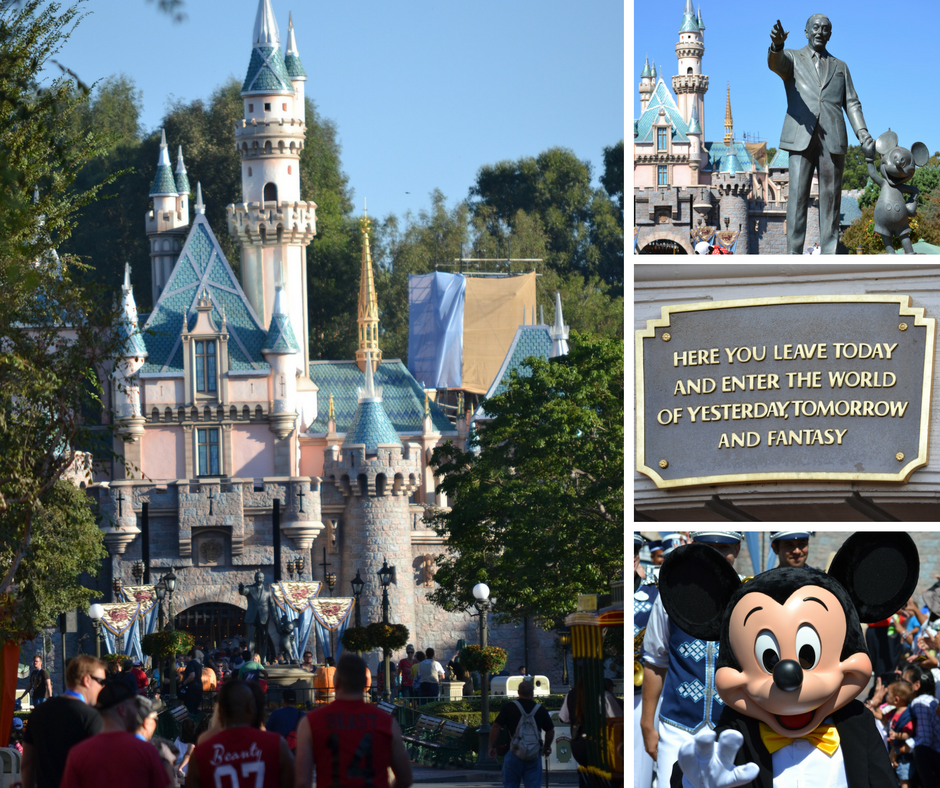
With the opening of Disneyland in 1955, Walt’s vision and imagination took on a reality that people could see, hear, and feel – an experience that changed entertainment forever.
disneyland2-fb-1

Walt Disney’s Vision Lesson for Leaders Today

Walt Disney’s unique vision, personalized in the telling of Snow White, demonstrated in the far-reaching aspects of a contract, and brought to life at Disneyland, can be a model for leaders today.

What vision is burning inside of you, a vision that can captivate your team, influence the influential, and be brought to life in your community?


People often ask me if I know the secret of success and if I could tell others how to make their dreams come true. My answer is you do it by working.

Walt Disney

References

Protect the Past While Envisioning the Future

Does your church dream more about where you have been than where God is leading you?

Have you ever looked around to realize that your church might be living today by focusing on yesterday?

Many churches long for the past, dreaming about the “good old days.” When faced with questions that are not easily answered, or walking through times of trial and doubt, churches, like people, often want things to be the way they used to be.

The problem is, the past has gone. While we may look back and respect it, and maybe even at times revere it, we cannot live in the past, especially when circumstances demand answers for the future.

If you are interested in learning how to lead your church away from the past in order to focus on what God has ahead, protect the past while envisioning the future.

wwr030117fb-1


THE QUICK SUMMARY – Church Unique by Will Mancini

Church Unique, by Will Mancini, describes a new kind of visioning process designed to help churches develop a stunningly unique model of ministry that leads to redemptive movement. He guides churches away from an internal focus to emphasize participation in their community and surrounding culture.

Mancini offers an approach for rethinking what it means to lead with clarity as a visionary. He does this by explaining that each church has a culture that reflects its particular values, thoughts, attitudes, and actions and then shows how leaders can unlock their church’s individual DNA and unleash their congregation’s one-of-a-kind potential.

A SIMPLE SOLUTION

Bold aspirations must be rooted in the values and visions that have come before. For you to be alive and in touch with God’s work in the world, you were necessarily touched by the vision of others who came before.

Leaders should look for the artifacts of vision every day within their specific ministry contexts. An ongoing discover of uncovering and appreciating the visionary contributions of past and present help prepare your own unique vision to take shape.

Visionary leadership is the art of protecting the past as we champion the future.

We must listen carefully to the ones who have gone before us and learn about their vision. How does their vision intersect with what God is calling us to do? What artifacts of vision exist in the past that can be used to support our vision of the future?

Uncover the creation story – all vision has a creation story, the events and the passion that birth the idea of a better future. Visionary leaders uncover every creation story in the lineage of the people they are influencing.

Collect the hidden gems of vision vocabulary – in the articulation of past vision, there are key terms that live large with meaning. They are “words within the walls” that often stay undiscovered or unpolished. Consequently, they are under-noticed and under-celebrated.

Find the “Hall of Fame” memorabilia – Behind the pictures on the wall, the stained glass windows, and the sound system of your church home are the stories from the people who have forged the character of your church. These “hall of fame” memorabilia speak stories to your church’s uniqueness.

– Will Mancini, Church Unique

A NEXT STEP

Dedicate 20 minutes at the beginning of your next three team meetings to discuss the three vision artifacts listed above.

Meeting Number 1: Uncover the creation stories – the problem with most stories of the past is that they remain in rough form, half-buried in the conscious of the organization with few people who can recall a God-moment that got it started to begin with. If your church is more than five decades old, there may be few, if any, living members who were present at the birth of your church.

Create a plan to recover lost or half-buried memories of your church’s creation stories from long-term members, attic crawl spaces, newsletter archives, or historical documents in your community. The end result should be documented, sharable stories of your church’s birth and ensuing growth that serve as momentum to move forward into what God has for tomorrow. Example: Use significant historical changes like a relocation or renovation to fuel vision for significant changes that lay ahead.

Meeting Number 2: Collect the hidden gems of vision vocabulary – as your teams complete the work of uncovering the creation stories, alert them to be intentionally looking for words and phrases that are often repeated or seem to have significance attached to them. Make sure the teams collect these words and phrases for others to see and enjoy.

As you review these words and phrases, consider how they may be polished and integrated into the living language of your church today, as a way of honoring the past while honing language for the future.

Meeting Number 3: Find the “Hall of Fame” memorabilia – as your teams complete the work of uncovering the creation stories, also alert them to listen for mentions of items and objects to which others have attached importance. Most importantly, record the stories behind those objects that give them significance. Make sure the teams note these items and importance. An old window, chair, or other random object could serve as inspiration from where we have been to get where God is leading.


Not all history is bad, and not all future opportunities will be good. It takes discerning leaders to impartially and prayerfully evaluate “the way things used to be” in order to lead toward the future that God is calling you to create.

If your church is going to remain a vital outpost of Great Commission Transformation in your community, remember to protect the past while envisioning the future.

Excerpt taken from SUMS Remix Issue 22-1, published September 2015


Part of a weekly series on 27gen, entitled Wednesday Weekly Reader

Regular daily reading of books is an important part of my life. It even extends to my vocation, where as Vision Room Curator for Auxano I am responsible for publishing SUMS Remix, a biweekly book “summary” for church leaders. I’m going to peruse back issues of both SUMS and SUMS Remix and publish excerpts each Wednesday.

You can find out more information about SUMS Remix here.

Subscribe to SUMS Remix here.

Transformation Agenda

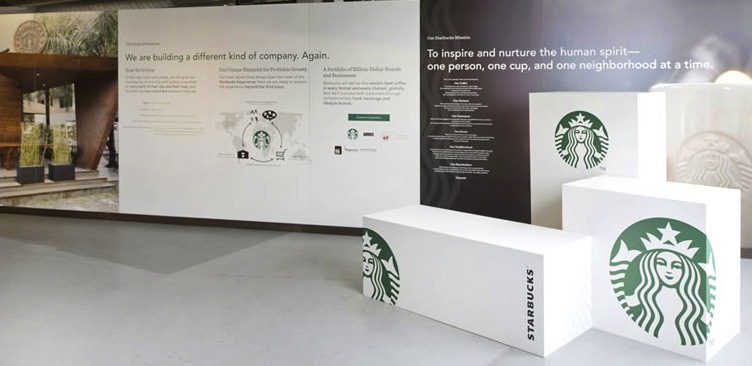
Continuing the transformation journey at Starbucks – and what it can teach your organization…

Once Starbucks Chairman Howard Schultz decided to return as CEO, he pulled together a team to began working on the process of turning the company’s performance around.

As noted in this post, one of the team’s key realizations was the need to focus on the ones: one cup of coffee, served to one customer, at one store. That thought drove the team to draft a transformation agenda that would be used company-wide to implement decisions.

The Transformation Agenda started with a compelling strategic vision, and was followed by a backbone of seven big moves, each with specific tactics. Here’s a synopsis:

Our Aspiration – To become and enduring, great company with one of the most recognized and respected brands in the world, known for inspiring and nurturing the human spirit.

courtesy touchworldwide.com

courtesy touchworldwide.com

Seven Big Moves

  • Be the undisputed coffee authority – Starbucks could not possibly transform the company if they did not excel and lead in their core business. Focusing on their quality and passion they exhibit in sourcing, roasting, and brewing coffee, actions included improving the quality and delivery of espresso drinks, reinventing brewed coffee, delivering innovative beverages, and increase the share of the at-home market. Undergirding all these actions was the push to continue telling their story.
  • Engage and inspire their partners – Every Starbucks partner (employee) should be passionate about coffee – from soil to cup – and possess the skills, enthusiasm, and permission to share that expertise with customers. Actions included significantly improving training and career development for partners at all levels as well as developing meaningful and groundbreaking compensation, benefit, and incentive packages for partners.
  • Ignite the emotional attachment with their customers – People come to Starbucks for coffee and human connection. Their goal was to put customers back in the center of the experience by addressing their needs, providing the “value” in a manner congruent with the brand, and developing programs that recognize and reward the most loyal customers. In the stores, that meant achieving operational excellence, finding new ways to deliver world-class customer service and perfect beverages while keeping costs in line and retail partners engaged.
  • Expand their global presence-while making each store the heart of the local neighborhood – The challenge was to grow their retail presence while striving to connect with and support the neighborhoods and cultures that each store serves. Enhancing local relevancy would mean redesigning existing and new stores, offering new products that reflected the tastes of particular cultures, and reaching out by volunteering or fund-raising to support local programs and causes.
  • Be a leader in ethical sourcing and environmental impact – Starbucks has led the way in treating farmers with respect and dignity. These efforts would expand, strengthening existing partnerships and forging new ones. They also have a goal of reducing each store’s environmental footprint and sharing their initiatives with others.
  • Create innovative growth platforms worthy of their coffee – Starbucks would grow not just by adding stores and selling coffee, buy also by extending its brand and/or expertise to new product platforms expanding or complementing coffee, such as tea, cold beverages, instant coffee, food, and the booming health and wellness market. Innovation that was relevant to their core values would be the hallmark of their transformation.
  • Deliver a sustainable economic model – Without a profitable business model, Big Moves 1-6 would not be possible. It was imperative that the refocus on customers and core also be matched by an improvement on how they operated their business. Creating a culture that drove quality and speed, managing expenses on an ongoing basis, reducing costs, and building a world-class supply chain would be the primary tactics in this area. Big Move 7 would be the most painful, least sexy, and most difficult part of transforming the company.

Launched at a global summit of 200 of Starbucks’ most senior leaders from around the world, the Transformation Agenda was in Schultz’s words “to make sure that we level set the reason we exist.”

courtesy nbcnews.com

courtesy nbcnews.com

Schultz felt ultimately that the summit helped align Starbucks’ top global leaders around two very important statements: the Transformation Agenda, which outlined what everyone at Starbucks needed to do, and the mission statement, which reminded them why.

Lessons for ChurchWorld Leaders:

  • Do you know what you are doing?
  • Do you why you are doing it?
  • Do you know how you are doing it?
  • Do you know when you are successful?
  • Do you know where God is taking you?

For a better understanding of these questions in terms of your church, take a look at the Church Unique Visual Summary here, or download it here as a free e-book.

It might just be the start of your own Transformation Agenda.

an updated post from a series reviewing Onward, by Howard Shultz

Onward

preparation for a new series coming soon on Leading the Starbucks Way, by Joseph Michelli

Print

Leadership = Vision Clarity

When I was in graduate school in the early 80’s, strategic planning processes included five-, ten- and sometimes even twenty-year plans. The past was relatively stable and indicated that things would continue as they were into the future. The assumption was that the near future would resemble the recent past. Rapid cultural, technological, and geopolitical change has rendered that assumption obsolete.

Will Mancini, founder of Auxano and author of the best-selling book Church Unique states it this way:

Leaders must focus more on preparation than on planning.

Mancini taps heavily into Reggie McNeal’s work here. McNeal, a consultant with The Leadership Network, has written several great books. In The Present Future he addresses 6 tough questions for the church. The one of interest here is “How do we plan for the future?” The short answer is, as both Mancini and McNeal elaborate, you don’t plan – you prepare.

Planning on past actions and assumptions will lead you to cultural irrelevance, methodological obsolescence, and missional ineffectiveness. Churches looking to planning like they always have will be left answering the wrong questions at best; at worst, they will be answering questions not asked!

Church Unique is not a road map that assumes predictability of fixed points and roads that stay unchanged over time. Instead, the tools of Church Unique are more like the compass, sextant, and chronometer of the sailor who moves across an ever-changing sea. Navigating the waters of today’s rapidly changing times requires ceaseless observation and adaptation to the surrounding environment. The better (and biblical) approach to the future involves prayer and preparation, not prediction and planning.

As a leader, are you seeking vision clarity first?

>>Download a free summary of Church Unique here.

>>Download a free summary of The Present Future here.

Got Clarity?

If you don’t know where you are going, any road will get you there. – the Cheshire Cat

Where’s your red X?
You know, the spot that says “You are here.”

Looking for the shortest distance between Point A and Point B?

The answers to the above questions aren’t in Will Mancini’s Visual Summary to his book “Church Unique,” but you will be able to grasp the process that just might answer the tough questions you’re facing today.

Take a look.

Download the free e-book.

Start out on the journey…

…today!

If you are the Exponential Conference today and would like a free copy of The Visual Summary, show this post or a Tweet related to it to the guys at the Auxano booth near the Worship Center entrance (while supplies last).

Granite Etching vs Sand Writing

This  post wraps up a quick look at a section of Will Mancini’s book “Church Unique“. I’m at the Exponential PreConference event in Orlando with part of the Auxano team, and this section has been jumping all over me!

So far, it’s been all about Soul Fast Food – but now it’s down to some “solid” stuff! The real nourishment of your people should come from the vision of your Church Unique. Only then will the enduring purpose of the church reflected locally can replace the substitutes of place, personality, programs, and people.

In his book “Built to Last“, author Jim Collins found that enduring organizations have two dominant characteristic that are complementary opposites:

  • A strong conviction about core ideals that never changes
  • A clear understanding that everything else must change in order to preserve the core

If people are nourished by unchanging vision, they are more agreeable when the rules change with tactics. It takes clarity and discipline to understand which things in the organization belong to which category. But what if our people were so captivated by the granite etching that it set us free to play with sand drawings? The leader’s role is not just to communicate in both granite and sand but to show how the two components work together. The leader should help people embrace change by nurturing an emotional connection to the unchanging core vision. The leader should preserve and champion the core vision by showing people how to constantly adapt.

Our change management problems today are vision problems first and people problems second. Many leaders want their people to run a missional marathon but unknowingly feed them junk food, leaving them malnourished and unprepared for the future. 

If you are leader in ChurchWorld, don’t be part of “feeding” your congregation junk fast food – focus on the Bread of Life, and watch your church thrive and grow! When we fail to clarify and nurture the things written in granite, our people get too attached to the things written in sand. This is how the four P’s (place, personality, programs, and people) fit in. These are sand, not granite. As the fluid and flexible stuff of the kingdom they not only should change, but must change. In the absence of vision, the stuff of sand becomes the vision. In the absence of granite, sand is all we can grasp. 

What’s on Your Menu?

The last few posts on 27gen have been a closer examination of Will Mancini’s book Church Unique. Specifically, the chapter entitled “Lost Congregations” that examines how churches adapt to a vision vacuum. Using the metaphor of Soul Fast Food, Mancini challenges the church leader to examine how their structures, programs, and ministries may have become a substitute for the real meal – what God intends for the church.

To wrap this up, I simply want to restate some of Mancini’s questions for your consideration.

  • What really happens in the soul of a congregant when left in a church’s vision vacuum over time?
  • What is left to excite the heart of church attenders?
  • What then fuels the dreams of your people?
  • What nourishes the identity of those who call your church home?

God’s people have a heart for mission; we need guidance to carry it out – vision. When a church articulates and clarifies its vision, the people of God will be released in a powerful realization of God at work in their world.

What’s on your menu?

If you are at the Exponential Conference and you resonated with the Church Unique material, I invite you to participate in the Intentional Discipleship track for your workshops. You can look at a preview here.

Dessert Time from the Soul Fast Food Menu

Today is the final day to order off the Soul Fast Food menu!

For previous orders, see these posts here and here. These thoughts are driven by my ongoing learning experience with Will Mancini’s and the Auxano presentations at Exponential 2012 Preconference.

Apple Pie “People” 

Perhaps the greatest substitute for healthy membership identity is the group of people at church – whether ten or a hundred – who “know my name.” This is not to be seen as a knock on relationships! It is identifying “community without a cause” as both unbiblical and a common source of identity for the churchgoer. Want a demonstration? Suggest a change in service times – or ask a Bible Study class or small group to multiply. People don’t want you to mess with their relationships. Our familiar friends, albeit essential to church life, have become central to the person’s identify. Relationships are critically important to community life in a church. But, like too many apple pies or anything taken to excess, they can be damaging to the overall health of the body.

Later today:  the source of real nourishment for your church – and it’s not found at your local drive-through!

Filling the Vision Vacuum

When life around our house gets hectic, we often slip into a bad habit: fast-food for our meals. Both my wife and I enjoy cooking, especially when we can try out new recipes. But when the work day gets long, that’s one of the first things tossed aside. That usually means a quick stop at a neighborhood fast-food place for a quick meal. I’m not here to debate the health issues, but generally speaking, what we consume in a hurry is not as nutritious as what we would prepare on our own at home.

Will Mancini, author of Church Unique and founder of Auxano, makes an application to many churches by using the fast food metaphor. I’m at the Exponential Conference in Orlando this week; with Auxano being the sponsor of the Intentional Leadership Track, I thought it would be a good chance to review some of the major parts of Church Unique.

With an early start this morning, the concept of vision vacuum is fresh on my mind. Let’s take a closer look at what Mancini calls “Soul Fast Food”. To set this up, consider the following Scripture from Psalms 29:18 in The Message version:

When people can’t see what God is up to, they stumble all over themselves.

Unfortunately, most churches today are living that Scripture out. There is no clear vision of what God is up to, and the result is a vision vacuum. And when a vacuum exists, something is going to try to move in to fill it.

The Heart of the Matter – what really happens in the soul of a congregant when left in a church’s vision vacuum over time?

  • What is left to excite the heart of your church attenders?
  • What then fuels the dreams of your people?
  • What nourishes the identity of those who call your church home?

The simple answer is something does, even when vision is absent. People need vision and they need hope. If visionary leaders are not providing and nourishing it, where do people find meaning?

Soul Fast Food – According to Mancini, there are four substitutes for a well-balanced diet of vision. They fuel your most faithful people; it is how they get hope for a better future. Unfortunately, they are also four sources of a malnourished membership identity. Each of these junk food categories are not bad in and of itself. They all malnourish because they are used inappropriately as a substitute for a well-balanced vision. Here’s the first:

French Fried “Places” 

The places of our encounters with God matter – but the space itself has addictive features, just like your favorite fries. There are spots where we encounter God; they are important. But in the absence of a vision that transcends our favorite nooks and crannies, the space itself becomes the vision supplement. THe primary use of the term “church” to connote place compounds the issue. The meaning of place reflects God’s design, starting with the Garden and ending with the New Jerusalem.

But space is essential, not central in the economy of vision.

Do not underestimate the gravitational pull of the physical place on both members and leaders. Is it possible that the building itself becomes a cheap substitute for real vision? If you put too much focus on the physical place, people can be robbed of the more substantial articulation of the church’s future. The result? Anorexic vision. What about your church?

Is it time to pass the salt – or pass over french fried places all together?


New Beginnings

Today I begin a new chapter in my life – as Curator of the Vision Room at Auxano.

Yeah.

No – YEAH!

To find out the scoop, take a look at the tabs above for full information.

For a trip back to the day it started, I’ve reprinted a post from November 10, 2008: reflections on the day I first met Will Mancini.

School’s Out – on Strategic Planning

As I’ve posted many times on this blog, Catalyst 2008 totally rocked my boat on a personal and business level – to the point of tipping it over! I’m still processing and talking about Catalyst, and probably will be till next year’s Catalyst (yeah – I’ve already registered for it, along with the rest of my family – but that’s another post).

My boat just turned over again.

Will Mancini, author of Church Unique and founder and Clarity Evangelist at Auxano, was kind enough to meet with me and the editor of Church Solutions magazine, Karen Butler, on the last day of WFX in Houston last week. Will was joined by Cheryl Marting, Chief Connections Officer at Auxano (already they win the award for coolest job titles). Since Will lives in Houston, the original intent was just to get to know him a little better in advance of next February’s Church Solutions Conference and Expo. Karen set the lunch up, and was very kind to include me in. As soon as the conversation started, it was obvious to me that God had set this up all along to continue the “mind expansion” He set in place at Catalyst.

Church Unique was published earlier this year by Leadership Network. I’m a huge fan of Leadership Network – I attended a Leadership Gathering in 1995 and have participated in several national training events since then (thank you Sue Mallory for all you have done for equipping ministries in the church). Anyway, when LN publishes a book, I’m all over it. So when Church Unique came out, I picked it up – and it mesmerized me from the opening pages.

My experience with strategic planning matters goes back to seminary in the early 80’s: Lyle Schaller, Aubrey Malphurs, Bobb Biehl, Kennon Callahan, Peter Drucker – these were the leaders in the field that we followed. Others have joined them in the years since, but all of these – and especially Malphurs – have influenced my own views of strategic planning in the churches I served and in the churches I work with now as a development consultant.

I had not gotten further than the introduction of Church Unique and a table contrasting strategic planning and Mancini’s Vision Pathway than I knew my views of strategic planning and its place in the church world had changed – forever.

His approach centers on the powerfully simple concept that God has created all churches as unique. While we understand that God created His world with uniqueness (think snowflakes), and His children (DNA, environment, and culture) the same way, we think that churches are mostly alike.

Do you think He would act any differently with His church?

Over the next few days, I will be posting a few of the nuggets of Church Unique. But don’t take my word for it – get a copy immediately, block out some time to dive into it, and prepare to put on a life-preserver – your boat is going to be rocked!

Here are those posts if you are interested:

Over the past four years I’ve written dozens of posts about Will, Auxano, and Church Unique.

Now I get to live it out!

That’s a God thing…

If Only Things Were Like They Used To Be

Nostalgia is a natural human emotion, a survival mechanism that pushes people to avoid risk by applying what we’ve learned and relying on what’s worked before.

It’s also about as useful as an appendix right now.

That quote is from Fast Company Editor Robert Safian, writing the cover story “Generation Flux” for the February 2012 issue. He goes on to add:

When times seem uncertain, we instinctively become more conservative; we look to the past, to times that seemed simpler, and we have the urge to recreate them. This impulse is as true for organizations  as for people. But when the past has been blown away by new technology, by the ubiquitous and always-on global hypernetwork, beloved best practices may well be useless.

ChurchWorld, to a great extent, finds itself in that situation right now.

There are huge shifts occurring in the economic, social, cultural, and spiritual fabric of our lives right now. That’s not new – change has always been a part of who we as humans are. But what’s different is the pace of change. It’s not just getting faster – it’s accelerating along an exponential curve.

And the response of ChurchWorld?

Put a fence around your facility and charge admission to a museum dedicated to the 1990s – or 1980s – or 1970s – or 1960s – or 1950s – or…

Oh, it’s not that blatant – but it is obvious.

It’s time to change.

My absolute favorite quote about change is from Will Rogers:

Will Rogers quote

To survive THRIVE in this age of flux, you have to claim what makes your church unique, what sets you apart from 10,000 other churches, what God has uniquely gifted your people to be and doHold onto that – and change any and every thing else that needs to be changed in order to live out God’s calling.