The Revolutionary Ideas That Built America – And Still Haunt It


January and February – Seeds of Rebellion Part Four

What do we mean by the Revolution? The war? That was no part of the Revolution; it was only an effect and consequence of it. The Revolution was in the minds of the people, and this was effected, from 1760 to 1775, in the course of fifteen years before a drop of blood was shed at Lexington. The records of the thirteen legislatures, the pamphlets, newspapers in all the colonies, ought to be consulted during that period to ascertain the steps by which the public opinion was enlightened and informed concerning the authority of Parliament over the colonies. – John Adams to Thomas Jefferson, 1815

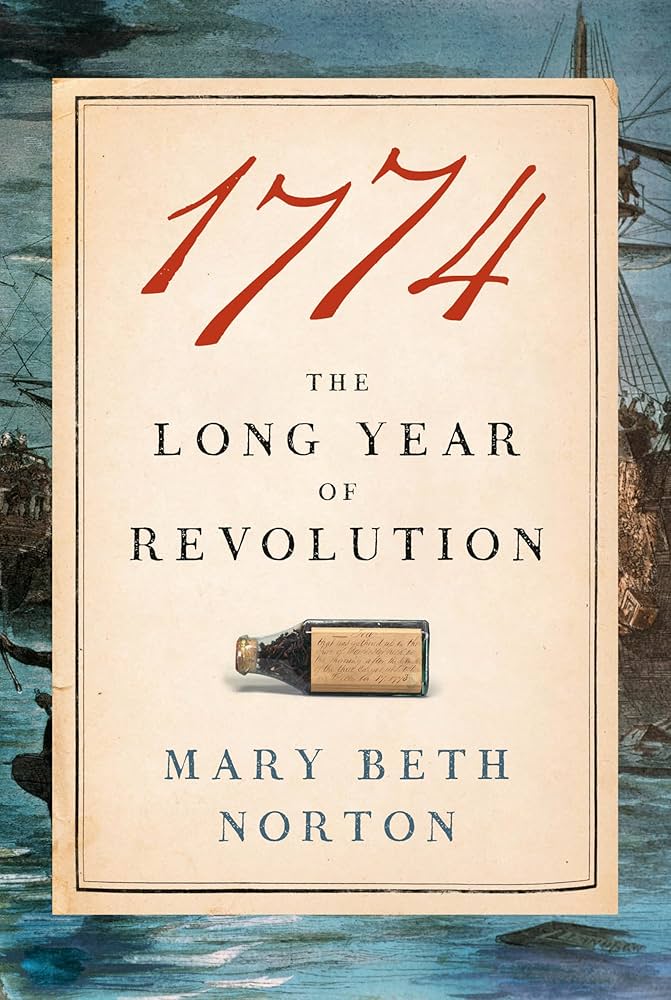
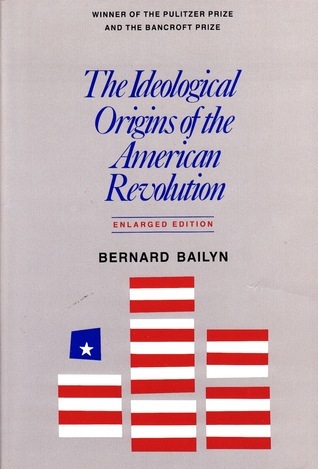
When Americans argue today about government overreach, executive power, or the nature of liberty itself, they’re replaying a script written in the 1760s and 1770s. Bernard Bailyn’s The Ideological Origins of the American Revolution, first published in 1967, reveals something most of us never learned in school: the American Revolution wasn’t primarily about taxes or tea. It was about ideas – specifically, a coherent worldview about power, corruption, and the fragility of freedom that made independence seem not just desirable but absolutely necessary.

Reading Bailyn’s masterwork today feels unsettlingly contemporary. His revolutionaries obsessed over concentrated power, feared conspiracies against liberty, and believed a corrupt establishment was systematically undermining constitutional rights. Sound familiar? Understanding the intellectual framework that drove America’s founding becomes essential when those same concepts – often stripped of context – fuel our current political fires.

The Historian Who Changed How We Read Revolution

Bernard Bailyn, a Harvard historian who would win the Pulitzer Prize for this book, didn’t set out to write a conventional narrative of battles and heroes. Instead, he did something more radical: he actually read what ordinary colonists were reading. Diving into hundreds of pamphlets, sermons, and newspapers from the revolutionary era – sources historians had largely dismissed as propaganda – Bailyn discovered a sophisticated political ideology that had been hiding in plain sight.

Writing in the 1960s, during America’s own era of upheaval, Bailyn brought the precision of intellectual history to a moment often treated as inevitable march toward democracy. His timing mattered. As Americans questioned authority during Vietnam and the civil rights movement, Bailyn showed that the founders themselves were deeply skeptical of power, animated by ideas rather than merely economic grievances. This reframing transformed revolutionary scholarship and sparked decades of debate about what truly motivated America’s break with Britain.

Power Corrupts, Vigilance Protects: The Revolutionary Mindset

Bailyn’s central argument revolutionized our understanding of 1776. The colonists, he demonstrates, weren’t simply reacting to British policies they disliked. They had absorbed a specific tradition of political thought – what he calls “opposition ideology” – that taught them to interpret those policies as part of a deliberate plot to destroy their liberties.

This ideology emerged from several sources: classical writers like Cicero and Tacitus on republics and tyranny, Enlightenment thinkers like John Locke on natural rights and government by consent, English common law traditions, New England Puritanism’s emphasis on covenant and resistance to arbitrary authority, and especially the “radical Whig” writers of early eighteenth-century England who warned constantly about corruption and the abuse of power.

The last source proved most important. Writers like John Trenchard and Thomas Gordon (authors of Cato’s Letters) and the historian Catharine Macaulay weren’t mainstream voices in Britain, but they became gospel in America. They taught colonists a particular way of seeing politics: power constantly seeks to expand itself, those in authority inevitably become corrupted, liberty requires eternal vigilance, and seemingly small encroachments are actually part of larger conspiracies.

When Britain began tightening control after the Seven Years’ War – taxing the colonies, quartering troops, expanding vice-admiralty courts – Americans didn’t see practical adjustments to imperial administration. They saw confirmation of everything their reading had warned them about: a “systematic” plot to reduce them to slavery. Bailyn writes that the colonists believed they were witnessing “a comprehensive conspiracy against liberty throughout the English-speaking world – a conspiracy believed to have been nourished in corruption, and of which, it was felt, oppression in America was only the most immediately visible part.”

This wasn’t paranoia or exaggeration to Bailyn’s revolutionaries. Given their ideological framework, the pattern seemed clear and terrifying. The Stamp Act, the Townshend Acts, the closure of Boston Harbor – each new measure fit perfectly into a template that predicted exactly this kind of creeping tyranny.

Voices From the Revolution

Bailyn lets the revolutionaries speak for themselves, and their words crackle with urgency. He quotes a 1768 letter describing how Americans understood their predicament: “The ministry have formed a systematick [sic] plan of reducing the northern colonies to absolute obedience to acts of Parliament… and if submitted to must end in the ruin of the colonies.” Notice the word “systematick” – not random policies but a coherent plan.

From the influential pamphleteer John Dickinson, Bailyn draws this passage about how tyranny arrives: “Nothing is wanted at home but a PRECEDENT, the force of which shall be established by the tacit submission of the colonies.” Rights, once surrendered, would never be recovered.

Perhaps most tellingly, Bailyn quotes the revolutionaries’ conviction that they weren’t radicals but conservatives, defending traditional British liberties against innovation and corruption. One writer proclaimed: “What do we want? Is it to be wantonly tearing up the foundation of our happy constitution? No. It is the preservation of it.” In their own minds, the British were the revolutionaries, destroying an ancient constitutional balance, while Americans defended eternal principles.

Bailyn also captures the religious dimension of revolutionary thought, quoting a Massachusetts election sermon that presented resistance as a sacred duty: “All the great Assertors of Liberty in all Ages have uniformly declared it to be unalienable.” Liberty came from God, not kings, and defending it became a moral imperative.

A New Interpretation Among Competing Narratives

Bailyn’s book entered a crowded field of revolutionary scholarship, and its ideological approach offered a distinct alternative to existing interpretations. The Progressive historians of the early twentieth century, particularly Carl Becker and Charles Beard, had emphasized economic motivations – class conflict, merchants protecting their interests, a revolution driven by “who shall rule at home” as much as home rule itself.

Bailyn didn’t deny economic factors but insisted they weren’t primary. Ideas mattered independently, shaping how colonists understood their material interests. Where Beard saw merchants manipulating ideology to serve their pocketbooks, Bailyn saw genuine believers whose worldview made certain policies intolerable regardless of their economic impact.

His work also complicated the consensus school of the 1950s, which portrayed Americans as fundamentally pragmatic and unideological. Bailyn showed revolutionaries possessed a sophisticated, coherent political theory that went far beyond pragmatic adjustment of interests.

More recently, Gordon Wood’s The Radicalism of the American Revolution extended Bailyn’s insights, arguing that the ideas Bailyn identified ultimately transformed American society more thoroughly than anyone intended, destroying aristocratic assumptions and creating genuinely democratic culture. Where Bailyn focused on the ideas that justified revolution, Wood traced how those ideas reshaped American life afterward.

Meanwhile, historians emphasizing social history and lived experience – like Gary Nash’s work on urban radicalism or Woody Holton’s research on how debt and economic pressures motivated backcountry farmers – provide necessary texture to Bailyn’s intellectual history. They remind us that while elite pamphleteers articulated opposition ideology, ordinary Americans had their own immediate grievances. The most complete picture likely combines Bailyn’s ideological framework with attention to how different groups experienced and deployed those ideas based on their particular circumstances.

What We’ve Learned Since 1967

Nearly sixty years after publication, scholarship has both confirmed and complicated Bailyn’s thesis. Research into the Atlantic world has shown how ideas circulated more complexly than Bailyn suggested, with influences running in multiple directions. Work on enslaved people and Native Americans has revealed how selectively revolutionary principles were applied – the ideology of liberty coexisted with slavery and dispossession, a tension Bailyn acknowledged but didn’t fully explore.

Historians have also questioned whether the conspiracy mindset was quite as coherent or universal as Bailyn suggested. Recent scholarship shows more variation in revolutionary thought across regions, classes, and religious communities. Not everyone read the same pamphlets or interpreted events through identical ideological lenses.

Yet Bailyn’s core insight endures: ideas genuinely mattered to the revolutionaries, and understanding their worldview is essential to understanding their actions. The challenge has been integrating his intellectual history with social, economic, and cultural approaches that illuminate how diverse Americans experienced revolution differently.

Perhaps most importantly, historians now better understand how revolutionary ideology’s emphasis on vigilance against power, fear of corruption, and suspicion of conspiracy became permanent features of American political culture – for better and worse. Bailyn identified the intellectual origins not just of revolution but of persistent American patterns: questioning authority, fearing centralized power, seeing politics in conspiratorial terms.

Why Read Bailyn in 2026?

In our current moment of polarization and institutional mistrust, The Ideological Origins of the American Revolution offers essential perspective. When Americans across the political spectrum invoke founding principles, Bailyn helps us understand what those principles actually meant in their original context and how they functioned politically.

The book reveals that American political culture’s conspiratorial thinking, its suspicion of power, its emphasis on individual liberty against collective authority – these aren’t aberrations but features present from the beginning. Understanding this doesn’t resolve our debates, but it illuminates why we debate the way we do.

For anyone trying to understand why Americans talk about politics differently than citizens of other democracies, why we’re so suspicious of government power, why constitutional arguments dominate our political discourse, Bailyn provides the intellectual archaeology. The revolutionaries weren’t just our political ancestors; their ideology remains the grammar of American political argument.

The Ideological Origins of the American Revolution is dense but rewarding, written with clarity and packed with insight. It asks us to take ideas seriously – to consider that people really do act on political principles, not just material interests dressed up as principles. In our cynical age, that might be Bailyn’s most revolutionary suggestion of all.


A Note on This Series

This journey through Revolutionary history is as much about the evolution of historical understanding as the Revolution itself. History isn’t static – each generation reinterprets the past through its own concerns, asking different questions and prioritizing different sources. By reading these books in dialogue across 250 years, we’ll witness how scholarship evolves, how narratives get challenged, and how forgotten stories resurface.

This isn’t about declaring one interpretation “right” and another “wrong,” but appreciating the richness that emerges when multiple perspectives illuminate the same transformative moment. These books won’t provide definitive answers – history rarely does – but they equip us to think more clearly about how real people facing genuine uncertainty chose independence, how ideas had consequences, and how the work of creating a more perfect union continues. As we mark this anniversary, we honor the Revolutionary generation by reading deeplythinking critically, and engaging seriously with both the brilliance and blind spots of what they created.

You can find the entire series listing here.

The Birth of Rebellion: North Carolina’s Revolutionary Spirit in the 1700s


January and February – Seeds of Rebellion Part Three

From colony-wide to county-wide, the seeds of rebellion had been planted and were beginning to sprout…

The Birth of Rebellion: North Carolina’s Revolutionary Spirit in the 1700s

In the Carolina backcountry of the 1770s, far from the established colonial centers of Boston and Philadelphia, a revolutionary fire was kindling that would challenge the traditional narrative of American independence. Mecklenburg County, North Carolina, became an unlikely crucible for patriot sentiment, where Scots-Irish settlers, Presbyterian ministers, and frontier farmers forged a distinctly Southern brand of resistance to British authority. Understanding how this remote region developed such fierce independence requires examining the unique cultural, religious, and political factors that transformed loyal colonial subjects into America’s earliest self-proclaimed revolutionaries.

The Scots-Irish Legacy: Seeds of Defiance

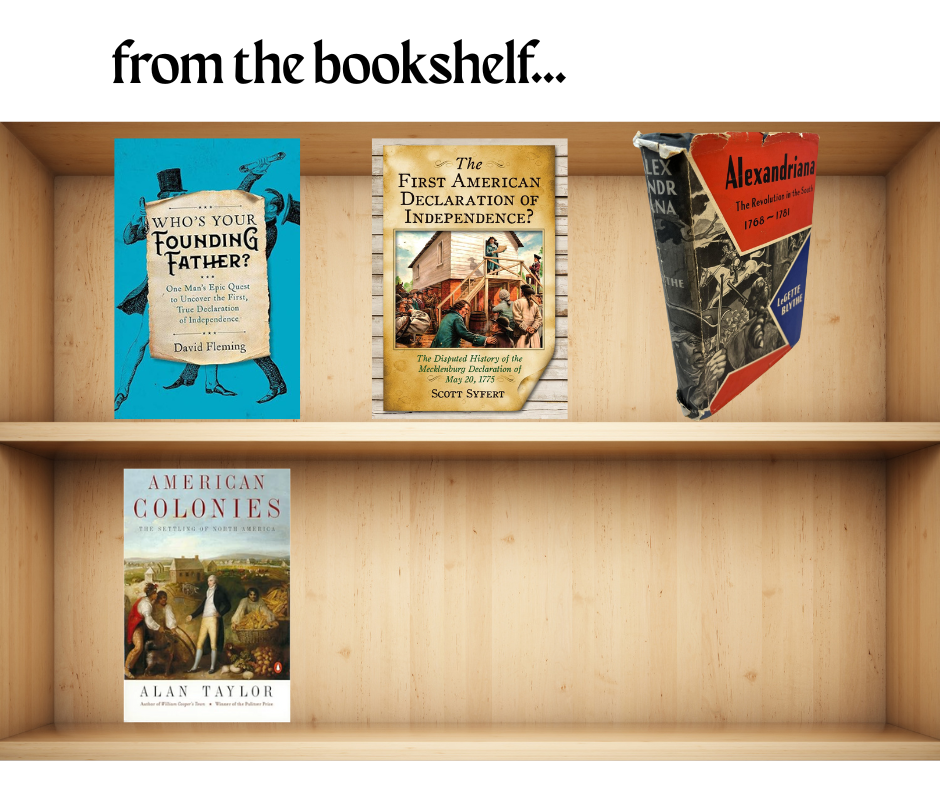
The foundation of Mecklenburg County’s patriot mindset was laid long before the first shots were fired at Lexington and Concord. The region’s predominant settlers were Scots-Irish Presbyterians who brought with them a bitter legacy of religious persecution and political marginalization. These immigrants had already endured discrimination in both Scotland and Ireland, where their Presbyterian faith marked them as outsiders in Anglican-dominated societies. As historian Alan Taylor notes in American Colonies, the Scots-Irish carried “a fierce independence and distrust of distant authority” that would prove combustible when transplanted to the Carolina frontier.

This cultural inheritance was not merely abstract resentment. The Scots-Irish settlers had concrete experience with oppressive governance, making them particularly sensitive to perceived injustices from the British Crown. When they established communities in the North Carolina backcountry during the mid-1700s, they brought these memories with them, creating a population predisposed to question and resist overreach by distant powers. Their Presbyterian church structure, which emphasized congregational governance rather than hierarchical authority, reinforced democratic ideals and collective decision-making that would later characterize their revolutionary activities.

Religious Grievances and Colonial Betrayal

The transformation from grievance to open resistance accelerated when the British Privy Council in London dealt Mecklenburg’s settlers a stinging betrayal. After supporting Royal Governor William Tryon against the Regulator movement in 1771 – a costly decision that pitted backcountry settlers against each other – the Scots-Irish Presbyterians of Mecklenburg expected recognition and reward for their loyalty. Instead, the British government voided colonial legislation that had granted them crucial rights: the establishment of Queen’s College (which would have provided local higher education) and the legal authority for their ministers to perform marriages.

This duplicity struck at the heart of the community’s identity. Education and religious legitimacy were not peripheral concerns but foundational elements of Scots-Irish Presbyterian culture. The revocation represented more than administrative inconvenience; it was a profound insult that confirmed their suspicions about British indifference to colonial needs and rights. As Scott Syfert documents in The First American Declaration of Independence, this betrayal “further alienated the community from British rule” and provided tangible evidence that loyalty to the Crown would never be reciprocated with genuine respect or representation.

The Princeton Connection: Intellectual Foundations

While cultural predisposition and political grievances created the emotional fuel for rebellion, intellectual justification came from an unexpected source: the College of New Jersey at Princeton. Several key figures in Mecklenburg County’s revolutionary leadership had studied at Princeton, including members of the prominent Alexander family. The college, under Presbyterian leadership, was a hotbed of Enlightenment thinking blended with Reformed theology, producing graduates who could articulate sophisticated arguments for natural rights and limited government.

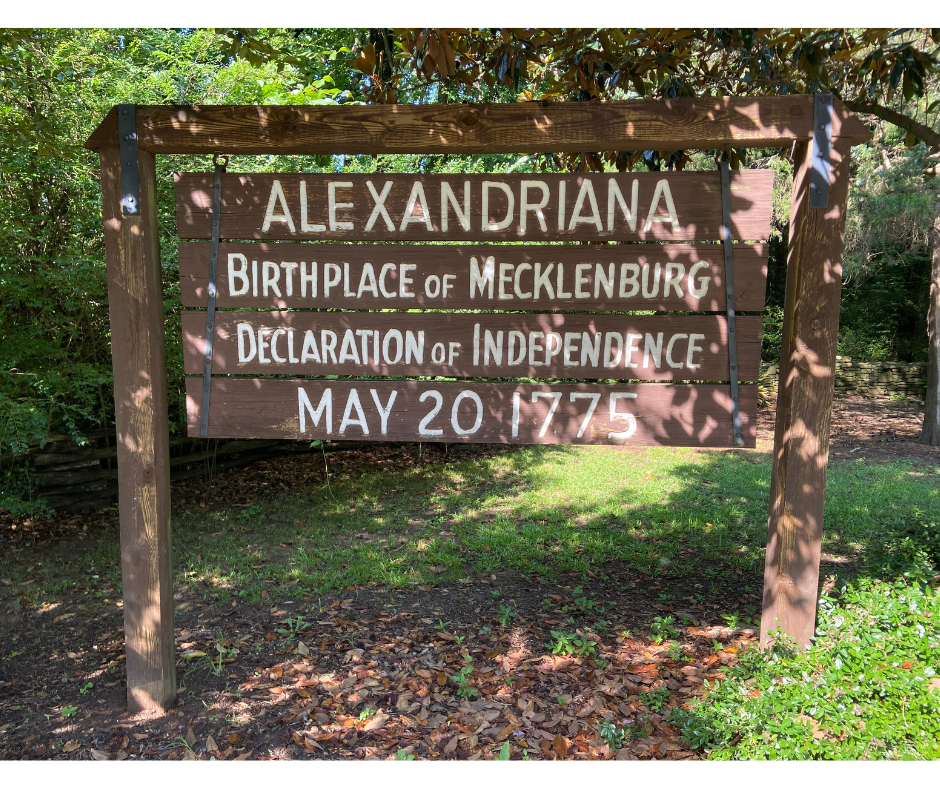
John McKnitt Alexander, whose plantation “Alexandriana” became a focal point for revolutionary organizing, exemplified this synthesis of frontier practicality and learned discourse. As depicted in LeGette Blythe’s historical novel Alexandriana, the Alexander home served as more than a prosperous plantation; it functioned as an intellectual hub where ideas about liberty, self-governance, and resistance to tyranny were debated alongside practical strategies for colonial defense. The Princeton-educated ministers and landowners of Mecklenburg could justify their rebellion not merely as frontier defiance but as a principled stand grounded in political philosophy and moral conviction.

From Tension to Declaration: The May 1775 Moment

By the spring of 1775, Mecklenburg County had become a powder keg of revolutionary sentiment. When news of the battles at Lexington and Concord reached Charlotte in May, it provided the spark needed to ignite open rebellion. According to historical accounts – though disputed by some scholars – Colonel Thomas Polk summoned militia representatives to the Charlotte courthouse on May 19, 1775. The gathering elected Abraham Alexander as chairman and John McKnitt Alexander as secretary, then drafted what would become known as the Mecklenburg Declaration of Independence.

The language of this declaration was uncompromising. The assembled representatives allegedly resolved that they would “dissolve the political bands which have connected us to the Mother Country” and proclaimed themselves “free and independent” from British rule – fourteen months before the Continental Congress would adopt similar language in Philadelphia. Whether this specific document existed in the form tradition claims remains debated among historians. However, the indisputable historical record shows that Mecklenburg County did produce the Mecklenburg Resolves on May 31, 1775, which called for local self-governance and rejected Crown authority in practical terms.

David Fleming’s investigation in Who’s Your Founding Father? argues compellingly that the distinction between these two documents may be less significant than commonly assumed. Both reflected the same revolutionary spirit, and the later destruction of county records in an 1800 fire created ambiguity that historians have exploited. What matters historically is not whether a specific piece of parchment survived, but that Mecklenburg County’s residents genuinely believed they had declared independence first – and that this belief shaped their identity and actions throughout the Revolutionary War.

The Broader Carolina Context

Mecklenburg County’s revolutionary fervor did not emerge in isolation but reflected broader patterns across North Carolina’s backcountry. The colony had long been divided between the coastal elite, who maintained closer ties to British authority and benefited from established trade networks, and the interior settlers, who felt neglected and exploited by both colonial and imperial governance. The Regulator movement of 1768-1771, though ultimately suppressed, demonstrated the depth of backcountry resentment against corrupt officials and unequal taxation.

Taylor’s American Colonies emphasizes how North Carolina’s geography created distinctive political tensions. The lack of good harbors and the challenge of navigating the Outer Banks limited direct trade with Britain, forcing backcountry farmers to market their goods through Virginia or South Carolina. This geographic isolation contributed to a sense of independence but also economic frustration. When revolutionary resistance began focusing on non-importation and self-sufficiency, North Carolina’s backcountry settlers found themselves ideally positioned – both practically and psychologically – to embrace economic separation from Britain.

The Role of Local Leadership

The patriot mindset in Mecklenburg County was not merely spontaneous popular uprising but reflected deliberate cultivation by local leaders. Figures like Thomas Polk, the Alexander family members, and Presbyterian ministers created networks of communication and mutual support that could rapidly mobilize community response to British actions. These leaders hosted meetings, circulated pamphlets and newspapers, and ensured that news from other colonies reached even remote settlements.

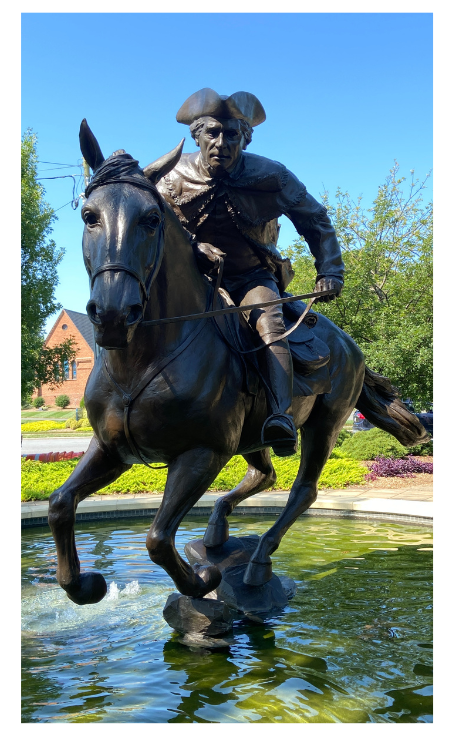
Captain James Jack’s legendary ride to Philadelphia, carrying news of Mecklenburg’s declarations to the Continental Congress, exemplifies this organized activism. While often compared to Paul Revere’s more famous midnight ride, Jack’s journey covered more than 500 miles through difficult terrain. The fact that the community could quickly select a messenger and coordinate such a mission demonstrates the level of political sophistication and preparation that existed in this supposedly frontier region. These were not impulsive rebels but organized revolutionaries who understood the importance of coordination and communication.

Legacy and Memory

The question of whether Mecklenburg County truly declared independence first, or whether the story represents wishful thinking and reconstructed memory, has occupied historians for two centuries. Five U.S. presidents – Taft, Wilson, Eisenhower, Ford, and George H.W. Bush – traveled to Charlotte to honor the claim, and North Carolina’s state flag and license plates proudly display “May 20, 1775” as the date of its first declaration of independence. This persistent commemoration reveals something important regardless of strict historical accuracy: the people of Mecklenburg County believed they acted first, and this belief shaped their understanding of their role in American independence.

In The First America Declaration of Independence?, Scott Syfert argues persuasively that the controversy over authenticity has obscured the more significant historical reality: Mecklenburg County residents did take radical steps toward independence remarkably early in the revolutionary process. Whether the exact language of the May 20 declaration is precisely as remembered matters less than the documented fact that this region rejected British authority in concrete, organized ways before most other American communities. The Mecklenburg Resolves of May 31, 1775, which survive in multiple contemporary accounts, established local governance independent of Crown authority and explicitly rejected parliamentary control.

A Distinctly Southern Revolution

The development of the patriot mindset in Mecklenburg County represents a distinctly Southern contribution to American revolutionary thought. Unlike New England, where merchant interests and urban intellectuals often led resistance, or the Chesapeake, where plantation aristocrats debated rights and representation, North Carolina’s backcountry revolution emerged from Scots-Irish settlers, Presbyterian theology, frontier pragmatism, and accumulated grievances against both colonial and imperial authority.

This revolutionary spirit drew from deep wells of cultural memory, religious conviction, intellectual sophistication, and practical necessity. The Scots-Irish brought resistance in their bones, forged through generations of discrimination. Presbyterian theology provided moral justification for questioning unjust authority. Princeton-educated leaders offered philosophical frameworks for understanding natural rights and legitimate government. And the practical experience of frontier life created communities accustomed to self-reliance and collective decision-making.

When these elements converged in May 1775, Mecklenburg County was prepared to do what seemed radical elsewhere: declare independence not tentatively or hypothetically, but as a concrete political reality. Whether historians ultimately validate every detail of the traditional account matters less than recognizing the genuine revolutionary fervor that existed in this remote corner of North Carolina. The patriot mindset did not begin in Philadelphia or Boston alone; it was simultaneously igniting in places like Charlotte, where different histories and distinct grievances produced the same conclusion: that free people must govern themselves or cease to be free.

The story of Mecklenburg County’s revolutionary development challenges us to recognize the multiple origins and diverse sources of American independence. The Revolution was not one movement but many, not one declaration but several, not one founding moment but an extended process of communities across thirteen colonies reaching similar conclusions through different paths. 

In understanding how the patriot mindset developed in North Carolina’s backcountry, we gain a richer, more complete picture of how America became independent – not through singular genius in a single place, but through the converging determination of many communities, each with its own story of resistance, its own declaration of freedom, and its own claim to have helped light freedom’s first flame.


A Note On This Series

This journey through Revolutionary history is as much about the evolution of historical understanding as the Revolution itself. History isn’t static – each generation reinterprets the past through its own concerns, asking different questions and prioritizing different sources. By reading these books in dialogue across 250 years, we’ll witness how scholarship evolves, how narratives get challenged, and how forgotten stories resurface.

This isn’t about declaring one interpretation “right” and another “wrong,” but appreciating the richness that emerges when multiple perspectives illuminate the same transformative moment. These books won’t provide definitive answers – history rarely does – but they equip us to think more clearly about how real people facing genuine uncertainty chose independence, how ideas had consequences, and how the work of creating a more perfect union continues. As we mark this anniversary, we honor the Revolutionary generation by reading deeplythinking critically, and engaging seriously with both the brilliance and blind spots of what they created.


You can find the entire series listing here.

Three Empires, One Continent: The Race for North America


January and February – Seeds of Rebellion Part Two

As previously discussed, Taylor’s continental approach reveals that North America was never destined to become an English-speaking nation. For nearly three centuries, the outcome remained genuinely uncertain as Spanish, French, and British empires pursued radically different colonial strategies across the continent. Understanding why Britain ultimately gained the upper hand requires examining not triumphalist inevitability, but the specific demographic, economic, and military factors that determined outcomes among competing visions of what “America” would become. Each empire brought distinct goals and methods to colonization, creating what Taylor describes as “new worlds compounded from the unintended mixing of plants, animals, microbes, and peoples on an unprecedented scale.” By the mid-eighteenth century, these competing imperial projects had produced dramatically different results – setting the stage for the dramatic events that would culminate in the American Revolution.

When European powers first cast their eyes westward across the Atlantic in the late fifteenth and early sixteenth centuries, North America represented an almost unimaginable prize: vast territories, untapped resources, and the promise of wealth and strategic advantage. Three nations – Spain, France, and Britain – would emerge as the dominant colonial powers on the continent, each pursuing distinctly different strategies shaped by their unique motivations, resources, and relationships with indigenous peoples.

Spain: The Pioneer of Empire

Spain arrived first and dreamed biggest. Emboldened by Christopher Columbus’s voyages and driven by the spectacular wealth extracted from Mexico and Peru, Spanish conquistadors and missionaries pushed northward into what is now the American Southwest and Southeast. Their colonial model was one of extraction and conversion: find precious metals, establish missions to convert Native Americans to Catholicism, and create a hierarchical society that mirrored the rigid class structures of Spain itself.

Spanish colonization followed the pathways of rumor and hope. Expeditions like those of Hernando de Soto through the Southeast and Francisco Vásquez de Coronado into the Southwest sought cities of gold that existed only in imagination. What they established instead was a chain of missions, presidios (military forts), and small settlements stretching from Florida through Texas, New Mexico, Arizona, and into California. St. Augustine, founded in 1565, became the first permanent European settlement in what would become the United States – predating Jamestown by more than four decades.

However, Spain’s North American colonies never matched the wealth of its holdings farther south. The indigenous populations were smaller and more dispersed than in Mesoamerica, and the fabled gold never materialized in significant quantities. Spanish settlements remained thinly populated, heavily dependent on a coercive labor system that exploited Native Americans, and primarily served as defensive buffers protecting the more valuable territories of New Spain. By the eighteenth century, Spanish colonization had created an impressive geographic footprint but lacked the demographic and economic dynamism that would prove crucial in the imperial competition ahead.

France: Masters of the Interior

France took a different approach entirely. Rather than establishing densely populated agricultural colonies, French explorers and traders penetrated deep into the continental interior, following the St. Lawrence River, the Great Lakes, and the Mississippi River system. From Quebec, founded in 1608, French influence spread westward and southward, creating a vast arc of territory that technically stretched from Canada to the Gulf of Mexico.

The French colonial model was built on adaptation and alliance. French traders, particularly the coureurs de bois (runners of the woods), integrated themselves into indigenous trading networks, often marrying Native American women and adopting local customs. The fur trade became the lifeblood of New France, exporting beaver pelts and other furs to insatiable European markets. Jesuit missionaries worked to convert indigenous peoples, though often with more respect for existing cultures than their Spanish counterparts demonstrated.

This approach had significant advantages. France maintained generally stronger alliances with Native American nations than either Spain or Britain, and French traders could operate across enormous distances with relatively small numbers. The downside was demographic: New France remained perpetually underpopulated. While British colonies attracted hundreds of thousands of settlers, French Canada struggled to grow beyond about 70,000 residents by the mid-eighteenth century. France’s colonial policies, which discouraged Protestant Huguenots from emigrating and focused settlement efforts on urban centers rather than agricultural expansion, meant that New France commanded vast territories but lacked the population to defend them effectively.

Britain: The Power of Numbers

British colonization began haltingly with the establishment of Jamestown in 1607 and Plymouth in 1620, but it accelerated rapidly throughout the seventeenth century. Unlike Spain’s extraction model or France’s trading networks, Britain’s colonies were fundamentally settlements – places where English, Scots-Irish, German, and other European migrants came to establish permanent communities, cultivate land, and recreate (or reimagine) the societies they had left behind.

The diversity of British colonization was remarkable. New England developed around Puritan religious communities, small-scale farming, fishing, and eventually maritime commerce and shipbuilding. The Middle Colonies became breadbaskets of grain production and models of relative religious tolerance. The Southern Colonies built plantation economies dependent on tobacco, rice, and indigo, increasingly reliant on enslaved African labor. This economic diversity created resilience and interconnected markets that strengthened the colonial system as a whole.

By the mid-eighteenth century, the British colonies boasted populations exceeding one million – dwarfing their French rivals and rendering Spanish Florida and the Southwest demographically insignificant by comparison. This population advantage translated into economic productivity, military manpower, and an ever-expanding hunger for land that pushed inexorably westward into territories claimed by France and inhabited by Native American nations.

Britain’s Ascendancy: Why the English Prevailed

Several factors explain Britain’s dominant position by the 1760s. First and most important was demography. The sheer number of British colonists created facts on the ground that neither French traders nor Spanish missionaries could match. More people meant more cleared land, more towns, more economic production, and more soldiers when conflicts arose.

Second, Britain’s constitutional system, for all its flaws, created a more dynamic economy than the absolutist monarchies of France and Spain. Property rights were better protected, entrepreneurship was encouraged, and colonial assemblies gave settlers a stake in their own governance that fostered loyalty and investment. The Navigation Acts tied colonial economies to Britain, but they also guaranteed markets and naval protection.

Third, British naval supremacy proved decisive. The Royal Navy could project power, protect maritime commerce, and prevent French and Spanish reinforcement of their colonies during wartime. The series of imperial wars culminating in the Seven Years’ War (1756-1763) demonstrated this advantage repeatedly.

Finally, Britain benefited from the weaknesses of its rivals. Spain’s empire was overextended and increasingly ossified. France faced the impossible task of defending an enormous territory with inadequate population and resources, particularly when facing Britain’s combination of naval power and demographic advantage.

The Irony of Success

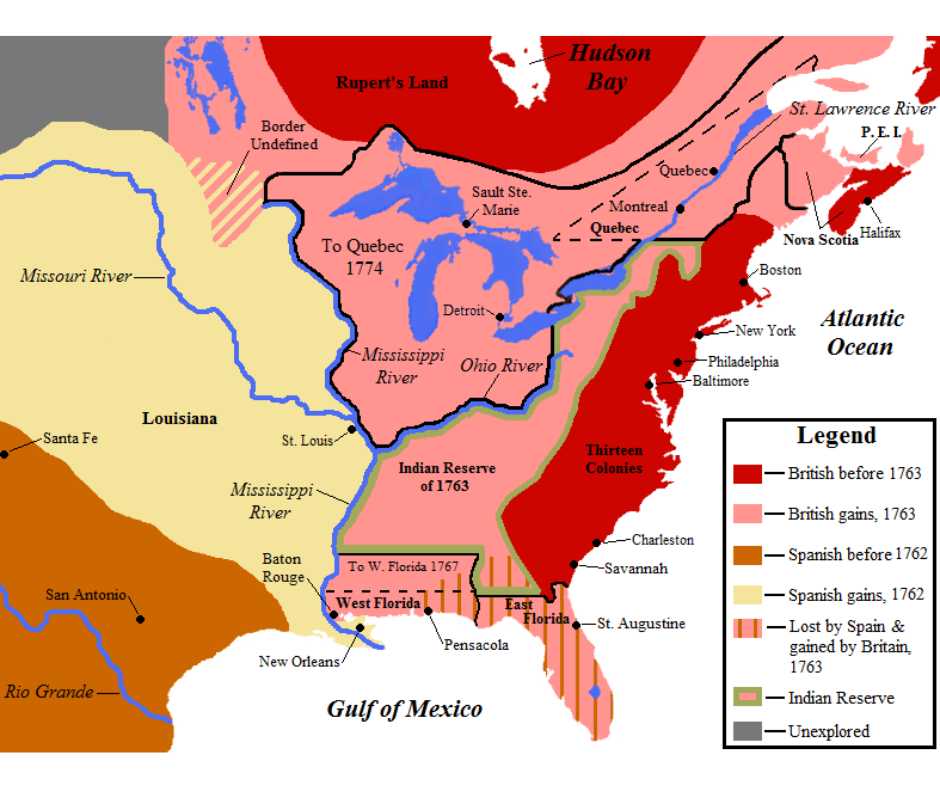
The Treaty of Paris in 1763, ending the Seven Years’ War, marked the zenith of British power in North America. France ceded Canada and its claims east of the Mississippi. Spain surrendered Florida. Britain stood supreme, master of the Atlantic seaboard and beyond.

Yet this very success contained the seeds of imperial crisis. The war had been expensive, and Britain expected its prosperous colonies to help pay the costs. The colonists, having helped win the war and no longer facing French threats, increasingly questioned why they needed British rule at all. The very demographic and economic dynamism that had made the British colonies strong now made them confident and restive.

Britain had won the race for North America, but in doing so, it had created colonies powerful enough to imagine independence. The path to revolution would emerge not from weakness, but from strength – the ultimate irony of imperial triumph.


A Note on This Series

This journey through Revolutionary history is as much about the evolution of historical understanding as the Revolution itself. History isn’t static – each generation reinterprets the past through its own concerns, asking different questions and prioritizing different sources. By reading these books in dialogue across 250 years, we’ll witness how scholarship evolves, how narratives get challenged, and how forgotten stories resurface.

This isn’t about declaring one interpretation “right” and another “wrong,” but appreciating the richness that emerges when multiple perspectives illuminate the same transformative moment. These books won’t provide definitive answers – history rarely does – but they equip us to think more clearly about how real people facing genuine uncertainty chose independence, how ideas had consequences, and how the work of creating a more perfect union continues. As we mark this anniversary, we honor the Revolutionary generation by reading deeplythinking critically, and engaging seriously with both the brilliance and blind spots of what they created.


Color map by Jon Platek

You can find the entire series listing here.

Reimagining a Continent’s Contested Past


January and February – Seeds of Rebellion Part One

Until the 1960s, American colonial history focused narrowly on English-speaking men along the Atlantic seaboard, portraying a triumphalist narrative of “American exceptionalism.” This conventional story treated women as passive, Indians as primitive obstacles, and African slaves as unfortunate aberrations in an otherwise uplifting tale of expanding English freedom and prosperity. Spanish, French, Dutch, and Russian colonies were dismissed as hostile, irrelevant backdrops to the English settlements that supposedly spawned the United States. 

This narrative placed “American” history as beginning in 1607 at Jamestown, spreading slowly westward to the Appalachians, and ignoring lands like Alaska and Hawaii until much later. While this simplification contains partial truths – many English colonists did achieve greater land ownership, prosperity, and social mobility than possible in hierarchical, impoverished England – it excludes the complex realities of women, enslaved Africans, Native peoples, and rival empires that shaped the colonial experience. This appealing but incomplete narrative persists in popular culture despite historians’ efforts to present a more comprehensive, diverse account of early America.

In an era when Americans fiercely debate whose stories belong in history textbooks, Alan Taylor’s American Colonies: The Settling of North America offers a sobering reminder: the fight over who controls the narrative is nothing new. For three centuries before the Revolution, indigenous nations, European empires, and African peoples struggled not just for land and resources, but for the power to define what “America” would become. 

In his precise and detailed opening chapter, Taylor provides a great deal of highly speculative information concerning the existing Native populations of the Americas. Long thought of as unchanging, new discoveries through archeology and anthropology have shown that the Native American cultures had a long and complicated history in the centuries before 1492.

Taylor opens his account of Spanish colonization with the Aztec capital of Tenochtitlan in 1519, a city of perhaps 200,000 people – larger than any European city save Constantinople – about to be shattered by Spanish invasion. This image of a sophisticated civilization on the brink captures the book’s central insight: American history is a story of multiple advanced societies colliding, not civilization bringing light to wilderness.

The Historian Behind the Synthesis

Alan Taylor, a two-time Pulitzer Prize winner and specialist in early American history, published this volume in 2001 as part of the Penguin History of the United States series. His perspective matters because he belongs to a generation of historians who fundamentally reconceptualized colonial America. Where earlier scholars focused narrowly on the thirteen English colonies that became the United States, Taylor takes a continental approach, examining Spanish, French, Dutch, Russian, and Swedish colonies alongside English settlements. Trained in social history and influenced by Native American studies, environmental history, and Atlantic World scholarship, Taylor writes from a position that refuses to see American history as exceptional or inevitable. His work reflects decades of scholarly effort to decenter triumphalist narratives and take seriously the perspectives of colonialism’s victims and participants alike.

The Core Argument: Contingency Over Destiny

Taylor’s central interpretation dismantles the notion that North America was destined to become an English-speaking, Protestant nation devoted to liberty. Instead, he argues that colonial outcomes remained genuinely uncertain for centuries, shaped by disease, environmental factors, indigenous resistance, and the particular economic and religious motivations of different colonizers. “The varied peoples of early America had radically different goals, which they pursued with mixed results over three centuries of conflict and negotiation,” Taylor writes, emphasizing that what we call American history represents merely one possible outcome among many that seemed equally plausible at various moments.

The book challenges readers to recognize that indigenous peoples weren’t simply reacting to European arrival but were “making their own history” by forming strategic alliances, adapting to new technologies, and leveraging European rivalries to their advantage. Taylor insists that we cannot understand colonial America without recognizing Native Americans as central actors whose choices profoundly shaped events. Similarly, he argues that African slaves, despite their bondage, “became essential actors in the creation of colonial societies,” maintaining cultural practices and exercising whatever agency circumstances allowed.

The Author’s Voice: Complexity Without Judgment

Taylor’s prose combines scholarly precision with narrative power. Describing the Spanish conquest, he notes that while Cortés commanded only a few hundred men, “he benefited from invisible, unintended, and unanticipated allies: the microbes that carried epidemic diseases.” This formulation captures Taylor’s insistence on multi causal explanations that include biological and environmental factors alongside human agency.

His treatment of English colonization avoids both celebration and condemnation. Of Virginia, he writes: “The English came to Virginia as violent intruders intent on subordinating, displacing, or destroying the Indians who claimed the land.” Yet he also notes that “most colonists were themselves desperate people, escaping poverty and seeking opportunities denied them in England.” This even-handedness characterizes the entire book, as Taylor seeks to understand rather than judge, to complicate rather than simplify.

Perhaps most memorably, Taylor describes the Columbian Exchange as creating “a new world – indeed, new worlds – compounded from the unintended mixing of plants, animals, microbes, and peoples on an unprecedented scale.” This image of unintended consequences and biological transformation running ahead of human intentions recurs throughout the narrative.

Dialogue with the Field

Taylor’s work builds upon and synthesizes several historiographical traditions. He shares with Alfred Crosby’s “Ecological Imperialism” an emphasis on disease and environmental transformation as historical forces. His continental perspective echoes Herbert Bolton’s early twentieth-century call for a “borderlands” approach, though Taylor is far more critical of Spanish colonialism than Bolton.

Where traditional histories like Samuel Eliot Morison’s celebrated Puritan New England as the seedbed of American democracy, Taylor presents the Puritans as religious extremists whose “intolerance exceeded that of the English establishment they had fled.” His interpretation aligns with more recent scholars like Jill Lepore and James Brooks, who have emphasized colonial violence and indigenous perspectives.

Taylor also engages implicitly with the “Chesapeake School” of historians like Edmund Morgan and Kathleen Brown, who revealed how Virginia’s tobacco economy and racial slavery developed together. However, he places these regional stories within a broader hemispheric context, showing how Caribbean sugar colonies pioneered the brutal plantation system that mainland colonies would later adopt.

What We’ve Learned Since 2001

The two decades since publication have deepened rather than overturned Taylor’s interpretations. DNA evidence has confirmed the devastating scale of disease mortality among indigenous peoples, with some studies suggesting population declines of 90 percent or more – even worse than Taylor estimated. Archaeological work has continued revealing the sophistication of pre-Columbian societies, from Cahokia’s urban complexity to Amazonian landscape engineering.

Recent scholarship has further emphasized indigenous agency and survival. Books like Pekka Hämäläinen’s The Comanche Empire and Kathleen DuVal’s The Native Ground have shown powerful Native American polities dominating regions well into the nineteenth century, extending Taylor’s argument about indigenous power. Meanwhile, historians of slavery like Stephanie Smallwood and Vincent Brown have illuminated enslaved Africans’ cultural resilience and resistance in ways that complement Taylor’s brief treatment.

Climate history has also advanced, with research showing how the Little Ice Age affected colonial outcomes and how indigenous land management practices had shaped the “wilderness” Europeans thought they discovered. These developments enrich rather than challenge Taylor’s framework.

Why Read This in 2026?

In our current moment of contentious debates about how to teach American history, Taylor’s book offers invaluable perspective. It demonstrates that taking seriously the histories of indigenous peoples and enslaved Africans doesn’t diminish American history – it makes that history richer, more accurate, and more interesting. The book shows that the colonial past was genuinely multicultural, not through modern celebration but through conquest, coercion, and negotiation.

For readers seeking to understand how racial inequality became embedded in American society, Taylor traces slavery’s development with clarity and moral seriousness. For those curious about why the United States exists as an English-speaking nation when Spanish colonizers arrived first and French settlers often had better relations with Native Americans, Taylor explains the demographic, economic, and military factors that determined outcomes.

Most fundamentally, American Colonies teaches readers to think continentally and hemispherically, to see American history as connected to global processes rather than exceptional and isolated. In an increasingly interconnected world, this perspective seems more relevant than ever. Taylor’s work reminds us that the land we call America has always been contested ground where different peoples pursued competing visions of the future – and that understanding this contested past is essential for navigating our contested present.


A Note on This Series

This journey through Revolutionary history is as much about the evolution of historical understanding as the Revolution itself. History isn’t static – each generation reinterprets the past through its own concerns, asking different questions and prioritizing different sources. By reading these books in dialogue across 250 years, we’ll witness how scholarship evolves, how narratives get challenged, and how forgotten stories resurface.

This isn’t about declaring one interpretation “right” and another “wrong,” but appreciating the richness that emerges when multiple perspectives illuminate the same transformative moment. These books won’t provide definitive answers – history rarely does – but they equip us to think more clearly about how real people facing genuine uncertainty chose independence, how ideas had consequences, and how the work of creating a more perfect union continues. As we mark this anniversary, we honor the Revolutionary generation by reading deeply, thinking critically, and engaging seriously with both the brilliance and blind spots of what they created.

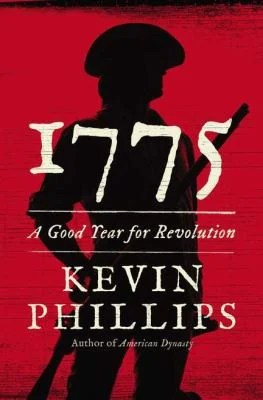
You can find the entire series listing here.

Before the First Shot, There Was the First Sentence


Why the American Revolution Was Written Before It Was Fought

Scroll. Refresh. Skim. In our world, information arrives instantly and in overwhelming volume. News breaks in seconds, arguments metastasize in minutes, and public opinion can shift before lunch. We live inside an always-on torrent of words, images, and reactions – so fast that reflection often lags behind reaction.

Now imagine the opposite.

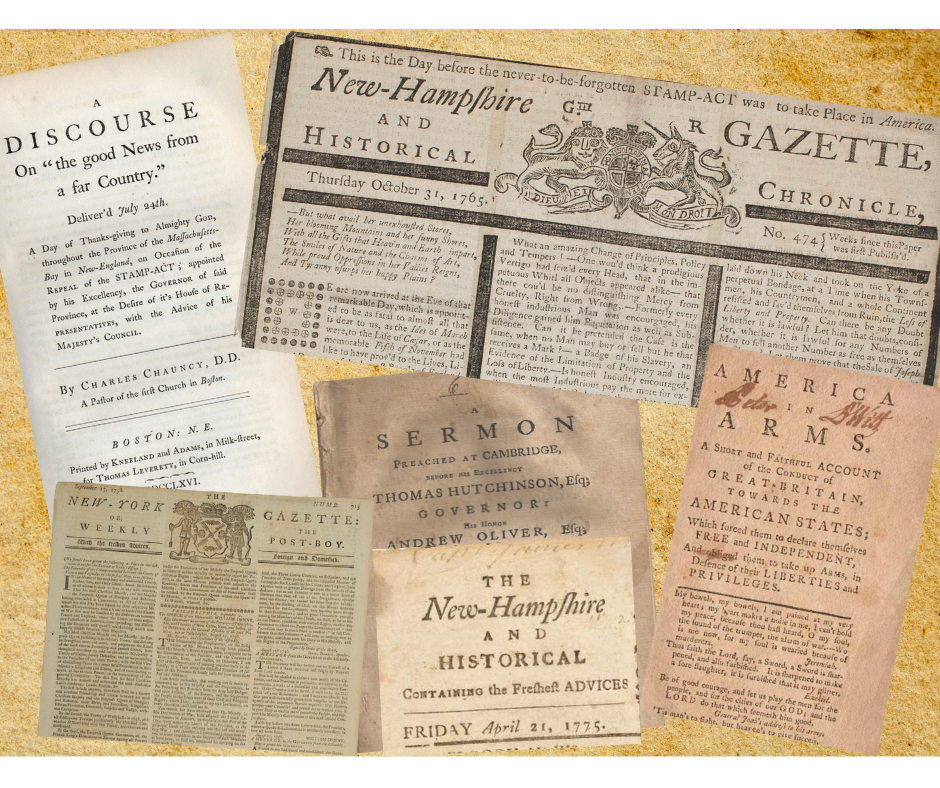
Imagine waiting weeks for a newspaper. Imagine arguments unfolding over months. Imagine political ideas traveling by horseback, ship, or memory. Imagine reading the same pamphlet aloud to neighbors because it might be the only new text your community sees for weeks. In the years leading up to the American Revolution, information moved slowly – but when it arrived, it mattered profoundly.

As we approach the 250th anniversary of the Declaration of Independence and the Revolution that followed, it’s tempting to focus on the drama of muskets and marches, of midnight rides and battlefield heroics. Those moments deserve attention. But they came late in the story. Long before the first shot was fired, the Revolution was already underway – through sermons, in ink, on paper, through the written word.

This year-long series will explore the American Revolution as a reading event before it became a fighting one. It’s important to reference the books, pamphlets, sermons, letters, and newspapers that didn’t merely comment on the Revolution but made it possible. To understand how thirteen disparate colonies became a people capable of declaring independence, we must first understand how they learned to read, argue, and imagine together.


A Culture Prepared for Words

By the mid-18th century, British North America possessed a surprising advantage: a population unusually comfortable with texts. Literacy rates – especially among white men, and to a notable extent among women in New England – were high by European standards. But this wasn’t literacy for convenience alone. Colonists didn’t just read to conduct business; they read to make meaning.

This habit had deep roots in Protestant culture. Sermons were long and intellectually demanding. Congregants were expected to follow complex theological arguments, grounded in careful textual interpretation. Disagreement wasn’t a flaw in the system – it was a feature. Competing interpretations of scripture trained people to weigh evidence, assess authority, and argue their case using words.

Long before colonists debated Parliament, they had debated doctrine. They had learned that texts mattered, that interpretation mattered, and that authority could be questioned on paper. When political conflict with Britain intensified after 1763, the colonies already possessed a population capable of sustained written argument. The Revolution did not have to invent this capacity; it inherited it.

Pamphlets: The Engine of Revolutionary Thought

If there was a dominant medium of revolutionary persuasion, it was the pamphlet. Cheap to print, easy to distribute, and brief enough to be read in a single sitting, pamphlets functioned as the social media of their day – though slower, denser, and far more deliberate.

Pamphlets could be passed hand to hand, read aloud in taverns, or discussed in homes and meetinghouses. A single copy could reach dozens. Writers often used pseudonyms, which encouraged boldness and protected reputations. The result was an explosion of argument.

The Stamp Act crisis of 1765 unleashed a wave of pamphlets asserting that Parliament had violated colonial rights. These texts did something crucial: they framed resistance not as rebellion, but as fidelity – to law, to history, to inherited rights. The argument was not “we reject authority,” but “you have misunderstood it.”

Over time, pamphlets standardized the language of resistance. Words like “liberty,” “tyranny,” and “rights” acquired shared meaning across colonies that otherwise differed dramatically in economy, religion, and culture. The Revolution began to sound the same everywhere because people were reading the same arguments.

That shared vocabulary mattered more than we often realize. You cannot coordinate a movement if people lack common terms for their grievances. Pamphlets supplied the grammar of revolt.

When Independence Became Readable

No single text illustrates the power of the written word better than Thomas Paine’s Common Sense. Published in January 1776, it did not introduce radically new ideas. What it did was far more important: it made independence understandable.

Paine stripped away legal jargon and elite restraint. He wrote plainly, emotionally, and morally. He asked readers to imagine a future not tethered to monarchy. He treated independence not as a technical problem but as common sense.

The impact was electric. Tens of thousands of copies circulated in a population of roughly two and a half million. More importantly, it shifted the terms of debate. After Common Sense, the question was no longer whether independence was unthinkable, but whether it was unavoidable.

This is a recurring theme we will return to throughout this series: revolutions require not just anger or injustice, but imagination. Before Americans could fight for independence, they had to read their way into believing it was possible.

Newspapers and the Birth of a Shared Story

Pamphlets sparked arguments, but newspapers sustained them. Colonial newspapers reprinted essays, letters, speeches, and resolutions from other colonies, creating a shared political timeline. Events in Boston were read about in Charleston. Decisions in London were debated in Philadelphia.

This slow but steady flow of information had an unexpected benefit. Arguments unfolded over weeks and months, allowing readers time to absorb, discuss, and respond. Political persuasion was cumulative rather than explosive.

Writers often adopted classical pseudonyms – Brutus, Cato, Publius – signaling that this conflict belonged to a larger historical tradition. Readers were invited to see themselves not as isolated subjects but as participants in a drama that stretched back to Rome and beyond.

The colonies were not just informed by newspapers; they were formed by them.

Writing as Organization, Not Just Opinion

Words did more than persuade. They organized.

Letters between merchants, ministers, and political leaders coordinated boycotts and protests. Committees of Correspondence formalized writing as a tool of governance, linking towns and colonies long before any central authority existed.

Trust traveled on paper. So did strategy. Long before independence was declared, Americans were already practicing self-government through correspondence. Writing became the connective tissue of resistance.

This is an often-overlooked point: the Revolution did not spring fully formed in 1776. It was rehearsed for years in letters, resolutions, and shared texts. Americans learned how to govern themselves by writing to one another.

A Revolution Argued from Texts

Perhaps the most striking feature of the American Revolution is how insistently textual it was. Colonists grounded their resistance in written authorities: Magna Carta, English common law, colonial charters. Their case was not emotional alone; it was documentary.

Parliament responded with statutes. Colonists responded with interpretations. What ultimately broke was not communication, but agreement on what the texts meant. When shared interpretation failed, violence followed.

Even the Declaration of Independence reflects this mindset. It is not a manifesto shouted to the crowd, but an argument addressed to “a candid world.” It assumes readers. It assumes judgment. It seeks legitimacy through persuasion.

Why This Matters Now

As we approach the 250th anniversary of the founding of the United States of America, revisiting the Revolution through its reading life offers a timely corrective. It reminds us that the nation was not born from impulse, but from prolonged argument. That independence was not seized in a moment, but constructed over years of writing, reading, and debate.

This series will follow that paper trail as historians and biographers examine the texts that shaped revolutionary thought, the ideas they carried, and the habits of mind they formed. Not to romanticize the past, but to better understand it.

In an age of instant information, the Revolution invites us to remember a different tempo of change – one where ideas traveled slowly, but took root deeply. Before there was a nation, there was a conversation. And before there was a battle, there was a sentence.

The United States, in many ways, was written into existence.

As we embark on this exploration of how words shaped revolution, it’s worth anchoring ourselves in the broader journey of reflection unfolding in 2026. 

In What Does 1776 Mean in 2026? A Year of Revolutionary Reading, I invited readers to mark the semiquincentennial not simply with celebration, but with deep engagement in the very texts that have shaped our understanding of independence over the past 250 years. This series positions 1776 as more than a date – it’s a lens through which we can examine the ideas, individuals, and interpretations that have animated American history from the Bicentennial to today. My focus on the written word about the Revolution challenges us to slow down and read the past with care, recognizing that the arguments, debates, and narratives we inherit matter as much as the events they describe.


What’s up the rest of the month: We begin with the world the revolutionaries inherited, exploring Alan Taylor’s American Colonies and Bernard Bailyn’s Ideological Origins of the American Revolution – establishing the essential foundations for understanding how British subjects became American rebels.

images created with Gemini

You can find the entire series listing here.

What Does 1776 Mean in 2026? A Year of Revolutionary Reading

My love of American history began not in a classroom, but at home with a schoolteacher mother and a father who loved to read. My father passed along that love of reading to me. Those early lessons took on special meaning when I graduated from high school in 1976, surrounded by the red, white, and blue pageantry of America’s Bicentennial celebration. 

That summer of tall ships and fireworks, of patriotic fervor and historical reflection, and even marching in Disney World’s “America on Parade” planted something deep within me – a conviction that understanding our past is essential to navigating our present and future

Now 50 years later, as we approach America’s 250th anniversary in 2026, I find myself reflecting once again on the remarkable journey of this imperfect yet extraordinary experiment in self-governance. 

This series is my attempt to honor both my parent’s gift and that pivotal Bicentennial year by exploring the moments, movements, and individuals that created the unique country we call the United States of America.


On July 4, 2026, the United States will mark 250 years since fifty-six men affixed their signatures to a document that changed the world. The Declaration of Independence – just 1,320 words in its final form – proclaimed not merely a separation from Britain but articulated principles that would echo through centuries: that all men are created equal, that governments derive their power from the consent of the governed, that people have the right to alter or abolish systems that deny their fundamental freedoms.

But those fifty-six signatures didn’t appear out of nowhere. The Declaration was the culmination of more than a decade of escalating tensions, philosophical debates, violent confrontations, and painful deliberations. It emerged from smoky taverns and elegant parlors, from passionate pamphlets and private letters, from town meetings and colonial assemblies. It was shaped by brilliant minds and ordinary citizens, by idealists and pragmatists, by those who saw its promises and those whom it excluded.

As we approach this momentous anniversary, I want to embark on a year-long exploration of the books that help us understand not just what happened in 1776, but why it happened, who made it happen, and what it has meant across two and a half centuries. This is a journey through the written word about the written word – an examination of how historians, biographers, and interpreters have wrestled with the meaning of American independence.

Why Books? Why Now?

The Revolutionary period is perhaps the most written-about era in American history, and that abundance presents both opportunity and challenge. 

  • Where does one begin? 
  • Which voices matter most? 
  • How do we move beyond the mythology to understand the messy, complicated, human reality of revolution?

Books give us something that isolated facts cannot: context, interpretation, argument, and narrative. A great book about 1776 doesn’t just tell us what happened – it helps us understand the forces that shaped events, the ideas that animated the actors, and the consequences that rippled forward through time. The best books argue with each other, challenge conventional wisdom, recover forgotten voices, and force us to reconsider what we thought we knew.

Over the coming year, I want to invite you to read your way through the Revolution, examining at least a dozen essential works that illuminate different facets of this transformative period. We’ll encounter military campaigns and diplomatic negotiations, philosophical treatises and personal correspondence, grand declarations and intimate doubts. We’ll see the Revolution through the eyes of its famous architects – Adams, Jefferson, Franklin – and through the perspectives often marginalized in traditional histories: women, enslaved people, Native Americans, and ordinary colonists whose names we’ll never know but whose participation made independence possible.

The Books That Await Us

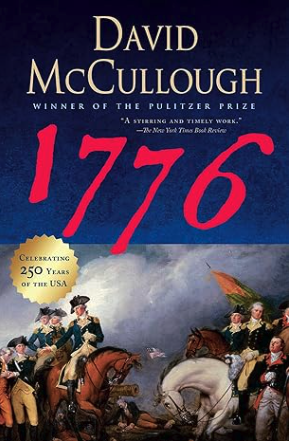
The reading list spans generations of scholarship, from Bernard Bailyn’s revolutionary (in both senses) analysis of colonial ideology to Gary Nash’s recovery of the “unknown” American Revolution. We’ll immerse ourselves in David McCullough’s intimate portraits of the founding generation, experiencing their fears and ambitions as if we’re reading over their shoulders. We’ll grapple with Gordon Wood’s interpretations of just how radical this revolution really was, and we’ll examine the Declaration itself through David Armitage’s global lens, understanding how this American document became a template for independence movements worldwide.

Some of these books will transport us to specific moments – the sweltering Philadelphia summer when delegates debated each phrase of the Declaration, the frozen desperation of Washington’s army in the winter of 1776, the coffeehouse conversations where ideas about natural rights and popular sovereignty crackled through the air. Others will challenge us to think more deeply about contradictions and complexities: 

  • How could men who proclaimed all men equal hold other human beings in bondage? 
  • How could colonists who resented British taxation deny representation to half their population?
  • What did independence mean to those who didn’t sign the Declaration, who couldn’t sign it, who actively opposed it?

A Conversation Across Centuries

What makes this journey particularly fascinating is that we’re not just reading about the Revolution – we’re reading about how people have understood the Revolution across 250 years. History isn’t static; each generation interprets the past through its own concerns and values. The historians writing in the 1960s asked different questions than those writing today. The documents that seemed important in 1826 differ from those scholars prioritize in 2026.

By reading these books in dialogue with each other, we’ll see how historical understanding evolves. We’ll watch as newer scholarship challenges older narratives, as primary sources get reinterpreted, as forgotten stories get recovered. Bernard Bailyn opened new ways of understanding colonial ideology in the 1960s; Gary Nash, writing decades later, insisted we expand our frame to include those Bailyn’s sources largely ignored. This isn’t about one being “right” and another “wrong” – it’s about the richness that emerges when multiple perspectives illuminate the same transformative moment.

The Path Forward

Beginning this month, we’ll follow a roughly chronological path through the Revolutionary period, though we’ll make deliberate detours along the way. We’ll start with the deep background – the colonial world that made revolution thinkable – before moving through the escalating crisis of the 1760s and 1770s. We’ll live through the pivotal year of 1776 month by month, watching as rebellion became revolution and revolution became a declaration of independence.

Then, as summer turns to fall, we’ll step back and ask harder questions.

  • Whose revolution was this, really?
  • What about the people whose stories don’t appear in the Declaration, whose freedom wasn’t proclaimed on July 4, 1776?
  • How have historians with different methods, different politics, different moral concerns made sense of this complicated legacy?

Each month, the focus will be on at least one or two books, exploring not just their arguments but their artistry – the way great historical writing makes the past come alive, the way a well-chosen anecdote can illuminate broad themes, the way primary sources in the hands of skilled interpreters can still surprise us centuries later. I plan to include key quotes from these works, letting you hear the distinctive voices of different authors, the varied ways historians craft their narratives.

I always want to connect past to present. The questions the founders grappled with – about power and liberty, unity and diversity, ideals and interests – remain our questions. The contradictions they failed to resolve – most devastatingly around slavery – shaped American history for centuries and resonate still. Understanding 1776 means understanding ourselves.

Why This Matters in 2026

A 250th anniversary is more than nostalgia or celebration. It’s an opportunity for national reflection and, perhaps, reckoning. 

  • What has the Declaration’s promise of equality meant across two and a half centuries? 
  • How much of that promise has been fulfilled? 
  • How much remains aspirational? What do we owe to the founders’ courage and vision? 
  • What do we owe to those they excluded, oppressed, or ignored?

The books we’ll read don’t answer these questions definitively – history rarely does. But they give us the tools to think more clearly, to argue more precisely, to understand more fully. They remind us that the Revolution wasn’t inevitable, that independence was chosen by real people facing genuine uncertainty, that ideas have consequences, and that the work of creating a more perfect union didn’t end in 1776 or 1789 or at any point since.

As we prepare to mark this anniversary, there’s no better way to honor the Revolutionary generation than by reading deeply, thinking critically, and engaging seriously with what they created – both its brilliance and its blind spots. The Declaration of Independence changed the world, but understanding how and why requires more than reciting its famous phrases. It requires the kind of sustained attention that only books can provide.

Join the Journey

Over the coming months, I hope these articles will arrive like letters from another time – invitations to walk alongside historians as they piece together the past, to sit with biographers as they bring individuals back to life, to witness through primary sources the anxieties and exhilarations of a world being remade.

Whether you’re a devoted student of American history or someone who vaguely remembers learning about 1776 in school, whether you’ve read everything about the Revolution or nothing at all, this series will meet you where you are. Each article will stand alone, but together they’ll form a mosaic – a complex, nuanced portrait of how the United States came to declare its independence and what that declaration has meant.

The road to independence was long, uncertain, and traveled by countless people whose commitment to an idea transformed thirteen colonies into a new nation. The road to understanding independence is equally long, equally rich with discovery. 


Next week: Before the First Shot, There Was the First Sentence: Why the American Revolution Was Written Before It Was Fought


You can find the entire series listing here.