🏰✨ 70 Years of Magic Today! ✨🏰

On July 17, 1955, Walt Disney opened the gates to something the world had never seen before. Walt’s vision transformed 160 acres of orange groves into a place where dreams literally came to life.

From that chaotic but magical opening day to today’s technological marvels, Disneyland has welcomed over 800 million guests. Here’s to 70 years of believing that dreams really do come true!

70 years ago today, Walt Disney proved that theme parks could be more than just rides and games.

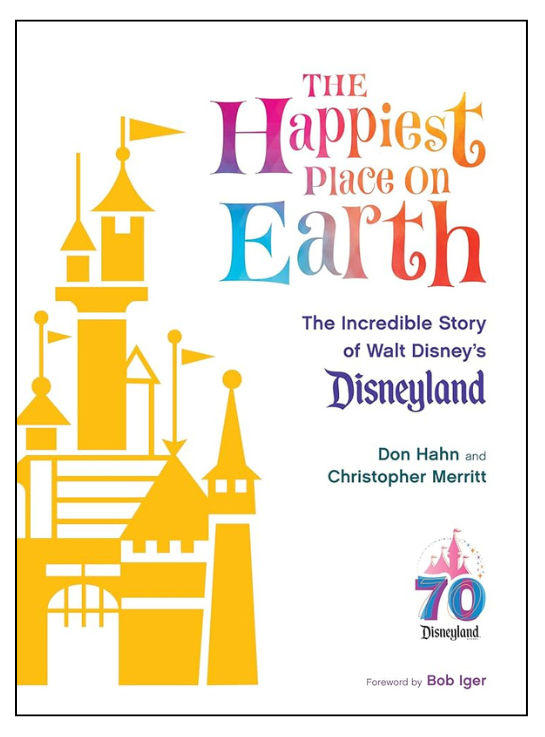
From the original 22 attractions in 1955 to today’s cutting-edge experiences, Disneyland has never stopped evolving. The Happiest Place on Earth by Don Hahn and Christopher Merritt documents this incredible journey – from the addition of New Orleans Square to the technological wizardry of Galaxy’s Edge.

Hahn and Merritt’s research in The Happiest Place on Earth reveals how Walt envisioned a place where families could experience stories together, where every detail mattered, and where imagination had no limits.

What started as Walt’s “little park” in Southern California became a worldwide cultural phenomenon. The Happiest Place on Earth traces how Disneyland’s influence extended far beyond its gates, inspiring theme parks globally and changing how we think about entertainment, storytelling, and family experiences.

Each generation has added their own magic while preserving Walt’s original spirit. Disneyland remains the gold standard for immersive entertainment. Walt’s original park continues to be the creative heart of the Disney magic we know and love.

As we celebrate 70 incredible years, we’re reminded that Disneyland was always meant to be a living, breathing creation. Walt famously said his park would never be completed as long as there was imagination left in the world.

Here’s to the next 70 years of magic, innovation, and dreams coming true at The Happiest Place on Earth!


Photos ©Disney

Building Modern Elder Competencies Through Career Transformation

In a world that often values youth over experience, the concept of a Modern Elder offers a refreshing perspective on the value of wisdom accumulated over decades of professional life. My own 44-year employment journey has been a testament to how careers evolve, skills compound, and wisdom grows – not in spite of transitions, but because of them.

The Power of Transition

Transitions have defined my professional life, serving as inflection points that transformed challenges into growth opportunities. As I wrote in this post Final Approach: Reframing Life’s Unexpected Transitions, transitions aren’t merely endings but gateways to new beginnings. Each career pivot I’ve experienced – from media ministry to education, from construction to clarity consulting – required not just adaptation but transformation.

My journey began at Highview Baptist in Louisville (1981-1986) as Minister of Media, where I expanded audiovisual and communications departments in multiple areas including creating daily children’s educational shows and critical input into the launching of the ACTS satellite network. What seemed like a specialized role evolved as I embraced technological change, researching and implementing large church computer networks in 1983 – long before most churches considered digital infrastructure essential. This early willingness to evolve foreshadowed what would become a hallmark of the Modern Elder mindset: digital fluency coupled with perspective shifting.

The transitions continued through my tenure at Prays Mill Baptist in Georgia (1987-1994) and First Baptist Huntersville (1995-2004), where my responsibilities consistently expanded beyond initial job descriptions. Each transition within these roles – from education minister to administrative leader, from creating a volunteer development process to long-range planning – required the resilience and growth mindset now recognized as core competencies of Modern Elders.

Perhaps the most significant transition came in 2004 when I joined J.H. Batten Design Builders as Sales Development Director. This leap from ministry to commercial construction specializing in churches demanded courage and adaptability. Rather than seeing my prior experience as unrelated, I leveraged my organizational and people skills to create new business models, including a consultant sales approach and an industry certification process that expanded the company’s reach and influence.

As I wrote in The Last Click: Erasing Calendar Blocks, Embracing Possibilities, transitions require us to erase old expectations and embrace new possibilities. This perspective served me well when joining Auxano/Lifeway in 2012, where I brought the dream of an online information platform known as the Vision Room into reality. In addition, a long-held passion for Guest Experiences led to the creation of Guest Experience Boot Camps that trained over 500 church leaders from 126 churches in a four-year period.

The Modern Elder Concept

Since 2022, I have been deep diving into the concepts of a Modern Elder. Along the way, through conversations, connections, and observations, I have developed a framework for the basics of what makes a Modern Elder. The 12 Core Competencies of a Modern Elder represent a structure that resonates deeply with my experience. Unlike traditional models of retirement that suggest fading relevance, the Modern Elder concept celebrates the unique value that experienced professionals bring to organizations when they combine accumulated wisdom with continued growth.

Looking back, I recognize how these competencies manifested throughout my career:

Wisdom Intelligence developed as I synthesized experiences across different organizational contexts, allowing me to see patterns and solutions others might miss. This was particularly evident in my work creating clarity resources at Auxano that distilled complex organizational principles into actionable guidance.

Intergenerational Collaboration became essential as workplaces diversified. From being the youngest staff member in 1981 to working with younger colleagues and clients at Auxano beginning in 2012 required me to appreciate different communication styles while offering the perspective that only experience provides.

The early adoption of computer networks and complete ministry software in 1983 and later development of digital engagement systems in 2014 demonstrated Digital Fluency that many of my contemporaries lacked. Rather than resisting technological change, I embraced it as a tool for expanded impact.

The various leadership positions I’ve held – from educational ministry to sales development – sharpened my Emotional Intelligence as I navigated complex relationships and organizational dynamics. This same emotional awareness informed my approaches to guest experience training, where empathy serves as the foundation.

One particular competency – a Growth Mindset – has been developed over my entire life, but was highlighted for a period of over 8 years: the creation, launch, and almost daily work in a book excerpt/application project called SUMS Remix. With 227 bi-weekly issues, referencing 574 books, it was an integral part of my work, demonstrated an openness to learning, evolving, and challenging existing assumptions for leaders.

Perhaps most critical to my longevity has been Legacy Thinking. As I wrote in Growing Whole, Not Old: Moving from Traditional Retirement to Maximum Influence, the goal isn’t simply adding years but expanding influence through continuous learning and evolution.

A Personal Employment Journey

My career path defies linear description. Instead, it represents a series of expanding concentric circles, each building upon previous experience while venturing into new territory. From managing audiovisual departments to leading building campaigns, from developing volunteer programs to creating national certification processes, each role added new capabilities while drawing on established strengths.

The transition to Auxano/Lifeway in 2012 represented not just a new job but an integration of all previous experience. Establishing visionroom.com as an online clarity resource drew on my media background. Creating guest experience assessment and training programs leveraged my educational ministry and building consultant experience. Leading digital engagement efforts built upon my early technology adoption.

What appears as separate chapters in my resume actually represents the ongoing development of additional, interrelated competencies: 

  • Mentorship Excellence through educational leadership 
  • Perspective Shifting through consultative approaches
  • Resilience through multiple organizational transitions
  • Storytelling through content creation
  • Cultural Stewardship through change management
  • Humility through consistently embracing new challenges

As I wrote in Closing the Circle: A Grateful Goodbye and a New Beginning, career transitions represent opportunities to close one circle while beginning another. The Modern Elder doesn’t simply accumulate experience but transforms it into wisdom that benefits organizations and individuals alike.

The Circle Continues

My journey illustrates that careers aren’t meant to follow straight lines but rather to trace meaningful patterns that create ever-expanding impact. The Modern Elder doesn’t seek retirement in the traditional sense but rather maximum influence – using accumulated wisdom to guide others while continuing to grow personally.

The 12 competencies didn’t develop sequentially but emerged organically through challenges embraced and transitions navigated successfully. Each role change – whether within organizations or between them – required leaving comfort zones and entering learning zones where these competencies could develop.

As I contemplate future transitions, I do so not with anxiety but with anticipation. The Modern Elder path isn’t about clinging to past accomplishments but about leveraging them to create future impact. It’s about growing whole, not just growing old – integrating experience, wisdom, and continuous learning into a compelling whole that benefits organizations precisely because it brings perspective that youth alone cannot provide.

In a world of constant disruption, the Modern Elder offers not just adaptation but transformation – turning transitions from endings into beginnings, challenges into growth opportunities, and experience into wisdom that benefits generations to come.


The Neighboring Church: Rediscovering the Heart of Christian Community

In The Neighboring Church: Getting Better at What Jesus Said Matters Most, authors Rick Rusaw and Brian Mavis challenge the contemporary church to shift its focus from attractional models to incarnational ministry, emphasizing the profound impact of simply loving our neighbors. Drawing from their experiences at LifeBridge Christian Church, they argue that the most effective way to embody the Great Commandment – to love God and love our neighbors as ourselves – is not through elaborate programs but through genuine, everyday engagement with those around us.

The book stems from a simple yet powerful realization: author Brian Mavis’s neighbors were uninterested in attending a traditional church service but were open to exploring faith in the context of their own relationships and homes. This experience illuminated a crucial insight: many people are longing for authentic connection and a tangible expression of God’s love in their daily lives, something that can often be missed within the walls of a church building.

Rusaw and Mavis contend that the church has inadvertently created a culture where members are primarily focused on internal activities and programs, leaving little margin for meaningful interaction with their immediate neighbors. They advocate for a “neighboring” movement, where Christians are equipped and encouraged to intentionally build relationships with the people who live, work, and socialize near them. This isn’t about turning every interaction into an evangelistic opportunity but rather about cultivating genuine care and concern for the well-being of those in our sphere of influence. It’s about making “neighbor” a verb.

The authors highlight that being a good neighbor transcends organized church initiatives. It’s about noticing needs, offering practical help, sharing life, and extending hospitality. They emphasize that this approach mirrors Jesus’s own ministry, which was deeply rooted in relational engagement within communities. By prioritizing neighboring, the church can become less of an institution people attend and more of a network of individuals actively embodying Christ’s love in their respective neighborhoods.

The Power of Home Hospitality

A cornerstone of the “neighboring” philosophy presented in the book is the practice of home hospitality. Opening our homes is portrayed not as an obligation but as a powerful tool for building bridges, fostering connection, and demonstrating the love of Christ in a tangible way. It moves beyond formal entertaining and focuses on creating welcoming spaces where authentic relationships can flourish.

Here are five key applications of home hospitality, as inspired by the principles in The Neighboring Church:

  1. Building Relational Bridges: Inviting neighbors into your home, whether for a meal, coffee, or just a casual visit, creates opportunities for deeper connection beyond surface-level interactions. It allows you to learn about their lives, families, joys, and struggles in a relaxed and personal setting. For instance, hosting a neighborhood barbecue can be a simple way to break the ice and foster a sense of community.
  2. Demonstrating Practical Care: Home hospitality can be a means of offering practical support. This could involve providing a meal for a neighbor who is sick, offering childcare for a single parent, or simply being a listening ear over a cup of tea. These acts of service, offered within the context of a welcoming home, can be incredibly impactful.
  3. Sharing Life and Faith Naturally: Opening your home provides a natural environment for sharing your life, including your faith, without pressure or formality. As relationships deepen, opportunities may arise to speak about what is important to you in a genuine and relatable way. For example, sharing a meal and conversation can organically lead to discussions about values and beliefs.
  4. Creating a Sense of Belonging: For those who may feel isolated or marginalized, being welcomed into a home can be a powerful experience of belonging. It communicates value and worth, demonstrating that they are seen and cared for. Inviting a new family in the neighborhood for dinner can help them feel more integrated into the community.
  5. Modeling Hospitality for Others: When we practice home hospitality, we model this behavior for our families and those around us. It teaches the importance of generosity, openness, and valuing relationships. Children who grow up in hospitable homes are more likely to extend hospitality to others.

Taking the Next Steps

Embracing the principles of The Neighboring Church and the practice of home hospitality is a journey, not a destination. Here are some practical next steps you can take:

  1. Know Your Neighbors: Start by intentionally getting to know the people who live closest to you. Learn their names, their interests, and some of their story. A simple conversation while getting the mail or tending your garden can be a starting point.
  2. Initiate Simple Interactions: Look for opportunities for small acts of kindness and connection. This could be offering help with yard work, bringing over baked goods, or simply stopping for a brief chat.
  3. Open Your Door: Consider simple ways to extend hospitality in your home. This doesn’t require a perfect house or elaborate meals. Start with inviting one or two neighbors over for coffee, tea, or a casual meal.
  4. Be Present and Listen: When you do open your home, focus on being present with your guests, listening attentively to their stories, and showing genuine interest in their lives.
  5. Be Consistent and Patient: Building authentic relationships takes time and consistency. Don’t be discouraged if initial efforts don’t yield immediate deep connections. Continue to be open and available to your neighbors.
  6. Encourage Your Church Community: Share the ideas from “The Neighboring Church” with your church leaders and fellow members. Explore ways your church can collectively encourage and equip people to be better neighbors. This could involve small group discussions, sharing stories of neighboring, or organizing neighborhood-focused service projects.

The Neighboring Church offers a compelling vision for a church that is deeply connected to its community, one relationship at a time. By prioritizing the simple yet profound act of loving our neighbors, expressed in practical ways like home hospitality, we can move beyond programs and truly embody the love of Christ in the world around us, transforming our neighborhoods and ourselves in the process.


“The Great Good Place”: A Cornerstone in Understanding Third Spaces

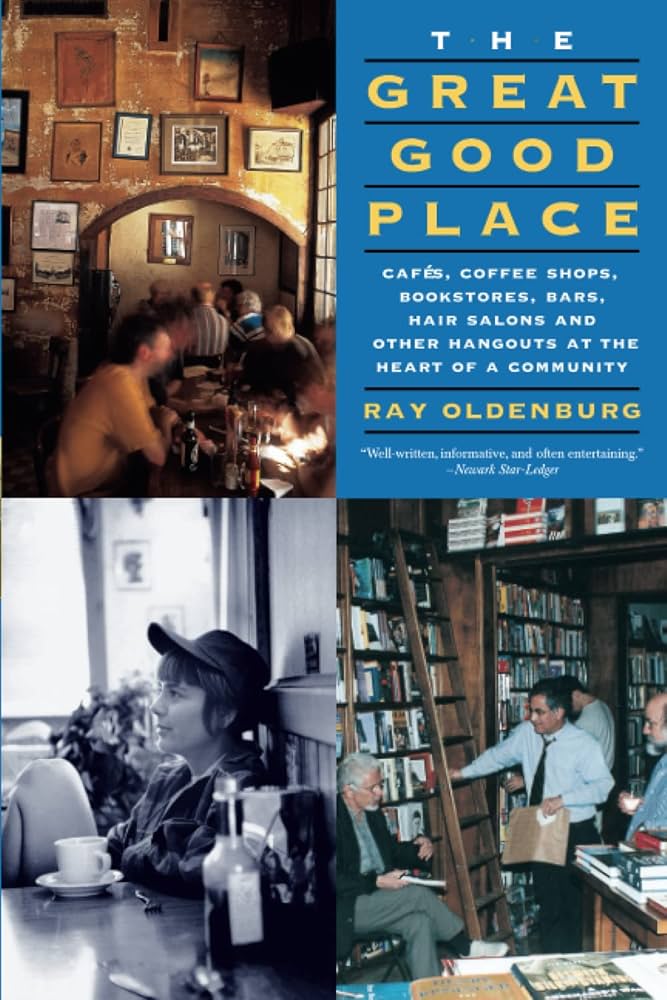
Embark on a journey that will change your perspective on community and individual well-being. In The Great Good PlaceRay Oldenburg gave the term “third places,” where people gather for the pleasure of good company and conversation, and explained just how important they are.

  • Discover the benefits of informal public and civic life and how it contributes to community health and individual well-being.
  • Explore how third places have been, and still are, vital to grassroots democracy.
  • Experience the power of third places and how they bring people together, fostering a sense of belonging and connection.
  • Allow this book to inspire you to create and revitalize your own third places, from coffee houses to community centers, and make a positive impact on your community.
  • Learn from real-life examples around the world, and see how third places have transformed and revitalized communities.
  • Gain a deeper understanding of the history and evolution of third places, from coffee houses to bookstores, and how they continue to play a vital role in our society.

Discover the power and potential of third places and how they can change your community and your life. Don’t miss out on this new edition of the original, groundbreaking The Great Good Place.


Ray Oldenburg’s The Great Good Place (1989) has had a profound influence on urban sociology and the study of social spaces. His work introduces the concept of the “third place,” referring to informal gathering places that are neither home (the first place) nor work (the second place). This idea has become crucial in understanding community dynamics, social interaction, and the structure of public life. Oldenburg’s book not only underscores the importance of these spaces in fostering a sense of community, but also highlights the negative consequences of their decline in contemporary society. This article will offer a brief summary of The Great Good Place, examine its impact on the concept of the third place, and discuss its lasting influence on urban planning, sociology, and community development.

Brief Summary of The Great Good Place

In The Great Good Place, Oldenburg argues that third places – such as cafes, bars, libraries, parks, and community centers – are essential for maintaining the social fabric of a community. These are places where people can meet informally, share experiences, and engage in discussions with others outside of their usual social circles. The essence of these spaces is that they are accessible, welcoming, and neutral, fostering a sense of inclusivity and belonging.

Oldenburg identifies several characteristics that define a third place:

1. Neutral Ground: Third places are not bound by the rules and formalities of home or work environments. People can come and go freely.

2. Leveling Spaces: Social hierarchies often dissipate in third places, allowing people from diverse backgrounds to interact on equal footing.

3. Conversation as the Main Activity: These spaces are conversation-centric, encouraging informal dialogue and exchanges.

4. Accessibility and Accommodation: Third places are easy to access, often with low or no cost, and open to all members of the community.

5. Regulars and Newcomers: While some people become regular patrons of third places, these spaces are also welcoming to newcomers, who can integrate into the social atmosphere.

6. Playfulness: Third places often have a relaxed, playful environment that contrasts with the seriousness of home or work life.

7. Home Away from Home: Many people develop a sense of comfort and belonging in third places, viewing them as extensions of their personal space.

Oldenburg’s analysis is a direct response to what he sees as the declining presence of third places in the United States, particularly in suburban areas where people are increasingly isolated in private homes and vehicles. He laments that modern urban planning and commercial interests have prioritized privatized, consumer-centric spaces over communal gathering points. The decline of such spaces, Oldenburg argues, contributes to a loss of community cohesion, weakening social bonds.

Impact on the Concept of the Third Place

Oldenburg’s work introduced the terminology of “third place” into the academic and popular lexicon, fundamentally reshaping how urban planners, sociologists, and community organizers think about public spaces. Before *The Great Good Place*, there was no widely accepted framework for understanding informal social gathering places as a distinct and critical part of human social life. Oldenburg synthesized a diverse range of examples, from European cafes to American bars, creating a theoretical framework that was broadly applicable across different cultures and contexts.

The concept of the third place has particular importance in understanding urban development and the social consequences of suburbanization. In the early 20th century, many cities around the world had thriving public spaces where people could gather and socialize informally. With the rise of suburban living and the growth of car-dependent societies, however, many of these spaces were either lost or commercialized, turning into malls or large chain establishments that lacked the organic, community-centered atmosphere of traditional third places. Oldenburg’s work illuminated this shift, highlighting how the decline of these spaces led to greater social isolation and a loss of community cohesion.

Characteristics and Evolution of Third Places

Oldenburg’s third places are dynamic spaces where conversation flows freely, hierarchies dissolve, and social interaction thrives. Historically, cafes in Europe, pubs in the UK, and diners in the US have all exemplified third places, where regular patrons and newcomers alike could engage in community life. Oldenburg’s book revitalized interest in these environments, but also called attention to their disappearance in the face of modernization and commercialization.

Not all third places are alike, however. While some may be primarily about fostering conversation, others serve as locations where cultural norms and behaviors can be challenged. For example, coffeehouses in 18th-century England were often sites of intellectual debate, while American taverns have historically been places of political organization and community activism.

In contemporary society, the proliferation of digital technologies and social media has created new potential third places online. However, these virtual spaces lack many of the characteristics Oldenburg celebrates, such as physical presence, unstructured interaction, and a sense of local community. While online spaces offer connection, the embodied experience of third places remains unique and irreplaceable, making their physical presence still vitally important in modern life.

Lasting Impact of The Great Good Place

Oldenburg’s The Great Good Place has had a lasting influence on several fields, including urban planning, sociology, community development, and even commercial architecture. Its impact is particularly notable in how it shifted the focus of urban planners and developers toward creating public spaces that encourage informal socialization. 

1. Urban Planning and Design

Urban planners and designers now pay greater attention to the importance of fostering third places in communities. The book has inspired the development of mixed-use neighborhoods that prioritize walkability, communal spaces, and local businesses over the isolated, car-dependent structures typical of suburban sprawl. Public parks, community centers, and local businesses have increasingly become focal points in city planning efforts to encourage vibrant social interactions and stronger community ties.

In more recent years, efforts to develop “complete streets” and walkable urban centers have directly responded to Oldenburg’s concerns about suburban isolation. Municipalities have begun designing public spaces that promote a sense of community, integrating plazas, green spaces, and pedestrian-friendly infrastructure into neighborhoods.

2. Sociology and Community Studies

Oldenburg’s analysis has broadened the scope of sociological studies concerning social capital, community interaction, and public spaces. Sociologists now regularly refer to third places when discussing how communities bond and form social ties. The book has become a foundational text in community studies, sparking research on how different types of third places contribute to social cohesion and collective identity.

3. Business and Commercial Spaces

The rise of “third places” as a business concept has been particularly impactful, with companies like Starbucks explicitly positioning themselves as third places. By offering comfortable seating, free Wi-Fi, and a welcoming atmosphere, many coffee shops, cafes, and bookstores have adopted the third-place model to attract customers seeking informal gathering spaces. While some argue that this commercialization dilutes the true essence of the third place, the integration of Oldenburg’s ideas into business strategy has nonetheless expanded the role of social spaces in contemporary life.

4. Community Development and Revitalization

Community organizers have also drawn from The Great Good Place to advocate for the revitalization of social spaces, particularly in underserved or marginalized communities. The creation of accessible, welcoming third places has become a priority in community development initiatives aimed at reducing social isolation and fostering neighborhood engagement. In this sense, Oldenburg’s ideas have had a direct impact on social policy, particularly concerning public health and community well-being.

People in a bookstore, cafe, and coffee shop setting

Ray Oldenburg’s The Great Good Place introduced a transformative concept that reshaped our understanding of informal gathering spaces. By emphasizing the importance of third places in fostering community ties and social capital, Oldenburg’s work challenged urban developers, sociologists, and community organizers to rethink how public spaces are structured and utilized. The lasting impact of The Great Good Place is evident in the renewed focus on creating vibrant, accessible, and inclusive spaces where people can come together, fostering a greater sense of community in an increasingly fragmented world.


Donut Nostalgia: A Journey from Childhood Treats to Adult Indulgences

From the moment we walk into a donut shop and smell the tantalizing aroma of the dough rising, then watching the process of ingredients becoming a finished product, and finally sinking our teeth into a soft, sugary donut, these sweet treats become an integral part of our lives, weaving themselves into the fabric of our memories.

As we journey through childhood, adolescence, and adulthood, donuts remain a constant companion, reminding us of life’s simple pleasures and the joy of sharing experiences with others.

For many of us, childhood memories are synonymous with weekend trips spent at the local bakery, eagerly pointing to our favorite donut behind the glass display case. The warm, sugary aroma would fill the car on the ride home, tempting us to sneak a bite before arriving at our destination. My earliest recollection of donuts is connected to Krispy Kreme, both as a special part of a trip to downtown Nashville, TN for a visit to the bakery there, and to those same donuts being served as a part of the annual Thanksgiving breakfast at our church. On the map below, you can find the Krispy Kreme logo sandwiched in between two other notable bites. Later on, shopping, doctor’s visits, or similar trips to the the nearby town would often included a stop at the donut shop, where we would savor the soft, fluffy texture and sweet glaze, a moment of pure bliss.

As I grew older and entered high school and college, donuts remained a staple in my life. During high school years, donuts were not a regular part of our weekly “hanging out” but were still looked forward to. In college, late-night study sessions were made more bearable by the cry of “Let’s go to Ralph’s!” – a 24-hour donut shop located minutes from our school. Our studies soon forgotten, each person debated the merits of their favorite flavor. Jelly-filled or chocolate-frosted? Classic glazed or sugar-sprinkled? The choices were endless, and the arguments passionate. Even going on 50 years later, conversations with college friends inevitably – and quickly – turn to a Ralph’s story. On the map below, that memory is marked with a chocolate donut.

Following college into graduate school and part-time work, donuts became a part of both campus and work life. Entering the workforce, I discovered that donuts had a special place in office culture. The excitement of “Donut Fridays” would ripple through the office, as coworkers bonded over their shared love of these sweet treats.

During the ensuing decades of life, with children of my own, the familiar special stops at a donut shop became a part of our family rituals. As I recalled from my own childhood, a donut is amazing therapy for the (imagined) trauma of a doctor’s visit. With four children, I was able to benefit greatly from their experiences!

In the last decade, as my work travels took me all over the country, my donut fondness took on a whole new meaning. As a part of my consulting work, I traveled to dozens of churches for weekend visits, and I took advantage of those trips to indulge in some of the best independent or small chain donut shops across the country. On the map below, the glazed donuts with a bite out are a representative sample of the most memorable of those shops.

These road trips and adventures were incomplete without discovering hidden gem donut shops in towns, the perfect “prep snack” for a long day of consulting work. In times of stress and deadlines, the soothing ritual of a donut provided a moment of comfort and indulgence, a brief escape from the demands of life.

Now, as I have grown (slowly) more health-conscious, I’ve learned to balance my donut cravings with a healthy lifestyle, savoring the occasional treat with mindfulness and appreciation. With my birthday, National Donut Day, and Father’s Day falling into a three-week period, you can bet I’ve temporarily shelved the “healthy lifestyle” for a quick visit (or two) to our local donut shop, Jelly Donuts. Marked with a chocolate striped donut on the map above, each bite from one of their donuts magically transports me back in time.

Throughout life’s stages, donuts have remained a constant source of comfort, nostalgia, and connection. They have been present at some of my most memorable moments, from childhood parties to college adventures and family celebrations. The enduring appeal of donuts lies not only in their delightful taste and texture but also in their ability to bring people together, creating lasting memories and shared experiences.

As I look back on my donut-filled journey, it’s amazing to realize how these simple treats have played a significant role in shaping my life. They have been a sweet companion through the years, reminding me to savor life’s little pleasures and to cherish the moments I have shared with others.

On the day before National Donut Day (June 7 this year), and the next time you bite into a soft, sugary donut, take a moment to reflect on the memories it evokes and the joy it continues to bring, one delicious bite at a time.


If you liked this post, check these out:

and of course, a baker’s dozen donut books!

Beyond the Front Door: Building Bridges in Every Neighborhood

As Christians, how should we interact with the place and people around us?

I’ve become thoroughly convinced through God’s Word that we are all beautifully created, explicitly called, and graciously reminded to pursue the common good right where we live. And I’ve been genuinely inspired by stories of Christians in much harsher times than our own doing just that in ways that were beautiful, rewarding, and intriguing to the world around them.
The truth is, after all this study and research and introspection, most of my doubts are simply gone. They are being replaced by a “living hope,” as Peter put it in that letter to believers in Asia Minor. I see this beautiful, ancient path in front of me.

Don Everts

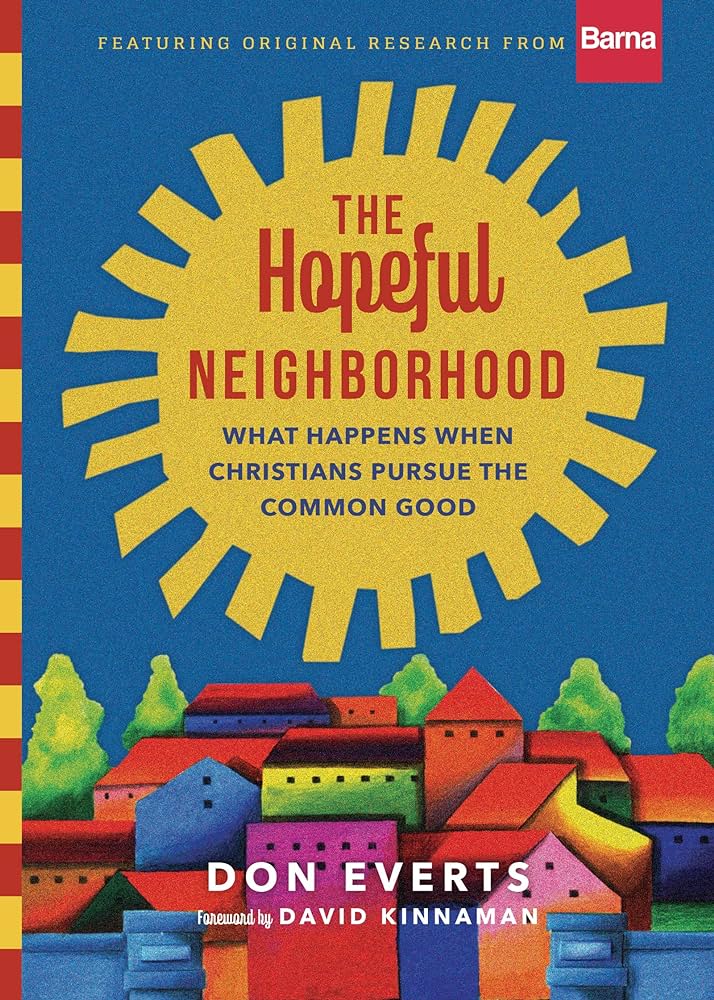
Are you tired of hearing people dismiss the church as an irrelevant relic? (Do you secretly wonder if they are right?) Don Everts explores an exciting reality that is revealed in Scripture, shown throughout history, and confirmed in the latest research: when Christians pursue the common good of the neighborhood, the world stands up and notices. It turns out this is exactly what we’re called to do. When Christians make good things, we bring blessings and hope to our local community.

With original research from the Barna Group and Lutheran Hour Ministries on how Christians relate to our neighborhoods, The Hopeful Neighborhood is filled with constructive, practical ways that Christians and churches can bless those around us. As Christians join together for the common good, we bring hope to the world, credibility to the church, and glory to God.


Author Don Everts believes that we all tread the same journey: from division to unity, from insignificance to relevance. This path leads to a more interconnected and harmonious way of life, to a gentler and more considerate manner of impacting the world, to a Christian presence in our nation that is more compelling and appealing, to a fuller utilization of the talents bestowed upon us by God, and to deeper connections with those who may not share our faith. 

This journey begins right at our doorsteps and, guided by God’s grace, extends to encompass the places and people in our immediate surroundings.

Though this path may seem unfamiliar in an era marked by division, self-preservation, and indifference towards our neighbors, it is, in fact, an ancient and well-trodden route. Its simplicity lies in the transition from oneself to the community one resides in. Regardless of our location, we are part of a neighborhood, and perhaps God is urging us to be more mindful of this fact.

As Everts and his wife entered into the empty nest stage of life and contemplated whether to relocate to a new neighborhood or stay in their existing one, they found themselves in no hurry to make a decision. What they did know is that wherever they end up, they want to truly inhabit that place, no longer wishing to merely exist in a location. Rather, they seek to fully engage with it.

Regardless of their eventual neighborhood, their desire is for it to be a beacon of hope. They aspire to extend hospitality by welcoming others into their home for meals and fostering a sense of community among their neighbors. They aim to collaborate with those around them, utilizing their collective talents for the betterment of their shared environment and the people within it. Above all, they want to strive to ensure that no one in their neighborhood ever goes unnoticed or unacknowledged for decades on end.

That’s what The Hopeful Neighborhood Project is all about.

Find out more here.


Discovering the Joy of Reading: Insights from “Why We Read”

Most weeks on Wednesday you’ll find posts about books here, part of an ongoing series entitled Wednesday Weekly Reader.

I often post about books on Instagram, and from time to time I will write on the topic of books about reading and books. For example:

Here’s a view of my “books about books” bookshelf:

You are probably getting the picture that books and reading are not just pastimes for me – they are my passion.

Today’s post is about a book that beautifully captures the passion of reading.

We read to escape, to learn, to find love, to feel seen. We read to encounter new worlds, to discover new recipes, to find connection across difference, or simply to pass a rainy afternoon. No matter the reason, books have the power to keep us safe, to challenge us, and perhaps most importantly, to make us more fully human.

Shannon Reed, a longtime teacher, lifelong reader, and New Yorker contributor, gets it. With one simple goal in mind, she makes the case that we should read for pleasure above all else.

In this whip-smart, laugh-out-loud-funny collection entitled Why We Read, Reed shares surprising stories from her life as a reader and the poignant ways in which books have impacted her students. From the varied novels she cherishes (Gone GirlTheir Eyes Were Watching God) to the ones she didn’t (Tess of the d’Urbervilles), Reed takes us on a rollicking tour through the comforting world of literature, celebrating the books we love, the readers who love them, and the ways in which literature can transform us for the better.

Listen to Reed’s passion for reading:

I have never lost my affection for and dependency on books. This is where I pull away from the pack of fellow bookworms, I sense. Much as I like videos and reels and whatever new thing has been invented by the time this goes to print, I’m always reaching back to the OG form, the book, looking for what I can read to help me understand.

Reading a book is quiet, clear, and organized. It’s not hard.

It waits until I am ready, pauses when I need a break, and is still happy to repeat. Reading absolutely never says “Just forget it” when I need clarification. It doesn’t care how I pronounce the words in my head (or aloud, for that matter). It never makes me feel worse and rarely makes me feel lonely.

Reading gives me the world.

And that, friends, is why I read.

If you are fortunate to be inspired to buy and read Shannon’s book, you will enjoy the closing chapter as she pays homage to the amazing literary journey she is on. I won’t spoil your reading pleasure by quoting any of it – except the last two sentences:

Without ever really experiencing any of it, I know it all.

Because books taught me.


Part of a regular series on 27gen, entitled Wednesday Weekly Reader.

During my elementary school years one of the things I looked forward to the most was the delivery of “My Weekly Reader,” a weekly educational magazine designed for children and containing news-based, current events.

It became a regular part of my love for reading, and helped develop my curiosity about the world around us.

From Concept to Cover: Navigating the Design Journey of Books

This mini-series about books started off with the history of the library, then went to books at war, and now comes down to the book itself – or rather, how important the design of a book is to the reader.


Design is central to the appeal, messaging, and usefulness of books, but to most readers, it’s mysterious or even invisible. Through interiors as well as covers, designers provide structure and information that shape the meaning and experience of books. In The Design of Books, Debbie Berne shines a light on the conventions and processes of her profession, revealing both the aesthetic and market-driven decisions designers consider to make books readable and beautiful. In clear, unstuffy language, Berne reveals how books are put together, with discussions of production considerations, typography and fonts, page layouts, use of images and color, special issues for ebooks, and the very face of each book: the cover.  

The Design of Books speaks to readers and directly to books’ creators—authors, editors, and other publishing professionals—helping them to become more informed partners in the design of their projects. Berne lays out the practical steps at each stage of the design process, providing insight into who does what when and offering advice for authors on how to be effective advocates for their ideas while also letting go and trusting their manuscripts with teams of professionals. She includes guidance as well for self-publishing authors, including where to find a designer, what to expect from that relationship, and how to art direct your own book.

Throughout, Berne teaches how understanding the whats, hows, and whys of book design heightens our appreciation of these cherished objects and helps everyone involved in the process to create more functional, desirable, and wonderful books.

Berne embarked on the journey of writing this book because she sensed a gap in understanding among the authors and editors she collaborated with regarding book design. It seemed there was a lack of accessible resources for them to grasp the intricacies of design. Traditional books on design target designers themselves, while online explanations often offer fragmented and bewildering information, focusing on the “what” rather than the “why.” Berne’s aim was to equip those on the editorial side with not only the vocabulary and techniques of design but also the underlying rationale behind design decisions. This endeavor wasn’t solely for enjoyment, although design can indeed be enjoyable, but rather to facilitate more meaningful discussions, enriched experiences, and ultimately, better books.

The Design of Books provides the reader with insights into the mechanics of typography and the significance of factors like line length. It will heighten your awareness of the nuances of headings and how the choice of words influences cover design. Above all, it will enhance your perception of design and its contributions.

As a book designer turned author, Berne advocates for the importance of design in publishing and emphasizes the significance of incorporating the voice and ideas of the designer early in the process. Often, design is an afterthought, introduced late in the game, leading to a discord between the materials provided and the expectations for their presentation. Authors should consider how the design will complement the content from the outset, including collaboration with designers during the developmental stages. Effective design should intertwine seamlessly with the content; attempting to apply it as an afterthought overlooks its essence.

Design inside a book creates order and bestows authority. Reading a badly designed book is like driving over a crumbling road, potholes everywhere.

Debbie Berne

Part of a regular series on 27gen, entitled Wednesday Weekly Reader.

During my elementary school years one of the things I looked forward to the most was the delivery of “My Weekly Reader,” a weekly educational magazine designed for children and containing news-based, current events.

It became a regular part of my love for reading, and helped develop my curiosity about the world around us.

Shaking Up Fast Food: The Phenomenon of Shake Shack’s Success

From the wide-ranging options in the modern fast-food industry, Shake Shack has emerged as a beacon of culinary innovation, offering a unique blend of high-quality ingredients, exceptional service, and a captivating origin story. Let’s explore the birth and growth of the Shake Shack restaurant chain, tracing its roots, key milestones, and the factors that have contributed to its remarkable success.

The Birth of Shake Shack

Shake Shack’s journey began in 2001 when the renowned restaurateur Danny Meyer’s Union Square Hospitality Group operated a hot dog cart in Madison Square Park, New York City. The cart was intended to support the Madison Square Park Conservancy’s first art installation. Little did they know that this humble hot dog cart would lay the foundation for one of the most beloved fast-food chains in the world.

The Success of the ShackBurger

Shake Shack gained popularity for its exceptional ShackBurger, a mouthwatering creation that quickly became a cult favorite. The secret sauce, a proprietary blend of flavors, and the commitment to using 100% all-natural Angus beef set Shake Shack apart in a competitive market. As word spread about the ShackBurger’s irresistible taste, the demand for Shake Shack’s offerings grew, prompting the team to consider expanding beyond the confines of Madison Square Park.

The world of full-service dining is  the world most of our leaders came from. They grew up with a certain level of sophistication. That’s the reason Shake Shack tastes different, looks different, and feels different.

Danny Meyer

Expansion and Global Phenomenon

Shake Shack’s growth strategy was both deliberate and strategic. The first permanent kiosk opened in 2004, still in Madison Square Park, drawing long lines of eager patrons. The success of this location paved the way for further expansion, with Shake Shack gradually spreading its wings to other cities in the United States.

In 2010, Shake Shack went international, opening its first international outpost in Dubai. This move marked a significant milestone, as the brand successfully translated its American charm and culinary excellence to a global audience. The chain continued to expand its footprint, reaching cities across Europe, Asia, and the Middle East.

Culinary Innovation and Collaboration

One of Shake Shack’s key strengths lies in its ability to adapt to changing culinary trends and collaborate with renowned chefs. The chain regularly introduces limited-time menu items, collaborating with culinary innovators to create unique and exciting offerings. These collaborations not only keep the menu fresh and dynamic but also generate buzz and anticipation among Shake Shack enthusiasts.

Community Engagement and Sustainability

Shake Shack has always been more than just a fast-food chain; it’s a brand deeply committed to community engagement and sustainability. The company sources high-quality, responsibly raised ingredients, emphasizing its dedication to ethical practices. Moreover, Shake Shack actively engages with local communities through various initiatives and partnerships, fostering a sense of connection beyond its delicious offerings.

About the Book

Shake Shack: Recipes and Stories contains 70 recipes, 200 photographs and plenty of stories, fun facts and pro tips for the home cook and Shack fan.

Follow Shake Shack’s journey around the world; make your own ShackBurgers, crinkle-cut fries and hand-spun frozen custard shakes at home; and get a glimpse into the culture, community and inner workings of the Shake Shack brand.

The “stories” side of the book tells tales of Shake Shack history, profiles key collaborators and suppliers, discusses methodologies as depicted in the image above, provides recipe-related commentary and illuminates the company’s key-to-success business practices. 

If you like burgers in general, and Shake Shack burgers in particular, you will like the book!

From a humble hot dog cart in Madison Square Park to an international culinary phenomenon, Shake Shack’s journey exemplifies the power of innovation, quality, and community engagement in the fast-food industry. As the chain continues to evolve and expand, its commitment to culinary excellence and a unique dining experience remains unwavering, making Shake Shack a true pioneer in the world of modern fast food.


Still hungry?

The Proper Post-Thanksgiving Binge

Dave’s Way: A Culinary Journey of Innovation and Success

A Burger’s Perfect Partner: The Coca-Cola Connection

Flameout: The Rise and Fall of Burger Chef – A Culinary Tragedy

From Pommes Frites to Burger Sidekick: The Fascinating History of French Fries

Building an Empire, One Whopper at a Time: Jim McLamore’s Journey and the Story of Burger King

The Condiment Conundrum: Finding the Perfect Toppings to Elevate Your Burger Experience

The Whataburger Story: A Tale of Flavor and Family

From Drive-Thru to Cultural Icon: The Story Behind In-N-Out Burger

Burgerology: The Art and Science of the Perfect Patty

Flipping History: How McDonald’s Shaped the Hamburger’s Popularity

Indulging in Burger Bliss: A Quest for Culinary Perfection

White Castle: The Trailblazing Pioneer of Fast Food

Bite Into Tradition: The Best Loved Regional Burger Chains in the Country

Burger Beast Unleashed: The Ultimate Tribute to Burgers in Sef Gonzalez’ Book

Sink Your Teeth into “The Hamburger”: A Culinary Journey by Josh Ozersky

Burger Magic: Exploring the Universal Fascination Behind America’s Favorite Dish

My Quest for the Perfect Hamburger: A Literary, Culinary, and Arbitrary Journey in Pursuit of America’s Iconic Delight

A Tantalizing Top of the Stack, Made to Order

Before Burger Quest