Embracing Yesterday to Shape Tomorrow: The Importance of Studying History

It is through history that we learn who we are and how we got that way, why and how we changed, why the good sometimes prevailed and sometimes did not.

Stephen Ambrose, “To America”

Usually the word “history” elicits one of two responses: a glassy-eyed stare and memories of those required classes in school that were mind-numbing, or an excited look followed by the phrase “Did you know that…”

I, proudly, am guilty of the latter.

Not content to read and study “normal” history (both my undergraduate and graduate minors are in history), I also default to the obscure and strange. Who else would read books on the history of salt – or the history of dust – or the history of cod. Yes, cod. The little fish, that when salted, kept it edible for long sea voyages, allowing the “discovery” of the Americas by Europeans, among other uses (that’s a two-for-one use of history, in case you didn’t notice).

Leaders need to understand history, too.

In the bustling world of today, where we are constantly moving forward, it’s easy to overlook the treasure trove that lies behind us – our history. As a modern elder with a passion for learning and an insatiable curiosity, I firmly believe that history is not a dry, irrelevant subject but a vibrant tapestry of human experiences waiting to be explored. A journey through time into the immersive world of history AND understanding how it is crucial for our personal growth, societal development, and the generations that follow.

A Symphony of Senses

Say you wanted to learn about how bakers sold bread in the early development of the bakery as we know it today. You could discover the “facts” about it… But imagine standing on the cobbled streets of a medieval town, the scent of freshly baked bread wafting from the nearby bakery. The clatter of horse-drawn carriages and the chatter of townsfolk fill the air. This bakery did more than sold bread – it was the earliest “community center” in the town. This sensory immersion is what history can provide. It allows us to step into the shoes of our ancestors, experiencing their world through vivid descriptions and narratives. By understanding history, we awaken our senses to a world long gone, enriching our own lives in the process.

Emotional Time Travel

History is not just a collection of dates and events; it’s a window into the human experience. It lets us feel the triumphs and tribulations, the joys and sorrows of those who came before us. When we learn about the struggles of past generations, we gain perspective on our own challenges. It fosters empathy, connecting us on a deep emotional level with people who lived in vastly different times and circumstances.

Learning from Mistakes

One of the most valuable lessons history teaches us is that mistakes are part of the human experience. History is replete with errors in judgment and their consequences. As a modern elder, I understand the importance of learning from these mistakes. By studying history, we can avoid repeating the blunders of the past and pave the way for a brighter future.

Continuing to Learn While Guiding the Next Generation

My mission as a modern elder is to invest in other leaders, especially those younger than me, while at the same time continuing, even accelerating, my lifelong learning journey. I’ll be speaking more to this paradox in the next post. Understanding history equips us with the knowledge and wisdom to mentor and guide others. When we share the lessons of history with them, we empower them to make informed decisions and shape a better world.

The Power of Contrarian Ideas

History is a playground of diverse ideas, where conventional wisdom often gets challenged. As someone who values contrarian ideas, I appreciate the wealth of innovation and progress that emerges from questioning the status quo. History is a testament to the power of thinking differently and challenging established norms.

Embracing Technology

In today’s fast-paced world, technology plays a vital role in preserving and sharing history. Digital archives, virtual reality experiences, and interactive websites transport us back in time like never before. Embracing these technologies allows us to make history even more accessible and engaging for future generations.

Only by understanding the past can you ever hope to lead to the future.

History is a rock. Not an anchor to the past, but a bridge to the future.

In the journey of life, history is our compass, guiding us through the vast sea of human experiences. It engages our senses, deepens our emotions, and teaches us invaluable lessons. I implore you to embrace the beauty of history, for it is not a relic of the past but a beacon for the future. Let us pass down the torch of knowledge and understanding to the generations that follow, ensuring that the tapestry of history continues to enrich our lives. Together, we can unlock the boundless treasures of our past.
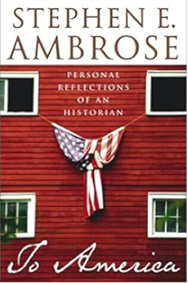

As a modern elder with an insatiable curiosity and a passion for history, I’ve had the pleasure of delving into countless books that illuminate the tapestry of our past. Among these volumes, To America by Stephen E. Ambrose is a very personal look at our nation’s history through the eyes of one of the twentieth century’s most influential historians. Here are some insights into this recommended work, highlighting its significance and the enduring lessons it imparts.

The Essence of To America

Stephen E. Ambrose, who was known for his narratives of American history, once again demonstrates this mastery in To America. This book serves as a testament to the author’s deep reverence for the United States and its rich history. Ambrose’s writing resonates with a sense of awe and admiration for the nation’s journey from its inception to modern times.

Historical Perspective

Ambrose’s storytelling prowess shines brightly as he takes readers on a chronological journey through pivotal moments in American history. His vivid descriptions and diligent research breathe life into the past, making history feel tangible. As a student of history, I appreciate his commitment to accuracy and detail, which brings authenticity to each page.

Themes of Resilience and Triumph

Throughout To America, Ambrose underscores the resilience of the American spirit. He skillfully narrates tales of triumph over adversity, from the struggles of the early colonists to the challenges faced by the nation during its formative years. Ambrose’s portrayal of historical figures and events is both insightful and inspiring, reminding readers of the enduring values that have shaped America.

Character Portraits

One of the book’s strengths is Ambrose’s ability to paint vivid portraits of key figures in American history. From George Washington’s steadfast leadership to the audacity of the Wright brothers, each character comes to life with their unique attributes and contributions to the American story. My personal favorite was his section on Theodore Roosevelt, one of America’s greatest presidents (and one whom I will be writing about in the future). Ambrose’s portrayal of these individuals humanizes history, making it relatable to readers of all backgrounds.

Relevance to Modern Times

As a modern elder, I believe that understanding history is essential for navigating the complexities of today’s world. Ambrose’s To America not only provides historical insights but also offers a lens through which we can better comprehend contemporary challenges and triumphs. It encourages readers to reflect on how the past continues to shape our present.

Conclusion

In To America, Stephen E. Ambrose weaves a masterful tapestry of American history that resonates deeply with those who, like me, are passionate about the past. This book is a testament to the enduring spirit of a nation built on resilience, innovation, and the pursuit of freedom. Ambrose’s meticulous research, evocative storytelling, and reverence for history make To America an essential read for anyone seeking a richer understanding of the United States and its remarkable journey.


Part of a regular series on 27gen, entitled Wednesday Weekly Reader

During my elementary school years one of the things I looked forward to the most was the delivery of “My Weekly Reader,” a weekly educational magazine designed for children and containing news-based, current events.

It became a regular part of my love for reading, and helped develop my curiosity about the world around us.


What’s Your “Groundhog Day”?

On this day in 1887, Groundhog Day, featuring a rodent meteorologist, is celebrated for the first time at Gobbler’s Knob in Punxsutawney, Pennsylvania. According to tradition, if a groundhog comes out of its hole on this day and sees its shadow, there will be six more weeks of winter weather; no shadow means an early spring.

Historical background of Groundhog Day includes:

  • Rooted in the ancient Christian tradition of Candlemas Day, where clergy blessed and distributed candles for winter; the candles represented how long and could winter would be
  • Germans expanded on the idea by selecting the hedgehog as a means of predicting weather
  • German settlers to America in Pennsylvania continued the tradition, switching to the groundhogs as hedgehogs weren’t available
  • Groundhogs do emerge from hibernation in February, but only to look for a mate before going underground again
  • They come out of hibernation for good in March

In 1887 an enterprising newspaper editor declared that Phil, the Punxsutawney groundhog, was America’s only true weather-forecasting groundhog.

Phil and his descendants might be the most famous, but many towns across North America now have their own meteorology Marmota monax.

The 1993 movie “Groundhog Day” popularized the usage of “groundhog day” to mean something that is repeated over and over.

Unfortunately, there are a lot of scary parallels in the church world:

  • Do you have ongoing traditions from the past that had original meaning but have now lost that meaning?
  • Have you adapted your traditions to fit the culture of your community?
  • Are your traditions based on something that no longer is relevant?
  • Do you market your traditions on their own merits, or are you exploiting them?
  • Are your traditions the same as a half-dozen other churches in your town?
  • Do your traditions have a life of their own, long-ago outliving their original useful purpose?

While you may view this post as “anti-tradition”, neither it nor I am! I love history and tradition – I have minors in history at the graduate and post-graduate levels, study history all the time, and know that it can be a powerful teacher.

Our history should be a bridge to the future, not an anchor to the past.

Churches should be students of their past – but also their present, in order to help write their future.

Can you as a church leader understand and appreciate the history of your church and its traditions? At the same time, are you a cultural anthropologist of your community, understanding what’s going on today? Combining the two will give you and your leadership team a solid foundation for future opportunities!

One Year Later: COVID-19 and the Ides of March

In modern times, the Ides of March is best known as the date on which Julius Caesar was assassinated in 44 BC.

You’ve probably of heard the soothsayer’s warning to Julius Caesar in William Shakespeare’s play of the same name: “Beware the Ides of March.” 

Here are the actual lines:

  • Soothsayer. Caesar!
  • Caesar. Ha! who calls?
  • Casca. Bid every noise be still: peace yet again!
  • Caesar. Who is it in the press that calls on me?I hear a tongue, shriller than all the music,
    Cry ‘Caesar!’ Speak; Caesar is turn’d to hear.
  • Soothsayer. Beware the ides of March.
  • Caesar. What man is that?
  • Brutus. A soothsayer bids you beware the ides of March.
  • Caesar. Set him before me; let me see his face.
  • Cassius. Fellow, come from the throng; look upon Caesar.
  • Caesar. What say’st thou to me now? speak once again.
  • Soothsayer. Beware the ides of March.
  • Caesar. He is a dreamer; let us leave him: pass.
  • Caesar. [To the Soothsayer] The ides of March are come.
  • Soothsayer. Ay, Caesar; but not gone.

Not only did Shakespeare’s words stick, they branded the phrase—and the date, March 15—with a dark and gloomy connotation. 

It’s likely that many people who use the phrase today don’t know its true origin. In fact, just about every pop culture reference to the Ides – save for those appearing in actual history-based books, movies or television specials – makes it seem like the day itself is cursed.

There may be more to that than we think…

Take this event that occurred around March 15, 2003:

A New Global Health Scare, 2003
After accumulating reports of a mysterious respiratory disease afflicting patients and healthcare workers in China, Vietnam, Hong Kong, Singapore and Canada, the World Health Organization issues a heightened global health alert. The disease will soon become famous under the acronym SARS (for Sudden Acute Respiratory Syndrome).

The Smithsonian

Now what do you think about the Ides of March?

Especially the Ides of March, 2020.

Released earlier this week from Fortune is a fascinating recounting of 15 ways life has changed since COVID-19 pretty much shut the country down about this time last year.

Fifteen Fortune staff members reported on some of the most significant ways in which our lives have been altered, and the common denominator:

Virtually no one has been left untouched after 12 months of such dramatic disruption.

Here’s the list – but you will definitely want to read the full article.

  1. Work from home
  2. A distorted sense of time
  3. The way we work out
  4. Renewed gratitude for essential workers
  5. A chronology of pandemic-fueled shortages
  6. The many, many considerations working parents juggle
  7. A change of appetite
  8. Shining a light on inequality
  9. Remote learning
  10. A renewed relationship with nature
  11. The decimation of women in the workplace
  12. A mental health crisis
  13. A diminished college experience
  14. TikTok’s big moment
  15. The COVID class markers

It seems like the Ides of March has a new candidate for the top spot of gloom and doom.

Happy 220th Birthday, Old Ironsides!

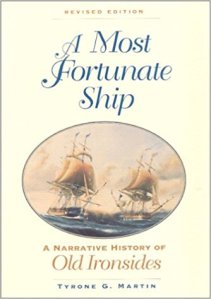
Designed by master shipwright Joshua Humphreys, the USS Constitution was launched October 21, 1797, from Edmund Hartt’s shipyard in Boston (site of present-day Constitution Wharf/U.S. Coast Guard base). She first sailed on July 22, 1798, as one of the six frigates that began the new United States Navy that was created “in defense of commerce.” Constitution’s final construction cost was $302,718.84. She is remembered for capturing 33 vessels in 57 years of active service and for her three War of 1812 victories against the British Royal Navy. Constitution’s first War of 1812 battle occurred on August 19 against HMS Guerriere. The defeat of Guerriere was the first frigate-to-frigate victory of the U.S. Navy over the Royal Navy, then the largest navy in the world. Constitution became “Old Ironsides” when an American Sailor noticed that some of Guerriere’s shot failed to penetrate Constitution’s thick oak hull. “Huzza! Her sides are made of iron!” the Sailor purportedly exclaimed, and thus the nickname was born.

USS Constitution became “America’s Ship of State” in October 2009, is the world’s oldest commissioned warship afloat, and is the oldest sailing vessel worldwide that can still sail under her own power. Constitution sailed for the first time in 116 years on July 21, 1997, to commemorate her 200th anniversary and again on August 19, 2012, to commemorate the 200th anniversary of the War of 1812 and her battle with HMS Guerriere.

 – Naval History and Heritage Command


Courtesy Michael Haywood, all rights reserved

The ship! Never has she failed us! Never has her crew failed in showing their allegiance and belief in the country they served, or the honor they felt, in belonging to the ship that sheltered them, and on whose decks they fought, where so many gave their lives. To have commanded the Constitution is a signal honor; to have been one of her crew, in no matter how humble a capacity, is an equal one. Her name is an inspiration. Not only do her deeds belong to our Naval record, but she herself is possessed of a brave personality. In light weathers, in storm or hurricane, or amid the smoke of battle she responded with alacrity and obedience, and seemed ever eager to answer the will of her commander. May the citizens of this country, in gratitude, see that she, like her namesake and prototype, will never be forgotten. Her commanders in the future, as well as in the past, will see to it that here flag never shall be lowered. She was conceived in patriotism; gloriously has she shown her valor. Let her depart in glory if the fates so decree, but let her not sink and decay into oblivion.

Commodore William Bainbridge, 1831

As an active-duty warship, the USS Constitution is crewed by a select group of U.S. Navy Sailors who share her story with visitors from around the world and continue the U.S. Navy’s tradition of service through community outreach.

Have a Slice of Pi

Today is one of the few days when the nerd geek wanna-be in me surfaces…

It’s National Pi Day – the day we celebrate that wonderful irrational number.

Pi Day is celebrated on March 14th (3/14) around the world. Pi (Greek letter “π”) is the symbol used in mathematics to represent a constant — the ratio of the circumference of a circle to its diameter — which is approximately 3.14159.

Pi has been calculated to over one trillion digits beyond its decimal point. As an irrational and transcendental number, it will continue infinitely without repetition or pattern. While only a handful of digits are needed for typical calculations, Pi’s infinite nature makes it a fun challenge to memorize, and to computationally calculate more and more digits.

Pi didn’t earn its name until the 18th century, when Welsh mathematician William Jones started using it symbol ( “π”, the first letter in the Greek word for perimeter). In Medieval Latin it was known as quantities, in quam cum multiplicetur diameter, proveniet circumferential, or “the quantity which, when the diameter is multiplied by it, yields the circumference.” What a mouthful. Not as easy as pi. (from Wired magazine, by Matthew Hutson).

The average sinuosity of a river (its length as the fish swims divided by its length as the crow flies) is pretty close to pi. Why? Water on the outside of the bend erodes the bank, while slow-moving water on the inside of the curve deposits silt. Eventually the shape morphs into a loop – until an overflow cuts off the detour, straightening the curve. Rinse and repeat. (from Wired magazine, by Matthew Hutson).

Finally, Albert Einstein was born on Pi day – March 14, 1879.

How much more geeky can you get than that?

Have a piece of Pi!

Pi Day

Where Were You 50 Years Ago?

Images…Words…Memories…Impact

  • Dallas
  • JFK
  • Texas Book Depository
  • The Grassy Knoll
  • Assassination
  • Lee Harvey Oswald
  • Conspiracy Theory
  • Jack Ruby
  • Jackie Kennedy
  • Lyndon Johnson

Walking toward the Grassy Knoll, October 2013

Walking toward the Grassy Knoll, October 2013

Texas Book Depository - 6th Floor Museum

Texas Book Depository – 6th Floor Museum

On a trip to Dallas last month, I stayed in a hotel only a block away from one of the most significant events in American history. As I walked the site, I thought of the words and images  that became an indelible part of our language and culture on that day 50 years ago.

There are more books about this single event than there were in the days of John F. Kennedy’s presidency. 50 years later, many people still have questions about what really happened.

My question is simple:

What if it hadn’t happened?

Thank You, Martin Luther

On October 31, 1517, Luther posted 95 theses on the door of the Castle Church in Wittenberg, Germany – and launched the Protestant Reformation.

For a brief backstory, go here.

The 95 theses contained Luther’s opinions of what was going wrong in the Catholic church. Excommunicated from the church and condemned to die, Luther was given protection by Prince Frederick of Germany. For the next 10 years,he worked on another task we should thank him for – the translation of the Bible from Latin (which only a few learned men could read) to German – the language of the people.

Others soon took up the cause, and the “protest” spread to other nations outside of Germany. Soon a new church was spreading across Europe – and the world, changing not only the religious landscape but all civilization as well.

Now almost 500 years later, look how far we have come.

So much good, and yet…