Shelf Discovery: The Journey from One Book to Many

For avid readers, finishing one book is often just the beginning of a journey into a new subject or author. A great book has a way of piquing your curiosity and leaving you hungry to learn more. You find yourself wanting to dive deeper into the world or ideas the book exposed you to. 

This was the case for me recently after reading Michael Dirda’s On Conan Doyle, Or, The Whole Art of Storytelling. Dirda’s passionate celebration of Sir Arthur Conan Doyle as a master storyteller cast new light on the Sherlock Holmes tales I had read years ago. His analysis made me want to revisit the classic detective stories with a fresh perspective.

In his book, Dirda explores how Conan Doyle’s own fascinating life experiences allowed him to inject realism and detail into his fiction writing. He quotes extensively from Conan Doyle’s works, breaking down the author’s techniques for building suspense, vividly depicting London at that time, and bringing the charismatic characters of Holmes and Watson to life. 

After being reminded by Dirda of the sheer genius of Conan Doyle’s storytelling powers, I couldn’t resist pulling my old collection of the complete Sherlock Holmes canon off the shelf to re-read the stories and novels. This time, armed with Dirda’s insights, I found myself newly appreciating Conan Doyle’s intricate plotting, clever foreshadowing, and rich descriptions that allowed the late 1800s-era London to jump off the page.

I also discovered background information I hadn’t known before, like how Conan Doyle had modeled the brilliant but eccentric Holmes on one of his former university professors. And his time studying at a medical school gave him knowledge about forensics and analytical skills that informed how he wrote Holmes’ deductive reasoning process.

From there, my curiosity propelled me to explore literary biographies about Conan Doyle’s life, writings by Sherlock Holmes experts dissecting the stories, books analyzing Conan Doyle’s lasting influence on the mystery genre, and more.

One book had opened up an entire new area of interest to dive into.

This is the power and delight of being a lifelong reader – books become portals to universes of knowledge, allowing you to find new areas to explore in depth simply by following your curiosity from one page to the next. A single book can act as a key that unlocks fascinating connections, insights, and paths of discovery you may never have anticipated.


Though Sherlock Holmes is widely recognizable, few could craft as lively and personal an account of the detective’s creator’s life and lesser-known works as Michael Dirda does in On Conan Doyle, Or, The Whole Art of Storytelling

A passionate lifelong fan of the Sherlock Holmes adventures, Pulitzer Prize–winning critic Michael Dirda is a member of The Baker Street Irregulars – the most famous and romantic of all Sherlockian groups. Combining memoir and appreciation, On Conan Doyle is a highly engaging personal introduction to Holmes’s creator, as well as a rare insider’s account of the curiously delightful activities and playful scholarship of The Baker Street Irregulars.

Dirda interweaves his own childhood discovery of Holmes and Watson with details about Sir Arthur Conan Doyle’s life and writing career. While casual readers associate Conan Doyle solely with the Holmes stories, Dirda makes a strong case for exploring the author’s extensive bibliography across multiple genres like adventure, historical fiction, supernatural tales, and writings on spiritualism. However, Holmes remains the main draw, and the fascinating culture of the Irregulars society is as rich as any of Conan Doyle’s fictions.

Dirda provides a personal journey exploring the creator of Sherlock Holmes and his prodigious output across various genres beyond the famous detective stories. Most know Conan Doyle tried to kill off his iconic character, which he cared little for compared to works like The Lost World. However, Dirda still centers much of his discussion on Holmes while striving to highlight Doyle’s other writings too – his horror, fantasy, non-fiction essays, letters, and his favorite creation Professor Challenger. Recounting his own boyhood introduction to Doyle’s books, Dirda reminisces about joining the Baker Street Irregulars society devoted to Holmes and includes an abridged pastiche of his own Sherlock-inspired fiction.

Dirda particularly excels at appreciating Conan Doyle’s direct yet versatile literary style spanning genres, and examining the values of civic duty the author aimed to impart through his writing (values he felt the Holmes tales lacked).

On Conan Doyle is a much-needed celebration of Arthur Conan Doyle’s genius for every kind of storytelling.

It is also an excellent launching pad for further investigations into Conan Doyle’s other works!


Part of a regular series on 27gen, entitled Wednesday Weekly Reader.

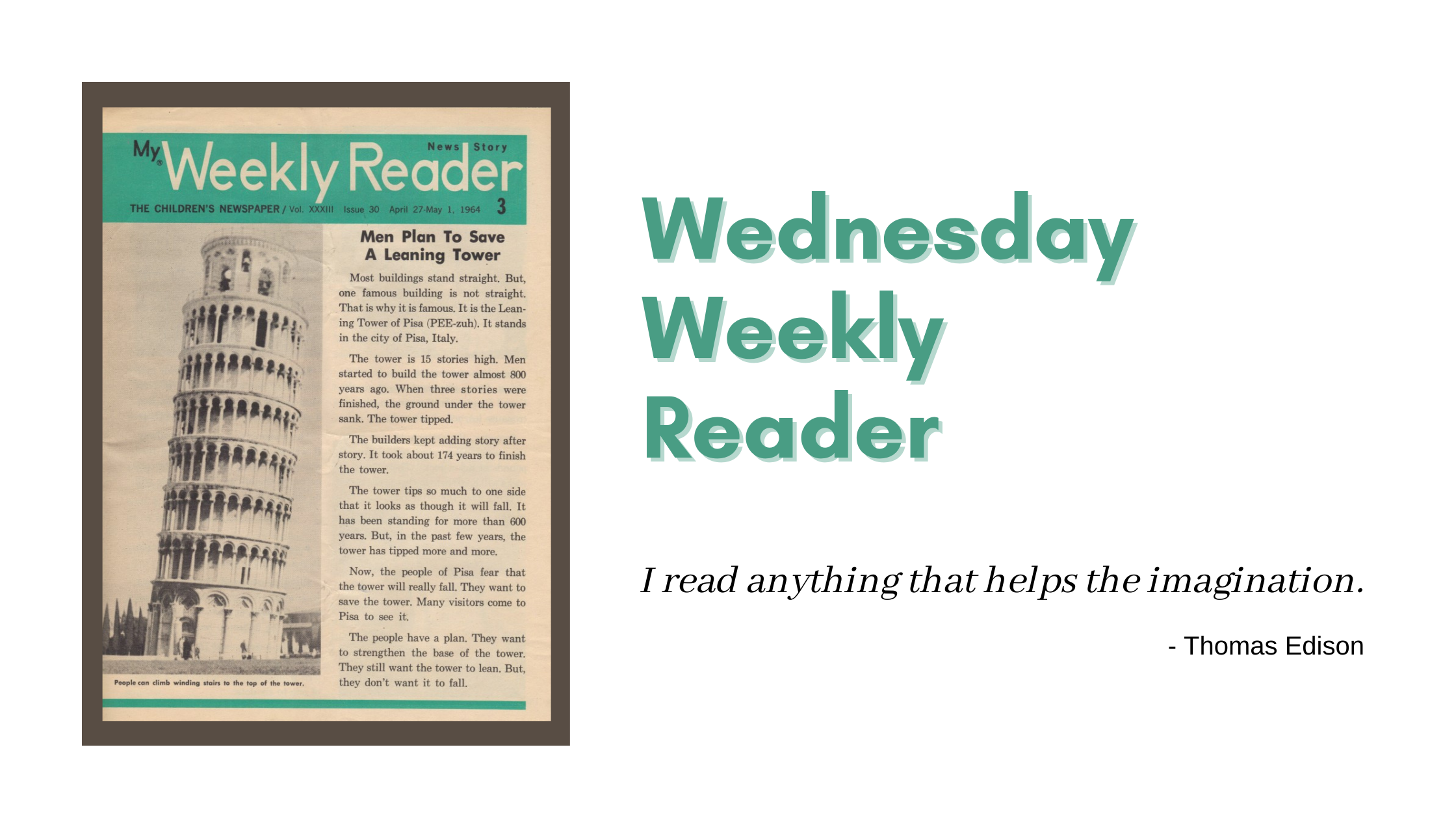
During my elementary school years one of the things I looked forward to the most was the delivery of “My Weekly Reader,” a weekly educational magazine designed for children and containing news-based current events.

It became a regular part of my love for reading, and helped develop my curiosity about the world around us.

The Profound Wisdom of Mister Rogers’ Neighborhood


In his insightful book The Good Neighbor, author Maxwell King delves into the enduring legacy of Fred Rogers and his revolutionary approach to teaching children about the importance of being a good neighbor. Rogers, best known for his iconic children’s television series “Mister Rogers’ Neighborhood,” was a pioneer in using the medium to impart valuable life lessons on kindness, empathy, and community.

Fred Rogers (1928–2003) was an enormously influential figure in the history of television. As the creator and star of Mister Rogers’ Neighborhood, he was a champion of compassion, equality, and kindness, fiercely devoted to children and taking their questions about the world seriously.

The Good Neighbor is the first full-length biography of Fred Rogers, a staple of public television and an icon to generations of children. Based on original interviews, oral histories, and archival documents, biographer Maxwell King traces Rogers’s personal, professional, and artistic life through decades of work.

One of many touching stories told is the story of his appearance on Oprah Winfrey’s talk show in 1985, when Rogers issued strict instructions: No children were to be present during the taping. Winfrey and her producers ignored his request and filled her studio with young children and their mothers.

Author Maxwell King writes, “As soon as the children started to ask him questions directly, he seemed to get lost in their world, slowing his responses to their pace, and even hunching in his chair as if to insinuate himself down to their level. This wasn’t good television – at least, good adult television. Everything was going into a kind of slow motion as Fred Rogers became Mister Rogers, connecting powerfully with the smallest children present. He seemed to forget the camera as he focused on them one by one. . . . In the audience, Winfrey leaned down with her microphone to ask a little blond girl if she had a question for Mister Rogers. Instead of answering, the child broke away from her mother, pushed past Winfrey, and ran down to the stage to hug him. As the only adult present not stunned by this, apparently, Fred Rogers knelt to accept her embrace.”

The Good Neighbor is the definitive portrait of a beloved figure whose life and work continue to resonate today because of Mister Rogers’ message of kindness and compassion.

At the heart of Rogers’ philosophy was the belief that every person, regardless of age or background, has an inherent worth and deserves to be treated with dignity and respect. This fundamental principle formed the foundation of his concept of “neighborliness,” which extended far beyond mere physical proximity.

To Rogers, being a good neighbor meant cultivating a deep sense of compassion and understanding for others. It involved actively listening, recognizing the unique perspectives and experiences of those around us, and embracing diversity as a strength rather than a divisive force. Through his gentle yet profound teachings, Rogers encouraged children to see their neighbors not as strangers but as fellow human beings worthy of care and consideration.

One of the most powerful messages Rogers imparted was the importance of emotional intelligence and self-awareness. He believed that by developing a greater understanding of our own emotions and inner lives, we could better empathize with and support those around us. This idea was central to his approach to building strong, interconnected communities where individuals felt valued and supported.

King’s book highlights Rogers’ innovative use of storytelling and imagination to convey these profound lessons in a way that resonated with children. Through the world of make-believe and the familiar characters of the Neighborhood of Make-Believe, Rogers created a safe space for children to explore complex emotions, confront difficult topics, and develop a deeper appreciation for the richness of human experience.

Moreover, Rogers emphasized the significance of intergenerational connections and the role of adults in modeling positive behaviors for children. He believed that by embodying the principles of neighborliness themselves, adults could inspire the next generation to carry on these values and create a more compassionate world.

King’s exploration of Rogers’ teachings serves as a poignant reminder of the enduring relevance of his message in today’s increasingly polarized and disconnected society. At a time when divisions seem to run deep and empathy appears in short supply, Rogers’ call to see one another as neighbors – to embrace our shared humanity and work towards building inclusive, supportive communities – resonates more strongly than ever.

Through his gentle yet profound wisdom, Fred Rogers left an indelible mark on generations of children and adults alike. As King’s book illustrates, his concept of being a good neighbor transcends time and geography, offering a blueprint for fostering understanding, kindness, and a deep sense of connection in an increasingly fragmented world.


Vintage Brilliance: The Underrated Genius of Elders’ Crystallized Intelligence

As we grow older, our minds and cognitive abilities evolve in fascinating ways. While certain facets of fluid intelligence – the ability to think logically, process information rapidly, and solve novel problems – may decline with age, our crystallized intelligence has the opportunity to blossom. Crystallized intelligence refers to the knowledge, facts, and skills we have accumulated over a lifetime of experience and education. For modern elders, harnessing and cultivating this form of intelligence is essential for continued growth, wisdom, and engagement with the world around us.

The concept of crystallized intelligence was first introduced by Raymond Cattell in the 1960s, bridging psychometric studies with the insights of generations past – that we grow wiser as we grow older. The theme of his 1971 book, Abilities: Their Structure, Growth, and Action, could be stated as “When you are young, you can generate lots of facts; when you are old, you know what they mean and how to use them”. (From Strength to Strength, Brooks). Our rich tapestries of lived experiences become repositories of deep understanding across diverse domains. An economically-astute elder may have decades of business acumen ingrained. A passionate hobbyist maintains profound reservoirs of specialized knowledge around his lifelong interests. These deep wells of crystallized intelligence are invaluable assets to be nurtured and shared.

Depicted by the image below from the MIT Sloan Management Review, although fluid intelligence – which includes working memory and reasoning – typically begins to decline in early adulthood, crystallized intelligence (or wisdom, knowledge, and expertise) doesn’t deteriorate with age.

In our modern world of rapid technological and social change, the value of elderhood is too often discounted. However, those with decades of accumulated wisdom can offer nuanced historical context, seasoned perspectives, and profound insights to society’s challenges. Their crystallized intelligence serves as an anchor of stability and a guide towards judicious paths forward amidst turbulence. From being a voice of wisdom for younger generations to leveraging knowledge to make unique creative contributions, there are myriad opportunities for elders to have an enduring impact.

Of course, crystallized intelligence is not stagnant – it continues expanding with new knowledge and viewpoints. An intellectually humble mindset, openness to personal growth, and commitment to lifelong learning are key to distilling wisdom from our experiences. Reading widely, exploring new subjects, seeking out diverse perspectives – these are vital practices that enrich our crystallized intelligence and prevent insular thinking. Modern elders who embrace this expansive, growth-oriented mindset unlock new cognitive abilities and ways of understanding our infinitely complex world.

For individuals and societies alike, cultivating crystallized intelligence in elderhood yields profound dividends. Respecting and elevating the voices of wise elders anchors us to our shared heritage while illuminating paths towards progress. As modernity pulls swiftly forward, we should create space for the transcendent wisdom born of experience to guide the way.

This concept is not a recent discovery of the last few decades – take a look at the wisdom of the first-century BC Roman statesman, lawyer, scholar, and philosopher Marcus Tullius Cicero:


The old…should, it seems, have their physical labors reduced; their mental activities should be actually increased. They should endeavor, too, by means of their counsel and practical wisdom to be of as much service as possible to their friends, and to the young, and above all, to the state.


Cicero, De Offices

Author and social scientist Arthur C. Brooks, in his wonderful book From Strength to Strength, calls this “The Second Curve.” He challenges those in or approaching the latter years of their life to “Get on your second curve. Jump from what rewards fluid intelligence to what rewards crystallized intelligence. Learn to use your wisdom.”

How to do that? Well, in a nutshell, that’s what this whole journey of becoming a Modern Elder is about!


Inspired by From Strength to Strength, by Arthur C. Brooks


A Stroll Down Memory Lane in Mt. Airy, NC – The Hometown of Andy Griffith

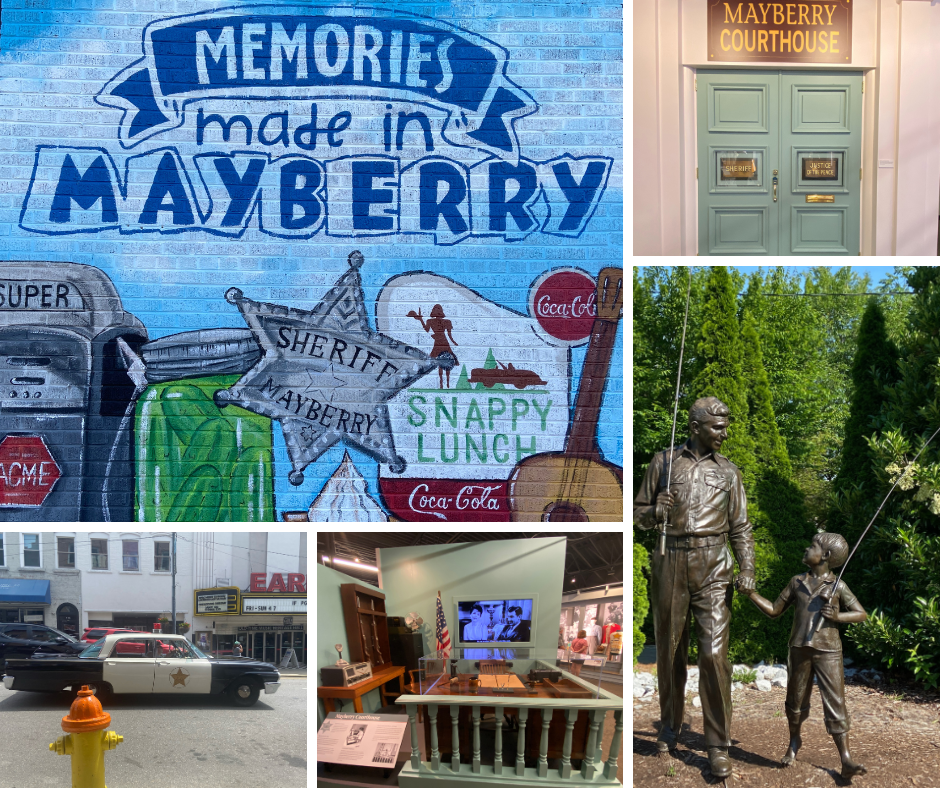
For fans of the beloved 1960s sitcom The Andy Griffith Show, a visit to the quaint town of Mt. Airy, North Carolina is akin to stepping into the fictional world of Mayberry. This charming locale, nestled in the foothills of the Blue Ridge Mountains, holds a special allure as the birthplace and childhood home of the show’s star, Andy Griffith.

On a recent Saturday day trip, a birthday gift from my wife Anita, we made the pleasant drive to Mt. Airy. Arriving in mid-morning, we explored the tree-lined streets and historic downtown area. As we walked past Floyd’s Barber Shop to the Snappy Lunch for an early meal, it’s easy to see why Griffith drew inspiration from his hometown for the idyllic Mayberry setting. The town exudes a warm, welcoming atmosphere that harkens back to a simpler time when life moved at a more leisurely pace.

One of the must-visit attractions for Andy Griffith enthusiasts is the Andy Griffith Museum, which pays homage to the life and career of the iconic actor and comedian. Housed in a lovingly restored building that once served as a theater, the museum features an impressive collection of memorabilia, including costumes, scripts, and personal items from Griffith’s early years. While having a cursory knowledge of Griffith’s television career, neither Anita nor I were aware of his long pre-television drama career, spanning from high school to college to the theater. The museum house a good representation of all his journey’s in the entertainment field.

Visitors can also embark on the self-guided Mayberry Tour, which takes them on a nostalgic journey through the town’s landmarks and filming inspirations from the show (even though they were all recreated on a Hollywood soundstage). From the iconic squad car parked outside the courthouse to the famous Snappy Lunch diner, each stop along the way offers a glimpse into the world that captivated millions of viewers.

Beyond its ties to The Andy Griffith Show, Mt. Airy boasts a rich cultural heritage that is celebrated through various festivals and events throughout the year. The annual Mayberry Days festival, held each September, attracts thousands of fans from around the world who come to experience the town’s charm and participate in a variety of Mayberry-themed activities.

For those seeking outdoor adventures, the surrounding area offers plenty of opportunities for hiking, fishing, and enjoying the natural beauty of the Blue Ridge Mountains. The nearby Pilot Mountain State Park, with its iconic knob-shaped peak, is a popular destination for hikers and rock climbers.

Whether you’re a die-hard Andy Griffith fan or simply someone who appreciates small-town charm, Mt. Airy is a delightful destination that invites you to slow down and savor the simple pleasures of life. With its friendly locals, rich history, and enduring connection to one of television’s most beloved shows, this little town in North Carolina is sure to leave a lasting impression on all who visit.


Of course, it wouldn’t be a Wednesday Weekly Reader post without at least a nod to some literary background, and here’s a couple of books that will certainly give the Andy Griffith fan some pleasurable reading.

Andy Griffith and Don Knotts first met on Broadway in the 1950s. When Andy moved to Hollywood to film a TV pilot for a comedy about a small-town sheriff, Don called to ask if Andy’s sheriff could use a deputy. The friendship and comedy partnership between Sheriff Andy Taylor and Deputy Barney Fife ignited The Andy Griffith Show, elevating the folksy television sitcom into a timeless study of human friendship.

Together, they created a program with a uniquely small-town dynamic that captured the hearts of Americans across the country who watched these two men rocking on the front porch, meditating about the pleasure of a bottle of pop.

Written by Don Knotts’s brother-in-law, Andy and Don is a lively look inside the entertainment industry in the latter half of the twentieth century that is entertaining and provocative.

But behind this sleepy charm, Daniel de Visé’s exclusive reporting “captures the complexity of both men and the intimacy of their friendship with extreme detail and sensitivity” (Publishers Weekly), from unspoken rivalries, passionate affairs, unrequited loves, struggles with the temptations of fame, and friendships lost and regained. Although Andy and Don ended their Mayberry partnership in 1965, they remained best friends for the next half-century.


Andy Griffith is one of North Carolina’s most beloved exports, capturing America’s heart as Sheriff Andy Taylor. Evan Dalton Smith was born in the North Carolina Piedmont over four decades after Andy, just an hour south of Griffith’s hometown of Mount Airy. Both were small-town boys who grew up in similar places, where the counties were dry and the churches plentiful. But for both, there was darkness, crushed hopes, and tragedy, hidden just below the surface.

For Smith and many generations in North Carolina and across the U.S., Andy Griffith was like the air – everywhere, all the time, a part of daily life. Even after he left the state, Smith always felt the pull of home and the lingering ghost of Andy alongside it.

Looking for Andy Griffith is an exploration on celebrity and the self, on home and what that means when you leave it, and why we love and admire the people we do – even if we’ve never met them – all told through the entwined lives of iconic actor Andy Griffith and writer Evan Dalton Smith. It is through Smith’s telling of Griffith’s life that he finds his own story, one that is both informed by and freed from the legacy of one of North Carolina’s most famous sons.


While Mt. Airy will forever be inextricably linked to The Andy Griffith Show and the idyllic world of Mayberry it brought to life, the town’s appeal transcends mere nostalgia. It stands as a living testament to the enduring power of simplicity, community, and finding joy in life’s simple pleasures – the very values Griffith himself embodied through his iconic roles.

As visitors depart this charming town nestled in the Blue Ridge Mountains, they carry with them more than just memories; they take away a renewed appreciation for the unhurried pace, natural beauty, and genuine human connections that have sadly become rarities in our fast-paced modern age.

Mt. Airy is a reminder that the most extraordinary experiences are often found in life’s mundane moments when we allow ourselves to embrace the Mayberry mindset of savoring the simple gifts that surround us each day. By preserving Andy Griffith’s heartwarming legacy, this special place ensures that the wisdom and warmth of Mayberry will continue to inspire generation after generation.


Part of a regular series on 27gen, entitled Wednesday Weekly Reader.

During my elementary school years one of the things I looked forward to the most was the delivery of “My Weekly Reader,” a weekly educational magazine designed for children and containing news-based current events.

It became a regular part of my love for reading, and helped develop my curiosity about the world around us.

Glazed Greatness: The Delicious Lessons of Krispy Kreme and Dunkin’

Most Fridays you will find a post here dealing with my journey to becoming a Modern Elder. That journey is based around four concepts: experience, wisdom, curiosity, and adaptability.

Today I’m linking that train of thought to the fact that it is National Donut Day, and the common thread will be found in reviewing the histories of two of the largest and best-known donut chains in the U.S. – Krispy Kreme and Dunkin’ – for leadership principles.

The source of information on these companies comes from two books: Making Dough: The 12 Secrets Ingredients of Krispy Kreme’s Sweet Success (2004) and Around the Corner to Around the World: A Dozen Lessons I Learned Running Dunkin’ Donuts (2020). In addition, I dropped in on three local donut shops in the last week, culminating in a trip to the Krispy Kreme corporate headquarters in Charlotte, NC, and their flagship store.

It turns out that there is a great deal you can learn from donuts.

Mention the words “Krispy Kreme” and people start licking their lips. The company inspires such loyal customer devotion that new store openings routinely cause traffic jams and attract widespread media attention.

With its iconic green and red logo, tantalizing “Hot Now” sign, and melt-in-your-mouth original glazed recipe, Krispy Kreme has become a beacon of joy and indulgence in a world often sorely lacking in both.

More than eight decades after the first doughnut was handed to a customer in Winston-Salem, North Carolina, Krispy Kreme has grown into one of the world’s most beloved brands.

How has Krispy Kreme managed to build such a successful brand and business, especially since it spends no money on advertising? What does the future hold for this unique corporation? And what can other businesses do to emulate Krispy Kreme’s amazing accomplishments?

“Making Dough: The 12 Secret Ingredients of Krispy Kreme’s Sweet Success” offers an insightful exploration into the rise and success of Krispy Kreme, one of America’s most beloved doughnut brands. Authored by Kirk Kazanjian and Amy Joyner, the book provides a comprehensive narrative that intertwines business strategies, company culture, and personal anecdotes to unveil the key elements that contributed to Krispy Kreme’s rapid growth and enduring appeal.

The book is structured around twelve core principles that the authors identify as fundamental to Krispy Kreme’s achievements. These “secret ingredients” are not merely business tactics but also embody the ethos and values that the company espouses. Each chapter delves into one of these principles, supported by interviews with key figures, historical context, and detailed case studies.

  1. Mix good taste with show business
  2. Be picky about your partners
  3. Make good use of your time and resources
  4. Expand and protect your brand
  5. Think big, but grow carefully
  6. Be a guerrilla marketer with a soft touch
  7. Maintain high standards
  8. Harness the power of technology
  9. Give back to the community
  10. Select, train, and treat your employees well
  11. Build on your success
  12. Keep them coming back

Making Dough provides an entertaining and informative business history of a beloved American brand. The authors appear to have extensively researched Krispy Kreme and gained insights from interviews with executives, franchisees, analysts and others. 

The book’s central core of “12 secret ingredients” provides a useful framework for understanding Krispy Kreme’s success and keeps the storytelling engaging. At times this device was a bit contrived or oversimplified the company’s actual history, but overall it highlights important elements that made Krispy Kreme stand out.

Making Dough is an easy, interesting read with lessons applicable to many businesses – not just a niche story for doughnut lovers. Readers will find an inspiring entrepreneurial and branding success story with insights into franchising, experiential retail, building customer loyalty, and managing growth. 

However, since the book was published in 2004, it doesn’t cover Krispy Kreme’s later struggles, including accounting scandals, over expansion, and various leadership departures.

In summary, Making Dough is a worthwhile read for anyone interested in Krispy Kreme’s history, retailing, franchising or brand-building – just keep in mind it covers a limited time period in the company’s history.

Filled with interesting anecdotes and fascinating facts, Making Dough tells the compelling true story of a company that has managed to maintain a wholesome, small-town image, while achieving phenomenal success through a mixture of customer loyalty, high product standards, technological advancements, and community involvement.

Making Dough shows you how Krispy Kreme’s delectable delights rose to the top and continue to tempt the world. Pour yourself a tall glass of cold milk, grab a napkin (or six), and get ready to discover why, when it comes to donuts, there’s just no beating the OG (Original Glazed, that is) as it comes hot off the line.

Step right up and grab a front-row seat, folks, because we’re about to take a deep dive into the sugary, caffeine-fueled world of Dunkin’, the coffee and donut juggernaut that’s been keeping America running for over seven decades. From its humble beginnings as a single coffee shop in Quincy, Massachusetts, to its current status as a global breakfast behemoth with over 12,000 locations worldwide, Dunkin’ has been serving up smiles and satisfying cravings with its iconic pink and orange logo. 

But what’s the secret sauce behind this donut dynasty? How did a simple coffee and pastry shop become a cultural phenomenon, inspiring everything from wedding cakes to sneaker collaborations? Is it the mouth-watering aroma of freshly brewed coffee that lures in bleary-eyed commuters every morning? The dizzying array of colorful, creative donut flavors that make your taste buds do a happy dance? The warm, friendly atmosphere that makes you feel like you’re part of one big, donut-loving family?

Around the Corner to Around the World: A Dozen Lessons I Learned Running Dunkin’ Donuts by Robert Rosenberg is an enlightening memoir and business guide from the former CEO of Dunkin’ Donuts. Rosenberg recounts his experiences and shares the wisdom he gained during his 35-year tenure leading the company. The book is structured around twelve key lessons, each encapsulating essential insights and strategies that contributed to Dunkin’ Donuts’ evolution from a regional chain to a global powerhouse.

  1. Leadership is paramount.
  2. Family Businesses pose unique challenges.
  3. Quality matters.
  4. Effective planning process.
  5. Importance of striking the right balance between exploitation and experimentation.
  6. The tasks and character of an effective CEO.
  7. The importance of trust and mood in coordinating action.
  8. The exceptional benefits of franchising.
  9. Innovate – test – iterate.
  10. Alignment is critical.
  11. Pick and groom a successor.
  12. Transferable lessons for a life well-lived.

Around the Corner to Around the World offers a candid and engaging look at the challenges and triumphs of running an iconic American business. Rosenberg’s storytelling is straightforward, insightful, and often humorous. He doesn’t sugarcoat his own mistakes or the difficulties Dunkin’ faced.

The book is more than just a corporate history. Rosenberg uses his experience to draw out broader lessons about leadership, entrepreneurship, branding, and adapting to change. Many of these lessons, like the importance of hiring talent, fostering innovation, and understanding your own strengths and weaknesses, will resonate with business leaders in any industry.

At the same time, the book provides a fascinating inside look at the evolution of Dunkin’ Donuts. Rosenberg offers detail on key decisions and turning points, like the creation of Munchkins, the introduction of bagels, and the shift away from a wholesale model. He’s honest about the missteps, like ill-fated attempts to expand to Europe and California.

One minor critique is that the 12-lesson structure can feel a bit forced at times. Some lessons overlap or could be combined. Additionally, those looking for a tell-all may be disappointed. While candid, Rosenberg focuses more on business lessons than personal gossip. Finally, though published in 2020, the time period covered ends in 1998 and thus lacks all the changes made in the last two decades.

Overall, Around the Corner to Around the World is an insightful, engaging read for anyone interested in business leadership, entrepreneurship, or the history of an iconic American brand. Rosenberg comes across as a sincere, savvy leader who played a pivotal role in Dunkin’s success.

Around the Corner to Around the World will make you want to grab a cup of your favorite Dunkin’ brew, sit back, and get ready to discover why America truly “Runs on Dunkin’.” But be warned: by the time you finish reading, you might just find yourself craving a Boston Kreme or a Munchkin (or a dozen).


In the ever-evolving landscape of business and entrepreneurship, the enduring success of Krispy Kreme and Dunkin’ Donuts serves as a testament to the power of unwavering commitment, strategic innovation, and a deep understanding of customer desires. These doughnut dynasties have not only satiated our collective sweet tooth but have also imparted invaluable lessons on branding, leadership, and the art of building a dedicated following. As we savor the insights gleaned from their remarkable journeys, we are reminded that true greatness often lies in the simplest of pleasures – a warm, freshly baked doughnut and a cup of coffee shared with loved ones. In a world of ever-changing trends, the timeless allure of these doughnut empires reminds us that sometimes, the sweetest things in life are the ones that never go out of style.


In your donut appetite is still not satisfied, here’s few more articles to fill you up!


Glazed, Frosted, and Sprinkled: Getting Ready for National Donut Day

Though I certainly enjoyed donuts throughout my childhood, a single book is responsible for the fondness I have for them as an adult.

Books will do that to you.

Like many things in my life, this fondness all came about because of a book: Homer Price.  I have great memories of reading one of the stories in the book about Homer and Uncle Ulysses and the automatic doughnut machine.

 I remembered the image of doughnuts stacked on the counter, shelves, and stools with more coming out of the machine every minute.

I didn’t realize at the time how a book about donuts could be linked to so much more in life.

THE DOUGHNUTS takes place in the 1940’s when an uncle of a boy named Homer opens a luncheonette. Uncle Ulysses, much to the chagrin of his wife Agnes, is a man fond of new-fangled gadgets and has installed a doughnut making machine in his restaurant.

One evening, while Homer is visiting his uncle’s restaurant, Uncle Ulysses leaves Homer in charge of putting the finishing touches on the doughnut machine while he stops by the barber shop. Homer works on the machine and is soon visited by an “advertising man” who stops by for coffee and a doughnut.

While the man waits for the doughnut machine to begin working, a wealthy woman enters the restaurant. She asks Homer if she can mix up the doughnut batter for him, takes off her diamond bracelet, and sets to work. 

Soon the doughnut machine is working – too well! Homer cannot stop the doughnuts from popping out of the machine! Her job finished, the woman leaves and Homer and the advertising man look for places to store the doughnuts.

Homer and the man put their heads together and come up with a scheme to sell the doughnuts “2 for 5 cents” in order to be rid of them. Eventually, the wealthy woman returns, claiming to have left her bracelet in the restaurant.

Shortly, it becomes evident that the bracelet must be in one of the thousands of doughnuts. Homer has an idea! He makes a sign offering one hundred dollars for anyone who can find the bracelet. It doesn’t take long for the doughnuts to be gobbled up and the bracelet to be found.

The end of the story finds Uncle Ulysses trying to explain to skeptical Aunt Agnes why there are tons of crumbs from dozens of doughnuts left on the restaurant counter!

Trivia Note: Have you ever seen the short film The Doughnuts, based on the story above?


As I recall, the copy of Homer Price I had as a boy came from that wonderful invention designed to sell books to eager young readers like me: the Scholastic Book Fair. Not only could I order books, but our classroom benefited too by receiving books for our in-room library. Sadly, many years later when my kids were in elementary school, the Book Fair was less focused on books and more on junk. That’s another story for another time.

What’s the big deal with a child’s book published in 1943, read by a first grade teacher to her class in 1964, bought by a second grader as soon as he could in 1965, and fondly remembered almost sixty years later?

Regular readers of this website know that reading and books are a big deal to me. Introduced by my schoolteacher mother, encouraged by my daily reader father, and nurtured over the years by teachers and professors, it’s not too far off the mark to say these images explain the big deal about reading:

Books have the power to ignite the imagination and foster creativity in children. This imaginative capacity can carry over into adulthood, allowing individuals to approach challenges with creative problem-solving skills and innovative thinking. Seeing this image, and reading about Homer’s dilemma and ultimate solution planted a seed in me: sometimes the best way out of a jam is to sit and think first, and then act on the solution that comes to you.

Reading from an early age has been linked to improved cognitive abilities, such as better language skills, broader vocabulary, enhanced critical thinking, and stronger analytical capabilities. These cognitive benefits persist into adulthood, enabling individuals to process information more effectively and think more critically. Putting together a disassembled donut machine, then making it work so well that Homer had to come up with an idea to get rid of all those donuts – that’s critical thinking!

Children who cultivate a love for reading at an early age are more likely to maintain a curiosity and thirst for knowledge throughout their lives. Books become a gateway to continuously learning new things, exploring different perspectives, and expanding their horizons. Homer’s curiosity got him into the problem, and willingness to continue thinking got him out of it.

I could go on, but I hope you get the point: While not everyone who loved reading as a child maintains that passion into adulthood, those who do often find that their early love of books has profoundly shaped their intellectual, emotional, and personal development in enduring ways.

All from a child’s book about a runaway donut machine…

…which is where I now hope to make the connection for you!


It’s that time of year again when the sweet, doughy aroma of fresh donuts fills the air and Americans come together to honor one of the nation’s most beloved breakfast treats. Friday, June 7th marks National Donut Day 2024, a delicious holiday that pays homage to the humble yet iconic donut. This is an annual recognition, falling on the first Friday of June each year.

With roots tracing back to World War I, when Salvation Army “Lassies” fried donuts in soldiers’ helmets as a morale-boosting treat, National Donut Day has become an annual tradition that transcends generations. This year’s celebration promises to be even sweeter, with donut shops and bakeries across the country rolling out their finest creations to mark the occasion.

From the classic glazed to the creative cronut, the donut landscape has evolved dramatically over the decades, reflecting the changing tastes and culinary adventurousness of American consumers. Gourmet donut boutiques have taken the humble pastry to new heights, adorning them with artisanal ingredients like small-batch jams, craft chocolates, and hand-torched meringues.

At the same time, the nostalgia for simpler pleasures remains strong, with long lines still forming at old-fashioned donut counters for pillowy yeast-raised rings and sugar-dusted cake donuts. After all, there’s something undeniably comforting about biting into a fresh, warm donut that instantly transports you back to childhood.

There are several reasons why donuts have become such a beloved and popular food in American culture:

  • Convenience and portability: Donuts are easy to eat on-the-go, making them a convenient breakfast or snack option for people with busy lifestyles.
  • Nostalgia and comfort food: Donuts evoke a sense of nostalgia and comfort for many Americans, reminding them of childhood memories, family gatherings, or neighborhood donut shops.
  • Variety and customization: Donuts come in an endless array of flavors, glazes, toppings, and fillings, allowing for personalization and catering to diverse tastes.
  • Indulgence and treat: Donuts are often seen as an indulgent treat or reward, satisfying cravings for something sweet and decadent.
  • Cultural significance: Donuts have become deeply ingrained in American culture, with events like National Donut Day and the association with coffee breaks and diners.
  • Accessibility and affordability: Donuts are widely available and relatively inexpensive, making them an accessible indulgence for people from various socioeconomic backgrounds.
  • Marketing and branding: Major donut chains like Dunkin’ Donuts and Krispy Kreme have successfully marketed and branded their products, contributing to the popularity of donuts.
  • Versatility: Donuts can be enjoyed at any time of day, from breakfast to dessert, and can be served on various occasions, from casual gatherings to special events.

The combination of convenience, indulgence, nostalgia, variety, and cultural significance has made donuts a quintessential American food that appeals to a broad range of consumers and has become deeply embedded in the country’s culinary landscape.

This year, celebrate National Donut Day by indulging in your favorite fried confection, whether it’s an old reliable or an Instagram-worthy gourmet creation. Share one with a loved one over a steaming cup of coffee, or treat your office mates to a box of assorted delights.

However you choose to commemorate the occasion, take a moment to appreciate the humble donut and its rich place in American culture and history. From the battlefields of World War I to the modern artisanal bakeries, the donut has proven its enduring appeal and cemented its status as an iconic American comfort food.

So grab a napkin and prepare to get deliciously sticky – it’s almost National Donut Day, and the only acceptable response is to treat yourself to a sugary, doughy delight – and a good book!


The rings of batter kept right on dropping into the hot fat, and the automatic gadget kept right on turning them over, and the other automatic gadget kept right on giving them a little push, and the doughnuts kept right on rolling down the little chute just as regular as a clock can tick – they just kept right on a comin’, an’ a comin’, an’ a comin’, an’ a comin’.

Uncle Ulysses

Welcoming Hygge Hospitality into Your Home


Hygge [HYOO-guh] has become a cultural buzzword. When many read about this Danish practicetheir shoulders lift in excitement, then fall in exhale. In a culture of rush, hygge appeals to their desire for rest – for slow living, shared moments, and fostered friendships. Hygge has strong ties to beauty, contentment, and well-being. It’s warm and inviting. Hygge is the opposite of hustle. It eschews abundance. It savors. It takes things slow and envelopes you in sanctuary. Hygge is home. When you sit in a comfy chair by the fire, that’s hygge. When you arrange a fresh bouquet of wildflowers on a bedside table, that’s hygge too. Candles, soft furnishings, natural light, fresh-baked pastries, intimate gatherings with friends – these are what come to mind when you think of hygge. But hygge can be so much more. 


In Holy Hygge, author Jamie Erickson unites the popular Danish practice with the deep, theological truths of the gospel. She unpacks the seven tenets of hygge: hospitality, relationships, well-being, atmosphere, comfort, contentment, and rest. In addition, Erickson shows how the external veneer of a lifestyle can create a life-giving home only when placed under the hope of the gospel. 

Holy Hygge provides practical ideas for using hygge to gather people and introduce them to faith in Christ. Each chapter concludes with discussion questions, Scripture references, and a prayer.


In recent years, the Danish concept of “hygge” (pronounced hoo-gah) has been embraced around the world as a way to cultivate coziness, contentment and enjoying life’s simple pleasures. While it doesn’t directly translate to English, hygge essentially means creating an atmosphere that fosters feelings of warmth, comfort and conviviality.

The hygge philosophy emphasizes cherishing ordinary, cozy moments – savoring a hot mug of tea, lighting candles, relaxing with loved ones, or enjoying nature’s beauty. It’s about being present and appreciated the small joys in life. As such, it’s a mindset perfectly suited for home hospitality.

Incorporating hygge into your home entertaining creates an enveloping embrace for guests, a simple charm that makes them feel at ease. It encourages true hosting from the heart, focused on developing connections rather than presenting a showpiece. Here are some ways to invite hygge’s special warmth into your home for visitors:

Ambiance Matters – Lighting is key for a hygge environment. Keep things softly illuminated with lamps, candles, and the flicker of a fireplace. Add plush textiles like chunky knit blankets, pillows and area rugs. Choose warm color schemes. Play low-key background music. All these elements create an aura of soothing coziness.

Nurture Nostalgia – Vintage, handcrafted or heirloom items spark feelings of nostalgia central to hygge. Incorporate them into your decor – grandma’s ceramic vase, that needlepoint pillow you made, or a restored antique dresser. Display old family photos. Offer homey treats like fresh bread or cookies. These comforting touches make guests feel sentimental and at home.

Be Present – The hygge mindset is about savoring each moment rather than stressing over hosting formalities. Tune out distractions like your phone. Talk, laugh and connect with guests on a genuine level. If you cook, embrace family-style meals around the table. Pour another glass of wine. Hygge values emotional warmth over perfection.

Share Experiences – Some of the best hygge experiences come from doing cozy activities together. Suggest a living room “hyggekrog” (nook) where everyone can lounge by the fire playing board games. Swap favorite book quotes and passages. String popcorn. Make hot toddies. These simple shareable moments create lasting hygge memories.

Ultimately, hygge home hospitality means prioritizing authenticity over artifice. It’s about helping guests feel cared for, comfortable and able to make meaningful memories. With its emphasis on simplicity, contentment and engagement, hygge offers a heartwarming path to making your next home gathering truly special.


In Holy Hygge, author Jamie Erickson combines the Danish concept of hygge – creating cozy, convivial atmospheres that cultivate well-being – with principles of Christian hospitality and community building. The book explores how embodying hygge’s values like simplicity, togetherness, and cherishing life’s small joys can help create warm, engaging spaces where people feel welcomed to gather, connect with each other, and allow the gospel message to take root.

Erickson provides ideas for hygge-inspired practices to incorporate into church communities, small groups, and homes. This includes suggestions for comfortable communal spaces using soft lighting, plush textiles, and vintage decor pieces. She also recommends ways to build hygge through shared experiences like cooking nourishing meals together, faith-based arts and crafts, hymn singing, and meaningful conversation.

Throughout the book, Erickson aims to help readers move beyond surface hospitality into fostering deeper interpersonal connections. By embracing hygge’s spirit of relaxed conviviality, she believes church groups and families can create fertile ground for exploring big spiritual questions, providing mutual support, and allowing the gospel to organically grow in people’s hearts.  

Erickson presents an appealing vision for creating intimate, engaged faith communities by channeling hygge’s distinctive warmth and “unhurriedness.” Her premise that the gospel can spread most authentically through such cozy, present-focused gatherings makes conceptual sense.   

Where the book hits some uneven patches is in awkwardly trying to merge hygge’s essence – which is largely about indulging in simple creature comforts and self-care – with Christian teaching’s emphasis on sacrifice, spiritual discipline, and focusing outward. Some of the recommendations for hygge spiritual practices like making warming beverages or relaxing by the fire can feel a bit disjointed from their intended higher purposes.

That said, Erickson’s enthusiasm for using hygge to build a welcoming sense of togetherness and facilitate deeper faith bonds shines through compellingly. Her suggestions for creating intimate, living room-style faith spaces and making time for unhurried, substantive group discussion provide an appealing alternative vision to typical gathering models.    

Overall, while the hygge-to-holy living synthesis isn’t fully seamless, Holy Hygge offers some inspiring, unconventional ideas for embodying the hospitality and communion core to Christian community life in new, more relaxed yet still meaningful ways. It’s a comfortingly distinctive take on “warmly abiding” together as believers.


A Round Look at the Hole History: The Donut’s Journey Through America

From their simple beginnings to their status as a beloved treat, donuts have an undeniably sweet spot in American history. These delicious rings of fried dough have evolved from a simple snack to an icon of comfort food culture. As we embark on this sugary journey in anticipation of the upcoming National Donut Day on Friday, June 7, let’s explore the fascinating history of donuts in America.

A quick note: the spelling of doughnut and donut will be used interchangeably depending on the use from the source. No matter how you spell it, the taste is what matters!

Early Beginnings: Dutch Influence and the “Olykoek”

The story of the doughnut in America begins with Dutch settlers in the early 18th century. They brought with them recipes for “olykoeks,” which translates to “oil cakes”—a simple concoction of dough balls fried in pork fat. These early versions were not the perfect rings we know today but rather crude, often heavy balls of dough with a slightly raw center. 

In Glazed America: A History of the Doughnut, author Paul R. Mullins notes that these early doughnuts were enjoyed by families and communities during social gatherings, highlighting their role as a communal treat long before they became a commercial product.

The Invention of the Hole: A Delicious Innovation

The iconic donut hole was purportedly invented in 1847 by a young American sailor named Hanson Gregory. Frustrated with the undercooked centers of traditional donuts, Gregory had the brilliant idea of punching a hole in the middle, ensuring even cooking throughout. This simple yet revolutionary change transformed the donut into the perfect ring-shaped confection we love today.

In his book Donuts: An American Passion, author John T. Edge explores this anecdote, emphasizing how Gregory’s practical solution paved the way for the modern donut. The innovation allowed for consistent texture and easier mass production, which would become crucial as donuts entered the commercial sphere.

World War I: Donuts on the Front Lines

Donuts gained further prominence during World War I, thanks to the Salvation Army “Doughnut Lassies.” These brave women served donuts to soldiers on the front lines, providing a taste of home and boosting morale. The simple pleasure of a fresh donut offered comfort amidst the chaos of war.

A look at the history of the Salvation Army delves into this period, illustrating how the Doughnut Lassies not only fed the troops but also solidified the donut’s place in American culture. The soldiers returned home with a newfound appreciation for the treat, sparking a nationwide craving.

The Rise of the Donut Shop: Krispy Kreme, Dunkin’ and Beyond

The post-war era saw a boom in donut shops across America. Adolph Levitt began selling fried doughnuts from his bakery in 1920. Unable to keep up with the demand, he created a mechanical gadget in which the dough rings travelled along a channel overflowing with boiling oil and then once cooked, ascended a moving ramp before falling into a basket. In 1934, the World’s Fair in Chicago proclaimed donuts “the hit food of the Century of Progress,” propelling them into the culinary spotlight. Donuts were celebrated for their affordability, convenience, and deliciousness.

In 1937, in a rustic clapboard building on South Main Street in Winston-Salem, NC, Vernon Rudolph fried up the first original glazed Krispy Kreme doughnut. What began as a hole-in-the wall has blossomed into one of the world’s premier doughnut companies, a global cult icon and intriguing brand.  In March of this year, McDonald’s and Krispy Kreme announced a sweet update for doughnut fans everywhere: Fans will begin spotting Krispy Kreme doughnuts in their local McDonalds’s restaurants as part of a phased market rollout across the country.

Dunkin’ Donuts, founded in 1950 by William Rosenberg, played a pivotal role in popularizing donuts. With its focus on freshness and variety, Dunkin’ Donuts transformed the humble treat into a ubiquitous American staple. The brand’s catchy slogan, “America Runs on Dunkin’,” reinforced the donut’s role in daily life.

Modern Day: Gourmet Trends and Timeless Classics

Today, the donut landscape is more diverse than ever. Artisanal donut shops offer gourmet creations with unique flavors and high-quality ingredients, appealing to foodies and traditionalists alike. From bacon maple bars to matcha-glazed rings, modern donuts cater to a wide range of tastes and preferences.

Yet, despite these innovations, the classic glazed donut remains a favorite. Its simplicity and nostalgia evoke the essence of what makes donuts special: comfort, joy, and a touch of indulgence.

The history of donuts in America is a testament to their enduring appeal. From Dutch settlers to modern-day gourmet bakers, each era has contributed to the rich tapestry of donut lore. So next time you savor a donut, remember that you’re partaking in a delicious slice of American history.

In anticipation of National Donut Day coming up on Friday, June 7, here’s a baker’s dozen books from my library that will be a great addition to accompany your next sugary sweet donut snack:


Part of a regular series on 27gen, entitled Wednesday Weekly Reader.

During my elementary school years one of the things I looked forward to the most was the delivery of “My Weekly Reader,” a weekly educational magazine designed for children and containing news-based current events.

It became a regular part of my love for reading, and helped develop my curiosity about the world around us.

#BobsBurgersandBooksBirthdayBash

If you’re looking to connect with me during the latter morning through early afternoon hours today, I’m on an extended lunch break…


Expressing the joys and delights of reading is a challenging endeavor. How can one adequately convey the multitude of pleasures that arise from the seemingly simple act of opening a book and immersing oneself in its pages? Many have tried to capture this experience over the centuries, with varying levels of success.

Here’s a couple of volumes that speak to that issue:

…and a few more:

Reading has been described in many ways – a selfish yet serene lifelong indulgence, a great gift, a moral enlightenment, more sweet, gracious, elevating and fortifying than any other activity. It has been called an intimate conversation with people across unseen generations, a home, a sustenance, an invincible companion, a pleasure beyond compare.

Ultimately, the pleasure each individual derives from reading is a highly personal experience. Despite the efforts of those who have attempted to define it for us, we must discover and understand the joys of reading for ourselves.

So, during my extended birthday lunch hour today, I’m stepping away from my recent successes in eating more healthy by enjoying the best burger in Charlotte with Anita (here we come, Brooks’ Sandwich House), followed by dropping in on two of my favorite independent bookstores, Julia’s Café & Books and Book Buyers.

When to Read
Mine is a simple system: I read from morning till bedtime, with breaks for my job, family, meetings with friends, exercise, household chores and periodic review of my life’s greatest blunders. On the days I don’t read, I write. As I say, it’s a simple system. Many people complain that they have no time for books, yet somehow they manage to spend three or more hours a day watching television or scrolling through social media on their phones. You pays your money and you takes your choice.


Michael Dirda, Washington Post, “10 Rules for Reading from Someone Who Does It for a Living”

Part of a regular series on 27gen, entitled Wednesday Weekly Reader.

During my elementary school years one of the things I looked forward to the most was the delivery of “My Weekly Reader,” a weekly educational magazine designed for children and containing news-based, current events.

It became a regular part of my love for reading, and helped develop my curiosity about the world around us.

Making the Table the Center of Your Home

What’s becoming clearer and clearer to me is that the most sacred moments, the ones in which I feel God’s presence most profoundly, when I feel the goodness of the world most arrestingly, take place at the table. The particular alchemy of celebrations and food, of connecting people and serving what I’ve made with my own hands, comes together as more than the sum of their parts.

Shauna Niequist

Bread & Wine is a collection of essays about family relationships, friendships, and the meals that bring us together.

This mix of Anne Lamott and Barefoot Contessa is a funny, honest, and vulnerable spiritual memoir. 

Bread & Wine is a celebration of food shared, reminding readers of the joy found in a life around the table. It’s about the ways God teaches and nourishes people as they nourish the people around them. It’s about hunger, both physical and otherwise, and the connections between the two.


From the beginning of the Bible, food has played a central role in many pivotal stories and events – like the forbidden fruit from the Tree of Knowledge, Esau trading his birthright for a meal, the miraculous provision of manna in the wilderness, Jesus turning water into wine at a wedding, and the Last Supper becoming the basis for centuries of Christian tradition. Food matters deeply, both then and now. 

However, the church has drifted away from emphasizing the physical acts of eating and cooking, preferring to focus solely on the mind, heart and soul. Meanwhile, modern society has pushed people towards artificial, mass-produced, sterile foods consumed hastily without appreciation. Many no longer see significance in the meals we eat and the act of gathering around the table.

But we should reclaim the importance of food and dining. For many, sharing a meal can be life at its richest. Rediscovering the spiritual meaning in what we eat, how we eat it, who we eat with, and where we eat can provide new profundity to our daily lives. The dinner table offers an opportunity to reconnect with something we have lost along the way.

Reading Bread & Wine should move you to bring back the table to the center of your home. Shauna Niequist’s challenge is to do just that.

She urges you to express your love to someone by inviting them over for dinner at 6 p.m. Open your door wide and welcome your loved ones into the inevitable chaos with open arms and laughter. Turn on the stove, chop ingredients, stir and season with unbridled love. Start with an onion and olive oil, then let your creativity flow into one of a million possible dishes. 

Gather your loved ones around your table and nourish them with love, honesty and the flavors and aromas that evoke cherished memories and the best stories of your lives. Invest yourself fully in the sacred bonds of friendship – God’s greatest evidence of His presence on earth. More than anything, Niequist implores us to come to the table, literally and metaphorically.

We don’t come to the table to fight, prove points or stir up conflict. We come because our hunger draws us there. We come with needs and an admission of our human fragility. The table is a great equalizer, a level playing field many seek. It’s a place where we can stop striving, remove our masks, and allow ourselves to be nourished like children. 

In a world that prides self-sufficiency and powering through needs, the table offers a safe space to rest in our vulnerability. It’s where we can let others attend to our needs. If a home is a body, the table is the heart – the sustaining center of life and health. 

Come to the table.