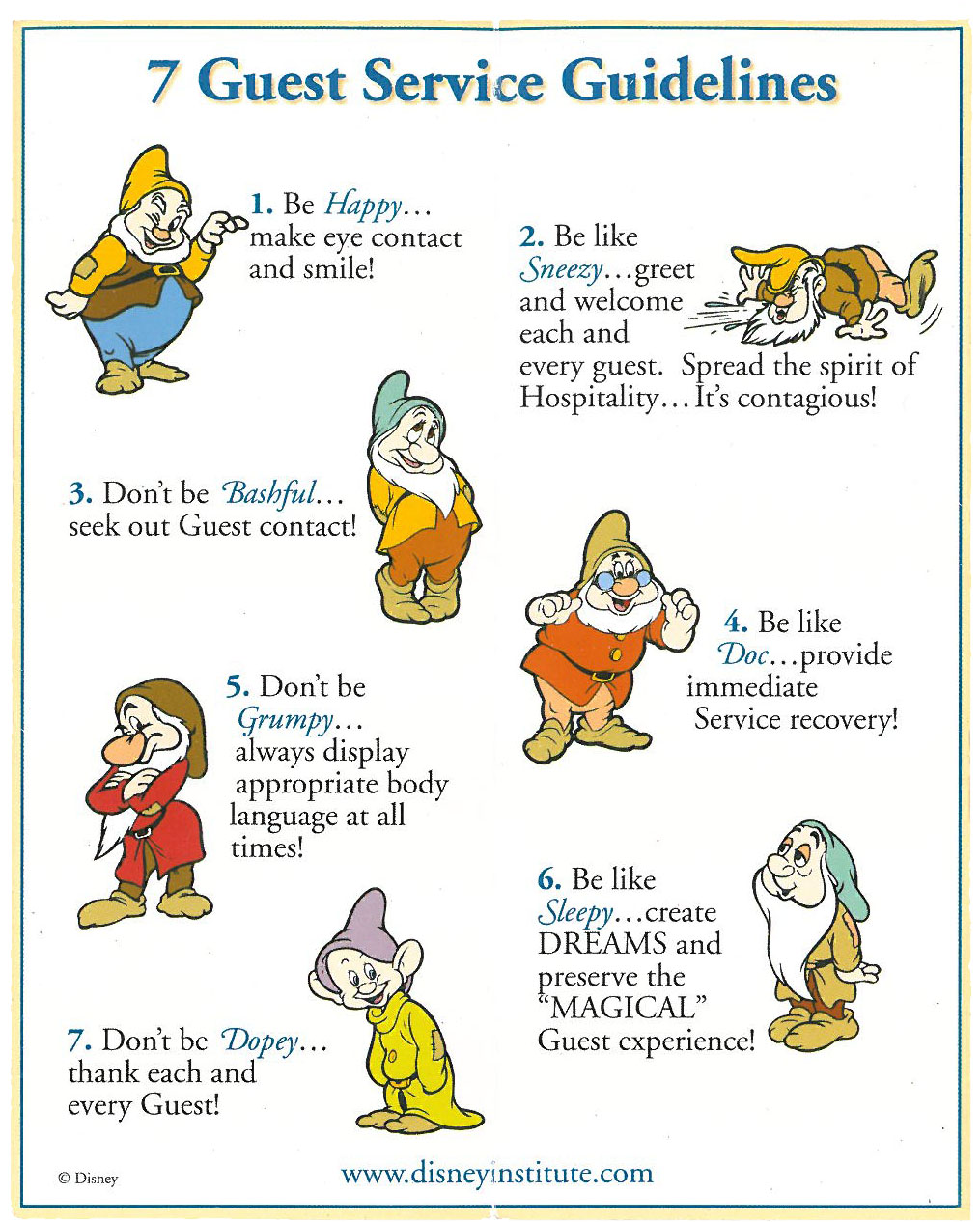
The Value of Guest Experiences

You Are in The Guest Experience Business – Whether You Know It or Not

Guest Experiences should be fundamental to the success of your church.

For many churches, Guest experiences are the single greatest predictor of whether Guests will return – or go somewhere else.

A Guest Experience goes to the heart of everything you do – how you conduct your weekend services, the way your teams behave when they interact with Guests and each other, the sense of welcome you provide. You literally can’t afford to ignore it, because your Guests take it personally each and every time they touch your organization – be it services, people, or places.

If the above is true, why are so many church leaders seemingly blind to the importance of Guest experiences? Primarily, it’s because they don’t know what they don’t know – starting with what a Guest Experience actually means. While most church leaders have at least heard the term Guest Experience, they often believe it’s just another way welcoming “visitors” (more on this dreaded word here).

That misunderstanding is a disaster in the making. If you don’t understand what the Guest Experience is and why it’s important, you risk losing your Guests to organizations that do – and I don’t mean other churches.

Your church has competition…and it’s not the church down the street.

Like it or not, we live in a consumer-driven society, and the people who come to our church – you and me – and the people we are trying to reach are consumers.

With consumers comes competition.

If your church is going to be effective in its mission, you must beat the competition.

Mark Waltz, Granger Community Church

Pretty strong words…

But dead-on accurate.

The good news is that our “competition” is not the other churches in your town. As a matter of fact, most of them are on your team.

So who is your competition? Here is how Waltz sees it:

Your competition, the rival that will keep people away from your church, is any business, services, or experience your Guests have encountered in the past few weeks.

That competition includes restaurants, malls, golf courses, amusement parks, movie theaters, sporting events, and so on.

Bottom line: the competition for your Guests began when they were wowed in another environment. Your Guests have high expectations that are formed every day from new encounters with excellence and conscientious care.

Although too much of their world is merely adequate, they know excellence, and they return to place where they experience it.

Bottom bottom line: Will your Guests’ experience in your church be worth getting out of bed?

To appreciate what Guest Experience really means, let’s start by clearing up a few misconceptions about it. Here are a few things that the Guest Experience is not.

  • It’s not soft and fluffy – you love your Guests because you think your church offers them something they can’t get anywhere else. But loving your Guests won’t help you succeed unless you do something about it; like making it easy to find your building and then get inside; finding the right place for your family; providing opportunities for them to engage with others; encouraging them to take the next step – whatever that might be. All of these (and more, as you will see) are critical aspects of Guest experiences.
  • It’s not Guest Services – This is a subtle concept, but Guest Services is more of a reactionary term. People come to Guest Services when they have a problem or need help. It’s like saying that a safety net is a trapeze act. The net is important to the act, but if the performer has to use the net something has gone wrong with the show.
  • It’s not welcoming visitors – Do you have Visitor parking? Visitor packets? A Visitor’s Center? Do you welcome your visitors during the worship experience? And on and on…The first step in creating a WOW! Guest Experience is to remove the word visitor from your vocabulary, never to be used again.

If these are some of the things that the Guest Experience is not – what, then, is it?

Here’s the beginning of definition, which I hope you will customize to your own setting:

The Guest Experience is all the connections and services your organization offers to someone who comes to your campus, how they interact with the people and processes there, what your brand stands for. It’s what your Guests think happened when they tried to learn about you online or in person, or maybe over the phone. What’s more, it’s about how they felt about those interactions: excited, happy, and reassured, or nervous, disappointed, and frustrated.

Guest Experiences are how your Guests perceive their interactions with your organization.

Once you understand this, you can lead your organization from the outside in, bringing the perspective of your Guests to every decision you make.


Part 2 of a multi-part series based on the book Outside In

Outside In

These posts “translate” the world of customer service to the language and setting of Guest Experiences in the church.

>> Read Part 1

Translating Customer Experience for ChurchWorld Leaders

Customer service is, quite simply, how customers perceive their every interaction with an organization. This may come as a shock to you, but churches should have customers, too. 

We just call them Guests.

Just over two years ago, Harley Manning and Kerry Bodine, customer experience analysts at Forrester Research, released a book entitled “Outside In.” Subtitled The Power of Putting Customers at the Center of Your Business, Outside In offers a complete road map to attaining the experience advantage.

When I read the book, it created a whole new awareness of how “customer service” in the corporate environment could be “translated” into the Guest Experience at churches.

If you are a ChurchWorld leader, you need to understand the powerful truths contained in this book. Today I will begin a series of updated posts from two years ago about the book Outside In. This will help introduce a new season of personal emphasis on Guest Experiences for churches, and some exciting news!

Outside In certainly stands on its own, but over the next few days I’m going to be translating the content into the language of ChurchWorld Guest Services, and making applications to how you can take advantage of the Guest Experience in your church. Go ahead and order a copy from Amazon now. It’ll be here in a couple of days. You’ll be referring to it frequently. In the meantime, here’s an outline for your consideration.

The Value of Guest Experience

  • You need your Guests more than they need you
  • You are in the Guest experience business – whether you know it or not

The Guest Journey

  • Discover
  • Evaluate
  • Attend
  • Access
  • Use
  •  Get support
  • Leave
  • Re-engage

The Three Levels of Guest Experience

  • Meets needs – I accomplished my goal
  • Easy – I didn’t have too work hard
  • Enjoyable – I felt good about that

The Guest Experience Ecosystem

  • Deconstructed
  • Visible to customers
  • How to create a Guest experience ecosystem

The Six Disciplines of Guest Experience

  • Strategy
  • Guest Understanding
  • Design
  • Measurement
  • Governance
  • Culture

The Path to Guest Experience Maturity

  • Improve
  • Transform
  • Sustain

The Four Adoption Levels of Guest Experience

  • Missing
  • Ad Hoc
  • Repeatable
  • Systematic

Transformation Priorities

  • Build on strengths
  • Shore up weaknesses

The Rise of the Guest Experience Team

Part 1 of a multi-part series based on the book Outside In 

Outside In

These posts “translate” the world of customer service to the language and setting of Guest Experiences in the church.

NEXT: The Value of Guest Experiences

Take the Magnetic Test for Your Guest Experience Teams

Magnets have wonderful properties; one of the most amazing is they can both attract and repel.

In a previous post, I wrote about “Magnetic Personalities“. If you haven’t read it yet, I encourage you to jump over and take a look at it – it’s a quick read, and it will give some background to the rest of this post. Go ahead – I’ll wait…

What goes for magnetic persons also goes for magnetic teams – like the Guest Experience team at your church. Sometimes the very thing that makes you “attractive” may also be “repelling” to someone else. Your team may go by another name, you may have multiple teams, but I am willing to bet that if you are the leader of such a group, you are always looking for ways to improve how you do what you do. Are you ready?

Not so fast! Before you can improve, you need to know where you are – you need to establish a baseline measurement.

Here is a list of questions to assist you in identifying your present level of Guest Experiences. The list is adapted from a great book by Chip Bell entitled Magnetic Service. Answer “Yes” or “No” to each question:

  1. Do your Guests believe your church listens to them more deeply than almost any other organization they can think of?
  2. Do you anticipate Guests’ future needs so well that Guests feel you can practically read their minds?
  3. Are Guests given an opportunity to participate in a different way than they would have expected?
  4. Does your Guest Experience have such sufficient consistency such that Guests can trust it as being repeatable and not serendipitous?
  5. Do Guests see your church as rather daring or gallant in this approach?
  6. Do Guests think you and other team members in your church have more fun than most people?
  7. Are Guests given a chance to learn a lot simply through their encounter with your church?
  8. Do Guests witness you and others on your team perpetually improving service?
  9. Is the interpersonal engagement with you so unforgettable that Guests think positively about it again and again?
  10. Do Guests view their Guest Experience as special, distinctive, and not the usual “same old same old” approach?
  11. Do Guests comment on how the church is almost always super comfortable to be a part of?
  12. Do Guests feel completely free of dissonance and anxiety when dealing with your church?
  13. Does your Guest Experience reflect a deeper destiny, vision or commitment to serve?
  14. Is your Guest Experience delivered in a way that clearly reflects a wholesome and generous attitude?

How many honest “no’s” did you have? If you answered “no” more than three or four times, you have gaps to fill, holes to repair, and practices to start.

Congratulations! You now have a baseline measurement of your Guest Experience…

…where do you go from here?

Exceeding Guest Expectations Has a Unique Starting Point

There are 2 steps you must take in order to exceed your Guest’s Expectations.

Exceeding Guest Expectations

First, you have to meet their expectations. What you add from there will create experiences that are memorable. That’s the “easy” part!

Second, you have to become one of them – a guest.

Bet you haven’t thought about that one much – or at all!

As a matter of fact, it takes a lot of work to see through a Guest’s eyes. After all, everything to you is old hat, normal, and just fine.

But to a Guest? Maybe not so much.

When is the last time you talked to Guests – of all ages, backgrounds, and family situations? Have you asked them questions that reflect your interest in them, and give you insight into their thoughts and expectations?

Have you entered your campus for worship and considered what your expectations might be if this were your first time?

  • Where do I turn in?
  • Where do I park?
  • Which door do I enter?
  • Where do I take my kids?
  • How do I find out more information about anything?
  • Where do I go for worship?
  • What’s my next step?

Remember, your Guest hasn’t been to your campus before, so they don’t know anything about the questions above!

What about Guests in a wheelchair? Or a single mom carrying an infant in one arm with a diaper bag over her shoulder while holding on to a 4-year old? Or a hearing-impaired Guest? Or…

 You don’t know what the expectations of your Guests are until you understand who your Guests are.

If your Guests don’t have their expectations met, then you’ve missed the first step in exceeding those expectations. To first meet their expectations, you have to know and understand who your Guests are, and what they are expecting.


It’s Better to be a Pirate than Join the Navy

With all the hullabaloo about the sales numbers for Apple’s iPhone 6 over the weekend (10 million phones!), here’s a reminder of what’s behind Apple’s success:

Leading Apple with Steve Jobs details the management principles Jay Elliot learned from Jobs – and what every manager can learn about motivating people to do the best work of their lives.

Elliot was personally hired by Jobs just in time to accompany him on the last of his historic visits to Xerox’s Palo Alto Research Center – visits that changed the course of computing (the graphic user interface and the mouse, among others). Elliot was Senior VP of Apple, overseeing all company procedures and strategic planning, as well as software development and HR.

First, an image:

Recognize it? This is the flag designed by a couple of the original Macintosh team and flown over the building that housed the small but outspoken crew that was responsible for bringing Jobs’ vision of the personal computer to the masses. It reflected a phrase that Jobs used at a team retreat:

It’s better to be a pirate than join the navy

Those with a cursory knowledge of the Apple story might think that this is a reference to Apple against the rest of the computer world – which it has been for all of its existence. But the real origin of this phrase and the accompanying image comes from Jobs’ insistence of creating a visionary team within Apple – a team that would band together and fight against the corporate bureaucracy that Apple had become in just a few short years.

To protect innovation, Jobs created a company within a company, gave them their own identity, and turned them loose. He didn’t want the Macintosh group to be dragged into the same mess (Jobs used a more earthy term) and lose their entrepreneurial focus – the ability to see and be motivated by an inspiring vision of the future. Jobs’ achieved this by

…building an environment that makes people feel they are surrounded by equally talented people and their work is bigger than they are. The feeling that the work will have tremendous influence and is part of a strong, clear vision.

The rest is history…

Application for ChurchWorld:

Churches don’t have a product like Apple, but then again Apple has always been more than just a product. It’s about creativity and innovation and experience and passion and people – terms which certainly have application to the church – or should. One thing that the church (no matter what its size) has in common with Apple or any large business is a tendency to gravitate toward institutionalism and bureaucracy. Leaders need to resist this, and one way to do this is to create a “pirate” crew that has the qualities of entrepreneurship, risk-taking, and an absolute passion and commitment to the vision of the church.

Choose your crew wisely, and they will challenge your thinking, fuel your ideas, pump up your momentum, sharpen your creative edge, and accomplish great things.

Commander’s Intent: Living Out the Most Important Part of Life

I’m in the middle of a vacation where I’m spending most of the time on an Air Force base, visiting with my son and his family. Although my head knowledge of military life is substantial, nothing can substitute for actually seeing and living in the experience.

CannonAFB

During my observations this week I was reminded of a phrase from Chip and Dan Heath’s first book, Made to Stick: Commander’s Intent. Here are a few excerpts that explain the concept:

Commander’s Intent (CI) is a crisp, plain-talk statement that appears at the top of every order, specifying the plan’s goal, the desired end-state of an operation.

The CI never specifies so much detail that it risks being rendered obsolete by unpredictable events.

Commander’s Intent manages to align the behavior of soldiers at all levels without requiring play-by-play instructions from their leaders. When people know the desired intention, they’re free to improvise, as needed, in arriving there.

A commander could spend a lot of time enumerating every specific task, but as soon as people know what the intent is they begin generating their own solutions.

According to the Heaths, the Combat Maneuver Training Center, the unit in charge of military simulations, recommends that officers arrive at the Commander’s Intent by asking themselves two questions:

If we do nothing else during tomorrow’s mission, we must ___________________________.

The single, most important thing that we must do tomorrow is ______________________.

When an officer understands this, and is able to communicate this core idea to his troops, the probability of success increases.

When an officer is vague about this, or fails to communicate the core idea to his troops, failure is inevitable.

Unlike the officers and airmen I’m observing this week, most of our daily lives don’t have national security ramifications.

It doesn’t mean that our core ideas have any less significance for our lives.

What Commander’s Intent are you following?

Remembering Truett Cathy

iceberg1

The iceberg represents your leadership. The 10% above the water is your skill. The 90% below the water is your character.


It’s what’s below the surface that sinks the ship.

Weak character will eventually destroy your ability to lead.


It’s what’s below the surface that supports the tip of the iceberg.

Strong character will hold you up long enough to use your skills.


Truett Cathy knew the difference, and he chose wisely.

We should ask ourselves what’s important and what’s not important. When you live by your character, people respect that.

TruettCathy

photo courtesy of Chick-fil-A

In memory of Truett Cathy

1921-2014


This is One Secret that is Not Meant to be Kept

Ken Blanchard and Mark Miller’s 10th Anniversary edition of The Secret is definitely not meant to be kept to yourself!

An updated version of their classic business fable, The Secret captivates the reader through an intriguing narrative centered around a simple but profound secret: “great leaders serve.”

Some of my earliest professional training during graduate school was based on the writings of Ken Blanchard, and his works continue to both line my shelf and inform my leadership activities.

share_16

In much the same way, for the past few years Mark Miller’s writings have been an influential factor in my ongoing leadership development.

With The Secret, the authors have once again crafted a learning device that is not only a pleasure to read but filled with practical helps applicable from the volunteer team leader to the C-suite. In addition to these helps, the self-assessment included at the end of the book is a quick, useful tool to use at both the beginning and end of any mentoring or leadership development program.

The “secret” to The Secret is a simple acronym that successful leaders follow:

See the Future

Engage and Develop Others

Reinvent Continuously

Value Results and Relationships

Embody the Values

share_19

Your continual journey as a developing leader developing others will benefit greatly from practicing the “secrets” from The Secret.


Ready or Not, the Class of 2018 is Here!

It’s August, and most kids are back in school.

At our house, our youngest (of four) is a senior at Johnson and Wales University, where he will finish classwork a semester early. When he graduates next spring, it will be the culmination of a lot of years of school – our oldest started kindergarten in 1986. With four kids, born four years apart, that’s 29 straight years of some form of education: elementary, middle, and high school; undergraduate and graduate school.

Wow – have things changed a lot in those 29 years!

Which brings me to one of my favorite days – and topics – of the year: the release of Beloit College’s Mindset List for this year’s incoming college freshman class, the graduating class of 2018.

courtesy of warningsignshirts.com

courtesy of warningsignshirts.com

Each August since 1998, Beloit College has released the Beloit College Mindset List, providing a look at the cultural touchstones that shape the lives of students entering college this fall. The creation of Beloit’s former Public Affairs Director Ron Nief and Keefer Professor of the Humanities Tom McBride, it was originally created as a reminder to faculty to be aware of dated references, and quickly became a catalog of the rapidly changing worldview of each new generation.

Mindset List websites at Beloit College, themindsetlist.com, and their Facebook page receive more than a million hits annually.

Leaders – of all ages – need to understand what has shaped the lives of today’s entering college freshman class, those 18 year olds who:

arrive on campuses in the coming weeks, coming with a view of the world quite distinct from their mentors.  Most born in 1996, they have always had The Daily Show to set them straight, always been able to secure immediate approval and endorsement for their ideas through “likes” on their Facebook pages, and have rarely heard the term “bi-partisan agreement.

Please read the whole list here, but these are my Top Ten:

  1. During their initial weeks of kindergarten, they were upset by endlessly repeated images of planes blasting into the World Trade Center.
  2. Since they binge-watch their favorite TV shows, they might like to binge-watch the video portions of their courses too.
  3. “Press pound” on the phone is now translated as “hit hashtag.”
  4. Celebrity “selfies” are far cooler than autographs.
  5. FOX News and MSNBC have always been duking it out for the hearts and minds of American viewers.
  6. There has always been “TV” designed to be watched exclusively on the web.
  7. While the number of Americans living with HIV has always been going up, American deaths from AIDS have always been going down.
  8. Two-term presidents are routine, but none of them ever won in a landslide.
  9. “Good feedback” means getting 30 likes on your last Facebook post in a single afternoon.
  10. Since Toys R Us created a toy registry for kids, visits to Santa are just a formality.

Behind the light humor of the Mindset List there are always some serious issues about the future of the class and their role in the future of the nation,” notes the List’s editors Ron Nief and Tom McBride. “The digital technology that affords them privacy from their parents robs them of their privacy amid the “big data” of the NSA and Google. How will the absence of instant online approval impact their performance in the classroom and work-place?

If you’re more visually-minded, here is a brief interview with the authors.

Enjoy!


How to Fail at Direct Mail: Seven Habits of Highly Ineffective Postcards

Wickedly accurate thoughts from my friend Bryan Rose…

thebryanrose's avatarLaunch Clarity

directmailfail2Last week, I opened our mailbox to find one of the worst church direct mail postcards that I have ever sent or received. First, you need to know that I have been a part of sending some real doozies, like an “F-Word” (forgiveness) pun on an Easter invite one year… not my idea, but I was definitely a willing participant. On some level, at least there was a point – horrible and offensive as it was.

My recent mailbox find is a direct mail piece following all of the current church-mailer trends, in that it is oversized, has a picture of the pastor and includes a group of smiling multicultural people. However, the messaging is a wreck, confusing and downright crazy-talk. This mailer was either designed by 4 different people who never bothered to coordinate their contribution, or one person with 4 different design personalities that stopped taking their…

View original post 1,066 more words