The Ever-Growing TBR Pile: A Bibliophile’s Beautiful Burden

In some corner or horizontal space of nearly every book lover’s home sits a tower of possibilities – a stack of unread books that grows with each passing week, defying gravity and good intentions alike. This is the TBR pile: “To Be Read,” a physical manifestation of literary ambition that stands as both promise and gentle rebuke.

Since I’m an overachiever – if only in this area – in my house, particularly my office, there are multiple TBR piles.

The Anatomy of a TBR Pile

The typical TBR pile is a fascinating ecosystem of its own. At its foundation rests the ambitious purchases – perhaps a weighty classic one has been meaning to tackle for years, or the award-winner your friends are talking about. The middle section often contains gifts from well-meaning friends and relatives who correctly identified the recipient as a reader but perhaps missed the mark on genre preferences. The middle section for me also contains my spur-of-the-moment volumes from the new section at my library. Finishing out my TBR pile are the “Top of the Stack” – either impulse buys, those books acquired during moments of weakness at bookstore sales or the latest weekly “holds” from my library searches.

What makes a TBR pile unique to each reader is not just its content but its organization – or delightful lack thereof. Some bibliophiles maintain meticulously categorized stacks sorted by genre, publication date, or reading priority. Others embrace chaos theory, allowing their collection to exist as a jumbled monument to literary possibility where the next read might be determined by whichever volume happens to be most accessible when the current book is finished.

As a firm adherent to the “both/and” philosophy, I utilize both of the above: some TBR piles have definite themes and organization; others are a haphazard collection at best.

The Weekly TBR Pilgrimage

As a dedicated reader, my local Charlotte Mecklenburg library branch serves as both sanctuary and hunting ground. Weekly visits become ritual, a sacred appointment kept regardless of weather or competing engagements. Long written in stone in my calendar is a weekly “Lunch & Learn” – an early morning library visit followed by lunch at Big Bitez Grill. These excursions follow predictable patterns: the return of last week’s borrows, the browsing of new arrivals, and finally, the inevitable checkout of more volumes than one could reasonably expect to finish before their due date. Luckily, on almost all checkouts, up to three renewals take place automatically. Best of all, there are no overdue fines!

An example would be last week’s library visit, when I picked up seven books about J.R.R. Tolkien’s works about Middle-earth. As depicted in the image below, they are this week’s “Top of the Stack” which I am reading through at the moment. Most likely, all of these books will eventually be acquired and become part of my Tolkien library.

While I have a long history of library visits going back to my childhood, library visits have evolved beyond merely walking the physical stacks. I arrive with a carefully curated hold list of titles gleaned from topic-specific searches, online reading groups, literary podcasts, and social media recommendations. The library’s computer system becomes a treasure map, leading to searching online and then reserving volumes I want to check out.

TBR and the Quest for Synoptical Reading

Among the most ambitious readers exists a practice known as synoptical reading – the art of reading multiple books on the same subject to develop a more comprehensive understanding. This approach transforms the solitary act of reading into something resembling academic research, with books in conversation with one another through the mind of their reader. Of the four types of reading, this is by far my favorite.

A TBR pile built around synoptical reading takes on a different character. Instead of random accumulation, these collections grow with purpose. One might find three biographies of the same historical figure, offering different perspectives on a single life. Or perhaps a stack of novels from the same literary movement, each illuminating different facets of a shared aesthetic. Science books examining competing theories, philosophy texts in direct dialogue with one another – the synoptical TBR pile becomes a curated symposium waiting to happen.

Library visits for the synoptical reader involve strategic searches through subject headings and cross-references. What began as interest in a single volume often expands into the exploration of an entire subject area, with each new discovery adding another title to the ever-growing list.

Truth be told, several of my TBR piles contribute to my individual libraries. Largest, of course, is my Disney library – 500+ volumes and growing. Beyond that are several that have origins and applications in my former work: Guest Experiences (315 ); First Place Hospitality (203 ); and SUMS Remix (576 ). Other examples of my smaller synoptic libraries include Bridges (14), Shepherding (17 ), author Stephen Hunter (26), and the Burger Quest (24 ). There are more, but you get the point: for me, TBR is almost equivalent to synoptical reading.

The Psychology of the Unread

There’s a particular joy in acquiring books that exists independently from the pleasure of reading them. The Japanese term tsundoku describes the habit of buying books and letting them pile up unread, and many bibliophiles recognize themselves in this gentle accusation. This has been wrongly applied to me – if I buy it, or even check it out from the library, it’s going to be read.

A healthy TBR pile serves as a buffer against the unthinkable – the prospect of having nothing new to read. It stands as a promise of adventures yet to come, of knowledge not yet acquired but tantalizingly within reach. Each unread book represents potential rather than failure, a conversation waiting to happen between author and reader.

Yet there’s also the guilt. The reproachful spines of books purchased with enthusiasm but subsequently neglected. The nagging awareness that at current reading speeds, one might need several lifetimes to complete even the existing collection, let alone new additions.

Finding Peace with the Pile

I would like to think that I am becoming a wise bibliophile, having made peace with my TBR piles, understanding that some books may remain a long-delayed read, and that’s perfectly acceptable to me. The pile serves purposes beyond mere pre-reading storage: it’s a physical manifestation of intellectual curiosity, a declaration of reading intentions, and sometimes simply office decor that accurately reflects my personality and interests.

Weekly library visits continue regardless, new books are still acquired, and synoptical reading projects are still planned with enthusiasm. The TBR pile grows and occasionally contracts, but never disappears entirely. And in this constant state of literary potential energy waits the true joy of the book lover’s life – not just in the reading, but in the anticipation of all those worlds waiting to be explored, one opened cover at a time.


Part of a regular series on 27gen, entitled Wednesday Weekly Reader.

During my elementary school years one of the things I looked forward to the most was the delivery of “My Weekly Reader,” a weekly educational magazine designed for children and containing news-based current events.

It became a regular part of my love for reading, and helped develop my curiosity about the world around us.

The Soundtrack of Imagination: Walt Disney’s Musical Vision


From the humble beginnings of a whistling steamboat to the sprawling, immersive worlds of modern theme parks, the Walt Disney Company has masterfully woven music into the very fabric of its storytelling. As an amateur Disney historian dedicated to understanding all the many facets of the enduring legacy of Walt Disney as well as a music lover, I can attest that music has been far more than a mere accompaniment; it’s the very heartbeat of the Disney brand, a powerful tool for emotional connection and brand building that has resonated across generations.

My personal connection to Walt Disney and music go back to Mary Poppins, the first Walt Disney movie I can remember seeing in a theater in 1964. An amazing visual feast, it also contains the earliest Walt Disney music from my memories.

Mary Poppins was produced as a full-scale musical, and the musical talents of the lyric and song writers (Bob and Dick Sherman) and the arranger (Irwin Kostal) paired beautifully with the voice of actress Julie Andrews to become the quintessential Walt Disney film. Critic Leonard Maltin commented that “Every song in the film suits its context perfectly and conveys emotions and ideas otherwise unexpressed in the dialogue.”

From my perspective even 61 years later, Mary Poppins represents the best of what Walt Disney and the entire Disney studio create with its magical blend of story, animation, live action, and of course, music.

What made the music of Disney’s movies so magical?

In this Wednesday Weekly Reader, I’m going to look at the magic of Disney music through the pages of three books:


The Musical World of Walt Disney presents the stories behind the music of Disney films, television productions, and other entertainment projects – how the songs were composed, why certain songs were created, the role that music played within the films, and a look at the people responsible for the classic words and music.

Whether you have played, sung, whistled, or even hummed any of the memorable Disney songs, you’ll enjoy takin a trip through Disney’s musical world.

The colorful illustrations and photographs of classic Disney characters included in the book will take on new meaning as the evolution of the music is traced throughout the years of Disney film production.

Here’s your ticket to the magical kingdom of Disney music; – a book that why entire family will enjoy as you explore the fascinating Musical World of Walt Disney.

In Music in Disney’s Animated Features James Bohn investigates how music functions in Disney animated films and identifies several vanguard techniques used in them. In addition, he also presents a history of music in Disney animated films, as well as biographical information on several of the Walt Disney Studios’ seminal composers.

The popularity and critical acclaim of Disney animated features truly is built as much on music as it is on animation. Beginning with Steamboat Willie and continuing through all of the animated features created under Disney’s personal supervision, music was the organizing element of Disney’s animation. Songs establish character, aid in narrative, and fashion the backbone of the Studios’ movies from Snow White and the Seven Dwarfs through The Jungle Book and beyond.

Bohn underscores these points while presenting a detailed history of music in Disney’s animated films. The book includes research done at the Walt Disney Archives as well as materials gathered from numerous other facilities. In his research of the Studios’ notable composers, Bohn includes perspectives from family members, thus lending a personal dimension to his presentation of the magical Studios’ musical history. The volume’s numerous musical examples demonstrate techniques used throughout the Studios’ animated classics.

Songs written for Disney productions over the decades have become a potent part of American popular culture. Since most Americans first discovered these songs in their youth, they hold a special place in one’s consciousness. 

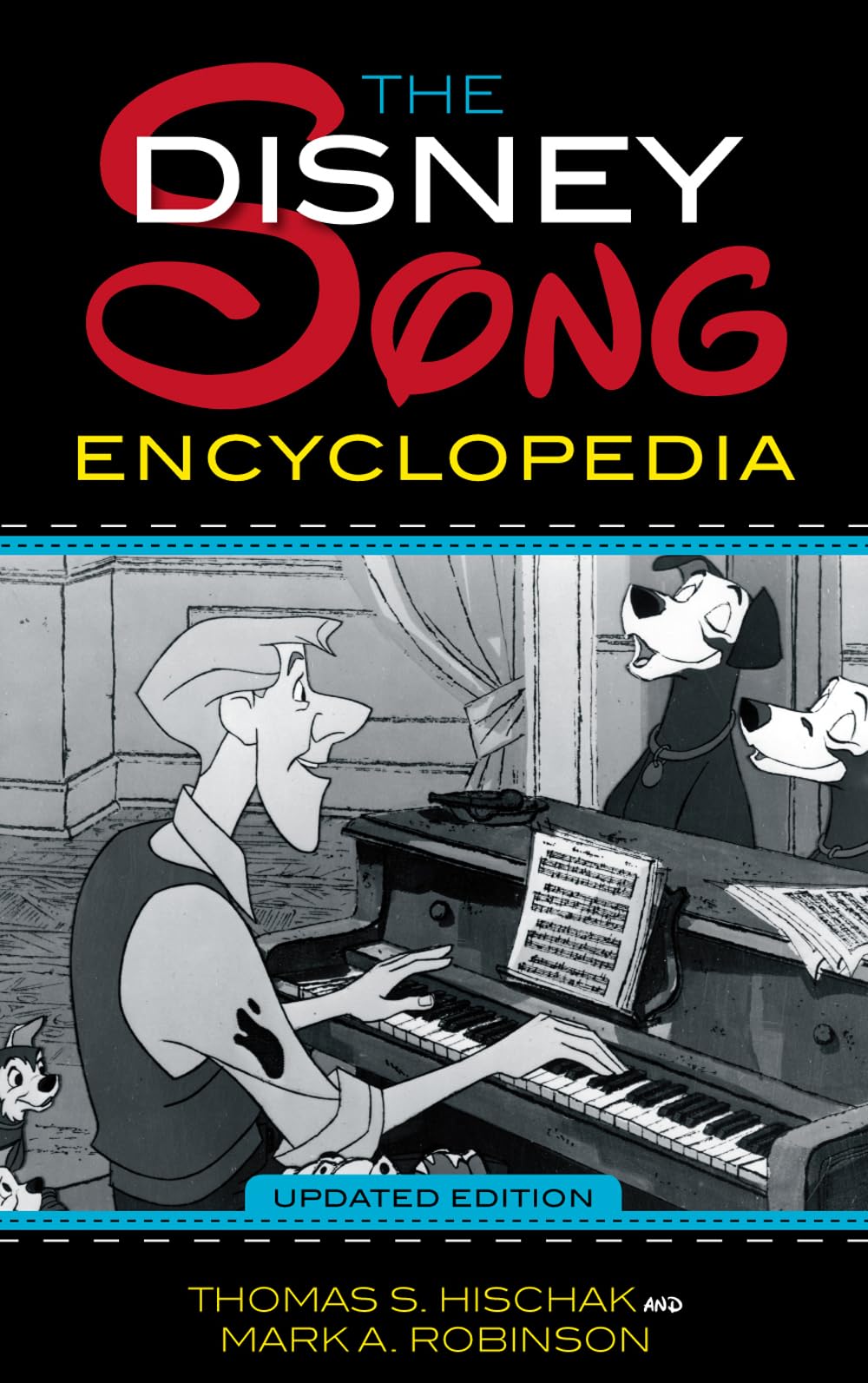
The Disney Song Encyclopedia describes and discusses hundreds of famous and not-so-famous songs from Disney films, television, Broadway, and theme parks from the 1930s to the present day. Over 900 songs are given individual entries and presented in alphabetical order. The songwriters and original singers are identified, as well as the source of the song and other venues in which it might have been used over the years. Notable recordings of the song are also listed. 

But most important, the song is described and what makes it memorable is discussed. This is not a reference list but a true encyclopedia of Disney songs. The book also contains a preface describing the criteria for selecting the songs, a glossary of song terms, a list of all the Disney songs and their sources, a songwriter’s directory in which every song by each composer/lyricist is listed, a bibliography, a guide to recordings and DVDs of Disney productions, and an index of people and titles.


Walt Disney, a man of profound intuition and artistic vision, understood the transformative power of sound. In Steamboat Willie (1928), the synchronized clanging and jaunty melodies weren’t just a novelty; they were a revelation. They imbued the animated world with a sense of life and immediacy, forging a direct emotional link with the audience. This early innovation set the stage for Disney’s unwavering commitment to musical excellence, a commitment that has consistently placed music at the forefront of its creative endeavors.

Interestingly, Walt Disney had no formal musical training. He was primarily a cartoonist and filmmaker who recognized something profound: music could breathe life into animation. “There’s a terrific power to music,” Disney once told his staff “You can run these pictures and they’d be dragging and boring, but the minute you put music behind them, they have life and vitality they don’t get in any other way.” This understanding led him to devote significant attention to the musical aspects of his productions, despite his lack of technical musical knowledge.

Walt Disney possessed an uncanny ability to know exactly what style of music would enhance a particular scene. He encouraged his animators to study music, recognizing its natural rhythms as fundamental to creating compelling animation. Two of his legendary “nine old men,” Frank Thomas and Ollie Johnston, noted that music was “undoubtedly the most important addition” to any production, giving it “integrity, style, emphasis, meaning and unity.”

Music is undoubtedly the most important addition that will be made to the picture. It can do more to bring a production to life, to give it integrity, style, emphasis, meaning and unity, than any other single ingredient. With the surge of a full orchestra, there will be bigness and majesty and soaring spirits; with a nervous, fluttering melody line on a single instrument, or pulsating drumbeats, there will be agitation, apprehension, suspicion. Music can build tension in commonplace scenes or ease it in ones that have become visually too frightening.

Frank Thomas and Ollie Johnston, “Disney Animation: Illusion of Life”

Walt’s appreciation for music was so complete that he built entire films around it. Fantasia stands as perhaps his most ambitious musical project, challenging his animators to create visual interpretations of classical masterpieces. Under his guidance, Disney composers and songwriters continually pushed boundaries, developing innovative techniques for synchronizing music with animation – methods still used throughout the film industry today.

This pioneering spirit extended beyond mere technical achievements. Disney’s music typically carried messages of hope and touched universal human emotions. As one Disney songwriter observed, Walt’s most successful films “had heart” and “would reach out and touch one of our human emotions.” This emotional resonance helped ensure that Disney films weren’t just for children but rather touched the child in everyone.

The Disney musical tradition has continued to evolve long after Walt’s time. In the 1990s, the company successfully transitioned to Broadway, beginning with Beauty and the Beast and followed by critical successes like The Lion King. Simultaneously, home video and DVD releases brought Disney music directly into households worldwide, further cementing these songs in popular culture.

Even rival animators acknowledged Disney’s musical innovations. Chuck Jones of Warner Brothers fame noted that “practically every tool we use today was originated at the Disney studio.” Disney films didn’t simply evolve gradually – they made quantum leaps that took both animation and film music to new heights.

Walt Disney once wrote, “I cannot think of the pictorial story without thinking about the complementary music which will fulfill it.” As film historian Leonard Maltin observed, music wasn’t merely “a key ingredient” of Walt Disney’s success – it was “the foundation” of it. Though he couldn’t read music or play an instrument, Disney possessed an innate musicality and understood intuitively how music could enhance storytelling.

This emotional resonance is a cornerstone of the Disney brand. By tapping into universal emotions like love, loss, joy, and hope, Disney music creates a shared experience that transcends cultural and linguistic barriers. When a child hears “A Whole New World” from Aladdin, they are not simply listening to a song; they are transported to a realm of wonder and possibility. This emotional connection fosters a sense of loyalty and affection for the Disney brand, creating lifelong fans who carry these cherished memories with them.

The strategic use of music in live-action films further reinforces this brand identity. While the transition from animation required a more nuanced approach, Disney successfully adapted its musical legacy for a new medium. The live-action Beauty and the Beast (2017) not only honored the beloved animated score but also expanded upon it, creating a richer, more immersive musical experience. The power of these musical revivals is immense, each song an emotional touchstone to preexisting beloved works, therefore enforcing brand loyalty, and the emotional response.

In the theme parks, music becomes an integral part of the immersive experience. From the nostalgic melodies of Main Street, U.S.A., to the adventurous themes of Adventureland, music is carefully curated to transport guests to different worlds. Attractions like “it’s a small world” rely on music to create a sense of unity and shared experience, while the “Grim Grinning Ghosts” theme from “The Haunted Mansion” adds a playful layer of spookiness to the ride. This careful orchestration of sound enhances the storytelling, creating a sense of wonder and excitement that leaves a lasting impression.

The reach of Disney music extends beyond the confines of its films and parks, permeating popular culture. Iconic songs have been covered by countless artists, featured in numerous films and television shows, and used to evoke emotions in countless everyday moments. This ubiquity reinforces the Disney brand as a cultural touchstone, a symbol of magic and emotional resonance.

In essence, music is the emotional glue that binds the Disney experience together. It’s the key that unlocks the door to imagination, the force that amplifies the joy, and the language that speaks to the heart. This unwavering commitment to musical excellence has been instrumental in building the Disney brand into a global icon, a symbol of magic and emotional connection that will continue to resonate for generations to come.

This musical magic continues to resonate today, providing an experience that’s accessible to people of all ages around the world. To experience Disney is, fundamentally, to experience music.


Part of a regular series on 27gen, entitled Wednesday Weekly Reader.

During my elementary school years one of the things I looked forward to the most was the delivery of “My Weekly Reader,” a weekly educational magazine designed for children and containing news-based current events.

It became a regular part of my love for reading, and helped develop my curiosity about the world around us.
Beyond the Page: C.S. Lewis on the Transformative Power of Reading

A friend once asked me to define a true reader. Of course, I answered with a quote from a book:

I went on to share the source of the book, The Reading Life, by C.S. Lewis, and I want to share it here.

The revered teacher and bestselling author reflects on the power, importance, and joy of a life dedicated to reading books in this delightful collection drawn from his wide body of writings.

More than fifty years after his death, intellectual and teacher C. S. Lewis continues to speak to readers, thanks not only to his intellectual insights on Christianity but also his wondrous creative works and deep reflections on the literature that influenced his life. Beloved for his instructive novels including The Screwtape Letters, The Great Divorce, and The Chronicles of Narnia as well as his philosophical books that explored theology and Christian life, Lewis was a life-long writer and book lover.

Cultivated from his many essays, articles, and letters, as well as his classic works, The Reading Life provides guidance and reflections on the love and enjoyment of books. Engaging and enlightening, this well-rounded collection includes Lewis’ reflections on science fiction, why children’s literature is for readers of all ages, and why we should read two old books for every new one.

A window into the thoughts of one of the greatest public intellectuals of our time, this collection reveals not only why Lewis loved the written word, but what it means to learn through literature from one of our wisest and most enduring teachers.


C.S. Lewis’ The Reading Life is a carefully curated collection of his thoughts, essays, and correspondence about the art and joy of reading. Compiled posthumously from various sources, including letters, lectures, and previously published works, this volume offers readers a glimpse into the literary mind of one of the 20th century’s most influential Christian thinkers and writers.

The collection opens by establishing Lewis’s deeply personal relationship with books from childhood. Far from presenting reading as merely educational, Lewis reveals it as transformative and essential to his intellectual and spiritual formation. He recounts being “baptized” into the world of Norse mythology as a child, describing the profound way certain texts awakened his imagination and shaped his worldview.

Lewis distinguishes between different types of reading experiences throughout the collection. He contrasts what he calls “literary” reading – where one engages with a text for its inherent aesthetic qualities and transformative potential – with reading merely for information or distraction. Lewis argues passionately that the former holds greater value, allowing books to change us rather than merely entertaining or informing us.

One of the collection’s strengths is Lewis’s discussion of how to approach literature. He advocates for reading with receptivity and openness, suggesting that truly experiencing a book requires temporarily setting aside our own prejudices and assumptions. Lewis emphasizes that good reading involves surrender – allowing ourselves to be led by the author rather than imposing our interpretations from the outset.

Lewis also explores the relationship between reading and moral development. While he rejects the simplistic notion that reading “good” books automatically makes one virtuous, he acknowledges literature’s capacity to expand our moral imagination and help us understand perspectives beyond our own limited experience. His nuanced view recognizes literature’s power without overstating its moral effects.

The collection addresses practical aspects of reading as well. Lewis offers insights on rereading, suggesting that revisiting books is essential to truly understanding them. He discusses the value of reading older works, arguing that they provide necessary perspective to counter the cultural blindness of our own era. Lewis also tackles the sometimes intimidating prospect of reading “the classics,” providing encouraging advice for approaching difficult texts.

What makes The Reading Life particularly compelling is Lewis’s voice – erudite but accessible, passionate but reasoned. His writing exudes both intellectual rigor and childlike wonder. Whether discussing medieval literature or children’s stories, Lewis conveys the same infectious enthusiasm for the written word.

The collection’s most profound sections explore reading as a spiritual practice. Lewis suggests that literature can prepare us for divine encounters by awakening longing and helping us recognize beauty. While never suggesting that books replace religious experience, he positions them as potential conduits for transcendence.

Lewis’ Christian worldview and his literary preferences tend toward the classical and medieval. As such, some may find his perspectives on modern literature limited by his own historical context and personal taste. Additionally, the collection’s posthumous assembly means some thematic repetition occurs across selections.

The Reading Life is ultimately a celebration of literature’s capacity to expand our consciousness. Lewis portrays reading not as escapism but as a means of encountering reality more fully. Through books, he suggests, we can transcend the limitations of our individual perspective and experience the world through different eyes.

For those who already appreciate Lewis’s work, this collection provides valuable insights into the literary influences that shaped his thought. For newcomers, it offers an accessible introduction to Lewis’s brilliant mind and his approach to literature. For all readers, it serves as a compelling reminder of why we read and how books can transform our lives.

In an age of digital distraction and superficial content consumption, Lewis’s reflections on deep, attentive reading feel especially relevant. The Reading Life invites us to reconsider our relationship with books and challenges us to read not merely for information or entertainment but for transformation. It reminds us that the true value of reading lies not in the quantity of books we consume but in how deeply we allow them to shape us.

We want to see with other eyes, to imagine with other imaginations, to feel with other hearts, as well as with our own.

C.S. Lewis

Part of a regular series on 27gen, entitled Wednesday Weekly Reader.

During my elementary school years one of the things I looked forward to the most was the delivery of “My Weekly Reader,” a weekly educational magazine designed for children and containing news-based current events.

It became a regular part of my love for reading, and helped develop my curiosity about the world around us.
The Carousel of Progress: A Metaphor for American Aging

As a longtime researcher of on the history of Walt Disney (the man), it’s fascinating to consider how an attraction he developed can serve as a lens through which to examine societal concepts, particularly those surrounding aging. I recently discovered a book that explored that concept, drawing on the themes present in Walt Disney’s Carousel of Progress.

But before we get into that book in this week’s Wednesday Weekly Reader, you’ve got to understand the background of the Carousel of Progress.

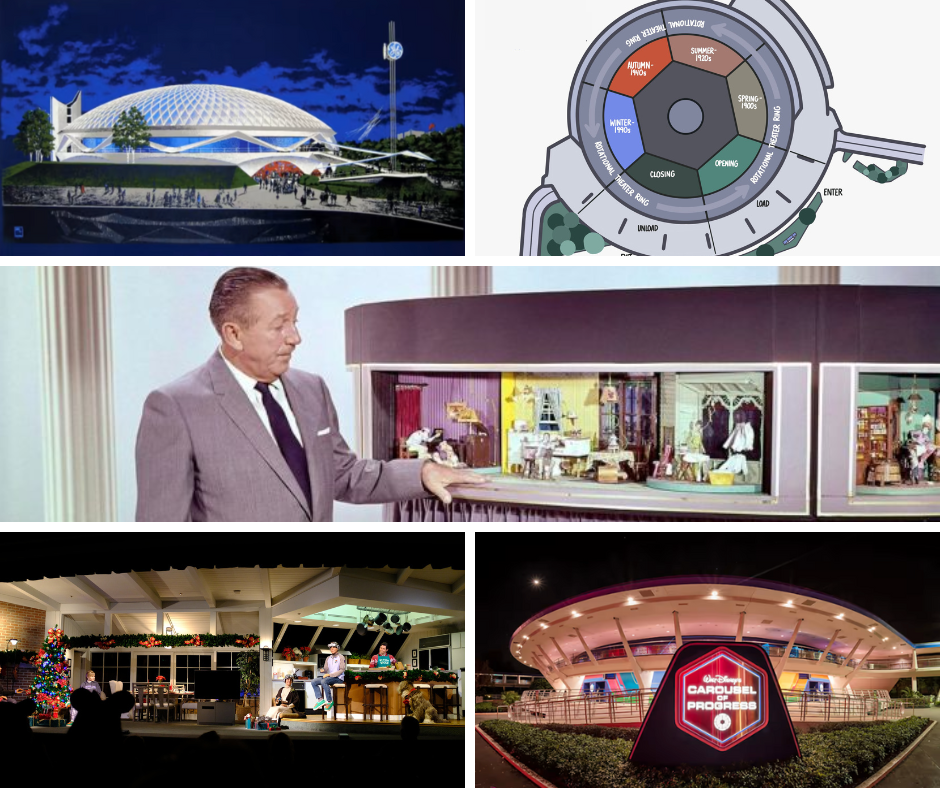
Walt Disney’s Carousel of Progress, a classic attraction found in the Magic Kingdom’s Tomorrowland, presents a unique perspective on the evolution of American life through the 20th century. Through its rotating stages, the attraction showcases how technological advancements have transformed the daily lives of a typical American family over four time periods. While ostensibly a celebration of progress, the Carousel of Progress also inadvertently offers a compelling metaphor for understanding evolving concepts of old age in the United States.

Walt Disney originally conceived concepts that became the show in 1958 as part of a new area at Disneyland Park in California called Edison Square. When the concept was abandoned, the idea was reimagined, eventually opening under the name “Progressland” at the 1964-65 New York World’s Fair in the General Electric Pavilion.

With the classic song “There’s a Great Big Beautiful Tomorrow” by the Academy Award®-winning team of brothers Richard and Robert Sherman, the show was an instant hit. Following its success, the show moved to Disneyland Park and opened in 1967 as the Carousel of Progress. In 1973 it was closed and moved to Walt Disney World in Orlando.

In 1975, the attraction opened in Magic Kingdom park where it was rewritten and restaged with a new theme song, “The Best Time of Your Life.”

In the true spirit of progress, the show was reworked in 1994 to its initial incarnation with the original theme song intact – as a tribute to nostalgia.

The Carousel of Progress holds the record as the longest-running stage show in the history of American theater. It is one of the oldest attractions in the Walt Disney World Resort, and the oldest attraction at Walt Disney World to have been worked on by Walt Disney.

Despite its undeserved reputation of being outdated and boring, I have liked the Carousel of Progress since I unknowingly rode the attraction the year it opened in 1975; I was part of the year-long celebration of America’s Bicentennial that Walt Disney World staged beginning that summer, called “America on Parade.”

As a rising high school senior who had limited time in the park, the Carousel of Progress – along with Space Mountain, Pirates of the Caribbean, and the Haunted Mansion were the four attractions I rode that day. Space Mountain aside (vertigo), those are the same attractions I’ve made sure to go on during every visit to the Magic Kingdom over the ensuing years.

Accordingly, I’ve remained interested in each of those attractions, and when any of them pop up in unexpected and unusual conversations almost 50 years later, I naturally explore them more!


The Carousel of Progress, Walt Disney’s animatronic celebration of technological advancement, takes visitors on a journey through the American century beginning in the late 1800s. We join a ‘typical” family as only Hollywood of the early 1960s can conceive: they navigate the wonders of electricity, household appliances, and eventually voice-activated home systems, all while the patriarch cheerfully reminds us that “there’s a great big beautiful tomorrow shining at the end of every day.”

This attraction embodies America’s once-unwavering faith in the marriage of capitalism and technology – a belief that progress was inevitable, linear, and universally beneficial. As audiences rotate from scene to scene, they witness how innovation solves yesterday’s problems while creating greater comfort, leisure, and prosperity.

But what happens when the carousel stops spinning? When progress falters, or when we discover that technological advancement hasn’t delivered on its promises for vast segments of society?

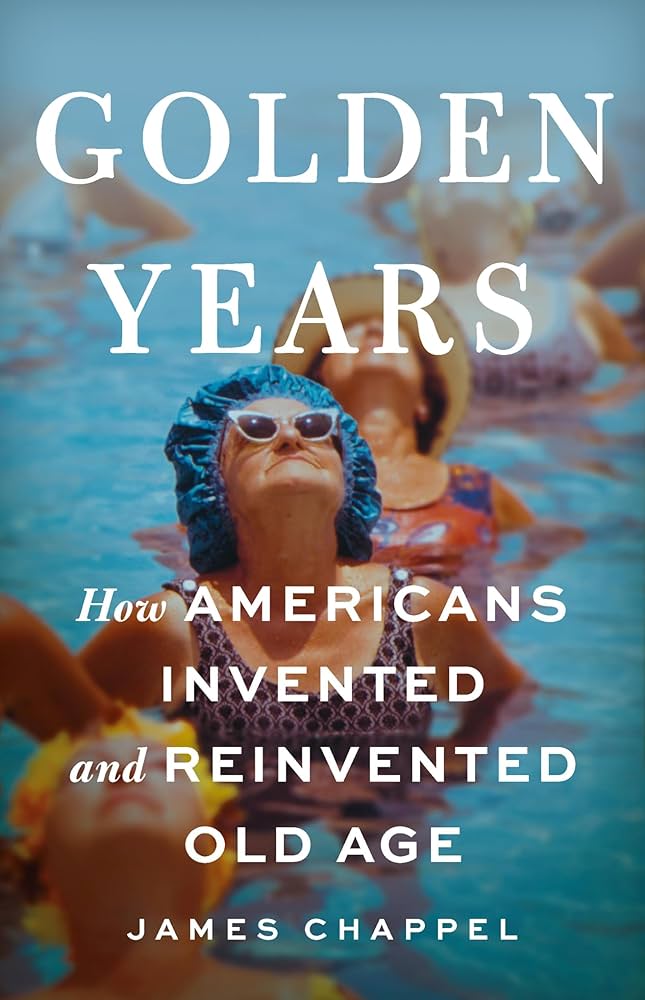
This is the territory author James Chappel explores in his provocative new work Golden Years: How American Invented and Reinvented Old Age. Utilizing Disney’s attraction as a metaphor in his introduction, Chappel examines how Americans have conceptualized progress over decades. Unlike Disney’s optimistic portrayal, however, Chappel interrogates the gap between the promised future and our lived reality, particularly in how we care for our aging population – a demographic conspicuously absent from Disney’s vision of perpetual youth and boundless opportunity (even though, interestingly, the “aged” are present in each scene of the Carousel of Progress).

Beginning with the 1935 passage of the Social Security Act, Americans were sold on the idea of old age: what it was, and what is was for. The core idea was simple. Older people, while distinct in capacities and purposes from younger ones, had a meaningful place in the world. They ought to be valued and respected, and they deserved security and dignity even if they were no longer participating in the waged labor force. Older people, in short, belonged on the Carousel.

James Chappel, Golden Years

The Narrative of Progress

The attraction’s core theme is “progress,” a concept deeply ingrained in American culture. Each scene depicts a more technologically advanced era, highlighting the conveniences and comforts that new inventions bring. This unwavering focus on forward momentum reflects a societal tendency to equate “good living” with constant advancement.

In the context of aging, this can translate to a cultural pressure to remain “productive” and “modern,” often leading to the marginalization of those who cannot keep pace with rapid technological change.

The Shifting Landscape of “Modern Life”

The Carousel of Progress illustrates how the definition of “modern life” has drastically shifted over time. What was considered cutting-edge in the early 20th century is now quaint and nostalgic.

Similarly, societal perceptions of aging have evolved. Older generations have witnessed profound transformations in technology, social norms, and lifestyles. This creates a generational divide, where the experiences and perspectives of older adults may be perceived as “outdated.”

Nostalgia and the Idealized Past

The attraction evokes a sense of nostalgia, romanticizing the past while simultaneously celebrating the future. This nostalgic element can be seen as a reflection of how society often views aging, with a tendency to idealize youth and earlier life stages.

This can also create a difficult situation, where older people are seen as living in the past, and not properly living in the present.

Technological Integration and Isolation

While showing the benefits of technology, it can be argued that it also shows how technology can isolate people. Modern scenes show people more and more focused on individual devices.

This can be a big problem for the elderly, where technology can be a barrier, and also where the use of technology can cause social isolation.

In essence, the Carousel of Progress, with its optimistic portrayal of technological advancement, mirrors the complex and often contradictory attitudes towards aging in American society. It highlights the tension between celebrating progress and grappling with the challenges of a rapidly changing world. By examining this beloved attraction through the lens of social commentary, the hope is to gain a deeper understanding of how cultural narratives shape our perceptions of aging.


On farms and in factories, Americans once had little choice but to work until death. As the nation prospered, a new idea was born: the right to a dignified and secure old age. That project has benefited millions, but it remains incomplete – and today it’s under siege. 

In Golden Years, historian James Chappel shows how old age first emerged as a distinct stage of life and how it evolved over the last century, shaped by politicians’ choices, activists’ demands, medical advancements, and cultural models from utopian novels to The Golden Girls. Only after World War II did government subsidies and employer pensions allow people to retire en masse. Just one generation later, this model crumbled. Older people streamed back into the workforce, and free-market policymakers pushed the burdens of aging back onto older Americans and their families. We now confront an old age mired in contradictions: ever longer lifespans and spiraling health-care costs, 401(k)s and economic precarity, unprecedented opportunity and often disastrous instability.   

As the population of older Americans grows, Golden Years urges us to look to the past to better understand old age today—and how it could be better tomorrow.

Golden Years is a fascinating account of the history of old age in modern America, showing how we created unprecedented security for some and painful uncertainty for others.


Golden Years: How Americans Invented and Reinvented Old Age by James Chappel offers a comprehensive examination of the evolving perceptions and policies surrounding aging in the United States. Chappel, a historian at Duke University, delves into the socio-political, economic, and cultural factors that have shaped the experience of old age over the past century.

In the late 19th and early 20th centuries, many Americans worked until they were physically unable, with little to no financial support in their later years. The introduction of the Social Security Act in 1935 marked a pivotal shift, providing a safety net that acknowledged the right to a secure and dignified retirement. However, Chappel points out that these benefits were initially designed for a specific demographic: middle-class, married, white couples. Notably, agricultural and domestic workers, many of whom were African American, were excluded from these early provisions.

The mid-20th century saw the rise of the term “senior citizens,” reflecting a societal shift towards viewing older adults as active and engaged members of the community. This era witnessed the expansion of programs like Medicare and Medicaid, further solidifying support for the elderly. Cultural representations, such as the 1985 television show “The Golden Girls,” mirrored and influenced these changing attitudes by portraying older women leading vibrant, independent lives.

However, Chappel highlights that the landscape of aging underwent significant changes towards the end of the 20th century. The shift towards privatization, exemplified by the introduction of IRAs and 401(k) plans, placed more responsibility on individuals to secure their own retirement. This move, coupled with rising healthcare costs and longer life expectancies, has led to increased financial insecurity among older adults. 

Chappel also addresses the disparities that persist within the aging population. For instance, older Black Americans have often faced discriminatory practices in nursing homes and have been disproportionately affected by policies that did not account for their unique challenges. Activists like sociologist Jacquelyne Jackson have worked to bring these issues to light, advocating for policies that recognize and address the specific realities confronting older Black individuals. 

In the contemporary context, Chappel observes a dilution of collective advocacy for older adults. Organizations such as AARP have shifted focus towards commercial ventures, potentially at the expense of robust policy advocacy. This evolution raises concerns about the future of Social Security and the adequacy of support systems for an aging population.

Golden Years is not only a captivating historical account but also a call to action. Chappel urges policymakers and society at large to reconsider how aging is approached, emphasizing the need for inclusive and sustainable models that ensure dignity and security for all older adults, regardless of race or socioeconomic status.

As individuals, and as a nation, we are all getting older. We will be making decisions together about how to shape the gray future. And in doing so, it might help to understand a good deal more about the gray past.

Chappel’s work offers a nuanced exploration of the transformation of old age in America. By weaving together historical analysis with cultural insights, Golden Years provides readers with a deeper understanding of the challenges and opportunities that come with an aging society. It serves as a timely reminder of the importance of equitable policies and the collective responsibility to support individuals as they age.


Part of a regular series on 27gen, entitled Wednesday Weekly Reader.

During my elementary school years one of the things I looked forward to the most was the delivery of “My Weekly Reader,” a weekly educational magazine designed for children and containing news-based current events.

It became a regular part of my love for reading, and helped develop my curiosity about the world around us.

Celebrating National Library Week: Where Stories Come Alive


National Library Week is more than just a calendar event—it’s a vibrant celebration of knowledge, community, and the transformative power of reading. Each year, this special week reminds us of the vital role libraries play in our lives, offering far more than just rows of books on shelves. They are sanctuaries of discovery, learning, and connection that continue to evolve in our digital age.

That’s the North County Regional branch of the Charlotte Mecklenburg library.

It’s also my weekly destination for dropping off and picking up books I’ve placed on hold throughout the week.

Visiting the local library is a long-standing tradition with me. As a small boy, I remember with fondness the bi-monthly visits to the branch library in the next county. We were limited to checking out 20 books at a time, and it was a rare visit when I didn’t meet that quota.

As soon as the car pulled in the driveway, I would race into our house and begin reading through my treasure trove of books.

In my early years, I would often have them all read in a matter of days. As I got older and the books got longer, it might take the whole two-week period to read them.

Then there’s school libraries, from middle school to high school to college to graduate school. More treasures of a deeper and longer-lasting sort.

When our children came along, I introduced them to the joy of reading and the local library. In each city we’ve lived in, one of the very first visits we made after moving was to stop by the library and pick up a library card. Since our four children were born four years apart, that’s a long time of library visits!

I’m proud to say that as they have grown up, and with children of their own, reading and visiting the library is still important in their lives. And of course, any grandchild visiting Nina and GrandBob is going to have a selection of the latest age-appropriate books from our library waiting!

The Heart of Our Communities

Libraries are perhaps the most democratic institutions we have. They welcome everyone, regardless of age, background, or economic status. From a child discovering their first picture book to a student researching a complex topic, from a job seeker using free computer resources to a retiree attending a community workshop, libraries serve as inclusive spaces that bridge gaps and open doors to opportunity.

In an era of increasing digital isolation, libraries stand as physical spaces that bring people together. They are community centers where knowledge is shared, ideas are exchanged, and connections are made. Free classes, reading groups, cultural events, and workshops transform libraries from quiet repositories of books into dynamic, interactive spaces of learning and engagement.

A World of Endless Exploration

Imagine walking into a library and being surrounded by millions of stories waiting to be discovered. Each book is a portal to another world, another perspective, another life experience. Whether you’re interested in traversing distant galaxies through science fiction, understanding historical events through meticulously researched non-fiction, or exploring the depths of human emotion through poetry, libraries offer an infinite landscape of exploration.

Modern libraries have expanded far beyond traditional book lending. Many now offer:

  • Digital resources and e-book collections
  • Free Wi-Fi and computer access
  • Language learning programs
  • Technology workshops
  • Children’s storytelling sessions
  • Local history archives
  • Career development resources

How to Celebrate National Library Week

Celebrating National Library Week doesn’t require grand gestures – just curiosity and an open mind. Here are some wonderful ways to participate:

  • Get a Library Card: If you don’t already have one, visit your local library and sign up. It’s typically free and opens up a world of resources. Many libraries now offer digital cards that provide instant access to online materials.
  • Attend a Library Event: Check your local library’s calendar. Most libraries host special events during National Library Week, such as author talks, book clubs, writing workshops, or family-friendly activities.
  • Explore a New Genre: Challenge yourself to read something completely different from your usual preferences. Ask a librarian for recommendations – they’re experts at matching readers with perfect books.
  • Support Your Library: Consider donating books, volunteering, or making a financial contribution. Libraries often rely on community support to maintain and expand their services.

A Personal Invitation

This National Library Week, I invite you to rediscover the magic of your local library. Take a moment to step inside, breathe in the quiet atmosphere of possibility, and remember that within these walls, every book is a journey waiting to begin, every shelf a landscape of potential waiting to be explored.

My visits to my local library – from 60 years ago as a young reader to this week’s latest explorations – continue to impact my life every day.

Libraries are more than buildings – they are guardians of human knowledge, dreamers of collective imagination, and bridges to understanding. They remind us that in a world of constant change, the love of learning and the power of stories remain timeless.

Make time this week to “check out” your local library!